A recent article over at BBC explored the “then and now” of servants in the UK – who had them, how they lived, and what has become of the domestic landscape today.
The article pointed out that downstairs was a microcosm of upstairs, with domestics mirroring the social hierarchy of those whom they served.

According to Dr Lucy Delap, director of studies in history at Cambridge University, “There would be a strict order of coming in to eat and strict rules about where different ranks of servants sit, and you might also have rules such as no speaking unless you were addressed by one of the senior servants. The senior servants had a great deal of power, so the butler for example in some households would put down his knife and fork, and everyone else had to fit in whether you had finished or not. So servants had to learn to be fast eaters.”
Upon reading this, I had a flashback and had to hunt up my copy of The Cooking of Vienna’s Empire by Time/Life.
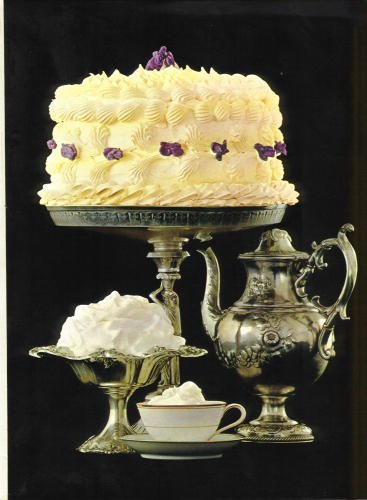
These are wonderful books, as much about the history and culture of the various regions they deal with as about the recipes. Having spent two years in Austria and much time working in the countries of the former Yugoslavia, this book is a treasured friend, and I recalled this paragraph about Emperor Franz Josef I:
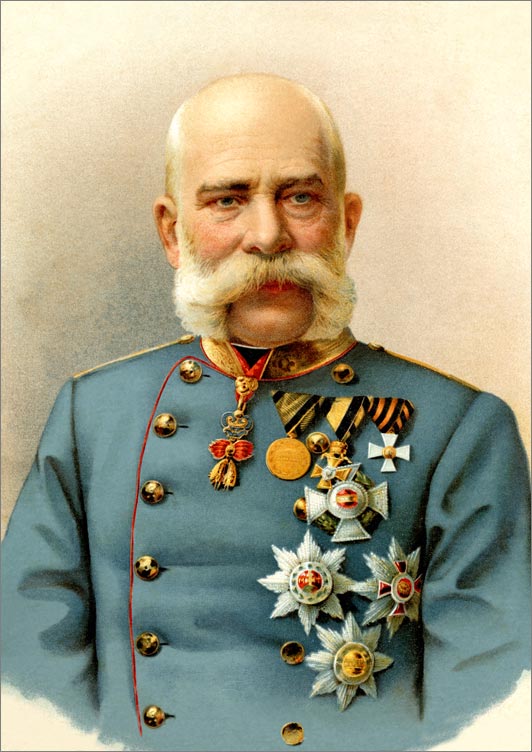
“Since the Kaiser was up so early, everybody around him had to get up too, which was not pleasant for the young officers who had gone to bed perhaps only a couple of hours earlier. By noon, the guard officers were starved and praying they wouldn’t be asked to sit down at the Emperor’s table. It must have been an ordeal to do so. Court etiquette demanded that the Emperor be served first and that no one continue eating after His Majesty had put down his fork. Unfortunately the Kaiser ate very quickly. By the time the large silver platters got to the hungry young officers, the Emperor had put down his fork and knife, and the poor fellows had just one tantalizing look at the lovely dishes – or maybe even a brief taste of the excellent Kaiserschmarrn – before their plates were removed.”
The BBC article makes numerous references to one’s “station in life.”
In the America that I grew up in starting in the 50’s, the concept of class distinction was far from the minds of most people; the underlying ideal was that anyone can become anything, and all men are indeed created equal. Looking at today’s society, however, it would seem that in many ways, we are a nation of servants in the homes of the super-rich for whom we toil. Class distinctions exist in my country as truly as they existed in Victorian England – the only difference is that British society accepted such as the natural order of things, and to a certain extent still does, while we cling to a largely imaginary egalitarian view of society.
Before I go any further, I want to be clear that everything is relative; despite the fact that I belong to a large group of people for whom economic terror is a stark reality, a poor family in the favelas of Rio or anyone living on the streets of Mumbai would laugh in my face if I were to tell them that I was feeling endangered.
What’s more important is the underlying social phenomenon of what divides people into classes and why so many think that’s just fine.
The Us/Them Mentality
From where I sit, the concept of ingroup affiliation appears to lie at the root of most social conflicts. The Arbinger Institute has published two powerful treatises on the tendency of humans to betray their better nature, and the hoop-jumping and back-bending we go through to justify that betrayal. From a corporate standpoint, this tendency is analyzed in Leadership and Self-Deception, but on a personal level, The Anatomy of Peace takes a hard look at what keeps people apart, and what’s necessary to bring them together.

When we treat others like objects rather than people, it’s all the easier to put them beneath us: beneath our notice, beneath our dignity, and beneath our need to be involved in their lives. What I see in politics today is the wholesale write-off of entire segments of our population by both parties: they are draining our resources, they are controlling our lives, they are destroying the constitution, they… you get the picture. It’s always easier to blame an outgroup (i.e. the other side of the aisle, women, men, gays, evangelicals – in short, anyone who is not us) than it is to take personal responsibility for one’s choices in life. It’s comforting and it’s easy to see people as obstacles, vehicles or irrelevancies.
As discussed in a previous post, I quoted Carl Sagan’s analysis of the famous “Pale Blue Dot” photo, and I repeat a piece of that here: “The Earth is a very small stage in a vast cosmic arena. Think of the rivers of blood spilled by all those generals and emperors so that in glory and triumph they could become the momentary masters of a fraction of a dot. Think of the endless cruelties visited by the inhabitants of one corner of this pixel on the scarcely distinguishable inhabitants of some other corner. How frequent their misunderstandings, how eager they are to kill one another, how fervent their hatreds. Our posturings, our imagined self-importance, the delusion that we have some privileged position in the universe, are challenged by this point of pale light.” As humans, as members of the same race floating in the same raft on the same ocean, it would truly pay us to remember how insignificant we are in comparison with the mind-blowing vastness of the universe.
In every way possible, my 500-year plan is to promote the concept of a world that works for all humanity. The title of this blog reflects R. Buckminster Fuller’s dream of making the world work, “for 100% of humanity, in the shortest possible time, through spontaneous cooperation, without ecological offense or the disadvantage of anyone.” If we are ever to attain such a blessed state, we can not remain in the condition described by Lewis Thomas in The Lives of a Cell – “For total greed, rapacity, heartlessness, and irresponsibility there is nothing to match a nation. Nations, by law, are solitary, self-centered, withdrawn into themselves. There is no such thing as affection between nations, and certainly no nation ever loved another. They bawl insults from their doorsteps, defecate into whole oceans, snatch all the food, survive by detestation, take joy in the bad luck of others, celebrate the death of others, live for the death of others.” No, we must transcend that.
As individuals, families, groups, societies, and nations, we must overcome the urge to treat others as objects and tools and things to be used to achieve our own personal ends, but rather see one another as other people, with hopes, needs, cares, and fears as real to us as our own. I refuse to believe that such a world is an unreachable utopia, an impractical dream. As long as I have breath, I will work for it.
The Old Wolf has spoken.
 Playing in the World Game
wonderful post! I
ndia has a deeply rooted caste system that has been practiced for over 2 milleniums now. We even have an ancient text called “Laws of Manu” that clearly defines the way the caste system must be implemented. Growing up I did not experience the discrimination because I grew up in an Army environment. But when I move to college, I came face to face with its worst manifestation. I saw friends of mine being discriminated only because they belonged to a lower caste. Sadly, no matter how much economic progress we see, the caste system refuses to die.
btw…here’s an interesting fact: In Hindu scriptures the first male to be created was called “Manu” and the English word for male is “Man”. In the Bible, the first male to be created was “Adam” and the Hindi word for male is “Adami” 🙂
Wow, thanks for the interesting comment and those great linguistic tidbits!
Very interesting article. I have always been fascinated by this subject. I guess it’s all about a move to collectivism. Not the dreaded “Other C” word, but more regarding consciousness and awareness.
Pingback: Memories of Vienna | Playing in the World Game