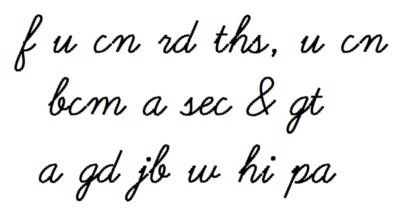
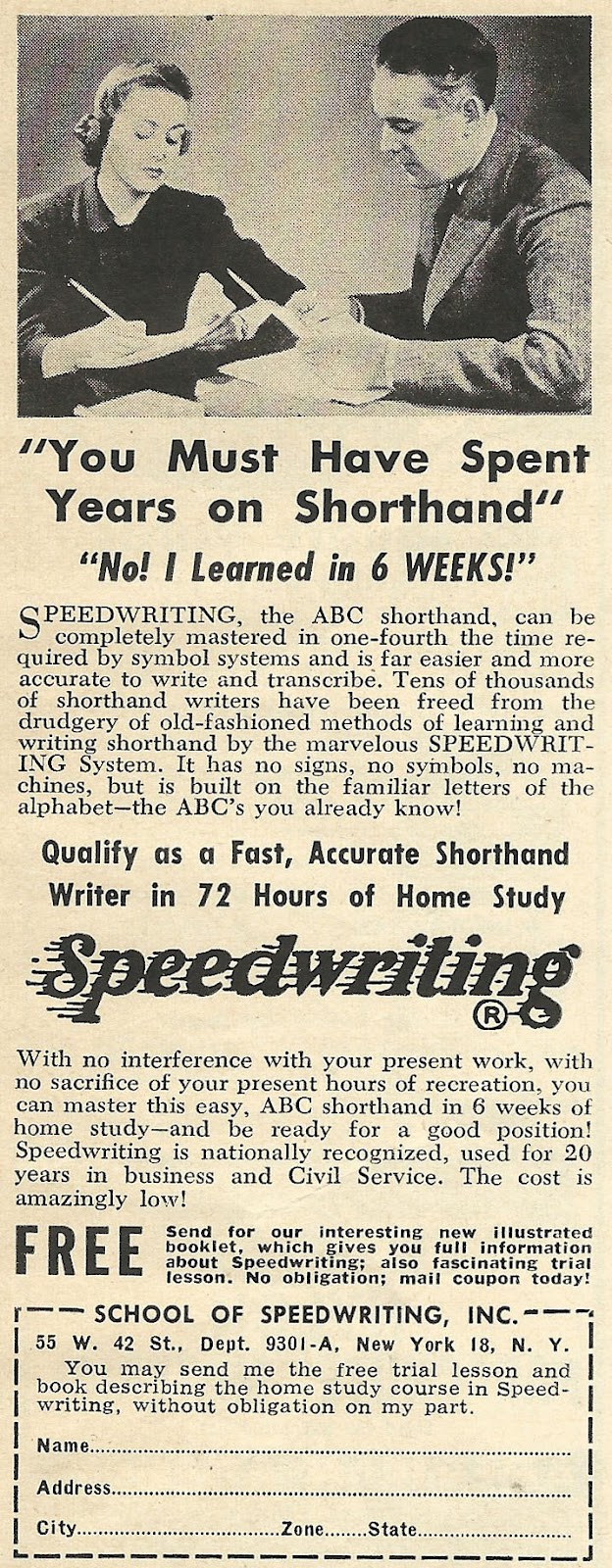
So intoned the billboards on the NYC subways for years. The School of Speedwriting wanted to make sure people knew that Gregg shorthand was not the only way to go, and while I never had the opportunity to learn either, it seems to make perfect sense to me. My ex was a whiz at shorthand, and she could take dictation like a court reporter – but all those squiggles! Worse than Arabic, if you ask me.
Of course, it’s based on being able to recognize words without the vowels. Since 2003, this has been going around the internet in various forms, the latest one with the header “Only Smart People Can Read This”:
It is doubtful that any real research has been done on this phenomenon at Cambridge, but the underlying principle makes sense – experienced readers don’t decode, but rather they read words as entire units. This is useful to understand as I teach Japanese students the mysteries of English spelling. They get so wrapped up in “i before e” that they forget to learn new words in the same way that they learn their own kanji – as units.
To the untrained eye, each of these Japanese characters looks very much the same, 人, 大, 木, 本, 天, 火, 米, 犬, 水, 氷, 入, yet a Japanese person recognizes each without even thinking of it – a single jot can make the difference between big and dog, or between person and enter.
We do the same thing ourselves – and when presented with a block of text with mixed up letters (or missing vowels), our minds do what they do best – they look for things that look close to something recognizable, and usually come up with an accurate match almost instantly, unless of course you booted up a Unix system running “Fortune” and got “f u cn rd ths, itn tyg h myxbl cd…” – the Semitic peoples (Jews and Arabs) have been doing this for thousands of years – like anything, you just get used to it.
Nowadays, young people use this to their advantage when sending txt msgs (text messages): R u there? K. ttyl. (Are you there? OK. Talk to you later.) If things keep going the way they are, we may all be doing speedwriting whether we like it or not.
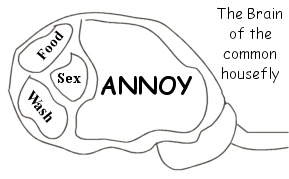
Today my wife had a nasty housefly in her office, and she posited it was a female looking for a mate. I have no idea what houseflies do, but I know that 30 years ago I drew this for no reason, and it still seems to make sense today.
Back in the day, tobacco companies could advertise, and advertise they did. Everywhere. Subways, buses, magazines, radio, television, courtesy packs on airplanes, you name it. The more powerful ads drove the more powerful brands. The Marlboro man was everywhere:
Rugged, strong, and healthy – notice the absence of the Surgeon General’s warning on this example from the 60’s.
But in those days, tobacco execs would go on national television and swear that tobacco wasn’t harmful, even to pregnant women (many of whom actually preferred smaller babies)…
… which babies were also used to hawk tobacco products.
Of course, now we know more than we did then:
But this is now, and that was then.
Two of the more popular cigarette campaigns actually capitalized on bad grammar:
This slogan was routinely held up by prescriptive grammarians as an example of abominable usage: “like,” they said, is a preposition governing nouns and noun phrases, and should never be used as a conjunction introducing an adverbial clause. “Winston tastes good as a cigarette should,” intoned the English teachers, was the only acceptable form. Naturally, the ad execs picked up on the furor and capitalized on it:
Not to be left out of the action, MAD magazine put this on the back of their January 1971 issue, which shows that many folks were quite aware of the dangers of smoking, thank you, even while the Tobacco execs were perjuring themselves on the national scene.
In fact, “In December 1952 [Reader’s Digest] published “Cancer by the Carton“, a series of articles that linked smoking with lung cancer. This first brought the dangers of smoking to public attention which, up to then, had ignored the health threats.” (Wikipedia) An interesting article summarizing the history of tobacco and health concerns can be found at CNN Interactive.
Popular stars shilled for tobacco on a regular basis – it seems so bizarre to watch Granny Clampett and Jane Hathaway discussing the merits of Winston, but it’s amusing to see how they worked the grammar issue in at the end in a Madison Avenue “double whammy”.
The Flintstones got into the act as well:
I confess with some shame that tobacco contributed to putting bread in my mouth for some time; mother functioned as a spokeswoman for Camel cigarettes for a year.
But when it came to using bad grammar, Winston was hardly the only offender – Tareyton’s campaign confused nominative and oblique to good effect in their highly successful slogan, “Us Tareyton smokers would rather fight than switch.”[1]
Despite the peccadillo – it seems that cigarette ads thrived on controversy – this particular advertising campaign was wildly successful in the 60’s, and pushed Tareyton’s popularity close to the top of the charts.
But not all products, even those from the makers of successful brands, were an instant hit.
Back in 1966, when I was 15, I was on one of my semi-regular visits to my mom’s brother in Salt Lake. We took a trip up to Idaho to see some additional relatives, and I remember spending some time in a tobacco warehouse, helping to run cartons of cigarettes through the tax-stamp machine. (Had the government gotten wind of our little diversion, the owner could have been shut down, but oversight was lax and attorneys less numerous in those days.) While I was working there that day, I noticed something unusual – a carton of Tennyson cigarettes, which I had never before heard of.
Now, the more astute among my readers will be asking themselves, “What does a 15-year-old know from tobacco?” As it happens, even at that tender age I was somewhat of a tobacco connoisseur. I had started smoking in high school, finding that it was a gateway to a certain level of acceptance, for as little as that was worth. And I parlayed my small bit of social coin into a minor fortune by becoming a user of odd and revolting brands.2 (In Connecticut, the legal age for tobacco was 16, but even before that I had no end of “friends” who would procure for me in exchange for a small consideration.)
Strong and with a different flavor than American standards.
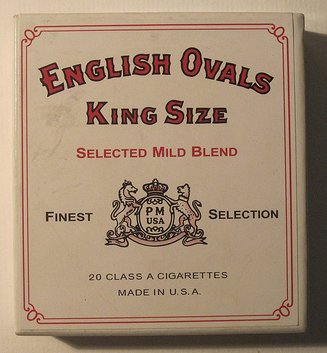
Oval cigarettes. Cute gimmick, but nothing special otherwise.
Absolutely foul. If I had these, I was guaranteed nobody would bum off me.
Tasted just about like smoking a cow pie. Or so I imagine.
Had kind of a fruity taste, unlike anything else I had ever smoked. Meh. However, Lark’s claim to fame was their commercial, the 1960’s version of Google Street View – the Lark truck would run around different places with a TV camera on the back, blaring the William Tell Overture, and asking people, “Show Us Your Lark Pack!” I saw this truck run down 1st Avenue in Manhattan one day; even if I had had a pack of Larks on me, I decided that discretion would have been the better part of fame, since I was still underage in New York.
[Edit: I had a copy of the commercial in question here, which I had posted at YouTube. Even though it was listed as public domain under a Creative Commons license, it appears that the brand is still owned by Trademarks LLC. The video was removed at YouTube, but for some odd reason still played here. In light of some communication with the above-mentioned company, I have removed the video. Unless it is taken down elsewhere, however, you can still see it here (3rd one on the list).
Now, since we’re on the subject of advertising in general as well, I nominate Salem cigarettes for the most insidious commercial ever devised. As a linguist who has studied close to 20 languages over the course of my life (although I don’t claim to speak them all), I can tell you that anything you produce will remain in your memory much longer than anything you hear. When learning a language, speaking is much more powerful than listening; they are different skills, yes, but the first cements things in your memory a lot longer than just hearing them, even multiple times. The following ad is much like getting up at 3:00 AM in the home of a musician, and playing only the first five notes of “Shave and a haircut” on the grand piano. It’s a guarantee that an irritated and foggy victim will stumble down the stairs to finish the “two bits” part before being able to go back to sleep.[3]
Unfortunately, despite these commercials being ancient, many of them have been taken down on copyright grounds. But go here and advance to 6:40, and you’ll get one of the ads that I’m referring to. Unless you are some kind of superhuman being, you will finish the line, and you will sing the brand name in your head. There is no escape.
There were others. I knew every brand on the market, and some that weren’t. I even rolled my own for a while, although not very skillfully, but when I couldn’t get these, I’d smoke anything I could get my hands on. My mother smoked Carltons (why bother, I wondered?) and when I’d cadge hers, I ripped the filter off; ultimately I settled on Luckies as my brand of choice. And of course, in the process, I became a 3-pack-a-day man by the time I was 18. The end of that story is that I quit, cold turkey, that year and never looked back – but my lungs paid a lifetime price.
So that brings us back to Tennyson, and by now I think you’ll understand why it caught my eye. A brand I didn’t know about? Intriguing! But in those days, there was no Internet, and such arcane knowledge was not to be found anywhere. Only later, thanks to the miracle of the Intertubez, was I able to dig up a bit of history, but even today what’s out there is pretty sparse.
In 1966, Tennyson launched a fairly comprehensive media blitz to publicize their new brand. I’m not sure why Tareyton simply didn’t choose to introduce a menthol version of their already-famous brand.[4]
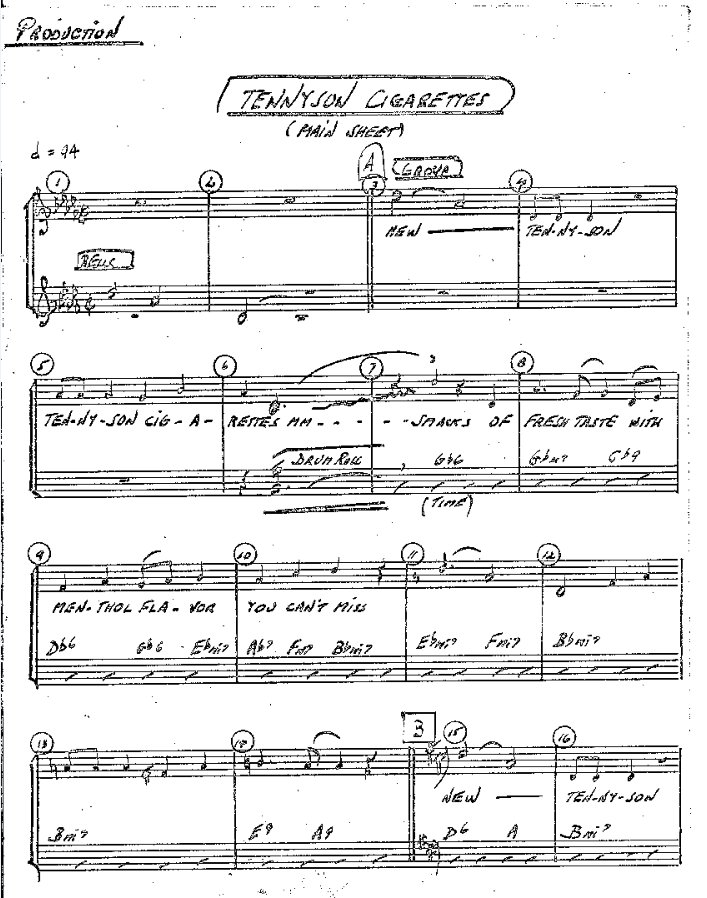
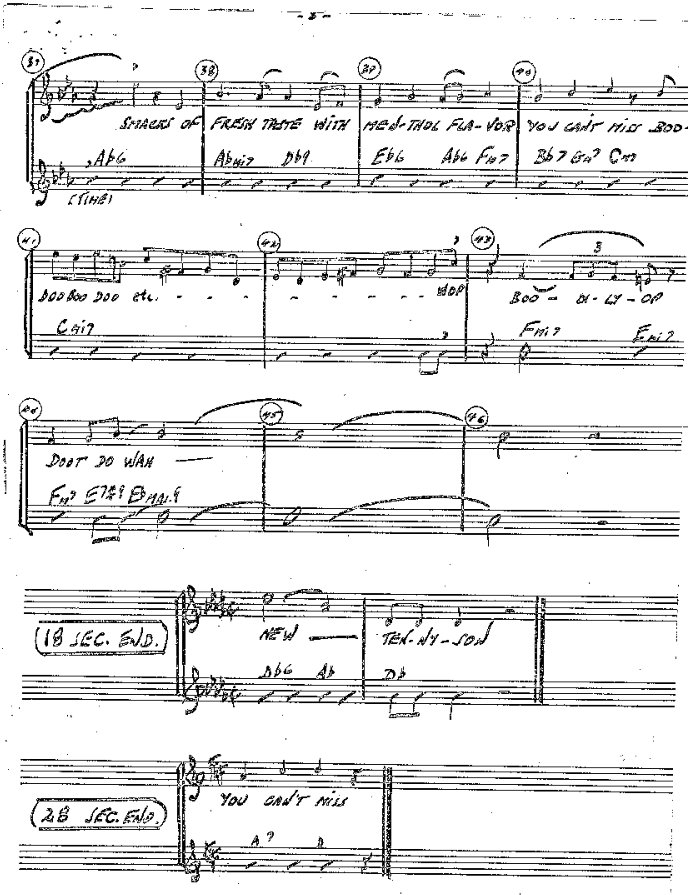
I even remember the jingle. I began to wonder later if I had imagined it, but fortunately the original sheet music which was submitted to the legal process was conserved:
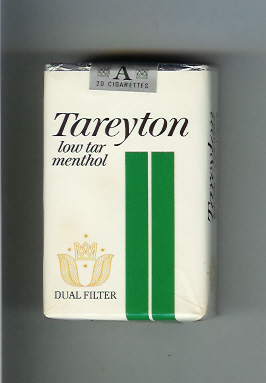
So I’m not senile after all. I may be crazy, but that’s different. As a final bit of curiosity, I also found this:
Same package, same font, same look as Tareyton – but nary a whit of information to be found about what these are, or when or where they were sold. Possibly a European version of Tareyton? One clue:
This has been a bit of a ramble, but I got a good bunch of things out that I won’t have to worry about later (‘Now where did I archive that?’)
The Old Wolf has rambled.
1 In case you’re wondering, it should be “We Tareyton smokers.”
2 Plus ça change, plus ça reste la même chose. Visit The Old Wolf’s Banquet from Hell.
3 Brooke McEldowney, both a very gifted musician and a supremely talented artist who does the webcomics 9 Chickweed Lane and Pibgorn, riffed on this twice. In the first one, Edda and her mother Juliette engaged in this very exercise here; the second, where poor Seth is tormented by his ballet company, is here.
4 As it happens, such a thing exists, even though I only found out about it later as I was researching the topic. Never once did I see these in stores.
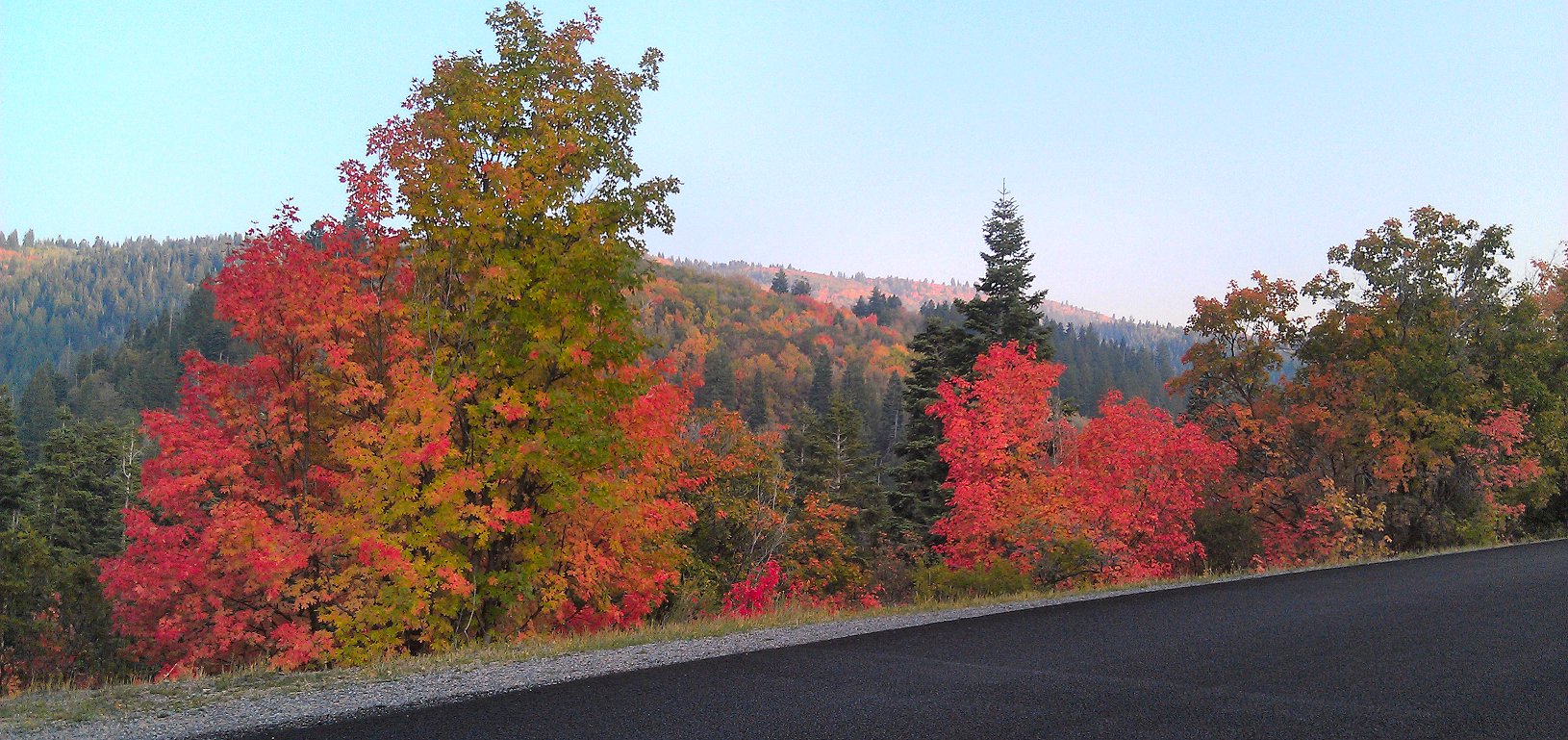
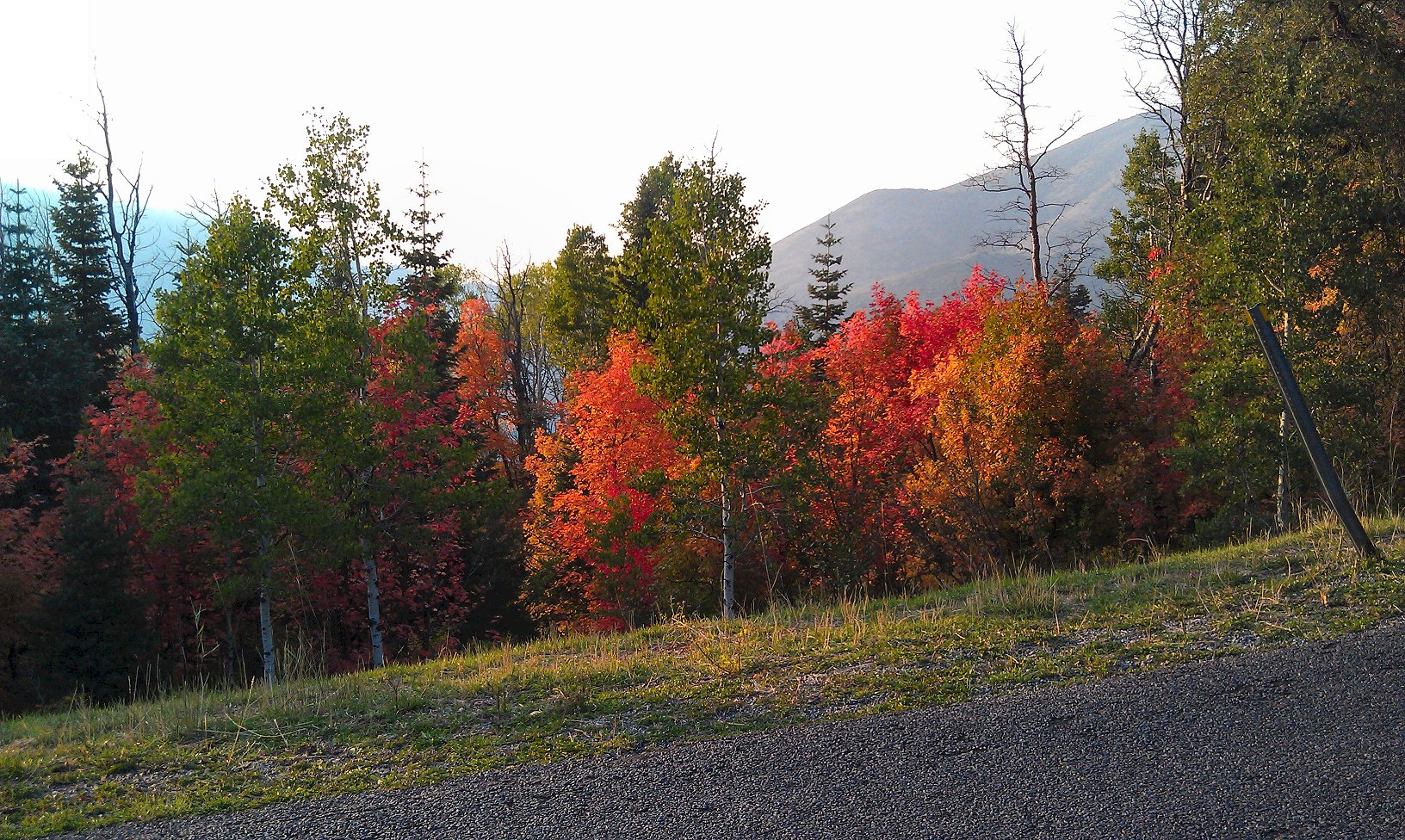
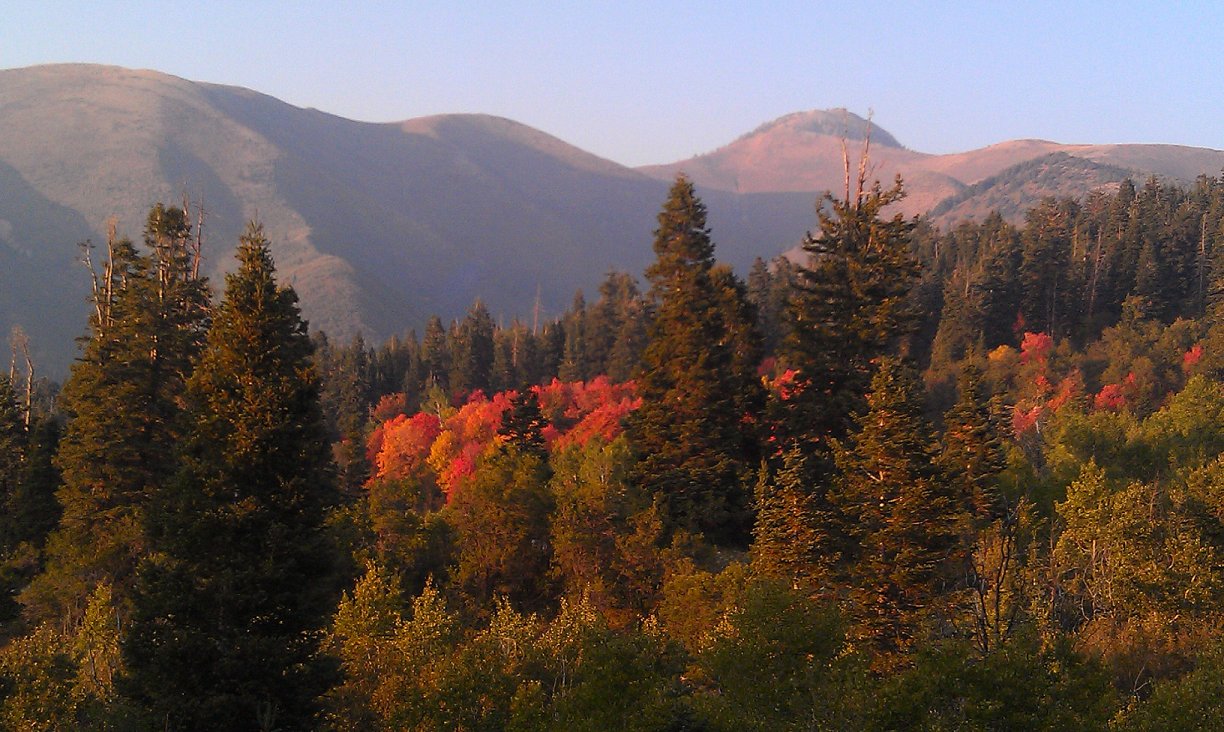
… or almost autumn. But at 7,000 feet, leaves turn a lot faster than they do down in the lowlands.
The place was absolutely crawling with deer. We lost track of how many we saw.
As pretty as these colors are, they are already fading – I should have done this three weeks ago for maximum effect.
The hazy sky behind the trees was the result of a cold front coming down from Idaho where a number of fires are still burning. It was 57 degrees up here last evening.
A patch of deciduous color amidst the scrub and pines.
We stopped at Box Lake (more of a puddle, really – the Goodwoman of the House is from Maine, and she knows what real lakes look like). Had dinner on some rocks while enjoying the view. You can see how low the water level is, the drought is affecting all of our reservoirs.
Someone had built a home worthy of Scuppers the Sailor Dog.
(One of my favorite books as a child, I was tickled to find a copy again later.)
On the way down, a final burst of color in a parking area.
Many small groups of deer, in twos (mothers with children), threes, and fives – but no greater clusters than that. It was getting dark and we had to drive slowly because they were crossing the road frequently.
I was born in 1951. This book came out in 1952. I may have been given Dick and Jane in school, but this is the book I remember learning to read from. I have never lost my love of it, and all the ones that followed. The complete Peanuts series has been coming out from Fantagraphic Books since 2004, and the series of 25 volumes should be complete by 2016. By that time I may just be able to afford them. They’re not cheap, but they are lovely. I’ve already collected the complete Calvin and Hobbes and the complete Far Side, and having a complete Peanuts collection has long been one of my dreams. Schulz was a master.
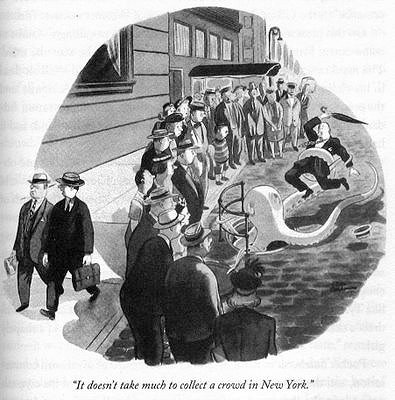
This put me in mind of the Charles Addams cartoon which shows a bunch of people clustered around a giant octopus emerging from a manhole and grabbing a passer-by. Two guys walking behind the crowd who can’t see what’s going on say “It doesn’t take much to collect a crowd in New York.”
It’s true, too. Times Square was the scene of a dramatic self-immolation at 2 P.M. on Saturday, July 18, 1970, when Hin Chi Yeung poured two cans of gasoline on himself and struck a match. I sadly happened across this event just after he had been extinguished; apparently he was getting poor grades and was distraught at the prospect of shaming his family who had sacrificed much to get him here to study. The crowds were insane. It was surreal – I thought someone had set fire to a department store mannequin at first, never thinking it might have been a real person.
On another note: See those “Cooled by Refrigeration” signs on the marquee back there? That was a huge draw in New York. “All around, people looking half dead, Walking on the sidewalk, hotter than a match head” is an accurate description of summer in New York, and for 50¢ you could pop into a theatre, sit down, watch the newsreel, the short, the cartoon, and the feature presentation… and then do it again and again for as long as you pleased. It was a cheap way to get out of the heat. Back then it was no big deal if you were late to a show… you just waited for the next round to start and caught what you had missed. Those were the days.
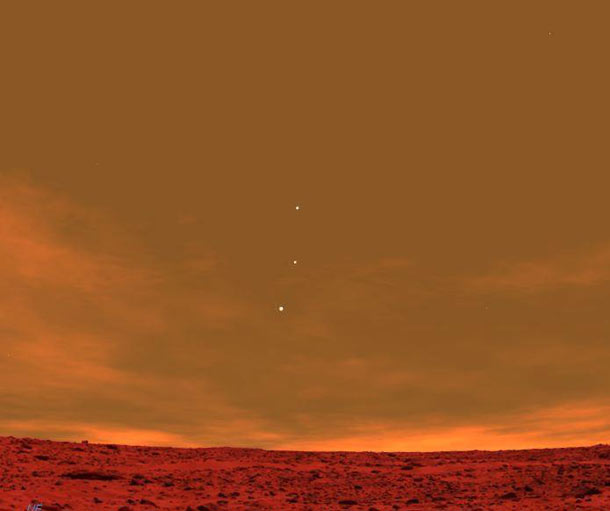
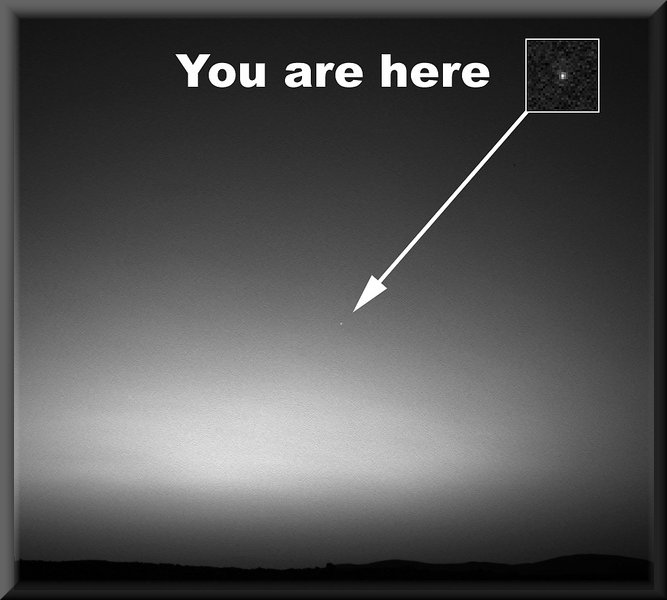
A post on George Takei’s Facebook feed displayed this photo of Earth and two other planets seen from the surface of Mars, purportedly taken from one of the rovers up there.
The one on Takei’s feed had an arrow pointing to the lower dot which said, “You are here.”
It’s a pretty picture, but my BS bells went off because there’s just something “off” about the photo, specifically those clouds and the fact that the three dots are the only things visible in the sky.
By the time I saw this, the post had gathered over 2,000 comments, and a brief perusal led me to this post over at Discover, which explains that the image is a computer-generated “planetarium” scene, as witnessed by the little “NE” in the lower left hand corner of the screen.
Sweetly enough, the article also posted this picture…
… which is a real picture, “the first image ever taken of Earth from the surface of a planet beyond the Moon. It was taken by the Mars Exploration Rover Spirit one hour before sunrise on the 63rd Martian day, or sol, of its mission. (March 8, 2004).” Found at NASA’s Flickr Feed, where you can read more information about the shot.
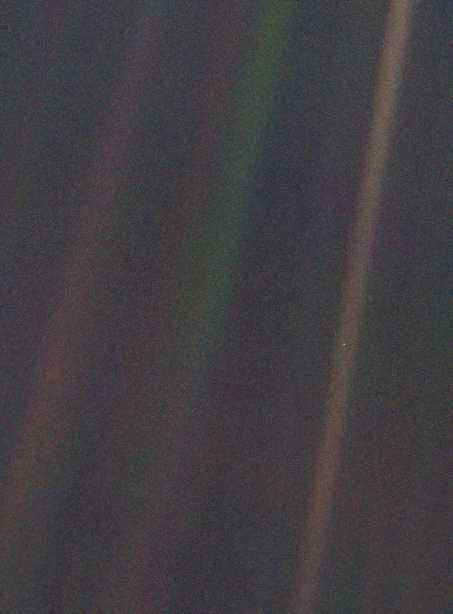
The tiny speck put me immediately in mind of the now-iconic photo of Earth taken by Voyager 1 as it was leaving the earth.
Astronomer Carl Sagan had requested NASA to point Voyager’s cameras back toward home, and this was the resulting image.
In his book Pale Blue Dot: A Vision of the Human Future in Space, astronomer Carl Sagan related his thoughts on a deeper meaning of the photograph:
From this distant vantage point, the Earth might not seem of any particular interest. But for us, it’s different. Consider again that dot. That’s here. That’s home. That’s us. On it everyone you love, everyone you know, everyone you ever heard of, every human being who ever was, lived out their lives. The aggregate of our joy and suffering, thousands of confident religions, ideologies, and economic doctrines, every hunter and forager, every hero and coward, every creator and destroyer of civilization, every king and peasant, every young couple in love, every mother and father, hopeful child, inventor and explorer, every teacher of morals, every corrupt politician, every “superstar,” every “supreme leader,” every saint and sinner in the history of our species lived there – on a mote of dust suspended in a sunbeam.
The Earth is a very small stage in a vast cosmic arena. Think of the rivers of blood spilled by all those generals and emperors so that in glory and triumph they could become the momentary masters of a fraction of a dot. Think of the endless cruelties visited by the inhabitants of one corner of this pixel on the scarcely distinguishable inhabitants of some other corner. How frequent their misunderstandings, how eager they are to kill one another, how fervent their hatreds. Our posturings, our imagined self-importance, the delusion that we have some privileged position in the universe, are challenged by this point of pale light. Our planet is a lonely speck in the great enveloping cosmic dark. In our obscurity – in all this vastness – there is no hint that help will come from elsewhere to save us from ourselves. The Earth is the only world known, so far, to harbor life. There is nowhere else, at least in the near future, to which our species could migrate. Visit, yes. Settle, not yet. Like it or not, for the moment, the Earth is where we make our stand. It has been said that astronomy is a humbling and character-building experience. There is perhaps no better demonstration of the folly of human conceits than this distant image of our tiny world. To me, it underscores our responsibility to deal more kindly with one another and to preserve and cherish the pale blue dot, the only home we’ve ever known.
—Carl Sagan, Pale Blue Dot: A Vision of the Human Future in Space, 1997 reprint, pp. xv–xvi
This quote, and much additional information about the photo and how it was taken, was found at Wikipedia. I had seen the picture and read the quote before, but it never ceases to move me.
Confession: I can’t do higher math.[1] I always wanted to be a doctor, but calculus put a rapid end to that dream, because you need calculus for the pre-med Chemistry degree and screw whole bunches of that, with apologies and honor and homage to my freshman chem teacher, Dr. Alex T. Rowland of Gettysburg College, a good man and a fine professor. But I’ve always loved science, and have stood in awe of the glory and majesty and miracle of the universe from its largest expanses to its smallest bits and pieces. I think I owe that love of science to the hours and hours my mother spent allowing me to roam the halls of the Hayden[2] Planetarium and the Museum of Natural History.
Publicity shots for “Pepper Young’s Wife”, TV-Radio Mirror, March 1957
I loved that rocket – it was in a darkened room, and each section was illuminated by a different color. The fuel chamber had a deep, red glow and I could stare at it for hours. This was one of my favorite books. Alas, my inability to comprehend the fine points of differentiation meant that I had to spend my life as a linguist and not as a scientist, but the love of understanding our world, from the quantum to the cosmic scale, never left me. All I can do is peep through the keyhole to where the big boys and girls are playing, and hope to understand as much as I can from there.
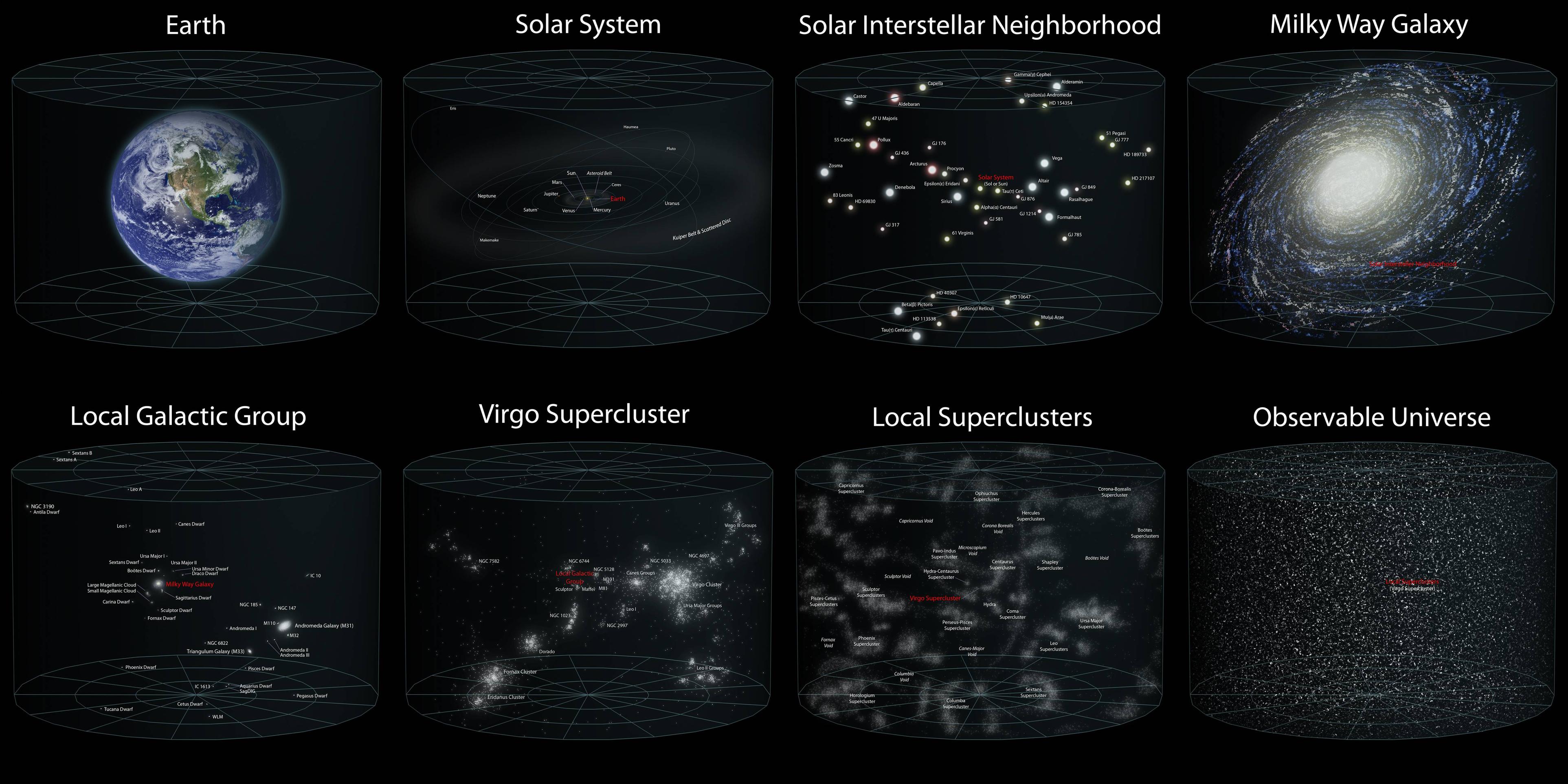
Years ago I happened across a copy of Powers of Ten, a companion volume to two films of the same name which were based on the book Cosmic View (1957) by Dutch educator Kees Boeke.
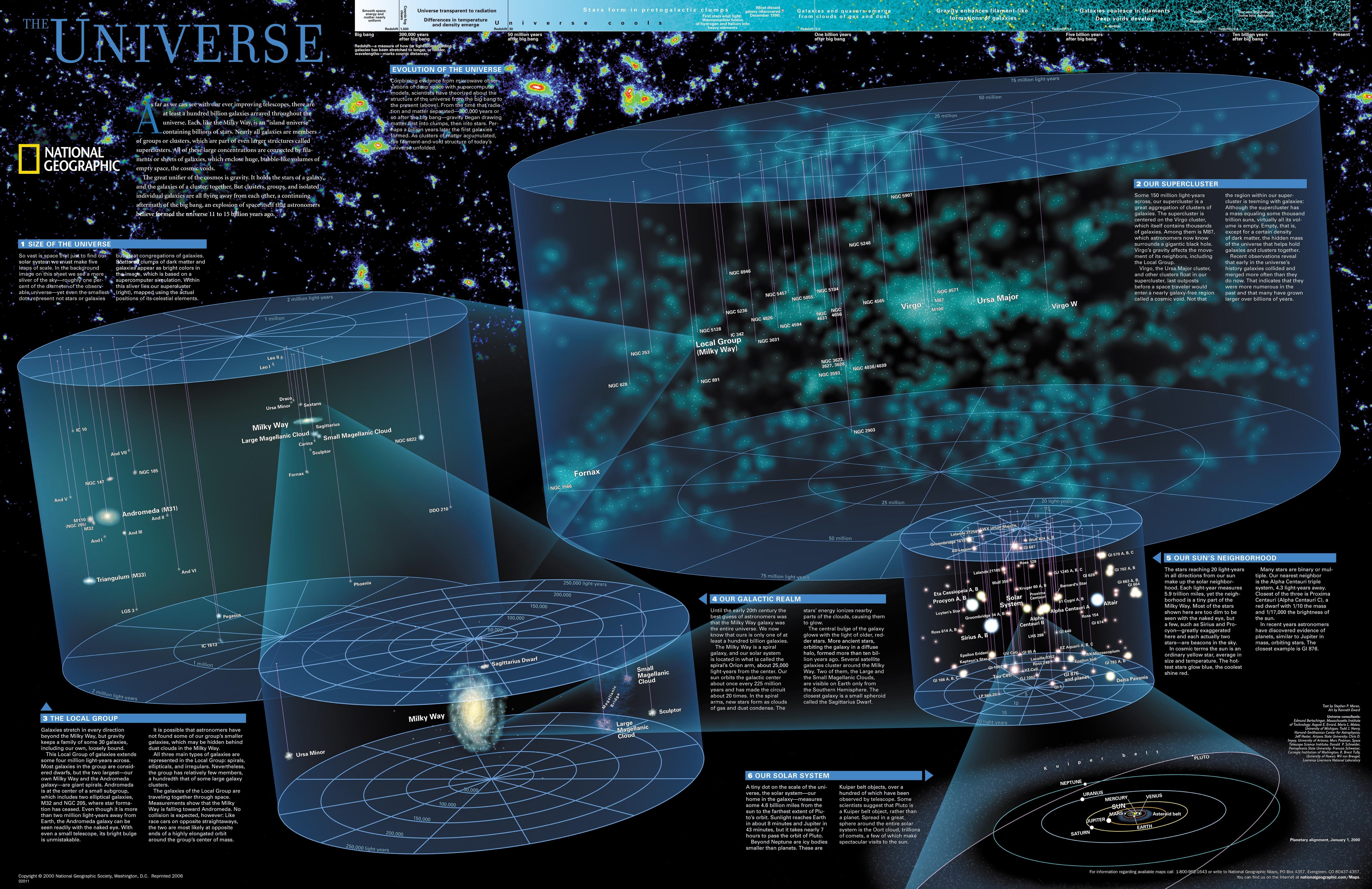
Later, this map of the known universe from National Geographic served to pretty much bork my mind out completely.
Trouble is, it doesn’t stop there.
I posted the above map earlier, along with a photo of Hubbles ultra-deep field image, and just recently came across this mind-bending video done by the folks at NASA/ESA:
The animations were based on the red-shift values of the various galaxies captured in the image. The thing is, that is by no means all of it – it’s only the part we were able to capture with our rather primitive (albeit wonderful) instruments.
So what is our place in the universe? Scientists will be grappling with that question for as long as man continues to be relevant. The president of my church, Thomas S. Monson, said in 2001, ” I acknowledge that I do not understand the processes of creation, but I accept the fact of it.” Taken in the context of the rest of his quotation, this has been interpreted by some to mean that we should reject science in favor of faith. I do not see it that way. The miracle of creation, in all its massive and miniscule glory, is before me, and I must accept the fact of it. But another fact remains: for all we know, we know virtually nothing. As tiny as the pale blue dot is in the immeasurably vast universe, so is all our scientific knowledge in the face of all there is to be known. I believe firmly that we do have a purpose and a place in all the vastness, and that purpose is to raise the human condition, to make life better in all possible ways for ourselves and for all whom we encounter. This is sufficient for me. In the words of Hillel, “the rest is commentary.”
And all this because of a single “fake” picture posted on George Takei’s Facebook feed. Thanks, George.
The Old Wolf has spoken.
1Just because I can’t do math doesn’t mean I can’t appreciate it.
A mathematical friend of mine assures me that this equation evaluates to ⅓. I couldn’t say for the two crore question, but I’ll never forget how to write it. See, it’s a limerick, and limericks I can remember. All of them. Darnit.
“Integral zee squared dee zee
From one to the cube root of three
Times the cosine
Of three π over nine
Equals log of the cube root of e.”
[2]With thanks for the correction to Haydn Rawlinson, who apparently knows not only how his own name is spelled but also the Planetarium’s.
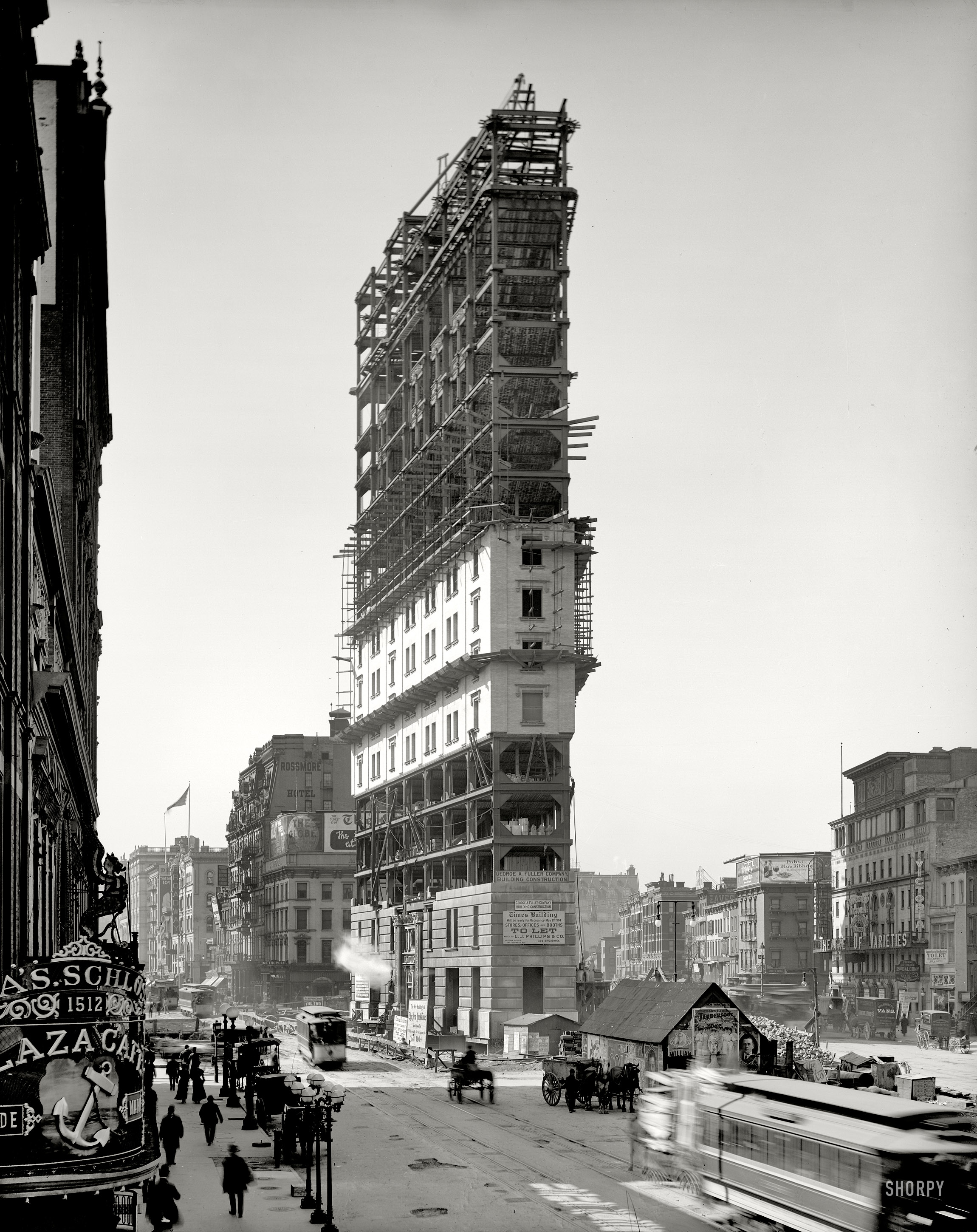
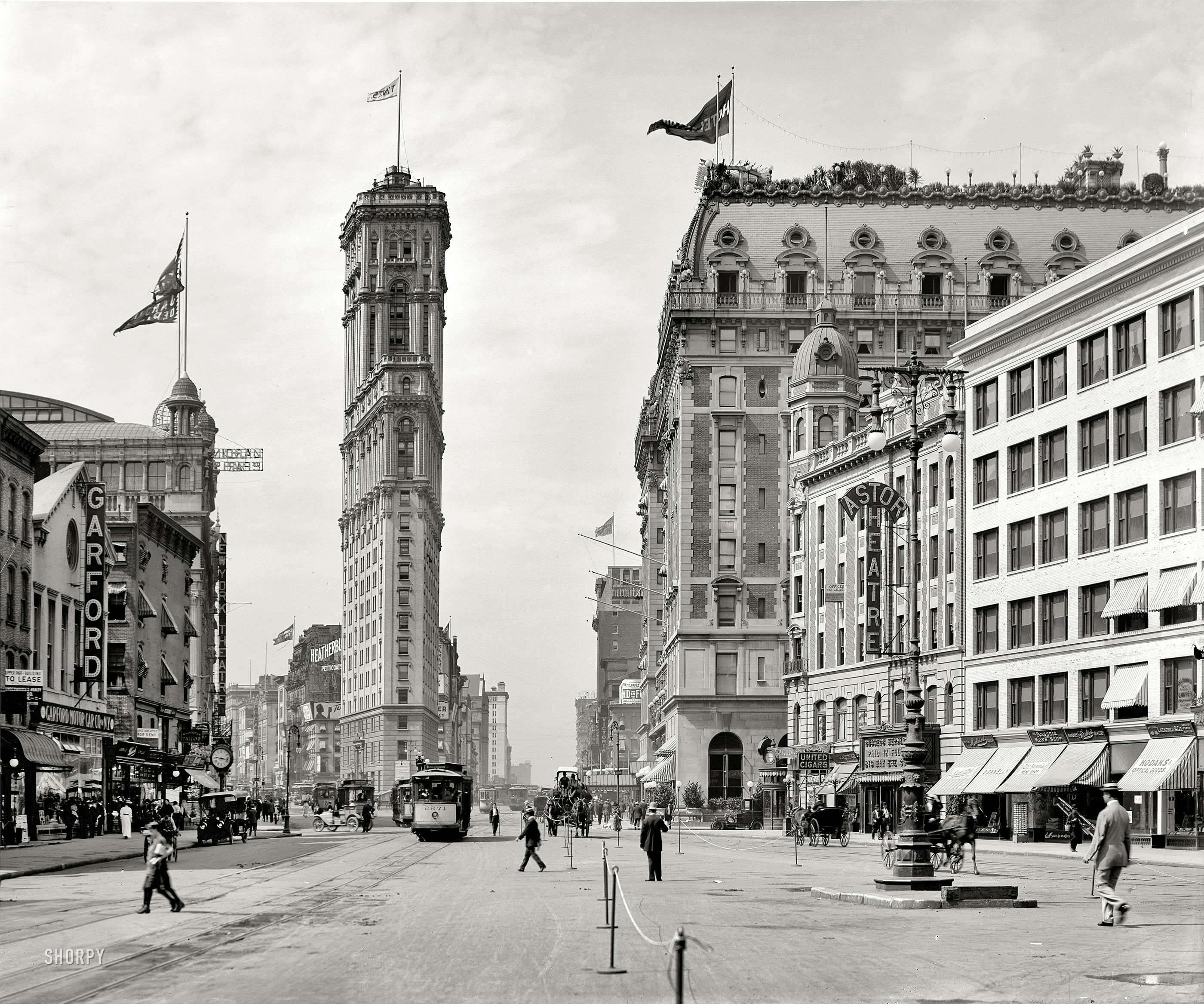
Times Square theaters by day, in New York City. The Times Building, Loew’s Theatre, Hotel Astor, Gaiety Theatre and other landmarks are featured in this January, 1938 photo. (Bofinger, E.M./Courtesy NYC Municipal Archives) via Urbanobservatory
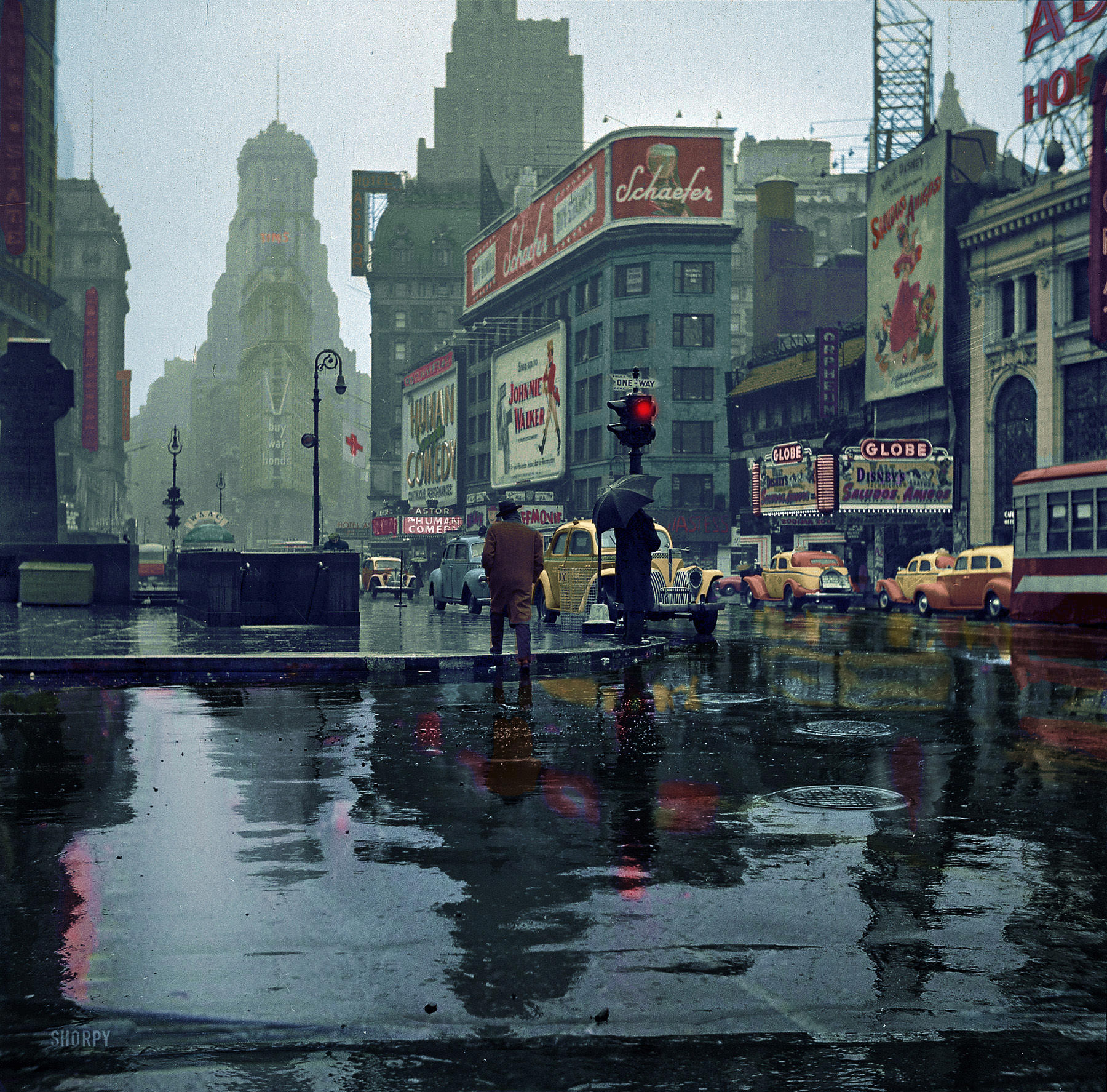
Times Square, 1943, found at Shorpy
Times Square, between November 1944 and January 1945 based on the “Tomorrow the World” and “3 is a family” marquees.
Times Square in a blizzard, 1947
Times Square, 1949
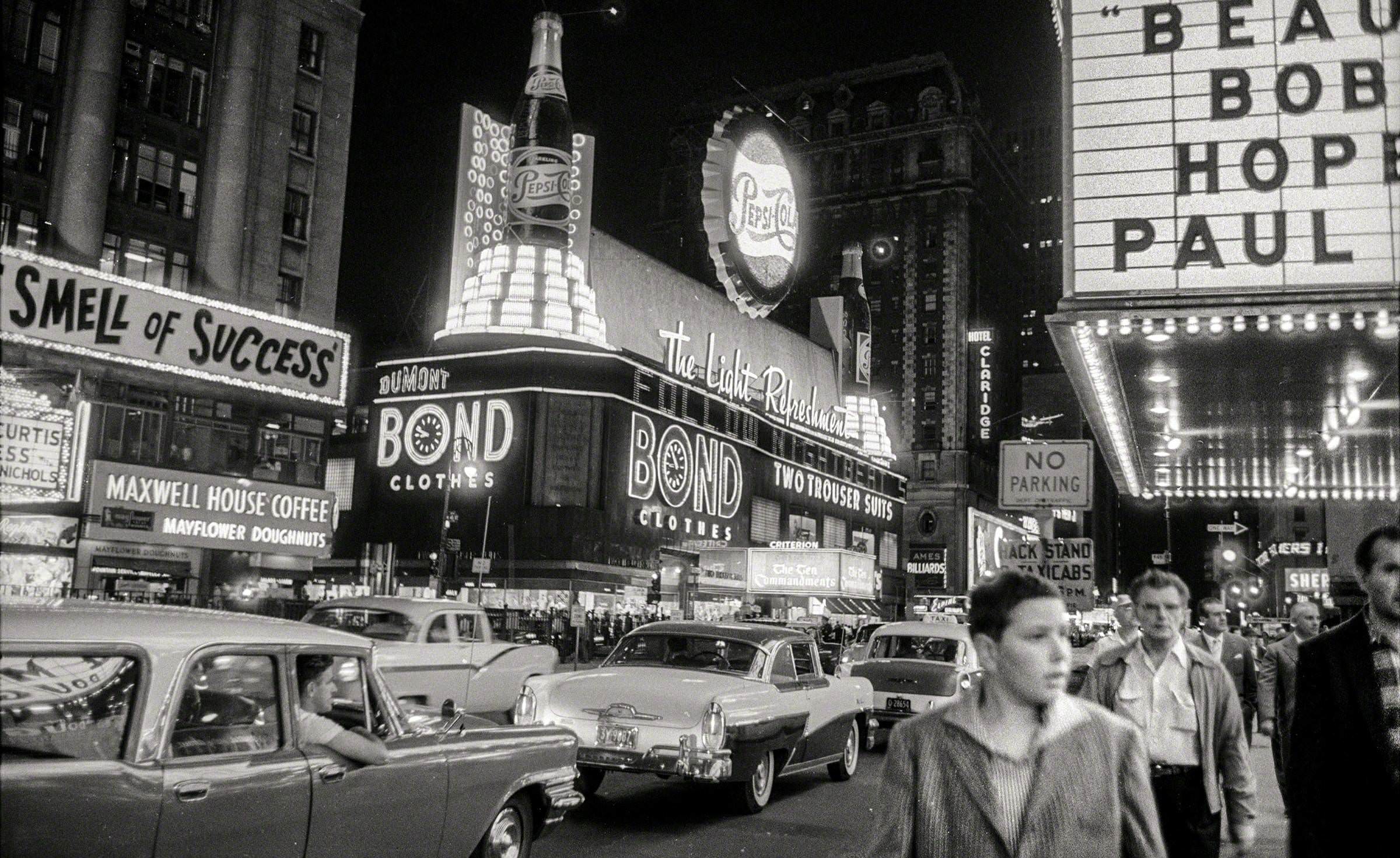
Times Square at night, circa 1950
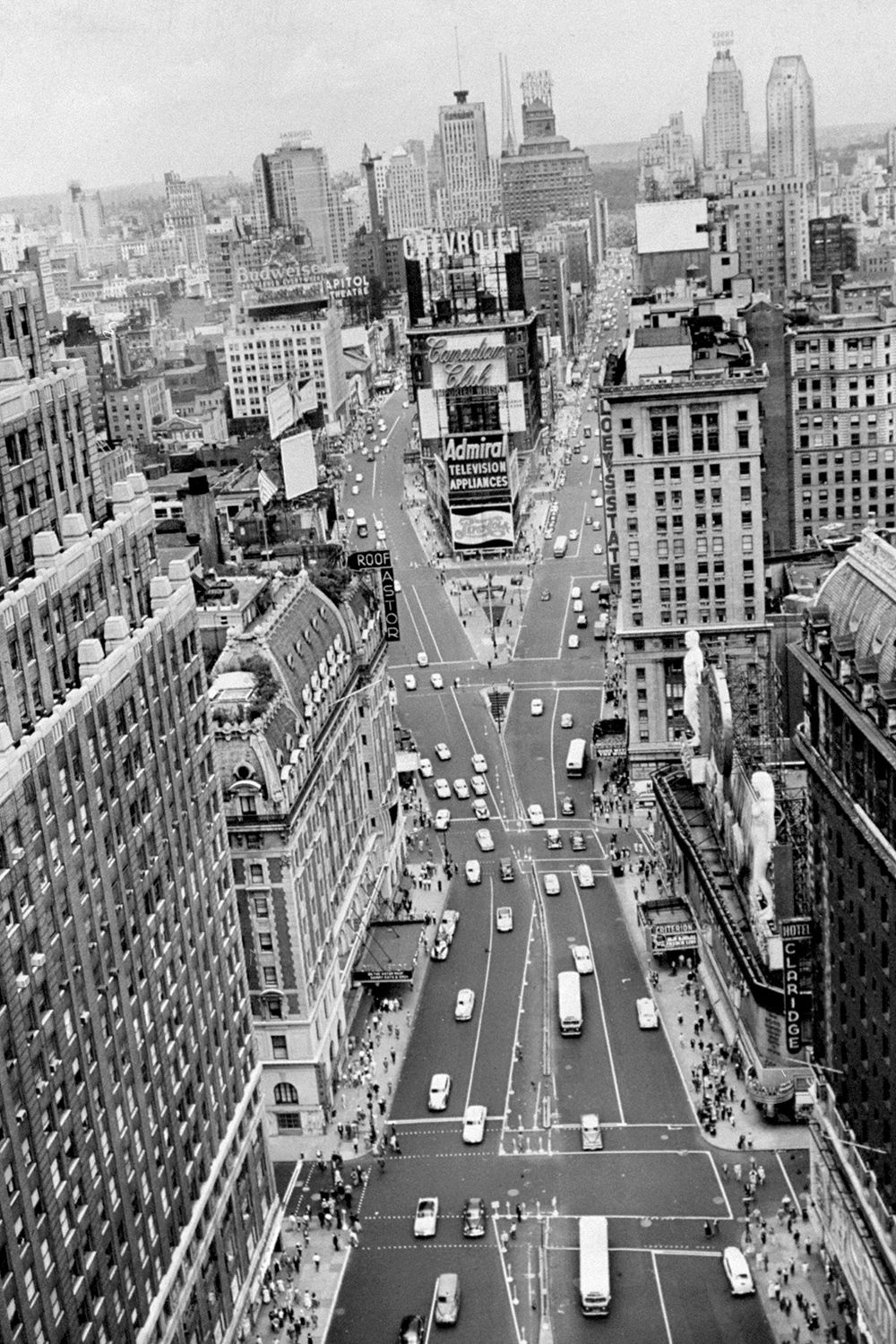
Times Square, circa 1951
Times Square, 1953
Times Square, 1954
Times Square, 1955
Times Square, 1955 – wide view.
Times Square at night, raining – 1957
Times Square at night – 1957
Times Square, 1961. Note the Horn and Hardart Automat.
Times Square, 1964. Found at Frog Blog (Now inactive)
Times Square, 1966
Times Square, 1966, by night
Times Square, 1967
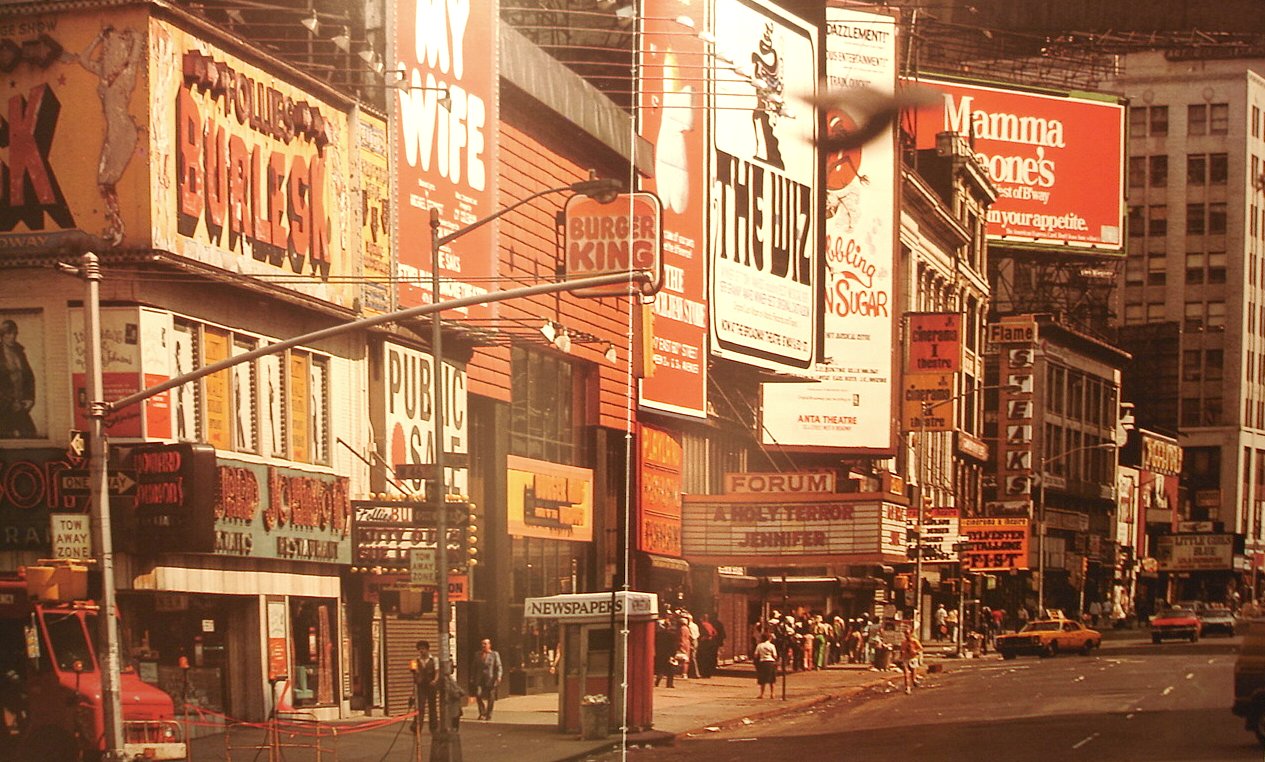
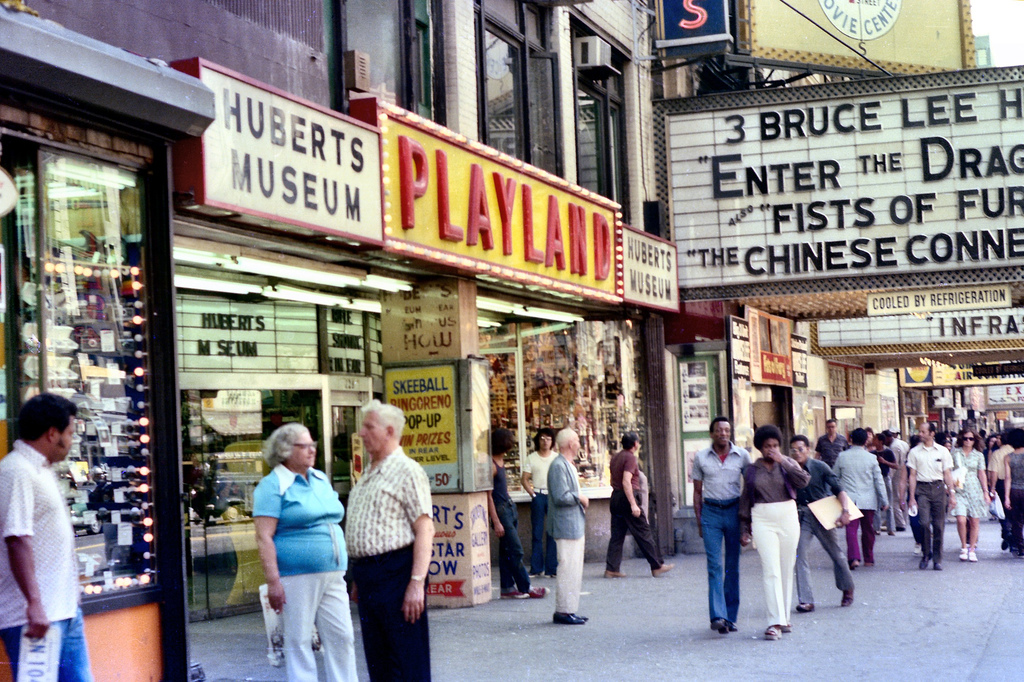
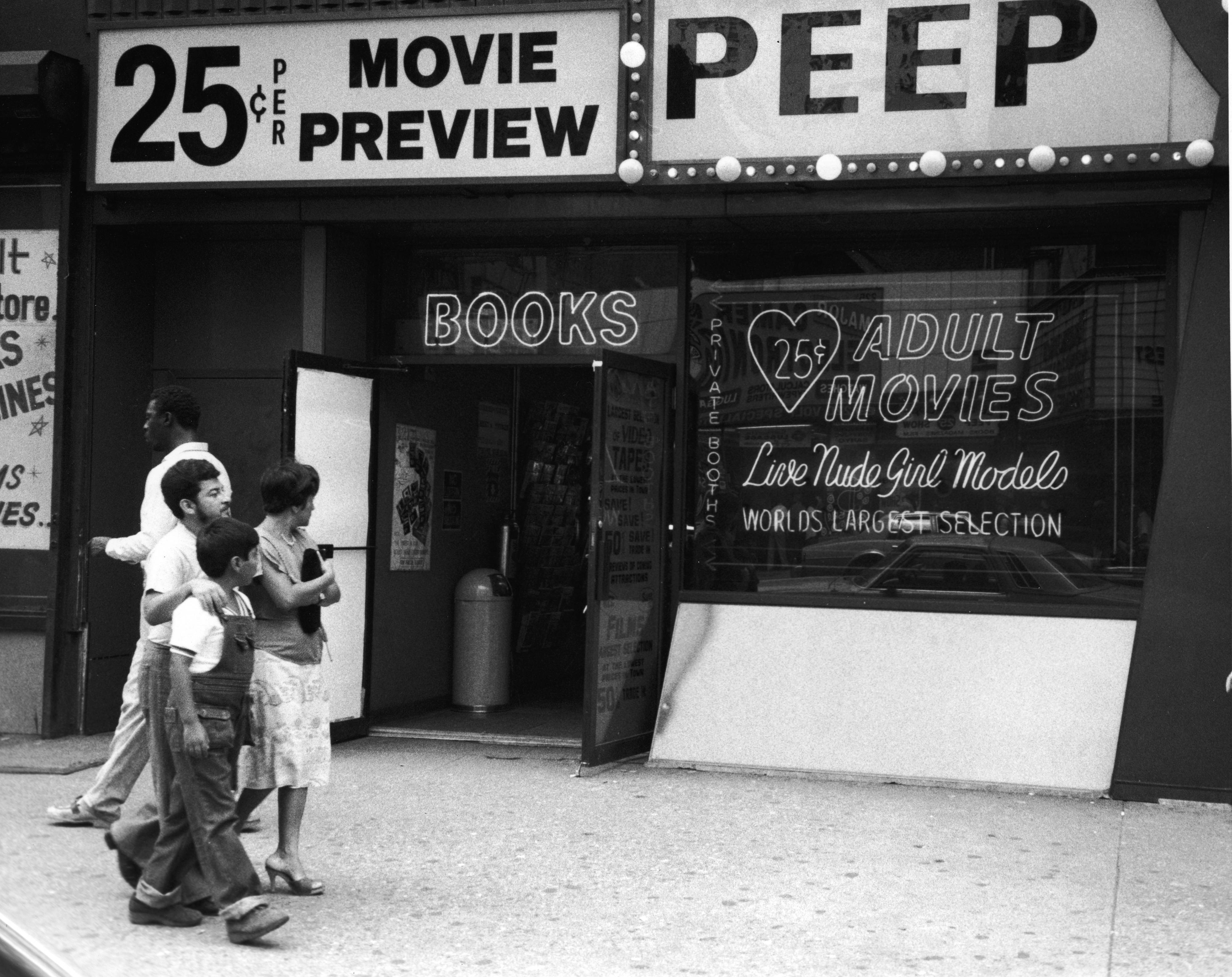
By the 1970’s, Times Square had become a cesspool of smut, as shown in the following images:
Times Square, 1973
I remember this Playland well – You could play Fascination there if you were over 18. There was one transient dude who would park himself right by the entrance and give passers-by the razzberry.
Time Square at night
Filthiest!
I remember one theatre on a side street that advertised “3 Hours of Solid Beavers!”
In the mid 1990’s, Mayor Rudy Giuliani led a campaign to close the smut houses and restore the Times Square area to something more tourist-friendly. Supporters claim it’s an improvement, detractors point to the “Disneyfication” of the area. Having grown up there, I’m in the first camp. The 1970’s were depressing, and I’m glad that era is gone.
I won’t be around to see what Times Square looks like when my grandchildren take their grandchildren there, but I’ll bet it will still be something amazing to look at.
Yesterday I posted about the rice on the chessboard problem, and after I finished, my mind got… squirrel!
Well, yeah, that’s about how it works. I started wondering how long that much rice would last if you were feeding the entire population on a daily diet of 2027 calories. All of this is hypothetical, because living on nothing but rice is not great nutrition, but it would keep you alive – sort of – and a good percentage of the world’s population would kiss your feet if you provided them with that much rice (19.7 ounces) daily on a regular basis.
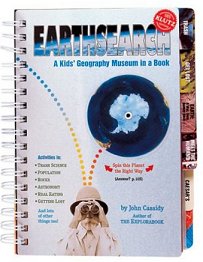
Since that squirrel just trotted through my mind, I’d like to pause here and put in a plug for an awesome book, Earthsearch by John Cassidy. This little wonder is a geography museum for kids that you can hold in your lap, full of games and facts and hands-on stuff. I was reminded of this by the fact that one section actually contains 4.8 ounces of rice, less than half of what the average kid (8-14 years old) needs per day. This is divided again into two bags, 2.8 ounces and 2.0 ounces respectively – and a spinner that shows your odds (1:20) of being born in the Western world. If your spin is lucky, you get to eat almost 500 calories. Spin poorly, and all you get is about 280 calories, enough to keep a kid hungry for a while and drive the point of world malnutrition home.
Back to our regularly scheduled programming: I’m also assuming that everyone is an adult male, 5’11” tall and about 150 lbs, which is where the 2027 calories come from. Of course that’s going to fluctuate wildly when you factor in the dietary needs of women, children, and people of different sizes and metabolisms. Still, it’s good enough for government work – all I’m doing here is coming up with a nice round number that my mind can wrap itself around.
Thanks to a handy dandy spreadsheet, I didn’t need to do much math.
461,168,602,000 metric tons of rice (bigger than Mount Everest, remember), at 35,273.962 ounces per ton is equivalent to 16,267,243,742,541,100 (16.2 quadrillion) ounces.
Today, the world’s population, according to Worldometers is estimated at 7,066,853,164.
If it takes 19.7 ounces of rice to feed our average citizen, then we’re going to require 139,266,082,699.99 (139.2 billion) ounces of rice to feed the world for a day.
Which means that with his reward from King Shihram, Sissa ibn Dahir could feed today’s world for 116,807 days, or the equivalent of 320 years. That is a lot of sushi.


































 Playing in the World Game