WGASA?

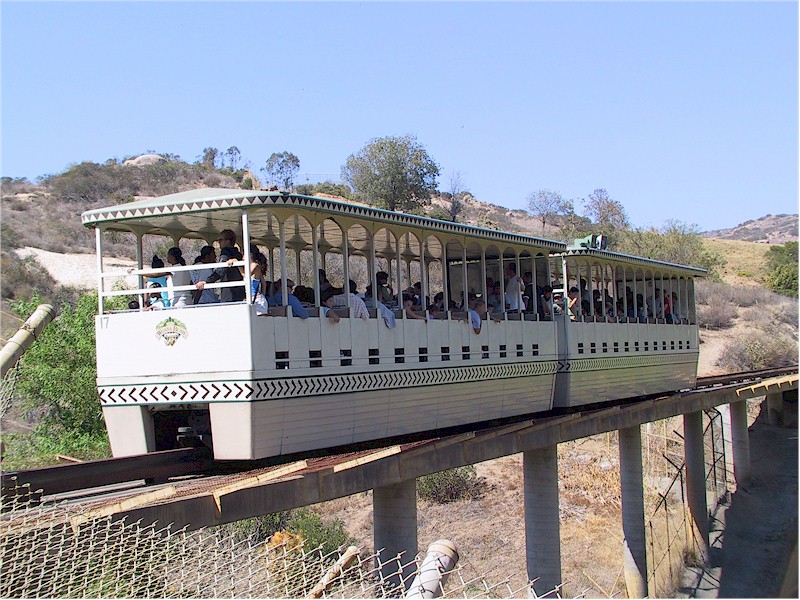
When the San Diego Zoo opened a second, larger branch called the San Diego Wild Animal Park, built around an enormous open-field enclosure where the animals roam free, visitors would ride on a monorail called the Wgasa Bush Line which circles the enclosure.

They wanted to give the monorail a jazzy, African sounding name. So they sent out a memo to a bunch of zoo staffers saying, “What shall we call the monorail at the Wild Animal Park?” One of the memos came back with “WGASA” written on the bottom. The planners loved it and the rest is history. What the planners didn’t know was that the zoo staffer had not intended to suggest a name. He was using an acronym which was popular at the time. It stood for “Who Gives A Shit Anyhow?”

Bohica!

The Old Wolf has spoken.

Kecak: Balinese Monkey Chant.

Best representation of the Kecak I’ve found.

Gunung Kawia is an 11th century temple complex in Tampaksiring north east of Ubud on Bali, Indonesia.

Kecak (pronounced [ˈketʃaʔ], alternate spellings: Ketjak and Ketjack) is a form of Balinese dance and music drama, originated in the 1930s Bali and is performed primarily by men, although a few women’s kecak groups exist as of 2006. Also known as the Ramayana Monkey Chant, the piece, performed by a circle of 150 or more performers wearing checked cloth around their waists, percussively chanting “cak” and throwing up their arms, depicts a battle from the Ramayana where the monkey-like Vanara helped Prince Rama fight the evil King Ravana. However, Kecak has roots in sanghyang, a trance-inducing exorcism dance. From Wikipedia.

Even though it’s a completely different scenario, I had flashbacks to “Avatar” here.

The Old Wolf has spoken.

Trust, but Verify

All through the news services and the blogosphere an article is circulating (here’s a example) about a deaf man who was mocked by TSA agents as a “@#$% deafie,” humiliated in other ways, and then had his bagged candy stolen and eaten right in front of him. Sounds outrageous.

Now, I’m no huge fan of TSA excesses, nor of their basic philosophy of knee-jerk response to every sneeze or change in the wind. Numerous articles, including one quoting former TSA chief Kip Hawley have raised the issue that the entire airport security system is broken beyond repair.

That said, I’m still willing to bet that most TSA agents out there are folks just like you and me, and that only a very small minority are really there to perpetrate distilled douchebaggery or exercise unrighteous dominion for the sake of inflating their own egos. And, this article seems to stretch credibility.

Add to that the fact that the blogger, Tea and Theater, appears to have vanished from sight. The article quoted in the replicated news items is gone, and so is the root page.

And that raises all sorts of red flags in my book.

I’ve flown a lot, and had one or two less-than-pleasant interactions with the TSA, but I’ve also had countless more where I was treated with courtesy and efficiency, and even given extra help. So I really, really wonder what’s going on with this situation.

Within the realm of possibility: Tea and Theatre’s blog may be down for any number of reasons. He forgot to renew his subscription. The server is down. His blog was getting so many hits it exceeded bandwidth restrictions, and so on. It’s also possible that everything happened just the way he said it did.

But until I see some better confirmation about what really took place here, I’m thinking I should take this event with a grain of salt, rather than just forwarding it on to everybody I know in the name of whipping up more anti-government sentiment.

The Old Wolf has spoken.

Hey, Old Guys! Do those still work? (Reflections on the World’s Fair).

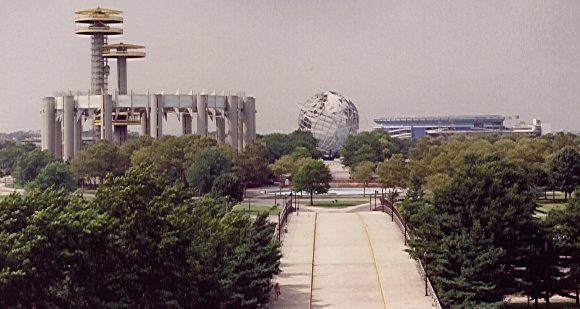
I recently found this image and it got me thinking, and thinking some more, about my own experiences with the 1964-1965 New York World’s Fair.

Not much is left of the New York World’s fair of 1964; even those awesome towers are now looking sadder and sadder, as time and the elements take their toll… but how the memories linger. My mom took me, and I think I was there for only a day, but I was impressed. Looking back, it now seems like a cross between Disney’ EPCOT and Tomorrowland, with an endless variety of things to see and do.

The first place I ever had a Belgian Waffle.

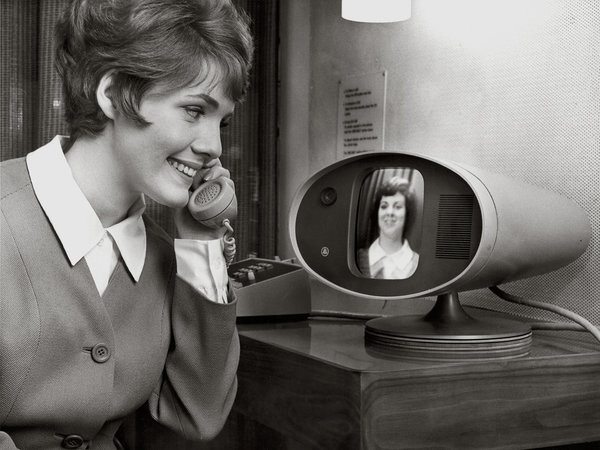
The first place I ever saw a picturephone function, at the Bell Telephone pavilion. It was a sexy idea in concept, but the old sets, requiring a CRT and having only a tiny screen, never caught on, and copper wire made bandwidth narrow and expensive. Not until the advent of the PC, smartphones, and the Internet did the concept become practical.

Speaking of phones, at that age I would always check pay phones for forgotten coins in the coin return bin. I remember finding one that was out of order, but when I tapped the switchhook, it disgorged about $8.00 in change like a slot machine… Score!

The generous phone in question was right in front of the Mormon pavilion. Even though it would be another 5 years or so before I joined the LDS Church, (to my mother’s everlasting dismay, her pioneer family having rejected organized religion when she was a little girl), I remember this building well – it was quite striking, designed as it was to look like the Salt Lake Temple. An interesting historical tidbit – the pavilion later became a church in Plainview, New York, dedicated December 2, 1967 and still in use (minus the temple façade, of course.)

My one tangible souvenir of the fair was a game of Wff ‘n’ Proof, which I had until the foam rubber case holding the dice crumbled into powder.

The Monorail. To me, AMF is synonymous with bowling, although I always had a soft spot in my heart for the Brunswick A-2 pinsetters, mostly because I learned how to repair them, lo these many years ago.

YoZY3Cr

An aerial view of the fairgrounds.

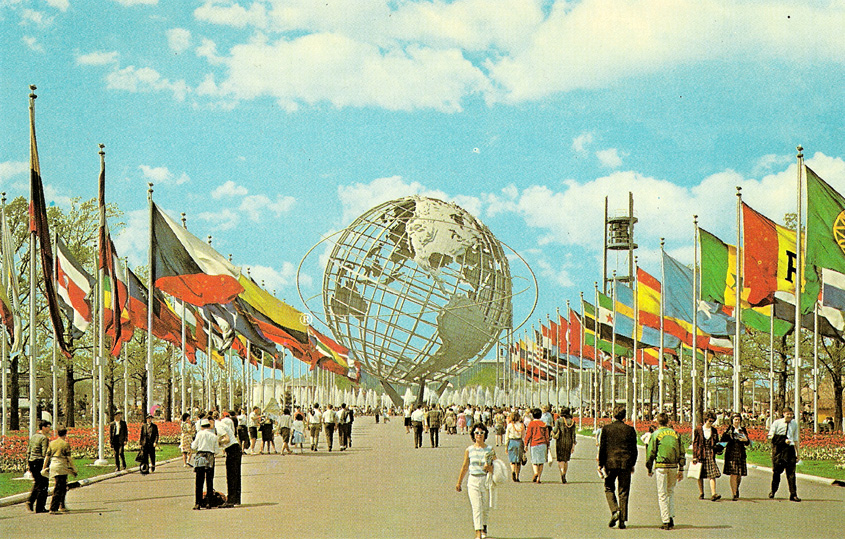
One thing I do remember about the fair was that it wasn’t packed wall to wall with people, the way Disneyland gets. This picture is pretty representative.

The New York pavilion. Look closely, and you can see there were actuallythree towers – the lowest one, hiding in the back, was used by the mayor to entertain dignitaries.

The Wikipedia article about the fair answers certain questions I had about why they don’t do this sort of thing more often – apparently both the 1939 and 1964 fairs in New York lost money, although the second one did so more spectacularly as the result of mismanagement and possible corruption. (In New York? Nah…)

As time passes, events like this have become less relevant because of the massive amount of information and cultural exposure available through the broadcast media and the internet, but that doesn’t stop me from wishing they’d do another one somewhere. Epcot still seems wildly popular – I know I enjoyed it with my sweetheart when we went right after we were married, but at close to $100 a pop these days, it’s hard to justify the expense unless you have good friends who get you in for free.

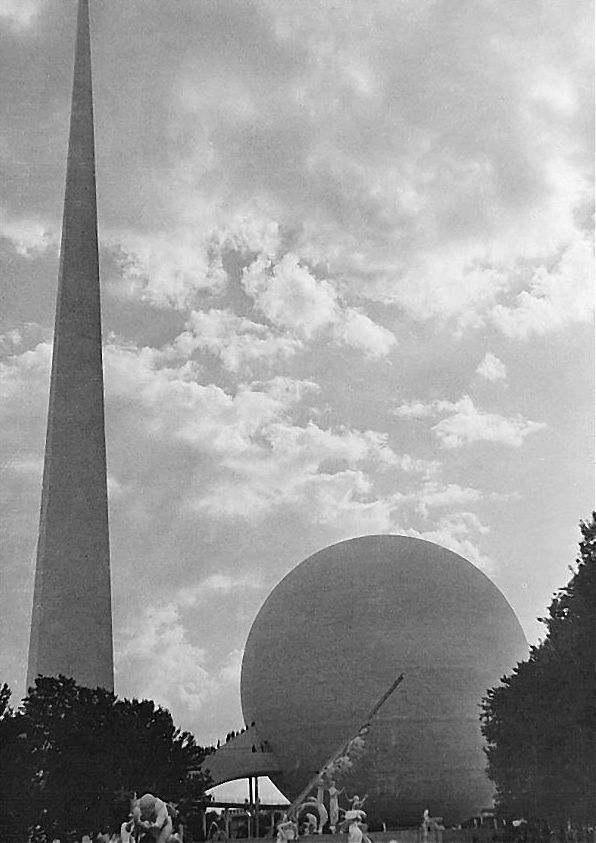
I think Mom must have taken me because she went to the 1939 fair as a young woman – the following shots were taken during one of her visits there:

The trylon and perisphere.

An avenue among the exhibits. Looks rather sparsely attended.

Tourist shot. The Life Savers-sponsored parachute ride was a popular attraction, costing 40¢ per ticket at the time. After the fair closed, the ride was moved to Coney Island, where I had the thrill of riding it. The tower still stands, although the attraction is no longer functional – it closed in either 1964 or 1968, depending on whom you talk to. (Mom was a lot pudgier then, I almost don’t recognize her!)

Thus endeth the nostalgia.

The Old Wolf has spoken.

Disclaimer

John Howard Griffin

I read “Black Like Me” about once a year.

Widely acclaimed for its daring, roundly criticized for its superficiality, it still resonates 50 years later.

Yes, as a nation we’ve made significant forward motion, but the recent viral video featuring Ms. Karen Klein who was bullied by some truly misguided 7th-graders until she wept demonstrates in a riveting manner how the herd instinct operates. If a group of people conspire to keep another person/group/race/religion down, and no one does anything to stop it, things spiral out of hand in a frightening manner. Translate those four boys into an entire society and you can see that the primal brutalities which lay at the heart of the slave trade and all subsequent indignities inflicted upon those of African descent are in no way gone… just covered up with a veneer of respectability. There are still some really, really mean people out there.

I was 4 years old when Rosa Parks shook the world, 8 years old when “whites only” was still seen commonly around the South, and 14 years old when civil-rights activists marched from Selma to Montgomery. I was fortunate to have been raised in the multi-racial, multi-faith, and multi-cultural environment of New York, but there are millions of people my age who were not, and for whom second-class citizenship was as normal as a toasted English muffin. Many of them are still alive, and old habits and old ideas die hard.

The good news is that the rising generation is being brought up in a world where intolerance and prejudice is largely looked upon as an abomination rather than the norm. Witness the more than $600,000 raised by over 30,000 people from 80 nations for the good Ms. Klein by indiegogo, who, thanks to that outpouring of support and execration of the bully mentality, will never have to work again. Witness the punishment of the four boys involved, who instead of the usual slap on the wrist were handed 1-year suspensions, community service, and anti-bullying counseling. Nowadays, more and more people are becoming aware that they detest bullies, and racists fit squarely into that category.

Griffin’s book was described by Stokely Carmichael (Kwame Ture) as “an excellent book—for whites.” Griffin himself agreed and ultimately scaled back his lecturing, realizing that it was disingenuous for a white man to be speaking for the black community when they had many powerful voices of their own. Yet in the 21st century, when the black power movement has become more or less a historical footnote in the consciousness of today’s young people, this book – along with some others I could recommend1 – is in some ways more germane now than it was then, precisely because the long road of the African American is no longer front and center in the American psyche, but the old attitudes remain, percolating just below the surface and in danger of surfacing should we as a society cease to be vigilant.

I recall that when I read this book for the first time, I wished fervently that I could get hold of the original Sepia articles which preceded the book’s publication. I wanted more pictures than the few small prints that adorned the paperback’s cover. I still wish that, but thanks to the miracle of the Internet, many photos of Griffin have surfaced. I have collected all the ones I can find, in the best possible resolution, and I present them here for their historical value. NB: I have no doubt these pictures are still copyright by someone, somewhere; if you own these images and have an issue with their being displayed here, a quick comment will be more than sufficient to have them removed.
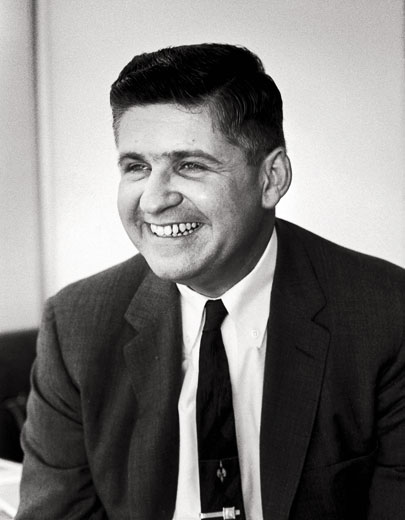
John Howard Griffin
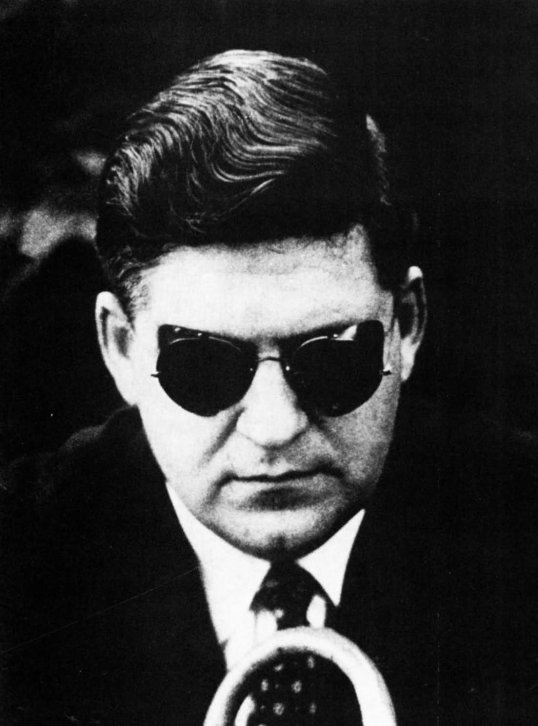
Griffin after a 1946 Air Force accident left him blind – he learned cane walking in the French Quarter of New Orleans, and when he returned there for his Sepia project he had to re-learn the quarter as a sighted man.
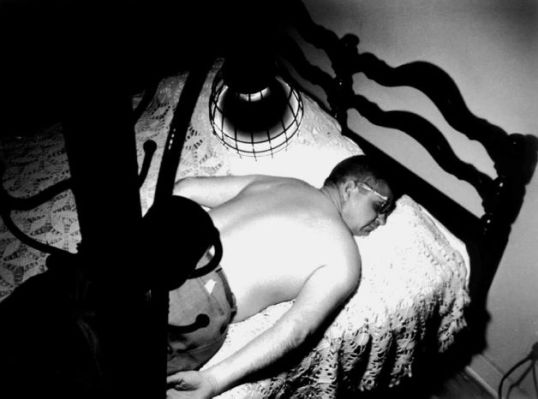
Taking large doses of medication designed for vitiligo patients and lying under a sun lamp, Griffin darkened his natural skin to a dark brown tanned base, which was then covered with stains on his face, legs and hands.
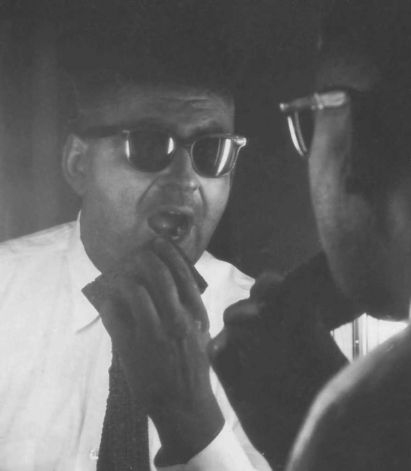
Griffin shaved his head, and applied coat after coat of stain, wiping off the excess until he could pass for black, and was even considered by many African-Americans with whom he associated to be one of the “darker Negroes.”
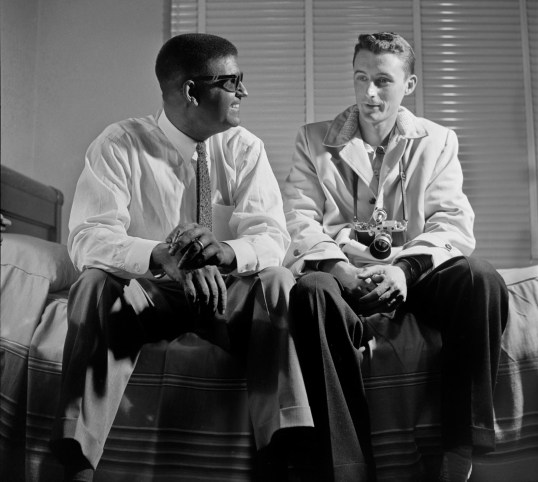
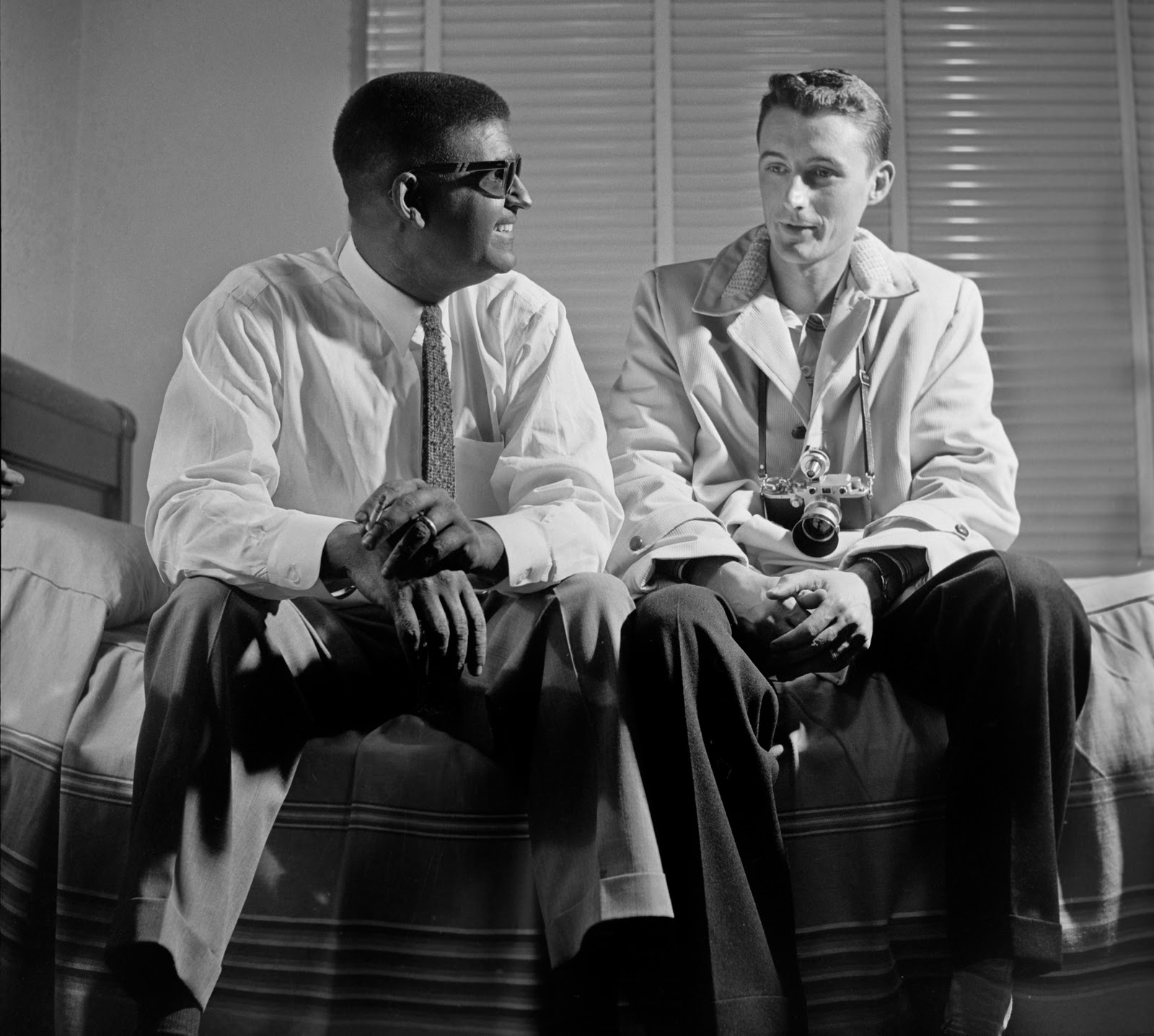
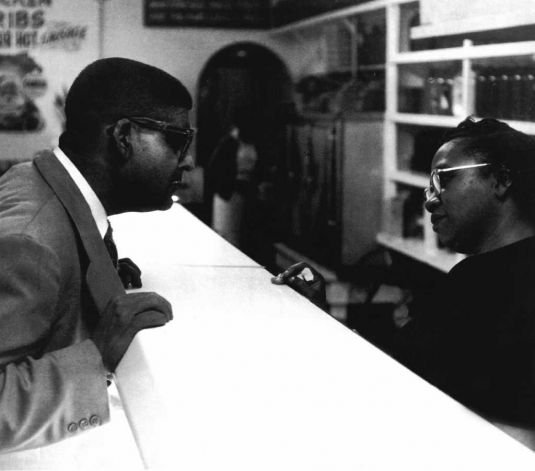
After his initial tour through the South, Griffin returned to the places he had written about with photographer Don Rutledge, show here in 1959, to chronicle his project in photographs. It looked odd to have a white photographer taking pictures of a black man, so the two of them had to present Rutledge as a tourist, with Griffin just “happening” into the picture at the right time.
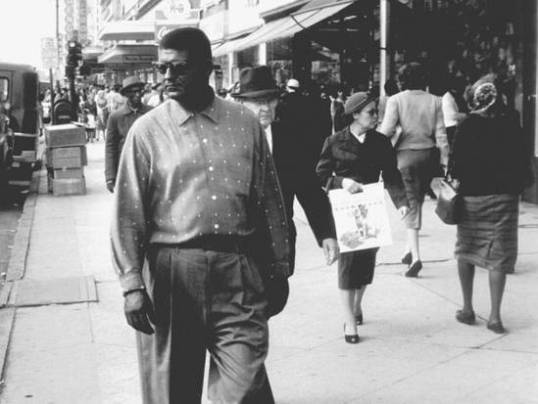
“Here it was pennies and clutter and spittle on the curb. Here people walked fast to juggle the dimes, to make a deal, to find cheap liver or a tomato that was overripe. Here was the indefinable stink of despair.” (From Black Like Me)

While walking the French Quarter as a white man, Griffin looked for a way to enter black society. He often stopped at the shoeshine stand where Sterling Williams worked, and they chatted a number of times. After making the transition, he returned to Williams and confided in him; Williams and his partner, who owned the stand, provided a critical service to Griffin to help him make the initial shift into the world of a black man in New Orleans.
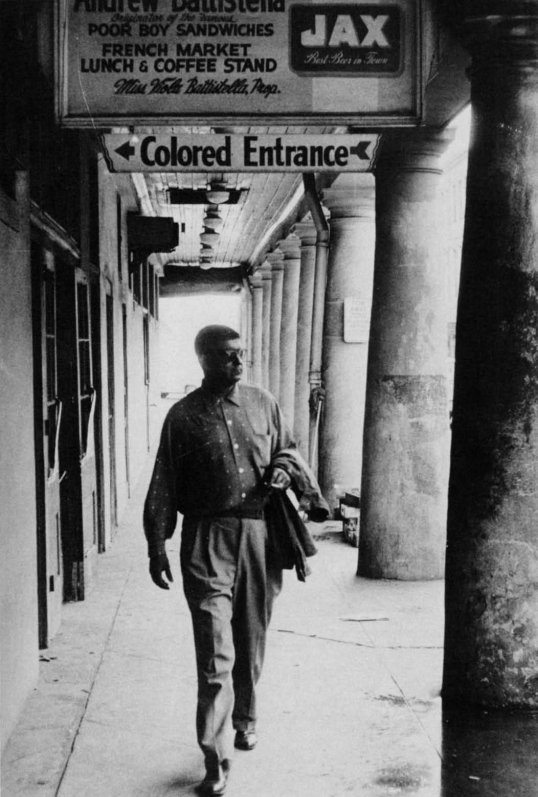
“I got off and began walking along Canal Street in the heart of town… I passed the same taverns and amusement places where the hawkers had solicited me on previous evenings. They were busy, urging the white men to come in and see the girls. The same smells of smoke and liquor and dampness poured out through half-open doors. Tonight they did not solicit me. Tonight they looked at me but did not see me.” (From Black Like Me).
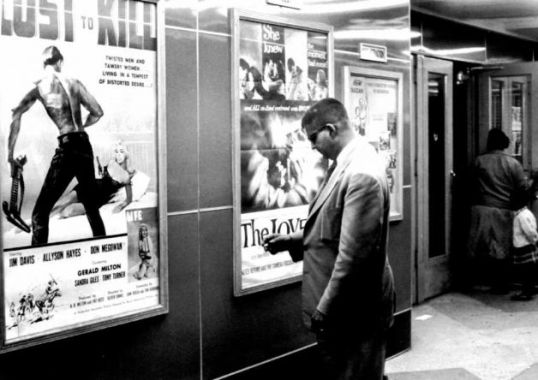
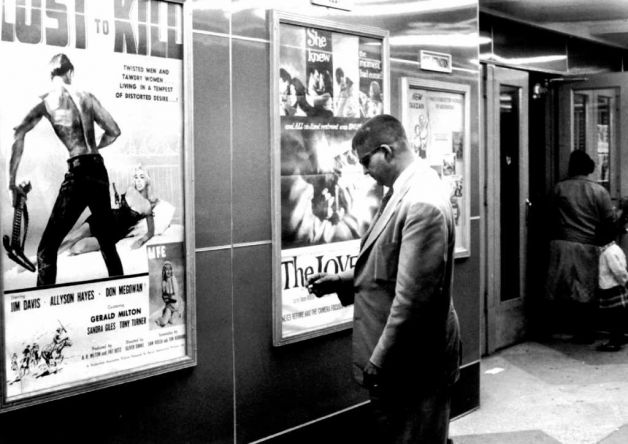
Griffin appearing to look at a movie poster.

Griffin found that as a black man he was the recipient of rejection, abuse, and outright hatred at the hands of white people, whereas blacks treated him with great warmth. Passing through the same areas as a white man, he found the exact opposite; the white South looked elegant, refined and graceful, and all doors were open to him, but the black community regarded him with suspicion and treated him as an enemy.
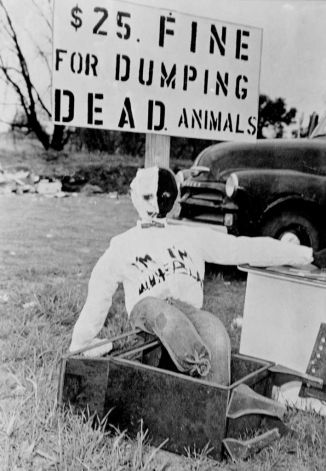
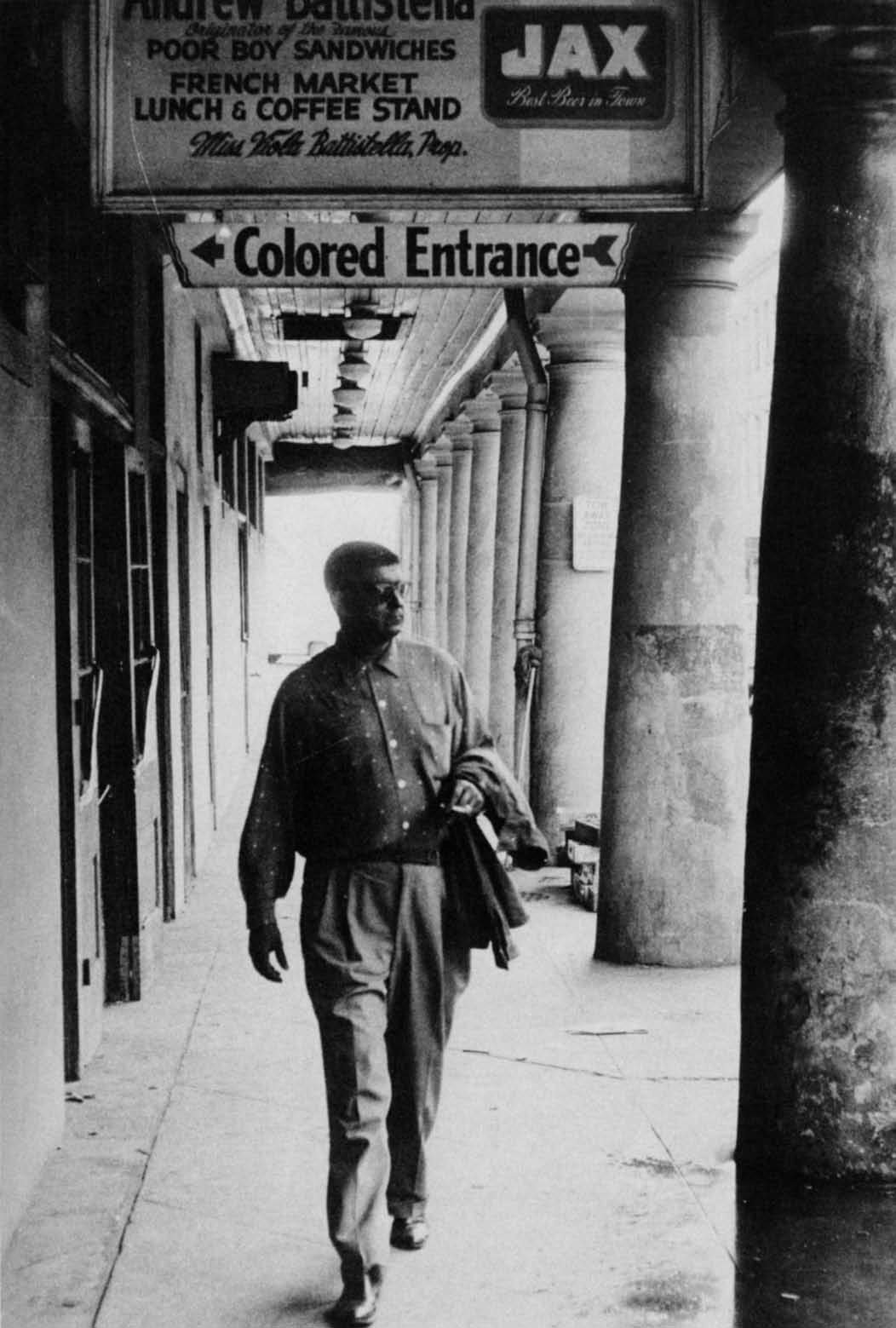
After the publication of Griffin’s works and publicity about his experiment began to spread, at one point he was hanged in effigy from the center of Main Street in Mansfield, Texas where he lived. The dummy was later removed and placed in the dump under this sign. While hostility from some whites was intense once the project became known, the vast majority of letters sent to Griffin from all over the world were ones of support. Still, as a result of threats to his family, Griffin moved to Mexico for a time until the worst of the storm had blown over.

I keep this remarkable book on my shelf along with others, to remind me. So that I will never forget. Despite my cosmopolitan upbringing, I am a child of those times, and I must never allow a whisper of intolerance or prejudice to surface.


1 Other books which I read periodically include To Be A Slave, by Julius Lester; Death at an Early Age by Jonathan Kozol; and Black Boy by Richard Wright. Libraries bulge with other, more erudite works, but these speak to me, and help me to stay centered.

Disclaimer