I posted previously about vanished New York eateries, foremost among them Nedicks, and today while sorting through some things ran across this little gem which I had forgotten I owned.
About the size of a dime, these were included in packs of cigarettes purchased from a vending machine. Each token could be redeemed at the counter, giving Nedicks’ customers a discount on cigarettes. The token bears the image of Walter S. Mack, Jr. president of National Phoenix Industries, Inc., owner of the Nedicks’ chain and inventor of the promotion. The tokens were manufactured by the The Scovill Manufacturing Company.
A friend of mine posted a link on FB to the “Civil Rights” speech of Jean-Luc Picard found in “The Drumhead.” The words quoted were:
“You know, there are some words I’ve known since I was a schoolboy: ‘With the first link, the chain is forged. The first speech censured…the first thought forbidden…the first freedom denied–chains us all irrevocably.’ Those words were uttered by Judge Aaron Satie, as wisdom…and warning. The first time any man’s freedom is trodden on, we’re all damaged.”
In response, another individual posted the video below, a compilation of some of the most awesome things that Patrick Stewart was given to say over the course of the show:
It’s hard to find sufficient words to express how much I love that collection of quotes – it admirably illustrates why I still love ST:TNG with all my heart.
(Returning to reality for a minute, a large hat tip is owed to the writers who put those words into Patrick Stewart’s mouth; you can’t come up with ideas like that unless they are part of your own psyche, so my thanks to the awesome men and women who crafted these episodes and gave Sir Patrick such stirring lines to say. Now back to your regularly-scheduled fantasy.)
Now let it be said that Patrick Stewart is not Jean-Luc Picard – despite his massive popularity in that rôle, he’s an accomplished Shakespearean actor, a knight of the realm, and has a wicked and irreverent sense of humor. But he’s also a pretty awesome human being.
Speaking of his experiences as a child, Stewart said,
“Our house was small, and when you grow up with domestic violence in a confined space you learn to gauge, very precisely, the temperature of situations. I knew exactly when the shouting was done and a hand was about to be raised – I also knew exactly when to insert a small body between the fist and her face, a skill no child should ever have to learn. Curiously, I never felt fear for myself and he never struck me, an odd moral imposition that would not allow him to strike a child. The situation was barely tolerable: I witnessed terrible things, which I knew were wrong, but there was nowhere to go for help. Worse, there were those who condoned the abuse. I heard police or ambulancemen, standing in our house, say, “She must have provoked him,” or, “Mrs Stewart, it takes two to make a fight.” They had no idea. The truth is my mother did nothing to deserve the violence she endured. She did not provoke my father, and even if she had, violence is an unacceptable way of dealing with conflict. Violence is a choice a man makes and he alone is responsible for it.”
So on stage and off, in character or not, the following expresses how I feel, allowing the character to stand for the man:
200 g Tomatenmark
175 g Apfelmus
500 ml Wasser
15 g Meersalz
15 g Zwiebelpulver, fein
15 g Paprikapulver
25 g Currypulver
Zubereitung
Tomatenmark, Apfelmus und Wasser in einen Topf geben, verrühren und kurz aufkochen.
Gewürze dazu fügen, fertig.
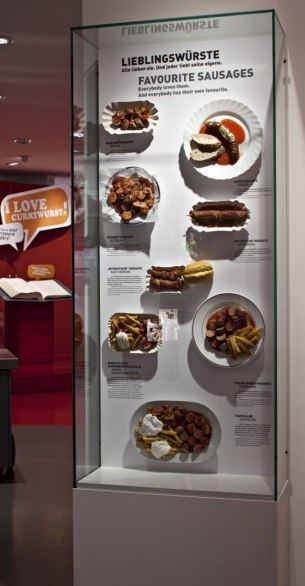
Die Sauce warm über die Currywürste geben! (Für die Currywurst kann man jede Wurstart nehmen: Mettwürstchen, Nürnberger, normale Bratwurst, Siedwürstchen. Das hängt ganz von der jeweiligen Vorliebe ab.)
This picture appears in numerous places around the net with the caption “Danish children trick-or-treating.” While the thought of children dressing up in scary costumes and going door to door begging for treats sounds every bit like Hallowe’en, the Danish tradition of Fastelavn (carnival), celebrated in February, has more in common with Mardi Gras. The Danish word means “the evening before the fast,” and represents the night before the beginning of of the Lenten season. The word ‘carnival’ stems from a Latin expression meaning “farewell to meat,” and originally was a period of celebration and feasting which preceded the six weeks of fasting and penance which marks the lead-up to Easter.
The children in the picture above are holding “raslebøsse”, or “rattle boxes” – small cans with a slotted top used to collect money. They go from house to house, calling “Fastelavn er mit navn” (my name is Fastelavn) and expect coins or candy; they also gorge themselves on “Fastelavn boller” or Lenten buns, which are cream filled sweet rolls covered with icing.
Danish children will also play “Slå katten af tønden” (beat the cat out of the barrel). A Pinata-like barrel decorated with black cats and stuffed with candy is hung, and costumed children are given a chance at breaking it. The child who first breaks the barrel and releases the candy is given the honorary title of “kattedronning” (queen of cats), while the child who knocks out the last piece of the barrel is dubbed “kattekongen” (king of cats).
While the barrel is now simply decorated, at one time it actually contained a black cat. Since these creatures were believed to harbor evil spirits, breaking the cat out of the barrel (whereupon the terrified creature would run off like a bat out of Hell), was said to banish evil to make way for spring.
I’m a packrat. I freely admit it. However, lately I’ve come to start calling myself an “archivist” – it sounds much more respectable; and there can be value in preserving things for posterity.
A recent series of photographs by Huang Qingjun, however, makes me wistful for the simplicity that some people live with. Well, almost.
Said Huang:
“The idea for the series about people’s material goods, now called Jiadang (Family Stuff), came in 2003 with some photos he took for the magazine Chinese National Geography. But the project didn’t really get under way until three years later, when Huang started travelling around China looking for suitable places and people.
“Most people thought what I was proposing was not normal. When I explained I wanted to set up a photo, that it would involve taking everything out of their house and setting it up outside, that took quite a lot of explaining,” he says.
“But almost all of them, when they realised what I was trying to do, they understood the point.”
These captivating images raise the question: How much 家当 (jiadang) do we really need? So many of us are accumulating things far beyond our needs, in a mad rush to die with the most toys. While I could surround myself with gewgaws and gimcracks (especially in my kitchen) until I had no more place to live, I do understand that 99.9% of it would be useless if it ever came to living without electricity or in, say, 350 square feet of space.
Leonardo Da Vinci once said that simplicity was the ultimate in sophistication. Less stuff means less work taking care of it, dusting it, and moving it; less money spent on acquiring it; and more time to pursue the only thing we can really take with us – relationships.
Am I going to “sell all that I have, and give to the poor” tomorrow? No, not bloody likely – I’m an addict and I know it. But I will be more careful in future, and will bend my will toward offloading as much of it as I can possibly bear to part with.
My thanks to Huang xiansheng for a wonderful glimpse into an unburdened life.
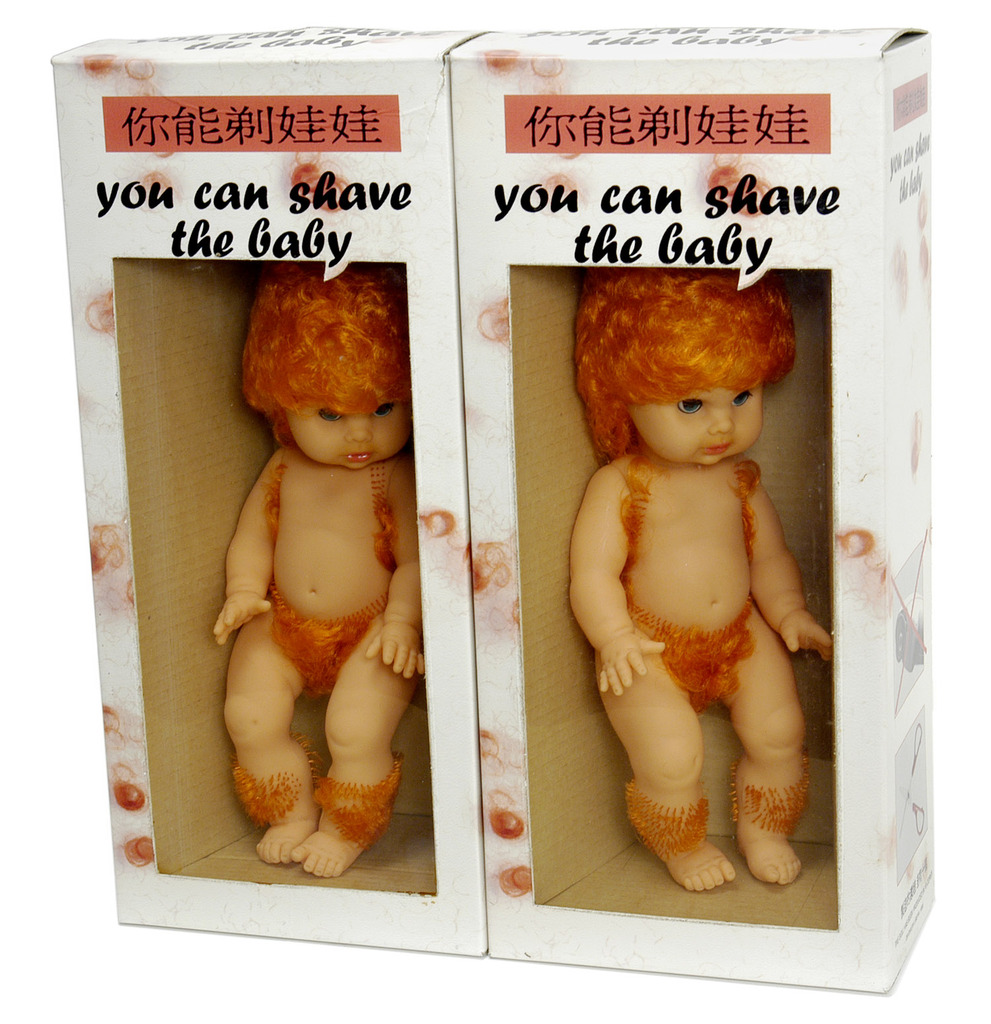
“It seems like the majority of commentators have misunderstood my intentions however and decided I’m making a comment on reality tv shows exploiting teen pregnancies. I’m not. It’s about the way these toys intrinsically train girls to have and care for children while they are still only children themselves. If you look in any toy catalogue the girls section is wall-to-wall babies and prams, make-up kits, kitchen sets and hoovers. We complain that children are growing up too quick, getting pregnant too early, when the only toys we give them teach kids to act like adults and prepare to have babies. It’s goes without saying that teaching young girls that these are the type of things which adult women should and do concern themselves with is also a very narrow definition of womanhood.”
Some time ago I posted about internet trolls, familiar to anyone who frequents forums and discussion groups. Indeed, one of the net’s most prolific and unsavory trolls was recently outed by Gawker (I’m not posting the link because it’s a pretty sordid story, but it’s out there if you’re interested.) Today I happened across a description of this kind of behavior from the early 19th century, which I thought was interesting – Trolling is not new, and apparently the only thing that has changed is the medium.
This litigious humour is bad enough: but there is one character still worse — that of a person who goes into company, not to contradict, but to talk at you. This is the greatest nuisance in civilised society. Such a person does not come armed to defend himself at all points, but to unsettle, if he can, and throw a slur on all your favourite opinions. If he has a notion that anyone in the room is fond of poetry, he immediately volunteers a contemptuous tirade against the idle jingle of verse. If he suspects you have a delight in pictures, he endeavours, not by fair argument, but by a side-wind, to put you out of conceit with so frivolous an art. If you have a taste for music, he does not think much good is to be done by this tickling of the ears. If you speak in praise of a comedy, he does not see the use of wit: if you say you have been to a tragedy, he shakes his head at this mockery of human misery, and thinks it ought to be prohibited. He tries to find out beforehand whatever it is that you take a particular pride or pleasure in, that he may annoy your self-love in the tenderest point (as if he were probing a wound) and make you dissatisfied with yourself and your pursuits for several days afterwards. A person might as well make a practice of throwing out scandalous aspersions against your dearest friends or nearest relations, by way of ingratiating himself into your favour. Such ill-timed impertinence is ‘villainous, and shows a pitiful ambition in the fool that uses it.’ – William Hazlitt, “On the Conversation of Authors,” 1820













 Playing in the World Game