
1910. Wellington, New Zealand.
“David Taylor’s butcher shop, Wadestown, showing decorated carcasses and horse-drawn delivery cart. David Taylor in doorway.”
Glass plate negative by Frederick James Halse.
1910. Wellington, New Zealand.
“David Taylor’s butcher shop, Wadestown, showing decorated carcasses and horse-drawn delivery cart. David Taylor in doorway.”
Glass plate negative by Frederick James Halse.
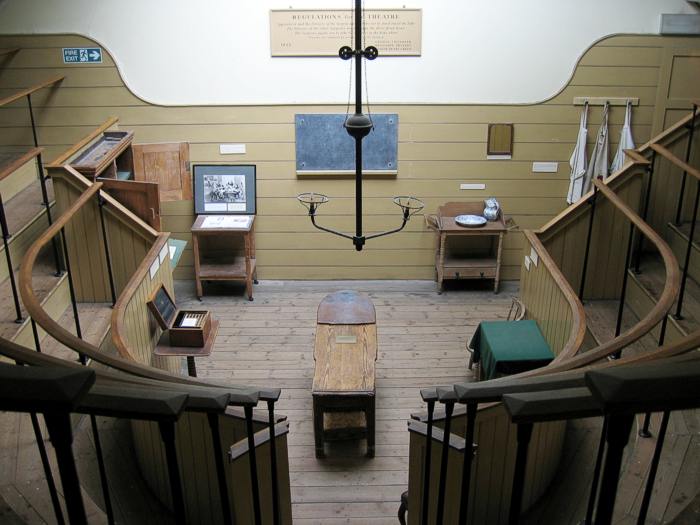
The Old Operating Theatre Museum and Herb Garret is a museum of surgical history and one of the oldest surviving operating theatres. It is located in the garret of St Thomas’s Church, Southwark, on the original site of St Thomas’ Hospital. This photo shows the reconstruction of the theatre as it would have looked while in use.

Built in 1822, the operating theatre was used for 40 years, when the hospital moved to a different location. The garret was walled up; it was forgotten, and remained undiscovered until 1957. Read more at Wikipedia and The Old Operating Theatre website.
For your gratuitous edification and mine – I had to go scurrying to the dictionary for this one – the “garret” referred to is “a habitable attic or small (and possibly dismal or cramped) living space at the top of a house.”

Place Saint-Georges in Paris, showing top-floor garret windows.

Carl Spitzweg, The poor poet (Der arme Poet), 1839, showing a garret dwelling.
The Old Wolf has spoken.

Found at Shorpy.
Women garage attendants at the Atlantic Refining Company. Photo by Jack Delano for the Office of War Information.
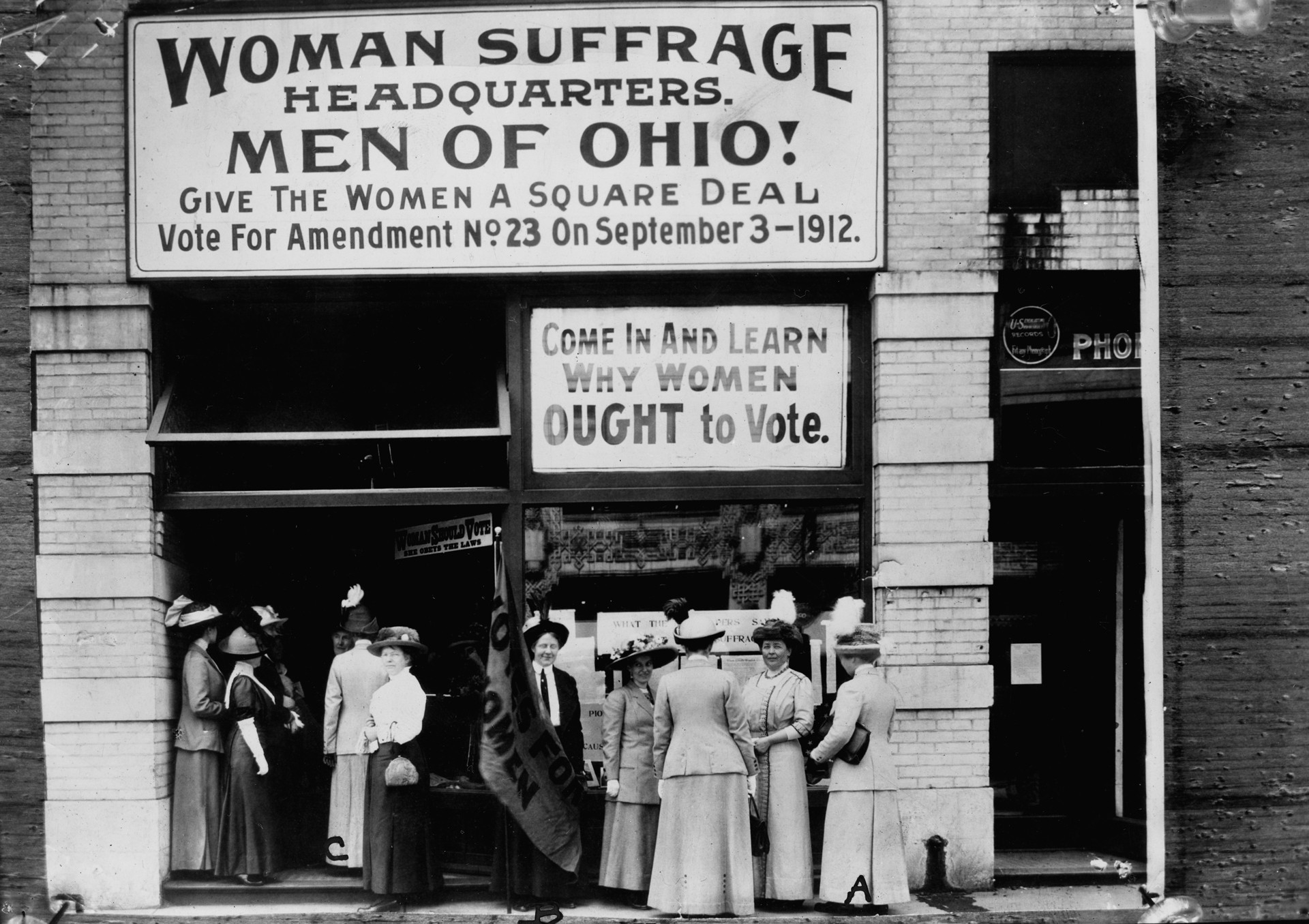
… dauntless crusaders for women’s votes! ♫
Woman Suffrage Headquarters, Ohio 1912. The 1912 measure failed, 57% to 43%. It was eventually passed in 1919. (Found at reddit.)
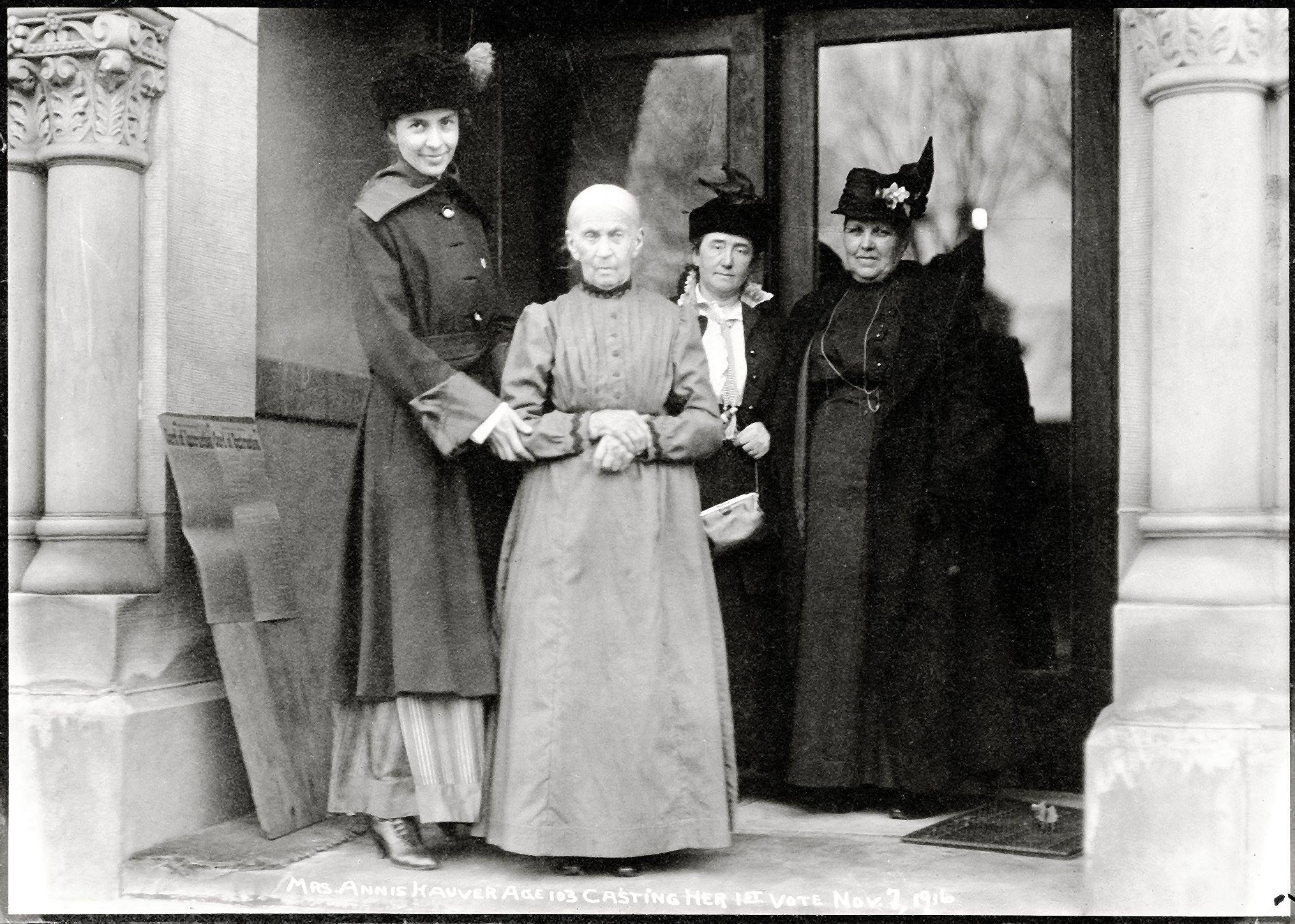
Some states, however, granted women suffrage earlier. Here’s an amazing image, shared by redditor /u/MerIinsBeard and originally posted by his 92-year-old grandmother, shows his great-great-grandmother accompanying her 103-year-old friend to vote for the very first time.
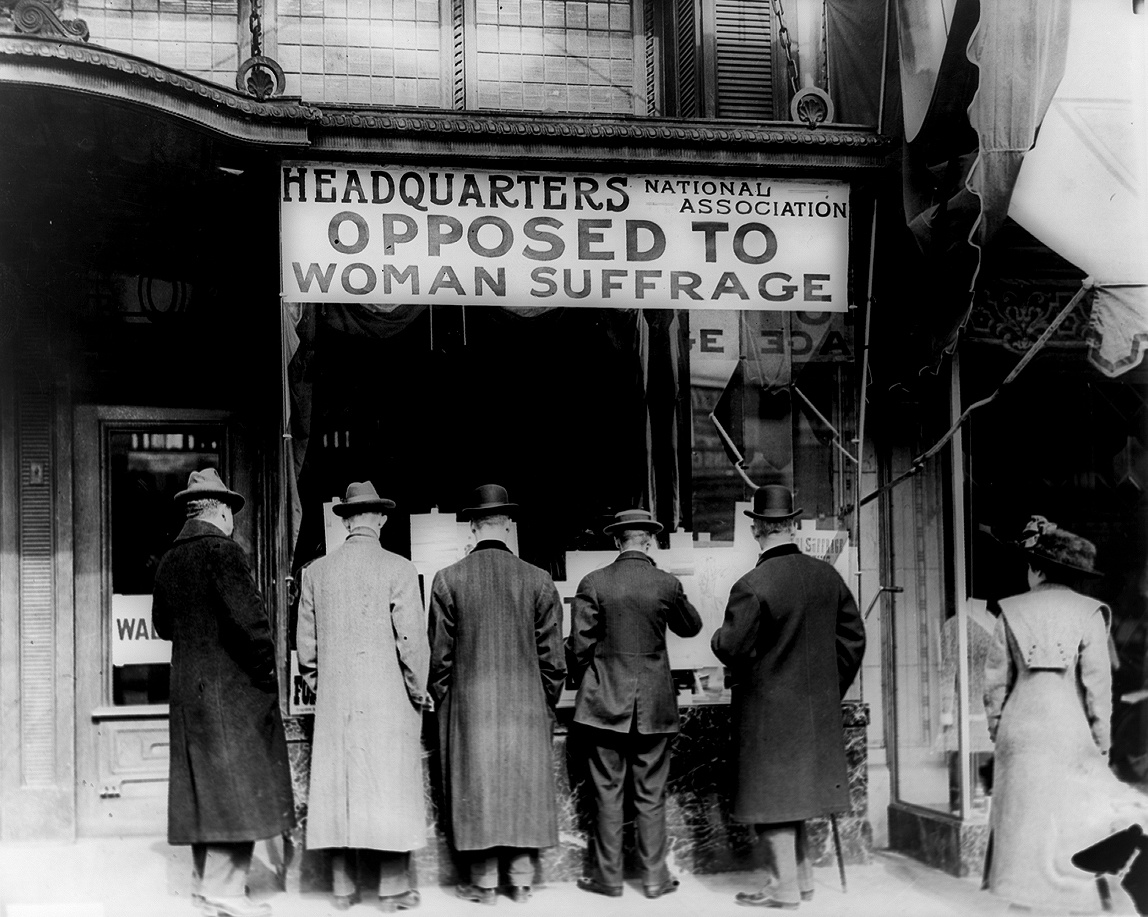
Of course, there was opposition:
But the suffragettes soldiered on:
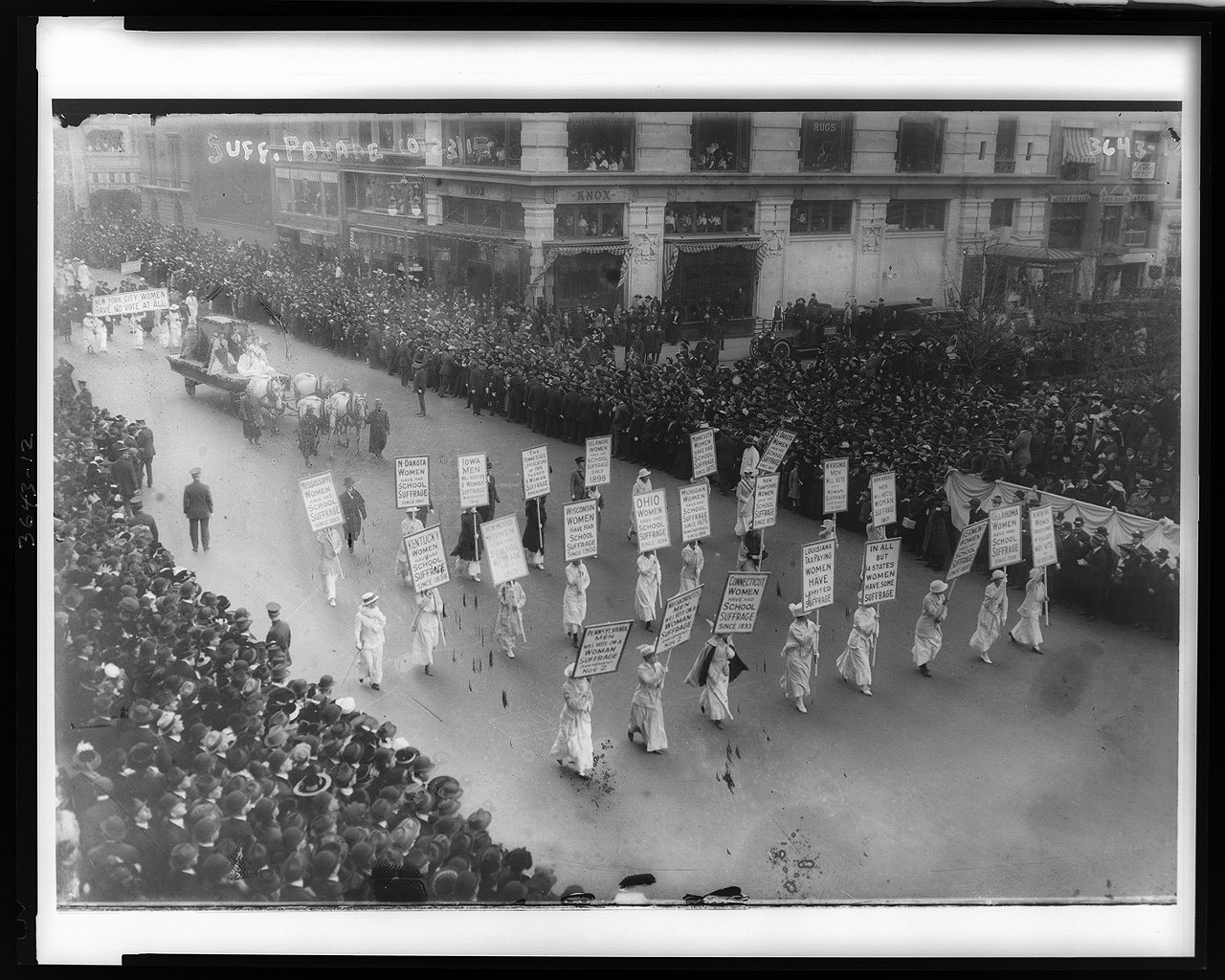
Suffragette parade, 10/23/1915
… until their efforts were rewarded.
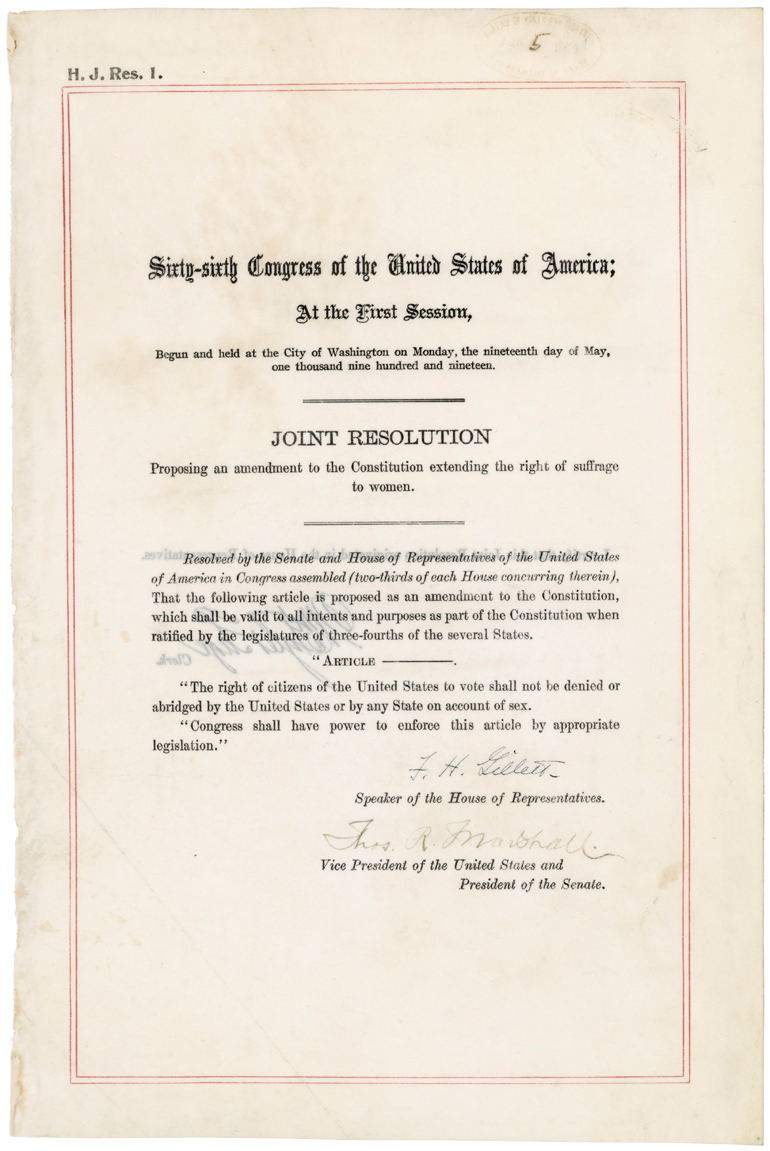
19th Amendment to the United States Constitution
A huge step for women, a giant leap for humanity. Yet there are still so many steps to take…
The Old Wolf has spoken.

Female worker bottling ketchup at the original Heinz factory circa 1897. Pittsburgh, PA.
I mentioned this image over at “Lost Cartoons,” but it’s appropriate to include here:
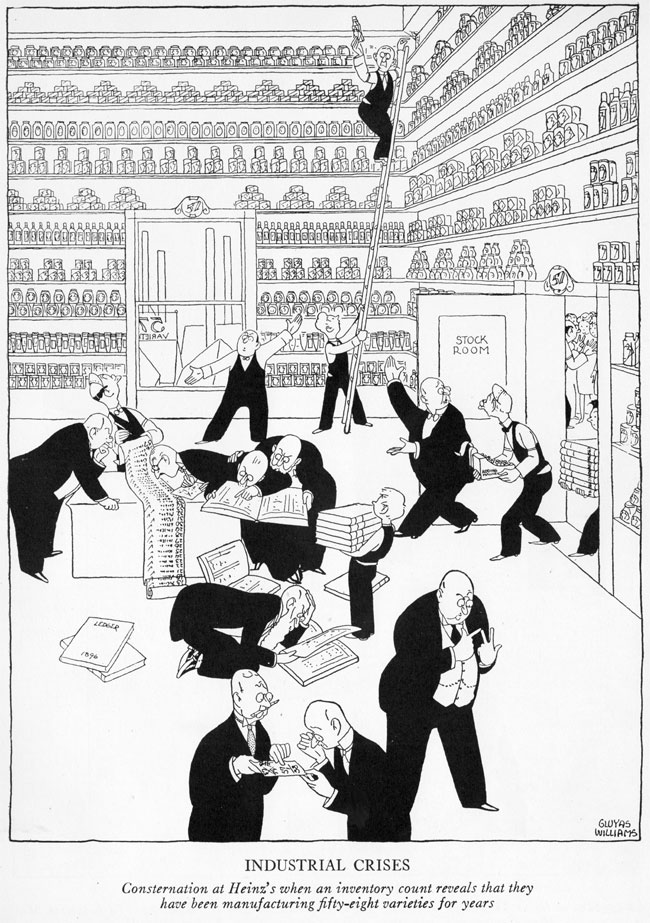
A little history:
Henry J. Heinz introduced the marketing slogan “57 Varieties” in 1896. He later claimed he was inspired by an advertisement he saw while riding an elevated train in New York City (a shoe store boasting “21 styles”). The reason for “57” is unclear. Heinz said he chose “5” because it was his lucky number and the number “7” was his wife’s lucky number. However Heinz also said the number “7” was selected specifically because of the “psychological influence of that figure and of its enduring significance to people of all ages”. Whatever the reasons, Heinz wanted the company to advertise the greatest number of choices of canned and bottled foods for sale. In fact by 1892, four years before the slogan was created, the Heinz company was already selling more than 60 products. (Wikipedia)
The Old Wolf has spoken.

“The Gare Montparnasse became famous for the derailment on 22 October 1895 of the Granville–Paris Express, which overran the buffer stop. The engine careered across almost 30 meters (100 ft) of the station concourse, crashed through a 60-cm (2 ft) thick wall, shot across a terrace and smashed out of the station, plummeting onto the Place de Rennes 10 meters (33 ft) below, where it stood on its nose. Two of the 131 passengers sustained injuries, along with the fireman and two conductors. The only fatality was a woman on the street below, Marie-Augustine Aguilard, who was temporarily taking over her husband’s work duty while he went out to get the newspapers. She was killed by falling masonry. The railway company later paid for her funeral and provided a pension to look after her two children. The accident was caused by a faulty Westinghouse brake and the engine driver, who was trying to make up lost time. A conductor was given a 25-franc fine and the engine driver a 50-franc fine.” (Wikipedia)

The Montparnasse wreck recreated at The Mundo a Vapor (“Steam World”) museum in Brazil.

A happier train wreck (From “Silver Streak”)
The Old Wolf has spoken.

Certainly would have been a good time to buy. Wonder if I could rent me a Tardis for a couple of days?

Hat by Amelia, Paris, 1913
Part of the Underwood and Underwood Photographic Collection, 1913-1915 at the Kentucky Digital Library

Found at Shorpy. October 1941. “Amsterdam, New York.” Walnut and East Main on a rainy day. Dare you to “Ring Bell for Taxi.” Photo by John Collier.
Among the languages current in North America when Sir Walter Raleigh was exploring around was Carolina Algonquian. Raleigh assigned scientist Thomas Harriet to study and learn the language, which is related to the also-extinct Powhatan or Virginia Algonquian. Although the language has long since vanished, it left behind some very recognizable traces, specifically:
The word “squaw” has an entire Wikipedia article devoted to it; once popular in English during the “cowboys and indians” days, the word has come to be regarded as highly offensive among many Native Americans, although not for reasons popularly believed. I recommend a reading of the referenced article if you’re interested in learning more.
On the general subject, I happened across this map over at Maps on the Web:
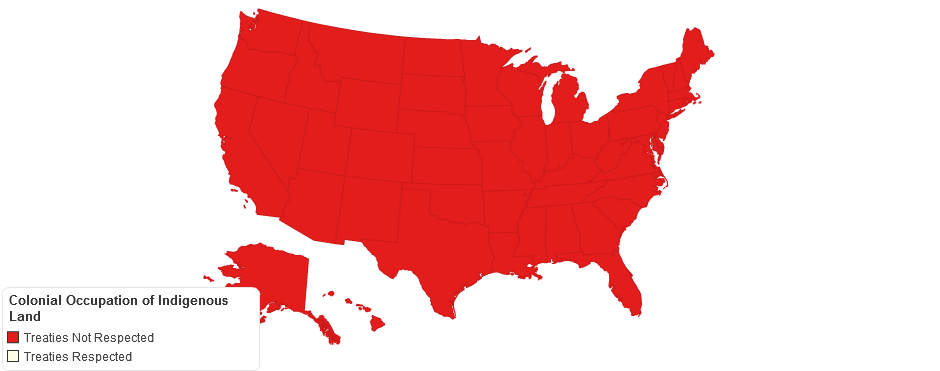
It tells a pretty accurate story of how the United States government dealt with the autochthonous population over the years. A more detailed and animated story can be found at a previous blog post I wrote about the Thunder Mountain Monument.
As a nation, we owe much to our native population beyond a debt of gratitude for words contributed to English, but have paid them only in extermination and misery. I’m still at a loss as to what the right thing to do is, today, in the 21st Century; what I do know is that “nothing” is not the right answer.
The Old Wolf has spoken.
 Playing in the World Game