Because usage.

Grammar is like the pirate’s code. As Captain Barbossa said, “The Code is more what you’d call guidelines than actual rules.”

Living grammarians and prescriptivists and editors just had an apoplectic fit; the dead ones are now spinning in their graves with such vigor that if you could hook up an armature to each one, you could power New York City for free.

As a career linguist, I have the right to say that, but note that saying so doesn’t make me right. It’s just my opinion. Spend enough time studying various models of language and you come away with the feeling that some things *”just not allowed are” unless *”Yoda you happen to be.” No, there’s a place for everything and everything must be in its place. On the other hand, spend enough time studying historical linguistics and the mechanism of language change, or watch the transformation of Vulgar Latin into the family of Romance Languages, and you learn something else: usage trumps Strunk and White every time.

Now, having had a traditional preparatory education, I struggled through multiple years of Warriner’s English Grammar and Composition,  learned to execrate Reed-Kellogg diagrams, and spent most of my time drawing things like this in my notebook:

bites

And, I learned how to use English properly. A couple of language and linguistics degrees later, I still support the need for correct grammar as a means of facilitating communication and avoiding chaos, and while I cringe just as forcefully as the next person when seeing a grocer’s apostrophe or a confusing of “lose” and “loose,” I am much less committed to the concept that everything has to be just so, best beloved.

Linguistic patterns are pretty well established by the time we become adults, and it takes a powerful force to make us change our way of speaking or writing, or at the very least, a conscious effort – but the former is difficult to come by, and the latter implies awareness of that which is correct and that which is incorrect, and the prices and benefits of making certain linguistic choices.

I don’t, like, you know, change how I talk or write with, you know, like, every new fad. *gag* That said, there’s one little bit of popular speech that I have latched on to as a very useful and concise way of expressing a much more complicated concept, and that’s the use of a noun as the object of the subordinating conjunction because, where typically one expects an entire clause.

wine-pool-in-japan

Because Japan.

The picture and sentence (it is a sentence, despite the lack of anything remotely resembling a subject, verb, or predicate) suffice to convey a significant amount of information in a very compact manner. To translate this into traditional grammar, one would have to say something like:

“This picture of people bathing in a giant pool of wine is very unusual, but since the picture is taken in Japan, where many things are so different that foreigners have no hope of understanding the rhyme or reason behind certain cultural phenomena, everything is just as it should be, and you should not expect anything else.”

In a previous post about escalators, you will find this picture:

escalator-gym

I could have just as easily captioned it “Because America,” the meaning being “You will only find escalators being used to reach a fitness center in America because people are so fat and lazy that they miss the entire concept and holy hqiz isn’t that ironic.”

Just how long this particular linguistic quirk will last remains to be seen. I have no illusions that it will be mainstreamed (that verb didn’t exist 20 years ago, by the way), but the whole point is that you never know what’s going to become popular or accepted down the road. In the meantime it’s swell, and I’ll probably use it until people start looking at me as though I had grown a third eye.

Because usage.

The Old Wolf has spoken.

PS: Atlantic has a similar article which is worth reading as well. Because corroboration.

Sausages, Laws, and Quotations

Wolfsburg, VW Autowerk, Metzgerei

Sausage Production for the VW Cafeteria, Wolfsburg, 25 January 1973. Found at /r/historyporn

Otto von Bismarck once said, “Whoever loves the law and sausages should never watch either being made.” Wait, no he didn’t. The original quote is “Laws, like sausages, cease to inspire respect in proportion as we know how they are made,” and is attributed to John Godfrey Saxe, University Chronicle. University of Michigan (27 March 1869) 
Everett Dirksen probably never said “A billion here, a billion there, and pretty soon it adds up to real money.”
Bill Cosby never wrote the “I’m 73 and I’m Tired” article. He even wrote a rebuttal on his website.
Winston Churchill is reputed to have said, “You make a living by what you get; you make a life by what you give.” According to The Churchill Centre And Museum at the War Rooms London, what Churchill actually said in Scotland, 1908, is:
“What is the use of living, if it be not to strive for noble causes and to make this muddled world a better place for those who will live in it after we are gone? How else can we put ourselves in harmonious relation with the great verities and consolations of the infinite and the eternal? And I avow my faith that we are marching towards better days. Humanity will not be cast down. We are going on swinging bravely forward along the grand high road and already behind the distant mountains is the promise of the sun.”
And that’s a much better quote, really, than the original.
“There’s no such thing as a free lunch” is often attributed to economist Milton Friedman, who used it as the title of a 1975 book. However, sci-fi buffs will recognize TANSTAAFL (“There ain’t no such thing as a free lunch”) from Heinlein’s 1966 novel, “The Moon Is a Harsh Mistress,” and a still earlier occurrence appears  in the title of a 1949 book by Pierre Dos Utt, “Tanstaafl: A Plan for a New Economic World Order.” [1]
Most of us will remember the party game called “Telephone” or “Chinese Whispers,” depending on which part of the world you live in. People sit in a circle and the first person whispers a message into the ear of the next person. Repetition is not allowed, and the second person must pass the message on. The result is usually incomprehensible or hilarious – “I love Marty Blotz” can come out the other end as “Boiled aardvark kidneys are tasty.”

It used to be that the power of the press belonged to the person that owned one. (There’s another quote for which it’s difficult to pin down the original source, or if it was even said.) With the internet being available to much of the world’s population, anyone can publish anything with or without attribution, which is why so many things get forwarded, re-forwarded, massaged, edited, re-worked, and falsely attributed these days. One of my friends is struggling with countering their 9-year-old’s assertion that “if you see it on the internet, it has to be true,” and in my experience there are reams of adults who apparently believe the same thing, based on the kinds of things I see on Facebook or my inbox.

James Sullivan wrote at Finding Dulcinea, in an article entitled “Misquotes: Searching for Authenticity Online:”

The Internet is fertile ground for the proliferation of misquotes. Pithy quotes find their way into Facebook profiles and Twitter posts, where they multiply across the Web unencumbered by citations and original context. With online sharing an elaborate, electronic game of telephone, genuine quotes get warped in the retelling, leaving end-readers with misquoted material void of context. Surprisingly, the media is often just as guilty as the average Web user.

I highly recommend this article if you care about  your sources – the end of the article gives some excellent ways of verifying whether a quote has been properly attributed or not.

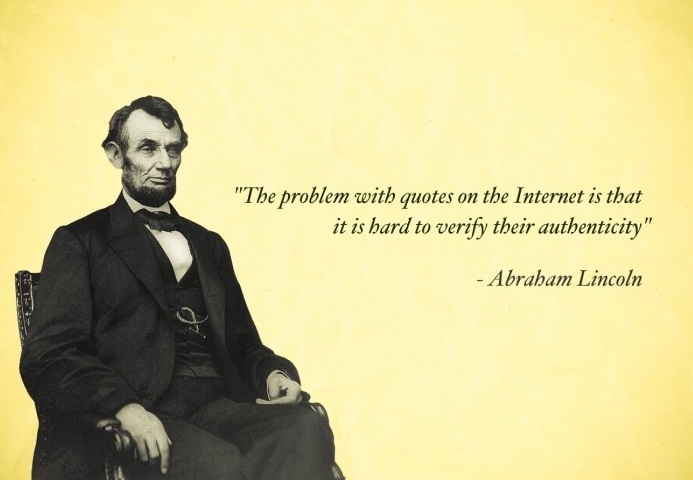
Even if you care, it’s possible to make mistakes – as a famous statesman once pointed out,

Lincoln-Internet-Quotes


The Old Wolf has spoken (and you can quote me on that.)


[1] New York Times, “Quote… Misquote

The Aleph and Tentacles, London, 1890

aleph


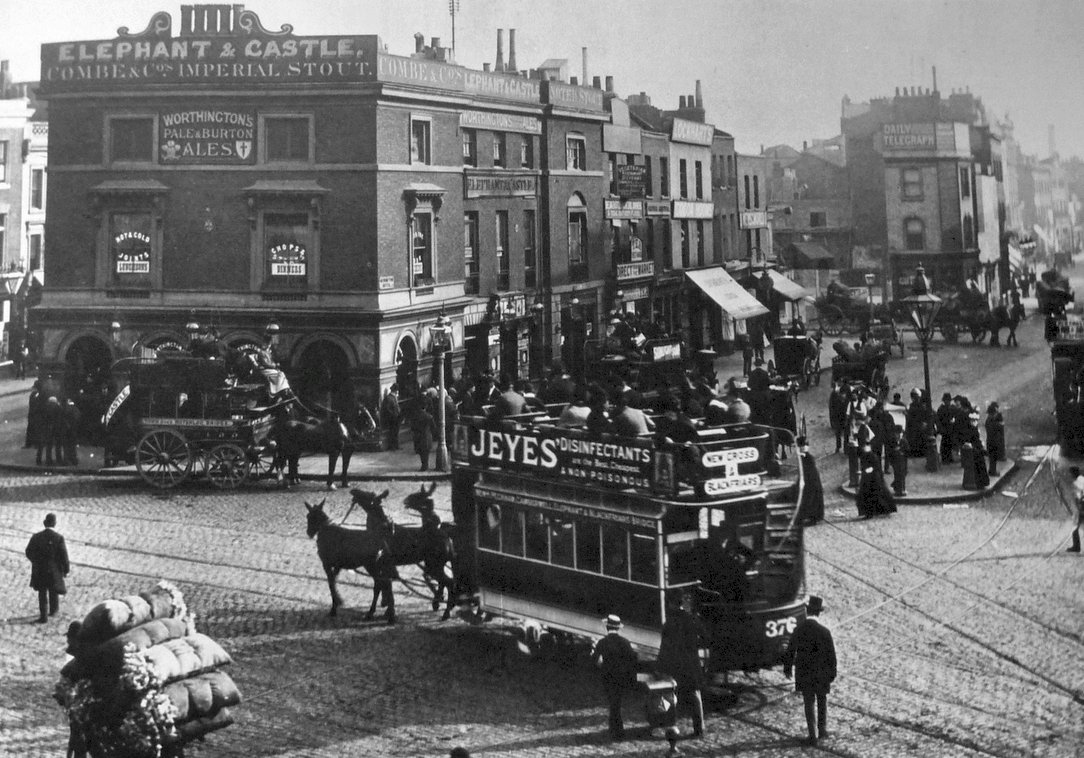
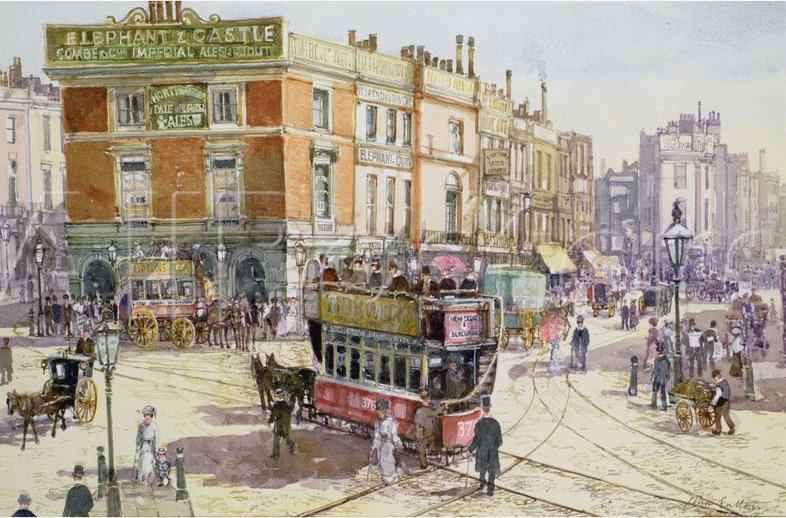
Elephant and Castle is a major road junction in Central London, England, in the London Borough of Southwark and the name of the surrounding area, largely superseding Newington. This photo of the eponymous pub was taken in 1890. The photo was used by artist John Sutton to produce a watercolor:

Elephant Sutton


The area has had a rather checkered history in terms of prosperity, and is currently the subject of a master-planned redevelopment budgeted at £1.5 billion.

As for the strange title of this post, feast your eyes on this brilliant map of the London underground, with every station turned into an anagram. I assume no responsibility for soiled screens or ruined keyboards; put down your Guinness before you have a look.

anagrammap

The Old Wolf has spoken.

The cat the rat the dog the cow… wait, what?

Over at Mental Floss, I found some of the oddest sentences that are perfectly grammatical and yet which don’t compile [1] properly.

One of the most famous is,

“Buffalo buffalo Buffalo buffalo buffalo buffalo Buffalo buffalo.”

A visual explanation of this monstrosity is the most effective:

Buffalo_buffalo_WikiWorld

You can also visit Wikipedia for a detailed linguistic deconstruction; like Columbus’ egg (an appropriate simile for today) [2], it’s easy when you see what they’re doing.

However, only slightly less well known is this one: Never go in against a Sicilian sorry, I meant

“The rat the cat the dog worried killed ate the malt.”

This is an example of nested relative clauses. The structure is easy to follow when only few are used:

The rat ate the malt. The cat killed the rat. These become, “The rat (that) the cat killed ate the malt.”

Add in “The dog worried the cat” and you get “The rat (that) the cat (that) the dog worried killed ate the malt.” Since the subordinating conjunction “that” is optional in such clauses, the resulting sentence begins to become incomprehensible as the nestings are more and more difficult to follow.

The human mind is a wondrous machine, capable of prodigious feats of memory, calculation, and creativity, but it can only perceive so much at a single glance. In the case of determining how many items are within a field of vision, this skill is called subitizing, and the current human limit seems to be between five and seven.

Quick, how many dots?

Three

Three. No challenge, right?  Now try this one. Quick, no counting!

scatter

The answer is “24,” but you didn’t know that without counting, unless you happen to be one of those few people, either autistic or supergenius, who has somehow bypassed the normal human ability.

But let me show you the same number like this:

24

And while you can’t subitize the dots, you can immediately calculate how many there are based on your encyclopedic knowledge of the universe and a bit of simple math.

In the same way, the human mind is able to understand and generate language, but there are limits to how much complexity can be comprehended, even if all grammatical rules are followed. Thus taking our example to its logical conclusion, “The House that Jack Built” becomes:

This is the malt the rat the cat the dog the cow3 the maiden4 the manthe priest6 the cock7 the farmer8 kept waked married kissed milked tossed worried killed ate, that lay in the house that Jack built.

It’s interesting from a scholarly standpoint, but nowhere near as fun to recite while bouncing your grandchild on your knee.

Remember, time flies like an arrow, and fruit flies like a banana.

The Old Wolf has spoken.


[1] This is computational linguist slang for “I don’t get it.”

[2] I am 1/2 Italian by descent. As such, Columbus Day has long been a great celebration, especially in New York where I grew up. Sadly, in much the same way as we now know that brontosaurus is now an apatosaur, and that Pluto is no longer a planet but a Trans-Neptunian Object, we now know that Columbus is not the national hero he has been made out to be; October 14th would better be renamed “Genocide Day.” Yes, he played a significant rôle in the development of this nation, but the human toll that was left behind in his wake is staggering. A couple of things you might be interested in reading are at The Thunder Mountain MonumentThe Oatmeal, and Lies My Teacher Told Me.

[3] with the crumpled horn
[4] all forlorn
[5] all tattered and torn
[6] all shaven and shorn
[7] that crowed in the morn
[8] sowing his corn

Are people “good” or “bad” at math?

math

Over at Quartz, writer Allison Schrager says no. I originally spotted her article over at Newser, which summarized it this way: “Think You’re ‘Bad at Math’? You’re Just Being Lazy.

While there are some good points in the article, I feel as though her conclusion is flawed.

Yes, math is difficult – especially when you get up into the higher levels. To learn it requires intellectual rigor, patience, discipline, and hours and hours of repetition. I remember this passage from the first science fiction book I ever read as a child, Heinlein’s Have Space Suit, Will Travel:

“Anybody who thinks that studying Latin by himself is a snap should try it.

I got discouraged and nearly quit-then I got mad and leaned into it. After a while I found that Latin was making Spanish easier and vice versa. When Miss Hernandez, my Spanish teacher, found out I was studying Latin, she began tutoring me. I not only worked my way through Virgil, I learned to speak Spanish like a Mexicano.

Algebra and plane geometry were all the math our school offered; I went ahead on my own with advanced algebra and solid geometry and trigonometry and might have stopped so far as College Boards were concerned-but math is worse than peanuts. Analytical geometry seems pure Greek until you see what they’re driving at-then, if you know algebra, it bursts on you and you race through the rest of the book. Glorious!”

I loved that story when I read it at age 10, and I still love it today, but I’m bitterly disappointed that I never had that breakthrough that the story’s protagonist experienced. I did fair to middling through high school in algebra, geometry, trigonometry and analytical geometry, but I was always doing it like a cook follows a recipe – it never burst on me, and I never saw what they’re driving at. So when I hit college with dreams of being a doctor, and discovered that in order to pursue a chemistry major I would have to take all the concomitant calculus courses, that was all she wrote. It was worse than pure Greek, because that’s a subject I did well in.

Mastering a foreign language is no piece of cake either, and yet for some reason I can master enough of a foreign language to become reasonably fluent in 3 months, whereas learning even the rudiments of calculus has eluded me for over 40 years. The disappointment stems from the fact that I love the world of science, and mathematics is the key that unlocks the door to understanding – a door through which I will only ever be able to peer through a keyhole to where the big boys and girls are playing.

This is music to my ears…

“Per me si va ne la città dolente,
Per me si va ne l’etterno dolore,
Per me si va tra la perduta gente.
Giustizia mosse il mio alto fattore:
Fecemi la divina podestate,
La somma sapienza e ‘l primo amore.
Dinanzi a me non fuor cose create
Se non etterne, e io etterno duro.
Lasciate ogne speranza, voi ch’intrate”.
(from Dante’s Divina Commedia)

whereas this makes my mind shut down completely:

75038c7606574331ab8f06be8e78f9df

Kepler’s equation for calculating orbits

Old_Wolf_Tilt

And all we’re talking about here is limits, let alone the really weird things. To a scientist, this is really simple stuff.

My own experience has demonstrated to me that each person born has gifts and abilities unique to them. As no two snowflakes are a like, as no two stars have identical magnitudes or compositions, so no two people have the same talents. For me, math is terribly difficult, and language is uncannily easy.

mathjoke3

As a result, the formula above is the only bit of calculus that I have ever been able to memorize – and I’ll never forget it.  Don’t get me wrong – I can’t evaluate it, even though I’m told by smarter friends that both sides equal ⅓; no, I remember it because it’s a limerick. [1]

Integral zee squared dee zee,
From one to the cube root of three,
Times the cosine
Of three pi over nine,
Equals log of the cube root of e.

Lakshmi

Here is a drawing done by my daughter, who has never had an art lesson in her life. This is a gift that springs from within her.

Where I agree with Ms. Schrager is that despite the difficulty, if I worked at it long enough and hard enough, I could master it. But somewhere else there is a brilliant mathematician who trembles in terror at the thought of trying to learn Italian, because he or she knows that it would almost take more effort than it is worth.

In conclusion, I would retitle Ms. Schrager’s article to read: “Yeah, math is hard – but it’s worth the effort.”

The Old Wolf has spoken.


[1] I have hundreds of limericks rattling around in my skull. Unfortunatly,

A limerick packs rhymes anatomical
Into verses quite economical
But the good ones I’ve seen
So seldom are clean
And the clean ones so seldom are comical.

Right and Left: Wrong

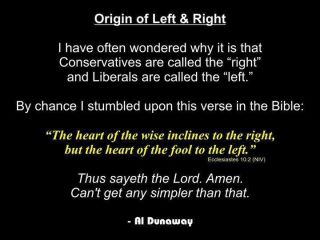
I saw this posted on Facebook last year and it raised my eyebrow:

226077_1000

This spread like wildfire around conservative circles, but unfortunately its an oversimplification based on a misunderstanding.

The original Hebrew text of Ecclesiastes 10:2 is “לֵב חָכָם לִימִינוֹ, וְלֵב כְּסִיל לִשְׂמֹאלוֹ” (lev hakam lemino ve lev kesil lesmolo), or “wise heart to right, and foolish heart to left.” The historical meaning of right and left to the Jewish nation is more complex than the intructions to World of Warcraft, but if you’re really interested, a good summary is at the Jewish Virtual Library; long story short, from a biblical standpoint, the right has always been the place of honor or wisdom.

We see this concept reflected in many New Testament references (Matthew 25:33 states “And he shall set the sheep on his right hand, but the goats on the left,”) but even biblically the analogy is not consistently used. In Mark 10:37, two presumptuous disciples asked Jesus, “Grant unto us that we may sit, one on thy right hand, and the other on thy left hand, in thy glory.” [1] Thus in this reference, both right and left were considered places of privilege and esteem.

A further disconnect of the biblical usage with modern politics arises when we realize that current usage of left and right began with the French revolution; Wikipedia states that “The terms ‘left’ and ‘right’ were not used to refer to political ideology but only to seating in the legislature.”

Unfortunately, vast numbers of people who see an image like this will say “Oh, wow, that’s cool, I never knew that,” and spread the message far and wide without bothering to question its validity.

226351_600

It’s hard for me to independently verify everything I see, and these days elections are won and lost with the votes of people who don’t even make the effort. We deserve better.

The Old Wolf has spoken.


[1] “It was regarded as a boorish lack of etiquette to walk on the right of one’s teacher; but when he was accompanied by two, he walked in the middle and the greater of his companions walked on the right (Yoma 37a).”

If you don’t know the source, call it a “Chinese Proverb”

“May you live in interesting times.”

This “Chinese Curse” is a wish for the recipient to experience trouble and strife. However, it had nothing to do with the Chinese or China, at least not in this form. Robert Kennedy was the one who popularized the saying in Cape Town in 1966, but the original stems from at least 1936, possibly 1929, and refers to “an interesting age.” Read a more detailed treatise here.


“Give a man a fish, and you feed him for a day; show him how to catch fish, and you feed him for a lifetime.”

Again, not a Chinese proverb; originated rather by Anne Isabella Ritchie, daughter of William Makepeace Thackeray, who wrote,

“He certainly doesn’t practise his precepts, but I suppose the patron meant that if you give a man a fish he is hungry again in an hour; if you teach him to catch a fish you do him a good turn.”

More details at The Phrase Finder

“If you love something, set it free. If it comes back, it will always be yours. If it doesn’t come back, it was never yours to begin with.”

Nobody seems to know where this old saw comes from. Quote Investigator has some ideas, but one thing’s for certain – it’s not an “Ancient Chinese Proverb.”

老狼說。

Relics of a vanished language – Carolina Algonquian

Among the languages current in North America when Sir Walter Raleigh was exploring around was Carolina Algonquian. Raleigh assigned scientist Thomas Harriet to study and learn the language, which is related to the also-extinct Powhatan or Virginia Algonquian. Although the language has long since vanished, it left behind some very recognizable traces, specifically:

  • moccasin,
  • moose
  • opossum
  • papoose
  • pecan
  • raccoon
  • skunk
  • squash
  • squaw
  • wigwam


The word “squaw” has an entire Wikipedia article devoted to it; once popular in English during the “cowboys and indians” days, the word has come to be regarded as highly offensive among many Native Americans, although not for reasons popularly believed. I recommend a reading of the referenced article if you’re interested in learning more.

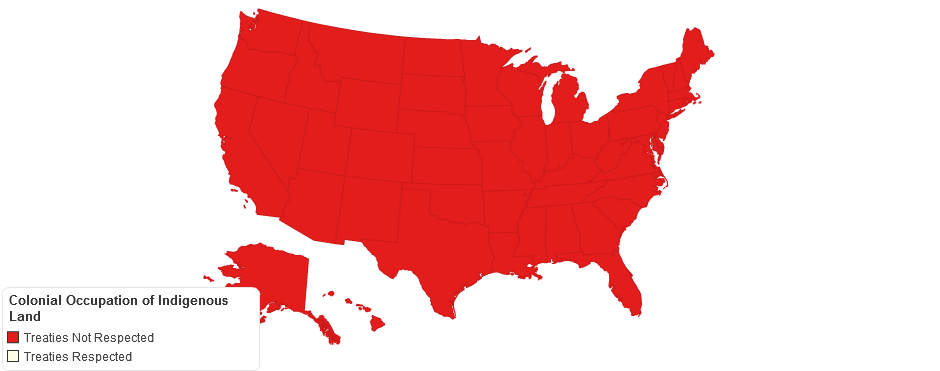
On the general subject, I happened across this map over at Maps on the Web:

tumblr_ms212vK6aZ1rasnq9o1_1280


It tells a pretty accurate story of how the United States government dealt with the autochthonous population over the years. A more detailed and animated story can be found at a previous blog post I wrote about the Thunder Mountain Monument.

As a nation, we owe much to our native population beyond a debt of gratitude for words contributed to English, but have paid them only in extermination and misery. I’m still at a loss as to what the right thing to do is, today, in the 21st Century; what I do know is that “nothing” is not the right answer.

The Old Wolf has spoken.

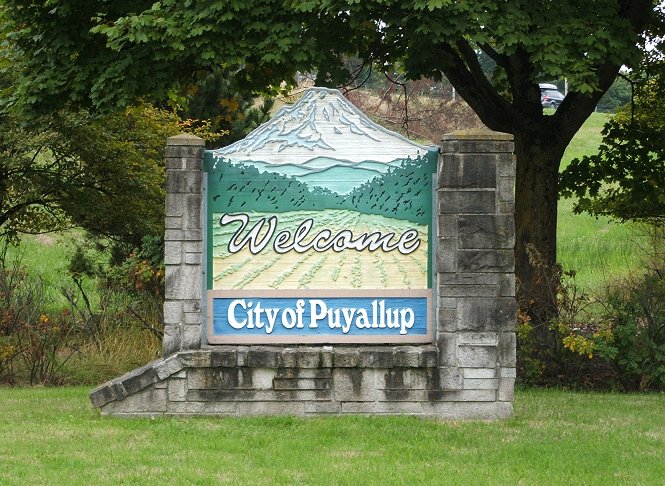
Could you direct me to Poo-yallup?

Puyallup

“Then said they unto him, Say now Shibboleth: and he said Sibboleth: for he could not frame to pronounce it right. Then they took him, and slew him at the passages of Jordan: and there fell at that time of the Ephraimites forty and two thousand.” (Judges 12:6)

That particular biblical verse gave rise to the general concept of a shibboleth, a word, sound, or custom that a person unfamiliar with its significance may not pronounce or perform correctly relative to those who are familiar with it. (Wikipedia)

Ever since ancient times, pronunciation has been a pretty accurate way of determining whether a person is a local or not. During World War II, the Dutch used Scheveningen to weed out German infiltrators, and Americans in the Pacific used lollapalooza to challenge unknown persons, knowing that the Japanese have a difficult time with the sounds of L and R.

Quincy_Market_and_Faneuil_Hall,_Boston,_Mass._U.S.A,_by_Keystone_View_Company

Quincy Market and Fanueil Hall, Boston

A Bostonian doesn’t need to be a Henry Higgins to know that someone who speaks of “fan-you-ale” Hall isn’t a local. Bostonians pronounce it “fan’l” or “fany’l” (/ˈfænəl/ or /ˈfænjəl/, if you are familiar with IPA). Of course, Bostonians have a strange way of speaking altogether, but we won’t hold that against them.

When we moved to the Pacific Northwest back in 1980, we encountered a whole ‘notha set of odd pronunciations than the ones we had learned as Utahns (more about that in a bit.) See, the name of that town up there is “pyoo-ALLUP” (/pjuːˈæləp/). “Pend Oreille” County kept the French pronunciation – it’s closer to “ponderAY” than “pen-DOR-ial,” which I have heard more than once. But strange pronunciations of local names are found all over – Natchitoches, Louisiana is pronounced “NAK-i-tesh” (/ˈnækɨtəʃ/) instead of “natchi-TOE-chez”.

Since I’m basically a Utah boy at this point (although my heart is still rooted firmly in Manhattan Island), we’ve gotten used to our own share of odd place names:

  • Tooele – Not “TOOL-y”, but “too-ILL-a” (/tuːˈɪlə/)
  • Hurricane – This is pronounced “HER-kin” by the locals, to rhyme with “Laverkin.”
  • Mantua – Unlike the city in Italy, this is pronounced “MAN-away” (/ˈmænəweɪ/)

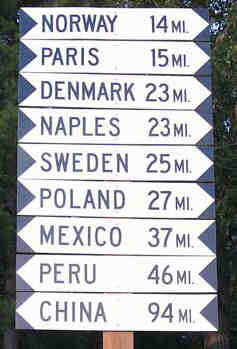
A delightful tribute to some of the odd names found in Utah is below – a buddy of mine in Australia, although he has never set foot in America, can recite this almost by heart.

Thanks to Phantomdiver, a list of Virginia place names, prompted by the pronunciation of McGaheysville (mi-GACK’-eez-vill), and here’s an article about place names in Maine.

roadsign

Apparently “Calais,” not on the list above, is pronounced like those hard spots that develop on your hands and feet (“callus”).

Click through for a much larger list of place names in the USA that have counter-intuitive pronunciations; there is also a list which covers other countries as well.

The Old Wolf has spoken.

So let it be written!

Writing has been around for a long, long time. The earliest proto-writing systems are estimated at around 7,000 BC, and today there are over 30 writing systems in common use, and a number of others that are used in specialty situations.

The map below, found at Wikimedia, shows the world’s main writing systems and their geographical distribution.

WritingSystemsOfTheWorld

Only current writing systems are mentioned on the map above – there have been many, many more throughout history, each a subject of much study and fascination to those who enjoy such things.

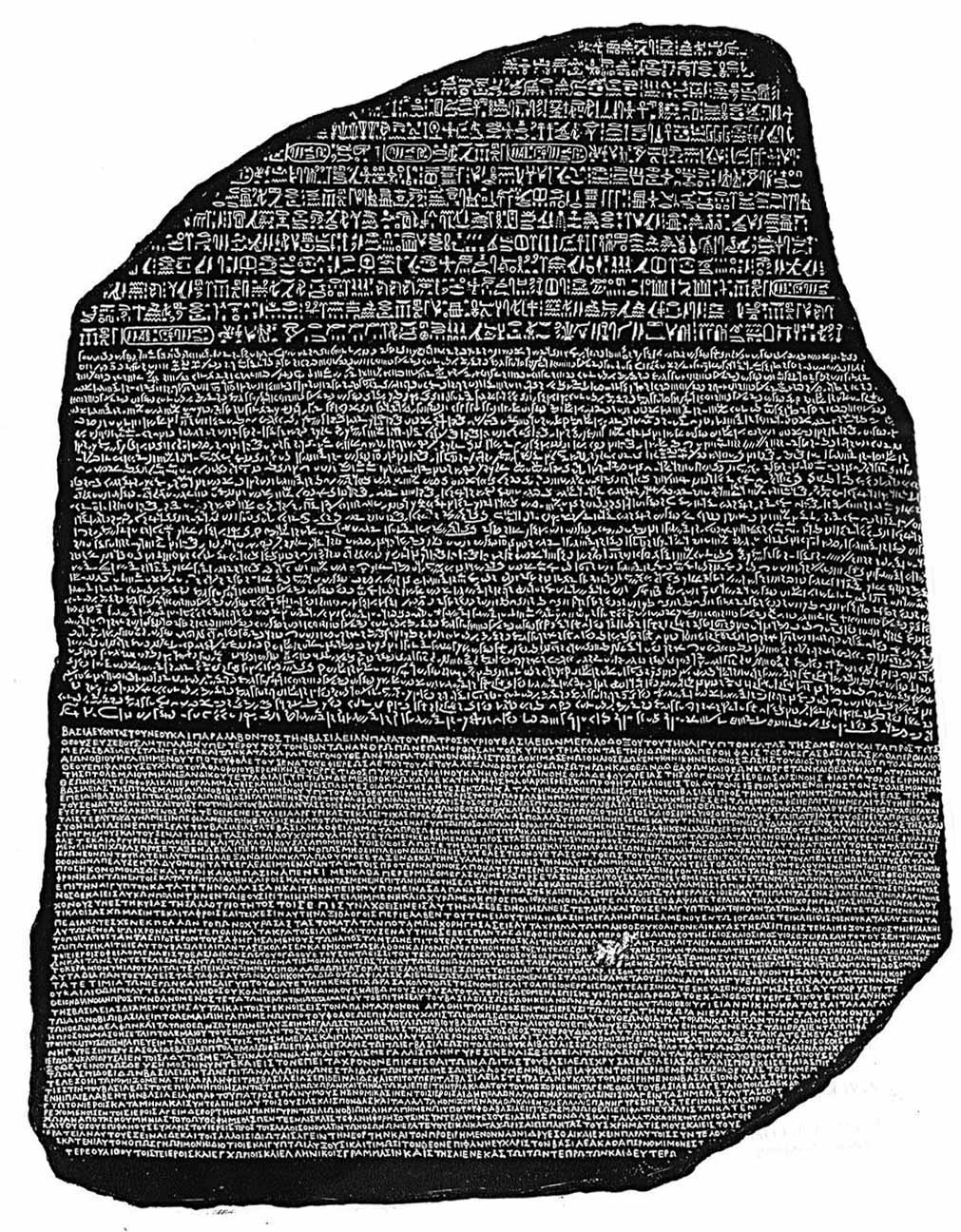
rosetta-stone  Rosetta_Stone

No story is better known than the decipherment of the Rosetta Stone. While  Jean-François Champollion made the most significant breakthrough regarding the transliteration of Egyptian hieroglyphics, the stone had been studied by numerous other scholars since its discovery in 1799.

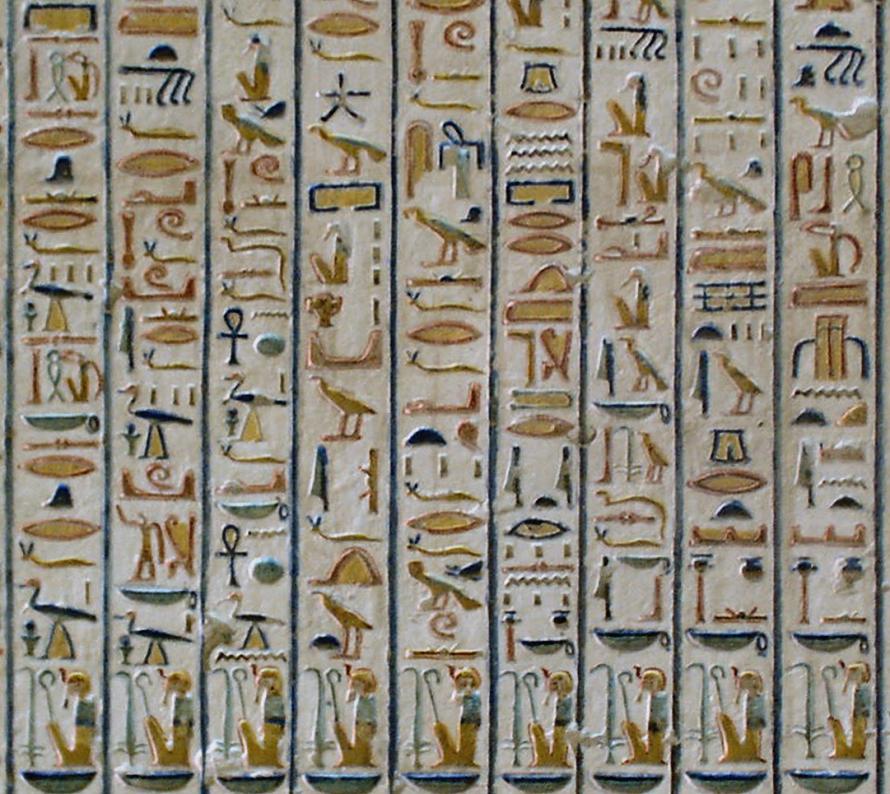
hieroglyphs01

Heiroglyphics from Luxor, Egypt

As the second image of the stone above shows, the thing is massive – I saw it on display at the British Museum in the 90’s at which time it was just sitting out there for all the world to see behind some velvet ropes. I’m sure the curators would have been dismayed to see me reach out and touch it, but it’s not often one gets a chance to surreptitiously connect on a physical level with such a famous artifact; now it’s much better protected. [1]

A few thoughts on some of the writing systems in use today, and some others gone by:

Ideographic Script

My previous post about the hazards of translation makes reference to ideographic writing; despite the challenges, character scripts are intriguing and rich in both history and cultural significance. Let’s look at an example of how this writing system works, taking Mandarin Chinese as  an example:

The word for “sun” in Mandarin, is written 日. In fact, it used to be written Sun, which looks pretty much like the sun.

Early Chinese people wrote the word for “moon” as  Moon – looks pretty logical, doesn’t it? That changed over time to月. Put those two together and you have the word for “bright”: 明. The Chinese word for “man” looks just like a man walking: 人. The word “big” (大) is just like a fisherman saying, “You should have seen the one that got away – it was this big!” The word for “heaven” (天) can be remembered easily if you think “man, no matter how big, is still under heaven.” A Chinese tree is written木, and if you put a picture of the sun rising behind a tree, you have the word for East: 東 , which was later simplified to become东. As you can see, it’s not that scary. Naturally, many characters are more complicated than these, but every character has a story. [2]

The Japanese borrowed many characters from the Chinese, but changed their pronunciation and meaning based on their own language. As a result, most Japanese characters have at least two pronunciations – one based on the original Chinese, and one more specific to the Japanese language; for example, the character for “east” (東) is pronounced “higashi”, but in compounds it is pronounced “tō”, as in 東京 (tōkyō, or “eastern capital”). Notice that second character – it looks a lot like the standard stone lanterns one sees all over Japan, and which came to symbolize the main city of a region as these lanterns often stood outside the gates.

stone lantern-11

I have previously mentioned the story of the Hitachi logo which gives a bit of a feel for how these characters can be used in a creative manner. The possibilities are endless.

Arabic

The Arabic alphabet has 28 letters. Each letter, however, has four forms, depending on where it is found in a word—At the beginning, in the middle, at the end, or all by itself. These are called initial, medial, final, and standalone/isolate. Arabic is written from right to left, and is written without most of the vowels, although the vowels are added with diacritics (accent marks) for learners and in sacred texts.

arabic

Beginning language learners often ask, “how in the world can you read a language without vowels?” Well, the bottom line is that you get used to it. Even English has had experience with such things – have a look at “f u cn rd ths.” As people learn to read, at some point in their development they stop “decoding” (reading and sounding out each letter/sign individually and take in words as discrete units. Even a word like “antidisestablishmentarianism” will be read by an educated English speaker as a single word rather than a collection of letters, which shows how orientals can look at a character like “biáng” ( Biáng.svg) and instantly know what it means, despite the fact that it has 58 strokes. [3]

Arabic writing plays a critical rôle in Islamic society, as Islam forbids the use of “graven images” – hence mosques are decorated not with pictures, but rather with words… words represented beautiful calligraphy.

sultan-ahmed-mosque-in-istanbul-turkey-calligraphy

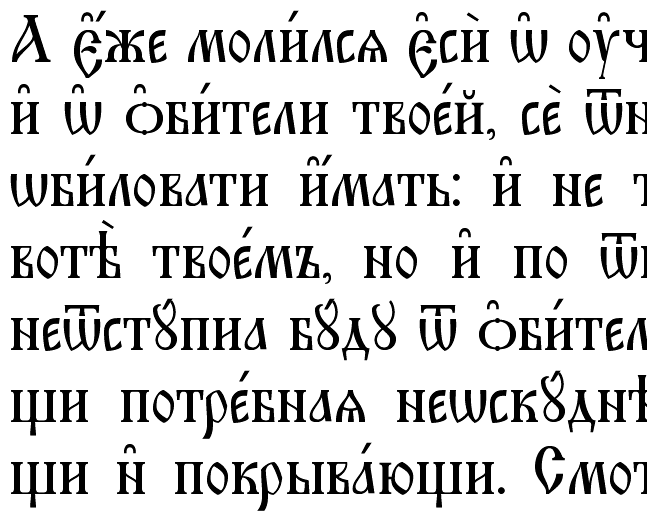
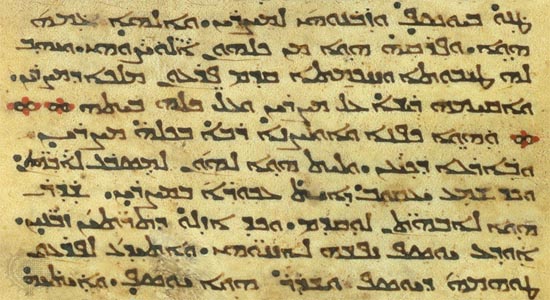
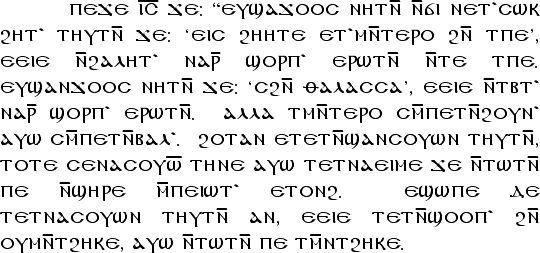
Some less-used but still current scripts include:

STAROSTA

Old Church Slavonic

65873-004-5FA32723

Syriac

langfams_coptic

Coptic

takri4

Takri (Tankri)

Ancient Scripts no longer used

Cuneiform_Gold_Plate_Perspolis

One of four Cuneiform Gold Plate in Perspolis that were buried under foundation columns.

In addition to Egyptian heiroglyphics, there were many scripts used by ancient peoples, including cuneiform, Linear A, Linear B, and a host of others. A wonderful reference can be fount at ancientscripts.com.

In addition, there is an entire raft of scripts that have yet to be deciphered – a good summation is found at Omniglot.

As you can imagine, The History of Writing is a broad enough subject to keep countless professors and graduate students published until the end of time.

The Old Wolf has spoken.


[1] I’m reminded of the scene in Star Trek: First Contact where Picard caresses Cochrane’s original warp vessel; as he explained to Data, “For humans, touch can connect you to an object in a very personal way. It makes it seem more real.” I agree completely.

[2] The love of people for things Asian has caused more than a bit of embarrassment in modern society – for some examples, have a look at my previous post “How Not to Get a Tattoo.”

[3]  The Chinese character for “biáng” is one of the most complex Chinese characters in contemporary usage, although the character is not found in modern dictionaries or even in the Kangxi dictionary. The character is composed of 言 (speak; 7 strokes) in the middle flanked by 幺 (tiny; 2×3 strokes) on both sides. Below it, 馬 (horse; 10 strokes) is similarly flanked by 長 (grow; 2×8 strokes). This central block itself is surrounded by 月 (moon; 4 strokes) to the left, 心 (heart; 4 strokes) below, 刂 (knife; 2 strokes) on the right, and 八 (eight; 2 strokes) above. These in turn are surrounded by a second layer of characters, namely 宀 (roof; 3 strokes) on the top and 辶 (walk; 4 strokes) curving around the left and bottom.

500px-Biáng.svg