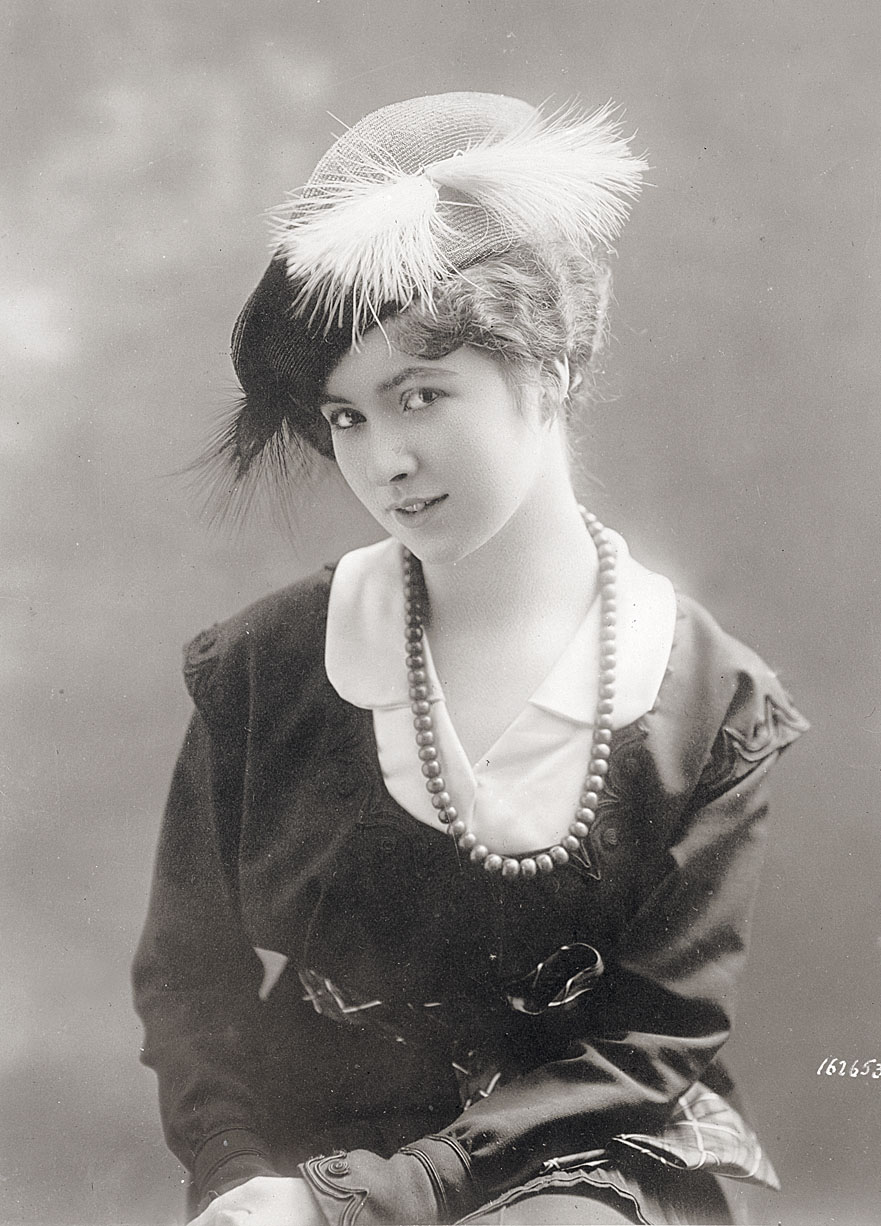
Hat by Amelia, Paris, 1913
Part of the Underwood and Underwood Photographic Collection, 1913-1915 at the Kentucky Digital Library
Hat by Amelia, Paris, 1913
Part of the Underwood and Underwood Photographic Collection, 1913-1915 at the Kentucky Digital Library

Taken during a bicycle ride by redditor /u/mannyotr. Unsure where this was taken, but a lot of people are suggesting Florida or somewhere south of the Mason-Dixon line, at any rate.
Beautiful image!

Found at Shorpy. October 1941. “Amsterdam, New York.” Walnut and East Main on a rainy day. Dare you to “Ring Bell for Taxi.” Photo by John Collier.

This gorgeous photo was taken by UK automotive photographer Tim Wallace of Ambient Life Photography. It was posted to reddit, and one of the commenters, /u/xiaopb, linked to the following two photos:

This was taken by xiaopb’s great-grandfather in 1951 (I’ve tidied the photo up a bit)

And here’s a 2010 shot of the same street from the same angle, I’m assuming by /u/xiaopb him/herself.
San Francisco, along with Boston and New York, ranks among my most favorite cities in the US. It’s just so vibrant and diverse. Yes, it’s got some issues as all large cities do, but I never miss an opportunity to go there.
The Old Wolf has spoken.
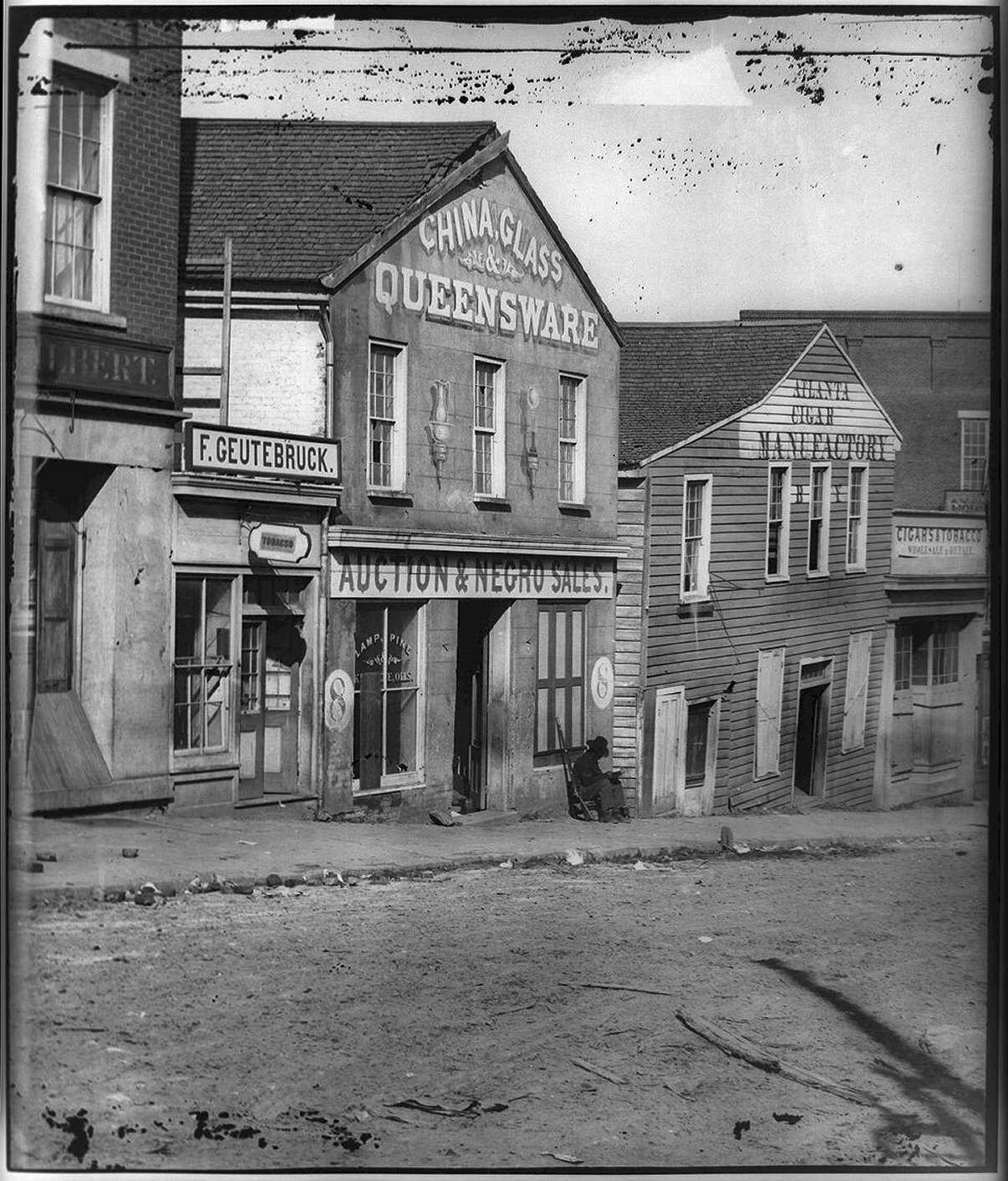
A store bearing the sign “Auctions and Negro Sales,” Atlanta, GA, 1864. Photo by George N. Barnard. Public domain.

This photo by was originally published by Life magazine on 27 June 1938. (Click on the picture for a full-size version.)
The original caption that she wrote for the photo was never published:
FOR COLORED sign atop round Coca-Cola sign tacked to a wooden Star of David in front of BOOKER TEA WASHINGTON store effecting a cruel display of racist condescension in the land of segregation. Location: Elkridge, MD, US. Date taken: 1938.
I first saw this photo at The Fascinating Origin of Coca-Cola,[1] and wanted to find out more about the picture, given the odd juxtaposition of Coke, “For Colored,” and a Mogen Dovid (Star of David). A bit of poking around led me to this fascinating post by John Edwin Mason, a photographer and teacher of African history and photography at the University of Virginia who was reasearching Margaret Bourke-White’s life and work.
Additional articles by Mason on the subject of White, photography and racial issues can be found here. These are intriguing reads which shed some additional insight into the nature of photojournalism that one might not pick up just by reading original articles. In a post about the Photography of Segregation, Mason wrote:
But photographers have little control over how people interpret their photos, even with the most rigorous captioning. What’s more relevant to this discussion is that Life’sphotographers had almost no control over how their editors used their photos. Selection, cropping, captioning, context — all of these things were out of the photographers’ hands. Usually, Life did the photos justice. Sometimes, it didn’t, and that’s the case here.
I recommend these articles for additional edification about the history of our nation.
The Old Wolf has spoken.
[1] Caveat: The website hosting this article is not known for being especially highbrow. I’ve linked to the article, but I would not recommend drilling down into their other links if you’re interested in family-friendly stuff.

Found via /r/historyporn, original found at Shorpy.
March 22, 1948. The New York City Public Market at First Avenue and East 73rd Street (?), an example of the food market in transition. A typical 19th-century market would have many separate vendors in an open-air space like a town square. By the early 1900s the open-air space had given way to separate vendors under a large shed roof with no walls, often near the train station. Here in 1948 the space is enclosed, but still with separate vendors (greengrocer, butcher, dry goods, fishmonger etc.). After the introduction of centralized distribution and self-service for the various product categories, the individual vendors fade from the scene and the market has a new name: “super-market,” now spelled without the hyphen. 5×7 safety negative by Gottscho-Schleisner.
My mom and dad might have shopped here right before they were married.
The Old Wolf has spoken.
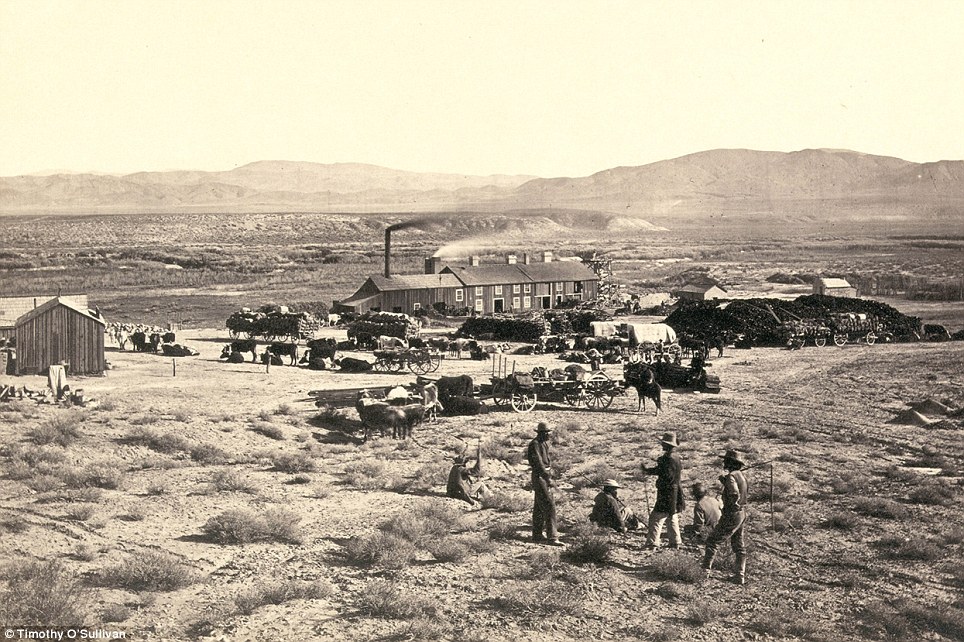
19th century housing: Members of Clarence King’s Fortieth Parallel Survey team explore the land near Oreana, Nevada, in 1867.
Taken from an article in The Guardian, which has many, many more of these captivating images from the early settlement and exploration of the United States. I recommend a visit.
The Old Wolf has spoken.
Sounds terrible, right? Not over in the UK. “A knocker-up (sometimes known as a knocker-upper) was a profession in England and Ireland that started during and lasted well into the Industrial Revolution and at least as late as the 1920s, before alarm clocks were affordable or reliable. A knocker-up’s job was to rouse sleeping people so they could get to work on time.” (Wikipedia)

Knocker-up using a bamboo pole to rap at an upper window
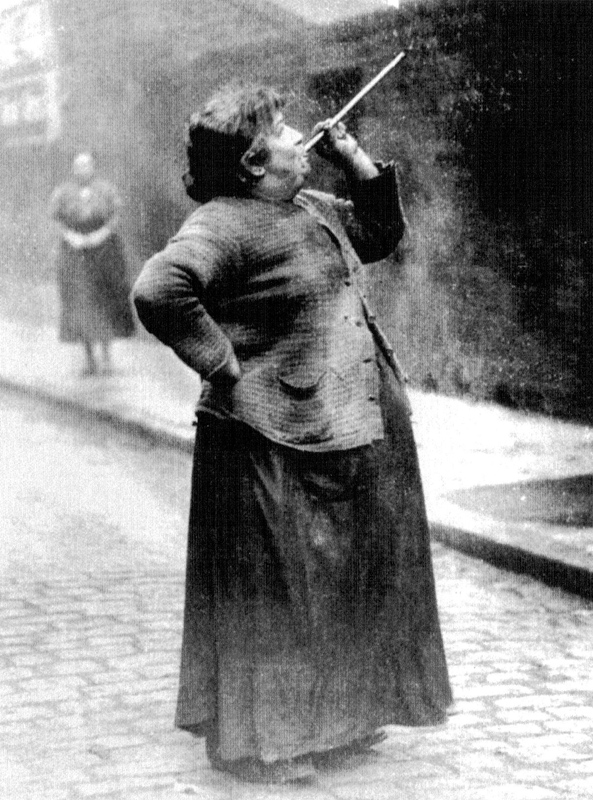
Mary Smith of Limehouse Fields, who was known for using a pea shooter.
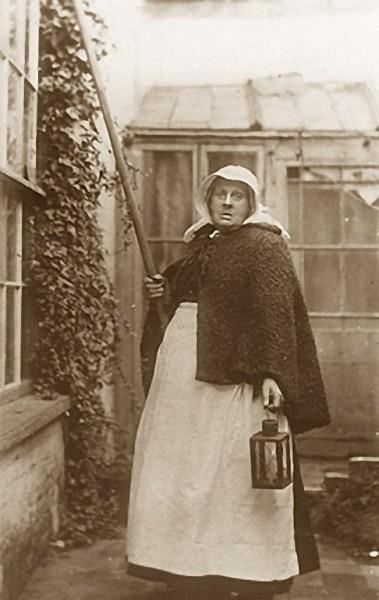
Caroline Jane (Granny) Cousins – you can read much about her at Dorset Ancestors.
The Old Wolf has spoken.
 Playing in the World Game