
It’s a conspiracy, right? We all know that cars, computers, printer cartridges, lightbulbs, and other consumables are now designed to fail sooner than they have to, in order to get us to buy more.

Well, wait just a minute.
I ripped this comment by redditor Fenwick23 in its entirety, because it’s the best analysis of the “planned obsolescence” issue I’ve ever read. I’ve only bowdlerized it a little, and corrected a couple of spelling issues.
I grow weary of this repeated conspiratorial usage of the phrase “planned obsolescence”. They would have you believe that there are engineers out there designing products with the intent of causing them to break down sooner. Ridiculous. People just don’t understand how competition in manufacturing has shaped consumer product design. One of the oft-cited examples is the venerable Hewlett-Packard LaserJet printer. Back in the early 90’s if you bought a low-end HP laser printer, you got a printer built like a tank. The damn things were slow, but they never wore out. Contrast with the low-end now, which are flimsy, come with 3/4 empty toner cartridges, and certainly won’t be functional in 10 years. “Planned obsolescence”, the conspiracy theorists conclude smugly. But wait… how much did you pay for that LaserJet 4 in 1993? Yeah, it was over $2000… in 1993 dollars. How much did that lousy HP P1600 printer you’re complaining about cost? Yeah, it was $200. If you spend the equivalent of two grand in 1993 dollars, which is over $3000 today, you get something like the HP M575c , which prints, copies, and faxes in color, and it’s built like a tank.
What people don’t realize is that in the “good old days” of a given product, a cheap version simply did not exist, so all products of that kind of that vintage were well built. This happens in every industry, at various rates. Engineers are under constant pressure to reduce manufacturing costs to widen the consumer base. Those $200 printers sell at far more than 10x the rate of $2000 printers, because every college freshman is buying one. To that end, certain parts must by necessity be less durable. Ikea isn’t making bookshelves out of particle board to sell more bookshelves when they break, they’re using particle board because not enough people can afford $500 oak book shelves to keep all those Ikea stores in business. (emphasis mine)
“But Fenwick23”, you ask, “What about that inkjet printer that had an expiration date coded into the inkjet cartridges?” Well, that one’s sadly all too easy to explain. Engineers, under the aforementioned pressure to cut costs, came up with a way to make inkjet systems for much cheaper. The only trade-off was that they had limited useful life before the ink dried out and clogged the nozzles. No big deal, just add an expiration system to the all-in-one nozzle-head-ink-tank package that lets the customer know that they need to buy a new one. This design is so much cheaper than the old design, they won’t mind buying it more often. But as so often happens in big corporations run by non-engineers, between the engineering department and the store shelves some upper-middle-manager looked at these cheaper ink jet cartridges and said “WOW WE CAN MAKE MOR PROFITZ IF WE SELL THEM SAME PRICE AS THE OLD KIND!” As a result, the anticipated reasonable trade-off intended by the engineers disappeared in a puff of pointy-haired logic, and six months later HP is stuck with a PR nightmare that looked like planned/programmed obsolescence, but which was in reality the result of managerial idiocy.
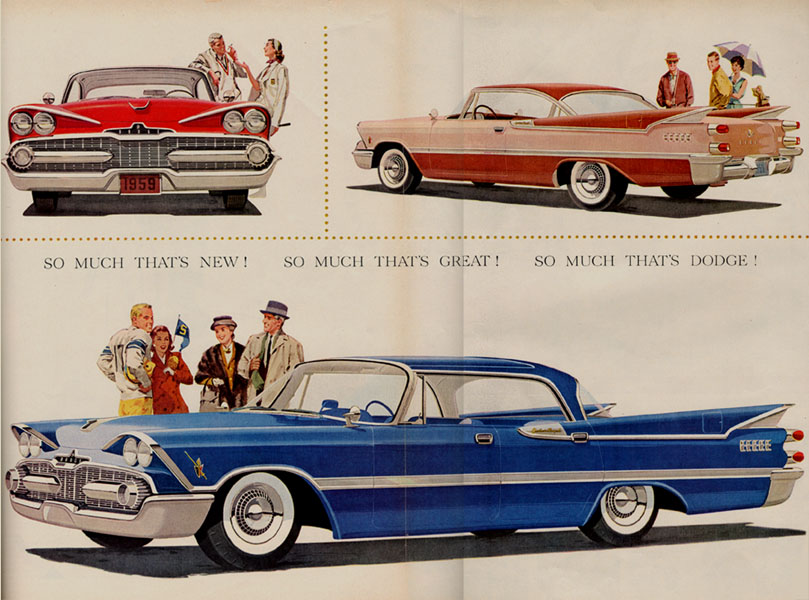
There are, of course, some real examples of planned obsolescence. The canonical example, from which the phrase was popularized, was Brooks Stevens use of it to describe 1950’s automotive marketing strategy. Brooks wasn’t talking about the cars breaking down, though. He was talking about aggressively marketing styling changes. The idea was to make last years model seem obsolete by changing the body designs. In essence, Brooks’ notion of planned obsolescence was nothing more than adopting the same strategy as the high fashion clothing industry. Sure, your car and your jacket work fine, but don’t you know that this year the cool people have wider lapels and round taillights?

The one place where planned obsolescence is a conspiracy to make you throw away perfectly serviceable items and buy new ones in order to prop up an industry is college textbooks. Renumbering pages and shifting end of chapter questions around is exactly the sort of sinister behavior people accuse HP of. The reasons educational publishers stoop to such tactics is quite clear, though. Their customer base is not expandable by making the product cheaper, so in order to maintain profits they have to make their otherwise durable product “expire” somehow. It’s evil, but understandable.
I applaud people repairing serviceable goods. Heck, I make a living repairing broken things. I just get sick of idiot “journalists” from places like Wired parroting the tired notion that the obsolescence of products in our cheap consumer society is the result of sinister motives, rather than the fact that we’re all bloody cheapskates.
Thank you, Fenwick23.
The Old Wolf has spoken.











 Playing in the World Game
