America’s Far-Right movements

This video by Ronan Farrow clearly delineates the main far-right movements current in America. There are others, but these are the dominant ones infesting our society, and it helps to understand them.

Ronan Farrow

Below you will find the transcript of his remarks:


“In the wake of Charlie Kirk’s assassination there has been a lot of discussion about the “far right” movement he was part of. But the “far right” is a spectrum of different movements, and understanding them might help you understand what is happening in America.

First, Christian Nationalism. This group’s leaders, like Kirk and Marjarie Taylor Greene, tap into valid frustrations with broken systems, but also exploit xenophobia and racism. They believe that the US was founded as, and must be restored to a Christian State. For many of them, that means white dominance and nonwhite immigration and multiculturalism are threats. Kirk himself said, “You cannot have liberty if you do not have a Christian population” and called the Civil Rights Act a “huge mistake.”

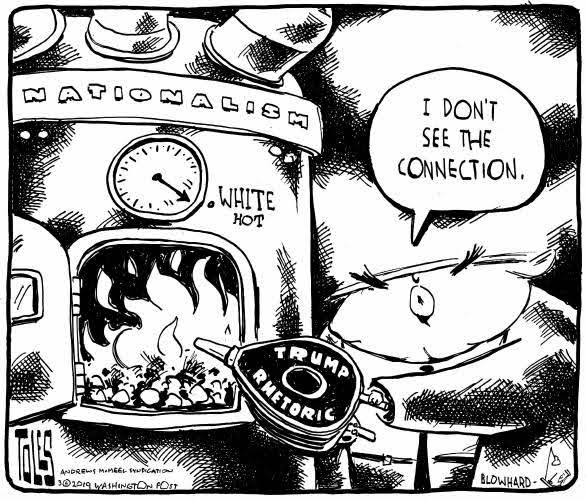
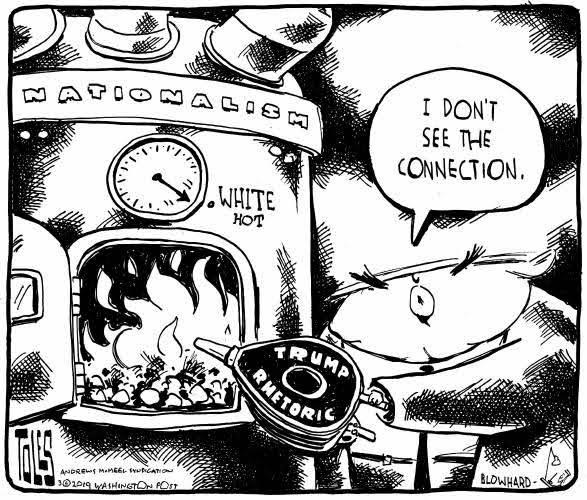
The movement works within the system, and its leaders don’t openly call for violence, but their rage baiting rhetoric has inspired it, with adherents participating in the January 6th attack.

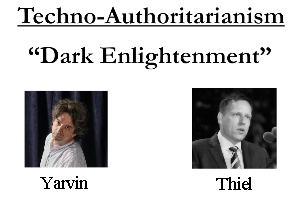
A different strain is the Techno-authoritariarian or Dark Enlightenment movement, pushed by Curtis Yarvin and Silicon Valley billionaire supporters like Peter Thiel.

They hold that democracy has failed, and want an authoritarian society run like a corporation, by an  unelected CEO-monarch and enforcing a stratified racial hierarchy based on pseudoscience.

Finally, a view gaining ground across the far right is accelerationism. That’s the belief that society is byond saving and its collapse needs to be hastened.

This view is held by many within the Groyper movement, which is led by Nick Fuentes and seeks to establish a white, Christian, anti-Semitic, authoritarian state.

It’s named after its racist meme toad mascot. Fuentes avoids direct calls to violence, but his followers rely on online harassment, including threats of violence against political opponents and minorities. Some were also charged for their rôle on January 6th.

The Boogaloo movement on the other hand explicitly calls for violence against the government. Its name drawn from memes about the ’80s movie “Breaking 2, Electric Boogaloo” is a reference to a second civil war. Self-described ‘boogaloo bois” have been convicted of domestic terrorism plots and murders of government officials.

A more personal nihilism is embodied in the Black Pill worldview, which cuts across these movements. Its adherents often identify as incels and they want to destroy the progressive society that empowered women to reject them. The name comes from The Matrix, which is ironic. Since that film’s directors have said that the pills were a trans allegory.¹ Black pill followers are mainly misogynistic, but they have a lot of natural overlap with white supremacists

Most are passive, but the philosophy has inspired several mass murders.

People in this country are hurting. They are frustrated with systems that are rigged against them. You can see how those anxieties are exploited in these groups and their visions from building an authoritarian state to just watching the world burn.


Footnotes:

¹ I never knew this, but yeah, it’s a thing.

Bad Business Decisions: True or Urban Legend?

A number of lists of these great “quotes” have been circulating ever since the days of fax machines, even before “forwards from Grandma.” They’re funny and great to read, but is there any truth to any of them? Let’s explore.

The most famous one that I know of has been thoroughly debunked:

“640K ought to be enough for anybody.” – Bill Gates

An analysis at Quote Investigator ended with “Since Gates has denied the quotation and the evidence is not compelling I would not attribute it to him at this time. Thanks for this difficult interesting question.

During the early days of computing, programs were often written in Assembly Language, producing very tight code that could run in minimal spaces. The original Wang v.2 word processor was designed to run on workstations with 32K of memory, even though later workstations had a standard 64K.

Wang OIS 64K Workstation

If you want apocrypha, here’s a good one. This story was told to me by a Wang Laboratories internal employee, and I can’t verify its authenticity, but having worked with Wang software and hardware for around 10 years back in the ’80s and ’90s, I would be willing to bet a steak dinner that it is true.

The Wang Word Processor, version 2, was – as mentioned above – written in Assembly language. The source code was kept on these 300MB swappable disk packs which at the time were very convenient for changing storage media.

300 MB Disk Pack
Disk Drive for use with removable packs

As the tale goes, somehow an entire rack of those disk packs got knocked over, destroying both the source code (in Assembly Language) and the backups for that impressively small and fast piece of software. It was for this reason that WP+, the next generation word processor from Wang, was entirely re-written in a slower, larger, higher level language. It emulated many features of the original and added others, but it was cumbersome and inelegant by comparison. Again, I can’t verify this 100%, but it came to me from what I consider a reliable source.

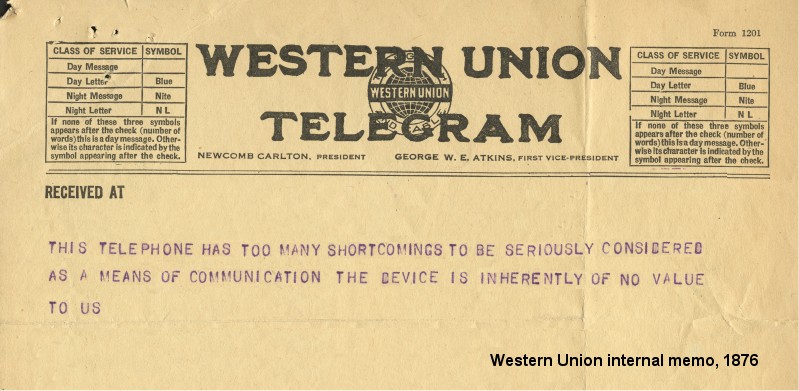
Western Union’s opinion of the telephone

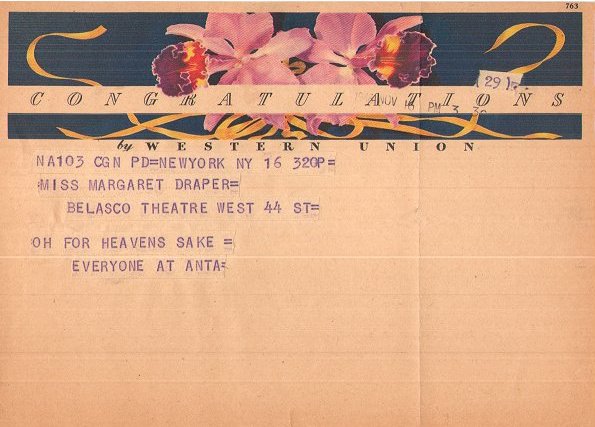
Facsimile Telegram

This ‘telephone’ has too many shortcomings to be seriously considered as a means of communication. The device is inherently of no value to us.” — Purported Western Union internal memo, 1876.

Telegrams were pretty much the way to get a message from one place to another rapidly. Prior to the development of the electric telegraph system designed by Samuel Morse, optical telegraphy which used visual signals seen at a distance was one of the earliest methods of long-distance communication.

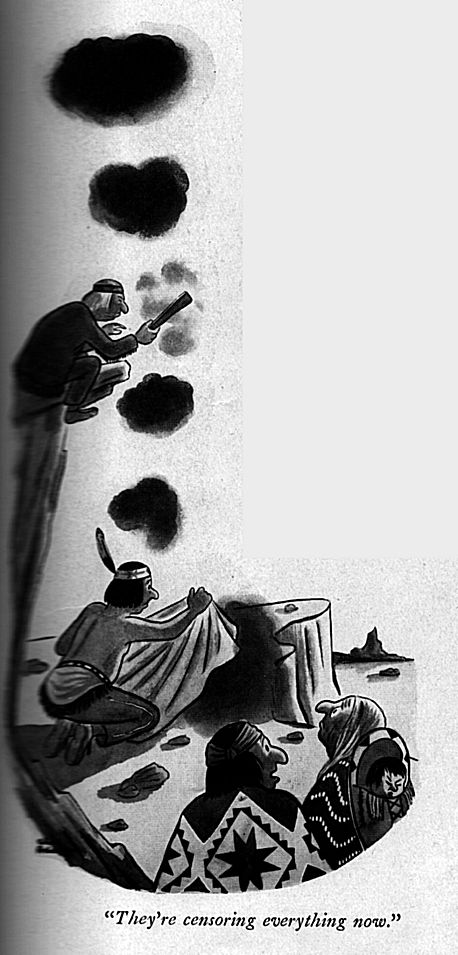
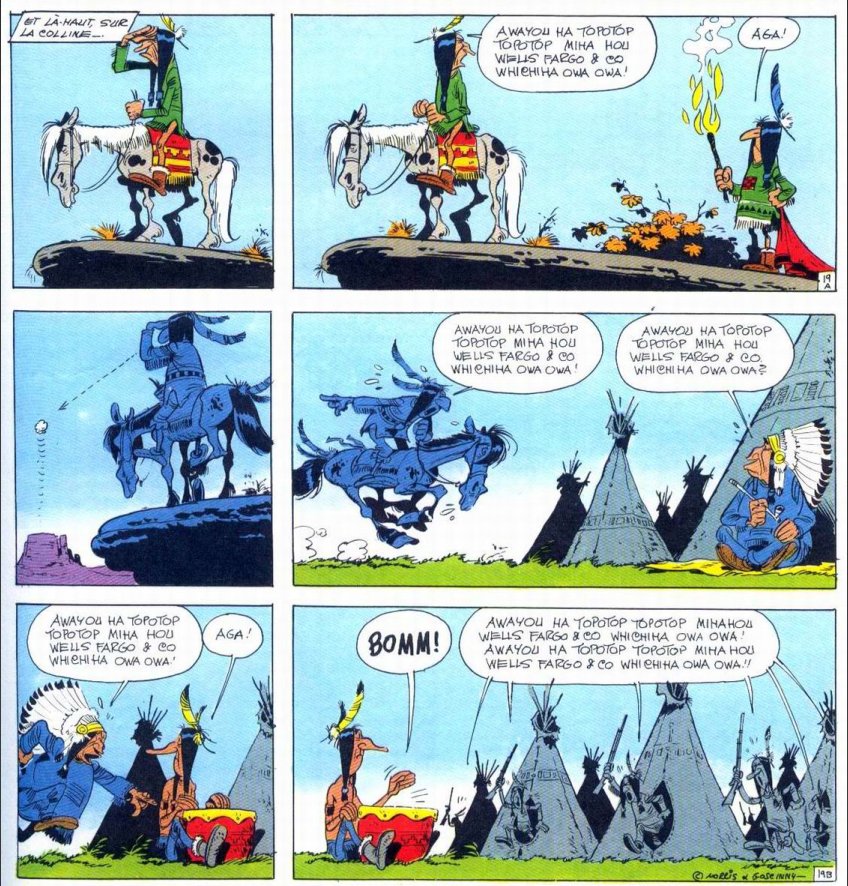
Wikipedia reports that “The smoke signal is one of the oldest forms of long-distance communication. It is a form of visual communication used over a long distance. In general smoke signals are used to transmit news, signal danger, or to gather people to a common area.” The use of smoke signals by the indigenous peoples of North America are probably the most familiar to Americans thanks to the popularization of western history in published and broadcast media.

Frederic S. Remington (1861-1909); The Smoke Signal; 1905; Oil on canvas; Amon Carter Museum of American Art, Fort Worth, Texas; 1961.250

This method of communication has been the basis for much humor as well:

Charles Addams, The New Yorker
Lucky Luke – “La Diligence” (Dargaud, 1968 series) #32 by Morris and Goscinny

The joke here is that a single puff of smoke or one beat of a drum can communicate large quantities of information, which of course is not the case.

One of the most stirring cinematographic representations of optical telegraphy can be found in Peter Jackson’s version of J.R.R. Tolkien’s “The Two Towers,” where the beacons of Gondor – signal fires strategically placed on mountaintops – played a crucial role in summoning Rohan’s forces to help Gondor. 

The Beacons of Gondor

Once electricity came on the scene, the electrical telegraph, augmented by Morse Code, became the dominant method of rapid long-distance communication, and was the underpinning of the telegram system for which Western Union became so famous.

Telegrams – about which I have written elsewhere – were used for everything where information had to be transmitted rapidly, from business meetings, to military applications, to notifications of death, to congratulations on Broadway, and countless other uses.

Telegram sent to my mother from ANTA (American National Theater and Academy) wishing her good luck in “For Heaven’s Sake, Mother” on November 16, 1948. Sadly, the play only ran for four days.

So when the telephone made its debut on the world stage, Western Union supposedly turned up its nose and sniffed loftily that it was not anything worthy of consideration. While the invention of the telephone, followed by the modern Internet and the proliferation of smartphones, ultimately doomed the telegram to the vaults of history, at the time concern about the new technology was real. The supposed internal memo at Western Union, however, was not. A lovely article at Wondermark discusses the origins of this urban legend in great detail and is worth the read if such things interest you.

Be aware, however, that even the telegraph itself was met with skepticism by shortsighted individuals:

“I watched his face (Samuel F.B. Morse) closely to see if he was not deranged, and was assured by other Senators as we left the room that they had no confidence in it either.”

-Senator Oliver Smith of indiana, 1842, after witnessing a first demonstration of the telegraph

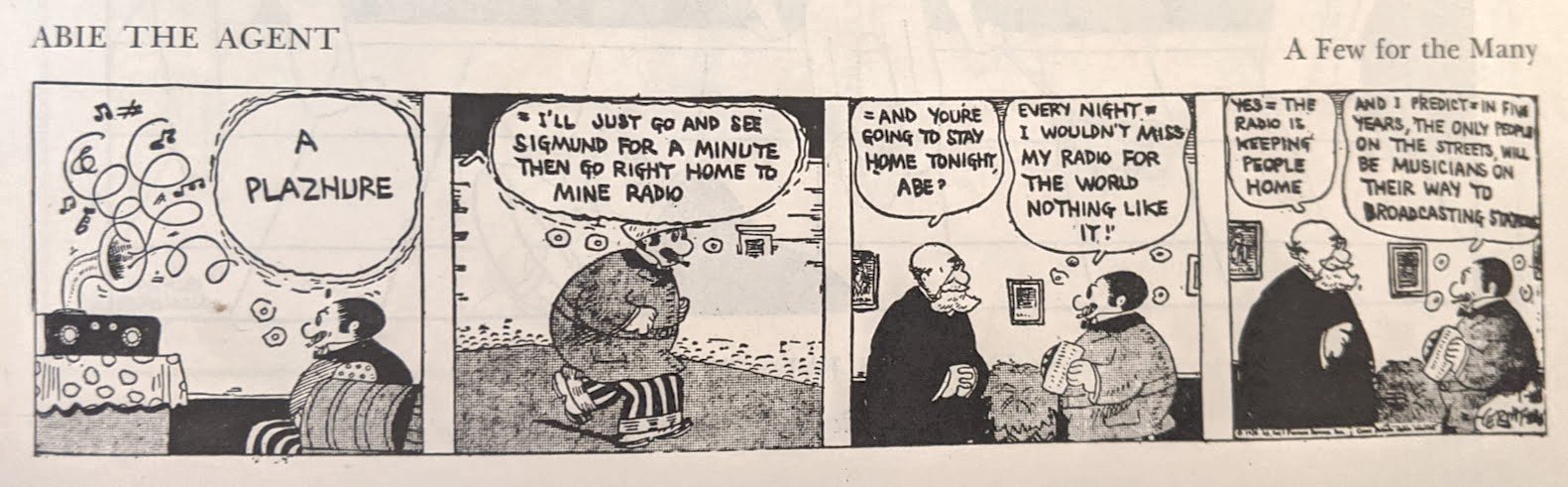
The Radio

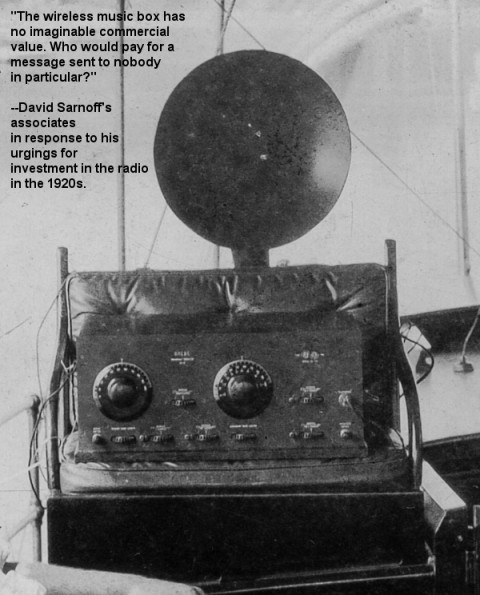
“The wireless music box has no imaginable commercial value. Who would pay for a message sent to nobody in particular?” — David Sarnoff’s associates in response to his urgings for investment in the radio in the 1920s.

David Sarnoff was an early pioneer in the promotion of wireless radio as a new technology. I asked Perplexity about the supposed response from investors, and it had this to say:

In summary, although the quote closely reflects real skepticism Sarnoff faced, there is no documented evidence that an investor sent this precise message to him—the wording appears to be apocryphal or retrospective, encapsulating broader contemporary attitudes

Obviously, “fear of the new, from those with a vested interest in the old” (from the Wondermark article linked above) didn’t keep the radio from becoming immensely popular.

The March of Technology

“Computers in the future may weigh no more than 1.5 tons.” attributed to Popular Mechanics from 1949

This is a true quote, but is often quoted out of context, unlike the quote in the image above. Popular Mechanics was making a forecast based on the technology of that time, suggesting computers could shrink significantly but still be very large by modern standards. This reflected an era when computers were massive and used vacuum tubes. The prediction was reasonable then but didn’t foresee transistor and integrated circuit breakthroughs that led to much smaller, lighter computers. You don’t know what you don’t know.

More about Computers

Once more, this quote is a misinterpretation; a very good background is found here. The short explanation is:

From a question on the history of IBM on their website, “Did Thomas Watson say in the 1950s that he foresaw a market potential for only five electronic computers?” IBM offers the following explanation:

We believe the statement that you attribute to Thomas Watson is a misunderstanding of remarks made at IBM’s annual stockholders meeting on April 28, 1953. In referring specifically and only to the IBM 701 Electronic Data Processing Machine — which had been introduced the year before as the company’s first production computer designed for scientific calculations — Thomas Watson, Jr., told stockholders that “IBM had developed a paper plan for such a machine and took this paper plan across the country to some 20 concerns that we thought could use such a machine. I would like to tell you that the machine rents for between $12,000 and $18,000 a month, so it was not the type of thing that could be sold from place to place. But, as a result of our trip, on which we expected to get orders for five machines, we came home with orders for 18.”

You don’t know what you don’t know

“I have traveled the length and breadth of this country and talked with the best people, and I can assure you that data processing is a fad that won’t last out the year.”

 -The Editor in Charge of Business Books for Prentice Hall, 1957

“But what … is it good for?

 -Engineer at the Advanced Computing Systems Division of IBM, 1968, commenting on the microchip.

“There is no reason anyone would want a computer in their home.” 

-Ken Olson, president, chairman and founder of Digital Equipment Corp., 1977

The three quotes above are not examples of obtuseness or stupidity, but rather the inability to predict the incredible rush of innovation that the computer industry would experience. I have written about the incredible shrinking data storage elsewhere, and even that article is now outdated; SanDisk has introduced a 4TB MicroSD card, whether or not something of this nature is even needed.

There’s nothing new under the sun

“Everything that can be invented has been invented.”

–Charles H. Duell, Commissioner, U.S. Office of Patents, 1899.

This archived article written by Dennis Crouch explores the legend, and decides that the quote was based on a joke published in Punch in 1899:

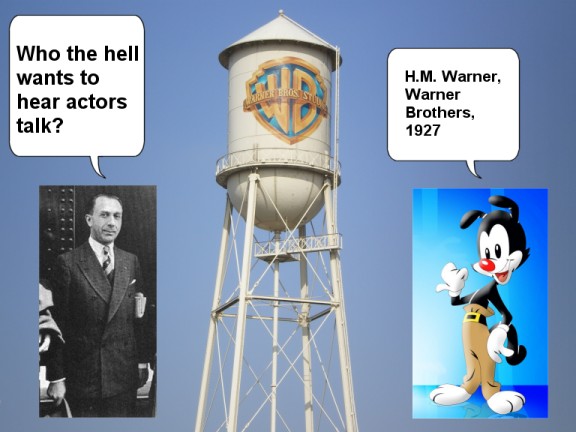
Silence Please

According to Quote Investigator, Warner probably said this but more confirmation would be useful. The linked article provides some interesting background about resistence to the inclusion of sound and voice in films, which up until that time were entirely silent.

There are many more “boneheaded quotes” out there, but the above dive into some of the most famous is an indication that each one deserves to be investigated for accuracy before spreading them around as 100% accurate.

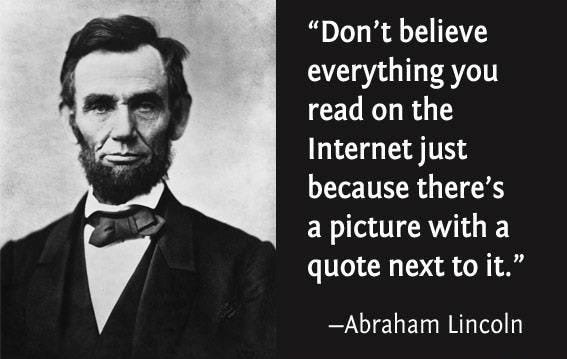
As Abraham Lincoln famously said:

The Old Wolf has spoken.

Mitch McConnell is retiring. Good riddance to bad rubbish.

Moira Donegan

Shared from The Guardian for wider exposure. Original link: https://www.theguardian.com/commentisfree/2025/feb/24/mitch-mcconnell-is-retiring-from-us-politics-good-riddance

Whenever you see a horror of anti-democratic rule, remember Mitch McConnell. You have him to thank

You would think that this is exactly what Mitch McConnell wanted. McConnell, the 83-year-old Kentucky senator – who announced last week that he will retire in 2026 and not seek an eighth term – is one of the most influential Republicans in the history of the party. But he has in recent weeks expressed dissent and discontent with the direction of the Republican party. He voted against some of Donald Trump’s cabinet appointees, refusing, for example, to cast a vote for the confirmation of the anti-diversity campaigner and alleged rapist and drunk Pete Hegseth.

He has also voiced some tepid and belated opposition to Republicans’ extremist agenda, citing his own experience as a survivor of childhood polio as a reason for his opposition to Republican attacks on vaccines. But the Republican party that McConnell is now shaking his head at is the one that he created. He has no one but himself to blame.

Over his 40 years in the US Senate, with almost two decades as the Republican leader in the chamber, McConnell has become one of the most influential senators in the nation’s history, radically reshaping Congress, and his party, in the process. Few have done more to erode the conditions of representative democracy in America, and few have done more to enable the rise of oligarchy, autocracy and reactionary, minoritarian governance that is insulated from electoral check. McConnell remade America in his own image. It’s an ugly sight.

In the end, McConnell will be remembered for one thing only: his enabling of Trump. In 2021, after Trump refused to respect the results of the 2020 election and sent a violent mob of his supporters to the Capitol to stop the certification of the election results by violent force, McConnell had an opportunity to put a stop to Trump’s authoritarian attacks on the constitutional order.

McConnell never liked Trump, and by that point, he didn’t even need him: he had already won what would be his last term. He could have voted to convict Trump at his second impeachment; if he had, it’s likely that other Republican senators would have been willing to do so, too, and that Trump could have been convicted and prevented from returning to power. He didn’t. McConnell voted to acquit, and to allow Trump to rise again. If the next four years of Trump’s restoration are anything like the first 30 days have been, then that will turn out to have been the singularly significant decision of McConnell’s career.

But McConnell had been working against American democracy long before Trump sent the mob to ransack the Senate chamber and smear feces on the walls. It was McConnell, after all, who is most responsible for the current campaign finance regime, which has allowed unlimited amounts of dark money spending to infiltrate politics – making elections more influenceable, and politicians’ favor more purchasable, in ways that tilt public policy away from the people’s interests and towards those of the billionaire patron class.

Such arrangements of funding and favors are not consistent with democracy; they change politicians’ loyalties, diminish the influence of voters, diminish constituents and their needs to a mere afterthought or communications problem in the minds of elected representatives. This was by design, and it is how McConnell liked it. In Washington, he operated at the center of a vast funding network, moving millions and millions of dollars towards those Republicans who did his bidding, and away from those who bucked his authority.

It was partly his control over this spiderlike web of wealthy funders that allowed McConnell to exert such control over his caucus. It is hard to remember these days, when Republicans pick so many fights with each other, that the party was once feared for their discipline. McConnell was able to snuff out any meaningful dissent and policy difference in public among Republican senators with the threat of his deep-pocketed friends, always ready to fund a primary challenger. The lockstep from Republicans allowed McConnell to pursue what he viewed as his twin goals: stopping any Democratic agenda in Congress, and furthering the conservative capture of the federal courts.

As Senate Republican leader during the Obama years, McConnell pursued a strategy of maximal procedural obstructionism. His mandate was that no Republican in the Senate would vote for any Obama agenda item – that there would be no compromise, no negotiation, no horse trading, no debate, but only a stonewalled total rejection of all Democratic initiatives. This has become the singular way that Republicans operate in the Senate; it was McConnell who made it that way.

The underlying assumption of McConnell’s strategy of total opposition and refusal was that Democrats, even when they win elections, do not have a legitimate right to govern. In practice, the authorities of the presidency or congressional majorities expand and contract based on which party is in power: Republicans can achieve a great deal more in the White House, or with control of Congress, than Democrats can.

In part this is because of McConnell’s procedural approach, which posits bending the rules to suit Republican interests when they are in power, and enforcing the rules to the point of functionally arresting legislative business when Democrats take the majority. This, too, is antithetical to democracy: constitutional powers can’t be limited for one party, and expanded for another, so that voters are only fully represented if they vote one way. The strategy of obstructionism functionally ended Congress as a legislative body in all but the most extreme of circumstances. What was once the most representative, electorally responsive, and important branch of the federal government has receded to the status of a bit player, and policymaking power has been abdicated to the executive and the courts. That’s McConnell’s doing, too.

Maybe it was part of McConnell’s indifference to the integrity of democracy meant that he refused, during the Obama era, to confirm any of the president’s judicial nominees. Vacancies on the federal courts accumulated, with seats sitting empty and cases piling up for the overworked judges who remained. But McConnell’s seizure of the judicial appointment power from the executive was only in effect when the president was a Democrat; when Republicans were in power, he jammed the courts full of far-right judges.

When Antonin Scalia died in 2016, under Obama, McConnell held the US supreme court seat open for almost a year, hoping that Trump would win the 2016 election and get the chance to appoint a right-wing replacement. When Ruth Bader Ginsburg died, just a few weeks before the 2020 election, McConnell jammed through the nomination of Amy Coney Barrett. His tendencies, then, were always authoritarian: power, in his view, did not belong to those the people elected to represent them. It belonged, always, to Republicans – no matter what the voters had to say about it.

Mitch McConnell is an old man. In 2026, when he finally leaves office, he will be 84. He will not have to live in the world that he made, the one where what was left of American democracy is finally snatched away. But we will. Whenever you see a horror of anti-democratic rule – whenever cronyism is rewarded over competence, whenever cruelty is inflicted over dignity, whenever the constitution is flouted, mocked or treated as a mere annoyance to be ignored by men with no respect for the law or for you – remember Mitch McConnell. You have him to thank.

Moira Donegan is a Guardian US columnist

Pro-trump propaganda: A rebuttal (Long)

Warning! Wall of Text!

This post crossed my screen a couple of weeks ago, and after a bit of research I discovered it’s being shared across multiple channels on Facebook and elsewhere. It’s so outrageous in its content that I couldn’t sleep much last night, so I was compelled in the name of decency to offer a fact-based rebuttal. I won’t name and shame the author, because that’s not my privilege, but it’s out there if you want to search for it. Original text in italics, my responses follow.


𝐼’𝑚 𝑛𝑜𝑡𝑖𝑐𝑖𝑛𝑔 𝑡ℎ𝑎𝑡 𝑡ℎ𝑒𝑟𝑒 𝑎𝑟𝑒 𝑠𝑜𝑚𝑒 𝑓𝑜𝑙𝑘𝑠 𝑑𝑜𝑖𝑛𝑔 𝑠𝑜𝑚𝑒 𝑠𝑒𝑟𝑖𝑜𝑢𝑠 𝑤ℎ𝑖𝑛𝑖𝑛𝑔 𝑎𝑏𝑜𝑢𝑡 𝑡ℎ𝑒 𝑇𝑟𝑢𝑚𝑝 𝑎𝑑𝑚𝑖𝑛𝑖𝑠𝑡𝑟𝑎𝑡𝑖𝑜𝑛. 𝑆𝑜 𝐼 𝑡ℎ𝑜𝑢𝑔ℎ𝑡 𝐼’𝑑 𝑝𝑜𝑠𝑡 𝑠𝑜𝑚𝑒 𝑡ℎ𝑜𝑢𝑔ℎ𝑡𝑠.

“Whining” about the Trump administration is, more properly stated, resisting autocracy, oligarchy, and a rising tide of fascism that needs to be fought at every turn. Consider these points:

  1. 𝐴𝑐𝑐𝑒𝑝𝑡 𝑡ℎ𝑒 𝑓𝑎𝑐𝑡 𝑡ℎ𝑎𝑡 𝑡ℎ𝑖𝑠 𝑖𝑠 𝑡ℎ𝑒 𝑙𝑒𝑎𝑑𝑒𝑟𝑠ℎ𝑖𝑝 𝑡ℎ𝑎𝑡 𝑤𝑒 (𝑡ℎ𝑒 𝑚𝑎𝑗𝑜𝑟𝑖𝑡𝑦 𝑜𝑓) 𝑤𝑜𝑟𝑘𝑖𝑛𝑔, 𝑚𝑖𝑑𝑑𝑙𝑒 𝑐𝑙𝑎𝑠𝑠 𝐴𝑚𝑒𝑟𝑖𝑐𝑎𝑛𝑠 𝑤𝑎𝑛𝑡𝑒𝑑. 𝑊𝑒 𝑎𝑟𝑒 𝑝𝑢𝑙𝑙𝑖𝑛𝑔 𝑡ℎ𝑒 𝑒𝑐𝑜𝑛𝑜𝑚𝑖𝑐 𝑤𝑒𝑖𝑔ℎ𝑡 𝑖𝑛 𝑡ℎ𝑖𝑠 𝑐𝑜𝑢𝑛𝑡𝑟𝑦 𝑎𝑛𝑑 𝑤𝑒 𝑎𝑟𝑒 𝑡𝑖𝑟𝑒𝑑 𝑜𝑓 𝑝𝑢𝑙𝑙𝑖𝑛𝑔 𝑡ℎ𝑒 𝑤𝑒𝑖𝑔ℎ𝑡 𝑜𝑓 𝑡ℎ𝑜𝑠𝑒 𝑡ℎ𝑎𝑡 𝑑𝑜 𝑛𝑜𝑡 𝑐𝑜𝑛𝑡𝑟𝑖𝑏𝑢𝑡𝑒.

Donald Trump has absolutely no mandate, given that 75,019,230 Americans voted for reason, sanity, and compassion instead of madness and oligarchy. Trump’s 77,303,568 votes constitute a razor-thin margin of 1.48%, or 2,284,338 people – less than the population of Houston, Texas.¹

In our nation, Republican-leaning states take more in federal dollars than they contribute, where Democratic-leaning states provide more tax revenue to the nation than they get back, so please don’t tell us that Republicans are “pulling the economic weight in this country.”²

  1. 𝐼𝑓 𝑦𝑜𝑢 ℎ𝑎𝑣𝑒𝑛’𝑡 𝑎𝑙𝑟𝑒𝑎𝑑𝑦, 𝑔𝑒𝑡 𝑎 𝑗𝑜𝑏. 𝐸𝑣𝑒𝑟𝑦 𝑏𝑢𝑠𝑖𝑛𝑒𝑠𝑠 𝑖𝑛 𝑡ℎ𝑒 𝑐𝑜𝑢𝑛𝑡𝑟𝑦 𝑖𝑠 ℎ𝑖𝑟𝑖𝑛𝑔. 𝐴𝑛𝑑 𝑦𝑜𝑢 𝑔𝑒𝑡 𝑝𝑎𝑖𝑑 𝑓𝑜𝑟 𝑡ℎ𝑒 𝑤𝑜𝑟𝑘 𝑦𝑜𝑢 𝑑𝑜. 𝐴𝑛𝑑 𝑡ℎ𝑒 ℎ𝑎𝑟𝑑𝑒𝑟 𝑦𝑜𝑢 𝑤𝑜𝑟𝑘 𝑎𝑛𝑑 𝑡ℎ𝑒 𝑚𝑜𝑟𝑒 𝑦𝑜𝑢 𝑙𝑒𝑎𝑟𝑛, 𝑡ℎ𝑒 𝑓𝑎𝑠𝑡𝑒𝑟 𝑦𝑜𝑢 𝑤𝑖𝑙𝑙 𝑎𝑑𝑣𝑎𝑛𝑐𝑒, 𝑎𝑛𝑑 𝑡ℎ𝑒 𝑚𝑜𝑟𝑒 𝑦𝑜𝑢 𝑤𝑖𝑙𝑙 𝑒𝑎𝑟𝑛. 𝐼𝑡’𝑠 𝑎𝑛 𝑎𝑚𝑎𝑧𝑖𝑛𝑔 𝑐𝑜𝑛𝑐𝑒𝑝𝑡.

More than 1/3 of Americans have a second job or side-hustle just to survive.³ In 2020, 4.1% of our nation was classified as “working poor,” people who have jobs but still fall below the poverty line.⁴ The old GOP line about “pull yourself up by your bootstraps” is a cruel philosophy that leads to things like opposing the cancellation of student debt. “I had to pay off mine, why should other [implied: undeserving] people sponge off my taxes?” In Romanian, they say “să moară și capra vecinului” (may the neighbor’s goat die too), expressing a desire for others to suffer if you cannot thrive yourself, a feeling that is inherently worse than Schadenfreude.⁵ “Wage theft is a costly and pervasive problem that affects millions of workers across the country. For example, Cooper and Kroeger (2017) investigated just one type of wage theft (minimum wage violations) and found that in the 10 most populous states in the country, 17% of eligible low-wage workers reported being paid less than the minimum wage, amounting to 2.4 million workers losing $8 billion annually. Extrapolating from these 10 states, Cooper and Kroeger estimated that workers throughout the country lose $15 billion annually from minimum wage violations alone.”⁶ “According to the Economic Policy Institute, wage theft costs U.S. workers as much as $50 billion per year — a number far higher than all robberies, burglaries and motor vehicle thefts combined.”⁷

  1. 𝑈𝑛𝑑𝑒𝑟𝑠𝑡𝑎𝑛𝑑 𝑡ℎ𝑎𝑡 𝑖𝑓 𝑦𝑜𝑢 𝑎𝑟𝑒 𝑎 𝑈.𝑆. 𝐶𝑖𝑡𝑖𝑧𝑒𝑛, 𝑜𝑟 ℎ𝑎𝑣𝑒 𝑎𝑙𝑟𝑒𝑎𝑑𝑦 𝑠𝑡𝑎𝑟𝑡𝑒𝑑 𝑡ℎ𝑒 𝑙𝑒𝑔𝑎𝑙 𝑝𝑟𝑜𝑐𝑒𝑠𝑠 𝑡𝑜 𝑏𝑒𝑐𝑜𝑚𝑒 𝑎 𝑈.𝑆. 𝐶𝑖𝑡𝑖𝑧𝑒𝑛 𝑡ℎ𝑎𝑡 𝑦𝑜𝑢 𝑎𝑟𝑒 𝑛𝑜𝑡 𝑔𝑜𝑖𝑛𝑔 𝑡𝑜 𝑔𝑒𝑡 𝑑𝑒𝑝𝑜𝑟𝑡𝑒𝑑! 𝐼 𝑑𝑜𝑛’𝑡 𝑐𝑎𝑟𝑒 𝑤ℎ𝑎𝑡 𝑦𝑜𝑢𝑟 𝑓𝑎𝑣𝑜𝑟𝑖𝑡𝑒 𝑙𝑖𝑏𝑒𝑟𝑎𝑙 𝑚𝑒𝑑𝑖𝑎 𝑐ℎ𝑎𝑛𝑛𝑒𝑙 𝑠𝑎𝑦𝑠.

The fact that you don’t care what “liberal media channels” say doesn’t change reality. American citizens are being caught up in Donald Trump’s sweep for undocumented immigrants. It’s happening, it will continue to happen as long as ICE is given carte blanche by the current administration and MAGA-dominated Congress.⁸

  1. 𝑇𝑎𝑟𝑖𝑓𝑓𝑠 𝑎𝑟𝑒 𝑎 𝑏𝑎𝑟𝑔𝑎𝑖𝑛𝑖𝑛𝑔 𝑐ℎ𝑖𝑝. 𝑊ℎ𝑒𝑛 𝑦𝑜𝑢 𝑎𝑟𝑒 𝑖𝑛 𝑏𝑢𝑠𝑖𝑛𝑒𝑠𝑠 𝑦𝑜𝑢 𝑚𝑎𝑘𝑒 𝑑𝑒𝑎𝑙𝑠, 𝑎𝑛𝑑 𝑠𝑜𝑚𝑒𝑡𝑖𝑚𝑒𝑠 𝑦𝑜𝑢 ℎ𝑎𝑣𝑒 𝑡𝑜 𝑝𝑙𝑎𝑦 ℎ𝑎𝑟𝑑𝑏𝑎𝑙𝑙. 𝑇ℎ𝑎𝑡’𝑠 ℎ𝑜𝑤 𝑦𝑜𝑢 𝑔𝑒𝑡 𝑡ℎ𝑒 𝑑𝑒𝑎𝑙𝑠 𝑦𝑜𝑢 𝑑𝑒𝑠𝑖𝑟𝑒.

International trade is not a zero-sum game. You don’t have to have a winner and a loser – the best deals are made when everyone wins. Sadly, Donald Trump – and hence MAGA – believe something entirely different: “You hear lots of people say that a great deal is when both sides win,” he writes in Think Big and Kick Ass, co-authored with Bill Zanker of the Learning Annex. “That is a bunch of crap. In a great deal you win — not the other side. You crush the opponent and come away with something better for yourself.” To “crush the other side and take the benefits,” he declares, is “better than sex — and I love sex.”⁹ In other words, it’s not enough for Donald Trump to win – 𝑒𝑣𝑒𝑟𝑦𝑜𝑛𝑒 𝑒𝑙𝑠𝑒 ℎ𝑎𝑠 𝑡𝑜 𝑙𝑜𝑠𝑒. Treat business collaborations or international relations in this cruel and narcissistic manner and you will only generate one thing – massive resentment and a decreased desire to do any business in the future. That’s not winning – it’s self-sabotage in the long run.

  1. 𝑇ℎ𝑒 𝐶𝑖𝑣𝑖𝑙 𝑅𝑖𝑔ℎ𝑡𝑠 𝐴𝑐𝑡 𝑜𝑓 1964 𝑝𝑟𝑜𝑡𝑒𝑐𝑡𝑠 𝑦𝑜𝑢 𝑓𝑟𝑜𝑚 𝑑𝑖𝑠𝑐𝑟𝑖𝑚𝑖𝑛𝑎𝑡𝑖𝑜𝑛 𝑏𝑦 𝑎𝑔𝑒, 𝑠𝑒𝑥, 𝑟𝑎𝑐𝑒, 𝑒𝑡𝑐. 𝐷𝐸𝐼 𝑜𝑝𝑒𝑛𝑙𝑦 𝑣𝑖𝑜𝑙𝑎𝑡𝑒𝑠 𝑡ℎ𝑖𝑠. 𝐷𝑒𝑚𝑜𝑐𝑟𝑎𝑡𝑠 𝑤𝑎𝑛𝑡 𝑦𝑜𝑢 𝑡𝑜 𝑏𝑒𝑙𝑖𝑒𝑣𝑒 𝑡ℎ𝑒 𝑜𝑝𝑝𝑜𝑠𝑖𝑡𝑒 𝑖𝑠 𝑡𝑟𝑢𝑒 𝑏𝑒𝑐𝑎𝑢𝑠𝑒 𝑡ℎ𝑒𝑦 𝑣𝑎𝑙𝑢𝑒 𝑦𝑜𝑢𝑟 𝑣𝑜𝑡𝑒 𝑚𝑜𝑟𝑒 𝑡ℎ𝑎𝑛 𝑦𝑜𝑢𝑟 𝑞𝑢𝑎𝑙𝑖𝑡𝑦 𝑜𝑓 𝑙𝑖𝑓𝑒.

If you think the Civil Rights Act has eliminated racism in America, you are living on your veranda, sipping mint juleps while the “darkies” work happily in the fields. The Brookings Institute, writing about systemic racism in America, said “The reality of this history has been on stark display in recent weeks. From the terrible killings of George Floyd and Ahmaud Arbery, to the countless, untold acts of racism that take place every day across America, these are the issues that are defining the moment—just as our response will define who we are and will be in the 21st century and beyond. Truly, the very nature of our “national soul” is at stake, and we all have a deep responsibility to be a part of the solution.”¹⁰

“At this point, it’s evident that DEI has become interchangeable with a less socially acceptable racial slur” – specifically, the “N-word.”¹¹ And sadly, discrimination across the board which remains endemic in our society and which Affirmative Action, Equal Opportunity, and DEI attempt to combat includes not just people of color but women and all sorts of minorities as well.

  1. 𝐼𝑡’𝑠 𝑛𝑜𝑡 𝑡ℎ𝑒 𝑔𝑜𝑣𝑒𝑟𝑛𝑚𝑒𝑛𝑡’𝑠 𝑚𝑜𝑛𝑒𝑦, 𝑖𝑡’𝑠 𝑦𝑜𝑢𝑟 𝑚𝑜𝑛𝑒𝑦. 𝑌𝑜𝑢 𝑎𝑏𝑠𝑜𝑙𝑢𝑡𝑒𝑙𝑦 𝑠ℎ𝑜𝑢𝑙𝑑 𝑔𝑖𝑣𝑒 𝑎 𝑑𝑎𝑚𝑛 𝑎𝑏𝑜𝑢𝑡 ℎ𝑜𝑤 𝑖𝑡 𝑖𝑠 𝑠𝑝𝑒𝑛𝑡.

This is 100% true – and it’s why Trump and Company want to eliminate all financial oversight, such as the elimination of organizations like Consumer Financial Protection Bureau.¹²

  1. 𝑊𝑒 𝑎𝑟𝑒 𝑛𝑜𝑡 𝑡ℎ𝑒 𝑊𝑜𝑟𝑙𝑑 𝐵𝑎𝑛𝑘. 𝐼𝑓 𝑜𝑡ℎ𝑒𝑟 𝑐𝑜𝑢𝑛𝑡𝑟𝑖𝑒𝑠 𝑛𝑒𝑒𝑑 ℎ𝑒𝑙𝑝 𝑡ℎ𝑒𝑦 𝑠ℎ𝑜𝑢𝑙𝑑 𝑟𝑎𝑖𝑠𝑒 𝑡ℎ𝑒𝑖𝑟 𝑜𝑤𝑛 𝑓𝑖𝑛𝑎𝑛𝑐𝑒𝑠. 𝐼 𝑑𝑜𝑛’𝑡 𝑟𝑒𝑐𝑎𝑙𝑙 𝑟𝑒𝑐𝑒𝑖𝑣𝑖𝑛𝑔 𝑎𝑛𝑦 ℎ𝑢𝑟𝑟𝑖𝑐𝑎𝑛𝑒 𝑟𝑒𝑙𝑖𝑒𝑓 𝑚𝑜𝑛𝑒𝑦 𝑓𝑟𝑜𝑚 𝐼𝑛𝑑𝑖𝑎 𝑜𝑟 𝐶ℎ𝑖𝑛𝑎.

Despite the fact that Colin Turnbull’s analysis of the Ik in his book 𝑇ℎ𝑒 𝑀𝑜𝑢𝑛𝑡𝑎𝑖𝑛 𝑃𝑒𝑜𝑝𝑙𝑒 has widely been discredited, Lewis Thomas in his seminal work 𝑇ℎ𝑒 𝐿𝑖𝑣𝑒𝑠 𝑜𝑓 𝑎 𝐶𝑒𝑙𝑙 wrote: “For total greed, rapacity, heartlessness, and irresponsibility there is nothing to match a nation. Nations, by law, are solitary, self-centred, withdrawn into themselves…. They bawl insults from their doorsteps, defecate into whole oceans, snatch all the food, survive by detestation, take joy in the bad luck of others, celebrate the death of others, live for the death of others.”¹³

America is not an island, and as the world’s wealthiest nation we have done more than our fair share to assist the global community in many ways, which is only right and proper. The Brookings institute soundly refutes many myths about foreign aid, including “America spends too much on foreign aid,”(foreign assistance is less than 1 percent of the federal budget), “Others don’t do their fair share,” (There is a broad international commitment that wealthy countries should provide annually 0.7 percent of GNP to assist poor countries. Five countries (Norway, Sweden, Luxembourg, Denmark, and the U.K.) exceed that benchmark. The average for all wealthy nations is around 0.4 percent. The U.S. ranks near the bottom at below 0.2 percent), and “U.S. foreign aid is mainly backed by Democrats” (Foreign aid historically has been viewed more as a Democratic than Republican program. The Marshall Plan was initiated by the Truman administration, and in the 1990s, when votes in the Congress on foreign aid spending were close, the appropriations bill garnered more Democratic than Republican votes. But every president, Democratic and Republican, until the current occupant of the White House, has been a strong proponent of foreign assistance. In fact, some of the most rapid increases in foreign aid have come during Republican presidencies)¹⁴

The shuttering of USAID will literally kill people, and it’s unbelievably cruel and xenophobic. “The Roman Catholic Church’s worldwide charity arm sharply criticized President Donald Trump’s cuts to U.S. foreign aid on Monday, saying his plans to end funding for relief agency USAID will have a “catastrophic” impact in the developing world. ‘The ruthless and chaotic way this callous decision is being implemented threatens the lives and dignity of millions,” Caritas Internationalis, a Vatican-based confederation of 162 Catholic relief, development and social services organisations working in more than 200 countries, said in a statement.'”¹⁵

  1. 𝐷𝑟𝑖𝑙𝑙 𝑏𝑎𝑏𝑦, 𝑑𝑟𝑖𝑙𝑙. 𝑊𝑎𝑛𝑡 𝑡𝑜 𝑘𝑛𝑜𝑤 𝑤ℎ𝑦? 𝐵𝑒𝑐𝑎𝑢𝑠𝑒 𝑤𝑒 ℎ𝑎𝑣𝑒 𝑖𝑡. 𝐴𝑟𝑒 𝑒𝑙𝑒𝑐𝑡𝑟𝑖𝑐 𝑐𝑎𝑟𝑠 𝑡ℎ𝑒 𝑓𝑢𝑡𝑢𝑟𝑒? 𝑁𝑜𝑡 𝑖𝑛 𝑡ℎ𝑒𝑖𝑟 𝑐𝑢𝑟𝑟𝑒𝑛𝑡 𝑓𝑜𝑟𝑚. 𝑇ℎ𝑒𝑟𝑒 𝑖𝑠 𝑤𝑎𝑦 𝑚𝑜𝑟𝑒 𝑜𝑖𝑙 𝑖𝑛 𝑡ℎ𝑒 𝑔𝑟𝑜𝑢𝑛𝑑 𝑡ℎ𝑎𝑛 𝑙𝑖𝑡ℎ𝑖𝑢𝑚, 𝑎𝑛𝑑 𝑔𝑢𝑒𝑠𝑠 𝑤ℎ𝑒𝑟𝑒 𝑚𝑜𝑠𝑡 𝑜𝑓 𝑡ℎ𝑎𝑡 𝑖𝑠? 𝐶ℎ𝑖𝑛𝑎. 𝑊𝑎𝑛𝑡 𝑓𝑜𝑜𝑑 𝑝𝑟𝑖𝑐𝑒𝑠 𝑡𝑜 𝑐𝑜𝑚𝑒 𝑑𝑜𝑤𝑛? 𝑇ℎ𝑒𝑛 𝑒𝑛𝑒𝑟𝑔𝑦 𝑐𝑜𝑠𝑡𝑠 ℎ𝑎𝑣𝑒 𝑡𝑜 𝑐𝑜𝑚𝑒 𝑑𝑜𝑤𝑛. 𝐴𝑛𝑑 𝑡ℎ𝑎𝑡 𝑚𝑒𝑎𝑛𝑠 𝑜𝑖𝑙, 𝑔𝑎𝑠, 𝑐𝑜𝑎𝑙, 𝑎𝑛𝑑 𝑛𝑢𝑐𝑙𝑒𝑎𝑟. 𝑈𝑛𝑖𝑐𝑜𝑟𝑛 𝑓𝑎𝑟𝑡𝑠 𝑎𝑛𝑑 𝑙𝑖𝑏𝑒𝑟𝑎𝑙 𝑡𝑒𝑎𝑟𝑠 𝑤𝑜𝑛’𝑡 𝑝𝑜𝑤𝑒𝑟 𝑦𝑜𝑢𝑟 𝑐𝑎𝑟!

First of all, your data is incorrect. The world’s leader in lithium production is Australia, followed by Chile. China is only third.¹⁶ Your quote about unicorn farts and liberal tears sounds like something you’d hear on Breitbart or OAN or Fox News, and is petty and childish. Europe is the world’s leader in replacing fossil fuels with renewable energy sources, and is on track to reach a target of a 42.5% share of renewables by 2030.¹⁷ It can be done if the social and political will is there, but in the USA the fossil-fuel lobby is immensely wealthy and powerful, and our legislators receive massive amounts of money to ensure that renewable energy is consistently sidelined in favor of more drilling and coal digging.¹⁸

For what it’s worth, it’s worth mentioning in the service of full disclosure:

    O=c=O O=c=O O=c=O O=c=O O=c=O O=c=O O=c=O O=c=O O=c=O
     THIS POST MOVED STICKY BLACK FILTH FROM THE BOWELS
        OF THE EARTH, AND SET IT ON FIRE IN YOUR AIR
    O=c=O O=c=O O=c=O O=c=O O=c=O O=c=O O=c=O O=c=O O=c=O

On the other hand, 15% of my energy consumption comes from a solar farm in Maine, and similarly did for many years in Utah thanks to their Blue Sky program. It can be done, and people who care about our environment will continue to fight the fossil fuel industries’ dominance.

One point on which we agree: Nuclear power has been given a bad rap, and we need more of it – along with increased research and development on how to reduce or treat nuclear ash.

  1. 𝑇ℎ𝑒 𝑒𝑐𝑜𝑛𝑜𝑚𝑦 𝑎𝑛𝑑 𝑡ℎ𝑒 𝑠𝑒𝑐𝑢𝑟𝑖𝑡𝑦 𝑜𝑓 𝑡ℎ𝑒 𝑐𝑜𝑢𝑛𝑡𝑟𝑦 𝑎𝑟𝑒 𝑓𝑎𝑟 𝑚𝑜𝑟𝑒 𝑖𝑚𝑝𝑜𝑟𝑡𝑎𝑛𝑡 𝑡ℎ𝑎𝑛 𝑦𝑜𝑢𝑟 𝑓𝑒𝑒𝑙𝑖𝑛𝑔𝑠, 𝑔𝑒𝑡 𝑜𝑣𝑒𝑟 𝑖𝑡.

R. Buckminster Fuller, one of the world’s greatest forward thinkers and the inventor of the geodesic dome, had a philosophy that came to be known as the “World Game” – “Make the world work, for 100% of humanity, in the shortest possible time, through spontaneous cooperation, without ecological offense or the disadvantage of anyone.”¹⁹ Historically, progressives have aligned themselves with this concept in various ways, while regressives – those in favor of preserving a world where only the wealthy and influential have rights – have sought to accumulate power and build walls to keep the “unworthy” out.

A big subset of MAGA today are evangelical Christians who wear their religion on their sleeves, who in the words of Paul the Apostle are “having a form of godliness, but denying the power thereof: from such turn away.” (New Testament, 2 Timothy 3:5)

Russell Moore, long one of the top officials in the Southern Baptist Convention, said “Well, it was the result of having multiple pastors tell me essentially the same story about quoting the Sermon on the Mount parenthetically in their preaching – turn the other cheek – to have someone come up after and to say, where did you get those liberal talking points? And what was alarming to me is that in most of these scenarios, when the pastor would say, I’m literally quoting Jesus Christ, the response would not be, I apologize. The response would be, yes, but that doesn’t work anymore. That’s weak. And when we get to the point where the teachings of Jesus himself are seen as subversive to us, then we’re in a crisis.”²⁰

It is only the feelings of people – whether from doing their best to follow the teachings of Jesus, or from a humanistic sense of wanting the best for the greatest number of people – that will help humanity crawl out of the mud and reach for the stars, by building a world that works for everyone, with no one left out. And we will never “get over” that.

  1. 𝑇ℎ𝑒𝑟𝑒 𝑎𝑟𝑒 𝑚𝑒𝑛 𝑎𝑛𝑑 𝑡ℎ𝑒𝑟𝑒 𝑎𝑟𝑒 𝑤𝑜𝑚𝑒𝑛. 𝑆𝑖𝑚𝑝𝑙𝑒 𝑎𝑠 𝑡ℎ𝑎𝑡.

Sure, if you want to base your opinions solely on the Bible or what you’re hearing over the pulpit instead of science. In reality, it’s not simple at all.

“Sex can be much more complicated than it at first seems. According to the simple scenario, the presence or absence of a Y chromosome is what counts: with it, you are male, and without it, you are female. But doctors have long known that some people straddle the boundary—their sex chromosomes say one thing, but their gonads (ovaries or testes) or sexual anatomy say another. Parents of children with these kinds of conditions—known as intersex conditions, or differences or disorders of sex development (DSDs)—often face difficult decisions about whether to bring up their child as a boy or a girl. Some researchers now say that as many as 1 person in 100 has some form of DSD. When genetics is taken into consideration, the boundary between the sexes becomes even blurrier. Scientists have identified many of the genes involved in the main forms of DSD, and have uncovered variations in these genes that have subtle effects on a person’s anatomical or physiological sex.”²¹

Even if you want to discount the science, which is a terrible thing to do²², people need to understand that LGBTQIA+ people have always existed, they will always exist, and no amount of oppression or erasure will stop them from existing. Gay rights are human rights. Trans rights are human rights. There’s no question that inclusion and respect for non-binary people brings social challenges and demands difficult adjustments, but to do anything else – especially to work to strip rights from your fellow sojourners in mortality – is in direct opposition to the teachings that most MAGA adherents claim to honor: “That which is distasteful unto yourself, do not unto others – this is the whole Torah, the rest is commentary.” (Rabbi Hillel).

  1. 𝐸𝑑𝑢𝑐𝑎𝑡𝑖𝑜𝑛 𝑖𝑠 𝑡𝑜 𝑒𝑠𝑡𝑎𝑏𝑙𝑖𝑠ℎ 𝑎 𝑙𝑒𝑎𝑟𝑛𝑖𝑛𝑔 𝑐𝑜𝑟𝑒 𝑡ℎ𝑎𝑡 𝑝𝑟𝑒𝑝𝑎𝑟𝑒𝑠 𝑎 𝑐ℎ𝑖𝑙𝑑 𝑓𝑜𝑟 𝑡ℎ𝑒 𝑟𝑒𝑎𝑙, 𝑤𝑜𝑟𝑘𝑖𝑛𝑔 𝑤𝑜𝑟𝑙𝑑. 𝐴𝑛𝑦𝑡ℎ𝑖𝑛𝑔 𝑒𝑙𝑠𝑒 𝑖𝑠 𝑤𝑟𝑜𝑛𝑔.

“The modern education system was designed to teach future factory workers to be “punctual, docile, and sober.”²³ 𝐓𝐡𝐢𝐬 is what’s wrong, and utterly so. In 1928, Margaret Mead, an American Cultural Anthropologist, was famously reported saying, “Children should be taught how to think, and not what to think.” It turns out she was way ahead of her time and was already tapping into a theory that educational psychologists would later term ‘Metacognition’.²⁴ For societal progression to occur, children need to be taught more than reading, writing, and arithmetic – they need to learn critical thinking, social consciousness, and life skills as well, and they need music, literature, world history, and the arts.²⁵ And they definitely don’t need religious indoctrination, as specified in the Establishment Clause of our nation’s Constitution. Public funds must be used for public education, not private religious institutions. If people want their children to attend such schools, they should pay for them out of their own pockets, not via tax-supported vouchers.

  1. 𝐷𝑜𝑛𝑎𝑙𝑑 𝐽. 𝑇𝑟𝑢𝑚𝑝 𝑖𝑠 𝑡ℎ𝑒 𝑃𝑟𝑒𝑠𝑖𝑑𝑒𝑛𝑡 𝑜𝑓 𝑡ℎ𝑒 𝑈𝑛𝑖𝑡𝑒𝑑 𝑆𝑡𝑎𝑡𝑒𝑠 𝑎𝑛𝑑 ℎ𝑒 𝑤𝑜𝑛 𝑏𝑦 𝑎 𝑙𝑎𝑛𝑑𝑠𝑙𝑖𝑑𝑒 — 𝑏𝑜𝑡ℎ 𝑡ℎ𝑒 𝑝𝑜𝑝𝑢𝑙𝑎𝑟 𝑣𝑜𝑡𝑒 𝑎𝑛𝑑 𝑡ℎ𝑒 𝑒𝑙𝑒𝑐𝑡𝑜𝑟𝑖𝑎𝑙 𝑣𝑜𝑡𝑒. 𝐺𝑒𝑡 𝑜𝑣𝑒𝑟 𝑖𝑡.

In 2020, Joseph Biden won the popular vote by a margin of 4.45%, and for 4 years MAGA screamed “Not my President!” in 2024, Trump won the popular vote by a margin of 1.48%. In 1972, Richard Nixon’s margin over George McGovern was 23.15%; 𝐭𝐡𝐚𝐭 was a landslide, despite Nixon’s later disgrace and resignation. Trump has no mandate for anything despite what you might hear on Fox News. It’s worth mentioning that the “electorial” (sic) college has long been recognized as an outdated construct designed to preserve the power of white landowners²⁶ and deserves to be replaced by a one-person, one vote Presidential election. Yes, even if this had been the case in 2024, Donald Trump would have won the election, but the results would have been entirely different in 2000 (Bush/Gore) and 2016 (Trump/Clinton) and Trump would never have ascended to the presidency at all.²⁷

¹ https://www.presidency.ucsb.edu/statistics/elections/2024
² https://taxprof.typepad.com/taxprof_blog/2023/07/red-states-feed-at-the-federal-trough-blue-states-supply-the-feed.html
³ https://www.newsweek.com/americans-side-hustles-survey-1930416
https://www.newsweek.com/vault/banking/savings/gen-z-money-habits-bank-of-america-survey/
https://www.bls.gov/opub/reports/working-poor/2020/
https://www.currentaffairs.org/news/2023/06/we-must-banish-bootstraps-mythology-from-american-life
https://www.epi.org/publication/wage-theft-2021/
https://inthesetimes.com/article/wage-theft-union-labor-biden-iupat
https://www.nbcnews.com/news/latino/trump-immigration-raids-citizens-profiling-accusations-native-american-rcna189203
https://www.vox.com/a/donald-trump-books
¹⁰ https://www.brookings.edu/articles/systemic-racism-and-america-today/
¹¹ https://archive.ph/5TPDb (archived from http://readcultured.com/how-white-people-quickly-turned-dei-into-a-racist-slur-1866e4e3dedd)
¹² https://www.aa.com.tr/en/americas/us-senator-vows-to-fight-back-against-trumps-plan-to-dismantle-financial-watchdog/3478108
¹³ https://www.goodnews.ie/betweenourselvesjune2005.shtml
¹⁴ https://www.brookings.edu/articles/what-every-american-should-know-about-u-s-foreign-aid/
¹⁵ https://www.reuters.com/world/us/trumps-foreign-aid-cuts-catastrophic-says-global-catholic-charity-arm-2025-02-10/
¹⁶ https://www.sustainabilitybynumbers.com/p/lithium-electric-vehicles
¹⁷ https://www.eea.europa.eu/en/analysis/indicators/share-of-energy-consumption-from
¹⁸ https://www.opensecrets.org/industries/summary?cycle=all&ind=E01&mem=Y&recipdetail=S
¹⁹ https://www.bfi.org/about-fuller/big-ideas/world-game/
²⁰ https://www.npr.org/2023/08/05/1192374014/russell-moore-on-altar-call-for-evangelical-america
²¹ https://www.scientificamerican.com/article/sex-redefined-the-idea-of-2-sexes-is-overly-simplistic1/
²² https://aphelis.net/wp-content/uploads/2012/04/ASIMOV_1980_Cult_of_Ignorance.pdf The salient quote here from Isaac Asimov is this: “There is a cult of ignorance in the United States, and there has always been. The strain of anti-intellectualism has been a constant thread winding its way through our political and cultural life, nurtured by the false notion that democracy means that ‘my ignorance is just as good as your knowledge.”
²³ https://qz.com/1314814/universal-education-was-first-promoted-by-industrialists-who-wanted-docile-factory-workers
²⁴ https://coachbit.com/the-parent-bit/metacognition-reflective-learning-can-help-kids-perform-better/
²⁵ https://artomicparticles.tumblr.com/post/95126208009/no-child-left-behind-cartoon-by-david-horsey
²⁶ https://www.brennancenter.org/our-work/analysis-opinion/electoral-colleges-racist-origins
²⁷ https://en.wikipedia.org/wiki/List_of_United_States_presidential_elections_by_popular_vote_margin


If you’ve ever worked retail

Barking, unreasonable, terrible managers. Mind-clenching Corporate stupidity. Unpredictable schedules. Lazy or arrogant or brown-nosing co-workers. And, of course, the ubiquitous customers: arrogant, entitled, insouciant, demeaning, demanding, illogical customers… with the occasional gem of a human being hidden in the regular flow. All these are things that the average retail worker has to put up with on a daily basis.


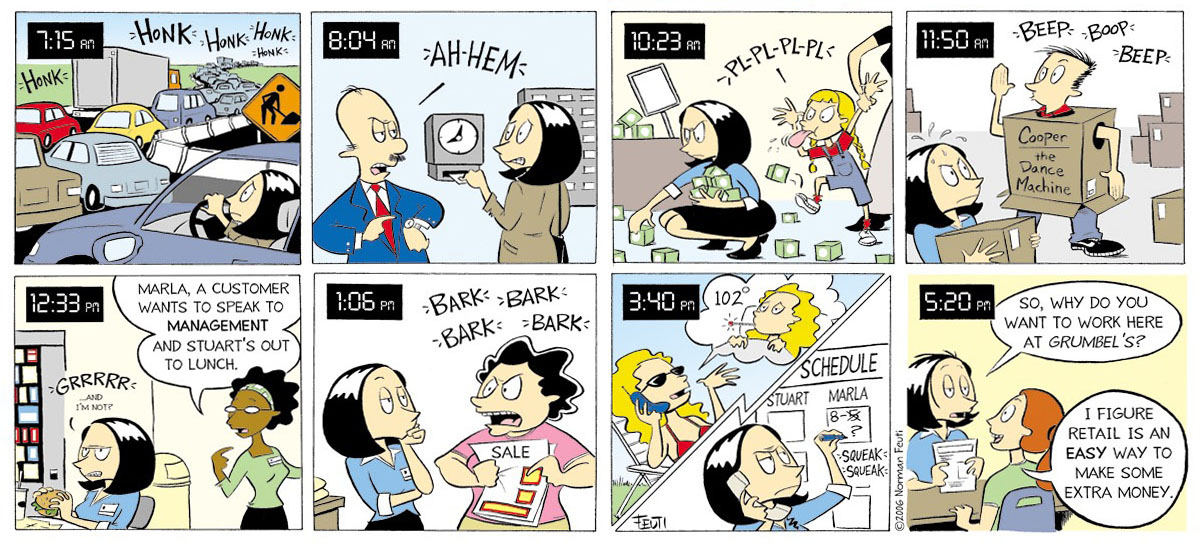
The worst and most outrage-generating stories can be found at Not Always Right, but there’s one place a retail worker should go – if you haven’t already – to smile, cringe, laugh, and find kindred spirits: Retail, by Norm Feuti.

Retail, Strip One, by Norm Feuti, January 1, 2006.

Anyone who has ever worked in retail or still does owes it to themselves to be familiar with this lovely, long-running comic strip. It sadly came to an end after 14 years when the artist wanted to move on to a different career in illustrating children’s books, but the entire thing is available online as an archive. I greedily devoured every one, because it so perfectly captures every aspect of the retail experience, from managers, to co-workers, to the most horrible customers… all of which have to be dealt with in a day’s work if you’re interested in keeping your job.

But it’s not just about the horrors; along the way you will get to know and fall in love with a delightful cast of characters who grow, and learn, and survive the journey. Of course there are the ones you love to hate, but that only adds Tabasco sauce to the chimichanga, as it were.

Only the first year was captured in hard copy, but if Norm were ever to think about publishing the other 13 years in dead-tree edition, I would be first in line to buy them.

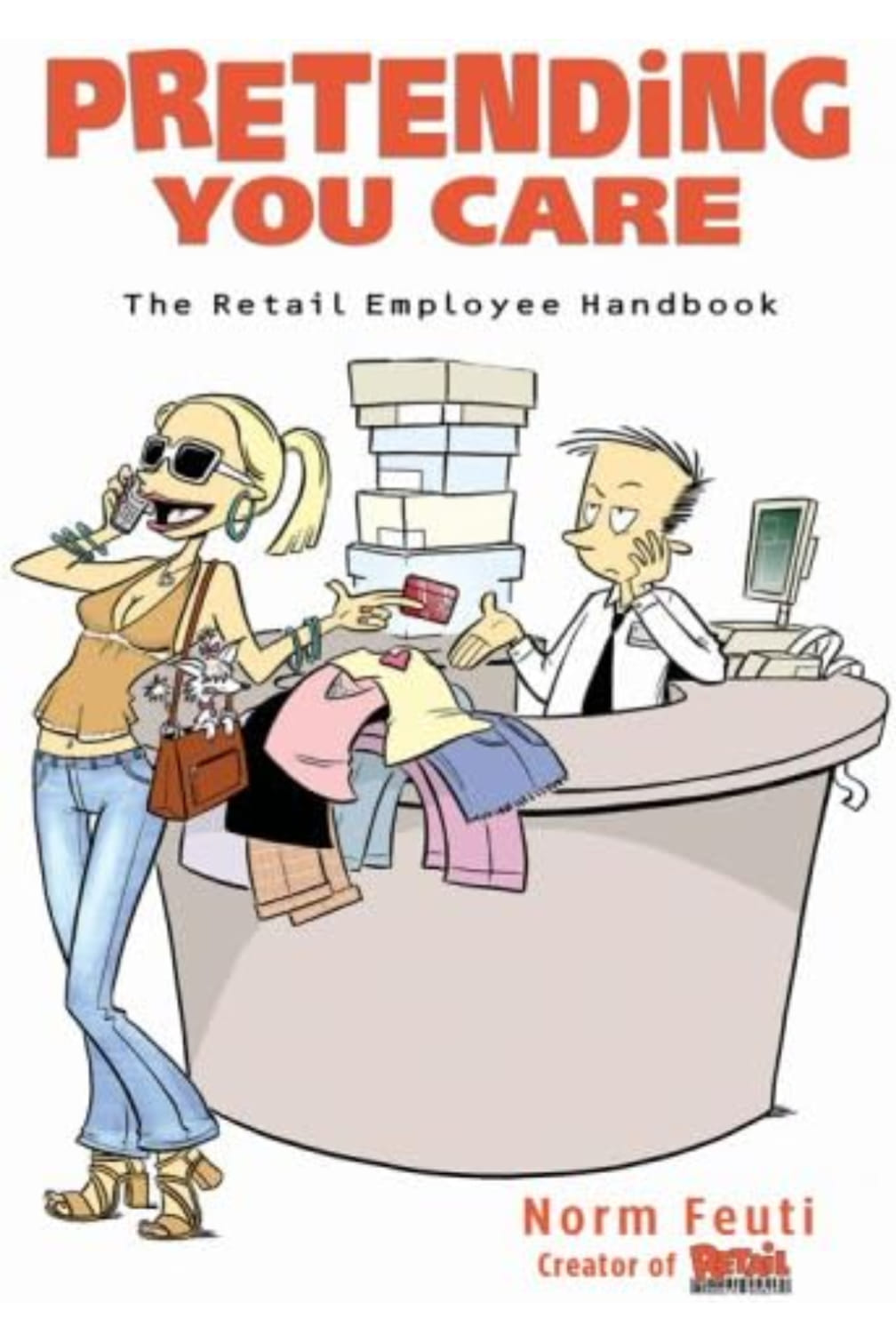
There was also a companion volume, “Pretending you Care,” which included many strips from year one along with wonderful expositions about what it’s like to work in the retail world.

Both are available on Amazon, but neither one is cheap, sadly – I was fortunate to score a copy of each through AbeBooks, my go-to source for difficult-to-find books, at much more affordable prices. They occupy honored places on my bookshelf.

While I never actually worked a retail floor, I did work in pizza shops for 3 years, and spent 6 months in a customer-service chair for a software company – essentially the same as retail work without the face-to-face interactions with customers. It was, to be very honest, the most soul-sucking job I ever did in my entire career, and would never again repeat the experience even if I had to. Thank Ṣiva H. Viṣṇu for retirement.

That said, I undertand. And I have always done my best to be a bit extra kind and appreciative to those people on the floor or behind the register who serve my needs, who endure the daily horror, and who long for nothing more than the end of their shift.

To all retail or customer-service workers out there, thank you.

The Old Wolf has spoken.

What has President Biden done, anyway?

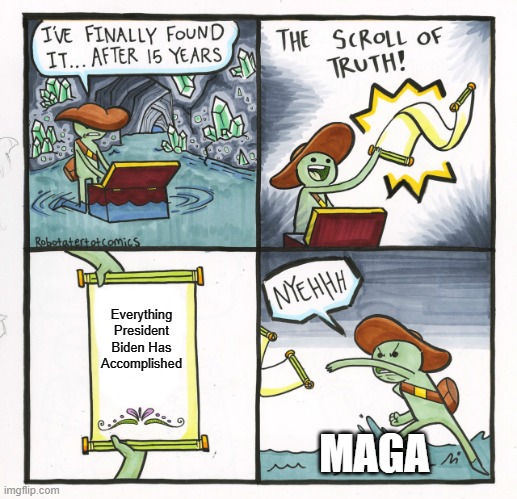
In case you were wondering. Courtesy of redditor u/backpackwayne, here is a master list of four years of astonishing accomplishments, (broken down by year) as opposed to a GOP congress’ virtually nothing except obstruction and denial. This probably won’t affect a single MAGA voter, but it’s a fascinating read anyway.

Year One

Year Two

Year Three

Year Four (updated regularly)

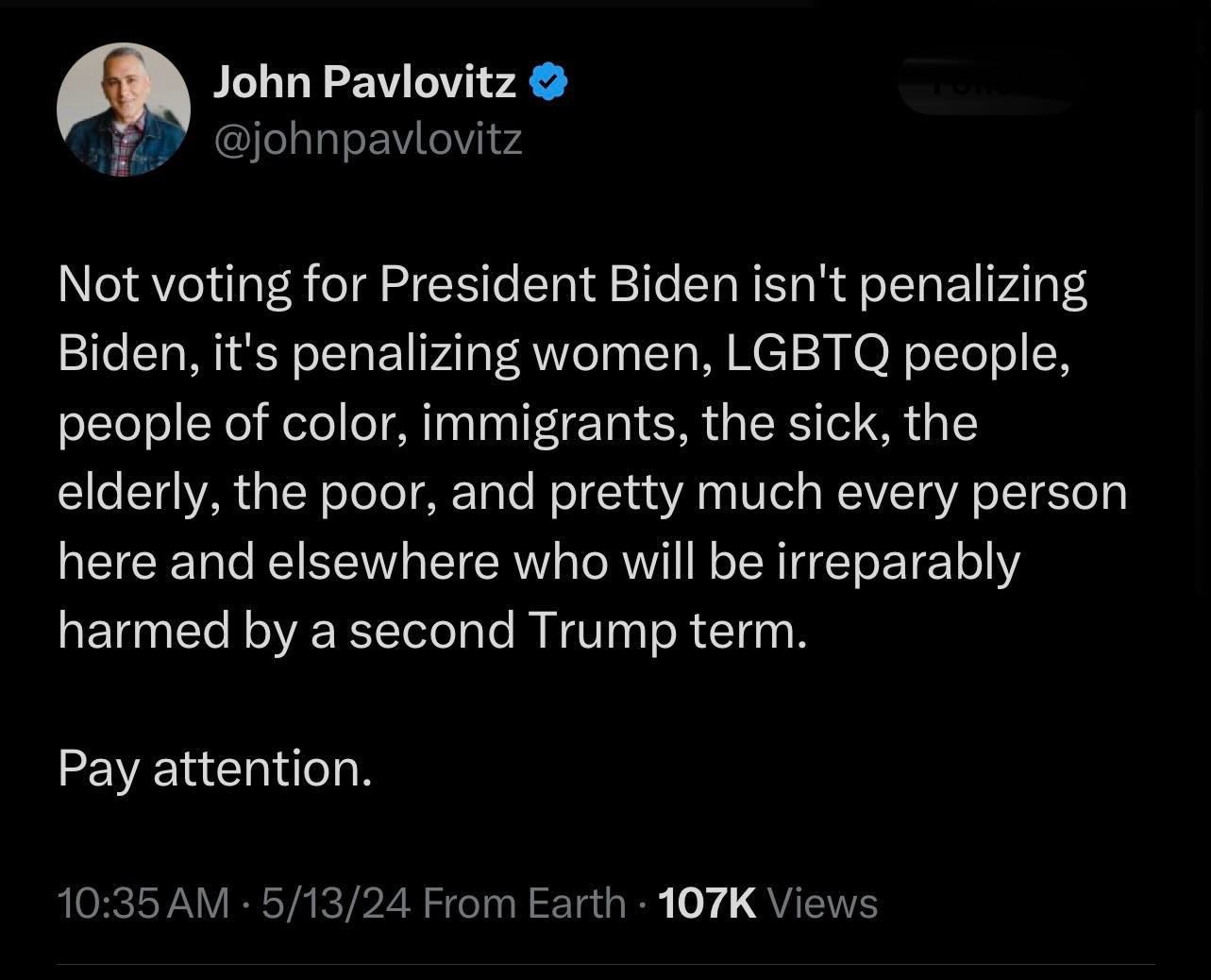
Get out and vote. Democrats and progressives need to turn out in Massive Numbers in November. Overwhelmingly massive numbers. Because the MAGA crowd will be voting for the Orange Catastrophe despite everything good President Biden has done, and despite everything horrific and destructive that the other guy did (and has promised more of.) Sixty years of GOP propaganda, amplified by Russian and Chinese disinformation, have turned their hatred for “weakness” into a white-hot firestorm.

The Old Wolf has spoken.

An essay on Star Trek, Androids, and the gig economy

This showed up in Imgur recently, and it’s the second time I have seen it there. It makes a powerful lot of sense, and shows how badly broken our current system of employment is at all levels.


A twitter thread by @_danilo on 24 January 2020. A hat tip 🎩 to Phil Stracchino for the transcription.

After the premiere of Picard, [I] name checked Bruce Maddox, [and] decided to head back and watch Measure of a Man, TNG S2E09.

And it turns out Maddox is a bit of a tech bro. Startling how well this holds up three decades later. This kind of guy is still a problem.

As a refresher, The Measure of a Man was TNG at its hammiest, most thought provoking best.

A courtroom drama where the fate of Data hinges on the question of whether he is sentient being deserving of what we’d call basic “human rights”.

After Riker delivers a devastating presentation that proves Data is an elaborate machine, Picard joins Guinan for a drink.

Guinan warns Picard that civilizations love nothing more than to create “disposable people,” to do the jobs no one else wants, with no recourse.

Guinan’s point is that by creating a special category that allows Data to be property by an arbitrary distinction, the Federation risks creating a permanent underclass.

This was the lever Picard needed — he wins the argument by appealing to Starfleet’s high mindedness.

This got me to thinking about Silicon Valley innovation.

Today, androids are far beyond our technological capabilities. So what the Valley did was build it lean.

Rather than building artificial laborers, the tech industry invented artificial supervisors.

When the algorithm determines who gets fired, when you work, what you get paid, and everything else about your daily life, there’s no limit to the cruelty of the workplace.

The human needs of the laborers are invisible to the software.

You don’t need to invent an entire android under this model, nor do you need to bear the costs of manufacture.

The software becomes an abstraction around real humans, but the owners of the business never need see them or interact with them in a supervisory context. rows in a db.

We’re left with “algorithmically disposable people.” Entirely commodified labor that can be discarded at will.

No one has to look them in the eye when they’re fired. No one need think of their kids or dependent parents.

No one has to worry about a thing — except the workers.

Gig workers are precarious not only because they lack benefits, but also because the everyday bedrock of their work is determined by a black box algorithm designed to extract maximum profit for a distant corporation.

They are raw material to be optimized.

And what is so dark about this is that the software is perfectly suited to this task.

Software perfectly shields the humans profiting from this one-sided equation from confronting the personal toll it takes on the algorithmically disposable people the company is chewing through.

One of the most striking parts of @Mikelsaac’s Super Pumped¹ is how OPTIONAL it was for Uber management to interact with drivers.

They could hide away, pop out to interact with the drivers IF THEY WANTED, and go back into hiding again, and the machine kept working either way.


Footnotes

¹ This refers to Mike Isaac’s Super Pumped: The Battle for Uber, W. W. Norton & Company; 1st edition (September 3, 2019)

… and thanks for your service.

This post is essentially copypasta from a comment I made over at Facebook, with a little embellishment.

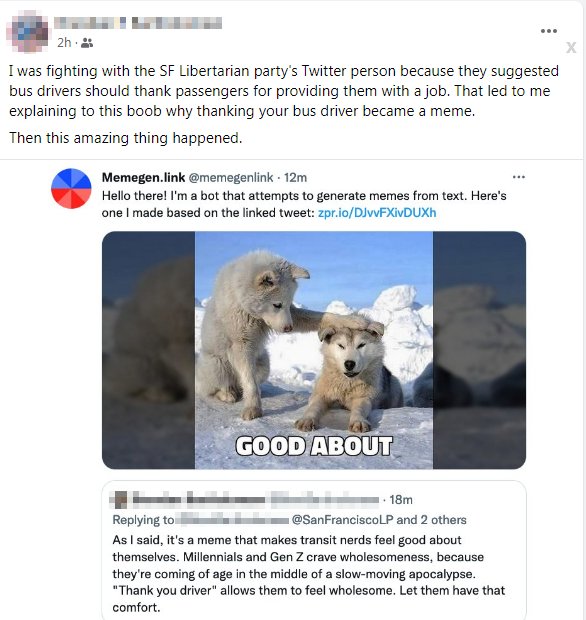
One of my friends is a bus driver in San Francisco, and he posted this little exchange:

And I thought this was very interesting, and I started thinking about it. (A dangerous pasttime.)

A lot of things have combined over the last decade, including the political Chernobyl of the Dildo Braggins-MAGA era, the pandemic, and my long-awaited retirement. All of these things, but most especially leaving the workforce, has made me keenly aware that just about everyone I interact with these days is serving me in some way. All of them are out there busting their chops to buy food and pay rent and afford daycare, and every person I encounter in public from the gal behind the car rental counter to the fella bagging my groceries is serving my needs. Me. If they weren’t there doing the wage-slave tango, I’d have more to do than I could handle, and a lot of stuff I needed simply wouldn’t get done, and a lot of stuff I wanted would simply not be available.

For a long time, even before this gentle epiphany, I have been in the habit of thanking service veterans for their sacrifices for our nation. Now, Jim Wright over at Stonekettle Station – a veteran himself – wrote an interesting essay on this subject, and while I understand and appreciate his point of view, I am grateful for their service. I lotteried out of the draft in 1972, and thus never had the obligation of either being shipped off to ‘Nam or joining the Navy; half of me is grateful, and the other half wistful that I didn’t have the chance of serving my country in that way. So when I see one of these hats or one like it,

I make sure to tell the wearer that I appreciate what they did for all of us.

By extension, I’ve made it a little personal habit to tell people I encounter in the course of the day, “… and thanks for being here for us.”¹ I don’t do it to feel wholesome, I do it because I mean it from the bottom of my heart. Oddly enough, most of them don’t know how to handle this and I get a lot of bluescreen moments. But I mean it sincerely and somehow it seems indecent not to say something. Perhaps, at the very least, it brings a bit of warmth to someone’s otherwise dreary or retail-hell day.


WAT‽

The Old Wolf has spoken.

Footnotes

¹ Yes, even cops. These folks usually get “Thanks for keeping us all safe.” While there are far too many problems with bad peace officers and bad police procedures in our nation, I don’t ascribe to the reddit/Imgur ACAB-echo chamber and I’d rather err on the side of decency than resentment.

Taco Bell’s Crispy Chicken Sandwich – Easy Come, Easy Go

Well, Taco Bell’s entry in the Chicken Sandwich wars only lasted a month. And I suspect I know why.

From an article in Baking Business:

Taco Bell’s new Crispy Chicken Sandwich Taco is “not quite a sandwich, not quite a taco,” the Yum! Brands, Inc. subsidiary said. The taco features all-white meat crispy chicken marinated in jalapeño buttermilk, seasoned with Mexican spices and rolled in a crunchy tortilla chip coating. The chicken is served on a warm flatbread folded into a taco form and flavored with Taco Bell’s creamy chipotle sauce. The taco may be ordered regular or spicy with the addition of crunchy jalapeño slices.

This is what they are supposed to look like

I love chicken sandwiches, and I’ve long enjoyed Chick-fil-A’s offering but I’m not in favor of their social policies, so I’ve kept my antenna up for alternatives. Apparently Popeye’s has a relatively good one, but we live in the northeast so I’m out of luck until I can manage to get south of the Mason-Dixon line.

So when Taco Bell started offering these, I had to try one. We went twice, and my wife liked hers; then we went to another location and this is what happened:

Oops

I ordered from their online menu and customized the item with tomatoes and onions – but what I got was light-years from what they advertised. Instead of a puffy flatbread, they used a standard flour tortilla, and instead of three chicken tenders, there was only one, with a piddling amount of plain cheese sauce. Bitterly disappointed, to say the least.

Others had similar experiences, but at least theirs came in the advertised flatbread and looked a lot better than the one I was served.

Next time I swung past Taco Bell, I noticed that the item had vanished from the menu. If franchises were having difficulty consistently preparing this item in a satisfactory manner, it’s no wonder they pulled it. According to a Taco Bell spokesperson,

“The Crispy Chicken Sandwich Taco was a limited time menu offering. Innovation is core to Taco Bell and offering some menu items as limited time offers allows room on menus for even more new, craveable creations for fans. Like all great limited time menu items from Taco Bell, there’s always a chance we can see it return to menus.”

If they bring it back, they are going to have to make sure their stores can get the right ingredients and know how to prepare it properly, or else this will happen with greater frequency, the result of a little feedback to Corporate Headquarters:

Don’t get me wrong, I know that fast food is a challenging business, and consistency and quality across franchises can be a bedeviling task – but it’s probably one of the most important thing any national chain can focus on.

I still love Taco Bell for a fast, cheap, filling, and tasty meal. And it’s not like they haven’t weathered storms before.

The Old Wolf has spoken.

New York’s Chinatown Fair and the Animated Dragon

I grew up in New York City in the ’50s and ’60s. Much has gone since that time, but my memories include hings I deeply miss about New York in my early days:

  • The myriad small businesses instead of brass-and-glass
  • Little Italy full of Italians, and the Feasts of San Antonio and San Gennaro
  • Yellow Cabs with huge back seats and those little jumpseats (Yes, unsafe, but they were so fun)
  • Air-conditioned movie theaters with giant screens and velvet curtains where you could stay all day for 50¢ and watch a cartoon, a short subject, a newsreel, and the main feature over and over again
  • the 42nd Street Subway Stations with Red and Blue lights guiding you to your line of choice, IRT, BMT, or IND, or the Shuttle
  • Underground OJ bars and other odd little shops in the subways such as Al Stevenson’s magic store (otherwise known as the Wizard’s Workshop)
  • Hole-in-the-wall pizza joints where you could order pizza by the “Slice!” for 15¢.
  • The Staten Island ferry for a nickel
  • Christmas trees up and down Park Avenue, and the stars that would twinkle on the 666 building
  • the Lord and Taylor Christmas windows
  • And so many more…

But one of my most indelible memories is from Chinatown, where my mother would take me on occasion. There were myriad stores and restaurants selling the ubiquitous Chinese back-scratchers, finger traps, and wonderful puzzle boxes, some of which I wish I still had.

Alamy stock photo of a Chinese puzzle box, very similar to one I once owned.

But the most wondrous thing to my young eyes was the Chinatown Fair.

Before it became an electronic game arcade, it featured dancing chickens, tic-tac-toe chickens (you can read about these at Jeremiah’s Vanishing New York), and the amazing animatronic dragon.

8 Mott Street, Chinatown, New York, New York, USA — Performing Chicken in New York Arcade — Image by © Adam Woolfitt/CORBIS

Sadly, no photos of the latter wonder appear to have been saved to the Internet as of this moment, but who knows? Perhaps someone will come across a picture in their old archives and post it in the future. If you happen to stumble across this blog post and have such a photo, please let me know; I would love to feature it here.

At any rate, you would walk up to this row of little windows, each with a coin slot for quarters; drop one in and your window would open, and below you was this most amazing animated dragon which would move and roar at you. Commenter “Donald” at the website Scouting New York had this to say, which syncs with my own memories perfectly:

Yes!! The dragon peep show…. why doesn’t anybody ever mention the dragon peep show? I thought that was the most bizarre “game” I ever saw… you’d drop a quarter in and a sliding plastic window would rise, exposing a glass window underneath (similar to a peep show booth) and literally laying on the basement floor – you’d see this huge animatronic dragon moving it’s head and tail – and from a speaker would blare the soundtrack from an old Godzilla movie… that familiar Godzilla roar. Now the dragon you were looking at and the Godzilla you were hearing of course had nothing to do with each other – but that just added to the cheezy entertainment value of the whole thing. I thought it was great… but nobody ever mentions it. I ALWAYS hear about the Tic Tac Toe Chicken… but never my old dragon friend.

A later photo of The Chinatown Fair at night, from The Chinatown Fair Archive.

The Fair later became a video arcade, but closed in 2011. Some other great memories are archived at Scouting New York, The Gothamist, Ganker, and Huffpost; apparently the arcade featured in a 2015 documentary called The Lost Arcade; in its later years it “the arcade became a shelter to a community as diverse as the city surrounding it and changed lives in doing so.” (IMDB)

According to The Verge, the arcade re-opened in 2012, but the reviews were mixed. Apparently it’s still there, but without that amazing dragon it will never be the same for me.

The Old Wolf has spoken.