Yesterday the White House issued a proclamation on Columbus Day, purportedly from the *president.
First of all, let’s be honest: The Thermonuclear Bowel Evacuation Currently Disgracing the Oval Office had virtually nothing to do with this proclamation.
Columbus Day is not even on his radar, because it makes him no money.
It’s full of vocabulary that is only taught after the third grade, which means there’s no way the Orange Screechweasel could have penned it. It was doubtless written by one of his sycophantic staff, and it wouldn’t surprise me if it had been penned by Stephen Miller, it’s so full of jingoistic, nationalist rhetoric.
One paragraph is especially egregious:
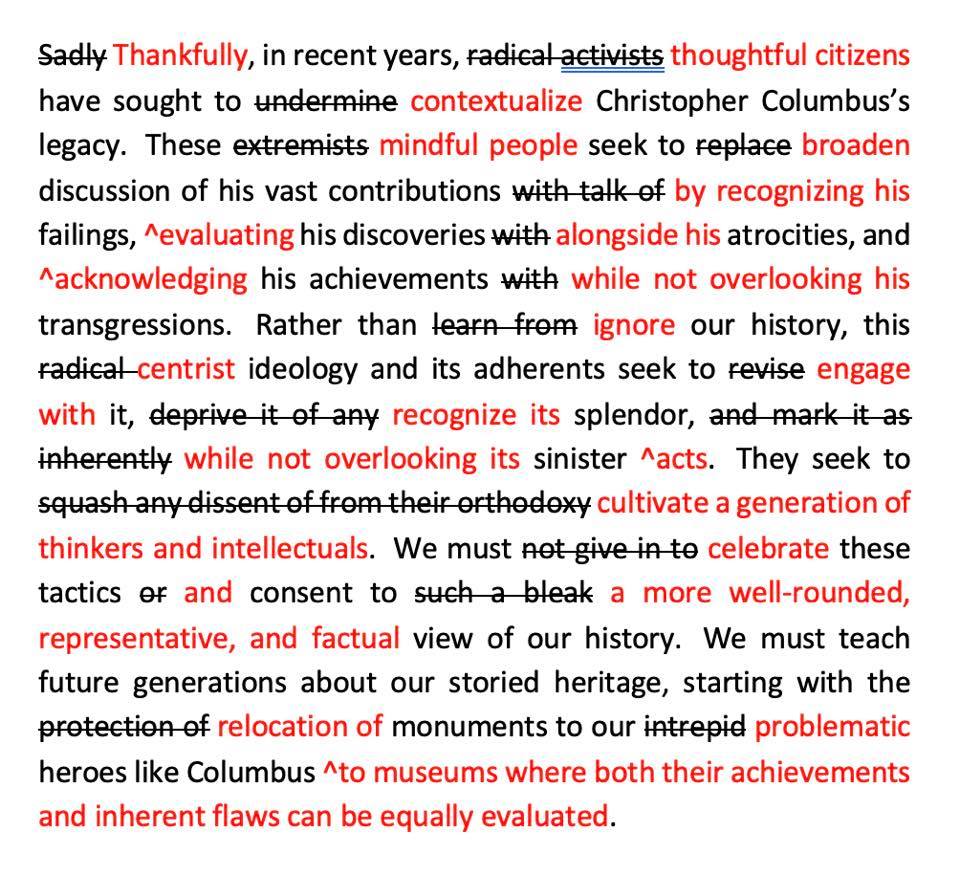
Sadly, in recent years, radical activists have sought to undermine Christopher Columbus’s legacy. These extremists seek to replace discussion of his vast contributions with talk of failings, his discoveries with atrocities, and his achievements with transgressions. Rather than learn from our history, this radical ideology and its adherents seek to revise it, deprive it of any splendor, and mark it as inherently sinister. They seek to squash any dissent from their orthodoxy. We must not give in to these tactics or consent to such a bleak view of our history. We must teach future generations about our storied heritage, starting with the protection of monuments to our intrepid heroes like Columbus.
Instead of providing inspiring national leadership, 45’s *administration can never resist an opportunity to demonize his political opponents in particular and liberals in general. Fortunately, there are people like Justin P. Cowan, Associate Chair of the Department of Theatre Arts at Western Connecticut State University. He took the “red pen of rational thought” to this paragraph and crafted something far more reasonable.
The edited version is a much more satisfying read:
“Thankfully, in recent years, thoughtful citizens have sought to contextualize Christopher Columbus’s legacy. These mindful people seek to broaden discussion of his vast contributions by recognizing his failings, evaluating his discoveries alongside his atrocities, and acknowledging his achievements while not overlooking his transgressions. Rather than ignore our history, this centrist ideology and its adherents seek to engage with it, recognize its splendor, while not overlooking its sinister acts. They seek to cultivate a generation of thinkers and intellectuals. We must celebrate these tactics and consent to a more well-rounded, representative, and factual view of our history. We must teach future generations about our storied heritage, starting with the relocation of monuments to our problematic heroes like Columbus to museums where both their achievements and inherent flaws can be equally evaluated.”
I appreciated Dr. Cowan’s re-imagining of what a proclamation from a normal, human president might look like. It admits of Columbus’s significant contributions while at the same time refusing to whitewash the severe consequences of his journeys. Although Dr. Cowan is not a historian by profession, Dr. Heather Cox Richardson is, and in her “Letters from an American” she states,
For all of Trump’s attention to patriotic education, his proclamation is quite bad history. Aside from its whitewashing of the effects of Columbus’s voyage of “discovery,” the proclamation misrepresents the original point of Columbus Day, which had a lot more to do with putting down white supremacy than celebrating the “enduring significance” of Columbus in opening “a new chapter in world history.”
Her complete essay about the proclamation and other events of the day is definitely worth a read.
Don’t get the idea that I’m jumping on the “Hate Columbus” bandwagon with these thoughts. Half of my blood comes from Italy, and I respect and love that heritage. Columbus is part of the reason that I get to live under the Constitution of this nation, for which I am immensely grateful. But as Dr. Richardson went on to explain,
President Franklin Delano Roosevelt officially instituted Columbus Day in 1934, but the idea for the holiday rose in the 1920s, when the Knights of Columbus tried to undercut the resurgence of the Ku Klux Klan by emphasizing the role minorities had played in America. In the early 1920s, the organization published three books in a “Knights of Columbus Racial Contributions” series, including The Gift of Black Folk, by W. E. B. Du Bois. They celebrated the contributions of immigrants, especially Catholic immigrants, to America with parades honoring Christopher Columbus. The Knights of Columbus were determined to reinforce the idea that America must not be a land of white Protestant supremacy.
As an aside, these are things I never knew; I certainly wasn’t taught these facts in school. History must of necessity take all factors into account if it is to be a valid basis for national introspection and growth. We can’t look just at the good, or just at the bad.
I’m grateful for the positive results of the voyages of Cristoforo Colombo, but I’m mindful of the atrocities that were perpetrated along the way. The best thing humanity can do to atone for the destruction of the Taino and Carib populations is to take a good hard look at the realities of the Spanish conquest of the Americas and vow to treat all people with equality, dignity, and respect in the future. As a race of people, we’ll never make it to the stars if we can’t stop rolling in the mud.
Watch this video (Begin at the 3:00) mark. Listen to Joe Biden’s words. If you don’t have time to watch, read the transcript below.
While not as heart-pumping as Bill Pullman’s “we will not go quietly into the night” speech from Independence Day, this one is the real thing, addressing real issues and real dangers that we as a nation face. I don’t care if you’re liberal or conservative – this is the kind of president we need right now. Issues and concerns can be debated, positions can be put forward, compromises can be made, once people of good will – not obstructive, power-hungry ideologues – are in charge of leading us.
“Thank you all for being here. Thank you. I appreciate you being here on this gorgeous day in a magnificent, magnificent setting, until you think about all the lives that were lost here. Y’all please, all have a seat.
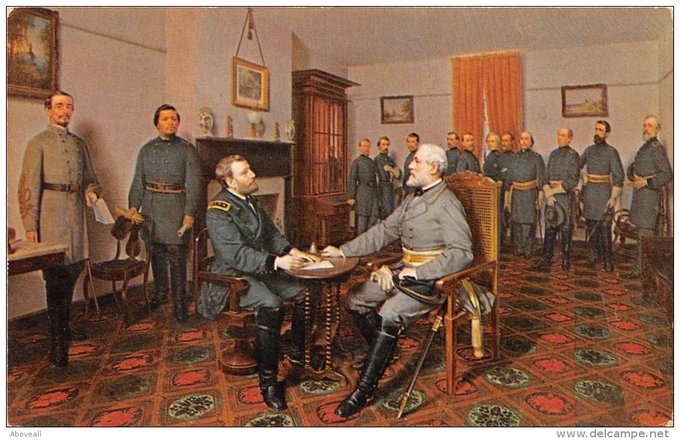
On July 4th, 1863, American woke to the remains of perhaps the most consequential battle in American soil. It took place here on this ground in Gettysburg; three days of violence, three days of carnage, 50,000 casualties, wounded, captured, missing, or dead, over three days of fighting. When the sun rose on that Independence Day, Lee would retreat. The war would go on for nearly two more years, but the back of the Confederacy had been broken. The Union would be saved. Slavery would be abolished, government of by and for the people would not perish from the earth, and freedom would be born anew in our land.
There’s no more fitting place than here today in Gettysburg, to talk about the cost of division. About how much it has cost America in the past, about how much it is costing us now, and about why I believe in this moment, we must come together as a nation. For President Lincoln, the Civil War was about the greatest of causes. The end of slavery, widening equality, pursuit of justice, the creation of opportunity, and the sanctity of freedom.
His words would live ever after. We hear them in our heads. We know them in our hearts. We draw on them when we seek hope in hours of darkness; “Four score, and seven years ago, our fathers brought forth on this continent, a new nation, conceived in Liberty and dedicated to the proposition that all men are created equal.” Here on this sacred ground, Abraham Lincoln, re-imagined America itself. Here, a president of the United States spoke of the price of division, and the meaning of sacrifice.
He believed in the rescue, redemption, and rededication of the union. All this in a time, not just of ferocious division, but of widespread death, structural inequity, and fear of the future. And he taught us this, a house divided could not stand. That is a great and timeless truth. Today, once again, we are a house divided, but that my friends can no longer be. We’re facing too many crises. We have too much work to do. We have to bright a future to have it shipwrecked on the Shoals of anger and hate, and division.
As we stand here today, a century and a half later after Gettysburg, we should consider again, what can happen when equal justice is denied, when anger and violence and division are left unchecked. As I look across America today, I’m concerned. The country is in a dangerous place. Our trust in each other is ebbing. Hope seems elusive. Too many Americans see our public life, not as an arena for mediation of our differences, but rather they see it as an occasion for total, unrelenting, partisan warfare.
Instead of treating each other’s party as the opposition, we treat them as the enemy. This must end. We need to revive the spirit of bipartisanship in this country. A spirit of being able to work with one another. When I say that, and I’ve been saying it for two years now, I’m accused of being naive. I’m told, “Maybe that’s the way things used to work, Joe, but they can’t work that way anymore.” Well, I’m here to tell you they can, and they must if we’re going to get anything done.
I’m running as a proud Democrat, but I will govern as an American president. I’ll work with Democrats and Republicans. I’ll work as hard for those who don’t support me, as those who do. That’s the job of a president; the duty to care for everyone. Refusal of Democrats and Republicans to cooperate with one another is not due to some mysterious force beyond our control. It’s a decision. It’s a choice we make.
And if we can decide not to cooperate, we can decide to cooperate as well. That’s the choice I’ll make as president. But there’s something bigger going on in this nation than just our broken politics. Something darker, something more dangerous. I’m not talking about ordinary differences of opinion, competing viewpoints give life and vibrancy to our democracy. No, I’m talking about something different, something deeper. Too many Americans seek not to overcome our divisions, but to deepen them, we must seek not to build walls, but bridges. We must seek not to have our fist clenched, but our arms open. We have to seek not to tear each other apart, we seek to come together. You don’t have to agree with me on everything, or even on most things, to see that we’re experiencing today is neither good nor normal.
I made the decision to run for president after Charlottesville. Close your eyes, and remember what you saw. Neo-Nazis, white supremacists, and the KKK coming out of the fields with torches light, veins bulging, chanting the same anti-Semitic bile herd across Europe in the ’30s. It was hate on the march, in the open, in America. Hate never goes away, it only hides. And when it’s given oxygen, when it’s given an opportunity to spread, when it’s treated as normal and acceptable behavior, we’ve opened a door in this country that we must move quickly to close. As president, that’s just what I will do. I will send a clear unequivocal message to the entire nation, there is no place for hate in America.
It will be given no license. It will be given no oxygen. It’ll be given no safe harbor. In recent weeks and months, the country has been riled by instances of excessive police force, heart-wrenching cases of racial injustice and lives needlessly and senselessly lost, by peaceful protesters, given voice to the calls for justice, by examples of violence and looting and burning that can not be tolerated. I believe in law and order, I’ve never supported defunding the police.
But I also believe injustice is real. It’s a product of a history that goes back 400 years, the moment when black men, women, and children first were brought here in chains. I do not believe we have to choose between law and order, and racial justice in America. We can have both. This is the nation strong enough to both honestly face systemic racism and strong enough to provide safe streets for our families and small businesses. The two often bear the brunt of this looting and burning.
We have no need for armed militias roaming America’s streets, and we should have no tolerance for extremist white supremacy groups, menacing our communities. If you say, “We should trust America’s law enforcement authorities to do the job,” as I do, then let them do their job without extremist groups acting as vigilantes. If you say, “We have no need to face racial injustice in the country,” you haven’t opened your eyes to the truth in America.
There’ve been powerful voices for justice in recent weeks and months, George Floyd’s, six year old daughter, who I met with, who looked at me and said in her small child’s voice, “Daddy changed the world.” Also, Jacob Blake’s mother was another. When she said, “Violence didn’t reflect her son and this nation needed healing.” And Doc Rivers, the basketball coach, choking back tears when he said, “We’re the ones getting killed. We’re the ones getting shot. We’ve been hung. It’s amazing why we keep loving this country and this country does not love us back.”
I think about that. I think about what it takes for a black person to love America. That is a deep love for this country. That has for far too long, never been recognized. What we need in America’s leadership that seeks to deescalate tensions, to open lines of communications, to bring us together, to heal, to hope. As president, that’s precisely what I will do. We paid a high price for allowing the deep divisions in this country to impact on how we deal with the Coronavirus. 210,000 Americans dead, and the number’s climbing. It’s estimated that nearly another 210,000 Americans could lose their lives by the end of the year; enough, no more. Let’s just set partisanship aside, let’s end the politics and follow the science.
Wearing a mask… wearing a mask is not a political statement. It’s a scientific recommendation. Social distancing isn’t a political statement. It’s a scientific recommendation. Testing, tracing, the development and all approval and distribution of a vaccine, isn’t a political statement. It is a science-based decision. We can’t undo what has been done. We can’t go back. We can do so much better. We can do better starting today. We can have a national strategy that puts politics aside and saves lives.
We can have a national strategy that will make it possible for our schools and business to open safely. We can have a national strategy that reflects the true values of this nation. This pandemic is not a red state or blue state issue. This virus doesn’t care whether you live, or where you live, what political party you belong to, it affects us all. It will take anyone’s life. It’s a virus. It’s not a political weapon.
There’s another enduring division in America that we must end, the division in our economic life. That gives opportunity only to the privileged few. America has to be about mobility. It has to be the kind of country where an Abraham Lincoln, a child of the distant frontier, can rise to the highest office in the land. America has to be about possibilities.
The possibility of prosperity, not just for the privileged few, but for the many, for all of us. Working people on their kids deserve an opportunity. Lincoln knew this. He said that the country had to give people, and I quote, “An open field and a fair chance. An open field and a fair chance.” That’s what we’re going to do in America. We’re going to build together. We fought a civil war that would secure a union that would seek to fulfill the promise of equality for all.
And by fits and starts, our better angels had prevailed again, just enough, just enough against our worst impulses to make a new and better nation. And those better angels can prevail again, now. They must prevail again, now. 100 years after Lincoln spoke at Gettysburg, the vice president, Lyndon B Johnson also came here, and here’s what he said.
He said, “Our nation founded soul and honor in these fields of Gettysburg, we must not lose that soul in dishonor, now, on the fields of hate.” Today, we’re engaged, once again, in the battle for the soul of the nation, the forces of darkness, the forces of division, the forces of yesterday are pulling us apart, holding us down and holding us back. We must free ourselves of all of them. As president, I will embrace hope, not fear. Peace, not violence. Generosity, not greed. And light, not darkness. I’ll be a president who appeals to the best in us, not the worst.
I’ll be a president who pushes toward the future, not one who clings to the past. I’m ready to fight for you and for our nation every day, without exception, without reservation, with a full and devoted heart. We cannot, and will not, allow extremest and white supremacist to overturn the America of Lincoln and Harriet Tubman, and Frederick Douglas, to overturn the America that has welcomed immigrants from distant shores, to overturn the America that has been a Haven and a home for everyone, no matter their background.
From Seneca falls to Selma, to Stonewall we’re at our best when the promise of America is available to all, we cannot, and we will not allow violence in the street to threaten the people of this nation. We cannot and will not walk away from our obligation to at long last, face the wrecking on race and racial justice in this country. We cannot and will not continue to be struck in the partisan politics that lets us, this virus, thrive, while the public health of this nation suffers.
We cannot and will not accept an economic equation that only favors those who have already got it made; everybody deserves a shot at prosperity. Folks, duty and history call presidents to provide for the common good, and I will. It won’t be easy. Won’t be easy. Our divisions today are long standing, economic and racial inequities have shaped us for generations, but I give you my word. I give you my word. If I’m elected president, I will Marshall the ingenuity and Goodwill of this nation to turn division into unity and bring us together because I think people are looking for that. We can disagree about how as we move forward, we must take the first steps. It starts with how we treat one another. How we talk to one another. How we respect one another.
In the second inaugural Lincoln said, “With malice toward none, with charity for all, with firmness in the right, as God gives us to see the right, let us strive on to finish the work we’re in to build up the nation’s wounds, bind up the nation’s wounds.” Now, we have our work to reunite America. To bind up our nation’s wounds. To move past shadow and suspicion. And so we, you and I together, we press on, even now. After hearing the second inaugural address, Frederick Douglas told President Lincoln, “Mr. Lincoln, that was a sacred effort.” We have to be dedicated to our own sacred effort. The promise of Gettysburg and the new birth of freedom was in hand.
I think it’s at risk. Every generation that’s followed Gettysburg has been faced with a moment when it must answer this question, will they allow the sacrifices made here to be in vain, or be fulfilled? This is our moment to answer this essential American question, for ourselves and for our time. And my answer is this, it cannot be that after all this country has been through, after all that America’s accomplished, after all the years, we have stood as a beacon of light to the world.
It cannot be that here and now in 2020, we will allow the government of the people, by the people, and for the people to perish this earth. No, it cannot. And it must not. We have it in our hands, the ultimate power. The power to vote. Its the note instrument ever devised to register our will in a peaceable and productive fashion. And so we must. We must vote. We will vote. No matter how many obstacles are thrown in our way, because once America votes, America will be heard.
Lincoln said, “The nation is worth fighting for.” So it was. And so it is, together as one nation under God, indivisible. Let us join forces to fight the common foe of injustice and inequality, hate and fear. Let’s conduct ourselves as Americans who love each other, who love our country, who will not destroy, but will build. We owe it to the dead who were buried here at Gettysburg. We owe that to the living, and to future generations yet to be born.
You and I are part of a covenant, a common story of divisions overcome and hope renewed. If we do our part, if we stand together, if we keep faith with the past and with each other, then the divisions of our time will give way to the dreams of a brighter, better future. This is our work. This is our pledge. This is our mission. We can end this era of division. We can end the hate and the fear. We can be what we are at our best, the United States of America. God bless you all. And may God protect our troops. Thank you. We can do this.”
I want our nation to return to sanity. The mad divisiveness that infects our politics now is not anything that our founders envisioned. We need to get back to government by reason and compromise instead of bombastic ideological warfare and obstruction. We owe it to our children, our grandchildren, and future generations.
This coming November, please vote to sweep the authoritarians from power, and return our nation to the democratic republic that we were given at the Constitutional Convention of 1787. ¹
The Old Wolf has spoken, but Joe Biden has spoken better.
Footnotes:
¹ A good exploration of Franklin’s quote, “A republic if you can keep it” can be found here.
This is a Twitter thread from Jared Yates Sexton (@JYSexton) on June 11, 2020, condensed here for easier reading and without all the responses – many of which are simply ignorant and do nothing to improve the conversation. You can visit the original thread here.
Jared Yates Sexton
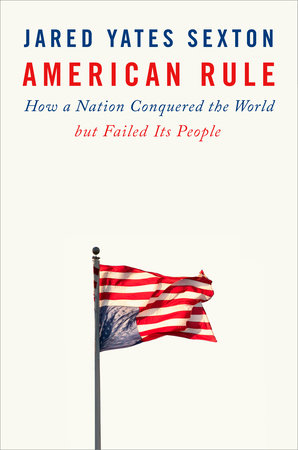
All right. Let’s talk about how the Confederacy survived the Civil War, was absorbed into our culture, laws, and politics, and remains an everpresent threat we must destroy. I didn’t know any of this until I started researching American Rule.
First things first, the Confederacy is hardly dealt with in our history or curricula. There’s a reason the Civil War is reduced to a history of battles and military maneuvers. To look any deeper would mean an actual reckoning with white supremacy and power in America.
The truth is that the Confederacy considered itself the true ancestor of America and that the North had betrayed America’s founding and purpose as a white supremacist state. It wasn’t a different country. It was America interpreted as a white supremacist nation.
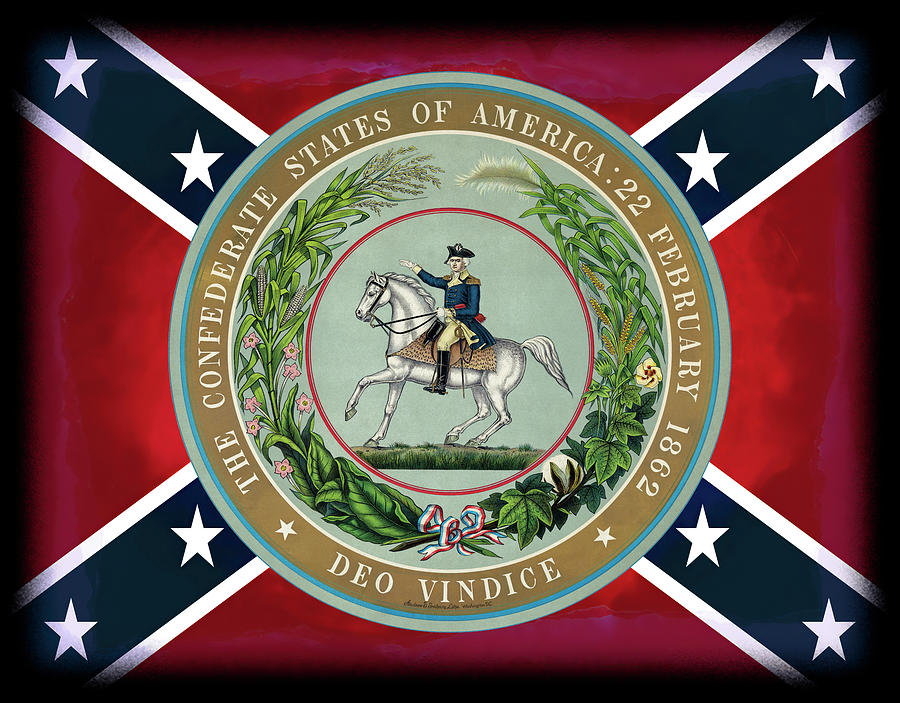
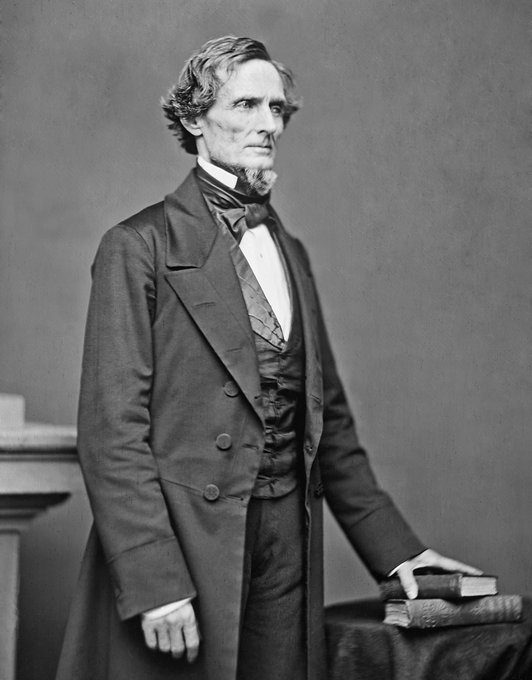
There’s a reason why George Washington is all over Confederate iconography. Why Jefferson Davis was inaugurated in the shadow of a Washington statue. The Confederacy was battling over the United States of America, not creating a separate nation.
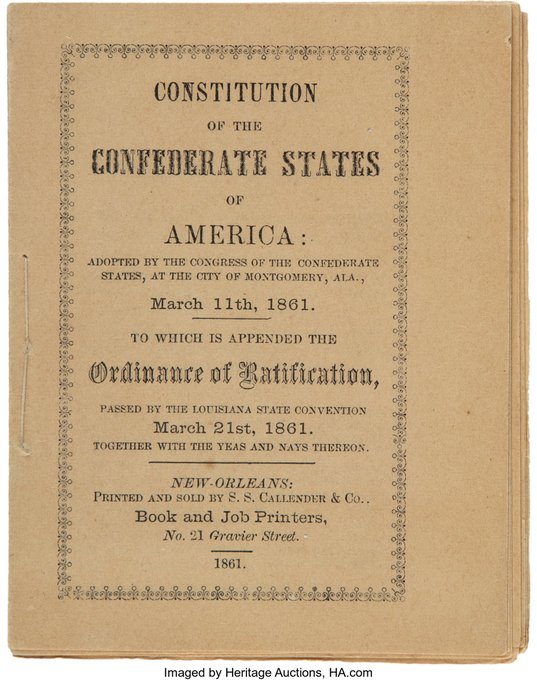
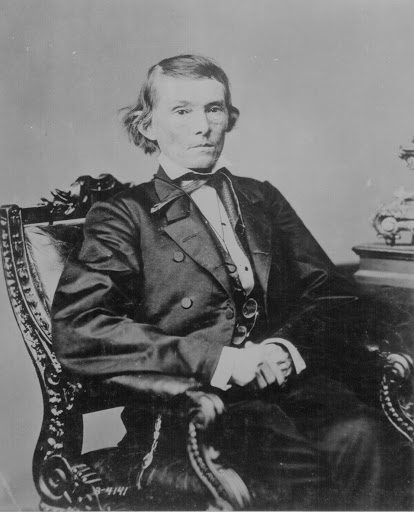
And for all of the lies about it being about state’s rights, it was explicitly about white supremacy, which Confederate vice-president Alexander Stephens made clear in so many words. Stephens, by the way, still has a statue in the Capitol.
Another reason we don’t talk about the Confederacy is because it was a twisted version of America, with its blatant white supremacy and its basis in white-identity Christianity. As the South lost battles, its leaders demanded humiliation, days of prayer, reckoning with God.
As I’ve mentioned before, Confederate preachers told Southerners that the Christian God was white supremacist, that he demanded white supremacy as the law of the land. The Confederacy saw itself as the real America and God’s chosen nation.
In addition to not understanding what the Confederacy was, the myth that it simply went away when it surrendered militarily has done massive damage. America re-absorbed the Confederacy and ingested its blatant white supremacy and continued its customs and laws.
To get into this properly and deal with our history, we must reckon with our myths, including the messiah-ization of Abraham Lincoln, who had troubling views on race and even tried to sell freed slaves to other countries to remove them from America.
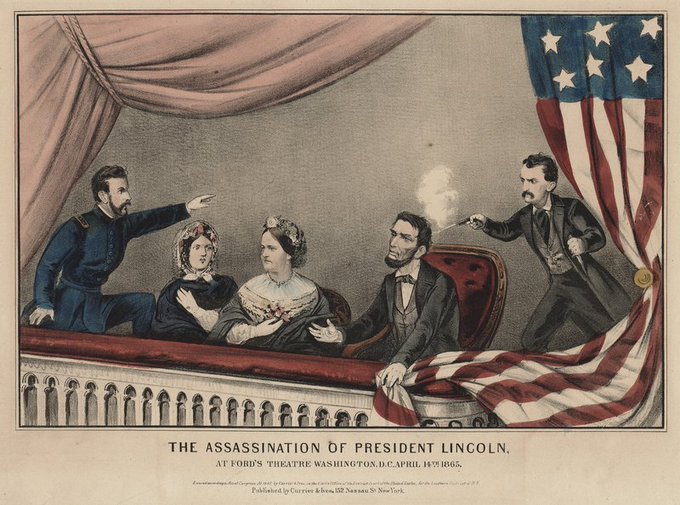
There is a possibility Lincoln could have continued evolving had he not been assassinated, but we’ll never know. That murder, however, created a scenario wherein America could make its post-Civil War reality into a mythologized moment of redemption.
Instantly, Lincoln was turned into a martyr, his death a moment of redemption and a chance for spilled blood to scrub America’s sins clean. It was a Christianized myth that served to hide our history and the reality of race in America.
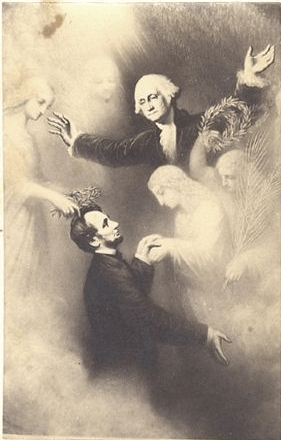
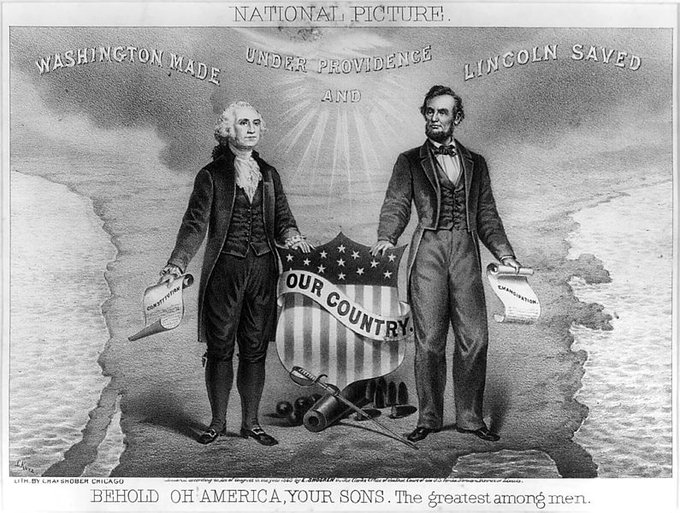
In this twisted marriage of national and Christian myth, Washington became the Father, Lincoln the Messiah Son, and Americanism the Holy Spirit. The narrative was that Lincoln had saved us from white supremacy and that America was now ready for an equal future.
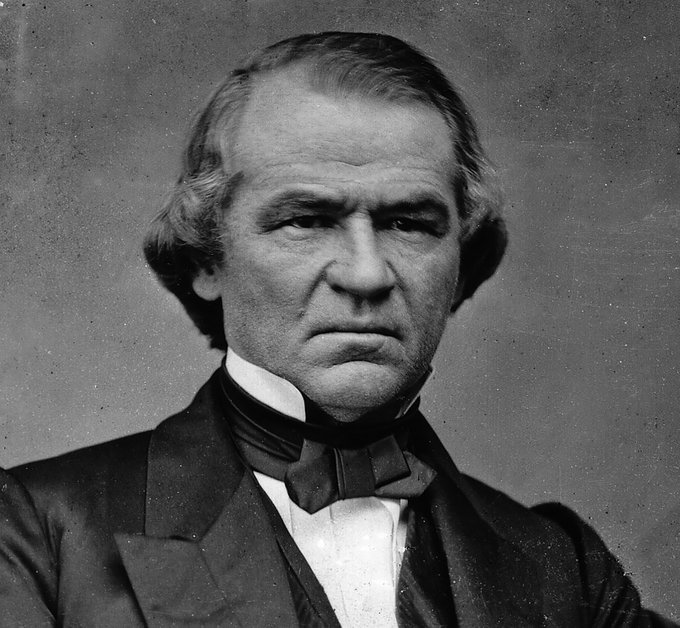
What we don’t discuss much is Andrew Johnson, who took over following Lincoln’s death. Johnson was a toxic white supremacist who fought against Reconstruction and denied dignity and rights for freed slaves. This is what happened.
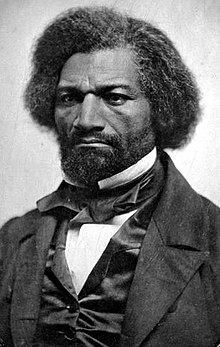
Johnson told black luminaries like Frederick Douglass that equal rights were an abomination and that blacks had conspired with Southern slave owners against poor whites. Johnson was disgusting and hindered the project of equality from the beginning.
Johnson installed white supremacists as governors in the south, including Florida’s William Marvin, who told freed slaves to still call their masters “master” and that they were not equal to white people and to never believe otherwise.
Meanwhile, white supremacists worked behind the scenes to create laws that could keep freed slaves as close “to the condition of slavery” as possible. The developing laws were meant to hide the insidiousness of blatant white supremacy behind laws and government.
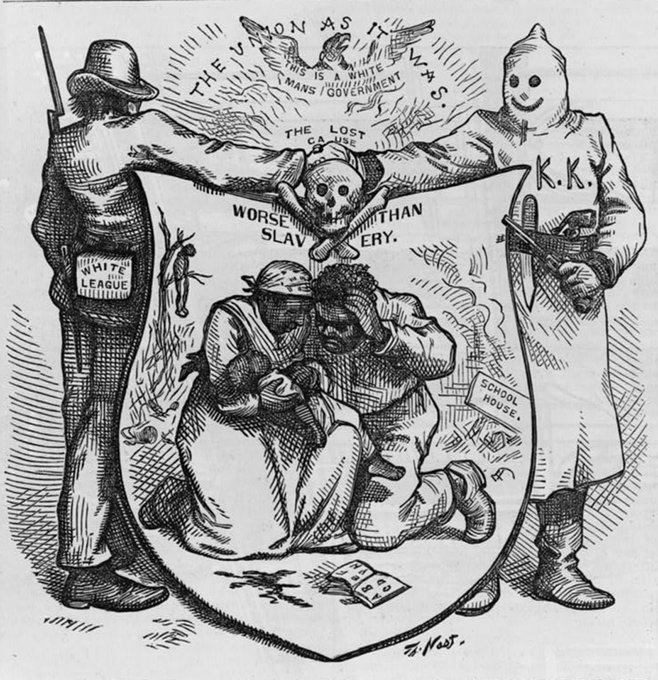
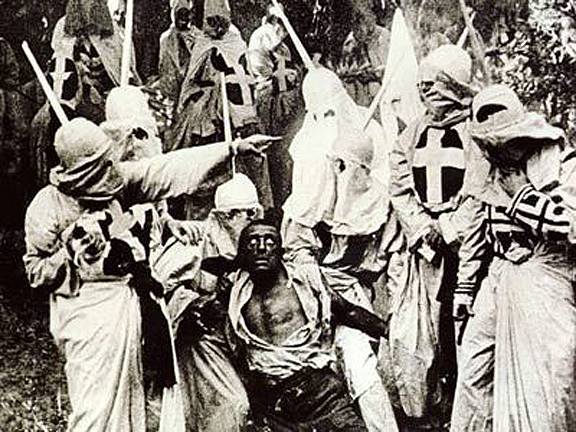
As this was done, paramilitary groups like the KKK performed domestic terrorism, attacking African Americans using their new freedom, as well as the white allies who helped them. In this way, the Confederacy became an invisible empire enforced by law and violence.
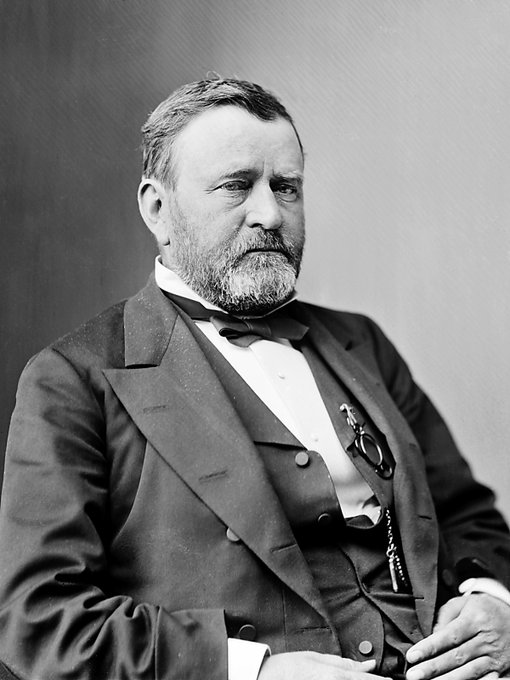
US Grant, as president, fought against this continued Confederacy, empowering organizations and waging war on the KKK. But white voters grew tired of their taxes and his means of waging that war. They let down African Americans in a huge way.
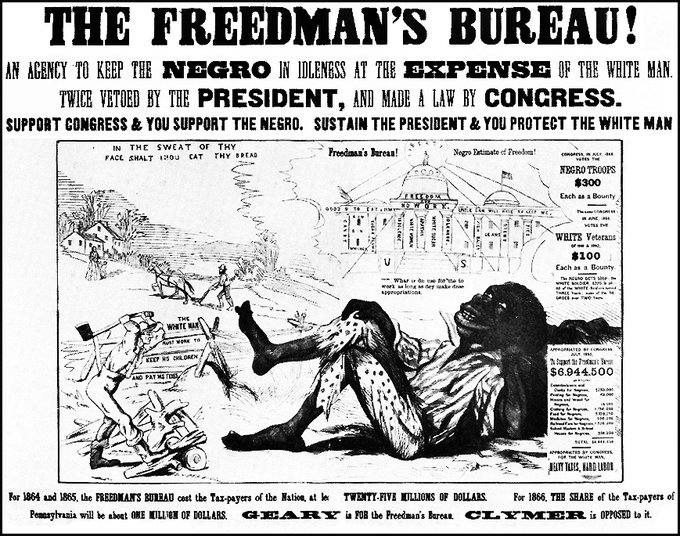
Reconstruction was hindered by propaganda that claimed it was a means of helping lazy and inept African Americans, a conspiracy against white southerners. Meanwhile, the black community organized at record pace and was incredibly successful despite these setbacks.
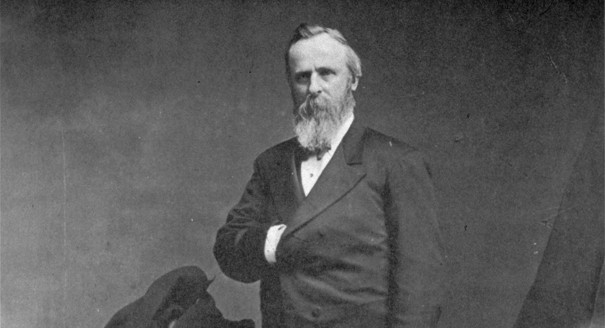
The man who arguably killed Reconstruction before it was complete was Rutherford B. Hayes, the 19th president. Hayes wasn’t even that interested in the presidency, but promised if supported he would return the South to white supremacist southerners.
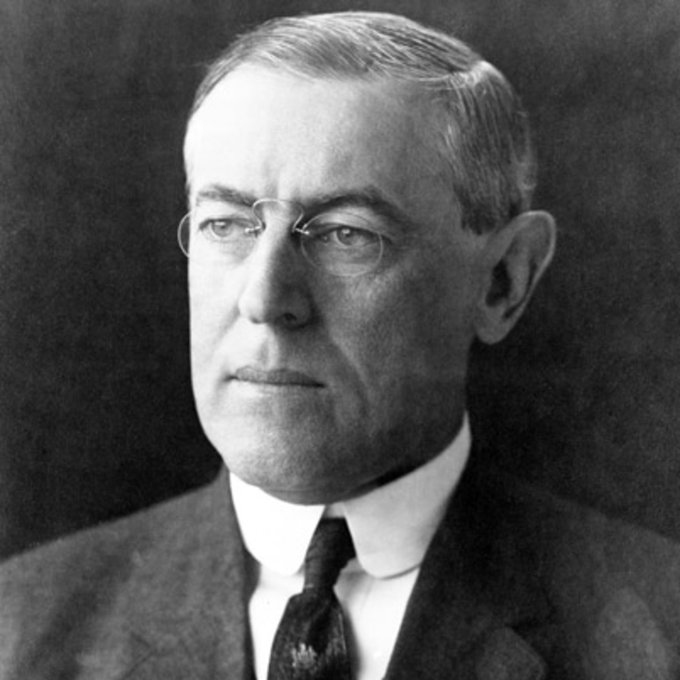
To continue the story, for years the South worked with white supremacist laws. Eventually, academics like Woodrow Wilson would use their work to wash the Confederacy clean of its white supremacy and portray it as dignified, and the war as being over state’s rights.
Wilson was a disgusting racist whose work claimed Southern slave owners loved their slaves and that they were wrongly attacked. This “Lost Cause” mythology sought to protect white supremacy and changed history completely. Unfortunately, it was incredibly successful.
Wilson’s writings eventually inspired projects like Birth of a Nation, that completely revised Construction and the post-Civil War South, portraying the KKK as necessary heroes. This affected our collective history in terrifying ways.
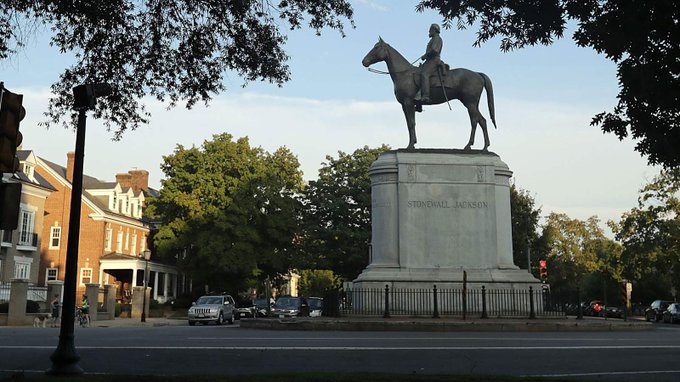
It was around this time that so many of the Confederate statues we’re now tearing down were put in place to continue the revision of history and remind African Americans that the Confederacy survived the Civil War in our culture, laws, and politics.
Wilson used his revised history to scrub America cleans of its sins in preparation for World War I, where he used propaganda to portray this country as fair and righteous and to hide our white supremacy so we could be a world power that supposedly believed in equality.
Wilson’s propaganda changed the American story, so when the Civil Rights Movement began Americans didn’t believe there was any fight to be had, equality had been won. The fight was to challenge this narrative in order to finally realize a semblance of equality.
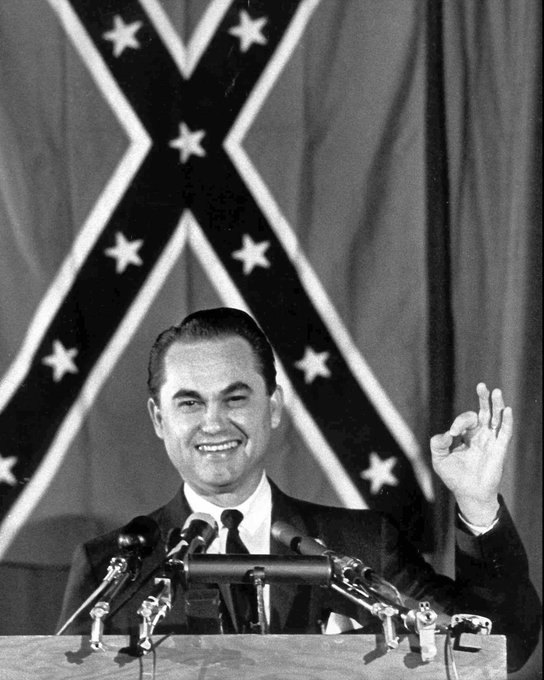
There’s a reason why the South turned to Confederate flags during desegregation and the Civil Rights Movement. The Confederacy had survived in our laws, culture, and politics. This was a clear symbol that it had simply been hiding the entire time.
Meanwhile, open white supremacists like George Wallace made the connection crystal clear. He supported the Confederacy and, like the CSA, believe white supremacy was under attack by a communist, anti-American conspiracy, because the CSA WAS America.
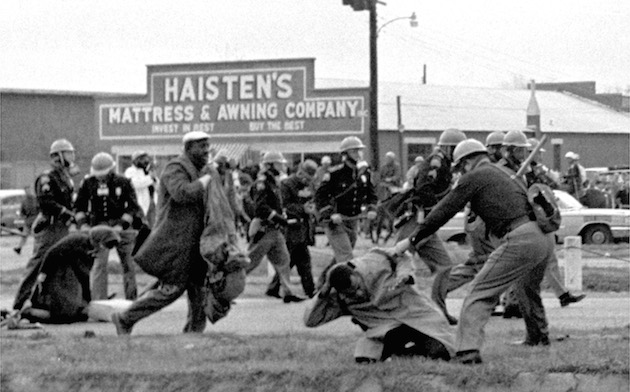
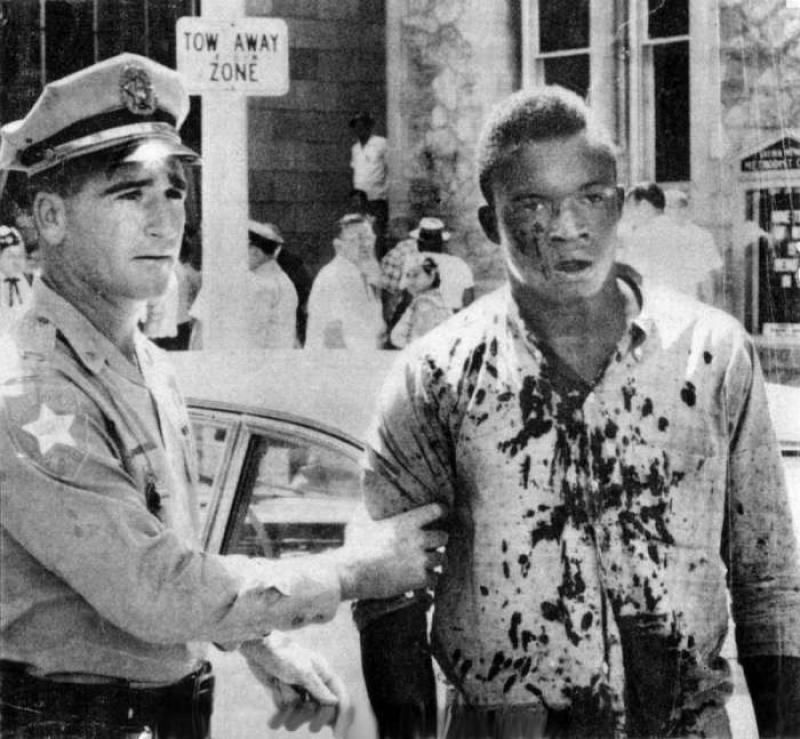
Just like we’re seeing now, protestors were abused, brutalized, all because white supremacists believed it was a conspiracy. Instead of Antifa, it was communists, anarchists, anyone who could fit the conspiratorial mold.
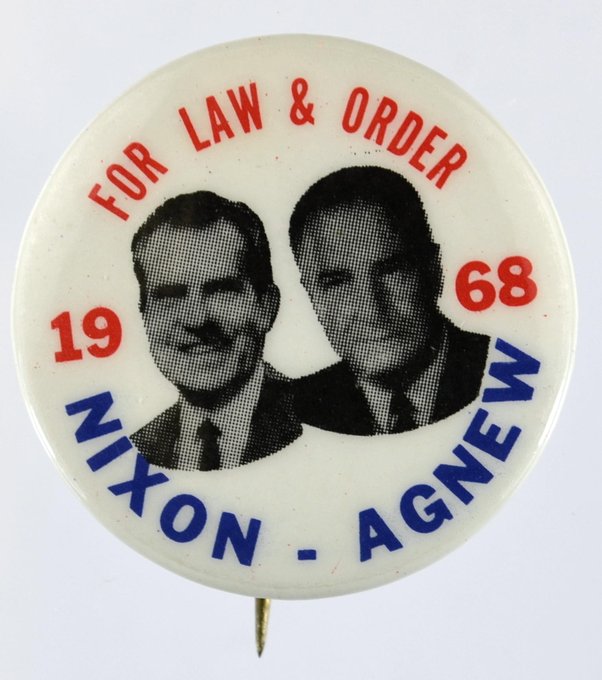
By now we’re all familiar with Nixon’s Southern Strategy, but it’s important to note that this took the Confederacy and white supremacy, and drove it further under the veneer of rhetorical dog whistle appeals. It was about hiding the Confederacy but still embracing it.
If you haven’t already, please see my work on the Cult of the Shining City and Jerry Falwell and Neo-Confederate preachers. The hiding of the Confederate God in white-identity Christianity was yet another illusion that maintained the Confederacy while hiding it.
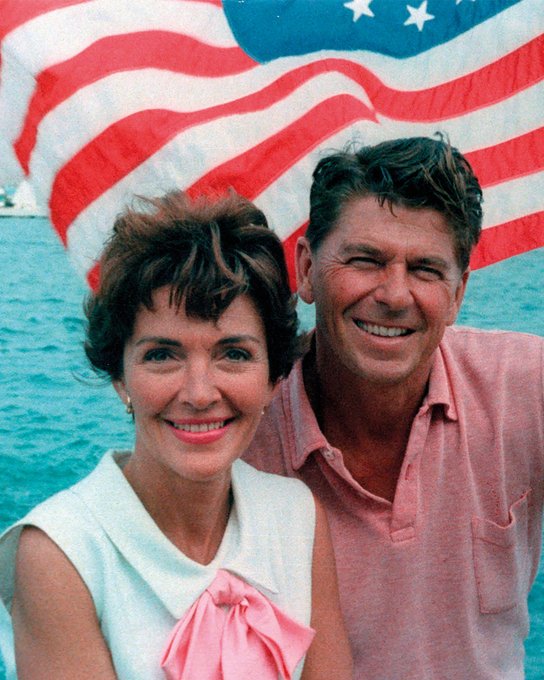
The attempt to continue white supremacy and the Confederacy and our politics continued with Ronald Reagan, who took it another step forward and hid it behind tax rhetoric and “colorblindness,” or pushing the idea that America no longer had racial inequality.
Reagan claimed that America was finally equal and that the market and economy would determine winners and losers. But the market and economy were made explicitly with white supremacy in mind. It was a giant lie from the very, very beginning.
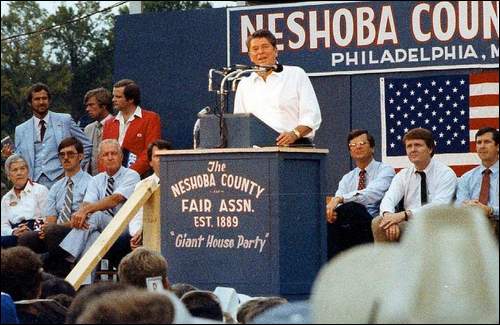
If you haven’t before, look up Reagan’s speech at the Neshoba County Fair in Mississippi, where white supremacist murders had taken place. Reagan took right off with Woodrow Wilson’s propaganda, promoting “state’s rights” and implicitly supporting the Confederacy.
Reagan’s dogwhistling and rhetorical appeals to white supremacy further legitimized white supremacy and the Confederacy, driving them further and further into American politics while giving them cover to operate without the ability to be scrutinized.
Following Reagan and HW Bush, the GOP and American Right began flirting openly with the New World Order conspiracy theory, which was a Neo-Confederate belief that white Americans were being threatened by evil outsiders and traitorous liberals.
We like to frame Timothy McVeigh as a lone nut, but he believed he was a soldier in the invisible war against the New World Order. There’s a reason he wore a shirt calling Lincoln a tyrant. This was the Confederacy declaring war, once again, on the United States.
The OKC Bombing was a battle in a fictitious war against the New World Order, or the Deep State, or the cabal, whatever you want to call it. American conspiracy theories are inherently white supremacist fantasies fueled by white supremacist paranoia and weakness.
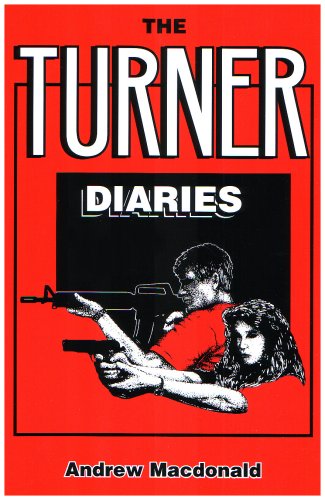
McVeigh was inspired both by Right Wing appeals and Neo-Nazi literature that sought to return American to the Confederacy, which inspired the Third Reich in the first place. American domestic terrorists are seeking a return to the CSA and a racist dystopia.
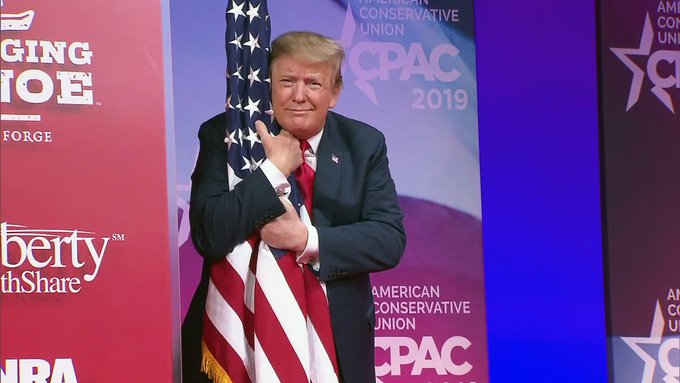
There’s a reason Donald Trump is supported by these people. White supremacists see him as their warrior, a president who will explicitly stand up for them and continue hiding the Confederacy in culture while furthering its surviving goals.
He is a Confederate president.
You need to understand, the Confederacy wasn’t limited by geography or a moment in time. It was an ideology that was felt throughout the nation.
This is why the flags are everywhere, in the North, West, every part of the country.
It is a surviving worldview.
White supremacists and fascists and Confederates would much rather hide in plain sight, behind the American flag and the veneer of American equality.
That’s what they want.
But as we’re seeing now, they’re more than willing to show their true colors if necessary.
It’s no coincidence we’re having these debates now, that Trump is standing up for blatant white supremacy and the Confederacy. The movement is making actual inroads into dealing with our white supremacy, and they’ll seek comfort in the CSA just like Civil Rights opponents.
We need to relearn our history, see what actually happened, and how the Confederacy never went away. It was absorbed, hidden, empowered by its disguise. America is riddled with the Confederacy and if we want to avoid fascism, we have to rip it out by the root.
PS: As an educator, I have to say that any fight against white supremacy has to involve radical discussions about how to revise our curriculum to tell the honest story of America, because what we have now is propaganda designed explicitly to hide and empower white supremacy.
PPS: I’ve taken a ton of history classes and always considered myself really informed. Until I started on the new book so much of this was completely unknown. It’s all out there waiting to be discovered. It has to be discovered and it has to be told.
The New York City I grew up in is gone. It has been replaced by a new city, different in many ways and with ongoing challenges, but not without an endless variety of vibrant neighborhoods and ethnic influences.
But I have to say that I deeply miss what “Little Italy” once was. It was the home of my ancestors, two wanderers from Italy who came alone from Calabria and Tuscany, met in the Big Apple, and raised a respectable family on the basis of hard work, faith, and thrift. And the Italian enclave of New York was a perfect place for them to live the American Dream.
Mulberry Street in 1900, Colorized. This is about the time my grandparents arrived from Italy.Little Italy in 1962
The neighborhood as I knew it was busy and vibrant, full of local bakeries, pizzerias, streetside stalls, cigar stores, candy stores, stationery stores, butcher shops, and anything and everything a thriving community transplanted from the “old country” would need or want. But even then, the slow downward slide toward gentrification had begun.
Anyone who has seen “The Godfather, Part II” is familiar with the street festival during which Vito Corleone assassinates Don Fanucci. This is a portrayal based on the Festa di San Gennaro (The Feast of St. Januarius) which was brought to New York by immigrants from Naples in 1926 as a continuation of the celebration of their patron Saint. Originally a one-day celebration, the Festa continues to this day as an 11-day extravaganza (except in 2020, when it was cancelled due to the Covid outbreak); activities include Italian street food, sausages, zeppole (fried dessert balls otherwise known as “Italian doughnuts”), games of chance (often dishonest¹), music, cannoli-eating contests, vendors, parades, and the grand procession honoring the patron saint – the tradition of attaching money to the statue continues, with the funds designated to be used for the poor. In the past it has been a major tourist attraction, and hopefully it will be once again when the pandemic madness has passed.
The Feast of San Gennaro
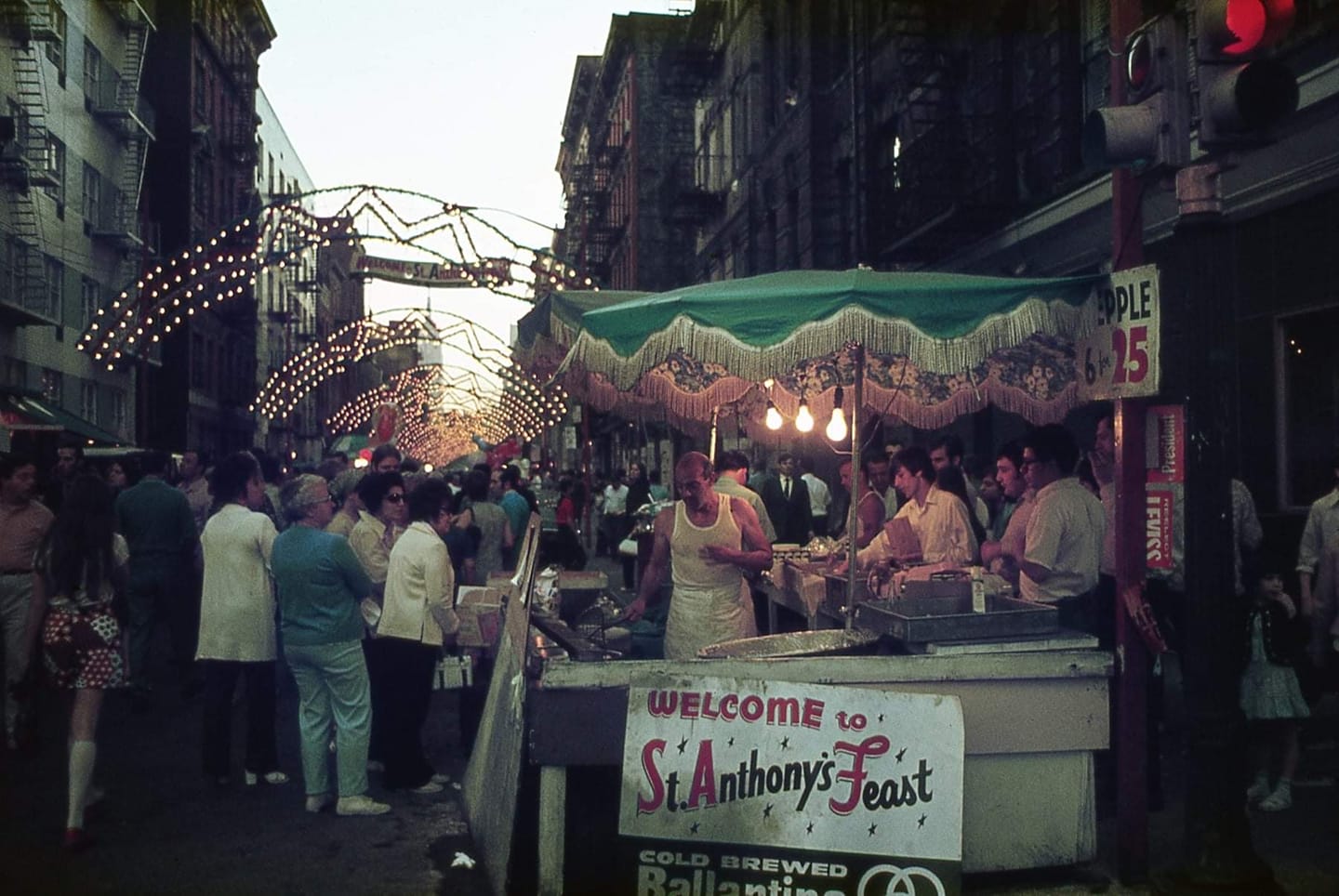
But known to fewer people is the fact that there was a second Festa which took place along Sullivan Street in Greenwich Village during the ’60s: The Feast of St. Anthony of Padua. St. Anthony’s was established in 1859 as the first parish in the United States formed specifically to serve the Italian immigrant community. (Wikipedia)
St. Anthony’s Church
I know of this because the celebration happened right under my window when I was living right on the corner of Prince and Sullivan, at 186 Prince Street.
186 Prince Street, seen in 2009
Saint Anthony’s feast was not as big and grandiose as the one for San Gennaro, but it was more intimate and more homey. The noise and the ruckus and the celebration would last far into the night, and the sounds and the smells of Italian food was tantalizing.
Feast of St. Anthony, 1960s
Even kids got into the act. It was not uncommon to see a number of boys sitting along the street inviting others to play the “shot glass” game, in which pennies were dropped into a slot at the top of a large jar of water, with the aim of getting them into a shot glass at the bottom. Winners collected 10¢; those who had the knack of holding the coin by its edge and giving it a spin straight down could usually clean out their competition in short order, while others simply watched their coins gently float down to land outside the sweet spot.
Shot Glass in the Bottle Game
Sadly the festival for St. Anthony has largely died out; efforts have been made to revive it, but due to the changing demographics of the Village and the reduction of Little Italy to a shadow of its former self, interest has waned and there has not been enough social momentum to bring it back to its former glory.
The St. Anthony Procession in 2015
From what I am told, Italian festivals continue to be a big deal in other cities such as Boston, but these were the ones that I knew, and I miss them
The Old Wolf has spoken.
Footnotes
¹ I say this from personal experience. One game involved a long track in front of the stand, in which a shiny metal car was pushed; it would bounce back and forth between springs at each end (kind of a flat variation of the “wheel of chance”) and a pointer on the car would land in a given zone when it stopped. The very small center zone was highlighted for a major prize; others were smaller prizes or nothing. I gave it a shot (probably 25¢ a play) and watched the car land dead center in the grand prize. That was before the ride operator gave it a shove with her hand, which I saw very clearly. I walked away with a set of colored glasses which I gave to my mother, but I should have won something much better – can’t remember what it would have been. I was only 12 at the time and complaining would have done no good.
Every now and then a company makes a hideous mistake in the pursuit of maximizing shareholder value.
Twelve publishers rejected J.K. Rowling’s first Harry Potter manuscript. I would be willing to wager that each of them has moments when decision makers wake up at 2 o’clock in the morning in a cold sweat, screaming “What the hell was I thinking‽”
Gail Berman, the former president of entertainment at Fox Broadcasting Company, was the one who pulled the plug on “Firefly” because “[it] was a big show, a very expensive show and it wasn’t delivering the numbers.” Similarly, Fox cancelled J.J. Abrams’ amazing series “Fringe,” again for the same two reasons: falling ratings and an expensive production budget.
Popularity doesn’t matter. Quality doesn’t matter. Ground-breaking content doesn’t matter. All that matters is those eyeballs on ads.
So let’s talk about Henson Studio’s breathtaking return to the world of Thra, a re-imagined prequel to the original “The Dark Crystal.” The first (and now only) season ran for ten episodes, and fans were delighted – everyone I know who resonated with the show was waiting for a continuation of the saga with bated breath.
And then, despite the show being awarded an Emmy for Outstanding Children’s Program – 2020, “88% fresh” ratings on Rotten Tomatoes, and universal acclaim from Metacritic, some yeast-headed executive at Netflix made the decision to “un-renew” the series, and I’d bet a buffalo nickel that the reason was “not making enough money.” The original film was only modestly received when it was first released back in 1982; it earned $41 million at the box office over a production cost of $25 million, but later gained a cult following when it was released to VHS. I have not been able to find production costs for Age of Resistance, but I guess revenue and ratings led the bean counters to conclude that it wasn’t worth the investment.
This is an absolute catastrophe. My poor little Deet; I fell in love with her and now Netflix is going to leave her wandering around in the wilds of Thra, consumed by the Darkening.
How could they? A show that absolutely captured the magic and beauty of the original, and added to it with new layers of technology and beautiful storytelling. I tell you this: If I ever get hold of the person who was responsible for the decision to cancel this series, they will think that being attacked by a thousand Garthim looks like a picnic with Miss Julie’s Romper Room class. Jumping H. Jehoshaphat! My heart is broken and I summon legions of Mandalorians and Chaotic Evil Paladins to wreak vengeance!
The only glimmer of hope on the horizon is a statement by Lisa Henson, the executive producer:
“We know fans are eager to learn how this chapter of ‘The Dark Crystal’ saga concludes and we’ll look for ways to tell that story in the future,” said executive producer Lisa Henson. “Our company has a legacy of creating rich and complex worlds that require technical innovation, artistic excellence, and masterful storytelling. Our history also includes productions that are enduring, often finding and growing their audience over time and proving again and again that fantasy and science fiction genres reflect eternal messages and truths that are always relevant. We are so grateful to Netflix for trusting us to realize this ambitious series; we are deeply proud of our work on ‘Age of Resistance,’ and the acclaim it has received from fans, critics and our peers, most recently receiving an Emmy for Outstanding Children’s Program.”
Now from where I stand, she’s being phenomenally charitable to Netflix, but I’m hopeful that Henson Studios can find a way to continue the saga in another environment before I go the way of all the world.
The faster processors like CPU’s and GPU’s become, in addition to using them for byzantine calculations like orbital mechanics, finding the largest prime number ever, bitcoin mining, economic theory, and figuring out how many angels can dance on the head of of a pin, more hackers will use them to try to crack your password.
I’ve written about strong passwords before, but it becomes more and more important almost with each passing month to make sure that your personal data – financial records, credit card numbers, birth date, Medicare numbers, bank accounts, and the like – stay safe. Because the bad guys want them. And there are more bad guys than ever. And they are worse than ever. Since August 26, 2020 there have been four separate attempts to access my Microsoft account from Turkey, Belarus, Thailand, and an unknown location – fortunately all unsuccessful because my password is relatively strong.
I just did another comparison for the sake of not being able to sleep at 2AM, and because that’s the rabbit hole my mind decided to go down. There is a website named, just like the title of this post, “How Secure is my Password?” and using it will tell you how easy it is for a computer¹ to crack your password by brute force (that is, just trying every possible random combination of numbers and letters and such).
Some examples:
Password
Time required to crack
mW_37UmK4B),b(L}
41 trillion years
Hotmail%23464321 BYZ
3 Sextillion Years
Choice Berry Worthless Kaboom
300 Decillion Years²
password
instantly
George
400 milliseconds (about 1/2 second)
my dog butch
54 years
The lesson is hidden in the patterns. Random collections of numbers, letters (upper and lower case), and special characters are good. A lot better than dictionary words. Adding spaces is better. But using a sequence of four random words separated by spaces is still best of all, and are often easier to remember (see this XKCD comic for reference).
Regardless of what system you use, our online existence requires an increased use of passwords. Some people have hundreds that they use, and of course it’s always recommended to use a different password for each account – because if you don’t and a bad guy gets one, he can get into everything that you have used that password for. As a result, some sort of a password vault or storage system is a good idea. Keeping your passwords in an encrypted file works, but you have to remember one master password to get into it, and you need to make sure that one master password is a strong one. Other solutions are available online – you can check them out and decide which one best meets your needs.
But remember that the takeaway here is “frustrate the bad guys: always use strong passwords.”
The Old Wolf has spoken.
Footnotes: ¹ I have no idea what the computing power of that hypothetical device is – whether it’s an 80168, or a core i7, or some insanely fast GPU, or the Summit supercomputer delivering 148.6 petaflops. So the numbers given need to simply be looked at in terms of relativity. A password that will be cracked in 3 microseconds is going to be far weaker than one that takes a trillion years.
² 300,000,000,000,000,000,000,000,000,000,000,000 years, in case you were wondering.
This blog post is republished from an entry posted on August 17, 2016 by Ellis Winningham, who wrote about MMT and modern macroeconomics. The relevant website is now defunct, but this article was retrieved from the Wayback Machine on 9/14/2020, as of 30 May 2018. It deserves to be read, and read again. Any emphasis is mine.
There is an immense problem with the term “socialism”, especially in the United States, where the word is abused endlessly by right-wing politicians, “free market” enthusiasts and now, even liberals have joined the red-baiting bandwagon, labeling former Sanders supporters, many of whom are now Stein supporters as “socialists” and any proposed economic initiatives as “socialism”. This is the result of a successful long-term propaganda campaign of intentional misinformation which causes the general public to view any public purpose spending as socialism and so, they irrationally fear the public purpose. Meanwhile, the 1% reaps the benefits through continued abuse of an unwitting public, allowing them to profit at the expense of the national economy and society. Let me assure you that there isn’t an academic definition of socialism for those of us who possess degrees and then an entirely different one for the general public. It doesn’t work that way. There is only one definition of socialism and we will discuss it today, because the nonsense needs to stop.
Many people think that universal healthcare is socialism. It is not.
Many people think that public schools and free college education are socialism. They are not.
Many people think that welfare is socialism. It is not.
Many people think that police and roads are socialism. They are not.
And many people now think that a federal Job Guarantee is also socialism. It is not.
I mentioned “red-baiting” a moment ago. It’s important to our discussion. Some of you, especially the younger generation, might not know what it is. Back in the 1950’s when the Soviet Union was the world’s enemy and the Cold War was in full swing, prominent politicians were certain of a communist conspiracy afoot in America and elsewhere in the western world and told every American to fear communist subversion.
A whack-job named Senator Joseph McCarthy rose to prominence in 1950 and led a highly un-American nation-wide campaign to root out every last commie. He claimed that communist spies were everywhere, lurking in the shadows, awaiting the opportunity to lure our children in and poison their minds. They could be teaching in our schools, working at the post office, acting on the silver screen, writing books, pumping gas, bagging groceries; they could even be in the highest levels of government. He began accusing people by name of being communist spies and sympathizers. Given the public’s fear of the Soviet Union – the result of intense Cold War propaganda – most people believed McCarthy’s accusations. This caused many to fear ending up on McCarthy’s “hit list” so to speak. The Senator’s tactics became known as “McCarthyism”.
McCarthy’s wild and unsubstantiated accusations, labeling people communists or communist sympathizers, is what we call “red-baiting”. It is a fear tactic that is used today, mostly by those of a right-wing political persuasion, to either derail or totally silence progressive political opinion and initiatives. Because the Soviet Union is long gone, the words communism and communist have mostly fallen into disuse by politicians and the general public. Today, “red-baiting” takes the form of accusing people and their ideas of being socialist. Of course, there are delusional individuals on the far right such as “the Tea Party” who accuse people of being a “fascist, Marxist, socialist commie” (whatever that is), but on the whole, accusing people of socialism is the new “red-baiting”.
Like communism, socialism is seen as un-American, unpatriotic, anti-freedom and most importantly and relevantly, “anti-free market”. If you’ve followed my articles for any length of time, you’ve learned that there is no such thing as a “free market” when a national government like the US federal government, issues its own sovereign currency. Because the market uses the government’s US Dollar, the government has the authority to regulate that market as it sees fit for the benefit of the nation. The market does not make laws and so, does not have the authority to determine what is best for the nation. That is the job of the federal government. In a modern monetary economy, the US government is the monopoly issuer of US Dollars. They come from nowhere else in the world. It is the issuer and since its US Dollar floats freely on an exchange (See FOREX) and is non-convertible fiat, it has an infinite supply of US Dollars at all times. It needs no income to spend. And when you are but a mere user of the federal government’s US Dollar, like the market is, you are entirely dependent on the federal government for your survival. There is no such thing as a “free market” and “free market ideas” cannot successfully function, nor can the market self-regulate for the simple facts that the market has no authority to create laws and it can run out of US Dollars and go broke. Involuntary bankruptcy is not possible for the federal government. It is the sovereign to which the market is subject. With that out of the way, let us turn our attention to what socialism actually is versus what many people incorrectly think it is.
Socialism is the complete control over the means of production by the workers (the people), with government as the people’s central representative authority. It need not be democratic. For instance, in authoritarian socialism, a regime could take charge of the federal government and seize the entirety of production, leaving the people as slaves to the state. Democratic socialism, on the other hand, is the democratic control over the means of production. Here, the federal government controls the entirety of the production infrastructure and the people have a democratic say in employment conditions and the direction output takes. But what is important here is that socialism, whatever flavour, means the complete control over the means of production. It is the throwing off of capitalism altogether and the restructuring of the entire economy and society to one of central planning. Public purpose spending for programmes such as universal healthcare cannot and will not result in the entire means of production in every sector shifting from independent businesses to government control. Such thinking is nonsense.
Because the federal government is the highest public authority and charged with the duty (US Constitution, Article 1, Section 8) to issue US Dollars, it must issue currency with the intent of serving the needs of the public in its entirety, not just a few private individuals and entities. The US Dollar is public “money”; the sole product of the federal government and must be issued for the public purpose. What then is the public purpose? That which benefits the entire nation.
1.) The provisioning of the federal government with goods and services, ensuring that it can properly function for the benefit of the nation.
2.) Military spending for defense of the nation.
3.) Infrastructure – transportation, railways, airports, roads and highways, bridges, power grids and energy resources, hospitals, buildings and ports.
4.) Indefinite full employment which allows for perpetual economic stability, ensuring that whatever the United States produces can be purchased by consumers.
The US government – A public entity. US Dollars – Public currency. All US citizens – The public.
Private markets – Social and individual activities within the national boundaries that are not conducted by agencies of federal, state or local government, nor a function of federal, state or local government, but which are entirely dependent on public funds issued by the federal government to function and are subject to the laws of the land – full stop.
As time advances, new technology arises that enhances the quality of life and the security of the citizenry. The US Air Force is clearly not mentioned in the US Constitution, precisely because nobody alive in 1791 could completely envision a future where man could fly, let alone use the flying contraption for defense of the nation. Hence, the US Air Force was created and is now funded by the US government to meet the needs of the military, or more precisely, to meet the needs of the public purpose.
As the US government is the sole currency issuer and as it has an infinite supply of that currency and as its constitutional duty as that sole currency issuer is to issue US Dollars for the public purpose, only the US government can ensure that infrastructure can be fully modernized, that full employment can be sustained indefinitely, that disease and spinal cord injury research can be properly conducted, that the health needs of the public, whatever the treatment needed, can be completely looked after, that the educational needs of our children and college students can be met without financial hardship.
And so, we continue with our list of what constitutes the public purpose. The question is never “how do we pay for it?” The question is always “Does the United States have the real resources available to meet the needs of the public purpose?”
5.) Education – an uneducated populace hinders today’s economy as well as a future economy by obstructing advances in technology necessary to increase the citizenry’s standard of living and enhance their quality of life as well as the expertise needed to work with that technology. Student loans do not advance education, but rather, damage today’s economy and mortgage the nation’s future by leaving students who are lucky to be employed spending a large chunk of their income on debt, rather than on goods and services today, resulting in unemployment. For those who cannot find a job in their field due to reduced consumer spending, their intellect and input remain idle, thus obstructing the advance of technological development for tomorrow. Those who cannot afford college and do not wish to go deep into debt to pay for it, forego a beneficial education, further compromising a future economy.
6.) Healthcare – an unhealthy workforce is an inefficient workforce, hindering production. An unhealthy populace means a reduced labour supply, which in turn, means reduced output capability. A population burdened by healthcare costs means debt and bankruptcy and so, reduced consumer spending which then contributes to persistent unemployment and reduced output.
There were no iPhones, cars, refrigerators and airplanes in 1791, legs and arms were amputated regularly for injuries that are easily treatable today, dentistry was questionable, people died of diseases that are easily treatable today. You cannot operate a modern monetary economy from a 1791 perspective, unless you are willing to forego all of the advancement from that day to this. Two hundred years from now, things will have advanced even further and that which is related to the public purpose will only expand, along with the federal government’s spending to ensure it. The failure of the US government to advance the public purpose through deficit spending is detrimental to the people’s standard of living, their quality of life and the nation’s security.
Understand me clearly here – a capitalist framework does not imply a restricted public purpose. Whatever technology is developed by private entities using the government’s US Dollar that enhances the quality of life of the citizenry, increases their standard of living and ensures the nation’s security, that technology has a public purpose and the federal government has a duty to fully utilize it for the common good. I am not saying here that the federal government must seize control of the technology and all sectors of production (socialism), but utilize it, fully funding both national programs which the public can access free of charge and fully funding the private entities developing that technology through appropriate levels of deficit spending, resulting in increased consumer spending, thus increased private profits and development (capitalism).
Within capitalism, there is still the federal government at the head. It is the centerpiece of a modern monetary economy and issues the currency necessary which capitalism uses to function. Universal healthcare is not socialism. Free primary and secondary education is not socialism. Police and roads are not socialism. A federal Job Guarantee is not socialism. It is capitalism functioning properly and efficiently within a modern monetary economy.
When the state seizes control over the entire means of production, issuing three and five year plans for production across every, single sector, then you can call it socialism – not before.
Stop listening to the right-wing fear-mongers and talking heads who would have you looking for Bolsheviks under your bed every night. America’s Constitution is sound, and despite efforts by The Thermonuclear Bowel Evacuation Currently Disgracing the Oval Office to destroy everything good that our nation stands for, we will never become a Soviet wannabe.
The scammers never give up. Obviously, it must work at some level or they would find something else to do. But with the number of people in the world, the bell curve pretty much predicts that by blasting out millions of email messages like this, they will snag someone who is untutored enough to pay their extortionate demand. It makes me very sad that the world is so full of evil creatures like this.
Greetings!
⚠️ I’ve been watching you for weeks now. ⚠️ The thing is, you’ve been infected with malware via the adult website you visited.
I have made a video showing how you satisfy yourself on the left side of the screen, and on the right side you see the video you have been watching. With one click, I can send this video to all your contacts in the mail and social networks. I can also publish access to all your emails and messaging apps that you use.
If you want to prevent this, then: Transfer $650(USD) to my bitcoin wallet (in case you don’t know how to do it, then type in to Google: “Buy a bitcoin”).
My Bitcoin Wallet: obfuscated bitcoin wallet address After receiving the payment, I will erase the video and you will never hear from me again. I will give you 50 hours (more than two days) to pay. I see you’re reading this email and the timer started you opened it.
Timer id: 241996031
Don’t attempt to reply me. It doesn’t make any sense (the sender’s address is created automatically). Filing a complaint somewhere doesn’t make sense, because this email cannot be tracked, and neither can my bitcoin address. I don’t make mistakes.
If I find that you shared this message with somebody else, the video will be distributed immediately. Good luck with that.
Ya. Well, good luck with your blackmail attempt, since I don’t use a webcam, you waste of human cytoplasm.
As always, the takeaway is never send money to scammers, or unknown people, by bitcoin, Western Union, Gift Cards, or any other method.
The Old Wolf continues to be outraged by these antics.
This showed up on my Facebook wall today. It is so perfect and powerful for the era that we are living in that I thought it deserved a wider audience than just those whom I know on that platform.
Organized by the Wisconsin Democrats, to whom you can contribute any time, this amazing tribute to an amazing movie; since the invention of the film, there have been five movies that were rated the most perfect, the most pure. This one left them all behind.
(Scroll to 13:12 to get to the beginning of the reading)
Note: The preview makes it look as though the video has been deleted, but as of 1/19/2022 it’s still there.
The cast list for this delightful event was as follows:
*Original Cast* Cary Elwes as Westley Robin Wright as Buttercup Mandy Patinkin as Inigo Montoya Wallace Shawn as Vizzini Christoper Guest as Count Rugen Billy Crystal as Miracle Max Carol Kane as Valerie Chris Sarandon as Prince Humperdinck
*Introducing* Rob Reiner as The Grandfather Josh Gad as Fezzik Eric Idle as The Impressive Clergyman King Bach as Yellin, The Assistant Brute and The King (unable to attend because of technical difficulties – his part was taken over on a moment’s notice by Finn Wolfhard) Finn Wolfhard as The Grandson Shaun Ross as The Man with Albinism fka The Albino Whoopi Goldberg as The Ancient Booer and The Mother Jason Reitman as The Narrator
*With* Patton Oswalt as The Q&A Moderator Norman Lear as The Man That Made It All Happen (Executive Producer will join the Q & A)
There were a few technical glitches. It happens. It took a while to get going, and the server kept crashing under the “hug of death.” Occasionally someone was muted; sometimes there was audio lag. But everyone took it in stride, the technical people behind the scenes (I have no doubt) were running around with their butts on fire to make things work, and it all came together in the end to create a once-in-a-lifetime, thoroughly enjoyable presentation.
Right off I noticed some differences in the dialog from the script and what was finalized in the movie. We got to experience a little bit of “deleted scene” stuff there, things that didn’t make it into the final cut. And of course, there was some choice ad-libbing from Billy Crystal and a few others, entirely within the spirit of the whole production.
The performances were mixed. Without mentioning any names, I would have to say that I felt like a few of the cast were just phoning it in (figuratively, since all of them were literally phoning it in for the virtual round table); but most of them were having a great time and many of them were giving it 100% of their best effort to recreate the glory of the original.
Especially notable for outstanding performances were Mandy Patinkin, who stepped into the rôle of Inigo Montoya as though it were 33 years ago (he even produced this incomparable sword during the reading); Wallace Shawn as the inconceivable Vizzini; Chris Sarandon as the king’s stinking son; Billy Crystal and Carol Kane as Miracle Max and Valerie; and newcomer Josh Gad paying astonishing tribute to André the Giant. Rob Reiner channelled Peter Falk so well that it was uncanny. This in no way implies that the others were not wonderful as well, but these were the stand-outs for me, and of course Your Mileage May Vary.
There was a Q&A afterward, based largely on questions submitted by fans; I sent one in for Billy Crystal, but sadly it wasn’t selected. After Montoya tells him that Humperdink will suffer “humiliations galore,” Max says something – supposedly in Yiddish – that sounds like “hy didde lik val dang nation. Haha, that is a noble cause. Gimme the 65, I’m on the job!” Now I have a passing knowledge of Yiddish, fluent German, and a modicum of Hebrew under my belt, but this is nothing I could make any sense of. I fear I may just have to wait until I meet Billy in the Great Beyond to get my question answered.
Some good stories were told, and – not unsurprisingly – a lot of the conversation turned to the current political situation and the need for Wisconsin to give its electoral votes to Joe Biden instead of The Thermonuclear Bowel Evacuation Currently Disgracing the Oval Office. But then, this entire delightful event was organized to help Wisconsin Democrats, and so I had no objection.
My wife and I are great fans of this film; we celebrate Valentine’s Day by giving it a watch and then eating Mutton, Lettuce, and Tomato sandwiches for lunch or dinner. It’s hard to find lean mutton here in Maine, so we usually make do with lamb… but it’s still so perky.
If you also love this movie, I recommend that you hit your library up for a copy of As You Wish, the moving behind-the-scenes story of how the film came together written by none other than Cary Elwes.
My thanks to Benjamin Canant for capturing and uploading this event. Enjoy watching.




















 Playing in the World Game