Have Spacesuit, Will Travel

By Robert A. Heinlein

This is the book that opened my mind to Science Fiction. I read it in 1961 when I was 10, and life was never the same. I even read it to my 10-year-old grandson last year with video calls (he lives about 2,000 miles away from me.) This is the only illustration in the book itself, but it’s a pretty good representation of Kip and Peewee’s trek across the lunar surface. That said, numerous other people have come up with SF pulp cover illustrations, none of which ever matched the images that I had created in my mind.
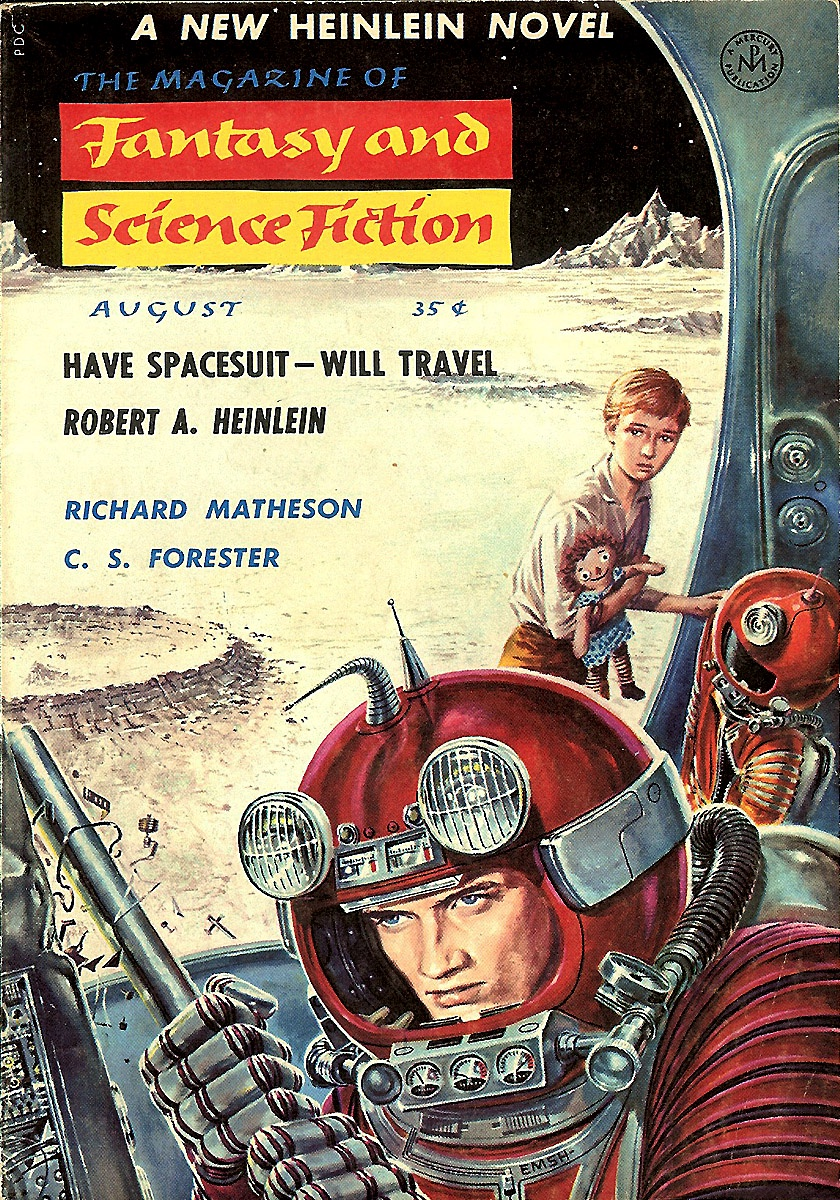
This one is close for the protagonist, deuteragonist and the setting. Kip looks too old, though, he’s just a high-school kid. Peewee is pretty darn good.
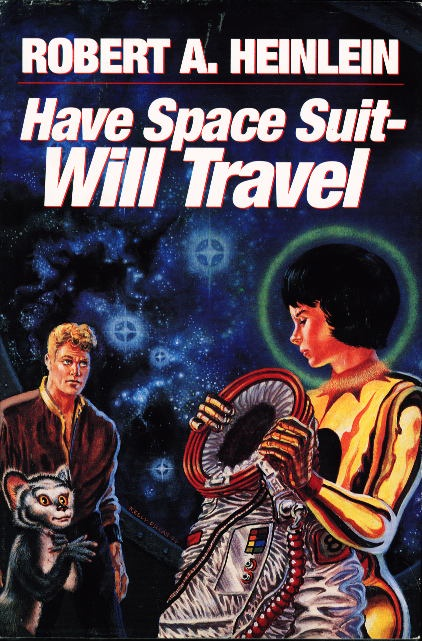
Wrong on all levels. Peewee is not a bar hostess, Kip is not the varsity quarterback, and the Mother Thing is not a lemur – only her eyes were described in that way.
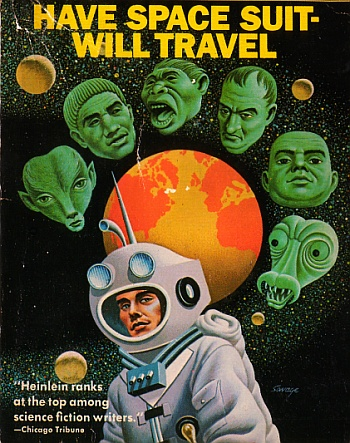
This artist here tried to capture the Mother Thing – way too anthropomorphic; Iunio (not bad); Jojo the dogface boy (as good as any, I guess); Skinny and Fats (within the realm of possibility) and Him (or Wormface, and I’d guess that the illustrator didn’t even read the book.
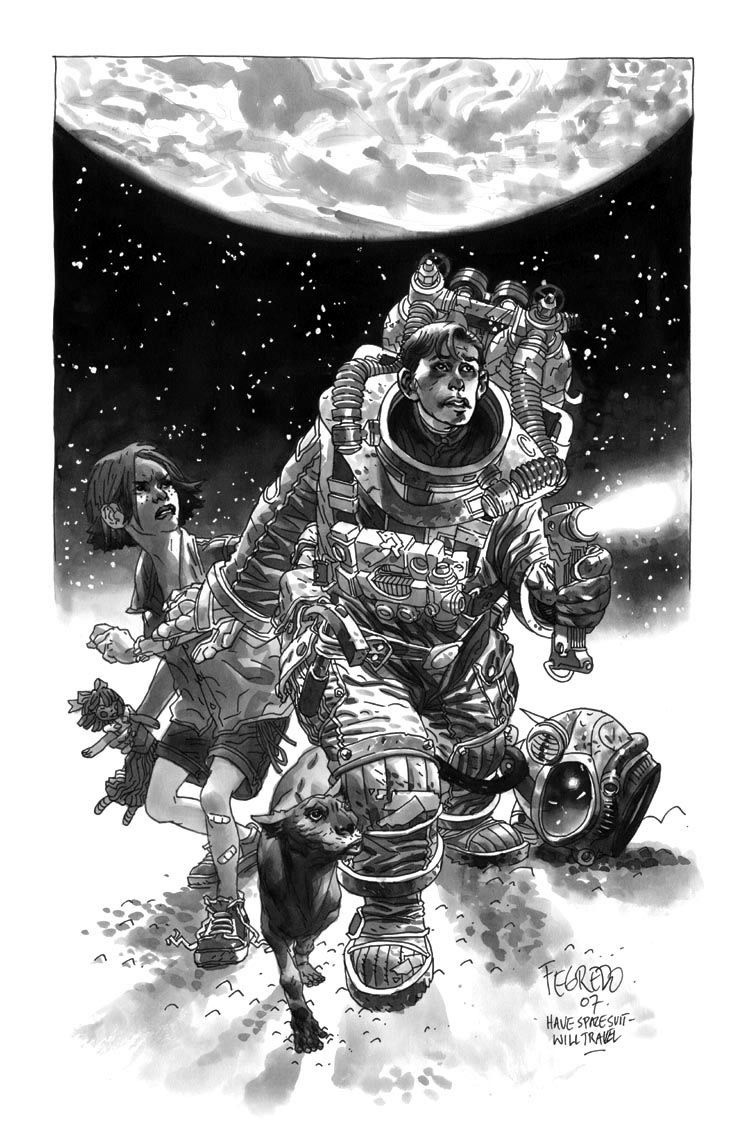
I like this artist’s style, Kip is a definite possibility, but Peewee looks like she just ate a bad mushroom. Mother Thing is still way off base – she’s totally alien, not like a cat, and far more amorphous.
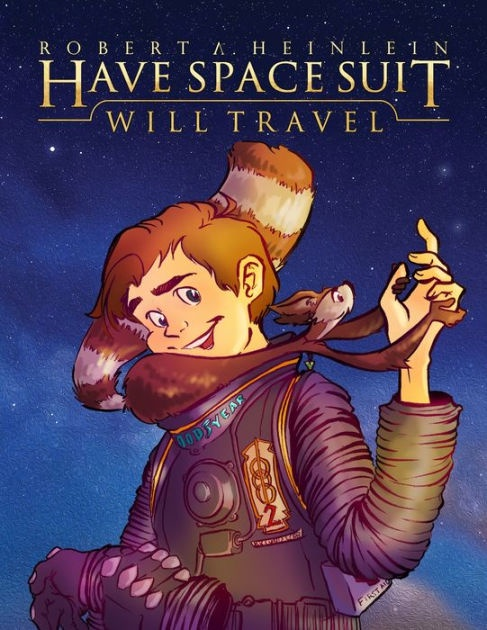
God help us. But I do give this artist credit for trying to create a non-humanoid Mother Thing.
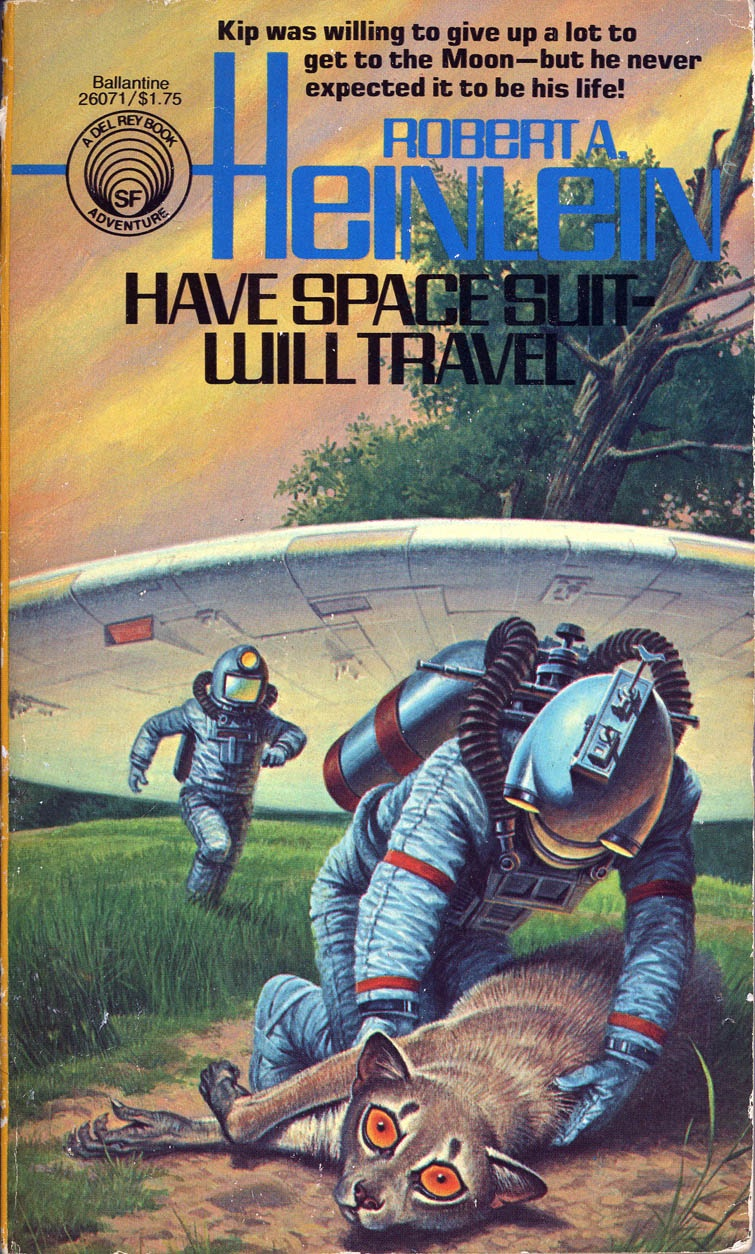
Not bad as illustrations go, but again the Mother Thing is only analogous to a lemur in the look of her eyes. Far too cat-like here.
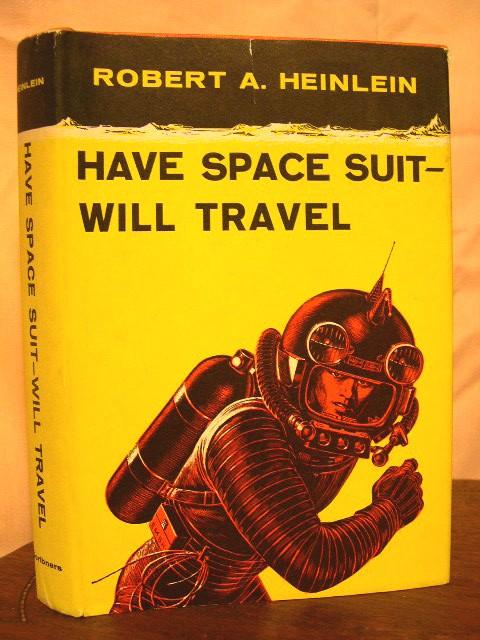
I like the representation of Oscar in this cover illustration.
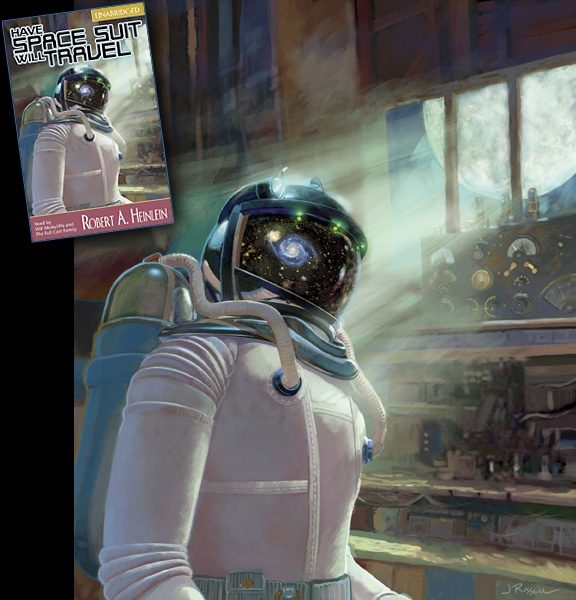
Very generic and not really indicative of the book at all. It should be mentioned in passing that the artistic skills of all these illustrators are not in question. I couldn’t do 1/100th as well. I just judge them based on how closely they match Heinlein’s descriptions in the book.
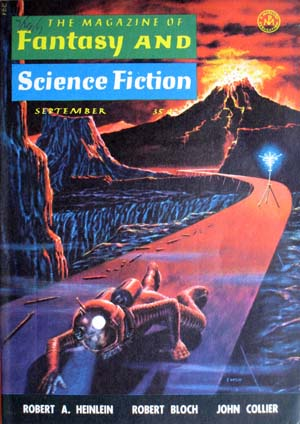
This one gets a gold star for the representation of Kip’s struggle to get back to the Wormfaces’ base on Pluto after setting the Mother Thing’s beacon. I can feel his frozen anguish.
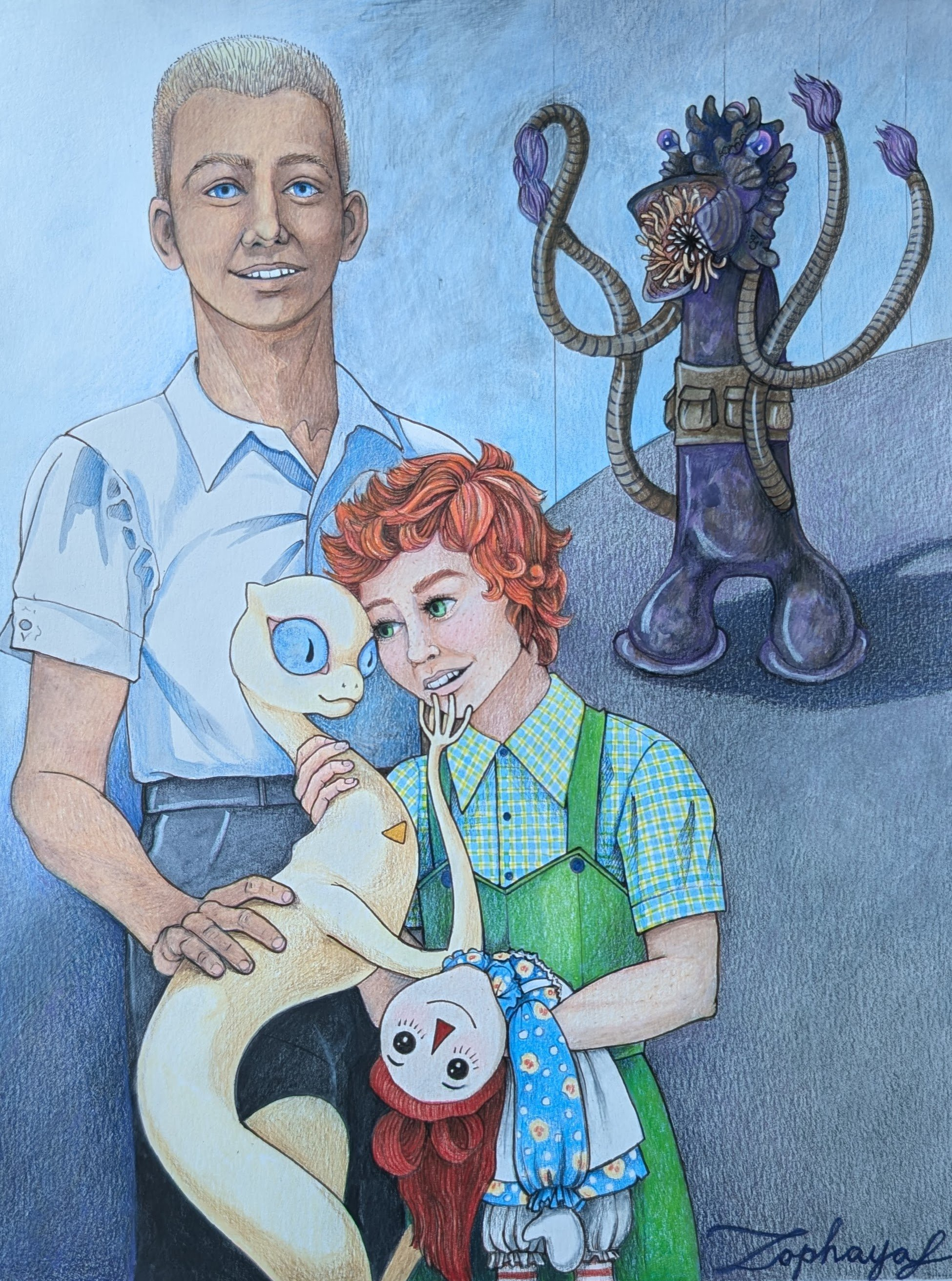
So after wishing for decades that I could have a visual of the main characters in the story that more closely matched what I saw in my head, I commissioned my artist daughter to come up with one. She had read the book, and we conferred on the main points of each character, but I gave her free reign to use her imagination, and this is what she came up with. I just love it. Wormface is appropriately horrific and petrifying, and the Mother Thing is totally inhuman but with that “loving mother” look that is so poignantly described in the novel.

“Mother Very Thoughtfully Made A Jelly Sandwich Under No Protest.” ¹ Great mnemonic.
Footnotes

¹ “Protest.” Pluto. Still a planet, always a planet.
Antonio’s Doctor Bill

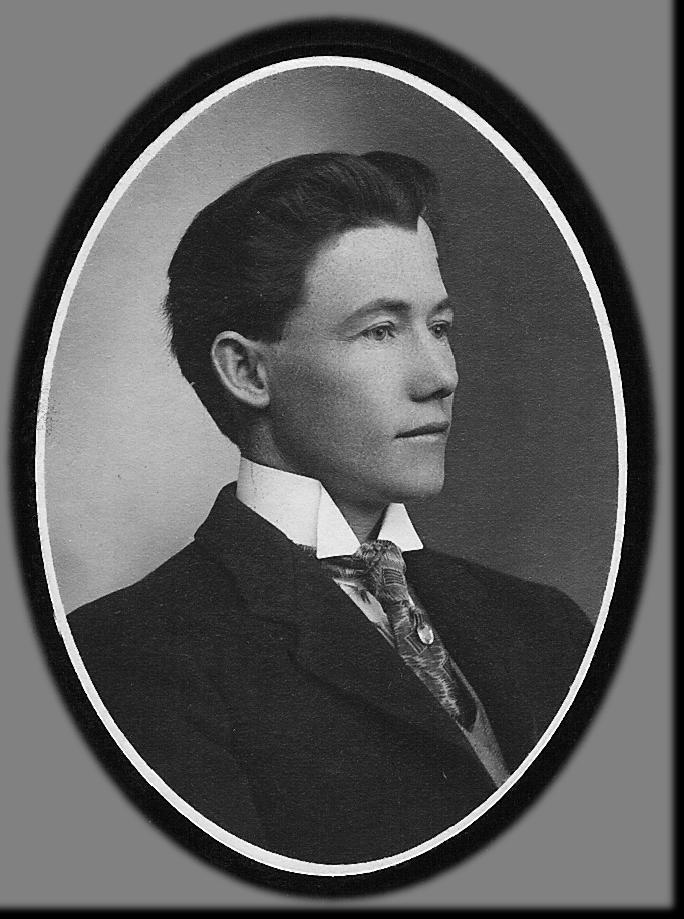
This whimsical and dark bit of fiction was written by my grandfather, Delbert M. Draper, Sr., and printed in Vol. 1, No. 1, of the University Pen (a student organ of the University of Utah) in January, 1910. G’pa served as the Editor-in-Chief of the publication.

ANTONIO JACKETTA came to America in 1897. He came because the doctor told him, he would die of heart failure in less than five years if he remained in Italy. Antonio was a poor laborer, but his wife and five little black-eyed boys and girls loved him without longing for riches. He was a faithful laborer, moreover, and his wife was so industrious and economical that when the doctor’s rather startling announcement came, she had enough money saved to pay Antonio’s fare to the extreme western part of the United States, where wages were two dollars a day. At that enormous rate Antonio hoped to save enough in two years, at the most, to pay for the transportation of his whole family to the little castle he had already builded in the air.

Arriving in the West, he found conditions as favorable as he expected. He got a job on the railroad, which kept him busy seven days of the week, and, better still, the new climate made him forget that he had a heart, except as the region about it filled with a longing for a tender and happy reunion with his family.

For six months he labored, and for six months he saved, taking time for no other amusement than to read and answer letters from home. His savings were growing into a shining heap, which he counted fondly, not because he was miserly, but because it would soon remove the broad sea that separated him from his loved ones. The size an jingle of the pile set Antonio to calculating on the possibility of sending for them at the end of the year. His figures said it could be done, barring accidents, and provided he gave up on the idea  of a home. Without stating plainly his purpose, he wrote to his wife, covertly hinting at the new possibility, though he did not conceal the fact that the luxury of a home would have to be foregone. In doubtful expectation he, awaited his wife’s reply.

Mrs. Jacketta had been a lace-maker before her marriage, and no sooner had Antonio sailed for America than she began making Venetian lace, which she sold to tourists at a fair profit. It was not without pride, then, that she answered Antonio: “I have half enough money of my own to build a cottage, and the soonest you can name for our sailing will seem a great way off to us.”

Poor Antonio cried when, he got this letter, and thanked the blessed Virgin for so dear a helpmate. On the fourth day following this happy settlement Antonio pitched twice as much dirt as his companions, but on the fifth day, every time he stooped to fill his shovel he felt a little catch in his left side that made him slacken his pace. The next day he pitched only half as much gravel as the laziest man of the gang, for which he was called a measly dago and threatened with discharge. On the seventh day he was unable to work at all, and on the eighth day he was in the hospital, vacillating between life and death. Excitement and over-exertion had renewed his old affliction in an aggravated form. But Antonio was no weakling in will; he refused to die while he had so much for which to live. His recovery might have been more speedy than it was had he known that the railroad company paid the doctor bills of its employees, but he didn’t know, and consequently he was much depressed when he considered how time and money were slipping from his grasp. He improved most rapidly when his mind was in Italy or when enjoying the doctor’s kindly smile and the nurse’s gentle touch, in an atmosphere infinitely sweeter than that of the railroad.

Slowly but surely he regained his strength, and as soon as he was able to be about he visited the doctor at his office. “You have been a very kind to me, doctor,” he said. “You save a de life. But I got a de mon’. I pay all. How much, doctor?”

Antonio had been in the hospital twenty-six days and he judged that the doctor’s time was worth about twice as much as his, on which basis his bill would run up to about one-hundred dollars. Paying this would reduce his savings to two hundred dollars, and at the same time remove the arrival of his wife several months. But he was patient and glad matters were no worse.

The doctor looked at him rather whimsically .He had already received his fee from the railroad company; but here was an opportunity for a practical joke too good to pass. So he said: “You’re a pretty good fellow, Antonio, and I don’t mean to be hard on you. I’ll let you off for five hundred dollars.”

Antonio looked up with wild, staring eyes, and then sank in a heap in the big arm chair. The doctor hastened to raise the limp body, but the face was pallid and the heart was still.

– D.M.D.

Delbert Morley Draper(2)