Mitch McConnell is retiring. Good riddance to bad rubbish.

Moira Donegan

Shared from The Guardian for wider exposure. Original link: https://www.theguardian.com/commentisfree/2025/feb/24/mitch-mcconnell-is-retiring-from-us-politics-good-riddance

Whenever you see a horror of anti-democratic rule, remember Mitch McConnell. You have him to thank

You would think that this is exactly what Mitch McConnell wanted. McConnell, the 83-year-old Kentucky senator – who announced last week that he will retire in 2026 and not seek an eighth term – is one of the most influential Republicans in the history of the party. But he has in recent weeks expressed dissent and discontent with the direction of the Republican party. He voted against some of Donald Trump’s cabinet appointees, refusing, for example, to cast a vote for the confirmation of the anti-diversity campaigner and alleged rapist and drunk Pete Hegseth.

He has also voiced some tepid and belated opposition to Republicans’ extremist agenda, citing his own experience as a survivor of childhood polio as a reason for his opposition to Republican attacks on vaccines. But the Republican party that McConnell is now shaking his head at is the one that he created. He has no one but himself to blame.

Over his 40 years in the US Senate, with almost two decades as the Republican leader in the chamber, McConnell has become one of the most influential senators in the nation’s history, radically reshaping Congress, and his party, in the process. Few have done more to erode the conditions of representative democracy in America, and few have done more to enable the rise of oligarchy, autocracy and reactionary, minoritarian governance that is insulated from electoral check. McConnell remade America in his own image. It’s an ugly sight.

In the end, McConnell will be remembered for one thing only: his enabling of Trump. In 2021, after Trump refused to respect the results of the 2020 election and sent a violent mob of his supporters to the Capitol to stop the certification of the election results by violent force, McConnell had an opportunity to put a stop to Trump’s authoritarian attacks on the constitutional order.

McConnell never liked Trump, and by that point, he didn’t even need him: he had already won what would be his last term. He could have voted to convict Trump at his second impeachment; if he had, it’s likely that other Republican senators would have been willing to do so, too, and that Trump could have been convicted and prevented from returning to power. He didn’t. McConnell voted to acquit, and to allow Trump to rise again. If the next four years of Trump’s restoration are anything like the first 30 days have been, then that will turn out to have been the singularly significant decision of McConnell’s career.

But McConnell had been working against American democracy long before Trump sent the mob to ransack the Senate chamber and smear feces on the walls. It was McConnell, after all, who is most responsible for the current campaign finance regime, which has allowed unlimited amounts of dark money spending to infiltrate politics – making elections more influenceable, and politicians’ favor more purchasable, in ways that tilt public policy away from the people’s interests and towards those of the billionaire patron class.

Such arrangements of funding and favors are not consistent with democracy; they change politicians’ loyalties, diminish the influence of voters, diminish constituents and their needs to a mere afterthought or communications problem in the minds of elected representatives. This was by design, and it is how McConnell liked it. In Washington, he operated at the center of a vast funding network, moving millions and millions of dollars towards those Republicans who did his bidding, and away from those who bucked his authority.

It was partly his control over this spiderlike web of wealthy funders that allowed McConnell to exert such control over his caucus. It is hard to remember these days, when Republicans pick so many fights with each other, that the party was once feared for their discipline. McConnell was able to snuff out any meaningful dissent and policy difference in public among Republican senators with the threat of his deep-pocketed friends, always ready to fund a primary challenger. The lockstep from Republicans allowed McConnell to pursue what he viewed as his twin goals: stopping any Democratic agenda in Congress, and furthering the conservative capture of the federal courts.

As Senate Republican leader during the Obama years, McConnell pursued a strategy of maximal procedural obstructionism. His mandate was that no Republican in the Senate would vote for any Obama agenda item – that there would be no compromise, no negotiation, no horse trading, no debate, but only a stonewalled total rejection of all Democratic initiatives. This has become the singular way that Republicans operate in the Senate; it was McConnell who made it that way.

The underlying assumption of McConnell’s strategy of total opposition and refusal was that Democrats, even when they win elections, do not have a legitimate right to govern. In practice, the authorities of the presidency or congressional majorities expand and contract based on which party is in power: Republicans can achieve a great deal more in the White House, or with control of Congress, than Democrats can.

In part this is because of McConnell’s procedural approach, which posits bending the rules to suit Republican interests when they are in power, and enforcing the rules to the point of functionally arresting legislative business when Democrats take the majority. This, too, is antithetical to democracy: constitutional powers can’t be limited for one party, and expanded for another, so that voters are only fully represented if they vote one way. The strategy of obstructionism functionally ended Congress as a legislative body in all but the most extreme of circumstances. What was once the most representative, electorally responsive, and important branch of the federal government has receded to the status of a bit player, and policymaking power has been abdicated to the executive and the courts. That’s McConnell’s doing, too.

Maybe it was part of McConnell’s indifference to the integrity of democracy meant that he refused, during the Obama era, to confirm any of the president’s judicial nominees. Vacancies on the federal courts accumulated, with seats sitting empty and cases piling up for the overworked judges who remained. But McConnell’s seizure of the judicial appointment power from the executive was only in effect when the president was a Democrat; when Republicans were in power, he jammed the courts full of far-right judges.

When Antonin Scalia died in 2016, under Obama, McConnell held the US supreme court seat open for almost a year, hoping that Trump would win the 2016 election and get the chance to appoint a right-wing replacement. When Ruth Bader Ginsburg died, just a few weeks before the 2020 election, McConnell jammed through the nomination of Amy Coney Barrett. His tendencies, then, were always authoritarian: power, in his view, did not belong to those the people elected to represent them. It belonged, always, to Republicans – no matter what the voters had to say about it.

Mitch McConnell is an old man. In 2026, when he finally leaves office, he will be 84. He will not have to live in the world that he made, the one where what was left of American democracy is finally snatched away. But we will. Whenever you see a horror of anti-democratic rule – whenever cronyism is rewarded over competence, whenever cruelty is inflicted over dignity, whenever the constitution is flouted, mocked or treated as a mere annoyance to be ignored by men with no respect for the law or for you – remember Mitch McConnell. You have him to thank.

Moira Donegan is a Guardian US columnist

Bernie Sanders on the Senate Floor

May be an image of 1 person and fire

Note: This post is public. If you don’t like what’s being said here, leave your thoughts on your own wall. Comments supportive of MAGA, the GOP, or the Oligarchy will be summarily deleted.

—-

A few hours ago on the floor of the Senate, Bernie Sanders torched billionaires, scorched Trump, and burned every shred of political cowardice in his path.

Here is his fiery speech, word for word:

“Mr. President,

In the last couple of weeks, I’ve had the opportunity to travel in many parts of our country. And I have been able to talk to folks in Nebraska, in Iowa, Wisconsin, Michigan, Nevada, Colorado, and Arizona. And what I am hearing from in all of these states and in fact all over the country is that our nation right now faces enormous crises, unprecedented crises in the modern history of our country.

And how right now at this moment we respond to these crises will not only impact our lives, it will impact the lives of our kids and future generations. And in terms of climate change, the well-being of the entire planet.

And Mr. President, what I have to tell you is that the American people are angry at what is happening here in Washington, DC and they are prepared to stand up and fight back. In my view and what I have heard from many, many people is that they will not accept an oligarchic form of society where a handful of billionaires control our government, where the wealthiest person on Earth, Mr. Musk, is running all over Washington, DC slashing the Social Security Administration so that our elderly people today are finding it extremely difficult to access the benefits that they paid into.

Where Mr. Musk and his friends are slashing the Veterans Administration so that people who put their lives on the line to defend us will not be able to get the health care that they are entitled to or get the benefits that they are owed in a timely manner. Slashing the Department of Education. Slashing USAID.

And why is all of this slashing taking place? It is taking place so that the wealthiest people in this country can receive over $1 trillion dollars in tax breaks.

Now, I don’t care if you are a Democrat, a Republican, or an Independent. There are very few people in this country who think that you slash programs that working families desperately need in order to give tax breaks to billionaires.

Mr. President, I am the former chair of the U.S. Senate Committee on Veterans’ Affairs, and I have had the honor of meeting with veterans in my own state of Vermont—all over Vermont—but all over the country. These are the men and women who put the uniform of this country on and have been prepared to die to defend our nation and American democracy.

And these veterans and Americans all over our nation will not accept an authoritarian form of society with a president who undermines our Constitution every day. Every day there’s something else out there where he’s undermining our Constitution and threatening the very foundations of American democracy. That is not what people fought and died to allow to happen.

Mr. President, I am not a historian, but I do know that the founding fathers of this country were no dummies. They were really smart guys. And in the 1780s, they wrote a Constitution and established a form of government with a separation of powers.

A separation of powers—with an executive branch, the president; a legislative branch, the Congress; and a judicial branch.

These revolutionaries in the 1780s had just fought a war against the imperial rule of the King of England who was an absolute dictator, the most powerful person on Earth. And these revolutionaries here in America forming a new government wanted to make absolutely sure that no one person in this brand new country that they were forming would have unlimited powers.

And that is why we have a separation of powers. That is why we have a judiciary, a Congress, and an executive branch. In other words, way back in the 1780s, they wrote a Constitution to prevent exactly what Donald Trump is trying to do today.

So, let us be clear about what is going on. Donald Trump is attacking our First Amendment and is trying to intimidate the media and those who speak out against him in an absolutely unprecedented way.

Mr. President, he has sued ABC, CBS, Meta, the Des Moines Register. His FCC is now threatening to investigate NPR and PBS. He has called CNN and MSNBC “illegal.”

In other words, the leader—or the so-called leader—of the free world is afraid of freedom. He doesn’t like criticism. Well, guess what? None of us like criticism. But you don’t get elected to the Senate, you don’t get elected to the House, you don’t become a governor, you don’t become a president of the United States unless you are prepared to deal with that criticism.

And the response to that criticism in a democracy is not to sue the media, is not to intimidate the media. It’s to respond in the way you think best.

But Mr. President, it is not just the media that Trump is going after. He is going after the constitutional responsibilities that this body, the United States Congress, has. And I will say it amazes me, it really does, how easily my Republican colleagues here in the Senate and in the House are willing to surrender their constitutional responsibilities. Give it over to the president.

Trump has illegally and unconstitutionally withheld funds that Congress has appropriated. You can’t do that. Congress has the power of the purse. We make a decision. We argue about it here. Big debates, vote-aras, the whole thing. Make that decision. That money goes out. The president does not have the right to withhold funds that Congress has appropriated.

Trump has illegally and unconstitutionally decimated agencies that can only be changed or reformed by Congress. You don’t like the Department of Education, you don’t like USAID, fine. Come to the Congress. Tell us what reforms you want to see. You do not have the right to unilaterally do away with these agencies.

Trump has fired members of independent agencies and inspectors general that he does not have the authority to do.

But Mr. President, it is not just the media that he is trying to intimidate. It is not just the powers of Congress that he wants.

Now, in an absolutely outrageous, unconstitutional and extraordinarily dangerous way, he is going after the judiciary. His view is that if you don’t like a decision that a judge renders, you get rid of that judge. You try to impeach that judge. You intimidate judges so that you get the decisions that you want.

You know, I’m thinking back now as someone who is not a supporter of the Roberts court, and I’m thinking about one of the worst Supreme Court decisions that has ever been rendered—that is Citizens United. I’ll say more about that in a moment. And I’m thinking about the Supreme Court’s decision to overturn Roe v. Wade, taking away American women’s right to control their own bodies.

In my view, these were outrageous decisions, unpopular decisions. But it never occurred to me, because maybe I’m old-fashioned and conservative, and I believe that you live by the rule of law, to say, “Hey, look at the decision Roberts made. We’re going to impeach him.”

No, we try to elect a new president who’s going to appoint new Supreme Court justices. That is the system that people have fought and died to defend.

But it’s not just the movement toward oligarchy, which is outraging millions of Americans—Democrats and Republicans, by the way—and it’s not just the movement toward authoritarianism that we are seeing. The American people, especially with Mr. Musk and 13 billionaires in the Trump administration running agency after agency…

The American people are saying as loudly as they can that they will not accept a society of massive economic and wealth inequalities, where the very richest people in our country are becoming much richer while working families are struggling to put food on the table.

Having gone all over this country, I can tell you that the American people are sick and tired of these inequalities and they want an economy that works for all of us—not just the 1%.

You know, Mr. President, we deal with a whole lot of stuff here in the Congress, and you know, virtually all of it is important in one way or another.

But let’s do something, you know, fairly radical today. Let’s try to tell the truth—the real truth—about what is going on in our society today. Something that we don’t talk about too much here in the Senate. We don’t talk about it too much in the House. We don’t talk about it too much in the corporate media.

But the reality is that today we have two Americas. Two very, very different Americas.

And in one of those Americas, the wealthiest people have never ever had it so good. In the whole history of our country, the people on top have never ever had it so good as they have it today.

Today, we have more income and wealth inequality than there has ever been in the history of America. Now, I know we don’t discuss it. You don’t see it much on TV. You don’t hear it talked about here at all. But the American people do not believe that it is appropriate that three people—one, two, three—Mr. Musk, Mr. Bezos, and Mr. Zuckerberg, three Americans, own more wealth than the bottom half of American society. 170 million people. Really? Three people own more wealth than 170 million people? Anybody here think that is vaguely appropriate?

And by the way, those very same three people—the three richest people in America—were right there at Trump’s inaugural, standing right behind the president. So, you want to know what oligarchy is? I know there’s some confusion out there. What is oligarchy? Well, it starts off when you have the three wealthiest people in the country standing right behind the president when he gets inaugurated.

The top 1% in our country now own more wealth than the bottom 90%.

CEOs make 300 times more than their average worker.

And unbelievably—real inflation-accounted-for wages today—the average American worker, if you can believe it, despite a massive increase in worker productivity, is lower today than it was 52 years ago. And during that period, there was a $75 trillion transfer of wealth that went from the bottom 90% to the top 1%. That is the reality of the American economy today. And you know what? Maybe we might want to be talking about that.

And in our America today, in that top America, that one America, the 1% are completely separate and isolated from the rest of the country. You think they get on a subway to get to work? Think they sit in a traffic jam for an hour trying to get to work? Not the case.

They fly around in the jets and the helicopters that they own. They live in their mansions all over the world in their gated communities. They have nannies taking care of their babies. They don’t worry about the cost of child care. And they send their kids to the best private schools and colleges.

Sometimes they vacation not in a Motel 6, not in a national park, but on the very own islands that they have. And on occasion, for the very very richest—just to have for a kick, have a little bit of fun—maybe they’ll spend a few million dollars flying off into space in one of their own spaceships. Sounds like fun.

But it is not just massive income and wealth inequality that we’re dealing with today. We have more concentration of ownership than ever before. While the profits on Wall Street and corporate America soar, a handful of giant corporations dominate sector after sector—whether it’s agriculture, transportation, media, financial services, etc., etc.

Small number of huge corporations—international corporations—dominating sector after sector. And as a result of that concentration of ownership, they are able to charge the American people outrageously high prices for the goods and services we need.

Mr. President, we don’t talk about it too much. Maybe we should. But there are three Wall Street firms—BlackRock, Vanguard, and State Street—that combined are the major stockholders in 95% of our corporations. Got that? Three Wall Street firms—three—are the major stockholders in 95% of American corporations.

So, Mr. President, that is one America. People on top doing phenomenally well. Not only do they have economic power, they have enormous political power. That’s what’s going on there. They live like kings. That’s one America.

But there is another America.

And in that other America, 60% of our people are living paycheck to paycheck. And millions of workers from one end of this country to the other are trying to survive on starvation wages.

And unlike Donald Trump, I grew up in a family that lived paycheck to paycheck. And I know the anxieties that my mom and dad had, living in a rent-controlled apartment. Can we afford to buy this? Why did you buy that?

And that’s the story taking place all over America.

What does living paycheck to paycheck mean?

It means that every single day, millions of Americans worry about how they’re going to pay their rent or their mortgage. All over the country, rents are skyrocketing. And people are wondering: What happens—what happens to me and my kids if rent goes up by 20% and I can’t afford it? Where do I live? Do I have to take my kid out of school? Where do I put my kid? In worst case scenario, do I live in my car?

Let’s be clear. There are many people who are working today who are living in the back of their cars.

How do I pay for child care?

I talked to a cop, a guy the other day—a police officer—spending $20,000 a year for child care.

How do I buy decent food for my kids when the price of groceries is off the charts?

What happens if I get sick or my kid gets sick or my mother gets sick and I got a $12,000 deductible and I can’t afford to go to the doctor?

How, at the end of the month, am I going to pay my credit card bill—even though I am being charged 20 or 30% interest rates by the usurious credit card companies?

People are worrying about simple things. What happens if my car breaks down and the guy at the repair shop says it’s going to cost $1,000 and I don’t have $1,000 in the bank? And if I don’t have a car, how do I get to work? And if I don’t get to work, how do I have an income? And if I don’t have an income, how do I take care of my family?

Those are the crises that millions of Americans are experiencing today.

But it’s not just working-age Americans.

Today, in our country, half of older workers—older workers—have nothing in the bank as they face retirement. And they’re watching TV and they’re saying, “Mr. Musk is firing Social Security workers,” and actually worrying whether Social Security will be there for them.

And it’s not just older workers with nothing in the bank wondering what happens when they retire. Twenty-two percent of seniors are trying to survive on $15,000 a year.

I dare anybody in this country—let alone somebody who’s old, who needs health care, needs to keep the house warm—try to survive on $15,000 a year. And there are people here, by the way, talking about cutting Social Security.

Mr. President, it is not just about income and wealth inequality. It is about a health care system which everyone in the nation understands is broken, is dysfunctional, and is outrageously expensive.

I hear my Republican friends—you know, I don’t know where they are today—wanting to destroy the ACA. And my Democratic friends say, “Oh, we got to defend the ACA.” ACA is broken. It doesn’t work.

In my state, the cost of health care is going up 10, 15%. In America today, you got 85 million people uninsured or underinsured.

Function of the health care system today is not to do what a sane society would do—guarantee health care to all people in a cost-effective way—something which, by the way, every other major nation on Earth manages to do.

The function of our health care system, as everybody knows, is to make billions of dollars in profits for the insurance companies and the drug companies.

So I say to my Democratic friends: It’s not good enough to defend the Affordable Care Act. It’s a broken system. You got to have the guts to stand up and allow us to do what every other major nation does—guarantee health care to all people as a human right—not allow the drug companies and the insurance companies to make massive profits every year.

And Mr. President, I want to touch on an issue that gets virtually no discussion, but I think it is enormously important—and it says a hell of a lot about what’s going on in our society today.

In America, according to international studies, our life expectancy—how long we live as a people—is about four years lower than other countries. Most European countries—people there live longer lives. Japan—they live even more longer lives than in Europe.

So, question number one: Why is that happening?

We spend $14,000 a year per person on health care—almost double what any other country spends. And yet people around the world are living, on average, four years longer than we do.

But here is the really ugly fact—even worse than that.

And that is that in this country, on average, if you are a working-class person, you will live seven years shorter lives than if you’re in the top 1%. If you’re a working-class person, your life will be seven years shorter than if you are wealthy.

In other words, being poor or working-class in America today amounts to a death sentence.

Mr. President, it’s not only a broken health care system.

We have got to ask ourselves a simple question—and the Biden administration began a little bit of movement in this direction—and that is: Why are we living in a nation where one out of four people can’t even afford the prescription drugs their doctors prescribe?

Why are we in some cases paying ten times more than our neighbors in Canada or in Europe? How does that happen?

And the answer of course has to do with the greed of the pharmaceutical industry and their power right here—all of the campaign contributions that they make—which has prevented us from negotiating prices.

But it’s not just health care or prescription drugs.

When we look at what’s going on in America—in Vermont and throughout this country—we have a major housing crisis. Here we are, the richest country on Earth: 800,000 people sleeping out on the streets, and 20 million people are spending more than 50% of their limited incomes on housing.

Can you imagine that? You’re a working person, spending 50% of your income on housing. How do you have money to do anything else? And the cost of housing is soaring.

Do not tell me, Mr. President, that in a nation which could spend a trillion dollars on the military—a nation that gives massive tax breaks to the rich—that we cannot build the millions of units of housing that we desperately need.

So, Mr. President, why is all of this happening?

Why do we have a health care system that is broken? Prescription drugs that are the most expensive in the world? A housing system? Education in deep trouble?

Talked to educators in Vermont, all over the country. Talked to a principal the other day from Vermont. Their starting salary at a public school? $32,000 a year. But don’t worry—they can’t afford to even bring people in because they can’t afford the housing in the community.

Why have we let education sink to the level that it has?

So I think the bottom line of all this is: The American people, I think, are catching on. And Mr. Musk—I must thank him—because he has made it very clear we are living in an oligarchic form of society.

If anybody out there thinks that Mr. Musk is running around out of the goodness of his heart trying to make our government more efficient, you have not a clue as to what is going on.

What these guys want to do is destroy virtually every federal program that impacts the well-being of working people—Social Security, Medicare, postal service, public education, you name it—so they can get huge tax breaks for the rich and eventually make government so inefficient that they will have the ability, as large corporations, to come in and privatize everything that is going on.

So, Mr. President, this is a pivotal moment in American history. And I sense that the American people have had it up to here.

They are prepared to fight back.

They do not want a government run by billionaires who have it all—whose greed is uncontrollable.

You know, we have in Vermont—and I think a lot of this country—serious problems with addiction, with drugs. People drinking too much alcohol. People smoking too many cigarettes.

But the worst form of addiction that this country now faces is the greed of the oligarchy.

You might think that if you had 10, 20 billion dollars, it would be enough. You know—kind of enough to let your family live for the next 20 generations.

But it’s not.

For whatever reason—whatever compulsive reason they have—these guys want more and more and more, and they are prepared to destroy Social Security, Medicare, nutrition programs for hungry people in order to get even more.

That, to me, is disgusting.

So, Mr. President, we are at a pivotal moment in American history. But having been all over this country—or many parts of this country—I am absolutely confident that the American people (and I’m not just talking about Democrats, who are as complicit in the problems that we have right now as our Republicans, because we got a two-party system which is basically corrupt)…

You got Mr. Musk over on the Republican side saying to any Republican who dares to stand up and defy the Trump agenda, we are going to primary you.

And on the Democratic side, you got AIPAC and you got other super PACs saying, you stand up for working people—you’re in trouble as well.

We got a corrupt campaign finance system in which billionaires are able to buy elections. And that’s why all over this country, people are not happy with our two-party system—the Republicans and the Democrats.

So, Mr. President, this is a pivotal moment in American history.

But we have had difficult moments before. And I am confident, from the bottom of my heart, that if we stand together, and we do not allow some right-wing extremists to divide us up by the color of our skin, or our religion, or where we were born, or our sexual orientation…

If we stand together, we can save this country. We can defeat oligarchy. We can defeat the movement toward authoritarianism. And in fact, we can create an economy and a government that works for all—not just a few.”

—-

This nation needs more Bernies. More AOC’s. More people with good hearts and common sense who are willing to stand up to the fascists, the dictators, and the oligarchs who are raping our country for their own enrichment.

The Old Wolf has Spoken

Elon Musk Launches Into American Politics

This is a transcript of a New York Times podcast from December 13, 2024. All rights belong to the originator and owner.

The world’s richest man may now be the single most influential figure in the emerging White House of Donald Trump.

This transcript was created using speech recognition software. While it has been reviewed by human transcribers, it may contain errors. Please review the episode audio before quoting from this transcript and email transcripts@nytimes.com with any questions.

rachel abrams
From “The New York Times,” I’m Rachel Abrams, and this is “The Daily.”

[THEME MUSIC]

After single-handedly remaking the auto industry, social media, and the global space race, Elon Musk is now turning his attention and personal fortune to politics. Over the past few months, he became the single most influential figure in the race for president and now the emerging White House of Donald Trump. Today, my colleagues Kirsten Grind and Eric Lipton on what exactly Musk wants from the new president and why he’s so well-poised to get it.

It’s Wednesday, November 13.

Kirsten, we spent the last few months watching as Elon Musk really became kind of the face of Donald Trump’s campaign for president. And in the days since he won, Musk has only increased his proximity to President-elect Trump. And last night, of course, Trump announced that Musk would lead a new government agency. What will Musk’s specific role in the Trump administration be?

kristen grind
Late Tuesday evening, Donald Trump announced a bunch of new appointments to his new administration. And included in that was this role for Elon Musk. And what Donald Trump said is that Elon Musk will be leading up this completely new government department focused on efficiency. Efficiency is something that Elon Musk has been obsessed with for years. And basically, it’s just showing how much power Elon Musk is going to have in this administration and how much Donald Trump respects his opinion.

rachel abrams
Kirsten, you’ve covered Musk for years. Did any of this surprise you?

kristen grind
So I’m an investigative reporter who has written a lot about Elon Musk. And I have to say, I could have never predicted this political transformation that has happened over the last year. For him to become so involved in politics after really staying out of it for most of his life and career and being in the room with Donald Trump on election night is a metamorphosis I definitely was not prepared for.

rachel abrams
How did we get from a guy you would never have expected to get into politics to someone who’s about to potentially serve the White House?

kristen grind
The thing to understand about Elon Musk is that he really believes his goal in life and his mission is to save humanity. He has made it his focus and the focus of all of his companies to save the world. For example, he started SpaceX more than two decades ago with the goal of getting humanity to Mars in case something happened to Earth. He was an early investor in Tesla and became its CEO because he was worried about fossil fuels.

rachel abrams
And he’s become the world’s richest man by doing all of these ventures. But how do we go from that and from him wanting to save humanity, possibly by colonizing Mars, to basically becoming a key supporter and really a surrogate for Trump?

kristen grind
It’s a very unusual and unconventional transformation. For most of his early career, he had leaned Democratic, but really he just wasn’t into politics at all. And for the most part, he stayed out of it. But there’s a few things that happened in the last four years that really started to shift his outlook.

[QUIRKY MUSIC]

So let’s start in 2020, the pandemic.

archived recording 1
All of California this morning now under a shelter-in-place order.

archived recording 2
Governor Newsom’s order, an unprecedented action, calls for —

kristen grind
California had tons of stay-at-home restrictions on residents and businesses. And most of Elon Musk’s company operations were in California. And Musk speaks out against what’s happening.

archived recording (elon musk)
Is it right to infringe upon people’s rights, as what is happening right now?

kristen grind
He is extremely antiregulation, hates to have the government or really anyone tell him what to do.

archived recording (elon musk)
This is fascist.

kritsten grind
And so the fact that he was going to have to close his Tesla factories because of the pandemic made him so angry.

archived recording (elon musk)
This is not freedom. Give people back their goddamn freedom.

kristen grind
And finally, he threatened and then ultimately did move factories out of the state.

rachel abrams
Wow, so this really pushed him over the edge what happened in California.

kristen grind
It really did. But then something happened the next year in 2021 that was even more angering to him, and which seems like a small thing, but has been something that he’s like never been able to get over.

[APPLAUSE]

archived recording (joe biden)
Please, everybody sit down. Please, please, please.

kristen grind
The Biden administration held this electric vehicle summit.

archived recording (joe biden)
And I also want to thank the leaders of the big three companies for being here today.

kristen grind
And they invited all the big carmakers from all over the country to go.

archived recording (joe biden)
— when they make the first electric Corvette, I get to drive it.

[chuckles]
Right, Mary?

kristen grind
Except for Tesla and Elon Musk.

archived recording (elon musk)
Biden held this EV summit.

kristen grind
Elon was furious.

archived recording (elon musk)
He didn’t mention Tesla once and praised GM and Ford for leading the EV revolution.

archived recording 3
So you were a pissed.

archived recording (elon musk)
Does this is sound maybe a little biased?

kristen grind
And he has never been able to let this go, the snub from the Biden administration.

archived recording (elon musk)
It’s not the friendliest administration.

It seems to be controlled by the unions, as far as I can tell.

kristen grind
And basically, it created so much tension between Tesla and the administration that that also kind of set him on his political journey.

rachel abrams
So it sounds like the Biden administration is on notice at this point that Musk is really upset. And it’s not just for business reasons. It’s really becoming kind of personal.

kristen grind
That’s right. But it also becomes ideological, too, because remember, around 2022, he buys Twitter, renames it X. And he basically says he buys it to make it a free speech platform. He especially thinks that conservatives had been censored on Twitter. Remember, at this point, Donald Trump had been kicked off Twitter and other conservative voices.

And he wants it to be this sort of place for free speech of all kinds. And around this time, he really start to see a shift in what he is posting about on X. And it becomes way more focused on what he’s called the woke mind virus. What this basically means is, for example, diversity, equity, and inclusion measures, transgender rights, pronoun use, all of that seems to be angering Elon Musk significantly on X. And he starts posting about it more and more.

[TENSE MUSIC]

archived recording (elon musk)
So it’s very possible for adults to manipulate children who are having a natural identity crisis into believing that they are the wrong gender.

kristen grind
And I want to bring up this other thing that, to me, really shows how far down this rabbit hole he had gone —

archived recording 4
Why are you willing to make this an issue, do you think?

archived recording (elon musk)
Well, it’s happened to one of my —

kristen grind
— which is that his daughter, Vivian, who’s one of his older children, had come out as transgender.

archived recording (elon musk)
I was essentially tricked into signing documents.

kristen grind
And Musk claimed in an interview that he was tricked into signing these medical forms for Vivian and allowing her to do her transition when she was 16.

archived recording (elon musk)
This is before I had really any understanding of what was going on. And we had COVID going on. And so there was a lot of confusion.

kristen grind
That he had not been aware of this basically.

archived recording (elon musk)
They call it “deadnaming” for a reason.

archived recording 4
Yeah.

kristen grind
And he said in this interview that she had been killed.

archived recording (elon musk)
Killed by the woke mind virus. So I vowed to destroy the woke mind virus after that. And we’re making some progress.

kristen grind
She had some choice words back to him and also said that he was not tricked into signing those forms. But the whole incident just really showed how his thinking has changed and been radicalized over these last few years.

Another example of his ideological transformation is immigration. And that’s kind of ironic because Elon Musk, himself, is from South Africa. But over the last couple years, he starts really focusing on illegal immigrants. And he keeps talking about how he feels the Democratic Party is allowing in these illegal immigrants so that they can get a majority and win the election.

rachel abrams
So he’s just espousing this conspiratorial rhetoric right out in the open on his own platform.

kristen grind
That’s right. And it’s really this ideology that is so different from what you saw from him even just a couple years earlier.

rachel abrams
OK, so all of that helps me understand how by 2024, Musk is increasingly aligned with right-wing ideology. But when do he and Donald Trump actually get together in some meaningful way?

kristen grind
So it’s a little hard to tell because Musk’s world is very insular. But you can kind see why, at this point, he and Trump are so aligned. So the two people are so similar.

rachel abrams
Really? Like how?

kristen grind
I mean, they both have immense wealth and power, but they both act like outsiders and victims. I think this one is maybe the most important, which is that they both think the system is broken and they both really think that they are the ones to fix it and they kind of refuse to stick with the status quo.

And so we know at one point earlier this year, Musk met with some billionaire friends his, one of whom was encouraging him to get involved in the campaign and to donate, which would be pretty normal for someone of his stature and wealth. And then we know at some point earlier this year, he did also meet with Trump. And then by June, he had established a super PAC ready to invest in Trump’s campaign.

rachel abrams
So can you just break down for a second? What does that support actually look like?

kristen grind
It is above and beyond what a normal donor would do, that’s for sure. So his Super PAC has donated more than a hundred million. That would be kind of normal for a billionaire or another donor, perhaps. But what has been unusual is the Super PAC, which is called America PAC, was in Pennsylvania knocking on doors. They knocked on 11 million doors in battleground states. [CHEERING]

archived recording (donald trump)
Come on up here, Elon.

kristen grind
But the most amazing thing to me has been watching him at these rallies.

archived recording (elon musk)
The energy in this room is incredible.

kristen grind
Right up on stage, he was with Trump.

archived recording (elon musk)
America is just not not going to be great, America is going to reach heights that it has never seen before. The future is going to be amazing!

[CHEERING]

kristen grind
He was just right out there with him, almost like he was running for president.

[crowd chanting, “elon”]
archived recording (elon musk)
You guys are awesome. Honestly, this is like ah. Wow.

rachel abrams
But wasn’t this man trying to run like six companies and colonize Mars? How did he have time for all of this?

kristen grind
[LAUGHS]: Yes, well, that’s a very good question. He has a lot of good people running his companies. But meanwhile, to take it back to his whole life’s goal, which is to save humanity, that’s actually exactly what he thinks he is doing here. And, in fact, he has said recently that he still really did not want to get into politics, but that he had to because civilization was on the line. So that, again, is why he is out there.

And on election night, there’s this big family photo with Trump, and Melania, their kids, their grandkids, and there’s Elon Musk just right beside them. And in the few days since the election, he’s basically been camped out at Mar-a-Lago.

He was reportedly on this phone call with the Ukrainian President Volodymyr Zelensky and Trump. He’s been advising Trump on cabinet positions. And then, as we know on Tuesday night, he got his own position appointed.

[INQUISITIVE MUSIC]

And we’ve just never seen anything like this, this super billionaire, Elon Musk, suddenly with all this potential power in the federal government.

rachel abrams
After the break, I talked to my colleague Eric Lipton about what Musk stands to gain from a Trump White House.

So, Eric, we just heard from our colleague Kirsten Grind that it has not taken Elon Musk very long to insert himself into this emerging Trump presidency in a way that feels without precedent, frankly. And you’ve been looking into exactly what Musk could stand to gain from access to a Trump White House. But first, can you just remind us, what is Elon Musk’s current relationship with the federal government?

eric lipton
I think it’s underappreciated the extent to which Elon Musk has relied on the federal government to help build his own wealth and the size of his companies. He has at least a hundred different contracts pending with the federal government with 17 different agencies. The majority of that work is with SpaceX, which has really owed its existence, largely, to the federal government. NASA kicked it off by giving SpaceX the money that it needed to build the Falcon 9 rocket, which now puts almost all of the world’s cargo into orbit each year. More than every other nation in the world combined.

rachel abrams
Oh, wow.

eric lipton
And SpaceX alone has gotten $10 billion worth of contracts from the federal government over the last five years to deliver stuff to space. That includes cargo to the Space Station, astronauts to the Space Station, spy satellites, missile defense systems, and dozens of other items for the federal government. And it’s unlike any other commercial space company in the history of the United States, in terms of the extent of its dominance and the money that’s going to it to provide those services to the federal government.

rachel abrams
So government contracts really made Musk in a way. Like, he’s clearly been very successful under the status quo. So that sort of begs the question of, what more is there for him to gain?

eric lipton
I mean, since Musk created SpaceX back in 2002, he’s been completely fixated with getting humans to Mars. And one of the things that incredibly frustrates him is when he encounters paperwork requirements and regulatory slowdowns. He often comments about how he can build his rockets faster than federal bureaucrats can move paper from one side of their desk to the other. It just totally burns him up.

And that’s, in part, what has motivated him to get more involved in politics. He thinks it might give him the power to help defang them, and to limit their power, and to reduce what he considers to be redundant or ridiculous requirements to help wipe away some of this slowness that really frustrates him. And Musk was clear during the presidential campaign that he wanted to be named to a position in the future Trump government that would give him the power to help oversee significantly cutting back on federal regulations, federal employees, and federal spending.

He liked to jokingly call this the “Department of Government Efficiency,” nicknamed DOGE, which is the same name of one of his favorite crypto coins. Musk has a tendency to love little names like that he can repeat that are insider jokes. And he would be this superpowered czar overseeing the reach of federal government operations and looking for ways to eliminate what he considers redundant federal regulations and cutting as much as $2 trillion in federal spending, which is a crazy and really unachievable goal, but that’s what he says he wants to do.

rachel abrams
Which is basically the position that Trump just announced for him with this new government department that’s in charge of making all kinds of cuts across the government, kind of spiritually similar to what Musk did with Twitter.

eric lipton
Yeah, Trump likes to tell Musk that he’s super impressed with what Musk was able to do at Twitter. He jokingly calls him Cutter In Chief. He sees Musk as having an incredible capacity to find ways to reduce costs and get rid of waste. And, in fact, at Twitter, when he bought it, Musk, of course, cut something like 2/3 of its staff. And it’s a bit bumpy, but X does function without more than 2/3 of the people that it had when he purchased the company. So Trump has confidence that Musk is the guy that he needs to actually really significantly cut federal regulations and spending.

rachel abrams
But a tech company works a lot differently, obviously, than a government agency. Like it doesn’t really seem feasible that he could just go in, slash a bunch of jobs overnight, like what he did with Twitter, and have that work the same way.

eric lipton
Yeah, and a level of reduction in spending and regulations, that has never been achieved before in the history of the United States. And when it comes to actually cutting federal regulations, and laying off federal employees, and cutting federal spending, this is a process that obviously Congress participates in and it is a very hard thing to do. There’s a constituency for every little agency out there. And so it is a lot harder than simply announcing one day they are laying off thousands of people at a private company that you own.

rachel abrams
How do you think all of this is actually going to play out?

eric lipton
We don’t know what Elon Musk’s first targets would be. But there’s a couple of examples that frustrate him in terms of conflicts that he’s had with federal regulators. Probably the best example is with SpaceX and what he’s trying to do down in Boca Chica, Texas, near the Mexican border, where they’re testing out the Starship rocket.

And they have repeatedly caused some environmental damage in that area. And it’s right on the edge of a national wildlife refuge and a state park. And as they were developing the rocket, they were repeatedly disregarding what the Fish and Wildlife Service and the Interior Department said was the limits on their operations.

rachel abrams
What exactly were those limits?

eric lipton
I mean, for example, recently on one of their launches, there’s so much power that comes out of these rockets, it sent sand and rocks flying into the nearby state park, and it destroyed a bunch of nesting areas for the local bird population, and ripped open the eggs and destroyed the nests of the birds that were there.

I saw that right after the launch. I walked out into the area once they’d cleared it for the public. And the egg yolk was there staining the ground. And that’s another matter that’s being investigated by Fish and Wildlife Service for potentially harming migratory birds. It’s something that frustrates him. And he thought that our coverage of it was so offensive, he said he would restrain from having omelets for several days.

rachel abrams
Oh, my god.

eric lipton
He thought it was so ridiculous that we were even worried about these nests that were destroyed by his launch.

rachel abrams
So you can imagine that the EPA would be the first target on his efficiency to-do list.

eric lipton
I wouldn’t be surprised if that’s one of the first places that he goes and he looks to try to roll back some of the regulatory powers that it has. But that certainly would not be the only agency that he would go after. I mean, all you have to do is look at Tesla.

And he is being currently or recently investigated or sued by really an acronym soup of federal agencies — the Equal Opportunity Commission, the National Labor Relations Board, the Securities Exchange Commission, the National Highway Traffic Safety Administration, the Department of Justice, of course, the EPA. All of them are looking at Tesla and suggesting that it has overstepped the law. I mean, most importantly, there’s concern about the autonomous driving tools on his cars and whether or not they’ve been involved in fatal accidents.

But everything having to do with disrupting union activities, who he hires at his auto factories and whether or not he’s properly treating refugees and people who have asylum. I mean, he is the subject of so many different simultaneous investigations. It really frustrates him. And that’s another part of the reason that he’s active with Trump is he wants to crush those investigations. And it’s likely that many of them will now be shut down.

rachel abrams
So everything you’ve laid out so far, Eric, it helps us understand why Musk’s own personal business interests could benefit from the regulatory environment that he’s potentially going to be reshaping. But is this all legal? It seems to me that what you’ve outlined could be a major conflict of interest.

eric lipton
It’s going to create a conflict of interest that really has few precedents in American history. Here’s a guy who has $10 billion or more of ongoing federal contracts. He has a couple dozen pending federal investigations and lawsuits that he’s targeted in. And, of course, there are federal conflict of interest laws that prohibit just this kind of mixing of duties, and violating them could be a federal offense.

So how is it possible that Elon Musk could simultaneously play the role of trying to cut back on federal regulations if he is, himself, being regulated? And the announcement we saw from Trump on Tuesday night actually sort of hints that they recognize that there’s this clash. And they’re attempting to sidestep it by suggesting that Musk would somehow be the leader of this new federal department of government efficiency, but he would do it while remaining, quote, “outside of the government.”

rachel abrams
So basically, he can have the ear of the president, but not have the formal government position and all the conflict-of-interest headaches that come with it.

eric lipton
Yeah, it’s a lot more attractive. But this is a very murky arrangement. And all of this assumes that Trump and Musk are going to stay on good terms. There are two personalities that have a history of exploding with people that they’ve been close with, with business partners, and even some of their most trusted employees. And so they’re guys that also hold grudges and are a bit impulsive. So there’s no guarantee that this is a relationship that’s going to last.

rachel abrams
So after all of this, your investigation and how it revealed the various ways that Musk’s potential reshaping of the government could benefit him, what is your big takeaway?

eric lipton
I think the thing that’s really fascinating and that we, at “The New York Times” are going to be watching closely, is the extent to which this new administration is one that’s going to be defined by the desires of billionaires. And the first Trump administration was really more focused on things like the oil and gas industry and the Christian right wanting to see more appointments to the Supreme Court.

But the array of economic interests being pushed by billionaire donors to Trump in this second term is much broader and their buddy-buddy relationship with Trump is much tighter. I mean, it’s the crypto industry. It’s artificial intelligence. It’s the tech industry and the antitrust approach that the government has to the tech industry.

[TENSE MUSIC]

There’s a bunch of players that have surrounded Trump, and Elon Musk is at the center of this crew. Many of these folks are friends of Musk. And he is the ringleader of the whole group. And I think that they are going to have much more influence in what happens in the White House and across the federal government in the next four years.

rachel abrams
Right. I mean, billionaires have always had some sort of influence in government, but we just haven’t really seen the proximity that you’ve outlined between this incredibly rich and powerful man, the world’s richest man, and the president of the United States.

eric lipton
Yeah, I think that it’s just a different set of players at the table this time around, who have such vested interest in so many sectors of the economy that reach really across the playing field. “Oligarchs” is too strong of a word. But we are entering a period where people with immense wealth are interacting with a president, who is known and has a history of being extremely transactional. And these are folks that now helped Trump get a second term and are expecting to see a return on that investment.

rachel abrams
Eric, thank you very much.

eric lipton
Thank you.

rachel abrams
We’ll be right back.

Here’s what else you need to know today. President-elect Donald Trump has nominated military veteran and FOX News host, Pete Hegseth, as his defense secretary, but his lack of relevant experience has already generated pushback. Hegseth is one of several political appointees Trump has picked in recent days, including South Dakota Governor Kristi Noem for secretary of Homeland Security and House Representative Elise Stefanik for ambassador to the United Nations. Trump is expected to meet with President Biden at the White House later today. It’s part of a long-standing tradition of the outgoing president greeting the new one.

[THEME MUSIC]

Today’s episode was produced by Rikki Novetsky, Olivia Natt, Rob Szypko and Luke Vander Ploeg. It was edited by MJ Davis Lin, Brendan Klinkenberg, with help from Chris Haxel. It contains original music by Dan Powell and Rowan Niemisto, and was engineered by Chris Wood. Our theme music is by Jim Brunberg and Ben Landsverk of Wonderly.

That’s it for “The Daily.” I’m Rachel Abrams. See you tomorrow.

Time Magazine Covers: America vs. the World

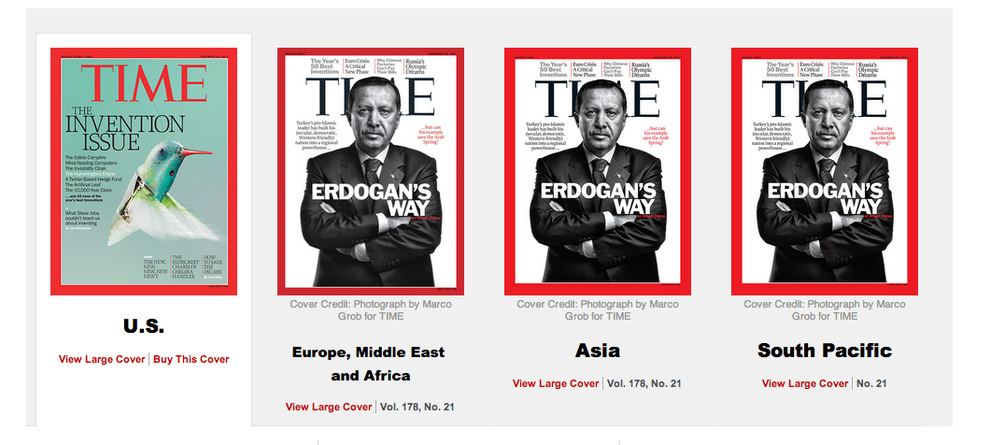
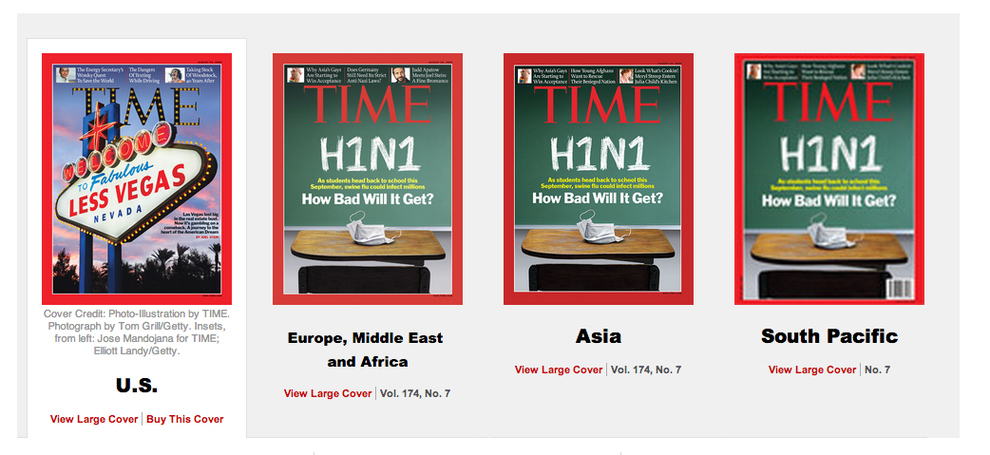
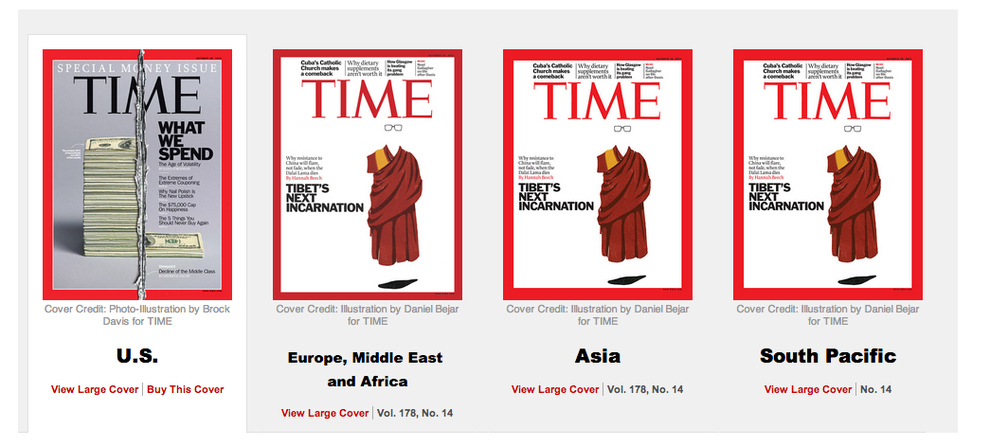
I found this interesting, but didn’t want to spread a content aggregator¹ article all over the internet – it’s infected enough. Hey, they scrape content all the time, so I figured turnabout is fair play.

Just have a look at this collection of Time magazine covers from around the world between 2007 and 2013. Consider what Americans think is important, or what will encourage them to plunk down their cash.

enhanced-buzz-wide-23236-1382035163-18 enhanced-buzz-wide-23314-1382036290-13 enhanced-buzz-wide-32597-1382035245-12 enhanced-buzz-wide-23241-1382035664-30 enhanced-buzz-wide-23276-1382036378-28 enhanced-buzz-wide-32699-1382035936-65 enhanced-buzz-wide-32601-1382034766-7 enhanced-buzz-wide-32641-1382034940-21[1] enhanced-buzz-wide-32639-1382036420-38[1] enhanced-buzz-wide-32602-1382034833-12[1] enhanced-buzz-wide-32596-1382034872-8[1] enhanced-buzz-wide-23294-1382034732-25[1] enhanced-buzz-wide-23293-1382036180-34[1] enhanced-buzz-wide-23292-1382035124-9[1] enhanced-buzz-wide-23276-1382035627-9[1] enhanced-buzz-wide-23265-1382036142-21[1] enhanced-buzz-wide-23231-1382036328-22[1] enhanced-buzz-wide-23225-1382036007-23[1]

enhanced-buzz-wide-32617-1382034674-8

Not really much more to say.

The Old Wolf has spoken.


¹Scraped from Buzzfeed, if you happen to care.

Headlines don’t sell papes… Newsies sell papes!

historic-Newsboys-and-Newsgirl-of-nyc1

Newsboys and girls in New York, 1910. Much more history about New York’s Newspaper Row can be seen at 6sqft.com.

I loved the movie Newsies, but photos from the era give the lie to all the song and dance. It was, doubtlessly, a dog-eat-dog, uncomfortable, tiring, dangerous and difficult world for the children who hit the streets selling papers for the newspaper barons.

Titanic

Headlines like this were a newsie’s dream – everyone wanted to find out what was happening. The newspapers were the Internet of the early 20th Century.

Unfortunately, most daily headlines were usually boring, so embellishing the truth a bit would help move a few more papers:

‘Trash fire near immigration building frightens seagulls’ —> ”Terrified flight from flaming inferno!” (From “Newsies”)

Thus the seeds were sown for later generations of tabloid journalism:

coverbatboy

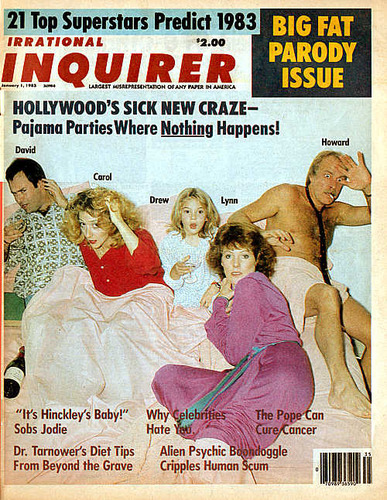
Which, of course, were inevitably made fun of:

This collection of politically-incorrect satire is one of my most treasured possessions. It’s sheer brilliance.

Now, of course, newspapers are almost extinct, and struggling for survival. Most of us have to depend on the responsible journalism of television, cable, and the internet:

35513_3507305656461_1928026599_n

The Old Wolf has spoken.