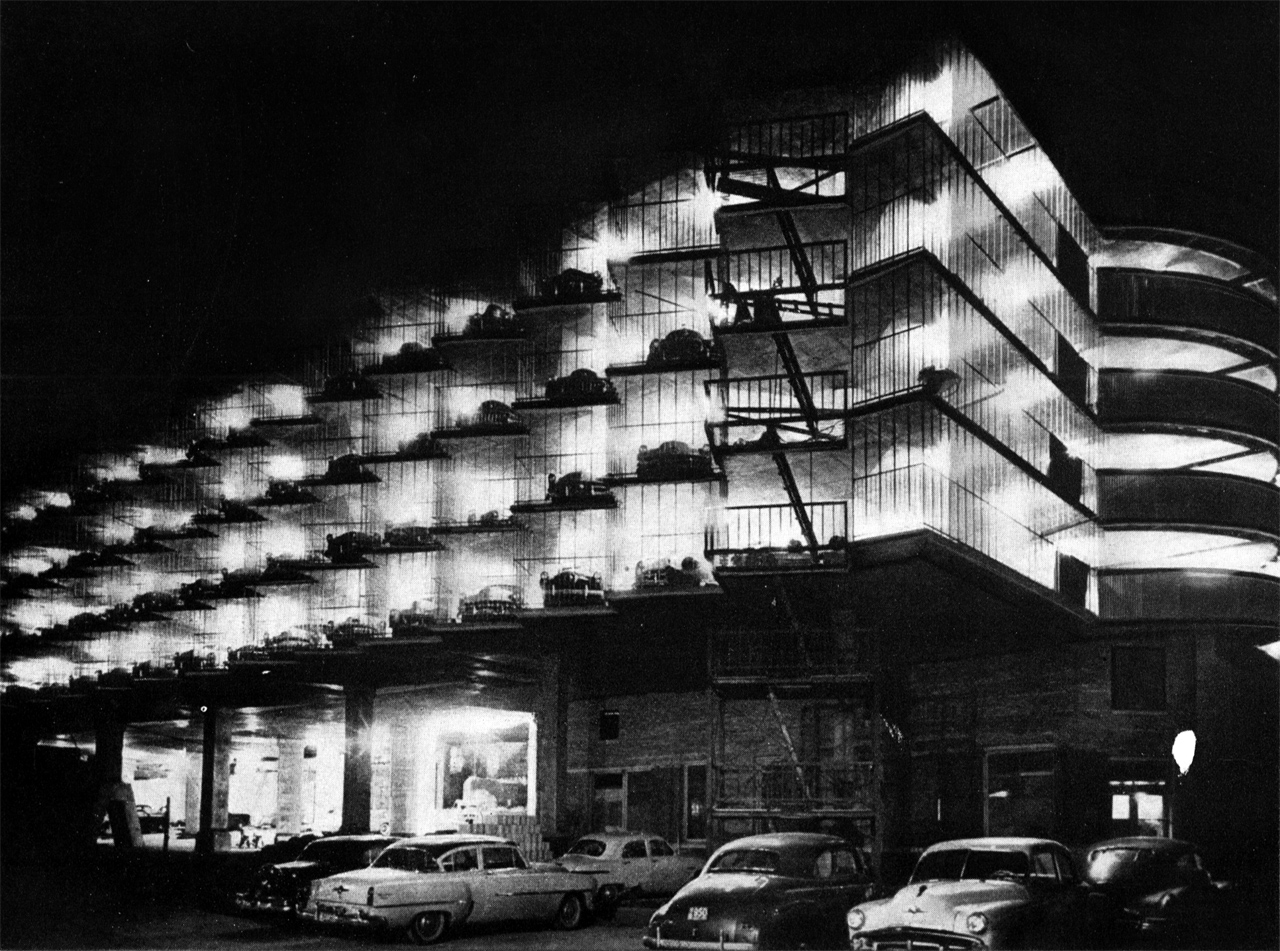
ZCMI (Zion’s Cooperative Mercantile Institute) self-parking garage at night, Salt Lake City, Utah. Image from Georges Blond: J’ai vu vivre l’Amerique, Librairie Arthéme Fayard, 1957
Capacity: 542 vehicles. Designed by L. G. Farrant
Both the garage and ZCMI, long a beloved and favorite department store, are now gone, but the store’s fabled cast-iron façade has been removed, renewed, and replaced several times as it remains a Salt Lake City landmark. Its first facelift took place when the ZCMI Center Mall was built in 1975.
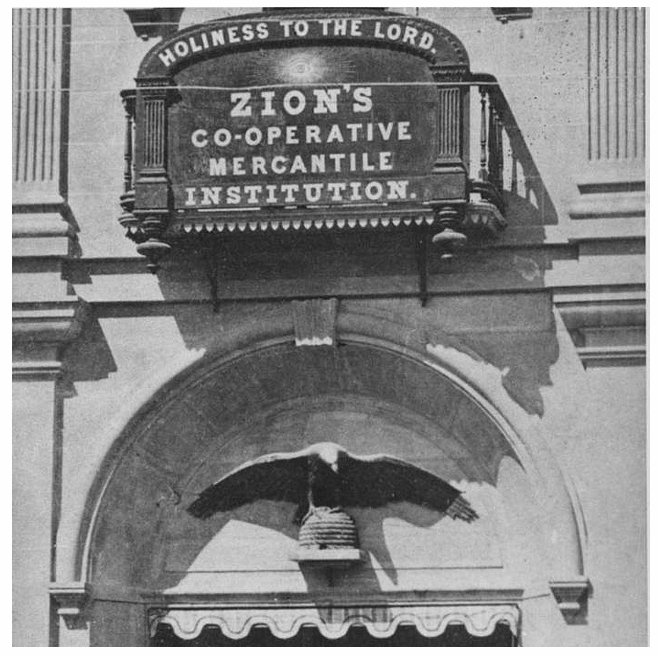
An early ZCMI marquee.
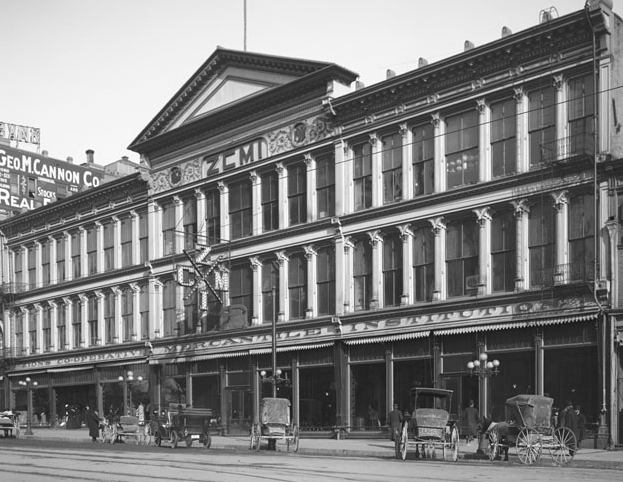
ZCMI, 1910

The ZCMI Center exterior, 1975-2007

ZCMI Center interior, looking west – 1970’s
ZCMI was popular for good-quality merchandise at reasonable prices, paired with knowledgeable and competent sales help. Sadly, competing businesses in the area resulted in declining revenues, and the store was sold to May Stores (Now Macy’s, Inc.) It operated under the ZCMI name for two years before becoming Meier and Frank. in 2007, the ZCMI mall and the Crossroads Mall across the way were demolished as part of a 1.5 billion-dollar project co-sponsored by Salt Lake City and the Church of Jesus Christ of Latter-day Saints, which opened in March of 2012 as a multi-use center including retail, restaurants, business, entertainment and residential areas. City Creek itself, the original source of water for the 1947 Pioneers, was brought back to the surface and channeled through the development. The ZCMI façade was restored once more and now serves as a front for Macy’s.
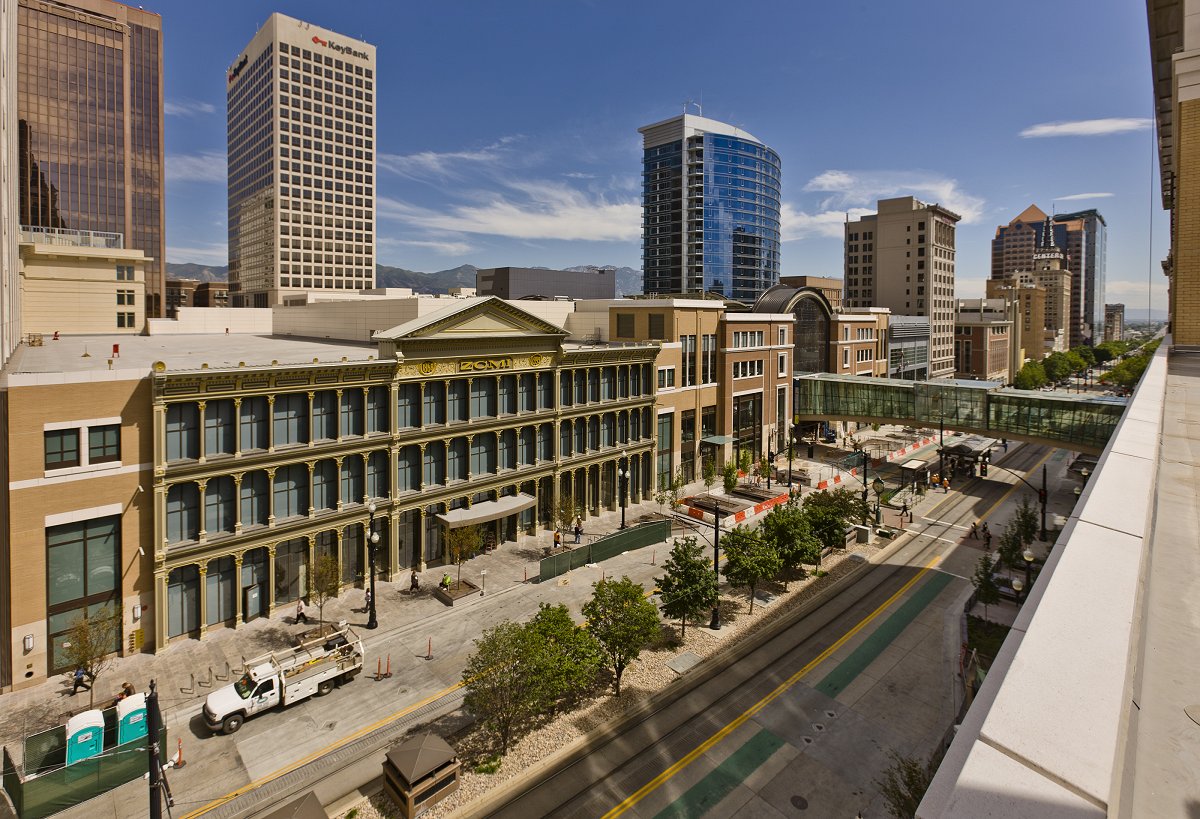
ZCMI façade in its final completion stages, City Creek sky bridge behind.

Façade close-up

Façade detail
City Creek parking is now underground and includes capacity for 5,000 cars. You’ve come a long way, baby.
The Old Wolf has spoken.



 Playing in the World Game