While living in Naples, Italy for 14 months or so back in 1970, I took the opportunity to visit the Sansevero chapel. There on display are two intriguing anatomical models, which were represented at the time as being the earliest known examples of plastination, popularized by the Body Worlds exhibits.
From Wikipedia:
These “anatomical models” (macchine anatomiche) were thought to be examples of the process of “human metallization” (metallizzazione umana) as implemented by anatomist Giuseppe Salerno ca. 1760 from a commission by Raimondo di Sangro. The exhibit consists of a mature male and a pregnant woman. Their skeletons are encased in the hardened arteries and veins which are colored red and blue respectively. Previously, historians have surmised that the corpses could have been created by injecting the hardening substances directly into the veins of living subjects.[4] However, recent analysis shows no evidence of techniques involving injection. Analysis of the “blood vessels” indicate they are constructed of beeswax, iron wire, and silk.
Whatever the case, these models were amazingly detailed, and even the manufacture of them at the time would have been a master undertaking.
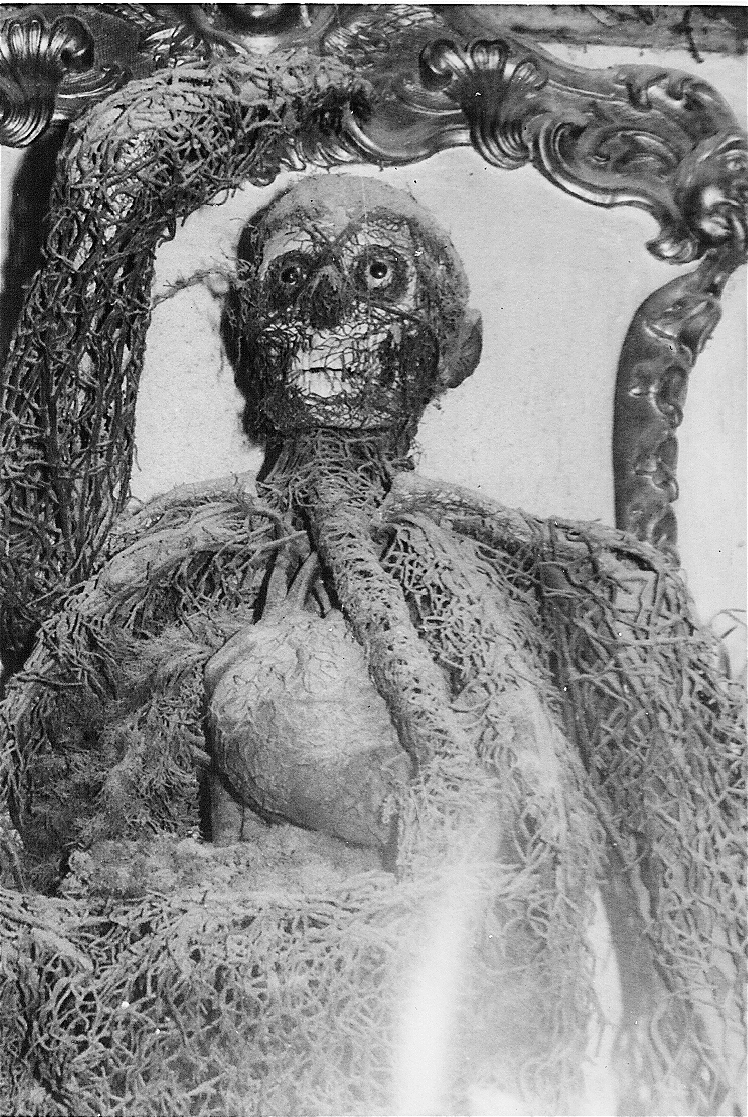
The female model – Photo ©1970-2013 Old Wolf Enterprises

The male model – Photo ©1970-2013 Old Wolf Enterprises
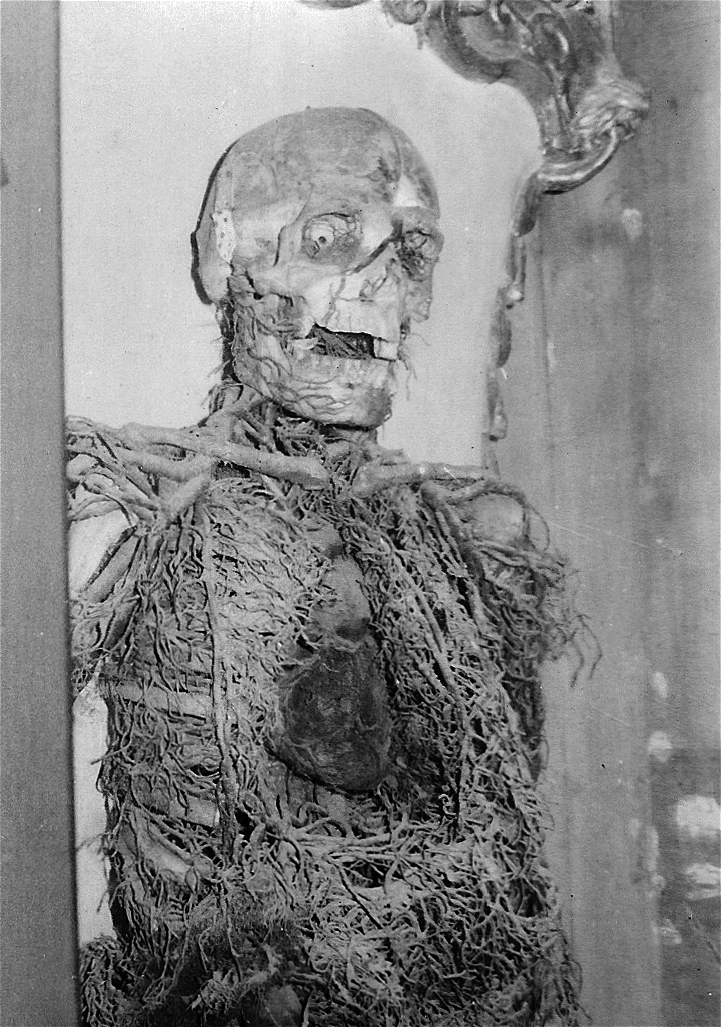
Male model – Closeup – Photo ©1970-2013 Old Wolf Enterprises

Color photo of the female model from the official website of the Sansevero Chapel Museum.
If you’re ever in Naples, this museum is worth a visit – if only to see the Veiled Christ of Giuseppe Sanmartino, but if you do go, be sure to check out the anatomical machines – they’re brilliantly executed and would have taken forever to make.
The Old Wolf has spoken.
 Playing in the World Game