
Found at Shorpy.
Albuquerque, New Mexico. “Lifting an engine to be carried to another part of the Atchison, Topeka & Santa Fe shops for wheeling.” Photo by Jack Delano for the Office of War Information.
Found at Shorpy.
Albuquerque, New Mexico. “Lifting an engine to be carried to another part of the Atchison, Topeka & Santa Fe shops for wheeling.” Photo by Jack Delano for the Office of War Information.

The Post Office designed a new set of stamps to encourage kids to get active. Great idea, right?
Unfortunately, thanks to some  on the President’s Council on Fitness, the project has now been put on hold, because it appears that these three stamps are promoting “unsafe” activities:

The stamps deemed unsafe by federal officials included illustrations of kids skateboarding without kneepads, doing a cannonball dive into a swimming pool, and doing a handstand without wearing a helmet. A handstand without wearing a helmet???
There are times I really wish I could swear. Of all the chuckleheaded, doltish, ludicrous, ill-considered, short-sighted and politically correct nonsense I have ever heard, this takes the cake. YOU BLISTERING SIMPLETONS! Yes, I’m SHOUTING! Did you get run over by the stupid truck? What, are you going to put federal monitors on every school playground and in every backyard, to make sure kids don’t run, jump, do cartwheels, tumble, climb trees, roll down hills, do somersaults, and everything kids do to enjoy life and burn off energy? [1]

I’ve written about the difference between safety and paranoia, but it appears the general trend continues in favor of paranoia, fueled largely by attorneys hungry for billable hours and with far too much time on their hands. For the love of anything you consider holy, every single one of those activities on the stamp sheet come with some inherent risks; we might as well curl up in a ball under our bed if we’re worried about safety to that extent. At least that way, nothing will get us but the dust mites.
I don’t believe in violence, but things like this are very stressful for me [2].
It was earlier reported that the entire run of stamps is being destroyed, but according to USPS spokeman Roy Betts, “The stamps are on hold and a decision would be made later.”
You can read more about this mind-boggling witlessness at ABC News.
[1] It appears stupidity is not limited to the USA. A school in Australia actually tried to ban kids from doing cartwheels. 
[1] Stress: The confusion created when one’s mind overrides the body’s basic desire to choke the living daylights out of some jerk who desperately deserves it.
 \
\
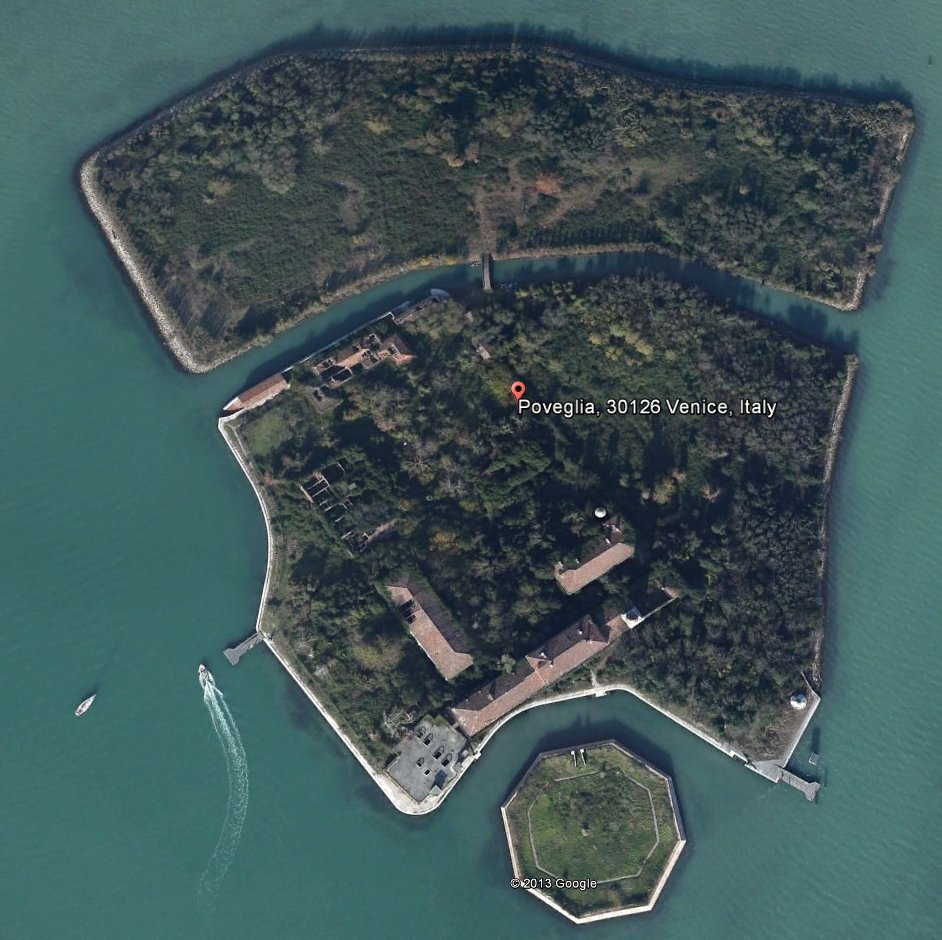
Four miles south and slightly east of the Venice train station sits the small island of Poveglia. It is uninhabited, and police boats patrol the area to keep tourists away. The locals want nothing to do with it.
From Wikipedia:
The island first came to be referenced in chronicles in 421 AD, when people from Padua and Este fled there to escape the barbaric invasions. In the 9th century the island started to be intensely populated, and in the following centuries its importance grew steadily, until it was governed by a dedicated Podestà. There were many wars on Poveglia, as many barbarians still wanted the people who fled there. In many cases the Poveglians won these wars, but in 1379 Venice came under attack from the Genoan fleet; the people of Poveglia were moved to the Giudecca, and the Venetian government built on the island a permanent fortification, called “the Octagon,” still visible today. The island remained uninhabited in the following centuries; in 1527 the doge offered the island to the Camaldolese monks, but they refused the offer. In 1661 the descendants of the original inhabitants were offered to reconstruct their village on the island, but they refused to do so.
In 1777 the island came under the jurisdiction of the Magistrato alla Sanità (Public Health Office), and became a check point for all goods and people coming to and going from Venice by ship. In 1793, there were several cases of the plague on two ships, and consequently the island was transformed into a temporary confinement station for the ill (Lazzaretto); this role became permanent in 1805, under the rule of Napoleon Bonaparte, who also had the old church of San Vitale destroyed; the old bell tower was converted into a lighthouse. The lazzaretto was closed in 1814.
In the 20th century the island was again used as a quarantine station, but in 1922, the existing buildings were converted into an hospital for mentally ill and long-term care. This went on until 1968, when the hospital was closed, and the island, after being shortly used for agriculture, was completely abandoned. Presently, the island is closed to locals and tourists and remains under control of the Italian government
In recent times, some legends have arisen about the island. According to legend, during Roman times it was used to isolate thousands of plague victims, and during the three occasions when the Black Death spread through Europe, the island was effectively used as a lazaretto and plague pit – it was considered an efficient way of keeping the infected people separated from the healthy. According to this version, over 160,000 people died on the island throughout its history.[3] The island used in 1576 to accommodate those hit by the plague was not Poveglia, but Lazzaretto Nuovo.
Another legend surrounds a building erected in 1922 on the island, which was used for various purposes, including usage as a mental hospital.[4] The legend states that a particular mental health doctor tortured and butchered many of the patients, before going “mad” and jumping to his death from the bell tower. According to that same legend, he survived the fall, but was ‘strangled by a mist that came up from the ground’. Its ruins remain to this day.[3] The institution in question has been described as a retirement home, but evidence on the island shows that despite the controversy, at least part of the building housed mental patients.
From the web page “Island of Madness“:
Today Poveglia is uninhabited and tourism to island is strictly forbidden. Every now and then the lapping waves on the shore uncover charred human bones.
Several psychics have visited the island the abandoned hospital, but all of them left scared to death of what they had sensed there. Every now and then daredevils dodge the police patrols to explore the island, but everyone who has made it there have refused to return saying that there is a heavy atmosphere of evil and they the screams and tortured moans that permeate the island make staying there unbearable.
One report from a misguided thrill seeker who fled the island says that after entering the abandoned hospital, a disembodied voice ordered them, “Leave immediately and do not return.”
Italians are naturally a superstitious lot.[1] Fortune tellers and other psychic types make a pretty good living there, so ghost stories of this nature would tend to grow in the telling, and mass hysteria about a place with a sordid history is not unexpected. Regardless of the stories that surround Poveglia, it certainly had a colorful past.
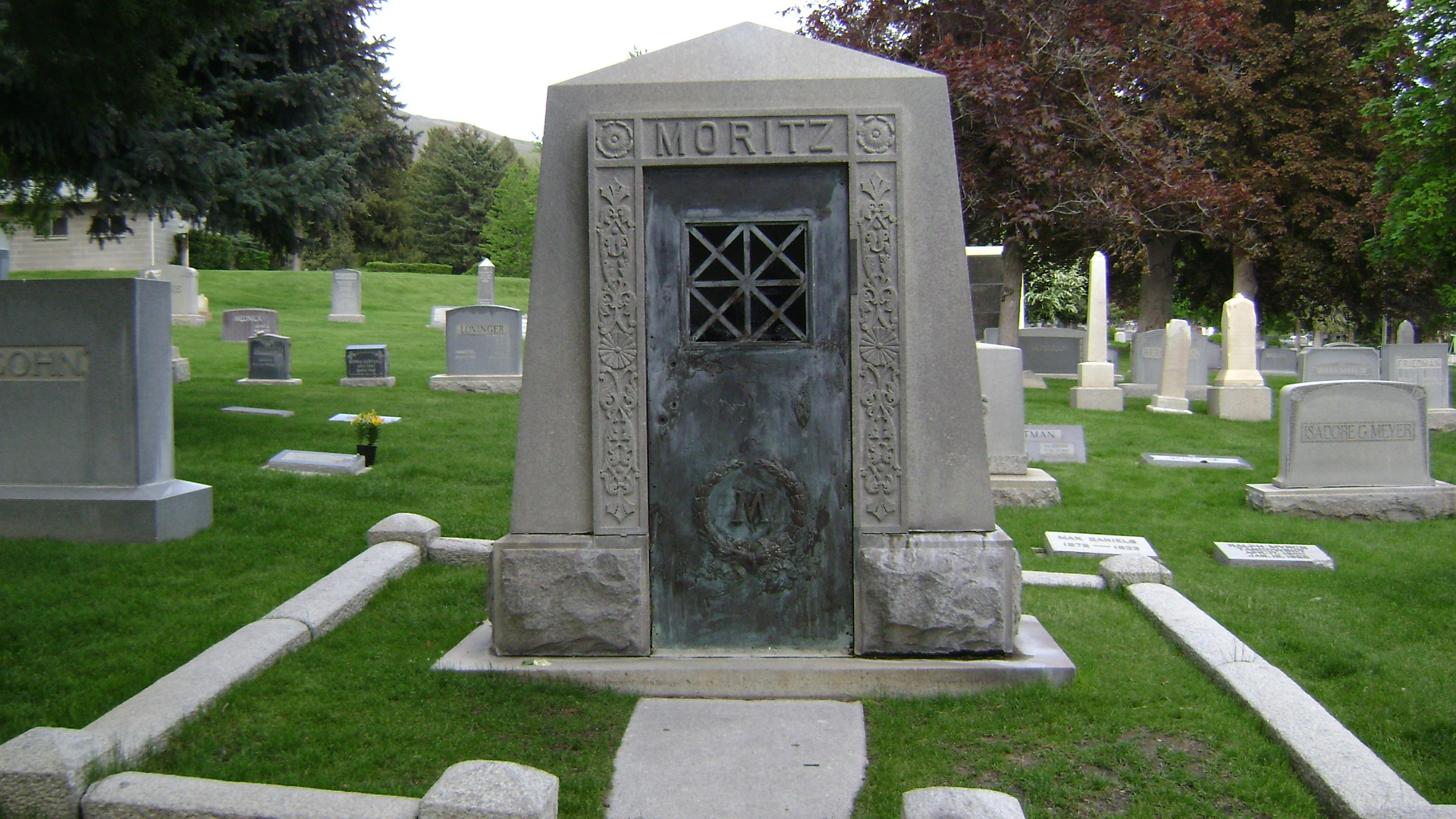
Salt Lake City has its very own haunting legend, the story of Emo’s Grave; I have spent a lot of time in the cemetery documenting graves and I’ve been there. It’s creepy enough even in the daytime. As for Poveglia, the Google Earth image above looks very forbidding indeed, with wild vegetation, tumbledown buildings and interiors exposed to the open sky. Even if visits were allowed, this is not a place I would want to go exploring.
Fortunately, there are some who have braved the perils, and posted an interesting report and some on-the-ground pictures of the area – these do nothing to dispel the aura of decay and strangeness that surrounds the island. Click through for more.
The Old Wolf has spoken.
[1] We’re Calabresi. I know.
I am in a real quandary, and searching the internet has been no help. I’m looking for the best space heater for our basement, (about 1500 ft2) which tends to be a bit chilly in the winter. There are a lot of options out there, and I’m unable to find a comprehensive and unbiased review site for different heaters and types out there – there are too many sock puppets and shill sites to be able to get an accurate picture.
The three models below are representative of the types of heaters I’m looking at – not these specific brands or models, necessarily, but rather by style. Note that each of these heaters is rated at 1500 watts, which means 5120 BTUs – according to the math, each one should provide exactly the same amount of heat.

Honeywell HZ-03604U Mini Tower Heater – $40.00 (this is an older model, but it’s the one I have)
• 360-degree space heater
• SafetyTip tip-over switch shuts heater down if it’s knocked over
• 2 heat settings
• Adjustable thermostat
• Includes overheat protection
• Model: HZ-0364u-WMT
• 1500 Watts
• 5,120 BTU
Feel warm and cozy with the Honeywell HZ-03604U Mini Tower Heater. Designed to provide all-around warmth, this 360 Degree Space Heater is perfect for small to mid-sized rooms. Since, heat is distributed evenly in a 360 degree range, every nook and corner of the area warms up in a matter of minutes. With two different heat setting modes and an adjustable thermostat, you have complete control over the heating process. Made of flame-resistant plastic, this overheat protection heater is absolutely safe for any room in your home. An additional protective tip-over switch safeguards your family from accidental topples. A portable room heater, it is perfect for the coldest of winters and comes with a convenient handle that helps you carry it around from one place to other with ease.
Note: I have one of these – it does a really good job keeping my office toasty in the winter.

Lifesmart LS1003HH13 1,800 SQ FT – $171.99
• Heats a Room Up to 1800 Square Feet
• 1500 Watt
• Injection Molded Plastic Cabinet; User-Friendly Controls with Large LED Display
• Built-in Fan Circulates Air through the Heater and Into the Area Being Heated
• Infrared Technology Effectively Uses Less Energy to Produce Even Heat from Floor to Ceiling
• Programmable Temperature and Timer Feature

DuraFlame (Twin-Star) Electric Fireplace – $269.00
• Uses 3 InfraRed Quartz Heating Elements
• 5,200 BTUs. 1500 Watts, 12.5 Amps
• InfraRed Heating Elements Lifetime is Over 20K Hours
• Infrared Heating Technology
• Quickly and evenly distributes heat throughout the room
Healthy heat – Produces a moist heat that does not dry out the air and lower oxygen levels in the body and the room
Safe for kids and pets – Stays cool to the touch
Excellent zone heating source – Can help save on energy costs
I’ve seen one of these work – they’re very pretty, and the one I experienced did a good job heating the main living area of an 800 ft2 cabin.
Still, this last one is quite confusing; the manufacturer, Twin-Star (these are OEM’d by DuraFlame) claims that this unit will heat 1,000 ft2. However, I asked Home Depot, who carries the same model, what it was rated for, and this was the answer from their customer service department:
Upon reviewing the fireplace I was able to find the model number 23if1714-c247 which is the product on Amazon.com we do carry the exact one on Homedepot.com. I have researched this product and the square feet it will heat at a consistent temperature is 144 sq. ft. This fire place will heat a supplemental area of 1000 square feet meaning it will be warm but not at the consistent heat of the 144 square feet area.
Duraflame Spec Sheet
Intertek Test Report
According to this calculator, each one of these heaters would cost about .1692¢ per hour, or $25.00 per month if they were run for 5 hours per day, but the specs on each one differ significantly, and websites don’t help because they’re busy trying to sell them.
My challenge is that each one has the same heat rating – heat output is a factor of resistance, and if each one is 1500 watts, then the BTU rating is 3.4 times that. So is one better than another? (I’m ignoring the visual fireplace part of the DuraFlame – that’s just there for pretty. I’m just comparing the heating ability and technology. The prices are obviously way different, and if a small one will do just as well as a large one, I can’t see shelling out for a larger unit.
I cannot comprehend it; to me it is a mass of confusion. I need to do more research, but for now my head hurts.

If anyone who happens to read this has any insights for me, I’d be grateful for your input.
Thus ends one of my favorite stories by the Good Doctor Asimov, “The Dead Past.” I won’t tell you much more about it, because it would spoil the read, and it’s one of his best pieces. However, it addresses the issue of privace in a way that few people could; Asimov has a way of being able to take concepts to their logical, illogical, or eternal conclusions.
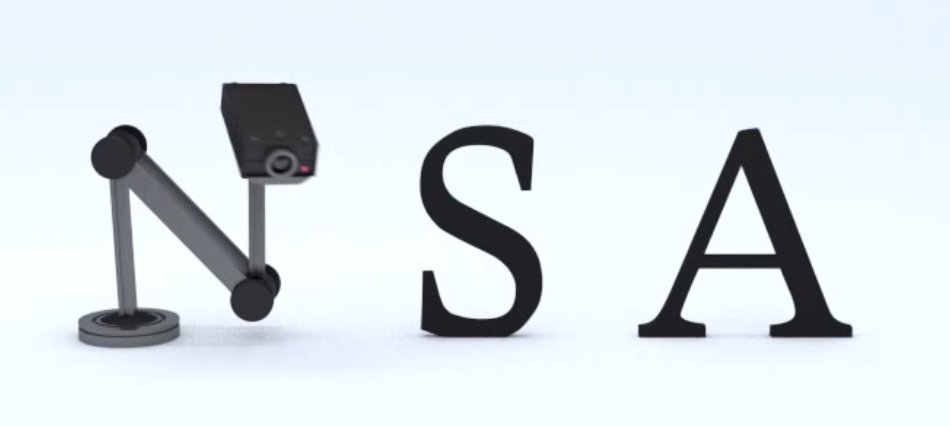
Image courtesy of redditors SexualWeasel, joystick354, and Sqorck (more about that at a previous post.)
In today’s world, its very difficult to maintain the illusion of privacy. Just how much information about each and every one of us is available out on the Internet would curdle your plasma if you really knew, and scrubbing the ether of our presence is, while not impossible, a challenging task.
So the question is raised: how much privacy are we entitled to, and what constitutes a violation?
An interesting article over at the Huffington Post addresses both the issues of bullying/abuse and privacy in a story of a father who sent his autistic son to school with a wire, and uncovered some very unsavory behavior on the part of a teacher and a classroom aide.
Certainly we are entitled to an assumption of privacy about our vital statistics, financial data, and medical records (much stricter now since the introduction of HIPAA); whether or not that privacy actually exists is another issue, but that’s a subject for another discussion. What we do in our own homes or on our own property should be inviolate, although government has long been pushing for inroads, and whereas they were formerly chipping at the cornices of this right with small hand tools, they are now drilling at the foundations with jackhammers. Again, a topic for another day.
But when we are out in public – on the streets, in stores, in view of other people, it should be fairly assumed that we are being watched by someone, somewhere – even if it’s only by a duck.
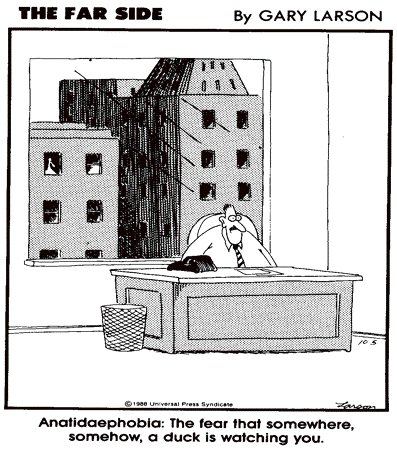
Gary Larson, “The Far Side,” Image ©1988 Universal Press Syndicate
Bullies don’t like light. Like cockroaches, they prefer to hide in dark corners, exercising their unrighteous dominion over others in places where they think they won’t be seen or caught. Unfortunately, schools have long been shielded from public scrutiny, but this HuffPost article suggests that this immunity may not be long for the world.
I remember when I was in elementary school, in another geological era, our school installed closed-circuit cameras as part of there experimental educational regime. I had forgotten about those until one of my classmates – even 50 years on, many of us have stayed in touch – reminded me about them during a reunion in June of 2012. We had to be on our best behavior when those cameras were rolling – it was an odd sensation. Today, recording devices on school buses have become more common, installed to protect students, aides, teachers, and drivers in the event of mishap or misbehavior. They’re not always used to best advantage, but they are there. This implies that intrinsically, there should be nothing wrong with having a video camera in every classroom, because it is in essence a public place, and teachers and students alike should be operating under the assumption that they are being watched. I don’t feel very George Orwell about this at all; when you’re sitting in a classroom with 40 or 50 other students, this is hardly a private environment. And, every parent of every child in that classroom has the right to know that their children are learning in an environment of safety.
Where every piece of technology can be used for good, there must also be the assumption that it can be used for ill. As a result, I can hear 1,000 legal hands waving in the background[1], each attached to an attorney who will a) have an opinion as to why this is a bad idea, and b) offer their services at a very reasonable hourly rate. But the point here is not about practicality, it’s about the rights of our children to learn without fear. The only thing that is certain is that things in the world of education will change, and it will probably move in the direction of greater scrutiny and less privacy. That may be a good thing, or it may not – but going forward, I will support any reasonable proposal that makes this world a safer place for our children and all of us.
The Old Wolf has spoken.
[1] I’m sure a whole raft of educators will have their hands up as well, and that’s not a bad thing. These are the people in the trenches, and their ideas need to be heard, but for myself, I do not look favorably on ideas that sacrifice safety for convenience.

Found at Shorpy.
Photo by Arthur Siegel in the summer of 1941 in Detroit. One of a 5-part series from the Office of War Information archive seen here. This photo bore the annotation, “This image in jacket marked ‘Killed’.”
“Detroit, Michigan. Girls playing cards and drinking Coca-Cola.”
I wonder if there was anything else in that Coke…
The Old Wolf has spoken.
Over at Mental Floss, I found some of the oddest sentences that are perfectly grammatical and yet which don’t compile [1] properly.
One of the most famous is,
“Buffalo buffalo Buffalo buffalo buffalo buffalo Buffalo buffalo.”
A visual explanation of this monstrosity is the most effective:

You can also visit Wikipedia for a detailed linguistic deconstruction; like Columbus’ egg (an appropriate simile for today) [2], it’s easy when you see what they’re doing.
However, only slightly less well known is this one: Never go in against a Sicilian sorry, I meant
“The rat the cat the dog worried killed ate the malt.”
This is an example of nested relative clauses. The structure is easy to follow when only few are used:
The rat ate the malt. The cat killed the rat. These become, “The rat (that) the cat killed ate the malt.”
Add in “The dog worried the cat” and you get “The rat (that) the cat (that) the dog worried killed ate the malt.” Since the subordinating conjunction “that” is optional in such clauses, the resulting sentence begins to become incomprehensible as the nestings are more and more difficult to follow.
The human mind is a wondrous machine, capable of prodigious feats of memory, calculation, and creativity, but it can only perceive so much at a single glance. In the case of determining how many items are within a field of vision, this skill is called subitizing, and the current human limit seems to be between five and seven.
Quick, how many dots?

Three. No challenge, right? Now try this one. Quick, no counting!

The answer is “24,” but you didn’t know that without counting, unless you happen to be one of those few people, either autistic or supergenius, who has somehow bypassed the normal human ability.
But let me show you the same number like this:

And while you can’t subitize the dots, you can immediately calculate how many there are based on your encyclopedic knowledge of the universe and a bit of simple math.
In the same way, the human mind is able to understand and generate language, but there are limits to how much complexity can be comprehended, even if all grammatical rules are followed. Thus taking our example to its logical conclusion, “The House that Jack Built” becomes:
This is the malt the rat the cat the dog the cow3 the maiden4 the man5 the priest6 the cock7 the farmer8 kept waked married kissed milked tossed worried killed ate, that lay in the house that Jack built.
It’s interesting from a scholarly standpoint, but nowhere near as fun to recite while bouncing your grandchild on your knee.
Remember, time flies like an arrow, and fruit flies like a banana.
The Old Wolf has spoken.
[1] This is computational linguist slang for “I don’t get it.”
[2] I am 1/2 Italian by descent. As such, Columbus Day has long been a great celebration, especially in New York where I grew up. Sadly, in much the same way as we now know that brontosaurus is now an apatosaur, and that Pluto is no longer a planet but a Trans-Neptunian Object, we now know that Columbus is not the national hero he has been made out to be; October 14th would better be renamed “Genocide Day.” Yes, he played a significant rôle in the development of this nation, but the human toll that was left behind in his wake is staggering. A couple of things you might be interested in reading are at The Thunder Mountain Monument, The Oatmeal, and Lies My Teacher Told Me.
[3] with the crumpled horn
[4] all forlorn
[5] all tattered and torn
[6] all shaven and shorn
[7] that crowed in the morn
[8] sowing his corn
Or, “The beacons are lit! Gondor calls for aid!”

Recently the Internet has become aware of a string of giant concrete arrows dotting the landscape across the country. Rumors abounded, with the Von Daniken crowd hauling out their tinfoil hats and other, more pragmatic folks doing more scholarly research. It turns out they were guideposts for our earliest courageous airmail couriers, who often flew in abominable weather, at night, in the dark, wet, lonely, and miserable. (How’s that for evocative prose. Thank you! Thank you!)
You can read a comprehensive writeup at Core77, and see some local Utah interest at KSL. I’ll have to get a picture of my own one of these days.

Early photo of an arrow with marker shack and lighting tower
The Old Wolf has spoken.

Over at Quartz, writer Allison Schrager says no. I originally spotted her article over at Newser, which summarized it this way: “Think You’re ‘Bad at Math’? You’re Just Being Lazy.”
While there are some good points in the article, I feel as though her conclusion is flawed.
Yes, math is difficult – especially when you get up into the higher levels. To learn it requires intellectual rigor, patience, discipline, and hours and hours of repetition. I remember this passage from the first science fiction book I ever read as a child, Heinlein’s Have Space Suit, Will Travel:
“Anybody who thinks that studying Latin by himself is a snap should try it.
I got discouraged and nearly quit-then I got mad and leaned into it. After a while I found that Latin was making Spanish easier and vice versa. When Miss Hernandez, my Spanish teacher, found out I was studying Latin, she began tutoring me. I not only worked my way through Virgil, I learned to speak Spanish like a Mexicano.
Algebra and plane geometry were all the math our school offered; I went ahead on my own with advanced algebra and solid geometry and trigonometry and might have stopped so far as College Boards were concerned-but math is worse than peanuts. Analytical geometry seems pure Greek until you see what they’re driving at-then, if you know algebra, it bursts on you and you race through the rest of the book. Glorious!”
I loved that story when I read it at age 10, and I still love it today, but I’m bitterly disappointed that I never had that breakthrough that the story’s protagonist experienced. I did fair to middling through high school in algebra, geometry, trigonometry and analytical geometry, but I was always doing it like a cook follows a recipe – it never burst on me, and I never saw what they’re driving at. So when I hit college with dreams of being a doctor, and discovered that in order to pursue a chemistry major I would have to take all the concomitant calculus courses, that was all she wrote. It was worse than pure Greek, because that’s a subject I did well in.
Mastering a foreign language is no piece of cake either, and yet for some reason I can master enough of a foreign language to become reasonably fluent in 3 months, whereas learning even the rudiments of calculus has eluded me for over 40 years. The disappointment stems from the fact that I love the world of science, and mathematics is the key that unlocks the door to understanding – a door through which I will only ever be able to peer through a keyhole to where the big boys and girls are playing.
This is music to my ears…
“Per me si va ne la città dolente,
Per me si va ne l’etterno dolore,
Per me si va tra la perduta gente.
Giustizia mosse il mio alto fattore:
Fecemi la divina podestate,
La somma sapienza e ‘l primo amore.
Dinanzi a me non fuor cose create
Se non etterne, e io etterno duro.
Lasciate ogne speranza, voi ch’intrate”.
(from Dante’s Divina Commedia)
whereas this makes my mind shut down completely:

Kepler’s equation for calculating orbits

And all we’re talking about here is limits, let alone the really weird things. To a scientist, this is really simple stuff.
My own experience has demonstrated to me that each person born has gifts and abilities unique to them. As no two snowflakes are a like, as no two stars have identical magnitudes or compositions, so no two people have the same talents. For me, math is terribly difficult, and language is uncannily easy.

As a result, the formula above is the only bit of calculus that I have ever been able to memorize – and I’ll never forget it. Don’t get me wrong – I can’t evaluate it, even though I’m told by smarter friends that both sides equal ⅓; no, I remember it because it’s a limerick. [1]
Integral zee squared dee zee,
From one to the cube root of three,
Times the cosine
Of three pi over nine,
Equals log of the cube root of e.

Here is a drawing done by my daughter, who has never had an art lesson in her life. This is a gift that springs from within her.
Where I agree with Ms. Schrager is that despite the difficulty, if I worked at it long enough and hard enough, I could master it. But somewhere else there is a brilliant mathematician who trembles in terror at the thought of trying to learn Italian, because he or she knows that it would almost take more effort than it is worth.
In conclusion, I would retitle Ms. Schrager’s article to read: “Yeah, math is hard – but it’s worth the effort.”
The Old Wolf has spoken.
[1] I have hundreds of limericks rattling around in my skull. Unfortunatly,
A limerick packs rhymes anatomical
Into verses quite economical
But the good ones I’ve seen
So seldom are clean
And the clean ones so seldom are comical.
Reblogged from Forbes, without the annoying slideshow.

You can do better than this!
The first few hours of the work day can have a significant effect on your level of productivity over the following eight—so it’s important you have a morning routine that sets you up for success. With the help of career and workplace experts Lynn Taylor, David Shindler, Michael Kerr, Anita Attridge, Alexandra Levit and Michael “Dr. Woody” Woodward, I compiled a list of 16 things all workers should do when they get to work each morning.
This may be obvious to most people—but some don’t realize that showing up late can not only leave a bad impression, but also throw off your entire day. “Getting in on time or a little early helps your mindset for the day and helps promote a feeling of accomplishment,” says Lynn Taylor, a national workplace expert and author of Tame Your Terrible Office Tyrant.
“Literally,” says Michael Kerr, an international business speaker, author and president of Humor at Work. “And do something to focus in on the here and now.” Many people come into work harried because they don’t leave enough time at home to deal with “home stuff,” he says, “and then they’ve barely survived another horrendously stressful commute, and then they dive into the madness.” Slowing down, taking a moment to pause, and creating a routine around centering yourself can work wonders, he adds.
Michael “Dr. Woody” Woodward, PhD, organizational psychologist and author of The YOU Plan, says after the deep breath, give yourself a few minutes to meditate and get settled in.“This is a good way to set the tone of the day,” he says. “Don’t allow yourself to be bum rushed by frantic co-workers lost in their own confusion. It’s not unusual to wake up to a long backlog of e-mails just screaming for your attention. The challenge is taking a moment for yourself before diving head first into your day.” He says there is a tremendous power in mediation when it comes to settling your mind. “Starting off your day right is really about setting your own tone and meditation is a great way to begin.”
“Breakfast truly is the most important meal of the day to help us down the path of not only being more physically fit, but also to have the mental energy needed to tackle your workday,” Kerr says.
You may have to attend to projects or discussions that rolled over from the previous afternoon—but try to treat each day as a fresh one, says David Shindler, founder of The Employability Hub and author of Learning to Leap. “Leave any crap from yesterday behind, tap into what’s happening at the outset of the day, get organized and ready or hit the ground running, if that’s what is needed,” he says.
You’ll want to pay attention to your mood and be aware of its effect on others. “First and last thing in the day is when emotional intelligence can have the greatest impact,” Shindler says. So if you’re not a “morning person,” try to suck it up and have a positive attitude when you arrive at the office. Grab a second or third cup of coffee, if that’s what it takes.
Kerr agrees. “Your first hour at work can set your ‘attitude barometer’ for the rest of the day, so from a purely emotional point of view, I think it’s an important part of the day,” he says. “One morning grump can infect an entire team and put everyone on the wrong footing.”
The first hour of the work day is the best time to assess priorities and to focus on what you absolutely need to accomplish, Kerr says. “Too many people get distracted first thing in the morning with unimportant activities such as diving right into their morass of e-mail, when there may be a whole host of more important issues that need dealing with.” Make a to-do list, or update the one you made the previous day, and try to stick to it. However, if your boss has an urgent need, then it’s OK re-shuffle your priorities within reason, Taylor adds.
Anita Attridge, a career and executive coach with the Five O’Clock Club, a career coaching organization, says when you prepare your morning to-do list, determine what must be done today and what can be completed tomorrow, and prioritize accordingly. “Also determine your peak working time and plan your schedule accordingly,” she says. “Use your peak time each morning to do the most important tasks.”
Even if you’re not a morning person, you need to be awake when you get the office. Especially if you’re in a leadership position, it’s critical to be present, mentally and physically, and to communicate. “One of the biggest office pet peeves I hear from employees is about how their immediate supervisor just blows by them in the morning without so much as a smile,” Kerr says. “Taking the time to connect with your team members is essential, and doing the seemingly small things–making eye contact, smiling, asking them about their night, and checking in on what they may need help with–helps you as a leader take the pulse of the team, and helps set the tone for all the employees.”
“A quick 5 to 10 minute team huddle can also be an effective way for many people to start their day,” Kerr says. Make it a short meeting, with no chairs, have everyone share their top goal for the day, and share any critical information the rest of the team absolutely needs to know, he says. “Doing the huddles helps people focus and more importantly, connects everyone with the team. And by sharing your goals for the day publicly, the odds of achieving them rise substantially.”
Clearing off the desk and creating a neat workspace sets a tone for the rest of the day, says Alexandra Levit, the author of Blind Spots: The 10 Business Myths You Can’t Afford to Believe on Your New Path to Success. It can also help avoid confusion. “While most communications are through e-mails and texts, if your boss or co-worker stopped by looking for you and left a sticky note about a last-minute meeting occurring in ten minutes, and it’s sitting on a mound of mail or papers, you’re already behind the eight ball,” Taylor says. “Also, for many, it’s difficult to think clearly, easy to forget important reminders, and just plain stressful if you feel you’re fighting the battle and the tornado of mail or paper is winning.” Ideally, you’d clear whatever you can out the night before so you can have a fresh start before you even turn on your computer in the morning. But if not, make sure clearing your desk takes precedence over things like checking e-mails and chatting with co-workers in the morning.
“As corny or as trite as this may sound, I’d suggest that you take a moment each morning to remind yourself of your core purpose at work,” Kerr says. Connecting to a sense of purpose is one of the most powerful motivators there is, and taking just a moment each day to reconnect to what truly matters in your job and what you are ultimately trying to achieve and for whom, can help you feel more motivated and help you focus on the priority areas in your work.
This one is difficult for most people—but the experts agree that you shouldn’t check your e-mail first thing in the morning. If you do, only read and respond to messages that are urgent. “Priority-scan your inbox,” Taylor says. “Not all e-mails were created equal. Hone your ability to quickly sift the wheat from the chaff and address what must be answered on an urgent basis.” Attridge agrees. “Only respond immediately to the urgent messages so that you control your morning activities.” There will be time during the day to respond to the less urgent e-mails.
Why must you put off checking e-mails? “For far too many people, e-mail and the web can serve as huge timewasters and distracters, particularly in the morning,” Kerr says. “Once you start checking e-mails, it’s a click away from watching the funny video someone forwarded you, which then sucks you into the abyss: checking the sports scores on line, the news headlines, the stocks, et cetera, and before you know it you’ve been watching a cat play the drums for twenty minutes and, like a poorly planned Oscars ceremony, your entire schedule is already thrown off before you’ve even begun your day.”
Most people jump on the computer and ignore their phone. “While office voicemail is indeed becoming antiquated as people rely more on personal cell phones, Blackberrys and e-mail, some people do leave voice messages, and if you ignore them, you could miss something important,” Levit says.
If you know you need to get in touch with someone that day, place the call or send the e-mail first thing in the morning. If you wait until midday, there’s a greater chance you won’t hear back before you leave the office. “There’s nothing more frustrating that trying to complete something and not having access or answers from people you need because your day time hours were lost on other matters,” Taylor says. “If you have your questions ready and your e-mails fired off during early peak hours, by the end of the day you should have what you need.”
“Many people feel that their brains function best in the morning, and that morning is when they are most creative and productive,” Kerr says. “Consider whether you are making the best use of your brainpower and plan ‘high brain’ activities in the morning.”
“This is the time to assess where you and take time to revitalize yourself so that you can keep your momentum going,” Attridge says.
 Playing in the World Game