Sausages, Laws, and Quotations

Wolfsburg, VW Autowerk, Metzgerei

Sausage Production for the VW Cafeteria, Wolfsburg, 25 January 1973. Found at /r/historyporn

Otto von Bismarck once said, “Whoever loves the law and sausages should never watch either being made.” Wait, no he didn’t. The original quote is “Laws, like sausages, cease to inspire respect in proportion as we know how they are made,” and is attributed to John Godfrey Saxe, University Chronicle. University of Michigan (27 March 1869) 
Everett Dirksen probably never said “A billion here, a billion there, and pretty soon it adds up to real money.”
Bill Cosby never wrote the “I’m 73 and I’m Tired” article. He even wrote a rebuttal on his website.
Winston Churchill is reputed to have said, “You make a living by what you get; you make a life by what you give.” According to The Churchill Centre And Museum at the War Rooms London, what Churchill actually said in Scotland, 1908, is:
“What is the use of living, if it be not to strive for noble causes and to make this muddled world a better place for those who will live in it after we are gone? How else can we put ourselves in harmonious relation with the great verities and consolations of the infinite and the eternal? And I avow my faith that we are marching towards better days. Humanity will not be cast down. We are going on swinging bravely forward along the grand high road and already behind the distant mountains is the promise of the sun.”
And that’s a much better quote, really, than the original.
“There’s no such thing as a free lunch” is often attributed to economist Milton Friedman, who used it as the title of a 1975 book. However, sci-fi buffs will recognize TANSTAAFL (“There ain’t no such thing as a free lunch”) from Heinlein’s 1966 novel, “The Moon Is a Harsh Mistress,” and a still earlier occurrence appears  in the title of a 1949 book by Pierre Dos Utt, “Tanstaafl: A Plan for a New Economic World Order.” [1]
Most of us will remember the party game called “Telephone” or “Chinese Whispers,” depending on which part of the world you live in. People sit in a circle and the first person whispers a message into the ear of the next person. Repetition is not allowed, and the second person must pass the message on. The result is usually incomprehensible or hilarious – “I love Marty Blotz” can come out the other end as “Boiled aardvark kidneys are tasty.”

It used to be that the power of the press belonged to the person that owned one. (There’s another quote for which it’s difficult to pin down the original source, or if it was even said.) With the internet being available to much of the world’s population, anyone can publish anything with or without attribution, which is why so many things get forwarded, re-forwarded, massaged, edited, re-worked, and falsely attributed these days. One of my friends is struggling with countering their 9-year-old’s assertion that “if you see it on the internet, it has to be true,” and in my experience there are reams of adults who apparently believe the same thing, based on the kinds of things I see on Facebook or my inbox.

James Sullivan wrote at Finding Dulcinea, in an article entitled “Misquotes: Searching for Authenticity Online:”

The Internet is fertile ground for the proliferation of misquotes. Pithy quotes find their way into Facebook profiles and Twitter posts, where they multiply across the Web unencumbered by citations and original context. With online sharing an elaborate, electronic game of telephone, genuine quotes get warped in the retelling, leaving end-readers with misquoted material void of context. Surprisingly, the media is often just as guilty as the average Web user.

I highly recommend this article if you care about  your sources – the end of the article gives some excellent ways of verifying whether a quote has been properly attributed or not.

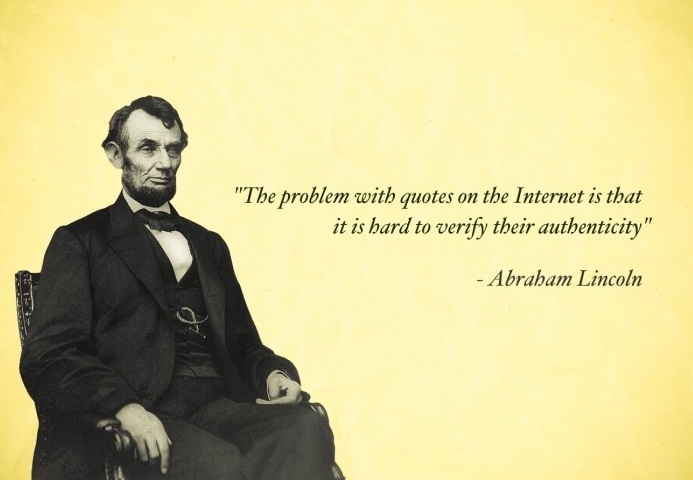
Even if you care, it’s possible to make mistakes – as a famous statesman once pointed out,

Lincoln-Internet-Quotes


The Old Wolf has spoken (and you can quote me on that.)


[1] New York Times, “Quote… Misquote

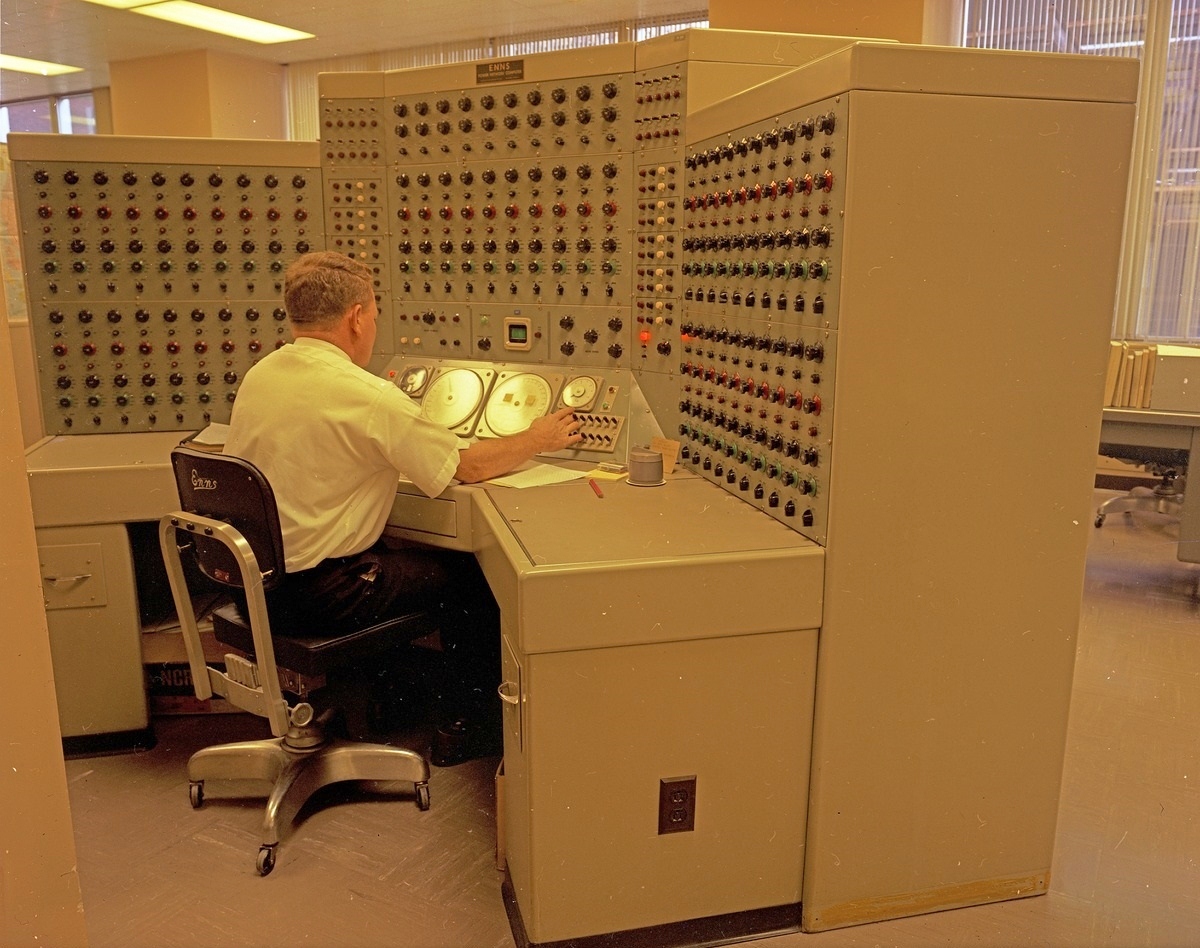
The Enns Power Network Computer, 1968

iba4gnNOqJhiyk

An operator working at an Enns Power Network analog computer. From the City Light, Seattle Municipal Archives. Analog computers were widely used in scientific and industrial applications where digital computers of the time lacked sufficient performance.

009

From the December 12, 1955 issue of “Electrical World” magazine, page 9

The Old Wolf has spoken.

Because Pizza – the Ratskeller

Edit: I found dër Ratskeller mentioned on another blog post about defunct Salt Lake City pizzerias here:

I’ve touched on the subject of pizza several times before, but today a map I found over at Maps on the Web inspired me to follow through on an earlier promise.

Having lived in Italy from 1970 to 1971, I mentioned Neapolitan pizza, which is the grandfather of the art form, and followed up with a much longer ramble about it in the next post.

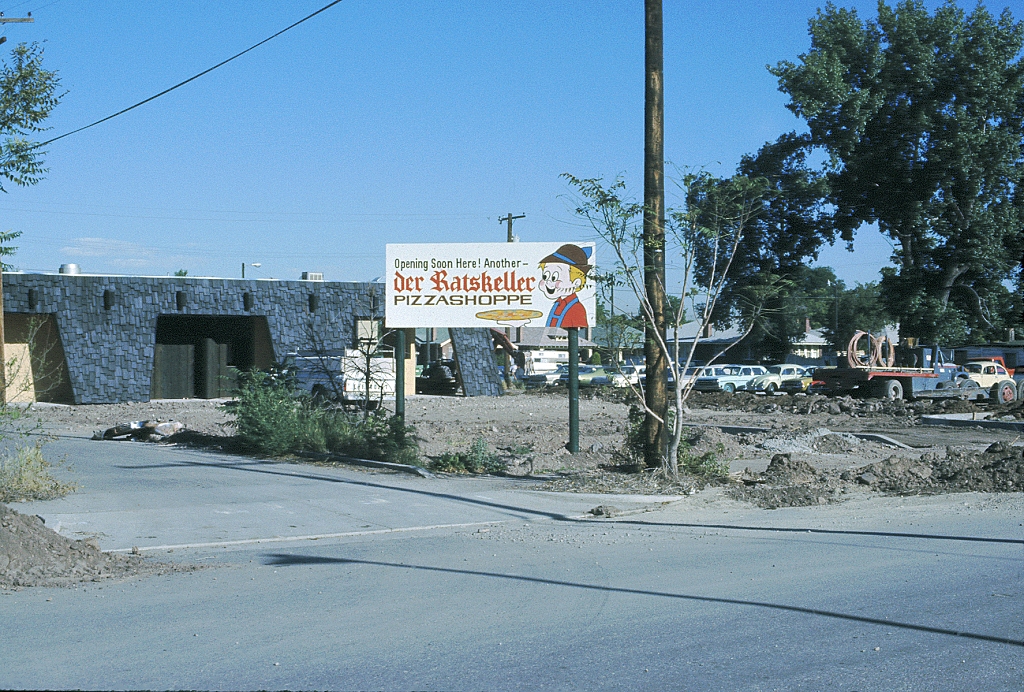
When I came back from Italy, my first real job off-campus was at Dër Ratskeller Pizza Shoppe, at 250 South 300 East[1], which I mentioned here. Unfortunately that chain is now defunct, and it’s a real pity; there are some good pizzerias in this country, but the Ratskeller was a cut above.

I began working at their first location in 1972, after my return from overseas. The chain was owned by a car dealer and restaurant entrepreneur named Roy Moore, and he had several pizza joints in Idaho including the Rathaus Pizza Shoppes in Boise and Moscow, the Gay Ninties in Idaho Falls, and the Red Baron in Lewiston; this was his first venture in Utah.

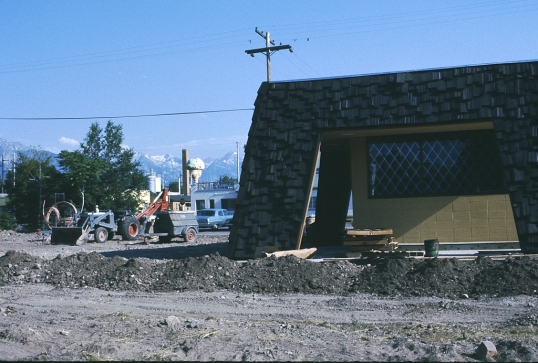
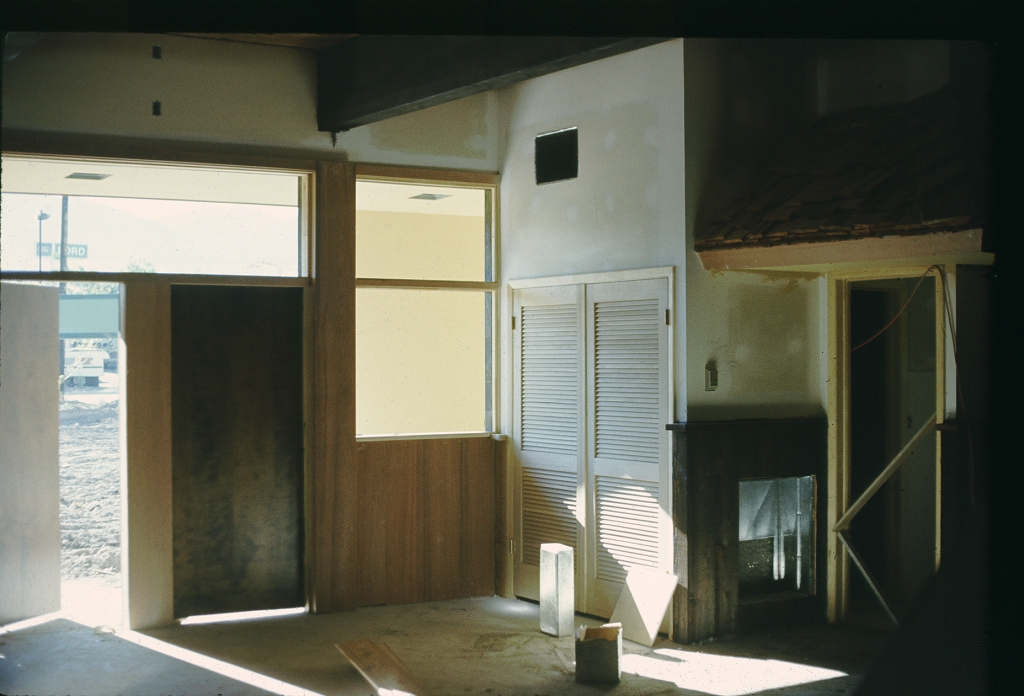
The following year, the company opened a second location in Sugarhouse, Utah, at 827 East 2100 South – I was tapped to become the assistant manager of that location and actually helped with finishing the construction. In the process, I learned a lot about making pizza.
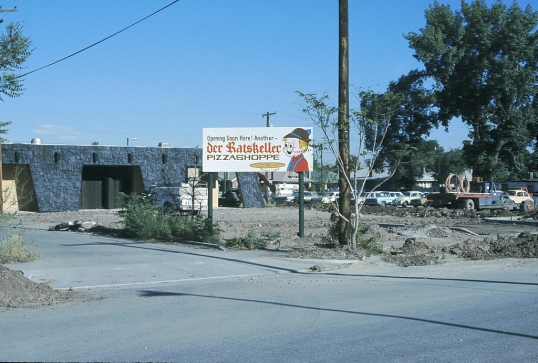
Building the Ratskeller Sugarhouse (2)

The sugarhouse store looked very much like the downtown location.
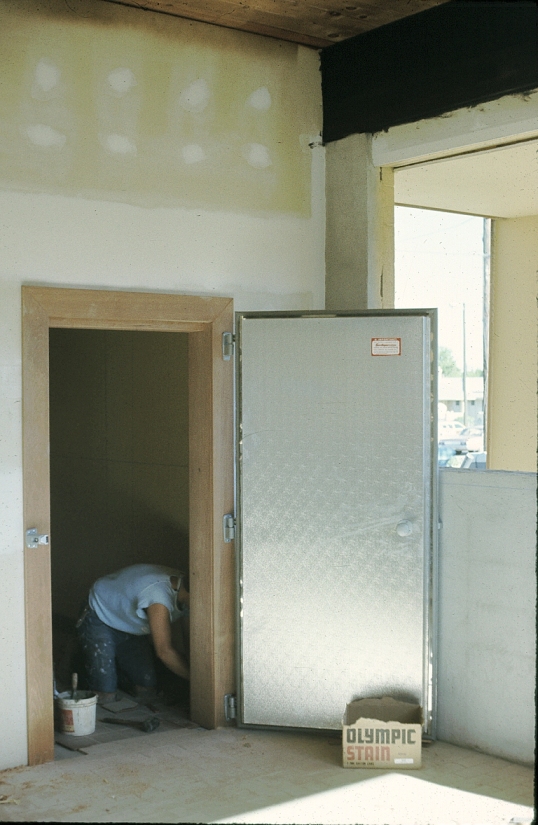
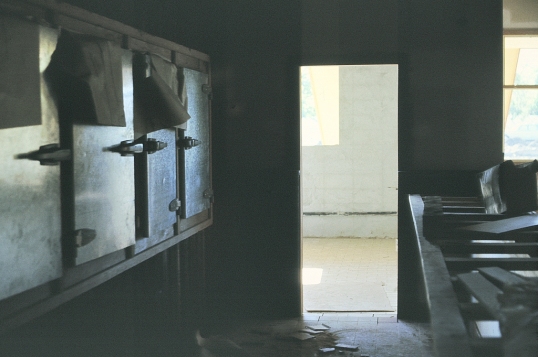
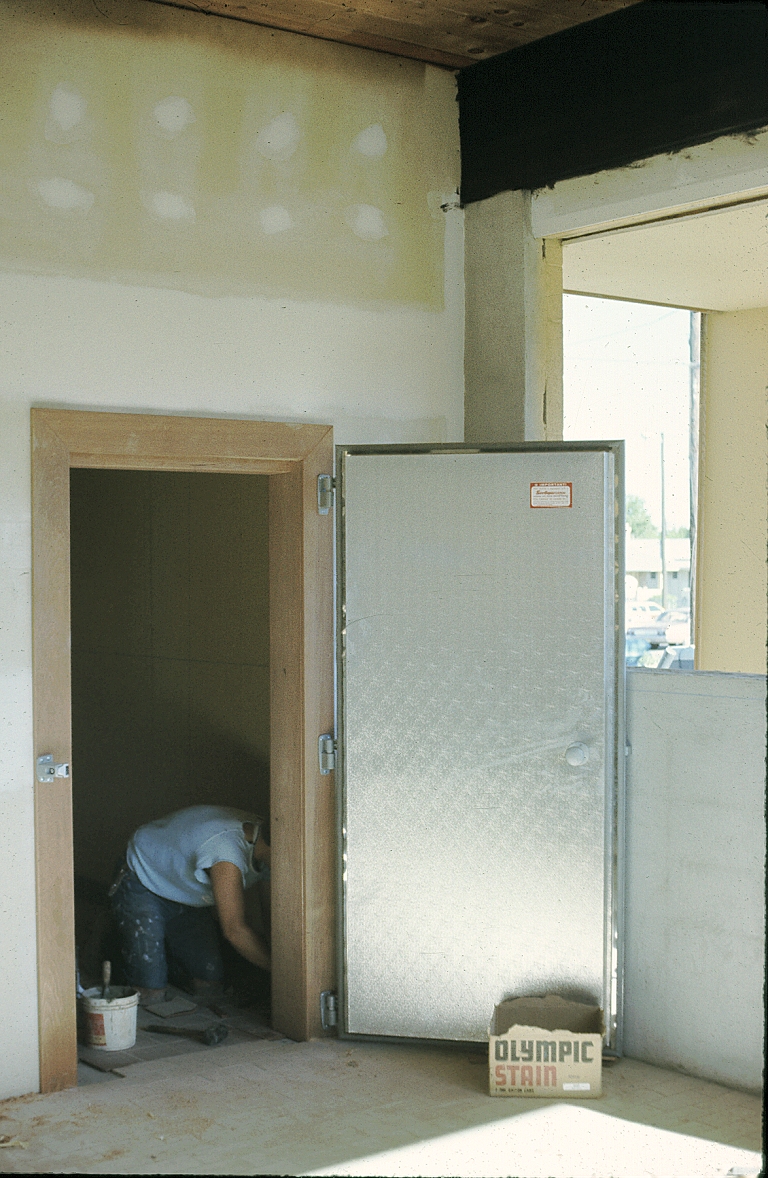
Ratskeller - Walk-in Fridge

Finishing the walk-in refrigerator

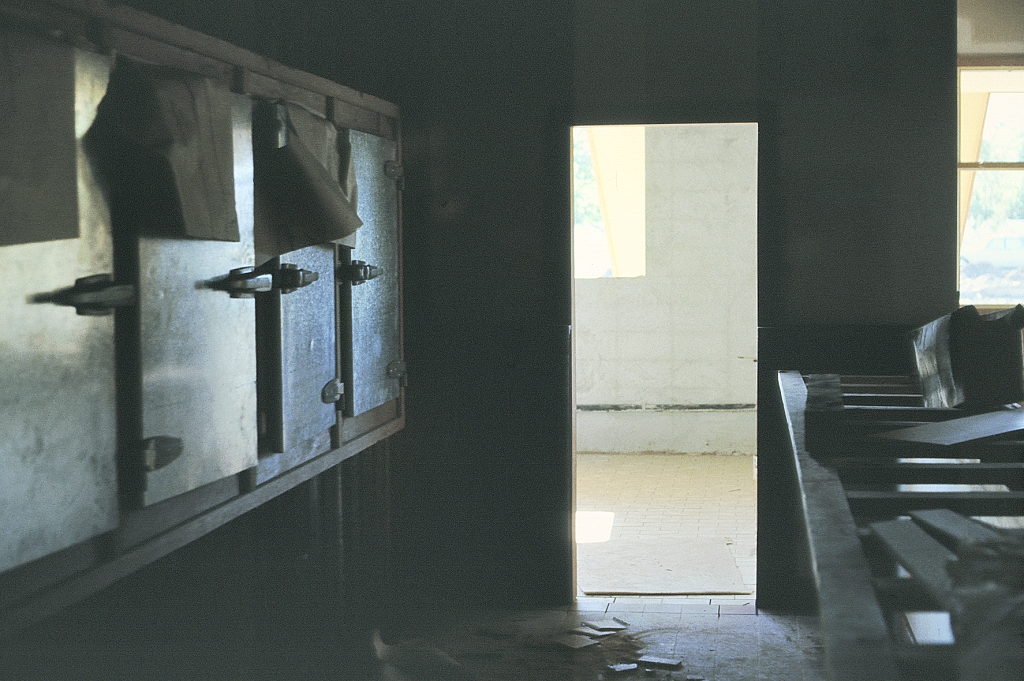
Ratskeller Bar & Kitchen

Behind the bar and looking into the kitchen. From those doors were dispensed bottles of Budweiser, Heineken, and Beck’s beer.
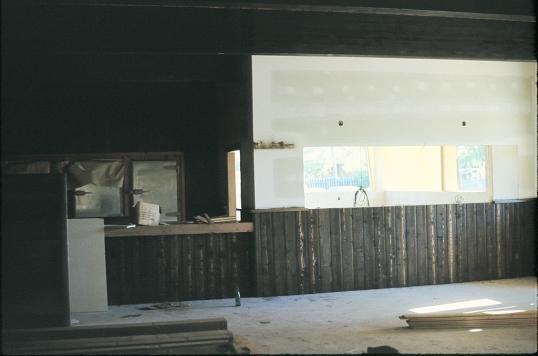
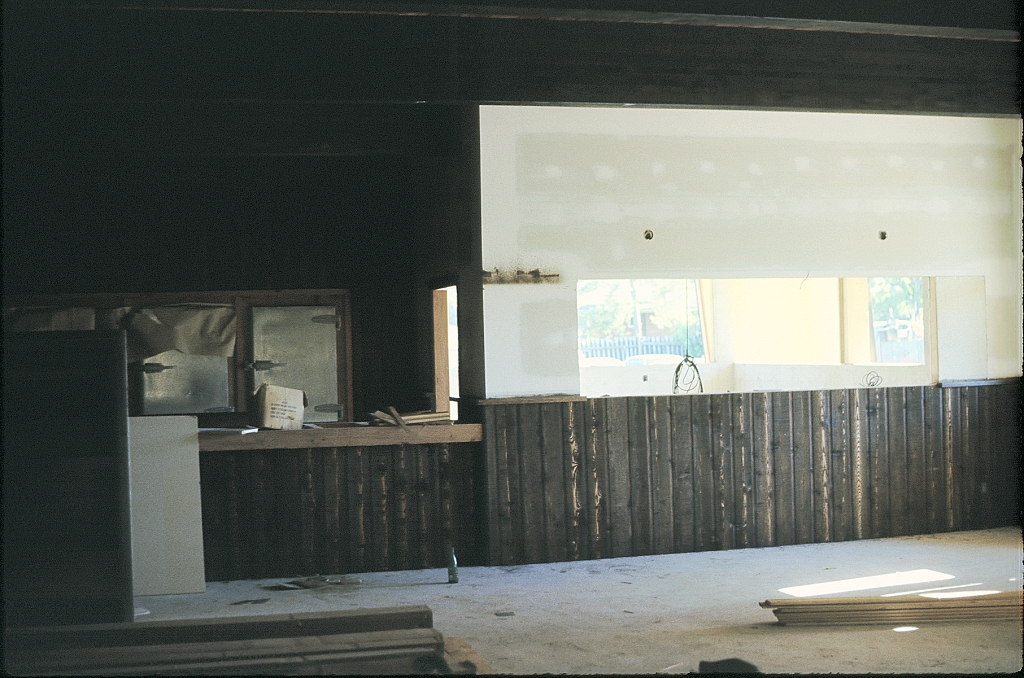
Ratskeller Kitchen and Bar

The bar (left) and serving window (right)
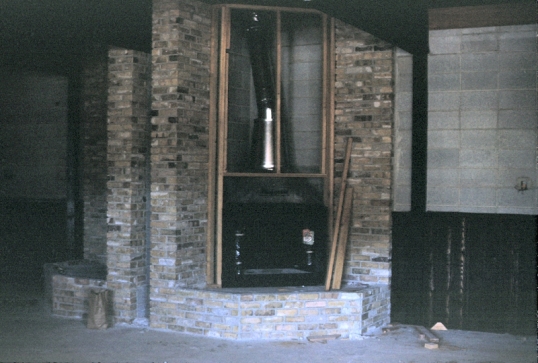
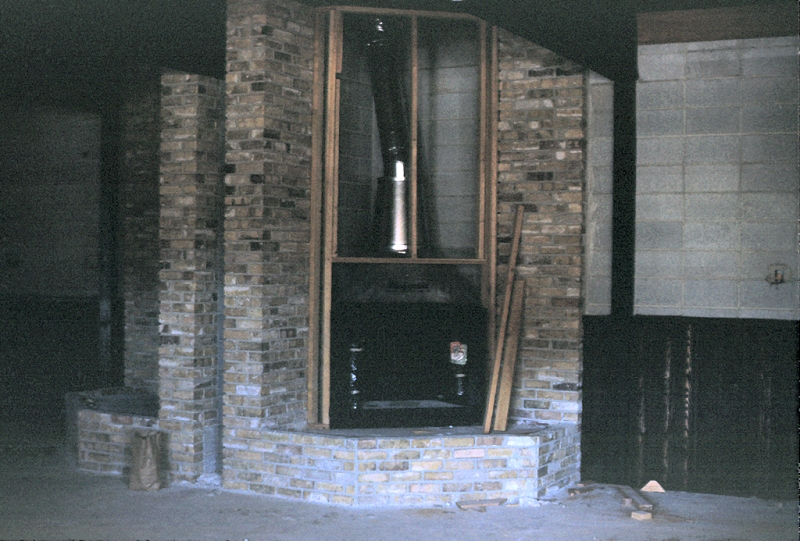
Ratskeller fireplace

The fireplace being framed in.

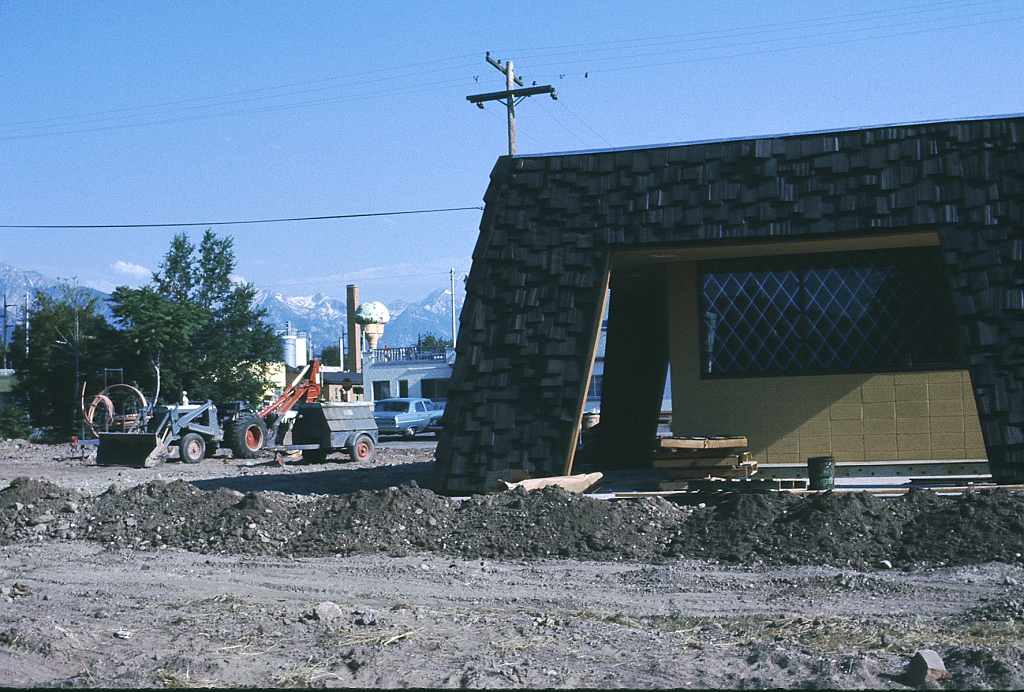
Ratskeller Pizza Shop on 2100 South, looking South

Restaurant construction looking south – you can see the Snelgrove’s sign in the background.
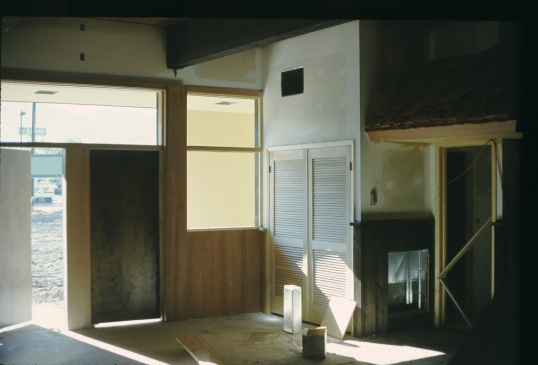
Ratskeller Main Entrance

Front entrance

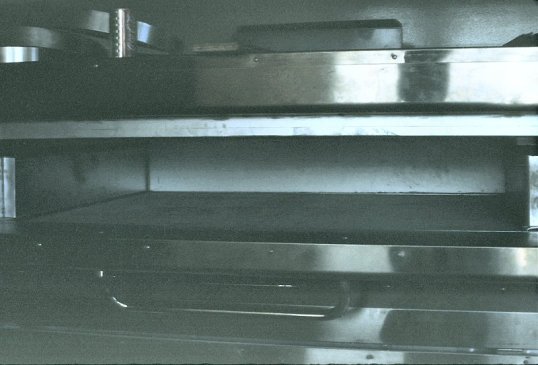
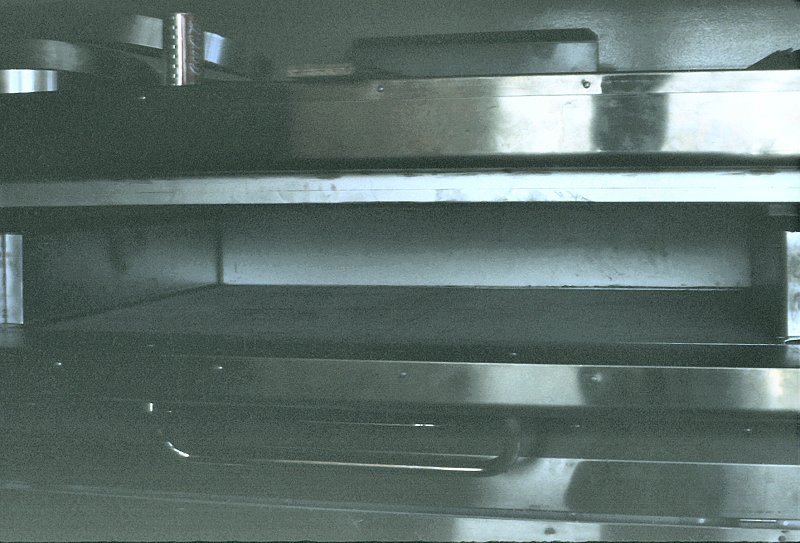
Ratskeller - Oven

Pizza Oven

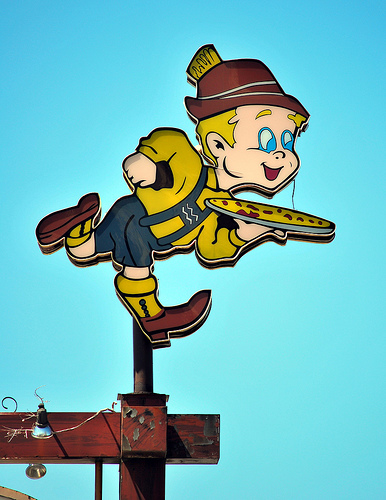
Ratskeller Sign Large

Ratskeller Logo

The first two shops were managed by Roy’s nephews, Michael and Don Pope.
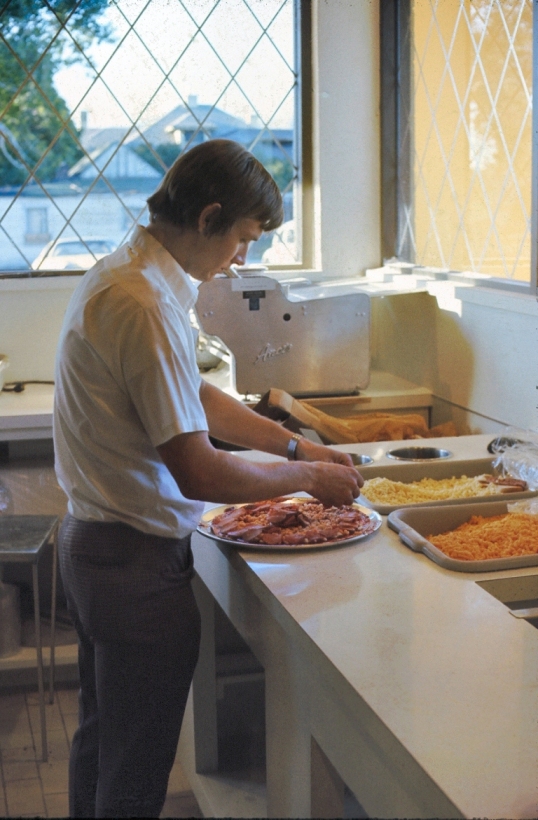
Michael E. Pope makes the first pizza - 1973

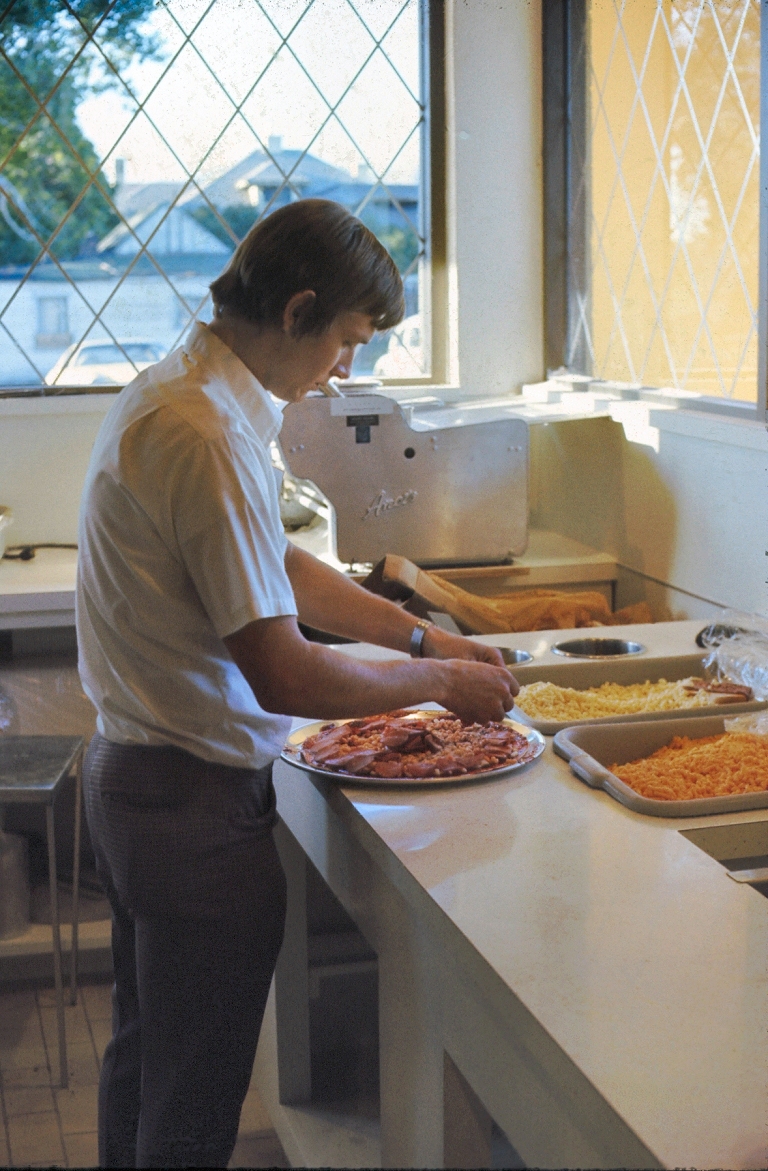
Mike creating the first pizza at the Sugarhouse location. Notice the dough-roller on the back table; windows were arranged so that customers could watch the entire pizza creation process, and rolling out the skins was always an attraction.

Ratskeller pizzas were made differently from any other I had experienced. The sauce was a proprietary blend of spices created by Roy and his mother, Grandma Moore, (the latter also being responsible for a kick-ass Roquefort dressing.) The spice packets were mixed up off-site, and transported to the restaurants where they were combined with brown sugar, red dye, and tomato sauce in large plastic barrels. The sauce was thick, and applied to the pizza skins with a large basting brush.

The cheese used was nothing extraordinary, but a mixture of about 75% mozzarella and 25% cheddar was used, each being crumbled through a grinder (you can see the two cheeses in the bins above.)
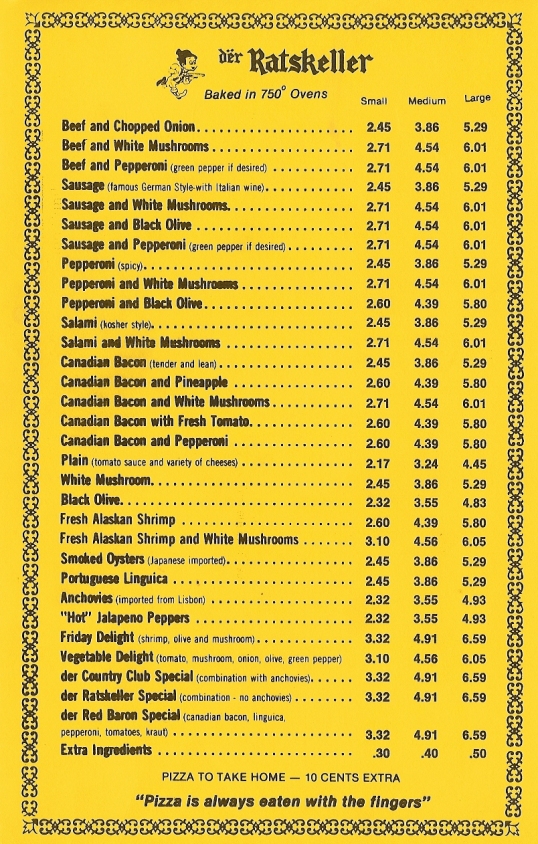
Ratskeller Menu Inside Right

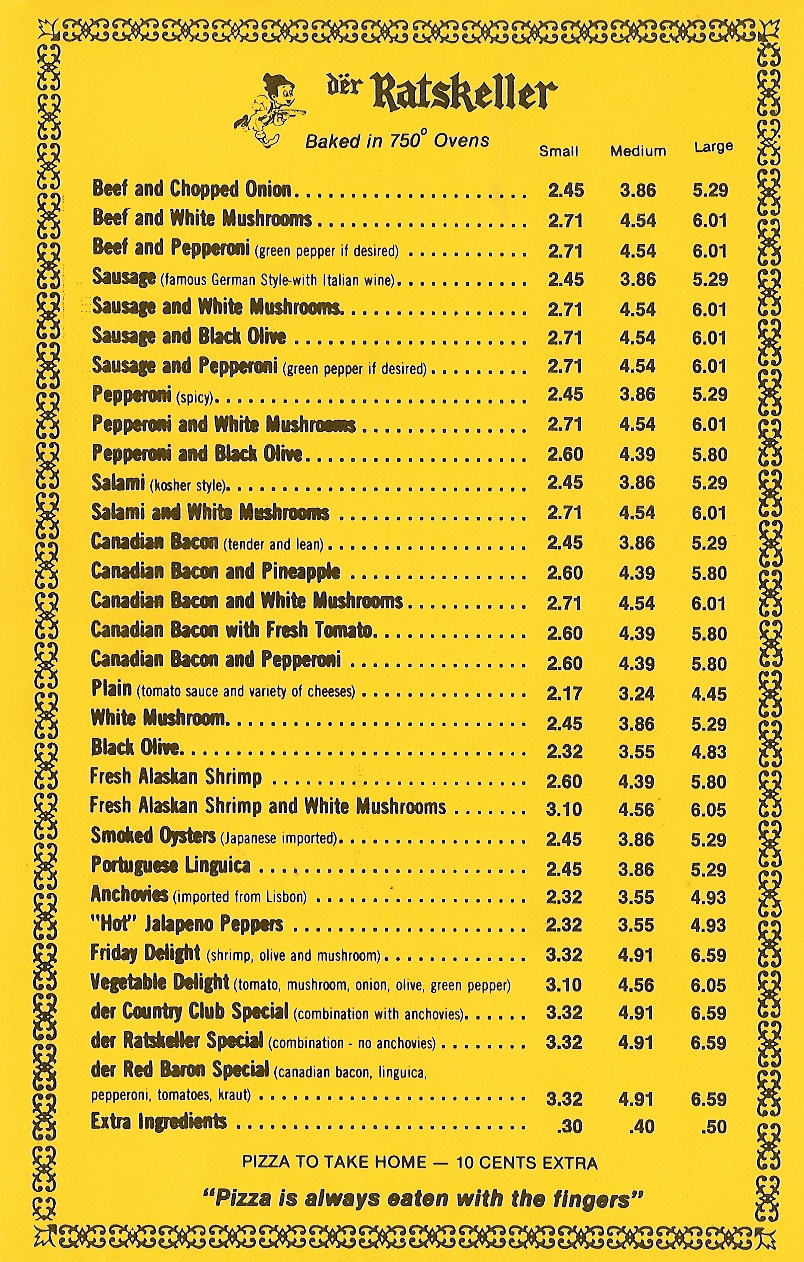
The menu above shows a later iteration of the restaurant’s offerings than they served in the first two stores, but most of the old standbys were there.

The Ratskeller made an effort to use only the best ingredients. They used Hormel dry Italian salami and pepperoni, which was sliced at the restaurant for freshness. The ground beef was mixed with red Burgundy wine, onions, salt and pepper; and the sausage was mixed with Sauterne, salt, pepper and caraway seeds. Abundance was the watchword. A “Rat” was made by loading a crust with sauce, cheddar and mozzarella; placing salami on the pizza as closely as possible without overlapping the slices; and then filling in all the gaps with pepperoni so that no cheese was visible. Heavy amounts of beef and sausage were added, followed by mushrooms, split black olives (placed by hand, face down!) and if desired, onions and green peppers. A pepperoni pizza was made such that the entire surface of the pizza was covered with meat – no cheese visible. The Country Club was a Ratskeller combination with anchovies. Portuguese linguiça was a specialty sausage that was not available at other pizza restaurants.

The pizza crust was also unique, and that I can tell you how to make – at least, in 50-pound batches.

42.5 lbs flour
1 C Powdered Milk
1 C Salt
1 C Sugar
1 C Diastatic Diamalt
6 oz. active dry yeast
2 lb. lard
3 gal. hot water
2 T. baking soda

The lard was melted in the hot water in a large commercial mixer, and the other dry ingredients (except the flour) were added. When everything was mixed, the flour was put in – we never weighed it, but you got a feel for where to pinch the 50-lb bag off to get just the right amount. Mixing dough was more of an art than a science – you mixed it until it looked like it was still too dry, and then dumped it out into a large plastic bucket lined with a plastic bag, and left it to rise overnight. In the morning it was perfect – and when it was punched down, it would exhale enough carbon dioxide to asphyxiate the entire Chinese army, or give a kitchen worker a real buzz (but you never heard that from me).

The dough was then rolled out with an industrial roller into a ribbon about 17” wide, and the skins were cut out with huge cookie-cutters, well-floured, pierced, stacked on pizza tins in groups of a dozen, and refrigerated. These could then be peeled off and loaded as needed. Rolling skins was also an artistic venture, and I learned from the fastest roller in the company, Bill Medlin.

For your gratuitous pleasure, here’s the same recipe cut down to family size:

Proportional Recipe (Makes 2 crusts)

3 C flour (1 lb.)
1 ¼ tsp. Powdered Milk
1 ¼ tsp Salt
1 ¼ tsp Sugar
1 ¼ tsp Diastatic Diamalt
¾ tsp active dry yeast
4 Tbsp. lard
1 1/8 C water
1/8 tsp. baking soda

Into hot water, mix lard until dissolved. Add all dry ingredients except flour and mix until dissolved. Add flour. Mix until dough begins to form together – it may look too dry, but you don’t want to mix the dough until it’s soft and elastic like you would for bread dough.

Turn out into a greased bowl, cover, and let rise overnight.

Punch down, turn out, and cut into two pieces.

Roll out the crust with a rolling pin to 1/8” thick. You may want to fold the dough in half twice and roll it out a couple of more times. Pierce with a fork in numerous places to avoid bubbles. Load up and bake on a pre-heated pizza stone on the hottest setting your oven can manage.
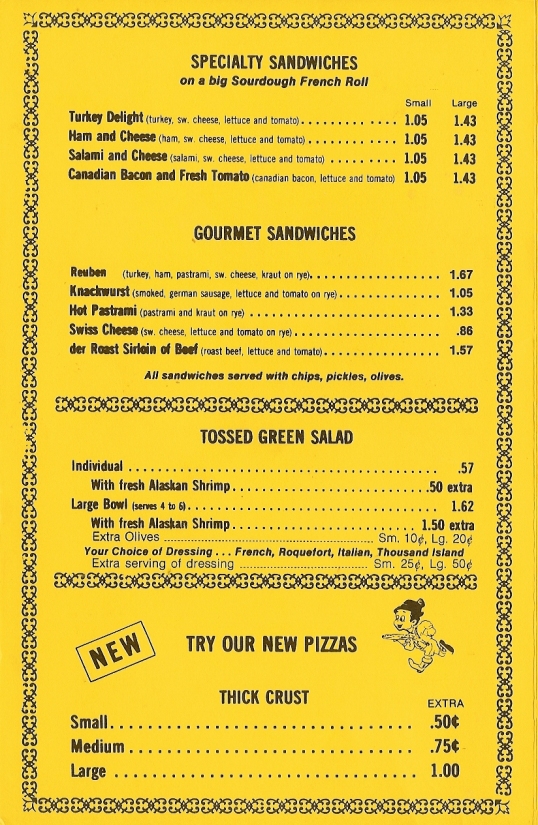
Ratskeller Menu Inside Left

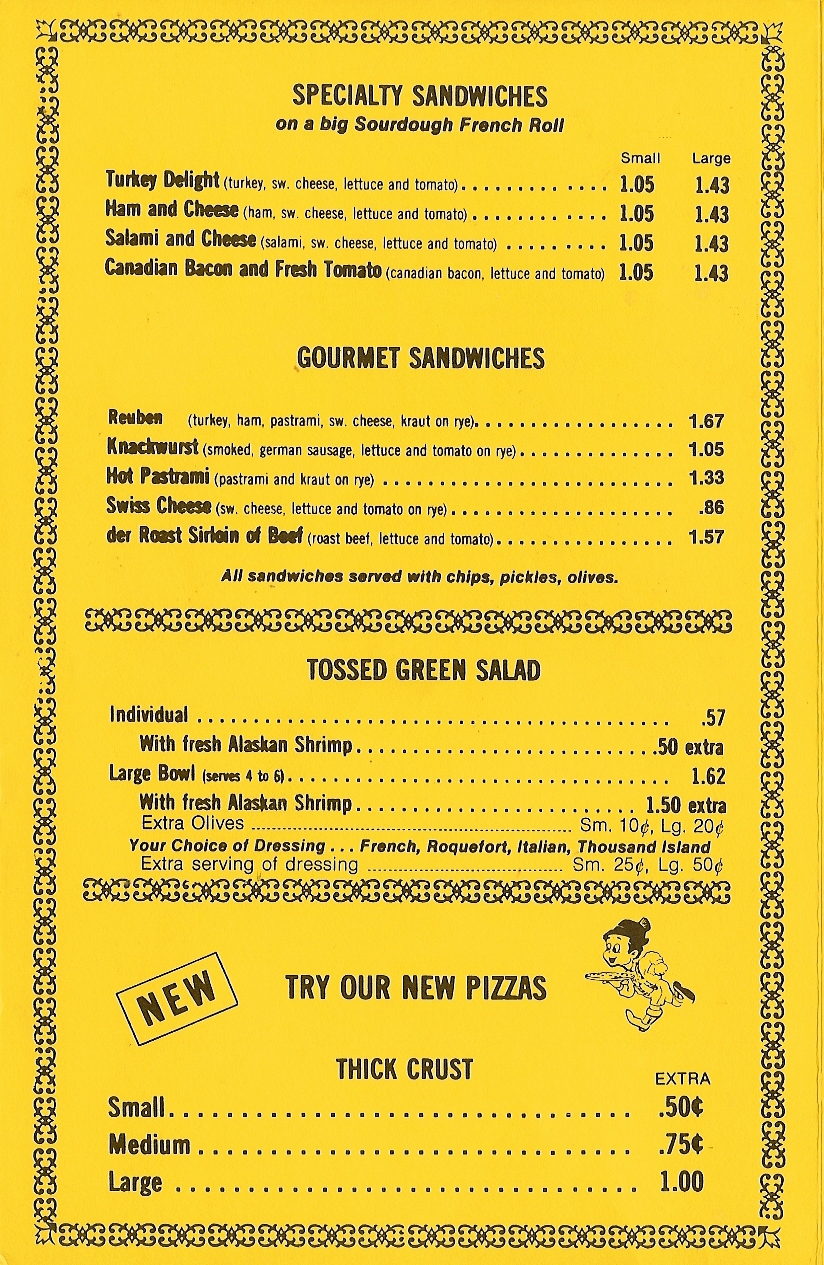
Ratskeller also made some really nice sandwiches, on French sourdough or nice rye rolls brought in from local bakeries. Working there for a full shift, you always got a meal – either a sandwich or a personal-sized pizza which you could make yourself, and I always experimented with numerous odd combinations. My favorite was Canadian Bacon with mushrooms, fresh tomatoes, and smoked oysters.

I lived on pizza for about three years. Mistakes were not common, because the staff was well-trained, but when one was made – either a wrong order or an overdone pizza – it was usually placed on top of the oven where it evaporated quickly. As I mentioned in another post, sometimes (not often), the guys in the kitchen would get tired of pizza, and we’d trade a bunch of food with the guys across the street at Piccadilly Fish and Chips.

As time went on, the restaurant opened branches across from the Salt Palace, in Millcreek, and in Cottonwood Heights. Working double shifts with no overtime got to be more than I could handle, and I left the Ratskeller in January of 1974 and moved to Pipes and Pizza. As a result, I’m not privy to the remaining story of expansion and decline, but I know the quality of the food was not an issue – they made the best American pizza I have ever had. My suspicion is that they expanded too far and too fast, had management problems in their additional locations, and that their generous formulas became economically unviable. Whatever the case, I remember their food with great fondness; as the company has not existed for decades, I wish dearly that I could get my hands on their sauce recipe for my own use at home. And I wouldn’t say no to that roquefort formula, either.

Oh, and that map I mentioned at the beginning? Here it is, showing the nearest pizza chain of the most popular national brands:

tumblr_mvxouxvAMK1rasnq9o1_1280

An old forum acquaintance of mine, who went by the handle “Grassy Noel,” came up with the best pizza-related slogan I have ever heard:

“Pizza will get you through times of no answers better than answers will get you through times of no pizza.”

So If you’re distraught, this map will give you an idea of places you don’t want to be.

The Old Wolf has spoken.


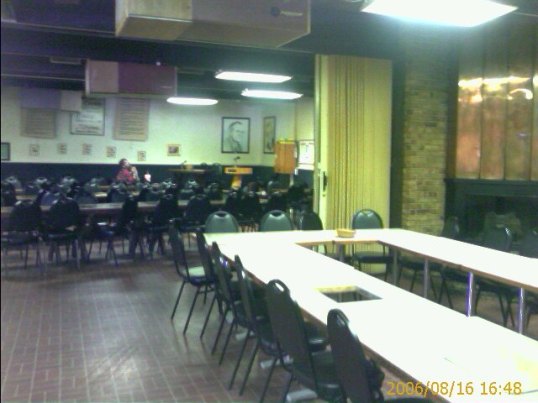
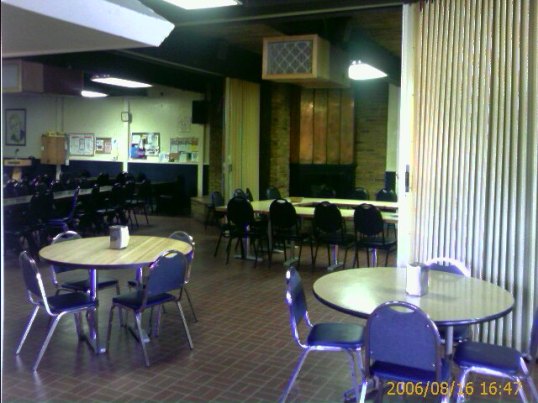
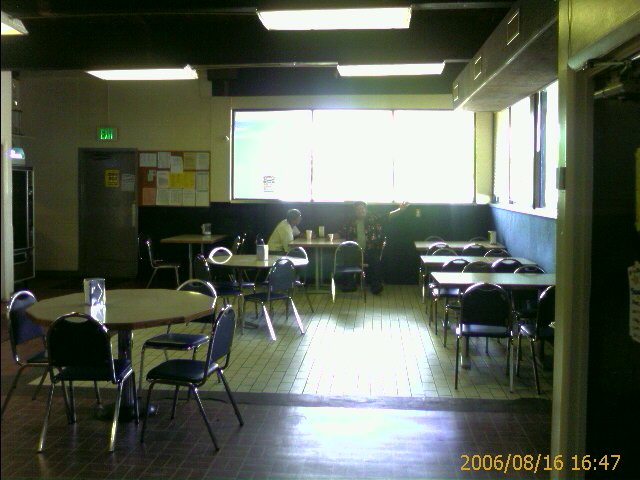
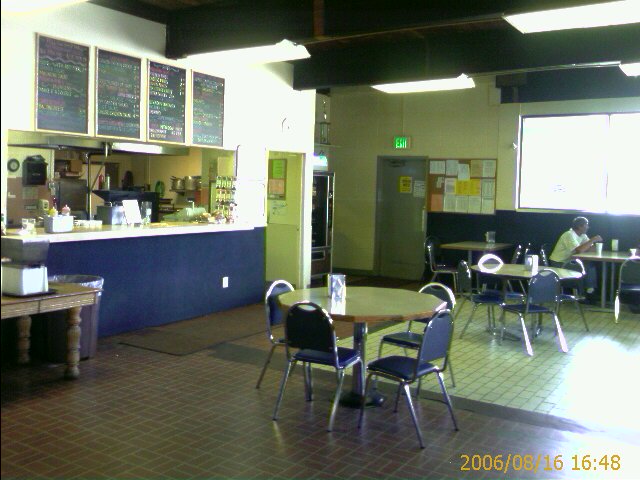
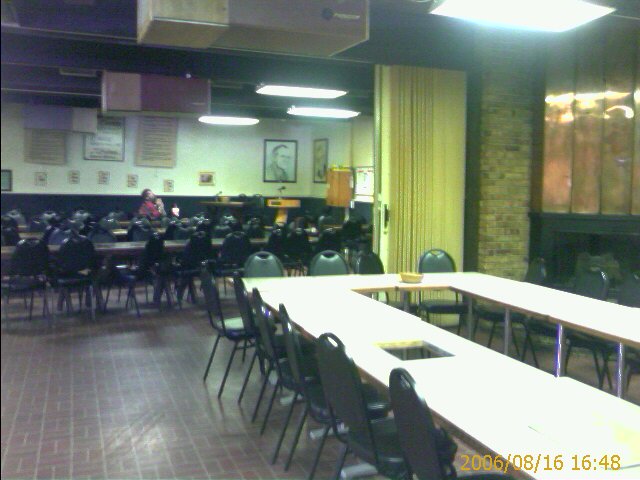
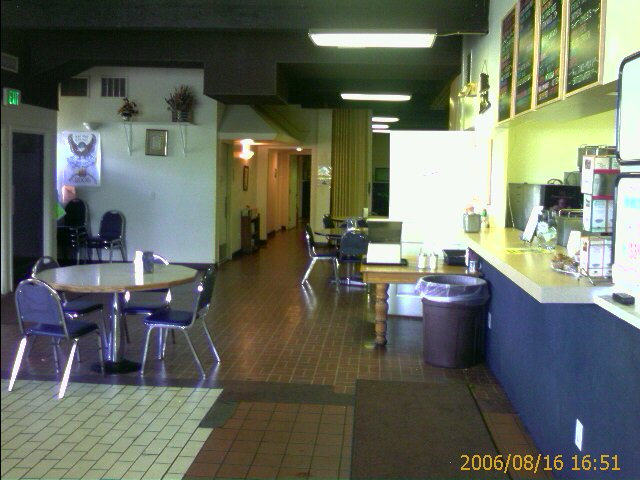
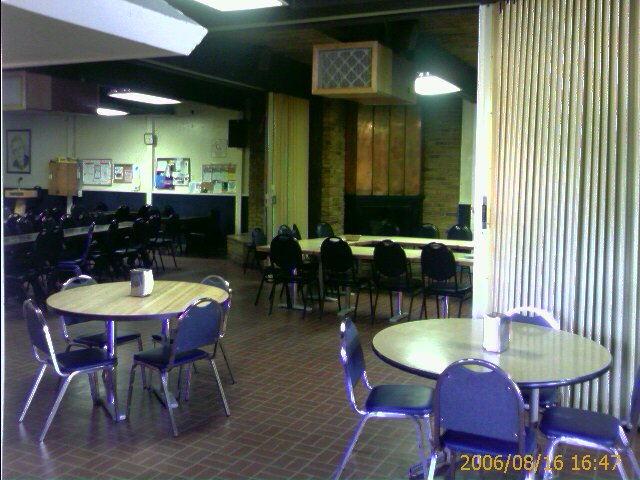
[1] Now a French patisserie, the Gourmandise. The Sugarhouse location became “Fellowship Hall,” a drop-in center for veterans where 12-step meetings were also held. The pictures below show the interior, and some features are still recognizable.
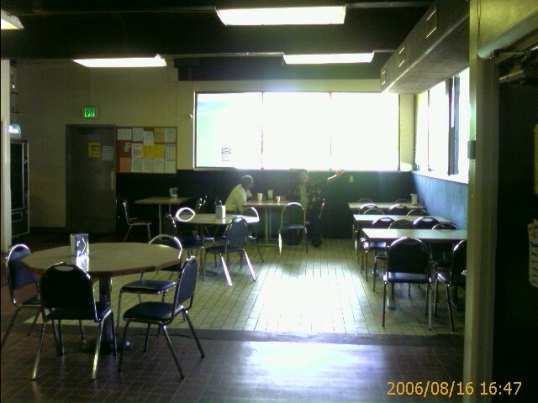
IMAGE_00002

The kitchen area converted into dining tables.
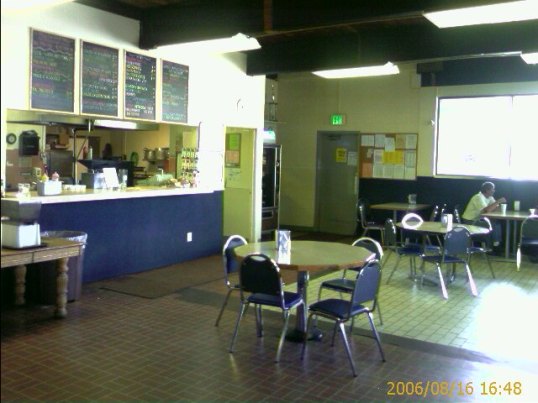
IMAGE_00003

IMAGE_00004

The fireplace and dining areas are still largely the same.
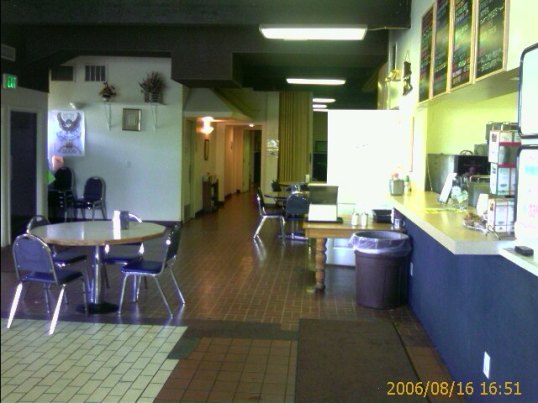
IMAGE_00005

Showing the rear office areas

Ratskeller Remodeled 2008

Dining areas
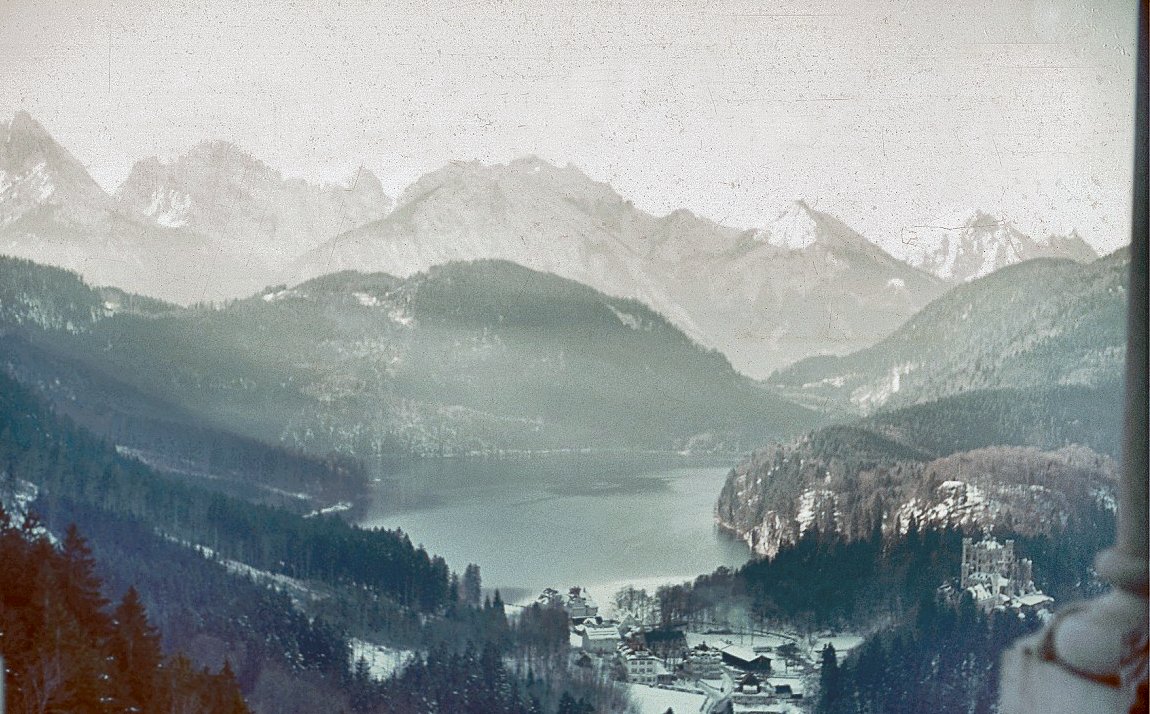
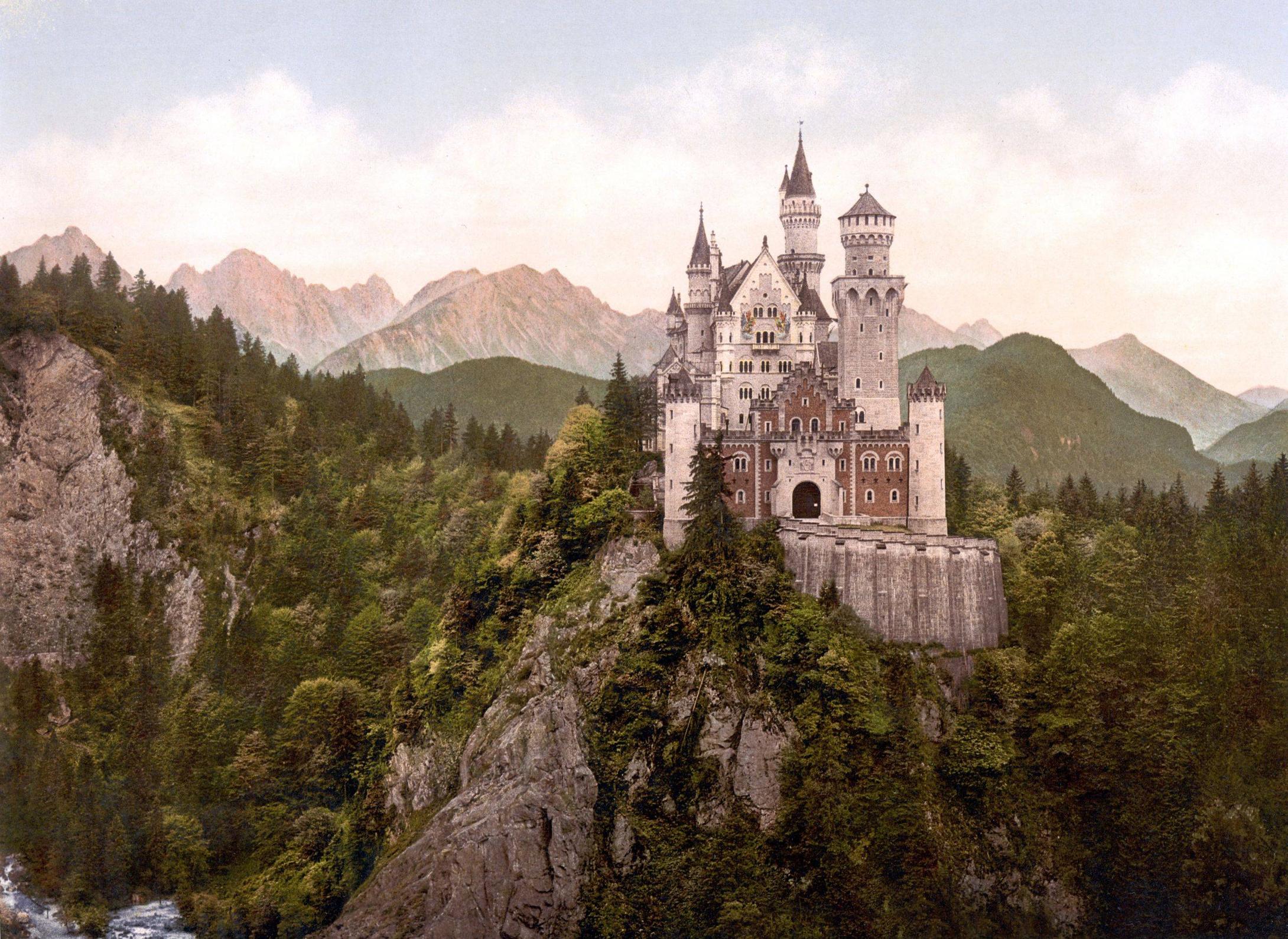
Neuschwanstein Castle, 1900

An old Photochrom of Neuschwanstein in Füssen, Germany.

iB3pikk

These were “colorized images produced from black-and-white photographic negatives via the direct photographic transfer of a negative onto lithographic printing plates. The process is a photographic variant of chromolithography, a broader term that refers to color lithography in general.” (Wikipedia)

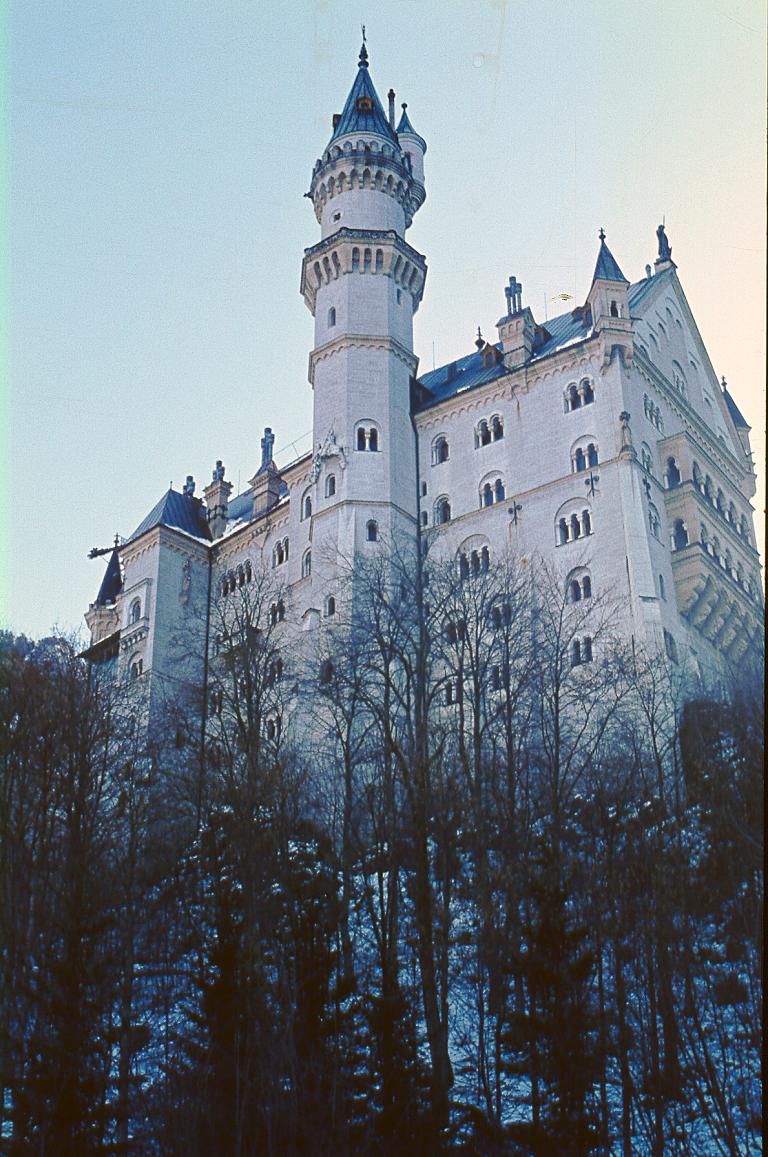
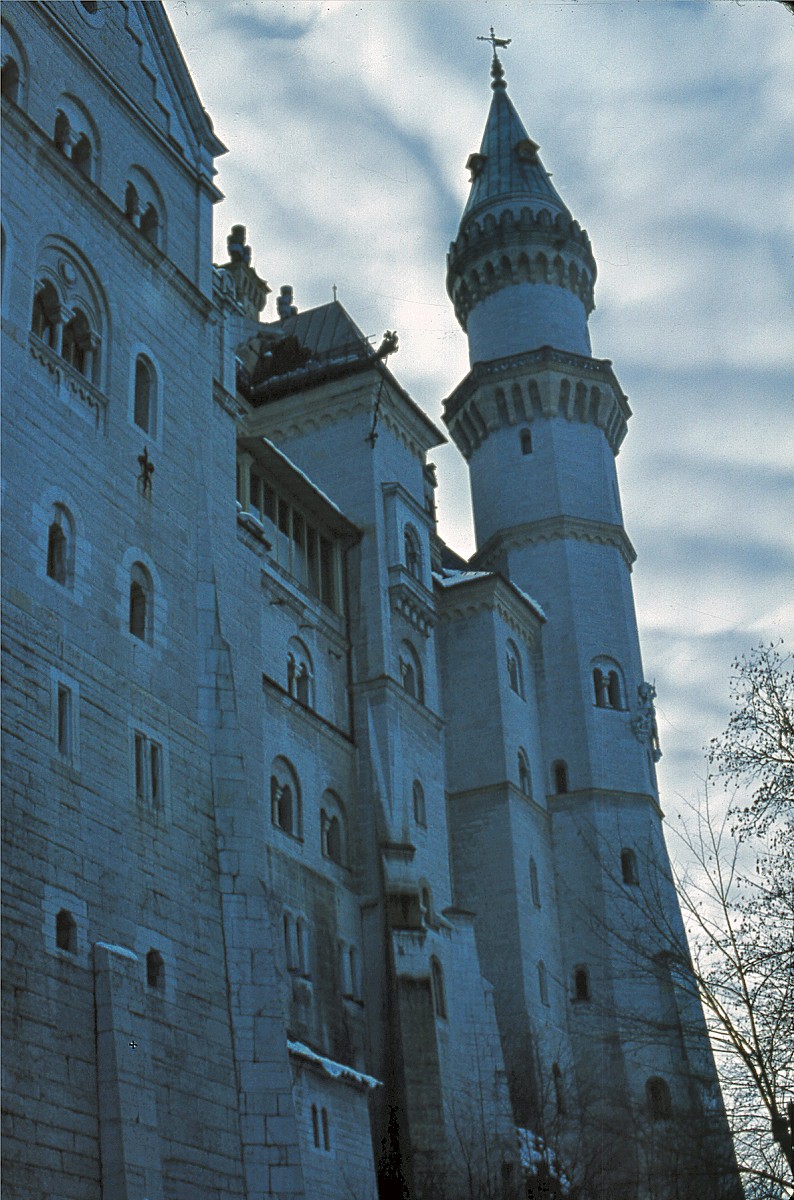
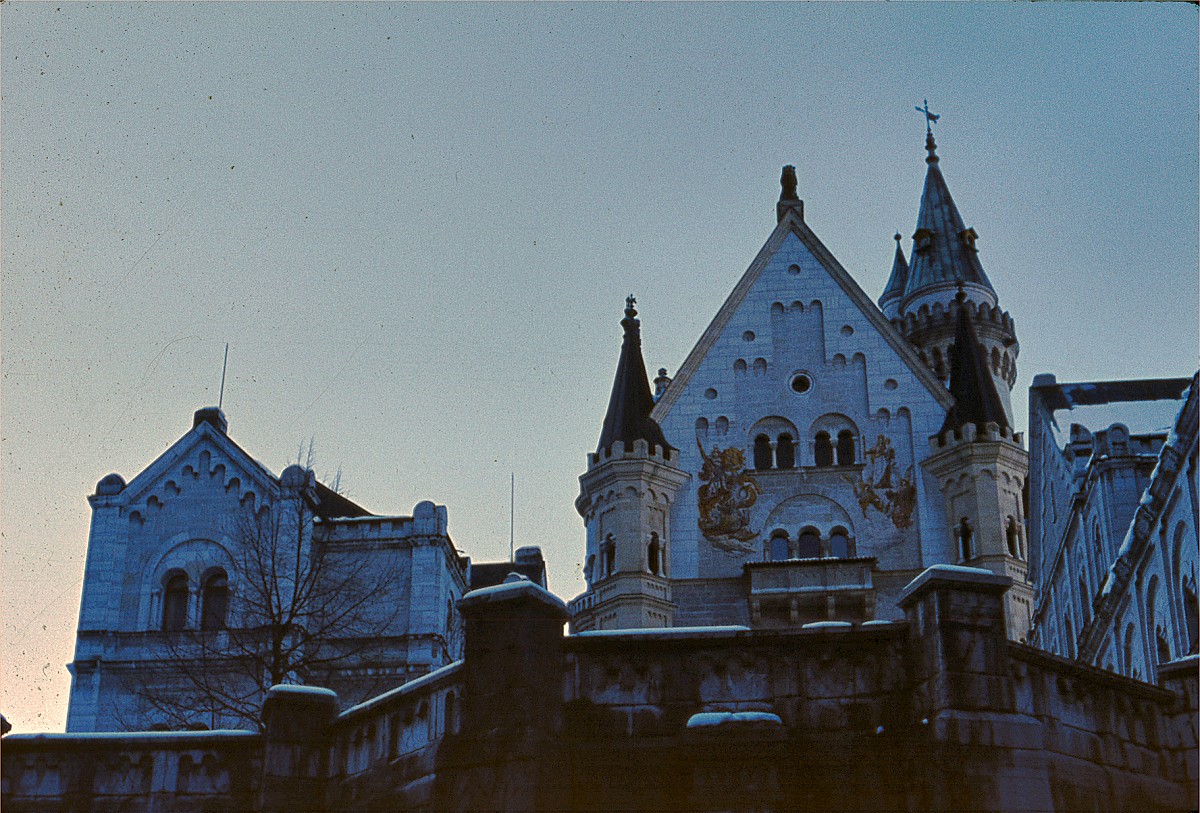
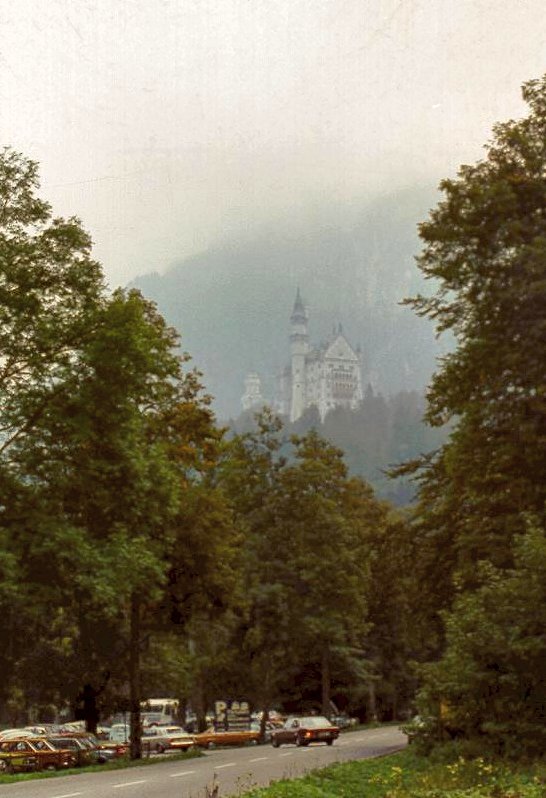
Below are a few shots I took from my visit to Neuschwanstein in 1976 – it was winter, and gray, so the colors are not spectacular, and my camera was basically hqiz, but I recall how wonderful it was to visit the “original fairy tale castle” that inspired Disney’s simulacrum.

Füssen - Schloß Neuschwanstein 2

Fussen - Neuschwanstein 2

Fussen from Neuschwanstein 2

Füssen from Neuschwanstein

Fussen - Neuschwanstein view

Füssen - Schloß Neuschwanstein in the mist - Cropped

Castle in the Mist

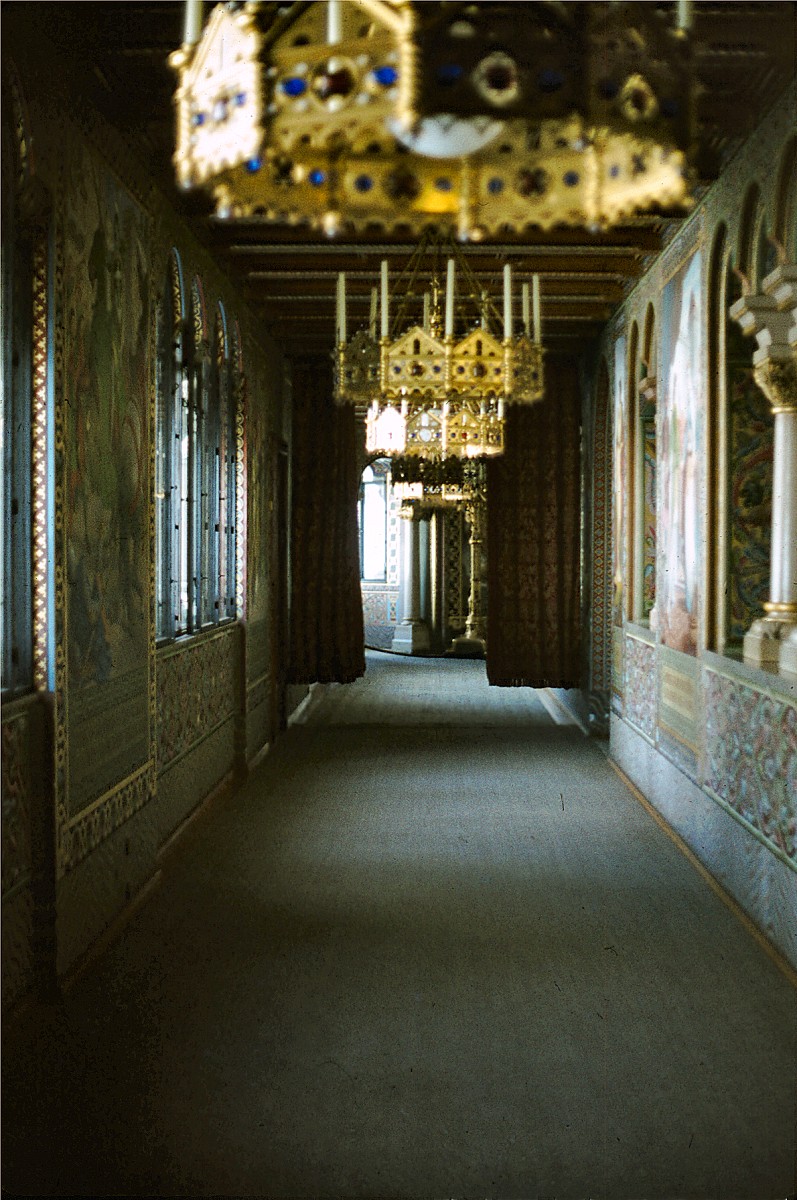
Fussen - Neuschwanstein interior

An interior hallway

I would pay large money to be able to explore the entire castle, turrets and all – most of those areas are off limits to tourists.
The Old Wolf has spoken.

A new twist on an old scam

511e834a1db5f.preview-300

I often return to the subject of Sweepstakes Fraud, because it’s an ongoing problem. A colleague of mine got stung just a couple of weeks ago, and she’s quite put out with herself. But we have to remember that the drones who perpetrate these ongoing advance-fee frauds, and many others, are very good at what they do – and all of us tend to be more trusting than not. That’s not necessarily a bad thing – Dr. Frank Crane once said,

“You may be deceived if you trust too much, but you will live in torment if you do not trust enough.”

But forewarned is forearmed, and there *are* things we can do to protect ourselves against these bottom feeders.

A new twist to the old game has surfaced recently – any time there’s a good thing, you can be sure that scumbags will twist it to evil purposes. This time it’s the MoneyPak Green Dot card.

Generic_MoneyPak_Front

Instead of being asked to wire “taxes” or “fees” to claim your multi-million-dollar prize via Western Union, now you’ll be asked to go to WalMart (the preferred destination, because it’s ubiquitous and familiar), load up one of these cards with cash, and then give the scratch-number on the back to the scammer. Poof! Your money’s gone.

Like Western Union, MoneyPak is a legitimate business. They have the following warning on the front page of their website:

How to Stop A Scam:

Use your MoneyPak number only with businesses on our approved list. If anyone else asks for your MoneyPak number or information from your receipt, it’s probably a scam. Don’t give your MoneyPak number to pay for something you buy through the classifieds or to collect a prize or sweepstakes. Do not give away your receipt information to another party either. If you give your MoneyPak number or information about the purchase transaction to a criminal, Green Dot is not responsible for paying you back. Your MoneyPak is not a bank account. The funds are not insured against loss.

Whatever method there is for moving money around, bad people will exploit it. The mantra we must continue to chant is:

  • Never pay money up front to claim a prize.
  • Never send money to unknown people via Western Union or any other similar method.
  • Never disclose financial information over the phone.

Be careful out there, it’s a jungle. Protect your loved ones, especially the old and vulnerable.

The Old Wolf has spoken.

Fail to stop at a stop sign; get repeatedly raped (legally)

This article is reblogged from TechDirt. Click through for the full article, including legal complaints and other documentation.

Edit: At least the poor guy was compensated to some degree. Hidalgo County and Deming coughed up $1.6 million to settle the suit. However, no disciplinary action was reported.

This is one of the most disgraceful abuses of power I’ve heard of in recent times, and some of them have been pretty bad.

I call for the immediate dismissal of the officers involved, and criminal charges to be filed against them, as well as against the doctors who performed these illegal, invasive procedures without the consent of the victim. Oh, and did I mention that the Gila Regional Medical Center is billing the victim for the invasive, non-consensual medical procedures and has threatened to take him to collections for non-payment?

By the holy skull of Mogg’s grandfather, this is beyond belief.

——————

Cops Subject Man To Rectal Searches, Enemas And A Colonoscopy In Futile Effort To Find Drugs They Swear He Was Hiding

from the a-vulgar-display-of-power dept

This post is going to be very short on commentary because the hideous abuse of justice has basically rendered me near speechless.

David Eckert, a resident of Deming, NM, was pulled over by police officers after failing to come to a complete stop at a stop sign. For whatever reason, the officers decided Eckert was hiding something, or perhaps they were unsatisfied that a routine stop hadn’t blown up into something bigger.

They asked him to step out of the car and then searched his vehicle (without his consent). Another officer brought in a drug dog which reacted (a relatively worthless indication of anything — drug dogs can easily be “alerted” by their controlling officers) to the driver’s seat. (Eckert’s lawyer calls into question this dog’s training, presenting documents that claim to show it hadn’t received the proper field training and recertification. See exhibits listed under docket item 27.) Then the officer “observed” that Eckert was standing “erect with his legs together” and his “buttocks clenched.” This was all the justification the Deming police needed to subject Eckert to the following horrific chain of events at a hospital in neighboring Silver City.

1. Eckert’s abdominal area was x-rayed; no narcotics were found.
2. Doctors then performed an exam of Eckert’s anus with their fingers; no narcotics were found.
3. Doctors performed a second exam of Eckert’s anus with their fingers; no narcotics were found.
4. Doctors penetrated Eckert’s anus to insert an enema. Eckert was forced to defecate in front of doctors and police officers. Eckert watched as doctors searched his stool. No narcotics were found.
5. Doctors penetrated Eckert’s anus to insert an enema a second time. Eckert was forced to defecate in front of doctors and police officers. Eckert watched as doctors searched his stool. No narcotics were found.
6. Doctors penetrated Eckert’s anus to insert an enema a third time. Eckert was forced to defecate in front of doctors and police officers. Eckert watched as doctors searched his stool. No narcotics were found.
7. Doctors then x-rayed Eckert again; no narcotics were found.
8. Doctors prepared Eckert for surgery, sedated him, and then performed a colonoscopy where a scope with a camera was inserted into Eckert’s anus, rectum, colon, and large intestines. No narcotics were found.

At no time did Eckert give his consent to these searches. The police did obtain a warrant to rectally search Eckert but that warrant itself was problematic. For one, it was severely lacking in probable cause. For another, it was valid only for Luna County but the searches were executed inGrant County. Third, the warrant was only valid for four hours, up until 10 pm that night. Eckert was held for 14 hours and, according to medical records, prep for the colonoscopy didn’t even commence until 1 am the following day.

Why the venue shift? Because the doctor at the Deming hospital told officers the proposed search was “unethical.” Drs. Robert Wilcox and Okay Odocha of the Gila Regional Medical Center apparently had no qualms about forcibly “searching” Eckert eight times.

There’s more in Eckert’s complaint, including the fact that the second x-ray was of his chest, an area completely unrelated to the region where he was supposedly “concealing drugs.” In addition to what can be proven from medical records and police reports obtained by Eckert’s attorney, there are additional allegations that the officers Chavez and Hernandez mocked him and made derogatory comments about his “compromised position.” They also allegedly moved the privacy screen repeatedly to expose him to others in the hospital hallway. This verbal abuse apparently continued during Eckert’s ride back to the Deming police station. Understandably, Eckert now claims to be “terrified to leave the house” and does so “infrequently.”

There are many lawsuits filed where most details are alleged. This isn’t one of them. Most of what’s “alleged” by Eckert is documented by the routine paperwork that accompanies medical procedures and search warrants. And, to add insult to injury, KOB4’s news team states that the Gila Regional Medical Center is billing Eckert for the invasive, non-consensual medical procedures and has threatened to take him to collections for non-payment.

The only question that remains is why no one involved on the “law” side ever thought that anything past the first step on the list above might be excessive. These officers, along with two shamefully compliant doctors, went as far as they could to humiliate and violate someone simply because they could — in a collective effort that looks far more like making Eckert pay for the “crime” of making the cops look stupid than any sort of legitimate law enforcement effort.

The mind reels at the human corruption and institutional evil that allowed this travesty to take place.

Contact the Gila Regional Medical Center:

Complaint, send to our Patient Advocate: patientadvocate@grmc.org

Contact the Deming Police Department

700 E. Pine St. Deming NM 88030
Phone: (575)546-3012
Fax: (575)546-0503

Contact the Hidalgo County Sheriff

Saturnino Madero

720 E. 2nd Street
Lordsburg, NM 88045
575.542.3833
575.542.3143  FAX

The victim is suing for damages, and I hope he prevails beyond all expectations. A large settlement is the only thing that will make the various parties to this abomination sit up and take notice.

The Old Wolf has spoken.

Just Imagine: Assembling a telephone

I had a wonderful few minutes watching this old stop-motion film from 1947 showing how a telephone was put together. The music was great (although I couldn’t help seeing Wilson, Keppel, and Betty dancing off in the wings somewhere.)

The old dial phones had quite a few parts, didn’t they? But on the gripping hand, they were built like tanks and lasted pert’near forever.

The Old Wolf has spoken.

When the earth decides to let go.

On March 14, 2010, rain-sodden ground on a hillside to the west of Maierato in Calabria, Italy, had had enough of fighting with gravity, and slid into the valley below. The slide was captured by an amateur photographer amid the cries of people to Run! Run! and various oaths to “Madonna santissima!” The video is truly chilling – we don’t expect good old terra firma to let go like that under our feet – it’s like a river of earth.

Fortunately for the village, the hillside was undeveloped except for agriculture; still, there was a lot of damage to the neighboring village.

10_02 Italy 1

Maierato before the slide.

Maerato2

After.

If you have Google Earth, just do a search for Maierato, Calabria, Italy – being able to see the elevation and move around the area gives you a good idea of the lay of the land.

For no reason, here’s another video of an epic landslide captured in France:

And one more:

This is the 1993 Pentai Ramis landslide in Malaysia. The landslide took place in an abandoned open cast tin mine close to the coast. This area of Malaysia is well known for its tin mining industry. The video footage shows the rapid collapse of the working face closest the sea, allowing complete flooding of the mine and forming a new cove measuring approximately 0.5 km2 (0.19 sq mi). Although the video quality is poor, the impact of watching this much earth move is powerful – it just keeps going, until the ocean floods in.

The Old Wolf has spoken.

The Hillside Letters

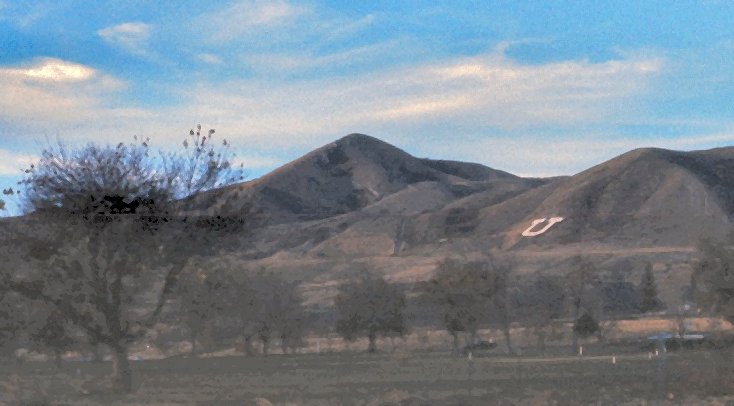
If you have never been in the great West, a local phenomenon may raise your eyebrows as well as a few questions. You’ll see huge letters all over the mountains and hills – some large, elaborate, and concrete, others not much more than the impression of thousands of feet wearing them into the soil. But they’re hard to miss once you get west of Denver.

From Wikipedia: Hillside letters or mountain monograms are a form of geoglyph (more specifically hill figures) common in the American West, consisting of large single letters, abbreviations, or messages emblazoned on hillsides, typically created and maintained by schools or towns. There are approximately 500 of these geoglyphs, ranging in size from a few feet to hundreds of feet tall. They form an important part of the western cultural landscape, where they function as symbols of school pride and civic identity, similar to water towers and town slogans on highway “welcome to” signs in other regions.

Block U 1971

University of Utah – Block “U” in 1971

Block U Illuminated

Illuminated for Homecoming. As with BYU (mentioned below), the Intercollegiate Knights had the privilege of whitening and lighting the Block U. The U was reconstructed a number of times, and the latest incarnation included plug boxes that allowed lightbulbs to be plugged in during homecoming. In this manner, the bulbs could be easily removed after an event and not left to the depredations of weather or vandals.

U

Block “U” as seen from Google Earth, the light plug boxes visible.

Block U Article

By 1974, the IK’s were an endangered species, but they did their best to keep the tradition going as long as possible. It was traditional during the famous rivalry games between the U of Utah and BYU for students to try to paint the opposing team’s letter the wrong color, which necessitated the whitewashing if efforts were successful – as well as repairing the effects of weather.

May 1973 - Block U 4

Here are six of the intrepid 9 who soldiered on. Below are three shots from an earlier event in October of 1967, showing the previous Block “U” before it’s refurbishing.

Oct 1967 - Block U 2

Oct 1967 - Block U 3

Oct 1967 - Block U

On to Provo…

BYU_East

The Block “Y” on the mountain above Brigham Young University

BlockYGoop

The “Block Y” illuminated at night with electric lamps. Originally the “Y” was lit with “goop,” balls of mattress stuffing mixed with oil; the Intercollegiate Knights service fraternity was responsible for this activity. Later students lit the “Y” with torches, and in the 70’s, for safety reasons, strings of lights were devised that allowed the letter to be lit up (usually at homecoming or during important athletic events) without the risk of fire on the hillside.

A lovely video which explains not only the history of the “Y” but also gives a feeling of why these letters are important to those who place them.

PaysonP

Payson High School – Payson, Utah

Battle Mountain

Sometimes you wonder if they were thinking. Battle Mountain, Nevada.

tumblr_mvkzx4bg9K1rasnq9o1_1280

Map of the block letters in the West. Click through for a list of where these letters can be found.

I grew up in New York City, but I’ve been in the West since 1969, and these ubiquitous letters have become part of my world. I wouldn’t recommend the expansion of the tradition eastward, as they do cause some damage to the areas where they are installed, but the ones that exist continue to be an expression of local pride and have a decidedly western flavor.
The Old Wolf has spoken.