Light shined into dark corners will make the cockroaches scurry for cover. Today we’re talking about Ketonic Labs Green Coffee Bean extract.
Executive Summary: This product is a fraud, this product is a scam, and this product is snake oil.
Here’s the spam email I got this morning:
The spam issue
In the first place, I shouldn’t be getting this junk because I’ve never done business with Ketonic Labs, Micronet Tech or Performemmbers.net. That’s the beauty of the toothless CAN-SPAM act passed by our amazing congressmen, it means that anyone “can spam” you by simply offering an unsubscribe link: thank you very little, you gutless cabrones. Comcast does a pretty good job keeping most spam out of my inbox, but image-based ads like this continue to slip through their filters.
The scam issue
Supplements are almost totally unregulated. You can claim that a product will give you wings and allow you to mate with sphinges (that’s plural for sphinx), as long as you tack on this little disclaimer: “These statements have not been evaluated by the FDA. This product is not intended to diagnose, treat, cure or prevent any disease.” The FDA will, in general, only come after companies whose ad copy actually does claim such things, despite the disclaimer, and they’ll only take the time to prosecute the biggest players because their resources are limited. But from where I sit, the email itself violates all the rules, and the web page is even worse.
Notice the almost-invisble “ADVERTORIAL” at the top of the page. I hate that word, for what it’s worth.
Melt away fat
Get high-school slim
Potent Fat Burner
Effective Appetite Suppressant
Works Quickly, Proven Results
Affordable Prices
Tremendous Weight loss results
Increase in Focus
Energy Throughout the day
No Crash
In short, these people, like hundreds of thousands of others, are dazzling you with weasel words and pseudo-scientific horsehockey, and it’s almost a guarantee that enough people in our country will believe it that they can recoup their costs and walk away with a tidy profit before moving on to another fraud. Make no mistake – they know they are shoveling out the barn- just have a look at this great disclaimer at the bottom of the page:
DISCLAIMER *THIS PAGE RECEIVES COMPENSATION FOR CLICKS ON OR PURCHASE OF PRODUCTS FEATURED ON THIS SITE. *The story depicted on this site and the person depicted in the story are not real. rather this story is based on the results that some people who have used these products have achieved. The results portrayed in the story and in the comments are illustrative and may not be the results that you achieve with these products. The depictions on this page are fictitious and indicitive [sic] of potential results. Actual results may vary.
Of course, none of this is new. People have been hawking snake oil since the earliest days:
The less educated a population, the more likely you are to be able to sell them anything. You’d think as the availability of information increases, people would become more enlightened, but the general trend in my own experience is downward; mass media caters to the lowest common denominator and good information on the internet is covered with a layer of bovine ejecta worthy of the Augean stables. The older I get, the more cynical I become about sales and marketing in general, and that’s a problem because I have products of my own to sell, and it’s a constant battle to figure out how to carve out market sector without being a douchebag.
With thanks to B. Kliban
Here’s the product label:
So what is Ketonic selling you for $50.00 a bottle? Caffeine, which has long been combined in numerous diet pills and combined with other quack ingredients including PPA, ginseng, green tea extract and countless others. Double-blind, placebo-based trials, however, seem to indicate that caffeine is not effective as a weight-loss aid. But please, don’t confuse us with the facts – where there’s money to be made, the marketers will sell you all they can.
Conclusion
There are some solid principles for losing weight, but as I have said elsewhere, there is no magic bullet. Do yourself a favor and stay away from the snake oil.
Update: It appears that I have found the solution to the problem below. It’s more detailed than I thought, but fairly simple.
The problem is not Bing itself, but a piece of camel ejecta called “conduit.”
Going to about:config and typing in “conduit” turned up a veritable plethora of infected entries (here I have already cleared the first three).
Right-clicking on each entry allows you to select a pick called “reset.” Once I had done this, and closed out Firefox, my URL bar search remained pointed to Google. I’m keeping my fingers crossed that the problem doesn’t return. For what it’s worth, it appears that the culprit that brought it along was uTorrent.
*yarg*
I’ve been over this before. On May 3rd of this year, I posted the following over at my Livejournal:
Hijacked by Bing once again – and what to do about it.
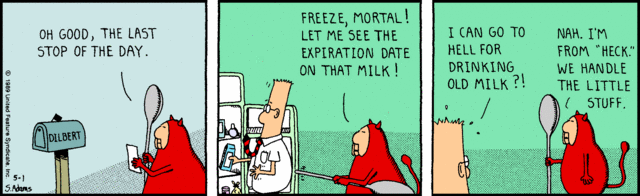
I have been told that it’s not becoming of a Christian soul to consign others to Hell, even in jest, regardless of the magnitude of their transgressions. Ultimate judgment does not rest in our hands, and in the end, we all fall short.
Heck, however, ruled over by Phil, the Prince of Insufficient Light, is another matter.
Every now and then, some piece of hqiz software that I install brings an unpleasant and unexpected “bonus” along with it: the infestation of my browsers with “Bing.”
My home page gets changed, my search engines get shuffled, my URL search bar default is hijacked, and I’m gifted with an unasked-for toolbar.
And mind you, I’m very careful when installing things to uncheck all the little extras that many packages hope you’ll opt-in for.
Surely people who write such installation packages deserve to spend Eternity in Heck.
If you’re a Firefox user and this has happened to you, here’s how to exorcise the demons.
1) Close Firefox, and via Control Panel, navigate to “Uninstall or Change a Program”. I’m using Win7 Professional, but all recent Windows operating systems have some variation of this. Look for and nuke anything that says “Bing” in it. This should get rid of the Bing toolbar.
2) Open Firefox, go to Tools/Add-ons. Look at both “Extensions” and “Plug-ins” and clobber anything that says “Bing” in it.
3) Next to your URL bar you’ll see something that looks like this:
By clicking on the little triangle, you’ll get a drop-down menu. Choose the option that says “Manage Search Engines.”
If Bing is there, make another option your default search engine, move it to the top, and delete Bing. Delete it hard, and sing “My Way” while you do it.
4) This is the tricky one, because it’s buried deep. If you type key words in your URL bar, you’ll be redirected to some Bing search helper.
In your URL bar, type “about:config” without the quotes
This will return the default URL search results to Google. If you want another search engine here, you’ll have to hunt around for the appropriate string – Google is all I ever use.
That should do it. If you execrate Bing as much as I do, perhaps you will find this useful if you have ever been “Bung.”
Now I really want to slap someone. That’s just downright dirty. I’ve searched my registry (Win7 Pro, 64-bit) and “search.conduit.com” doesn’t exist anywhere as a key. I’m totally at a loss to what to do next.
At least I was, until I finally found what I desperately hope to be the proper solution.
I’ve long had in my library a September 1958 National Geographic entitled “You and the Obedient Atom.” It’s an intriguing look at the scientific applications of nuclear radiation, and one of these has always intrigued me.
Using gamma rays to destroy micro-organisms that cause decay, the Army Quartermaster Corps preserves foods for weeks and months at room temperatures. When exposures are light, changes in taste are scarcely noticeable; gamma radiation does not linger.
Foods irradiated in Argonne’s pool (illustration not shown – Argonne National Laboratory near Chicago) and elsewhere were first fed to rats, without harmful effect. Later, military volunteers tried samples. Congressmen have eaten entire gamma-sterilized dinners.
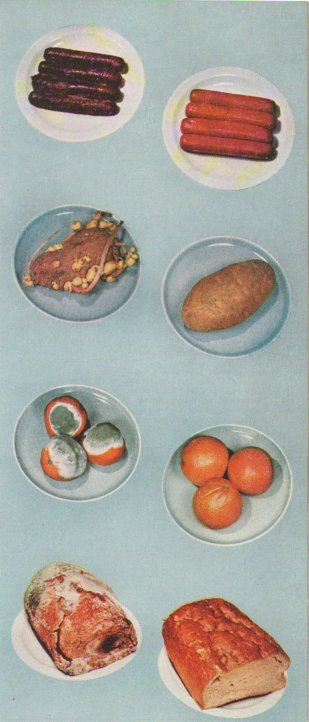
Both samples of frankfurters were kept three months in air¬tight plastic wrappers. Irradiated meat on right looks as fresh as ever. A potato sprouts six months after harvesting; in its opposite, sprouting is delayed. Treated oranges stay fresh and juicy. Moldy bread contrasts with a two-month-old treated loaf. The Food and Drug Administration has not yet certified gamma-treated foods for the market.”
National Geographic, September, 1958
Wow. What a way to reduce spoilage. Yet despite the massive consumer push-back against GMO’s or “frankenfoods,” we hear almost nothing about irradiation today. Doing a bit of research, I came across
Apparently foods treated by radiation will display the “radura”
And yet despite the initial approval by the FDA of irradiated foods for certain applications and continuing research showing its safety, I have never once in my life seen the radura on any food label, anywhere.
“Irradiation has not been widely adopted due to an asserted negative public perception, the concerns expressed by some consumer groups and the reluctance of many food producers.[47]
Consumer organizations, environmentalist groups, and opponents to food irradiation refer to some studies suggesting that a large part of the public questions the safety of irradiated foods, and will not buy foods that have been irradiated.[48]
On the other hand, other studies indicate the number of consumers concerned about the safety of irradiated food has decreased in the last 10 years and continues to be less than the number of those concerned about pesticide residues, microbiological contamination, and other food related concerns. Such numbers are comparable to those of people with no concern about food additives and preservatives. Consumers, given a choice and access to irradiated products, appear ready to buy it in considerably large numbers”
Irradiation works by destroying DNA, preventing microorganisms from reproducing or creating toxic byproducts. Obviously people are going to have concerns about consuming modified (destroyed) DNA in the same way as they will about consuming transgenic foods, but that doesn’t mean the issues are the same. Still, given what we know about how prions work and the devastating effects of BSE, people are right to be concerned enough to do their homework.
Given the relative paucity of irradiated foods on the market, it’s probably safe to say you are not likely to encounter any, but I’m going to do a bit more digging. If it is safe, it could go a long way to reducing food waste, which at this point reaches a level of about 40% of all consumables in the US alone.
“As you can see, I have memorized this utterly useless piece of information long enough to pass a test question. I now intend to forget it forever. You’ve taught me nothing except how to cynically manipulate the system. Congratulations.” -Calvin (Bill Watterson)
When I was in high school, I remember thinking similar things on a regular basis. Why in the world do I need to know this? And to some extent, it’s true. While I can remember the quadratic equation, I have never once needed to determine the roots of ax2 + bx + c = 0.
Funny thing about that. It seems to be a more popular perception than I thought.
This philosophy taken to its logical conclusion is probably what led Isaac Asimov to say, “There is a cult of ignorance in the United States, and there always has been. The strain of anti-intellectualism has been a constant thread winding its way through our political and cultural life, nurtured by the false notion that democracy means that “my ignorance is just as good as your knowledge.” (Newsweek, 21 January 1980).
However, Munroe’s alt-text for the above cartoon is “The only things you HAVE to know are how to make enough of a living to stay alive and how to get your taxes done. All the fun parts of life are optional.” That’s just what I was incapable of getting my head around at the time: oftentimes the only purpose in learning is to teach us how to learn, and what a joy that is in itself.
When I was a kid, librarians were held in high esteem. If you couldn’t find something you wanted you went to the librarian, who either knew the answer immediately or knew exactly where to find it. They were the living Wikipedias of the era, and they understood the joy of learning.
“Were man to live coeval with the sun, the patriarch-pupil would be learning still.”
-Young, “Night Thoughts.”
There’s something to be said for a broad-based education in preparation for choosing a career, but better than teaching endless rafts of facts in preparation for the almighty standardized tests, schools ought to be teaching kids how to learn and how to think and how to question; minds that can do this are the fertile seedbeds of innovation and social justice.
Warning: This is a very long post. I’m pulling together a lot of information from a number of different sources, primarily so I can solidify the memories. The core, however, is a tribute to some fine people who had a significant impact on my early development.
When I was about 8 years old, I joined a cub scout pack in New York City, back in the days when you first got a Bobcat pin for joining, and then earned your Wolf, Bear, and Lion patches. The Webelos patch (now called the Arrow of Light) was the last award, the bridge between the Cub and Scout programs. Kids today don’t know that Webelos stood for Wolf, Bear, Lion, Scout. My uniform pocket looked something like this:
Arnold Belais
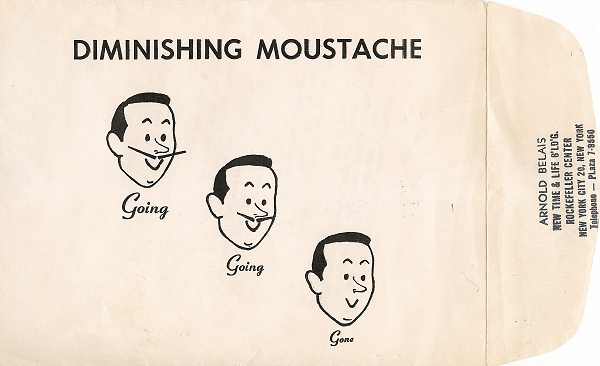
I wasn’t much for knots and pinewood derbies, and it’s hard to do scouting stuff in Manhattan, but I enjoyed the interactions and I learned a lot. The best part of the experience, however, came serendipitously when, in 1962, an old gentleman with a raspy voice gave me his business card – after showing me a magic trick with it.
I had unknowingly crossed paths with Arnold Belais, affectionately known to the New York magic crowd as “The Rube Goldberg of Magic.” And my life would never be the same.
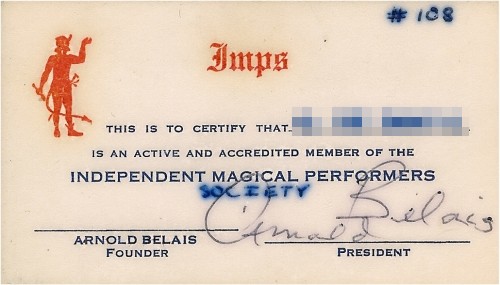
The Society of American Magicians was founded in 1902, but Arnold – an early member who joined that organization in 1912 – was interested in bringing magic to the youth – and that may have been why he was hanging around a cub scout pack. Right at that time, he was busy forming a feeder group for SAM, a club for young magicians called the IMPS (Independent Magical Performers’ Society), and I fell in love with the idea at once.
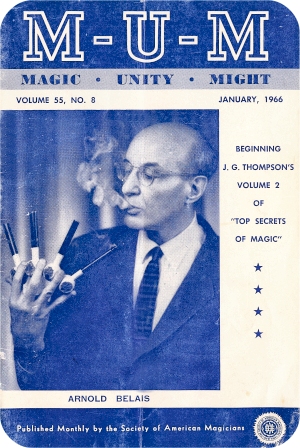
I also fell in love with Arnold, and was privileged to visit him and his dear wife Hortense in their New York apartment, where Arnold showed me his workbench where he tinkered together some of the most outrageous magic effects I have ever seen. His love of pipe, cigar, and cigarette magic also earned him the title “SmoKing.” He demonstrated his home-built “multiplying pipes” routine for me – I even got to hold those pipes, which appear in the picture below, and whoever ended up with that piece of equipment has a rare treasure.
Arnold was featured in the January, 1966 issue of M-U-M, the official organ of the SAM:
The article in its entirety by Leslie P. Guest follows:
Arnold Belais By Leslie P. Guest M-U-M, January 1966
Through his inventions and unusual routines, mostly dealing with cigars, cigarettes and pipes, Arnold Belais has earned the title of “Smo-King”; but among his many friends in provincial New York City he is affectionately known as “The Rube Goldberg of Magic.”
This is because Arnold is eternally experimenting, and coming up with weird concoctions of magic -halfbaked, un-rehearsed, but ingenious; and often snapped up and put to use by professional performers. Our perfectionist member, Dai Vernon once remarked, “I would rather watch one of Arnold Belais’ experimental routines than see a three-year magic student essay all the moves in Erdnase.”[1]
You can kid Arnold, and many people do; but all admire him for his long and devoted service to magic and to our Society. Just think – S.A.M. Member No. 414, who joined in 1912 – thus has been a Compeer for 53 consecutive years! There are no more than three members living today who can equal his record; yet he has never sought high office, being content to carry out any specific job assigned to him, and doing it well.
Arnold Belais was born November 4, 1890 in New York City, and has always lived here. His first glimpse of magic was at age eight, when a playmate showed him a Ball Vase and other wondrous wood-turnings from a German Magic Set. Later that year he saw Elmer P. Ransom (particularly noted for his Clay Pipes Routine) on the stage of a Sunday School Auditorium. Later, on that same stage he saw Jean Irving, and Roltare Eggleston; then three generations of the Flosso Family – father-in-law Louis (Pop) Krieger, King of the Kups and Balls; then Al Flosso, the Coney Island Faker; then AI’s son, Jackie Flosso.
At age twelve he bought his first book on magic – authored by Fred Morphet -at a side-show. From this he learned to blow soap-bubbles magically – the bubbles went up in flames when ignited! This probably started Arnold in pyrotechnics; it is estimated that he has burned holes in more handkerchiefs than any other magician.
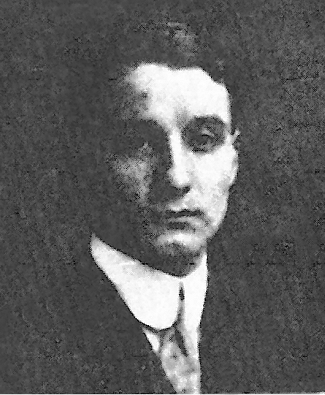
Then followed hundreds of shows as an amateur at schools, churches, hospitals, scout meetings and conventions; later the full round of service shows for the American Theatre Wing. In 1910 his picture appeared on the cover of “The American Magician” – we will reproduce that cover for you, if practical. In 1912 he joined the Society of American Magicians, and was initiated in Martinka’s Little Back Room Theatre.
About 1938, when Leith Loder started the Parent Assembly Open House Meetings (continuously sparkplugged by Paul Morris), Arnold attended from the inception, and became known as “The Perennial Opener.” Since the Open House was dedicated to progress and innovation in magic, this was the right spot for Arnold’s experimental routines. One of these developed into his “Multiplying Pipes”, featured and sold by Tannen Magic Co. since 1948.
In August of 1961, the “IMPS” was started by Paul Morris and Arnold Belais. The “Independent Magical Performers Society” is an idea for providing training for junior magicians. It was, and is, most successful in its field; and a number of these juniors have since applied for, and attained membership in our Parent Assembly.
Also in 1961 Arnold was appointed Chairman of the Membership Committee of the Parent Assembly, and earned recognition from the National Council for having increased the membership to a greater degree than any other Assembly that year.
Arnold Belais has had a long and successful career in Life Insurance, during which he attained the coveted distinction of membership in The Million Dollar Round Table of the National Underwriters. His wife, Hortense is not a magicienne herself, but joins Arnold enthusiastically in his various magical endeavors; They do not travel much these days, but if you visit New York City, you will enjoy meeting Arnold Belais and Hortense.
Arnold passed away on January 29, 1973 at the age of 82, and is terribly missed. But as a member of the IMPS, I learned how to perform in front of a crowd, and once was produced from a large box by senior magician Don Brill. The longer I associated with Arnold, the more taken with the world of magic I became.
As I grew old enough to navigate the streets of New York by myself, I discovered both The Magic Center, run by Russ Delmar on 8th Avenue between 46th and 47th Streets, and Lou Tannen’s magic shop closer to Times Square. Tannen’s was the “upper-crust” place, and they had a lot of high-end stuff there (my Tarbell Course is the one published by Tannen himself), but the Magic Center was more of an old-world everyman’s magic shop, and I felt a lot more comfortable there. I was just a kid, but I hung around there for years and Russ was kind; naturally he wanted to sell me magic, but he always encouraged me and taught me a lot along the way.
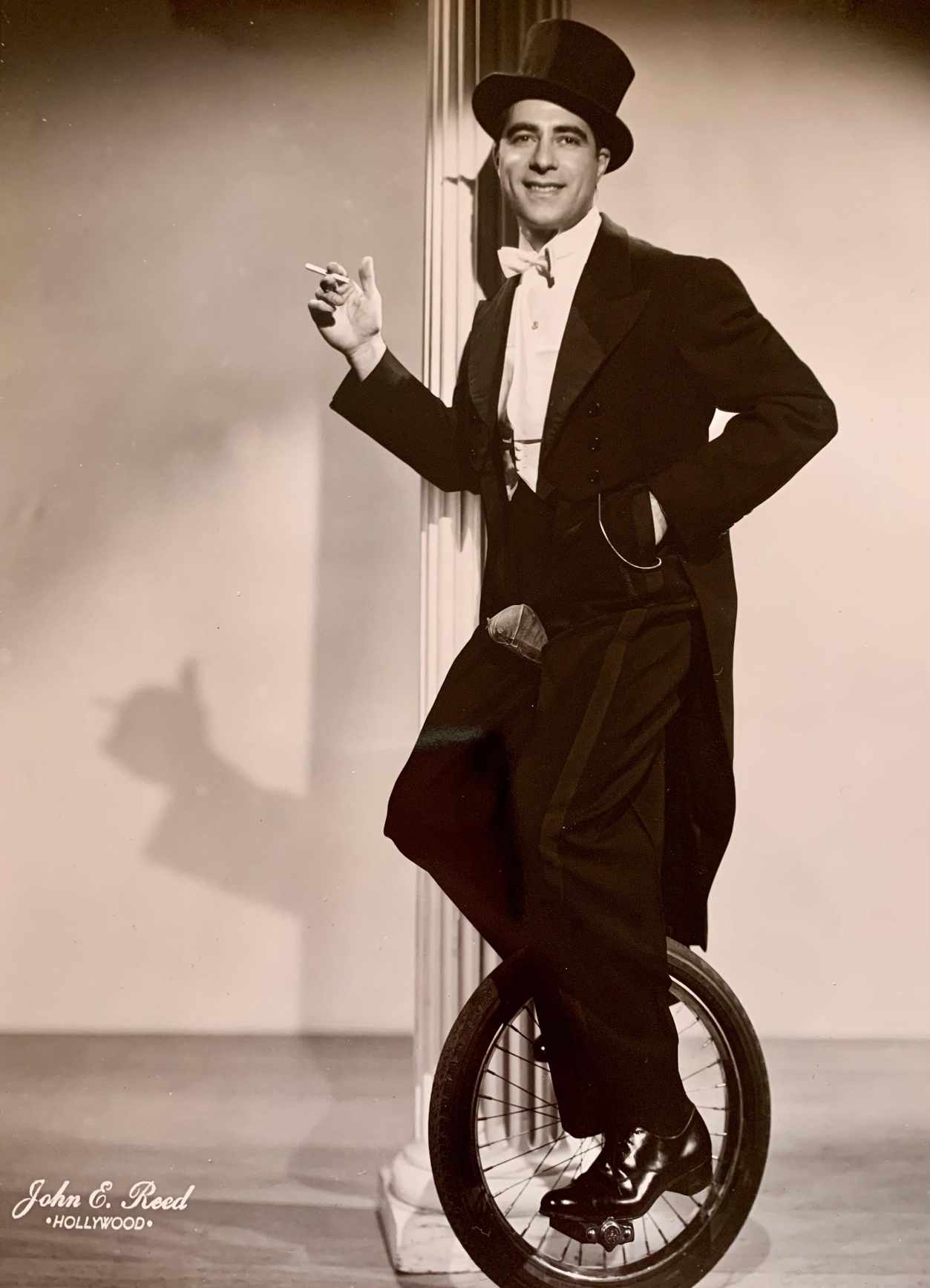
According to Russ’ son, his real name was Anthony DiSario. Russ was a skilled vaudeville dancer who – according to an article in the New York Sun – performed with Gene Kelly at one point, and was also a fencer, a boxer, a trainer in a Philadelphia gym, a juggler, and a unicycle rider; he traveled with the USO to entertain the troops, and met his wife in Germany. I’m not sure how he ended up with his magic stores, but apparently there were two – a larger one with a stage in back, and the smaller one that I knew.
From Mews Items: Amazing but True Cat Stories:
Eggbag the cat was one tricky kitty. For years, he astounded New Yorkers with his famous card trick.
One day in 1975, the gray-white cat walked into the Magic Center, a magic shop on Eighth Avenue, and stayed there, stealing the heart of owner and magician Russ Delmar. The cat was given the name Eggbag after the trick in which an egg is palmed out of a felt purse.
To earn his keep, Eggbag learned a card trick. He would lounge on the counter in the store while Delmar shuffled a deck of cards. “Pick a card,” Delmar would tell a visitor, fanning the deck.
The visitor would select a card without showing it to Delmar or Eggbag and slip it back into the deck. The visitor would then straighten the deck before Delmar would fan the cards in front of the cat.
Eggbag would yawn and stretch. Then suddenly he would bite a card, pull it out of the deck with his teeth, and let it flutter down. The card would be the exact one that the visitor had selected. Every time.
“How does he do it?” said Delmar, repeating a visitor’s question. “He does it very well.”[3]
By the time Russ met Eggbag, I was serving a mission in Austria, and had moved away from New York, so I never met his cat, and I sadly lost touch, but Russ is fondly remembered as a mentor and the owner of my home away from home for so many years. I’d love to know more about him.
Al Stevenson
One of the people I met in Russ Delmar’s shop was Al Stevenson.
Like Russ, he was a showman and a salesman, but he also became a friend. My mother was quite taken with him (she was also a performer) and he was a guest in our home more than once. Al was also written up in M-U-M, and the article by Leslie Guest is show below.
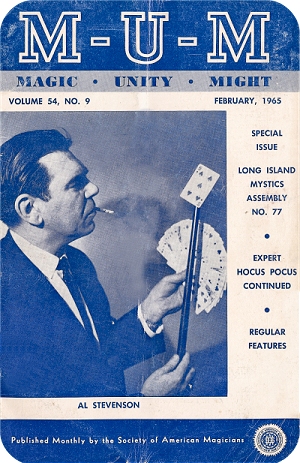
Al Stevenson By Leslie P. Guest M-U-M, February 1965
This issue of “M-U-M” is dedicated to Long Island Mystics Assembly No. 77 and their chosen cover subject is Al Stevenson. Al is a recent member of the Assembly; but after all, they are a comparatively new group, although all live wires, and 100% active in magic.
Al Stevenson was born September 1, 1916 in Chicago, Illinois. Naturally his first affiliation was with Chicago Assembly No.3; then with the Parent Assembly; and because he lives in Massapequa on Long Island, he cast his lot with Assembly No. 77. He is also a Past President of The Wizards’ Club of Chicago, the Manipulators of Chicago, and of three hypnotic societies. For the past four years he has been Associate Editor of “Hugard’s Magic Monthly.”
His impetus in magic was at age eleven, receiving a free magic trick at a movie matinee about magicians. He says little of his early years, but he maintained and built up his magical skills, and has a rather remarkable service record. He spent three years in the Lincoln Brigade during the Spanish Civil War. This included 17 months in a Fascist Concentration Camp. He was a pilot for three months, and a machine gunner for 15 months, during which time he was shot down.
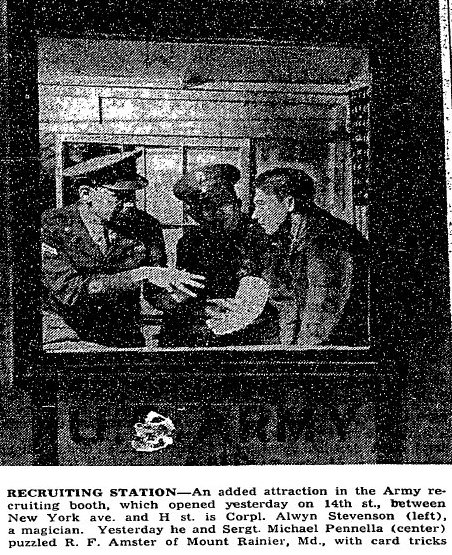
Later he served three years in the U.S. Army and four years in the U.S. Air Force. He had various duties, and while with the Recruiting Service he used magic to get prospects interested.
From the Washington Post, Nov. 9, 1948
Then he was sent to Bolling Field, Washington – but by mistake he was classified as a “musician” and assigned to the Air Force Band. The mistake rectified, he went into Special Services, taught a class in magic, and did hospital and service club shows.
He did shows in France, England, Ireland, Germany, Belgium, Holland, Japan, Spain and Scotland, which is covering considerable territory. One show was in a submarine at New London, Connecticut; and for contrast, another was for U.S.A.F. General Hovey while flying in a B-17 Bomber. He also became interested in Hypnosis, and at one period was assigned to Camp Stoneman California Military Hospital as a Consultant Hypnotist, working with combat fatigue and war-induced neurosis. Another interesting assignment was to the Counter Intelligence Corps at Camp Halobird, Maryland. He assumed nine different identities, birthdates, etc., acting as a “captured prisoner.” The students would interrogate him, and their grades depended on the skill with which they extracted information from him. A good chance for Al to improve his own science of misdirection!
Since his service years, Al Stevenson has had an interesting career as a performer, teacher, author and magic dealer. During his stay in California he travelled with a carnival as a pitch-man, which is good training for behind-the-counter selling.
As a teacher he was founder of The Illinois Institute of Hypnotic Research and The California Society of Hypnotists. He learned the deaf-and-dumb sign language in order to teach magic to a deaf group in Michigan. He recalls that his favorite student was probably the biggest guy in the world -Henry Hite of the vaudeville act of Low, Hite & Stanley -seven feet nine inches tall! That chap could perform without a raised platform!
Al Stevenson is the author of “A Complete Course in Hypnosis.” “75 Tricks with the Stripper Pack,” “75 Tricks with the Svengali Deck,” plus some fine routines for Sponge Balls and other items which he markets. In Hollywood he advertised his hypnotic course in the local papers with rather unhappy results. It turns out the printed copy read, “A Complete Course in Happiness.”
He was a magic demonstrator in 13 magic shops; owner of two. One of his early jobs was in the Dell O’Dell Shop in Hollywood. While working in Boston he made a dollarbill-ring for a slightly tipsy customer; but the bill used was $100. The customer thanked Al and left, but soon returned, cold-sober. A block from the shop he had been held up at the point of a gun, his near-empty wallet and watch taken -but the ring was not noticed. He gratefully tipped Al $20 from the rescued $100!
For four and a half years Al Stevenson was the owner of The Wizard’s Shop in the New York Subway Times Square Station. This was an amazing hole-in-the-wall shop, located right in the heavy stream of traffic. People were always in a hurry, but AI, with his pitchman-acquired skill, could hold their interest and make sales. Among his regular customers was an armless man who loved magic. He bought the tricks, but had his wife learn to do them, and present them for their guests at their home.
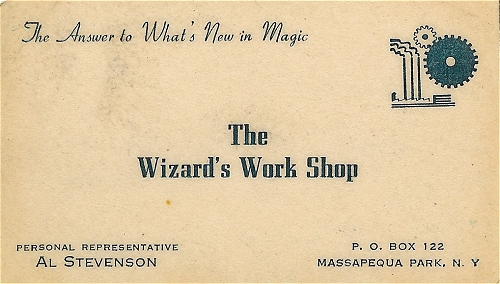
Al Stevenson is now a partner in The Wizards’ Work Shop of Massapequa, mail-order and wholesale distributor of magical specialties. He makes remarkable sponge-balls and other compressible items. He likes to do table magic, some real sleight of hand and an apparent sleight routine by black art. Completely dedicated to magic, Al is a useful friend and instructor in most branches of our art, and certainly a great asset to Assembly No. 77.
Al was a complex character, and the official biography in M-U-M left out several important points about his life. A great deal of information about Al was posted on a website called The Wizard Shop by Steven Zaretsky, who was related to Al by marriage. The site is now offline, but most of it is available through the Wayback Machine, and I have also archived it off for safekeeping. If time permits, I may resurrect it so that it gets greater exposure.
Al’s business card
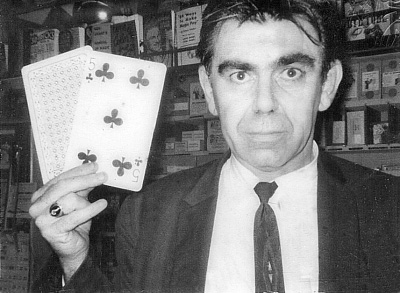
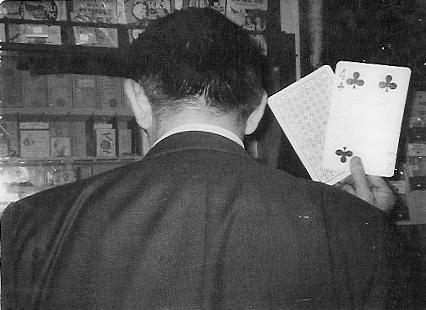
Here’s a photo of Al in The Magic Center. I was there the day he took this – it’s actually a gimmick he used. Force a 4 of clubs and tell your patsy you had a polaroid photo of yourself taken the day before… you “knew” which card he was going to pick.
When the guy complains that’s not his card, turn the thing over and say ‘Well, I always was a little backwards!'”
From 1982 to 1999, Charles Windley published Backstage, a journal for magicians. The following article about Al was published in Issue No. 5:
From “Backstage”, #5, April 1982 Published by Charles Windley Al Stevenson 75 Tricks With A WIZARD DECK, 1962
Al Stevenson was one of the most prolific magicians I ever met.
I was performing at Hubert’s Museum in New York and would pass through the 42nd Street subway arcade on my way to work. One afternoon I noticed a crowd gathered around a stairwell and realized that one of the street entrances had been replaced by a magic shop. The Transit Authority had re-routed the exit and boarded up the area leaving a 10 x 8 foot alcove. An enterprising pitchman – quick to realize an opportunity – had rented the small space from the transit authority for $60 a week and turned it into a little store. He peg-boarded the three walls and placed an eight foot showcase across the front. Four feet above the counter was a long mirror hung at a 45 angle so those in the back could have a bird’s eye view of the demonstrations. Above this was a roll-down door so that the place could be locked at night.
Hung across the back wall was a sign that proclaimed “THE WIZARD SHOP“. The area was well-lit. During both the morning and evening rush hours, hundreds of stripper decks passed across the counter along with dozens of other small pocket tricks. As the weeks went by, The Wizard Shop grew in popularity and more expensive tricks were added although the stripper deck always remained the chief rent-payer. I voluntarily shilled his tip a couple of times and Al, the owner, and I soon became good friends. Suddenly I found myself working behind the counter every Tuesday (my only day off at Hubert’s) for 10% of the day’s gross. This not only paid MY rent but also gave Al a needed break for other projects with which he was involved. It turned out that he was not just another pitchman but was quite knowledgeable about magic.
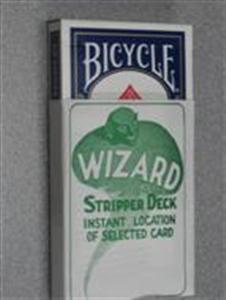
He didn’t like the term stripper deck as he felt it gave away the secret, so he re-named it “The Wizard Deck” (after the shop) and designed a green wrapper with a drawing of a huge demon. I didn’t know then that the demon was real. The name became so widely used that it was eventually adopted by Haine’s House of Cards, the manufacturer, and the name and green wrapper with the demon is still in use today.
Al then wrote 75 Tricks with a Wizard Deck which he published and sold at the shop. This little $1.50 pamphlet has become a standard magic shop item and today is sold around the world in five languages. The demon also appears on the cover of the book. Al then wrote 75 Tricks with a Svengali Deck which enjoys the popularity. His 3rd book, 75 Tricks with a Mene-Tekel Deck, was never completed.
In addition to his books, Al took over as editor of “Hugard’s Magic Monthly” upon Hugard’s death and invented over 30 magic effects which he manufactured and sold at his little shop. He created many professional tricks including a Card On Ceiling with the cards IN their case so that the magician doesn’t have to play 51 pick up after the trick; a complete black art act that could be performed anywhere under almost any conditions and a chemical method of lighting cigarettes that was a boom to the cigarette manipulator. He was also the first to use foam rubber for sponge balls. At first he cut the balls by hand but later developed a special heat process which is the method still used today. He made foam balls, wands, fish, Coke bottles, carrots and an ice cream cone.
Al Seldom discussed his past, especially the demon, but once in a while I would get him wound up and he would tell stories of his days as manager of Dell O’Dell’s Magic Studio in Hollywood or his adventures as a professional soldier in the Spanish Civil War. He was involved at one time with the C.I.A., developing methods of smuggling papers and microfilm across international borders, and he had spent time as a hypnotist with U.S. Army Intelligence. Between all this, he had traveled most of the world as a magician and/or pitchman.
I learned two important lessons from Al. He taught me that the method is of very little consequence; the end result – a pleased audience – is what counts. He also said, “Always Be a magician…don’t just do tricks!”
When not involved with magic, Al spent his time battling his demon. He put up a strong fight but finally lost. One cold November night in 1964 as he was leaving the Brooklyn Academy of Music, the monkey bit too hard and he quietly fell down and rolled over in the snow.
Magic lost a prize that night, one that it never really knew it had.
It’s entirely appropriate to mention that this published version of Al’s death is not entirely accurate, but was somewhat modified for a magic publication. Shortly after Al passed away, I called his home as I often did, and was told an entirely different story about the event. The lady who answered the phone told me that he and she had been out to the films the previous night, and had seen “The Battle of the Bulge”. He left early because he wasn’t feeling well, and retired early. In the morning, he was gone. As alluded to in the above article, the big green demon was real, and Al had struggled for a long time with some sort of substance abuse, which ultimately led to his all-too-early demise. The truth never tarnishes the reputation of a great man, and my estimation of Al and his accomplishments and kindness is not a whit less.
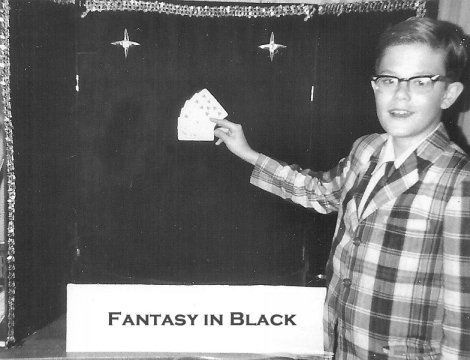
I saved my earnings from delivering groceries at Daitch Shopwell on 1st Avenue and 58th Street, and purchased one of Al’s “Fantasy in Black” setups.
Never mind that I look like a weed in that madras jacket; it was 1963, I was 12, and didn’t know any better. But I loved the effect; the board long since deteriorated, but I still have a number of the original gimmicks which would serve just as well if I ever construct a new background. I also have a beautiful set of Chinese sticks that Al manufactured for me, and one or two of his other items; sadly, the sponge items which I obtained for him did not stand the test of time and crumbled. I loved the hand-painted sponge fish best of all.
Naturally I was devastated at Al’s passing, but the bitterness of loss swiftly passed and was replaced by the sweetness of memory. I’m honored to have known this outstanding entertainer who had such a big impact on me in my formative years.
Slydini
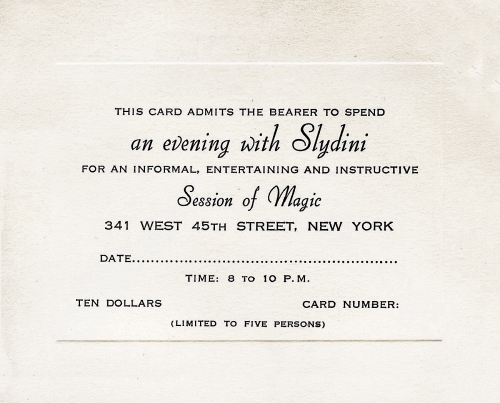
One of the greatest favors Al did for me was getting me in to a personal seminar with Tony Slydini.
One of the foremost close-up magicians of all time, Tony in later years hosted private seminars where he would perform and teach a routine or two. It was an astonishing night, watching this man’s work. There were 5 of us, if I recall, including Al himself, and Slydini taught us his “coins through table” routine. I will never forget the experience.
Ten bucks was a fortune for me back then, but I never regretted having gone.
Conclusion
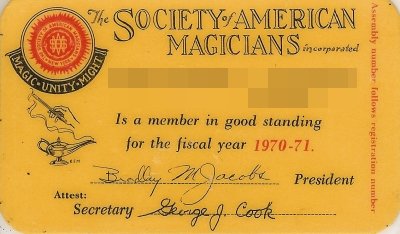
Time marches on, and while I still have almost all of my paraphernalia, real life and work and marriages and children and grandchildren pretty much erased any facility I had with a deck of cards… but not the love in my heart for the craft. I was a member of S.A.M. for a while, earning money doing children’s parties – so although my skills are dusty, I still consider myself a professional, and honor those who have turned their love into a career.
The Old Wolf has spoken.
1. If you want to learn all the moves in Erdnase, you can still do it here.
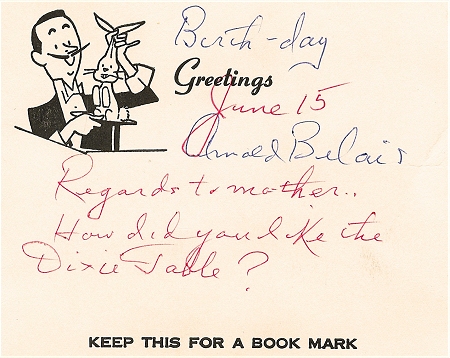
2. The card refers to the Dixie Magic Table. This was a gathering of magicians that took place on a regular basis at the Hotel Dixie in Manhattan. Even though I was just a kid and way out of my league, I enjoyed sitting with the old professionals and watching their amazing closeup work. Most of them were kind enough, but Joe Barnett once demonstrated an eye-popping routine, and told me I could learn how to do it in his book, Barnett on Sleights. I raced to Lou Tannen’s to buy it, only to discover to my chagrin that I had been sent on a fool’s errand – no such book existed. I was bitterly disappointed, but never held it against the Tannens – in fact, I could tell they were rather pissed at Joe for pulling this stunt. It’s worthy of note that after that I never again went back to the Dixie…
3. Allan Zullo and Mar Bovsun, Mews Items: Amazing but True Cat Stories(Kansas City: Andrews McMeel Publishing Company, 2005) p. 27
Started by Sam Walton in 1962 in Rogers, Arkansas, Walmart now has over 8,500 stores in 15 countries. In the animation above, one can see how the store opened in 1962 has exploded to 3,898 Walmarts as of May 2012.
Watching this map makes me think of some horror scenario that you might find in “Contagion” or some other disease-disaster movie. I wonder if the CDC could come up with a vaccine…
We all chuckled when Marty got ready to do a riff in front of this giant speaker… I think everyone knew what was going to happen.
This one – a Diatone speaker from Mitsubishi – was even larger. Diatone was a loudspeaker division of Mitsubishi Electric. The first ones were built in Spring of 1945 for the Japanese radio station NHK; the division closed in 1999.