Having recently posted about cigarette advertising, some of my readers pointed out that cigarettes were routinely hawked by doctors as being harmless at best, and actually good for you at worst. Here are some of the choicer examples, of which there are hundreds:
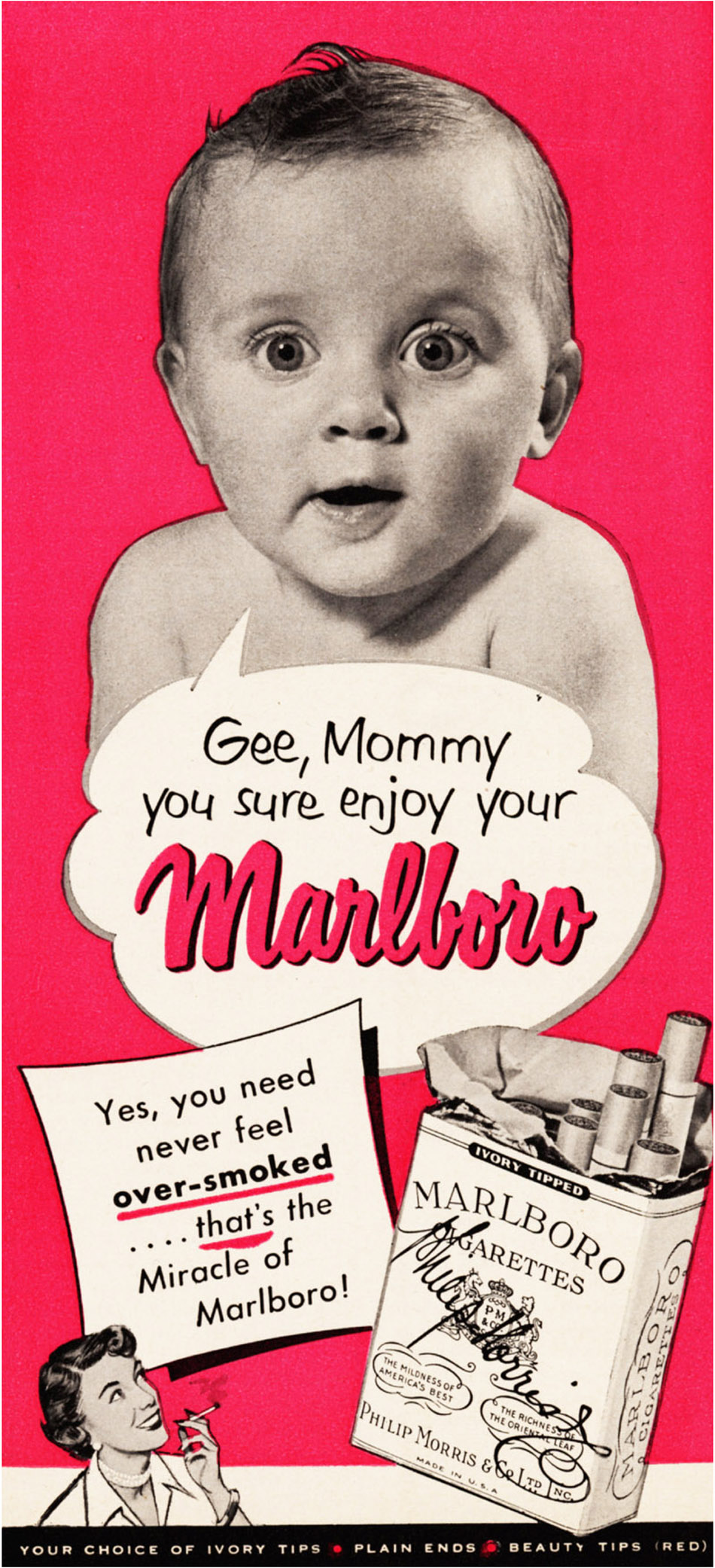
Even with all this historical nonsense, my head did a Linda Blair when I saw this picture over at Frog Blog:
I immediately went back to this Dilbert cartoon (click the link for the full-size version):
By the dessicated skull of Mogg’s grandmother – it’s like recommending arsenic to treat the symptoms of poisoning; apparently Dr. Batty (no offense intended to my dear friend in Dubbo) thinks the image of a 7-year-old puffing away on his death sticks would be fine. (“You don’t want to sell me death sticks. You want to go home and rethink your life.”)
Advertisements like this seem impossible in today’s world, but gullibility comes in many different forms. In the olden days, people believed just about anything they saw in print; authority and social validation are still powerful persuasion factors which can elicit the “click-whirr” response in a consumer’s brain. If you’re intersted in how marketers get your money, I recommend reading Cialdini’s Influence: The Psychology of Persuasion.)
Depending on a person’s level of awareness, however, the concept of “If you see it in the Weekly World News, it must be true” persists.
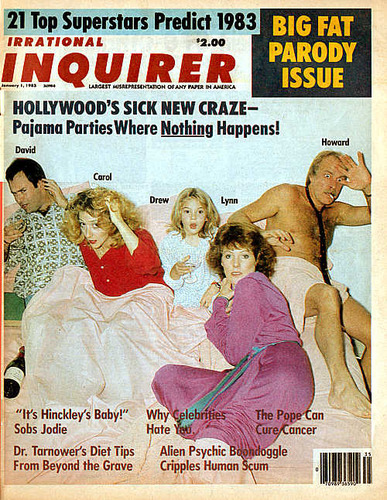
The parody issue of “The Irrational Inquirer,” published in 1983 by Larry Durocher and Tony Hendra, illustrates perfectly that most thinking people look at the supermarket tabloids with rolling eyes and shaking heads, but there is a segment of the population who buy these rags and actually believe what they contain, simply because it’s in print. “Alien Psychic Boondoggle Cripples Human Scum” is the best headline ever!
Pathetic… yet Americans alone are wasting billions of dollars annualy on bogus cures, nostrums, worthless weight loss products and other remedies, just because they find the information on the Internet.
The number of web pages like this which are out there number in the millions – because there’s money to be made from gullible people. Many of these deceptive ads claim that their products have been endorsed by Oprah Winfrey, Dr. Oz or others (again, using authority and social validation as marketing hooks) – but just like the snake-oil of old, it’s nothing but bald-face lies. For further reading, you might want to check out my previous post about the Açaí Berry.
Don’t get me wrong – there are countless products out there that do a body good – but my beef is with the deceptive marketing practices and false claims, particularly for products or systems (like tobacco) which science has shown to be harmful.
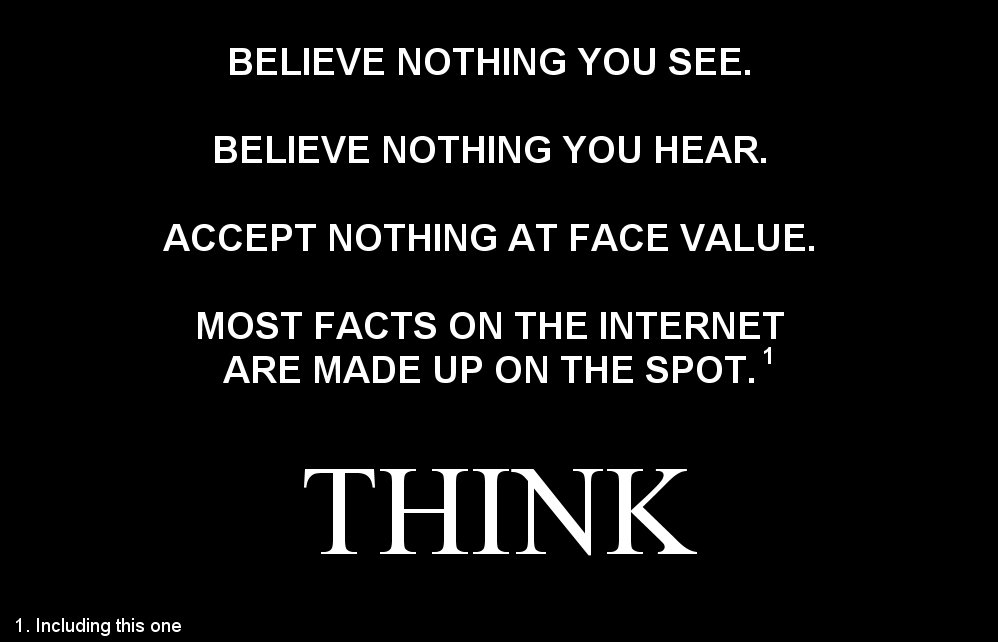
In closing, I recommend the following strategy for anyone who wishes to make wise purchasing decisions:
Back in the day, tobacco companies could advertise, and advertise they did. Everywhere. Subways, buses, magazines, radio, television, courtesy packs on airplanes, you name it. The more powerful ads drove the more powerful brands. The Marlboro man was everywhere:
Rugged, strong, and healthy – notice the absence of the Surgeon General’s warning on this example from the 60’s.
But in those days, tobacco execs would go on national television and swear that tobacco wasn’t harmful, even to pregnant women (many of whom actually preferred smaller babies)…
… which babies were also used to hawk tobacco products.
Of course, now we know more than we did then:
But this is now, and that was then.
Two of the more popular cigarette campaigns actually capitalized on bad grammar:
This slogan was routinely held up by prescriptive grammarians as an example of abominable usage: “like,” they said, is a preposition governing nouns and noun phrases, and should never be used as a conjunction introducing an adverbial clause. “Winston tastes good as a cigarette should,” intoned the English teachers, was the only acceptable form. Naturally, the ad execs picked up on the furor and capitalized on it:
Not to be left out of the action, MAD magazine put this on the back of their January 1971 issue, which shows that many folks were quite aware of the dangers of smoking, thank you, even while the Tobacco execs were perjuring themselves on the national scene.
In fact, “In December 1952 [Reader’s Digest] published “Cancer by the Carton“, a series of articles that linked smoking with lung cancer. This first brought the dangers of smoking to public attention which, up to then, had ignored the health threats.” (Wikipedia) An interesting article summarizing the history of tobacco and health concerns can be found at CNN Interactive.
Popular stars shilled for tobacco on a regular basis – it seems so bizarre to watch Granny Clampett and Jane Hathaway discussing the merits of Winston, but it’s amusing to see how they worked the grammar issue in at the end in a Madison Avenue “double whammy”.
The Flintstones got into the act as well:
I confess with some shame that tobacco contributed to putting bread in my mouth for some time; mother functioned as a spokeswoman for Camel cigarettes for a year.
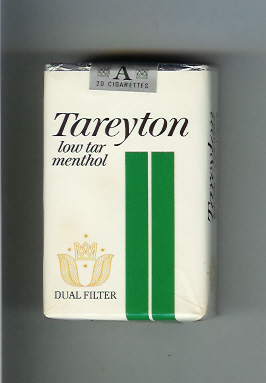
But when it came to using bad grammar, Winston was hardly the only offender – Tareyton’s campaign confused nominative and oblique to good effect in their highly successful slogan, “Us Tareyton smokers would rather fight than switch.”[1]
Despite the peccadillo – it seems that cigarette ads thrived on controversy – this particular advertising campaign was wildly successful in the 60’s, and pushed Tareyton’s popularity close to the top of the charts.
But not all products, even those from the makers of successful brands, were an instant hit.
Back in 1966, when I was 15, I was on one of my semi-regular visits to my mom’s brother in Salt Lake. We took a trip up to Idaho to see some additional relatives, and I remember spending some time in a tobacco warehouse, helping to run cartons of cigarettes through the tax-stamp machine. (Had the government gotten wind of our little diversion, the owner could have been shut down, but oversight was lax and attorneys less numerous in those days.) While I was working there that day, I noticed something unusual – a carton of Tennyson cigarettes, which I had never before heard of.
Now, the more astute among my readers will be asking themselves, “What does a 15-year-old know from tobacco?” As it happens, even at that tender age I was somewhat of a tobacco connoisseur. I had started smoking in high school, finding that it was a gateway to a certain level of acceptance, for as little as that was worth. And I parlayed my small bit of social coin into a minor fortune by becoming a user of odd and revolting brands.2 (In Connecticut, the legal age for tobacco was 16, but even before that I had no end of “friends” who would procure for me in exchange for a small consideration.)
Strong and with a different flavor than American standards.
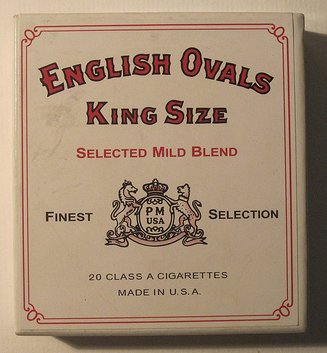
Oval cigarettes. Cute gimmick, but nothing special otherwise.
Absolutely foul. If I had these, I was guaranteed nobody would bum off me.
Tasted just about like smoking a cow pie. Or so I imagine.
Had kind of a fruity taste, unlike anything else I had ever smoked. Meh. However, Lark’s claim to fame was their commercial, the 1960’s version of Google Street View – the Lark truck would run around different places with a TV camera on the back, blaring the William Tell Overture, and asking people, “Show Us Your Lark Pack!” I saw this truck run down 1st Avenue in Manhattan one day; even if I had had a pack of Larks on me, I decided that discretion would have been the better part of fame, since I was still underage in New York.
[Edit: I had a copy of the commercial in question here, which I had posted at YouTube. Even though it was listed as public domain under a Creative Commons license, it appears that the brand is still owned by Trademarks LLC. The video was removed at YouTube, but for some odd reason still played here. In light of some communication with the above-mentioned company, I have removed the video. Unless it is taken down elsewhere, however, you can still see it here (3rd one on the list).
Now, since we’re on the subject of advertising in general as well, I nominate Salem cigarettes for the most insidious commercial ever devised. As a linguist who has studied close to 20 languages over the course of my life (although I don’t claim to speak them all), I can tell you that anything you produce will remain in your memory much longer than anything you hear. When learning a language, speaking is much more powerful than listening; they are different skills, yes, but the first cements things in your memory a lot longer than just hearing them, even multiple times. The following ad is much like getting up at 3:00 AM in the home of a musician, and playing only the first five notes of “Shave and a haircut” on the grand piano. It’s a guarantee that an irritated and foggy victim will stumble down the stairs to finish the “two bits” part before being able to go back to sleep.[3]
Unfortunately, despite these commercials being ancient, many of them have been taken down on copyright grounds. But go here and advance to 6:40, and you’ll get one of the ads that I’m referring to. Unless you are some kind of superhuman being, you will finish the line, and you will sing the brand name in your head. There is no escape.
There were others. I knew every brand on the market, and some that weren’t. I even rolled my own for a while, although not very skillfully, but when I couldn’t get these, I’d smoke anything I could get my hands on. My mother smoked Carltons (why bother, I wondered?) and when I’d cadge hers, I ripped the filter off; ultimately I settled on Luckies as my brand of choice. And of course, in the process, I became a 3-pack-a-day man by the time I was 18. The end of that story is that I quit, cold turkey, that year and never looked back – but my lungs paid a lifetime price.
So that brings us back to Tennyson, and by now I think you’ll understand why it caught my eye. A brand I didn’t know about? Intriguing! But in those days, there was no Internet, and such arcane knowledge was not to be found anywhere. Only later, thanks to the miracle of the Intertubez, was I able to dig up a bit of history, but even today what’s out there is pretty sparse.
In 1966, Tennyson launched a fairly comprehensive media blitz to publicize their new brand. I’m not sure why Tareyton simply didn’t choose to introduce a menthol version of their already-famous brand.[4]
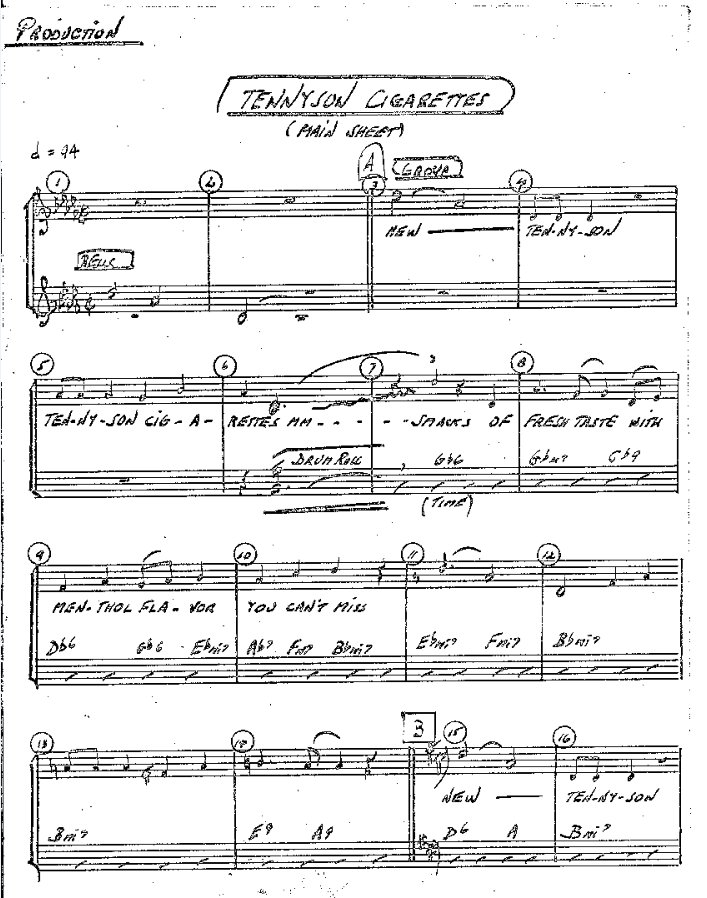
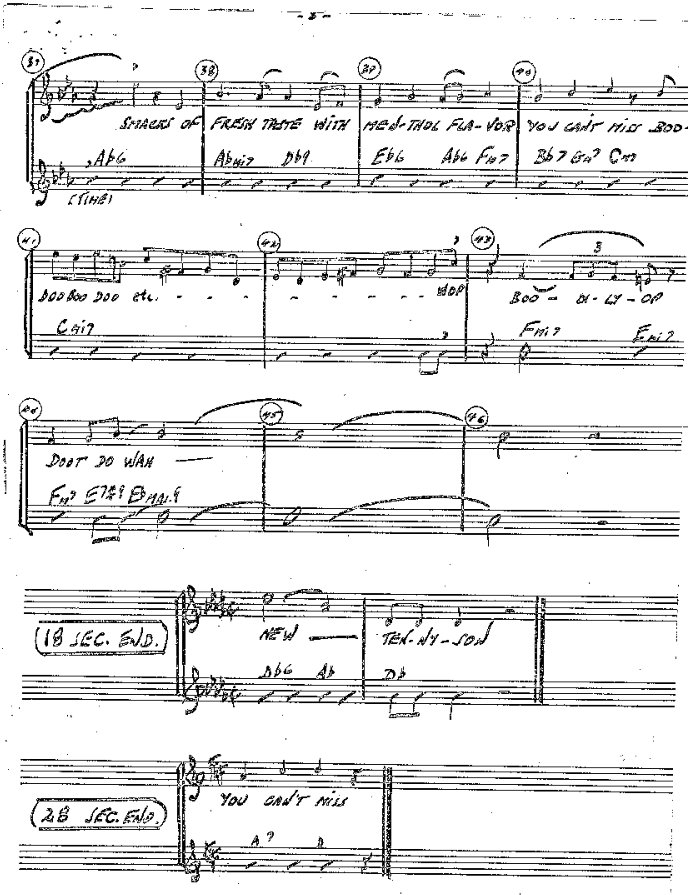
I even remember the jingle. I began to wonder later if I had imagined it, but fortunately the original sheet music which was submitted to the legal process was conserved:
So I’m not senile after all. I may be crazy, but that’s different. As a final bit of curiosity, I also found this:
Same package, same font, same look as Tareyton – but nary a whit of information to be found about what these are, or when or where they were sold. Possibly a European version of Tareyton? One clue:
This has been a bit of a ramble, but I got a good bunch of things out that I won’t have to worry about later (‘Now where did I archive that?’)
The Old Wolf has rambled.
1 In case you’re wondering, it should be “We Tareyton smokers.”
2 Plus ça change, plus ça reste la même chose. Visit The Old Wolf’s Banquet from Hell.
3 Brooke McEldowney, both a very gifted musician and a supremely talented artist who does the webcomics 9 Chickweed Lane and Pibgorn, riffed on this twice. In the first one, Edda and her mother Juliette engaged in this very exercise here; the second, where poor Seth is tormented by his ballet company, is here.
4 As it happens, such a thing exists, even though I only found out about it later as I was researching the topic. Never once did I see these in stores.
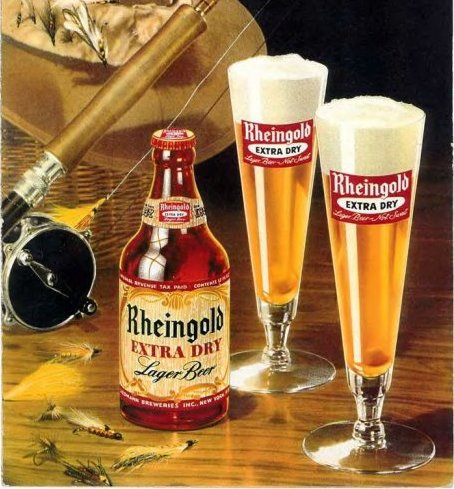
This is what I get for growing up in New York in the 50’s.
♫ My beer is Rheingold, the dry beer
Think of Rheingold whenever you buy beer
It’s not bitter not sweet
Extra dry flavored treat,
Won’t you try extra dry Rheingold Beer! ♫
♫ Who’s the first to conquer space
It’s incontrovertible!
That the first to conquer living space
It’s a Castro convertible!
Who conquered space with fine design
Who saves you money all the time?
Who’s tops in the convertible line? Castro convertible! ♫
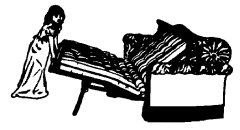
(Castro was the first popular hide-a-bed company).
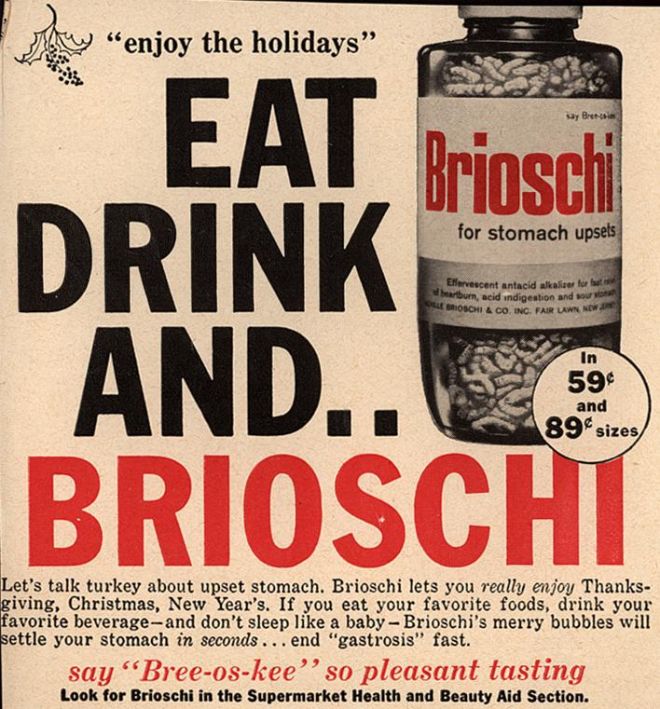
♫ Eat too much, drink too much,
Take Brioschi, take Brioschi!
Eat too much, drink too much,
Mild Brioschi, just for you! ♫
I love the way WordPress filters out spam comments automatically – they have a strong system (Akismet) and thus far nothing has slipped through. In the last few days alone, I’ve accumulated the following shill “comments”:
Perfume sales – 1
Brazilian email marketing lists – 6
Sex related or Viagra – 4
SEO – 1
Scout underwriters (whatever the hqiz that is) – 1
Translation Services – 1
Swedish refrigerators – 1
Many of the comments are written to look like real comments from real people, but contain embedded links or additional commercial text. An example: “This is a nice site over here. I think I’ll visit your website more if you post more of this kind of specific information. Many thanks for posting this information.” But the comment was posted by a sex chat website. These comments are automatically filtered and no one ever sees them; in your face, spammers.
It just blows my mind how many people out there ignore all conventions of decency when it comes to pushing their product. Simply astonishing. Discussion forums are also frequently the target of what are called “spambots” – programs that register on a forum with usernames like “bksjwevrruz”, exclusively for the purpose of posting spam. Even if the comment posted is innocuous, somewhere in the username or user profile is a link back to the spammer’s website which a crawler will pick up and count as a linkback, thereby raising the host site’s ranking (or so they hope.)
It’s a jungle – as Quaritch said about Pandora, “Out there beyond that fence every living thing that crawls, flies, or squats in the mud wants to kill you and eat your eyes for jujubes.” Except on the internet, the eyeballs they want are clicks on their pages, so they can get your money, steal your personal data, or infect your computer with malware.
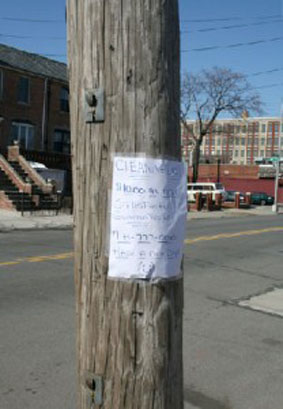
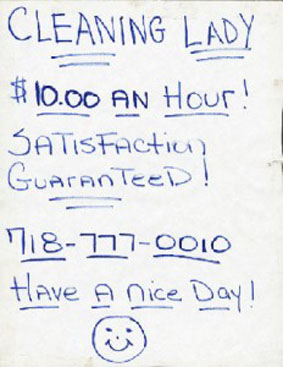
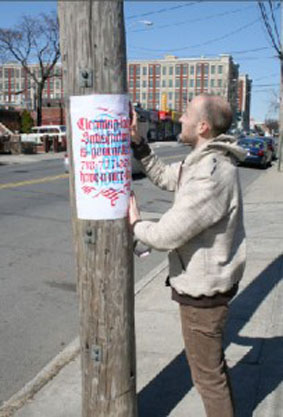
Cardon Webb makes the world a little more beautiful, at the same time rendering quiet service to people in need of publicity. He finds ads stapled to phone poles or other similar places, takes them home, and replaces them with eye-catching new versions. Visit his project at Cardon Copy.
Light shined into dark corners will make the cockroaches scurry for cover. Today we’re talking about Ketonic Labs Green Coffee Bean extract.
Executive Summary: This product is a fraud, this product is a scam, and this product is snake oil.
Here’s the spam email I got this morning:
The spam issue
In the first place, I shouldn’t be getting this junk because I’ve never done business with Ketonic Labs, Micronet Tech or Performemmbers.net. That’s the beauty of the toothless CAN-SPAM act passed by our amazing congressmen, it means that anyone “can spam” you by simply offering an unsubscribe link: thank you very little, you gutless cabrones. Comcast does a pretty good job keeping most spam out of my inbox, but image-based ads like this continue to slip through their filters.
The scam issue
Supplements are almost totally unregulated. You can claim that a product will give you wings and allow you to mate with sphinges (that’s plural for sphinx), as long as you tack on this little disclaimer: “These statements have not been evaluated by the FDA. This product is not intended to diagnose, treat, cure or prevent any disease.” The FDA will, in general, only come after companies whose ad copy actually does claim such things, despite the disclaimer, and they’ll only take the time to prosecute the biggest players because their resources are limited. But from where I sit, the email itself violates all the rules, and the web page is even worse.
Notice the almost-invisble “ADVERTORIAL” at the top of the page. I hate that word, for what it’s worth.
Melt away fat
Get high-school slim
Potent Fat Burner
Effective Appetite Suppressant
Works Quickly, Proven Results
Affordable Prices
Tremendous Weight loss results
Increase in Focus
Energy Throughout the day
No Crash
In short, these people, like hundreds of thousands of others, are dazzling you with weasel words and pseudo-scientific horsehockey, and it’s almost a guarantee that enough people in our country will believe it that they can recoup their costs and walk away with a tidy profit before moving on to another fraud. Make no mistake – they know they are shoveling out the barn- just have a look at this great disclaimer at the bottom of the page:
DISCLAIMER *THIS PAGE RECEIVES COMPENSATION FOR CLICKS ON OR PURCHASE OF PRODUCTS FEATURED ON THIS SITE. *The story depicted on this site and the person depicted in the story are not real. rather this story is based on the results that some people who have used these products have achieved. The results portrayed in the story and in the comments are illustrative and may not be the results that you achieve with these products. The depictions on this page are fictitious and indicitive [sic] of potential results. Actual results may vary.
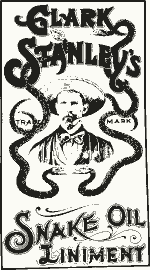
Of course, none of this is new. People have been hawking snake oil since the earliest days:
The less educated a population, the more likely you are to be able to sell them anything. You’d think as the availability of information increases, people would become more enlightened, but the general trend in my own experience is downward; mass media caters to the lowest common denominator and good information on the internet is covered with a layer of bovine ejecta worthy of the Augean stables. The older I get, the more cynical I become about sales and marketing in general, and that’s a problem because I have products of my own to sell, and it’s a constant battle to figure out how to carve out market sector without being a douchebag.
With thanks to B. Kliban
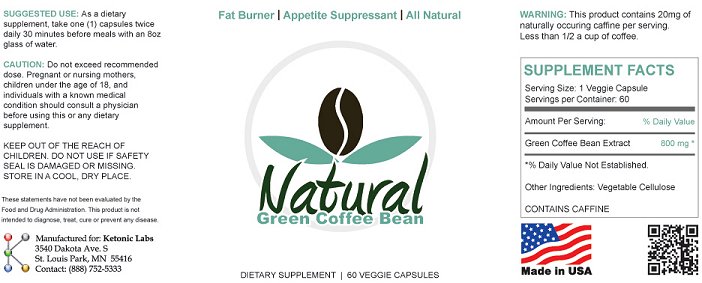
Here’s the product label:
So what is Ketonic selling you for $50.00 a bottle? Caffeine, which has long been combined in numerous diet pills and combined with other quack ingredients including PPA, ginseng, green tea extract and countless others. Double-blind, placebo-based trials, however, seem to indicate that caffeine is not effective as a weight-loss aid. But please, don’t confuse us with the facts – where there’s money to be made, the marketers will sell you all they can.
Conclusion
There are some solid principles for losing weight, but as I have said elsewhere, there is no magic bullet. Do yourself a favor and stay away from the snake oil.
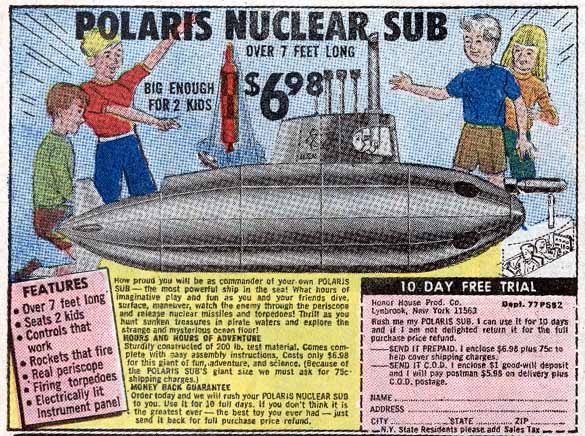
Comics. If you read’em as a kid (and I’m talking 1950’s and 1960’s here), you will have seen thousands of ads for everything under the sun. Something that got posted over at Teresa Burritt’s Frog Applause strip got me thinking down this line, and I ended up doing a real Spaziergang down memory lane.
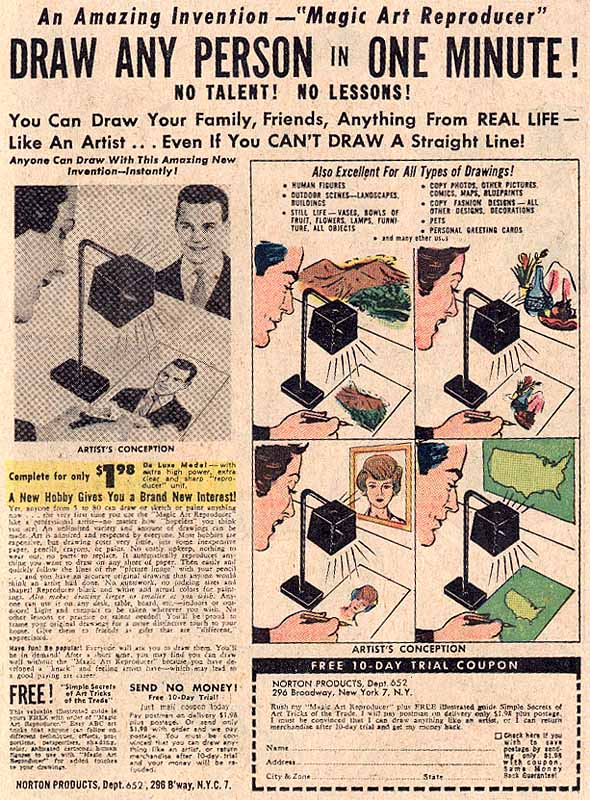
As mentioned, Teresa’s Frog Blog had an entry with a video ad for one of K-Tel’s pantographic E-Z Tracer. I actually had one of these K-Tel tracers. I recall the results were pretty clunky. However, the video made me think of another thing I had, the “Magic Art Reproducer.”
When I saw the ad for this, I knew I had to have one. What I thought I would be getting was a form of camera obscura, but what I actually received was a little plastic gimmick that you would clamp to a drawing board and peep through. With an angled mirror (and some orange smoke and unholy chanting) it would provide the illusion of what you were looking at projected onto your drawing paper, and then you could (supposedly) trace around it. And it never worked very well either. Hunting around for the “Magic Art Reproducer” ad is what catalyzed my fit of nostalgia.
[Edit: Apparently I didn’t know how to use the thing properly, if you believe what this artist has to say…]
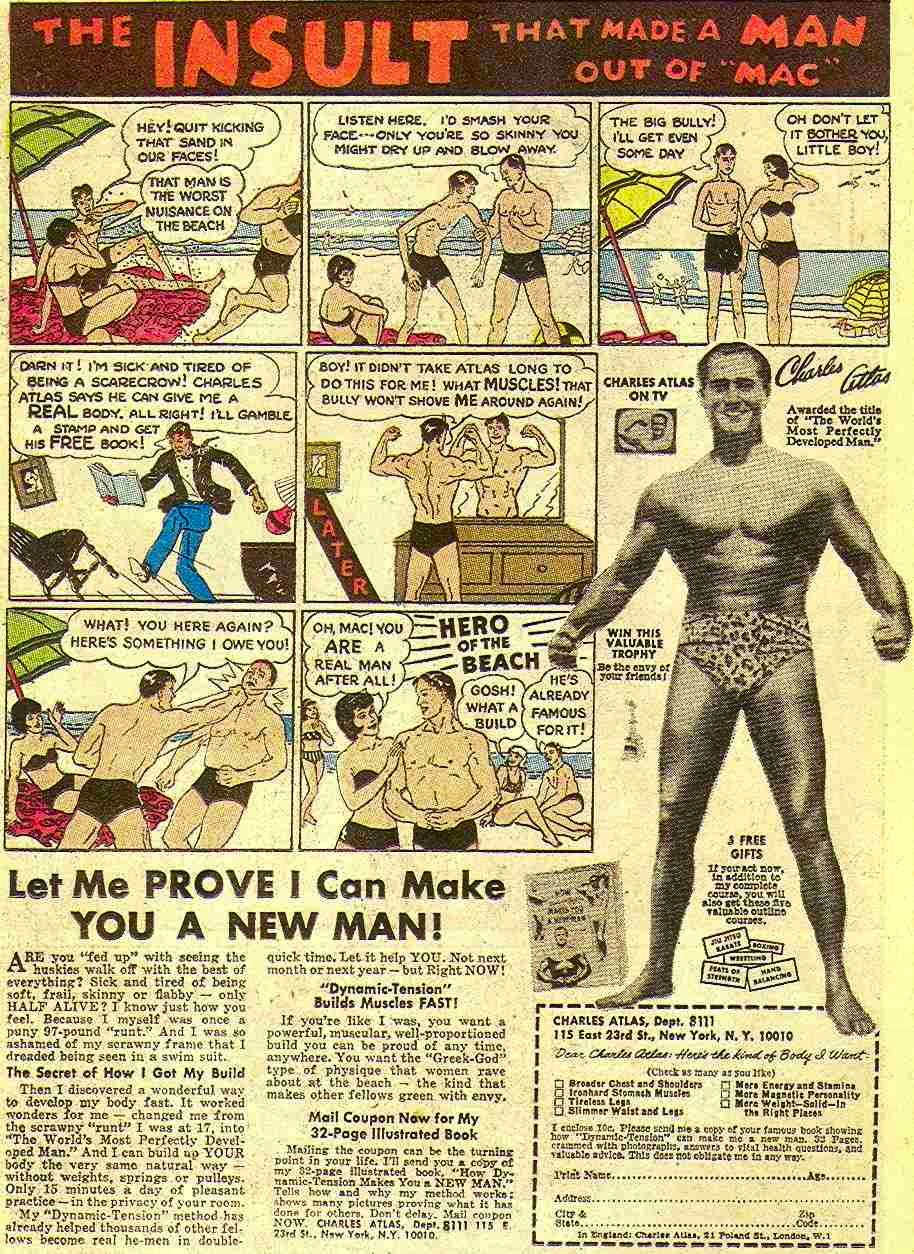
This is probably the archetypical ad from the golden era. It appeared in countless versions. No, I never gambled the stamp… based on results.
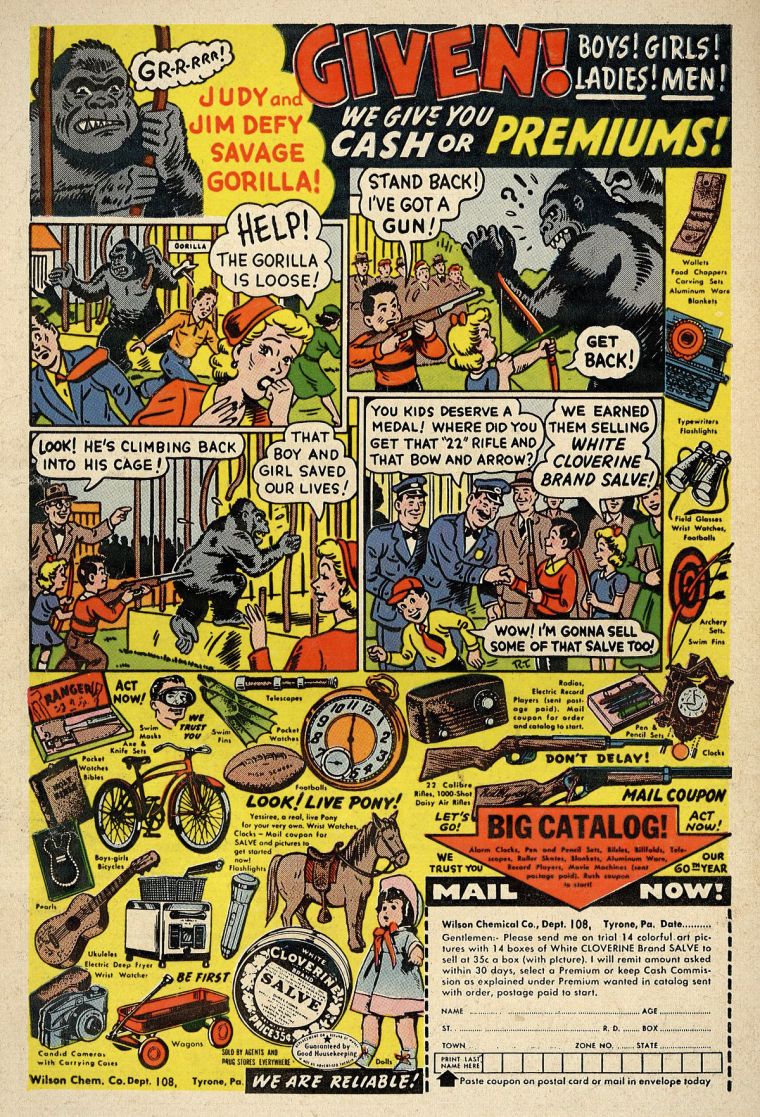
As a kid, I always wondered what Cloverine Brand Salve was. Apparently you could get some nifty prizes if you sold enough of it, but I never tried, having had less than stellar results with greeting cards and stationery (see next item). And, apparently it’s still available. An interesting write-up on its history is here. A competing product, of which I always keep a small tin on hand, is Bag Balm.
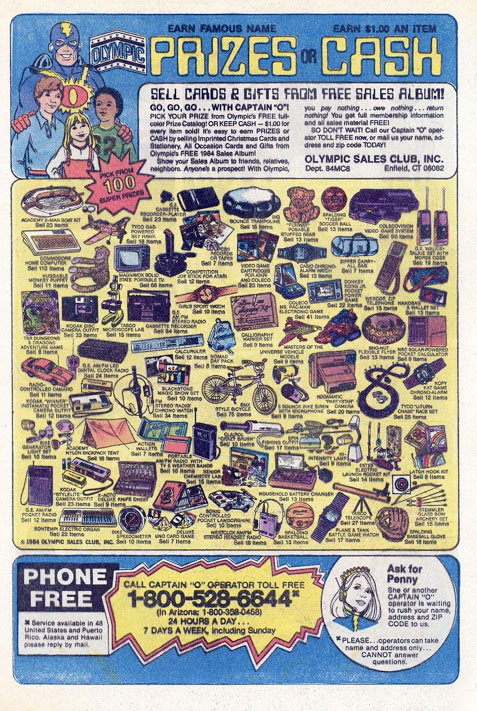
This is one I tried. It was my first introduction to the world of sales, and although a few kind family members and friends bought some items, I wasn’t enthralled by the experience of selling door-to-door. I don’t think I actually sold enough to qualify for any sort of prize, but I recall making a bit of pocket change. One of these days I have a few things to write about sales and marketing in general.
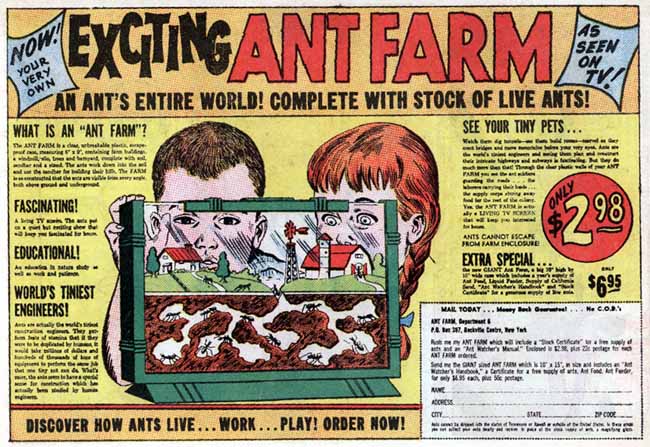
If you grew up in this era and never saw an Uncle Monty’s Ant Farm™, you must have been living in a cave. I had one, and although a number of the ants arrived (under separate cover) dead, enough of them survived to make the experience interesting enough. Ultimately, of course, they all died and the toy was cast aside, but it did provide hours of fascinating watching.
This one always looked awesome to an 8-year-old. I never saw one in real life and as an adult, as I thought about it, I was certain that it would have been a disappointment. Apparently, this is one time I would have been wrong. A blog post from 2007 provided a picture of one, and despite some expected exaggeration in the copy, dang if it doesn’t look awesome (for an 8-year-old).
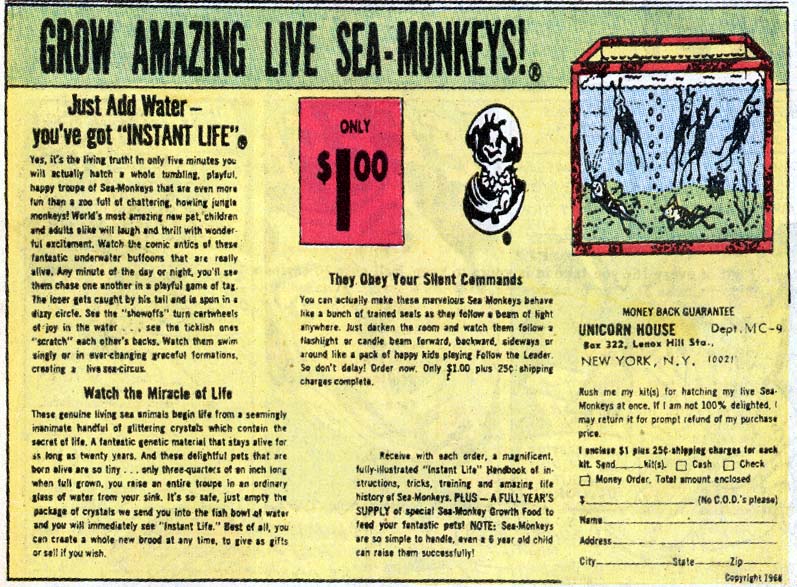
Ah, Sea Monkeys. Otherwise known as Brine Shrimp. I seem to recall I got some of these as a kid, but a clearer memory is buying some brine shrimp eggs from a science outlet for my own kids. They are pretty cool to watch. And because they’re phototaxic, you can “train them to obey your silent commands!”
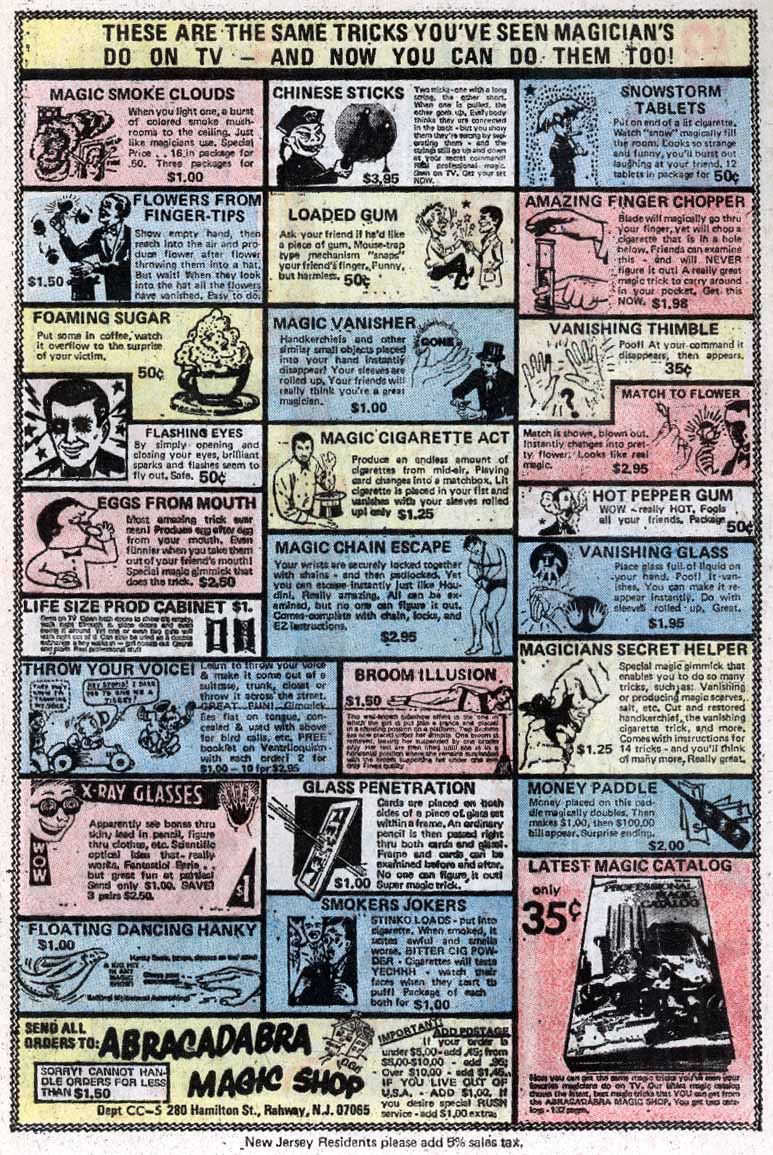
Magic. Given the deserved success of Harry Potter, it will always captivate the minds of children of all ages. I think it was these ads and many other like them that led me to a lifelong fascination with magic and sleight of hand. Time has moved on and I’ve pretty much lost all my skill with a pack of cards, but the love remains, and I still have almost all of my books and equipment (at least the stuff that didn’t get completely worn out.) Perhaps some day when I can really retire I’ll pick it up again. “It’s fun to be fooled, but it’s more fun to fool others!” More on this subject at some point in the future.
On that note…
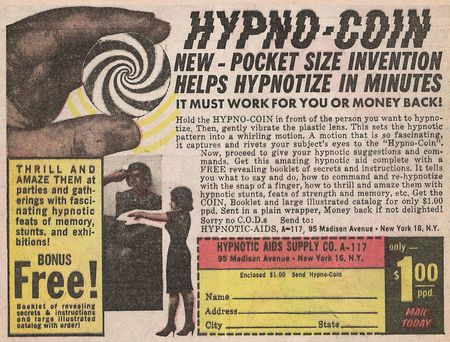
I still have the hypno-coin. I don’t think I bought it mail-order, but rather at Russ Delmar’s Magic Center on 8th Avenue – but yeah, I still have it. Never hypnotized a thing, but it’s cool to watch it spin round, à la “Time Tunnel.” If you were a real hypnotist, it would indeed be a good attention-focuser.
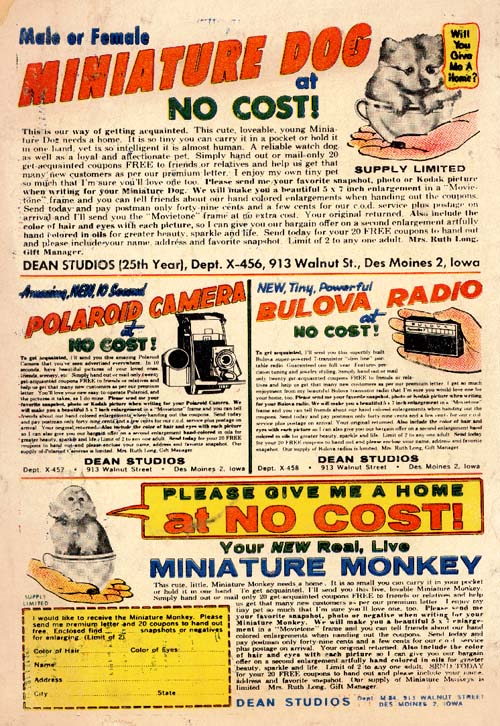
This one always got my attention. Never got a teacup dog (sometimes they were baby chihuahuas) or a monkey – thank Mogg! – but the concept of a tiny animal must have been fascinating for lots of people. Until the monkey grew up and started flinging… well, we know what monkeys do, and like raccoons and foxes, they’re not meant to be kept as pets.
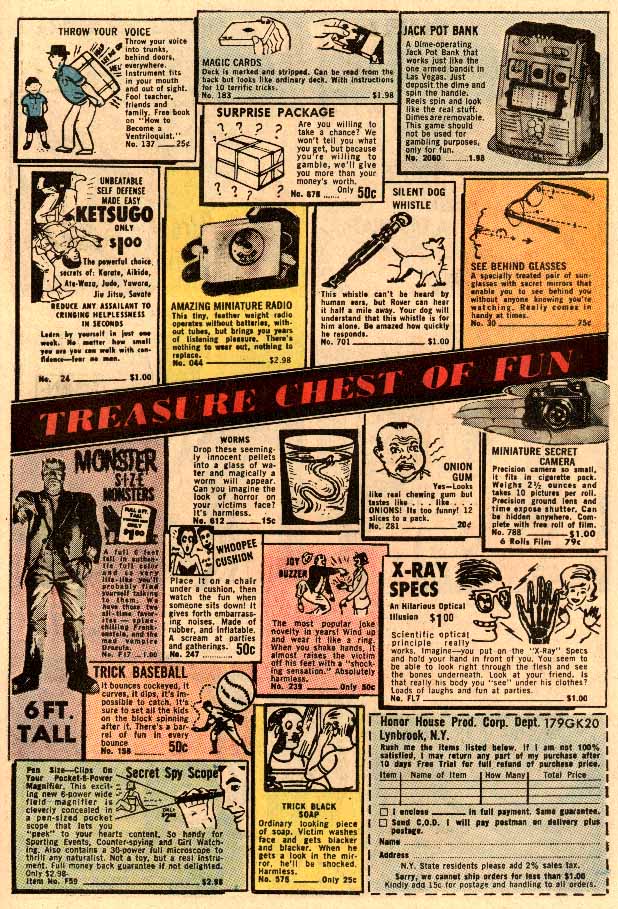
These are but a small sample of the ads that I grew up with. It was the best of times, it was the worst of times – people were still relatively innocent, television still fairly new, and print-media advertising was still the primary vehicle for driving sales of all kinds. To look back at these adverts now – and you can find thousands of them on the net – makes me cringe just a little, but also makes me very nostalgic for simpler times.
PS – if you’re wanting more of this sort of stuff, I recommend Mail Order Mysteries – chock full of color illustrations showing not only the ads, but what you got if you ordered.
Consumer Reports runs a section called “Selling It,” which documents advertised goofs, glitches and gotchas. Years and years ago I came across a bit on a box of Cheerios™ that offered consumers a free T-Shirt. The fine print on the coupon indicated that shipping and handling was only $18.95. This was back in the days before the internet or digital photography, so I wasn’t able to capture or document it, but I was absolutely gobsmacked that General Mills would have the chutzpah to put something like this on their product, unless it was a failure in their quality control process.
Sadly, when it comes to separating workers from their dollars, some people have neither scruples nor morals. In fact, the following ad sits at the top of my “Advertising Hall of Shame”. It appeared in Parade Magazine, on August 12, 1990 (click for a larger version):
I have never seen a more deceptive, deviously-crafted advert in my entire life. It is designed to make the uneducated or the unaware think they are getting a satellite dish for $5.00 – even though it says multiple times that they’re not. In fact, what the ad says is:
Almost every sentence in this ad can be interpreted one of two ways. It’s so devious that it’s almost beautiful. I noticed with wry humor that they never answered their own question, but the answer is clear: “Because we want your money.”
I’m curious how many of these units RBM moved, because nine years later, on July 2, 1999, the same ad appeared in the Weekly World News (which goes to show which demographic they were targeting)
Word-for-word the same – only the price has doubled.
1. You’ve Been Psychologically Conditioned To Want a Diamond
The diamond engagement ring is a 63-year-old invention of N.W.Ayer advertising agency. The De Beers diamond cartel contracted N.W.Ayer to create a demand for what are, essentially, useless hunks of rock.
2. Diamonds are Priced Well Above Their Value
The De Beers cartel has systematically held diamond prices at levels far greater than their abundance would generate under anything even remotely resembling perfect competition. All diamonds not already under its control are bought by the cartel, and then the De Beers cartel carefully managed world diamond supply in order to keep prices steadily high.
3. Diamonds Have No Resale or Investment Value
Any diamond that you buy or receive will indeed be yours forever: De Beers’ advertising deliberately brain-washed women not to sell; the steady price is a tool to prevent speculation in diamonds; and no dealer will buy a diamond from you. You can only sell it at a diamond purchasing center or a pawn shop where you will receive a tiny fraction of its original “value.”
4. Diamond Miners are Disproportionately Exposed to HIV/AIDS
Many diamond mining camps enforce all-male, no-family rules. Men contract HIV/AIDS from camp sex-workers, while women married to miners have no access to employment, no income outside of their husbands and no bargaining power for negotiating safe sex, and thus are at extremely high risk of contracting HIV.
Diamond mines are open pits where salts, heavy minerals, organisms, oil, and chemicals from mining equipment freely leach into ground-water, endangering people in nearby mining camps and villages, as well as downstream plants and animals.
6. Diamond Mine-Owners Violate Indigenous People’s Rights
Diamond mines in Australia, Canada, India and many countries in Africa are situated on lands traditionally associated with indigenous peoples. Many of these communities have been displaced, while others remain, often at great cost to their health, livelihoods and traditional cultures.
7. Slave Laborers Cut and Polish Diamonds
More than one-half of the world’s diamonds are processed in India where many of the cutters and polishers are bonded child laborers. Bonded children work to pay off the debts of their relatives, often unsuccessfully. When they reach adulthood their debt is passed on to their younger siblings or to their own children.
8. Conflict Diamonds Fund Civil Wars in Africa
There is no reliable way to insure that your diamond was not mined or stolen by government or rebel military forces in order to finance civil conflict. Conflict diamonds are traded either for guns or for cash to pay and feed soldiers.
9. Diamond Wars are Fought Using Child Warriors
Many diamond producing governments and rebel forces use children as soldiers, laborers in military camps, and sex slaves. Child soldiers are given drugs to overcome their fear and reluctance to participate in atrocities.
10. Small Arms Trade is Intimately Related to Diamond Smuggling
Illicit diamonds inflame the clandestine trade of small arms. There are 500 billion small arms in the world today which are used to kill 500,000 people annually, the vast majority of whom are non-combatants.
In addition, here is an article from Atlantic’s February 1982 issue that deal with the core issues – and since then, things have only gotten worse.
“The diamond invention is far more than a monopoly for fixing diamond prices; it is a mechanism for converting tiny crystals of carbon into universally recognized tokens of wealth, power, and romance. To achieve this goal, De Beers had to control demand as well as supply. Both women and men had to be made to perceive diamonds not as marketable precious stones but as an inseparable part of courtship and married life.” (February 1982 ATLANTIC MAGAZINE)
Because of the steep markup on diamonds, individuals who buy retail and in effect sell wholesale often suffer enormous losses. For example, Brod estimates that a half-carat diamond ring, which might cost $2,000 at a retail jewelry store, could be sold for only $600 at Empire [Diamonds Corporation]. (ibid.)
I’m truly grateful that the goodwoman of my house doesn’t like diamonds, but trends to less conventional tastes – this is what she begged for as a wedding band:
Many thanks to Paul Taylor of Wapsi Square for the link to this article.























 Playing in the World Game