The Jaquet-Droz Automata

I started in the world of data processing in 1969 when I took my first FORTRAN class at the University of Utah, and learned the basics of programming a Univac 1108. My very first run spit out “unresolvable error in source code”, which error our instructor told us we would probably never see.

That tidbit aside, one of the things we learned about the history of the computer was that the Jaquard loom, first demonstrated in 1801 and designed to weave cloth based on a chain of “punch cards” was one of the first forays into programmable machinery.
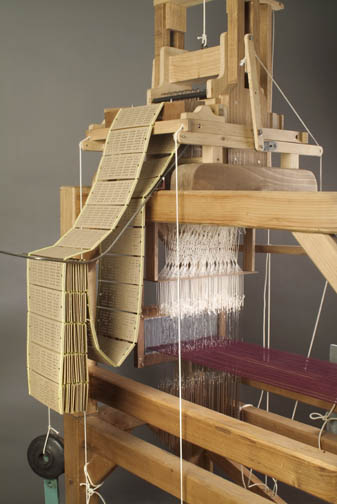
Jacquard Loom

Model of the Jaquard Loom built by students at the Northhampton Silk Project.

What we didn’t learn was that around 30 years earlier, the Jaquet-Droz family of Swiss watchmakers created some absolutely brilliant machinery with programmable capability – the Jaquet-Droz automata.
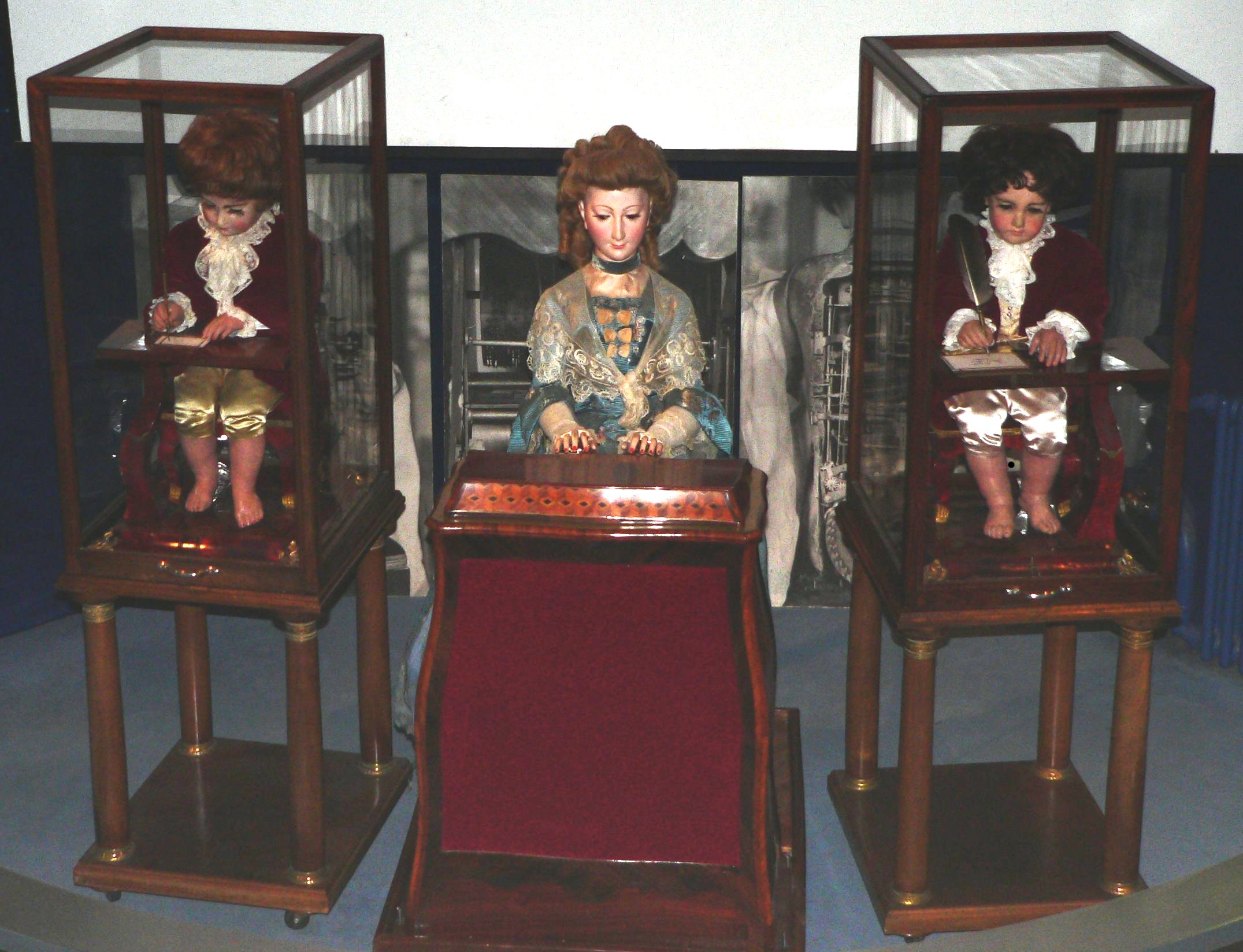
Automates-Jaquet-Droz-p1030472

These three little homunculi, from left “the writer,” “the musician,” and “the draftsman,” are miracles of miniaturization and precision machining, worthy of the finest watchmaking tradition of Switzerland. The currently reside at the Museum of Art and History at Neuchâtel, and I often saw them advertised when I lived there in 1984, although I didn’t get to see them in person.

The descriptions below are from the Wikipedia article linked above:

The musician is a female organ player. The music is not faked, in the sense that it is not recorded or played by a musical box: the doll is actually playing a genuine (yet custom-built) instrument by pressing the keys with her fingers. She “breathes” (the movements of the chest can be seen), follows her fingers with her head and eyes, and also makes some of the movements that a real player would do—balancing the torso for instance.

The draftsman is a young child who can actually draw four different images: a portrait of Louis XV, a royal couple (believed to be Marie Antoinette and Louis XVI), a dog with “Mon toutou” (“my doggy”) written beside it, and a scene of Cupid driving a chariot pulled by a butterfly. The draftsman works by using a system of cams which code the movements of the hand in two dimensions, plus one to lift the pencil. The automaton also moves on his chair, and he periodically blows on the pencil to remove dust.

The writer is the most complex of the three automata. Using a system similar to the one used for the draftsman for each letter, he is able to write any custom text up to 40 letters long (the text is rarely changed; one of the latest instances was in honour of president François Mitterrand when he toured the city). The text is coded on a wheel where characters are selected one by one. He uses a goose feather to write, which he inks from time to time, including a shake of the wrist to prevent ink from spilling. His eyes follow the text being written, and the head moves when he takes some ink.

You can watch an informative and eye-popping video about “The Writer” at Chronday.
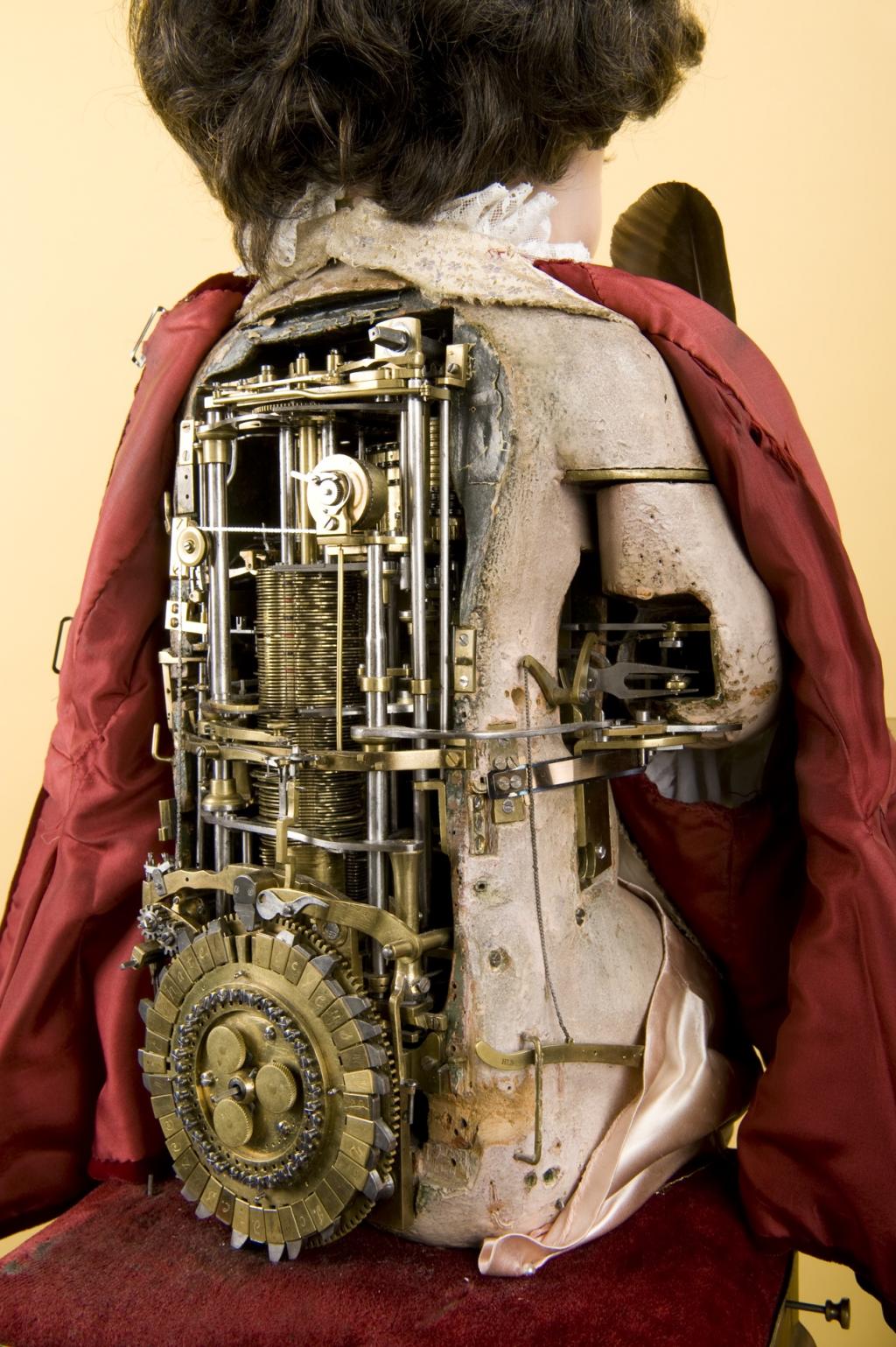
Jaquet_Droz_The Writer_2

Rear view of the writer, showing the programming wheel and the cam arrangement
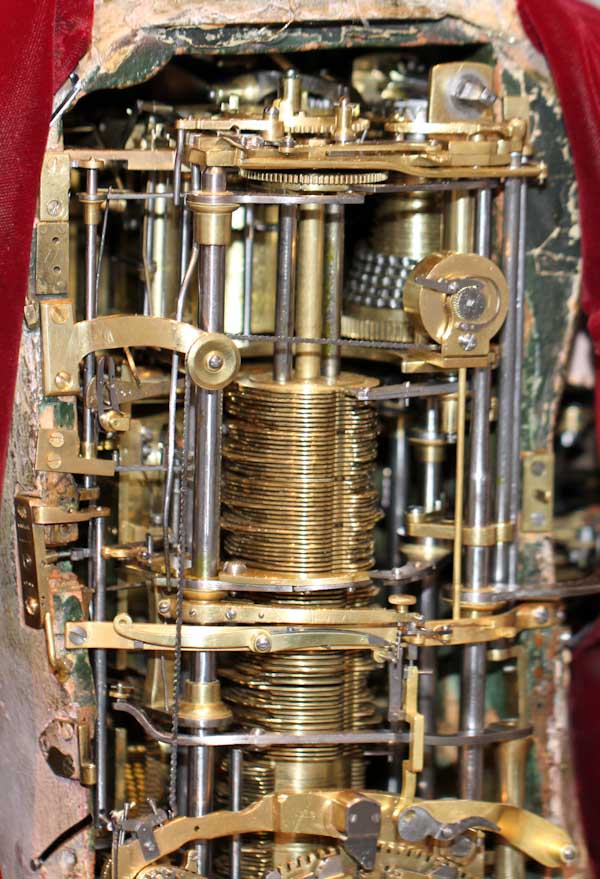
Jaquet-Droz-automata-3

Closeup of the camshaft

maxresdefault

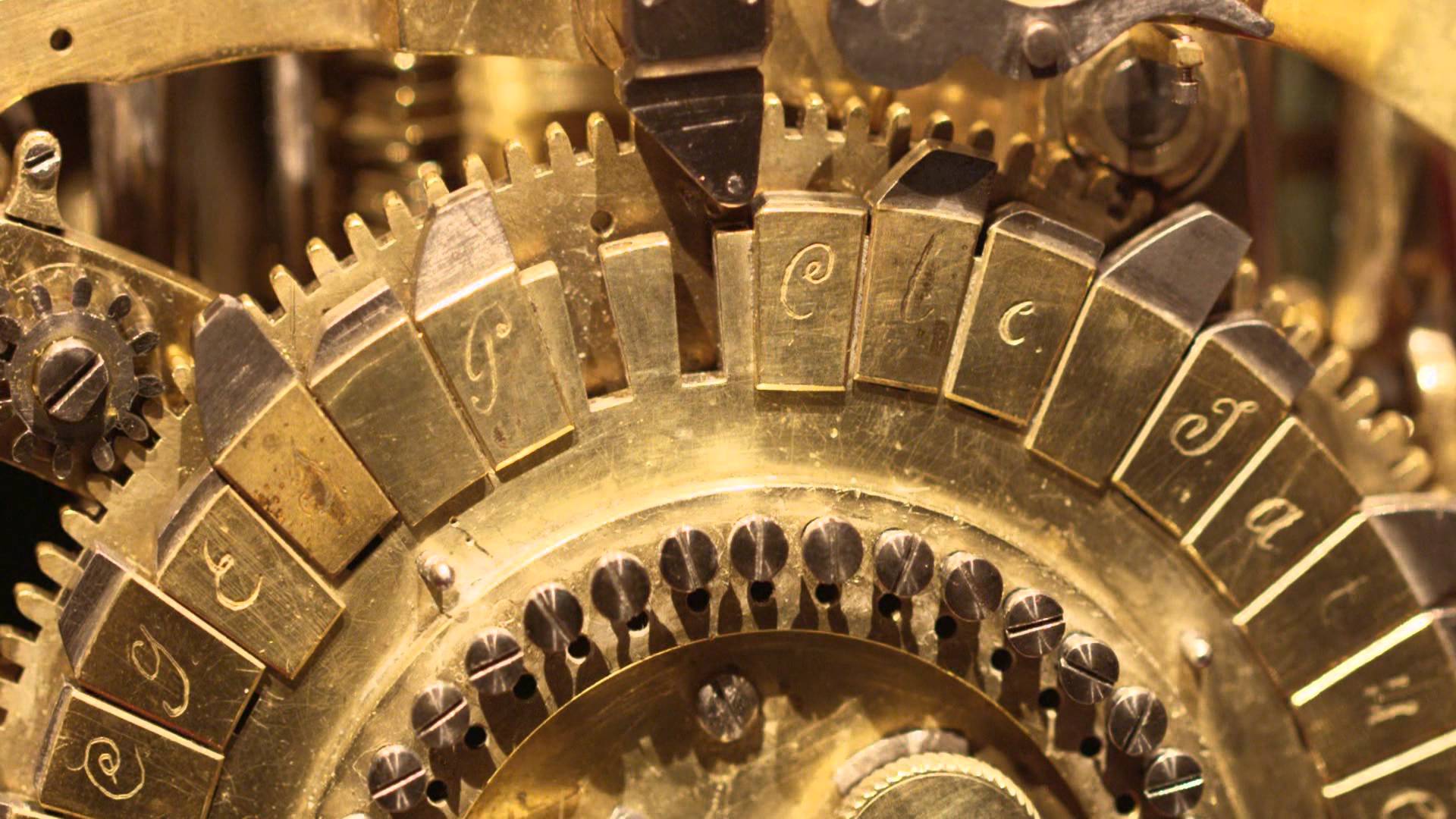
Closeup of the moveable letters which guide the writing.

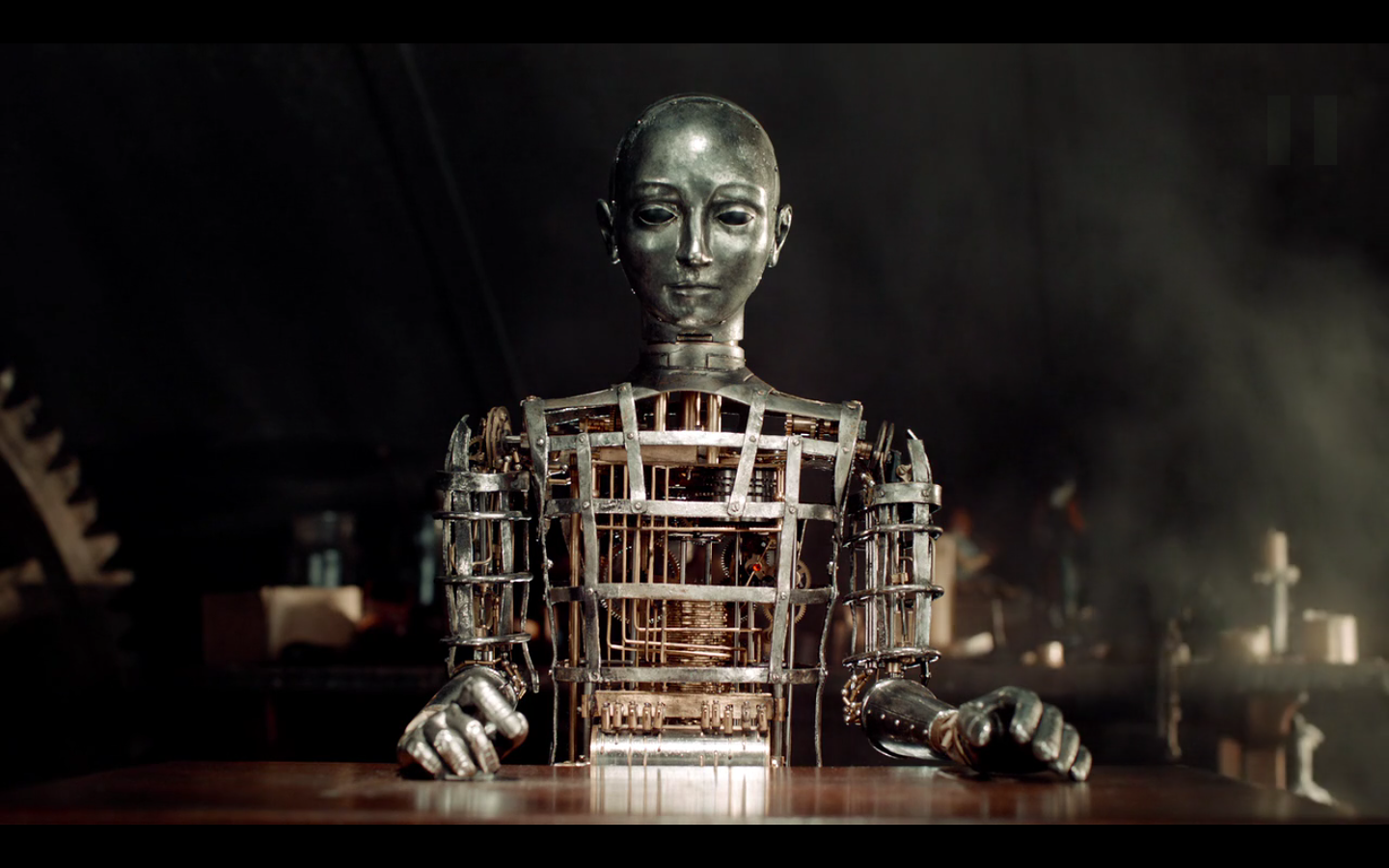
The robot in the movie “Hugo” was inspired by the Jaquet-Droz automata. If you haven’t seen it, I would find a copy at Redbox or Netflix and have a look – I found it well done.
hugo-automaton-2

The Old Wolf has spoken.

Doc Rat: Silly and Serious

Earlier I wrote about Wapsi Square by Paul Taylor; today I’d like to share another webcomic which has long delighted me, to wit, Doc Rat by Jenner.

Jenner (a pseudonym) is a real-live physician from down under, and he works his professional experience into a long-running – 7 years now – story about Doctor Rat and his practice. Recently he tossed out a contest in which he asked his fans to write him about why they enjoyed the strip; today in the mail I received a wonderful bit of treasure, one of his original strips, having been selected as one of his five winners.

DocRat original art

For me, this is a Big Deal. I love supporting the artists whose work I enjoy, directly or indirectly, and to have a bit of their handiwork on my wall is like icing on the cake. I’m very grateful to Doc Jenner for his kindness, which included a warm and personal letter.

The strip fluctuates between gag-a-day format (often involving some horrid pun or other):

a ligator

Groan…

Four Black Skulls

“Four black skulls” – I love that…

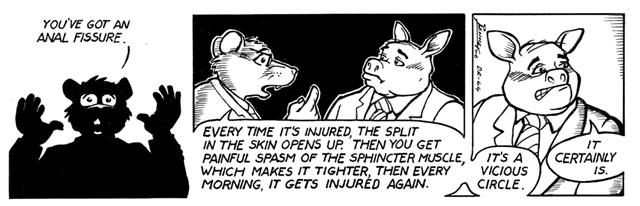
Anal Fissure

I concur

ProstateExam

Every time

20110210

Drug marketing is given no quarter

and extended arcs dealing with the life and challenges of Doctor Rat, his friends, associates, and patients:

Doc Rat 20090213

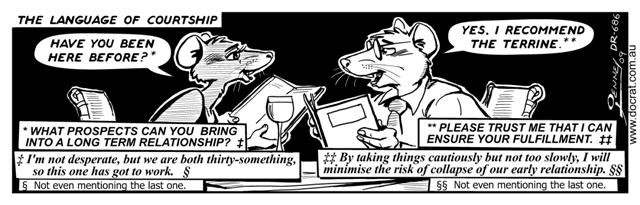
Many of these stories are out-and-out tearjerkers; well-written, current, and relevant to events and issues of the day. I even used one to communicate my feelings to my then-intended and now-wife:

Doc Rat - Courtship

With seven years of daily strips behind him, there are over 1800 Doc Rat strips to enjoy; the link I provided above is to the start of the series. Jenner’s website is undergoing an upgrade, and his developer has run into a few difficulties, so the site is a bit slow at the moment; fortunately for devotees, there are 10 Books available for purchase, with both Australian and USA prices.

docrat-books

There are thousands of webcomics available, but given time restrictions one has to be selective. This is one of a handful that I look forward to on a daily basis, and I recommend it without hesitation.

The Old Wolf has spoken.

Patterns

A virtual friend of mine enjoys doing daily “Caffeine Doodles” – you can see a lot of these over at his website, Mind4Sale.com.

260_700


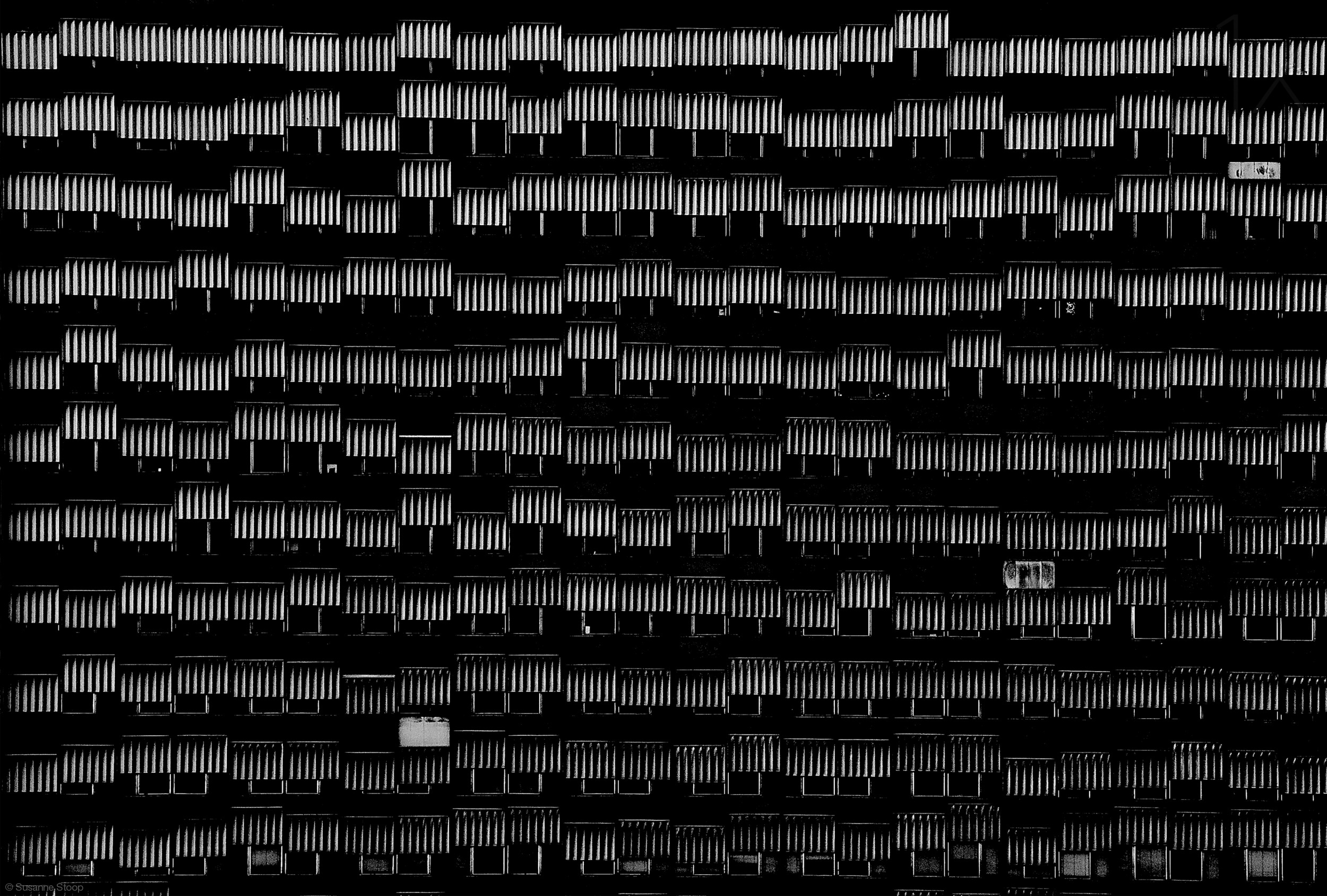
His daily efforts came to mind when I found a series of photos out there on some random Iranian blog – these are very pleasing, so I share them with you without comment.

wCIL3

Windows

oIUdX

Containers


1jaJX

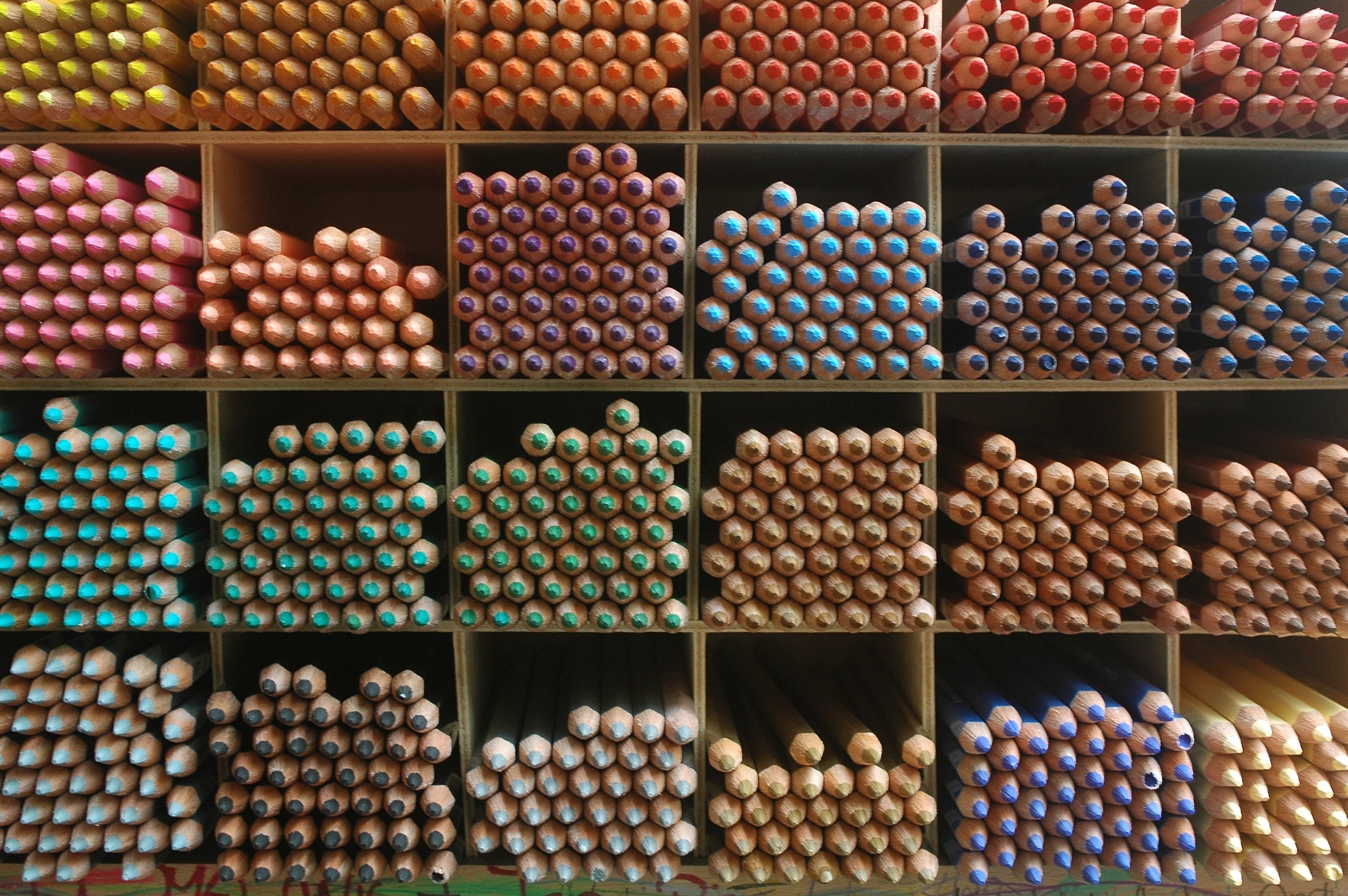
Pencils

zqhHm

Awnings

glTw8


Boats

The Old Wolf has spoken.

Not only Mind 4 Sale, but also some fine artwork

I love promoting things that my friends – virtual and real – are doing. One of my online buddies, whose acquaintance I made through his music almost – Cushlamochree, can it be getting close to 30 years ago? – has launched a fine-art storefront, and I thought I’d put it out there for a bit more exposure.

Neon

Neon Doors Collage #13

Check out the artwork of Jan Edward Vogels: Jan is a musician, composer and videographer who has recently begun working in graphics. I enjoy his work a lot, and I think you might also. His music and other things can also be explored at http://mind4sale.com

The Old Wolf has spoken.

Numismatic artwork: The Hobo Nickel

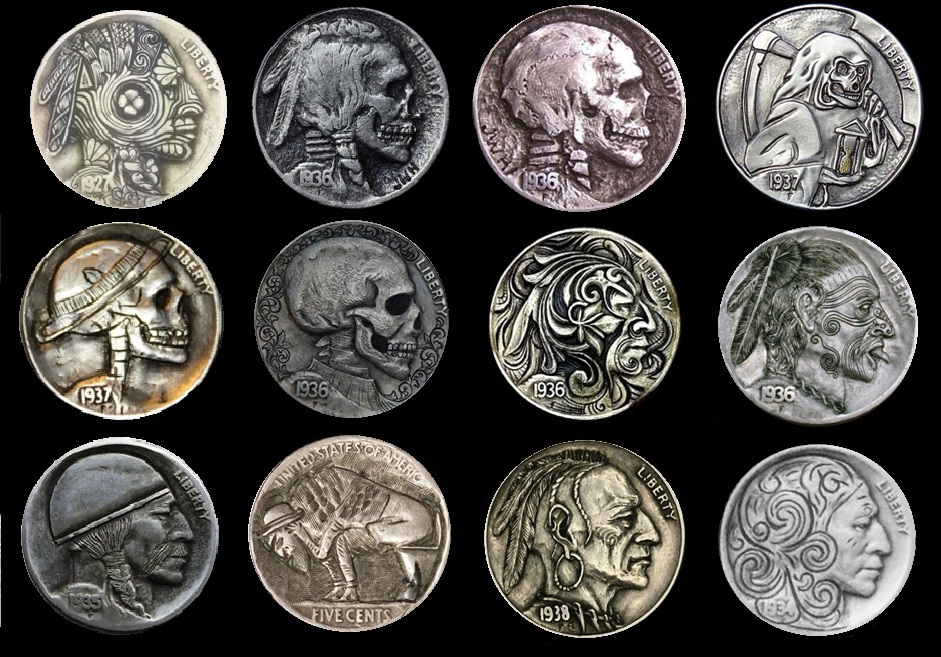
I have blogged previously about some of the coins produced during my nation’s history which have struck (haha) me as the most beautiful. Here, in contrast, are some examples of home-grown artwork based on coinage, commonly known as the hobo nickel.

mDWNonv


While not limited to five-cent pieces (the ones above were based on the buffalo nickel, another beautiful piece of numismatic art in its own right), this coin provided a foundation for some of the more striking designs.

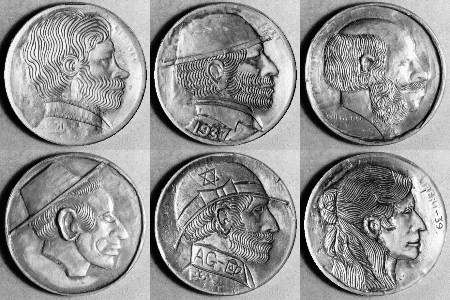
hobo+nickels


Some Appalachian hobo nickels

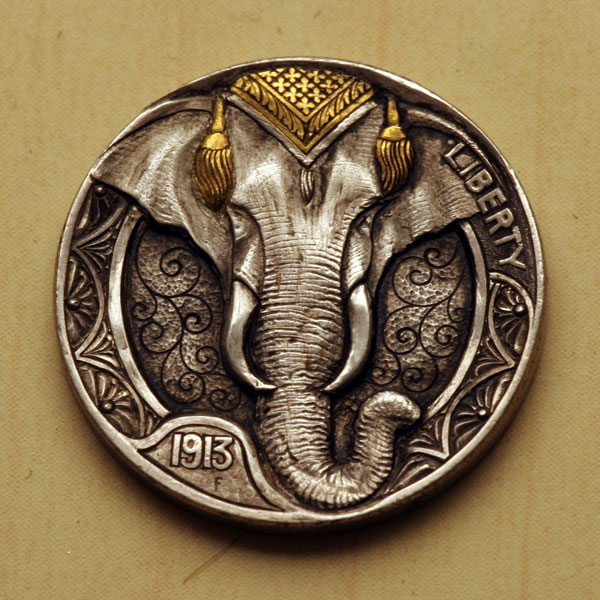
The art form endures:

elephant_hobo_nickel


This stunning piece is the work of Sam Alfano – click through to see other examples of his work.

The Old Wolf has spoken.

Charlotte Braun: The Forgotten Peanut

I loved Peanuts™ as a kid. The first collection was published a scant year before I was born, and I learned to read more from Schulz’ work than I did from Dick and Jane. I knew every character by heart, and followed the evolution of the strip until Charles Schulz passed away.

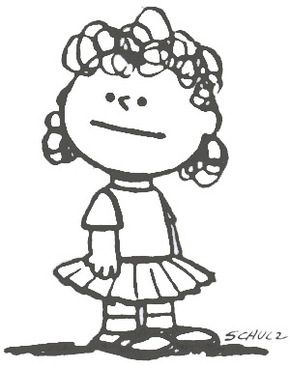
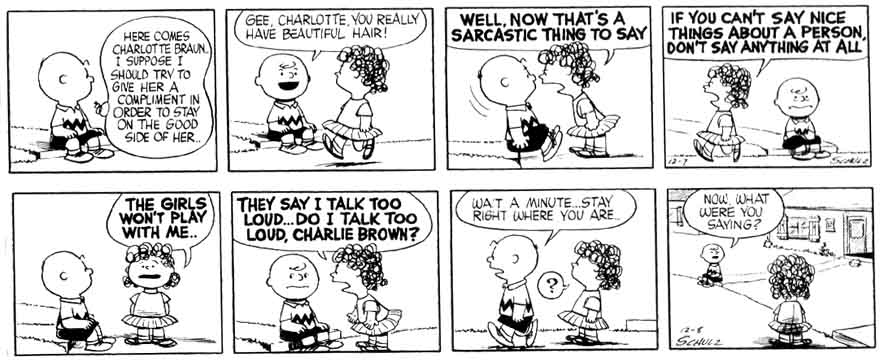
However, recently I learned that there was one character who only appeared in a handful of strips – a loud-talking young lady named Charlotte Braun.

Charlotte_braun_peanuts_schulz


Charlotte Braun

Charlotte No 1

Charlotte appears on Nov. 30, 1954

tumblr_l526yelpXY1qawyivo1_1280

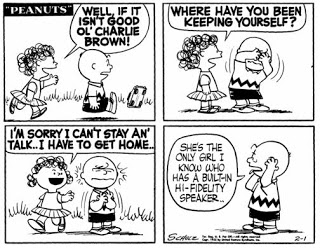
Two additional Charlotte strips

cb1

Charlotte’s 10th and final appearance.

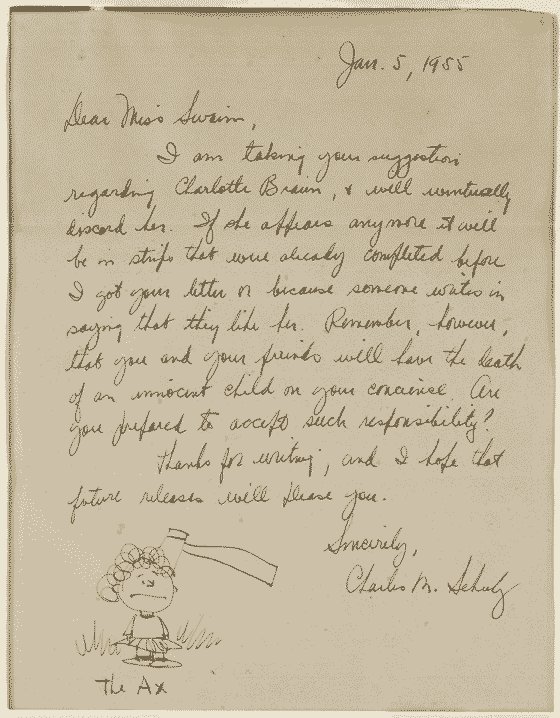
Some of the early characters – Patty, Violet, Shermy and Pig-Pen – gradually faded into obscurity as their rôles took on less significance, to be replaced by Peppermint Patty, Sally Brown, and to a lesser degree, Rerun. But Charlotte seemed good for only a few gags, and in response to a letter from a reader, Schulz agreed to give her the ax.

Swain

Letter from Charles Schulz to Elizabeth Swaim

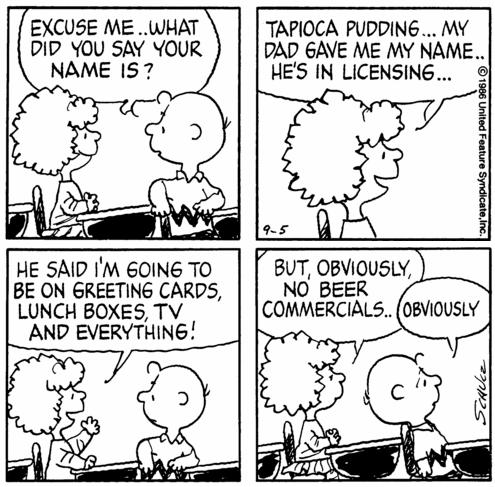
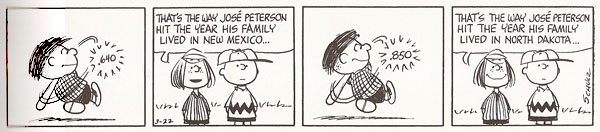
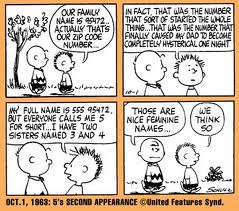
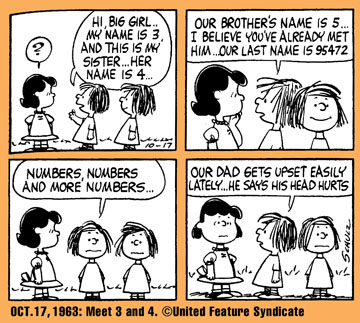
Interestingly enough, Schulz introduced a number of characters along the way who were destined for only a few appearances:

tp2

Tapioca Pudding, daughter of Joe Pudding, a marketer, was concocted for a single story line.

peanuts-battingavg

José Peterson, who showed up briefly when Peppermint Patty was introduced.

download

tglob_threefour

“5”, and his sisters “3” and “4”

All these, and some others, were never designed to be regulars. From the history, it would seem that Charlotte was introduced  as a regular cast-member, but that Schulz simply ran out of gags to use her in and she was deliberately sent to sleep with the fishes. What I found interesting is that I never saw her in any of the Peanuts collections which I had or have in my library. I was charmed to make her acquaintance.

The Old Wolf has spoken.

Life imitating art imitating life

warhol-campbell-soup

To celebrate the 50th anniversary of Andy Warhol’s 1962 famed work, 32 Campbell’s Soup Cans, Campbell Soup Company introduced limited-edition cans of Campbell’s Tomato soup with labels derived from original Warhol artwork. The cans were released at Target stores starting Sunday, Sept. 2, 2012.

This would be awesome for a curio shelf.

[Edit: I missed the dateline when I originally posted this – I thought it was coming up in September of 2013, but sadly – tragically – devastatingly, it all went down last year.]

Found at This Is Awesome.

The Grapes of Wrath

fruchte-des-zorns

Joad Family Album, 1938 (Horace Bristol)

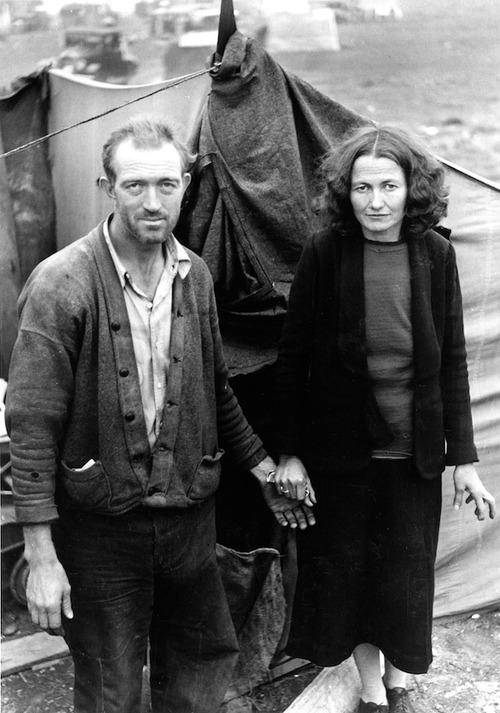
In the winter of 1937-38, photographer Horace Bristol and writer John Steinbeck teamed up for a Life magazine assignment and for nearly two months traveled California interviewing migrant workers of the Great Central Valley. Before finishing the project, however, Steinbeck withdrew—deciding to utilize the research for his novel The Grapes of Wrath instead of an article for Life.  When Steinbeck’s book was published in 1939, Life ran an article featuring the photographs taken by Bristol. Rather than using the real names of those photographed, Life used the fictional names of Steinbeck’s characters with captions featuring excerpts from The Grapes of Wrath—thus creating a photo album for the fictional Joad family that has since been mistaken for reality.

Found at Glaserei.

Roseasharn


Horace Bristol: Rose of Sharon