In memory of Radio Shack

Last week Radio Shack filed for bankruptcy, and the world I know will never be the same. HuffPo has a good read on why the company couldn’t survive in it’s current incarnation, and it may not be gone forever, but it won’t look the way it did in its heyday.

It used to be that you’d go down to the radio store for something like this:

Elektronenroehren-auswahl

And you’d encounter salespeople like this (Dilbert, from 1989):

dt890511dhc0

RadioShack was once the playground of the inventor, the maker and the tinkerer. In the ’70s, Steve Wozniak—Apple’s co-founder—built a device to hack long-distance phone calling out of parts he bought at RadioShack. It was where amateur electronic engineers could pick up computer chips and build their own computers. (Quartz)

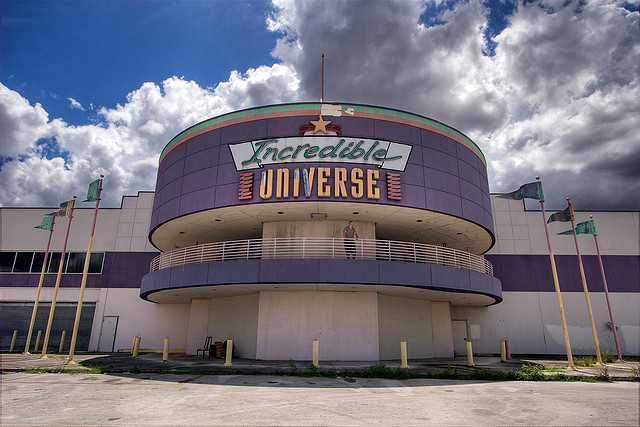
Tandy tried all sorts of things to expand its market share, things like Computer City (which lost $60 million for Tandy in 1996) and Incredible Universe, which lost $90 million; we had one of the latter in Utah before it closed in mid-1997.
712069740_7e6e175a54_z

Incredible Universe tried to be the big splash in electronics; according to Wikipedia,

A typical Incredible Universe was 185,000 square feet (17,200 m2) of sales floor and warehouse, stocking around 85,000 items.

The operation was conceived by former TandyCEOJohn Roach. Many internal corporate philosophies of Disneytheme parks were borrowed; in an Incredible Universe store, retail departments were ‘scenes,’ employees were ‘castmembers,’ uniforms were ‘costumes,’ and so forth.

The stores featured a large rotunda area with an actual stage where sales presentations, product demonstrations, or even occasional musical acts were performed, and various retail departments (software, music and video, and accessories) were accessible from this rotunda. Moving through the rotunda area would lead one to the main storefront where larger consumer electronics and computers were sold.

It included entertainment areas for kids, and a built-in McDonald’s; the sales staff all wore purple shirts and called themselves “grapes.” Below is a commercial for the enterprise, sadly potato quality but at least it gives you the idea:

http://youtu.be/2cfClmbIpzU

Here’s the Utah press release:

At a press conference held today in Sandy, Tandy Chairman and Chief Executive Officer John V. Roach and Sandy City Mayor Tom Dolan unveiled plans for the opening of the giant consumer electronics gigastore this fall at the corner of Interstate 15 and 110th Street. “Incredible Universe is an electronics and home appliance store unlike any other in the world. We have created the hottest new shopping concept in America today by combining incredible fun, an incredible selection and incredible first-class service that caters to the entire family,” said Roach.

With sales estimated at $80 million per year, Incredible Universe will provide a local economic boost by adding substantially to the area’s tax base and by creating more than 350 new jobs.

Incredible Universe is so unique that it is often referred to as the “show.” Unlike many stores, guests (or customers) are encouraged to play with the merchandise — more than 85,000 products under one roof.

Guests can also create their own music videos at the sing-along Karaoke studio to test their skills at Virtual Reality and other computerized games. Community groups are invited to perform in the store’s Rotunda, and local celebrities make special appearances.

While adults shop, small children can entertain themselves with electronic toys and games in a supervised children’s play area called KidzView. Or, the entire family can take a break from shopping at the McDonald’s restaurant located inside.

Leading-edge guests can visit three state-of-the-art Multimedia Rooms to experience the combination of personal computers, full motion video, and home theater in a home setting; video teleconferencing in an office or Board Room setting; and DSS (Digital Satellite System), the latest in home satellite technology.

The newest creation in the Universe is a multimedia “library” with more than 2,500 different CD-ROM software titles. Other features of the store include a Home Theater, a computer-equipped Kitchen Design Center, and a giant-screen video display.

The 85,000-plus products available at Incredible Universe include 342 different televisions, 72 video cassette recorders, 60 camcorders, 181 refrigerators, 83 washers and dryers, 575 home and personal audio products, 300 car stereo/mobile products, 48 personal computers, and more than 70,000 music and movie titles.

Incredible Universe gigastores are open in the metropolitan markets of Phoenix, Portland, Seattle, Sacramento, Miami, Fort Lauderdale, Columbus, Dallas, and Arlington, Texas. In addition to the Salt Lake City market, other new locations planned for 1995 include the Denver, New York Metro, Indianapolis, Houston, and greater Washington, D.C., markets. Corporate headquarters are located in Fort Worth, Texas.

The concept was launched just as stores like Circuit City and Best Buy were rising in popularity, and ultimately the huge mega-stores couldn’t compete. Buildings were so large they found no buyers, and Tandy had to sell them for pennies on the dollar. Six of the 15 stores were acquired by Frye’s, and one in Texas became a community college building.

I was a longtime Radio Shack customer and watched the evolution with interest. There were times I asked myself how long the enterprise could survive, given what I saw happening to the offerings and the staff.
battery

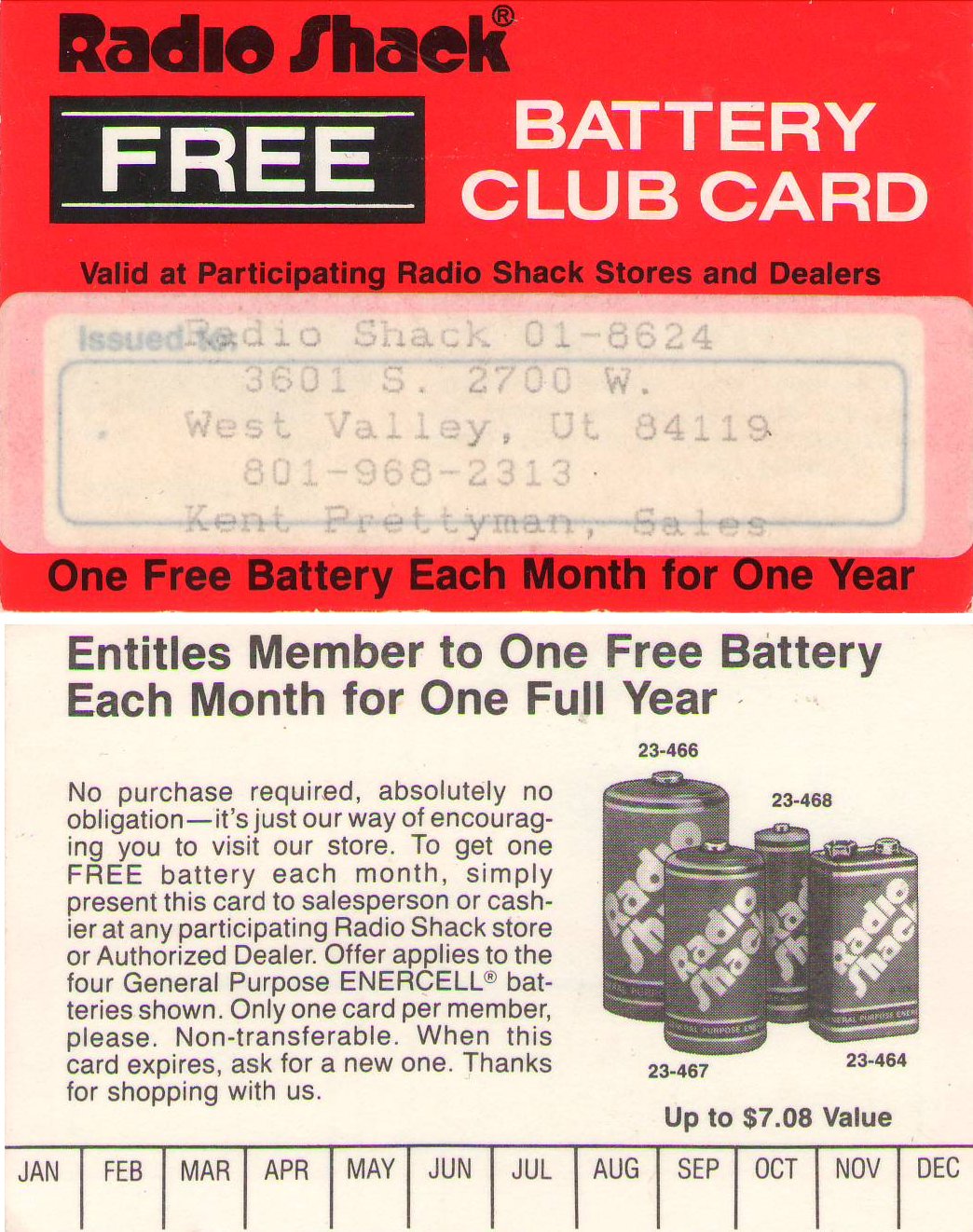
Radio Shack’s batteries were the cheap ones from China, but when you have three kids and a gazillion electronic toys, free batteries were always welcome. At one point we sprang for a bunch of rechargables and a charger, which probably saved a few quatloos in the long run.

20150214_105421

Robie still sits on my dresser, eating quarters with gusto.
20150214_105509

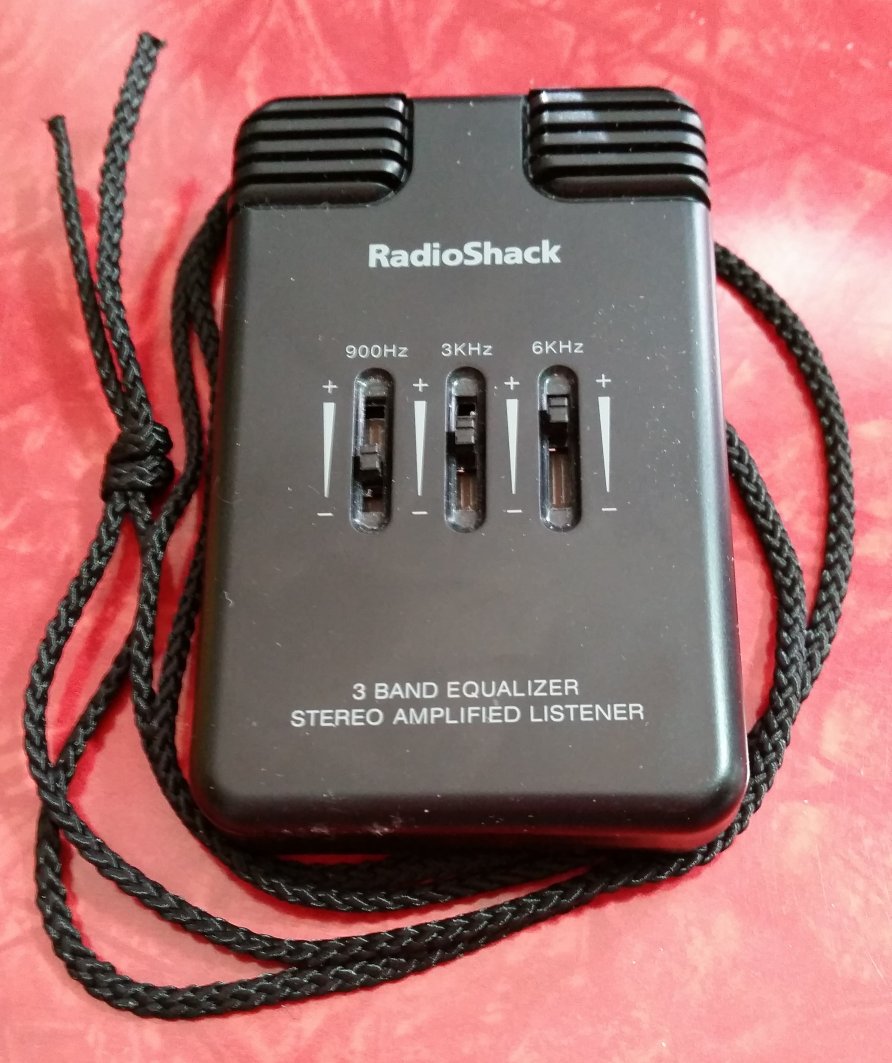
This is, effectively, a 3-band hearing aid. We inherited this one from someone else, but it works like a champ.

20150214_105542

One of the most useful devices I’ve ever had around the house. I wish it did the little mercury ones (I have a voltmeter for that) but this still works.

simon

Pocket “Simon.” Finally sold this one on eBay along with some other puzzles, but part of me wishes I had kept it just for the nostalgia value. But I’m sure my buyer is enjoying it.

There were countless other toys and gimmicks, as well as a pretty respectable combination turntable, dual cassette deck, CD player, and AM/FM stereo set we had for about 30 years; I just barely finished ripping my LP’s to digital format with it before it finally gave up the ghost.

Christmas time at Radio Shack was great in the 80s; there were countless fun gimmicks and toys, RC cars and trucks, and lots of things that kids would enjoy. As time went on, though, the offerings of this nature became slimmer and slimmer; cell phones became the dominant push, and everything else was secondary. According to the HuffPo article I referenced above,

RadioShack lost sight of who they were. Technology changed rapidly, but their gadgets did not, and many of them were rendered obsolete as smartphones came into the picture with apps that easily replaced them. They didn’t focus on the right things, and that led to fruitless attempts to become relevant once again.

Whether the company will survive in some form or other, or be acquired, or simply fade into oblivion, remains to be seen. For me, the most poignant image was not even real, but cleverly photoshopped – but it expressed in a single picture what I have been feeling over the last couple of weeks, as I digested the news of an old friend’s passing:

iG5Hj7g

The Old Wolf has spoken.

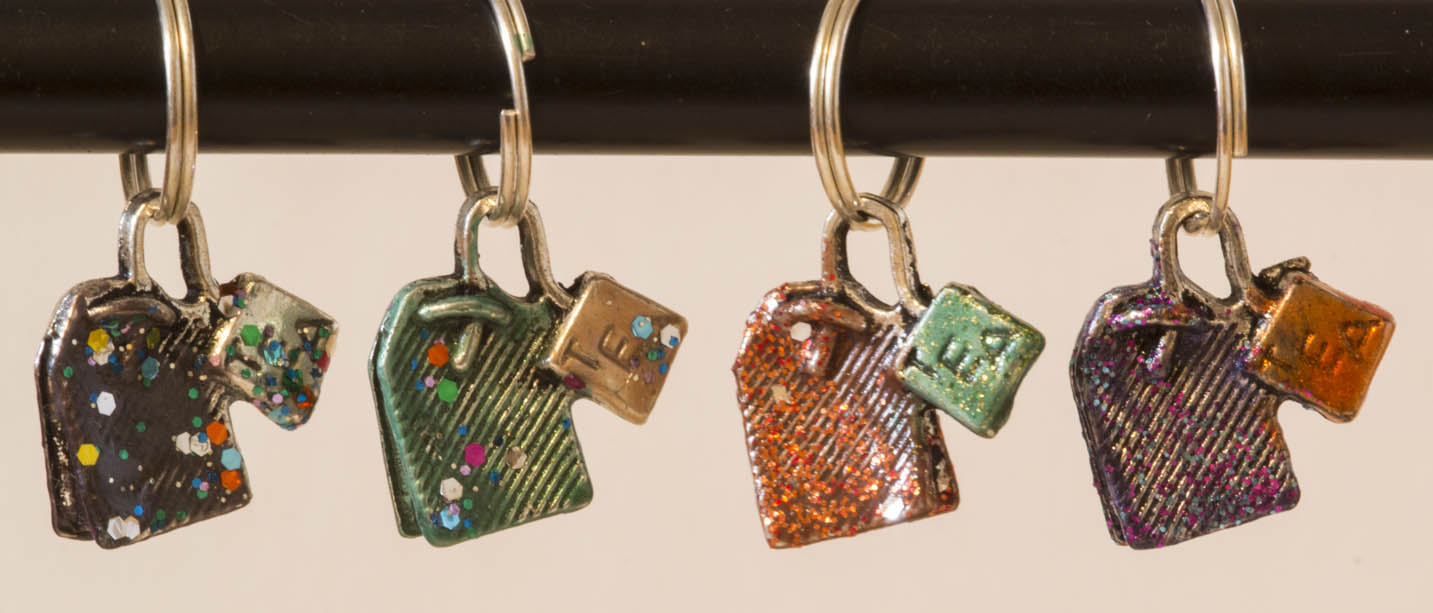
Custom Laser Engraving: Getting the Word Out

Business can be a fickle thing, sort of like success in show business. Some people just get lucky and get the breaks; others struggle for a lifetime to make a living at their craft.

Advertising is expensive, and from what I’ve seen, the only people who make money from advertising are the advertising promoters.

So here’s a bit of free exposure for some friends of mine up in Canada who could use a boost.

Fractal

They do all kinds of custom work.
pippin-memorial_th

Pet Gravestones


carved_fish_th

Wood Engraving


pal_water_bottle_th

Metal and Glass

If you have any needs in this area, I know they would appreciate your business. Visit them at www.fractalcoffee.com.

The Old Wolf has spoken.

16 things you should do at the start of every workday

Reblogged from Forbes, without the annoying slideshow.

whatever


You can do better than this!

16 Things You Should Do at the Start of Every Work Day

The first few hours of the work day can have a significant effect on your level of productivity over the following eight—so it’s important you have a morning routine that sets you up for success. With the help of career and workplace experts Lynn Taylor, David Shindler, Michael Kerr, Anita Attridge, Alexandra Levit and Michael “Dr. Woody” Woodward, I compiled a list of 16 things all workers should do when they get to work each morning.

Arrive on time.

This may be obvious to most people—but some don’t realize that showing up late can not only leave a bad impression, but also throw off your entire day. “Getting in on time or a little early helps your mindset for the day and helps promote a feeling of accomplishment,” says Lynn Taylor, a national workplace expert and author of Tame Your Terrible Office Tyrant.

Take a deep breath and meditate.

“Literally,” says Michael Kerr, an international business speaker, author and president of Humor at Work. “And do something to focus in on the here and now.” Many people come into work harried because they don’t leave enough time at home to deal with “home stuff,” he says, “and then they’ve barely survived another horrendously stressful commute, and then they dive into the madness.” Slowing down, taking a moment to pause, and creating a routine around centering yourself can work wonders, he adds.

Michael “Dr. Woody” Woodward, PhD, organizational psychologist and author of The YOU Plan, says after the deep breath, give yourself a few minutes to meditate and get settled in.“This is a good way to set the tone of the day,” he says. “Don’t allow yourself to be bum rushed by frantic co-workers lost in their own confusion. It’s not unusual to wake up to a long backlog of e-mails just screaming for your attention. The challenge is taking a moment for yourself before diving head first into your day.” He says there is a tremendous power in mediation when it comes to settling your mind. “Starting off your day right is really about setting your own tone and meditation is a great way to begin.”

Eat a proper breakfast.

“Breakfast truly is the most important meal of the day to help us down the path of not only being more physically fit, but also to have the mental energy needed to tackle your workday,” Kerr says.

Start each day with a clean slate.

You may have to attend to projects or discussions that rolled over from the previous afternoon—but try to treat each day as a fresh one, says David Shindler, founder of The Employability Hub and author of Learning to Leap. “Leave any crap from yesterday behind, tap into what’s happening at the outset of the day, get organized and ready or hit the ground running, if that’s what is needed,” he says.

Don’t be moody.

You’ll want to pay attention to your mood and be aware of its effect on others. “First and last thing in the day is when emotional intelligence can have the greatest impact,” Shindler says. So if you’re not a “morning person,” try to suck it up and have a positive attitude when you arrive at the office. Grab a second or third cup of coffee, if that’s what it takes.

Kerr agrees. “Your first hour at work can set your ‘attitude barometer’ for the rest of the day, so from a purely emotional point of view, I think it’s an important part of the day,” he says. “One morning grump can infect an entire team and put everyone on the wrong footing.”

Organize your day.

The first hour of the work day is the best time to assess priorities and to focus on what you absolutely need to accomplish, Kerr says. “Too many people get distracted first thing in the morning with unimportant activities such as diving right into their morass of e-mail, when there may be a whole host of more important issues that need dealing with.” Make a to-do list, or update the one you made the previous day, and try to stick to it. However, if your boss has an urgent need, then it’s OK re-shuffle your priorities within reason, Taylor adds.

Anita Attridge, a career and executive coach with the Five O’Clock Club, a career coaching organization, says when you prepare your morning to-do list, determine what must be done today and what can be completed tomorrow, and prioritize accordingly. “Also determine your peak working time and plan your schedule accordingly,” she says. “Use your peak time each morning to do the most important tasks.”

Be present.

Even if you’re not a morning person, you need to be awake when you get the office. Especially if you’re in a leadership position, it’s critical to be present, mentally and physically, and to communicate. “One of the biggest office pet peeves I hear from employees is about how their immediate supervisor just blows by them in the morning without so much as a smile,” Kerr says. “Taking the time to connect with your team members is essential, and doing the seemingly small things–making eye contact, smiling, asking them about their night, and checking in on what they may need help with–helps you as a leader take the pulse of the team, and helps set the tone for all the employees.”

Check in with your colleagues.

“A quick 5 to 10 minute team huddle can also be an effective way for many people to start their day,” Kerr says. Make it a short meeting, with no chairs, have everyone share their top goal for the day, and share any critical information the rest of the team absolutely needs to know, he says. “Doing the huddles helps people focus and more importantly, connects everyone with the team. And by sharing your goals for the day publicly, the odds of achieving them rise substantially.”

Organize your workspace.

Clearing off the desk and creating a neat workspace sets a tone for the rest of the day, says Alexandra Levit, the author of Blind Spots: The 10 Business Myths You Can’t Afford to Believe on Your New Path to Success. It can also help avoid confusion. “While most communications are through e-mails and texts, if your boss or co-worker stopped by looking for you and left a sticky note about a last-minute meeting occurring in ten minutes, and it’s sitting on a mound of mail or papers, you’re already behind the eight ball,” Taylor says. “Also, for many, it’s difficult to think clearly, easy to forget important reminders, and just plain stressful if you feel you’re fighting the battle and the tornado of mail or paper is winning.” Ideally, you’d clear whatever you can out the night before so you can have a fresh start before you even turn on your computer in the morning. But if not, make sure clearing your desk takes precedence over things like checking e-mails and chatting with co-workers in the morning.

Remind yourself of your core purpose at work.

“As corny or as trite as this may sound, I’d suggest that you take a moment each morning to remind yourself of your core purpose at work,” Kerr says. Connecting to a sense of purpose is one of the most powerful motivators there is, and taking just a moment each day to reconnect to what truly matters in your job and what you are ultimately trying to achieve and for whom, can help you feel more motivated and help you focus on the priority areas in your work.

Don’t be distracted by your inbox.

This one is difficult for most people—but the experts agree that you shouldn’t check your e-mail first thing in the morning. If you do, only read and respond to messages that are urgent. “Priority-scan your inbox,” Taylor says. “Not all e-mails were created equal. Hone your ability to quickly sift the wheat from the chaff and address what must be answered on an urgent basis.” Attridge agrees. “Only respond immediately to the urgent messages so that you control your morning activities.” There will be time during the day to respond to the less urgent e-mails.

Why must you put off checking e-mails? “For far too many people, e-mail and the web can serve as huge timewasters and distracters, particularly in the morning,” Kerr says. “Once you start checking e-mails, it’s a click away from watching the funny video someone forwarded you, which then sucks you into the abyss: checking the sports scores on line, the news headlines, the stocks, et cetera, and before you know it you’ve been watching a cat play the drums for twenty minutes and, like a poorly planned Oscars ceremony, your entire schedule is already thrown off before you’ve even begun your day.”

Listen to your voicemail.

Most people jump on the computer and ignore their phone. “While office voicemail is indeed becoming antiquated as people rely more on personal cell phones, Blackberrys and e-mail, some people do leave voice messages, and if you ignore them, you could miss something important,” Levit says.

Place important calls and send urgent e-mails.

If you know you need to get in touch with someone that day, place the call or send the e-mail first thing in the morning. If you wait until midday, there’s a greater chance you won’t hear back before you leave the office. “There’s nothing more frustrating that trying to complete something and not having access or answers from people you need because your day time hours were lost on other matters,” Taylor says. “If you have your questions ready and your e-mails fired off during early peak hours, by the end of the day you should have what you need.”

Take advantage of your cleared mind.

“Many people feel that their brains function best in the morning, and that morning is when they are most creative and productive,” Kerr says. “Consider whether you are making the best use of your brainpower and plan ‘high brain’ activities in the morning.”

Plan a mid-morning break.

“This is the time to assess where you and take time to revitalize yourself so that you can keep your momentum going,” Attridge says.

Some things just deserve to be shared.

I found this by chance over on Reddit, serendipitously, without looking for it, in a random discussion about Portland, Oregon. There were a lot of humorous comments – the article had to do with a dispute between passengers and a cabdriver, but then the conversation drifted into the nature of Portland as a city.

And then this gem popped up, written by /u/fwaht. I’ve corrected one or two things for spelling and style, but it’s otherwise unedited. The added emphasis is mine.

The “Successful” Person

If you’re what society calls a “successful” person, then you’re probably making more than two standard deviations above the mean, and you probably have a family. And you’re probably working a 9-5 job, or something like it, where you spend roughly ⅓ of all the waking time you’ll ever have doing it. And your employer wants your best time, the time where you’re most energetic and willing to get things done. Your other time is probably spent in a lethargic daze staring at a television (and as you age it gets worse). And why are you watching television instead of doing something you can look back on in ten years be proud of? Because only unsocialized losers haven’t seen the latest episode of American Idol or the latest sports event.

The average company is not run as a meritocracy. If you were a boss, would you want to see the person that quietly does excellent work and all but ignores you and everyone else get the promotion? Or would you want your “friend,” the guy that talks with you about football and your kids and makes you happy, to get the promotion even though he doesn’t do such great work?

No, you need to play the game. Most every business is its own Machiavellian-themed nightmare or kingdom depending on the ease with which corruption and deception and social lubrication comes to your character (and if it doesn’t come to you easily, then you will fall behind those that are better at it).

And what do you win after having beat this game? Retirement? You mean 10-20 years of low-quality life where you have the freedom that you could have had all your life if you chosen a life of less responsibility, of placing less importance in what’s expected of you than trying to do what you’ve always really, really wanted to do. Did you need those new cars, that large house and expensive furniture, the expensive meals, and so on and on? No, they made you happy for a short while, but then you just slid back into normalcy – you were on a hedonistic treadmill. Here you are, 60 years old, with all sorts of aches and pains, and remembering the senility your parents drifted into around this age. Remembering how you wished they just died quickly while feeling your intelligence diminish every year as it has since you reached 50.

And on your deathbed, what are you going to look back on and be proud of? Your children? They will die soon, and so will their children. In a short while you’ll be long forgotten as they will, and any trace of your genetic legacy will have disappeared – you aren’t Genghis Khan. Nothing of you will remain. And why should you care about such a thing after you’re dead anyway?

The “successful” person has sculpted their future and life into a hell worse than the one given to Sisyphus, and yet as miserable and meaningless as they are, they still come to think they’re better than others somehow.

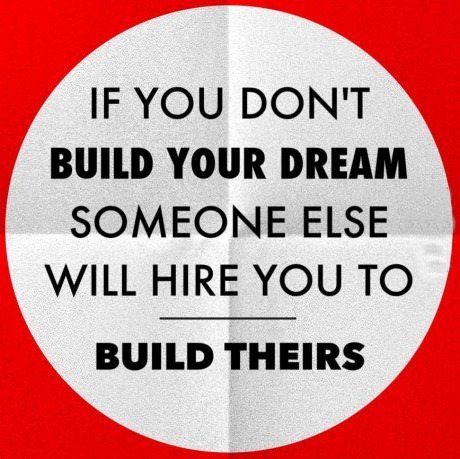
While this may sound a bit negative, it’s a very accurate distillation of business and working life, and a wakeup call to those who find themselves on the treadmill. This would be a good place to share another good tidbit I found while surfing around:

Dream

In the United States, it’s getting harder to build a successful business or enterprise on a shoestring; increasing regulation, coupled with the consolidation of wealth at the highest levels, has made it more challenging to get off the treadmill than it was for great-grandpa who started life manning a vegetable pushcart in Little Italy in 1900. Harder, but not impossible.

If a person is really interested in success that lasts, they won’t be able to measure it by the standards found in Corporate ‘Murica. From where I sit, true success can only be measured by the number of people one has served, and the level to which one has raised the human condition. Efforts of this nature will ripple through time, whereas the accumulation of stuff and the generation of progeny who will walk in the same corporate rut will, as fwaht has noted, be forgotten within a span of time so short as to be insignificant in social terms.

I am proud of my children – each of them is looking for ways to make a difference rather than to die with the most toys. It’s not easy, but keeping one’s eye fixed outside the societal box of corporate norms is the only way to ensure that one’s efforts count for something after our bodies have returned to dust.

The Old Wolf has spoken.

The Kel-Bowl Pac: Good ideas never die.

Kel-Bowl-Pac 2

In a previous post, I used this clever innovation to springboard an exploration of my earliest stirrings as a prescriptive grammarian – an affliction I am pleased to say I was able to shake off over time. It was a good idea, especially for its time; and even though the patent on the name has expired, and nothing is said about it any longer, the idea persists.

Friday we were coming out of a showing of “Now You See Me” – phenomenal show, by the way, I recommend it highly – and they were giving out sample packs of “Krave,” a new cereal that would rival Calvin’s “Chocolate Frosted Sugar Bombs” for unhealth:

Krave


But as I happened to examine the back, the light was just right and there they were… the Kel-Bowl-Pac perforations. I would be curious to know if anyone ever uses these little boxes the way they were designed, or if it’s just one of those manufacturing holdovers that no one ever thought to do away with. Whatever the case, it gave me a smile.

The Old Wolf has spoken.

The Illusion of Choice

tumblr_mpfs0vHzhg1sq2igro1_1280


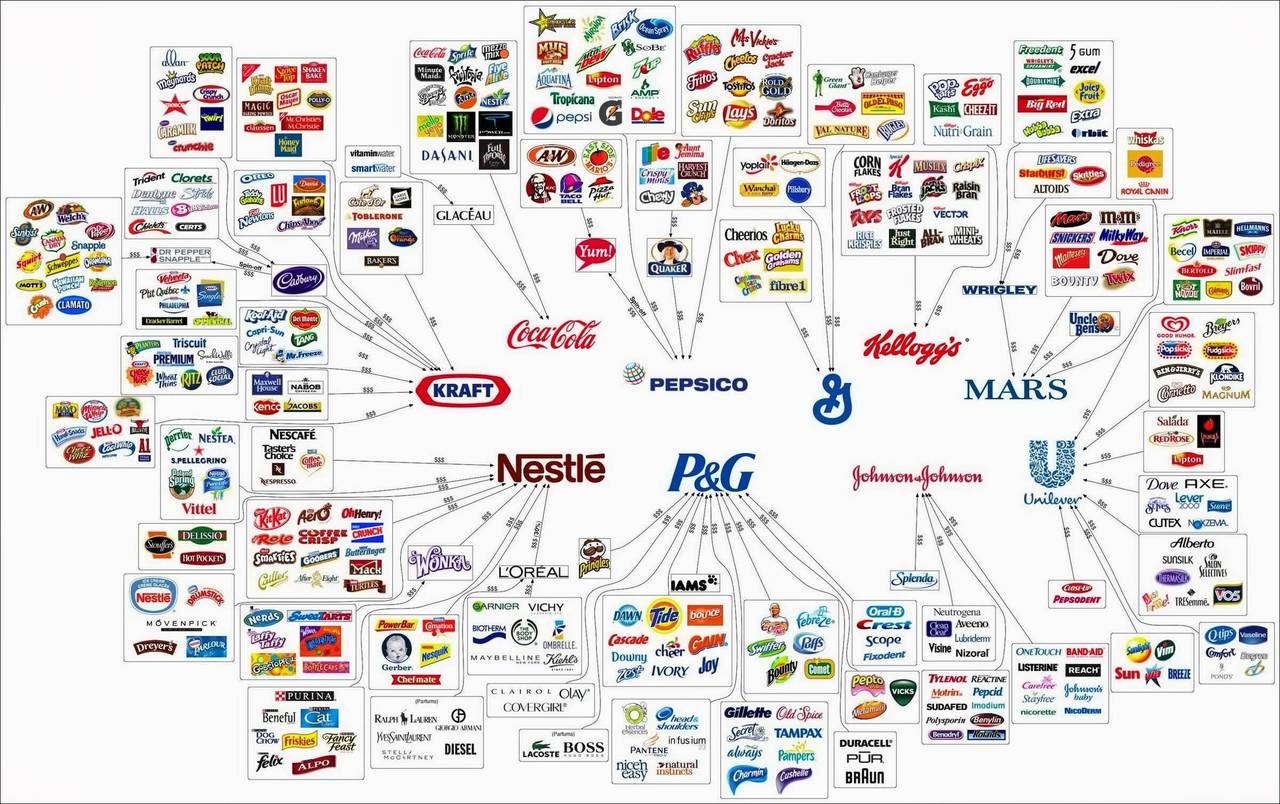
The above graphic (click on it for a larger version) shows how many brands and products are controlled by just nine food conglomerates. The chains go so deep that unless you have a roadmap, it’s almost impossible to know if a product you’re buying comes from an independent producer or one of the giants. Moreover, a number of these large entities have been in trouble with environmentalists and regulators for various advertising violations, health issues, or environmentally-unfriendly practices. If you’re trying to be a responsible consumer, it becomes a lot harder when there’s so much misdirection.

The good news is, the Internet has so much information available that with patience and diligence, almost any question can be answered. Just don’t trust sources like Ask.com or Yahoo! Answers, which are tantamount to the stupid leading the blind.

The Old Wolf has spoken.


What brand is your state famous for?

big


Click to enlarge

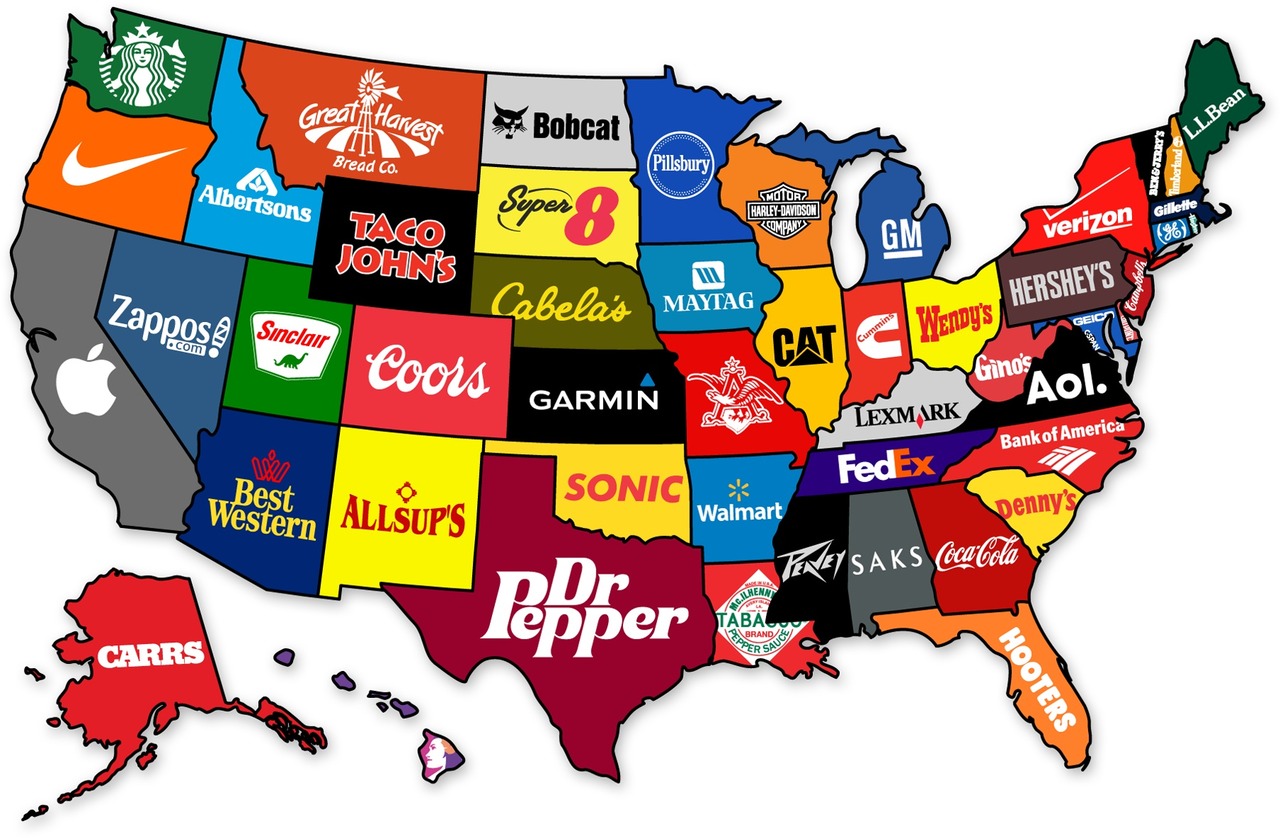
Found at designtaxi.com. Maps on the Web has created a map that shows the most famous brand to come from each state in the US.

For obvious reasons, the map is creating a stir among those who don’t agree with the particular choice made to represent their state. Regardless of how it all shakes out, I found the map intriguing as I only knew the origins of a few of these brands.

The Old Wolf has spoken.


New York Market, 1917

Interior retail stalls at Washington Market in New York City in 1917. New York Word-Telegram & Sun Newspaper Collection

12750u


While this is much larger and brighter, it still has the same feel of an indoor market I found in Toulouse, France in 1970:

Europe Trip - Jun 1971 - Toulouse Market


Of course, such places still exist: here Quincy Market in Boston:

quincy-market-4


I’ve always loved spaces like this, and I think we need more of them.

The Old Wolf has spoken.

Übercrappy and Filth

Abercrombie CEO Mark Jeffries still only wants ‘thin, beautiful’ customers. There’s only one problem.

fitch


Gacked from Reddit

This kind of corporate douchebaggery is, unfortunately, legal… but it certainly doesn’t make for a responsible corporate image. But A&F has a long, long tradition of being shallow and exclusive; I present for your gratuitous enjoyment a cartoon by Al Frueh, published in The New Yorker in 1926 (click for a larger version)

Abercrombie and Fitch


I remember buying one of A&F’s lighter-fluid-fueled hand warmers in their NYC shop as a kid, because it looked cool:

Handwarmer


It’s basically just a slow-burning lighter, but it worked great. Aside from that, I don’t think I’ve ever purchased anything from them over the subsequent 50 years. But then, I’m not one of the “beautiful people,” so that’s OK according to them.

The Old Wolf has spoken.