The Journey to Ethical Capitalism

A friend of mine posted the following image on Facebook, which got me thinking. And when I think, I have to write. Sorry.

To most of the world, the words America and Capitalism are synonymous. While we no longer look for Bolsheviks under our beds at night and the McCarthy era is thankfully over, there is still a cachet of disrepute about anything that seems remotely connected with the idea of socialism – one example that has long dwelt in my files is “The (Modern) Little Red Hen,”  originally Prepared by the Pennwalt Corporation and published March 1983:

Once upon a time there was a little red hen which scratched around the barnyard until she uncovered some grains of wheat. She called her neighbors and said, “If we plant this wheat, we shall have bread to eat. Who will help me plant it?”

“Not I,” said the cow.
“Not I,” said the duck.
“Not I,” said the pig.
“Not I,” said the goose.

“Then I will,” said the little red hen. And she did.

The wheat grew tall and ripened into golden grain.

“Who will help me reap my wheat?” asked the little red hen.

“Not I,” said the duck.
“Out of my classification,” said the pig.
“I’d lose my seniority,” said the cow.
“I’d lose my unemployment compensation,” said the goose.

“Then I will” said the little red hen. And she did.

At last it came time to bake the bread. “Who will help me bake the bread?” asked the little red hen.

“That would be overtime for me,” said the cow.
“I’d lose my welfare benefits,” said the pig.
“I’m a drop-out and never learned how,” said the duck.
“If I’m to be the only helper, that’s discrimination,” said the goose.

“Then I will,” said the little red hen. And she did.

She baked five loaves and held them up for her neighbors to see.

They all wanted some and, in fact, demanded a share. But the little red hen said, “No, I can eat the five loaves myself.”

“Excess profits!” cried the cow.
“Capitalistic leech!” screamed the duck.
“I demand equal rights!” yelled the goose.
And the pig just grunted.

And they painted “unfair” picket signs and marched around the little red hen, shouting obscenities.

When the government agent came, he said to the little red hen, “You must not be greedy.”

“But I earned the bread,” said the little red hen.

“Exactly,” said the agent. “That’s the wonderful free enterprise system! Anybody in the barnyard can earn as much as he wants. But under our modern government regulations, the productive workers must divide their product with the idle.”

And they lived happily ever after, including the little red hen, who smiled and clucked, “I am grateful. I am grateful.”

But her neighbors wondered why she never again baked any more bread.

Dr. Adrian Rogers, Southern Baptist pastor and conservative author, offered up this oft-quoted gem of wisdom:

“You cannot legislate the poor into freedom by legislating the wealthy out of freedom. What one person receives without working for, another person must work for without receiving. The government cannot give to anybody anything that the government does not first take from somebody else. When half of the people get the idea that they do not have to work because the other half is going to take care of them, and when the other half gets the idea that it does no good to work because somebody else is going to get what they work for, that my dear friend, is about the end of any nation. You cannot multiply wealth by dividing it.”

Rogers makes some valid points about taxation and how government is funded, but the quote most often appears in partisan screeds inveighing against the evils of forced income distribution (supposedly demanded by Democrats and other evil, liberal sectors of society.) But as convenient and gratifying as it may seem to take from the rich (who of course, have far more than they need) and to give to the poor (who are poor through no fault of their own, but rather because of the greed which festers in the corporate heart), taxing the pants off the 1% to give to the rest of us is not the idyllic answer that many would assume. A comprehensive solution is much more complex.

As the above cartoon illustrates, all is not well in the world’s greatest bastion of free enterprise. Despite quotes such as a recent one from Jon Voigt, to wit: “Capitalism is the only truth that keeps a nation healthy and fed,” as early as the end of the 19th century people were looking critically at the mechanisms we have developed to drive commerce and enterprise:

I heard the following story some time ago, and it’s always stayed with me.

The Fisherman

Author: Unknown

A boat docked in a tiny Mexican village. An American tourist complimented the Mexican fisherman on the quality of his fish and asked how long it took him to catch them. “Not very long,” answered the Mexican. “Why didn’t you stay out longer and catch more?” asked the American. The Mexican explained that his small catch was sufficient to meet his needs…and those of his family.

The American asked, “But what do you do with the rest of your time?” “I sleep late, fish a little, play with my children, and take a siesta with my wife. In the evenings, I go into the village to see my friends, have a few drinks, play the guitar, and sing a few songs … I have a full life.” The American interrupted, “I have an MBA from Harvard and I can help you! You should start by fishing longer every day. You can then sell the extra fish you catch. With the extra revenue, you can buy a bigger boat.”

“And after that?” asked the fisherman.

“With the extra money the larger boat will bring, you can buy a second one and a third one and so on until you have an entire fleet of trawlers. Instead of selling your fish to a middle man, you can then negotiate directly with the processing plants and maybe even open your own plant. You can then leave this little village and move to Mexico City, Los Angeles, or even New York City! From there you can direct your huge new enterprise.”

“How long would that take?” asked the fisherman. “Twenty, perhaps 25 years,” replied the American. “And after that?” the fisherman asked.

“Afterwards? That’s when it gets really interesting,” answered the American, laughing. “When your business gets really big, you can start selling stocks and make millions!”

“Millions? Really? And after that?”

“After that you’ll be able to retire, live in a tiny village near the coast, sleep late, play with your children, catch a few fish, take a siesta with your wife and spend your evenings drinking and enjoying your friends.”

  This is called “looking beyond the mark.”

In the headlong rush to profit from production, the corporate world somewhere lost sight of the fact that their producers were human beings who also needed to support themselves and their families:

Only one thing counted: the bottom line. MBA’s, CPA’s, and a whole plethora of alphabet-soup degrees became de rigeur in corporations, with the most successful being the ones who could trim the most fat from expenses, often at the expense of the very people who were creating the value.

For obvious reasons, these individuals often became the least popular in the company:

26174.strip

Scott Adams, Dilbert

Taken to its unpleasant but logical extreme, we end up with CEO’s and board members like this:

I once worked for a man who thought exactly like this. He came to our company from Hewlett Packard, and was probably the most evil individual I have ever had the misfortune of working for, a two-bit golf hustler who had parlayed his ability to manipulate people into a position of responsibility. [1] He used almost the same words when he told me he wanted me to spend less time with my church and my family, but I refused to kowtow and lick his boots. When, out of spite, he told me I needed to start working evenings and weekends, I told him, in so many words, to screw himself with a cactus. It was expensive for us, because the job had involved an overseas move, but it ended up costing the company because I sued their asses for breach of contract and they settled. Called my suit a “nuisance,” but they settled anyway. Although I have always tried to avoid Schadenfreude, I was quite gratified to hear that several months later, this bottom-feeder was terminated for malfeasance. And, it wasn’t too much later that the entire company went belly-up and was absorbed by a larger entity.

The news today is not good. The US has outsourced the majority of its well-paid manufacturing jobs to places like China and Pakistan and Madagascar. Few companies are hiring full-time employees; most are relying on temps or temp-to-hires, keeping hours below 30 hours a week to avoid having to provide benefits. For reasons incomprehensible companies still demand 110% effort and employee loyalty, even though they are not willing to reciprocate with job security or any sense of value toward their staff.

One of my favorite quotes from the Star Trek universe comes from  Jean-Luc Picard in “Star Trek – First Contact”:

The economics of the future is somewhat different. You see, money doesn’t exist in the 24th century… The acquisition of wealth is no longer the driving force in our lives. We work to better ourselves and the rest of Humanity.

In the framework of today’s economic environment, this dream seems about as attainable as replicators and holodecks – but there are some bright spots among the gloom, companies who are doing their best to buck the trend; companies like Costco have understood that treating their employees well is not an expense but rather an investment.

The creation of an economy based on the principle that people are more important than profits, while still recognizing that commerce is what drives the creation of wealth, is something that will require changes far beyond the confines of the boardroom. An excellent examination of how to work toward Ethical Capitalism is found at Common Dreams, which article I heartily recommend.

While the world of unbridled capitalism advances to the beat of “It’s not enough for me to win, everyone else has to lose,” other voices are becoming louder; the concept of degrowth [2] is looking more viable when compared to the alternative.

541869_273680836101555_1066674228_n

Glutting the smallest segment of society on the labors of the rest of us is a model that will ultimately implode under the weight of its own inequity; it cannot endure. As impossible as it might seem to restructure society in such a way that we build a world that works for everyone, with no one left out, it is morally imperative. As human beings we owe it to one another to give our fellow sojourners on this spaceship earth a fair shake. Any other course of action will have repercussions, even for the supposed “winners,” that will diminish us all.

In light of the above, I’d like to offer my own, slightly-modifed version of the first cartoon above:


The Old Wolf has spoken.


[1] If anything he said could be believed; in addition to his other scintillating qualities, he was without question a pathological liar.

[2] Degrowth … is a political, economic, and social movement based on ecological economics and anti-consumerist and anti-capitalist ideas. Degrowth thinkers and activists advocate for the downscaling of production and consumption—the contraction of economies—arguing that overconsumption lies at the root of long term environmental issues and social inequalities. Key to the concept of degrowth is that reducing consumption does not require individual martyring and a decrease in well-being. Rather, ‘degrowthists’ aim to maximize happiness and well-being through non-consumptive means—sharing work, consuming less, while devoting more time to art, music, family, culture and community. (Wikipedia)

Iconic Brands by State

We’ve seen basketball and we’ve seen football… now a map showing each state’s most iconic brand. (Click for a full-size version)

Brands

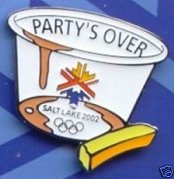
I certainly agree with the choice for Utah; Arctic Circle is known for being one of the first (if not the first) mass distributor of Fry Sauce. One of our 2002 Olympic Pins (several, actually) paid homage to this delicacy:

Fry  Fry2

And as a local alternative to the large national chains, I’ve always enjoyed their fare.

I found the list over at Thrillist; click through for some information behind the choices for each state.

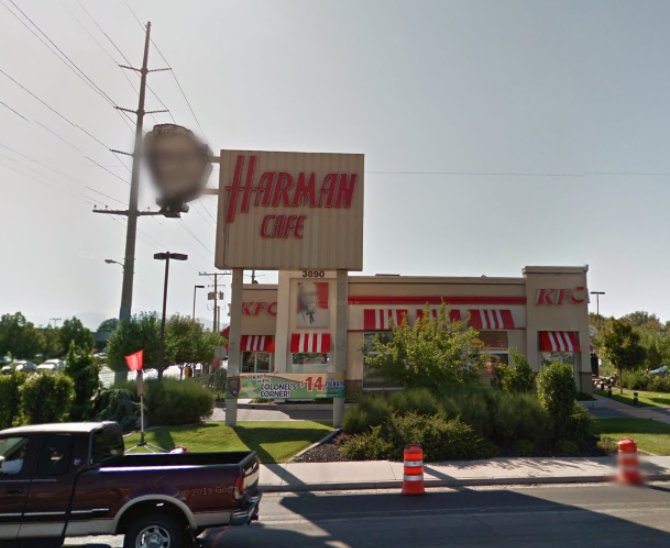
As a gratuitous piece of extra information, most folks don’t know that although Harlan Sanders began his business in Kentucky, the world’s first KFC franchise was opened by restaurateur Pete Harman in Salt Lake City – the first KFC franchise was opened at 3900 South State Street and remains there to this day:

Harman


As an item of curiosity, it appears that Google uses a certain amount of automated facial recognition on their street view images to protect privacy, which sometimes yields amusing results:

Blur

The Old Wolf has spoken.

The Salt of the Earth

If you ever wondered where your salary comes from… Well, at least the Romans did; the Latin word salarium, whence we get our word “salary,” shows that there was a solid link in place between employment, salt, and soldiers, although the link is no longer as clear as it seemed earlier.

Be that as it may, salt has been a critical commodity since the beginning of human history, whenever that was. Æons ago, I read a lovely story to my children, which was since republished by Nina Jaffe and Louise August as “The Way Meat Loves Salt: A Cinderella Tale from the Jewish Tradition“.

rabbi

Many years ago in Poland, there lived a rabbi who had a wife and three daughters. One day, the rabbi asks his children a powerful question: “How much do you love me?” His older daughters profess their love in gold and diamonds, but his youngest daughter, Mireleh, declares she loves her father the way meat loves salt. For this remark, she is banished from her father’s home. 

As the Rabbi comes to learn, Mireleh’s declaration was the most powerful of all.

Salt is essential for life. We can’t live without it; salt is composed of sodium and chlorine, and absent sodium in the diet, hyponatremia can cause coma or even death. Notice that doctors put blood pressure patients on low sodium diets, but not no sodium diets; some is always required to keep the body’s functions balanced. Add to that the valuable nature of salt as a preservative, and you can see why it’s been sought after since the dawn of time. In fact, if you want to read a charming science fiction short story about the discovery of salt as a cooking spice, read “First” by Anthony Boucher.

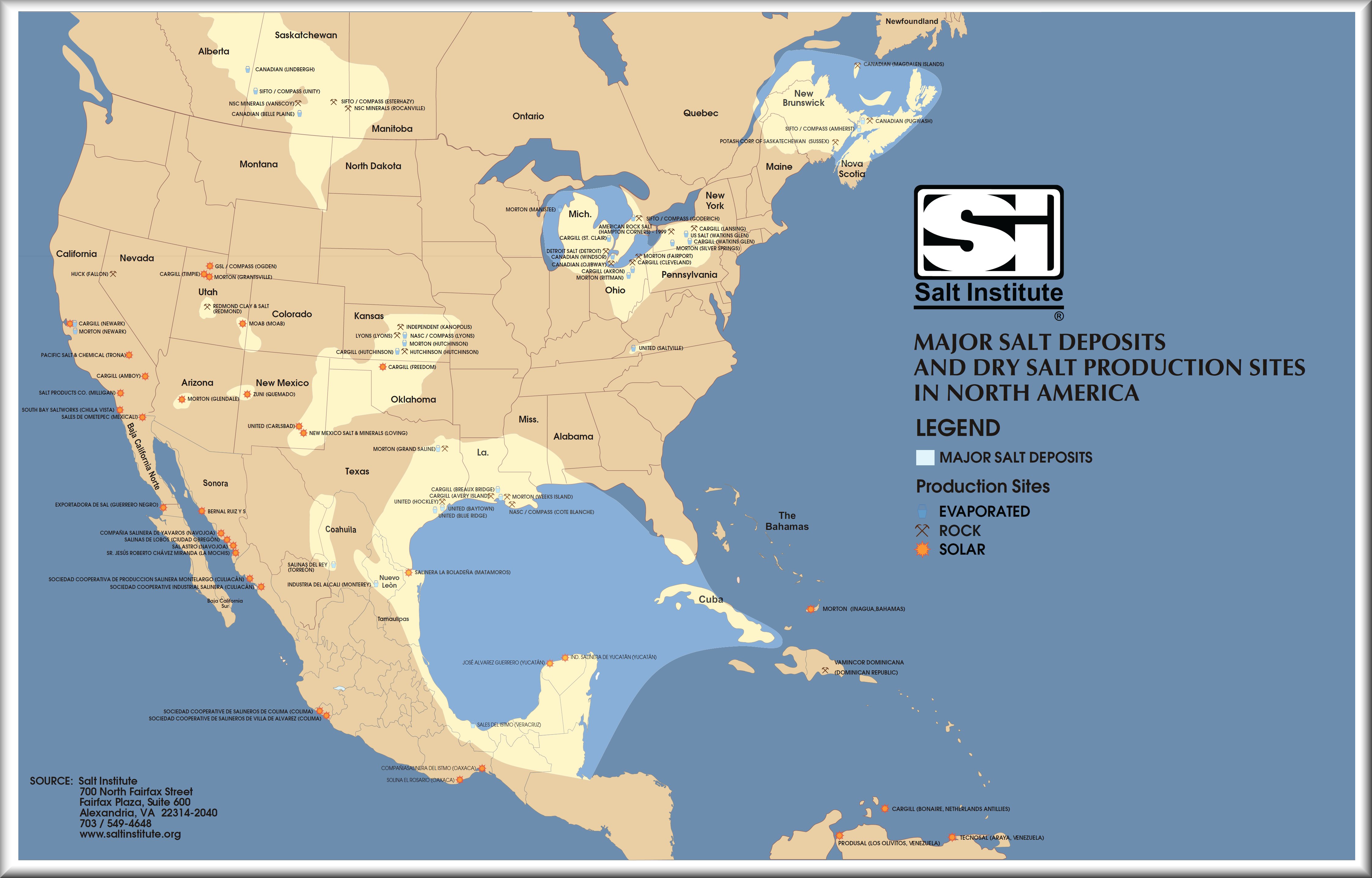
Have you ever wondered where our nation’s salt supplies come from?  Thanks to the Salt Institute, here a map of North America’s major salt deposits and production facilities (click for expanded view):

salt

Salt production has been central to the area around the Great Salt Lake since the arrival of Mormon pioneers in 1847, and continues today, although Morton now has a near monopoly on salt production in the area.

Salt was so essential to human life that many proverbs sprang up around its use; the following list was located at Seventh Wave:

  • “Give neither counsel nor salt till you are asked for it” English Proverb
  • “A kiss without a beard is like an egg without salt” Dutch Proverb
  • “The fish requires salt” Latin Proverb
  • “Without salt the feast is spoiled” Polish Proverb
  • Bread and salt never quarrel” Russian Proverb
  • “Don’t buy the salt if you haven’t licked it yet” Congolese Proverb
  • “Don’t slaughter more pigs than you can salt French Proverb
  • “If I peddle salt, it rains; if I peddle flour, the wind blows” Japanese Proverb
  • “What is salt to tasteless food what is a word to a foolish head” Turkish proverb
  • “Manage with bread and salted butter until God brings something to eat with it” Moroccan Proverb
  • “As a daughter grows up she is like smuggled salt” Chinese Proverb
  • “The cure for anything is salt water – sweat, tears, or the sea” Swedish Proverb
  • “Better a salt herring on your own table, than a fresh pike on another man’s” Danish Proverb
  • “With fortune on your side you can sow salt and harvest grass” Kurdish Proverb
  • “Eternity makes room for a salty cucumber” Russian proverb
  • “The lucky eagle kills a mouse that has eaten salt” Ugandan Proverb
  • “By bread and salt we are united” Moroccan Proverb

The Salty Old Wolf has spoken.

A profession you probably didn’t even know existed…

… and which doesn’t exist any more.

1360_10151738932328851_754066375_n

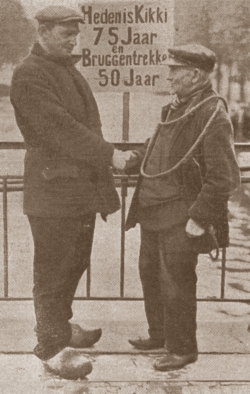
The “Kargadoor” (lit. “Cart-Move-Onward”) would help pushcarts over Amsterdam’s many humpback bridges (photo 1922).

I spotted this photo over at Reddit, posted by /u/lordsleepyhead, and found it intriguing.

Thanks to a friend, I found some further information over at De Jordaan (translation is mine)

High bridges were a source of income for the Kargadoor; these were men who pulled heavy hand carts over a bridge with a rope and hook. Their tool was a long rope with a hook on it. These cart pullers generally had a leather patch on their shoulder to keep from getting hurt by abrasion.
What’s more, this Kargadoor was in turn a source of income for the landlord of the slijterij de Grote Slok (Big Gulp Liquor Store) on the corner.
One of the bridges over the Prinsengracht was the domain of Kiki the Kargadoor. He would leave his permanent home when he had gathered six or seven cents; Kiki would disappear to spend his money on drink, all the while keeping the bridge in sight.
He was a bandy-legged little man who could swear like a champion; children always considered him to be a good language teacher.
Kiki was born in 1865 and had a home in the Boomstraat. He passed away at the Municipal Nursing Facility at the Roerstraat in 1940.

Hoist a glass to Kiki, the Kargadoor!

A60Mf133

The caption on the sign reads, “Today Kiki is 75. He’s been a Kargadoor for 50 years.”

The Old Wolf has spoken.

Really Old Stuff

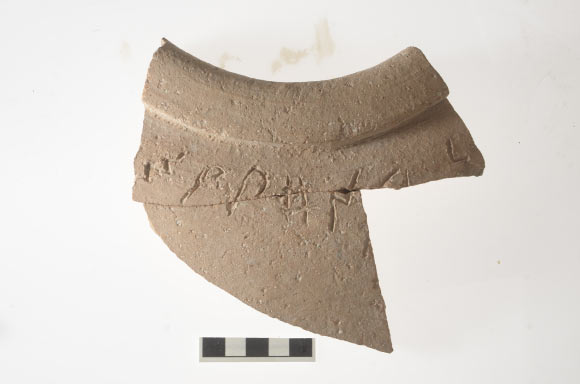
image_1217-Jerusalem


This is a picture of a pottery fragment bearing what is believed to be the earliest alphabetical written text ever found in Jerusalem. See more at Sci News.com.

_68733943_warrenfieldart


Even older, the image above represents an artist’s conception of Warren Field in Scotland about 10,000 years ago, with material burning in one of several pits which comprise the world’s oldest calendar.

The world is so full of a number of things…

The Old Wolf has spoken.

They speak the regular way

Which is the meaning of the name “Illinois.”

17


This map is intriguing. Prepared by the Atlas of True Names, it shows each state with the translated meaning of the state’s name. I wondered about the accuracy of the effort when I saw Utah described as “Land of the Sun,” when everyone here knows that Utah means “people of the mountains;’ however, a bit more digging revealed that linguistically, the word “Ute” means “the high land” or “the land of the sun,” which by metonymy could be extended to meaning the people who live in a high place, or the mountains.

Anyway, it’s presented here for your gratuitous enjoyment. Check out the other maps offered by the Atlas… I’d love to have some of these in hard copy on my walls.

The Old Wolf has spoken.

Islam: It’s not what you think (and yes, it is)

I’m not a Muslim, so from the outset I admit it’s unfair of me to even attempt any real assessment of the faith. However, I live (as do we all) in a world that is awash in Islamic issues and Islamic news stories and Islamic internecine conflicts and Islamic soul-searching.

Just today I came across two articles which I thought were intriguing and revelatory.

The Trouble Within Islam

The first, by the honorable Tony Blair [1], points out, legitimately, that there is a problem within Islam that it would be folly to ignore. This is, as the body of the article goes on to explain, is entirely different than claiming that there is a problem with Islam, as so many inflammatory websites and news pieces would have the world believe. It has become de rigeur in some circles to label any criticism of Islam as racist, or “Islamophobic;” nothing could be farther from the truth.

MPJn2Dc

If there is a problem with any ideology that threatens the peace and harmony of people and cultures which touch it, it must be subject to the closest of scrutiny and be willing to succeed or fail on its own merits. We are seeing this today, particularly in the USA where I live, as the humanist community shines the light of reason on the follies and excesses of religions, but particularly Christianity. If the institution has merit, it will endure. If it does not, ultimately it must re-invent itself or fall.

So yes, I agree – and have felt this way for a long time, particularly since the horrors of September 11th – there is a problem within Islam. However, as the second article illustrates, Islam is not what the slavering haters would have us believe.

Global Muslim Delegation Issues Unprecedented Statement Against Anti-Semitism

I have long called for the Islamic mainstream to stand up and shout their outrage about the rot that festers within their own community, much in the same way that mainstream Christians decry the brutal ignorance of the Westboro Baptist Church, and these brave people are doing just that. I laud them for their courage and humanity.

I’ve traveled much in the world, and spent a fair piece of time in Islamic countries. Islam is as varied as every single one of its practitioners, and as a result it’s an exercise in futility and unfairness for either outsider or insider to state unequivocally, “Islam is…”; but recognizing both that there are problems within the community that need to be addressed, and that there are people within the community who are making an effort to do so, are affirming and encouraging – at least to my way of thinking.

As humanity scrabbles its way out of the mud and continues to take baby steps towards the stars, it behooves us all to act as though we are living in a world that works for everyone, even if such a dream is still beyond our grasp.

The Old Wolf has spoken.


[1] Whether you think Mr. Blair is honorable is up to you. I know that during his tenure in office, he was probably as universally reviled as George W. Bush, with whom he collaborated with regards to the Middle East. History will judge; for myself, I respect the man and his efforts.

The Father of Terror

cBMU99R

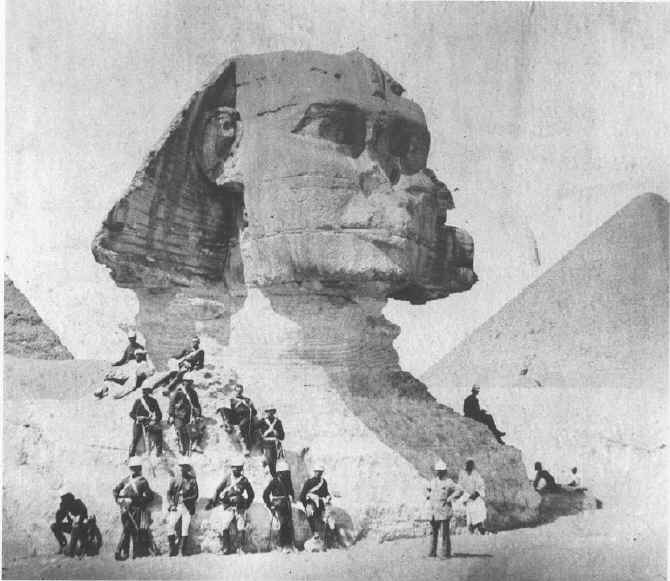
One of the oldest photos of the Great Sphinx, from 1880. Notice that much of the Sphinx is still under the sand.

Egyptians call him “أبو الهول” (abu al-hol, the father of terror or the terrifying one.)

Father of Terror 2

The sphinx – profile in 1976 © Old Wolf Enterprises

Built in around 2500 BC, that makes him close to 4,500 years old – an astonishing lifespan. The loss of his nose was attributed to Muhammad Sa’im al-Dahr in 1378, when he became angered that local peasants were making sacrifices to the sphinx for favorable crops. Today, however, we know better [1]. Despite weathering over time, for something so ancient, he has survived remarkably well.

Olfert_Dapper,_1665

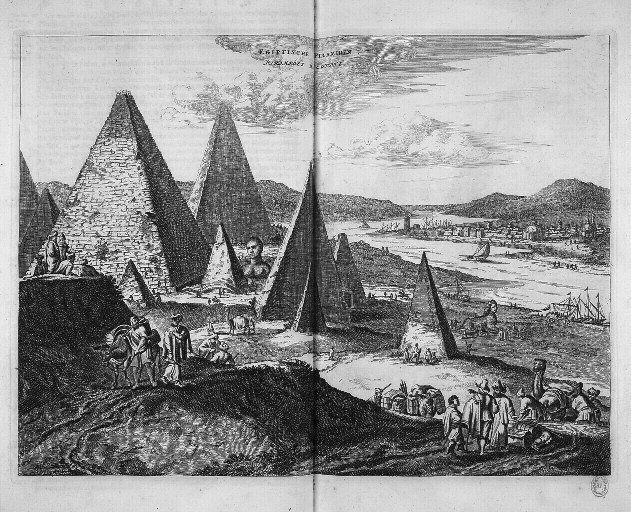
The Great Sphinx of Giza in Olfert Dapper, ”Description de l’Afrique” (1665) Notice that there are two sphinges [2]

From Wikipedia

From the Bronze Age, the Hellenes had trade and cultural contacts with Egypt. Before the time that Alexander the Great occupied Egypt, the Greek name, sphinx, was already applied to these statues. The historians and geographers of Greece wrote extensively about Egyptian culture. Heredotus called the ram-headed sphinxes criosphinges, and the hawk-headed ones hieracosphinges.

The word sphinx comes from the Greek Σφίγξ, apparently from the verb σφίγγω (sphíngō), meaning “to squeeze”, “to tighten up”. This name may be derived from the fact that the hunters for a pride of lions are the lionesses, and kill their prey by strangulation, biting the throat of prey and holding them down until they die. However, the historian Susan Wise Bauer suggests that the word “sphinx” was instead a Greek corruption of the Egyptian name “shesepankh,” which meant “living image,” and referred rather to the statue of the sphinx, which was carved out of “living rock” (rock that was present at the construction site, not harvested and brought from another location), than to the beast itself.

There was a single sphinx in Greek mythology, a unique demon of destruction and bad luck. According to Hesiod, she was a daughter of Orthus[8] and either Echidna or the Chimera, or perhaps even Ceto;[9] according to others, she was a daughter of Echidna and Typhon. All of these are chthonic figures from the earliest of Greek myths, before the Olympians ruled the Greek pantheon. The Sphinx is called Phix (Φίξ) [3] by Hesiod in line 326 of the Theogony, the proper name for the Sphinx noted by Pierre Grimal’s The Penguin Dictionary of Classical Mythology.

The Great Sphinx at Giza is not the only one around – there are countless sphinges throughout Egypt and elsewhere:

Memphis Sphinx

Sphinx at Memphis, Egypt

Luxor

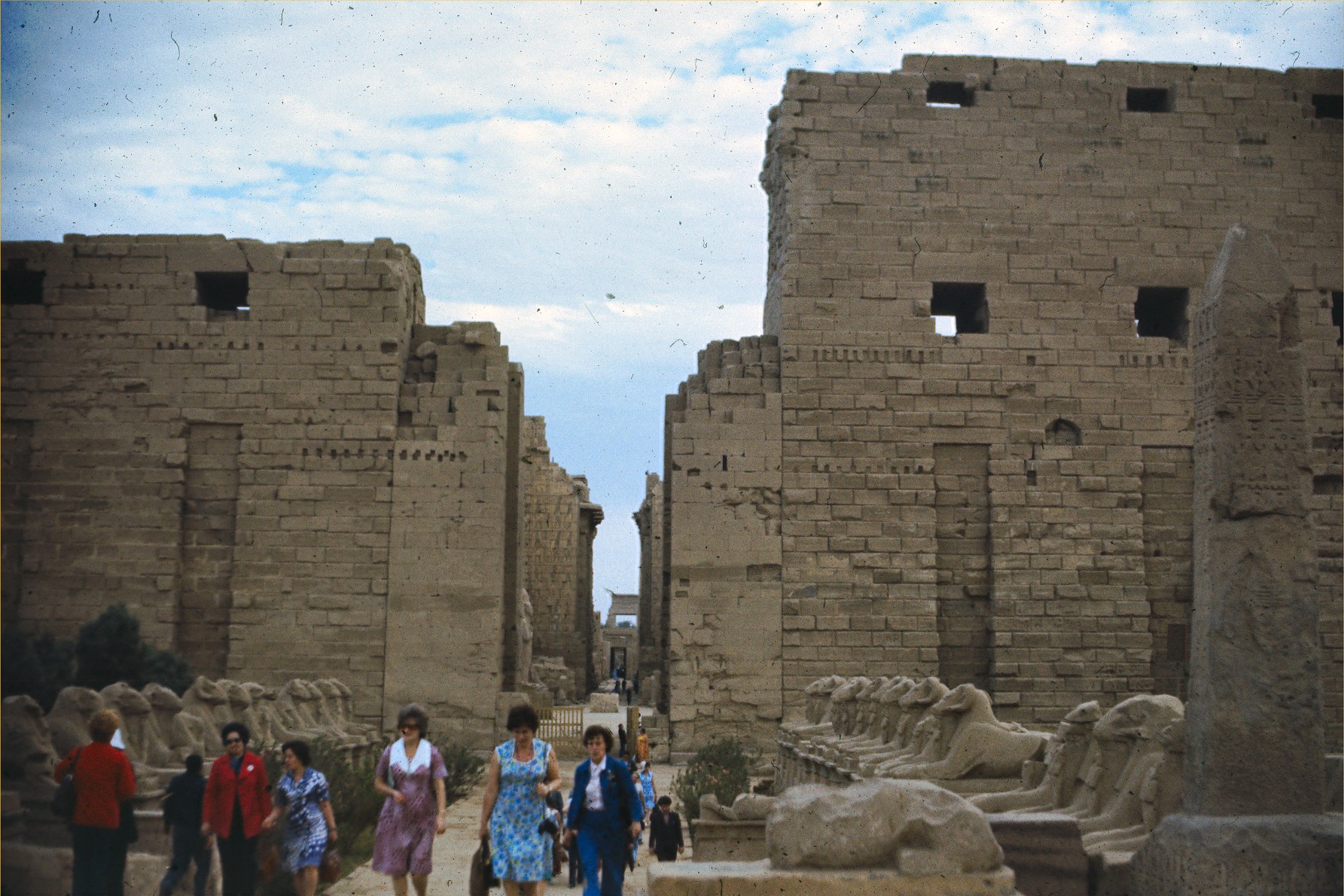
Rows of ram-headed sphinges at Luxor.

Regardless of the number, however, the Great Sphinx at Giza remains one of the wonders of the world from any century.

The Old Wolf has spoken.


[1]

Obelix

From Goscinny et Uderzo, Astérix et Cléopatre, Dargaud Editeur, 1965

[2] Sphinges is the classical plural for sphinx.

[3]

phix_1024x768

Phix, leading character in Paul Taylor’s Wapsi Square. Read it.

“Wapsi Square is named for the fictitious neighborhood in Minneapolis where the characters live. Its protagonist is Monica Villarreal, a feisty, busty, 4’10” tall latina who has recently moved from a safe world of normalcy where all she had to question was her own inner demons, to a world of supernatural lunacy, drunken college girls who have the power to obliterate the universe, an Aztec golem named Tepoz who can make the best damned martini in the world, a psychologist demon barista, and a host of other characters, some of whom may just live downstairs from you.” (Wiki)

Breakfast around the world

Reblogged from a post at Imgur.

Note: Comments over at Reddit have been a lot of “No, that’s not it you moron” and such like. I’ve experienced a lot of these, and can vouch for a number of them, including the USA, Australia, Germany, Turkey, Full English, Italy, France, Portugal, Canada, and Egypt. Of course, what you may be having in your pensione may be entirely different from what the folks upstairs are having in their apartment, but I can tell you these are pretty representative.

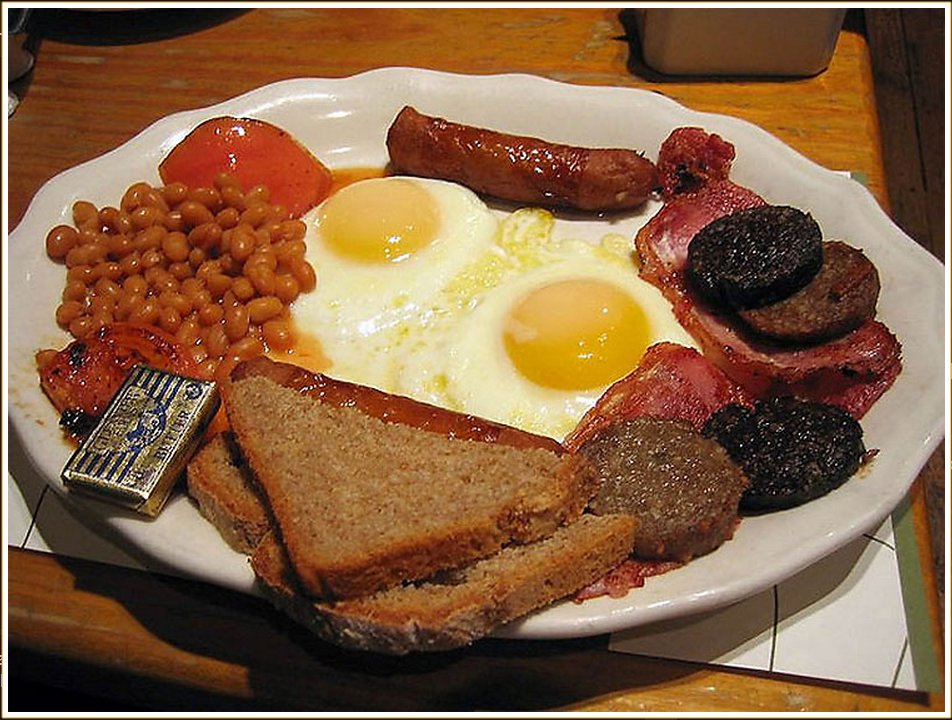
Full English

Full English

Sausages, bacon, eggs, grilled tomato, mushrooms, bread, black pudding and baked beans. Knocked back with a cup of tea.

Cuba

Cuba

Usually consists of sweetened coffee with milk with a pinch of salt thrown in. The unique Cuban bread is toasted and buttered and cut into lengths to dunk in the coffee.

Poland

Poland
Known locally as Jajecznica, consists of scrambled eggs covered with slices of kielbasa and joined by two potato pancakes.

Morocco

IFLrBT3[1]
Usually consists of different breads with some chutney, jam, cheese or butter. They have a really delicious crumpet-style bread which they make in huge slabs for you to tear a bit off, and a semolina pancake bread called Baghir.

Portugal

hgPT35F[1]
Delicious and simple, stuffed croissants and plenty of coffee served in the sun.

Australia

ajKtk1k[1]
Only one crucial ingredient here, Vegemite. Traveling Aussies are often found with a sneaky pot of the sticky, salty brown stuff in their backpack. Just don’t get in the Vegemite vs Marmite war – everybody knows Marmite is better, but let them have their fun.
Note: The original author is obviously touched in the head. Marmite, and Parwill, but Vegemite is the king of the yeast spreads.

Brazil

zMiTGz3[1]
A selection of meats, cheeses and bread is the normal breakfast fare.

Italy

K2yhmFe[1]
‘Cappuccino e cornetto’ aka a cappuccino and croissant.

Germany

t2sl5kF[1]
Wursts, local cheeses and freshly baked bread, all washed back with a strong coffee.

America

tDVKQGF[1]
Home made thick pancakes with bacon, syrup and blueberries.

France

CgEb9Dq[1]
Le croissant, plain or with crushed almonds, butter, chocolate or cream., and coffee of course.

Argentina

lhNnu7a[1]
Usually consists of “mate” (an infusion drink made with leaves of “yerba”) or dulce de leche with “facturas,”a croissant-like typical pastry.

Canada

YtDiSDI[1]
Perogies are boiled, baked or fried dumplings made from unleavened dough and traditionally stuffed with potato filling, sauerkraut, ground meat, cheese, or fruit. Then you’ve got some sausages and toast to mop it all up.
Note: That, or they go to Tim Hortons

Mexico

qI4NMDw[1]
The delightful plate above consists of beef tips, chilequiles and other assorted goodies eaten in Manzanillo. Nachos, cheese and beans always feature heavily and a delicious, spicy breakfast is the norm.

Thailand

FhA7dCx[1]
Usually consists of some meaty treat dropped in a semolina/porridge mixture. What you see above is pork porridge. It features Chinese doughnuts, beansprouts, pork intestine stuffed with peppery pork mince, sliced pork heart, stomach slivers and blood pudding. A bit more interesting than toast and jam anyway.

Bolivia

WyC9RR1[1]
Saltenas are a bit like empanadas crossed with Cornish pasties. They’re the traditional option for a Bolivian breakfast and usually filled with meat and vegetables, and slightly sweetened with sugar.

Egypt

oBLyadD[1]

The breakfast of choice here is Foul Muddamas. It’s made from fava beans, chickpeas, garlic and lemon. Above you’ll see the dish topped with olive oil, cayenne, tahini sauce, a hard boiled egg, and some diced green veggies.

Note: it’s pronounced “fool”

Japan

0TsoiK7[1]
What do you mean you’ve never had tofu for breakfast? It’s a popular choice in Japan, along with fish and rice. Soak it in soya sauce and you’ve got yourself one delicious, and semi-healthy breakfast.

China

ITn4PsJ[1]
A lot like lunch and dinner in China. Expect noodles, rice, sticky coated chicken and fried veggies.

Mongolia

DIgRDqP[1]
Generally consists of boiled mutton with lots of fat and flour and maybe some dairy products or rice. In western Mongolia they add variety to their diets with horsemeat.

Pakistan

Awt9VAL[1]
In Pakistan you’ll get Aloo Paratha for your breakfast. It’ s an Indian unleavened flatbread made by pan frying, wholewheat dough on a tava. The dough contains ghee and the bread is usually stuffed with vegetables. It’s best eaten with butter, chutney or some other spicy sauce. It’s not uncommon to roll it up and dip it in your tea.

Estonia

xmHJJJP[1]
Curd cheese on a wheat bloomer – known locally as ‘cheese on toast’. The creamy topping can be supplemented with ricotta or fromage fraiche instead, if you prefer.

Venezuela

2Nw7EsT[1]
Empenadas are the order of the day. Fill the little pastries with fresh cheese, minced meat or any combination of veggies and beans.

Ghana

E4S1Sws[1]
The most popular breakfast item in this African country is waakye. It’s basically rice cooked in beans and is found at all the street stalls in Ghana.

Turkey

Ku6tfQa[1]
The full Turkish treatment usually consists of a few varieties of cheese, butter, olives, eggs, tomatoes, cucumbers, jam, honey, and spicy meat.
The Old Wolf is now hungry.