Unneccessary Dairy Overlap

Saw this today over at Frog Blog:

It reminded me that my grandmother, gone to her reward these 33 years, used to be terribly precise about how she made sandwiches.

A great cartoon over at Left-Handed Toons addressed this issue with regards to how Subway made their sandwiches:

I always thought this was terribly funny, mostly because it was true. What I didn’t know is that people like Drew Mokris, poking merciless fun at Subway for their un-geometric procedures, actually made a difference. At least in Australia and New Zealand.

Found this over at Gawker; the original article from The Consumerist is gone (and their robots.txt file stopped the Wayback Machine from scraping it), but it was picked up by various news feeds, including NPR.

However, not all store managers were down with the change:

This manager is a douchebag.

And the article over at the Inquisitr documents one particular sandwich artist named Chris whose sole purpose in life appeared to be frustrating customers.

I’ve been working at subway for about a year and a half, and it always amuses me when people complain about not tessellating cheese. Now, merely to amuse myself, not only do I not tessellate the cheese, but I also leave gaps in the cheese placement so that an indeterminate amount of your bites will be cheeseless. Also, I put a really small amount of dressing on your sandwich whenever you ask for it. Then when you ask for more, I squirt out a large quantity before you can say stop so that your sandwich has far too much dressing. Then, when I cut the sandwich in half, I only cut it 3/4ths of the way through so that you have to messily tear the rest of the sandwich yourself.

Yes, he’s a douchebag too. If I were running a Subway store, he’d be looking for a job at McDonald’s faster than you can say “bogan.”

I don’t eat at Subway all that often, but I’ve never had a bad experience there. Now I’m tempted to go, just to see how they do it in my vicinity.

The Old Wolf is hungry.


The Sad Death of Cromarty, 7rl

Bobby Hogg, 1920-2012

Today the Daily Mail reported the passing of Bobby Hogg, go ndéanai Día trocaire air [1], the last speaker of Cromarty, or the Scottish Black Isle fishing dialect. Bobby Hogg was 92, and last year his brother Donald left the world at age 86, leaving Bobby alone as the only speaker of the dialect.

Donald Hogg

Every fortnight, one of the seven to eight thousand languages spoken on the planet passes into history; the National Geographic maintains an intriguing interactive page of linguistic hotspots which illustrates places in the world where languages are the most threatened. Most of these tongues belong to aboriginal or minority populations, languages like Chulym or Tofa, spoken by a hunter-gatherers who also herded reindeer. Specializing in a skill often allowed a language to develop complex meanings with a single word; for example, the Tofa word döngür means “male domesticated reindeer in its third year and first mating season, but not ready for mating.” [2] But as Hogg’s death has pointed out, there are languages and dialects (dissertations have been written about the difference, and linguists love pseudo-intellectual straining at gnats) which are dying a lot closer to home.

I noticed with interest that there is no color on the Geographic’s page along the western coast of Ireland or in Scotland, yet the Gaelic languages have suffered significant losses. Dolly Pentreath who died in 1777 was the last native speaker of Cornish; Ned Maddrell, who passed away in 1974, was the last native speaker of Manx. [3]  Both tongues experienced scholarly revivals, and each language now has second language speakers and a few children who are being raised as native speakers. Scots Gaelic (Gàidhlig), Irish Gaelic (Gaeilge), Welsh (Cymraeg) and Breton (Brezhoneg) are all relatively endangered, although Welsh and Breton are the strongest, and Irish is being valiantly if ineffectively promoted and defended by the government and various groups within Ireland.

Which brings me to the “7rl” up in the title of this post.

In 1970, I had completed my second year of college and was back in New York for a few weeks before heading off to Naples, Italy for a year of work and study abroad. I stopped into a bar to use the phone and ended up talking to the bartender for a few minutes; when he found out I was studying languages, he said to me, “Well, don’t learn Irish.” That was like asking Maru not to jump in a box – I promptly went out and found a copy of Teach Yourself Irish by Myles Dillon and Donncha Ó Cróinín. Unfortunately, this book was printed before Irish spelling reform eliminated most of the silent consonants used in their hellish spelling (you will note that I said “most” – there are still plenty left!) – and without any real guide to pronunciation, I was unable to make any headway with the language, so I put the book on my shelf where it sat gathering dust.

20 years later, however, I stumbled across Linguaphone’s Cúrsa Gaeilge (Irish Course) in the West Valley City library – and it included tapes which became my Rosetta Stone; Irish is a beautiful and intriguing language which I continue to study as time permits. I’ve even attended an Irish Weekend in San Francisco, and would go back every year if resources permitted.

 Irish postal vans used to carry the logo

which stood for “Post agus Telegrafa” (Post and Telegraph); there are still some old manhole covers and other relics around bearing this logo as well. The image below shows clearly that the siglum is not a number 7, but rather a different symbol altogether.

Wikipedia reports that “the Tironian sign resembling the number seven (“7”), represents the conjunction et, and is written only to the x-height; in current Irish language usage, this siglum denotes the conjunction and.” Thus in the Irish language, “7rl” stands for either “agus rudaí eile” or “agus araile,” both of which mean “etcetera” or “and so forth.” [4]

Coming full circle, there are some great (if sparse) resources about the Cromarty dialect out there:

  • Am Baile, the Highland Council’s History and Culture website, published a pamphlet about the Cromarty dialect which includes a lexicon (2.3 MB pdf file)
  • 20 audio clips of Bobby and Donald talking about their dialect can be found here.
  • The Telegraph printed an article in 2007 about Bobby and Donald, including the following phrases:

Talking Cromarty

Thee’re no talkin’ licht You are quite right
Ut aboot a wee suppie for me Can I have a drink too?
Thee nay’te big fiya sclaafert yet me boy You are not too big for a slap, my boy
Pit oot thy fire til I light mine Please be quiet, and allow me to say something

I love this last one; while American English has some colorful dialects buried in remote pockets, our language is pretty bland when it comes to expressions like this.

The death of a language is a tragic thing, because it means the loss of so much culture and history that went along with its speakers. I support the efforts of organizations like Am Baile and Daltai na Gaeilge to encourage the use and revitalization of these beautiful and intriguing tongues.

Tá an sean-fhaolchú labhartha.


Notes:

[1] Irish for “May God have mercy on him”

[2] Astute readers will say, “Oh yeah – just like Eskimos have 23 (or 42, or 50, or 100) words for snow.” One such published list of Inuit words for snow follows:

Aiugavirnirq – very hard, compressed and frozen snow
Apijaq – snow covered by bad weather
Apigiannagaut – the first snowfall of Autumn
Apimajuq – snow-covered
Apisimajuq – snow-covered but not snowed-in
Apujjaq – snowed-in
Aput – snow
Aputiqarniq – snowfall on the ground
Aqillutaq – new snow
Auviq – snow block
Katakaqtanaq – hardcrust snow that gives way underfoot
Kavisilaq – snow roughened by snow or frost
Kiniqtaq – compact, damp snow
Mannguq – melting snow
Masak – wet, falling snow
Matsaaq – half-melted snow
Mauja – soft, deep snow footsteps sink into
Natiruvaaq – drifting snow
Pirsirlug – blowing snow
Pukajaak – sugary snow
Putak – crystalline snow that breaks into grains
Qaggitaq – snow ditch to trap caribou
Qaliriiktaq – snow layer of poor quality for an igloo
Qaniktaq – new snow on ground
Qannialaaq – light, falling snow
Qiasuqqaq – thawed snow that re-froze with an icy surface
Qimugjuk – snow drift
Qiqumaaq – snow with a frozen surface after a spring thaw
Qirsuqaktuq – crusted snow
Qukaarnartuq – light snow
Sitilluqaq – hard snow

Well, it turns out that the truth is both far more simple and far more complex. There’s a difference between packing semantic density into a single discrete lexical item, and using multiple suffixes to produce new meanings from a single root. At Language Log, Geoffrey K. Pullum, author of The Great Eskimo Vocabulary Hoax, said:

“If you wanted to say “They were wandering around gathering up lots of stuff that looked like snowflakes” (or fish, or coffee), you could do that with one word, very roughly as follows. You would take the “snowflake” root qani- (or the “fish” root or whatever); add a visual similarity postbase to get a stem meaning “looking like ____”; add a quantity postbase to get a stem meaning “stuff looking like ____”; add an augmentative postbase to get a stem meaning “lots of stuff looking like ____”; add another postbase to get a stem meaning “gathering lots of stuff looking like ____”; add yet another postbase to get a stem meaning “peripatetically gathering up lots of stuff looking like ____”; and then inflect the whole thing as a verb in the 3rd-person plural subject 3rd-person singular object past tense form; and you’re done. Astounding. One word to express a whole sentence. But even if you choose qani- as your root, what you get could hardly be called a word for snow. It’s a verb with an understood subject pronoun.”

The entire page is worth reading if you’re interested in such things.

Another example of aggressive word formation comes from the Turkish language. It is said that the single word Avrupalılaştırılamayabilenlerdenmısınız is the equivalent of an entire sentence: “Are you one of those who is not easily able to be Europeanized?” This, however, is misleading because Turkish agglutinates (i.e. crams whole bunches of stuff together); it’s not really fair to call the monstrosity above a “word.” Here’s a breakdown of how the thing is put together:

Avrupa: Europe
Avrupa-lı: European
Avrupa-lı-laş-mak: become European (mak is the infinitive ending)
Avrupa-lı-laş-tır mak: to make European
Avrupa-lı-laş-tır ı l mak: (reflexive) to be made European (with the linking consonant “l”)
Avrupa-lı-laş-tir ıl abil mek: to be capable of being Europeanized (the infinitive ending mak changes to mek because of vowel harmony)
Avrupa-lı-laş-tır ıl ama mak: not to be capable of being Europeanized
Avrupa-lı-laş-tır ıl ama y abil mek: this time the  abil is probability: that there is a probability that one may  not be capable of being Europeanized
Avrupa-lı-laş-tır ıl ama y abil en: the one that may not be capable of being Europeanized
Avrupa-lı-laş-tır ıl ama y abil en ler: the one that may not be capable of being Europeanized (-ler, -lar is the plural suffix)
Avrupa-lı-laş-tır ıl ama y abil en ler den: of or from the ones who may not be capable of being Europeanized
mı?   question tag (officially, this should be written separately, but it’s very common usage not to do so)
mısınız?  are you (Second person plural, also used for formal second person singular)

[3] At one point as I was following my passion for all things Celtic, I stumbled across a Manx Language resource page and discovered to my delight that the spoken samples by Ned Maddrell and John Kaighin were close enough to Irish to be understandable. I regret that I don’t have time to dig deeper into this language.

[4] Which reflects the nature of many of my posts here… pretty much a free-association experience. Sorry.

Hannover, 1983

Herrenhausen fountains

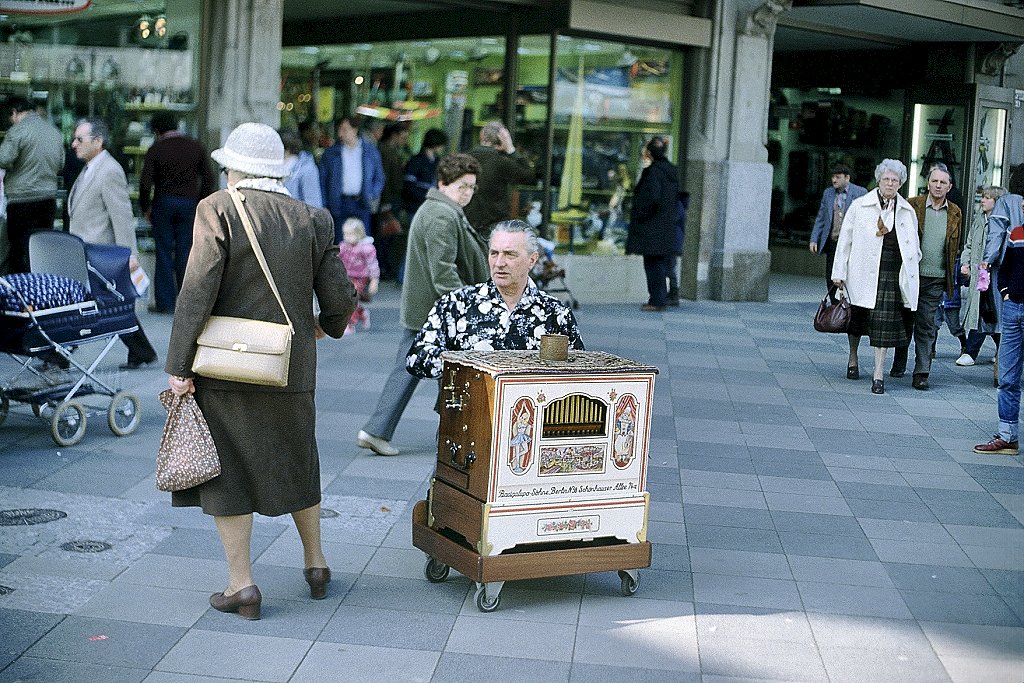
A Hannover busker

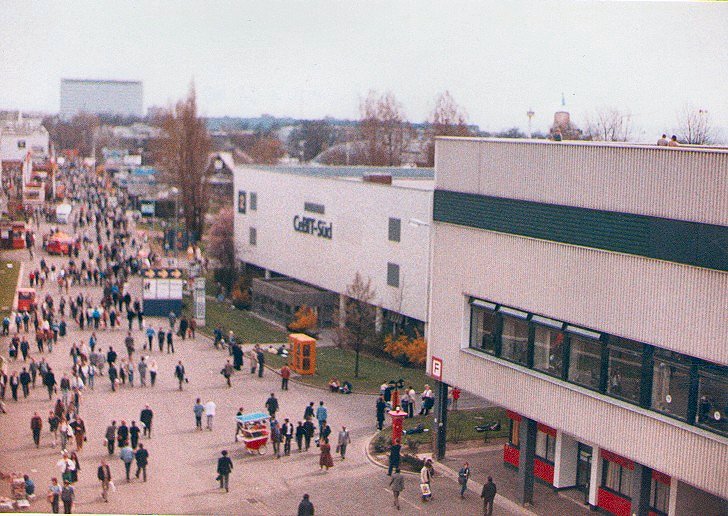
CeBIT Fair: Hannover, 1983

Data General booth at CeBIT

The Data General MV 10000 – only the latest technology.

Herrenhausen Gardens

Outdoor Cafe in Herrenhausen

Herrenhausen Gardens

Hannover – Organ Grinder

Downtown Hannover – 1983

All photos ©1983-2012 Old Wolf Enterprises

Auf euer Wohl!

Egypt, 1976

In December of 1976 I had the chance to visit Egypt. This is a small sample of some of my favorite images from the trip.

Aswan – Aga Khan Mausoleum

Cairo – Muhammad Ali Mosque

Abu Simbel temple exterior

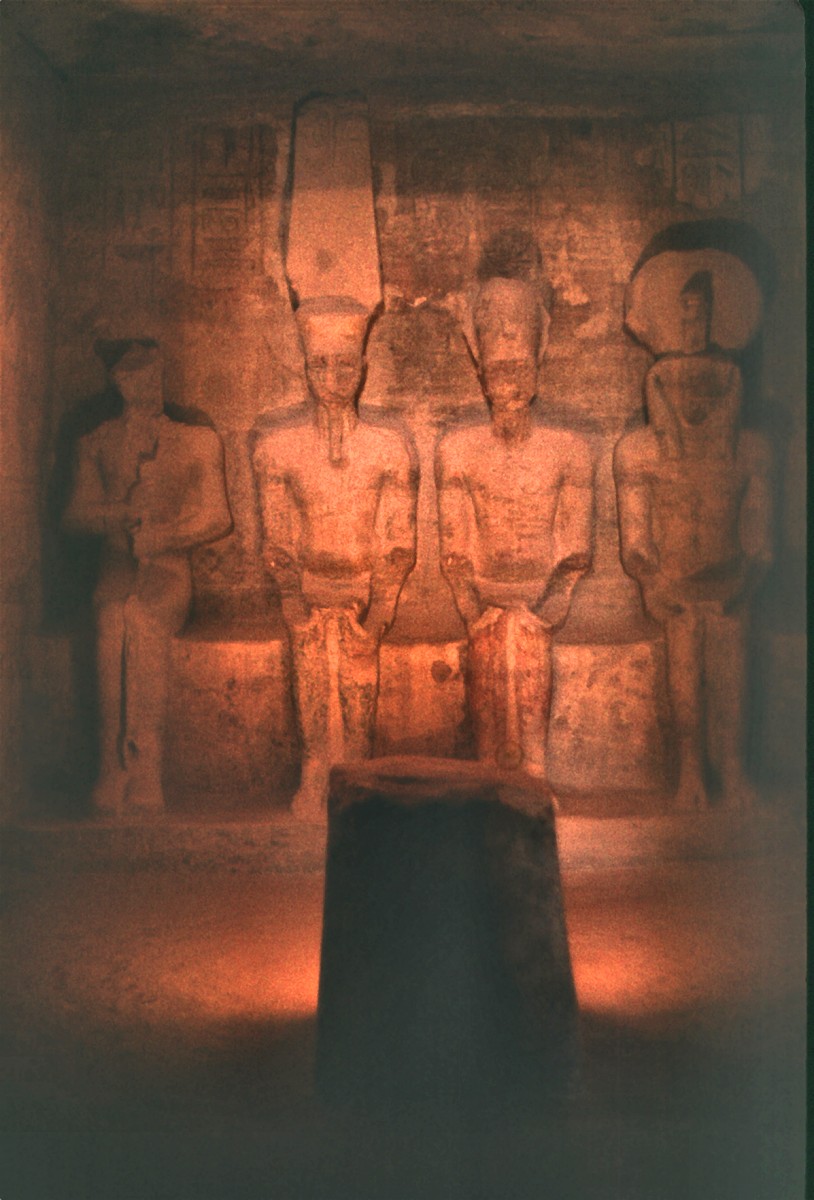
Abu Simbel Temple – Interior

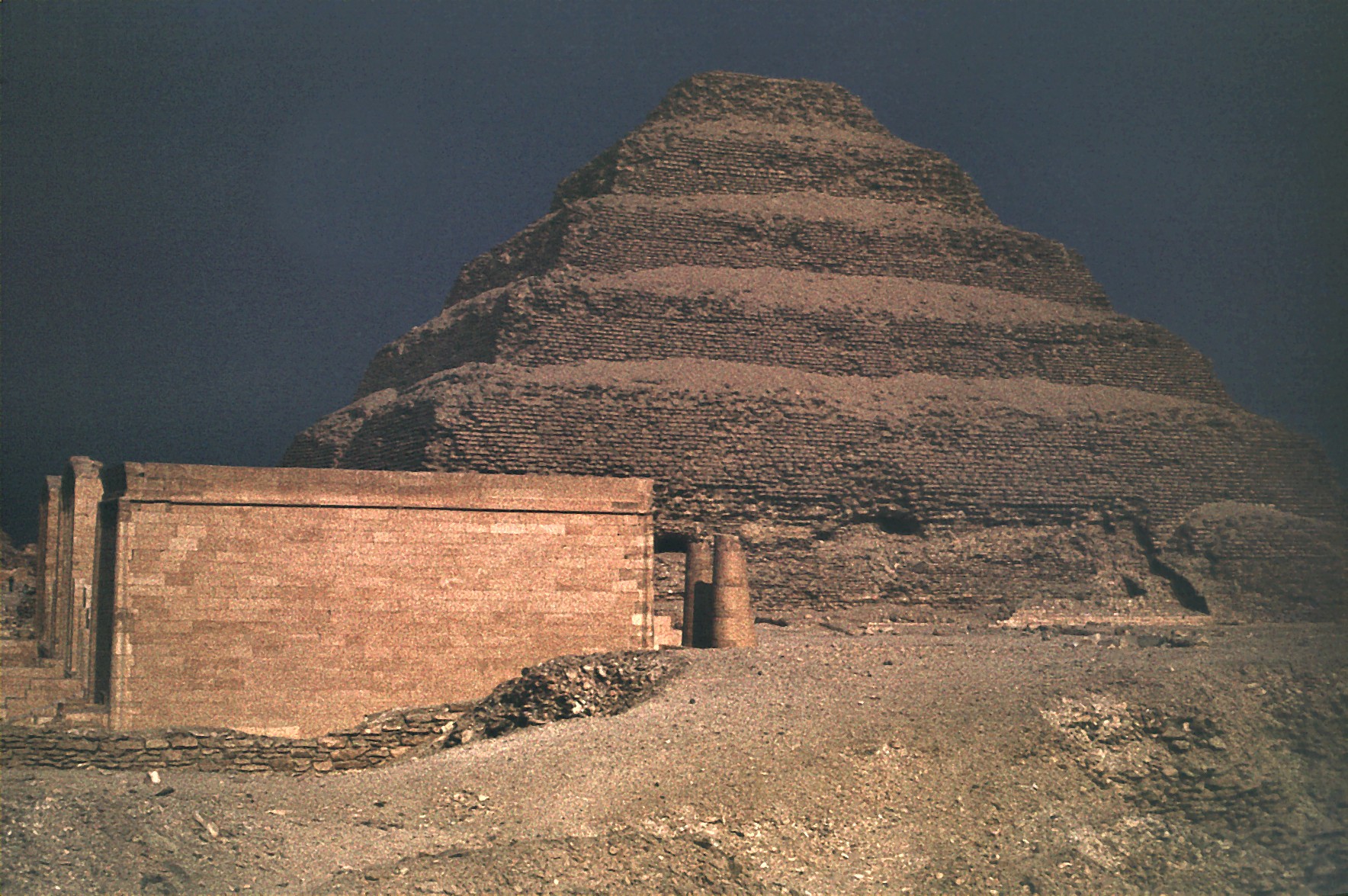
The Step Pyramid of Saqqara

The Father of Terror

Cairo – Ramadan booth

Colossus at Memnon.  This always calls to mind the famous poem:

Ozymandias

By Percy Bysshe Shelley

I met a traveller from an antique land,
Who said—“Two vast and trunkless legs of stone
Stand in the desert. . . . Near them, on the sand,
Half sunk a shattered visage lies, whose frown,
And wrinkled lip, and sneer of cold command,
Tell that its sculptor well those passions read
Which yet survive, stamped on these lifeless things,
The hand that mocked them, and the heart that fed;
And on the pedestal, these words appear:
My name is Ozymandias, King of Kings;
Look on my Works, ye Mighty, and despair!
Nothing beside remains. Round the decay
Of that colossal Wreck, boundless and bare
The lone and level sands stretch far away.”

Aswan – Christmas Day, 1976

Aswan – Overlooking the Nile

Luxor

Memphis – Reclining Ramses II

This was a phenomenal trip – 2 weeks in an amazing country. Al Qahira munwwara bi Ahlaha!

All images ©1976-2012 Old Wolf Enterprises

ZCMI Parking Lot, 1950’s (and more)

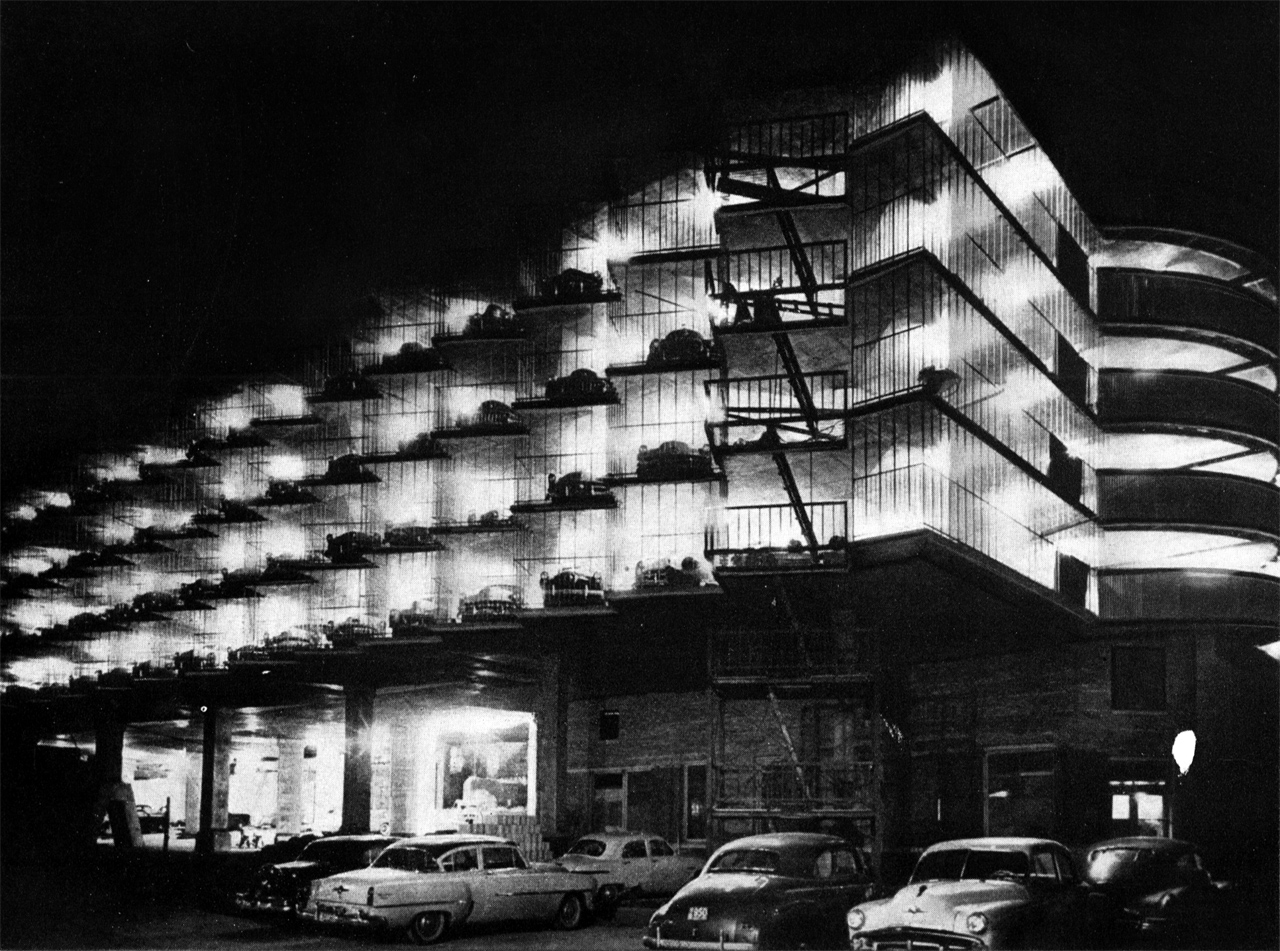
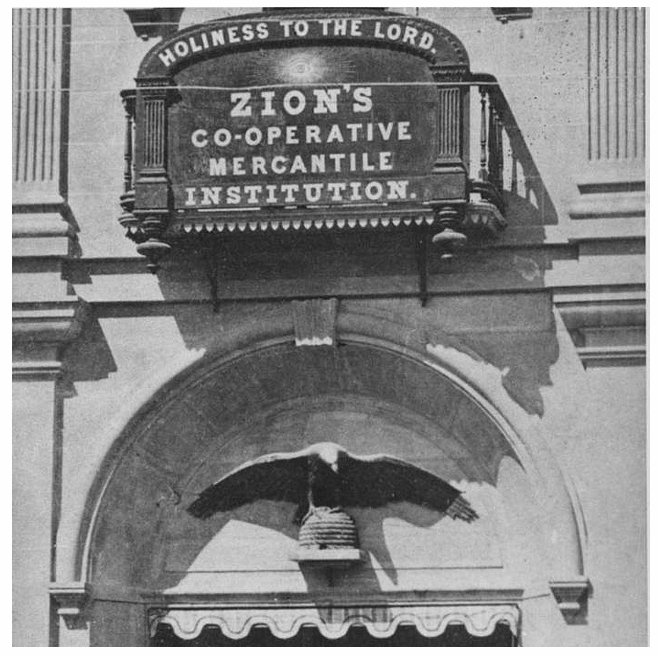
ZCMI (Zion’s Cooperative Mercantile Institute) self-parking garage at night, Salt Lake City, Utah. Image from Georges Blond: J’ai vu vivre l’Amerique, Librairie Arthéme Fayard, 1957

Capacity: 542 vehicles. Designed by L. G. Farrant

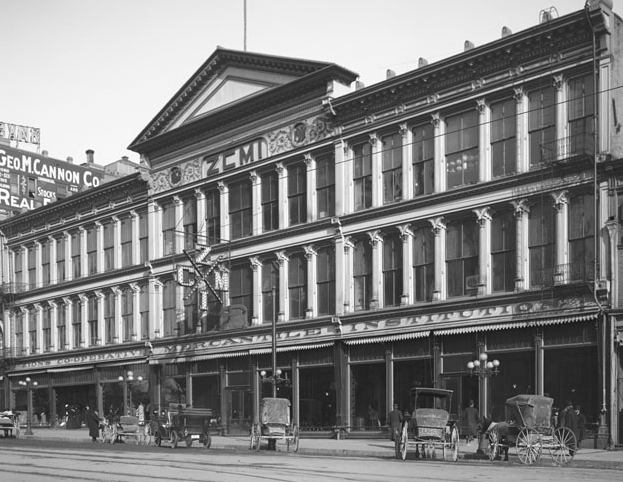
Both the garage and ZCMI, long a beloved and favorite department store, are now gone, but the store’s fabled cast-iron façade has been removed, renewed, and replaced several times as it remains a Salt Lake City landmark. Its first facelift took place when the ZCMI Center Mall was built in 1975.

An early ZCMI marquee.

ZCMI, 1910

The ZCMI Center exterior, 1975-2007

ZCMI Center interior, looking west – 1970’s

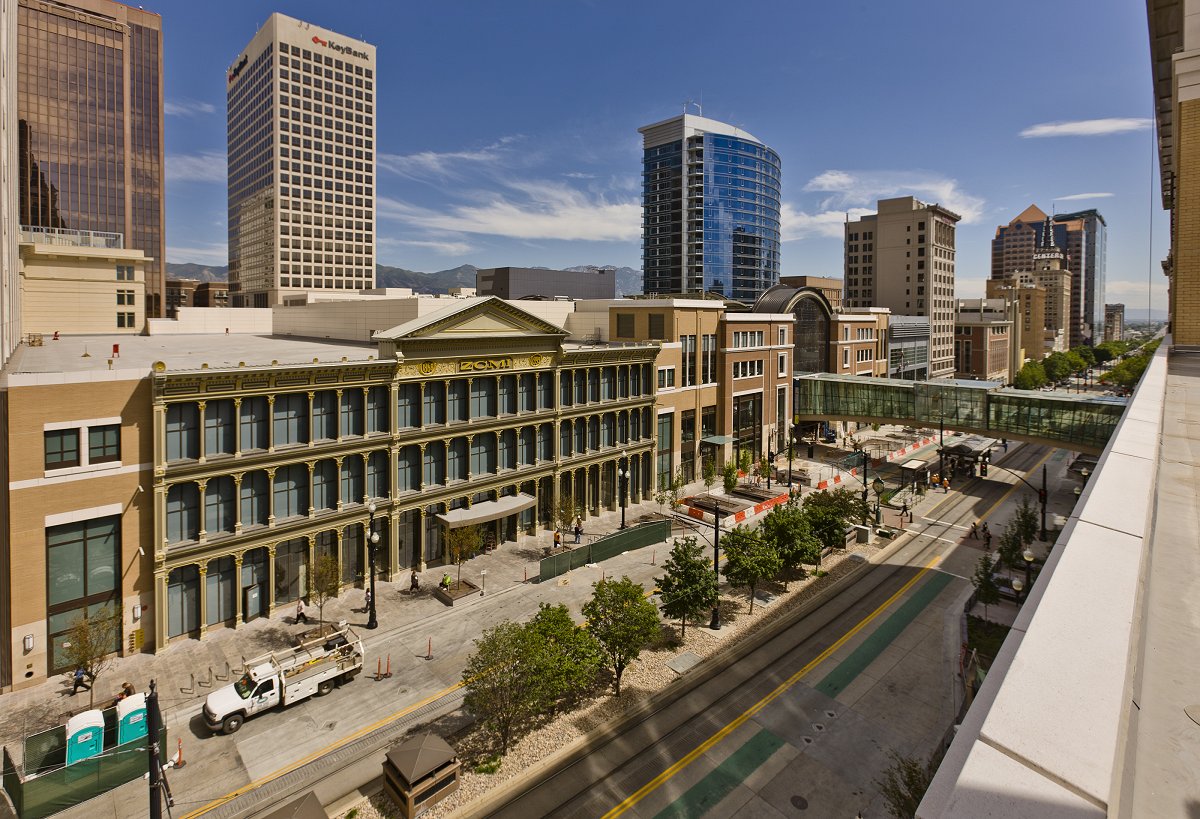
ZCMI was popular for good-quality merchandise at reasonable prices, paired with knowledgeable and competent sales help. Sadly, competing businesses in the area resulted in declining revenues, and the store was sold to May Stores (Now Macy’s, Inc.) It operated under the ZCMI name for two years before becoming Meier and Frank. in 2007, the ZCMI mall and the Crossroads Mall across the way were demolished as part of a 1.5 billion-dollar project co-sponsored by Salt Lake City and the Church of Jesus Christ of Latter-day Saints, which opened in March of 2012 as a multi-use center including retail, restaurants, business, entertainment and residential areas. City Creek itself, the original source of water for the 1947 Pioneers, was brought back to the surface and channeled through the development. The ZCMI façade was restored once more and now serves as a front for Macy’s.

ZCMI façade in its final completion stages, City Creek sky bridge behind.

Façade close-up

Façade detail

City Creek parking is now underground and includes capacity for 5,000 cars. You’ve come a long way, baby.

The Old Wolf has spoken.


Information Please: Always there when you need her

Cross-posted from LiveJournal

A post in Teresa Burritt’s Frog Blog (now sadly defunct) got me thinking about telephone operators.

Before the days of the internet, one of the earliest glurges I encountered – don’t ask me where – was “Information Please,” a heartwarming story of a telephone operator who befriended a young boy. Snopes.com has been unable to confirm or refute this story, so it remains out there as a tale one somehow wishes might be true.

In the days when Ma Bell had a virtual monopoly on the world of telecommunications, I am certain that this is just the image that AT&T would have liked to sear into the consciousness of every one of us. As it turns out, they tried.

The sentiment of the ad is so close to that of the story that I wonder if “Information Please” wasn’t going the rounds of the cork-board and water cooler network long before it showed up in the fax and internet world. What makes the ad of particular interest to me is the fact that the model is my mother, Margaret Draper.[1]

Before anyone gets the idea that life at home was like being raised by the Sally of the story, remember that the theatre is all about illusion. For most of my young life, Mom was single and trying to run a career as an actress, which meant that a lot of times I came home to a nanny or an empty house. There was, however, a telephone there – and in New York City, something called Artist’s Service. If Mom was away and I needed to contact her, I could dial SChuyler 4-5700 and be greeted by a pleasant voice who would get a message to her, or give me one that she had left. I only remember one individual’s name – Bill Butler – but I do remember that the folks there were invariably kind to a lonely young child, and it was nice to have a human on the other end of the line who cared. (Parenthetically, when I was really bored I could dial “MERMAID” – otherwise known as MElrose 2-6243 – and listen to “At the tone, the time will be… nine… forty-three… and ten seconds. *beep*” And yes, I did it more than once, for long spells of time.)

The Telephony Museum reports that “the first operators were boys, who turned out to be impatient and rude when dealing with phone customers. Their rudeness made them extinct within only a few years, replaced by females who were, ‘calm and gracious.'” In a nice summary of the history of telephone operators, the IEEE Global History Network reports that “the first female telephone operator was Emma McNutt, who was hired in New York City by a manager who happened to be a neighbor and who thought Emma was a “nice girl.” Little is known about Emma’s career, although she was in the vanguard of women who established telephone operator work as an almost exclusively female job.” Correspondingly, with the exception of Bill, every operator I ever dealt with in the 50’s and 60’s was female. However, that changed once again in the early 70’s, when AT&T responded to certain class-action lawsuits brought by both women and men, and in 1972 Rick Wehmhoefer became the first male operator in the Bell System.

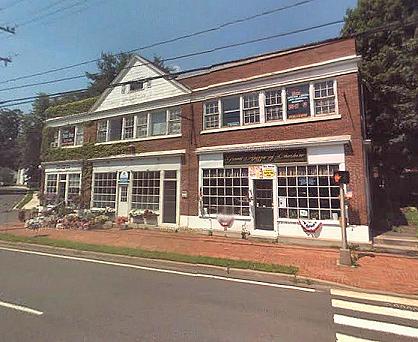
Most of my contact with operators in the 1960’s took place when making collect calls home from the Cheshire Spa, a local greasy spoon in Cheshire, Connecticut just across from the Academy campus on Main Street.


The Spa was in the far-right space, currently occupied by Grand A Pizza.

It was run by Pete Karavites, had pinball machines and a couple of dark phone booths in the back, and a persistent schoolboy rumor that all sorts of unsavory business went on in the back rooms.

I can still remember the “ding” sounds as I dropped coins into the old rotary-dial phones, or asking the operator to place a station-to-station collect call for me. When my mom picked up, the operator would say, “I have a collect call to anyone from so-and-so, will you accept the charges?”

Which reminds me of an amusing and true anecdote from my family’s history: At one point, my mother’s youngest brother was in the navy, and apparently he found himself for some reason in Tonopah, Nevada. Needing to call home, he placed a collect call in the above manner to his mother in Salt Lake. The operator announced, “I have a collect call from your son in Tonopah, Nevada, will you accept the charges?” Grandmother promptly replied, “I have no son in Tonopah, Nevada,” and hung up. My uncle Delbert was not deterred, and tried again, instructing the operator to make it a person-to-person call, more expensive but more explicit. This time, it was “I have a collect call for Frances Draper from Delbert Draper in Tonopah, Nevada, will you accept the charges?” Grandmother, exasperated, is said to have responded, “I know no Delbert Draper in Tonopah, Nevada,” and hung up again. How the story ended was never told me, but I chuckle at Granny’s inability to put two and two together.

In the 1980’s and later, before the wide advent of cell phones, the pressures of competition resulted in operators who seemed largely concerned with getting their average response time down to 5 seconds or less. Dealing with them was about as pleasant as going in for a colonoscopy. But clearly, it was not always that way – once again, from the IEEE site, “In the 1880s and 1890s women telephone operators often served the same small group of customers every day. This created an intimacy between client and customer as customers grew to recognize operators’ voices and know them as people. In many areas, operators could be counted on to have all sorts of information at hand, such as the names and addresses of local customers, the latest news, weather, and sports results, the correct time of day, and even gossip.” It seems that given the long history of telephony an the size of our country, a situation like one reported in “Information Please” is more likely than not, particularly in a smaller rural area.

Sadly, those days are gone forever. With most people abandoning land lines for cellular networks where operators are virtually unknown, finding a friendly voice to talk to for no good reason would be about as likely as finding an attorney with a conscience. [2] As a result, while I never met a “Sally,” I’m grateful to have experienced a time when you could dial “O” for operator, and find a human being on the other end of the line.


1 As an added bit of interest, Bill Gold of the Washington Post wrote the following article about this advertisement:

The District Line

by Bill Gold
(The Washington Post – January 11, 1964)

Phone Company Adds Some New Lines

THE FIRST advertisement that hits your eye as you open the new issue of Life centers your attention on the face of a woman who is wearing a telephone headset. The woman has an appealing face. It’s not the Hollywood painted doll type of appeal, and you can see character in that face. Intelligence and understanding, too. There are a few lines in the brow, and just a hint of advancing years around the eyes and mouth.
But it’s a good face, and the reader learns from the text that this is the face of a Bell System telephone operator who is always “close by if you need her, no matter what the hour.”
It’s very comforting, very effective. But it’s disturbing, too. There’s something different here. This isn’t the bright-eyed girl of 19 we’re used to seeing in telephone ads. This isn’t the peaches-and-cream wholesome beauty to whom we’re accustomed; it’s a mature woman. And in the few seconds during which the reader studies her, he comes to the realization that one of the world’s largest corporations has made a deliberate change in its advertising policy.
I was intrigued by my discovery, and immediately put in a phone call to a company spokesman. My questions were bucked along to headquarters in New York, and the answers came back promptly and frankly: the Bell System has indeed made a basic change in its advertising policy.
Instead of the idealized beauties of the past, we’re now going to see more believable models. They’ll be “more realistic,” closer to the average, more readily identifiable with living, breathing human beings.
Attractive young people are fun to have around, and they’re often useful, too. But any large company must also have its dedicated old-timers – the folks who know the importance of dependable service and who can give training and guidance to the youngsters who are just coming into the employe pipeline.
So the Bell System has concluded that a more mature face in its ads will more truly depict the “average” employe. And because the emphasis in its ads will now shift from idealization to realism, the company hopes that the ads will be more believable, and therefore more effective.
This promises to be a fascinating experiment, and it may have far-reaching consequences.
Imagine the impact among professional models and advertising agencies. Think of the changes that may take place in TV commercials, in advertising generally, and in salesmanship itself, for that matter.
Will the public be as mature as this new breed of model? Will people respond to this kind of soft-keyed approach? We’ll have to wait and see.


2 I know two. You know who you are.

Memories of Vienna

In a recent post, I referenced The Cooking of Vienna’s Empire by Time/Life. This picture always made me smile.

The caption reads, “Even in Vienna, the simplest food often tastes best. Witness this cabbie downing his sausage and beer with quiet satisfaction while waiting for a fare in front of St. Stephan’s Cathedral.”

If I know the Viennese, this guy was anything but quietly satisfied, and was probably griping to himself about the tourists, the government, the church tax, the weather, the beer, life, the universe, and everything. No, seriously – I love the Austrian people with all my heart, but the caption on the photo just doesn’t do reality justice.

But my goodness, that Würstel mit Senf (sausage with mustard) looks good. Hope he has a pile of Kren (fresh shredded horseradish) under his slice of bread… I can’t count how many times I’ve stopped at a sausage stand on the streets and snagged just what he’s having, or perhaps a Leberkäsesemmel – the Austrian version of a bologna sandwich, only 10 times better.

So many memories… I’ve shared a couple of them before, here and here, but there are so many it’s hard to choose from among them. I lived in Austria from February 1975 to December of 1976, and I’d go back in a heartbeat. So here are some of the more significant ones for me, in no particular chronological order.

Allerheiligen

Hallowe’en in Austria is a holy day, not one of ghosts and goblins. The evening before November 1, All Hallows Day, people make a pilgrimage to the cemetery and light candles for the souls of the dead. This was taken in Vienna’s Zentralfriedhof (Central Cemetery) on October 31, 1976.

And the following morning:

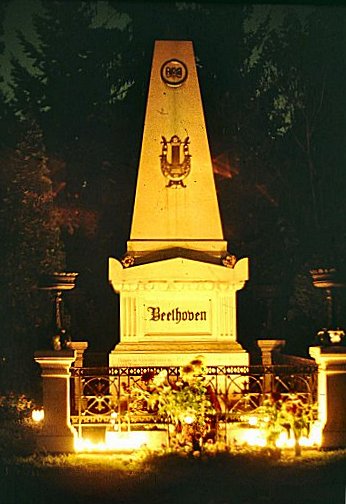
I love Beethoven’s music more than any other, and I was honored to be able to honor his memory at so many different sites.

The Beethoven Monument in Vienna

Vienna, of course, is the home of many famous musicians:

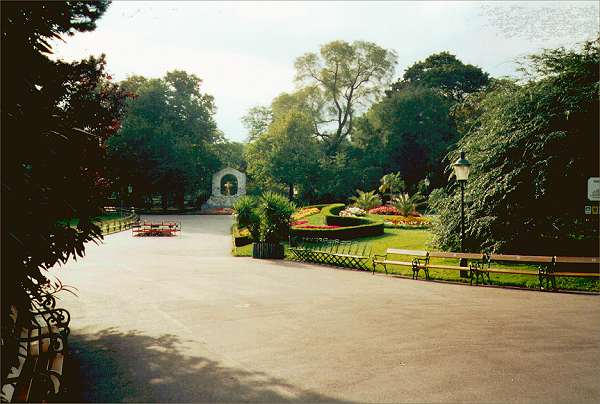
The Strauss Memorial in Vienna’s City Park

Hot chestnuts for sale beneath the old Stadtbahn (City Elevated Train) tracks. A wonderful thing, these… I remember them at Christmas time on the streets of New York in the 50’s. 12 chestnuts for about 60¢ – the exchange rate was about 15 Austrian Schillings to the dollar at the time.

One of the old Stadtbahn trains.

Tichy Ice Cream parlor on Reumannplatz 13 in the 11th Bezirk

Still there, still famous. Here you get gelato, not American style ice cream, in a whole symphony of flavors.

I laughed hard the first time I saw a police beetle. I didn’t laugh at all the first time one of them pulled in front of me flashing a sign, “Bitte Folgen” (please follow) and I collected a speeding ticket.

Stefansdom – St. Stephen’s Cathedral

Sachertorte is the quintessential Austrian pastry. A sponge cake covered with apricot jam and chocolate, this cake is designed to be taken with schlagobers (whipped cream) and plenty of water. There are more Austrian pastries than you can shake a stick at, and you may like some of them more than this one – but it remains my favorite to this day.

I could go on. In fact, I will go on in another post. But now I want some Sachertorte, and I don’t have any. So I shall sit in the middle of the floor and cry.

The Old Wolf has spoken.

Acorn Bread, and other meditations

(Posted in its original form on Sep. 22nd, 2009 at my Livejournal)

For the longest time I’ve been fascinated with the concept of acorns for food.

The seed (haha!) must have been planted in my mind when I was very young; my cousins who lived in the country – I was a New York City boy – had this lumbering black dustmop named Puffy who would devour acorns that he was given. I thought this terribly funny, since they were so bitter (naturally, being kids, we tried them!) And of course, the archetypical squirrel is always burying acorns.

Years later, having become a gastronome of sorts, the advent of the internet revived my curiosity, and I determined to find some acorn flour at some online store and try making bread or pancakes or what not. Guess what? You can’t find acorn flour for sale. Acorn starch, yes – but that’s different. There is, however, no dearth of information out there on how the native Americans used to process acorns, and so I archived off a few pages and determined to make the experiment at some point.

In 2009, while on one of my rambles up in the foothills north of Salt Lake, I stumbled across several groves of scrub oak that were replete with ripe, brown acorns, and managed to gather about 3 pounds of them.

The trick when gathering acorns is to get them when they’re brown enough to be ripe, but before the acorn weevils have gotten into them. As a result, it’s recommended to gather about ⅓ more acorns than you think you’re going to need. So if you see an acorn that looks like this:

you know it’s already occupied, and you don’t want to bother cracking it. Unless, of course, you’re interested in what goes on in an acorn after it falls – there is a fascinating article in the June, 1989 issue of National Geographic entitled “Life in a Nutshell”, which I recommend to all budding entomologists. If, however, that’s not your bag, the normal reaction is going to be “Eww”. Just be aware that some acorns which look sound are going to be compromised anyway:

Depending on the damage, part of the nut can often be salvaged.

So get yourself a nutcracker [1] and go about shelling your acorns. Like chestnuts, acorns have an interior brown skin which sometimes must be scraped off, but most of the time it just pops off with the husk. Certain varieties – I gathered nuts from a number of different groves – have the membrane in between the two halves of the kernel, so that will have to be removed as well.

When you’re done, you’ll have a nice bunch of acorns to work with.

I would have had a few more, but I ended up hucking out about ⅕ of what I had gathered… I just got so tired of shelling them, and all I had left were the smaller ones (see Note 1 below).

Be aware that like apples, acorns will go brown in the air quickly, so you may look in your bowl and think that a lot of them were bad to start with. However, if you were careful, the brown spots are not bug damage but simple oxidation. And if you missed a spot or two, hey – extra protein.

The next step is leaching out the tannin. According to Peggy Spring, an education coordinator with the San Antonio Natural Area Parks, “the Texas oaks reported to have the sweetest taste include Emory oak (Q. emoryi), which is so mild it can be used without processing, white oak (Q. alba), plateau live oak (Q. fusiformis), bur oak (Q. macrocarpa), and chinkapin oak (Q. mulenbergii). The acorns of each of these oaks (mostly white oaks) mature in one year, which may account for their lower tannic acid content. Red oak acorns (like Texas Red Oak) take two years to mature.” How bitter are your acorns? Only one way to find out – taste ’em. Odds are, they’ll need to be leached. High concentrations of tannin can cause G.I. upset, kidney damage and cirrhosis of the liver, so it’s better to be safe than sorry.

There are many ways to leach out tannin, some more practical than others. The natives would often put their shelled nuts in a basket and let a swift-flowing river take care of the job for a couple of days. To me, this seems the most logical, but clean, swift-flowing rivers are hard to find for most people. Others suggest simply allowing the acorns to soak and replacing the water when it goes brown, until the acorns are no longer bitter.

I chose the 3-hour boil method. After the first boiling of 15 minutes, the water looked like this:

Pour off the water, refill, and continue.

After about 12 boilings, the water started to look not quite so muddy, so at that point I was done. The acorns tasted at this point like an artichoke heart, nutty with a sweet aftertaste.

Next, dry the acorns in a 200° oven for an hour. In they go:

And out they come.

At this point they’re no longer soggy, but still not totally dry. So I popped them into my food processor on pulse setting just until the acorns were crumbled, and put them back in the oven for another hour and a half.

Now what I had was dried acorn meal. Run this through my Magic Mill III:

… and the end result is about 2 cups of acorn flour, which you can use in your favorite recipe – for bread, or pancakes, or biscuits, or whatever floats your boat.

I chose a bread recipe that uses about 6½ cups of flour, resulting in a bread that was only partly acorns, but which still had a very nice flavor.

Here’s the recipe:

Acorn Bread

Scald:  1 C Milk

Add:

1 C Water
1 T Shortening or Lard
1 T Butter
2 T Sugar
1 T Salt

In a separate bowl, combine:

¼ C 105°-115° (F) Water
1 package active dry yeast

and let dissolve 3-5 minutes. Add the lukewarm milk mixture to the dissolved yeast.

Have ready:

6½ C Flour (white flour and acorn flour to taste)

Stir in 3 cups flour (use the acorn flour first), then work in remaining flour by kneading on a floured surface until smooth and elastic.

Place dough in greased bowl and cover, allow to rise in a warm place until double, at least 1 hour. Punch down, and if time permits, allow to double again. Turn out, divide into 2 loaves and let rest 5 minutes. Place in pans and again allow to rise until almost double in bulk.

Preheat oven to 450°. Bake loaves 10 minutes – reduce heat to 350° and bake 30 minutes longer. Test for doneness by turning out a loaf and thumping the bottom. If it sounds hollow, it’s done. If not, put it back in for a few more minutes. Remove loaves from pans at once and allow to cool on rack before storing.

Now, if I were to go about this again, I would do the following things differently:

  • Find bigger acorns. Scrub oak tasted fine, but the shelling took forever.
  • Use a pecan sheller, as mentioned in the note below.
  • Gather more acorns to start with, so I could get a decent amount of flour, some to use, and some to keep.
  • Use a different leaching method, probably just letting the nuts sit in cold water and changing it every now and then. It might take longer, but I think the nuts would retain more of their nutrition.
  • Use less acorn flour. It’s heavier than wheat flour, and has no gluten, so it can’t be used alone – there’s nothing to bind the bread.

Further thoughts

Besides the bread, a lot of benefits accrued to me during this exercise. The entire time that I was harvesting, shelling, leaching, grinding and making bread, I turned my mind to the original occupants of this continent. This was a labor-intensive process. If you were going to use acorns as a major food source for a community, you’d pretty much have to put the entire female population to work on the process. Given that 3 lbs of acorns resulted in about 8 ounces of flour, you’d need a lot of acorns, and a lot of hands to do the necessary work. Granted, these folks spent a good part of their day working on food production anyway, but it left me with a huge sense of respect for what was necessary.

The exercise also made me think about the history of our nation in general, with no small amount of sadness. A few weeks ago, prior to my Acorn Escapade, I re-watched “Dances with Wolves.” I recalled the Gary Larson cartoon on the subject:

So I hopped over to Rotten Tomatoes.com to see if there was really anyone who didn’t like the film. To my surprise, it only got a 78% positive rating. One review, which was pretty representative of the opposition, said: “The political correctness is so politically correct and sappy and sucky and conscience-appeasing and politically-pacifying and just generally brain-numbing…”. Well, all I can say is that after 400 years of being raped by the white man, the autochthones of this continent are entitled to a little political correctness. The attitude of our nation toward the native has been and continues to be, “Bohica!” [2]. Don’t believe me? Just take a drive through the four corners area and down into the Res, and you’ll see the results of the white man’s benevolence. And, I haven’t the slightest idea of how to go about making it right.

These thoughts brought to you by the humble Acorn.

belch

The Old Wolf has spoken.


1Acorns are soft-shell nuts. I recommend using a pecan sheller rather than a regular nutcracker.
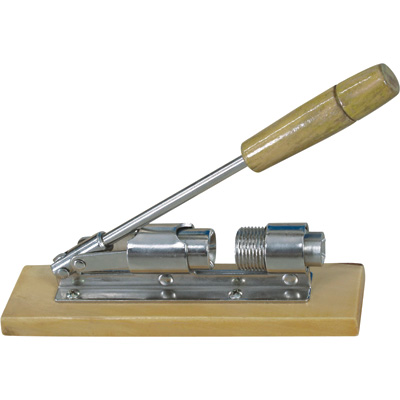
These are available online at any number of places.

2 “Bend over, here it comes again”

Eat fast, you’re not as good as the guy up there.

A recent article over at BBC explored the “then and now” of servants in the UK – who had them, how they lived, and what has become of the domestic landscape today.

The article pointed out that downstairs was a microcosm of upstairs, with domestics mirroring the social hierarchy of those whom they served.

According to Dr Lucy Delap, director of studies in history at Cambridge University, “There would be a strict order of coming in to eat and strict rules about where different ranks of servants sit, and you might also have rules such as no speaking unless you were addressed by one of the senior servants. The senior servants had a great deal of power, so the butler for example in some households would put down his knife and fork, and everyone else had to fit in whether you had finished or not. So servants had to learn to be fast eaters.”

Upon reading this, I had a flashback and had to hunt up my copy of The Cooking of Vienna’s Empire by Time/Life.

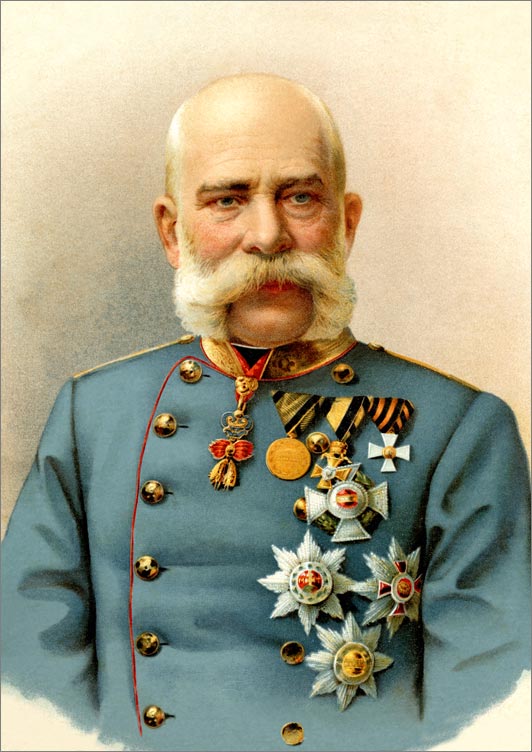
These are wonderful books, as much about the history and culture of the various regions they deal with as about the recipes. Having spent two years in Austria and much time working in the countries of the former Yugoslavia, this book is a treasured friend, and I recalled this paragraph about Emperor Franz Josef I:

“Since the Kaiser was up so early, everybody around him had to get up too, which was not pleasant for the young officers who had gone to bed perhaps only a couple of hours earlier. By noon, the guard officers were starved and praying they wouldn’t be asked to sit down at the Emperor’s table. It must have been an ordeal to do so. Court etiquette demanded that the Emperor be served first and that no one continue eating after His Majesty had put down his fork. Unfortunately the Kaiser ate very quickly. By the time the large silver platters got to the hungry young officers, the Emperor had put down his fork and knife, and the poor fellows had just one tantalizing look at the lovely dishes – or maybe even a brief taste of the excellent Kaiserschmarrn – before their plates were removed.”

The BBC article makes numerous references to one’s “station in life.”

In the America that I grew up in starting in the 50’s, the concept of class distinction was far from the minds of most people; the underlying ideal was that anyone can become anything, and all men are indeed created equal. Looking at today’s society, however, it would seem that in many ways, we are a nation of servants in the homes of the super-rich for whom we toil. Class distinctions exist in my country as truly as they existed in Victorian England – the only difference is that British society accepted such as the natural order of things, and to a certain extent still does, while we cling to a largely imaginary egalitarian view of society.

Before I go any further, I want to be clear that everything is relative; despite the fact that I belong to a large group of people for whom economic terror is a stark reality, a poor family in the favelas of Rio or anyone living on the streets of Mumbai would laugh in my face if I were to tell them that I was feeling endangered.

What’s more important is the underlying social phenomenon of what divides people into classes and why so many think that’s just fine.

The Us/Them Mentality

From where I sit, the concept of ingroup affiliation appears to lie at the root of most social conflicts. The Arbinger Institute has published two powerful treatises on the tendency of humans to betray their better nature, and the hoop-jumping and back-bending we go through to justify that betrayal. From a corporate standpoint, this tendency is analyzed in Leadership and Self-Deception, but on a personal level, The Anatomy of Peace takes a hard look at what keeps people apart, and what’s necessary to bring them together.

When we treat others like objects rather than people, it’s all the easier to put them beneath us: beneath our notice, beneath our dignity, and beneath our need to be involved in their lives. What I see in politics today is the wholesale write-off of entire segments of our population by both parties: they are draining our resources, they are controlling our lives, they are destroying the constitution, they… you get the picture. It’s always easier to blame an outgroup (i.e. the other side of the aisle, women, men, gays, evangelicals – in short, anyone who is not us) than it is to take personal responsibility for one’s choices in life. It’s comforting and it’s easy to see people as obstacles, vehicles or irrelevancies.

As discussed in a previous post, I quoted Carl Sagan’s analysis of the famous “Pale Blue Dot” photo, and I repeat a piece of that here: “The Earth is a very small stage in a vast cosmic arena. Think of the rivers of blood spilled by all those generals and emperors so that in glory and triumph they could become the momentary masters of a fraction of a dot. Think of the endless cruelties visited by the inhabitants of one corner of this pixel on the scarcely distinguishable inhabitants of some other corner. How frequent their misunderstandings, how eager they are to kill one another, how fervent their hatreds. Our posturings, our imagined self-importance, the delusion that we have some privileged position in the universe, are challenged by this point of pale light.” As humans, as members of the same race floating in the same raft on the same ocean, it would truly pay us to remember how insignificant we are in comparison with the mind-blowing vastness of the universe.

In every way possible, my 500-year plan is to promote the concept of a world that works for all humanity. The title of this blog reflects R. Buckminster Fuller’s dream of making the world work, “for 100% of humanity, in the shortest possible time, through spontaneous cooperation, without ecological offense or the disadvantage of anyone.” If we are ever to attain such a blessed state, we can not remain in the condition described by Lewis Thomas in The Lives of a Cell – “For total greed, rapacity, heartlessness, and irresponsibility there is nothing to match a nation. Nations, by law, are solitary, self-centered, withdrawn into themselves. There is no such thing as affection between nations, and certainly no nation ever loved another. They bawl insults from their doorsteps, defecate into whole oceans, snatch all the food, survive by detestation, take joy in the bad luck of others, celebrate the death of others, live for the death of others.” No, we must transcend that.

As individuals, families, groups, societies, and nations, we must overcome the urge to treat others as objects and tools and things to be used to achieve our own personal ends, but rather see one another as other people, with hopes, needs, cares, and fears as real to us as our own. I refuse to believe that such a world is an unreachable utopia, an impractical dream. As long as I have breath, I will work for it.

The Old Wolf has spoken.