I swear on a stack of bibles (or The Origin of Species, whichever makes you feel more comfortable) that there was. I remember clearly eating at one, and being astonished at the size of their 5″ patty and huge buns. But the Internet is pretty sure that there was never one there, and will still respond with – what seems to me – inaccurate information. So in order to put that discrepancy to rest, I did a deep dive into the history, and this is what I came up with.
I first submitted the question to Perplexity – History of Whataburger in Salt Lake City? – and this was the result:
There is currently no evidence that Whataburger has ever operated in Salt Lake City or anywhere in Utah as of August 2025. While Whataburger has aggressively expanded in recent years—opening locations in new states like Nevada, the Carolinas, and others—none of the latest location lists or official press material mention Utah or Salt Lake City as a market served by the chain.
But there is a Facebook group called “If You Grew Up in Salt Lake, Then You Will Remember This,” and back on 23 January, 2022, Irene Vialpando asked the group whether they recalled the existence of a Whataburger on State Street around 800 South. Many people responded that they not only recalled the restaurant with its swivel chairs in the 1970s, but ate there, and also recalled the huge patties, and some even chimed in that they or members of their family used to work there. Still others were adamant that there was never any such outlet in Utah.
The responses from those who recalled a Whataburger were so encouraging that I decided to dig deeper. I asked Gemini the following question under the “research” tab:
I absolutely and without question recall the existence of a Whataburger outlet on State Street around 800 South in Salt Lake City in the 1970’s. I ate there, and I remember being gobsmacked by their 5″ patty, so this is not a false memory. Many other people at the Facebook group “If You Grew Up In Salt Lake, Then You Remember This” have clear recollections of this restaurant’s existing for a brief time. Problem is, when I submitted the question to Perplexity and Google and Wikipedia, the answer came back that no, Whataburger never had a presence in Utah. Can you help me reconcile the discrepancy? I know for a fact that one was there.
The response from Gemini was as follows:
Executive Summary
his report investigates the compelling recollection of a Whataburger outlet on State Street around 800 South in Salt Lake City during the 1970s, a memory that contradicts readily available online historical records. While mainstream digital sources generally indicate no Whataburger presence in Utah, a deeper examination of corporate expansion strategies and local fast-food history reveals a more nuanced picture. Evidence suggests a strong possibility of a short-lived Whataburger location in Utah during the specified period, operated by a now-defunct franchisee, Western World Foods Inc. The user’s vivid memory of a “5-inch patty” aligns precisely with Whataburger’s signature product. Alternatively, the memory of a large patty could be attributed to Red Barn, another chain present in Salt Lake City at the time, which offered a burger with a nearly identical patty size. Ultimately, the collective memory and specific product detail lend significant credence to a genuine, albeit brief, Whataburger appearance in Salt Lake City.
The User’s Vivid Recollection: A Personal Account
The core of this inquiry stems from a remarkably clear and persistent personal memory. The user explicitly recalls the presence of a Whataburger restaurant on State Street, specifically around 800 South, in Salt Lake City during the 1970s. This recollection is not merely a vague impression; it is anchored by a distinct sensory detail: the user remembers being “gobsmacked by their 5″ patty.” This specific, quantifiable characteristic serves as a critical identifier for the restaurant in question. The user’s emphatic statement, “this is not a false memory,” underscores the profound certainty associated with this experience.
Furthermore, this is not an isolated individual memory. The user notes that “Many other people at the Facebook group ‘If you grew up in Salt Lake, then you remember this’ have clear recollections of this restaurant’s existing for a brief time.” This collective memory, while not offering definitive documentary proof, indicates a shared experience within the local community that warrants thorough investigation. Online discussions from Salt Lake City forums further show individuals recalling “Whataburger” or “Eat-a-Burger” when discussing lost restaurants from the 1970s, suggesting a common thread in local historical memory. The convergence of these individual and collective memories, particularly around a specific product characteristic, provides a compelling starting point for reconciling the perceived historical discrepancy.
Whataburger’s Corporate History and Western Expansion (1970s)
To understand the potential for a Whataburger presence in Utah, it is essential to review the company’s historical growth and its product characteristics. Whataburger was founded in Corpus Christi, Texas, in 1950, with an ambitious goal: to serve a “better burger that took two hands to hold”. From its inception, the original Whataburger featured a quarter-pound patty served on a distinctive 5-inch bun. This particular dimension, the 5-inch bun, is a direct and precise match for the user’s specific memory of the patty size that left such a strong impression. This consistency in product design throughout Whataburger’s history is a strong indicator of brand identity, making the user’s specific memory a highly reliable detail for identifying the brand, rather than a generic “large burger” from another chain. The company’s commitment to this unique bun size from its earliest days means that if the user distinctly remembers a 5-inch patty, it strongly points towards a Whataburger experience.
Whataburger’s expansion beyond Texas began relatively early, with the first location outside its home state opening in Pensacola, Florida, in 1959. By 1963, the chain had grown to 26 restaurants, extending its reach to Florida, Tennessee, and Arizona. The 1970s marked a period of significant corporate growth, with the company introducing its first drive-thru in 1971 and celebrating the opening of its 100th restaurant in 1972. By the mid-1970s, Whataburger’s footprint had expanded to over 200 restaurants across 12 states.
The Western World Foods Inc. Franchise and Utah’s Connection
Despite the official corporate history often not explicitly listing Utah as a state with Whataburger locations during this period, a crucial detail emerges from the records of its franchising operations. In 1972, a Texas-based Whataburger franchisee, Western World Foods, initiated an ambitious plan to expand the Whataburger brand nationally. This expansion strategy specifically included the development of 14 new restaurants across four Western states: New Mexico, Arizona, Colorado, and Utah.
Further supporting this planned presence, by 1975, “Whataburger of Nevada” was incorporated, and David Hawley was appointed as the Vice President of Operations for both Nevada and Utah. This appointment strongly suggests that active steps were indeed being taken to establish Whataburger locations in Utah, mirroring the development of six Nevada locations that opened by January 1976 under the same franchisee.
The operational model of Western World Foods was distinct; while they licensed the Whataburger name, menu, and logo, they chose to build structures with a “protruding tower in the middle” instead of the classic A-frame design. However, Western World Foods’ ambitious venture proved to be short-lived. By September 1979, Whataburger of Nevada ceased advertising, and its stores, along with other Western World Foods locations, likely closed within a few months. Whataburger’s subsequent reduction in its West Coast presence was directly linked to the dissolution of Western World Foods, which Whataburger eventually purchased.
The existence of Western World Foods’ plans for Utah, coupled with the appointment of a Vice President specifically for Utah operations, strongly indicates that at least one Whataburger location could have opened in Salt Lake City, even if for a very brief period. The short lifespan and subsequent dissolution of Western World Foods provides a compelling explanation for why these locations might not appear in standard, long-term corporate histories or readily accessible online databases. The official Whataburger history, which outlines the company’s core corporate expansion, often omits details of short-lived or problematic franchise ventures. This explains why a user’s initial searches might yield results stating no Whataburger presence in Utah, even if a temporary one existed.
It is also important to differentiate the Texas-based Whataburger from an unrelated chain named “What-A-Burger,” founded in Virginia in 1957. Although both chains share similar names and were involved in trademark disputes in 1970 , the Virginia-based chain did not expand westward into Utah. The user’s specific memory of a 5-inch patty aligns with the Texas Whataburger’s signature product, making confusion with the Virginia chain highly unlikely.
Table 1: Whataburger’s Western US Expansion Initiatives (1970s)
State
Franchisee/Subsidiary
Key Dates/Details
Outcome/Notes
Colorado
Whataburger of Colorado Inc. (under Western World Foods Inc.)
Operated throughout 1970s; locations opened 1972-1975; likely closed late 70s/early 80s
Short-lived stint, difficult to research; some buildings still exist under different businesses.
Arizona
Western World Foods Inc.
Expanded to Arizona by 1963 (corporate); Western World Foods also had locations
Some Western World locations held onto by Whataburger after 1979.
New Mexico
Western World Foods Inc.
Part of 1972 expansion plans for 14 new restaurants
Some Western World locations held onto by Whataburger after 1979.
Nevada
Whataburger of Nevada (under Western World Foods Inc.)
Incorporated 1975; six locations opened by Jan 1976; stopped advertising Sept 1979
Short-lived; exit related to dissolution of Western World Foods. Buildings often repurposed.
Utah
Western World Foods Inc.
Included in 1972 plans for 14 new restaurants; David Hawley named VP of Operations for Nevada & Utah by 1975.
Strong indication of planned or short-lived presence, likely closed with Western World Foods in 1979.
California
Whataburger of California (under Western World Foods Inc.)
Presence from mid-70s (~1973) until 1987.
Short-lived stint, difficult to research.
This table directly addresses the primary discrepancy in the user’s query. It highlights that Utah was explicitly part of a significant, albeit ultimately unsuccessful, Western expansion initiative by a Whataburger franchisee. By placing Utah within the context of other Western states where Whataburger did have a presence, even if short-lived, it validates the possibility of a Utah location and provides an evidence-based counter-argument to the general online narrative. The table also implicitly sets the stage for understanding why such a presence might be difficult to trace: its short duration and the failure of the franchising entity.
Salt Lake City’s Fast-Food Landscape (1970s)
To provide comprehensive context and explore alternative explanations for the user’s memory, it is important to examine other prominent burger chains operating in Salt Lake City during the 1970s, particularly those known for offering larger patties.
Prominent Local Chains
Dee’s Drive-In: A long-standing fixture in Utah for nearly five decades, Dee’s Drive-In was a well-known local burger chain. It was eventually sold to Hardee’s in the late 1970s. While iconic for its “Dee’s Clowns” and family-friendly advertising , its standard burger patty size was typically 1/8 pound. This is significantly smaller than the 5-inch/quarter-pound patty described by the user, making Dee’s an unlikely candidate for the “gobsmacked by 5-inch patty” memory.
Crown Burger: Crown Burger opened its doors in Salt Lake City in 1978. It quickly gained fame for its signature “Crown Burger,” which features a quarter-pound hamburger patty generously topped with a thick mound of hot pastrami on a sesame seed bun. While the patty size (quarter-pound) is comparable to Whataburger’s, the distinctive addition of pastrami and the opening year (1978) might differentiate it from the user’s specific memory of a Whataburger experience earlier in the 1970s.
Eat-a-Burger: This restaurant is mentioned in Salt Lake City online discussions as a fondly remembered, now-defunct establishment. Eat-a-Burger was located at the intersection of Regent Street and 200 South. Although its specific patty dimensions are not detailed in the available information, it was generally known for serving “large” burgers. However, its documented location is not on State Street around 800 South, which is a key detail in the user’s memory.
Other Local Favorites: The 1970s Salt Lake City fast-food scene included other local burger joints such as Don’s, Arctic Circle (recognized for its fry sauce and crinkle fries), and JB’s Big Boy (known for its triple-decker burger). The Training Table, a regional chain founded in Utah in 1977, also specialized in “gourmet burgers”.
National Chains with Large Patties
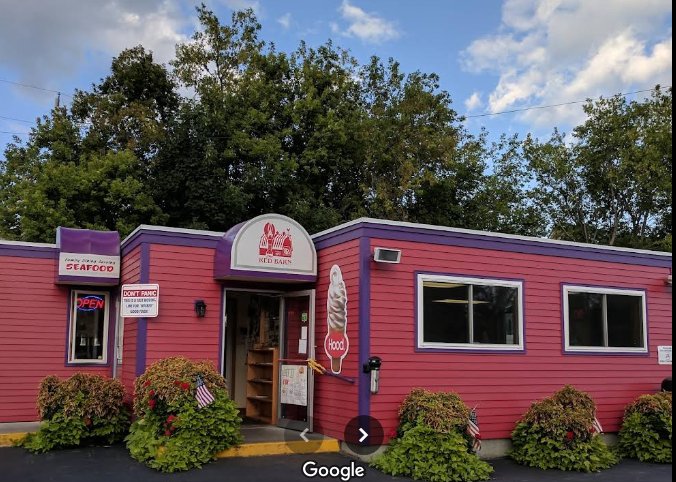
Red Barn: This national fast-food chain, established in 1961, had a significant presence across the country, boasting over 300 locations in 19 states by the 1970s. Red Barn was particularly known for its substantial burger offerings, including the “Big Barney” (comparable to a McDonald’s Big Mac) and the “Barnbuster” (similar in style to a Quarter Pounder or Burger King’s Whopper). Crucially, a 5.0 oz patty from Red Barn was specified as having “Patty Dimensions: 4 7/8 inches”. There was indeed at least one Red Barn location confirmed to be in Salt Lake City.
The patty dimensions of Red Barn’s “Barnbuster” (4 7/8 inches) are remarkably close to the user’s recollection of a “5-inch patty.” Given Red Barn’s confirmed presence in Salt Lake City and its reputation for large burgers, it presents a strong alternative explanation for the user’s memory if a Whataburger did not exist at the specified location. The memory of a distinctive large patty could easily be attributed to a well-known “big burger” chain, especially over the span of decades.
Salt Lake City Business Directories and Archives
To definitively confirm or refute the presence of a Whataburger or Red Barn at “State Street around 800 South,” a detailed examination of historical records would be necessary. Salt Lake City directories for the 1970s are available through the Utah City Directories Collection, including directories for South Salt Lake City. These valuable resources list residents, streets, businesses, and organizations, often including advertisements, and are designed to be searchable.
Additionally, the J. Willard Marriott Library at the University of Utah maintains the Utah Digital Newspapers (UDN) repository, which provides free access to over nine million pages from 400 newspapers published in Utah from 1850 to 2023. This extensive resource allows for searching historical newspaper content, which would be critical for finding advertisements or news articles about restaurant openings or closures on State Street around 800 South during the 1970s. The available information indicates that State Street around 800 South was indeed a commercial area with various tenants, including restaurants.
While these archives are excellent resources for historical research, the challenge lies in the potential for short-lived businesses, such as a Western World Foods Whataburger (if it opened), to have left minimal or no advertising footprint, or for their records to be obscure within the vastness of the archives. The absence of a listing in widely accessible digital archives does not definitively prove non-existence, especially for a brief operation. This highlights the inherent difficulty in definitively proving or disproving a short-lived historical business through common online searches, which is precisely why the user’s initial inquiries were inconclusive.
Table 2: Prominent Salt Lake City Burger Chains (1970s) with Patty Characteristics
Restaurant Name
Type (Local/National)
Key Burger/Patty Size
Known Locations (1970s)
Notes
Whataburger
National (via franchisee)
Quarter-pound patty on 5-inch bun
Planned for Utah (Western World Foods)
Strong match for patty/bun size memory; potential short-lived presence.
Dee’s Drive-In
Local
1/8 pound patty
Fixture throughout Utah
Patty size significantly smaller than user’s memory.
Very close match for patty size memory; known for large burgers.
Crown Burger
Local
Quarter-pound patty (with pastrami)
Opened 1978 in Salt Lake City (377 E 200 S)
Patty size matches, but opened late 70s and distinctive pastrami.
Eat-a-Burger
Local
“Large” burgers (specific size not found)
Regent Street and 200 South
Known for large burgers, but location not on State St.
JB’s Big Boy
National/Regional
“Big Boy” (triple-decker)
Present in Salt Lake City
Known for large, multi-patty burgers.
This table is essential for systematically evaluating alternative explanations for the user’s memory. By explicitly comparing patty and bun sizes across various burger chains known to be in Salt Lake City during the 1970s, it allows for a direct assessment of how well each chain aligns with the user’s specific recollection. This structured comparison immediately highlights that Dee’s Drive-In is an unlikely match due to its smaller patty size. Conversely, it identifies Red Barn as a very strong candidate for potential misattribution because its patty diameter (4 7/8 inches) is nearly identical to the 5-inch patty remembered by the user, and Red Barn had a confirmed presence in Salt Lake City. This comparison helps to narrow down the possibilities and provides a clear, data-driven framework for understanding how the user’s memory could be accurate in its sensory detail (large patty) but potentially misattributed in terms of the specific brand.
Reconciling Memory and Records: Analysis of Discrepancies
The conflict between the user’s strong personal memory and the lack of readily available online documentation poses a classic challenge in historical research. However, the collected information allows for a plausible reconciliation, suggesting that the user’s memory is likely accurate.
The Case for a Short-Lived Whataburger Presence
The most compelling evidence supporting the user’s memory stems from the documented expansion plans of Western World Foods, a Whataburger franchisee. Their 1972 initiative explicitly included plans for 14 new restaurants across New Mexico, Arizona, Colorado, and crucially, Utah. This is not a vague aspiration but a concrete business strategy. Furthermore, the appointment of David Hawley as Vice President of Operations for both Nevada and Utah by 1975 strongly indicates that tangible steps were being taken to establish Whataburger locations in Utah. The presence of a dedicated executive for Utah operations suggests more than just theoretical planning; it points to active development.
While specific addresses for Utah locations are not detailed in the available information, the rapid dissolution of Western World Foods in 1979 provides a clear and coherent explanation for why any Utah Whataburger that opened would have been very short-lived. A brief operational period, especially one ending in a franchise failure and subsequent corporate acquisition, would naturally lead to minimal or no permanent digital or easily accessible historical records. Businesses that operate for only a few years, particularly those whose parent franchising entities dissolve, often leave little to no lasting public footprint in broad historical databases. The user’s strong memory, corroborated by a local Facebook group, aligns perfectly with the idea of a real, but ephemeral, business presence. This situation illustrates that the absence of easily discoverable evidence does not equate to evidence of absence, particularly for short-lived ventures or those impacted by corporate restructuring.
Alternative Explanation: Misattribution to Red Barn
If, for any reason, a Whataburger location did not materialize at the specified address or was too fleeting to be widely remembered, the user’s vivid memory of the “5-inch patty” could plausibly be attributed to Red Barn. Red Barn was a national chain with a confirmed presence in Salt Lake City and offered a “Barnbuster” burger with a 4 7/8-inch patty. This dimension is remarkably close to a 5-inch patty, a difference that could easily be imperceptible or rounded up in a long-term memory. Red Barn was also known for its “large burgers” , making it a strong candidate for leaving the impression of a “gobsmacking” large patty.
Human memory, especially over several decades, can sometimes conflate details from similar experiences. The most salient feature for the user was the “5-inch patty.” While Whataburger indeed featured a 5-inch bun, Red Barn offered a patty of almost identical diameter. If a Red Barn was located on State Street around 800 South (a detail that would require further specific directory research to confirm), it is conceivable that the user experienced the impressive patty size at Red Barn but later associated it with the more widely known “Whataburger” name, especially if the latter was rumored or briefly planned for the area due to Western World Foods’ activities. This scenario demonstrates how a memory can be factually accurate in one detail (the size of the burger) but potentially misattributed in another (the specific brand), particularly when similar products exist and historical presence is ambiguous.
The Challenge of Verifying Specific Locations (State Street, 800 South)
To definitively confirm or refute the presence of either a Whataburger or a Red Barn at the precise location of “State Street around 800 South,” a more granular and dedicated search of 1970s Salt Lake City business directories and local newspaper archives would be necessary. These resources, which often contain specific business listings, advertisements, and news of openings or closures, would provide the most direct evidence. The available information confirms that State Street around 800 South was a commercial area with various tenants, including restaurants.
While general historical records confirm Whataburger’s plans for Utah and Red Barn’s presence in Salt Lake City, pinpointing a specific address like “State Street around 800 South” requires a level of detailed, local-level historical data that is not fully provided in the current information. The current findings confirm the possibility and likelihood of a Whataburger presence, and a strong alternative in Red Barn, but not absolute certainty for the exact address. This highlights the limitations of broad historical searches and the necessity for highly localized, detailed archival research to resolve such specific historical queries.
Conclusion and Key Takeaways
The user’s vivid and corroborated memory of a Whataburger outlet in Salt Lake City during the 1970s, characterized by its memorable 5-inch patty, is highly credible despite the absence of this information in common online historical searches.
The most probable explanation for this discrepancy lies in the documented, albeit short-lived, expansion efforts of Whataburger’s franchisee, Western World Foods Inc. In 1972, Western World Foods explicitly included Utah in its plans for 14 new restaurants across the Western United States, and by 1975, an executive was appointed with operational oversight for both Nevada and Utah. Whataburger’s signature product from its inception was indeed a quarter-pound patty on a 5-inch bun, designed to be held with two hands. This precise detail strongly supports the idea that the user genuinely encountered a Whataburger product. The subsequent dissolution of Western World Foods in 1979 provides a clear and compelling reason why any Whataburger locations opened in Utah would have been very brief and consequently left minimal or no readily accessible historical footprint in broader corporate records.
While a short-lived Whataburger presence is the most direct explanation, the possibility of misattribution to Red Barn cannot be entirely dismissed. Red Barn, a national chain with a confirmed presence in Salt Lake City , offered a “Barnbuster” burger with a 4 7/8-inch patty , a dimension remarkably close to the user’s recollection. If a Red Barn was located at the remembered address, it could account for the patty size memory. However, the user’s specific brand recall, further supported by others in a local social media group, leans towards a genuine Whataburger experience. Therefore, it is highly probable that the user’s memory is accurate regarding a short-lived Whataburger presence in Salt Lake City during the 1970s, likely operated by Western World Foods Inc. The perceived absence in common online historical records is best explained by the brief operational period and the subsequent failure and acquisition of the franchising entity
Key Takeaways
Memory vs. Digital Records: Personal and collective memories can contain accurate details about historical events, even when contradicted by easily accessible digital records. This is particularly true for short-lived business ventures, especially those that were part of unsuccessful franchise expansions, as they often leave minimal lasting digital footprints.
Franchise Complexity: Corporate histories often simplify or omit the intricate details of complex, short-lived, or unsuccessful franchise expansions. This simplification can lead to gaps in public knowledge and historical records, making it challenging to trace every aspect of a company’s past operations.
Salient Details as Memory Anchors: Specific and unique product features, such as a “5-inch patty,” can serve as powerful anchors for long-term memories. These distinct details can help individuals accurately recall a particular experience, even if the associated brand name might become slightly conflated or misremembered over the passage of time, especially when similar products existed in the market.
The Value of Local History: Reconciling such historical discrepancies often necessitates delving into granular local historical archives, such as city directories and local newspapers. These resources often contain more detailed and localized information than broader national databases, proving invaluable for verifying specific addresses and operational dates of businesses that may have had a limited or ephemeral presence.
TIL Whataburger in Texas and What-A-Burger in Virginia opened about the same time in 1950 but didn’t know of each other’s existence until 1970. They both sued the other, but the court ruled that customers were not likely to be confused about whether the burgers served came from Texas or Virginia. : r/ – Reddit, https://www.reddit.com/r/todayilearned/comments/8u200m/til_whataburger_in_texas_and_whataburger_in/
The first location was in the parking lot of the current 377 East 200 South location. It seated 75 people. John worked from 3 am to 5 pm doing all of the prep work for the homemade Onion Rings and Chili. Within 30 days, people were lined up like a train outside the front door, waiting to come in. The original building was torn down 1½ years later and the current building was built, seating 150 people. – Crown Burgers Salt Lake City Utah, https://www.crown-burgers.com/story.php
This is an impressively deep dive into the history of Salt Lake restaurants, and for me, the key takeaway is this:
Therefore, it is highly probable that the user’s memory is accurate regarding a short-lived Whataburger presence in Salt Lake City during the 1970s, likely operated by Western World Foods Inc.
I’m 74. My memory is clearly not what it was, but this I can tell you: I have never eaten at a Red Barn in my life, with the exception of a non-chain-related independent outlet up in Augusta, Maine.
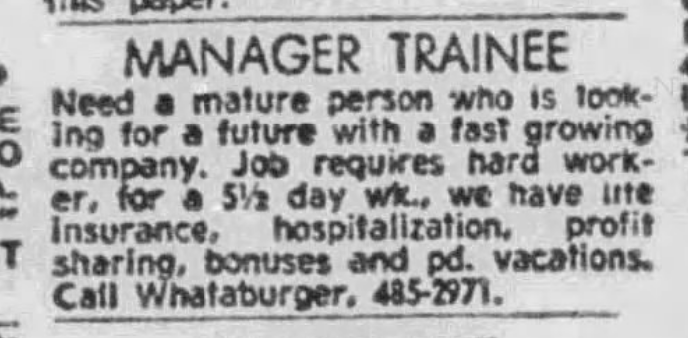
Last of all, and most important, this want ad appeared in the Salt Lake Tribune on The Salt Lake Tribune on Nov 29, 1973, Page 60:
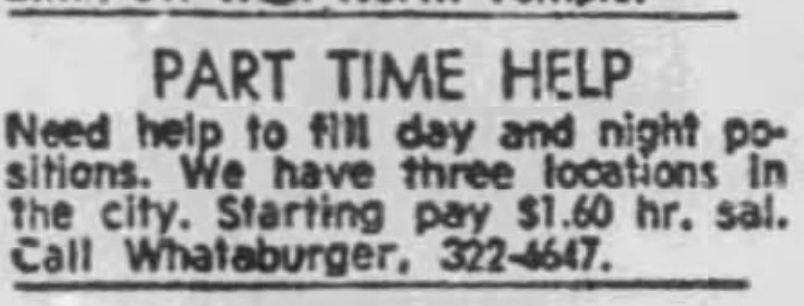
And on Fri, Nov 30, 1973, Page 61, the following ad was seen:
Three locations! And, if you have a subscription to Newspapers.com, you can see dozens of similar solicitations between 1973 and 1974.
As a result, I feel 100% confident, based on my recollections of Salt Lake in the ’70s and the results of Gemini’s search, that there was indeed at least one Whataburger in Salt Lake at one point, and most likely three, and that I and many other people enjoyed their brief existence.
This post was spawned by one of Heather Cox Richardson’s “Letters from an American” which was also posted on Facebook.
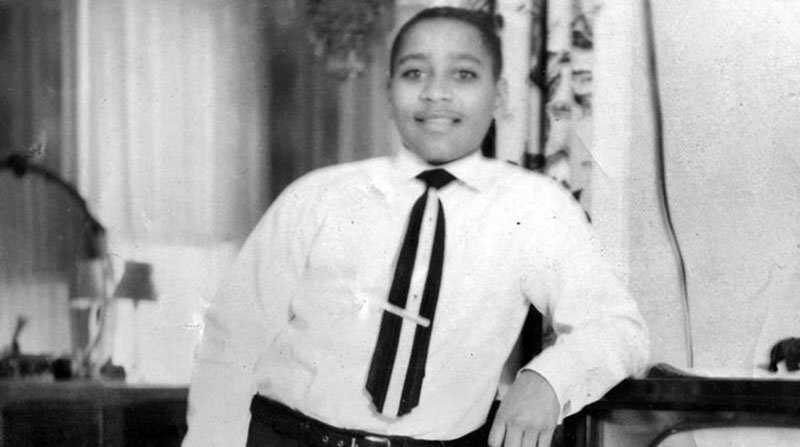
She wrote about the tragic 1955 murder of Emmett Till, an innocent 14-year-old boy, and about the hateful and unrepentant attitude of J. W. Milam, one of Till’s two killers.
Emmett Till
“What else could we do?” Milam said. “He was hopeless. I’m no bully. I never hurt a n* in my life. I like n*s, in their place (emphasis mine). I know how to work ’em. But I just decided it was time a few people got put on notice. As long as I live and can do anything about it, n*s are gonna stay in their place.”
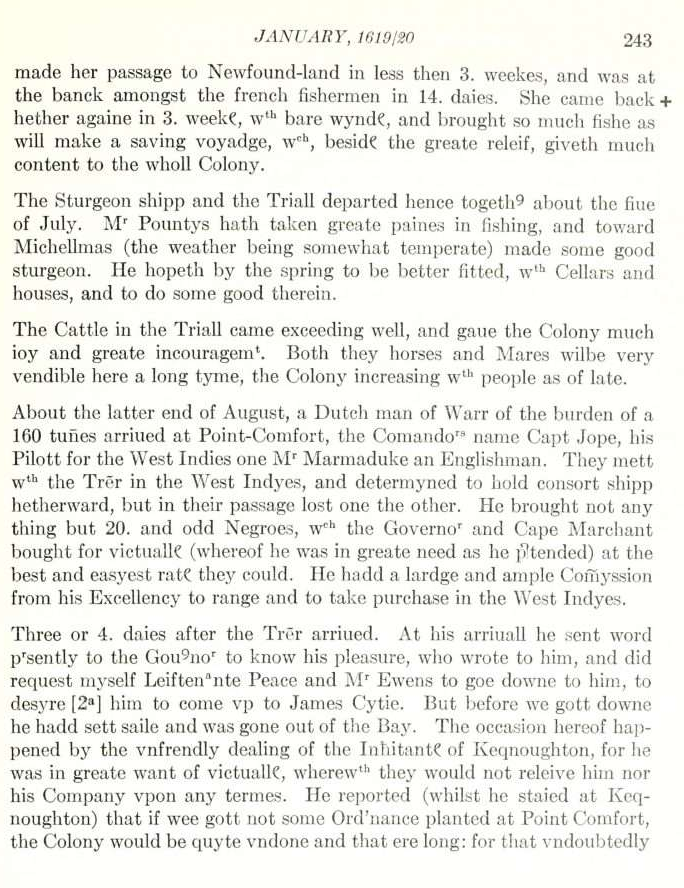
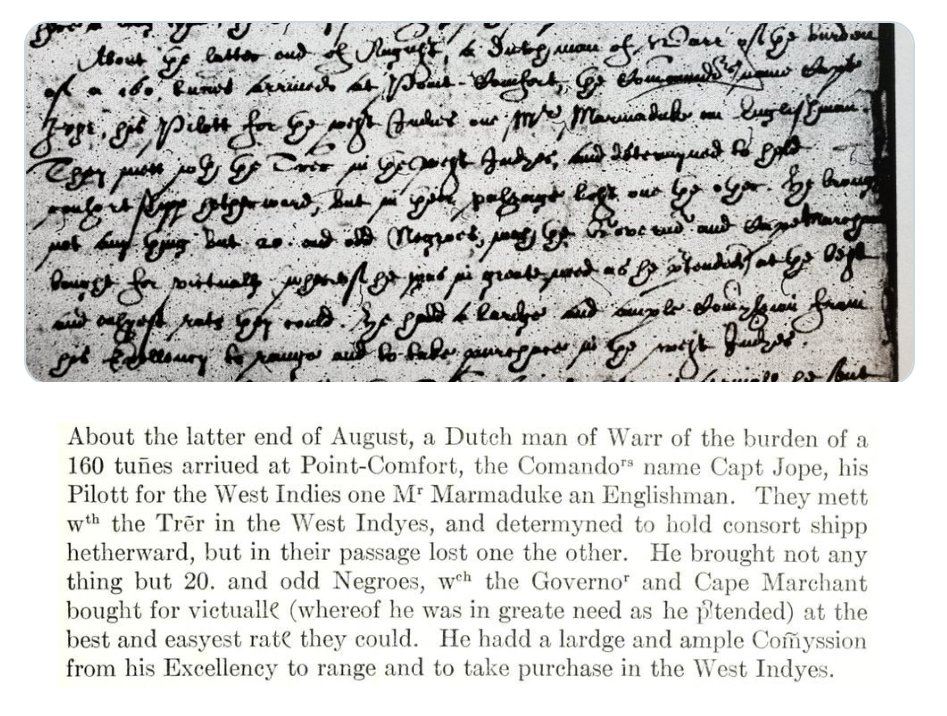
Milam’s attitude had it roots in 1620 when a Dutch man-of-war traded “20 and odd Negroes” for “victualle,” according to a letter from Virginia Colony secretary John Rolfe to Sir Edwin Sandys. From there, it evolved into a system of utter oppression and cruelty by whites, who used the principle of human bondage to treat their unfree laborers as less than cattle for their own petty satisfaction. These attitudes and the economy which arose as a result – largely the growing of cotton in the South – were officially and legally repudiated by the Civil War and subsequent amendments to the Constitution which guaranteed “life, liberty, and the pursuit of happiness” to all citizens, and not just wealthy white landowners – but the attitudes in the hearts of many in the South clearly did not die, as witnessed by the conditions that Blacks dealt with prior to the Civil Rights area, predominantly in the South.
While thinking about John Rolfe’s letter, I kept having flashbacks to elementary school, and of vague memories of learning about the arrival of the Dutch ship in Jamestown. I could have sworn that the text was recorded as “20. and odd negars,” (at that time the word was simply a corruption of the Portuguese word for “black,” and had not yet become the hateful slur of later times). So I started doing some digging, and was intrigued to find that I was not the only one who remembered things erroneously.
The following websites commemorating the 400th anniversary of the beginning of human bondage in America quote that passage from Rolfe’s letter in that manner:
Here is plainly transcribed “20. and odd Negroes.” If you were not sure about the accuracy of the transcription, below we can see a scan of the original letter:
Having been unsuccessful in finding any explanations on the Internet for the discrepancy, I turned to Perplexity, an AI search engine which provides references with everything it is able to find. What I asked:
“The first arrival of African slaves in America is recorded in a letter by Virginia colony secretary John Rolfe, in which he recounted – according to some – that a Dutch Man o’ War traded “20 and odd Negars” for “victuals.” But a scan of the letter itself shows that the word Rolfe used was “negroes,” and the Encyclopedia of Virginia provides an accurate transcript of the letter from Rolfe to Sir Edwin Sandys. Even a report from the Congressional Black Congress in 2019 uses the phrase “20 and odd Negars.” I want to know how Rolfe’s “negroes” was changed to “negars” in some reports.”
I was not unhappy with the result [emphasis added to the salient parts]:
John Rolfe’s 1619 letter documenting the first arrival of Africans in Virginia describes the sale of “20. and odd Negroes.” This exact phrase—using “Negroes”—is confirmed by direct transcripts from reputable sources such as the Encyclopedia of Virginia and republished excerpts of the letter, all of which indicate Rolfe wrote “Negroes” and not “Negars”.
The origin of the spelling “Negars” or its substitution for “Negroes” in some later reports seems to trace to evolving English usage and to historical misreadings or reinterpretations over time. Several factors contribute to this confusion:
The early 17th-century English language was not standardized, and words referring to people of African descent included a range of spellings—such as “negroes,” “negers,” “negars,” and, later, “[n-word]” — all derived from the Spanish and Portuguese “negro” (meaning black), and ultimately from the Latin “niger”.
The spelling “negars” appears in several 18th and 19th-century works, and was sometimes used interchangeably with “negroes” or as an early variant in American English, especially in regions influenced by Dutch or non-standard English dialects.
Some secondary sources and later historical writings incorrectly retrojected¹ these variant spellings into the context of 1619, perhaps due to faulty transcription practices, unfamiliarity with the original manuscript, or confusion regarding the shifting terminology used to describe African-descended people in colonial records.
In summary, John Rolfe’s original letter used the word “Negroes,” but through later historical reinterpretations, variances in early English spelling, and repeated citation errors, the term “Negars” emerged in certain secondary sources and reports. But direct examination of Rolfe’s correspondence confirms that “Negroes” was his actual word choice in the context of the 1619 arrival.
At least, at this point, I know that my original memory from my grade-school days was not imagined up, and have a good idea of what happened between John Rolfe’s penning his letter and subsequent reporting.
The Old Wolf has spoken.
Footnotes
¹ I love the word “retrojected,” to project into the past.
Today Google honors International Women’s Day with one of their doodles.
I am 100% in favor of honoring the women of the world. And, I have some thoughts. Consider these remarks by Morgan Freeman on the occasion of Black History Month:
MIKE WALLACE: Black History Month, you find … MORGAN FREEMAN: Ridiculous. WALLACE: Why? FREEMAN: You’re going to relegate my history to a month? WALLACE: Come on. FREEMAN: What do you do with yours? Which month is White History Month? Come on, tell me. WALLACE: I’m Jewish. FREEMAN: OK. Which month is Jewish History Month? WALLACE: There isn’t one. FREEMAN: Why not? Do you want one? WALLACE: No, no. FREEMAN: I don’t either. I don’t want a Black History Month. Black history is American history. WALLACE: How are we going to get rid of racism until …? FREEMAN: Stop talking about it. I’m going to stop calling you a white man. And I’m going to ask you to stop calling me a black man. I know you as Mike Wallace. You know me as Morgan Freeman. You’re not going to say, “I know this white guy named Mike Wallace.” Hear what I’m saying?
2005 interview with Mike Wallace for television’s “60 Minutes” news magazine program
There has recently been an immensely favorable response to the Neflix series “The Handmaid’s Tale,” ¹ as well as rising awareness of the challenges still faced by women around the globe (astonishingly, in the 21st Century. Sadly, there are bastions of troglodicity (my own word) in my own country where people in power are bound and determined to keep women in a state of perpetual subjection and inferiority – notably the US Congress, SCOTUS, and legislatures in various “red” states around the nation, such as Texas, Alabama, Utah, and many others.
The Christian faith has a lot to do with it, especially religion of the evangelical sort:
“Wives, submit to your own husbands, as to the Lord. For the husband is the head of the wife as Christ is the head of the church, his body, and is himself its Saviour.”
Ephesians 5: 22-23
“Let a woman learn in silence with all submissiveness I permit no woman to teach or have authority over a man; rather, she is to remain silent.”
1 Timothy 2: 11-12
But even in non-Christian societies, the pervasive attitude that women are inferior beings has been present for millennia – the following passage from one of my favorite short stories, set in Brazil, lays it out pretty clearly.
Then [the tribal chief] went on to explain—it took all night—that the tictoc nut was not like other nuts. Everything, said the chief, everything could think a little. Even a leaf had sense enough to turn itself to the light. Even a rat. Even a woman. Sometimes, even a hard-shelled nut. Now when the world was made, the deuce of a long time ago, man having been created, there was a little intelligence left over for distribution. Woman got some. Rats got some. Leaves got some. Insects got some. In short, at last there was very little left. Then the tictoc bush spoke up and begged, “A little for us?”
“River of Riches” by Gerald Kersh, 1958
Fast forward to our day and age and country, and these attitudes have some direct consequences within individual families, and not just in the less-tangible global sense of economic and social inequality. In other countries it’s worse still; female children in Afghanistan and India, for example, are more likely to be abandoned, sex-selectively aborted or killed in instances of infanticide than are boys. Human trafficking, largely perpetrated upon women and female children, continues to be rampant. The evil is mind-clenching.
If we’re going to be fair about it, every other day should be International Women’s Day… plus February 29th when it rolls around because women slightly outnumber men on a global basis. But until the recognition which they deserve is granted them in the same sense that Morgan Freeman expressed, I give honor – every day – to all the women of the world², who not only bear and raise the next generation but who have made incalculable contributions to humanity since the dawn of time.
This little essay may do absolutely nothing to improve the situation, but I felt that for myself, it was important to mark the day with more than just a congratulatory message.
The Old Wolf has spoken.
Footnotes
¹ If you liked the series, read the books by Margaret Atwood, including The Testaments. They add a lot of things you’ll never see in the series and leave you with some reasons for optimism instead of bleak hopelessness.
² Cis-, trans-, or otherwise, in case you were wondering.
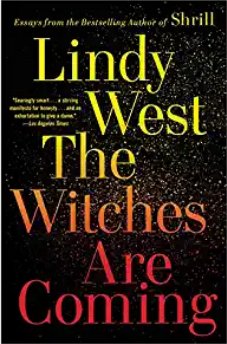
Some time ago, a preview of this book appeared in various places around the internet; reddit, Twitter, and a few others. I encountered it, and knew at once that this is a book I would need to own and read. And I was right.
The excerpt reads as follows:
My husband plays the trumpet, which is a sort of loud pretzel originally invented to blow down the walls of fucking Jericho and, later, to let Civil War soldiers know it was time to kill each other in a river while you chilled eating pigeon in your officer’s tent twenty miles away, yet somehow, in modern times, it has become socially acceptable to toot the bad cone inside your house before 10:00 a.m. because “it’s your job” and your wife should “get up.” What a world! If one was feeling uncharitable, one might describe the trumpet as a machine where you put in compressed air and divorce comes out, but despite this—despite operating a piece of biblical demolition equipment inside the home every bright, cold morning of his wife’s one and only life—the trumpet is not the most annoying thing about my husband.
West, Lindy, The Witches Are Coming
Once I had read the book, I felt morally obligated to leave a review at Amazon, if for nothing else than to give this beautiful collection of essays a signal boost. This is a cross-post of that review, with a bit of amplification.
A witty, acerbic, and irreverent look at sexism in the 21st Century (and other critical issues that are crying out to be addressed).
Make no mistake, this book will resonate with women… but it’s a book for men. We as those who hold supreme privilege in our society by simple roll-of-the-dice virtue of having a Y chromosome cannot be allies in the fight for gender equality (indeed, for human equality) – we must be the frontline warriors.
We can no more expect women to overcome misogyny than we can expect people of color to overcome racism. The problem is not them; the problem is us. Until people like Donald J. Trump and those who think like him can be rendered irrelevant or educated (and doing either will be an Augean task, if even possible), writers and influencers like Ms. West can continue to publish and speak and agitate, but they must become the rear guard. It is up to men to take up the cause and win the war.
At the age of 70, I do not expect to see a bloodsoaked fatal flawless victory in my lifetime, but battles are being won.
The #MeToo movement and its consequences are just one example. But that’s still a sortie in the war, waged by the oppressed minority. Do you wonder why there are so many “strident” feminists out there?¹ It’s because their stridency is the moral equivalent of the Watts riots and so many subsequent outbreaks of violence by people of color who have been enslaved, oppressed, lynched, sidelined, and minimized for over 400 years. Read up on history and you’ll see that women have been waging a battle for equality for just as long, if not longer.
Men, buy this book and read it. Then think about it, and read it again. Despite its biting humor and delicious writing, it’s not a book to entertain or amuse. It should be a textbook for anyone who wants to understand why the problem of misogyny is so rampant, and what needs to be done moving forward.
I’ve written about racism before. For all the talk about Critcal Race Theory, (an academic theory that is not being taught in K-12 schools, no matter what Tucker Carlson may be telling you), white America needs to face the fact that racism is real, and rampant, and deeply ingrained in our society.
But in all honesty, there should be a Critical Gender Theory as well. Donald Trump and his “locker room talk,” Harvey Weinstein, Bill Cosby, and so many others bear not mute but loud and blatant testimony that for far too many men, women are still less-than: objects to be used, property to be managed. Ms. West’s book offers few real solutions to the issue. She’s loud and funny and sharp and biting, and shows in delicious prose where our society has gone wrong and how much there is to do, but in the end analysis it will be up to the faction in power (read: men) to make the difference.
Fixing Hollywood and the media would be a good place to start, but I honestly don’t hold out much hope for that in the short run. As long as there are dollars to be made by depicting women as pliant sex toys in drama and advertising, nothing short of the zombie apocalypse will get entertainment and advertising moguls to wise up.
In the meantime: Men, read this book. It’s not just the pathetic moanings of a whiny liberal feminist; it’s an unashamed accounting of what women in general have to face on a daily basis. If you, by the grace of God, get a sense that maybe you’re part of the problem even without wanting to be, this is a good place to start as I mentioned in my other post on racism:
It won’t be easy, but it has to be done.
(And if you care about the climate and the impending destruction of our global environment which we may not have any way to reverse, you should read this book as well.)
The Old Wolf has spoken.
Footnotes
¹ You might also be interested in watching Ms. West’s Shrill, a 2019 Emmy Award-nominated drama about a woman who seeks out ways to change her life without changing her body.
This post is cobbled together from a couple of different entries at my Livejournal back in 2009
Leigh Callaway, wherever you are, I owe you dinner.¹
The year was 1965, I was 14, and it was my senior year at Camp Wildwood in Bridgton, Maine.²
In this my 4th year at camp, the pinnacle of the year was, prophetically, travel. I sucked at team sports – still do – but loved traveling, camping, the woods and individual challenges; in short, I lived for tripping. Not that kind. Shut up.
My yearbook blurb quoted, “However unorganized his body of knowledge may be, he still is a source of many bits of information and despite his mere 85 lb. bulk, was one of our most energetic and determined trippers.” By the dessicated skull of Mogg’s grandfather, how prophetic was that?
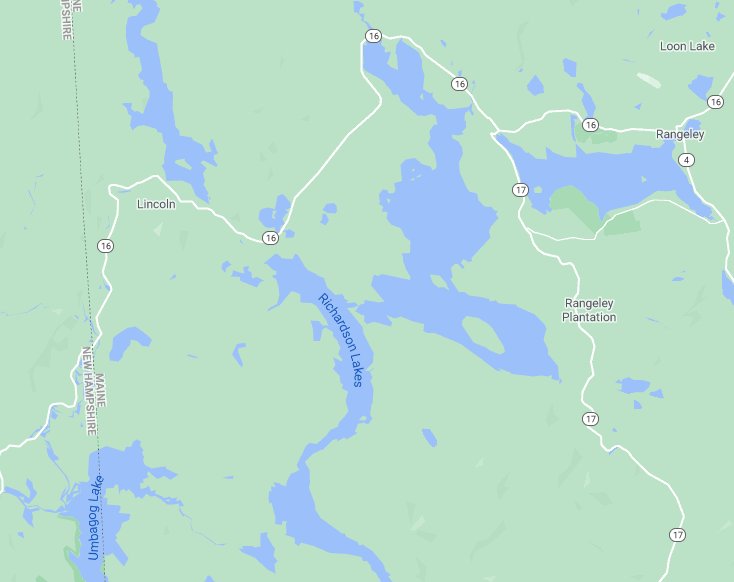
After a 5-day canoe trip to Rangeley Lake early in the summer, six of us, accompanied by several counselors, took another 5-day trip in canoes from Lobster Lake down the Penobscot River to Chesuncook Lake in Maine. It was a trip never to be forgotten.
The Rangeley Lakes complex in western Maine
What does all this have to do with Tabasco Sauce? Hush. We’ll get to that.
The year, as I mentioned, was 1965, and inland Maine was still pretty untouched in most places. It was five days of canoeing, camping, 20 miles of river, camping, 4 miles of rapids, camping, portages, camping, woods, camping, absolutely glacial pools and waterfalls which we reveled in as a test of manhood, more camping, and breathtaking scenery.
Are you starting to see a pattern?
When you camp, you cook whatever you have along. That means a lot of dehydrated chicken soup and noodles carbonara and canned stuff and interesting stuff and things you might never fix at home.
One of the counsellors that accompanied us on this trip was a young man named Leigh Callaway.
Now to a 14-year-old, all our counselors were ageless. If they were counselors, they were adults – so I can’t tell you how old he was at the time, but he was probably not much more than a kid himself. So all I can tell you about him was that he was extremely kind to me (huge points!) and had a BMW motorcycle (more huge points), and that I worshiped the ground he walked on. And he could cook.
One night, whether out of inventiveness or desperation, Leigh fried up a huge cast-iron skillet full of rice until the grains were golden brown, and then filled the pan with water. When the rice was cooked soft, he threw in a can of tuna or three, sauteed it up a bit longer, and then seasoned the whole thing with Tabasco™. Lots and lots of Tabasco™.
Now my mother, bless her soul, took me to many ethnic restaurants in New York while I was young, and one of our favorites was this little Aztec-Mexican hole in the wall called Xochitl.³ They had a hot sauce there that would rival much of what Blair offers (certainly not their 16-million scoville pure capsaicin insanity, but highly effective nonetheless.) I remember that a tiny drop of this stuff on a toothpick, applied to the tongue, was enough to bring tears to the eyes. So I was no stranger to odd and savory foods. (Hm. How that I’m thinking of it, perhaps I should give Mom some credit at my Banquet from Hell.) That said, cooking at home was pretty basic meat-and-potatoes fare, and there wasn’t a lot of exotic stuff around, so I had never used Tabasco™ before.
Well, anyway. When you’ve been paddling a canoe for 12 hours, and you’re exhausted and starving, it doesn’t matter much what’s on the fire. I think if Leigh had fried up a beaver tail, I wouldn’t have batted an eyelash. As it was, we had fried rice and tuna with Tabasco™ – and I tucked in like a trencherman. Mogg’s teeth – it was so good. It would be easy to say that my enjoyment was born of famine, but given that I have prepared this concoction and many others like it many times in my life thereafter, I can discount that theory. Simply put, I was hooked on Tabasco™.
Now, I like Frank’s Original Red Hot too – it’s got a nice flavor, and I always keep a bottle of it handy, but there’s something about Tabasco™ that just can’t be matched.⁴ Yes, I’m well and truly addicted.
So Leigh, wherever you are, know that you made a huge impression on me that summer, and your influence is still being felt *mops brow* 44 years later.
And that’s all I have to say about that.
PS – I still remember the taste of black coffee sweetened with maple syrup, too…
Footnotes
¹ Leigh, bless his heart, saw this post and actually responded with a bit of information about his subsequent experiences. He recommended that since I loved Tabasco I should try Sambal Oelek, an Indonesian chili paste that apparently puts Sriracha to shame. I was grateful for the recommendation, but would have loved some hint about how to contact him. Which he did not provide, the rascal. I would have loved to renew the acquaintance and catch up in person.
² Camp Wildwood is a superb boys’ camp run – at the time – by Leo Mayer and Ed Hartman, which is still operating in Bridgton, Maine, although it has passed through other owners since then.
³ Another one was “La Fonda del Sol”, a very upscale place which I loved eating at. Now gone. *snif* But there are some memories here.
⁴ In fact, as I was typing my earlier post at Livejournal and thinking about a nice dish of fettucine with tuna and hot sauce, my ears were burning and I was experiencing all the symptoms of a good solid capsaicin flush. Which confirmed my theory. I love hot food; there’s nothing like a good capsaicin burn. The last two times I had prepared spicy foods, though, I had a very unusual experience – the flush to the face began as soon as I had opened the bottle of hot sauce – and hadn’t even eaten it yet. The first time it happened, I thought I was “imagining things.” But it happened again… as I was liberally lacing some burritos with Tabasco, I started getting the burning and vascular dilation that I always experience with certain peppers – very much like a Niacin flush, if you’ve ever experienced that. And, what’s even stranger, I experienced a repeat as I typed this. Just thinking about it was sufficient to recall the physiological response.
Now that’s just weird. Maybe if I salivate enough, I can get my doorbell to ring.
I grew up in New York City in the ’50s and ’60s. Much has gone since that time, but my memories include hings I deeply miss about New York in my early days:
The myriad small businesses instead of brass-and-glass
Little Italy full of Italians, and the Feasts of San Antonio and San Gennaro
Yellow Cabs with huge back seats and those little jumpseats (Yes, unsafe, but they were so fun)
Air-conditioned movie theaters with giant screens and velvet curtains where you could stay all day for 50¢ and watch a cartoon, a short subject, a newsreel, and the main feature over and over again
the 42nd Street Subway Stations with Red and Blue lights guiding you to your line of choice, IRT, BMT, or IND, or the Shuttle
Underground OJ bars and other odd little shops in the subways such as Al Stevenson’s magic store (otherwise known as the Wizard’s Workshop)
Hole-in-the-wall pizza joints where you could order pizza by the “Slice!” for 15¢.
The Staten Island ferry for a nickel
Christmas trees up and down Park Avenue, and the stars that would twinkle on the 666 building
the Lord and Taylor Christmas windows
And so many more…
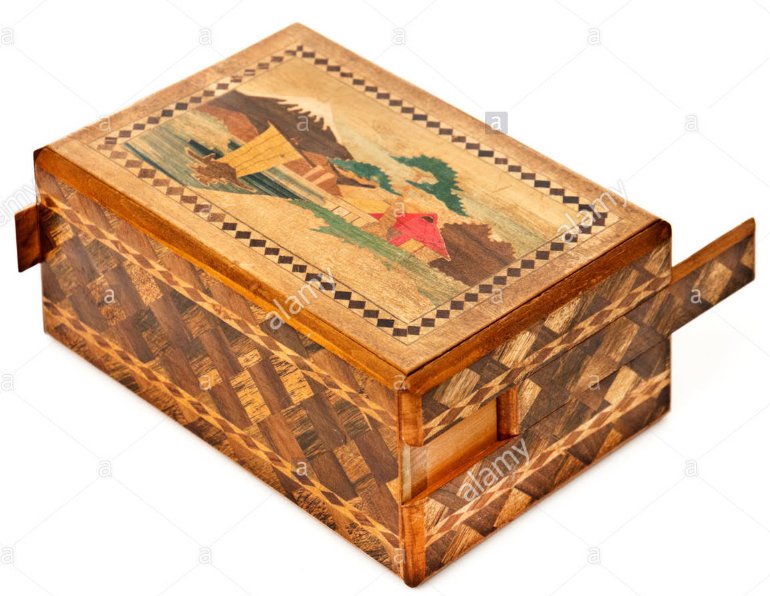
But one of my most indelible memories is from Chinatown, where my mother would take me on occasion. There were myriad stores and restaurants selling the ubiquitous Chinese back-scratchers, finger traps, and wonderful puzzle boxes, some of which I wish I still had.
Alamy stock photo of a Chinese puzzle box, very similar to one I once owned.
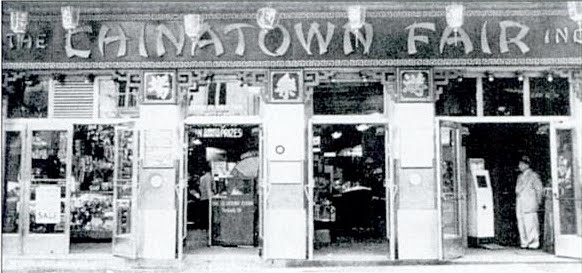
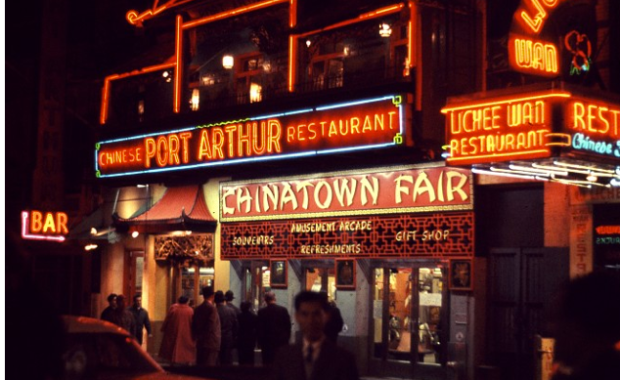
But the most wondrous thing to my young eyes was the Chinatown Fair.
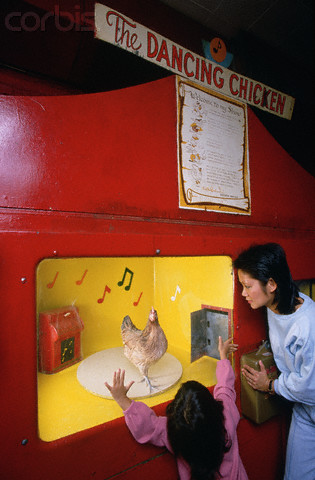
Before it became an electronic game arcade, it featured dancing chickens, tic-tac-toe chickens (you can read about these at Jeremiah’s Vanishing New York), and the amazing animatronic dragon.
Sadly, no photos of the latter wonder appear to have been saved to the Internet as of this moment, but who knows? Perhaps someone will come across a picture in their old archives and post it in the future. If you happen to stumble across this blog post and have such a photo, please let me know; I would love to feature it here.
At any rate, you would walk up to this row of little windows, each with a coin slot for quarters; drop one in and your window would open, and below you was this most amazing animated dragon which would move and roar at you. Commenter “Donald” at the website Scouting New York had this to say, which syncs with my own memories perfectly:
Yes!! The dragon peep show…. why doesn’t anybody ever mention the dragon peep show? I thought that was the most bizarre “game” I ever saw… you’d drop a quarter in and a sliding plastic window would rise, exposing a glass window underneath (similar to a peep show booth) and literally laying on the basement floor – you’d see this huge animatronic dragon moving it’s head and tail – and from a speaker would blare the soundtrack from an old Godzilla movie… that familiar Godzilla roar. Now the dragon you were looking at and the Godzilla you were hearing of course had nothing to do with each other – but that just added to the cheezy entertainment value of the whole thing. I thought it was great… but nobody ever mentions it. I ALWAYS hear about the Tic Tac Toe Chicken… but never my old dragon friend.
The Fair later became a video arcade, but closed in 2011. Some other great memories are archived at Scouting New York, The Gothamist, Ganker, and Huffpost; apparently the arcade featured in a 2015 documentary called The Lost Arcade; in its later years it “the arcade became a shelter to a community as diverse as the city surrounding it and changed lives in doing so.” (IMDB)
According to The Verge, the arcade re-opened in 2012, but the reviews were mixed. Apparently it’s still there, but without that amazing dragon it will never be the same for me.
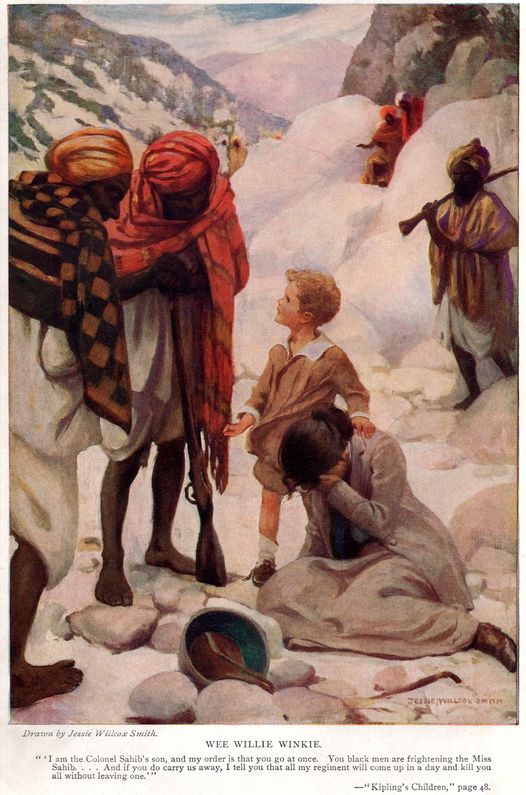
Found this at a Facebook group dedicated to outstanding illustration.
The picture is beautiful. The colonialist sentiment, not so much. But that was Kipling’s day.
I recall with both amusement and horror browsing in a used bookstore somewhere (I think it was San Francisco), and coming across an English-Hindustani phrasebook written for British soldiers billeted in India. I swear on a stack of Bibles I’m not making this up: One of the phrases was, “You black bastard, you call these boots 𝑐𝑙𝑒𝑎𝑛?” I wish I had bought it, just so I could get past the “pix or it didn’t happen” crowd, but I remember being (even in the ’90s) rocked to my very core to find something like that.
We have come a long way. But we still have a very long way to go.
Critical Race Theory is very simple, but because of political (and prejudicial) undercurrents in certain segments of our society, it is widely misunderstood and misrepresented.
The Thermonuclear Bowel Evacuation Formerly Disgracing the Oval Office is quoted as having said,
“Students in our universities are inundated with critical race theory. This is a Marxist doctrine holding that America is a wicked and racist nation, that even young children are complicit in oppression, and that our entire society must be radically transformed.”
45’s Remarks at White House History Conference, September 17, 2020
This is not Critical Race Theory. It is pushback from a white supremacist world view, trying to make something important and human into something frightening and oppressive.
To teach that racism is still baked into our social system, and to serve as a catalyst for change toward a more equal and representative system (in other words, to make America the land of equality and equal opportunity that it has long trumpeted itself to be) is the most peaceful and human thing I could imagine.
Children – and adults – need to understand and see where and how racism operates to perpetuate the lie of Alexander H. Stephens, vice president of the Confederacy, to the effect that:
“Our new government[‘s] foundations are laid, its cornerstone rests, upon the great truth that the negro is not equal to the white man; that slavery subordination to the superior race is his natural and normal condition. This, our new government, is the first, in the history of the world, based upon this great physical, philosophical, and moral truth.”[2]
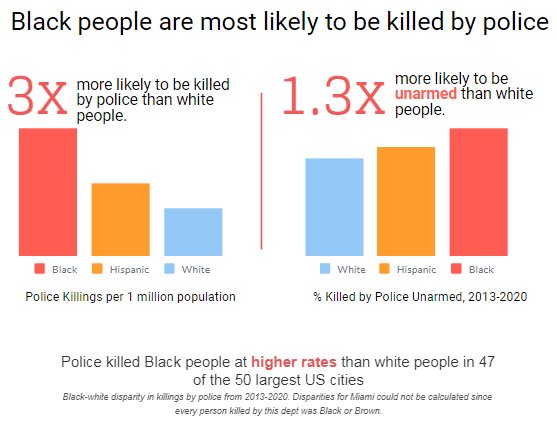
For the most part, we have come past the days when black people could be lynched by white mobs with impunity. But if you read the news, it’s hard to ignore the fact that racism and outright homicide is still endemic in many of the police forces of our nation.
George Floyd’s homicide was widely publicized, but in terms of endemic racism, it’s only the most current tip of the iceberg.
This is not OK, and no amount of pearl-clutching and flag-wrapped pushback or “blue lives matter” wailing can make it so.
But it’s not just policing and inequity in incarceration and a failed drug war and an oppression campaign pushed by the Nixon administration. Racism touches almost everything in obvious and not so obvious ways.
Access to equal housing.
Access to equal financing.
Access to equal education.
Access to equal employment.
Access to equal relationships.
Access to equal voting privileges.
And the list goes on.
Racism taints it all. If you’re black, or brown, or yellow – you and your ancestry have certainly encountered this, and continue to do so, in myriad ways that would not even be evident to someone born and raised in white privilege unless they have made a concerted effort to be aware of history.
America is not a wicked country, or a Marxist country, and Critical Race Theory doesn’t make any attempt to paint it as such. America is a human country – filled with brave and noble men and women who strove to make it a great nation for all. But it’s also a country that made mistakes, some of which have echoes which continue to ripple down to the present day. And it’s those mistakes that people of good will seek to recognize, and enshrine in our official chronicles, and remediate in the fastest and best way possible.
I applaud the idea.
This is not a matter of debate. It’s a reality. Those who have eyes to see will see, and do their best to make a difference.
Cross-posted from Livejournal 5/3/2021, and edited slightly for current relevance
♫ For the easiest travel on earth, Take a Trailways, take a Trailways, For the easiest travel on earth, Take a Continental Trailways bus. ♫
♫ Go Greyhound, and leave the driving to us! ♫
A post in Teresa Burritt’s Frog Blog (an earlier version, now defunct, but the current one is still full of interesting things) included the following picture:
Like many of her posts, this got the old gears grinding and brought back many memories of cross-country bus travel, some pleasant and others… well, “interesting.”
Back in the 50’s, you could truck around for $99.00 for 99 days, unlimited travel to unlimited destinations, and break your journey anywhere; I suspect this is what the poster above referred to. Naturally, it was the 50’s, and the buses were notorious for intolerance and segregation¹ (see here for some of the details of that shameful situation), but also became a focal point for the civil-rights movement. For comparison, you can read the Trailways Wikipedia entry.
Back in the 60’s I took several trips by bus from New York to California and back; there’s no denying that it was challenging. Even as a relative youngster, sleeping on a bus is less than luxury. The seats didn’t recline much if at all, much like the cattle-class seats on a modern airliner. Stopping at all hours of the night at lonely, sometimes seedy cafés in Broken Clavicle, Iowa or Whistling Rock, Wyoming is not luxurious… and I will forever associate such places with the smell of Postum™ ². As I drink neither coffee nor tea, it was all I could get if I wanted something hot besides cocoa; like Sanka™, it came with a metal pot of hot water and little envelopes.
Sanka and Postum, as offered in restaurants
Sleeping on the bus was so challenging for me I would often resort to sleeping pills, but those made the night-time stops fairly grueling – staggering to the restroom while under the influence of those soporifics is unpleasant at best. Eventually I stopped using them and just toughed it out.
One upside was being able to watch the countryside go by without worrying about the stresses of driving, and another was the interesting people one could meet on the way. Yes, there were the “other” kind of people as well, along with the fat ladies puking in the aisle if they couldn’t make it to the onboard lavatory, but the really unpleasant incidents that one hears about were thankfully quite rare, and I never encountered one. While I never lost a bag during an actual trip, one box I shipped from New York to Pennsylvania via Greyhound arrived opened, damaged, with much missing, and full of gravel. I wish I could have been a fly on the wall to see what happened to that one.
I’ve checked – you can still travel by bus today, if you are hardy. But the advantages seem few, given the cost of other alternatives.
A round-trip fare from SLC to JFK would cost $499.00 at senior, economy rates, and take about 48 hours each way. Allow a bit for what passes for food and such along the route.
That compares to the lowest airfare of $353.00 for the same dates.
It would cost around $381.00 for gas in a 40mpg Prius at an average cost of $3.50 per gallon (which would take at least 8 days, coming and going, meaning additional lodging and food costs.)
Amtrak would cost $492.00 and take 61 hours, if one can get through without service disruptions.
At this point, the biggest advantage, shared with Amtrak, seems to be seeing a lot of countryside without having to do the driving yourself. The fact that Greyhound is still in business speaks to the fact that many people are willing to take this option – and naturally, there are other routes which may make taking the bus more advantageous.
The Old Wolf has spoken.
Footnotes
¹ John Howard Griffin’s experiences at a Greyhound Bus station in the South in 1960, as well as on the bus trip itself, recounted in Black Like Me, are chilling.
² Postum faded into history in 2007 but enough people clamored for it that it was successfully revived by Eliza’s Quest Food in 2013. There are recipes for home-made varieties, and one product, Ersatz™, claims to be a good Postum™ substitute. During the war, Ersatzkaffee was commonly given to Allied POW’s, and here we have an Ersatzersatzkaffee being marketed to those who crave it. The world is so full of a number of things. Now one can get things at the grocery store like Pero™, a European coffee substitute (known in Europe as Karo™) which is similar but much better-tasting, but rarely available in restaurants.
I grew up in New York City in the ’50s. So when a friend of mine posted this, and I watched it, I was naturally struck with feelings of nostalgia for times and events in my life that are now gone forever.
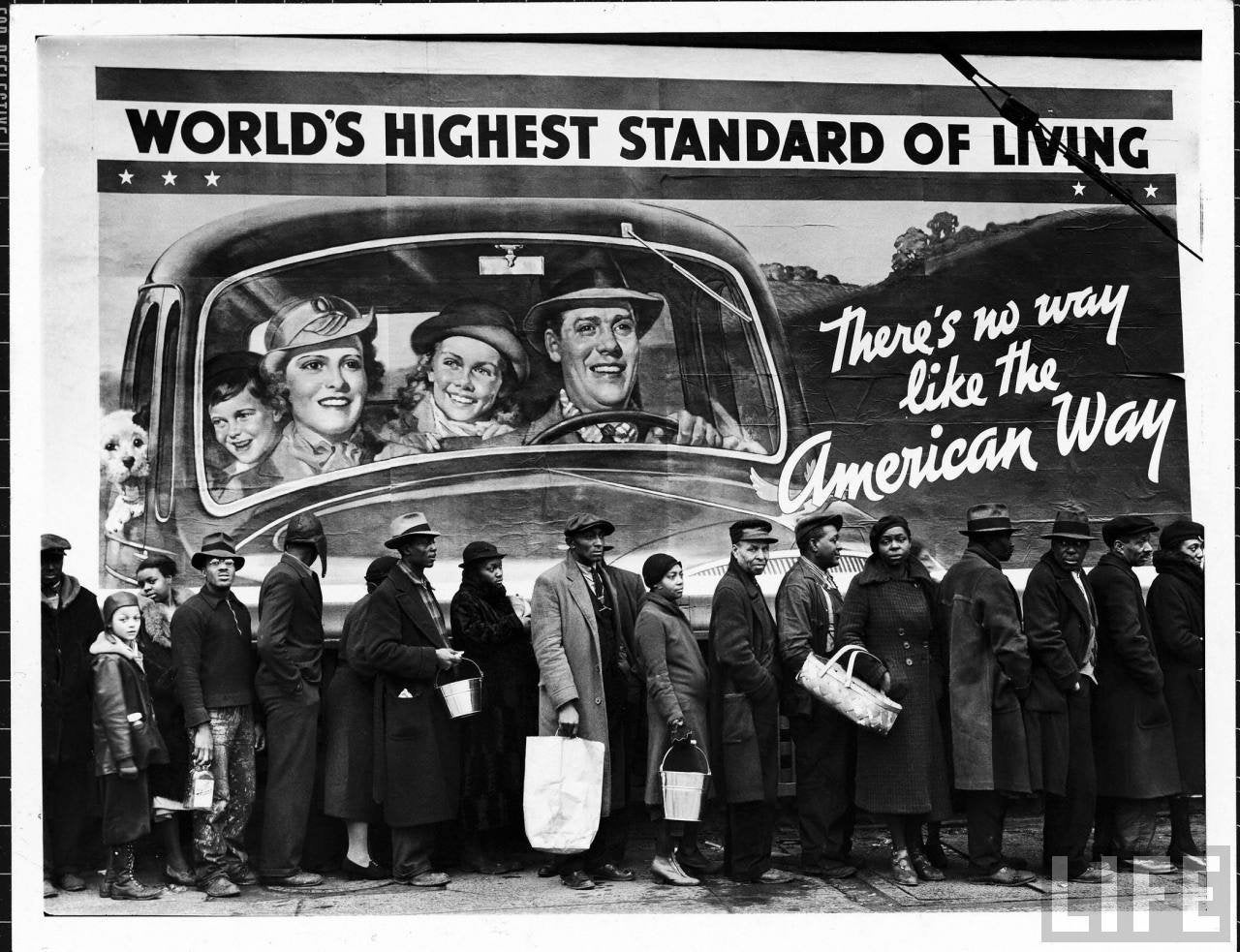
But along with the nostalgia and wistfulness was an overpowering awareness that I was watching the documentary of a reality that only existed for some Americans. The stark contrast, totally ignored in this yearning little video, is well represented in this image from Life Magazine:
Those happy folks in the back, smiling in their car… those are the people we see in the video. The ones in the front, waiting in a bread line, were not even visible anywhere.
It was great to be white in the ’50s.
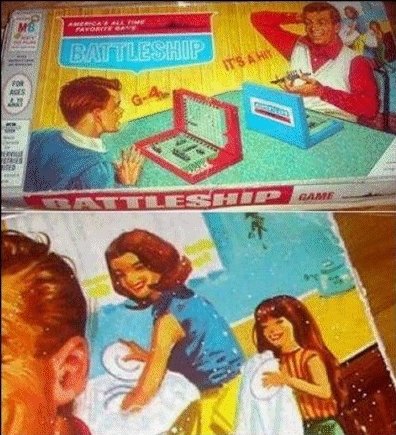
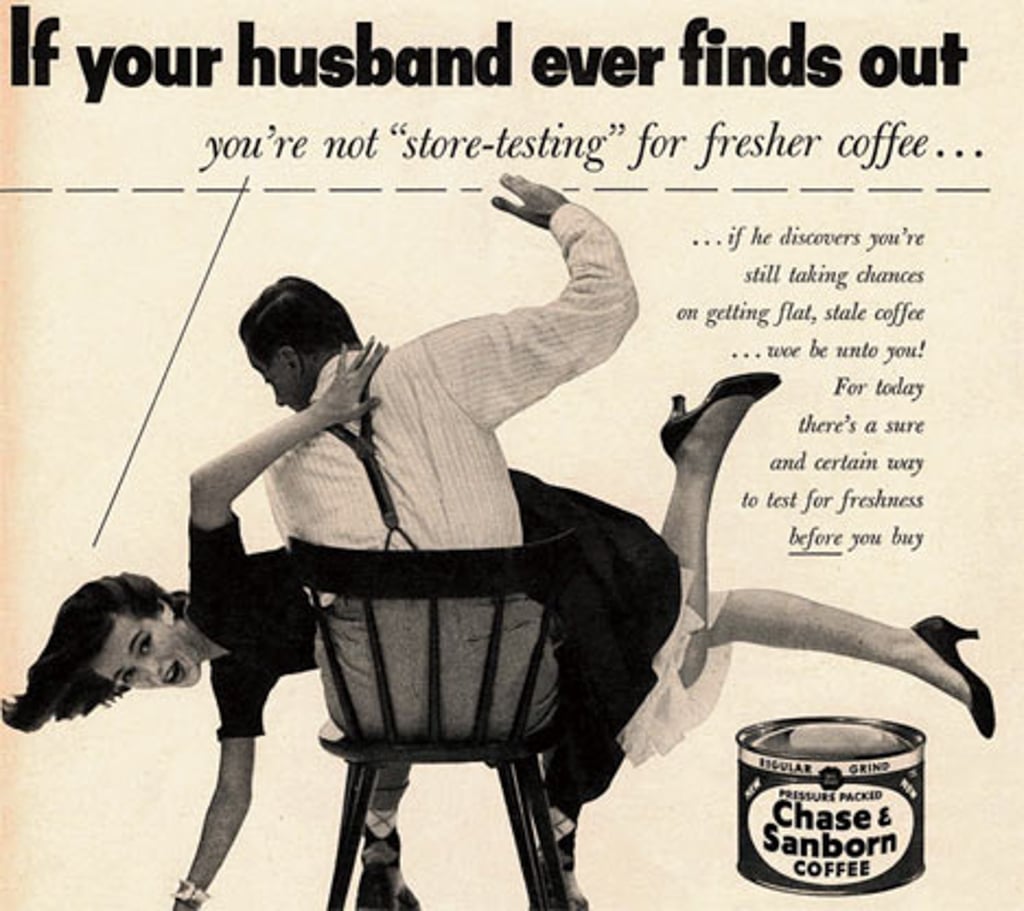
You grow up in that environment, and you grow up a racist, and a sexist, even though there may not be a malicious bone in your body. Racism and sexism were in the blood and bones and DNA of society, and you were bombarded with blatant or subconscious reminders that women’s place was in the kitchen (barefoot, pregnant, and with no vote)¹, and black lives didn’t only not matter, they were totally invisible.
See Dad and Jim play. Watch Mom and Mary wash the dishes. And enjoy it.
This one was relatively subtle. There was much, much worse out there.
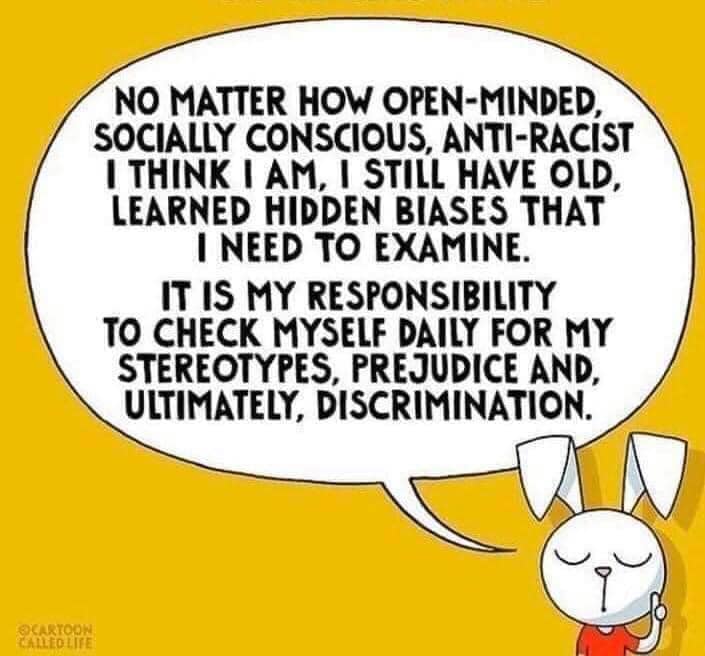
With a history like that, anyone born in the ’50s or even the ’60s is going to have these attitudes driven deep into their psyches, and they are devilishly hard to expurgate completely. That’s why a person who wants to have a positive effect on the world around them needs to pay attention to the advice below (which applies to any “-ism,” not just racism) and practice it on a daily basis. Not unlike alcoholics in recovery who realize and understand that they are never really “cured,” these ways of thinking will surface at a moment’s notice given half a chance.
The Old Wolf has spoken.
Footnotes
¹ Things have improved, at least on the surface – but sexism in American society is still a very real phenomenon, particularly in the workplace. Advertising agencies, still embarrassingly aware that sex sells almost more than anything, still pump out sexist ads, although in the #MeToo era, some companies are issuing mea culpas (but only when they get caught out).
As for racism? Sometimes I wonder if we’ve made any progress at all since Selma. Some of the things I’m seeing now in terms of voter suppression in Georgia and other GOP states recalls a very dark stage of American history, as outlined brilliantly by Heather Cox Richardson.
If you happened to be a member of the Church of Jesus Christ of Latter-day Saints in the ’60s and were ever called as a Ward Clerk, or one of the assistant clerks – Historical, Financial, or Membership – you may remember the old Adler 200 typewriters.¹
Long before the advent of computers or word processors or even IBM Selectrics or Daisy-wheel typewriters, Adler was the go-to brand if you wanted a typewriter with an unusual font. I don’t know how many Adlers the Church of Jesus Christ of Latter-day Saints purchased over time, but I’d bet they kept a lot of factory workers and typewriter repair personnel in business for decades.
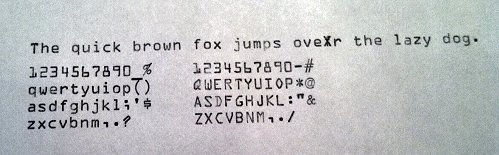
The LDS Adler had a specific keyboard layout, as well: you didn’t have to shift for numbers (because they were used mostly for entering financial records) and symbols were on additional keys.
The font that came with these machines was OCR-A, “a font created in 1968, in the early days of computer optical character recognition, when there was a need for a font that could be recognized not only by the computers of that day, but also by humans.” (Wikipedia) It looked like this:
In the case of financial donations, members would fill out donation slips (being admonished to always write their names the same way each time):
and clerks would painstakingly transcribe these slips onto a ledger sheet on the typewriter, which was then sent by snail mail to headquarters where the records were scanned and entered into mainframe databases. Other information was also recorded using these machines, which were built like Sherman tanks, and like a Timex watch they would “take a lickin’ and keep on tickin.”
Ward clerks often served for extended periods of time; whereas service callings in the Church today generally only last a few years, back in the day it was not uncommon for a clerk to serve for decades, especially if he did a good job.
The Ward Clerk
He kept the minutes, typed each note, And put them in the file. The membership he knew by rote; He labored with a smile.
The ordinations, births and deaths He faithfully recorded For forty years, until at last He went to be rewarded.
The people he had known so well Turned out to shed a tear, And pay respect to this good man, Gone to another sphere.
But as the choir rose to sing, They saw with consternation The good man from his coffin step To count the congregation!
-Author Unknown
It is said in the navy that the Captain may command the ship, but the E-7’s (Chief petty officers) keep the show running. Much the same could be said about a ward or branch of The Church of Jesus Christ of Latter-day Saints; the Bishop or Branch President may be in charge, but the ward clerks keep the wheels greased and everything running smoothly so the leaders can focus on ministering rather than administering.
The Old Wolf has spoken.
Footnotes
¹ The typewriter photos used in this post are from typewriter hunter Jake Fisher at the Typewriter Database.










 Playing in the World Game