Tutpoxy (or, never give a repair job to an incompetent)

If  you’re not familiar with the infamous attempt at restoration of a 19th-century fresco by Spanish artist Elias Garcia Martinez, done by an elderly woman at the the church of Santuario de Misericordia in Borja, Spain, then you are either living under a rock or – perhaps – concerning yourself with more important things than obscure news.

jesus

Now comes a similar but no-less disturbing tale from Egypt, featuring the iconic mask of King Tutankhamun.

King-Tut-Golden-Mask-kings-and-queens-2461543-850-1212

If you’re in charge of cleaning this famous relic, “What do you do if someone accidentally damages one of the world’s most famous artifacts under your charge at the Egyptian Museum? Do you a) report it to the nation’s antiquities ministry to ensure it’s properly repaired by specialists, or b) frantically call your husband so he can sloppily glue the broken piece back into place?” (from the Newser article).

tutpoxy

Apparently the latter, based on the picture above, is exactly what happened. Newser continues:

“The AP notes it reached three of the Cairo museum’s conservators by phone, and they’re all giving different stories: They don’t seem to agree on when the Epoxy Incident happened, and one says the beard was loose and purposely removed. What they do agree on—and all sources spoke on condition of anonymity for fear of reprisal—is that someone on high ordered a quick fix, and that the adhesive used was more damaging than helpful. “Unfortunately, he used a very irreversible material,” one of the conservators said. “Epoxy has a very high property for attaching and is used on metal or stone, but … it wasn’t suitable for an outstanding object like Tutankhamun’s golden mask.”

For now, the lights at the display are being kept low. I can only hope that the internal politics can be overcome sufficiently to get the artifact properly repaired, which apparently now will be a massive undertaking. Sounds to me like some official in the chain needs to be mummified himself.

The Old Wolf has spoken.

Sketches of Life in the Uintah Basin

Alice Woolf

Alice Bartlett Woolf, 1916-1997

Alice Bartlett Woolf, a painter, writer, master teacher, horse breaker, and story teller, was also a dear friend of my mother. While working on scanning my mother’s papers, I came across an article that Alice had submitted to the Utah Humanities Review for their first edition in October of 1947. I found it delightful, and thought it worth sharing here. I have provided a PDF version of the article for anyone who wants to download it. The essay gives a homey, affectionate and impartial look at Mormon communities in the first half of the 20th century; there is much to be envied in the lifestyle of these simple and sincere people.


SKETCHES OF LIFE IN THE UINTAH BASIN

Woolf, Alice B.
Utah Humanities Review
1 (October1947): 313–319.

 Expecting the mode of life and the people to be much changed, I was going “home” for a vacation in the red sand hills of northeastern Utah. As I turned my car north from U.S. highway 40, I was delighted to see again the small farms on either side of a very muddy and rutted road. Of course, I reasoned, the very structure of the farms, with outbuildings, Jackson-fork hay derricks, stackyards, and straw-covered. sheds couldn’t have all disappeared in the space of fifteen years. But what of the people? Had the innovation of elec­tric lights, radios and refrigerators changed their way of life? Did they still refer to a journey to Salt Lake, or some place other than the Uintah Basin as “outside”? Had the oil boom in the nearby town of Vernal urbanized them?

Woolf1

SUNDAY MORNING – Alice Woolf

 After several weeks in Uintah and Duchesne counties I concluded that life in general was much the same as it had been when I was a child of the sagebrush, happily riding my pony between prairie dog holes.

Of course, one may wonder why anyone should hope that small communities of people would not change; and after some thought, I decided that the people in the farm area to the south of the Uintah Mountains are, by and large, the happiest group I have ever known. I had been worried lest the “finer things” of civilization had made them unhappy with their lot, for to the casual observer the small farmer in the Uintah Basin has so many natural odds against him that it seems incredible that the country has ever been popu­lated. He has a constant battle with wind, sand, drouth, and grasshoppers. Getting water to the land has been a major problem since the land was homesteaded, and even today everyone donates time to the building of canals and ditches, in an effort to fight the desert dryness.

Main Street

MAIN STREET – Alice Woolf

 The main factor in this happiness the people enjoy, it seems to me, is the complete social integration of all members of the community. From birth, children go through the same experiences as their elders. They work or: the farms, go to church, visit the stores, listen to conversations, attend dances and all public social functions. Most of their parents did the same. Thus the group becomes tightly knit. Everyone in our own particular community (the nucleus of each community being the church, school, store, and post office) knows whether you were quiet or fiendish in church, how well you did your lessons in school, when you had your first date, how much a dozen you are getting for your eggs now that you are grown and farming for yourself.

One finds the people themselves tolerant and understanding with members of their own community, or of com­munities they would consider neighboring. They discuss the faults and failings of friends, as well as their good qualities, with joyous abandon. However, this ready acceptance extends only to the group. A stranger entering their midst – let’s say someone from “outside, ” perhaps Colorado or Wyoming – would receive a very reserved welcome from everyone, and it would take considerable good-will on the stranger’s part to draw any attention but the rather austere courtesy that is far from impolite, but leaves the atmosphere a little frigid.

Farm methods have improved somewhat in the last few years. There are more tractors and less broken-down teams. Nearly everyone has a car, and there are actually people in the farming district who are getting running water.

In dress the people are utilitarian rather than stylish. The men wear overalls and work shirts, and the women effect the typical “Utah” house dress and apron.

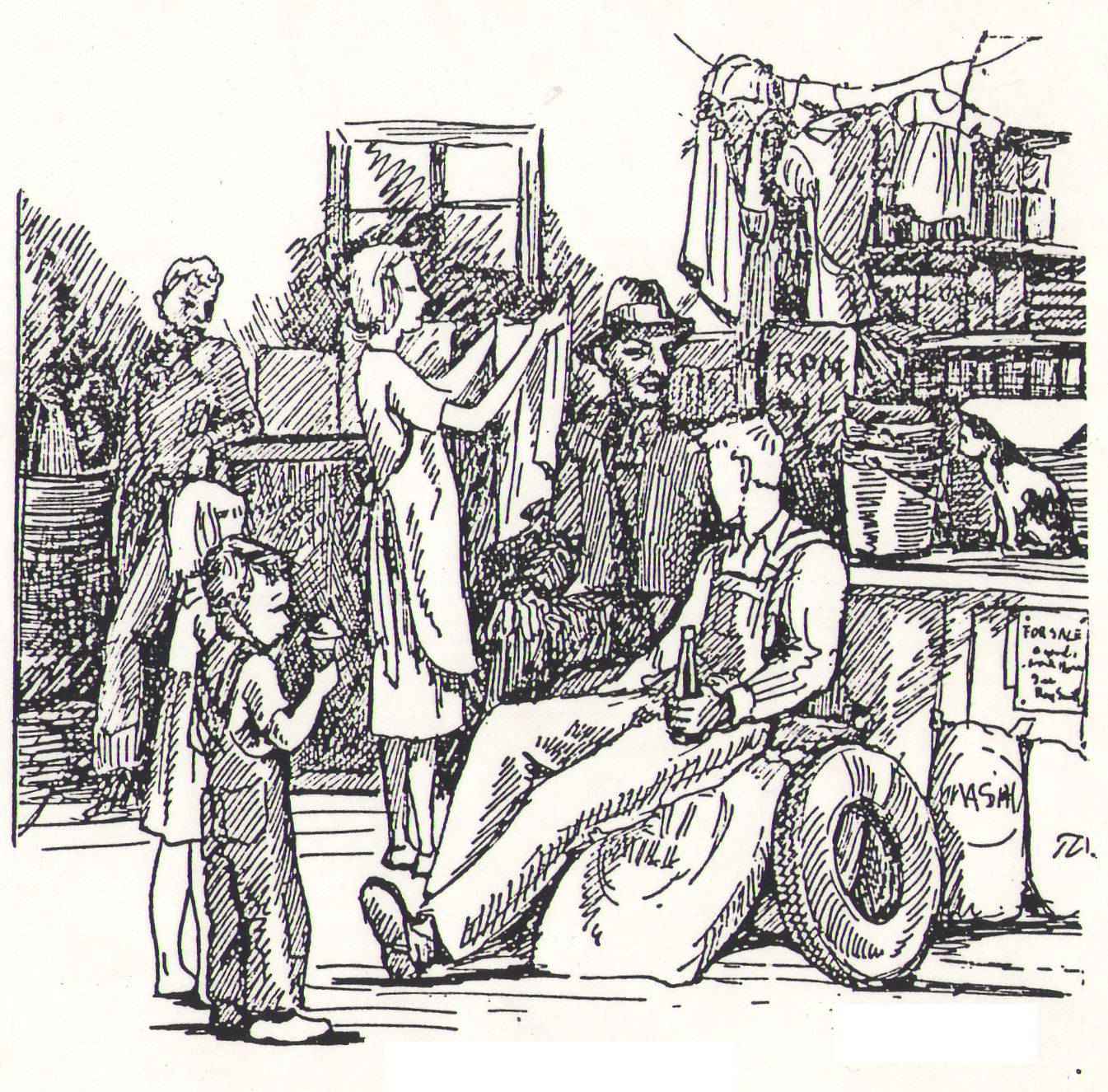
Country Store

COUNTRY STORE – Alice Woolf

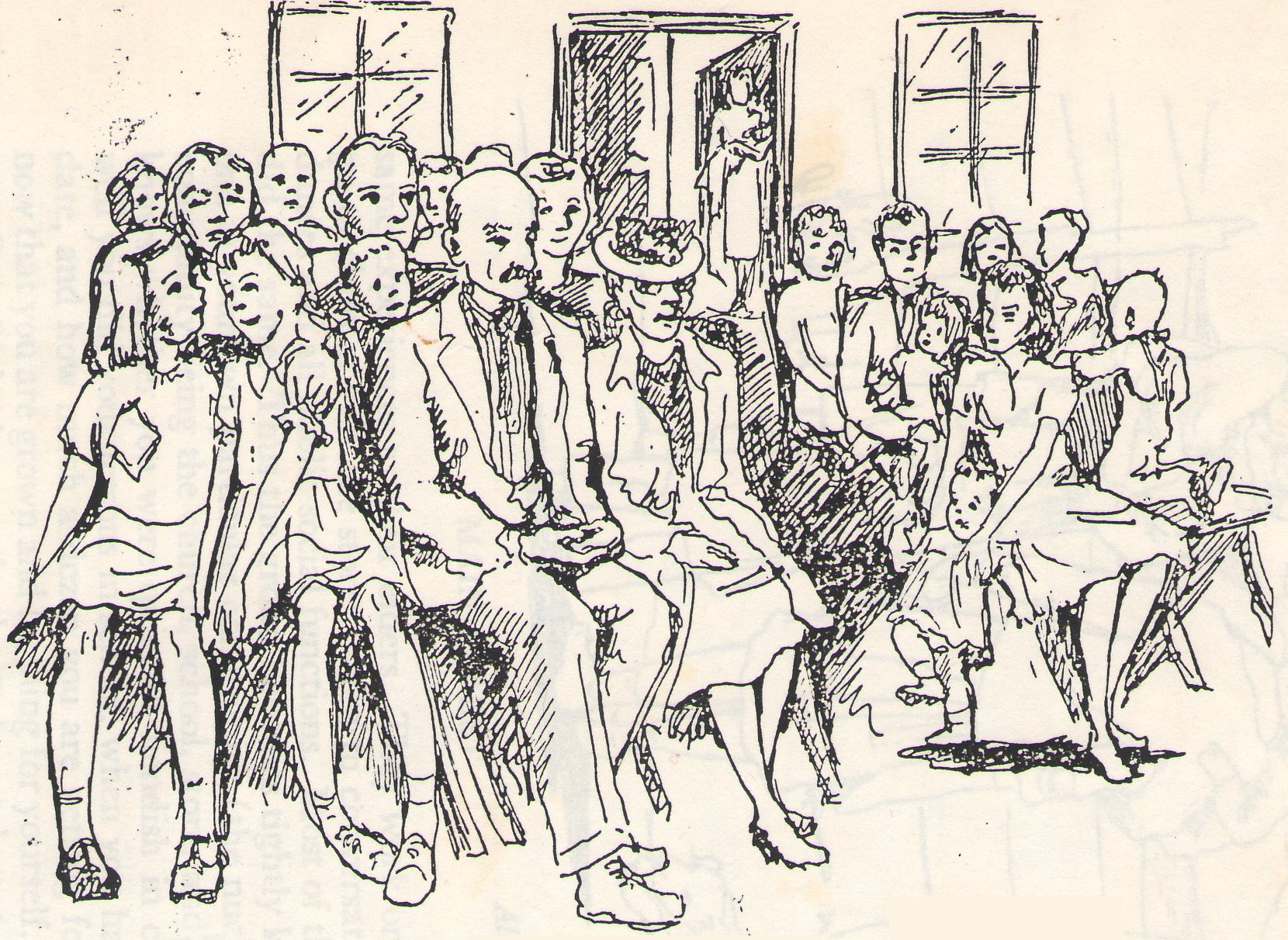
 In the series of sketches, I chose several pictures which depict the life of the people. The one entitled “Main Street” is actually a typical thoroughfare in rural life. The barbed wire fence in the background encloses a pasture that lies between the store and the school house. l would like to call attention again to the children, who, even though small, are becoming used to grown-up talk, and the exigencies of grown­up life.

I have chosen two other sketches dealing with social pleasure. One is the interior of a typical rural store, where the people come partly to buy and partly to visit. There is nearly always a family or two in the store, the men, of course, discussing weather and crops, and the women doing exactly what visiting women have always done talking a mile a minute. The second sketch concerns a dance. This one happens to be at a Gold-and-Green Ball, but is a scene that might be sketched at any country’ dance. Unlike dances in the city, this one is not selective; everyone comes. Many come as “lookers-on.” They simply choose a scat and tend children and visit. The young women, both married and unmarried, come in delightful confections of pink and blue tulle, as “formal” as can be. Older children slick up in their Sunday best and dance or not as they feel inclined. The charm of the whole occasion is that everyone has a good time, the dancers dancing, the onlookers speculating about any new romances, and the children just being children. At midnight the three or four-piece orchestra plays “Home Sweet Home, ” and the hall is vacated, except for a few older boys who stay to put the chairs up for church next morning.

Gold and Green Ball

GOLD AND GREEN BALL – Alice Woolf

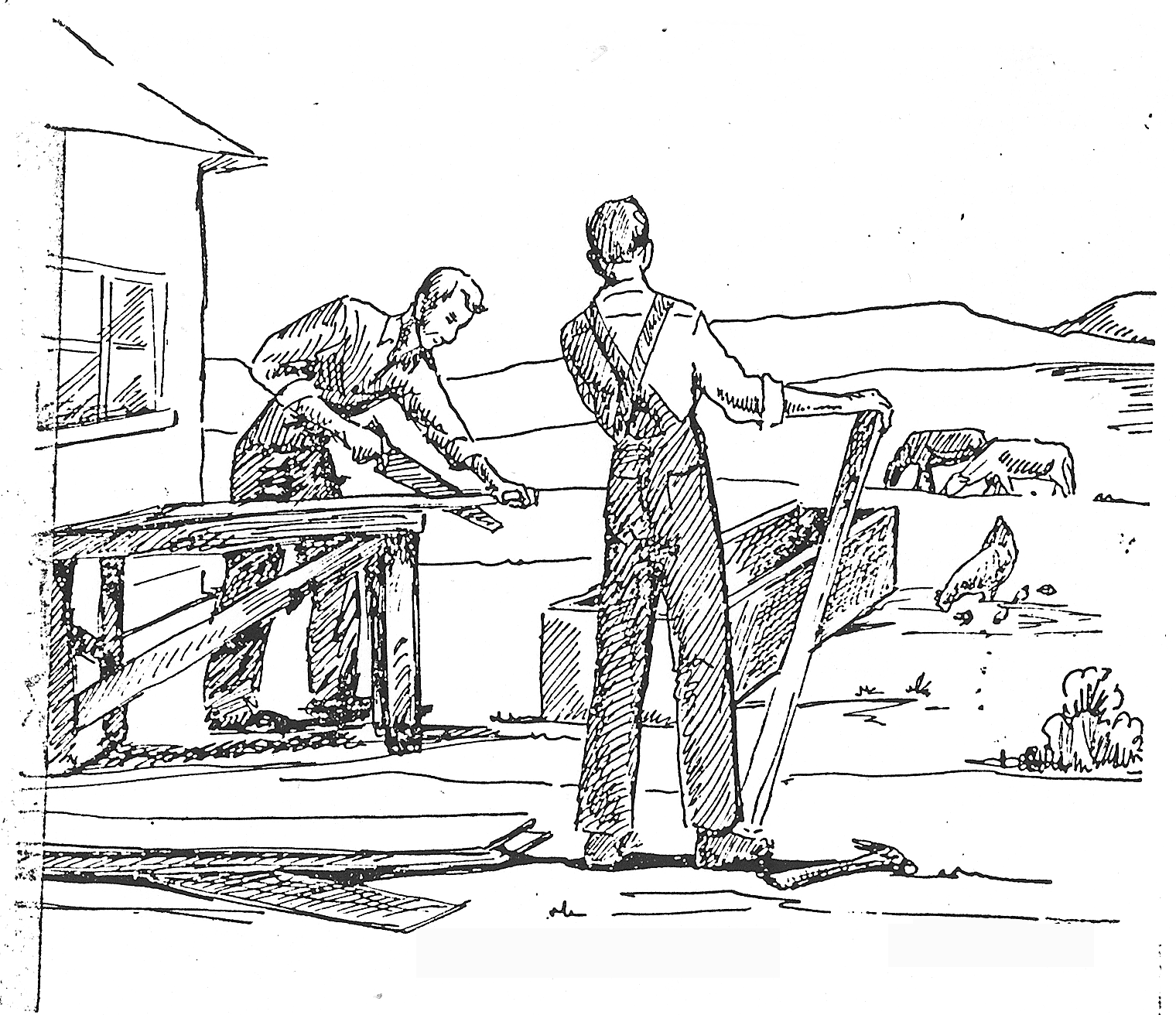
 When someone in the community dies, friends of the family build the coffin. This is looked on not so much as a distasteful task as a last kindly gesture toward the de­ceased, and even though neighboring towns have undertak­ing parlors, it is rare indeed that the dead are not cared for by their own friends.

Making coffins

MAKING COFFINS  – Alice Woolf

Sunday morning finds nearly everyone at church. If chores or housework keep people until past the starting time, they come late, expecting everyone to understand. Here again we see ail ages amalgamated together in the large general assembly. No one minds the general hubbub caused by the small children, least of all the people conducting the church service, who are very likely tending children of their own. Somehow everyone comes away from the church up­lifted spiritually, although an outsider might find the whole atmosphere confusing.

Last but not least is the sketch called “Saturday Night.” Never, in my return visit, did I fail to feel nostalgic as I walked into a warm kitchen and saw the tub on the floor and warm towels on the down-turned open door. If there is one thing above others that seems to cement family solidarity, it is the Saturday night bath. By the time everyone has par­ticipated in chopping wood and carrying water in prepara­tion, and has emerged clean and shining from a tin tub, all seems right with the world.

Saturday Night

SATURDAY NIGHT – Alice Woolf

 After spending several months in such an area, it is a little difficult to return even to the modestly urban life of Salt Lake City, as it is always hard to leave a peaceful life among happy people for a life that is more hectic and far less happy. Struggling with wood-chopping, water-carrying, and a cow-to-you milk supply is incidental when one has a joyful life. If one makes the slightest attempt to live within the group mores and customs his life can be an open book – ­read and accepted by all, good and bad alike; and he can of course help in accepting his acquaintances, good and bad alike. With such community solidarity, as long as one stays in the community, security and contentment are forever present.


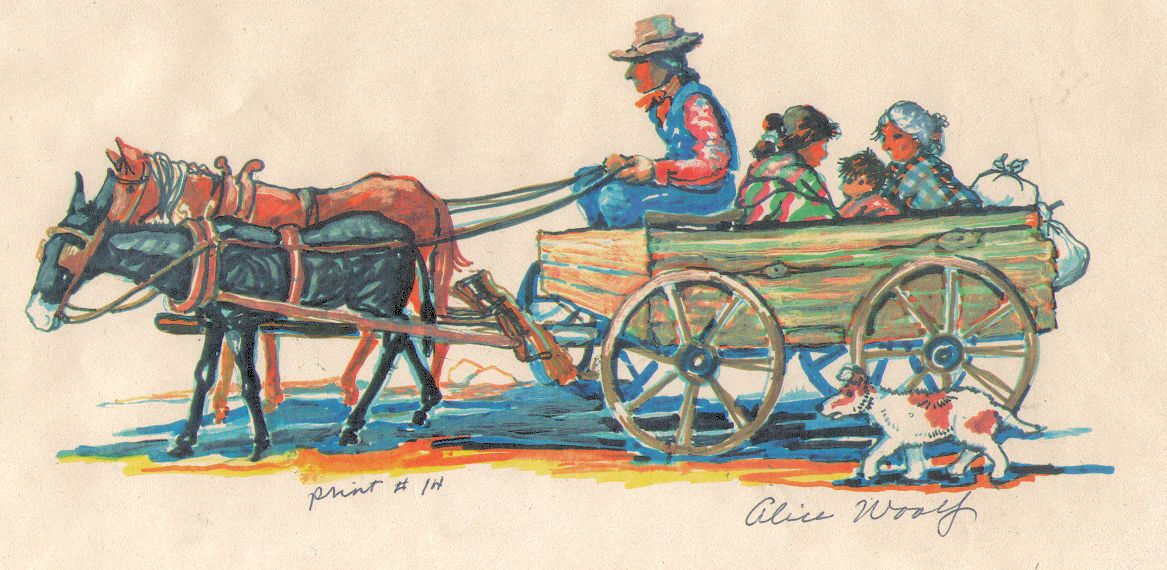
Two prints of artwork by Alice WoolfAlice Woolfe Print 1 Alice Woolfe Print 2Alice and my mother were born in the same year; Alice passed five years before mother did, but they were lifelong friends, and I recall hearing many stories about her as I was growing up. I’m pleased to share this bit of Utah history which, thanks to Alice’s insights, has been preserved.

The Old Wolf has spoken.

The 1967 Aftra Strike

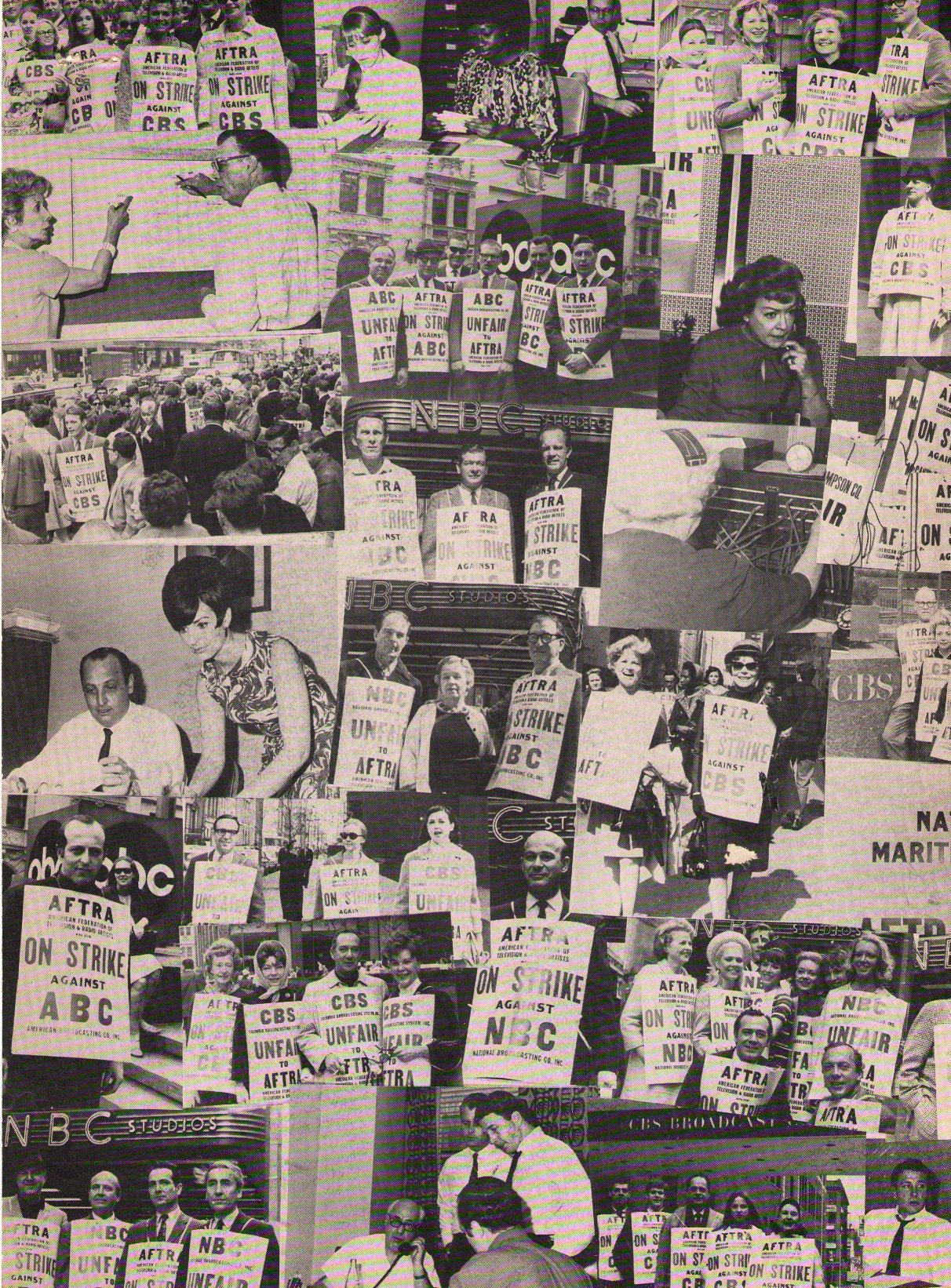
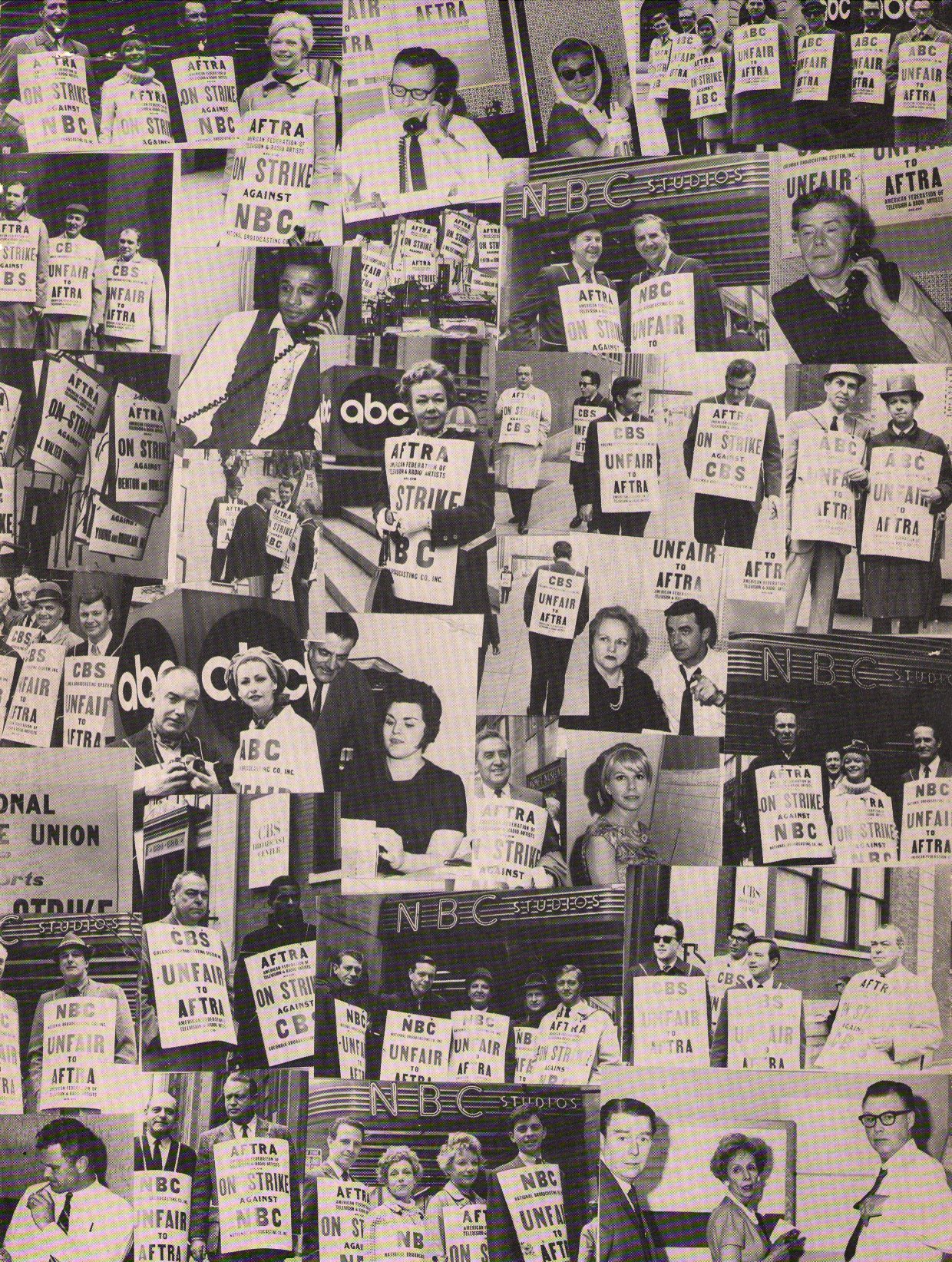
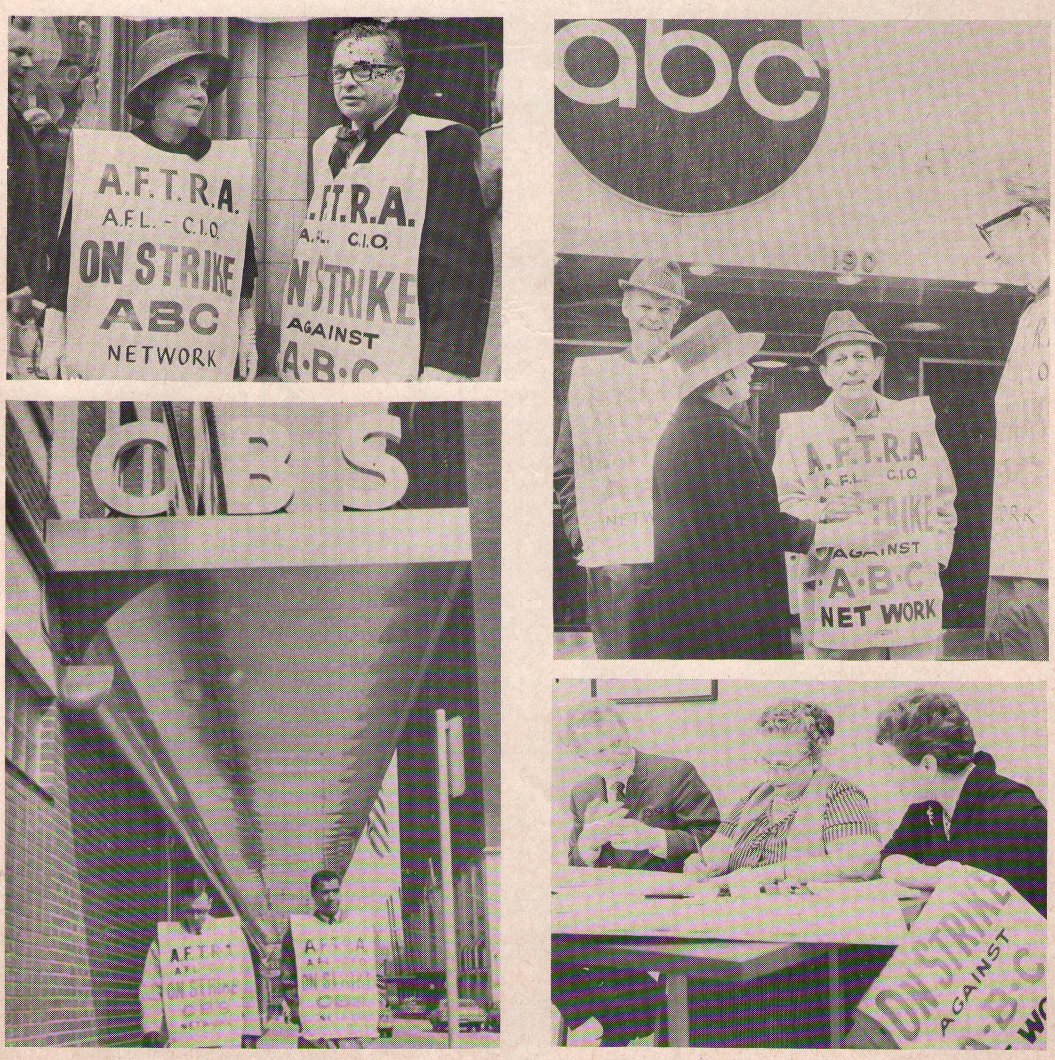
Images below found in Stand By! – February/March 1967. My mother can be seen in the first picture at top right, second from right.

Image
Image0001
Image0002

Anchors Away: Huntley, Brinkley, and Cronkite and the 1967 AFTRA Strike

Socolow, Michael J., Journalism History, Summer 2003
Extract of an article found at Questia

In March 1967, the American Federation of Television and Radio Actors (AFTRA) called its firstnationwide strike. Although almost all programming on the national television networks ceasedproduction, the evening newscasts continued to be broadcast. NBC’s Chet Huntley crossed thepicket line, calling AFTRA a union “dominated by announcers, entertainers, and singers.” Hispartner, David Brinkley, refused to work, and CBS’ Walter Cronkite also supported the union.The strike represents a pivotal yet often overlooked moment in broadcast journalism history. Itcreated the perception of tension between Huntley and Brinkley that would play a role in the“CBS Evening News” surpassing the “Huntley-Brinkley Report” as the nation’s most highly-ratedevening news broadcast in 1967-68.

On the evening of March 29, 1967, most of the approximately 10 million regular viewers of the“CBS Evening News” probably were surprised at seeing the unfamiliar face of a twenty-nine yearold CBS corporate executive peering out from the screen. Ernest Leiser, the executive producer ofthe “CBS Evening News,” had spent that afternoon auditioning several members of the CBS Newsmanagement team to fill the anchor’s chair. Each took a turn reading a four-minute script in thebrightly lit studio. None matched the delivery or screen presence of Arnold Zenker, the programmanager for CBS News, who earlier that same morning had delivered the morning news over theCBS-TV network. Leiser called Zenker at home and told him to report back to the studio, and afew hours later he began reading the day’s top stories to the national television audience.Nowhere in that evening’s script did he mention the fact that the program’s regular anchorman-Walter Cronkite-was out on strike. When the American Federation of Television and RadioArtists (AFTRA) called a strike against the networks that morning, he immediately supported theunion and walked out.1

The idea of a celebrity television news anchor participating in a labor action seems absurd today.Even in 1967, the notion of broadcasters earning more than $100,000 a year striking againsttheir management was considered strange at best, laughable at worst. As U.S. News and WorldReport noted, “never had the country seen anything quite like it.”2 Although the era of thecelebrity journalist had yet to fully bloom, viewers and critics alike shared skepticism that a TVanchorman could be considered a member of the working class. In reporting on this unique laboraction, the press often stressed its more humorous aspects. Newsweek joked that “Eugene Debswould never have believed it,” and on the strike’s second day, the New York Times reported that“Today” show host Hugh Downs was chauffeured to the picket line “in a Cadillac limousinesupplied by the network.”3

The 1967 strike was an important moment in the history of television news. It raised definitionalissues about the social and political status of celebrity anchormen, and it offered the notoriouslyhabitual evening news audience an excuse to change the channel and alter the ratings dynamicbetween the most popular programs. Yet while the significance is clear, the strike has beengenerally ignored in the scholarship of television journalism. In Edward Bliss’ comprehensiveNow the News, the strike received two sentences in 470 pages of text.4 Historians have generallyfollowed the lead of the journalists involved, who downplayed the strike’s impact. Rememberingthe strike in a 1995 interview, NBC’s David Brinkley called it “pointless and quite silly.”5

However, in his 1995 memoir, Brinkley admitted that somehow, in a difficult to define manner,the strike led to the end of NBC’s leadership in the evening news ratings competition. His boss atthe time, Reuven Frank, had concurred in his 1991 memoir, Out of Thin Air.6 Because the strikeaffected the ratings dynamic between the two most-watched evening news programs, it was apivotal moment in broadcast history. (Full article continues with paid subscription at Questia).

This was a bit of history that I remember. The strike was ultimately settled with a new contract, but I recall my mother telling me about her days on the picket line.

The Old Wolf has spoken.

Things you may not have known about Apollo 11

Originally posted at craignelson.us in 2009, the original post appears to be gone, but thanks to the Wayback Machine, I present it for your consideration.

24 – During Apollo liftoffs, NASA VIPs sat 3.5 miles away from the pad, since if the rocket exploded, it would do so with 4/5ths the power of an atomic bomb, meaning 100-pound shrapnel thrown a radius of 3 miles. Neil Armstrong recently commented that today, Americans are shocked when the Shuttle doesn’t work every time, but during Apollo, NASA employees were always surprised when the Saturn did.

23 – The threat of pad catastrophe was so imminent that NASA engineered a number of methods to rescue the crew. There was an entirely separate 3-rocket assembly attached to the nose cone of the capsule, ready to launch the men off their booster, deploy the chutes, and drift into an Atlantic splashdown. There were 600-feet-per-minute high-speed elevators which would be met by armored personnel carriers, and a cable car attached to a slide wire which could carry all three men 2500 feet at 50 mph away from the immolating missile to a rubber-walled below-ground bunker.

22 – There was one prayer at the start of every NASA mission shared by astronaut crew and ground control engineers alike: “Dear Lord, please don’t let me [screw] up.”

21 – During countdown, Neil Armstrong, Buzz Aldrin, and Mike Collins sat in absolute silence for 30 minutes.

20 – As his rocket rose into the sky, Saturn V overseer Wernher von Braun recited, aloud, the Lord’s Prayer with tears in his eyes. He then turned to a colleague and offered, “You give me $10 billion and 10 years and I’ll have a man on Mars.”

19 – The computers aboard each of the Apollo 11 spaceships had less power than today’s cellphones.

18 – Those who believed American astronauts were daredevil cowboys would be surprised by what Neil Armstrong and Buzz Aldrin made sure to bring with them on this mission: Slide rules.

17 – Instead of watching his dad on television during the flight, Mike Collins only wanted to play with his pet bunny, Snowball; after ignoring almost everything about Apollo 11, Marky Armstrong looked up from what he was doing at one point, realized that it was his dad who was on the TV screen, and ran over to hug it.

16 – Much of the heroics needed by astronauts went into enduring what was arguably the world’s worst camping trip. Drinking water was a fuel-cell by-product, but Apollo 11’s hydrogen gas filters didn’t work, making every drink so bubbly that some believe the bravest man on the mission was the Navy frogman who opened the hatch after splashdown. NASA meals were vacuum-sealed in plastic. Cubes of cereal and cookies were eaten straight out of the bag, while freeze-dried entrees (a process that combined flash-freezing with vacuum-s*cking to remove all moisture) needed to be rehydrated through a nozzle with either hot or cold (and gassy) water and kneaded into a mash, which was then squeezed out like toothpaste and was as delicious as it sounds. Of the 2500 calories they were supposed to eat each day, an Apollo crewman averaged 1400. Urinating and d3fecating in zero gravity, meanwhile, were never successfully addressed by any NASA engineering triumph; the latter was so troublesome that agency doctors prescribed foods that produced as little waste as possible, and more than one astronaut spent their entire mission on lomotil to avoid the procedure entirely.

15 – As Aldrin and Armstrong monitored the landscape of their landing path, it became clear that something was off, that they were going to overshoot NASA’s carefully-plotted landing site by about 4 miles. Instead of a computer-controlled touchdown, Armstrong would have to land on the moon himself. During one of his lunar lander training sessions, however, he’d almost died, with 3/5ths of a second to spare. In the Apollo 11 touchdown, he would almost wholly run out of fuel. Astronaut Don Lind: “At the end, all we knew was that the LM was descending at 1 foot per second and scooting across the surface at 47 feet per second, with only about 60 seconds’ worth of descent fuel left. My heart was pounding so hard I was afraid they’d kick me out of the Astronaut Corps.”

14 – NASA’s simulator training worked so well that many astronauts would calm themselves during real-world crises by thinking, “This is just like a simulation.”

13 – In case of disaster, William Safire prepared a speech which President Nixon would have given as the astronauts lived out their final hours. It began: Fate has ordained that the men who went to the moon to explore in peace will stay on the moon to rest in peace. And it concluded: For every human being who looks up at the moon in the nights to come will know that there is some corner of another world that is forever mankind.

12 – The “one small step for man” wasn’t actually that small. The commander had set his ship down so gently that the legs’ shock absorbers hadn’t deployed, and the bottom of the ladder was 3.5 feet away from the Moon’s surface. Armstrong first stepped onto one of Eagle’s footpads and hoisted himself back onto the ladder to make sure he could get back to his ship before taking the ’small step,’ and then warned Aldrin about how big a drop it actually was.

11 – Armstrong’s first assignment was to immediately grab a rock just in case there was an emergency abort. Instead, he became so engrossed in taking pictures that Mission Control had to nag him 3 times about the sample. Aldrin, meanwhile, had to remember not to lock the door after exiting the LM, since there was no outside handle. When it was his turn with the Hasselblad, Aldrin took very few pictures of Armstrong, all of them a small figure in a vast panorama featuring the Lunar Module. There is today only one good photograph of Neil Armstrong on the moon — one he took himself, reflected in Aldrin’s gold visor.

10 – Armstrong later confessed to astronaut Alan Bean that their next task was the most difficult and frightening one of all: planting the American flag. It turned out that, contrary to many geologists’ conjecture, the moon’s surface (at least in the Sea of Tranquility where Eagle had landed) was a thin sweep of dust covering hard, dense, impenetrable rock. After pounding and sweating away at the task for much too long, Aldrin and Armstrong could only get their flagpole in a few inches. Both were convinced that, live on television with billions watching, they would step back from the flag — which was torsoed with wires to always wave erect in the vacuum of the moon — only to see it topple over into the dust. Amstrong tried patting a mound of dirt at the base to stabilize it, but the situation was so dicey that he and Aldrin spent the rest of their moonwalk carefully avoiding it. NASA had kept secret the manufacturer of the moon flag, insisting that they were bought anonymously. But the president of flag-maker Annin uncovered that it had come Sears, an exclusively Annin retailer. He begged the agency’s Public Affairs Office to publicly acknowledge this, but NASA refused. They said, “We don’t want another Tang.”

9 – Returning to the LM, Aldrin and Armstrong had now worked for over 24 hours nonstop, and needed to sleep. But there was a constant racket from the interior system pumps and the micrometeorites exploding like hail on the LM’s mylar skin. Aldrin: “It was very chilly in there. After about 3 hours it became unbearable. We could have raised the window shades and let the light in to warm us, but that would have destroyed any remaining possibility of sleeping.” Armstrong found that his hammock put him directly in the line of sight of the craft’s telescope, which at that moment was focused on the Earth. For the exhausted but restless flyer, it seemed as if a huge, unblinking blue eye was staring down at him.

8 – Orbiting overhead in the mothership Columbia, Mike Collins, meanwhile, had spent countless hours peering through the sextant trying to determine his crewmates’ landing spot, but he still didn’t know where Eagle was, exactly … and Houston didn’t know, either. The next morning, Collins radioed, “You’ve given up looking for the LM, right?” and Houston replied, “Affirmative.”

7 – Astronaut Nurse Dolores “Dee” O’Hara: The astronauts “have something, yes, that something that men have for whom death is a toy to play with, or who have seen something you haven’t seen. The ones who have been up, especially. They have something, a sort of wild look, I would say, as if they had fallen in love with a mystery up there, sort of as if they haven’t got their feet back on the ground, as if they regret having come back to us … a rage at having come back to earth. As if up there they’re not only freed from weight, from the force of gravity, but from desires, affections, passions, ambitions, from the body. Did you know that for months John [Glenn] and Wally [Schirra] and Scott [Carpenter] went around looking at the sky? You could speak to them and they didn’t answer, you could touch them on the shoulder and they didn’t notice; their only contact with the world was a dazed, absent, happy smile. They smiled at everything and everybody, and they were always tripping over things. They kept tripping over things because they never had their eyes on the ground.”

6 – In the wake of Apollo 11, the speaker at one NASA scientific banquet was British astrophysicist Fred Hoyle, who had predicted in 1948 that, once a picture of the earth from space had been made, a whole new way of thinking would result. He told the attendees: “You have noticed how, quite suddenly, everybody has become seriously concerned to protect the natural environment. It happened almost overnight, and one can understand how one can ask the question, ‘Where did this idea come from?’ You could say, of course, from biologists, from conservationists, from ecologists, but after all, they’ve really been saying these things for many years past, and previously they’ve never even got on base. Something new has happened to create a worldwide awareness of our planet as a unique and precious place. It seems to me more than a coincidence that this awareness should have happened at exactly the moment man took his first step into space.”

5 – Though JFK had publicly announced, “We choose to go to the moon in this decade and do these other things, not because they are easy, but because they are hard. Because that goal will serve to organize and measure the best of our energies and skills,” privately, he would ask, “Can you fellows invent some other race here on earth that will do some good?” and commented about getting a man on the moon: “The cost, that’s what gets me.” Twice, Kennedy would propose to Khrushchev that the two merge their efforts in a join US-USSR mission to the moon, but the Russians, not wanting the West to see the limits of their military technology, declined.

4 – Lyndon Johnson’s budget director informed the president, in great detail, the vast amount of money that would be saved by not going to the Moon before 1970. But Johnson demurred, insisting he owed it to John Kennedy to make that deadline.

3 – Soon after President Kennedy’s assassination, his widow sat down with Teddy White for an interview which remained unpublished until 1995, a year after her death. Jackie commented on the various memorial plans that, “I’ve got everything I want; I have that flame in Arlington National Cemetery and I have the Cape. I don’t care what people say. I want that flame, and I wanted his name on just that one booster, the one that would put us ahead of the Russians … that’s all I wanted.”

2 – Fearing a public relations calamity, NASA never allowed Armstrong, Aldrin, or Collins to ever fly again.

1 – Since 1981, the Pentagon’s annual space budget has been bigger than NASA’s.

♬ We Belong to a Mutual Admiration Society ♬

Mutual

Saw this on my Facebook feed the other day, and just sort of glossed over it. This morning I saw it at reddit and looked more closely, and then i got the joke.

I was immediately reminded of this little bit of silliness which I saw when it first came out, oh, back in the Cenozoic Era or thereabouts:

I always thought these two guys were an absolute crackup; my father, an actor, was full of nothing but contempt for Joe E. Ross for some odd reason known only to himself, although he had great respect for Fred Gwynne and did a small part himself on one episode of The Munsters.

For you young’uns, this is a clip from “Car 54 Where Are You“, a comedy show about two New York cops, back in a day when the police for me were personified by the likes of Officer Joe Bolton instead of the Predator.

The Old Wolf has spoken.

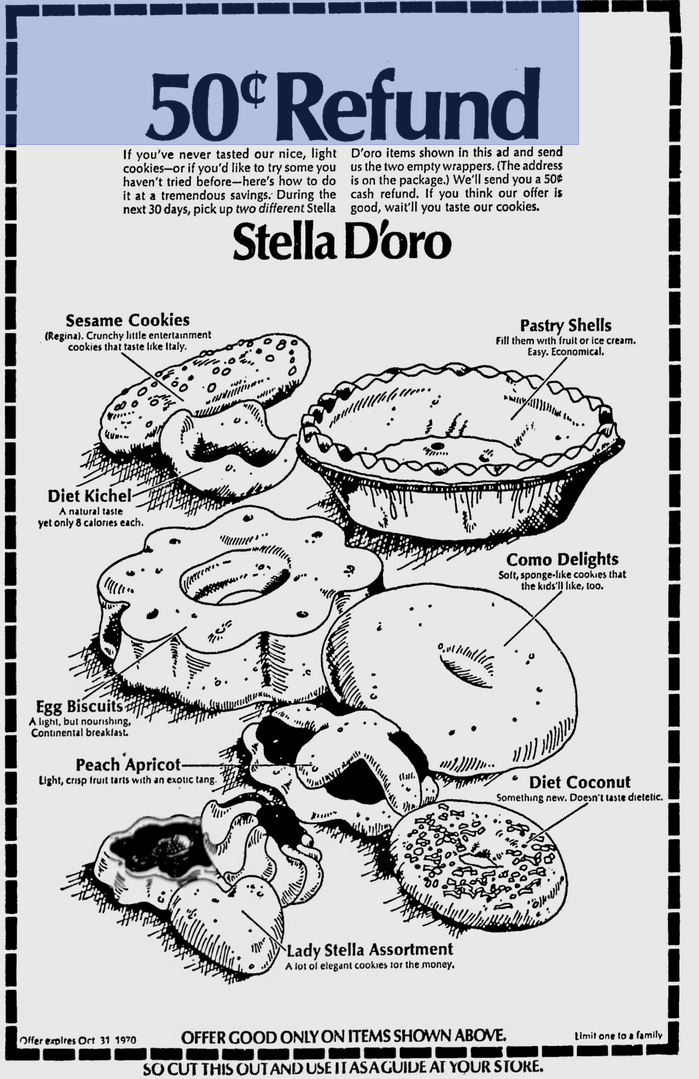
Another Lost Product: Stella d’Oro egg biscuits

Edit: Since writing this, and based on a comment below, I have tried the Cianciullo taralli. The texture is almost identical to what I remember, the closest to anything else I have encountered. The flavor seems a bit different, but 65 years later that memory could have faded.

I’ve written before and copiously about Sara Lee Frozen All-Butter Brownies. But for a long time I’ve been craving these lost little treats from Stella d’Oro, flower-shaped biscuits that I used to get at my nonna’s house in New York when I was young.

Stella D'Oro Egg Biscuits

Not soft, not crunchy, but with a unique texture all thier own. And they appear to have vanished forever. I have written to Stella d’Oro and begged for a resurrection of this product, as I know many others have done, but thus far our pleas have fallen on deaf ears.

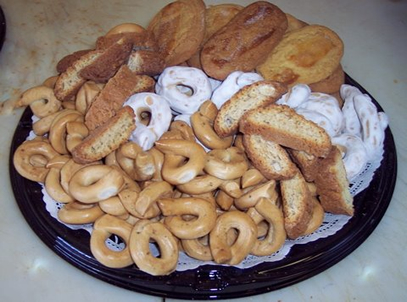
Someone suggested that Clementi’s original taralli are as close as you can get:

orig tar label

101_1760

Taralli (foreground) and other yummy things from Clementi

And I’d try some in a heartbeat but you have to order them by the case. Other websites sell them by the pack, but at double the price plus shipping, so I’ll have to wait until I can get down to Hackensack to pick up a bag and see for myself, which thing I will not fail to do.

Speaking of taralli, let me introduce you to Graziella. The photo and text below are from The Italians, Face of a Nation by John Phillips, published in 1965 by McGraw-Hill.

Graziella

“When Graziella was born in 1864, Lincoln was President of the United States of America, Napoleon III was Emperor of France, Bismarck was Chancellor of Prussia, Victoria was Queen of England, and Victor Emmanuel II was the first ruler of the new kingdom of Italy. Thirty-nine months before, an ancient civilization had finally become a young nation. though France maintained the sovereignty of the Papacy over Rome, while Austria retained the Italian-speaking provinces of Mantua, Venice and Trento. Graziella was two when Victor Emmanuel took advantage of the Austro-Prussian war to annex Mantua and Venice. On her seventh birthday, after Napoleon fell, her monarch got a special present: Rome.
Graziella never did learn to read. Her sovereign was more interested in colonial annexation than in the literacy rate of his people. At eighteen, the cheerful illiterate married a Neapolitan diver. That was the year Italy took her first dip into colonialism and came up with Assab, on the Red Sea. During Graziella’s first pregnancy, Italy signed her first international agreement and joined the Triple Alliance. This pact favored Austria, the hereditary enemy, and benefited Germany, but it did gratify the Italian national pride.
The first of Graziella’s nine children was born the same year that a blacksmith’s wife had a son whose name was Benito Mussolini. The birth of Graziella’s second child coincided with the conquest of Eritrea. Then came Teresa in 1892, the year the Italian socialists held their first congress. By the time Assunta was born, two years later, the socialist party had been dissolved. In 1895 Graziella had her fifth child in the midst of national rejoicing – Ethiopia had been conquered, Graziella mourned the death of her sixth child in the midst of national grief over being driven out of Ethiopia. Rosa’s birth preceded the tumultuous riots of 1898, which led to reprisals against the workers who had participated in them. Peppino was born the year Umberto l was assassinated in reprisal for the 1898 reprisals. Graziella’s last child celebrated her tenth birthday the year Italy conquered Libya and Cyrenaica.
A year later, in 1913, Graziella went to work to supplement her husband’s earnings. She had been selling fried peppers and eggplant for a year when the socialist firebrand Benito Mussolini tried to start a revolution at the outbreak of World War 1. Mussolini was against nationalism and war. The spring of 1915, Graziella moved her stand next to Zi Teresa, a restaurant on Naples’ waterfront, as Italy switched partners and declared war on her former allies of the Triple Alliance – in the name of “Holy Egoism.” In return, Italy received Trento, Alto Adige, Venezia Giulia, Trieste, and the Istrian Peninsula. Graziella was 58 when Mussolini became a nationalist, and 71 at the time he attacked Ethiopia. She was 75 the year the Duce blustered into World War II, and 80 when he could be seen dangling head down at a gas station in Milan.
Graziella became a widow the year the monarchy was abolished in 1946. Since then, too old to fry peppers and eggplant, she sells taralli. You can find her along Santa Lucia any day the weather is fair.”

What an incredible life; it reflects a century of Italian history. I lived in Naples in 1969, and I swear I saw Graziella there; I suspect, however, that I’m just combining my own memories with the images and words from this lovely book, because by that time Graziella would have been 105. At any rate, thinking of taralli always makes me think of her; you can see the massive ones she sold in the picture above.

If you want to try some of your own, I found a likely recipe at Lidia’s Italy.

Please, Stella d’Oro, bring back your egg biscuits.

The Old Wolf has spoken.

Consoles weren’t always so bad, come sit by the fire children and let me tell you a story. (Reposted from reddit)

This lovely bit of writing by /u/OneYearSteakDay over at reddit really resonated with me, because I lived through it from the other side of the age barrier. I have reposted it here with the author’s permission, and with the same gracious license I have bowdlerized it just a bit to make it suitable for all audiences (the original can be read here). I hope you enjoy it as much as I did. (Turn on the fire while you read it for some nice atmosphere.)

A glorious fire crackles¹ in TrueAudio nearby, blazing with 16.78 million shades of red and orange; the PhysX logs pop and break, falling apart to reveal the beautifully tessellated embers casting real time reflections against the mip mapped stone walls.

This story doesn’t start in 1984, that’s just when my part of the story begins. President Ronald Regan was in a vicious battle for the soul of planet Earth, When Doves Cry by Prince was at the top of the Billboard hit list, great films like Terminator left lines reaching around the street, and the home PC; the Macintosh 128k, was selling for the low, low price of just $2,495.00.

It was the most glorious of times, it was the bleakest of times. The foundations on which our great PCMR Empire is built were being formed, our first allies in the fight were the wealthy and the strong, those who could afford a home computer of their own. This is not their story, I cannot tell their story because I was not wealthy, I was not strong, I was a peasant and I loved it.

On my sixth Christmas in 1990 my parents got me my first gaming console: The Nintendo Entertainment System. I eagerly unwrapped the beautiful box and unpacked all the items. I pulled out the console and set it aside, I pulled out a mass of wires and confusion and handed them to my father, I pulled out a slim square with a picture of a man jumping over fireballs and a a duck, I pulled out a neon orange gun, finally I pulled out the last piece: A shiny gray block with four buttons and a cross on it. I had used a keyboard at school, but this strange gray block was much smaller, it was easier to hold, my six year old fingers could reach all the buttons and I was in love.

My father spent an hour that Christmas day trying to connect the Nintendo to the TV. (You youngins don’t know how good you’ve got it with HDMI and DPP! Try getting a semi corroded RF connector to communicate well with a TV that lost it’s set screws and then we’ll talk.) Once finally installed and connected I inserted the cartridge and pressed the power button.

GLORIOUS! The massive 24″ television screen displayed a beautiful image in 64 vibrant colors, speakers blazed amazing mono sound and I was enraptured. I pressed the button designated “Start” and the speakers let out a chime as I was thrown head first into World 1-1. I had played games the computer at school, but this was completely different! The school computers were slow, they didn’t play sound, and their screens had 62 fewer colors than this amazing NES. [Ed. Green or Amber and off. Off functioned as black.] It was obvious to me that Christmas morning that Computers were vastly inferior to this amazing piece of engineering attached to my TV screen.

The whole house came together to play. Mom and dad were as likely to get killed by a rebounding koopa shell as I was, dad was much better at shooting ducks than myself, but I was still better than mom. Much laughter was had as we tried to get used to this four button and a cross rectangle, when I ran right my entire body would lean with it, my hands jumped when Mario jumped, my heart raced when Mario fell, truly this rectangle was vastly superior to the keyboards I was used to at school!

As the years passed I acquired more games and more consoles and they were all adopted as members of the family. The Sega Genesis came next, and it was edgy, new, fast, a quantum leap beyond anything that the NES or school computers could offer. Sonic the Hedgehog could run over 700 miles per hourand my dad’s Chevette could only do 50 miles per hour down hill. Vectorman could shoot 3D blasts in any direction, Megaman on the NES could only shoot forward. Comix Zone had branching story paths and spectacular art, where as on the Nintendo there was only one path: Forward. The obvious technological improvements over the past were obvious. I was hooked.

Next came the stately SNES, my heart and soul, my bread and butter, my breath and blood. The SNES wasn’t more powerful than the Genesis exactly, but it has something the Sega didn’t: JRPGs. To this day I still have the Chrono Trigger cartridge with a New Game+ starting 120 hours in. To this day I still relish playing the opening level of Mega Man X3 when I got to play as Zero for the first time. To this day I still fawn over the beauty that is Yoshi’s Island.

sryoshi610

Seriously, game developers, a good art style will always trump good graphics. To this day I still regard Kirby Super Star as the quintessential Kirby game. To this day I love the SNES and all that came with it.

It was in 1999 that my family got our first computer. Check these specs:

  • 3gb hard drive
  • 32mb of ram
  • 28.8kbs modem
  • 550mhz Intel Pentium Processor
  • Integrated floppy disk drive
  • Integrated CD reader
  • Stereo sound

This computer was dope. The hard drive had more storage than anyone could ever need, the ram was excessive and never completely filled, the processor was blazing fast and thanks to the CD rom drive I was able to install the bundled games quickly and permanently. Truly it was glorious my brothers!

When I finally got the opportunity to try this new piece of technology the first thing I did was load up the included copy of Mechwarrior 2. (Someone remake this game please. Please. Please.) True 3-D, yo! No longer was I constrained to go forward or right, now I could go left, or backwards, or use my jump jets or….

“Wait, what’s this bluescreen with all the numbers? How do I get back to the game?”

I had played a lot of hard video games in my time, games that would mercilessly defeat me, games like Bucky O’hare, Mega Man 2, and Mega Man X2, but I’d never encountered a mechanic that would cause the entire screen to turn blue! I died so hard that I couldn’t even get back to Windows. I restarted the computer and tried again. This time I didn’t get a bluescreen, this time I got a popup window informing me that I had performed an “Illegal Operation” and then the computer shut down. Then an enemy used some attack on me that slowed down my whole computer and prevented my Mech from receiving input from my joystick. Then a crowd of enemies ambushed me and froze my screen while they killed me. Seriously, Mechwarrior 2 was harder than anything I had ever played before. I had never been hit so hard in Mega Man or Mario that I had to restart my NES! I played Mechwarrior 2 on and off for years, but I was never able to “win” the game because the enemies played so many dirty tricks on me.

Clearly PC gaming was not for me. I went back to my consoles and remember experiencing to many memorable experiences. I got a PSX and fell in love with games like FFVII, FFT, Mega Man X4, Vagrant Story and so many others, none of which had enemies that would force me to restart the console and all of which were extremely fun to play. I got an N64, which had the first controller I ever held with an analog joystick. This was revolutionary! A 3D controller for a 3D console, brilliant! Super Mario 64, no bluescreens, no slow downs, 3D, fast game play, no need for a PC. Then came Star Fox 64 and the invention of the rumble pack, a true killer app for home consoles! This was an amazing time to be a gamer, and I do feel a tinge of regret that many of our younger brethren didn’t have an opportunity to experience it first hand.

With the PS2 and Xbox things began to change. All of the sudden the perfect game play I had experienced on my perfect consoles began to slip. Sometimes the console would slow down, sometimes it would stop all together, sometimes it wouldn’t even start up the game I had put in. They both offered DVD playback, but that could damage the PS2 and the Xbox required a special adapter. They both offered connection to the internet, but the PS2 didn’t do it very well and the Xbox required a subscription. They both had save features, but the PS2 used an expensive 8mb memory card and the Xbox used it’s built in 10gb mechanical hard drive.

The Xbox was the last console I ever bought (except for the Wii, which I regard more as a toy than a gaming console) because the Xbox was the end of a generation for gamers. Because the Xbox came with a hard drive and an internet connection now publishers and developers could upload patches and new content on the fly. Because publishers and developers could fix games retroactively there was no longer the need to ship finished, quality checked games. More and more broken games began coming to the market and many gamers began to leave their consoles behind.

The increased complexity of the consoles themselves also caused problems. I feel bad for anyone who owned a first generation PS2 because the DVD readers broke constantly. I feel bad for anyone who had to get a replacement HDD for their Xbox because they had to pay money to lose their saves. (I don’t feel bad for anyone who owned a GameCube because you could fire that sucker out of a cannon into a volcano filled with angry flaming lava bees and it would still play any GC game you threw at it.)

Thus the Xbox killed the console as we old-timers knew it.

What you have to understand is that there was a time when consoles just worked; they were single purpose units, dedicated solely to playing video games without suffering from the overhead of an Operating System running complex hardware. The NES just played games, the SNES just played games, the Sega Genesis just played games, the N64 just played games, the PSX just played games, (and audio CDs, but we’ll leave that aside for the moment) and my friends, they were glorious! Because these games couldn’t be updated, fixed, patched, enhanced, rebroken, repatched, then forgotten they had to be released in working order with good game play. The idea of buying a broken game because Ubisoft will be fixing it soon anyway would be frightening and confusing to gamers of this era. And I am a gamer of this era.

Not long ago; only two generations past now, the console and the PC could coexist peacefully in the same home, each serving it’s respective purpose, each with it’s own strengths and weaknesses. Today “consoles” are nothing more than weak mini computers, and that is unfortunate because they could be so much more. Having seen both the zenith and the nadir of console gaming I can assure you that consoles have so much potential, but they’ll never realize that potential so long as they’re trying to be something they’re not. Like a feather weight fighter boxing the heavy weight champion, modern consoles have reached too far for their own good, and while strong in their own right they cannot win against this opponent.

And that children is why so many elders of the PC Master Race have gigabits worth of roms on their hard drives, burned ISO files of old PSX games sitting on the shelf, and choose to play Pokemon Red on their cell phones. There were good times, and there were great times, and that you may not get to experience them saddens me. The roots of the console tree are strong, the trunk is thick and sturdy, but the branches creak and crack under their own weight. You may live to see the day when this tree is nursed back to health, but first we must look back at what made the tree so strong in the first place.

The last of the logs pop as the hearth darkens, real time shadows dance about the stones, now defined by feathery ambient occlusion and the cooling shades of of 256RGB reds and yellows. I warm my hands over the few remaining embers and remember the days when Final Fantasy VII had the best graphics the world had ever seen and sigh.

TL;DR: Consoles used to be gaming machines, made for gamers to play video games. They were accessible, they were stable, they were affordable, they were powerful and they were fun. Then Xbox and everything bad now.

I can’t describe adequately how much this bit of writing pleased me, because I was one of those dads who struggled with rusty RF connectors as my oldest son got his first NES in around 1985. He could whup my honus at Mario 1 – I kept falling down those never-sufficiently-to-be-accursed pits, and rarely made it past 1.1 – but I was a better duck hunter.

This period of gaming indelibly affected me. My current phone ring is the Peloponessus segment from “Battle of Olympus.” I have a customized ring in case my ex ever calls me: “Still Alive,” from Portal. And sometimes I find myself whistling the theme song from “Bubsy.” As the author intimated, these were times never to be forgotten.

My thanks to /u/OneYearSteakDay for the wander through the mists of memory.


¹ Glorious fire located by /u/testsubject12a and /u/N0sc0p3dscrublord

Ersatzkaffee

I can’t drink coffee any longer, and haven’t since 1969. I used to consume it by the gallon, or by the thimbleful when I lived in Naples, Italy – lots and lots of thimbles. Back when “uno normale” cost 50 Lire, the equivalent of 8¢.

Tazzina_di_caffè_a_Ventimiglia

Nowadays my caffeine addiction is fed in other ways.

DrPepperIV

But there are times when a hot cup of something hits the spot, and this idea has never really appealed to me:

6a00d83451ccbc69e20147e067287e970b-800wi

Enter Erzatzkaffee, a German word meaning “coffee substitute.” I remember hearing my mom talk about this when I was a kid back in the 50s, and the impression I got was that it was made from anything they could find, sorta like this:

Rag Man from Project Luser

Apparently it wasn’t quite as bad as all that. Mit herzlichem Dank an Benutzer Helmut0815 over at the Axis History Forum, I found this:

In wartime Germany as well as in early postwar era there was of course a massive shortage of coffee as Germany was cut off from it’s resources. Real coffee was only available on the black market.
So the people drank Ersatzkaffee widely known as “Muckefuck” (from french “Mocca faux” = false coffee) which was made from roasted chicory roots, malt, barley, rye, acorn and many other things which were available. Of course this Ersatzkaffee did not contain any caffeine.

Some popular brands were Linde’s Kaffee-Ersatz-Mischung, Kathreiner Malzkaffee, Koff and Effka.

d4b226d08c

After I gave up coffee, I took to drinking Postum™, once a ubiquitous feature of Greyound Bus waystations all over the country, to be found in little packets right next to the Sanka™ instant coffee, but over time its popularity faded and it was discontinued in 2007. Fortunately for me, Eliza’s Quest foods acquired the trademark and Postum™ is now once again in stores and can be had online.

poucher_postum_american22oct

The product was responsible for multiple foilings of “Mr. Coffee Nerves:”

6a00d8341c556453ef0105367ce7d8970b-800wi

After a two-year stay in Austria, I came home converted to Caro™, which tastes a lot closer to coffee:

Caro Landkaffee

Fortunately for me, Caro™ is marketed in the USA as Pero™.

715NdSQadFL._SL1500_

These products are based on malted barley, chicory, and rye, and although an inveterate coffee drinker would probably think they taste like panther piss, after a while they grow on you if you can’t have the real thing.

A lot better than pencil shavings, at any road.

The Old Wolf has spoken.