Chutes and Ladders

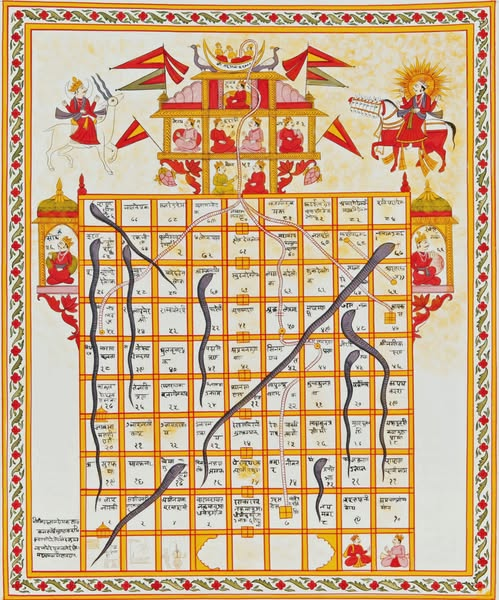
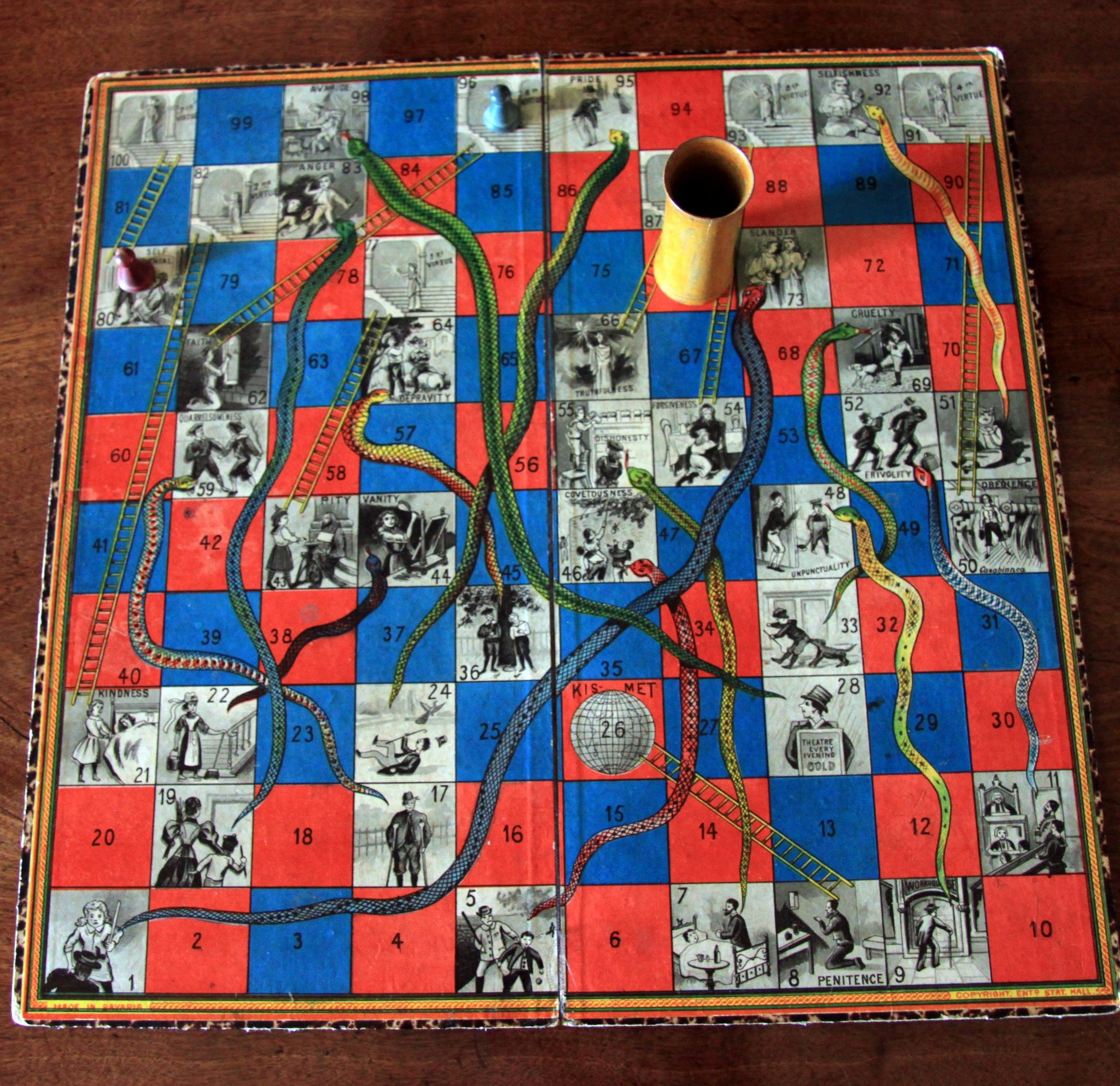
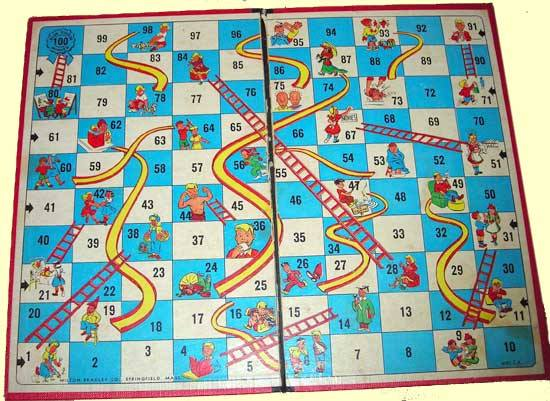
Snakes and ladders (Chutes and Ladders in the USA) is a board game for two or more players regarded today as a worldwide classic] The game originated in ancient India as Moksha Patam¹, and was brought to the United Kingdom in the 1890s.

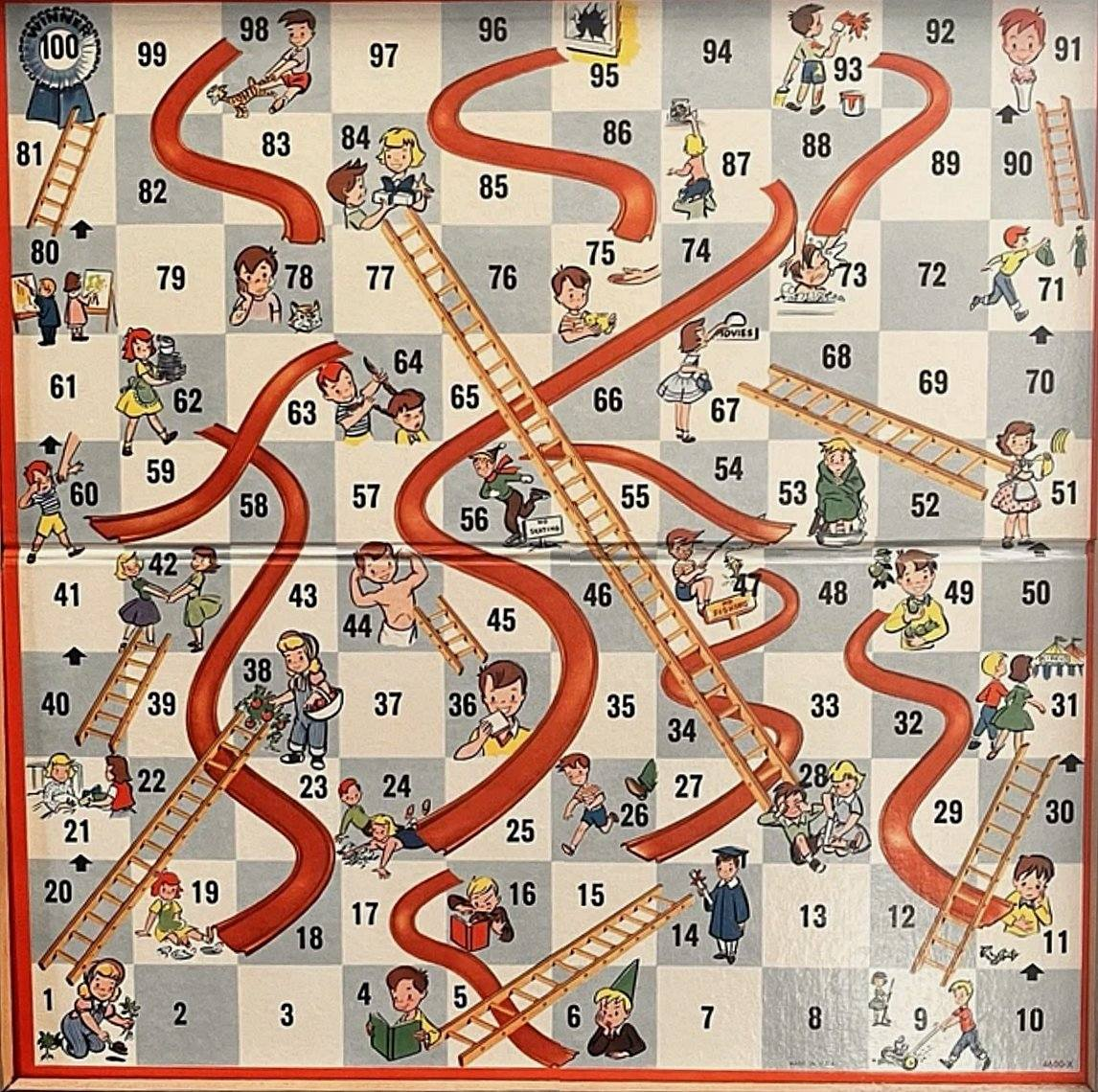
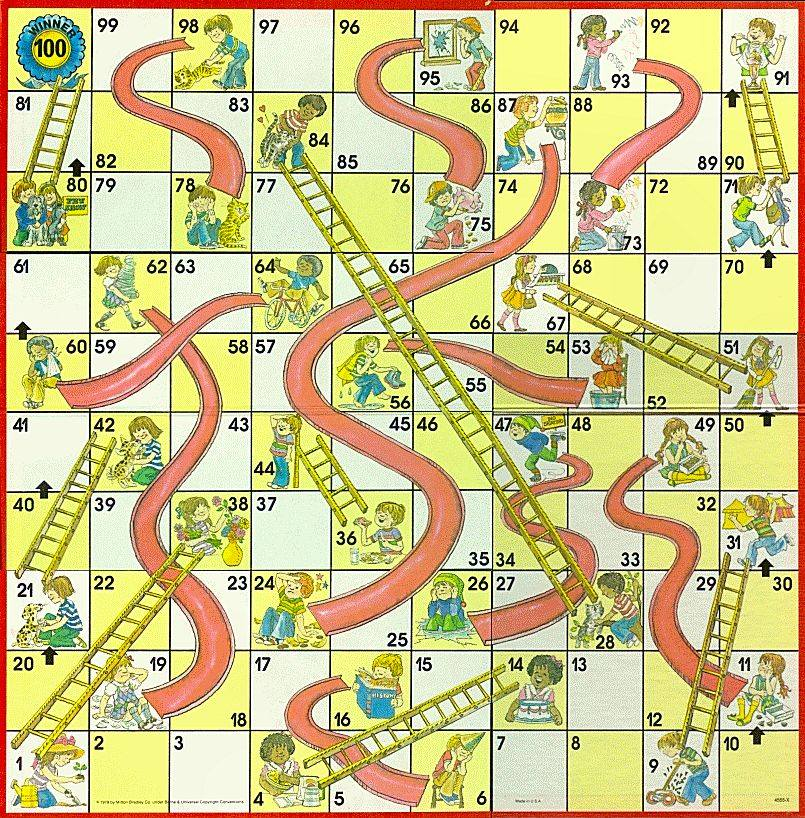
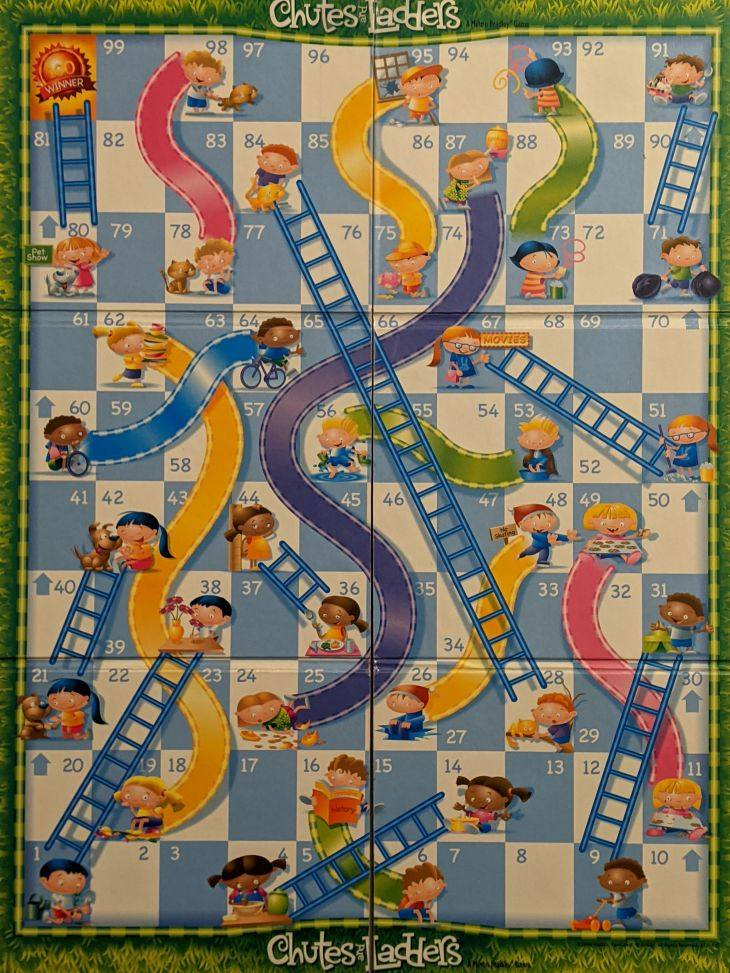
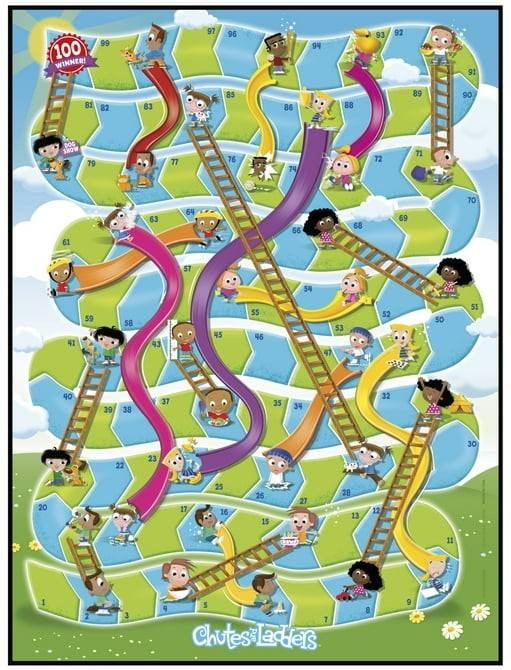
Which board do you remember best?

19th Century Jain Version of Moksha Patam
UK Version, 1900
1940’s Version
1952. This is the version I grew up with.
1979. This is the version I played with my children.
2020 Version
Current Edition

This game is both instructional and a lot of fun, and is 100% a game of chance. No skill whatsoever is required, making it relatively contention-free for players of all ages.

The Old Wolf has spoken

Footnotes

¹Moksha Patam is the ancient Indian precursor to the game of Snakes and Ladders, originating as a spiritual game to teach the concepts of karma, virtue, and liberation (moksha) from the cycle of rebirth. While the Western version simplified the game, Moksha Patam originally used ladders to symbolize good deeds leading to higher spiritual levels and snakes to represent vices causing spiritual decline. The ultimate goal of the game was to reach the final square, representing moksha, through virtuous actions, though the exact symbolism and number of ladders and snakes varied. Moksha: Means liberation or spiritual release from the cycle of birth, death, and rebirth. Patam/Pata: Indicates a path or ladder.

Reconciling Recollections: Was there a Whataburger in Salt Lake City, or was there not?

I swear on a stack of bibles (or The Origin of Species, whichever makes you feel more comfortable) that there was. I remember clearly eating at one, and being astonished at the size of their 5″ patty and huge buns. But the Internet is pretty sure that there was never one there, and will still respond with – what seems to me – inaccurate information. So in order to put that discrepancy to rest, I did a deep dive into the history, and this is what I came up with.

I first submitted the question to Perplexity – History of Whataburger in Salt Lake City? – and this was the result:

There is currently no evidence that Whataburger has ever operated in Salt Lake City or anywhere in Utah as of August 2025. While Whataburger has aggressively expanded in recent years—opening locations in new states like Nevada, the Carolinas, and others—none of the latest location lists or official press material mention Utah or Salt Lake City as a market served by the chain.

Full response with sources here:

https://www.perplexity.ai/search/history-of-whataburger-in-salt-f0uUy_y2Ry.L7t5Hynp.GQ#0

But there is a Facebook group called “If You Grew Up in Salt Lake, Then You Will Remember This,” and back on 23 January, 2022, Irene Vialpando asked the group whether they recalled the existence of a Whataburger on State Street around 800 South. Many people responded that they not only recalled the restaurant with its swivel chairs in the 1970s, but ate there, and also recalled the huge patties, and some even chimed in that they or members of their family used to work there. Still others were adamant that there was never any such outlet in Utah.

The responses from those who recalled a Whataburger were so encouraging that I decided to dig deeper. I asked Gemini the following question under the “research” tab:

I absolutely and without question recall the existence of a Whataburger outlet on State Street around 800 South in Salt Lake City in the 1970’s. I ate there, and I remember being gobsmacked by their 5″ patty, so this is not a false memory. Many other people at the Facebook group “If You Grew Up In Salt
Lake, Then You Remember This” have clear recollections of this restaurant’s existing for a brief time. Problem is, when I submitted the question to Perplexity and Google and Wikipedia, the answer came back that no, Whataburger never had a presence in Utah. Can you help me reconcile the discrepancy? I know for a fact that one was there.

The response from Gemini was as follows:

Executive Summary

his report investigates the compelling recollection of a Whataburger outlet on State Street around 800 South in Salt Lake City during the 1970s, a memory that contradicts readily available online historical records. While mainstream digital sources generally indicate no Whataburger presence in Utah, a deeper examination of corporate expansion strategies and local fast-food history reveals a more nuanced picture. Evidence suggests a strong possibility of a short-lived Whataburger location in Utah during the specified period, operated by a now-defunct franchisee, Western World Foods Inc. The user’s vivid memory of a “5-inch patty” aligns precisely with Whataburger’s signature product. Alternatively, the memory of a large patty could be attributed to Red Barn, another chain present in Salt Lake City at the time, which offered a burger with a nearly identical patty size. Ultimately, the collective memory and specific product detail lend significant credence to a genuine, albeit brief, Whataburger appearance in Salt Lake City.

The User’s Vivid Recollection: A Personal Account

The core of this inquiry stems from a remarkably clear and persistent personal memory. The user explicitly recalls the presence of a Whataburger restaurant on State Street, specifically around 800 South, in Salt Lake City during the 1970s. This recollection is not merely a vague impression; it is anchored by a distinct sensory detail: the user remembers being “gobsmacked by their 5″ patty.” This specific, quantifiable characteristic serves as a critical identifier for the restaurant in question. The user’s emphatic statement, “this is not a false memory,” underscores the profound certainty associated with this experience.

Furthermore, this is not an isolated individual memory. The user notes that “Many other people at the Facebook group ‘If you grew up in Salt Lake, then you remember this’ have clear recollections of this restaurant’s existing for a brief time.” This collective memory, while not offering definitive documentary proof, indicates a shared experience within the local community that warrants thorough investigation. Online discussions from Salt Lake City forums further show individuals recalling “Whataburger” or “Eat-a-Burger” when discussing lost restaurants from the 1970s, suggesting a common thread in local historical memory. The convergence of these individual and collective memories, particularly around a specific product characteristic, provides a compelling starting point for reconciling the perceived historical discrepancy.

Whataburger’s Corporate History and Western Expansion (1970s)

To understand the potential for a Whataburger presence in Utah, it is essential to review the company’s historical growth and its product characteristics. Whataburger was founded in Corpus Christi, Texas, in 1950, with an ambitious goal: to serve a “better burger that took two hands to hold”. From its inception, the original Whataburger featured a quarter-pound patty served on a distinctive 5-inch bun. This particular dimension, the 5-inch bun, is a direct and precise match for the user’s specific memory of the patty size that left such a strong impression. This consistency in product design throughout Whataburger’s history is a strong indicator of brand identity, making the user’s specific memory a highly reliable detail for identifying the brand, rather than a generic “large burger” from another chain. The company’s commitment to this unique bun size from its earliest days means that if the user distinctly remembers a 5-inch patty, it strongly points towards a Whataburger experience.

Whataburger’s expansion beyond Texas began relatively early, with the first location outside its home state opening in Pensacola, Florida, in 1959. By 1963, the chain had grown to 26 restaurants, extending its reach to Florida, Tennessee, and Arizona. The 1970s marked a period of significant corporate growth, with the company introducing its first drive-thru in 1971 and celebrating the opening of its 100th restaurant in 1972. By the mid-1970s, Whataburger’s footprint had expanded to over 200 restaurants across 12 states.

The Western World Foods Inc. Franchise and Utah’s Connection

Despite the official corporate history often not explicitly listing Utah as a state with Whataburger locations during this period, a crucial detail emerges from the records of its franchising operations. In 1972, a Texas-based Whataburger franchisee, Western World Foods, initiated an ambitious plan to expand the Whataburger brand nationally. This expansion strategy specifically included the development of 14 new restaurants across four Western states: New Mexico, Arizona, Colorado, and Utah.

Further supporting this planned presence, by 1975, “Whataburger of Nevada” was incorporated, and David Hawley was appointed as the Vice President of Operations for both Nevada and Utah. This appointment strongly suggests that active steps were indeed being taken to establish Whataburger locations in Utah, mirroring the development of six Nevada locations that opened by January 1976 under the same franchisee.

The operational model of Western World Foods was distinct; while they licensed the Whataburger name, menu, and logo, they chose to build structures with a “protruding tower in the middle” instead of the classic A-frame design. However, Western World Foods’ ambitious venture proved to be short-lived. By September 1979, Whataburger of Nevada ceased advertising, and its stores, along with other Western World Foods locations, likely closed within a few months. Whataburger’s subsequent reduction in its West Coast presence was directly linked to the dissolution of Western World Foods, which Whataburger eventually purchased.

The existence of Western World Foods’ plans for Utah, coupled with the appointment of a Vice President specifically for Utah operations, strongly indicates that at least one Whataburger location could have opened in Salt Lake City, even if for a very brief period. The short lifespan and subsequent dissolution of Western World Foods provides a compelling explanation for why these locations might not appear in standard, long-term corporate histories or readily accessible online databases. The official Whataburger history, which outlines the company’s core corporate expansion, often omits details of short-lived or problematic franchise ventures. This explains why a user’s initial searches might yield results stating no Whataburger presence in Utah, even if a temporary one existed.

It is also important to differentiate the Texas-based Whataburger from an unrelated chain named “What-A-Burger,” founded in Virginia in 1957. Although both chains share similar names and were involved in trademark disputes in 1970 , the Virginia-based chain did not expand westward into Utah. The user’s specific memory of a 5-inch patty aligns with the Texas Whataburger’s signature product, making confusion with the Virginia chain highly unlikely.

Table 1: Whataburger’s Western US Expansion Initiatives (1970s)

StateFranchisee/SubsidiaryKey Dates/DetailsOutcome/Notes
ColoradoWhataburger of Colorado Inc. (under Western World Foods Inc.)Operated throughout 1970s; locations opened 1972-1975; likely closed late 70s/early 80sShort-lived stint, difficult to research; some buildings still exist under different businesses.
ArizonaWestern World Foods Inc.Expanded to Arizona by 1963 (corporate); Western World Foods also had locationsSome Western World locations held onto by Whataburger after 1979.
New MexicoWestern World Foods Inc.Part of 1972 expansion plans for 14 new restaurantsSome Western World locations held onto by Whataburger after 1979.
NevadaWhataburger of Nevada (under Western World Foods Inc.)Incorporated 1975; six locations opened by Jan 1976; stopped advertising Sept 1979Short-lived; exit related to dissolution of Western World Foods. Buildings often repurposed.
UtahWestern World Foods Inc.Included in 1972 plans for 14 new restaurants; David Hawley named VP of Operations for Nevada & Utah by 1975.Strong indication of planned or short-lived presence, likely closed with Western World Foods in 1979.
CaliforniaWhataburger of California (under Western World Foods Inc.)Presence from mid-70s (~1973) until 1987.Short-lived stint, difficult to research.

This table directly addresses the primary discrepancy in the user’s query. It highlights that Utah was explicitly part of a significant, albeit ultimately unsuccessful, Western expansion initiative by a Whataburger franchisee. By placing Utah within the context of other Western states where Whataburger did have a presence, even if short-lived, it validates the possibility of a Utah location and provides an evidence-based counter-argument to the general online narrative. The table also implicitly sets the stage for understanding why such a presence might be difficult to trace: its short duration and the failure of the franchising entity.

Salt Lake City’s Fast-Food Landscape (1970s)

To provide comprehensive context and explore alternative explanations for the user’s memory, it is important to examine other prominent burger chains operating in Salt Lake City during the 1970s, particularly those known for offering larger patties.

Prominent Local Chains

  • Dee’s Drive-In: A long-standing fixture in Utah for nearly five decades, Dee’s Drive-In was a well-known local burger chain. It was eventually sold to Hardee’s in the late 1970s. While iconic for its “Dee’s Clowns” and family-friendly advertising , its standard burger patty size was typically 1/8 pound. This is significantly smaller than the 5-inch/quarter-pound patty described by the user, making Dee’s an unlikely candidate for the “gobsmacked by 5-inch patty” memory.
  • Crown Burger: Crown Burger opened its doors in Salt Lake City in 1978. It quickly gained fame for its signature “Crown Burger,” which features a quarter-pound hamburger patty generously topped with a thick mound of hot pastrami on a sesame seed bun. While the patty size (quarter-pound) is comparable to Whataburger’s, the distinctive addition of pastrami and the opening year (1978) might differentiate it from the user’s specific memory of a Whataburger experience earlier in the 1970s.
  • Eat-a-Burger: This restaurant is mentioned in Salt Lake City online discussions as a fondly remembered, now-defunct establishment. Eat-a-Burger was located at the intersection of Regent Street and 200 South. Although its specific patty dimensions are not detailed in the available information, it was generally known for serving “large” burgers. However, its documented location is not on State Street around 800 South, which is a key detail in the user’s memory.
  • Other Local Favorites: The 1970s Salt Lake City fast-food scene included other local burger joints such as Don’s, Arctic Circle (recognized for its fry sauce and crinkle fries), and JB’s Big Boy (known for its triple-decker burger). The Training Table, a regional chain founded in Utah in 1977, also specialized in “gourmet burgers”.

National Chains with Large Patties

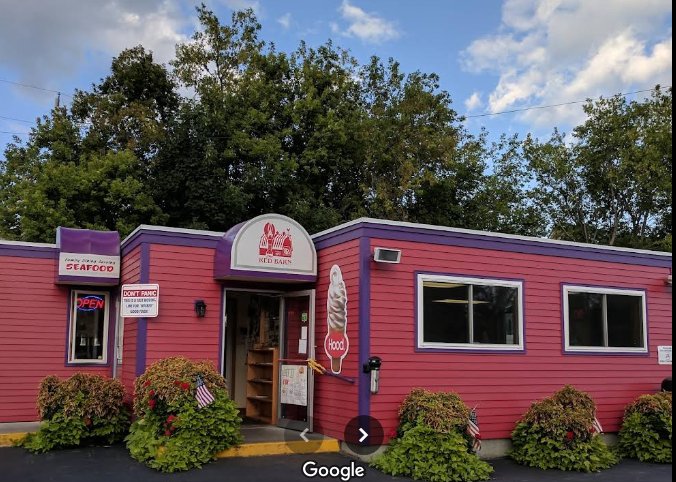
  • Red Barn: This national fast-food chain, established in 1961, had a significant presence across the country, boasting over 300 locations in 19 states by the 1970s. Red Barn was particularly known for its substantial burger offerings, including the “Big Barney” (comparable to a McDonald’s Big Mac) and the “Barnbuster” (similar in style to a Quarter Pounder or Burger King’s Whopper). Crucially, a 5.0 oz patty from Red Barn was specified as having “Patty Dimensions: 4 7/8 inches”. There was indeed at least one Red Barn location confirmed to be in Salt Lake City.

The patty dimensions of Red Barn’s “Barnbuster” (4 7/8 inches) are remarkably close to the user’s recollection of a “5-inch patty.” Given Red Barn’s confirmed presence in Salt Lake City and its reputation for large burgers, it presents a strong alternative explanation for the user’s memory if a Whataburger did not exist at the specified location. The memory of a distinctive large patty could easily be attributed to a well-known “big burger” chain, especially over the span of decades.

Salt Lake City Business Directories and Archives

To definitively confirm or refute the presence of a Whataburger or Red Barn at “State Street around 800 South,” a detailed examination of historical records would be necessary. Salt Lake City directories for the 1970s are available through the Utah City Directories Collection, including directories for South Salt Lake City. These valuable resources list residents, streets, businesses, and organizations, often including advertisements, and are designed to be searchable.

Additionally, the J. Willard Marriott Library at the University of Utah maintains the Utah Digital Newspapers (UDN) repository, which provides free access to over nine million pages from 400 newspapers published in Utah from 1850 to 2023. This extensive resource allows for searching historical newspaper content, which would be critical for finding advertisements or news articles about restaurant openings or closures on State Street around 800 South during the 1970s. The available information indicates that State Street around 800 South was indeed a commercial area with various tenants, including restaurants.

While these archives are excellent resources for historical research, the challenge lies in the potential for short-lived businesses, such as a Western World Foods Whataburger (if it opened), to have left minimal or no advertising footprint, or for their records to be obscure within the vastness of the archives. The absence of a listing in widely accessible digital archives does not definitively prove non-existence, especially for a brief operation. This highlights the inherent difficulty in definitively proving or disproving a short-lived historical business through common online searches, which is precisely why the user’s initial inquiries were inconclusive.

Table 2: Prominent Salt Lake City Burger Chains (1970s) with Patty Characteristics

Restaurant NameType (Local/National)Key Burger/Patty SizeKnown Locations (1970s)Notes
WhataburgerNational (via franchisee)Quarter-pound patty on 5-inch bunPlanned for Utah (Western World Foods)Strong match for patty/bun size memory; potential short-lived presence.
Dee’s Drive-InLocal1/8 pound pattyFixture throughout UtahPatty size significantly smaller than user’s memory.
Red BarnNational“Barnbuster” (Quarter-pound style), 4 7/8-inch patty (5.0 oz)At least one location in Salt Lake CityVery close match for patty size memory; known for large burgers.
Crown BurgerLocalQuarter-pound patty (with pastrami)Opened 1978 in Salt Lake City (377 E 200 S)Patty size matches, but opened late 70s and distinctive pastrami.
Eat-a-BurgerLocal“Large” burgers (specific size not found)Regent Street and 200 SouthKnown for large burgers, but location not on State St.
JB’s Big BoyNational/Regional“Big Boy” (triple-decker)Present in Salt Lake CityKnown for large, multi-patty burgers.

This table is essential for systematically evaluating alternative explanations for the user’s memory. By explicitly comparing patty and bun sizes across various burger chains known to be in Salt Lake City during the 1970s, it allows for a direct assessment of how well each chain aligns with the user’s specific recollection. This structured comparison immediately highlights that Dee’s Drive-In is an unlikely match due to its smaller patty size. Conversely, it identifies Red Barn as a very strong candidate for potential misattribution because its patty diameter (4 7/8 inches) is nearly identical to the 5-inch patty remembered by the user, and Red Barn had a confirmed presence in Salt Lake City. This comparison helps to narrow down the possibilities and provides a clear, data-driven framework for understanding how the user’s memory could be accurate in its sensory detail (large patty) but potentially misattributed in terms of the specific brand.

Reconciling Memory and Records: Analysis of Discrepancies

The conflict between the user’s strong personal memory and the lack of readily available online documentation poses a classic challenge in historical research. However, the collected information allows for a plausible reconciliation, suggesting that the user’s memory is likely accurate.

The Case for a Short-Lived Whataburger Presence

The most compelling evidence supporting the user’s memory stems from the documented expansion plans of Western World Foods, a Whataburger franchisee. Their 1972 initiative explicitly included plans for 14 new restaurants across New Mexico, Arizona, Colorado, and crucially, Utah. This is not a vague aspiration but a concrete business strategy. Furthermore, the appointment of David Hawley as Vice President of Operations for both Nevada and Utah by 1975 strongly indicates that tangible steps were being taken to establish Whataburger locations in Utah. The presence of a dedicated executive for Utah operations suggests more than just theoretical planning; it points to active development.

While specific addresses for Utah locations are not detailed in the available information, the rapid dissolution of Western World Foods in 1979 provides a clear and coherent explanation for why any Utah Whataburger that opened would have been very short-lived. A brief operational period, especially one ending in a franchise failure and subsequent corporate acquisition, would naturally lead to minimal or no permanent digital or easily accessible historical records. Businesses that operate for only a few years, particularly those whose parent franchising entities dissolve, often leave little to no lasting public footprint in broad historical databases. The user’s strong memory, corroborated by a local Facebook group, aligns perfectly with the idea of a real, but ephemeral, business presence. This situation illustrates that the absence of easily discoverable evidence does not equate to evidence of absence, particularly for short-lived ventures or those impacted by corporate restructuring.

Alternative Explanation: Misattribution to Red Barn

If, for any reason, a Whataburger location did not materialize at the specified address or was too fleeting to be widely remembered, the user’s vivid memory of the “5-inch patty” could plausibly be attributed to Red Barn. Red Barn was a national chain with a confirmed presence in Salt Lake City and offered a “Barnbuster” burger with a 4 7/8-inch patty. This dimension is remarkably close to a 5-inch patty, a difference that could easily be imperceptible or rounded up in a long-term memory. Red Barn was also known for its “large burgers” , making it a strong candidate for leaving the impression of a “gobsmacking” large patty.

Human memory, especially over several decades, can sometimes conflate details from similar experiences. The most salient feature for the user was the “5-inch patty.” While Whataburger indeed featured a 5-inch bun, Red Barn offered a patty of almost identical diameter. If a Red Barn was located on State Street around 800 South (a detail that would require further specific directory research to confirm), it is conceivable that the user experienced the impressive patty size at Red Barn but later associated it with the more widely known “Whataburger” name, especially if the latter was rumored or briefly planned for the area due to Western World Foods’ activities. This scenario demonstrates how a memory can be factually accurate in one detail (the size of the burger) but potentially misattributed in another (the specific brand), particularly when similar products exist and historical presence is ambiguous.

The Challenge of Verifying Specific Locations (State Street, 800 South)

To definitively confirm or refute the presence of either a Whataburger or a Red Barn at the precise location of “State Street around 800 South,” a more granular and dedicated search of 1970s Salt Lake City business directories and local newspaper archives would be necessary. These resources, which often contain specific business listings, advertisements, and news of openings or closures, would provide the most direct evidence. The available information confirms that State Street around 800 South was a commercial area with various tenants, including restaurants.

While general historical records confirm Whataburger’s plans for Utah and Red Barn’s presence in Salt Lake City, pinpointing a specific address like “State Street around 800 South” requires a level of detailed, local-level historical data that is not fully provided in the current information. The current findings confirm the possibility and likelihood of a Whataburger presence, and a strong alternative in Red Barn, but not absolute certainty for the exact address. This highlights the limitations of broad historical searches and the necessity for highly localized, detailed archival research to resolve such specific historical queries.

Conclusion and Key Takeaways

The user’s vivid and corroborated memory of a Whataburger outlet in Salt Lake City during the 1970s, characterized by its memorable 5-inch patty, is highly credible despite the absence of this information in common online historical searches.

The most probable explanation for this discrepancy lies in the documented, albeit short-lived, expansion efforts of Whataburger’s franchisee, Western World Foods Inc. In 1972, Western World Foods explicitly included Utah in its plans for 14 new restaurants across the Western United States, and by 1975, an executive was appointed with operational oversight for both Nevada and Utah. Whataburger’s signature product from its inception was indeed a quarter-pound patty on a 5-inch bun, designed to be held with two hands. This precise detail strongly supports the idea that the user genuinely encountered a Whataburger product. The subsequent dissolution of Western World Foods in 1979 provides a clear and compelling reason why any Whataburger locations opened in Utah would have been very brief and consequently left minimal or no readily accessible historical footprint in broader corporate records.

While a short-lived Whataburger presence is the most direct explanation, the possibility of misattribution to Red Barn cannot be entirely dismissed. Red Barn, a national chain with a confirmed presence in Salt Lake City , offered a “Barnbuster” burger with a 4 7/8-inch patty , a dimension remarkably close to the user’s recollection. If a Red Barn was located at the remembered address, it could account for the patty size memory. However, the user’s specific brand recall, further supported by others in a local social media group, leans towards a genuine Whataburger experience. Therefore, it is highly probable that the user’s memory is accurate regarding a short-lived Whataburger presence in Salt Lake City during the 1970s, likely operated by Western World Foods Inc. The perceived absence in common online historical records is best explained by the brief operational period and the subsequent failure and acquisition of the franchising entity

Key Takeaways

  • Memory vs. Digital Records: Personal and collective memories can contain accurate details about historical events, even when contradicted by easily accessible digital records. This is particularly true for short-lived business ventures, especially those that were part of unsuccessful franchise expansions, as they often leave minimal lasting digital footprints.
  • Franchise Complexity: Corporate histories often simplify or omit the intricate details of complex, short-lived, or unsuccessful franchise expansions. This simplification can lead to gaps in public knowledge and historical records, making it challenging to trace every aspect of a company’s past operations.
  • Salient Details as Memory Anchors: Specific and unique product features, such as a “5-inch patty,” can serve as powerful anchors for long-term memories. These distinct details can help individuals accurately recall a particular experience, even if the associated brand name might become slightly conflated or misremembered over the passage of time, especially when similar products existed in the market.
  • The Value of Local History: Reconciling such historical discrepancies often necessitates delving into granular local historical archives, such as city directories and local newspapers. These resources often contain more detailed and localized information than broader national databases, proving invaluable for verifying specific addresses and operational dates of businesses that may have had a limited or ephemeral presence.

Works cited

  1. In-N-Out is back, this time in South Salt Lake’s new ‘downtown’ : r/SaltLakeCity – Reddit, https://www.reddit.com/r/SaltLakeCity/comments/16unzzm/innout_is_back_this_time_in_south_salt_lakes_new/
  2. Favorite restaurant that no longer exists? : r/SaltLakeCity – Reddit, https://www.reddit.com/r/SaltLakeCity/comments/79ix7h/favorite_restaurant_that_no_longer_exists/
  3. The History of Whataburger: From 1950 to Today – Texas State Historical Association, https://www.tshaonline.org/handbook/entries/whataburger
  4. Company | Our Story – Whataburger, https://whataburger.com/company/pressreleasedetail/whataburger-addresses-open-carry-policy
  5. Throwback Thursday: Whataburger, 1970 – Home, https://archive.caller.com/news/building-our-future/throwback/321595141.html/
  6. Our History: The Whataburger Story, https://stories.whataburger.com/our-history/
  7. Whataburger turns 69: A brief history of the iconic Texas fast-food joint, https://www.fox4news.com/news/whataburger-turns-69-a-brief-history-of-the-iconic-texas-fast-food-joint
  8. Whataburger – Wikipedia, https://en.wikipedia.org/wiki/Whataburger
  9. The 1960s and 1970s – Local History Project, https://whataburgerhistoryprojectchs.weebly.com/the-1960s-and-1970s.html
  10. Whataburger history as beloved Texas chain turns 75 – MySA, https://www.mysanantonio.com/business/article/whataburger-history-20400806.php
  11. Whataburger Nevada History – Houston Historic Retail, https://houstonhistoricretail.com/miscellaneous/whataburger-nevada-history/
  12. What-A-Burger – Wikipedia, https://en.wikipedia.org/wiki/What-A-Burge
  13. WHAT-A-BURGER OF VIRGINIA v. Whataburger Inc., 256 F. Supp. 2d 476 (E.D. Va. 2003), https://law.justia.com/cases/federal/district-courts/FSupp2/256/476/2390458/
  14. TIL Whataburger in Texas and What-A-Burger in Virginia opened about the same time in 1950 but didn’t know of each other’s existence until 1970. They both sued the other, but the court ruled that customers were not likely to be confused about whether the burgers served came from Texas or Virginia. : r/ – Reddit, https://www.reddit.com/r/todayilearned/comments/8u200m/til_whataburger_in_texas_and_whataburger_in/
  15. Whataburger Colorado History – Houston Historic Retail, https://houstonhistoricretail.com/miscellaneous/whataburger-colorado/
  16. Whataburger California – Houston Historic Retail, https://houstonhistoricretail.com/miscellaneous/whataburger-california/
  17. Let’s Drive Down to Dee’s! Dee’s Drive-In – Utah and Beyond, https://thenewcoffeeencyclopedia.wordpress.com/2017/03/28/lets-drive-down-to-dees-dees-drive-in-utah-and-beyond/
  18. Burger Chains That No Longer Exist – Mashed, https://www.mashed.com/1285144/burger-chains-no-longer-exist/
  19. 15 Old-Fashioned Burger Chains You’ll Never See Again – Eat This Not That, https://www.eatthis.com/old-fashioned-burger-chains/
  20. Hardee’s – Wikipedia, https://en.wikipedia.org/wiki/Hardee%27s
  21. Dee F. Anderson – Mormonism, The Mormon Church, Beliefs, & Religion – MormonWiki, https://www.mormonwiki.com/Dee_F._Anderson
  22. Dee’s Drive-In – Wikipedia, https://en.wikipedia.org/wiki/Dee%27s_Drive-In
  23. Dee’s Drive-In – American Retro Apparel, https://americanretroapparel.com/products/dees-drive-in
  24. FAQ about the Dick’s Drive-In Food Truck, https://www.ddir.com/foodtruck-faq/
  25. Menu – Dick’s Drive-In Restaurants, https://www.ddir.com/menu/
  26. FLASHBACK 2006: Utah’s unique meat-on-meat sandwiches please palates while arteries scream for mercy. – Salt Lake City Weekly, https://www.cityweekly.net/utah/flashback-2006-utahs-unique-meat-on-meat-sandwiches-please-palates-while-arteries-scream-for-mercy/Content?oid=22689472
  27. Salt Lake’s Historic Crown Burger – Intermountain Histories, https://www.intermountainhistories.org/items/show/156
  28. The first location was in the parking lot of the current 377 East 200 South location. It seated 75 people. John worked from 3 am to 5 pm doing all of the prep work for the homemade Onion Rings and Chili. Within 30 days, people were lined up like a train outside the front door, waiting to come in. The original building was torn down 1½ years later and the current building was built, seating 150 people. – Crown Burgers Salt Lake City Utah, https://www.crown-burgers.com/story.php
  29. The former Eat-A-Burger is no more – Building Salt Lake, https://buildingsaltlake.com/the-former-eat-a-burger-is-no-more/
  30. Lucky 13 Bar & Grill – Voted Utah’s Best Hamburger, https://www.lucky13slc.com/
  31. The Burger Joints Memory | SpartanSpirit1975, https://spartanspirit1975.wordpress.com/2012/03/02/the-burger-joints-memory/
  32. List of defunct fast-food restaurant chains – Wikipedia, https://en.wikipedia.org/wiki/List_of_defunct_fast-food_restaurant_chains
  33. List of defunct fast-food restaurant chains – Wikiwand, https://www.wikiwand.com/en/articles/List_of_defunct_fast-food_restaurant_chains
  34. Does anyone know anything about this place? Location? Date? Still in business? – Reddit, https://www.reddit.com/r/VintageMenus/comments/1c1sz05/does_anyone_know_anything_about_this_place/
  35. Back in the days, what was your favorite place to get burgers? : r/AskOldPeople – Reddit, https://www.reddit.com/r/AskOldPeople/comments/140j17p/back_in_the_days_what_was_your_favorite_place_to/
  36. Red Barn (restaurant) – Wikipedia, https://en.wikipedia.org/wiki/Red_Barn_(restaurant)
  37. What Happened to the Red Barn Restaurant? – Cleveland Vintage Shirts, https://clevelandvintage.com/blogs/cleveland/what-happened-to-the-red-barn-fast-food-franchise
  38. Does Anyone Remember This Vintage ’60s Chain Restaurant And Its Iconic Red Building?, https://www.tastingtable.com/1888048/red-barn-vintage-burger-restaurant
  39. Beef Patty Ground Seasoned Homestyle Frozen 5 Oz – Foodservice Rewards, https://www.foodservicerewards.com/products/beef-patty-ground-seasoned-homestyle-frozen-5-oz
  40. Utah Restaurants | RoadsideArchitecture.com – RoadArch.com, https://www.roadarch.com/eateries/ut.html
  41. Utah City Directories Collection | Utah Department of Cultural and Community Engagement – MWDL, https://mwdl.org/mwdl-collections/utah-city-directories-collection/
  42. Utah City Directories Collection – J. Willard Marriott Digital Library, https://collections.lib.utah.edu/search?facet_setname_s=dha_ucd
  43. Utah Digital Newspapers, https://newspapers.lib.utah.edu/
  44. “Coon Chicken Inn” in “Burgers in Blackface” | University of Minnesota Press Manifold, https://manifold.umn.edu/read/untitled-6b2e0c15-9dd8-4cec-a2b3-81298b9e74ec/section/f907c8e0-69d3-4a83-b630-57fcda04c072
  45. Historical menu collection, 1884-2020 – Archives West, https://archiveswest.orbiscascade.org/ark:80444/xv16082
  46. Whatever happened to … The Speedway Cafe? – The Salt Lake Tribune, https://archive.sltrib.com/article.php?id=3827047&itype=CMSID
  47. Salt Lake West Side Stories Image Gallery – CCE, https://community.utah.gov/westside-stories-image-gallery/
  48. SLC Head Shops and ‘Alternative Business’ — Research by Steve Jones | Cosmic Aeroplane 1960’s to 1990’s, https://cosmicaeroplane.wordpress.com/2019/03/12/slc-head-shops-and-alternative-business-research-by-steve-jones/
  49. The State Street Issue | Cover Story – Salt Lake City Weekly, https://www.cityweekly.net/utah/the-state-street-issue/Content?oid=3425273 50. The Salt Lake Tribune Archives, https://sltrib.newsbank.com/

This is an impressively deep dive into the history of Salt Lake restaurants, and for me, the key takeaway is this:

Therefore, it is highly probable that the user’s memory is accurate regarding a short-lived Whataburger presence in Salt Lake City during the 1970s, likely operated by Western World Foods Inc.

I’m 74. My memory is clearly not what it was, but this I can tell you: I have never eaten at a Red Barn in my life, with the exception of a non-chain-related independent outlet up in Augusta, Maine.

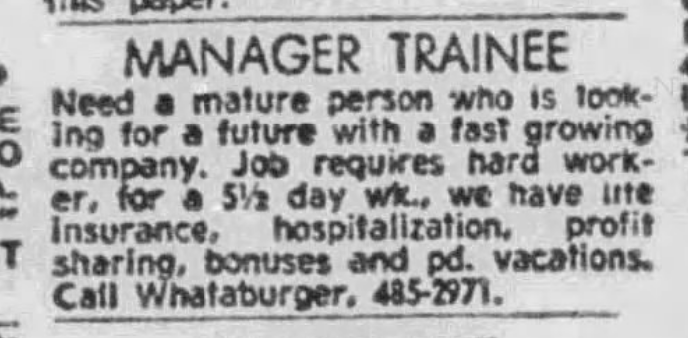
Last of all, and most important, this want ad appeared in the Salt Lake Tribune on The Salt Lake Tribune on Nov 29, 1973, Page 60:

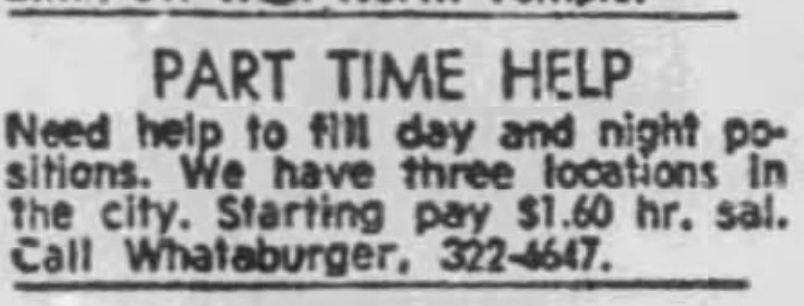
And on Fri, Nov 30, 1973, Page 61, the following ad was seen:

Three locations! And, if you have a subscription to Newspapers.com, you can see dozens of similar solicitations between 1973 and 1974.

As a result, I feel 100% confident, based on my recollections of Salt Lake in the ’70s and the results of Gemini’s search, that there was indeed at least one Whataburger in Salt Lake at one point, and most likely three, and that I and many other people enjoyed their brief existence.

The Old Wolf has spoken.

A prayer of peace for these troubled times.

I found this beautiful and comforting. “Elohai neshamah shenatata bi tehorah hi” is the beginning of a traditional prayer recited upon awakening – it translates roughly as “God, the soul You have given me is pure.”

For some background, the full Hebrew prayer is below, found here:

Elohai n’shamah shenatata bi t’horah hi.My God, the soul You have given me is pure.
Atah v’rataH,For You created it,
atah y’tzartaH,You formed it,
atah n’fachtaH bi,You made it live within me [breathed it into me].
v’atah m’shamraH b’kirbi,And you watch over / preserve it within me,
v’atah atid lit’laH mimeni ul’hachaziraH bi leatid lavo.and/but one day, You will take it from me and restore it in the time to come.
Kol z’man shah-n’shamah b’kirbiAs long as the soul is within me,
modeh/modah ani l’fanecha¹I will give thanks to Your face/presence
Adonai elohai veilohei avotai,My Lord God of Gods of the generations before me,
she’atah hu ribbon kol ha-ma’asim,to You who are the power of good deeds,
mosheil b’chol ha-b’riot,the Ruler of all creatures,
adon kol ha-n’shamot.the Master Craftsman of every soul.
Baruch atah Adonai, ha-machazir n’shamot ha-meitim.Blessed are You God, giving souls to the dead.

It is interesting to me that this prayer by Rabbi Keller reflects a core plot point in The Chosen, the seminal novel by Chaim Potok. In it, one of the protagonists is raised by his father, a rabbi, in silence (i.e. without non-essential communication or fatherly affection). The father later goes on to explain:

“Ah, what a price to pay…. The years when he was a child and I loved him and talked with him and held him under my tallis when I prayed…. ‘Why do you cry, Father?’ he asked me once under the tallis. ‘Because people are suffering,’ I told him. He could not understand. Ah, what it is to be a mind without a soul, what ugliness it is…. Those were the years he learned to trust me and love me…. And when he was older, the years I drew myself away from him. ‘Why have you stopped answering my questions, Father?’ he asked me once. ‘You are old enough to look into your own soul for the answers,’ I told him. He laughed once and said, “That man is such an ignoramus, Father.’ I was angry. ‘Look into his soul,’ I said. ‘Stand inside his soul and see the world through his eyes. You will know the pain he feels because of his ignorance, and you will not laugh.’ He was bewildered and hurt. The nightmares he began to have…. But he learned to find answers for himself. He suffered and learned to listen to the suffering of others. In the silence between us, he began to hear the world crying.

This novel, and this passage in particular, always touched me deeply. I was moved to hear the sentiment expressed in a modern prayer for peace, but also for compassion and compassionate action.

The Old Wolf has spoken.

Footnotes:

¹ This line reflects the prayer Modeh/Moda ani, which is recited upon awakening and before getting out of bed. “As this prayer does not include any of the names of God, observant Jews may recite it before washing their hands.” In Talmudic times, Jews traditionally recited Elohai Neshamah upon waking. The prayer was later moved to the morning synagogue services. (Wikipedia)

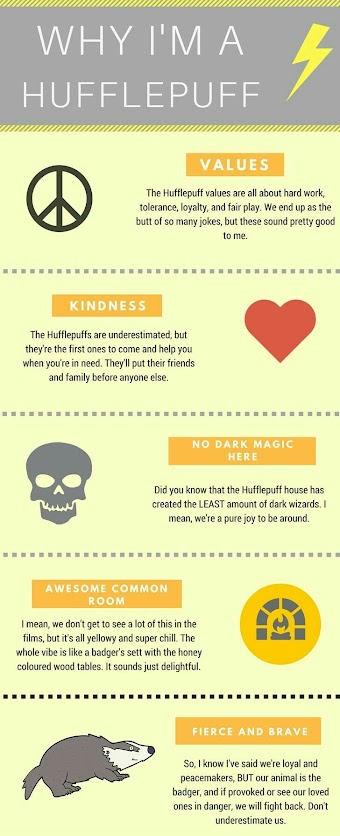
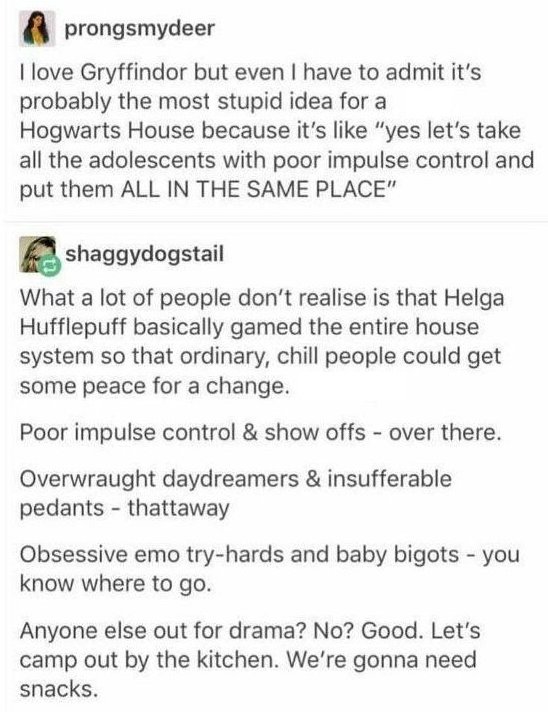
I’m glad I’m a Hufflepuff

Way back in the dark ages when Pottermore was launched, I signed up and was sorted into a house like everyone else. Of course I was hoping I’d be put in to Gryffindor because of the usual reasons, but the Sorting Hat told me I’d do best in Hufflepuff. At the time I was disappointed, but decades later I came to understand that I had been signally honored.

Snacks? Naps? Honor and decency? Service? Loyalty? Building a world that works for everyone, with no one left out? I’m all in. I mean, just look at this common room:

J.K. Rowling’s original writing at Pottermore:

“The Hufflepuff common room is entered from the same corridor as the Hogwarts kitchens. Proceeding past the large still life that forms the entrance to the latter, a pile of large barrels is to be found stacked in a shadowy stone recess on the right-hand side of the corridor.
The barrel two from the bottom, middle of the second row, will open if tapped in the rhythm of ‘Helga Hufflepuff’*.

* The complexity or otherwise of the entrance to the common rooms might be said to give a very rough idea of the intellectual reputation of each house: Hufflepuff has an unchanging portal and requires rhythmic tapping; Slytherin and Gryffindor have doorways that challenge the would-be entrant about equally, the former having an almost imperceptible hidden entrance and a varying password, the latter having a capricious guardian and frequently changing passwords. In keeping with its reputation as the house of the most agile minds at Hogwarts, the door to the Ravenclaw common room presents a fresh intellectual or philosophical challenge every time a person knocks on it.

As a security device to repel non-Hufflepuffs, tapping on the wrong barrel, or tapping the incorrect number of times, results in one of the other lids bursting off and drenching the interloper in vinegar.

A sloping, earthy passage inside the barrel travels upwards a little way until a cosy, round, low-ceilinged room is revealed, reminiscent of a badger’s sett. The room is decorated in the cheerful, bee-like colours of yellow and black, emphasised by the use of highly polished, honey-coloured wood for the tables and the round doors which lead to the boys’ and girls’ dormitories (furnished with comfortable wooden bedsteads, all covered in patchwork quilts).

A colourful profusion of plants and flowers seem to relish the atmosphere of the Hufflepuff common room: various cactii stand on wooden circular shelves (curved to fit the walls), many of them waving and dancing at passers-by, while copper-bottomed plant holders dangling amid the ceiling cause tendrils of ferns and ivies to brush your hair as you pass under them.

A portrait over the wooden mantelpiece (carved all over with decorative dancing badgers) shows Helga Hufflepuff, one of the four founders of Hogwarts School, toasting her students with a tiny, two-handled golden cup. Small, round windows just level with the ground at the foot of the castle show a pleasant view of rippling grass and dandelions, and, occasionally, passing feet. These low windows notwithstanding, the room feels perennially sunny.

Nevertheless, it ought not to be concluded from the above that Hufflepuffs are dimwits or duffers, though they have been cruelly caricatured that way on occasion. Several outstanding brains have emerged from Hufflepuff house over the centuries; these fine minds simply happened to be allied to outstanding qualities of patience, a strong work ethic and constancy, all traditional hallmarks of Hufflepuff House.

Author’s note
When I first planned the series, I expected Harry to visit all four house common rooms during his time at Hogwarts. There came a point when I realised that there was never going to be a valid reason to enter the Hufflepuff room. Nevertheless, it is quite as real to me as the other three, and I always knew exactly where those Hufflepuffs were going when they headed off towards the kitchens after lessons.” 

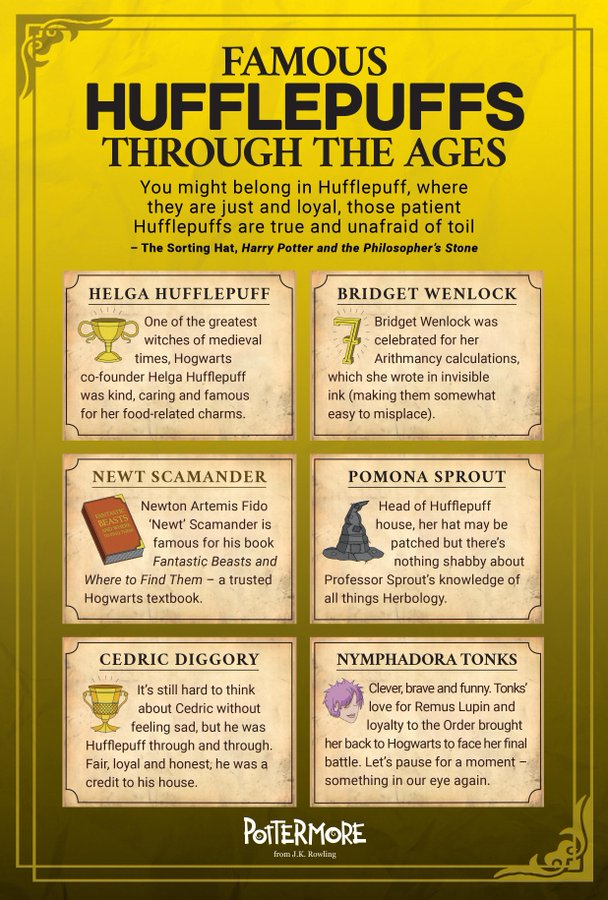
Hufflepuff is full of some of the most honorable characters:

Yeah. Badgers for the win!

The Old Wolf has spoken.

Forest Honey

I am an inveterate honey lover. I’ve written about comb honey and chestnut honey, but one of my favorites is forest honey.

Waldhonig

Unlike regular honeys which are manufactured by bees with collected nectar from flowers, forest honey is made from honeydew, excreted by sap-sucking insects. In short, aphid poop.

Aphid surrounded by honeydew

While it might be off-putting to think of eating the excrement of bugs, otherwise known as frass, honeydew is in a separate category. And are honey-lovers any more disgusted by the thought of eating bee vomit?

Wikipedia describes Forest Honey thus:

Instead of taking nectar, bees can take honeydew, the sweet secretions of aphids or other plant-sap-sucking insects. Honeydew honey is very dark brown, with a rich fragrance of stewed fruit or fig jam, and is not as sweet as nectar honeys. Germany’s Black Forest is a well-known source of honeydew-based honeys, as are some regions in Bulgaria, Tara in Serbia, and Northern California in the United States. In Greece pine honey, a type of honeydew honey, constitutes 60–65% of honey production. Honeydew honey is popular in some areas, but in other areas, beekeepers have difficulty selling honeydew honey, due to its stronger flavor.

https://en.wikipedia.org/wiki/Honey#Honeydew_honey

If you are, like me, an aficionado of honeys of all kinds and have never tried this delicacy, I exhort you to do so. I don’t think you will be disappointed.

The Old Wolf has spoken.

For the Easiest Travel on Earth…

Cross-posted from Livejournal 5/3/2021, and edited slightly for current relevance

♫ For the easiest travel on earth,
Take a Trailways, take a Trailways,
For the easiest travel on earth,
Take a Continental Trailways bus. ♫

♫ Go Greyhound, and leave the driving to us! ♫

A post in Teresa Burritt’s Frog Blog (an earlier version, now defunct, but the current one is still full of interesting things) included the following picture:

Like many of her posts, this got the old gears grinding and brought back many memories of cross-country bus travel, some pleasant and others… well, “interesting.”

Back in the 50’s, you could truck around for $99.00 for 99 days, unlimited travel to unlimited destinations, and break your journey anywhere; I suspect this is what the poster above referred to. Naturally, it was the 50’s, and the buses were notorious for intolerance and segregation¹ (see here for some of the details of that shameful situation), but also became a focal point for the civil-rights movement. For comparison, you can read the Trailways Wikipedia entry.

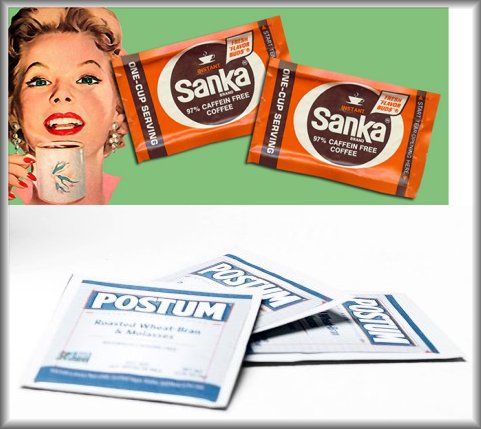
Back in the 60’s I took several trips by bus from New York to California and back; there’s no denying that it was challenging. Even as a relative youngster, sleeping on a bus is less than luxury. The seats didn’t recline much if at all, much like the cattle-class seats on a modern airliner. Stopping at all hours of the night at lonely, sometimes seedy cafés in Broken Clavicle, Iowa or Whistling Rock, Wyoming is not luxurious… and I will forever associate such places with the smell of Postum™ ². As I drink neither coffee nor tea, it was all I could get if I wanted something hot besides cocoa; like Sanka™, it came with a metal pot of hot water and little envelopes.
Sanka and Postum, as offered in restaurants

Sleeping on the bus was so challenging for me I would often resort to sleeping pills, but those made the night-time stops fairly grueling – staggering to the restroom while under the influence of those soporifics is unpleasant at best. Eventually I stopped using them and just toughed it out.

One upside was being able to watch the countryside go by without worrying about the stresses of driving, and another was the interesting people one could meet on the way. Yes, there were the “other” kind of people as well, along with the fat ladies puking in the aisle if they couldn’t make it to the onboard lavatory, but the really unpleasant incidents that one hears about were thankfully quite rare, and I never encountered one. While I never lost a bag during an actual trip, one box I shipped from New York to Pennsylvania via Greyhound arrived opened, damaged, with much missing, and full of gravel. I wish I could have been a fly on the wall to see what happened to that one.

I’ve checked – you can still travel by bus today, if you are hardy. But the advantages seem few, given the cost of other alternatives.

A round-trip fare from SLC to JFK would cost $499.00 at senior, economy rates, and take about 48 hours each way. Allow a bit for what passes for food and such along the route.

That compares to the lowest airfare of $353.00 for the same dates.

It would cost around $381.00 for gas in a 40mpg Prius at an average cost of $3.50 per gallon (which would take at least 8 days, coming and going, meaning additional lodging and food costs.)

Amtrak would cost $492.00 and take 61 hours, if one can get through without service disruptions.

At this point, the biggest advantage, shared with Amtrak, seems to be seeing a lot of countryside without having to do the driving yourself. The fact that Greyhound is still in business speaks to the fact that many people are willing to take this option – and naturally, there are other routes which may make taking the bus more advantageous.

The Old Wolf has spoken.


Footnotes

¹ John Howard Griffin’s experiences at a Greyhound Bus station in the South in 1960, as well as on the bus trip itself, recounted in Black Like Me, are chilling.

² Postum faded into history in 2007 but enough people clamored for it that it was successfully revived by Eliza’s Quest Food in 2013. There are recipes for home-made varieties, and one product, Ersatz™, claims to be a good Postum™ substitute. During the war, Ersatzkaffee was commonly given to Allied POW’s, and here we have an Ersatzersatzkaffee being marketed to those who crave it. The world is so full of a number of things. Now one can get things at the grocery store like Pero™, a European coffee substitute (known in Europe as Karo™) which is similar but much better-tasting, but rarely available in restaurants.

Plane Accident – Happy Ending

Cross-posted from LiveJournal 4/28/2021

Occasionally on the Interwebs one comes across rather sensational photos. I’ve seen this one in numerous places, with a caption like “Tragic accident caught at the moment of death,” or some such.

It always disturbed me, just because it was so poignant, and I could only imagine the terror of the two pilots as they augered their plane into the ground at 150 MPH or whatever.

Well, guess what? It was an accident, and it was unfortunate, but no loss of life was sustained. The nosewheel collapsed on landing, leading to a spectacular flip, but no deaths.

Click Here to view the photo in full size.

Uff da!

Fortunately, things are not always as they seem, and it always pays to do some fact-checking.

The Old Wolf has spoken.

Games People Play at 3 in the morning (otherwise known as Numberwang!)

First, a little backstory:

Numberwang! A bit of silliness from the BBC show That Mitchell and Webb Look.

As you can see from watching this little clip, there’s no rhyme or reason at all to any of it, which makes it all the more fun.

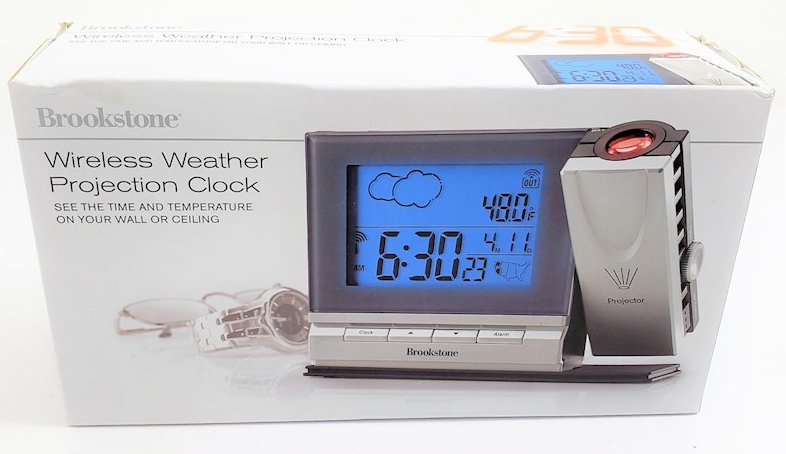
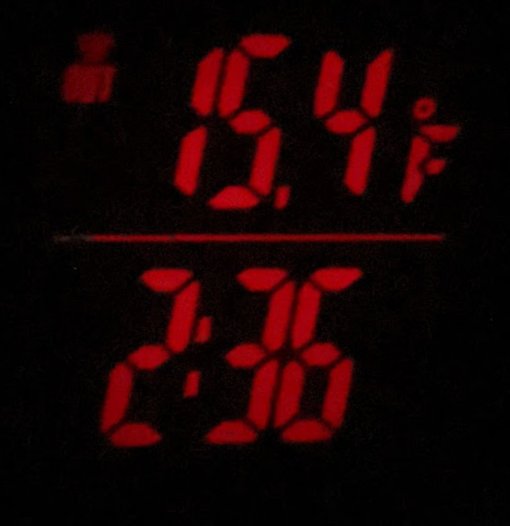
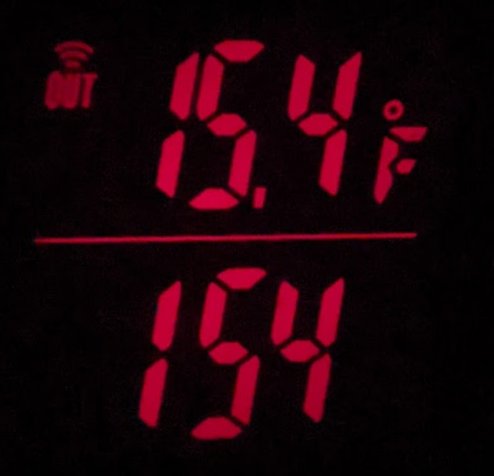
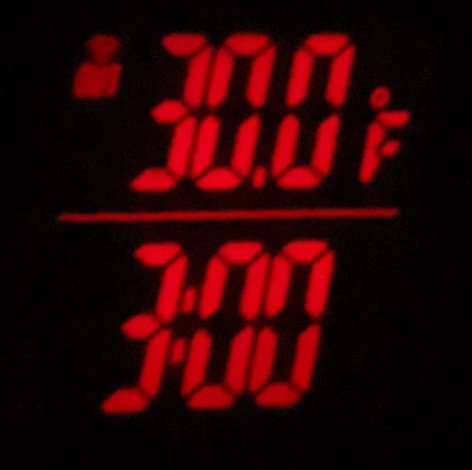
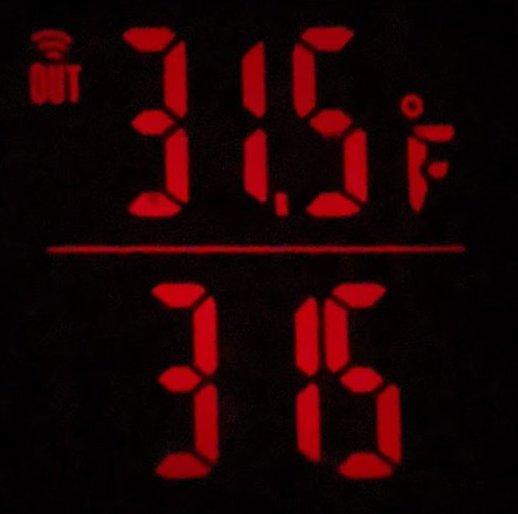
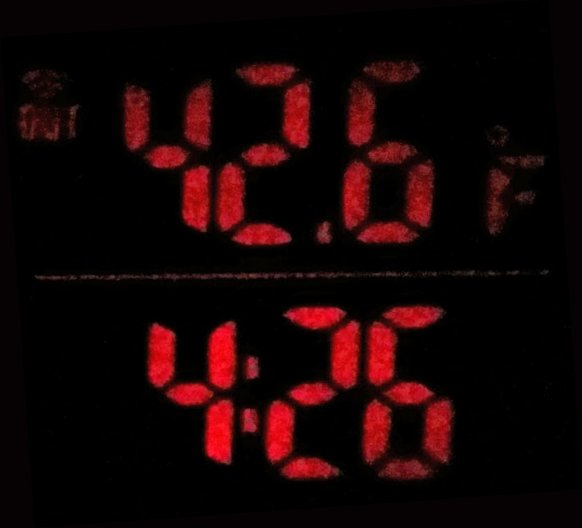
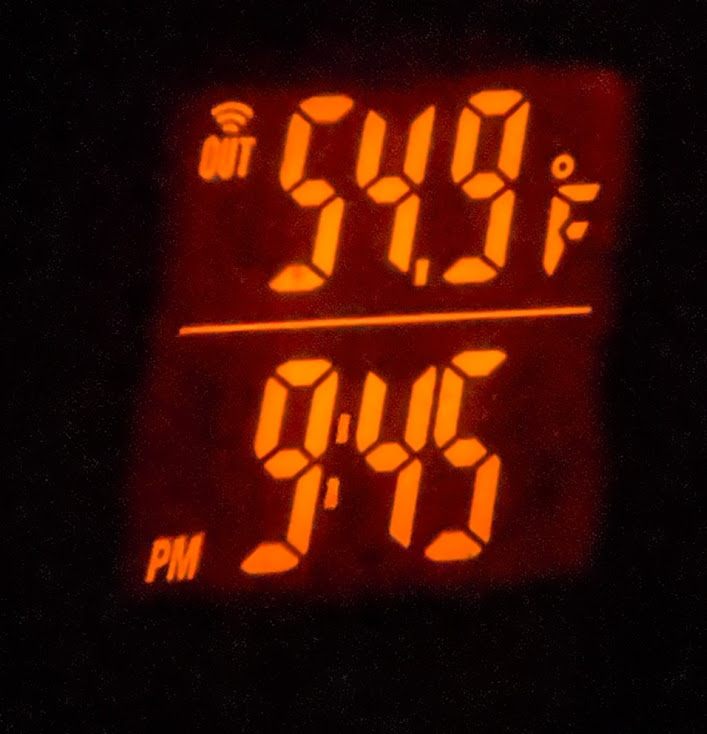
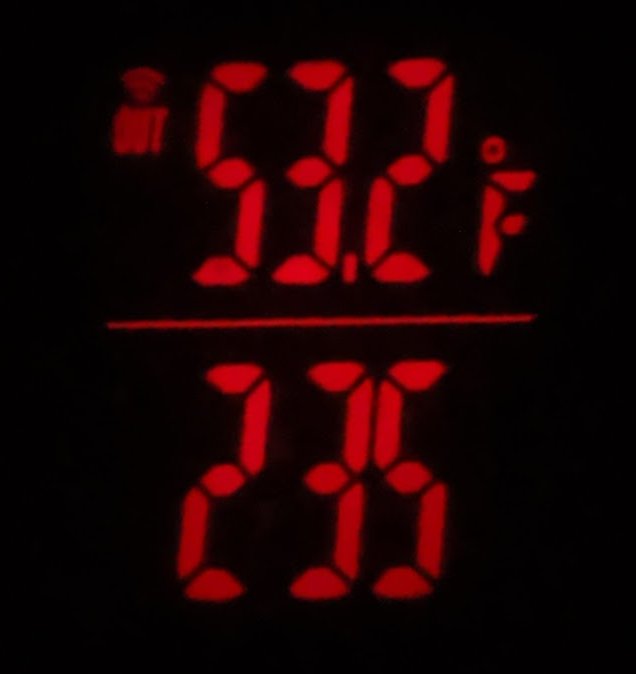
We have a clock from Brookstone (I’ve had it for literally ages) that projects the time and outside temperature on the ceiling when it’s dark, and also functions as a barometer.

Unordered Strait: Numberwang!

At first glance, this looks completely random – but notice that it uses all the numbers from 1 to 6 – what I call an unordered strait. And that’s Numberwang! Points if you see it and call it out and wake up your partner. More points if you can get a picture of it (because, naturally, pix or it didn’t happen).

Random numbers don’t count for anything, but the minutes tick off, and the temperature typically drops .1 or .2 degrees at a time as the night goes on, so depending on the season of the year, all sorts of combinations are possible.

In my own schema, some configurations are worth more than others:

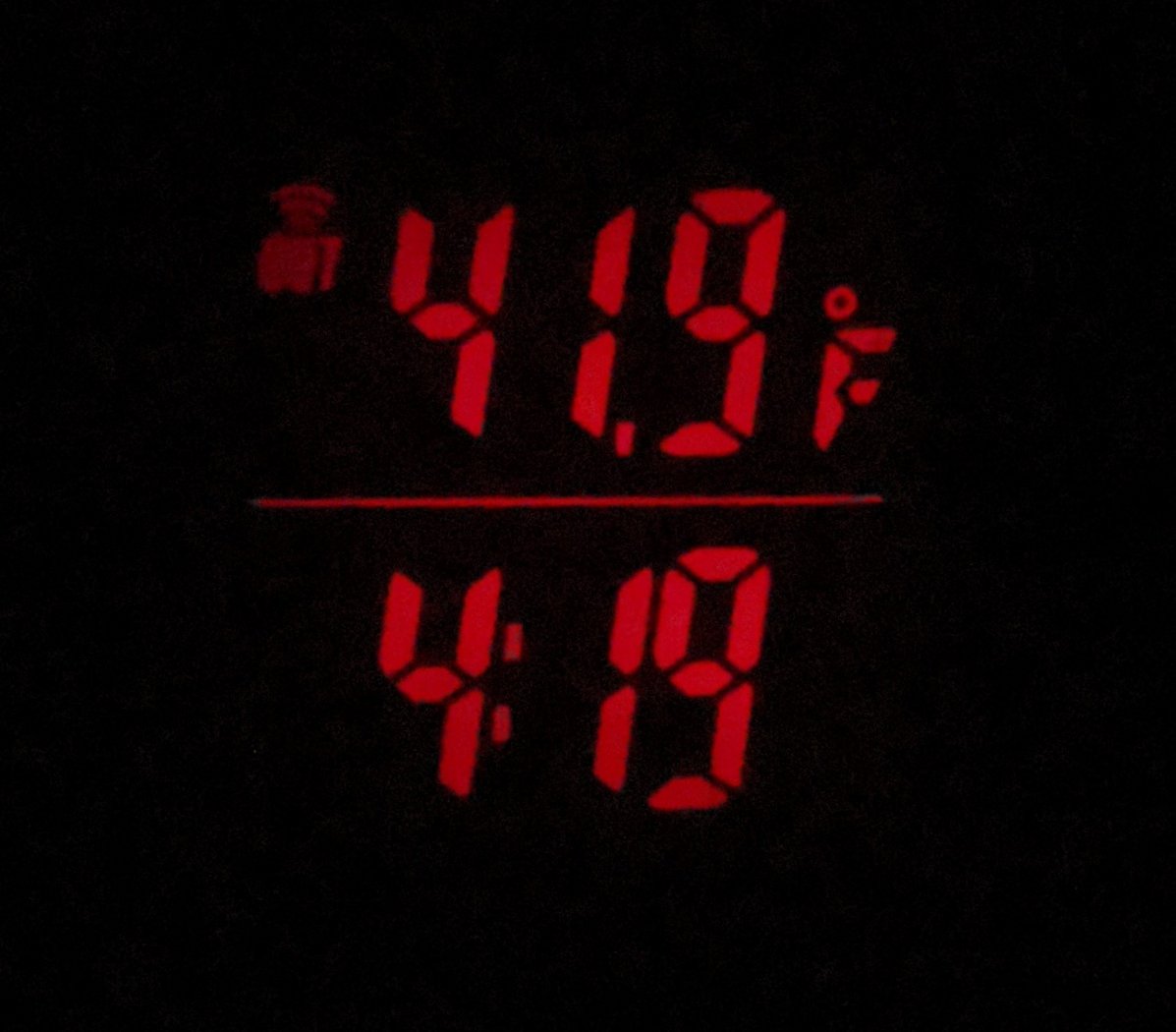
That’s a match. Numberwang!

As you lie there at night with the hamsters running on the wheels in your head, as you remember all the embarrassing things that happened to you in eighth grade, you can often spot one of these coming up. Of course, if there’s five minutes to go before Numberwang! it’s entirely possible that the temperature will move by a tenth or two, and then you’ve lost until the next combination comes around.

Numberwang!
Numberwang!
Numberwang!
Numberwang!
Numberwang!
Numberwang!

Matches are good, and I’ve seen a lot more than I’ve been able to capture. They’re pretty high on the list of scores. But there are some others that are fun to find as well.

This is what I call a “jagged strait.” (This one is simulated)

When the numbers run in sequence, but sort of zig-zag up and down.

Palindromes are fun to catch.
Numberwang!

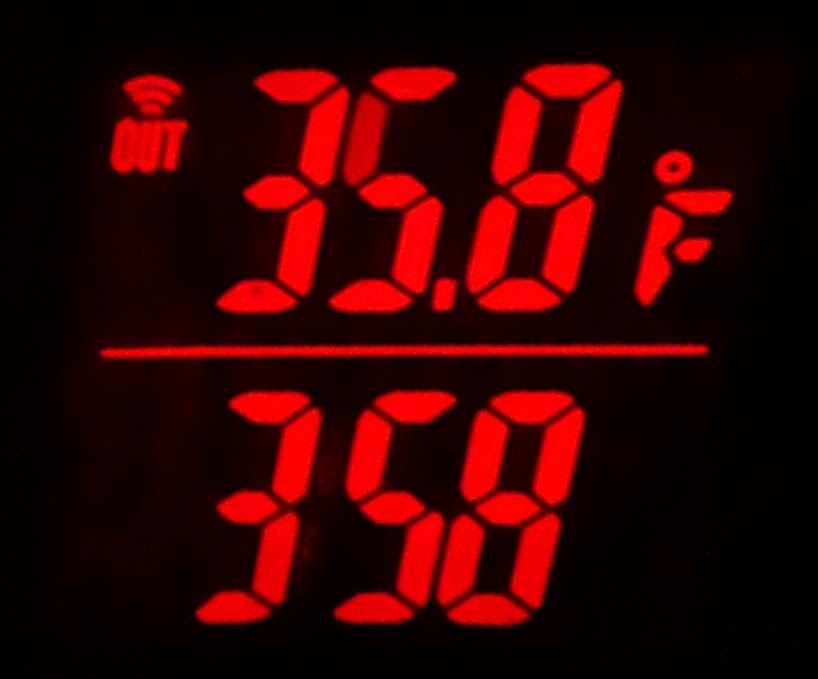
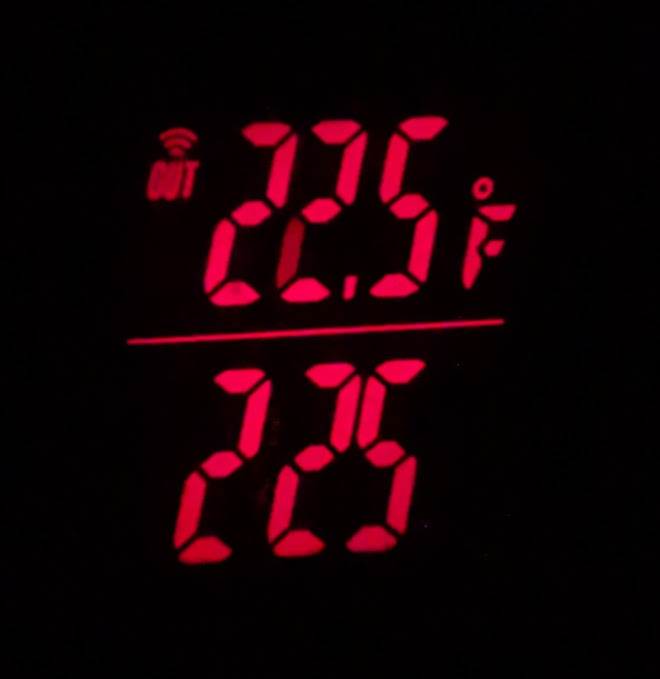
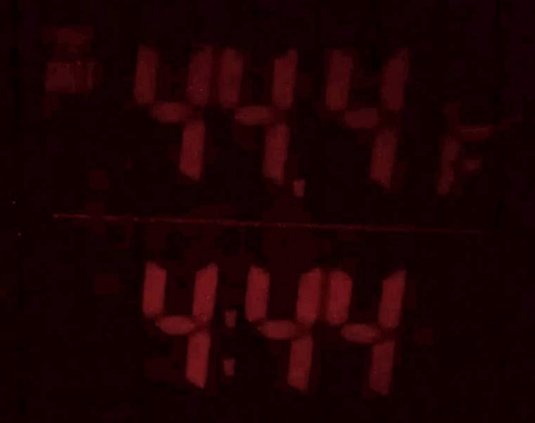
But the ones that are the hardest of all are what I call the bonanzas. I’ve only caught two of them in 11 years, and you can imagine why they are so difficult – the confluence is very rare, and you have to be awake at just the right time.

Bonanza 3’s
Bonanza 4’s

Strangely enough, I caught these two within a week of each other, after playing this silly game for about 5 years. And I haven’t been able to get another one since.

Here are some of the ones I hope to get as time goes on (simulated images):

Bonanza 5’s

This one is hard for another reason – by the time the temperature gets into the 50’s at night, it’s going to be too light in the morning or the night to see the time on your ceiling unless you sleep in a very darkened room, which we don’t.

Bonanaza 1’s

This one is only going to happen in the winter, and it can also happen at 1:11 AM. Double your chances, but still difficult.

Bonanza 2’s.

Also cold!

Bonanza Null

Colder still! Nulls will only happen if you have your clock set to 24-hour time, which we don’t.

Ordered Strait – Numberwang!

This is a Winterwang, when it’s still dark at 5 AM – but have never yet been able to nail this one.

Numberwang also shows up in the wild – on grocery receipts and gas pumps, or car odometers. In fact, any time you happen to notice an interesting pattern in numbers anywhere, it’s Numberwang! and you can award yourself as many points as you want… before you rotate the board!

The Old Wolf has spoken.


Wang tax:

Pedal to the Metal, and other expressions for speed

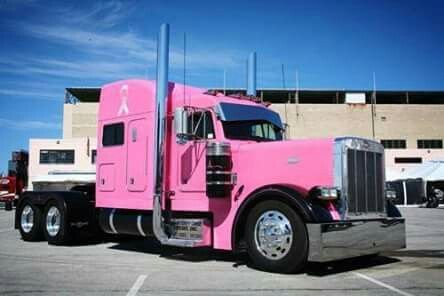
Pedal to the Metal

I’m drivin’ a truck
Drivin’ a big ol’ truck
Pedal to the metal, hope I don’t run out of luck
Rollin’ down the highway until the break of dawn
Drivin’ a truck with my high heels on

Weird Al Yankovic, “Truck Driving Song”

The origin of this phrase is pretty irrelevant because it’s so obvious – you’ve got your accelerator pedal pressed down as far as it will go, all the way to the firewall.

Put the Hammer Down

This is essentially equivalent to “pedal to the metal.” It also appears in Weird Al’s lovely tribute to truckers:

My diesel rig is northward bound
It’s time to put that hammer down
Just watchin’ as the miles go flyin’ by
I’m ridin’ 20-tons of steel
But it’s sure hard to hold the wheel
While I’m still waiting for my nails to dry

Weird Al Yankovic, “Truck Driving Song”

Other expressions for speed are not as straightforward.

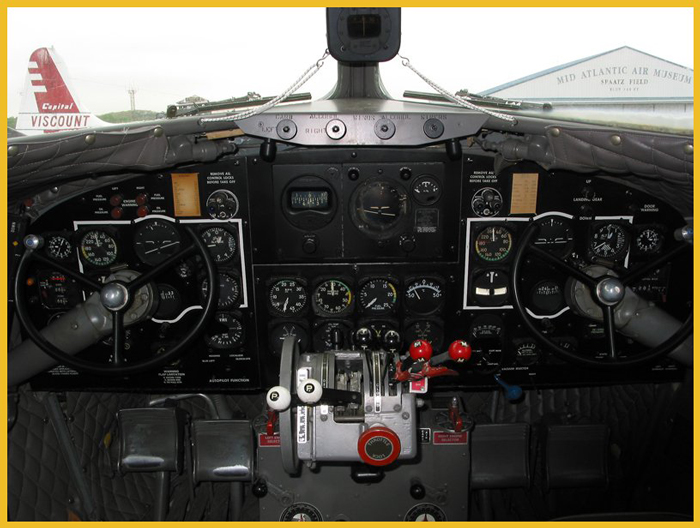
Balls to the Wall

Despite how you might be tempted to sexualize this phrase, it has nothing to do with enthusiastic reproduction. It’s an aviation term, originating at least from the ’60s and probably much earlier.

Notice the throttles with their round handles; when you have the need for speed, push those babies all the way to the control panel. Now one thing I learned when I was taking flying lessons in Key West in 1972 is that typically you shove those throttles forward when you want to go up; if you want to go faster, you point your nose down to reduce drag. That may seem counter-intuitive, but you get used to it. And you learn to juggle the two in such a way that you can put the plane where you want it to go, and at the speed you want at the same time.

Balls Out

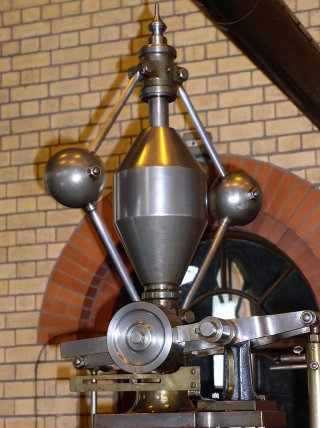
Again, nothing to do with Harambe. Oh wait, that’s another expression. Well, still – this one is the steam engine version of “balls to the wall.” Old trains and industrial steam engines were equipped with centrifugal governors to regulate the speed of the device being controlled.

Those balls would spin around, and the faster they went, the farther out they would go because of centrifugal (or centripital, I dunno, dammit Jim I’m a linguist not an engineer) force, pulling a linkage to adjust the amount of steam being sent to the prime mover. So when the engine was going as fast as it could, those governor balls would be out as far as they could go, hence “balls out.”

Both Ears Down

This is an oldie but a goodie. If you’re not of a certain age, or an antique automobile enthusiast, you probably won’t be able to make heads or tails of this one.

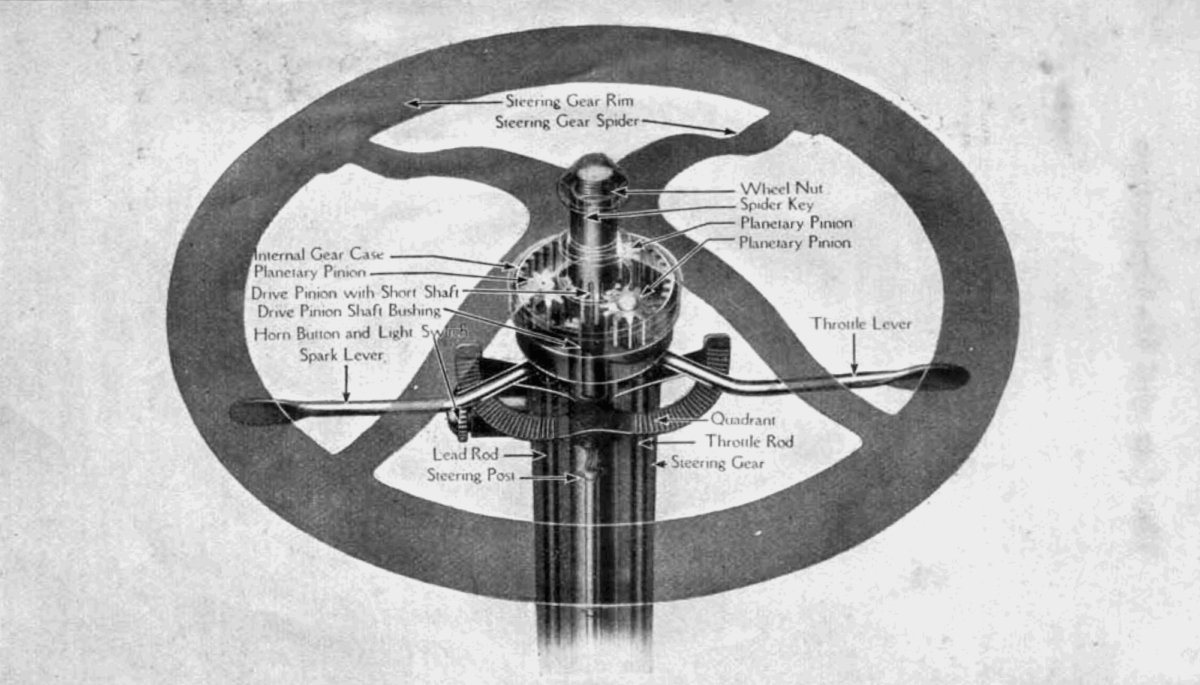
The steering column of a Ford Model-T had two levers, one on either side.

Frontenac Auto Company

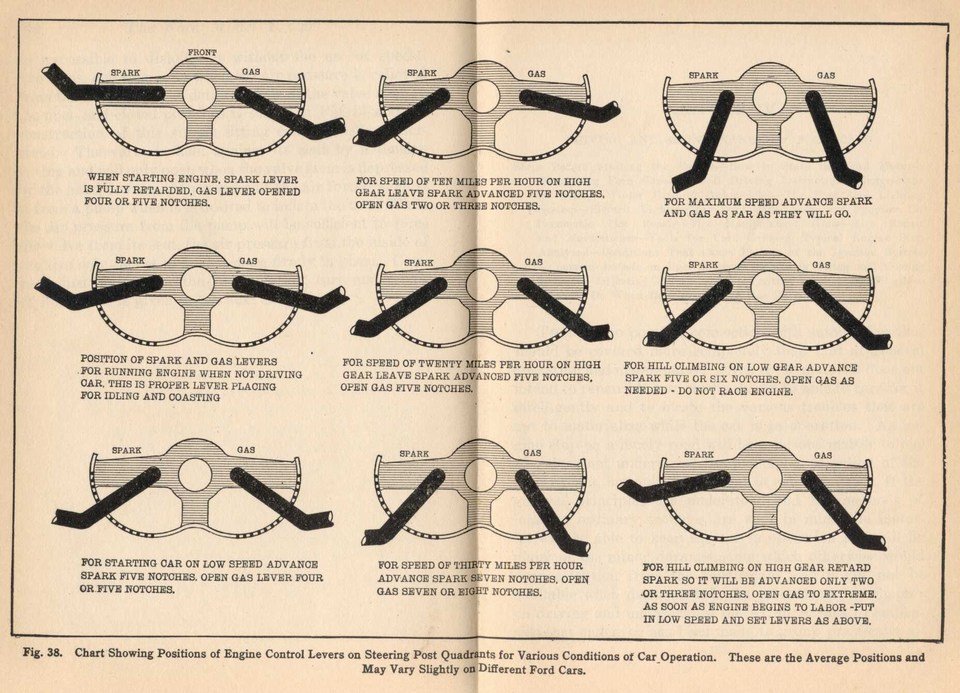
The one on the left adjusted the spark, and the one on the right was the throttle. In other words, the one on the right was your “gas pedal,” and the one on the left manually adjusted the timing of the spark (this was in a day before the self-adjusting distributor was invented.)

So the faster you went, the more you had to advance the spark to avoid engine knock, meaning both levers were gradually pulled downward as speed increased. Exactly how this was done is shown in the following schematic:

Notice that for maximum speed, (upper right-hand corner) both levers were down as far as they could go. Hence, “both ears down” came to mean pushing your brand-new Model-T to the max.

Rattle your dags

This one is exclusively Australian. Dags are matted clumps of wool and dung that hang off a sheep’s rear end… huge dingleberries, if you will. When a daggy sheep gets to running, those undulating gems make a rattling sound. Dag is descended from the British Daglock which was a dialect term borrowed into Australian English in the 1870’s. It essentially means “get a move on,” or “hurry up.”

I’m sure there are a lot of expressions out there that I don’t know, but these are some that always stuck in my mind.

The Old Wolf has spoken.¹


Footnotes

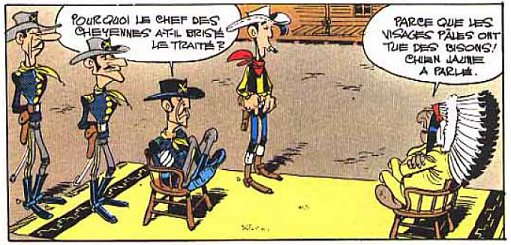
¹ Note: I’ve been saying this a lot longer than Kuiil has, but not as long as Chien Jaune.

For the Ward Clerks out there

If you happened to be a member of the Church of Jesus Christ of Latter-day Saints in the ’60s and were ever called as a Ward Clerk, or one of the assistant clerks – Historical, Financial, or Membership – you may remember the old Adler 200 typewriters.¹

Long before the advent of computers or word processors or even IBM Selectrics or Daisy-wheel typewriters, Adler was the go-to brand if you wanted a typewriter with an unusual font. I don’t know how many Adlers the Church of Jesus Christ of Latter-day Saints purchased over time, but I’d bet they kept a lot of factory workers and typewriter repair personnel in business for decades.

The LDS Adler had a specific keyboard layout, as well: you didn’t have to shift for numbers (because they were used mostly for entering financial records) and symbols were on additional keys.

The font that came with these machines was OCR-A, a font created in 1968, in the early days of computer optical character recognition, when there was a need for a font that could be recognized not only by the computers of that day, but also by humans.” (Wikipedia) It looked like this:

In the case of financial donations, members would fill out donation slips (being admonished to always write their names the same way each time):

and clerks would painstakingly transcribe these slips onto a ledger sheet on the typewriter, which was then sent by snail mail to headquarters where the records were scanned and entered into mainframe databases. Other information was also recorded using these machines, which were built like Sherman tanks, and like a Timex watch they would “take a lickin’ and keep on tickin.”

Ward clerks often served for extended periods of time; whereas service callings in the Church today generally only last a few years, back in the day it was not uncommon for a clerk to serve for decades, especially if he did a good job.

The Ward Clerk

He kept the minutes, typed each note,
And put them in the file.
The membership he knew by rote;
He labored with a smile.

The ordinations, births and deaths
He faithfully recorded
For forty years, until at last
He went to be rewarded.

The people he had known so well
Turned out to shed a tear,
And pay respect to this good man,
Gone to another sphere.

But as the choir rose to sing,
They saw with consternation
The good man from his coffin step
To count the congregation!

-Author Unknown

It is said in the navy that the Captain may command the ship, but the E-7’s (Chief petty officers) keep the show running. Much the same could be said about a ward or branch of The Church of Jesus Christ of Latter-day Saints; the Bishop or Branch President may be in charge, but the ward clerks keep the wheels greased and everything running smoothly so the leaders can focus on ministering rather than administering.

The Old Wolf has spoken.

Footnotes

¹ The typewriter photos used in this post are from typewriter hunter Jake Fisher at the Typewriter Database.