The Incredible Singing Clock

From the July, 1934 issue of Moderm Mechanix:

Singing Clock

Educated Clock Sings, Talks, and Plays the Pipe Organ

A CRIPPLED inventor of Akron, Ohio, has recently completed what he believes is the world’s most wonderful clock. The remarkable instrument gives the comparative time in 27 different cities. In addition, it sings, talks and plays a reedless pipe organ every hour.

Every day the clock commemorates the death of America’s martyrs. At the hour of Lincoln’s funeral it recites the Gettysburg address. The time of President McKinley’s burial is marked by a playing of the old hymn, “Lead, Kindly Light.” At the hour of President Garfield’s interment, the remarkable timepiece plays “Gates Ajar.”

Valued at $50,000, the educated clock was built by 70-year-old Marvin Shearer after ten years of painstaking work. The clock contains 5000 pieces of wood, a mass of electrical control wires several miles in length, and is twice the height of an ordinary man.

The inventor’s granddaughter made two comments on the original page; I have reproduced them here in slightly edited form.

There were actually TWO clocks.

Marvin Shearer was my grandfather. I have searched everywhere for one of his clocks. I did trace the “Electric Wonder” to the Hotel Lobby of the Ritz in New York City but when it was remodeled, they got rid of the clock. No one there has been there long enough to know what happened to it. If anyone ever locates one of them PLEASE e-mail me at donnaleecotter16 [at] gmail [dot] com.

Here is what I know of his works:

Marvin carved a clock that was eight feet wide and thirteen feet high. It was called the ELECTRIC WONDER. He started this clock in 1927,  and completed it in 1931. He also carved a second smaller clock, and perhaps a third.

There is an article in “The New York Times” dated April 7, 1909, about a “Wonderful Clock Made by Cripple”.

Another article I found was in The “Omaha World Herald” dated November 15, 1903, titled, “Queer Clock That Tells Many Things an Ohio Man Works on for Three and a Half Years”.

The Electric Wonder

This exhibit took 15 months to design. It contains 7172 pieces of wood from 32 different countries, from all parts of the world.

It has nearly 1½ miles of electric wire, 17 clock dials, and gives time in all parts of the world.

It shows important events of United States History from 1492 to 1934.

Our Navy of 47 ships pass by according to their classification.

It tells the weather conditions 24 hours in advance. It plays a reedless pipe organ, the only one of its kind in the world.

It shows and gives the Funeral Marches of our assassinated Presidents.

It shows the goddess of Liberty or eternal light in memory of American soldiers who lost their lives while in service for their country. It has chimes, harps, electrical cascade, electrical railway, an airship and a dirigible. Also, Indian history and arrowheads of the lone Indians from the battlefield of Custer’s Last Fight.

The Electric Wonder is 13 feet high, weighs 3800 lbs. has 168 electric lights and took 19,000 hours or nearly 7 years to build.

It has been endorsed by leading electricians and engineers of today. It is a merit to its maker as well as mankind.

I repeat the plea of the inventor’s granddaughter – if anyone has any clue as to the ultimate fate of this or other of Shearer’s works, please contact her. This is an astonishing achievement.

The Old Wolf has spoken.
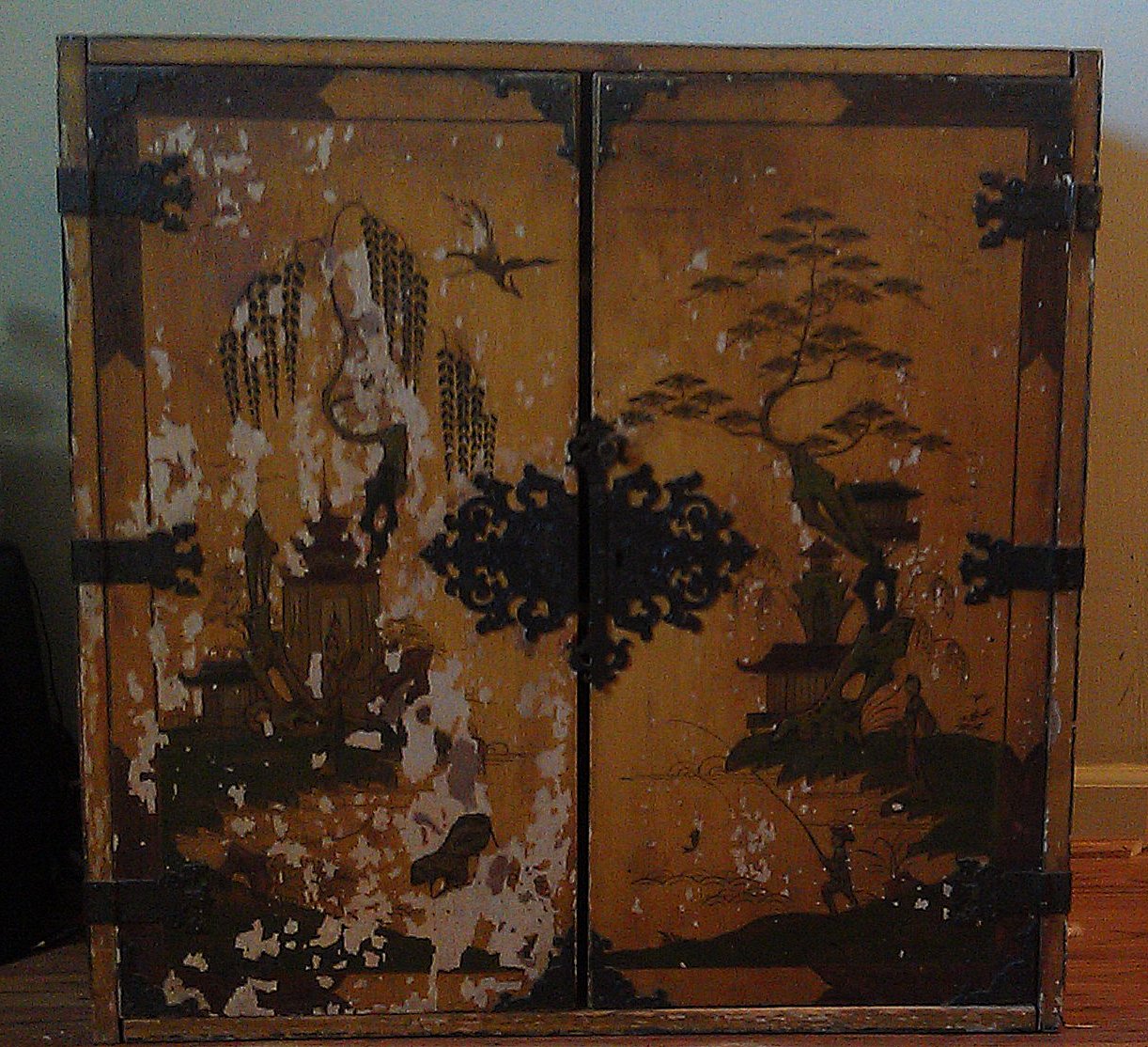
Anyone know furniture?

Anyone know furniture? This old laquered cabinet served as my mom’s bar for decades. The laquer is now chipping away – the left side looks a lot like the front – but I have no idea if it’s salvageable, or worth restoring – or should just be repaired, sanded, stained, and used as a functional antique. Input welcome!

Cabinet1

Cabinet2

The Century Chest

Here there be treasure.

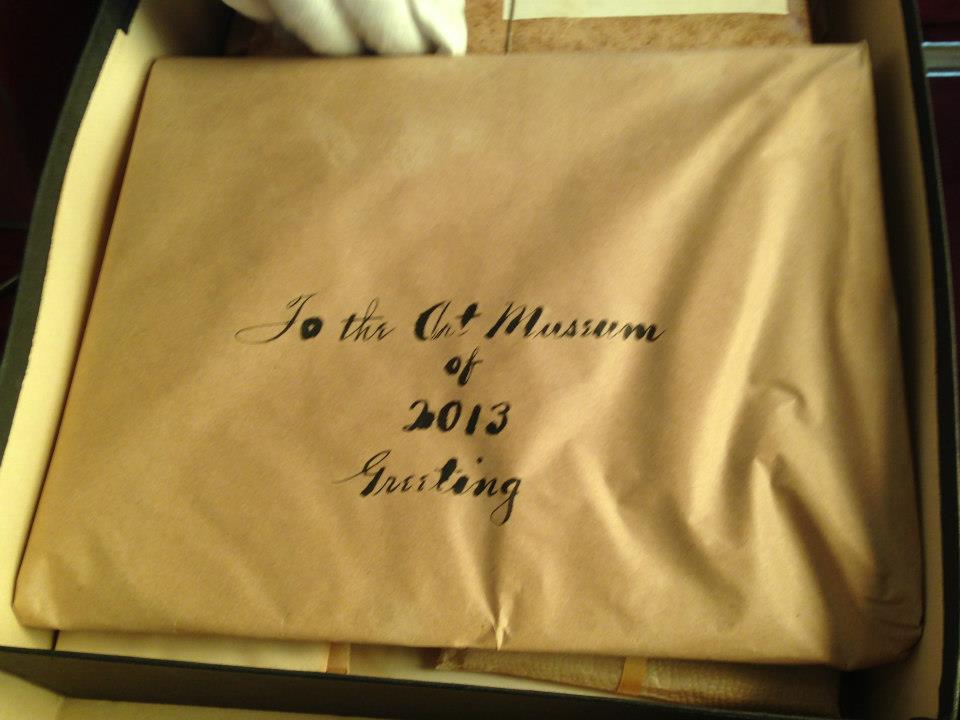
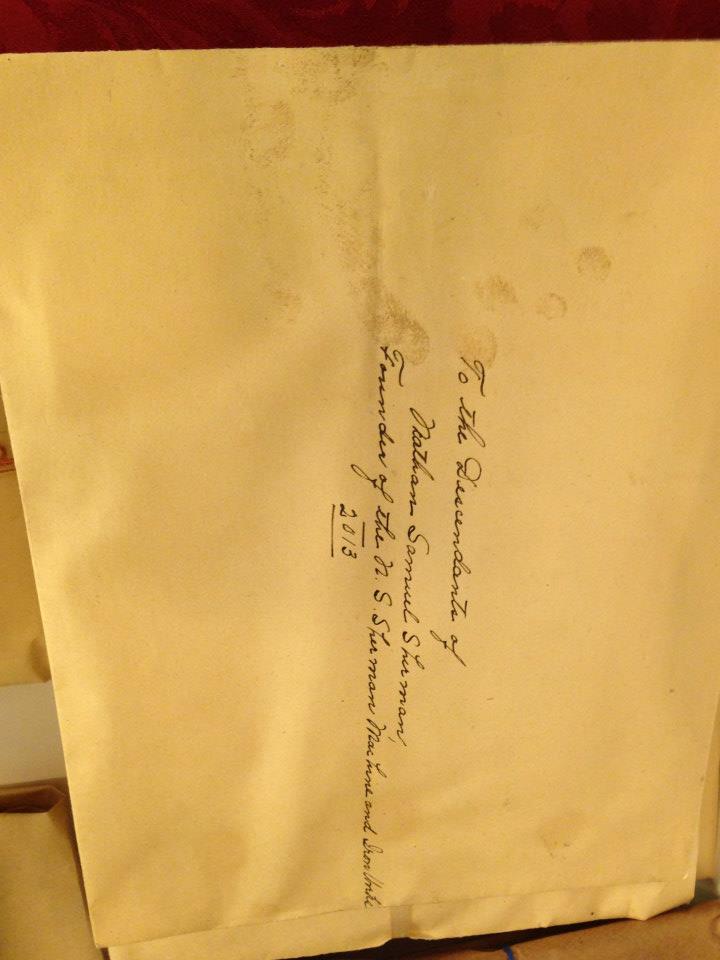
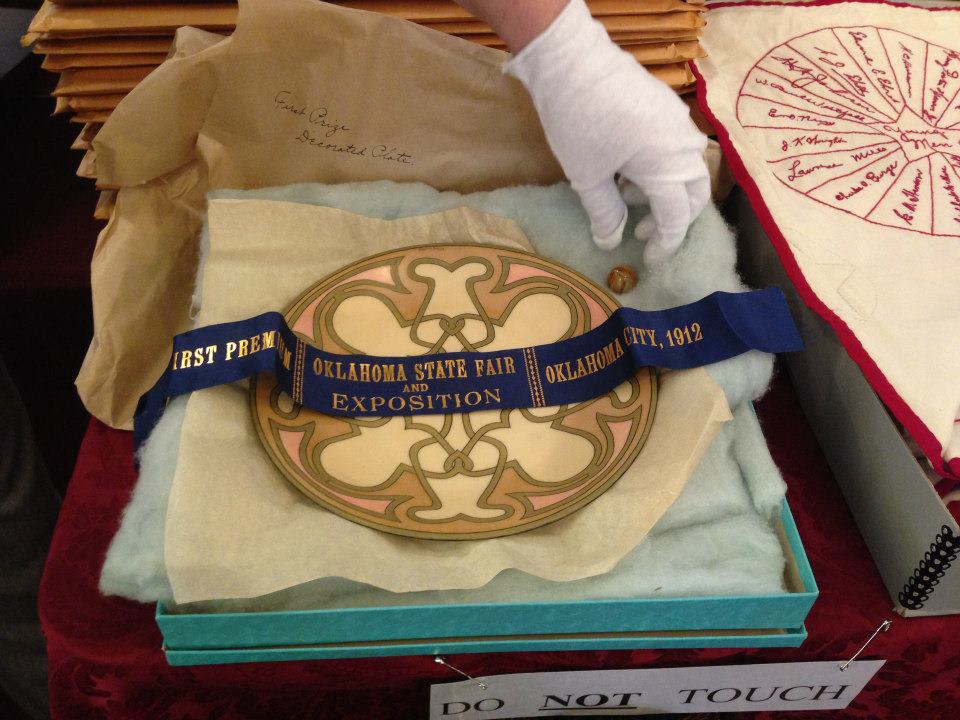
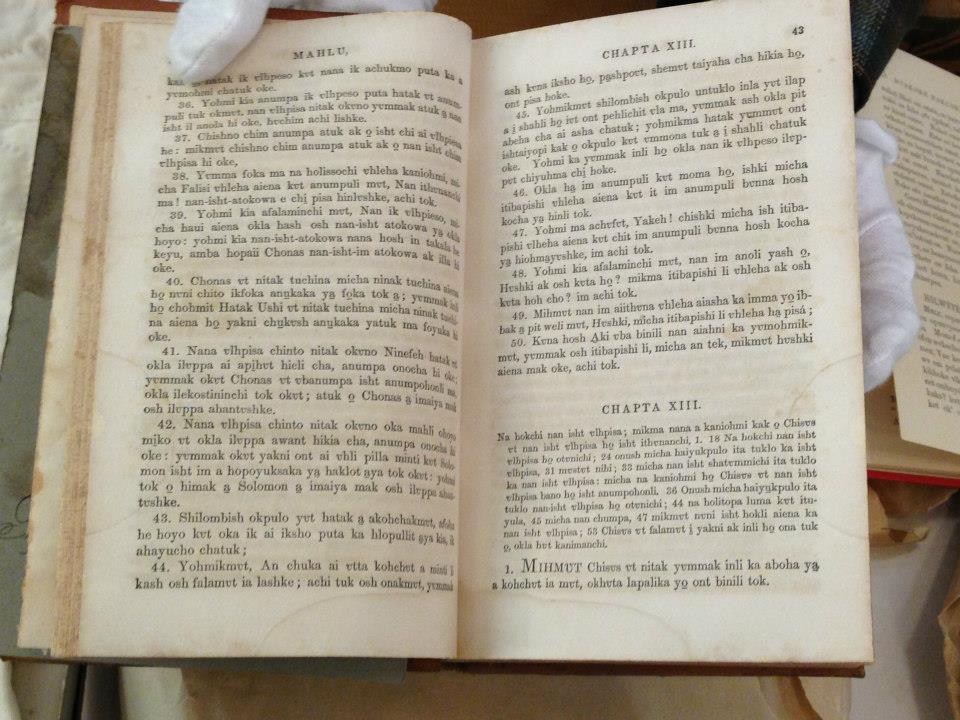
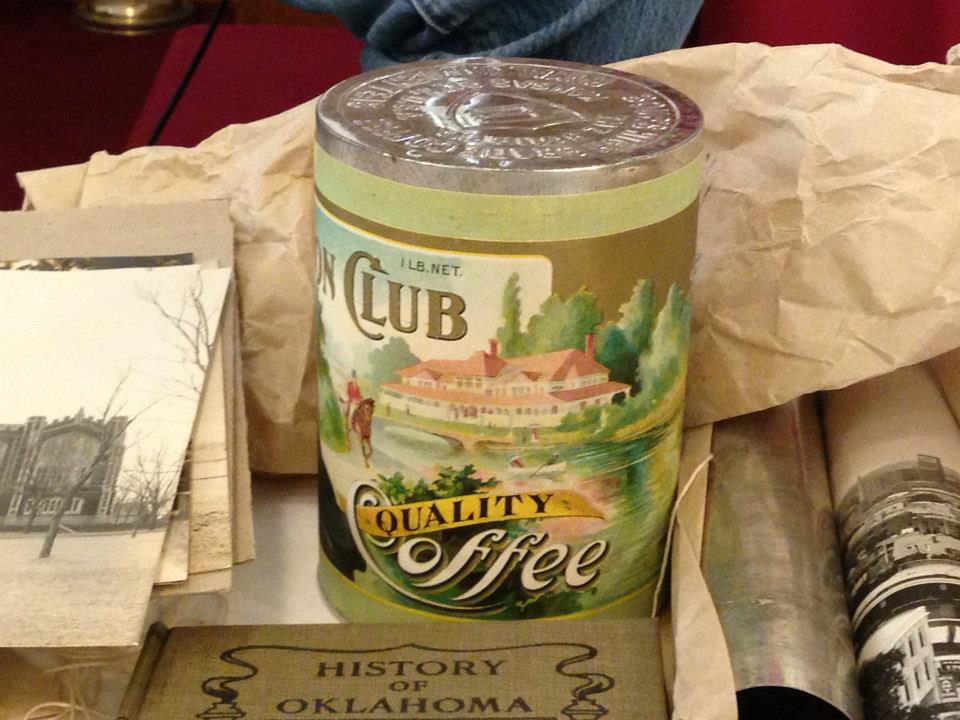
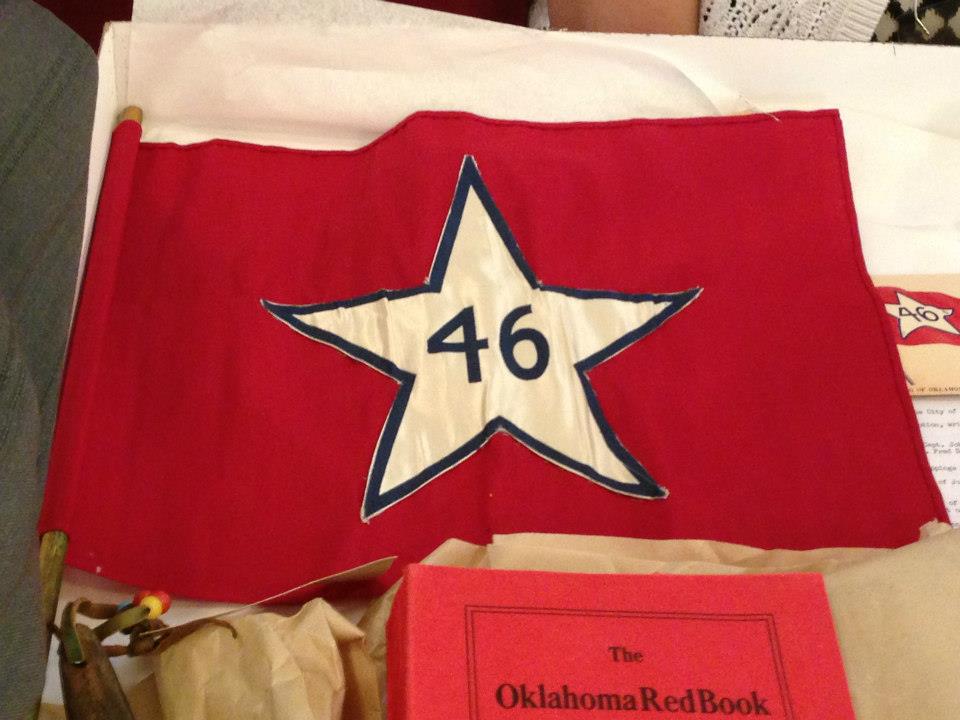
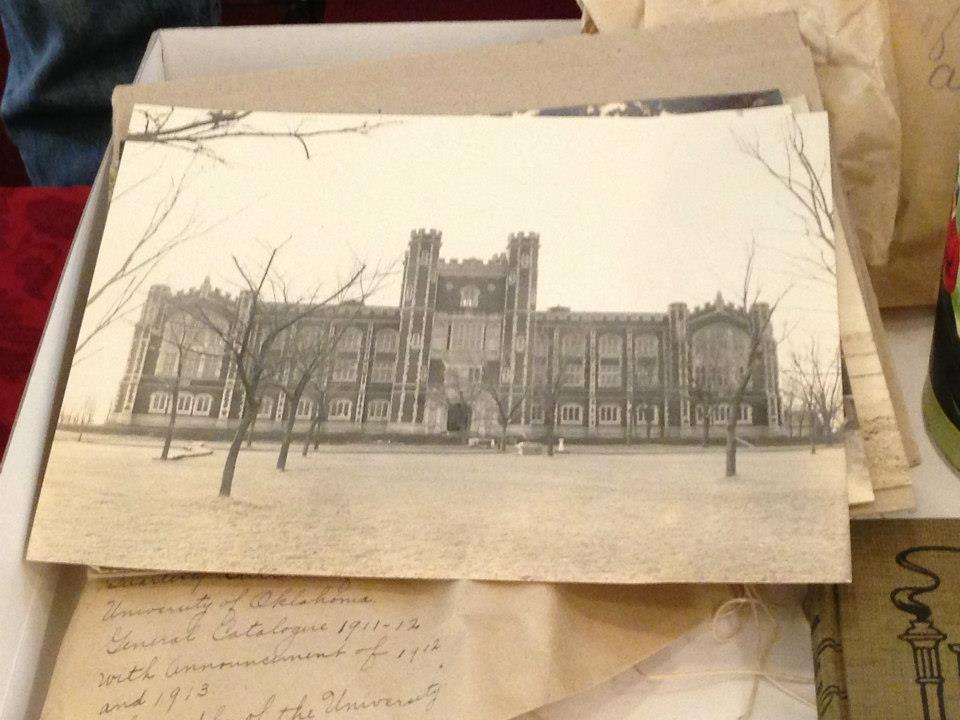
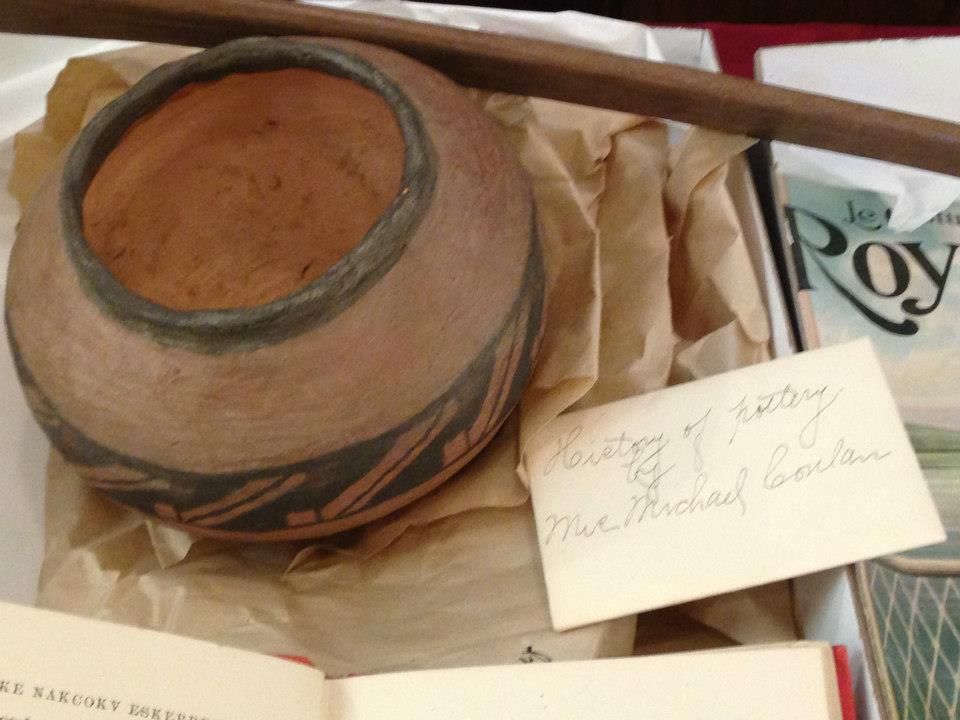
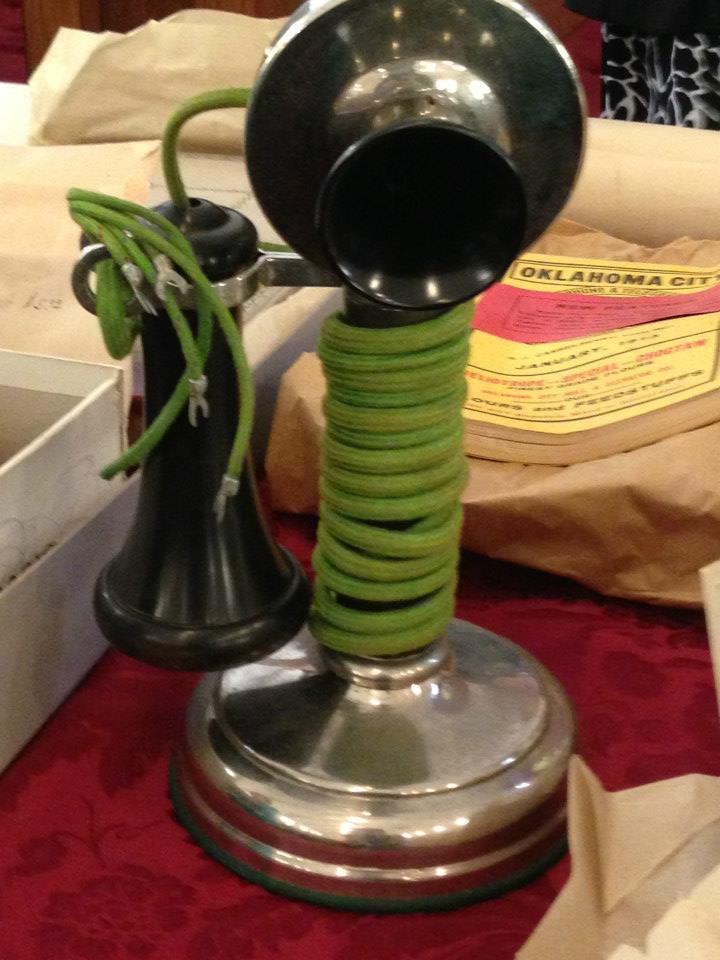
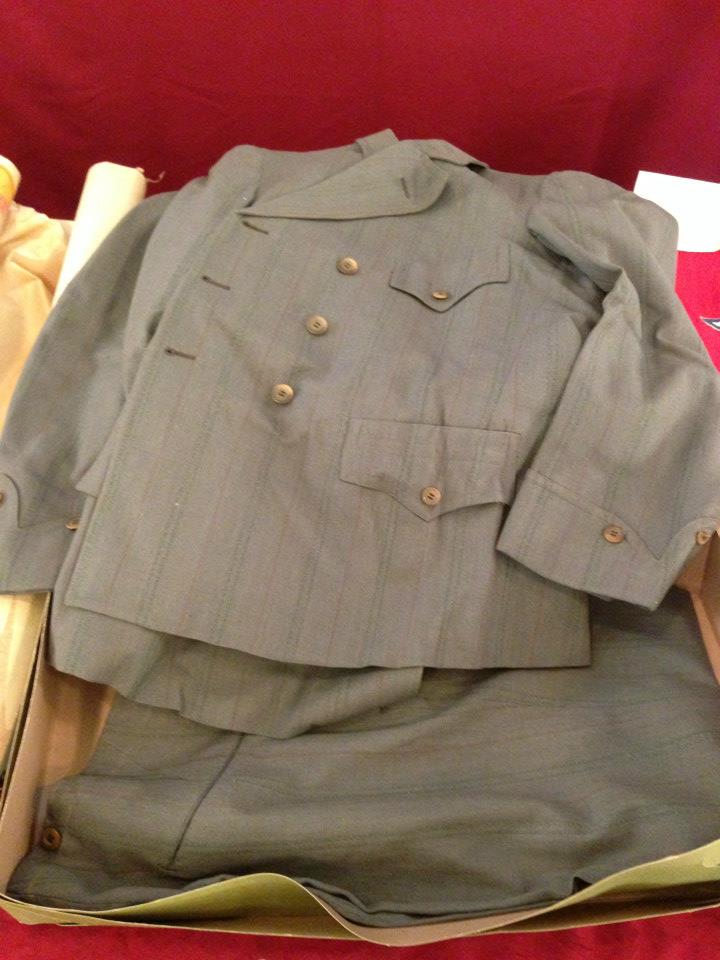
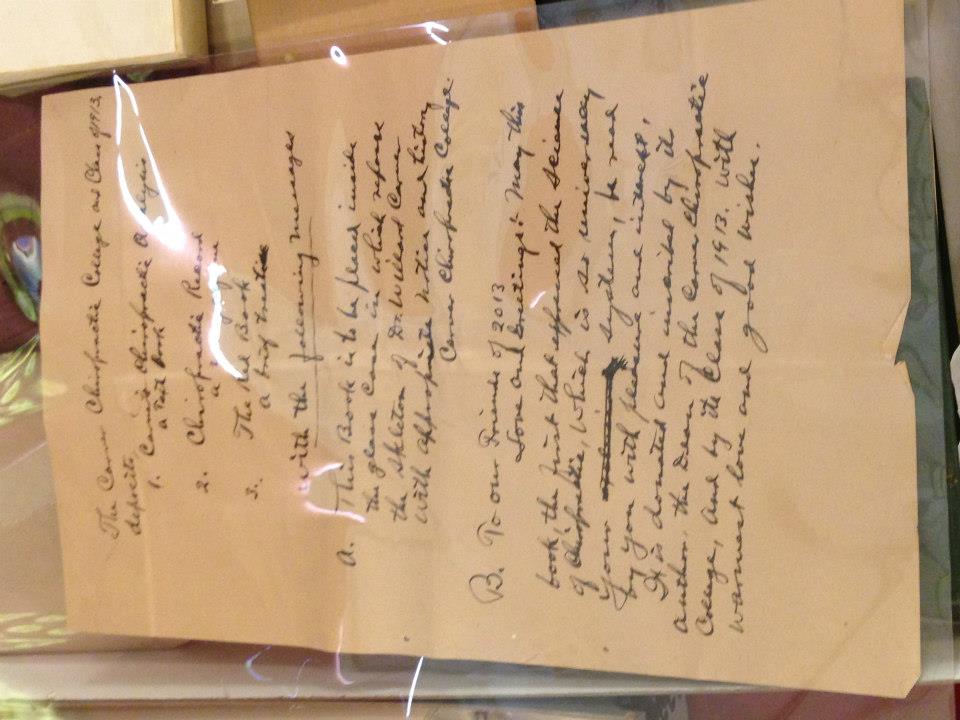
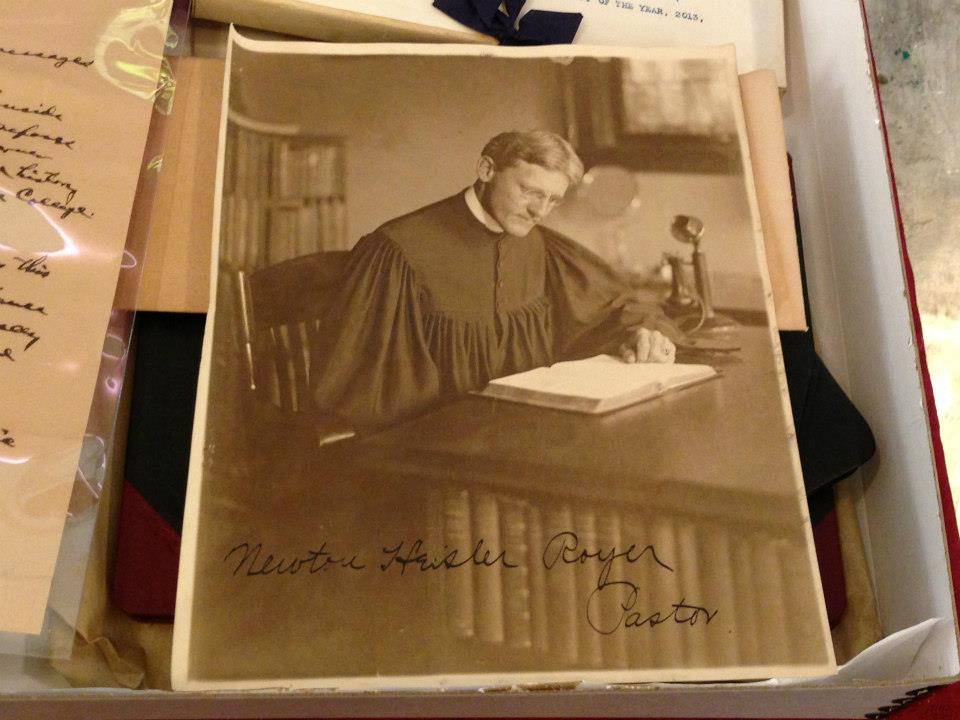
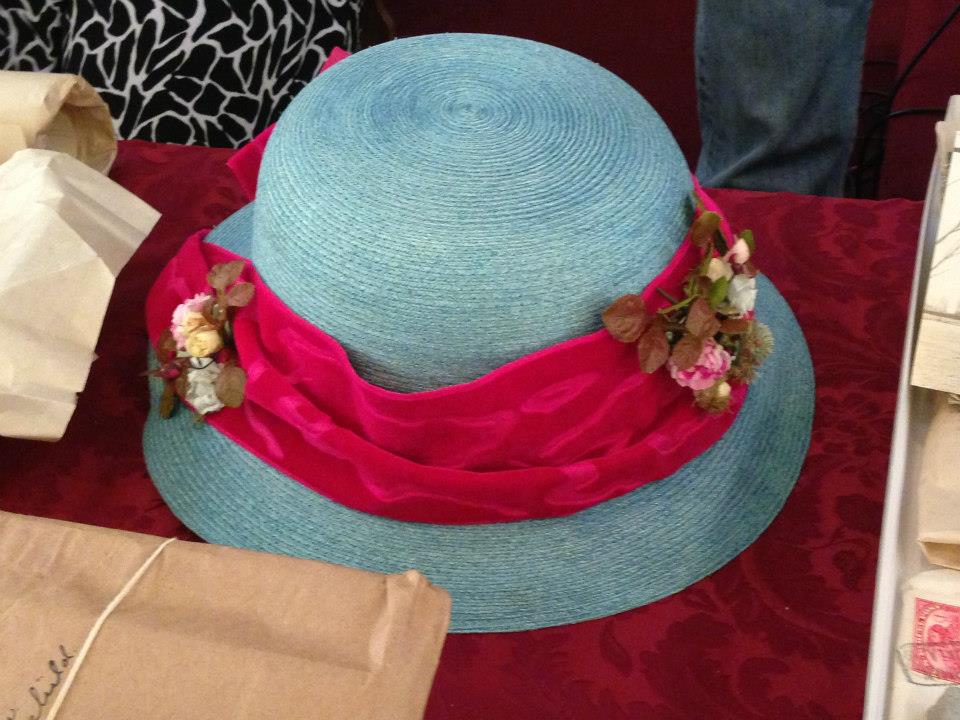
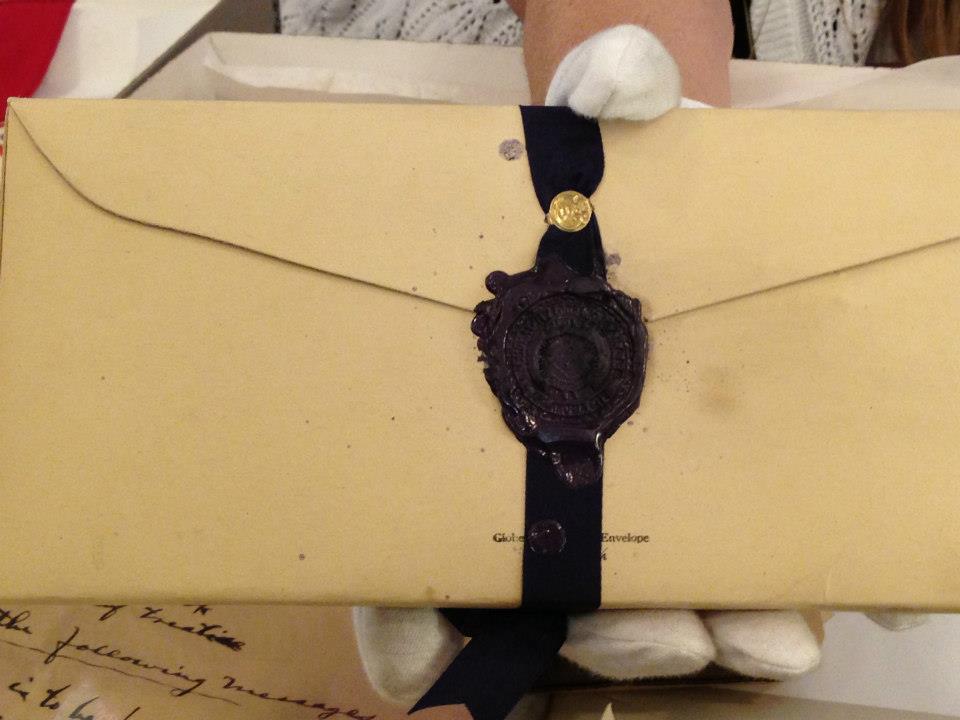
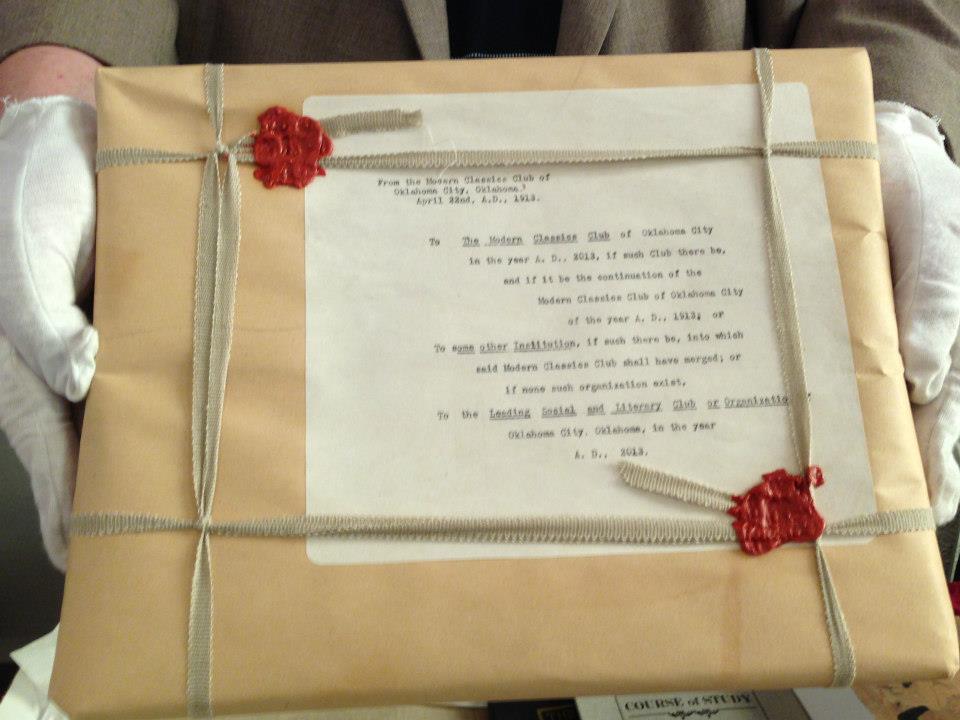
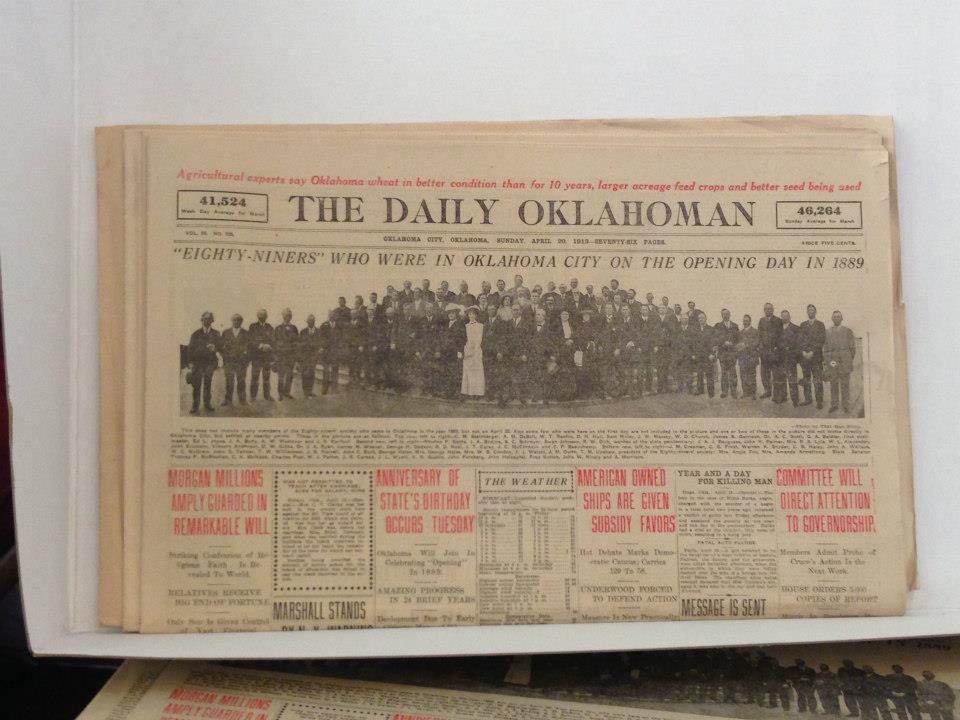
“On April 22, 1913, a “Century Chest” was buried in the basement of the First English Lutheran Church (now the First Lutheran Church of Oklahoma City) at 1300 North Robinson. The ceremony was witnessed by a capacity crowd including Governor Lee Cruce and other notable Oklahoma residents.

Through a century of dutiful vigilance the congregation of the First Lutheran Church has guarded the Century Chest in order that on April 22, 2013, the chest would be unearthed and the past would come alive. The church has partnered with the Oklahoma Historical Society to ensure the treasures of 1913 are preserved and exhibited at the Oklahoma History Center.” (From Oklahoma History)

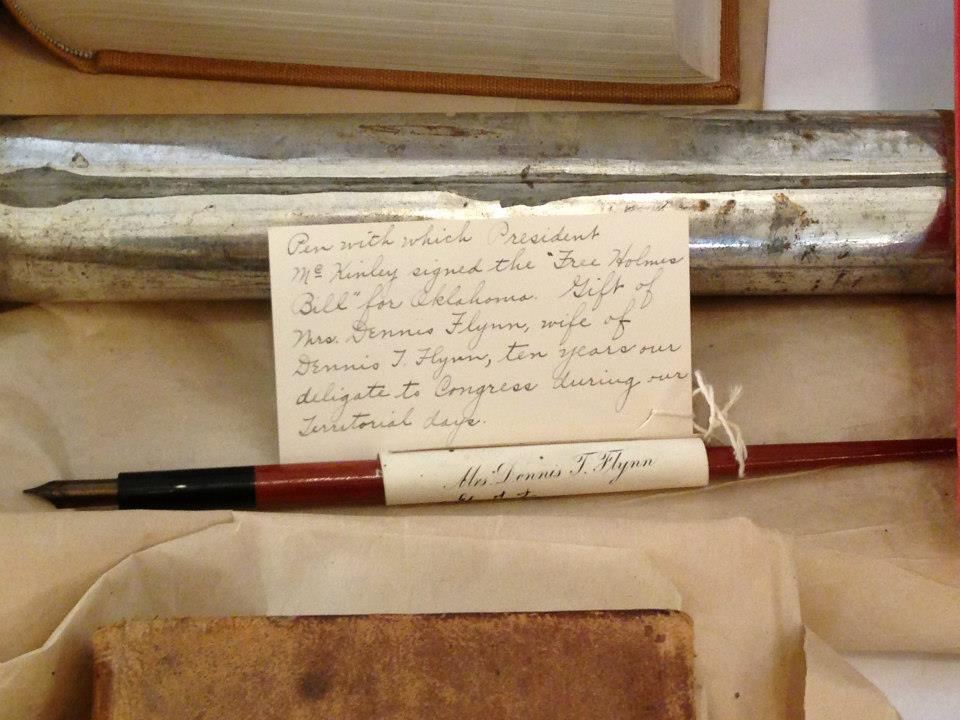
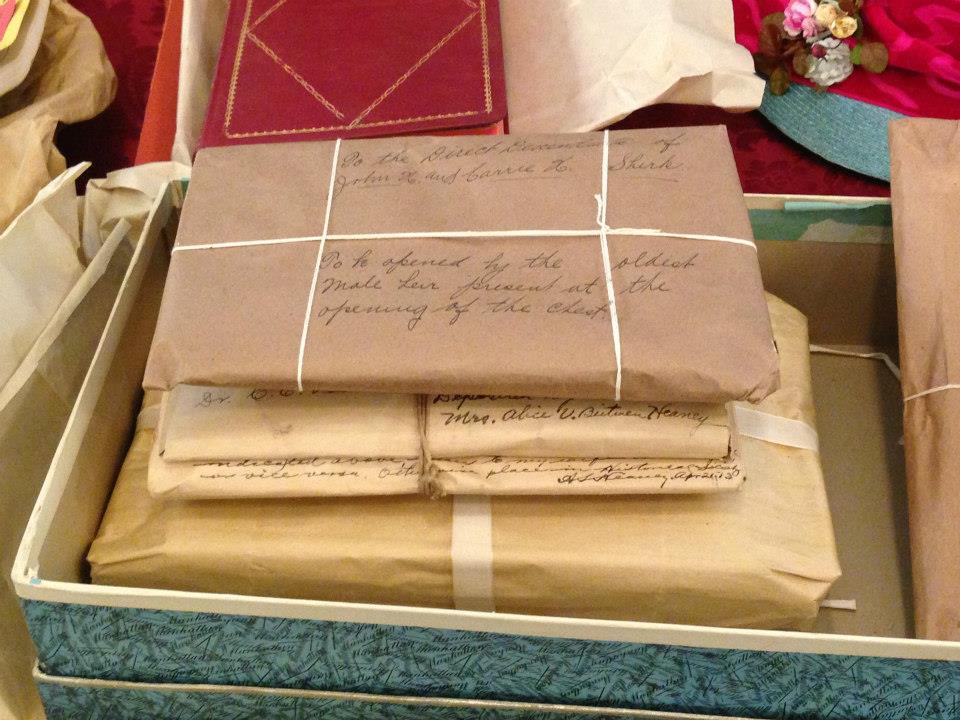
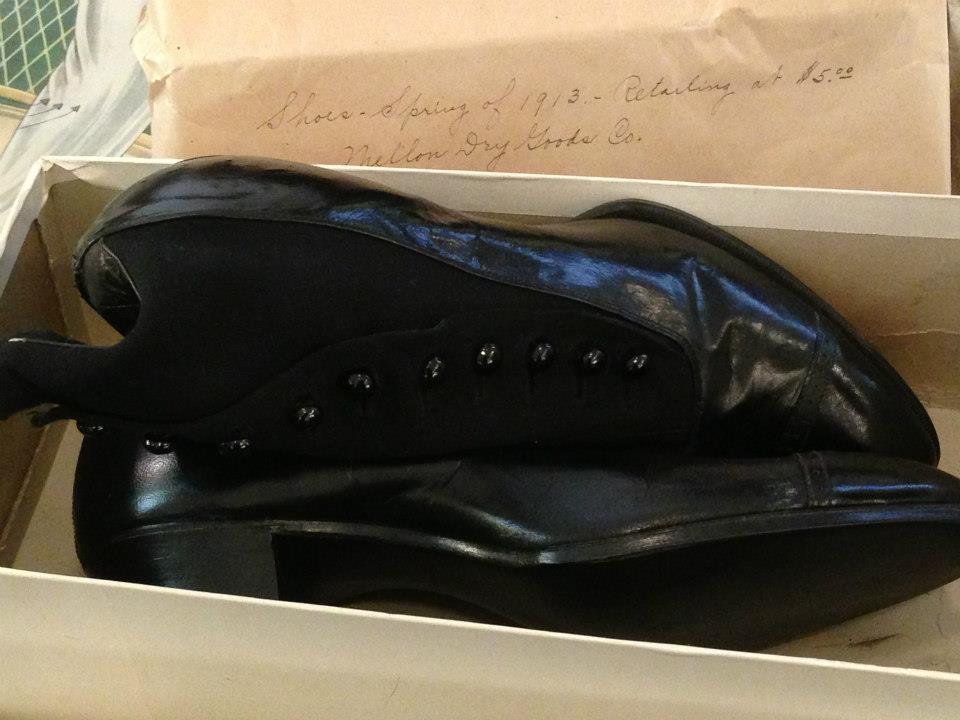
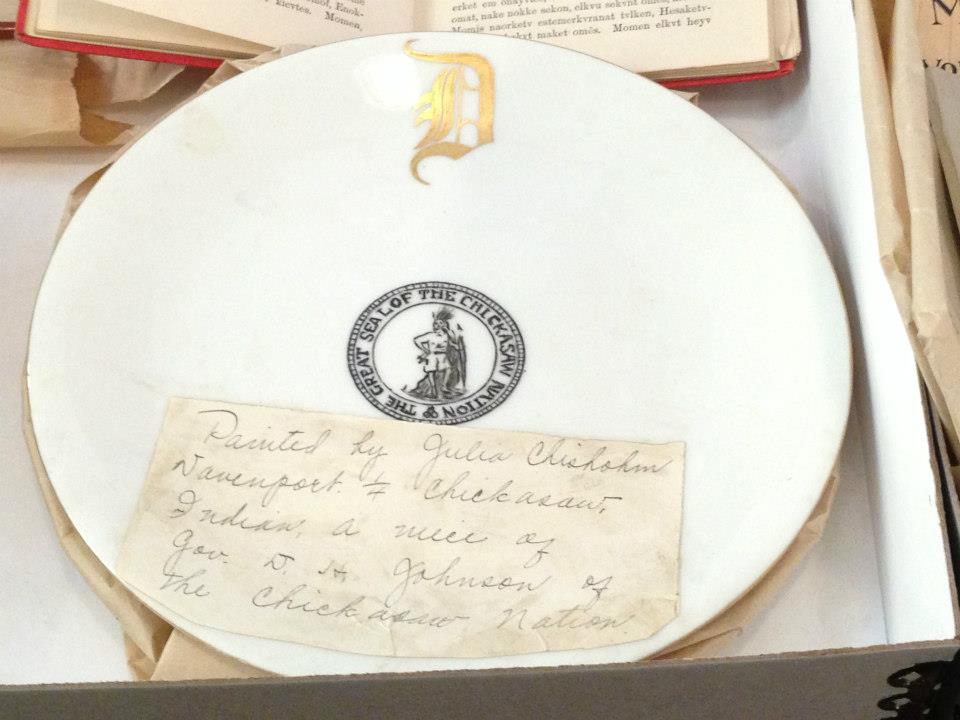
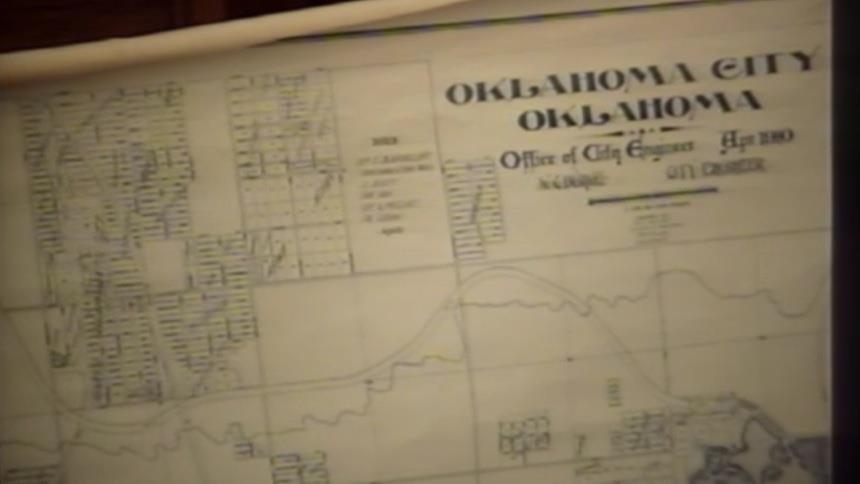
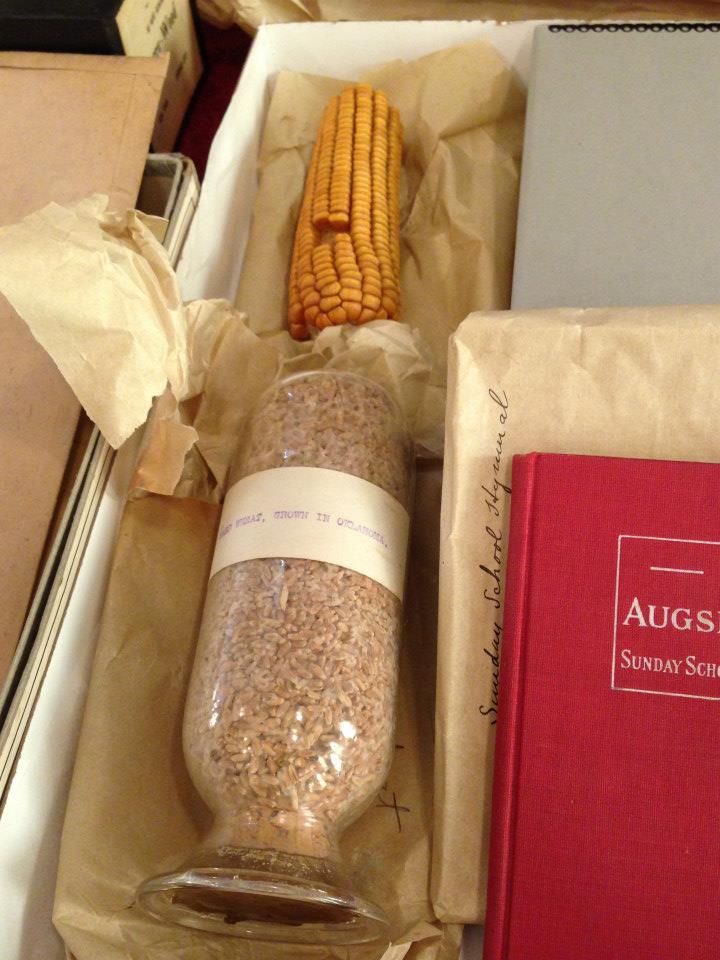
Some of the beautiful and well-preserved items found:

Photo1


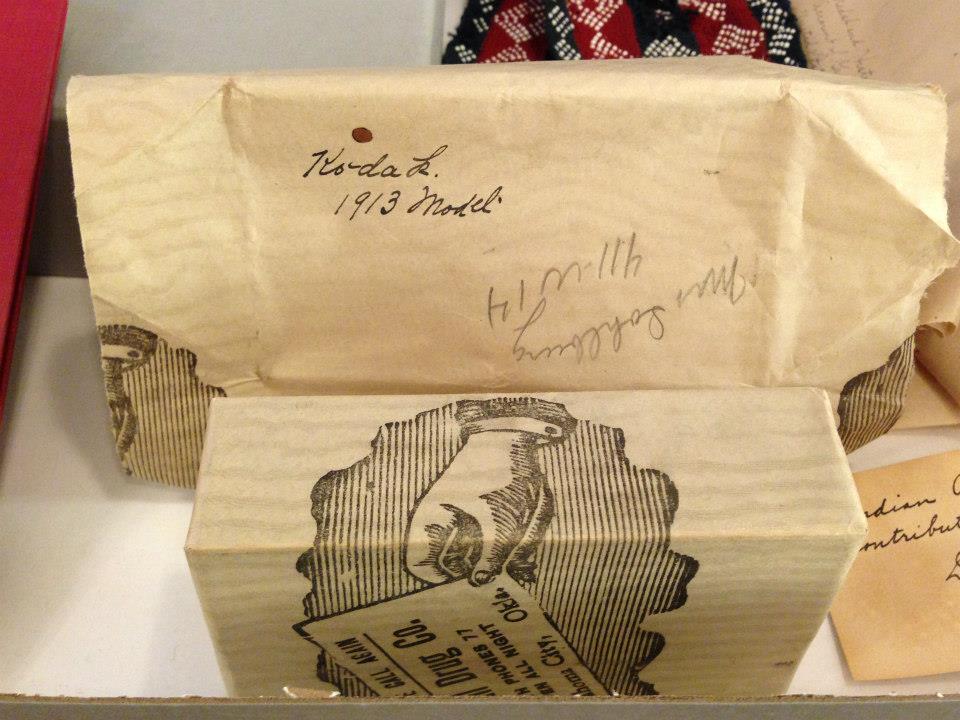
Kodak camera


Photo2


Photo3


Photo4

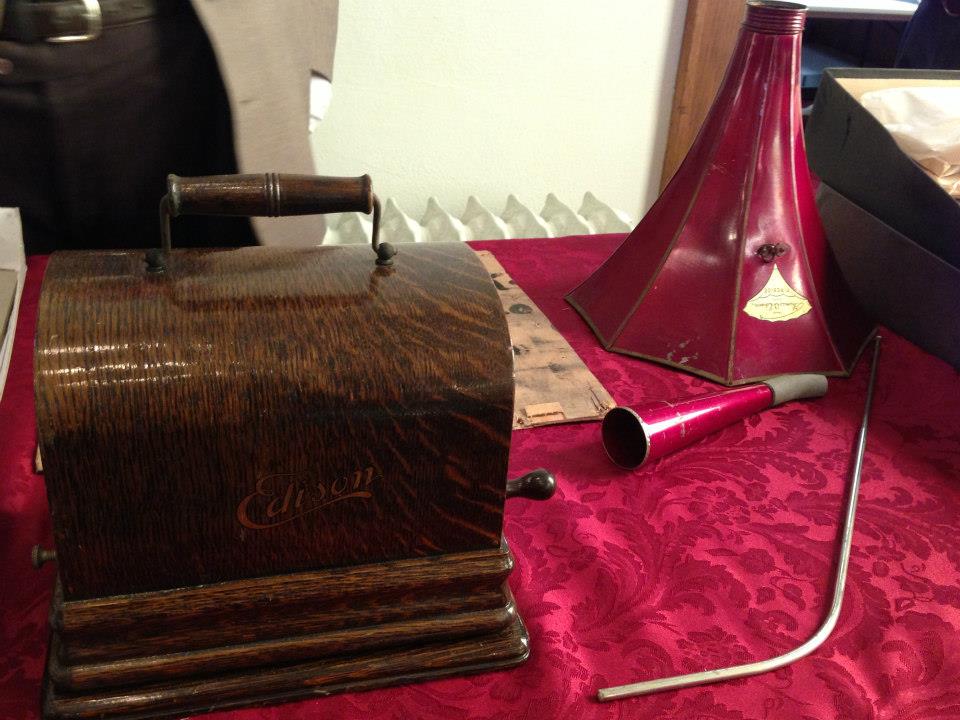
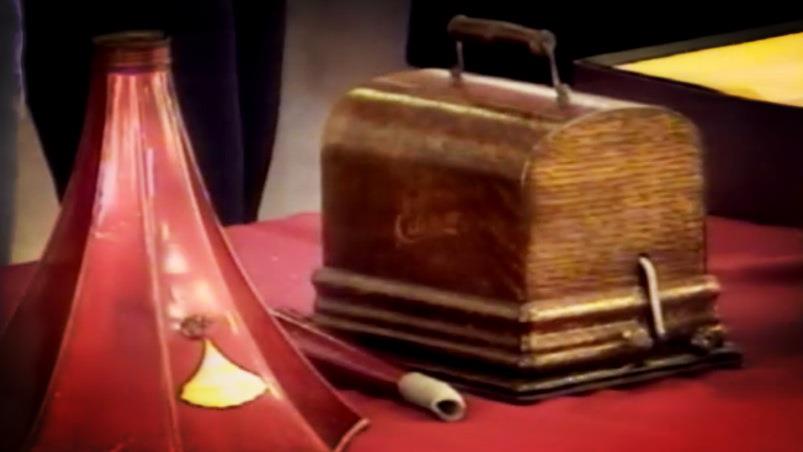
Graphophone

Photo5


Wax cylinders for graphophone


Photo6


Photo7


Photo8


Photo9


Photo10


Photo11


Photo12


Photo13


Photo14


Photo15
Photo16


Photo17


Photo18


Photo19


Photo20


Photo21


Photo22


Photo23


Photo24


Photo25


Photo26


Photo27


Photo28


Photo29


Photo30


Photo31


Photo32


What a wonderful glimpse into the world of 100 years ago. Many other items were included, and will be preserved and curated by the state.

The Old Wolf has spoken.
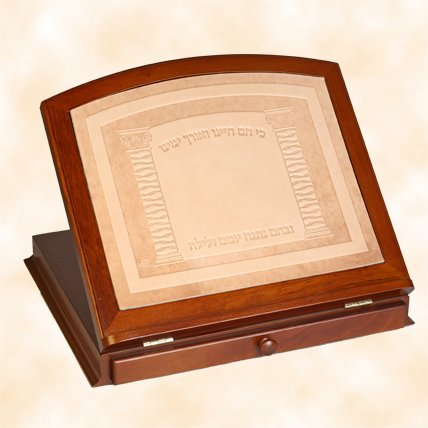
The Etz Hayyim (Tree of Life) Shtender

I recently posted about the “Hidden Synagogue.” This post has been immensely popular, given the beauty and uniqueness of the artwork it showcases.  Thanks to reader Stephen Levinson who left me a comment at that entry, I have another wondrous thing to share with you.

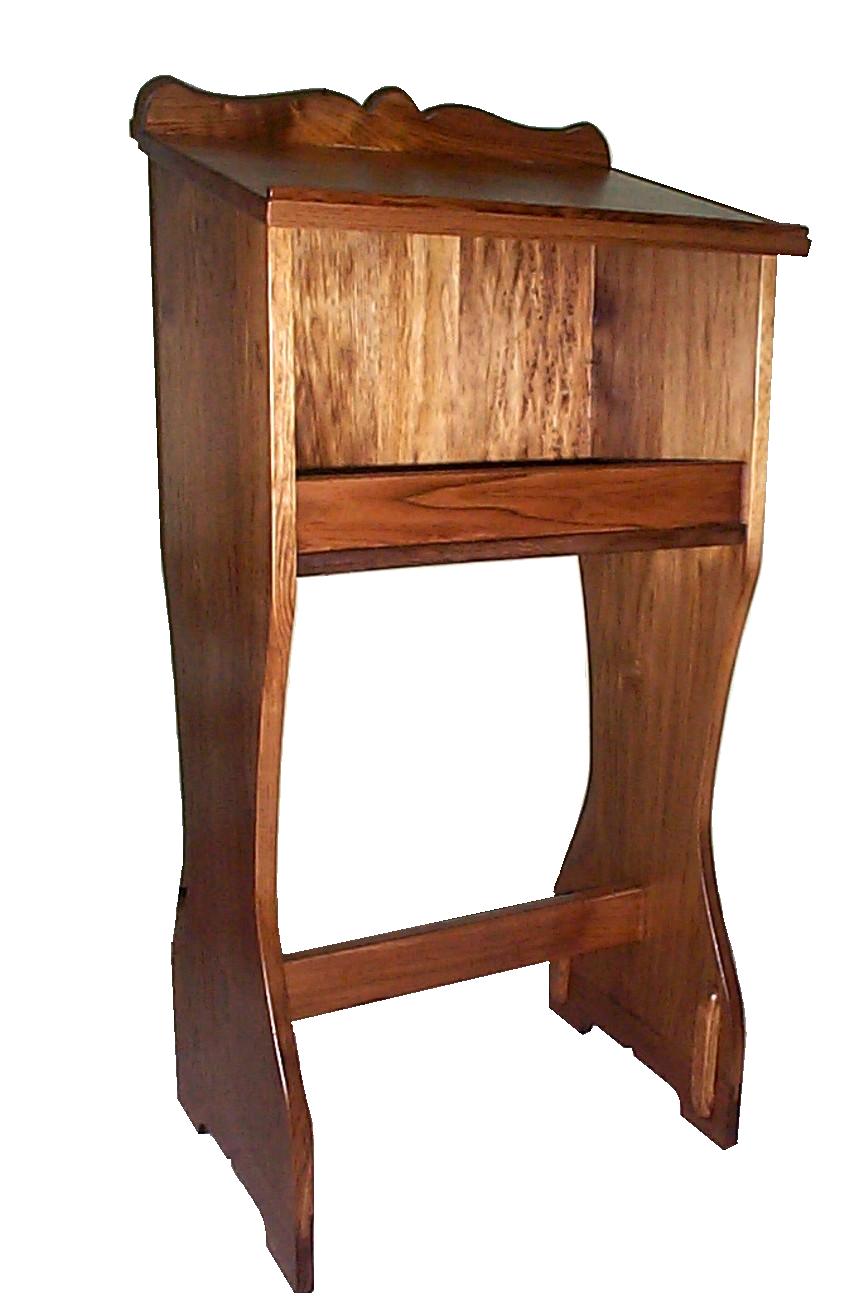
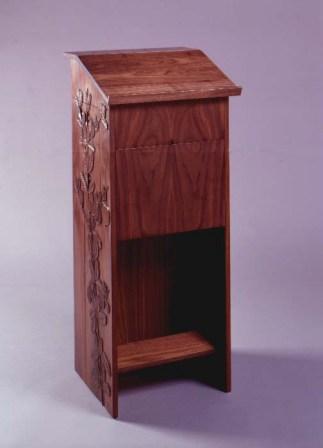
The Yiddish word “shtender” (שטענדער) literally means a “stander,” but most people would know one as a “lectern.” As a child, I first saw one in the public library, being used to hold up Webster’s large dictionaries.

Traditional Shtender

Shtenders are very popular in yeshivot (jewish institutes of religious learning), and they can be tall, as above, or smaller, to fit on a desk.

sm-shtender_1338_detail

Now, thanks to Stephen, I am aware of another piece of mind-bending craftsmanship and faith, the Tree of Life Shtender.

When I watched this video, I first thought, “Nice concept, but it’s just 3D graphics.”

Wrong. It’s the real McCoy, kinder. Every object you see in the shtender is real, and the whole is beautifully carved.

shtender


The Tree of Life shtender

33

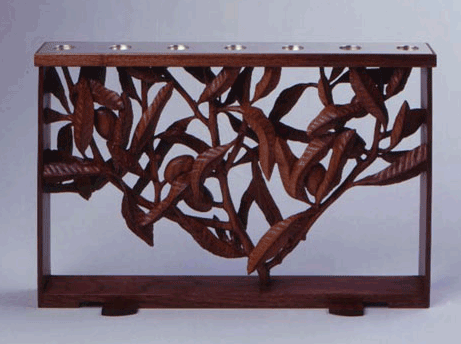
The Sabbath Candelabra

An 18-year collaborative work of art between David Moss and artist Noah Greenberg, a number of these beauties have been created and placed in museums, synagogues, and private homes.

Moss himself has described his work in far better detail than I ever could – click through for his explanations; another website on the topic can be found at Bezalel Editions.

Items like this are the product of immense love and devotion, not to mention painstaking craftsmanship. I am pleased to share them with my readership.

The Old Wolf has spoken.
The Fugio Cent

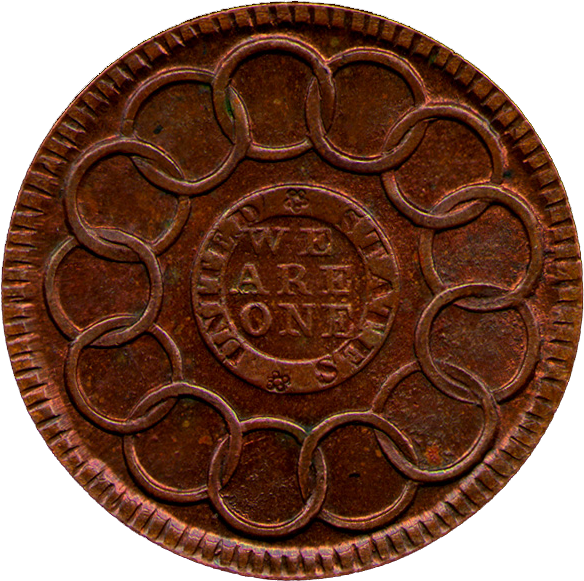
While not the first coinage to be minted in our country, these were the earliest coins issued by the authority of the United States.

Fugio_cent

Obverse

Fugio_cent_reverse


Reverse

The front of the coin depicts the word “fugio” (Latin = “I fly”), a sun, and a sundial, over the motto “Mind your business.” The coin was reputedly designed by Benjamin Franklin, and it is suggested that the image combined with the words form a rebus, meaning “Time flies; do your work.” However, I like the interpretation that each person should tend to his or her own affairs without getting involved in those of others. Franklin is not around to ask.

The reverse of the coin shows the words “United States,” “we are one,” and thirteen rings representing the thirteen original colonies.

I’d love to have one of these in my collection.

The Old Wolf has spoken.
The Last Sermon of Ladson Butler

(Cross-posted from Livejournal)

One of the items which I saved from my father’s papers when he passed away was a letter sent to my parents in 1951 by Laurie and Olin Lee Hanlin, residing at the time in Mariposa, California.

Recorded inside, in beautiful hand calligraphy, was a piece entitled “The Last Sermon of Ladson Butler”. Long before I entered the Way of the Compassionate Samurai, this beautiful piece of writing moved me, and I treasured it for decades without knowing who this Ladson Butler was.

LadsonButlerSmall

Now, through the miracle of the internet, in the same way I was able to track down Grace Noll Crowell’s work (you’ll read about that in a future essay or two), a few fragmentary clues arose. It appears that Butler was employed by the Yawman & Erbe Company, a machine manufacturing concern. The most intriguing tidbit, however, was an obituary published in the February, 1951 issue of “Sphinx”, the predominant magician’s trade magazine from 1902 to 1953.
On January 25th, in New York City, Ladson Butler died. He was born in 1877 in Charleston, South Carolina. Although strictly an amateur he had been very active in magic for over forty years and was a friend of many professionals. For the past several years he has been one of the members of the Board of Directors of The Sphinx.

Ladson Butler lived for many years in the city of Buffalo and during much of that time he regularly wrote a column for The Sphinx giving news of events in magic of upper New York State. He also was the organizer of The Magician’s Club of Buffalo. For the past number of years he had made New York City his home. He was a past president of the S.A.M. Parent Assembly.

Perusing other hits on Google, apparently Butler, although tagged as an “amateur” in his obituary, was quite a prolific contributor to “The Sphinx”, and developed and documented more than one magical routine, including the Whispering Queen and the Han Ping Chien coin move.

This in itself was enough of a hook to pique my interest, as I was at one time an active member of the S.A.M. (Society of American Magicians) in New York City. What moved me more, however, was re-reading his sermon after my life’s experiences of the past two and a half years, beginning with a Klemmer & Associates Champion’s Workshop in May of 2007. Ladson Butler, born in 1877, was a Compassionate Samurai in every sense of the word. I regret he passed away 5 months before I was born, but am pleased to have known him if only through his final words to his friends, here recorded for your appreciation.

The Last Sermon of Ladson Butler

Dearly beloved:

I have always hated the idea of going away without saying goodbye. And since the call of the Grim Reaper is sometimes without warning, a trip for which my bag is always packed, I am writing now, what I think I might write if the old boy with the scythe gave me time. If I do have time to think before checking out, it will be a great comfort to know that you will receive this, my last message. Incidentally, I have already revised it from time to time, and will try to keep it up to date. Some few of you will weep, I know, and bless you for whatever kindly thoughts lie behind your tears, but remember this:

I go with hands and pockets full of the only merchandise I can carry with me, the kind and loving thoughts of friends.
Be sure that I went away rich beyond the dreams of avarice (that old cliché) in all that can matter to me now.
Did we enjoy each other? Let’s think only of that.

But before I go I want to pass on to you some of the things which have so profoundly influenced my life. Take, for example, some of the ‘orphics’ of Elbert Hubbard1:
Do your work as well as you can and be kind.
That has been my religion for years.
I would rather be deceived by people than to distrust them. That gave me an altered view that has lasted for fifty years.
This one from Robert Ingersoll, often quoted by Hubbard:
The dead carry in their clenched hands only that which they have given away.
Doesn’t it give you a better idea of what things are really worthwhile? Looking back, I can’t get much pleasure from whatever I sold, but how I have enjoyed and enjoy now whatever I have been able to give without immediate or financial return.

Would like a source of spiritual strength and faith? Let me give you Walt Whitman’s “Leaves of Grass,” my standby these many years. How I have been upheld and strengthened by such lines. Certainly I have no knowledge of a hereafter but what faith I have in this world or next is built on these lines.

I know I am deathless. I know this orbit of mine cannot be swept by the carpenter’s compass.
I know I shall not pass like a child’s carlacue cut with a burnt stick at night.
My foothold is tenon’d and mortis’d in granite.
And whether I come to my own to-day, or in ten thousand or ten million years, I can cheerfully take it now, or with equal cheerfulness I can wait.

I am not afraid. I see no evidence of a future life although old Walt Whitman’s words tempt me to believe. But if I am wrong and you my orthodox friends are right, I’ll take my chances.

O Thou didst with pitfall and gin
Beset the road I was to travel in
Thou wilt not with predestination ’round about enmesh me
And then impute my fall to sin.

With my attitude and deeds toward my fellow men, I’ll set my case with any Gods there may be. Don’t worry my friends.

——————-

Butler passed away ten days after penning this last version of his farewell message – he must surely have known that the curtain between this life and the next was getting thin.


1Elbert Hubbard was an American writer, publisher, artist, and philosopher. Some of his best thoughts are preserved in An American Bible, published in 1911 and edited by his second wife, Alice, which also contains thoughts from Benjamin Franklin, Thomas Jefferson, Thomas Paine, Abraham Lincoln, Walt Whitman, Robert Ingersoll and Ralph Waldo Emerson.

The Hidden Synagogue

Notes:

  1. As reader bklyngalinla has pointed out in the comments below, this piece is a contemporary work of art, rather than being from the inquisition or holocaust periods. However, it is based on older pieces, and is in itself still a phenomenal piece of artwork. Here is a link to another blog that gives more information. I, also, am guilty of not doing any research on my own to verify the facts as stated by the original poster. This, however, has not seemed to dampen reader response to this post, which has been overwhelming – I thank everyone who has come by, simply because I chose to share something I found beautiful and faith-affirming.
  2. The title “hidden synagogue” is not mine, but those of the original poster at Reddit. A number of readers have rightly pointed out that this device would have been used in a home and not a shul; that said, I think the idea is that during such times, attendance at temple would be difficult if not impossible, and the teapot would serve as a way of keeping Torah and Commandments alive in the hearts of the faithful until times were better.

    Why We Tell Stories

    When the founder of Hasidic Judaism, the great Rabbi Israel Shem Tov, saw misfortune threatening the Jews, it was his custom to go into a certain part of the forest to meditate. There he would light a fire, say a special prayer, and the miracle would be accomplished and the misfortune averted.

    Later, when his disciple, the celebrated Maggid of Mezritch, had occasion, for the same reason, to intercede with heaven, he would go to the same place in the forest and say: “Master of the Universe, listen! I do not know how to light the fire, but I am still able to say the prayer,” and again the miracle would be accomplished.

    Still later, Rabbi Moshe‑leib of Sasov, in order to save his people once more, would go into the forest and say, “I do not know how to light the fire. I do not know the prayer, but I know the place, and this must be sufficient.” It was sufficient, and the miracle was accomplished.

    Then it fell to Rabbi Israel of Rizhin to overcome misfortune. Sitting in his armchair, his head in his hands, he spoke to God: “I am unable to light the fire, and I do not know the prayer, and I cannot even find the place in the forest. All I can do is to tell the story, and this must be sufficient.”

    And it was sufficient.

    -from Wiesel, Elie, Souls on Fire

    This teapot strikes me in much the same way. It is almost saying, “We cannot worship in the synagogue, but we can worship at home, and it must be sufficient. And for many, it was sufficient. Hence to my way of thinking, calling it a “hidden synagogue” is not totally amiss.

  3. Regarding the use of menorah vs. chanukia, see the footnote at the end, and then jump in and join the noisy debate in the commentary if you feel so inclined. Just play nice. -O.W.

———————-

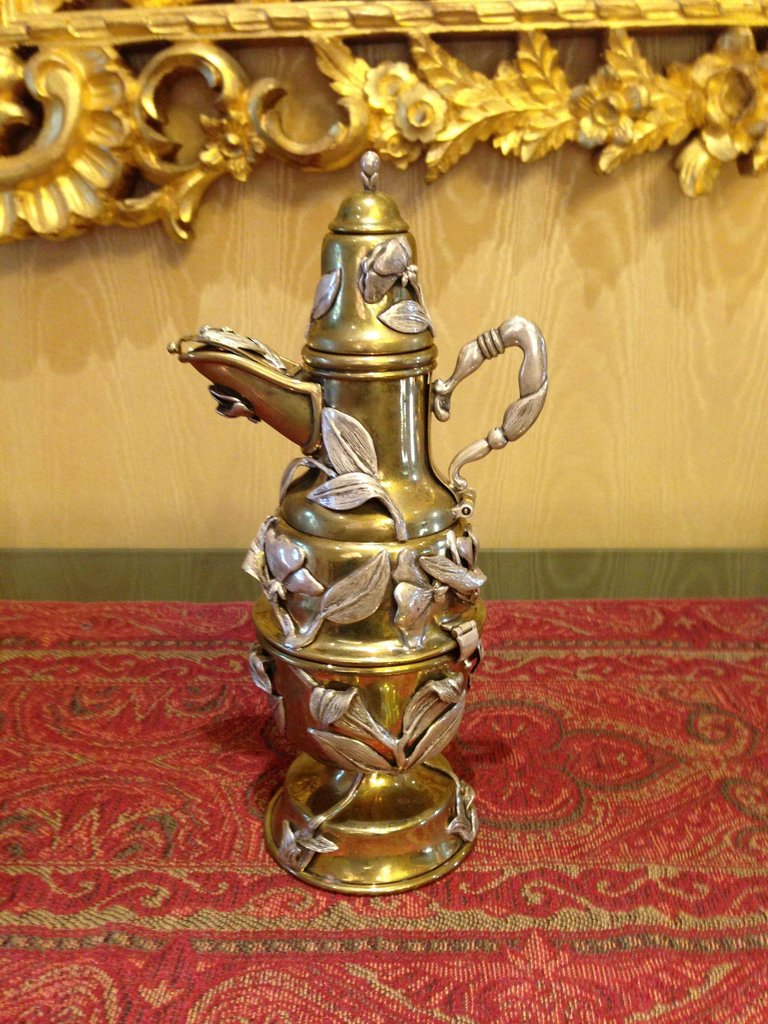
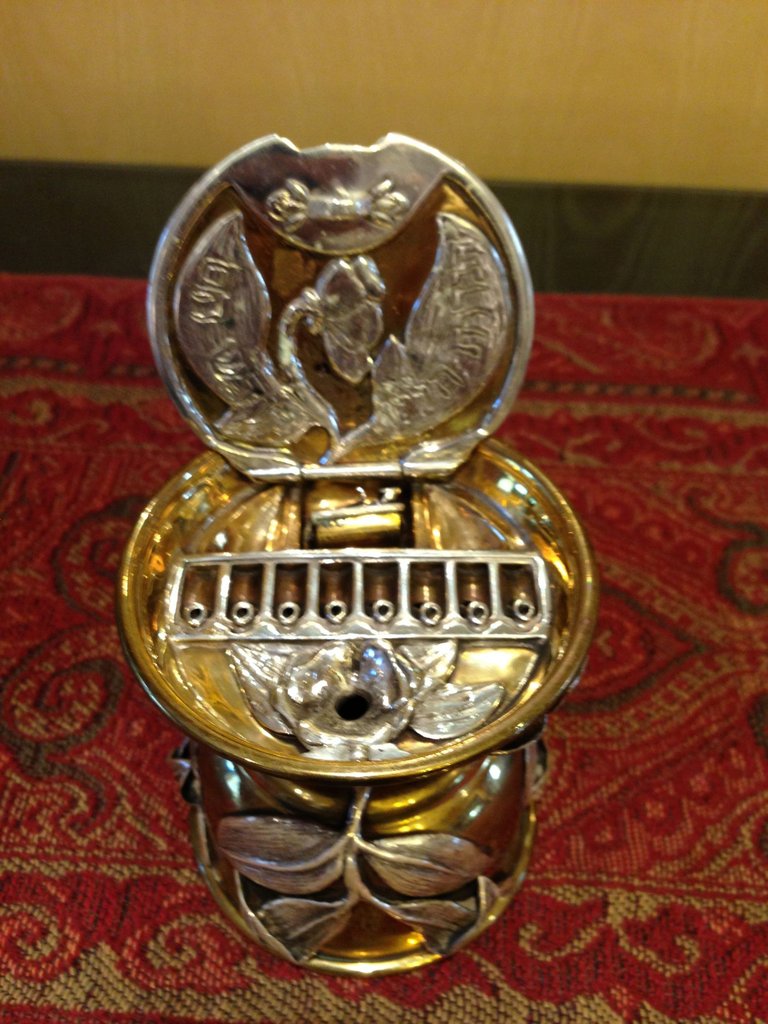
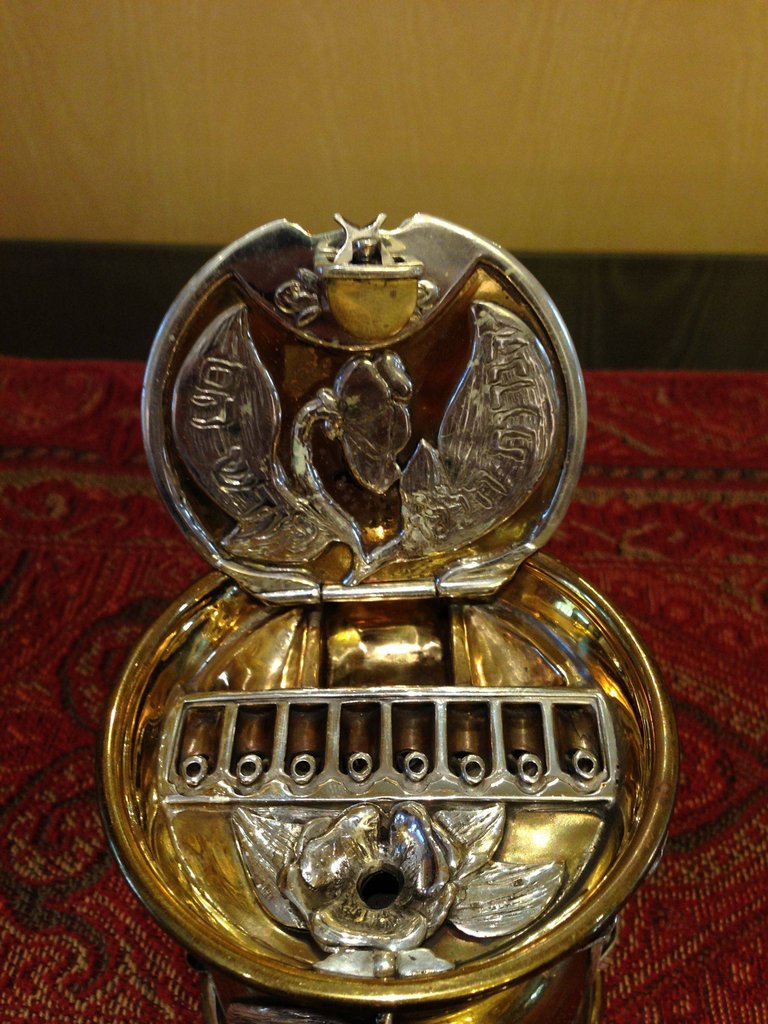
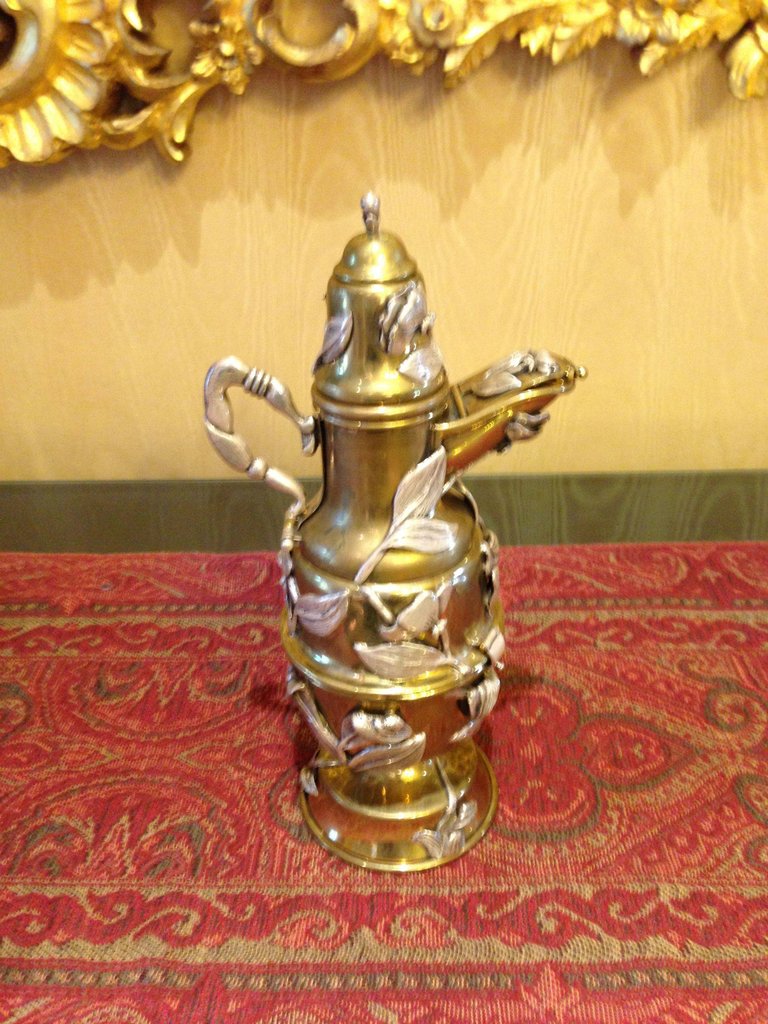
Found at Reddit, these are photos of a mind-bending piece of artwork.

The original photos are at Imgur. I cannot adequately express in words how beautiful this is.

01

The complete teapot

04

Remove the top…

03

 Its’ a hidden dreidel

02

Remove the next layer

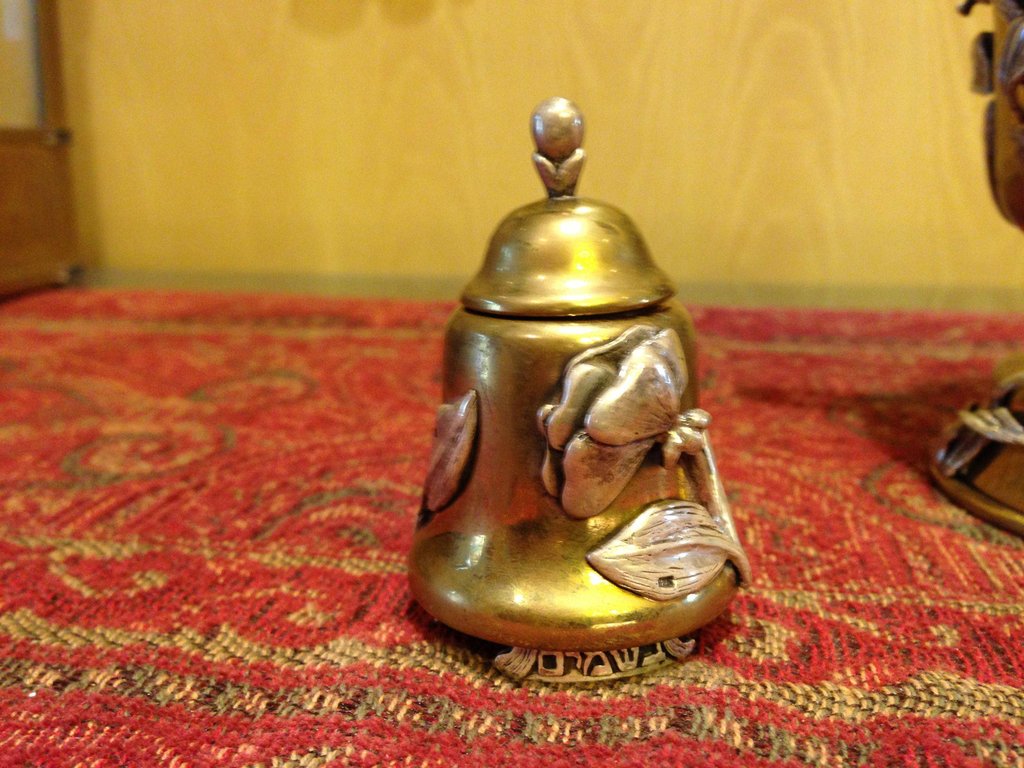
05

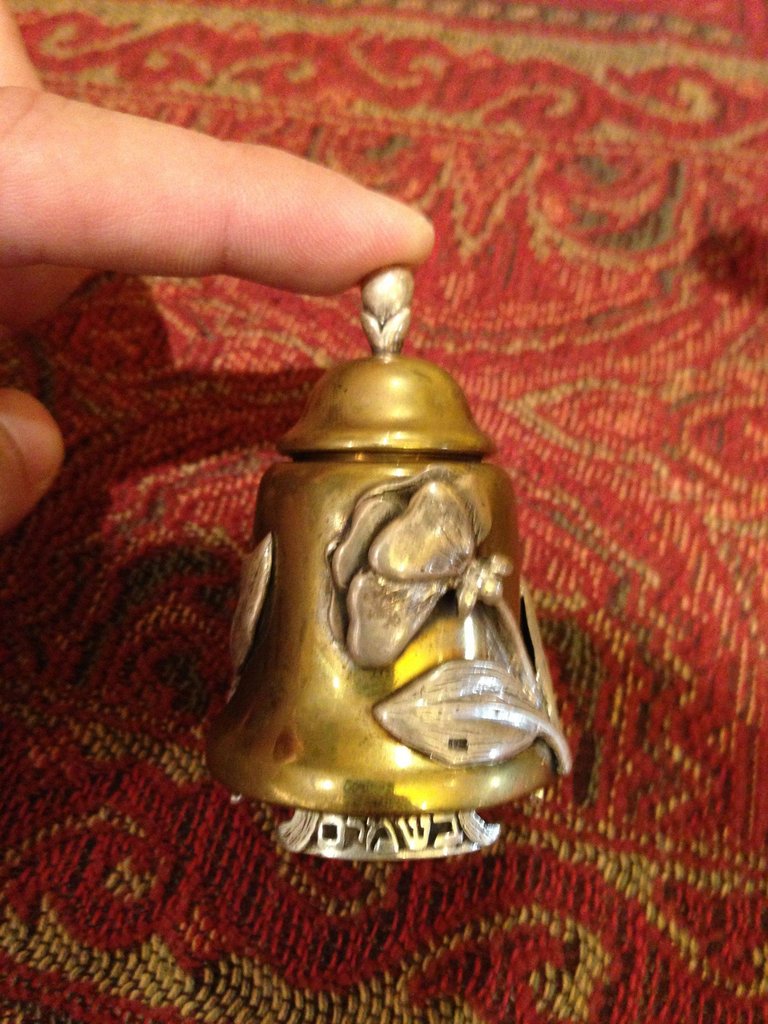
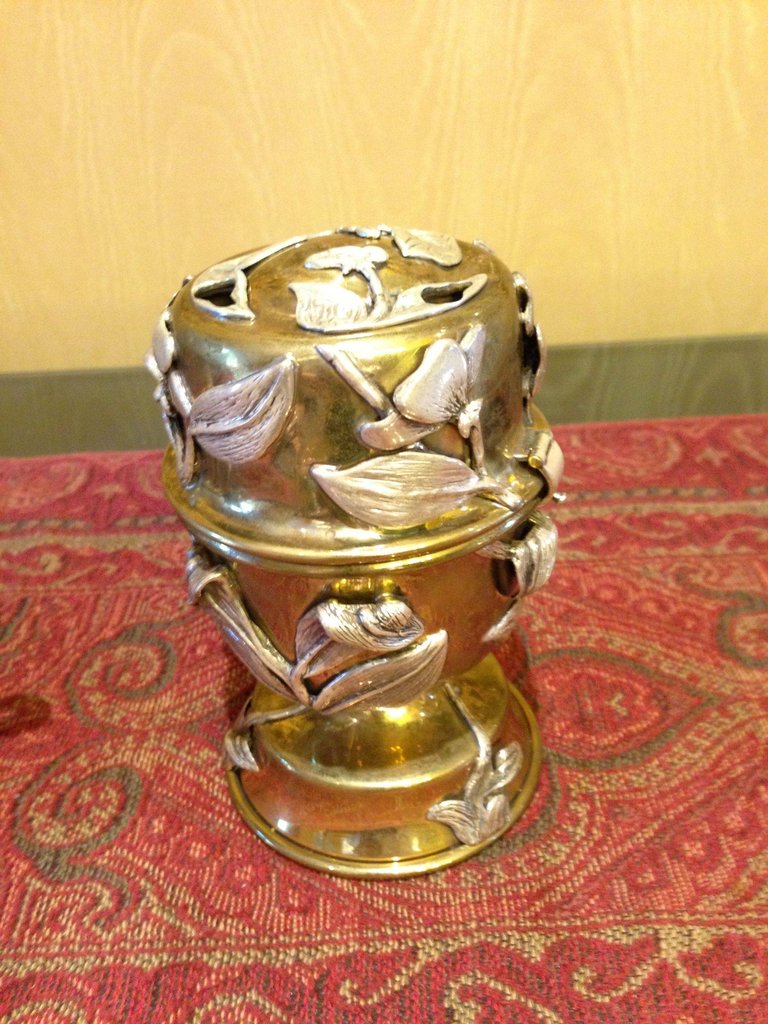
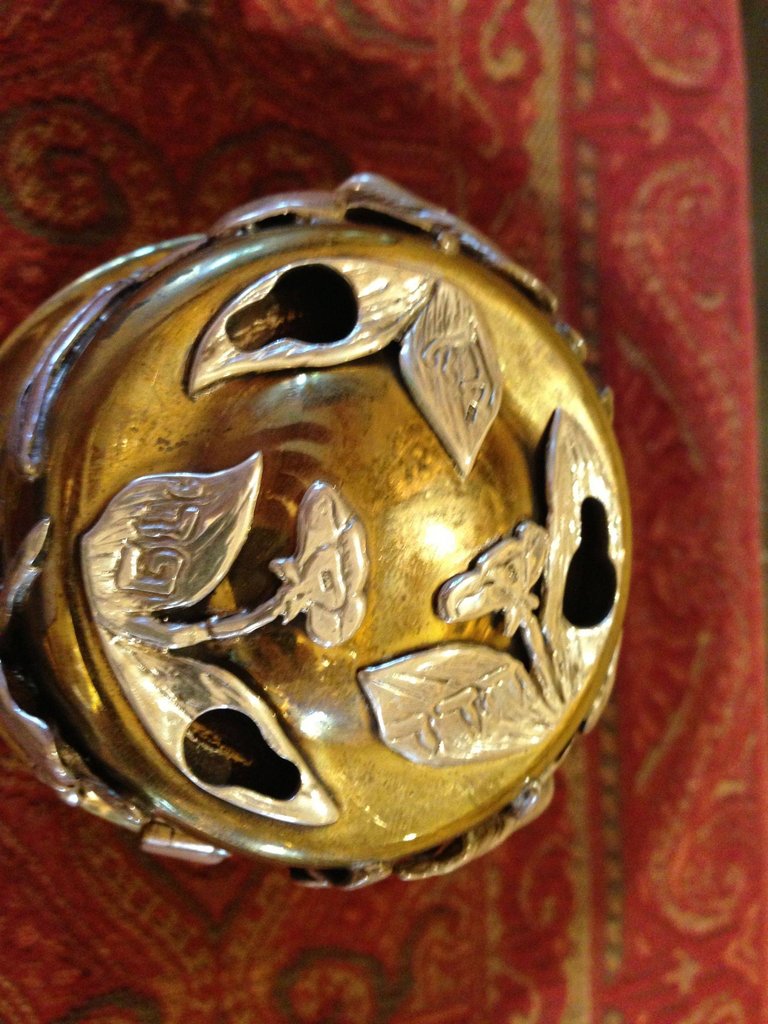
A perfume/spice holder. 

06

Opened

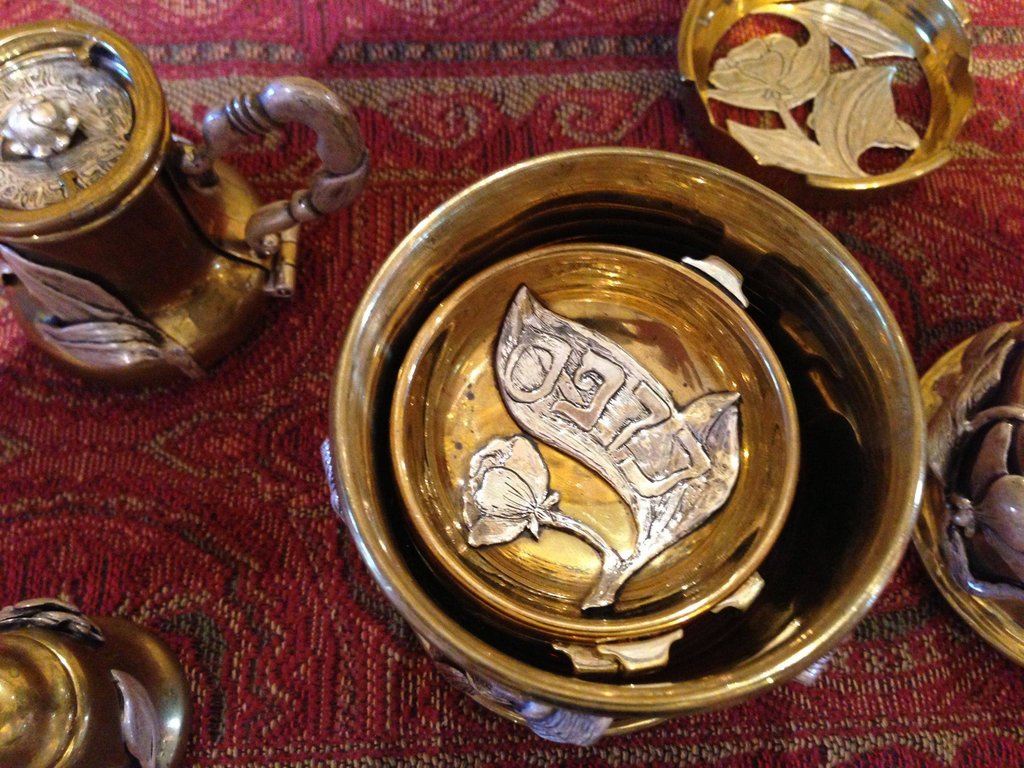
09

The Hebrew word on the bottom says בשמים (basmim), “spices or perfumes”

08

The next layer is…

07

The eternal flame.

11

The Front View – The inscription reads, “The light of god is man’s soul.”

12

But there’s another secret:

10

A complete megilla (the scroll containing the biblical narrative of the Book of Esther, traditionally read in synagogues to celebrate the festival of Purim.)

13

The main body is designed to hold an etrog, the yellow citron or Citrus medica used by Jews on the week-long holiday of Sukkot.

15

The words say “pri etz hadar” (the fruit of the majestic tree), a biblical reference to the etrog.

14

Inside

16

Candlesticks for Shabbos

21

Closeup of candlesticks

18

Remove the flowered tray, and under the candlesticks is…

17

A Seder plate.

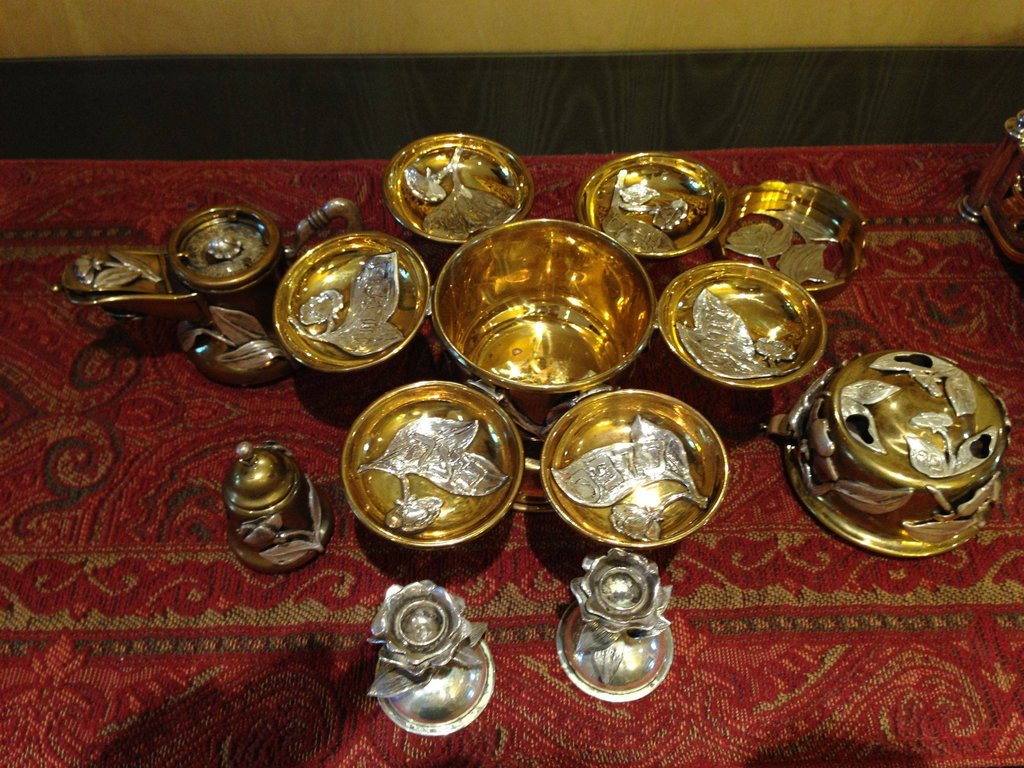
19

Complete

20

But there’s one more thing.

22

A menorah.[1]

23

With the shammash (“servant”), the 9th light of the menorah used to light the other 8 candles.

24

Reassembled

The Old Wolf is in awe.


[1] With regards to the lamp, Wikipedia has this to say:

The Hanukkah menorah (Hebrew: מנורת חנוכה m’noraht khanukkah, pl. menorot) (also Hebrew: חַנֻכִּיָּה‎ hanukiah, or chanukkiyah, pl. hanukiyot/chanukkiyot, or Yiddish: חנוכּה לאמפּ khanike lomp, lit.: Hanukkah lamp) is, strictly speaking, a nine-branched candelabrum lit during the eight-day holiday of Hanukkah, as opposed to the seven-branched menorah used in the ancient Temple or as a symbol. The ninth holder, called the shamash (“helper” or “servant”), is for a candle used to light all other candles and/or to be used as an extra light. The menorah is among the most widely produced articles of Jewish ceremonial art. The seven-branched menorah is a traditional symbol of Judaism, along with the Star of David.

In the English-speaking diaspora, the lamp is most commonly called a “Hanukkah menorah,” or simply “menorah” for short, whereas in Modern Hebrew it is exclusively called a chanukkiyah, and the Hebrew word menorah simply means “lamp”. The term chanukkiyah was coined at the end of the nineteenth century in Jerusalem by the wife of Eliezer Ben Yehuda, the reviver of the Hebrew language.

Since I am an English speaker, and since the vast majority of Americans are familiar only with the 9-branched “מנורת חנוכה” seen at Chanukkah, I’m sticking with “menorah.” Those who wish to call it a “חַנֻכִּיָּה‎” are correct in doing so.

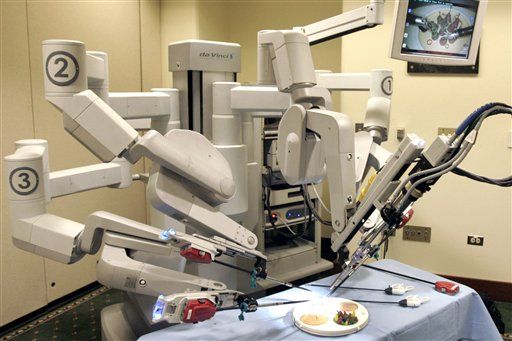
DaVinci Sugery Robot gets Heightened Scrutiny

928657-0-20130409142739

This thing looks like a cross between “2001” and “The Pit and the Pendulum.” I’m not sure I’d let it anywhere near me.

According to today’s news:

“(NEWSER) – You may not have heard of the da Vinci surgical robot, but your local hospital surely has. The $1.5 million robot is a hot item in the medical world, having been used in 367,000 US surgeries last year. Now, however, the FDA is talking a closer look after an increase in reported problems linked to the device, including five deaths, reports AP. In one case, a woman died after the robot nicked a blood vessel. The device is operated by surgeons, and the story takes pains to note that the robot itself may not be at fault.

The multi-armed robot has also made some bizarre moves during surgeries, including refusing to release tissue it was holding and hitting a patient on the face. These days, da Vinci is being used three times as often as it was four years ago; it’s in one of four US hospitals. Some experts say that’s partially thanks to extensive marketing. “The rapid adoption of robotic surgery … has been done by and large without the proper evaluation,” says one. But the robot’s maker, Intuitive Surgical, says “adverse event rates” are “in line with historical trends” after 1.5 million surgeries.”

You can read the AP release here.

Of course, the only thing that ran through my deranged mind was this:

Windows Surgery

One has to admit the drawing was unsettlingly prescient in terms of what the modern DaVinci looks like.

Let’s just hope it’s not powered by Windows/Intel, but rather something more reliable.

The Old Wolf has spoken.