The Hidden Synagogue

Notes:

  1. As reader bklyngalinla has pointed out in the comments below, this piece is a contemporary work of art, rather than being from the inquisition or holocaust periods. However, it is based on older pieces, and is in itself still a phenomenal piece of artwork. Here is a link to another blog that gives more information. I, also, am guilty of not doing any research on my own to verify the facts as stated by the original poster. This, however, has not seemed to dampen reader response to this post, which has been overwhelming – I thank everyone who has come by, simply because I chose to share something I found beautiful and faith-affirming.
  2. The title “hidden synagogue” is not mine, but those of the original poster at Reddit. A number of readers have rightly pointed out that this device would have been used in a home and not a shul; that said, I think the idea is that during such times, attendance at temple would be difficult if not impossible, and the teapot would serve as a way of keeping Torah and Commandments alive in the hearts of the faithful until times were better.

    Why We Tell Stories

    When the founder of Hasidic Judaism, the great Rabbi Israel Shem Tov, saw misfortune threatening the Jews, it was his custom to go into a certain part of the forest to meditate. There he would light a fire, say a special prayer, and the miracle would be accomplished and the misfortune averted.

    Later, when his disciple, the celebrated Maggid of Mezritch, had occasion, for the same reason, to intercede with heaven, he would go to the same place in the forest and say: “Master of the Universe, listen! I do not know how to light the fire, but I am still able to say the prayer,” and again the miracle would be accomplished.

    Still later, Rabbi Moshe‑leib of Sasov, in order to save his people once more, would go into the forest and say, “I do not know how to light the fire. I do not know the prayer, but I know the place, and this must be sufficient.” It was sufficient, and the miracle was accomplished.

    Then it fell to Rabbi Israel of Rizhin to overcome misfortune. Sitting in his armchair, his head in his hands, he spoke to God: “I am unable to light the fire, and I do not know the prayer, and I cannot even find the place in the forest. All I can do is to tell the story, and this must be sufficient.”

    And it was sufficient.

    -from Wiesel, Elie, Souls on Fire

    This teapot strikes me in much the same way. It is almost saying, “We cannot worship in the synagogue, but we can worship at home, and it must be sufficient. And for many, it was sufficient. Hence to my way of thinking, calling it a “hidden synagogue” is not totally amiss.

  3. Regarding the use of menorah vs. chanukia, see the footnote at the end, and then jump in and join the noisy debate in the commentary if you feel so inclined. Just play nice. -O.W.

———————-

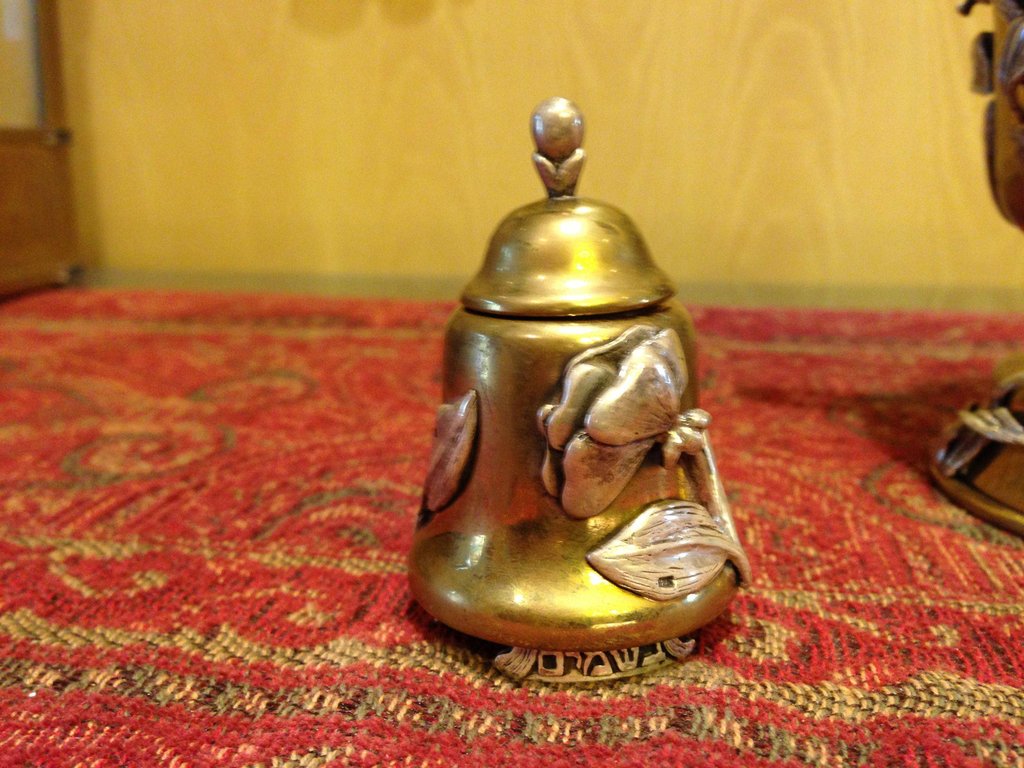
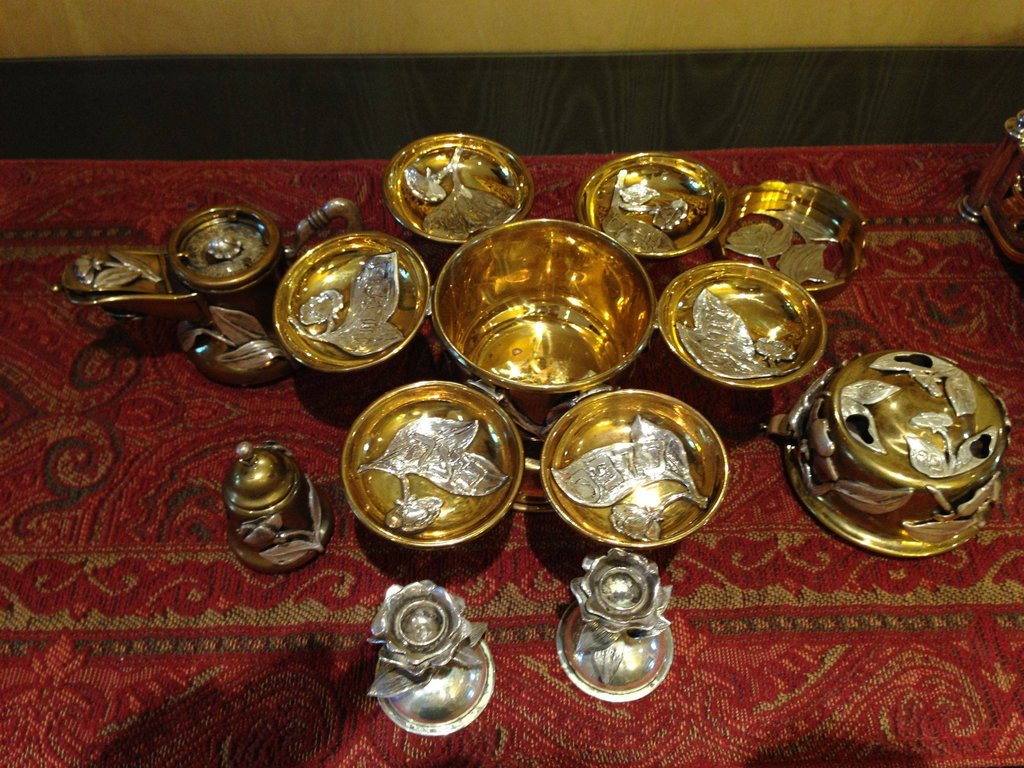
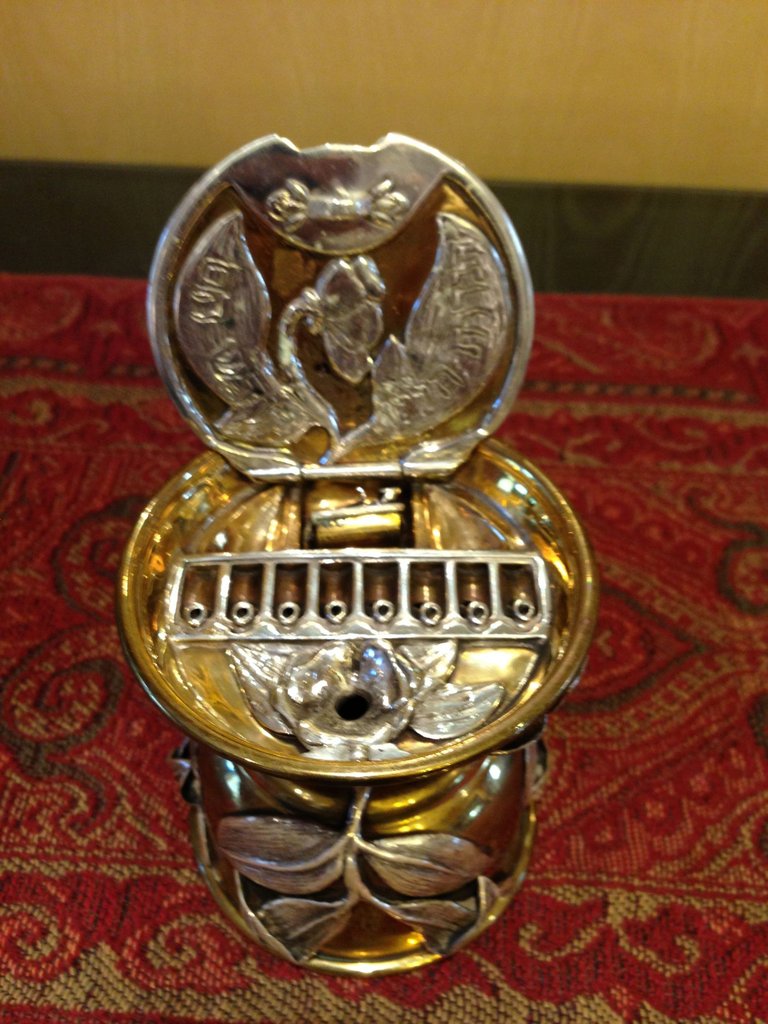
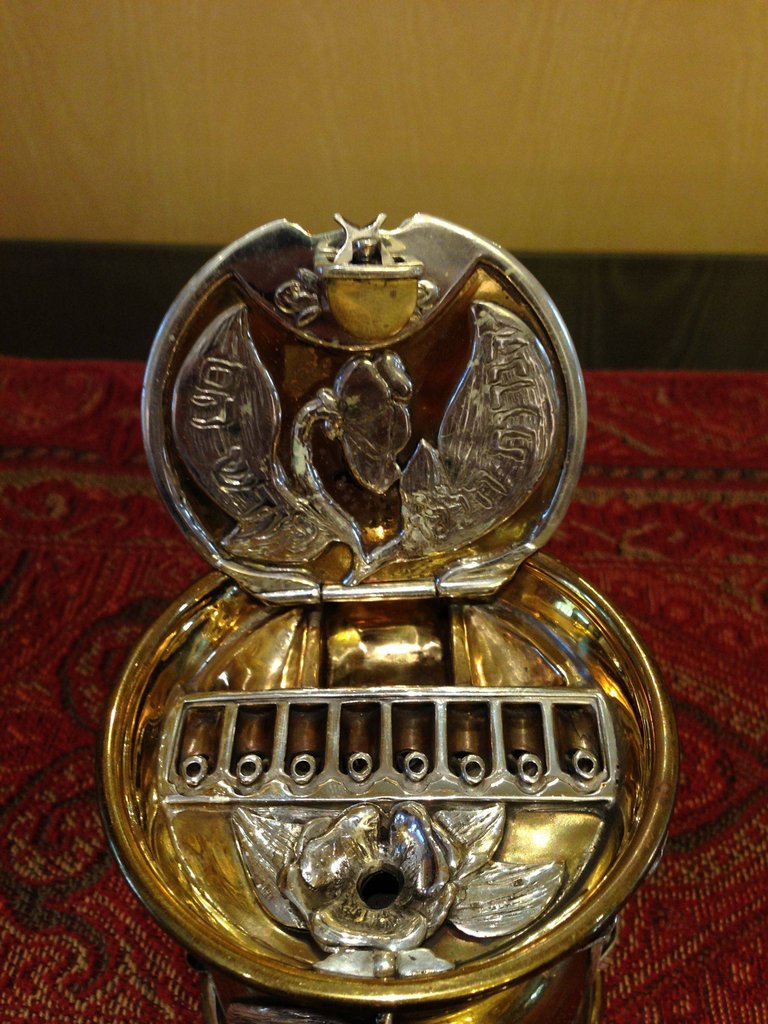
Found at Reddit, these are photos of a mind-bending piece of artwork.

The original photos are at Imgur. I cannot adequately express in words how beautiful this is.
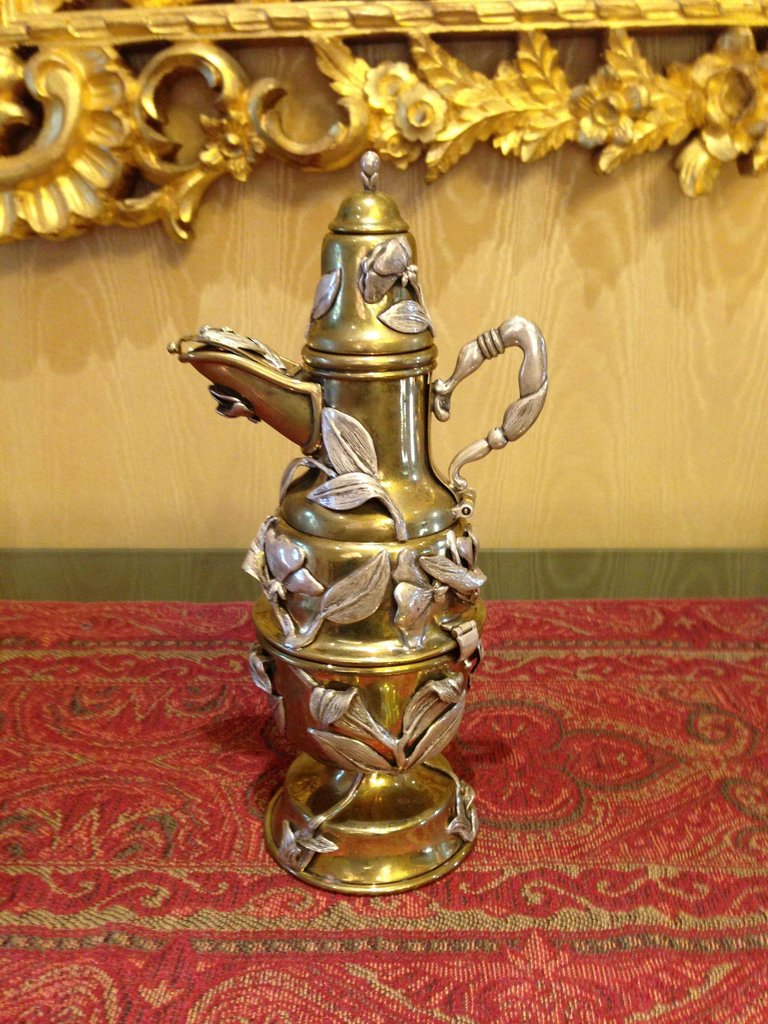
01

The complete teapot

04

Remove the top…

03

 Its’ a hidden dreidel

02

Remove the next layer

05

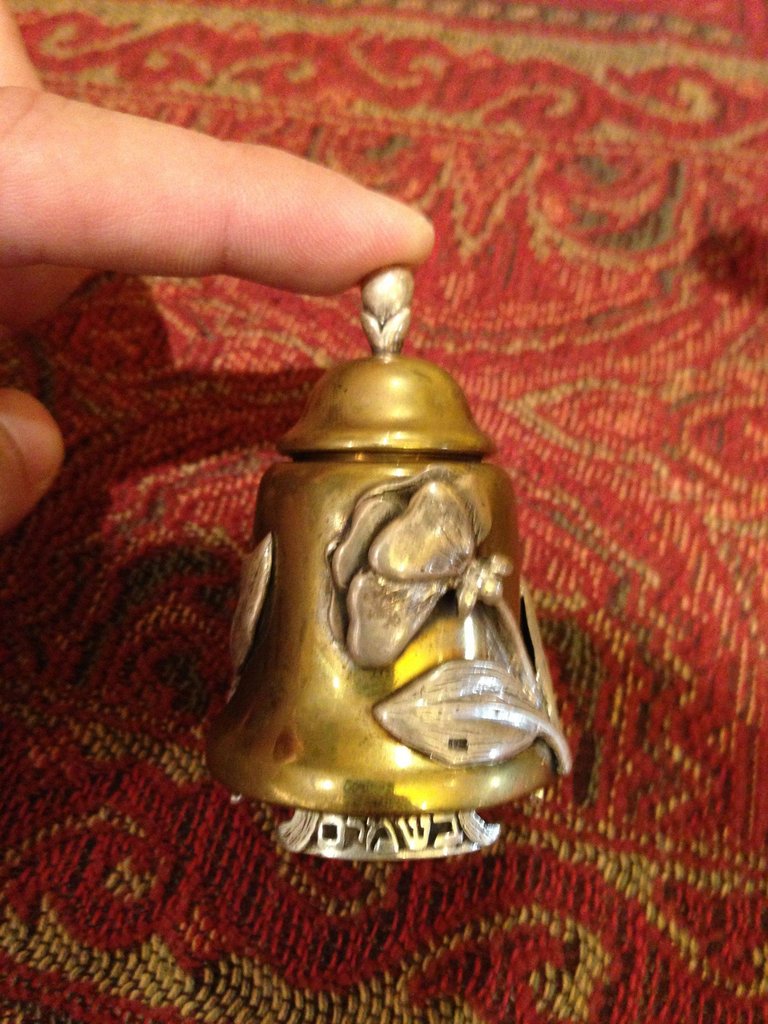
A perfume/spice holder. 

06

Opened

09

The Hebrew word on the bottom says בשמים (basmim), “spices or perfumes”

08

The next layer is…

07

The eternal flame.

11

The Front View – The inscription reads, “The light of god is man’s soul.”

12

But there’s another secret:

10

A complete megilla (the scroll containing the biblical narrative of the Book of Esther, traditionally read in synagogues to celebrate the festival of Purim.)
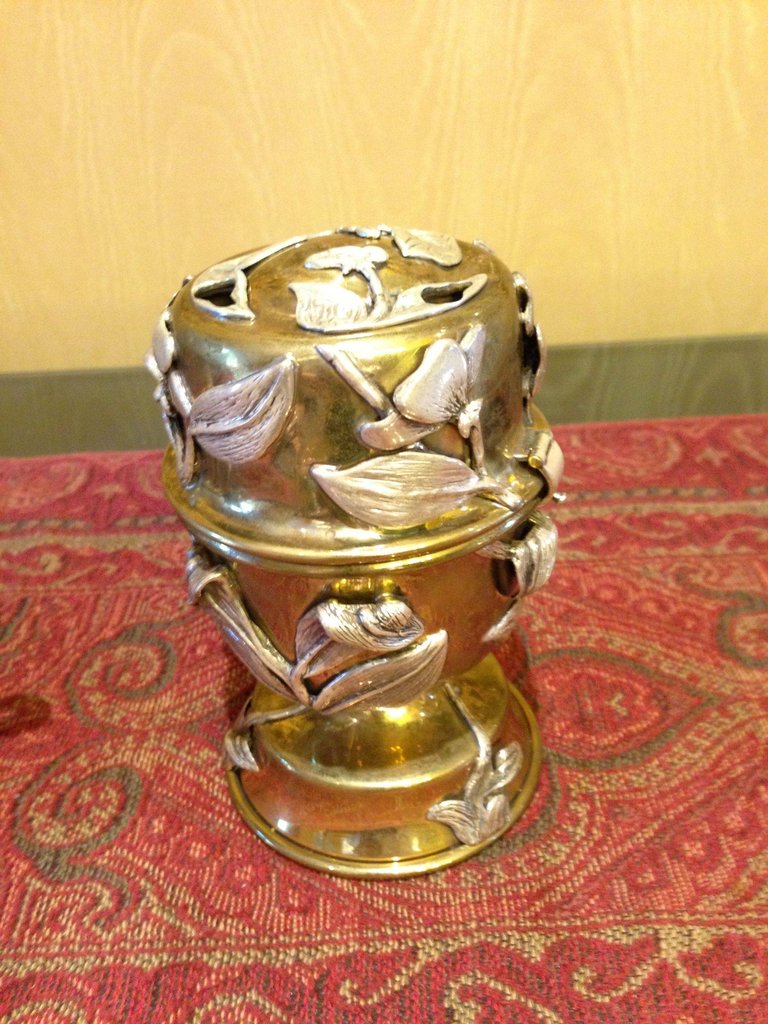
13

The main body is designed to hold an etrog, the yellow citron or Citrus medica used by Jews on the week-long holiday of Sukkot.
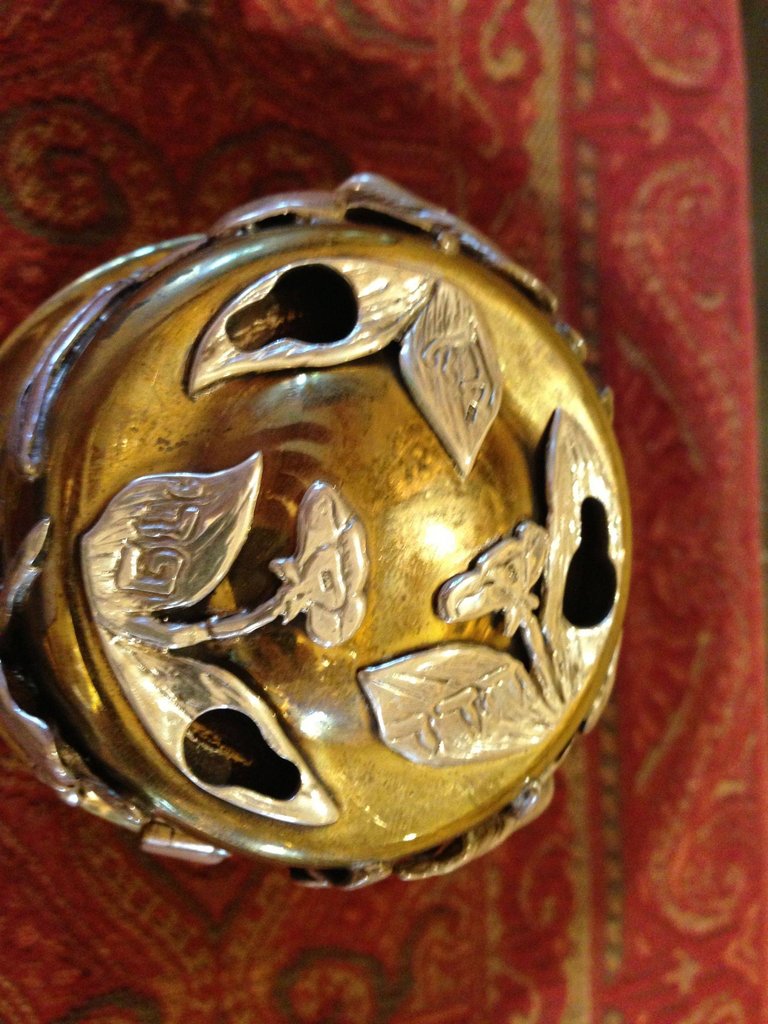
15

The words say “pri etz hadar” (the fruit of the majestic tree), a biblical reference to the etrog.

14

Inside

16

Candlesticks for Shabbos

21

Closeup of candlesticks

18

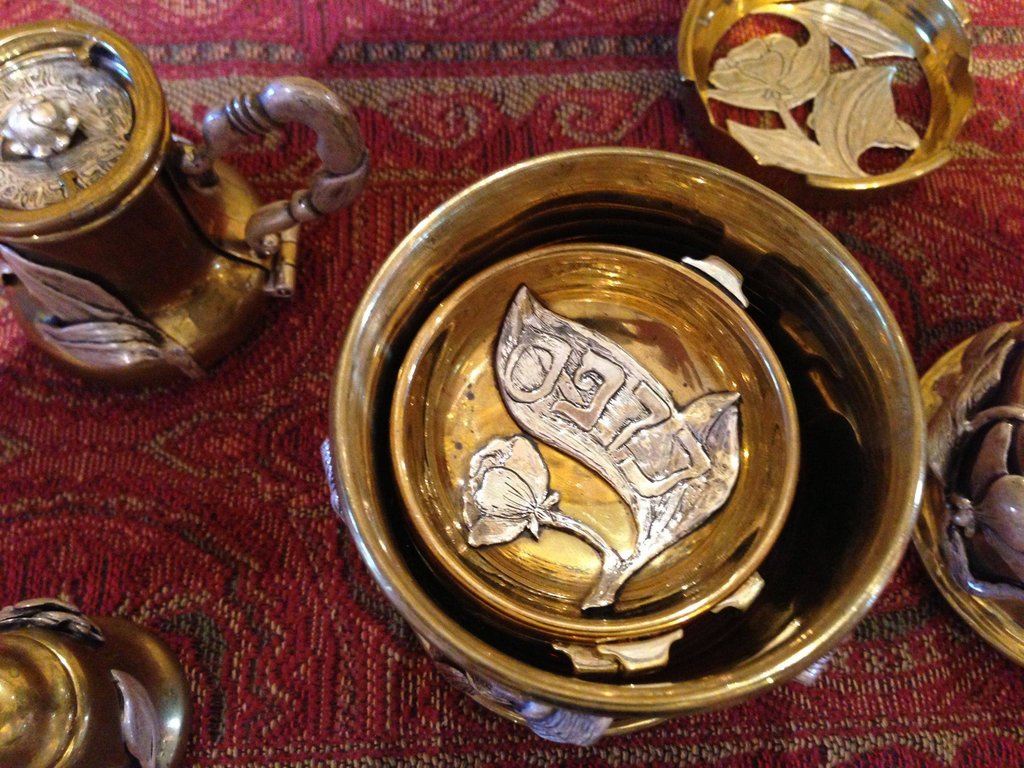
Remove the flowered tray, and under the candlesticks is…

17

A Seder plate.

19

Complete

20

But there’s one more thing.

22

A menorah.[1]

23

With the shammash (“servant”), the 9th light of the menorah used to light the other 8 candles.
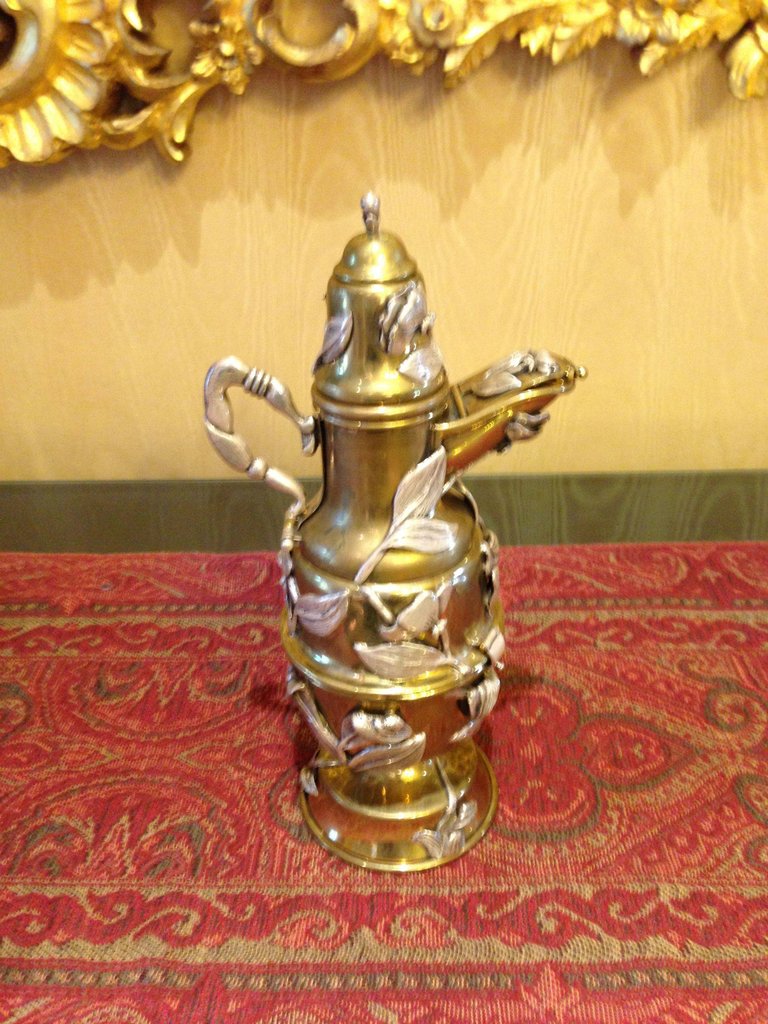
24

Reassembled

The Old Wolf is in awe.


[1] With regards to the lamp, Wikipedia has this to say:

The Hanukkah menorah (Hebrew: מנורת חנוכה m’noraht khanukkah, pl. menorot) (also Hebrew: חַנֻכִּיָּה‎ hanukiah, or chanukkiyah, pl. hanukiyot/chanukkiyot, or Yiddish: חנוכּה לאמפּ khanike lomp, lit.: Hanukkah lamp) is, strictly speaking, a nine-branched candelabrum lit during the eight-day holiday of Hanukkah, as opposed to the seven-branched menorah used in the ancient Temple or as a symbol. The ninth holder, called the shamash (“helper” or “servant”), is for a candle used to light all other candles and/or to be used as an extra light. The menorah is among the most widely produced articles of Jewish ceremonial art. The seven-branched menorah is a traditional symbol of Judaism, along with the Star of David.

In the English-speaking diaspora, the lamp is most commonly called a “Hanukkah menorah,” or simply “menorah” for short, whereas in Modern Hebrew it is exclusively called a chanukkiyah, and the Hebrew word menorah simply means “lamp”. The term chanukkiyah was coined at the end of the nineteenth century in Jerusalem by the wife of Eliezer Ben Yehuda, the reviver of the Hebrew language.

Since I am an English speaker, and since the vast majority of Americans are familiar only with the 9-branched “מנורת חנוכה” seen at Chanukkah, I’m sticking with “menorah.” Those who wish to call it a “חַנֻכִּיָּה‎” are correct in doing so.
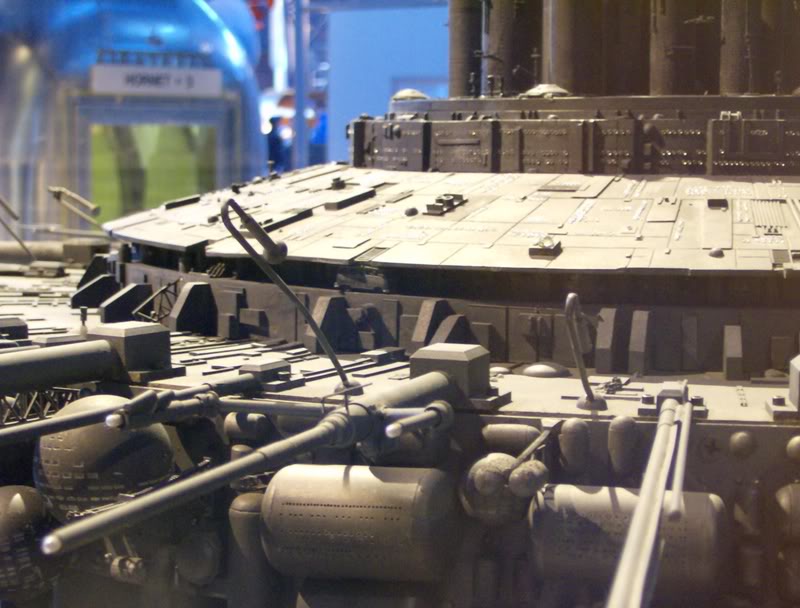
DaVinci Sugery Robot gets Heightened Scrutiny

928657-0-20130409142739

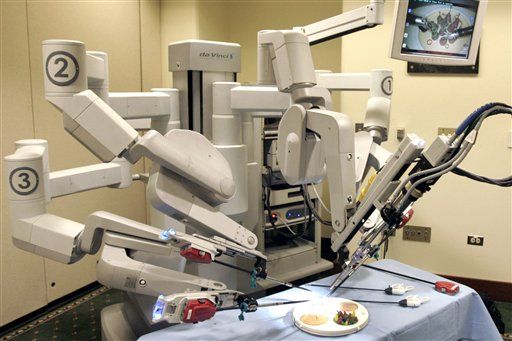
This thing looks like a cross between “2001” and “The Pit and the Pendulum.” I’m not sure I’d let it anywhere near me.

According to today’s news:

“(NEWSER) – You may not have heard of the da Vinci surgical robot, but your local hospital surely has. The $1.5 million robot is a hot item in the medical world, having been used in 367,000 US surgeries last year. Now, however, the FDA is talking a closer look after an increase in reported problems linked to the device, including five deaths, reports AP. In one case, a woman died after the robot nicked a blood vessel. The device is operated by surgeons, and the story takes pains to note that the robot itself may not be at fault.

The multi-armed robot has also made some bizarre moves during surgeries, including refusing to release tissue it was holding and hitting a patient on the face. These days, da Vinci is being used three times as often as it was four years ago; it’s in one of four US hospitals. Some experts say that’s partially thanks to extensive marketing. “The rapid adoption of robotic surgery … has been done by and large without the proper evaluation,” says one. But the robot’s maker, Intuitive Surgical, says “adverse event rates” are “in line with historical trends” after 1.5 million surgeries.”

You can read the AP release here.

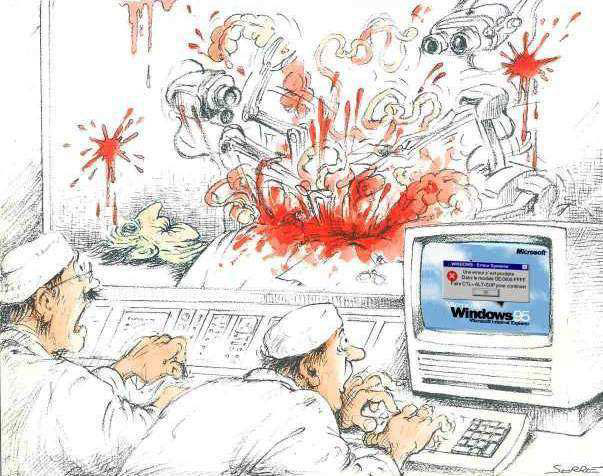
Of course, the only thing that ran through my deranged mind was this:

Windows Surgery

One has to admit the drawing was unsettlingly prescient in terms of what the modern DaVinci looks like.

Let’s just hope it’s not powered by Windows/Intel, but rather something more reliable.

The Old Wolf has spoken.

Happy Anniversary to me.

Wordpress

I am told that today is my 4th anniversary as a registered WordPress user, although I’ve only been keeping up this particular blog for just under a year now (I began on the 26th of April, 2012). I’ve appreciated the responses and input that I have gotten from my readers and look forward to continuing in the same vein, and perhaps even expanding my reach.

I have many  more essays percolating in the back of my mind, and will pour them out when they are ready. Actually, a lot of them are like cowboy coffee:

  1. Add 1 lb. coffee to a bucket of water.
  2. Set on the fire to boil.
  3. Toss in a horseshoe.
  4. When the horseshoe floats to the top, it’s ready.

Which reminds me of a poem that I have known for about 40 years. I will share with you here, for no other reason than that it occurred to me:

The Indispensable Man
(by Saxon White Kessinger)

Sometime when you’re feeling important;
Sometime when your ego’s in bloom;
Sometime when you take it for granted,
You’re the best qualified in the room:
Sometime when you feel that your going,
Would leave an unfillable hole,
Just follow these simple instructions,
And see how they humble your soul.

Take a bucket and fill it with water,
Put your hand in it up to the wrist,
Pull it out and the hole that’s remaining,
Is a measure of how much you’ll be missed.
You can splash all you wish when you enter,
You may stir up the water galore,
But stop, and you’ll find that in no time,
It looks quite the same as before.

The moral of this quaint example,
Is to do just the best that you can,
Be proud of yourself but remember,
There’s no indispensable man.

The Old Wolf has spoken.

A very pleasing Logo.

Some time ago I posted about the Hitachi logo:

Hitachi Logo


This last week I happened across an English-based logo that pleased me just as much and for precisely the same reasons:

p-brane-ep-4fe86d84f3970


Others who are more savvy about modern music will recognize the logo for Plaid; It’s been about 4 years since I took a road trip with my youngest son, and that’s when I learned almost everything I know about current bands, so I have no idea who they are other than what I read. But I like their logo.

The Old Wolf has spoken.

Easter Eggs of the Third Kind

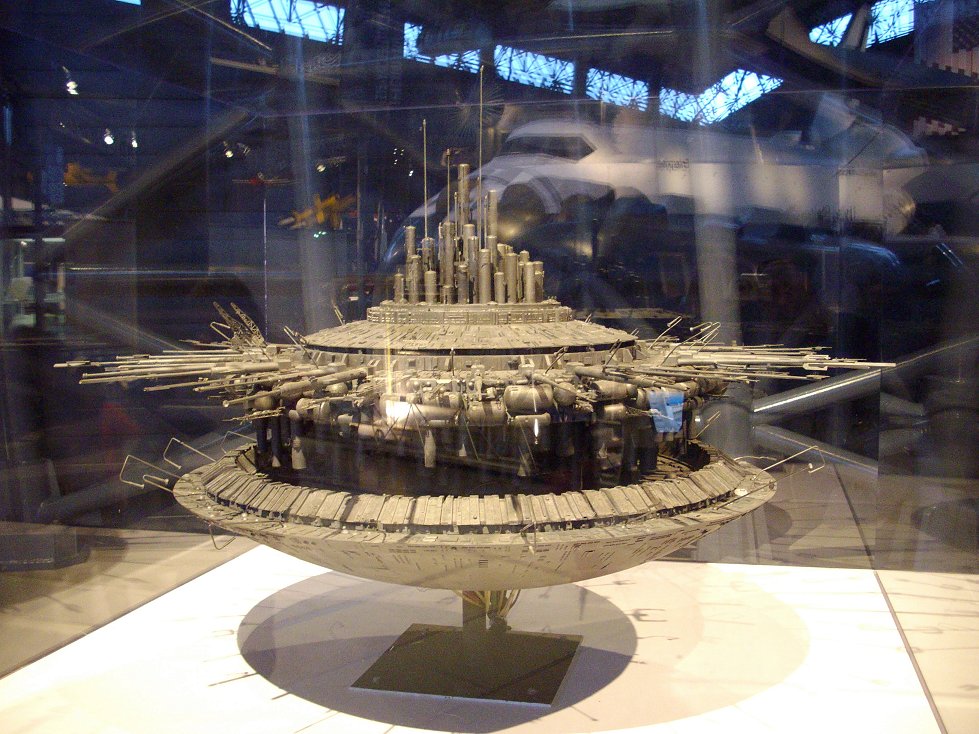
In the Udvar-Hazy extension of the National Air and Space Museum in Washington, DC, sits the model UFO that was used in filming “Close Encounters of the Third Kind.”

close encounters mothership

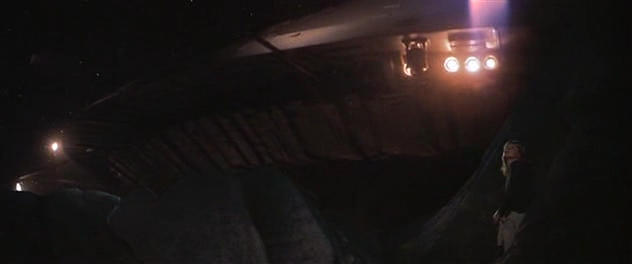
This is what it looked like in the film.

Close Encounters Model

And here is the model. This is one of my pictures – an official shot can be seen at the Smithsonian’s website.

The model was made by Columbia Pictures Corp. in 1977 from wood, plastic and metal; its dimensions are 63″ x 38″ and it weighs 400 lbs. It is a beauty to behold in its own right, but it gets even more fun when you start to pay closer attention.

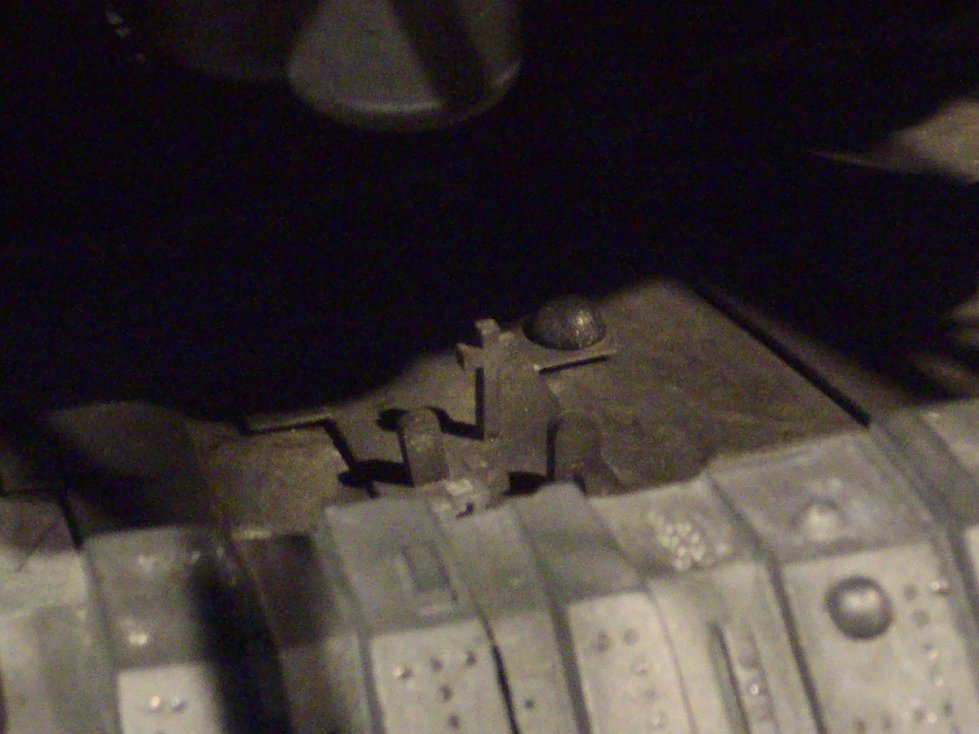
The builders had a lot of fun putting this thing together; looking closely at the model, one can find tiny hidden smaller models which are not seen when the Mother Ship appears in the film. These models were added by the construction crew as internal “jokes.” They include a Volkswagen bus, a submarine, a tie fighter, the R2-D2 android, a U.S. mailbox, an aircraft, and a small cemetery plot.

I wasn’t able to get shots of all of the Easter eggs, but here are the ones I could get clean pictures of:

Close Encounters Model 2

R2-D2

Close Encounters Model 3

Airplanes

Close Encounters Model 4

Cemetery

Close Encounters Model 5

Tie Fighter

HPIM0701

VW Bus sandwiched in the gap. (This picture by Vincegamer over at the Cool Mini or Not forum)

Only R2-D2 was visible in the film itself:

1734.full

Little things like this make a film even more fun than it already is.

The Old Wolf has spoken.

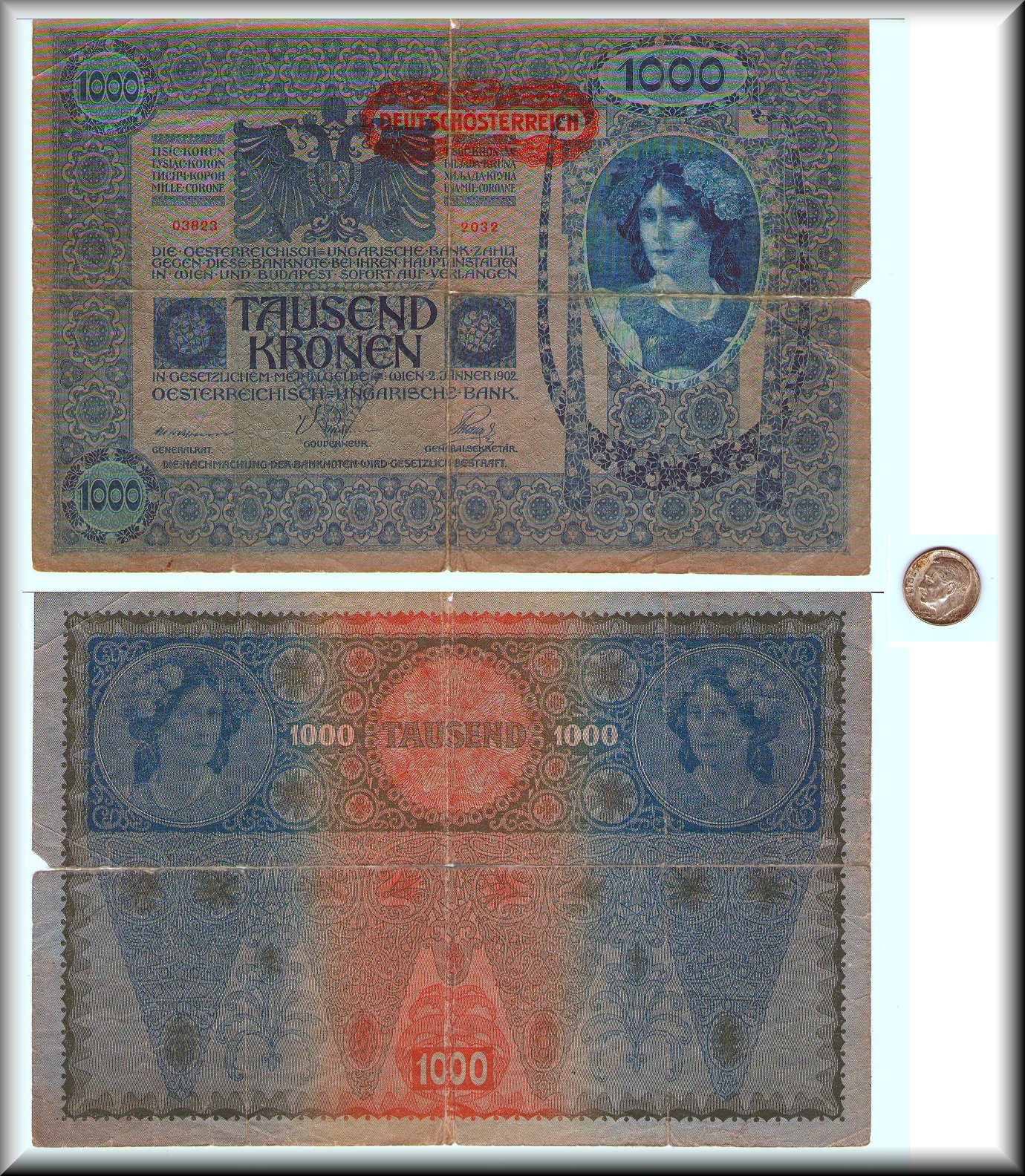
1902: 1000 Kronen

1000 Crowns 1902

1000-Crown note from the Austro-Hungarian empire, series 1902. Notice the overstamp which declares, “German Austria.”

The value of the note is printed in 8 languages in addition to German, among which are Serbian, Croatian, French, and Romanian.

The text reads, “The Austro-Hungarian bank pays promptly on demand at its headquarters in Vienna and Budapest one thousand crowns in legal metal currency, Vienna, 2 January 1902.

The Old Wolf has spoken.

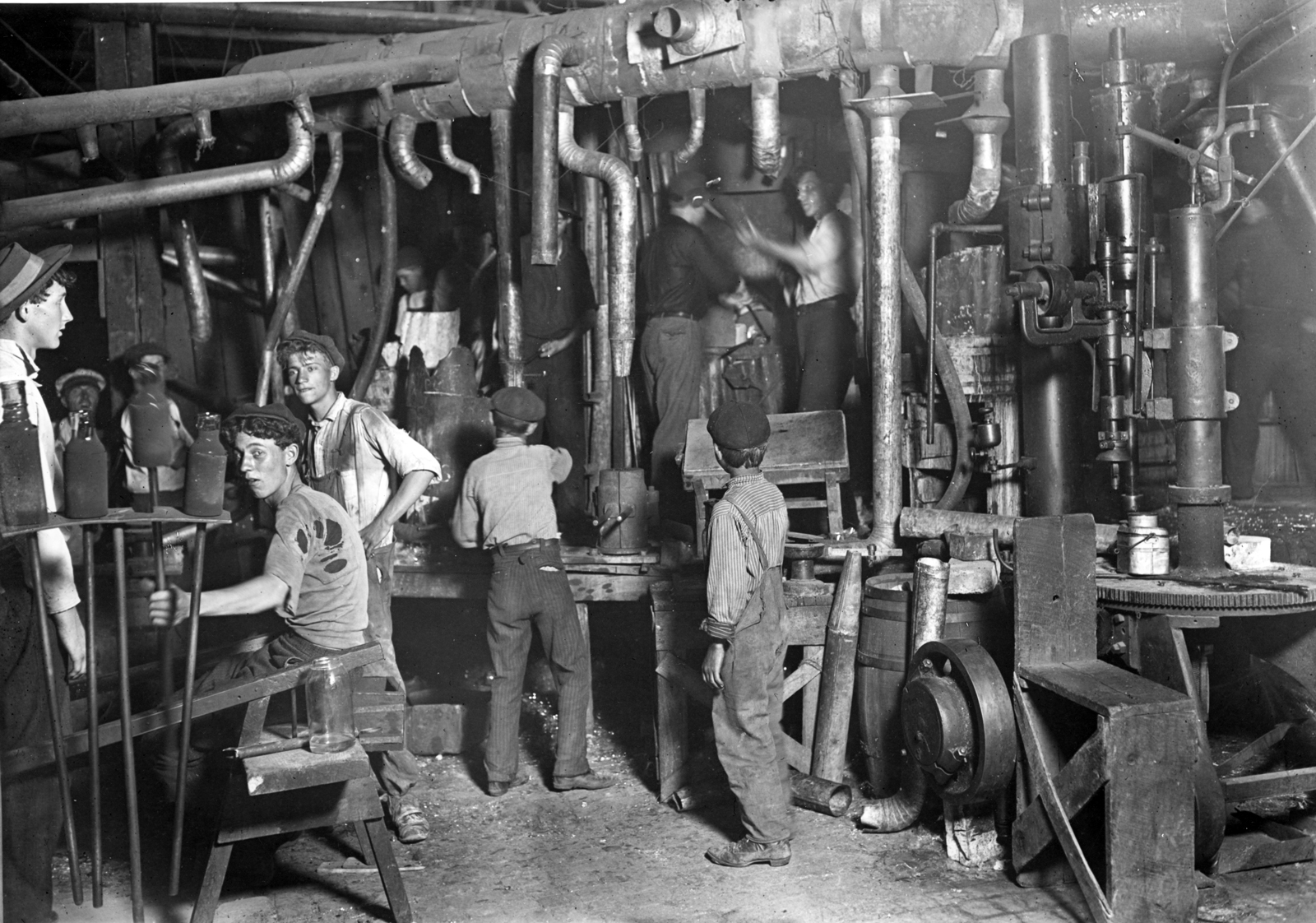
Child Labor

bib_92651


Part of a night shift in an Indiana glass factory, August 1908. Lewis W. Hines (1874-1940). This photograph was taken as part of an assignment for the National Child Labor Committee and the original belongs to the National Child Labor Committee Collection of the Library of Congress. This print (Collection of the Rakow Research Library 92651) was obtained from the Library of Congress.

You can see some intriguing statistics about this kind of work at the Corning Museum of Glass:

“In one glass factory, the average 1912 hourly wage for a male worker was 18 cents, and that of a female worker was 11 cents. They did not perform the same work. The lowest rate for a male was 15 cents and the highest rate for a female was still 11 cents. A 1917 statistic for the same factory shows that the average yearly wage for the lowest pay-rated male was $526, well above the U.S. poverty level at the time.”

The Old Wolf has spoken.

Sal Mineo in a Barrel

SalMineoBarrel

May 20, 1958: Actor Sal Mineo says fans stole his clothes and wallet while he was working out at a health club, but after being quoted as saying that he would rather wear a barrel than have a fan accused of stealing, he did just that. Officer Bill Grell is on the right. See more of the story at the LA Times.

Dino (Sal Mineo) faces off with his father, Mr. Minetta (Joe DeSantis – coincidentally my father) in the 1957 film Dino.

Things look grim for Mr. Minetta!

The Old Wolf has spoken.