The United Seamen’s Service – Naples, Italy

From 1970 to 1971, I lived in the Royal Palace in Naples, Italy. Yes, it was the basement, but it was still the Royal Palace. During that time I was intimately associated with the United Seamen’s Service, a non-profit organization serving the needs of merchant sailors around the world. This was the experience of a lifetime, and here is the story. Caution: This is a lo-o-n-g post. Look at the nice pictures if you don’t feel like reading. Palazzo-Reale-di-Napoli

Il Palazzo Reale (Click for a larger image). The star indicates my window. You can see the dome of the Naples Galleria in the background.

Naples - Royal Palace - Entry 2

Palace Entry, View 1 – Upstairs it was a lot fancier.

Naples - Royal Palace - Entry

Palace Entry, View 2

Naples - Royal Palace - Ballroom

Ballroom

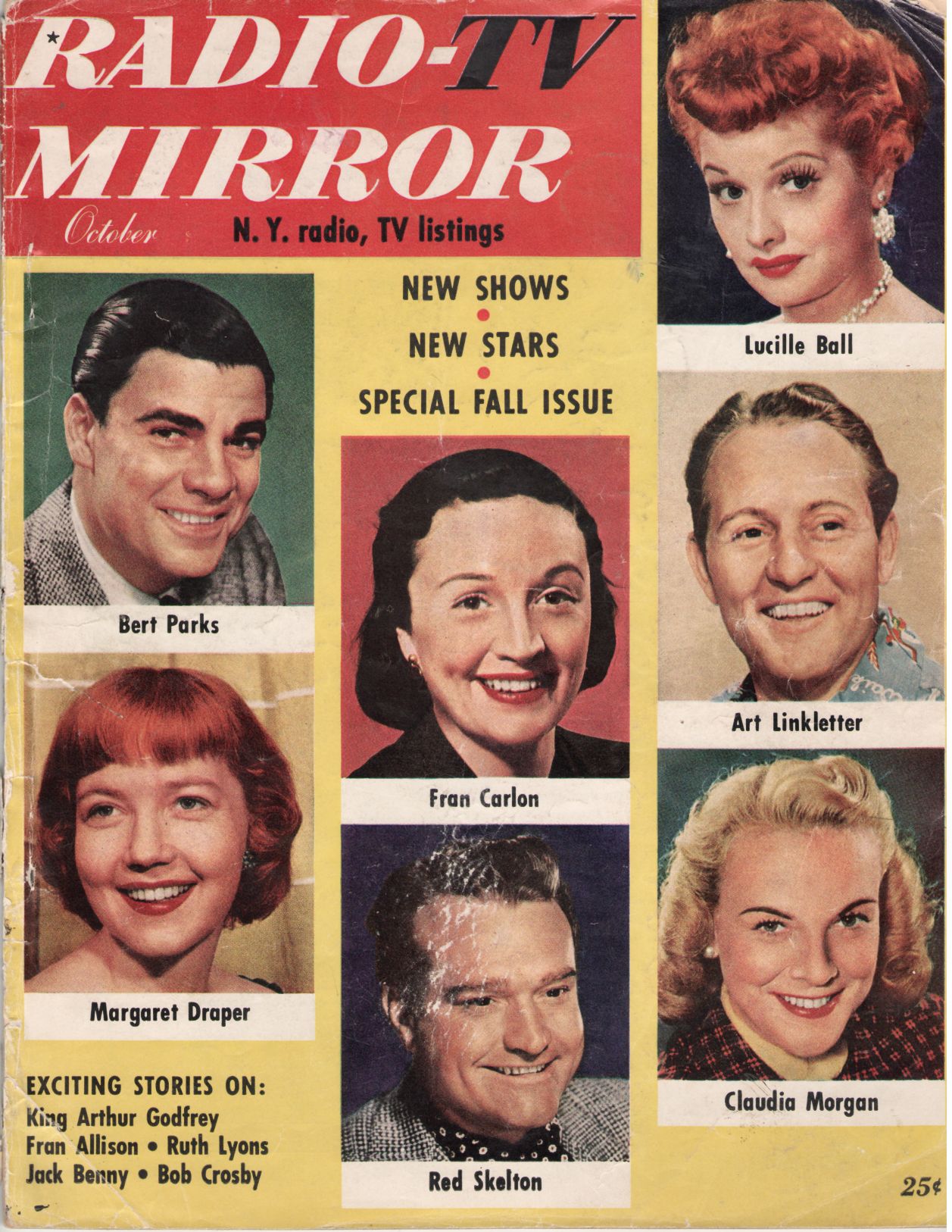
But back to the basement for me. In 1969, my mother Margaret Draper was finishing up service as the assistant director for the United Seamen’s Service club in Cam Ranh Bay, Viet Nam. Her departure, like that of everyone else, was precipitated by the imminent fall of the South. Her next assignment was to become the director of the club in Naples. She invited me to come along for a year. I thought about it for 0.68 seconds, and gave her an enthusiastic “yes.” Below, I re-blog an article written by Jason Chudy in the Stars and Stripes on May 17, 2004. I hope he doesn’t mind; it’s a wonderful history of the club, written at the close of an era. Thereafter, we’ll go back in time a bit.

NAPLES, Italy — For more than 53 years, the Naples United Seamen’s Service Center hosted aircraft carrier and car carrier crews, cruise ships and even congressmen. Unfortunately, changes in location and time led to the center’s April 16 [2004] closure. But for the two-man staff of director Bill Moerler and long-time employee Daniele D’Ettore, as well as for the hundreds of thousands who stopped in during the center’s nearly 54 years, the memories will remain.

Daniele1

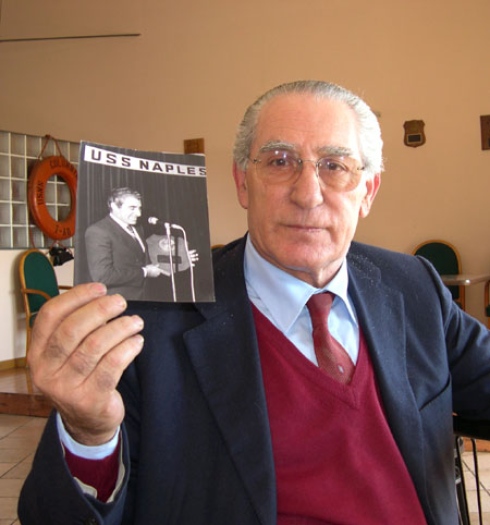
Daniele D’Ettore holds a photo showing him receiving a plaque for the United Seamen’s Service Center in Naples, Italy, during his time as director from 1974 until 1982.

MoerlerDanieleJukeBox

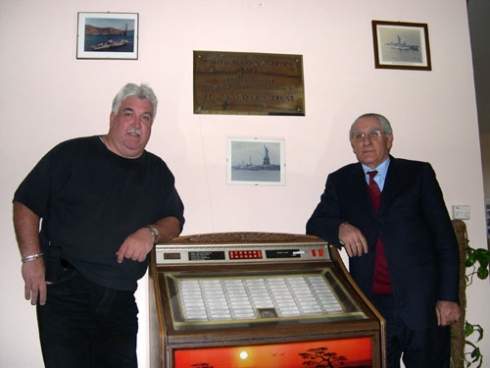
United Seamen’s Service Center director Bill Moerler, left, and long-time employee and former director Daniele D’Ettore lean against the center’s jukebox in Naples, Italy. The jukebox, like D’Ettore, has been serving center patrons for more than 50 years. D’Ettore, who’s done everything at the center from doorman to director in his 53 years of service, said that the jukebox has been with the center for as long as he has. The jukebox has original 45s featuring a wide range of music, from Roy Orbison to Michael Jackson.

USS Old

Wisconsin Sen. Alexander Wiley mugs with sailor Lawrence Seliger and Army Cpl. Mark Seliger, constituents from Marathon, Wis., in this undated photo. Both sailor and senator alike visited Naples’ United Seamen’s Service Center, as well as many top Italian singers and musicians, and military and civilian officials.

“It was a hotbed of activity, almost standing room only,” said Cmdr. Jim Romano, chief staff officer of the Naples-based Military Sealift Command Europe. Romano first visited the center as a seaman apprentice in September 1973, returning more than a half-dozen times since. The center started out in the Galleria Umberto I in 1950 and moved to the former horse stables of the Naples Palazzo Reale (Royal Palace) a few blocks away the next year. Palazzo Reale, which was home to the Bourbon kings in the 1800s, became home to the center until 1997. Its location was an easy stroll from the Navy’s fleet landing. During its heyday, the club drew hundreds of people a night. When an aircraft carrier came to visit, thousands would pass through the doors each day. “Everyone talked about the seamen’s center,” said Romano. “Probably 90 percent of the sailors pulling into Naples … had been to the seamen’s center. It was the stopping place before we went out in town or where after … we’d finish up the evening.” Romano also visited Naples, and the center, with the aircraft carrier USS Forrestal in 1978. “Things were hard,” said D’Ettore about the carrier visits. “We’d finish about 3 or 4 o’clock in the morning when a carrier was in Naples.” D’Ettore has worked at the center for 53 years, doing everything from doorman to director. His wife, Elena, cooked in the center’s kitchen for 45 years, only hanging up her apron last month. Those carrier visits, Moerler said, could earn the center enough money to operate for three or four months. The center wasn’t only popular with the Navy. Visiting cruise ships would send over their bands and stage shows to perform. Hundreds of undated photos, many showing musicians and high-kicking dancing girls, sit in a box at the center. D’Ettore remembers many popular Italian singers performing at the club, too. Many visiting politicians and dignitaries also stopped in. For example, the center, in conjunction with the United Service Organizations, hosted President Clinton’s secretary of defense, William Cohen, and his wife for dinner.

Location is key

The center at Palazzo Reale was a top Naples nightspot for military and civilian alike, said Moerler. Though the general public couldn’t enter the club, a young woman on a sailor’s arm wouldn’t be denied admission. For many years, though, the city government wanted the center gone. One reason, Moerler said, was because of Naples’ desire to reclaim and restore Palazzo Reale. Another reason, although it was never publicly acknowledged, was that the center drew sailors and other mariners away from local businesses. Prices for beer and food were cheaper at the center because of its nonprofit status and low rent. In 1997 the government succeeded in their attempts and forced the center to move into the port itself. The move, which took them about three kilometers from the Navy’s fleet landing, eventually helped kill the center for good. During a visit by the aircraft carrier USS Enterprise and cruiser USS Gettysburg earlier this year, not one sailor stopped in. Not only had the center’s location changed, but also its clientele.

Changing times

“When I came in the service, you could work hard and play hard,” said Romano. “It was kind of an accepted thing. If you went out and had too much to drink … as long as you didn’t get in trouble … they put you back in your rack [bed] and if you got up the next morning and got to work, nothing was said.” Now, Moerler said, sailors and civilian mariners don’t drink like they used to, nor do they want to spend their short port visits in a bar. That time spent drinking could not only cost a lot of money, it could cost a career. Civilian mariners could lose their license for being intoxicated at work while military members can be reduced in rank for even a first infraction. Navy ships also don’t make port visits to Naples like they used to. In the past few years only a handful of ships have stopped in Naples, including only two aircraft carriers. Even the merchant ships have changed operating schedules. More time in port means less time at sea making money for their owners. Some ships aren’t even in port long enough for the crews to get off. And when mariners would stop in, they’d buy items that didn’t earn the center enough money to survive. So now, Moerler will move on to a seamen’s center in Germany and D’Ettore will run his family bar. Everything left in the club will be sold or moved to other centers. “I think it’s sad,” said Romano. “You always knew you could stop by and feel welcome. It was part of coming to Naples.”

———–

USS: Aiding seafarers The United Seamen’s Service was started in 1942 as a nonprofit, nonsectarian organization to provide health, welfare, education and recreational services to the men and women of the American Merchant Marine and seafarers of other nations. Since then, the USS has increased its customer base. It serves American seafarers and their family members, U.S. military and government civilians as well as seafarers of other nations and people working in the maritime industry. “We’re like a USO [United Service Organizations] for the Merchant Marine,” said Bill Moerler, Naples USS Center director. The service has eight centers worldwide: Casablanca, Morocco; Bremerhaven, Germany; Diego Garcia; Guam, Manila, Philippines; Pusan, South Korea; Okinawa, and Yokohama, Japan. Two USS centers in Genoa and Naples, Italy, have closed within the past year. The remaining centers provide recreation, phones, fax, mail and money order services, food and beverage sales, gift shops, small libraries and health articles. Books in the libraries are kept up to date by shipments from the USS-affiliated American Merchant Marine Library Association. Center personnel also provide an outreach program that brings USS services to seafarers aboard ships, in hospital or even jail. Both U.S. Public Law and Department of Defense regulations establish “cooperation with, and assistance to” the USS in support of its mission. The Navy’s Military Sealift Command Europe has close ties with the USS, serving as its liaison with the Naples military base. “Over many years MSC Europe, as with MSC in general, has had a special relationship with the USS,” said MSC Europe’s public affairs officer Ed Baxter. “They provide a good service, especially in places where a military infrastructure is not available,” he said about USS.
The Facilities

As mentioned, in 1950 the USS club moved to the basement of the Palazzo Reale in 1950. The area was used both as a stables and a storage area and supply depot for the palace – based on what I was told, at one point ships could come right up to the waterfront side of the building and discharge their cargo for easy access.
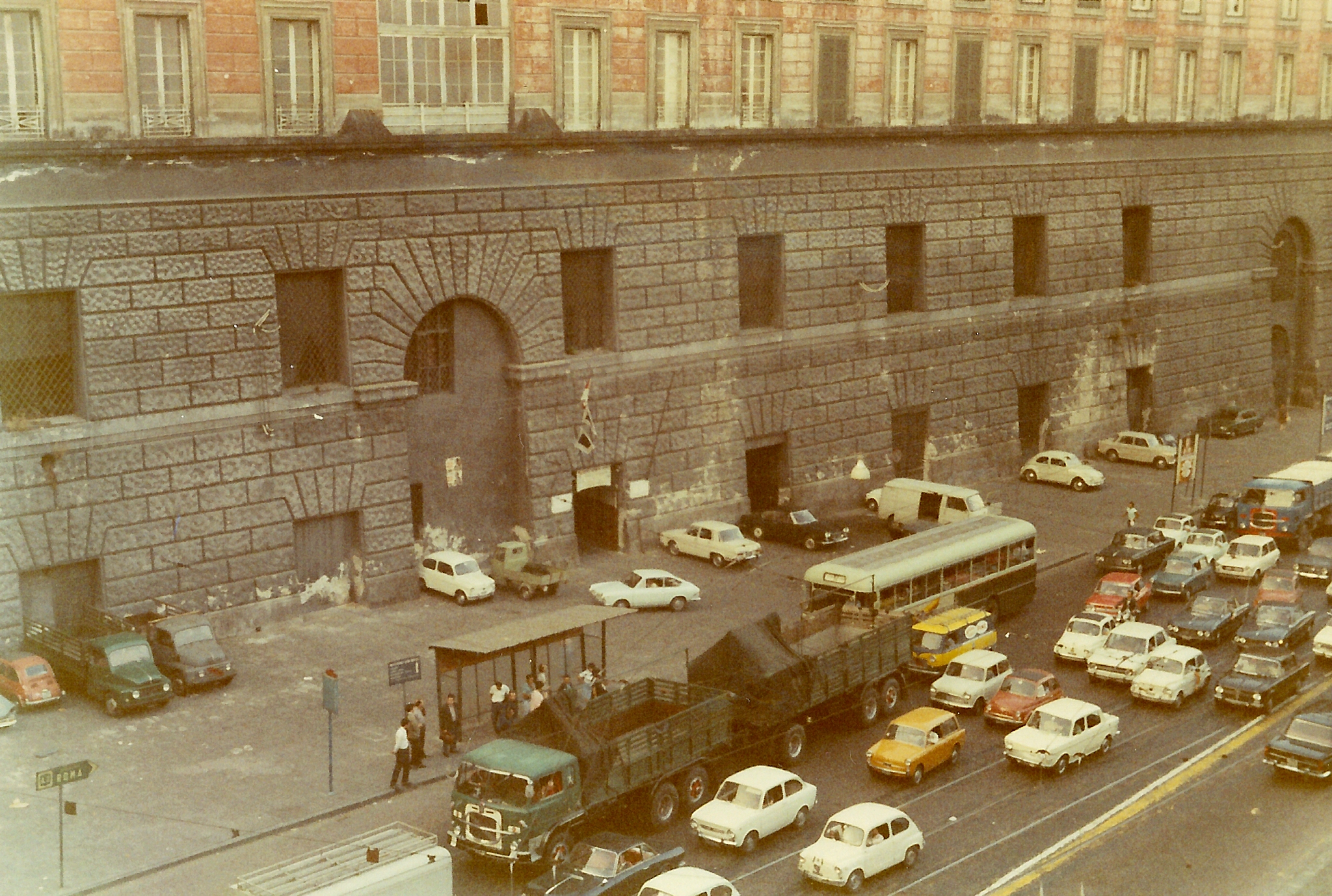
United Seamen's Service - Naples - 1969(Via Acton 18, in the Royal Palace basement)

United Seamen’s Service – Naples – 1969
(Via Acton 18, in the Royal Palace basement)

One would enter the club by passing through the metal gates on the street level, and ascend to the first floor via a long stairway, passing storage rooms which were used for keeping supplies and sawdust (very useful for cleaning up after sailors who had had too much to drink.) The stairs led to the main entrance of the club.
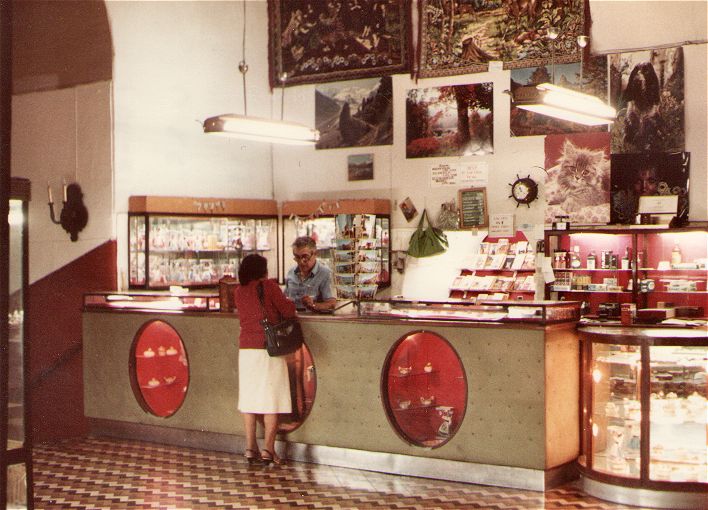
Naples - 1970 - Daniele at the Gift Shop

Daniele D’Ettore manning the Gift Shop in the 1980’s

USS - Gift Shop

Looking back at the entrance from the library. Notice the 40-foot ceilings; painting those was fun for the staff.

Straight ahead was a lounge area and a small rotating library, where sailors and seamen were encouraged to borrow books and leave others that they had finished reading. About the only channels available on the TV were RAI1 and RAI2.

USS - Library

Turn left, and you’d find yourself in the main dining room/bar area: kitchen to the right, bar to the left.

USS Naples - Dining Room

Music and dancing were common here.

USS Naples - Kitchen

The kitchen. Lots of good food came from here.

USS Menu

The menu. Prices had been altered to reflect changing economic conditions – some up, some down. At the time, the Lire was still at 624 to the dollar, which made 100 Lire about 16¢.
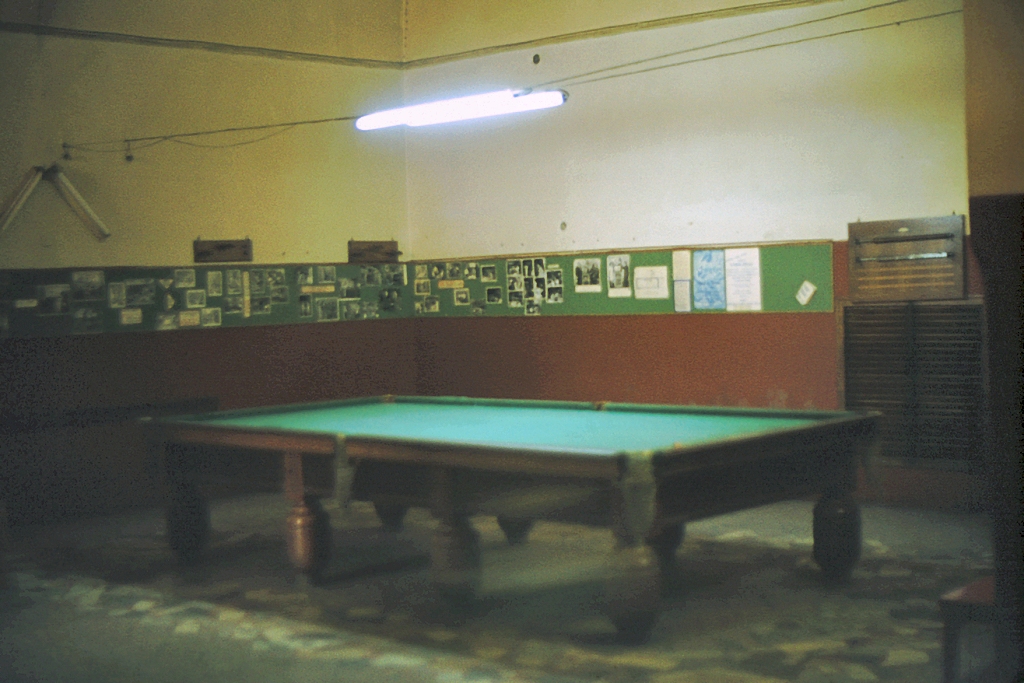
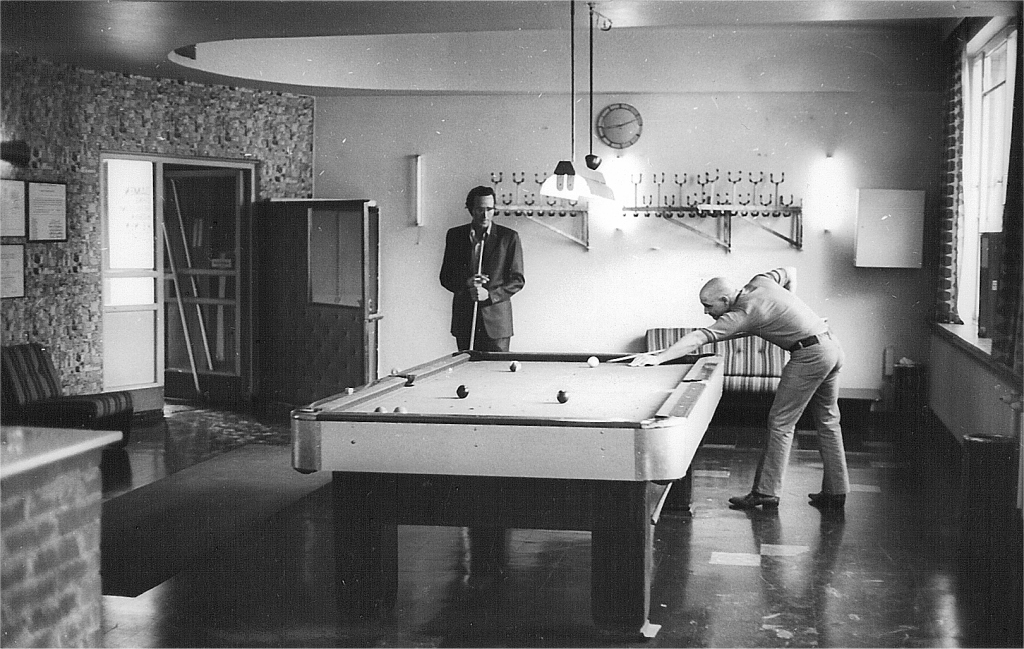
USS Naples - 14 ft snooker table

In the back, entertainment. This was a 14-foot snooker table. We once had to move it so that the floor around it could be repaired with terrazzo. It must have weighed 16 tons, and took at least a dozen hefty sailors to move.

USS Naples - Slot Machines

Slot machines and other games were available.

USS Naples - party room

All the way in the back of the club was a large party room which had been resurrected from long inactivity and spruced up. In between were sailor’s dormitories for emergency lodging, the manager’s apartment, and storage rooms.

The People
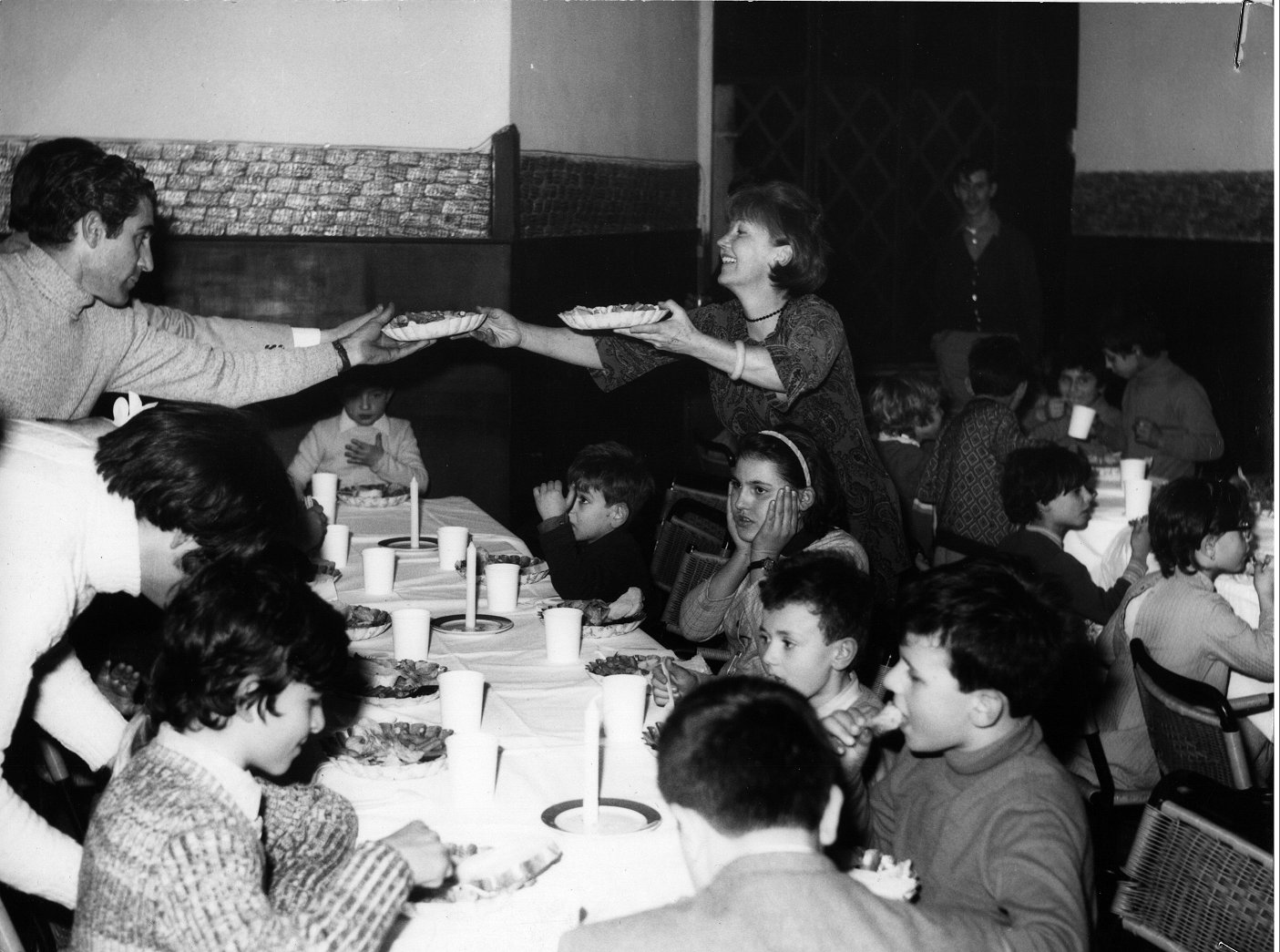
Naples - Serving Orphans

Daniele D’Ettore assists director Margaret Draper (right) in serving a party of local orphans hosted at the center.

Angela and Elena

Angela (waitress and bartender) and Elena D’Ettore in front of the phone booth Margaret had designed and installed.
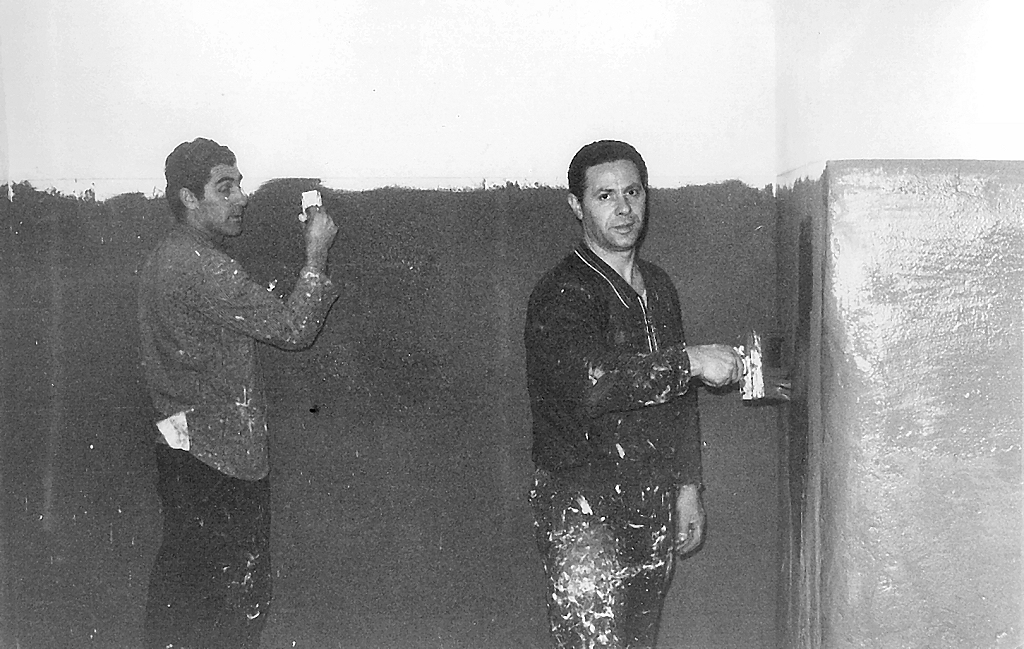
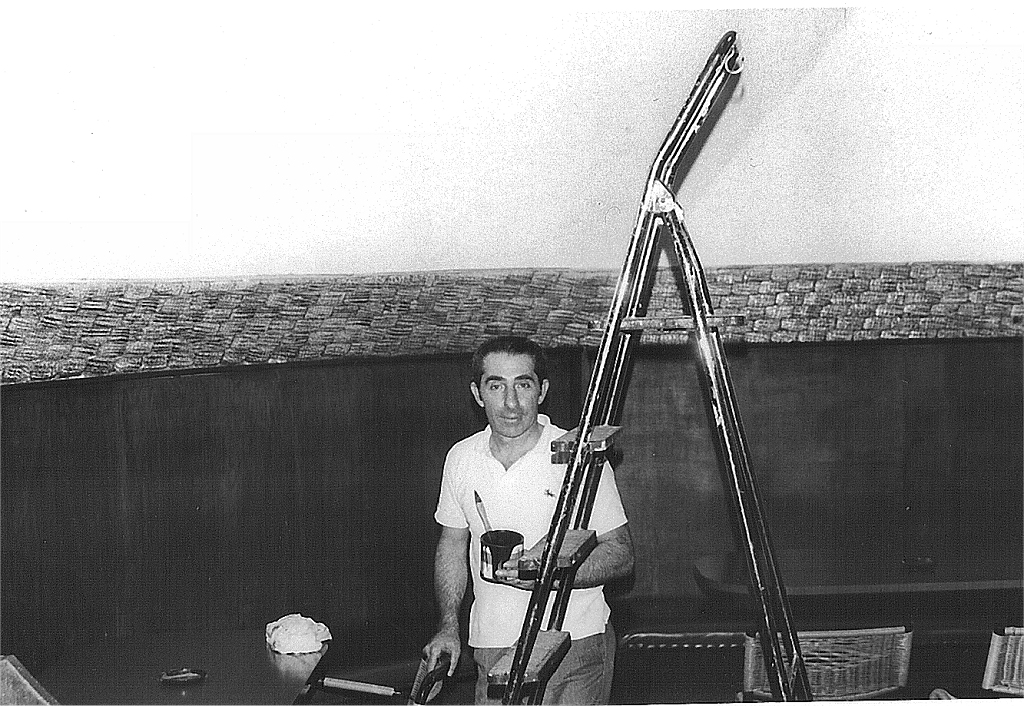
USS - Daniele and Franco Paint

Daniele D’Ettore and Franco Molino painting one of the dormitory rooms.

Agostino Maiorano and Daniele d'Ettore

Agostino Maiorano (Accountant) and Daniele D’Ettore in 1983
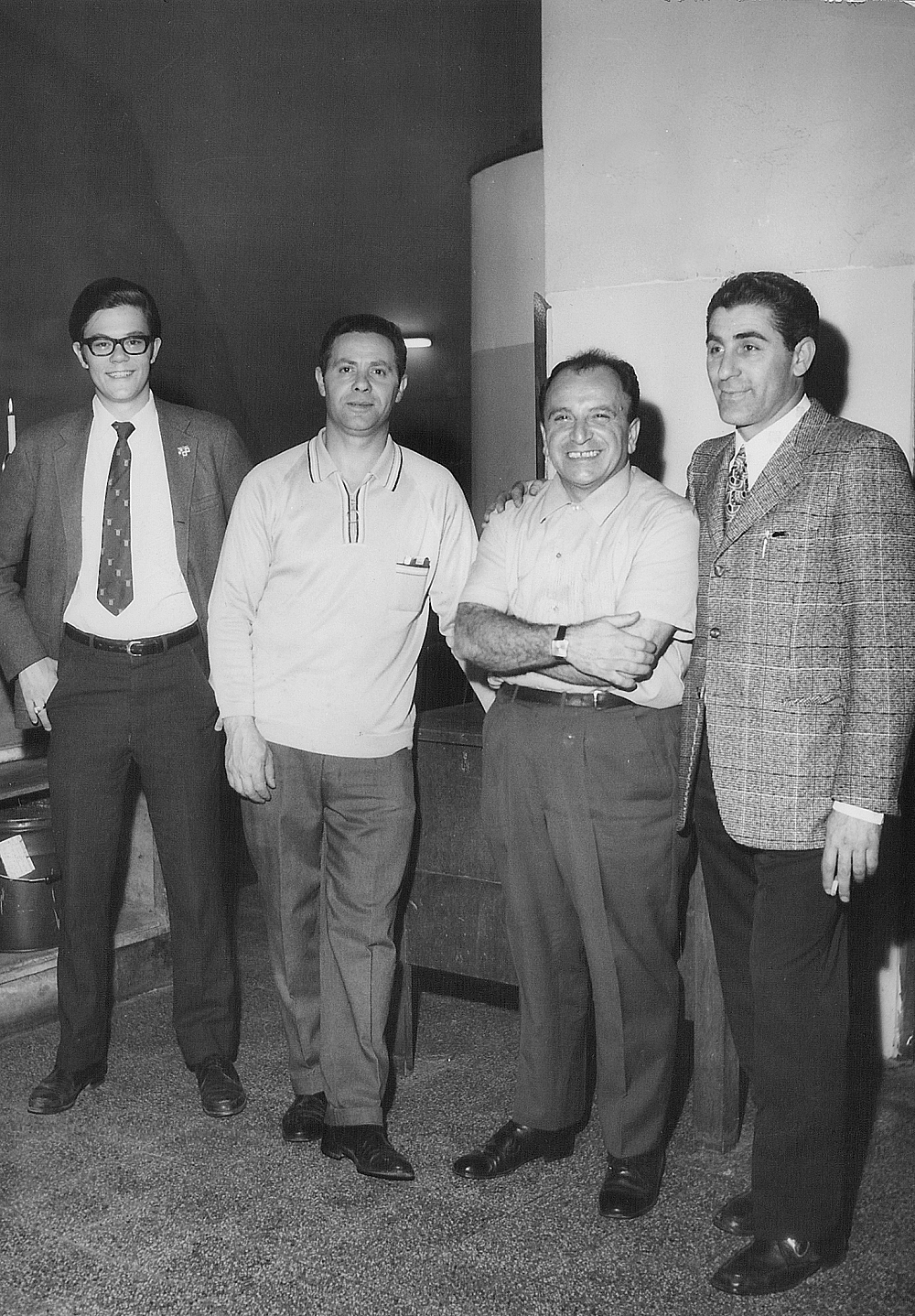
USS Naples - 1969 - Chris, Franco Molino, friend, Daniele d'Ettore

Some random bum off the street, Franco Molino, a friend or relative, and Daniele D’Ettore in 1970.
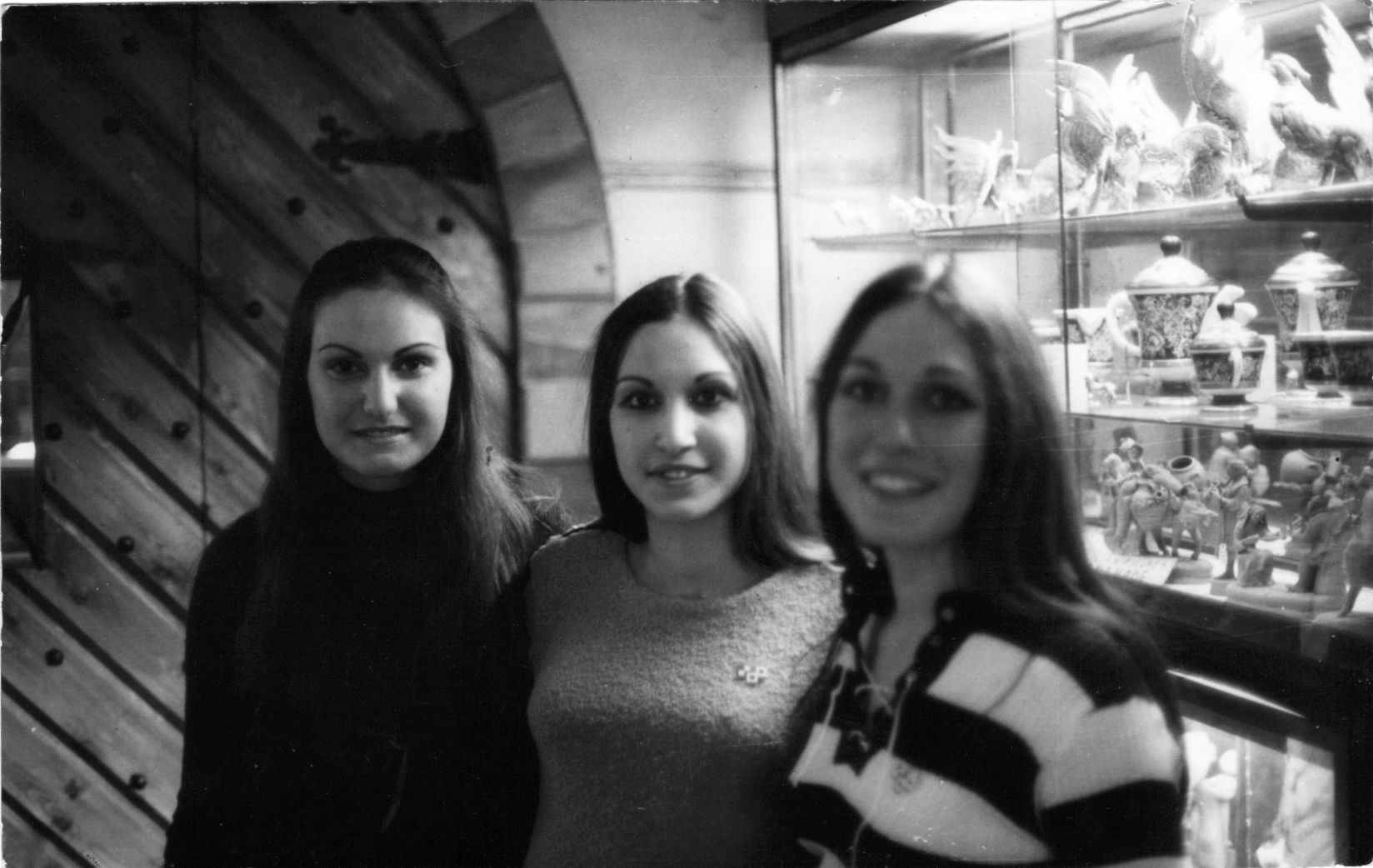
USS - 3 Gorgeous Girls (Unknown, Anna, Luisa)

Three of our beautiful part-time hostesses: Luisa on the right, her sister Anna in the middle, and I can’t remember the name of the young lady on the left.

Commodore A.J. Bartlett

Maria Annella (volunteer interpreter) and Commodore A.J. Bartlett (Commander, Service Force 6th Fleet) talk to some random bum off the street. Background left, Edward J. Sette, Executive Director of the United Seamen’s Service.
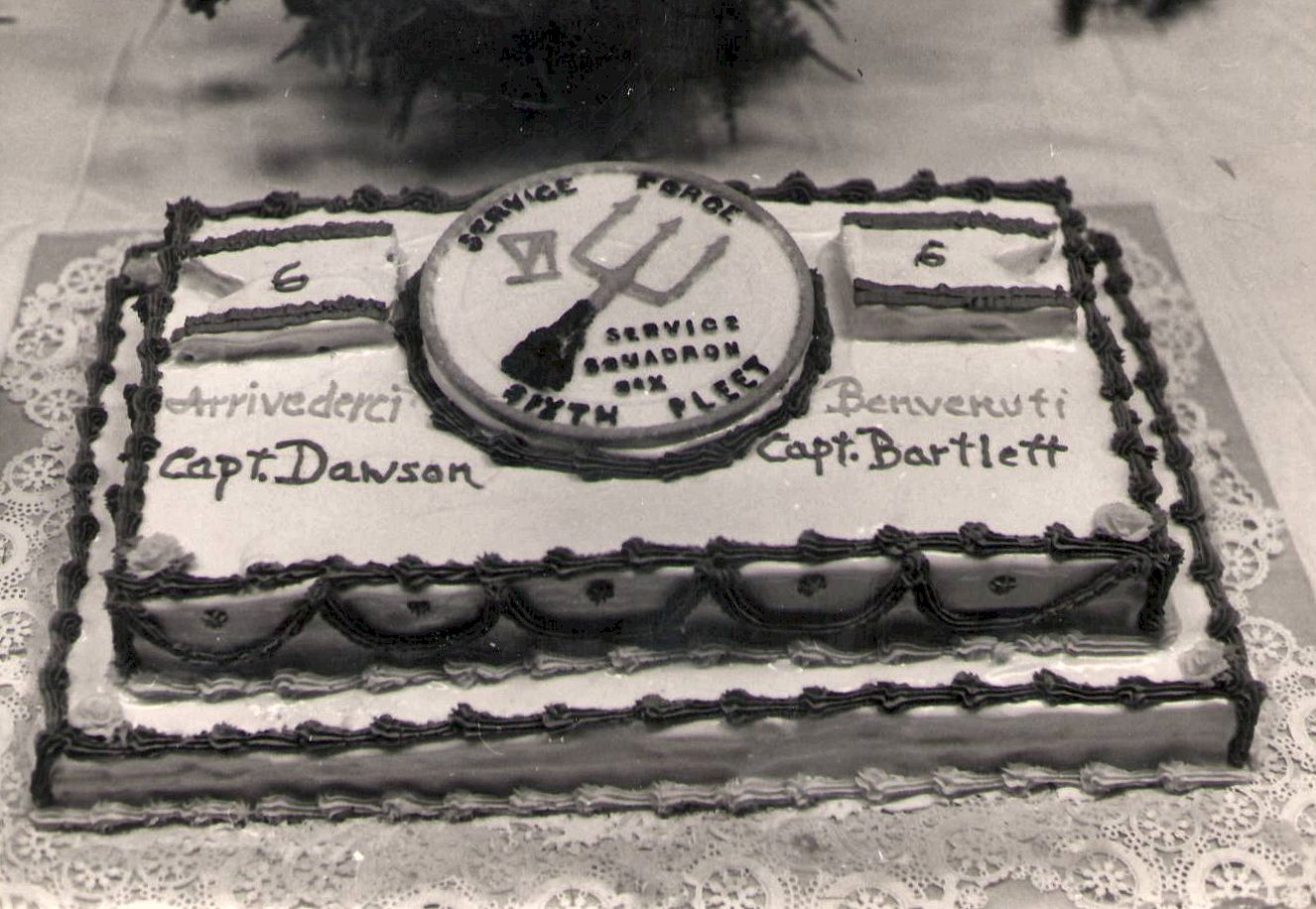
USS Naples - Change of Command Cake

Change of command cake.

Naples - Daniele's Brother

Daniele’s brother helps with the painting effort.
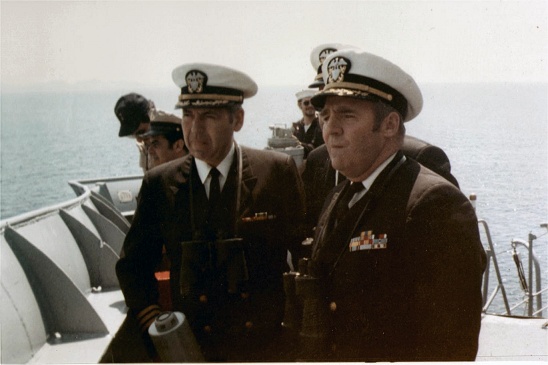
Naples - 1970 - Captain James W. Hayes

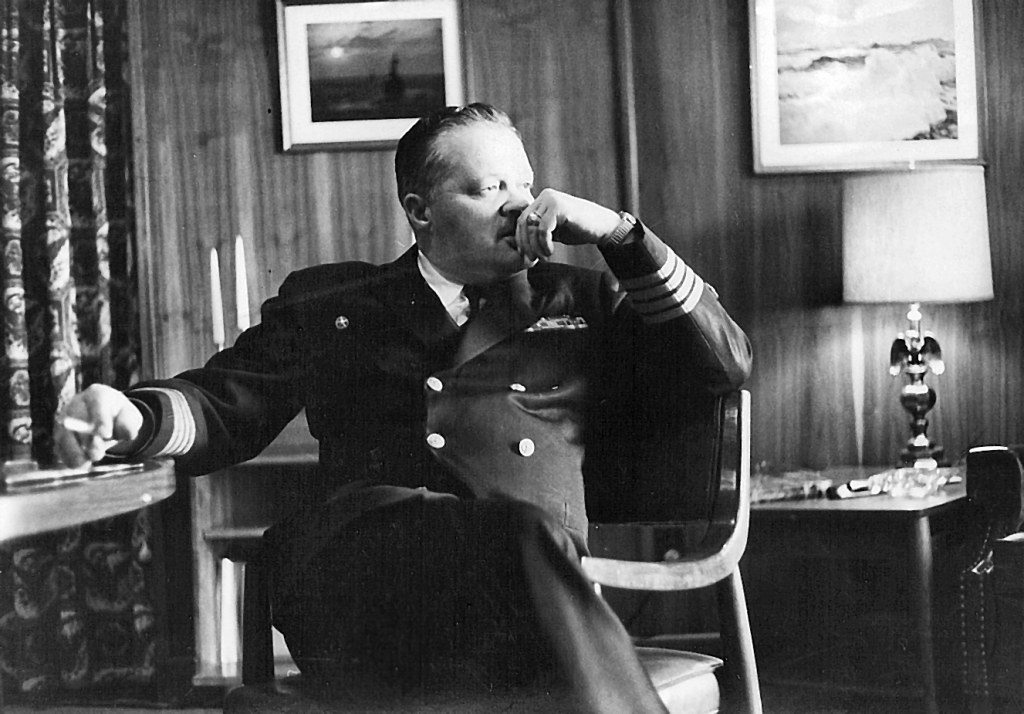
Captain James W. Hayes, USN. Captain of the USS Grand Canyon, AD-28, a destroyer tender which provided a large number of USS clientele from 1970 to 1971. The Grand Canyon was replaced by the USS Cascade, AD-16.

There were many others who worked and served and visited, but it would be impossible to list them all. What follows are some photos which I took during my tenure there in 1970 and 1971.

Naples - 1970 - Joe Harter (Riverside, CA)

USS Cascade: Sailor Joe Harter repairs a movie projector
Naples - USS - Ship's band

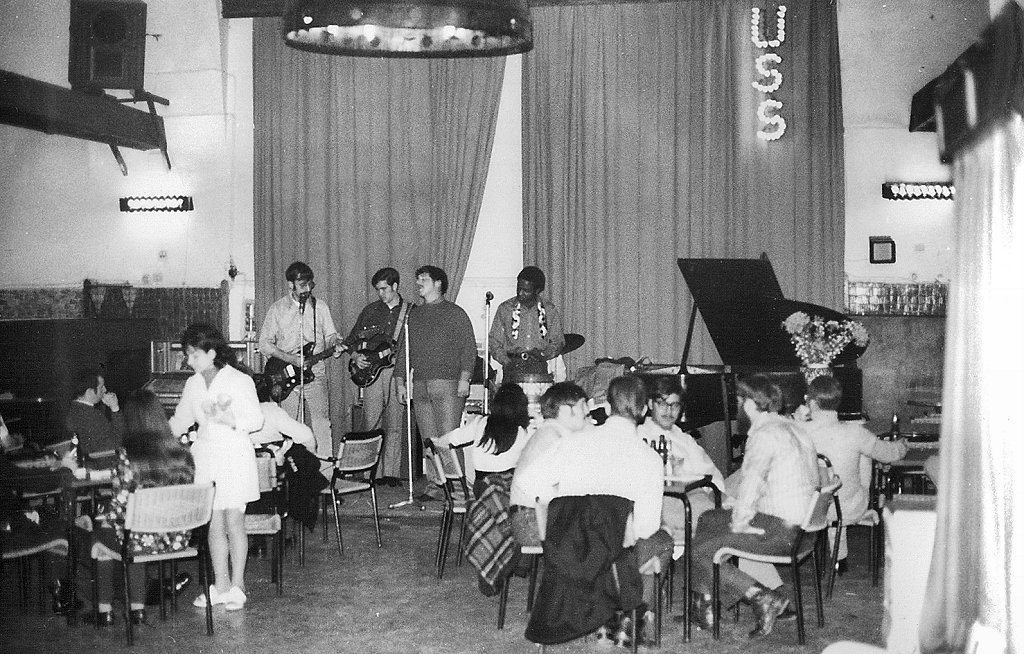
A ship’s band entertains

Naples - USS Cascade - Dan in the Wood Shop

USS Cascade: Sailor Dan in the Wood Shop

Naples - USS Cascade - Machine Shop

USS Cascade: A sailor works in the machine shop.

Naples - USS Cascade and destroyers

The USS Cascade (AD-16) and her charges. These destroyer tenders were floating factories – if they couldn’t figure out how to repair or replace something, nobody could.

Naples - USS Surprise PG97 Crew

Crew of the USS Suprise (PG-97)

NormSmall

Left, Cdr. J. Norman Messer, Executive Officer of the USS Cascade, with Captain Robert Schniedwind.
USS - Card Game

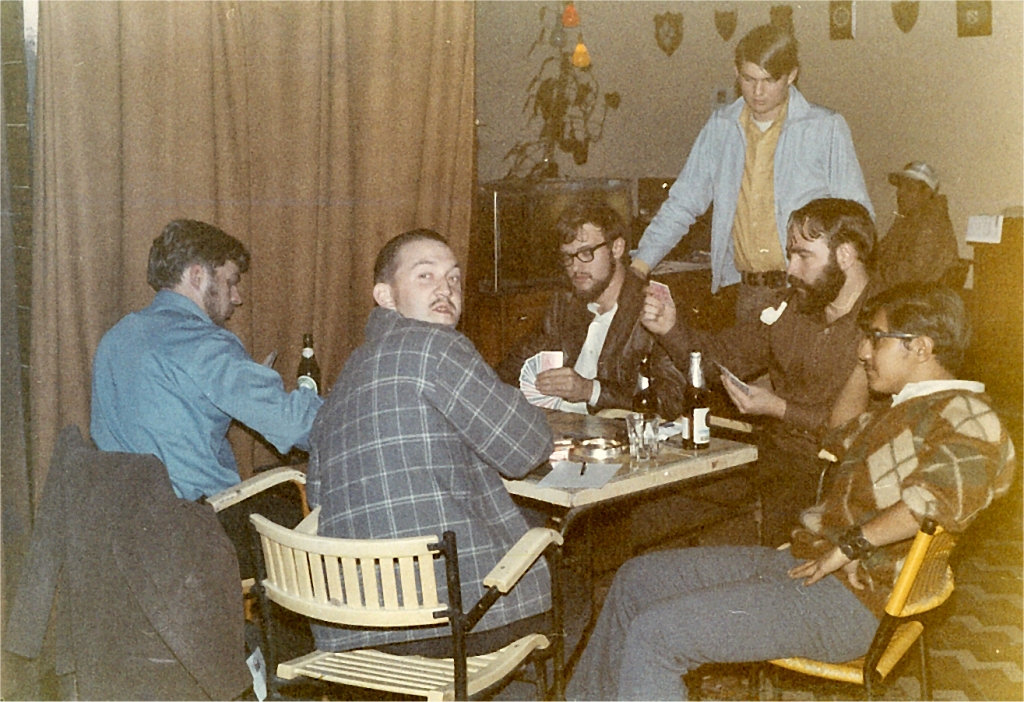
A card game in progress in the bar.

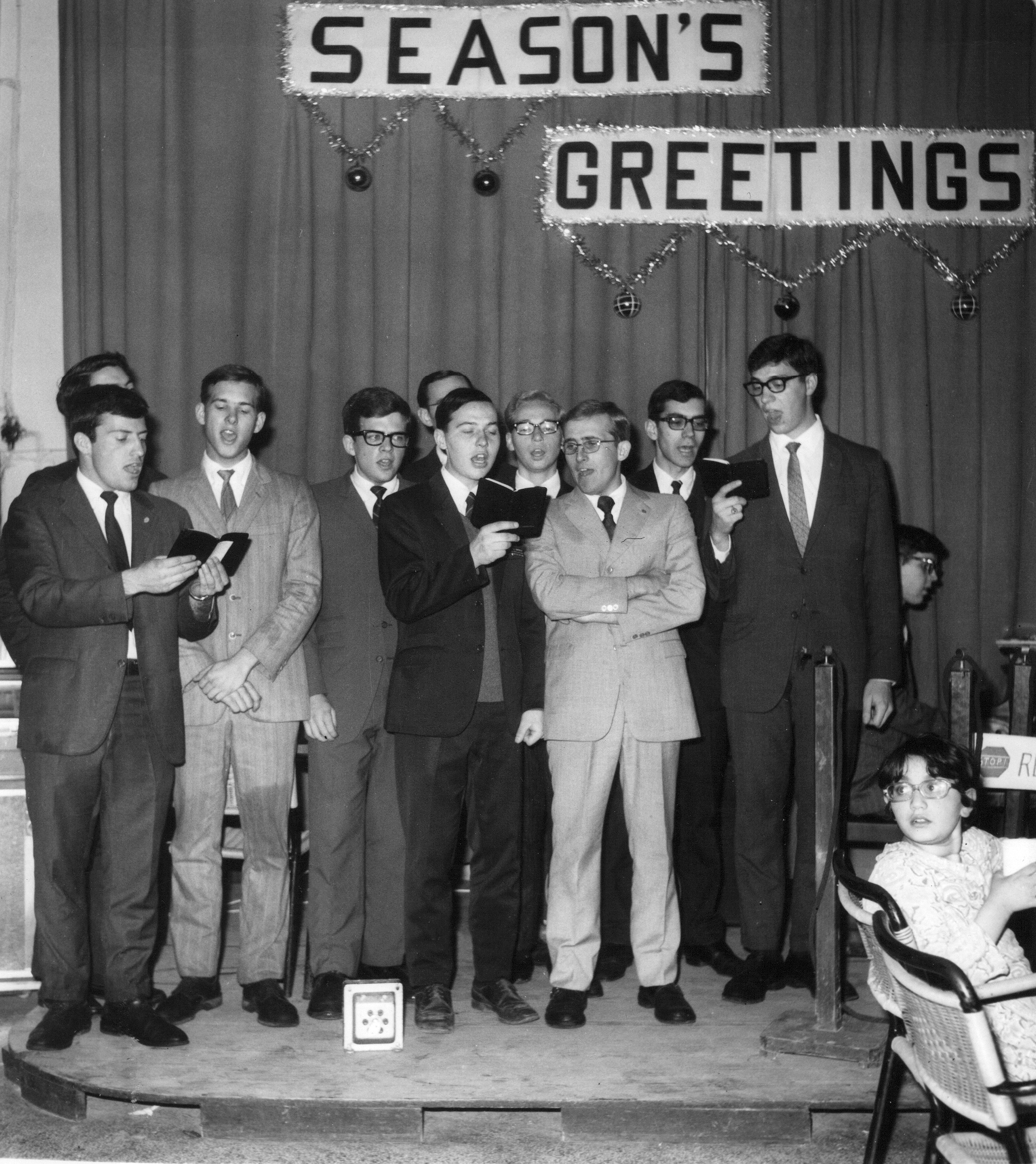
USS - Napoli Elders 2

A contingent of elders from the Church of Jesus Christ of Latter-day Saints sings Christmas carols.
USS Children's Party - One more whack

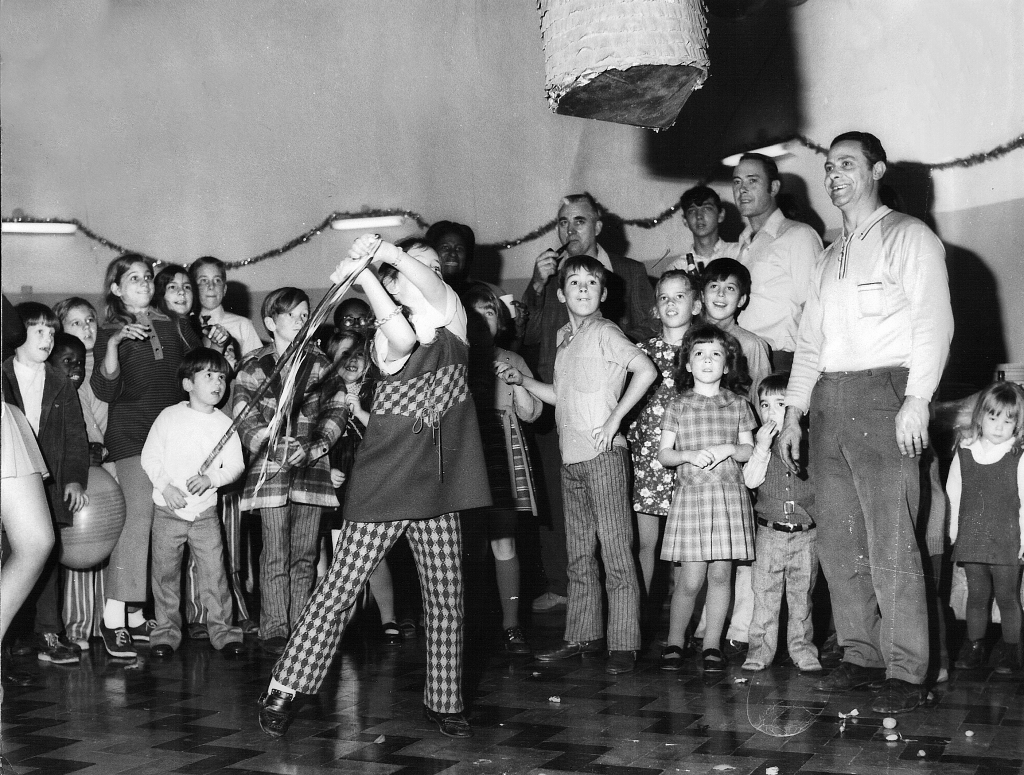
A children’s Christmas party at the center. Just one more whack…

I crammed a lifetime of experiences into that brief period – there are scarcely words to record them all, and this is but a sample of what went on.

Other Locations

The USS had many clubs throughout the world in wartime, and even as late as 1971 there were more open than exist today.

USS Cam Ranh Bay

1969 - USS Cam Ranh Bay Moon Launch

Staff at Cam Ranh Bay celebrate the landing of Apollo 11.

USS Bremerhaven

Europe Trip - Jun 1971 - Bremerhaven - USS bar

Bar

Europe Trip - Jun 1971 - Bremerhaven - USS Club

Exterior

Europe Trip - Jun 1971 - Bremerhaven - USS sign

Advertisement on a building nearby

Europe Trip - Jun 1971 - USS Bremerhaven 1

Pool Hall

USS Genoa

USS Genoa - 1970

USS Genoa – Gift Shop

USS Genoa - 1970 - Ted Weaver

USS Genoa Director Ted Weaver

USS Egypt
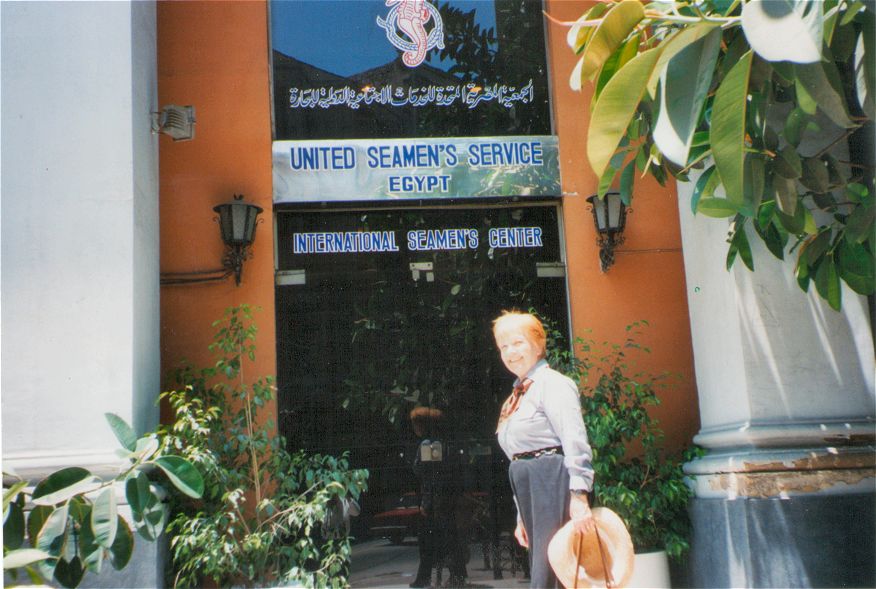
Margaret - USS Egypt

Director Margaret Draper in front of the USS club in Alexandria which she created and launched over the course of 5 years

There are currently 7 centers operating, including Bremerhaven, Germany; Casablanca, Morocco; Diego Garcia, B.I.O.T.; Guam, M.I.; Naha, Okinawa, Japan; Pusan, Korea; and Yokohama, Japan. As long as there are seamen on the waters, it is hoped that the USS will be there to serve their needs.
ussflag

The Old Wolf has spoken.

“After reading this blog, you’ll think Shakespeare was a penny dreadful hack!”

Yup, that’s a “blurb”. We see them everywhere, but tend to notice them most on movie advertisements. We ignore them or laugh at them, but for better or for worse they influence our consumption habits.

zwei-komplette-romane

Seeing the blurb on this dime store pulp made me chuckle – “damned with faint praise” is the first thing that came to mind. You’d think they might have come up with something a bit more riveting, but what it shows is the absolute necessity in some editor’s mind that a blurb – any blurb – must grace the cover.

The word “blurb” itself was coined by American humorist Gelett Burgess, author of Goops and How to Be Them (you can see a sample here.)

FileGelett_Burgess

Burgess handed out a limited run of his book Are You a Bromide?  to a trade organization dinner, and the dust jacket included this image:

Blurbing

Blurbs are everywhere, and well-known authors are often solicited for blurbs about other books. The New York Times published “Riveting!’: The Quandary of the Book Blurb,” a series of essays on blurbing including a piece by Stephen King; the upshot is that blurbs are a necessary evil, but they can have a certain value. On the other hand, however, sometimes the writers should probably have stayed in bed.

In their famous parody Bored of the Rings, Harvard Lampoon lost no opportunity to make fun of blurbs themselves, publishing this page of blurbs in the front of their book:


“Much have I travelled in the realms of gold, and many goodly states and kingdoms seen; round many western islands have I been, which bards in fealty to Apollo hold. Oft of one wide expanse had I been told, which deep browed Homer ruled as his demesne. Yet never did I breathe its pure serene, till I heard Bored of the Rings speak out loud and bold!…”
JOHN KEATS, Manchester Nightingale

“This book… tremor… Manichean guilt… existential… pleonastic… redundancy…”
ORLANDO DI BISCUIT, Hobnob

“A slightly more liberal reading of the leash-laws would keep books like this off the stands. I don’t know how you’ll fare, but my copy insists on long walks around suppertime, bays at the moon, and has spoiled every sofa cushion in the place,”
WILMOT PROVISO, The Rocky Mountain Literary Round-Up

“0ne of the two or three books…”
FRANK O’PRUSSIA, Dublin Gazette

“Truly a tale for our times … as we hang suspended over the brink on a Ring of our own, threatened by dragons and other evil people, and, like Frito and Good­gulf, fighting a cruel Enemy who will stop at nothing to get his way,”
ANN ALAGGI, The Old Flag

“Extremely interesting from almost every point of view.”
PROFESSOR HAWLEY SMOOT, Oer Loosely Enforced Libel Law! 


Scott Adams, author of Dilbert, sponsored a reader contest to provide a blurb for his book Stick to Drawing Comics, Monkey Brain!; the grand prize winner was Nicolas Feia who came up with this gem:

“‘What a perfect companion for my afternoon milk bath,” I thought while picking up this little gem on my way home from work. Within the hour I had laughed myself into a neck-deep tomb of butter. My wife came in, sipping her eggnog, and topped me with meringue.”

The others, however, are good for a laugh as well.

Anyway,

“Keep reading this blog and you’ll soon see that Mark Twain has met his match!”
SIMPLOT Q. ANALEMMAOn the Rising Value of Badgers, Mushrooms and Snakes in the Modern Commodity Market

The Old Wolf has spoken.

Quaker Puffed Rice: Shot from Guns!

Rice

Advertising is insidious. For a perfect example, check the section on Salem cigarettes in this post. In the same way as my parents’ generation could not listen to the William Tell Overture without shouting “Hi-o Silver!”, I am unable to listen to the 1812 Overture by Tchaikovsky without thinking of Quaker Puffed Rice.

Berg

With thanks to Dave Berg

Sadly, no examples of the famous Quaker commercial appear to be extant on the internet. However, the ad featured music from the 1812 overture, of which some versions use actual cannon. The screen would be filled with images of puffed rice flying out of cannons as the music boomed in the background.

Here’s an older ad that highlighted the technique without the use of the music:

Just recently, I stumbled across this video of Lin Hai, an old vendor on the streets of China, using a rice cannon to create his own puffed rice and popcorn right on the street. It gives you an idea of how the Quaker product is made, something I had never really understood.

(Skip to 2:30 to watch the impressive part.)

Edit: I realized this discussion would be incomplete without showing what modern technology has done with this principle:

I saw one of these in operation at a local grocery store – the machine loads a scoop of rice into a press, and a few seconds later shoots out a perfectly-formed rice cake. Unfortunately, rice cakes still taste like styrofoam, but it was fun to watch.

Edit 2: For some odd reason, all the old Quaker commercials featuring the 1812 overture have been scrubbed from the Internet. I find this sad, and it’s not just this instance. A lot of the great old ads that had been captured are taken down by corporate attorneys in the name of “intellectual property protection” or some other nonsense. These ads belong to history and should be available to the public as a record of times and attitudes gone by, even if current marketings strategies have changed.

At one point there was an old commercial featuring the cast of “F Troop” singing about puffed wheat to the tune of the 1812 Overture, but it also has been scrubbed.
The Old Wolf has spoken.

Nedicks Nickel, 1953

I posted previously about vanished New York eateries, foremost among them Nedicks, and today while sorting through some things ran across this little gem which I had forgotten I owned.

NedicksNickel

About the size of a dime, these were included in packs of cigarettes purchased from a vending machine. Each token could be redeemed at the counter, giving Nedicks’ customers a discount on cigarettes.  The token bears the image of Walter S. Mack, Jr. president of National Phoenix Industries, Inc., owner of the Nedicks’ chain and inventor of the promotion. The tokens were manufactured by the The Scovill Manufacturing Company.

The Old Wolf has spoken.

Heads or Tails

Heads or Tails in Different Languages

If you spot something that’s wrong, or a better version, or can add some history, or have a different language to add, feel free to leave comments!

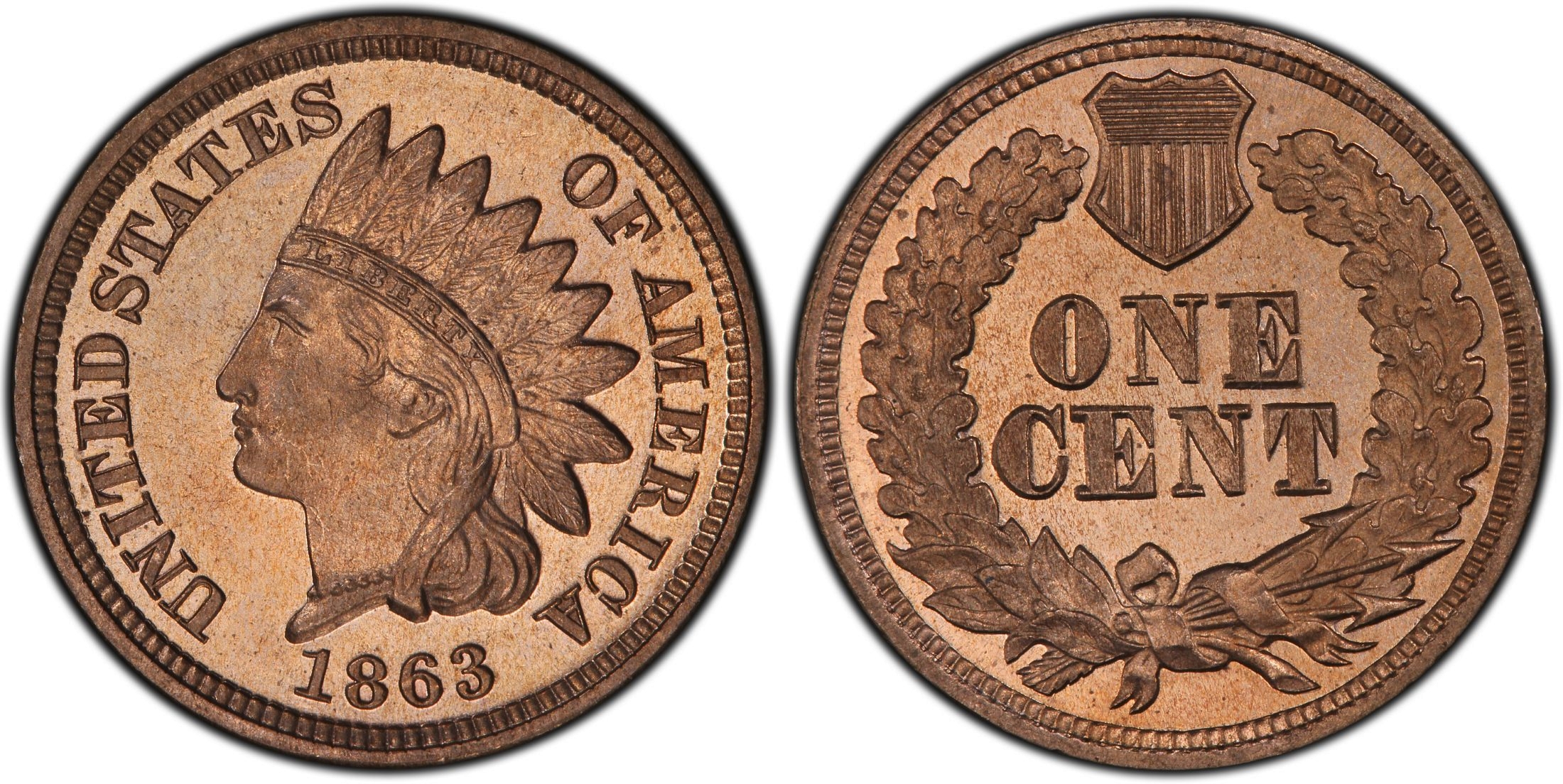
1863-Indian-Cent

Catalan

cara o creu (face or cross)

Chinese (Taiwan):

Chiang chung‑cheng huo meihua (Chiang Kai‑shek or flower)

Czech:

hlava nebo orel (head or eagle)

Danish:

plat eller krone (flat or crown)
Note: My Danish contact has been hunting down the origin of this phrase. It appears no one really knows why “plat” is the word for “heads”.

Dutch:

kop of munt (head or mintage)
kop of let(‑ter) (head or letter)
kruis of munt (cross or mintage)

English:

heads or tails

Finnish:

kruuna tai klaava (crown or shackle)

French:

pile ou face (back or face)

German:

Adler oder Enzian (eagle or gentian) ‑ Austrian variety
Kopf oder Adler (head or eagle)
Kopf oder Schrift (head or writing)
Kopf oder Wappen (head or coat of arms)
Kopf oder Zahl (head or number)
Zahl oder Ähre (number or ear-of-corn) [1950’s]

Hebrew:

עץ או פלה (etz o pali – tree or Palestine)
tur o yas (tower or writing)

Italian:

testa o croce (head or cross)

Malay:

Kepala atau bunga (Head or flower)

Norwegian:

mynt eller kron(‑e) (mintage or crown)

Polish:

orzeł czy reszka (eagle or grate)

Portuguese:

cara ou coroa (face or crown)
cara ou cruz (face or cross)

Russian:

orjel ili reshka (eagle or grate)

Serbian, Croatian, Bosnian:

pismo ili glava (letter or head)
tura ili jazija (tower or letter)

Slovenian:

glava ali napis (head or writing)

Spanish

aguila o sol (eagle or sun)
sol o aguila (sun or eagle) (Mexico)
cara o ceca (face or mintage)
cara o cruz (face or cross)
cara o escudo (face or shield)
cara o sello (face or seal) (Ecuador)

Swedish:

gubbe eller pil (old man or arrow)
krona eller klave (crown or shackle)

Turkish:

yazı mı tura mı  (inscription or tower)

Mnemonics: The Kings and Queens of England

As I wrote about previously, Mnemonics are great. They can help scientists, engineers, mathematicians, physicians, physicists, biologists, astronomers, and just folks like you and me remember long lists of things that would be otherwise difficult to keep straight.

Munroe is brilliant and irreverent – you can see a complete selection of his updated versions here.

In 1969, someone – I never found out who – gifted me with a subscription to a short-lived publication called “Intellectual Digest.” It went out of print in the early 70’s, and in 2010 Tracy Shier attempted a relaunch, which – most sadly – did not seem to take off. But within its pages I remember reading the a poem outlining the kings and queens of England, and for decades I could only recall the first few verses. Now, thanks to the magic of the Internet, I present it here (with a few variations, notably after Queen Victoria.)

First William the Norman, Then William his son,
Henry, Stephen, and Henry, Then Richard and John,
Next Henry the Third, Edwards, one, two, and three,
And again after Richard, Three Henries we see,

Two Edwards, third Richard, If rightly I guess,
Two Henries, sixth Edward, Queen Mary, Queen Bess,
Then Jamie the Scotchman, Then Charles whom they slew,
Yet received after Cromwell Another Charles too. (or, “another Charles, Two” in some versions)

Next James the second Ascended the throne,
Then [good] William and Mary together came on.
Till Anne, Georges four, And fourth William all past, (…)
God sent Queen Victoria, may she long be the last!

(obviously an appendix)

But 60 years later, she too want to Heaven
And next on the throne was her son Edward Seven;
George the Fifth, Edward Eighth (abdication not reckoned);
And at last George the Sixth and Elizabeth Second.

Alternate endings:

(1)

Came the reign of Victoria, Which longest did last,

Then Edward the peacemaker, He was her son,
And the fifth of the Georges, Was next in the run,
Edward the eighth, Gave the crown to his brother,
Now God’s sent Elizabeth, All of us love her.

(2)

God gave us Queen Vic, may her fame ever last.

And after Victoria’s long reign was done
We see Edward 7th and George fifth his son,
and Edward the 8th who gave up his crown
to his brother King George, and this brings us down
to Elizabeth Second, our sovereign today,
Many more years on the throne may she stay.

(3)

God gave us Queen Vic, may her fame ever last.

And after Victoria’s long reign was done
We see Edward 7th and George fifth his son,
and Edward the 8th who gave up his crown
To his brother, George Sixth, who reigned with renown.
Elizabeth Second then takes up the reign
And “God Save the Queen” is echoed again.

It is certain that locked away within the memories of countless souls in the UK there will be other versions as well. Two others which I was able to locate are below:

Willy, Willy, Harry, Stee,
Harry, Dick, John, Harry Three,
One, Two, Three Neds, Richard Two
Harry Four, Five, Six, then who?
Edward Four, Five, Dick the Bad,
Harrys Twain and Ned the Lad,
Mary, Bessie, James the Vain,
Charlie, Charlie, James again,
William and Mary, Anna Gloria,
Four Georges, William and Victoria.
Edward Seven, then George Five,
But Edward Eight preferred his wife.
George the Sixth did then arrive
And Lizzie Two is still alive.

This version begins before Guillaume le Bâtard and ends with Victoria, but contains some additional historical tidbits.

Old Britain was under the Romans
From fifty-five years before Christ,
To four hundred fifty-five A.D.
When her eight states on home-rule insist.

For may a year now they wrangle,
Ah! Yes, for quite three seventy-two,
Being ruled by this king, now that one,
As each might the former o’er throw.

But ever since eight-twenty-seven,
Britains rulers have reigned by descent,
From Egbert, first “Monarch of England,”
To Victoria, daughter of Kent.

A score reigned and fell. – Second Harold
In ten-sixty-six, proud, usurps,
But soon in fierce battle is conquered
By William of Normandy’s troops.

Then came William the Conqueror, a Norman,
Then William the Second, his son;
Then Henry and Stephen and Henry,
Then Richard (Coeur de Lion), and John.

Next Henry the Third, and First Edward,
Edward Second and Third, Richard two,
Henrys Fourth, Fifth and Sixth, and Fourth Edward,
Fifth Edward – Third Richard they rue.

Henry Seventh and Eighth, and Sixth Edward,
Then Mary, Bess, James and Charles First, –
|Eleven years then with no monarch;
Second Charles, Second James, not the worst.

Then William and Mary, then Anne,
Four Georges, Fourth William until
Came Victoria, long live her queenship,
For she wields her proud scepter with skill.

Þe Old Wolf hath goodly spoke.

Figaro, the Transparent Cat

I love the art of Disney, particularly the craftsmanship that was present around 1940 when both Pinocchio and Fantasia came out. These are probably examples of the finest 2D animation ever produced, and both have long been among my favorite films.

I have one small nit to pick, however – it has bothered me since I sat through 4 consecutive showings of Pinocchio in 1972 or thereabouts – I noticed it then, but had no way of verifying what I had seen at the time.

As Gepetto drifts off to sleep, he sends Figaro to open the window.

Fig1

As kitty pushes the window open and walks out into the moonlight, the color artists got a bit mixed up:

Fig2

Notice that you can see the window frame through Figaro’s body.

A tiny detail and forgivable, and I had no way of verifying this until the advent of VCR’s and DVD’s, but I’m glad that I wasn’t just seeing things.

The Old Wolf has spoken.

Parenting: No, there’s no manual, but this might just help.

9 Things I Learned In The Parent Encouragement Program, AKA Rotten Parents Anonymous

By Drew Magary, Jan 18, 2012 2:20 PM

Note: by permission of the author, Drew Magary, I have here reproduced a “more-or-less family-friendly” version of his awesome post, because it’s got some great ideas in it. If you don’t care about language that would make George Carlin feel right at home, you can read his original version here at Deadspin. Heaven knows I could have used this plainspeak about 35 years ago.

The Parent Encouragement Program is a series of classes and workshops that are available to parents living in the D.C. area. The introductory class is free, and so I went a couple of weeks ago, because it didn’t cost anything and because I need all the help I can get. The title of the workshop was “Why Don’t My Kids Listen To Me?” On that premise alone, I’d say roughly three billion people could have stood to attend. I grabbed a pen and a big legal pad for taking notes, and I went to go learn how to not be a terrible father.

The class I went to was located on the third floor of a nearby church. It was the kind of multipurpose church room that would be perfect for an AA meeting. This was fitting, because I felt like I was attending a meeting of Rotten Parents Anonymous and not some night class for supposedly normal people. Our teacher was a very perky 40-year-old woman, who readily admitted that she was a teacher in the program because it helped her remember all of the junk that she was supposed to do in order to be a good parent. Her kids were all teenagers and she still had issues dealing with them. I found this fact completely deflating. Here was someone who was GOOD at parenting, and she still felt compelled to go to classes and still had kids with terrific douchebag potential.

The class started with a bit of role-playing, with people from the audience reading from a scripted exchange between a child and a parent. They demonstrated three different techniques of parenting: Authoritarian Parenting (Bob Knight-types who yell at their kids and whip them with hickory switches), Permissive Parenting (hippie dipweed parents who let their kids do whatever the hell they want), and Democratic Parenting (the right kind of parent, who establishes firm boundaries for their child and gives them a certain amount of freedom within those boundaries). The aim was to teach us how to be Democratic Parents. I was more than willing to learn. I have yelled at my kid. I have given my kid timeouts. I even tried spanking my kid a few times, which was mortifying. All of it failed, and all of it made the problem worse.

So the purpose of this class was to find the happy medium, that place where you say the EXACT RIGHT THING in order for your child to do what you want him or her to do. Talking to your kids is like perfecting a golf swing. You have to get the technique just right, otherwise everything goes to Pluto. And whenever you pick up new techniques, you have to remember them all simultaneously and execute them correctly in a single instance. This is bloody annoying. Kids shouldn’t work that way. Evolution should have knocked some of the snotty defiance out of them. But nooooooo. No, asking them to do something doesn’t work. You have to CRAFT what you’re going to say. You have to offer creative solutions to problems, which is totally exhausting.

So the lecture began and immediately people started asking questions. And the teacher was remarkably patient, given that virtually all the questions were specific to that parent’s one kid and had no universal application. One lady droned on and on about how she was separated from her husband and that the husband bought her kid too many toys. LADY, TELL YOUR DIVORCE LAWYER. You’re ruining the learning process for the rest of us. Another lady said her husband was too much of a pushover for their kids WHILE THE DUDE WAS SEATED RIGHT NEXT TO HER. She just threw his butt under the bus in front of 50 total strangers. I wanted to buy the guy a soda.

But eventually, we were given some legitimately good advice as to how to handle these little demons. Here now are some of the more basic techniques of Democratic Parenting (I also like to call it Huxtable Parenting):

Never repeat yourself.
The second you repeat yourself, you’re dead. The kid will just be like, “Hey, I can just sit here and dad will say the same stuff over and over again. COOL.” Kids think this way because they’re evil. Say it once. If the kids don’t act, take them by the hand and guide them to their task. This piece of advice caused me to ask a question:

ME: What if your kid is naked on the floor and screaming her bloody head off and you literally can’t take her by the hand and guide her to the sink to brush her teeth?

TEACHER: Just avert your gaze, hold out your hand, and stand there until she knows you aren’t interested in her B.S.

I tried this later in the evening. Totally worked. IT’LL NEVER WORK AGAIN.

No drive-by parenting
You have to get down face-to-face with your kids to ask them to do stuff. You can’t stand at the bottom of the stairs and yell at them to stop putting hamsters in the blender. They won’t give a rat’s south-40. Hamster-blending is too much fun.

Talk to your kids as if they’re normal human beings.
None of this, “You need a wowwipop” stuff. The idea is that if you treat them as mature adults and talk to them with respect, they will reciprocate. I wanted to bring up Norv Turner as a counterpoint to this, but we were short on time.

Accept that your children are going to do annoying things.
We were told there was a list out there that detailed typical behaviors for children based upon their age. Two-year-olds will throw things. Five-year-olds will break things. There are certain annoying facets of children that are simply the cost of doing business, and accepting that makes it a little bit easier to tolerate it when your kid is spitting in your ear.

Never do for a kid what a kid can do for him or herself.
This was the big one. Sometimes, your kids will stand there for eight hours before they brush their teeth and you’re just like TO TOPHET WITH THIS, and you grab the brush and assault their mouth because it’s EASIER to do things for them. But once you do that, they’ll never do anything for themselves. You have to have Herculean patience to let them figure those things out, and then that problem is solved for the long term.

Never chase a kid.
IT’S A TRAP! THEY LIKE BEING CHASED!

Never get locked into a power struggle.
If you say to your kid, “Hey, eat your dinner,” and the kid is like , “No,” and you’re like, “You’re grounded if you don’t,” and the kid still says no, you’ve basically signed yourself up for a full night of PAIN. Because now you’re in a power struggle with a kid, and you won’t want to lose because you won’t want them thinking you’re a wuss, and they won’t want to lose because, hey, what’s an hour wasted to them? NOTHING. Kids were born to waste time. They have nothing better to do. May as well ruin your day while they’re waiting to become drinking age. If the kid doesn’t eat dinner, the kid doesn’t eat.

Never ask “OK?” at the end of a request.
You have to explain what needs to be done. For example, if you say, “Hey, your shoes are still on the floor,” the kid is more likely to put the shoes away than if you say, “Hey moron, put your shoes away, OK?” I got home from this class and I was shocked at how many times I said “OK?” at the end of something. Even when I was actively trying to prevent myself from saying it, I still did anyway. It’s like a bloody tic. The best way to get kids to do something is to present them with a problem that they can help solve.

The only person you really have any control over is yourself.
That’s pretty much the beginning and end of this. There’s only so much you can control with your kids, and it’s best to praise them when they do what you want instead of berating them for the times when they fail to act. You’re never gonna get them to do everything you want at all times. They aren’t programmed that way (even though they ought to be). You have to learn to tolerate some of their crap, and then be firm and friendly in the face of extraordinary rebellion. It isn’t easy, and I’m probably gonna have to take a lot more classes just to fail less. But trying is the most important part. Now if you’ll excuse me, I have to go tell my kid to stop throwing baseballs at the TV set.