Street preacher, New York City, 1960

Found at Frog Blog

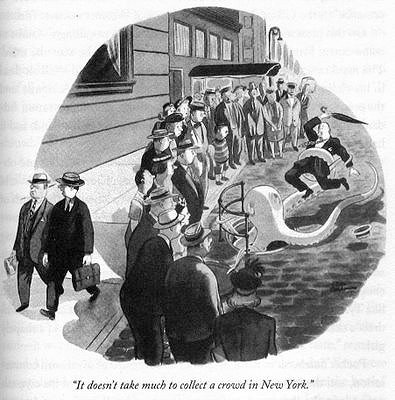
This put me in mind of the Charles Addams cartoon which shows a bunch of people clustered around a giant octopus emerging from a manhole and grabbing a passer-by. Two guys walking behind the crowd who can’t see what’s going on say “It doesn’t take much to collect a crowd in New York.”
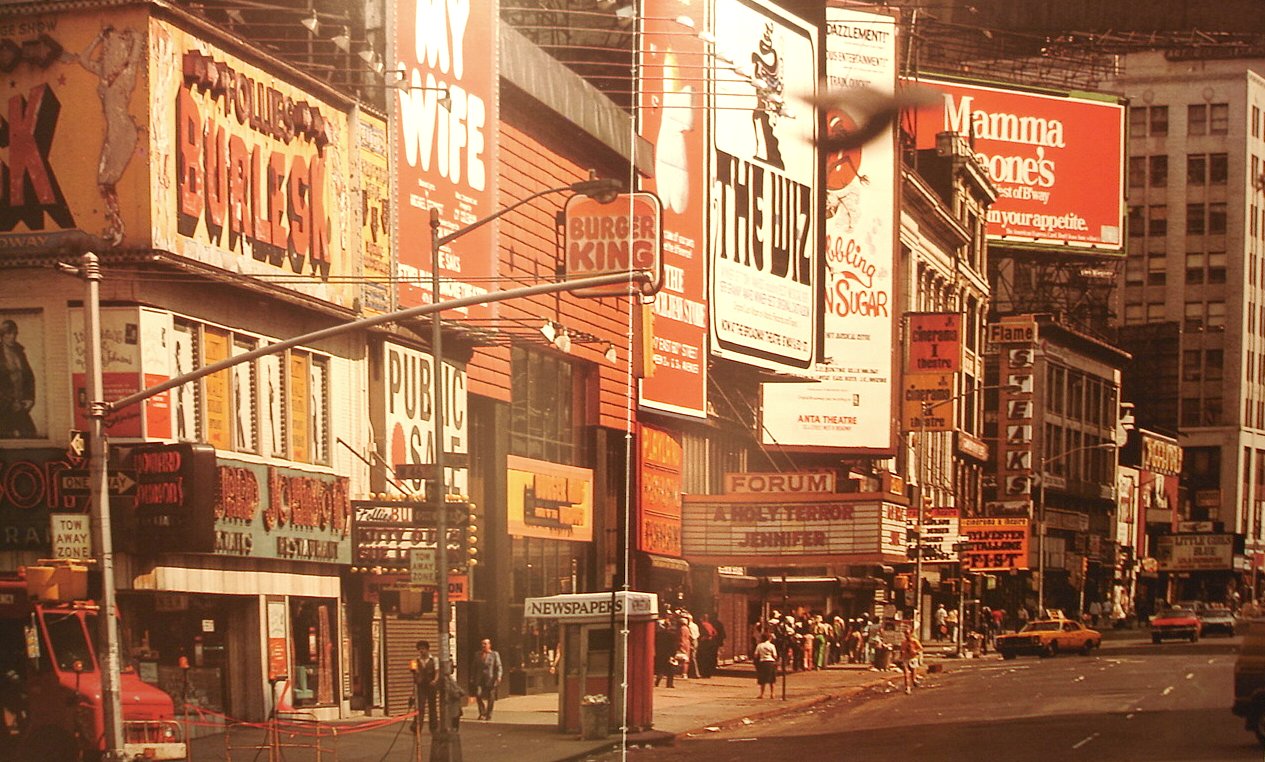
It’s true, too. Times Square was the scene of a dramatic self-immolation at 2 P.M. on Saturday, July 18, 1970, when Hin Chi Yeung poured two cans of gasoline on himself and struck a match. I sadly happened across this event just after he had been extinguished; apparently he was getting poor grades and was distraught at the prospect of shaming his family who had sacrificed much to get him here to study. The crowds were insane. It was surreal – I thought someone had set fire to a department store mannequin at first, never thinking it might have been a real person.

On another note: See those “Cooled by Refrigeration” signs on the marquee back there? That was a huge draw in New York. “All around, people looking half dead, Walking on the sidewalk, hotter than a match head” is an accurate description of summer in New York, and for 50¢ you could pop into a theatre, sit down, watch the newsreel, the short, the cartoon, and the feature presentation… and then do it again and again for as long as you pleased. It was a cheap way to get out of the heat. Back then it was no big deal if you were late to a show… you just waited for the next round to start and caught what you had missed. Those were the days.
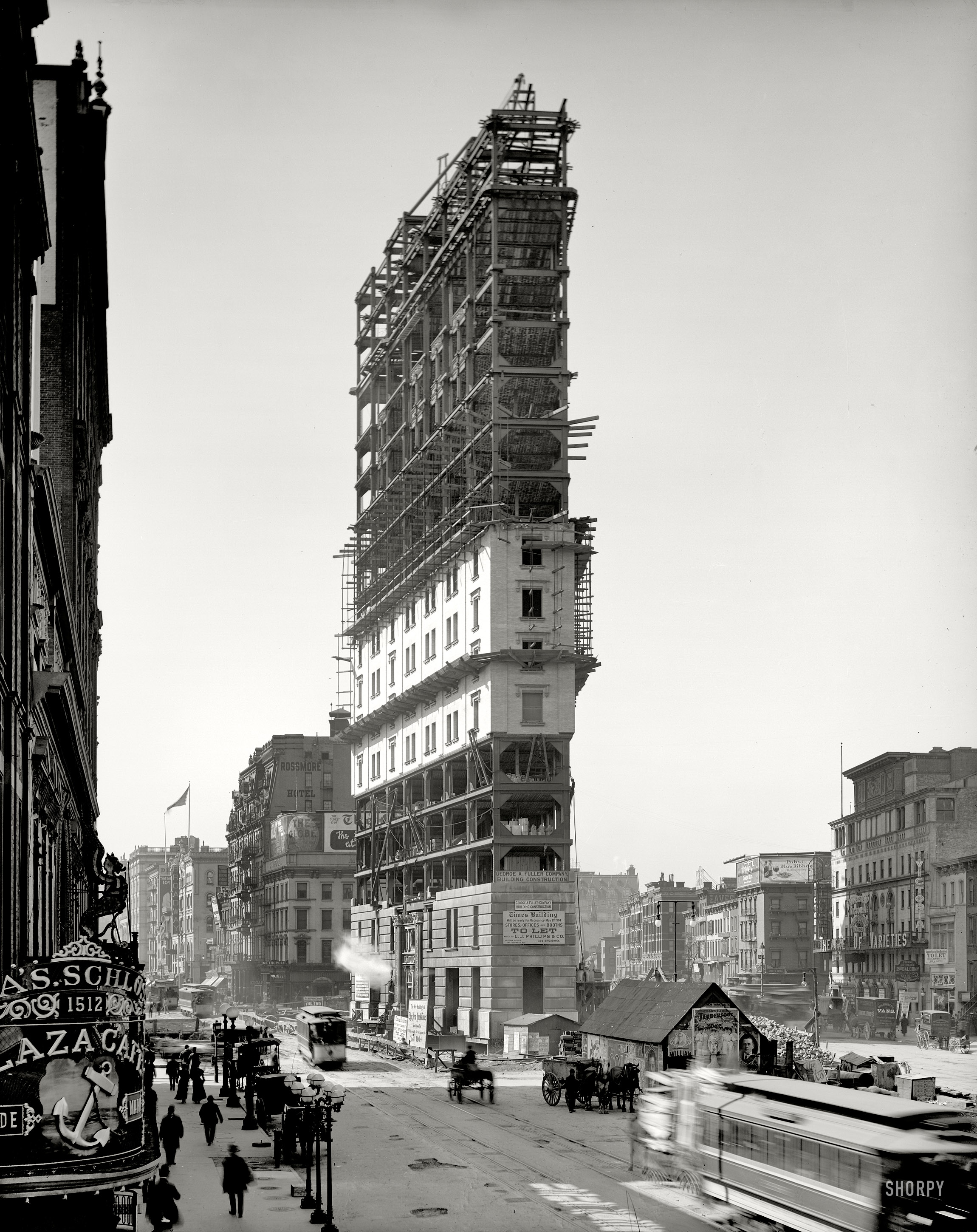
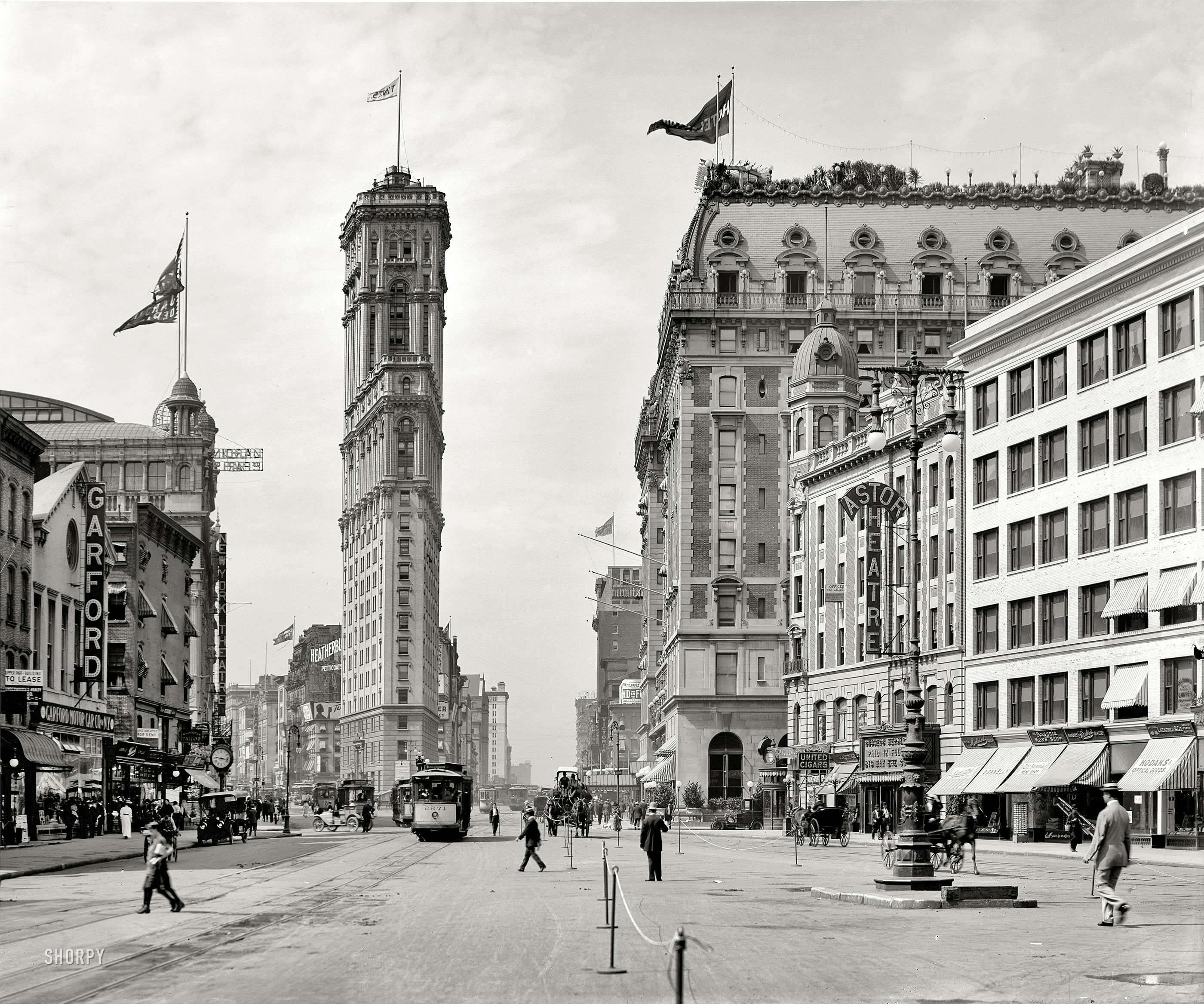
Times Square, Then and Now

One Times Square under construction, 1903 – Found at Shorpy

Early shot of Times Square  around 1904.

Times Square, 1908 – Found at Shorpy

Times Square, 1911 – found at Ephemeral New York

Longacre Square was renamed Times Square in 1904 when the New York Times constructed their headquarters there.

TIMESSQUARE1922A

Times Square, 1922 – Found at gothamist.com

Times Square at Dusk, 1932 – found at Pu(re)blog

060

Times Square, 1935

s_n21_wpa00552

Times Square theaters by day, in New York City. The Times Building, Loew’s Theatre, Hotel Astor, Gaiety Theatre and other landmarks are featured in this January, 1938 photo. (Bofinger, E.M./Courtesy NYC Municipal Archives) via Urbanobservatory

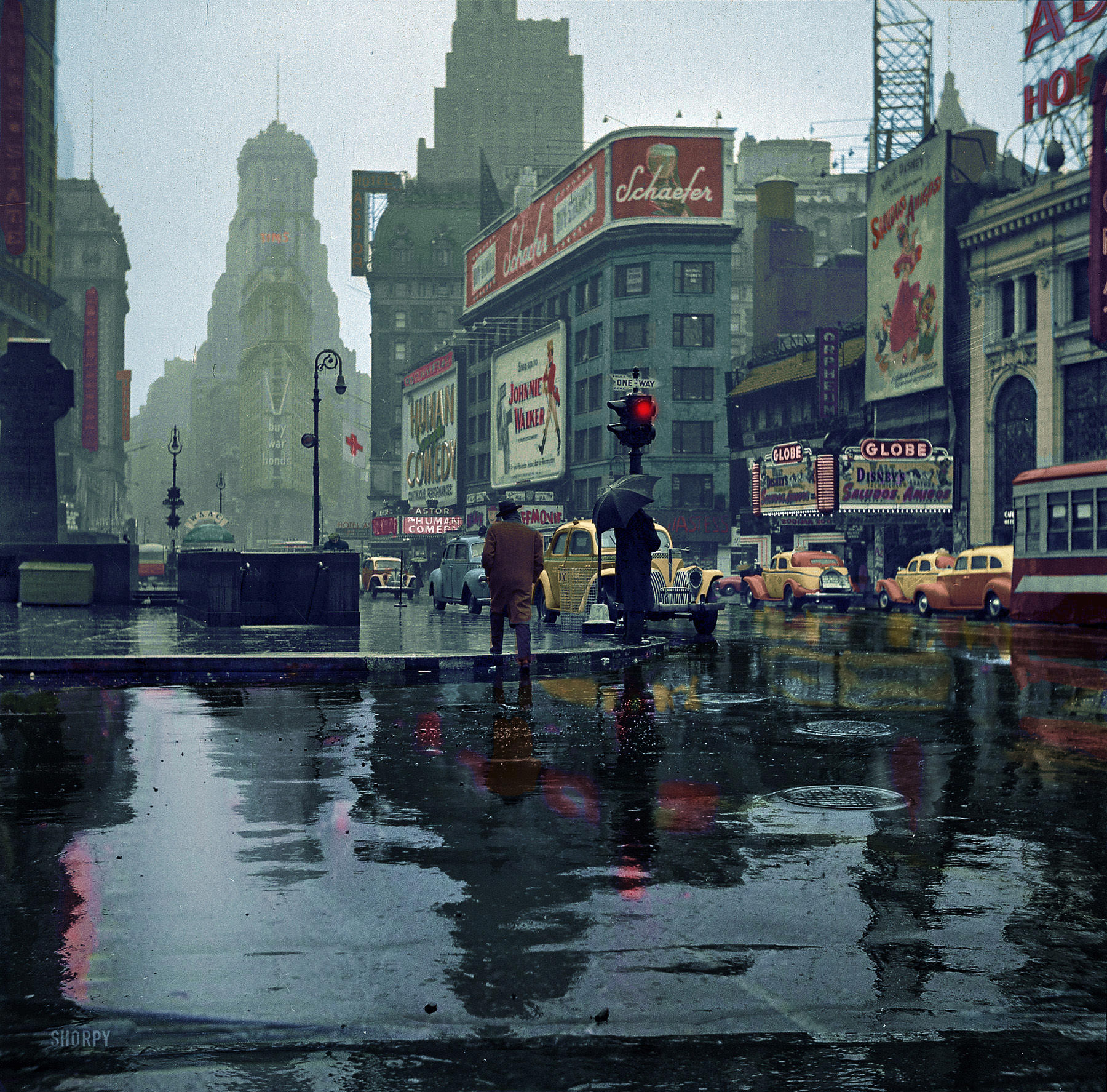
Times Square, 1943

Times Square, 1943, found at Shorpy


i06CcYz

Times Square, between November 1944 and January 1945 based on the “Tomorrow the World” and “3 is a family” marquees.


Times Square 1947 Blizzard

Times Square in a blizzard, 1947


Times Square 1949

Times Square, 1949

hBRP1Xl

Times Square at night, circa 1950

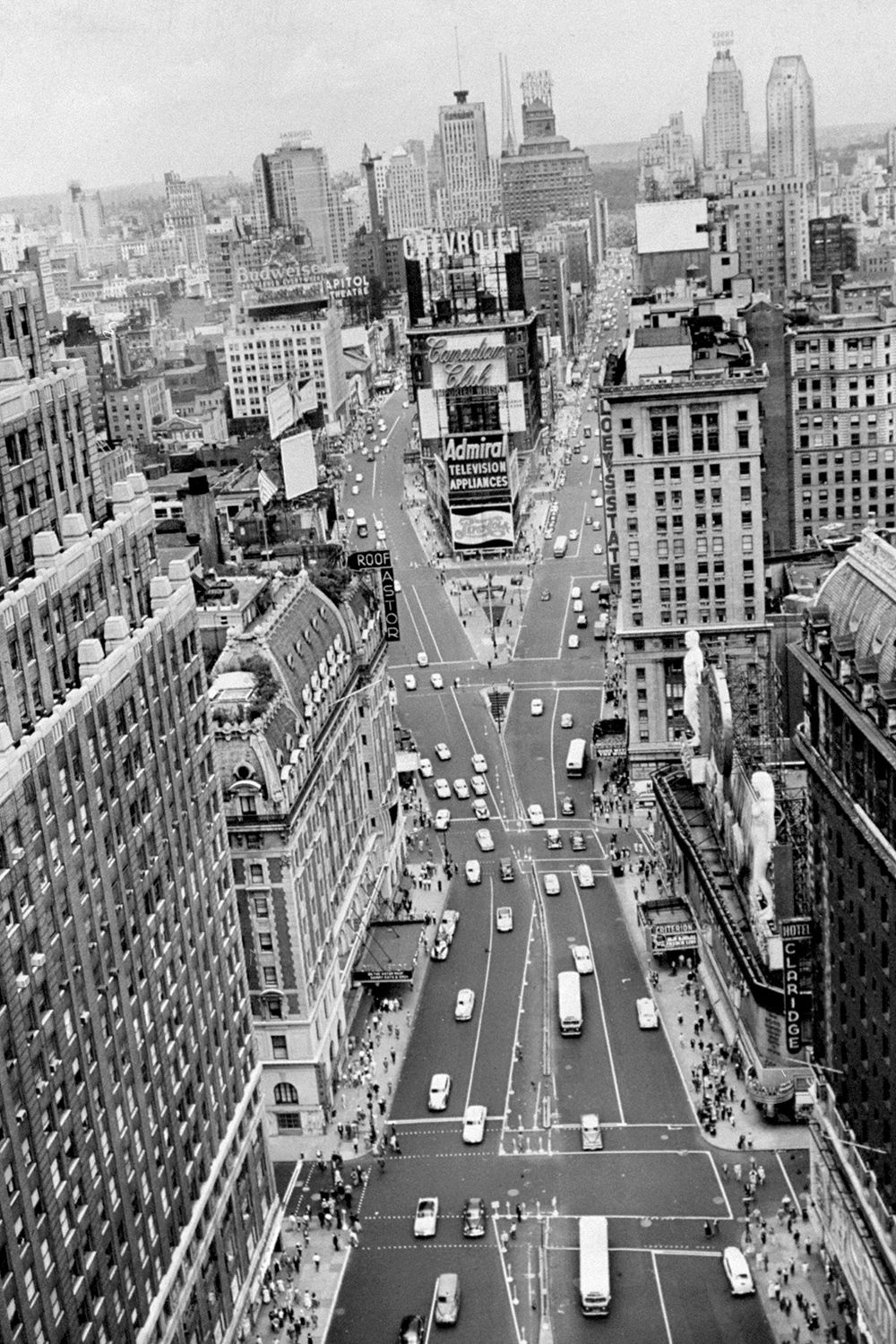
Times Square, circa 1951

Times Square 1953

Times Square, 1953


Times Square 1954

Times Square, 1954

Times Square, 1955

Times Square, 1955

donhgvk1cidy

Times Square, 1955 – wide view.

Times Square 1957 (2)

Times Square at night, raining – 1957

Times Square 1957

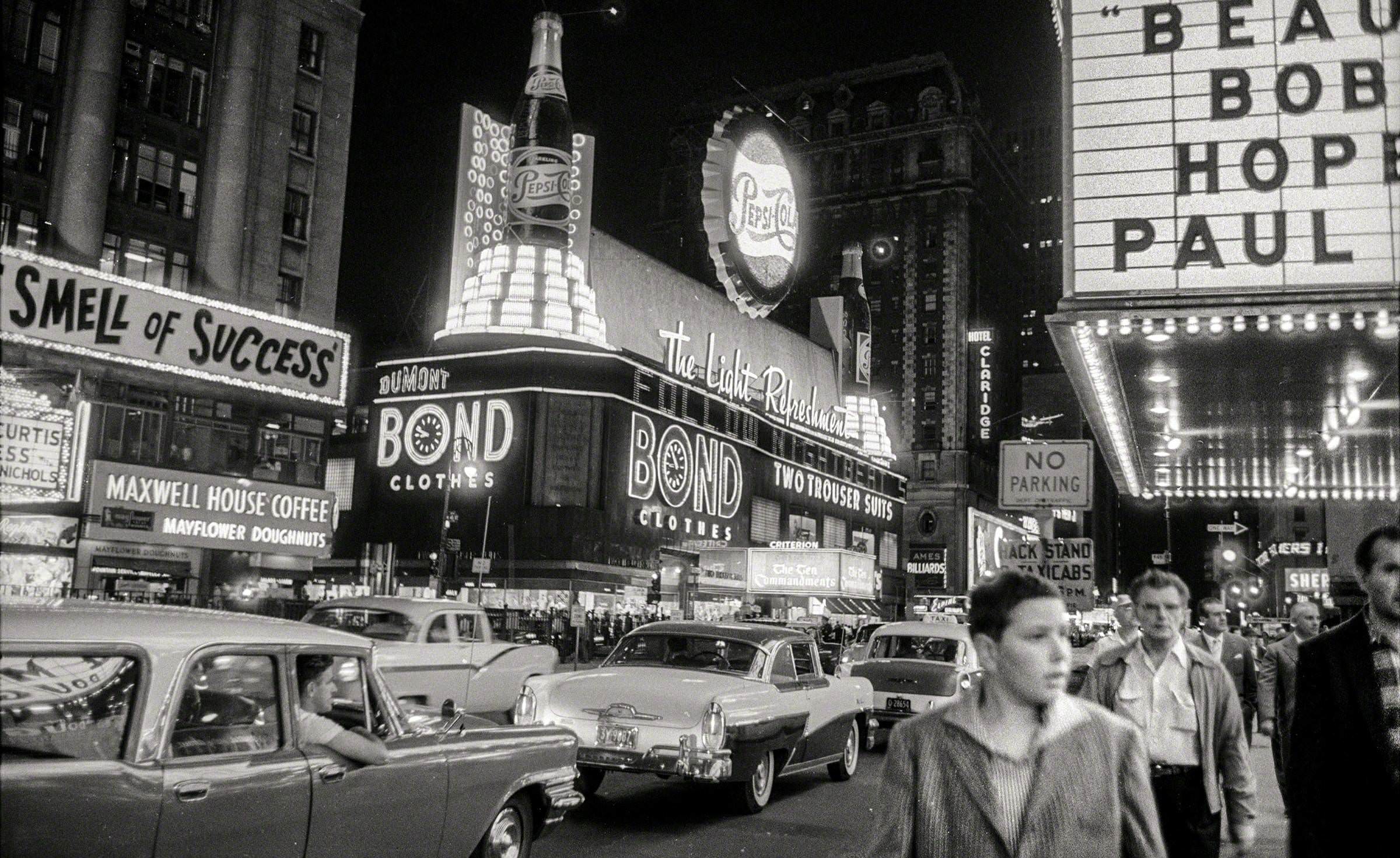
Times Square at night – 1957

Times Square in 1961

Times Square, 1961. Note the Horn and Hardart Automat.

Times Square, 1964. Found at Frog Blog (Now inactive)

Times Square, 1966

1966

Times Square, 1966, by night

Times Square 1967

Times Square, 1967

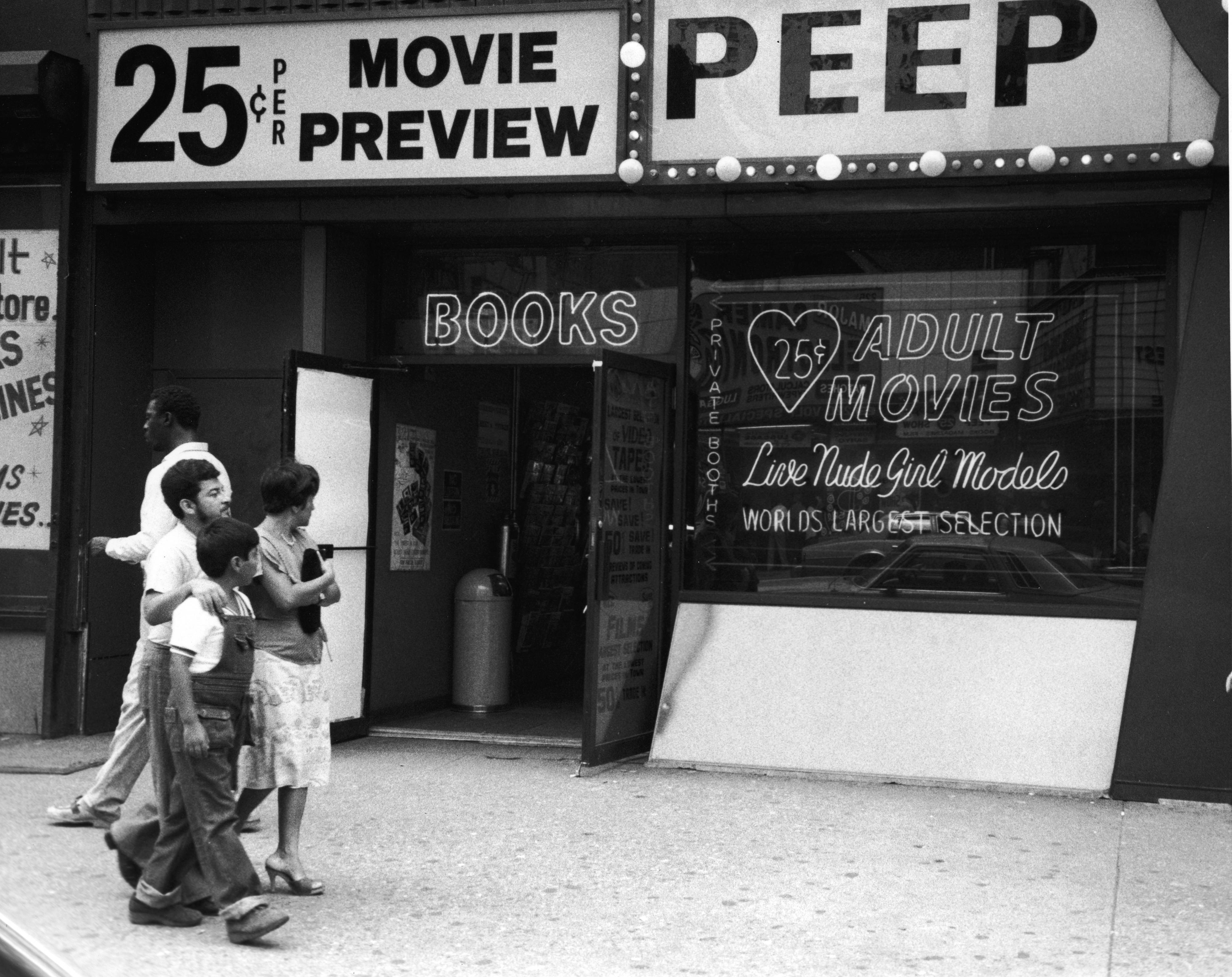
By the 1970’s, Times Square had become a cesspool of smut, as shown in the following images:

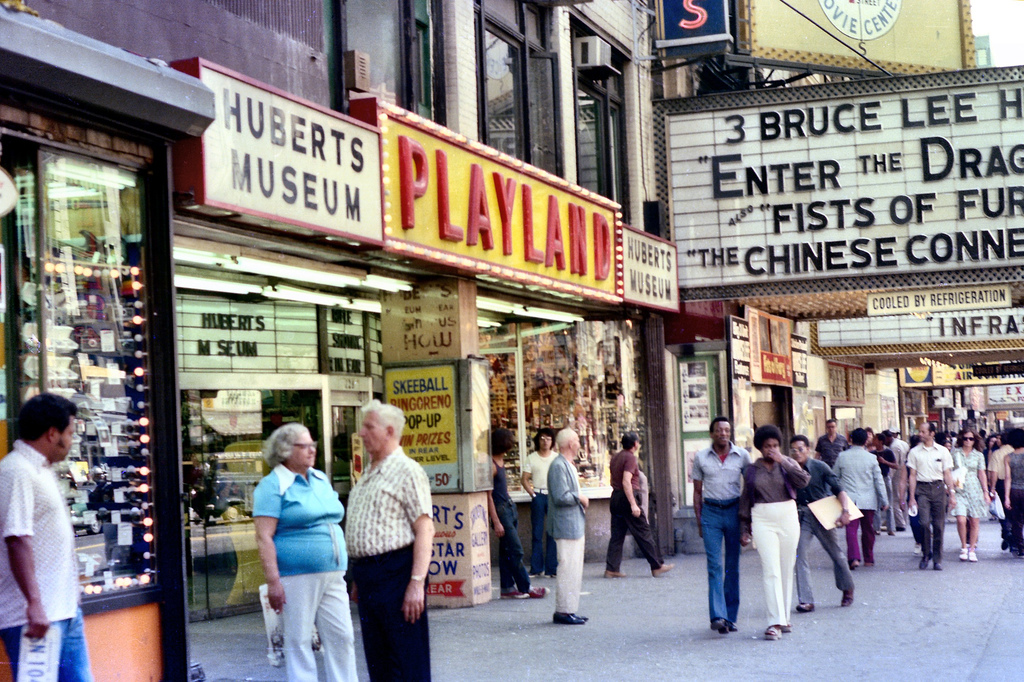
Times Square, 1973

I remember this Playland well – You could play Fascination there if you were over 18. There was one transient dude who would park himself right by the entrance and give passers-by the razzberry.

Time Square at night

Filthiest!

I remember one theatre on a side street that advertised “3 Hours of Solid Beavers!”

In the mid 1990’s, Mayor Rudy Giuliani led a campaign to close the smut houses and restore the Times Square area to something more tourist-friendly. Supporters claim it’s an improvement, detractors point to the “Disneyfication” of the area. Having grown up there, I’m in the first camp. The 1970’s were depressing, and I’m glad that era is gone.

Except Moondog. He was cool.

Times Square, March 1996 –  Photo ©Nightrider, Berlin – Found at http://nycj.blogspot.com

Times Square 1999

Times Square, 1999

Times Square, 21st Century – Found at DeviantArt

I won’t be around to see what Times Square looks like when my grandchildren take their grandchildren there, but I’ll bet it will still be something amazing to look at.

The Old Wolf has spoken.

New York Eateries: Gone But Not Forgotten

Nedick’s was the Starbucks of the 50’s. Orange drink, doughnuts and hot dogs with a signature mustard relish. They were everywhere, even in little hole-in-the-wall joints down in the subways. I confess I like the fresh-squeezed places better down there, with the machines that would cut and squeeze oranges automatically, but Nedick’s is a treasured memory also.

nedicks

Nedick’s in Newark

Nedick’s at Macy’s (Found at The Paper Collector)

Then there was Prexy’s. A local concern with just a few outlets in and around New York, they made hamburgers that were to die for. Little is known about the recipe that made them so good, but I remember eating there a number of times. Oh, those prices.

Prexy’s Matchbook

Prexy’s Logo from a China Plate

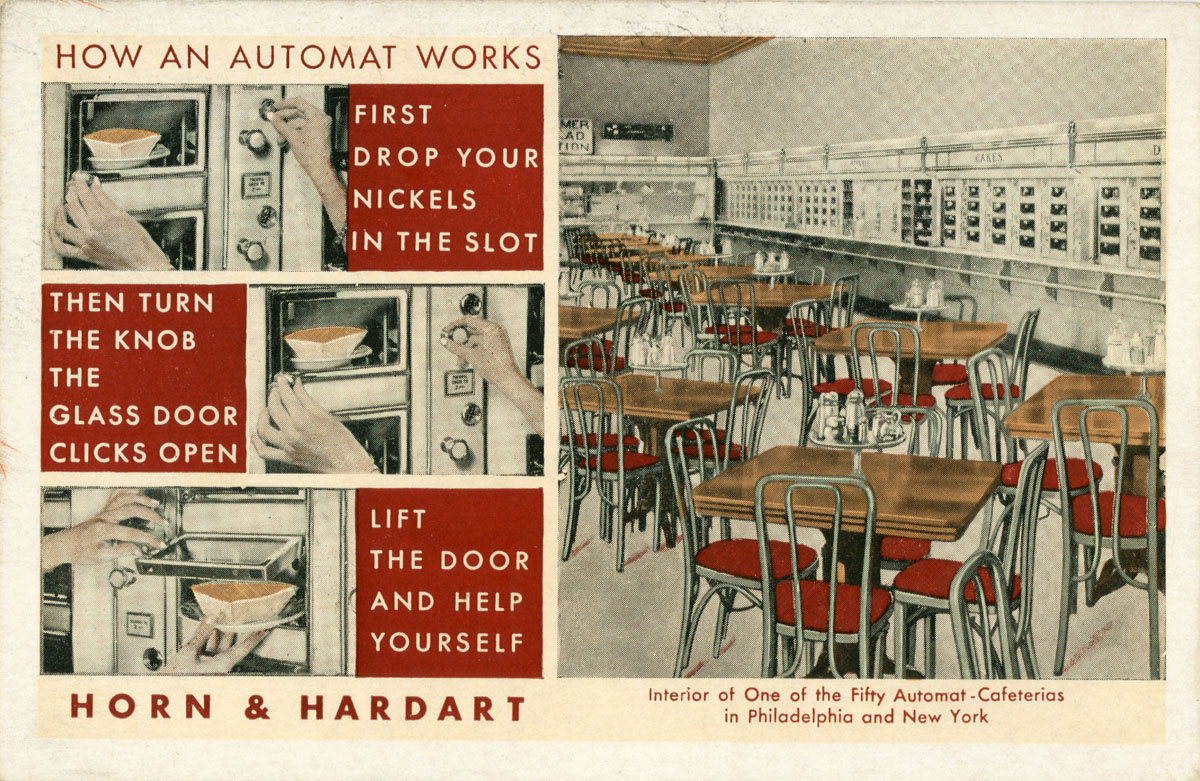
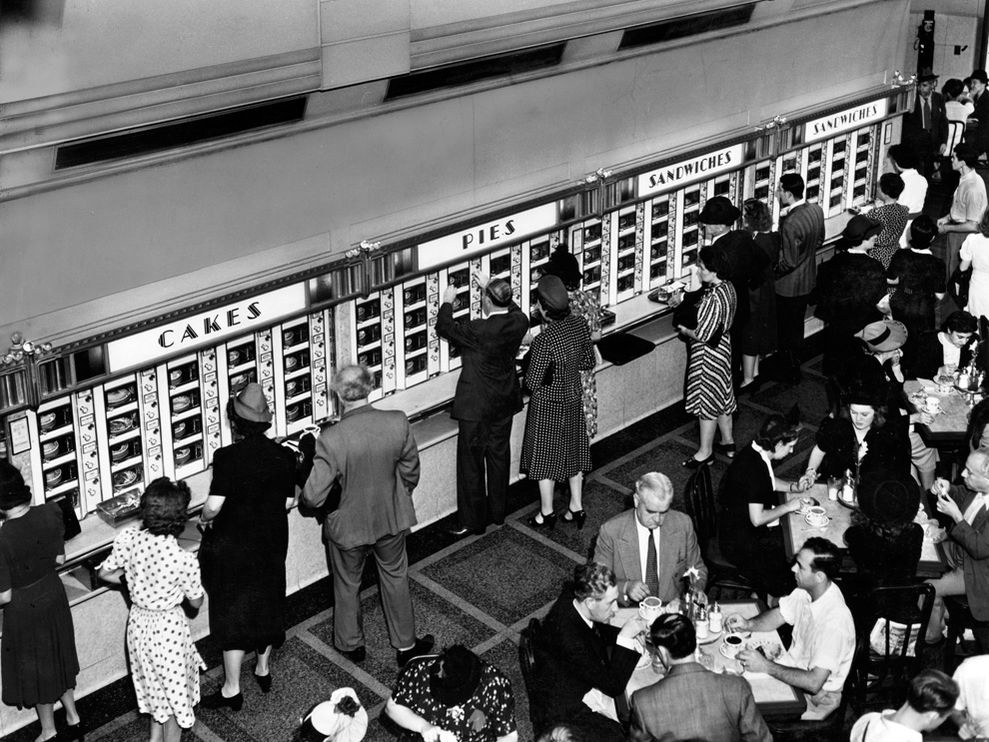
Last but not least, there was the Horn and Hardart Automat


gwKkl


The Automat, 1942, by J. Baylor Roberts

For a kid in the 50’s, nothing was more fun than getting pie or drinks or that incredible macaroni and cheese at the Automat; you’d get your nickels at the booth from a nickel-thrower, ladies with rubber tips on their fingers who could fling out a dollar’s worth of nickels without blinking. I could stand there for hours watching the lazy susans rotate around when they were empty, only to reappear magically refilled with new offerings.

I scored a copy of this book which gives a fascinating history of the chain, including lots of recipes.

Now I’m hungry.

The Old Wolf has spoken.

Le Robinson Farm

Le Robinson Restaurant and Boarding House

Update: Click through for some aerial photos of the resort in the 50’s.

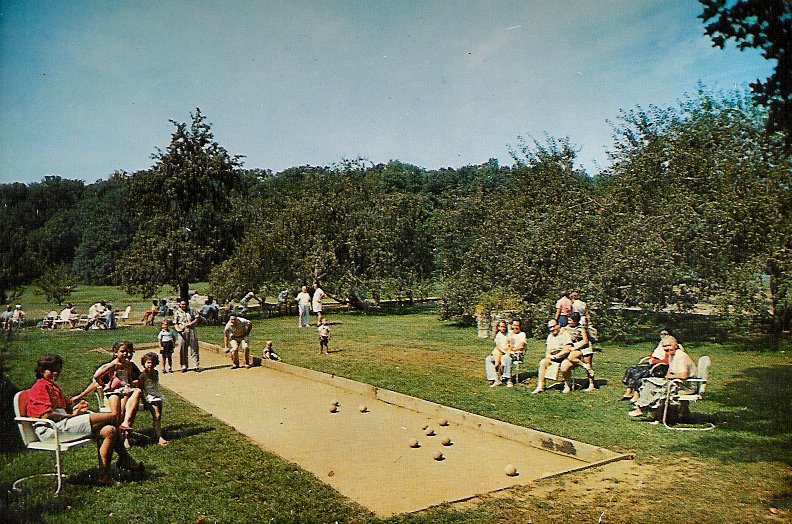
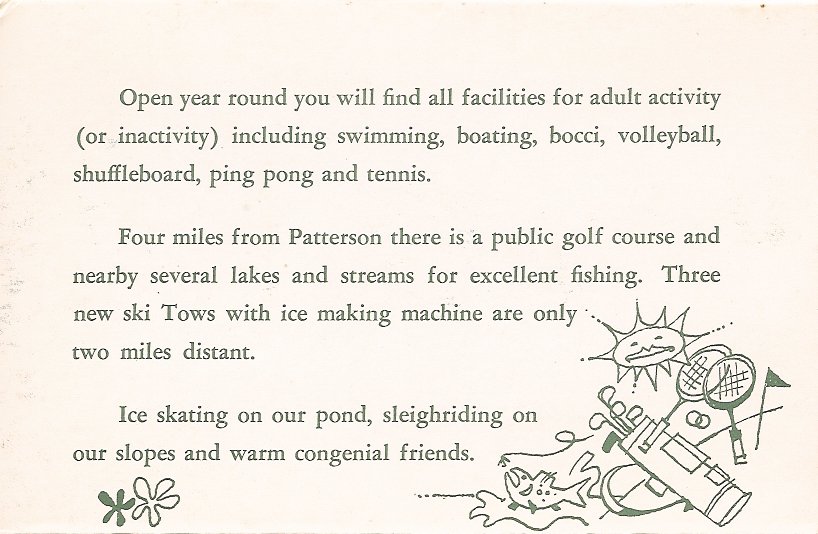
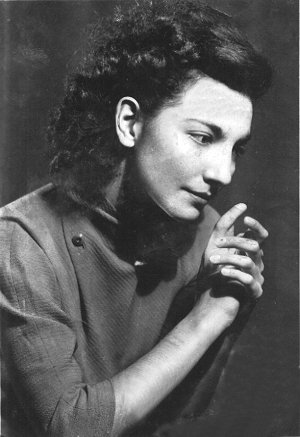
In the 1940’s, 1950’s and to some extent into the 1960’s, the Catskill mountains of New York were home to a conglomeration of hotels, bungalows and cabin communities that became known as the Borscht Belt. After my father’s first marriage dissolved, his ex-wife married a Frenchman, Andre Lavielle, and opened a resort in Patterson, NY modeled on the same idea and called it Le Robinson. Miriam was the descendant of Russian Jewish immigrants; it’s unclear whether the clientele came from the same Ashkenazi Jewish population of New York that made the Catskill resorts so popular, or whether they catered to an Italian clientele (the resort featured bocce courts), but the general idea was the same – a place to get away from the City and relax.

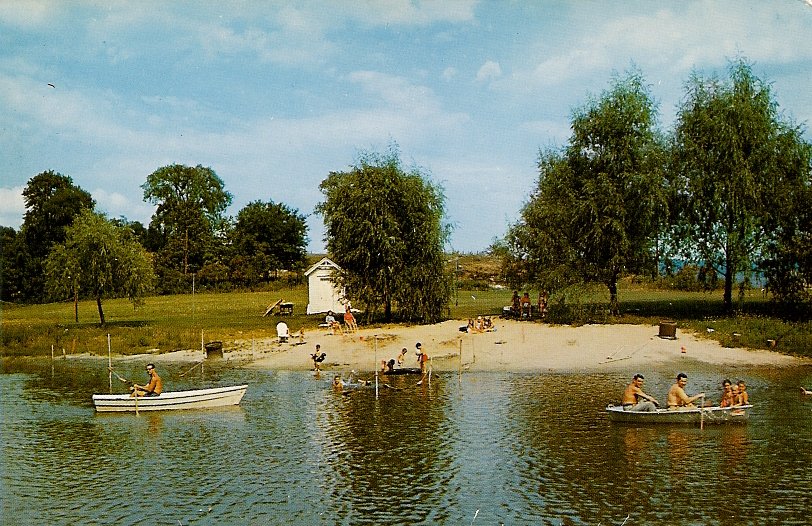
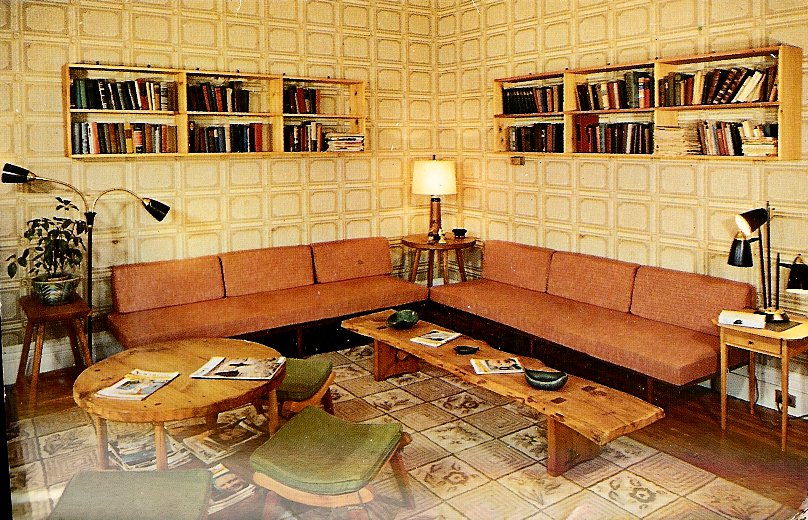
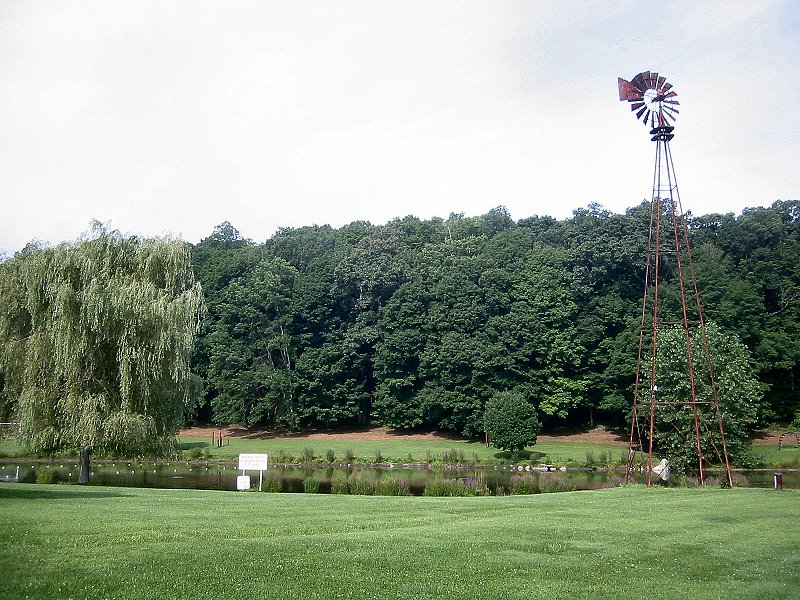
I still have memories of visiting the place; the library, table-top shuffleboard games (metal pucks lubricated by some sort of sand), the windmill, the boating pond, and sitting on the screened veranda while an early bug-zapper incinerated unwelcome guests.

Sadly, a fire destroyed the main house, and the resort ultimately became a park. I found a description at “Businesses in the Village of Patterson:

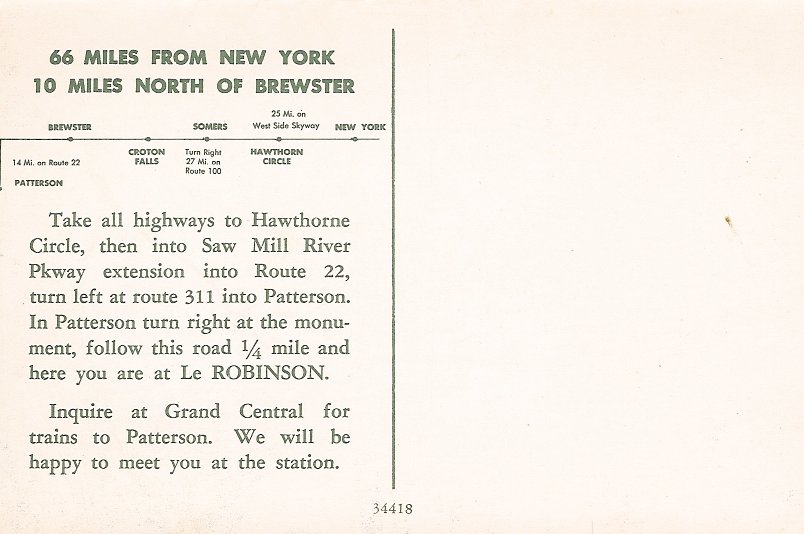
Le Robinson farm was located on Maple Avenue [in Patterson, NY], and was the former home of Jacob Stahl, best known as the owner of the Putnam Cigar Factory and other buildings in the village of Patterson. The house was a four story frame structure that was built in the fall of 1896, and was a showplace in Patterson when it was built. The property had two or three owners after the death of the Stahl family, and in the late 1950s was owned by Miriam M. Lavielle and Andre Lavielle. The Lavielle’s operated the house as a French restaurant and boarding house known as Le Robinson. The house had room for 50 guests, and there were cottages located on the adjoining property.

Mrs. Lavielle was instrumental in the formation of Boys and Girls Scout programs in Patterson in the 1950s, and was a member of the HAGS social club that sponsored many activities that benefited community programs in Patterson. She was also a president of the Parent-Teachers Association. She was born in New York City in 1913, and died after a long illness at the age of 45 on August 5, 1959.

Andre Lavielle continued to run Le Robinson after the death of his wife, and resided in one of the cottages with his stepson. An early morning fire destroyed Le Robinson in February, 1960. The fire was discovered shortly after midnight, and had already spread through the wooden structure. The blaze could be seen for ten miles. The house was unoccupied. The Patterson Fire Department was summoned, and ran hoses to the nearby pond, but had trouble directing the water on the fire as high winds diverted the spray from the hoses. The winds sent sparks in the direction of the cottages, but they did not catch fire. Patterson Supervisor William Millar had a brush with death when he stepped on a live electrical wire that had fallen on the ground. He warned firemen and spectators away from the wire until power could be cut. The property was purchased byt the town of Patterson for use as a park.

Andre Lavielle also owned the Chez Andre Restaurant, located on NYS Route 22.

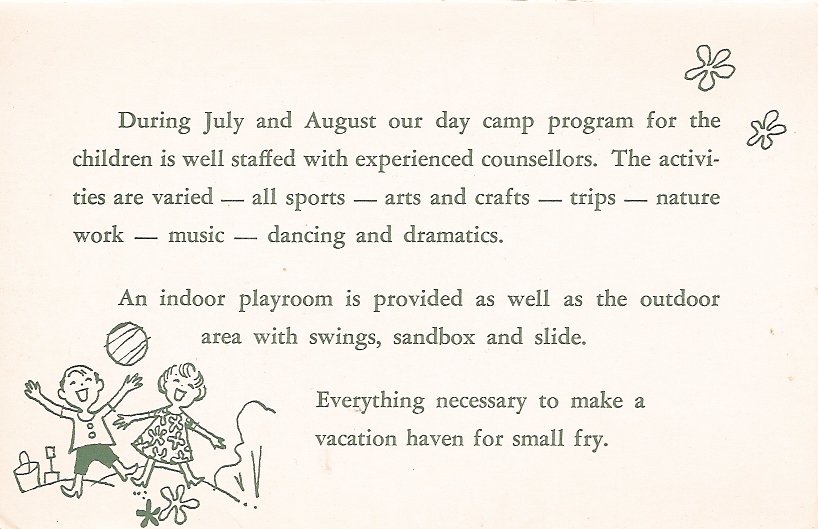
Among my father’s papers was this brochure, which gives an idea of what the resort looked like:

The Main House
From left: Louise and Walter Schloss, Unknown couple, Abe and Shirley Goldshlag

The boating pond with one of the beaches; in boat at left, Charles Martens who was a counselor there in 1957.

Lounge and Library

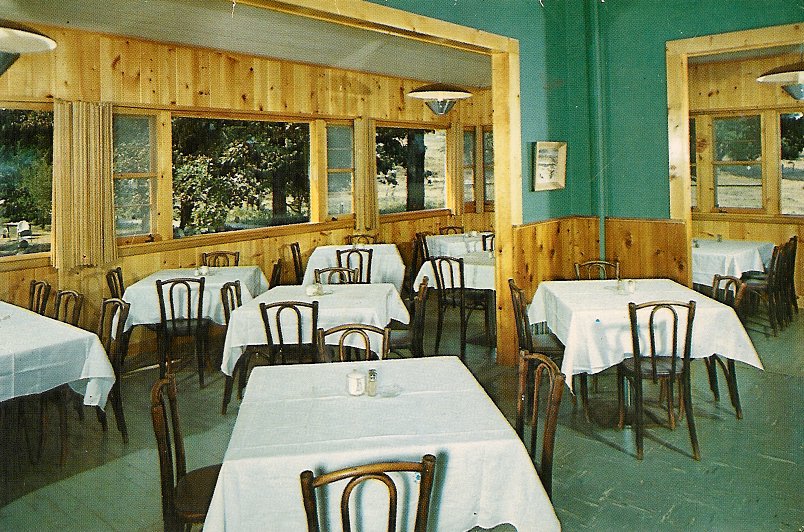
The Dining Area

Bocce Court
On the extreme right are Jane Moskowitz and next to her Andre’s mother Angele who was visiting from France. In the back you can see Al Seymann and Nat Rothenberg.

Brochure Cover

Today the property remains, but has been transformed into a memorial park for veterans. It has been well-cared for and is a pleasant and attractive place, still used by families in the neighborhood.

Miriam Lavielle

The Old Wolf has spoken.

WÖK – Wiener Öffentliche Kuchenbetriebsgesellschafft

The “Vienna Public Feeding GMBH” was established in 1919, with the goal of providing for the nutrition of children and the more vulnerable sections of society. It was renamed the “Viennese public kitchen company” in 1920, and retained that name until the company merged with Wigast. From 1999 to 2001, Wigast was gradually absorbed into the Austrian Tourist Office; at that time it was the largest restaurant umbrella company in Austria and included restaurants such as Rathauskeller, Donauturm and Schloss Wilhelminenberg, as well as the Wienerwald chain. In 2008, the Tourist Office sold off its restaurant holdings to better focus on tourist promotion.

The WÖK above was photographed in the summer of 1976 in the 18th Bezirk of Vienna.

What you got there was cheap and edible, but not much else. It reminded me of the ÖBB Betriebsküche in Villach, where I became acquainted with Beuschel; indeed, when I read Melville’s description of Turkey in “Bartleby the Scrivener” – (his clothes were apt to look oily and smell of eating-houses), WÖK is always what I think of. That said, the memories are indelible, and the WÖKs now belong to history.

The Old Wolf has spoken.

Vienna: Chimney Sweep, 1976

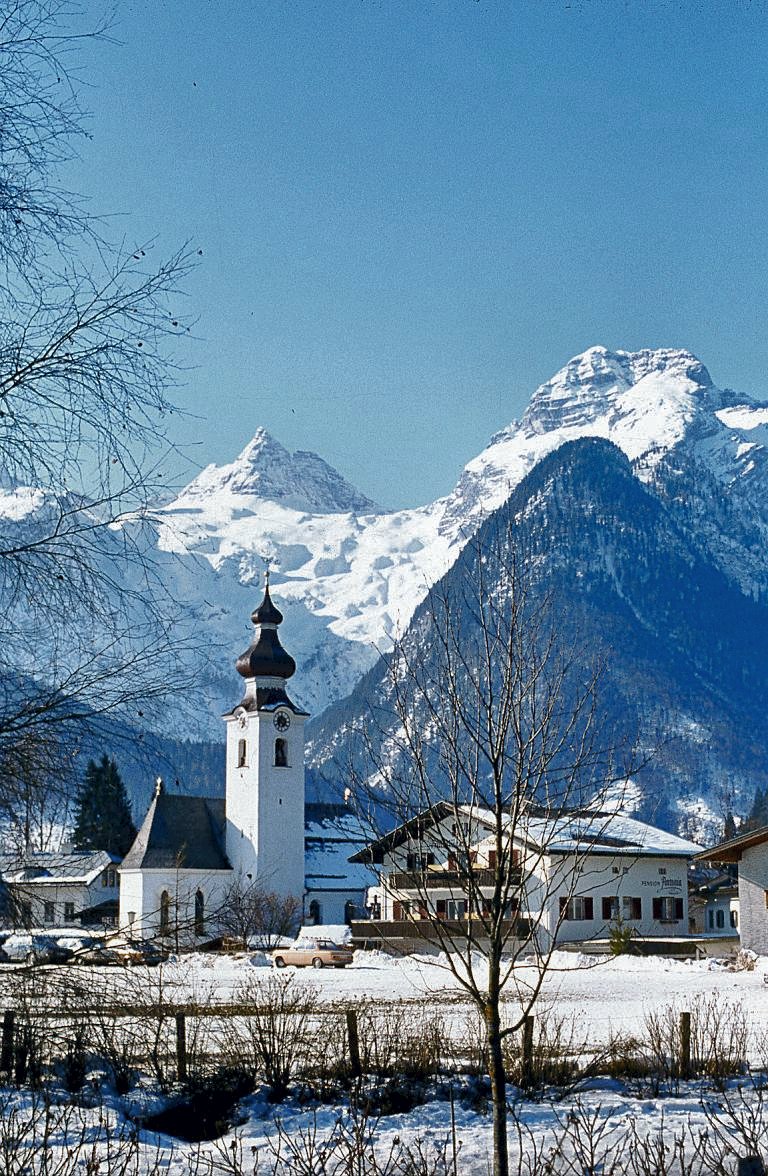
I love the light in this photo. This Schornsteinfeger (chimney sweep) was working in Gertrudplatz 7 in the 18th Bezirk of Vienna, sometime in the latter part of 1976. I caught him up in the attic and asked him to pose for a photo. It’s one of my favorite memories of Austria. (Next to the heiße Maroni, the Schnitzel, the Chokoladeschnecken, the mountains of Innsbruck, usw usw usw…=)

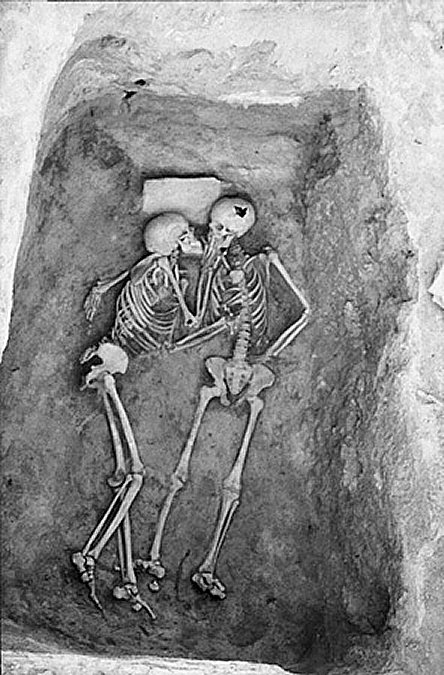
The 6,000-year-old kiss

Hasanlu Tepe is an archaeological site in Azarbaijan Province of northwestern Iran.

These two skeletons were found in a pit with no identifying marks or artifacts – only a stone slab beneath the head of the one on the left. What story could these two have told?

“L’homme auquel il avait appartenu était donc venu là, et il y était mort. Quand on voulut le détacher du squelette qu’il embrassait, il tomba en poussière.”
-Victor Hugo, Notre Dame de Paris

♫ There’ll be a hot time in the old town tonight ♫

While this looks photoshopped, it’s an actual phenomenon, a fire swirl caused by a heat-generated vortex.

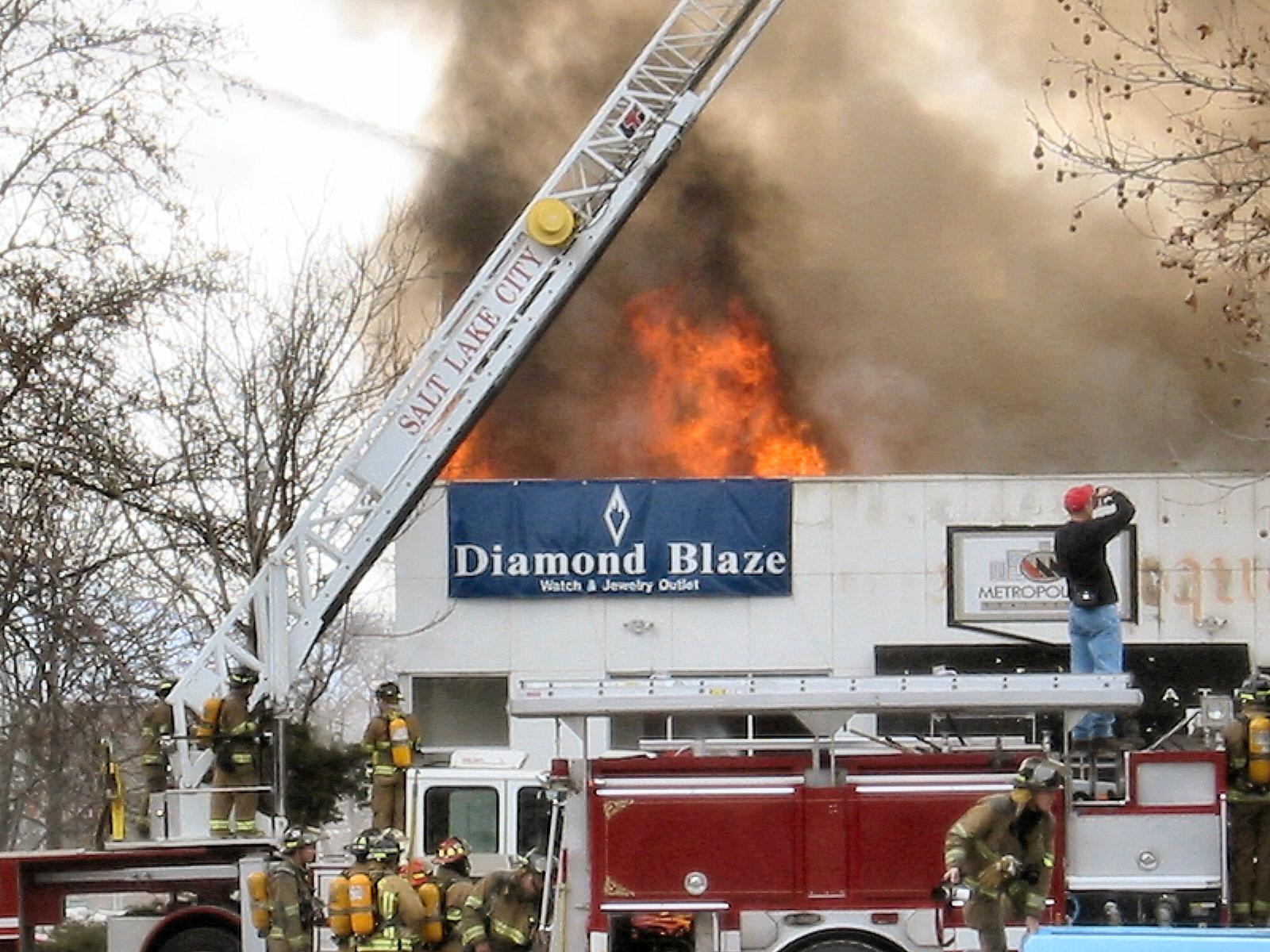
March 11, 2003 – a Salt Lake City strip mall goes up in flames due to faulty attic wiring above a shoe repair shop.

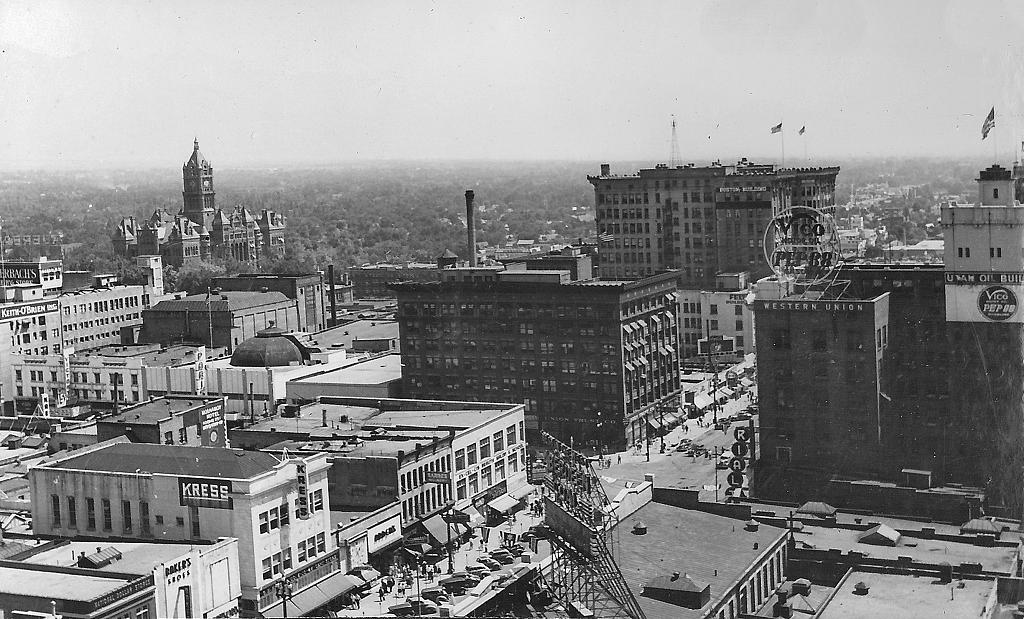
The view from my office, Cathedral of the Madeline in the center (it wasn’t close to the fire)

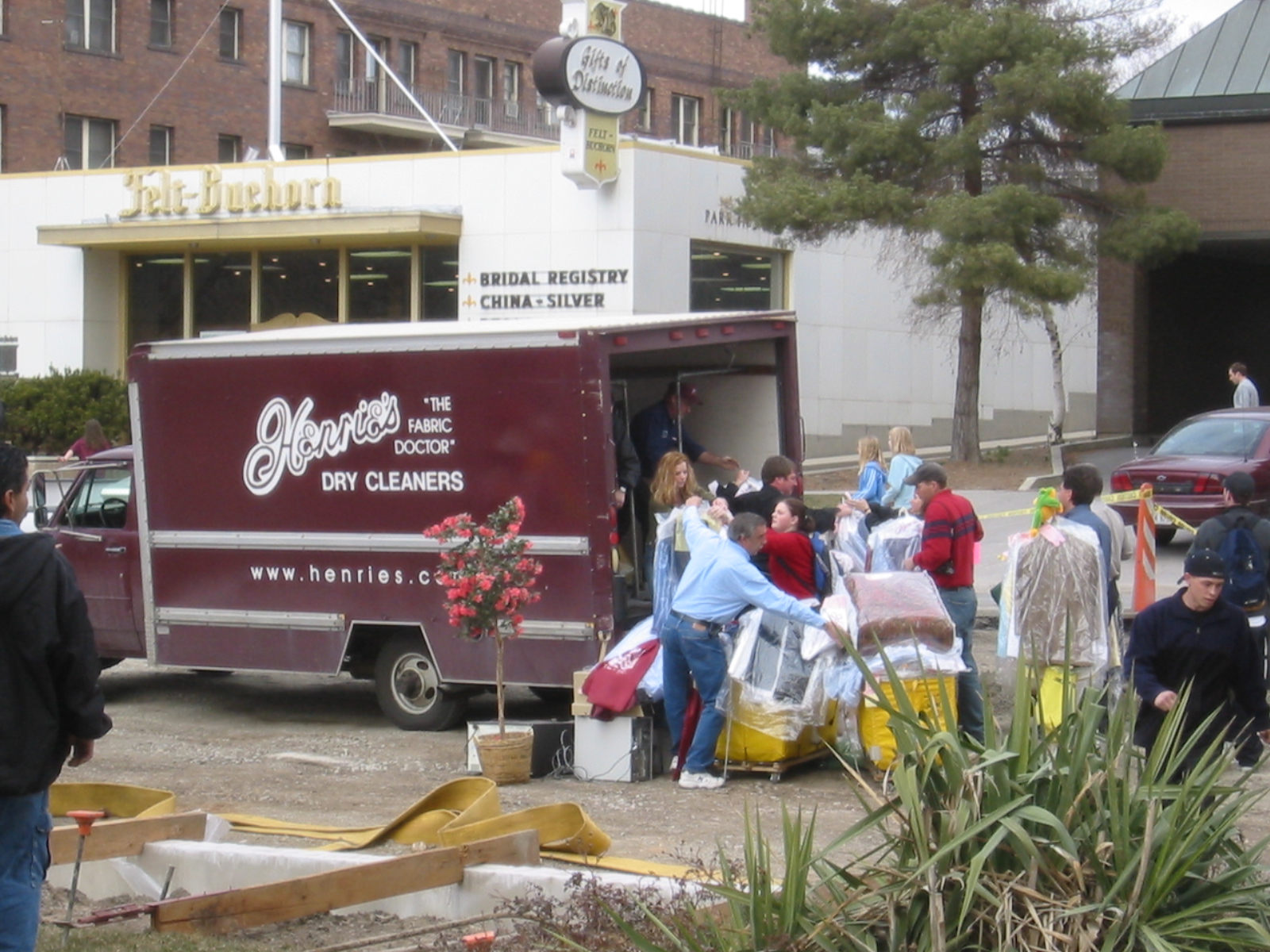
Employees and bystanders form a brigade to rescue clothing from a dry cleaner’s before it goes up. Felt-Buchhorn, a long-time landmark in Salt Lake, fell victim to the recent recession.

Oh, the irony.

Article here.

The Old Wolf has spoken.