A number of lists of these great “quotes” have been circulating ever since the days of fax machines, even before “forwards from Grandma.” They’re funny and great to read, but is there any truth to any of them? Let’s explore.
The most famous one that I know of has been thoroughly debunked:
“640K ought to be enough for anybody.” – Bill Gates
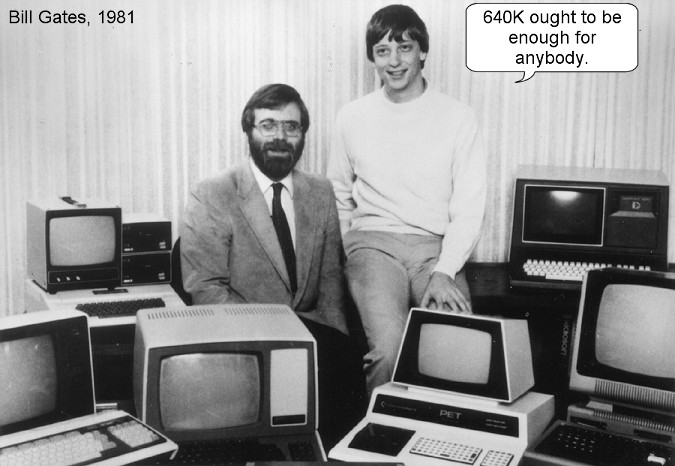
An analysis at Quote Investigator ended with “Since Gates has denied the quotation and the evidence is not compelling I would not attribute it to him at this time. Thanks for this difficult interesting question.“
During the early days of computing, programs were often written in Assembly Language, producing very tight code that could run in minimal spaces. The original Wang v.2 word processor was designed to run on workstations with 32K of memory, even though later workstations had a standard 64K.
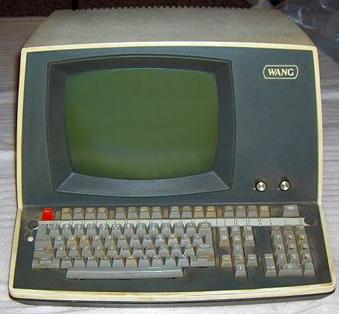
If you want apocrypha, here’s a good one. This story was told to me by a Wang Laboratories internal employee, and I can’t verify its authenticity, but having worked with Wang software and hardware for around 10 years back in the ’80s and ’90s, I would be willing to bet a steak dinner that it is true.
The Wang Word Processor, version 2, was – as mentioned above – written in Assembly language. The source code was kept on these 300MB swappable disk packs which at the time were very convenient for changing storage media.

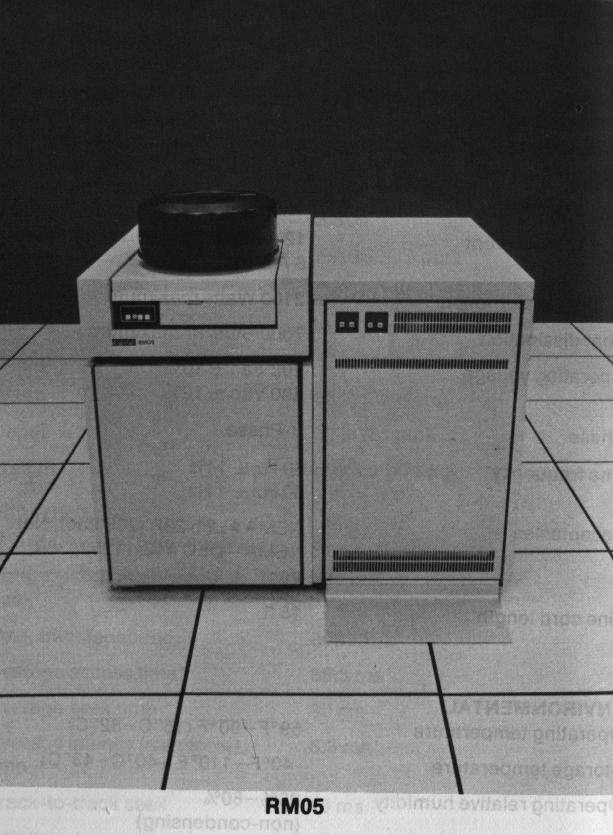
As the tale goes, somehow an entire rack of those disk packs got knocked over, destroying both the source code (in Assembly Language) and the backups for that impressively small and fast piece of software. It was for this reason that WP+, the next generation word processor from Wang, was entirely re-written in a slower, larger, higher level language. It emulated many features of the original and added others, but it was cumbersome and inelegant by comparison. Again, I can’t verify this 100%, but it came to me from what I consider a reliable source.
Western Union’s opinion of the telephone
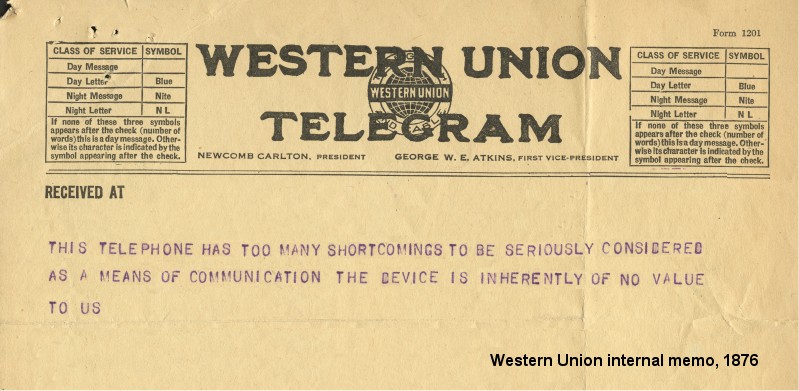
This ‘telephone’ has too many shortcomings to be seriously considered as a means of communication. The device is inherently of no value to us.” — Purported Western Union internal memo, 1876.
Telegrams were pretty much the way to get a message from one place to another rapidly. Prior to the development of the electric telegraph system designed by Samuel Morse, optical telegraphy which used visual signals seen at a distance was one of the earliest methods of long-distance communication.
Wikipedia reports that “The smoke signal is one of the oldest forms of long-distance communication. It is a form of visual communication used over a long distance. In general smoke signals are used to transmit news, signal danger, or to gather people to a common area.” The use of smoke signals by the indigenous peoples of North America are probably the most familiar to Americans thanks to the popularization of western history in published and broadcast media.

This method of communication has been the basis for much humor as well:

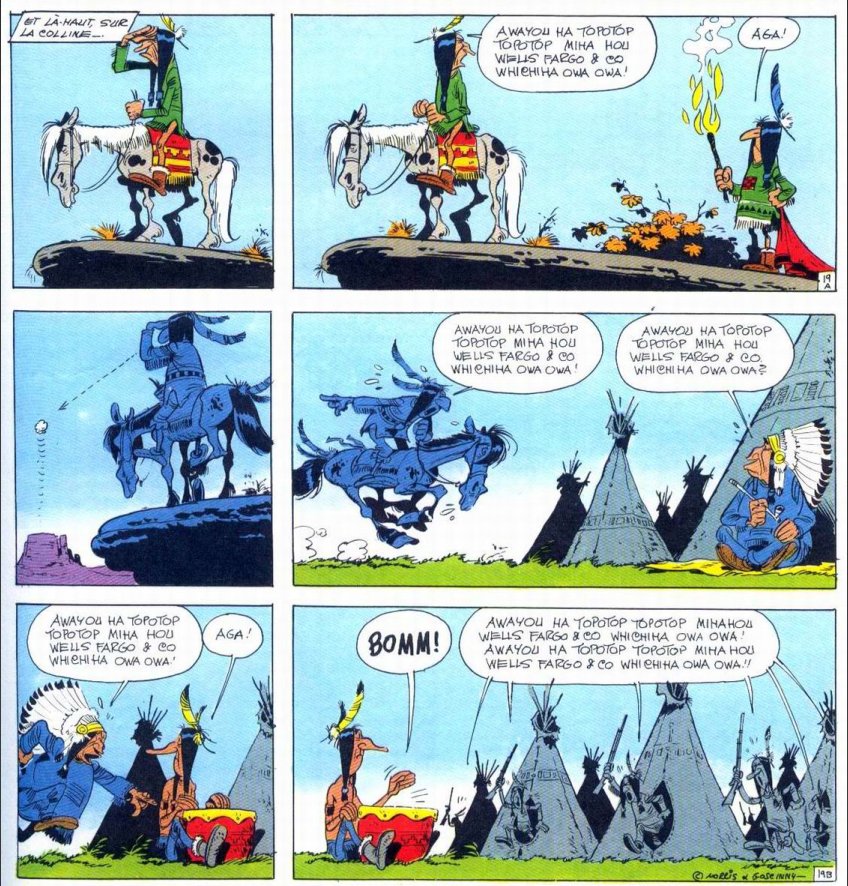
The joke here is that a single puff of smoke or one beat of a drum can communicate large quantities of information, which of course is not the case.
One of the most stirring cinematographic representations of optical telegraphy can be found in Peter Jackson’s version of J.R.R. Tolkien’s “The Two Towers,” where the beacons of Gondor – signal fires strategically placed on mountaintops – played a crucial role in summoning Rohan’s forces to help Gondor.

Once electricity came on the scene, the electrical telegraph, augmented by Morse Code, became the dominant method of rapid long-distance communication, and was the underpinning of the telegram system for which Western Union became so famous.
Telegrams – about which I have written elsewhere – were used for everything where information had to be transmitted rapidly, from business meetings, to military applications, to notifications of death, to congratulations on Broadway, and countless other uses.
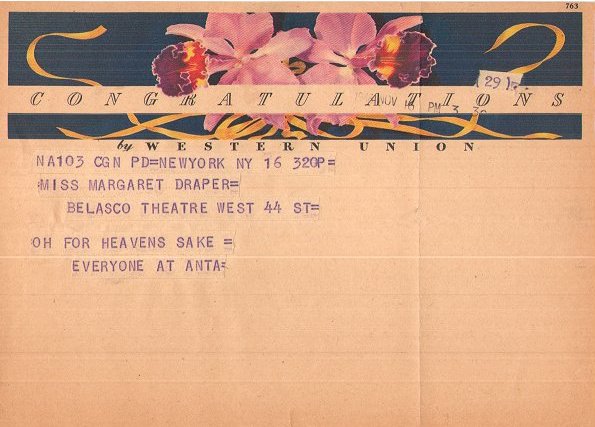
So when the telephone made its debut on the world stage, Western Union supposedly turned up its nose and sniffed loftily that it was not anything worthy of consideration. While the invention of the telephone, followed by the modern Internet and the proliferation of smartphones, ultimately doomed the telegram to the vaults of history, at the time concern about the new technology was real. The supposed internal memo at Western Union, however, was not. A lovely article at Wondermark discusses the origins of this urban legend in great detail and is worth the read if such things interest you.
Be aware, however, that even the telegraph itself was met with skepticism by shortsighted individuals:
“I watched his face (Samuel F.B. Morse) closely to see if he was not deranged, and was assured by other Senators as we left the room that they had no confidence in it either.”
-Senator Oliver Smith of indiana, 1842, after witnessing a first demonstration of the telegraph
The Radio
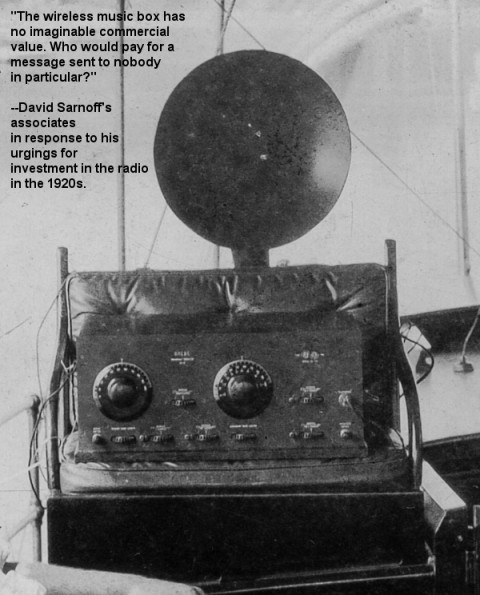
David Sarnoff was an early pioneer in the promotion of wireless radio as a new technology. I asked Perplexity about the supposed response from investors, and it had this to say:
In summary, although the quote closely reflects real skepticism Sarnoff faced, there is no documented evidence that an investor sent this precise message to him—the wording appears to be apocryphal or retrospective, encapsulating broader contemporary attitudes
Obviously, “fear of the new, from those with a vested interest in the old” (from the Wondermark article linked above) didn’t keep the radio from becoming immensely popular.
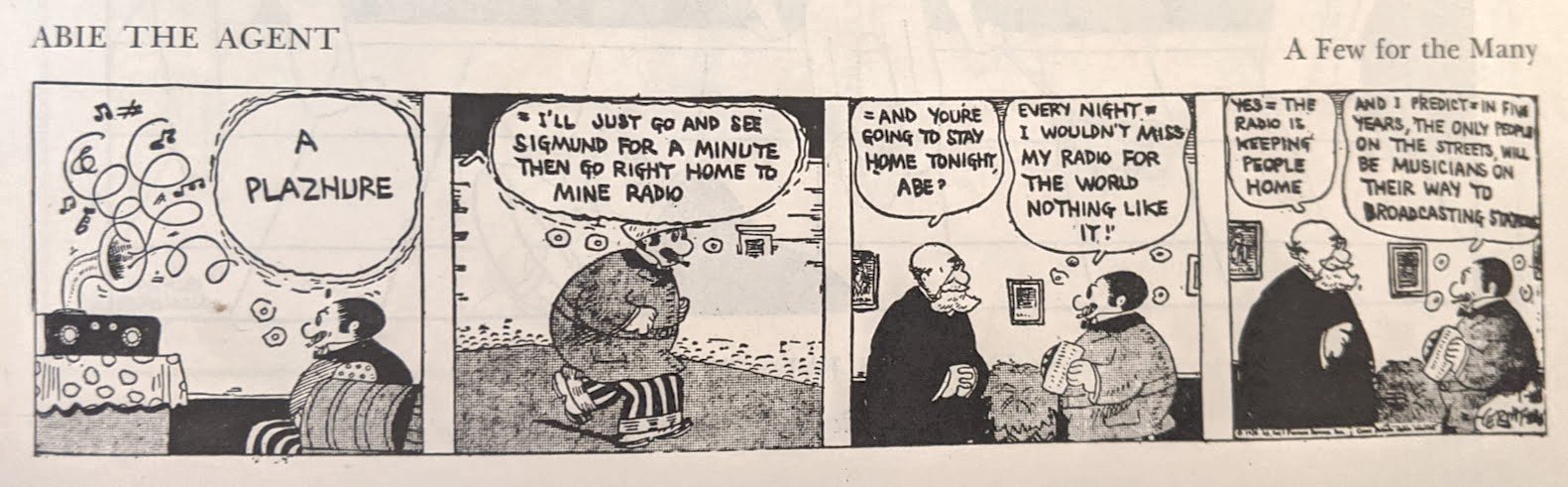
The March of Technology
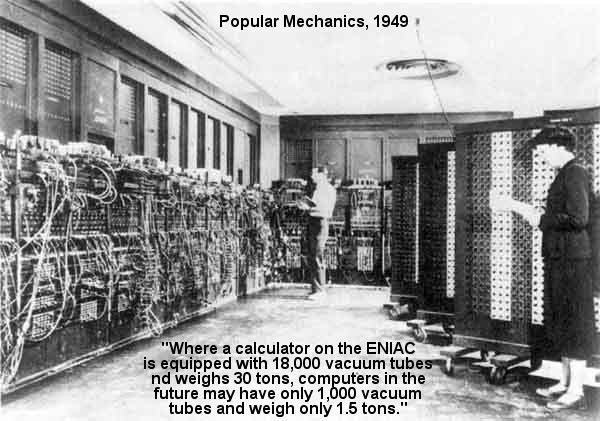
“Computers in the future may weigh no more than 1.5 tons.” attributed to Popular Mechanics from 1949
This is a true quote, but is often quoted out of context, unlike the quote in the image above. Popular Mechanics was making a forecast based on the technology of that time, suggesting computers could shrink significantly but still be very large by modern standards. This reflected an era when computers were massive and used vacuum tubes. The prediction was reasonable then but didn’t foresee transistor and integrated circuit breakthroughs that led to much smaller, lighter computers. You don’t know what you don’t know.
More about Computers
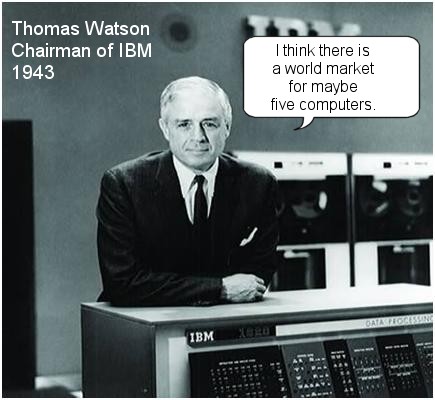
Once more, this quote is a misinterpretation; a very good background is found here. The short explanation is:
From a question on the history of IBM on their website, “Did Thomas Watson say in the 1950s that he foresaw a market potential for only five electronic computers?” IBM offers the following explanation:
We believe the statement that you attribute to Thomas Watson is a misunderstanding of remarks made at IBM’s annual stockholders meeting on April 28, 1953. In referring specifically and only to the IBM 701 Electronic Data Processing Machine — which had been introduced the year before as the company’s first production computer designed for scientific calculations — Thomas Watson, Jr., told stockholders that “IBM had developed a paper plan for such a machine and took this paper plan across the country to some 20 concerns that we thought could use such a machine. I would like to tell you that the machine rents for between $12,000 and $18,000 a month, so it was not the type of thing that could be sold from place to place. But, as a result of our trip, on which we expected to get orders for five machines, we came home with orders for 18.”
You don’t know what you don’t know
“I have traveled the length and breadth of this country and talked with the best people, and I can assure you that data processing is a fad that won’t last out the year.”
-The Editor in Charge of Business Books for Prentice Hall, 1957
“But what … is it good for?“
-Engineer at the Advanced Computing Systems Division of IBM, 1968, commenting on the microchip.
“There is no reason anyone would want a computer in their home.”
-Ken Olson, president, chairman and founder of Digital Equipment Corp., 1977
The three quotes above are not examples of obtuseness or stupidity, but rather the inability to predict the incredible rush of innovation that the computer industry would experience. I have written about the incredible shrinking data storage elsewhere, and even that article is now outdated; SanDisk has introduced a 4TB MicroSD card, whether or not something of this nature is even needed.
There’s nothing new under the sun
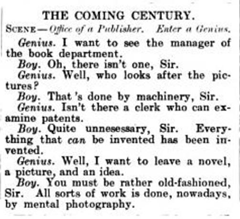
“Everything that can be invented has been invented.”
–Charles H. Duell, Commissioner, U.S. Office of Patents, 1899.
This archived article written by Dennis Crouch explores the legend, and decides that the quote was based on a joke published in Punch in 1899:
Silence Please
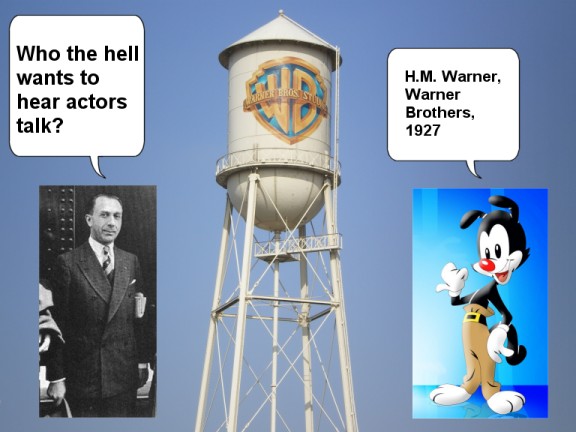
According to Quote Investigator, Warner probably said this but more confirmation would be useful. The linked article provides some interesting background about resistence to the inclusion of sound and voice in films, which up until that time were entirely silent.
There are many more “boneheaded quotes” out there, but the above dive into some of the most famous is an indication that each one deserves to be investigated for accuracy before spreading them around as 100% accurate.
As Abraham Lincoln famously said:
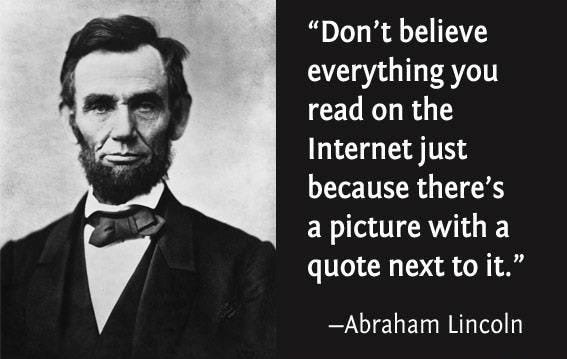
The Old Wolf has spoken.



 Playing in the World Game