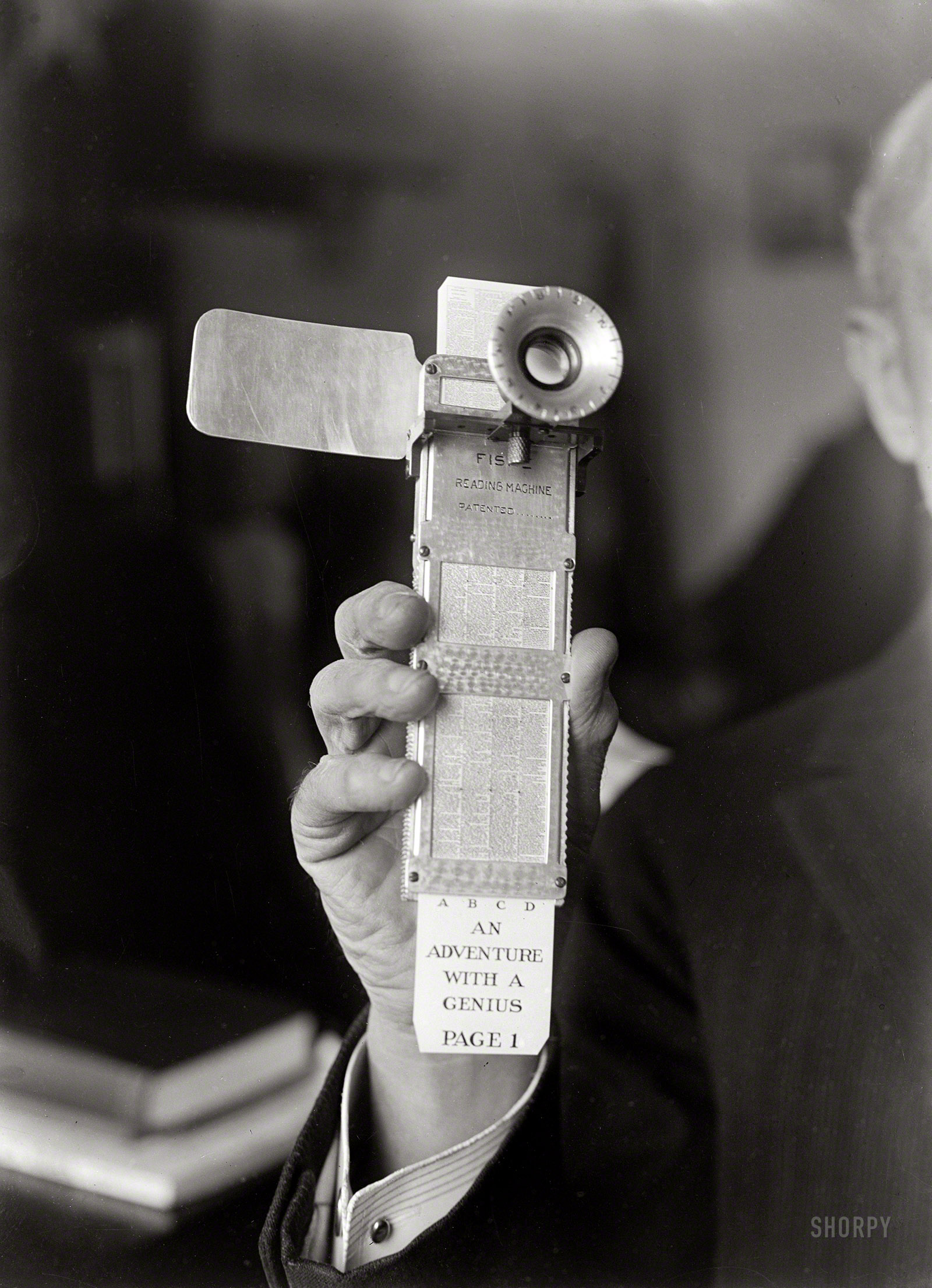
The Fiske Reading Machine in the hand of its inventor, Rear Admiral Bradley Fiske. Image from Shorpy via Glaserei

Miami News, March 30, 1926
I can just imagine what a person would look like using this on the subway…
The Old Wolf has spoken.
The Fiske Reading Machine in the hand of its inventor, Rear Admiral Bradley Fiske. Image from Shorpy via Glaserei
Miami News, March 30, 1926
I can just imagine what a person would look like using this on the subway…
The Old Wolf has spoken.
Two siblings had an argument. The sister made her brother a pie.

If this weren’t funny enough, here’s the brother’s reaction. You gotta love these two.
It just keeps going, and going, and going.
Anyone know furniture? This old laquered cabinet served as my mom’s bar for decades. The laquer is now chipping away – the left side looks a lot like the front – but I have no idea if it’s salvageable, or worth restoring – or should just be repaired, sanded, stained, and used as a functional antique. Input welcome!




Police “catwalk car” in the Holland Tunnel.
Y-chromosomes only need apply.
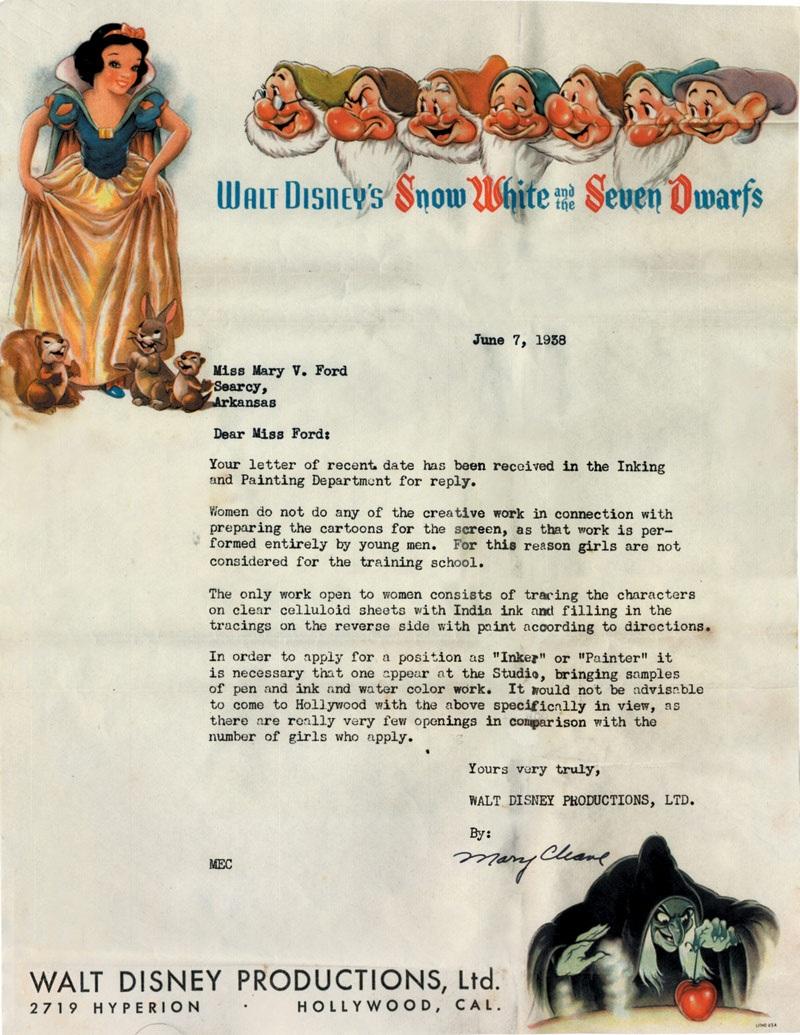
Found at Retronaut
This letter was a product of its times, rather than any malevolence on the part of Disney as a corporation. I simply found it interesting.
The Old Wolf has spoken.
A Fable by George Reavis[1]
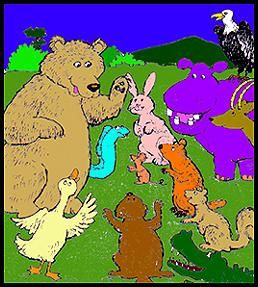
Once upon a time the animals decided they must do something heroic to meet the problems of a “new world” so they organized a school. They had adopted an activity curriculum consisting of running, climbing, swimming and flying. To make it easier to administer the curriculum, all the animals took all the subjects.
The duck was excellent in swimming. In fact, better than his instructor. But he made only passing grades in flying and was very poor in running. Since he was slow in running, he had to stay after school and also drop swimming in order to practice running. This was kept up until his webbed feet were badly worn and he was only average in swimming. But average was acceptable in school so nobody worried about that, except the duck.
The rabbit started at the top of the class in running but had a nervous breakdown because of so much makeup work in swimming.
The squirrel was excellent in climbing until he developed frustration in the flying class where his teacher made him start from the ground up instead of the treetop down. He also developed a “charlie horse” from overexertion and then got a C in climbing and D in running.
The eagle was a problem child and was disciplined severely. In the climbing class, he beat all the others to the top of the tree but insisted on using his own way to get there.
At the end of the year, an abnormal eel that could swim exceeding well and also run, climb and fly a little had the highest average and was valedictorian.
The prairie dogs stayed out of school and fought the tax levy because the administration would not add digging and burrowing to the curriculum. They apprenticed their children to a badger and later joined the groundhogs and gophers to start a successful private school.
Does this fable have a moral?
———————
Despite the fact that the above tale is around 75 years old, public schools, with their emphasis on standardized tests and government regulations, still insist on cramming all children into the same mold, ignoring completely that people have many different learning styles. The image below, from Loving2Learn.com, outlines some of the major ones. There are others.
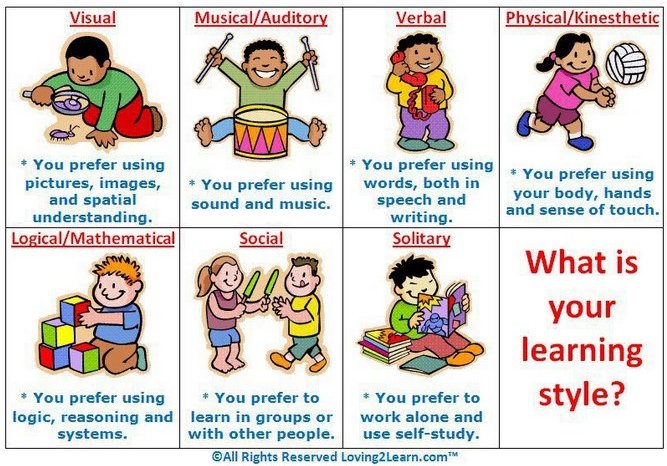
Part of the problem is this:

Much of the problem stems from where our country’s schools have come from in the past. Two books – older, but in a sense timeless, are
Lest anyone think “things have gotten better since then,” 2013 estimates indicate that it would take $270 billion to repair America’s schools and bring them to their original condition, and twice that to bring them up to date. Inner-city schools, not surprisingly, are in the most desperate straits.
On the other hand, there are people out there making a big difference by bucking the system. If you want a taste of what’s being done, I recommend two movies:
There has been considerable pushback from teachers’ unions with regard to films like the above. But then, that’s not surprising. These organizations tend to focus on preserving jobs for teachers rather than ensuring that children receive a quality education. That’s a guaranteed formula for failure from the get-go. America’s public-school system is ossified almost beyond salvation. Most school districts and individuals schools are run like petty fiefdoms, where the emphasis is on consolidating power and preserving a comfortable status quo. That doesn’t mean that reform is not worth fighting for, but it will continue to be a hard slog until until a system can be built where incompetent teachers and administrators can be weeded out, good teachers encouraged with respectable salaries, and the emphasis on standardized testing thrown in the dustbin of failed educational policies.
There’s another dimension to public education that needs to be addressed as well – the concept of social responsibility. But that will have to wait for another essay.
The Old Wolf has spoken.
[1]This story, in the public domain, was written by George Reavis when he was the Assistant Superintendent of the Cincinnati Public Schools back in the 1940s. This was a handout for my Educational Administration classwork in 1972.
As I was growing up, even as a child, I was aware that the rapid advance of technology had begun within sight of my birth year, in relative terms.
I knew, for example, that my mom’s parents were married in 1912, the year of the Titanic disaster.
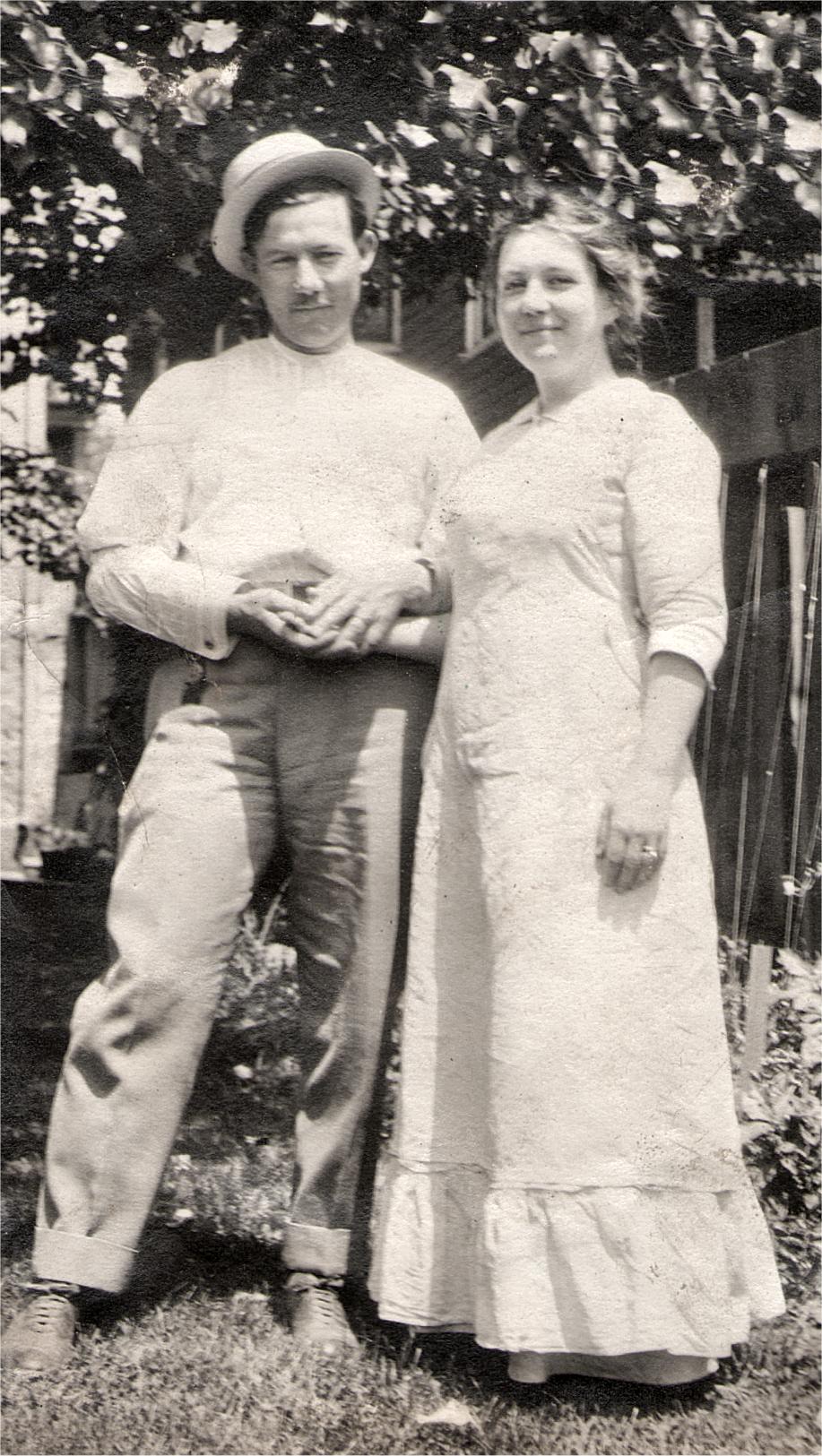
Electricity was still a novelty in many places. Automobiles were still replacing horses.
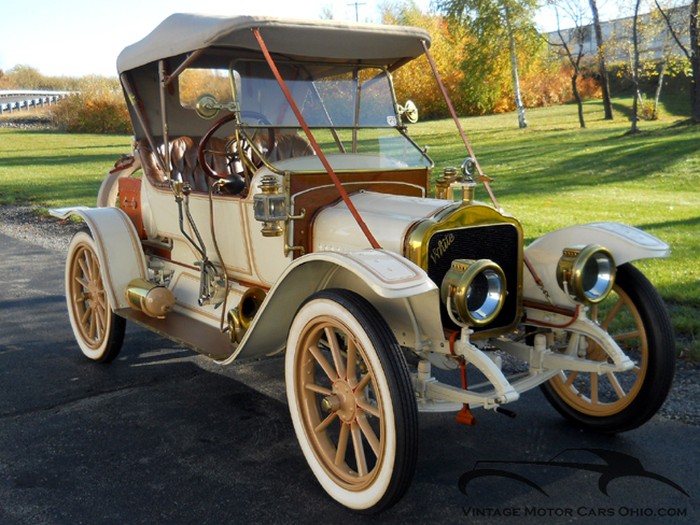
1912 White Motors vehicle
Telephones were still basic in many areas, although dial phones were becoming popular.

1912 – Connecticut Telephone and Electric Company
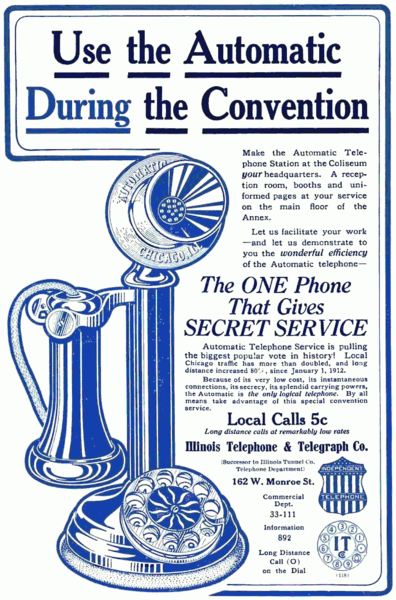
The dial telephone was touted for it’s “secret service” convenience, meaning no operator was required to connect the call. This advertisement targeted delegates to the 1912 Republican National Convention.
Radio had yet to become popular, and was still being used in things like ship-to-shore communications.
Television was not even a glint in Philo T. Farnsworth’s eye, and was strictly the stuff of laboratory experimentation.
The first commerical flight, with one passenger, happened two years later.
Fast-forward to the 1950’s.
Telephones looked like this:

Our television was the “Cadillac” of TV’s at the time – a hand-made Andrea. Mom always had good taste.

For some history about the Andrea enterprise, see the article from Radio & Television News from May of 1950.
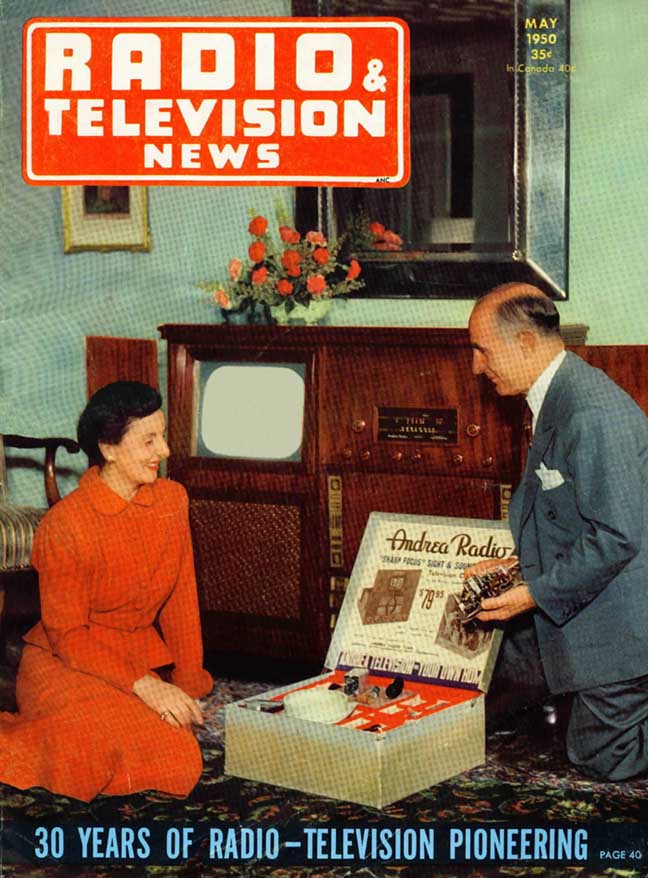
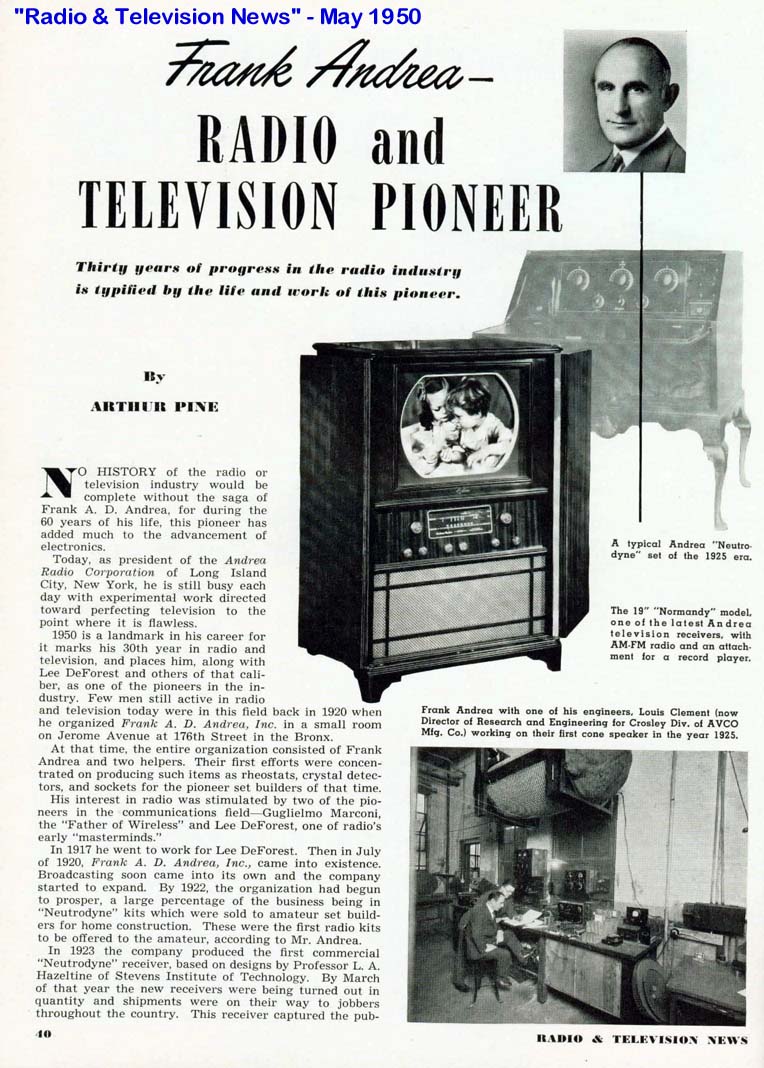
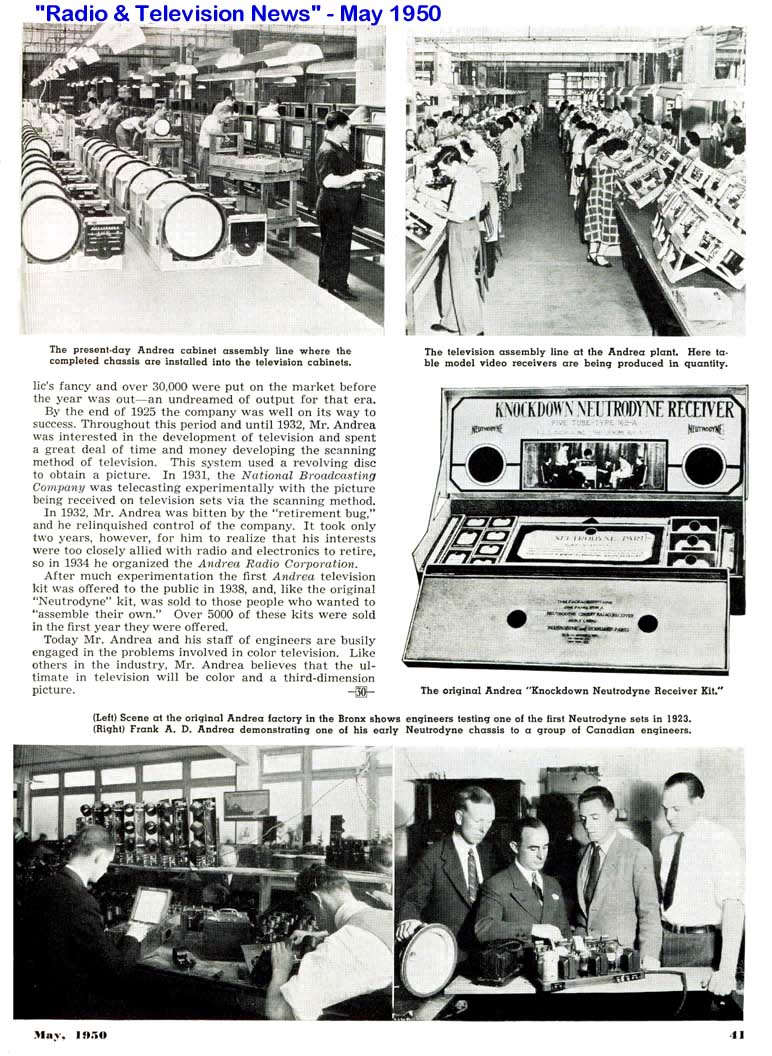
TV’s had a 13-channel dial. UHF was provided for, but no one was broadcasting on those channels yet. Remotes were unheard of – you actually had to haul your ass off the couch and change the channel or adjust the volume by hand. This made channel surfing difficult – unless, like me, you sat 5 inches away from the screen and spun the dial like crazy. My mother always told me I’d hurt my eyes by sitting so close…
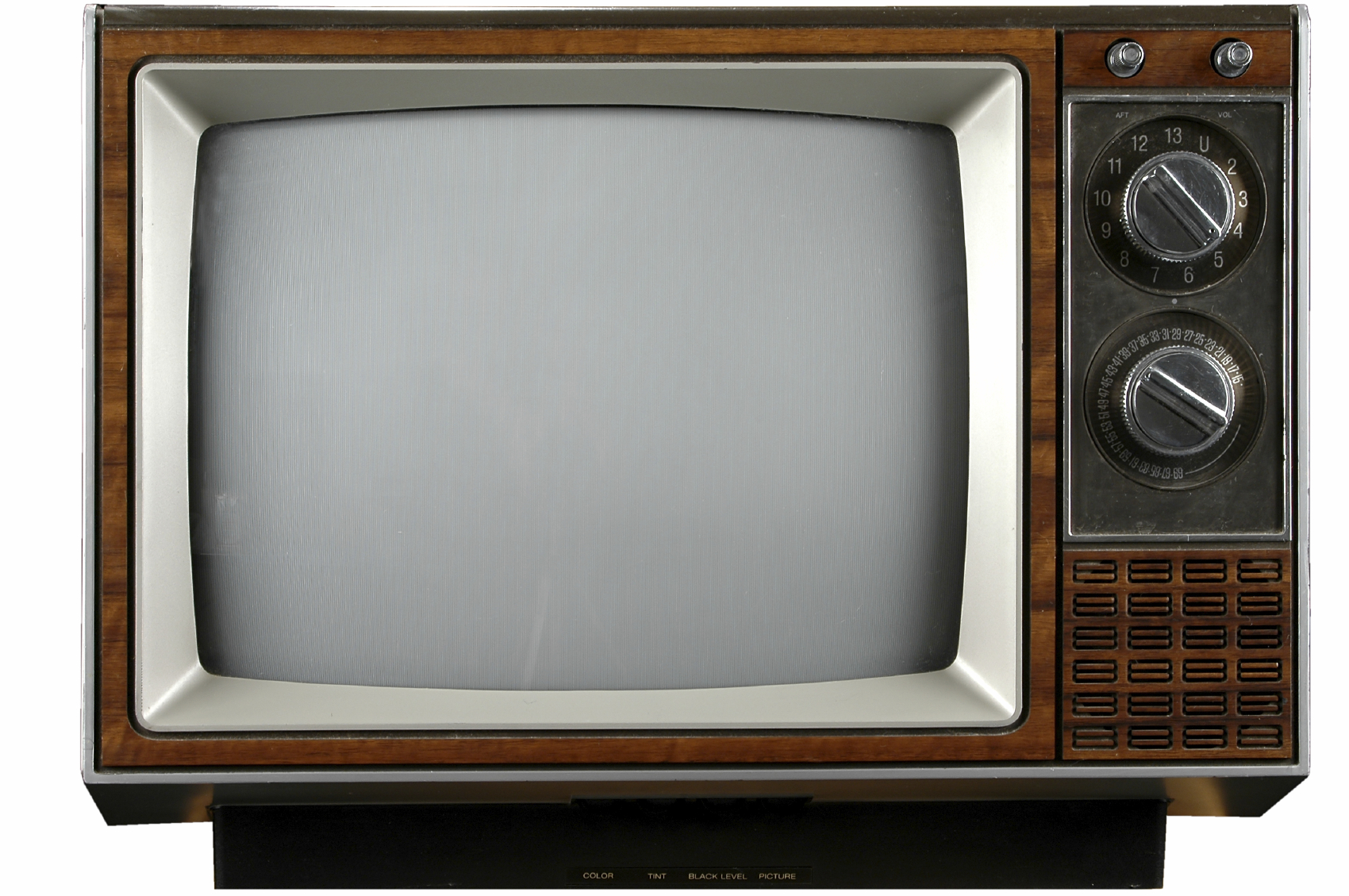
New York City had 7 channels – 2, 4, 5, 7, 9, 11, and 13. Everything was black and white – it wasn’t until the 60’s that we began seeing this:
Channels were pretty much off the air during the night time. Broadcasting would begin at around 5:30 AM. One of the first things to come on (even before the cartoons) was The Modern Farmer. I learned a lot watching that show, waiting for the cartoons to come on. If I was up earlier, all I’d see was something like this:

My mother married for the second time in 1959, and she and her new hubby (that relationship lasted about a year) flew on one of the first commercial jets, to Puerto Rico.
Flying, which I did often during the 50’s and 60’s to visit my mom’s family in Utah or my father in Los Angeles, really did look a lot like this:

They took good care of you back then. Those meal trays would come with little promotional packs of cigarettes, too – usually Marlboro, with four cigarettes in a tiny flip-top box. Kids would get games, or playing cards, and always a set of wings:
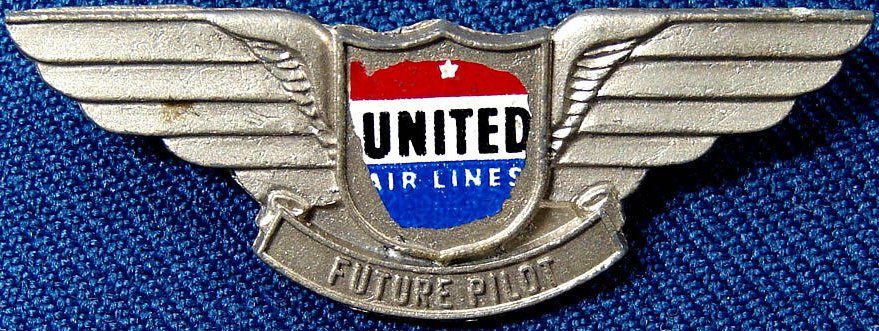
Don’t know what happened to my wings from United, but I still have a set from American kicking around somewhere.
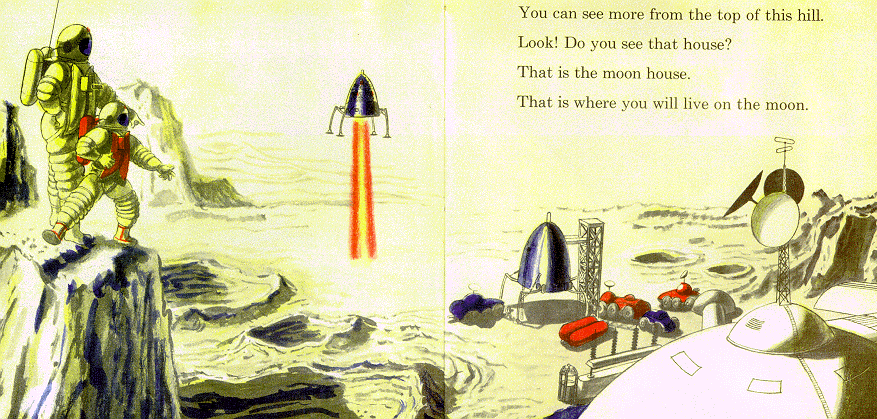
One of my favorite books in 1959 was You Will Go To The Moon, by Mae and Ira Freeman.
The Univac 1 was delivered in 1951, its successor, the Univac II, was delivered in 1958.
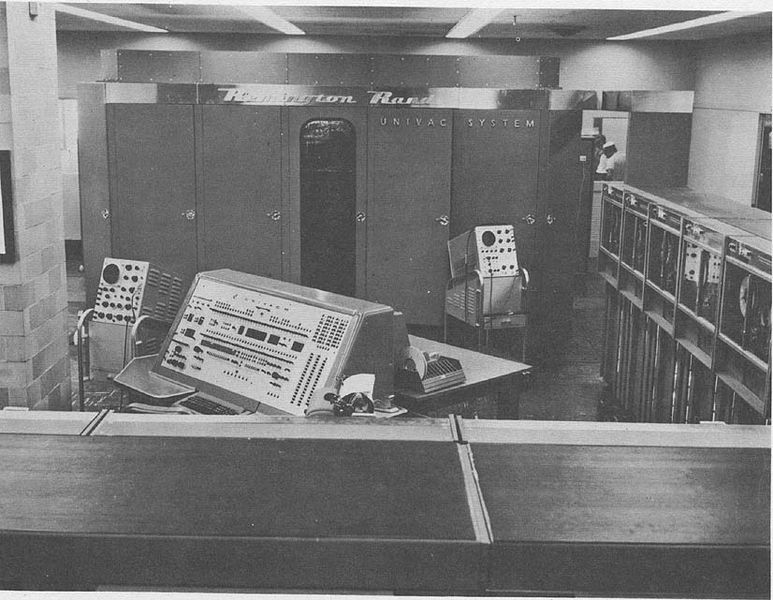
Univac II. My smartphone has more power than this did.
So today, in 2013, technology is advancing at a pace so rapid as to be breathtaking. I write this post on a core i7 machine, still relatively new – and already surpassed by new models. There are kids alive today who have never known what a world without the Internet is like (although they don’t remember NCSA Mosaic, or trying to surf the web over a 300-baud modem.)

Original cartoon courtesy of somethingofthatilk.com. I added this last panel.
In 1959, I could not have possibly imagined what I am seeing today (although I’m still ripped off about my flying car and that trip to the moon). Even with today’s technological and scientific miracles, I cannot imagine what kind of world my grandchildren will see. I can only hope that the world they grow up to see will have advanced in terms of humanity as well as technology.
The Old Wolf has spoken.
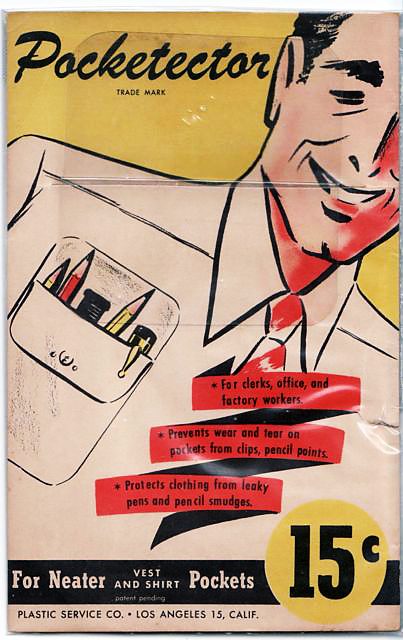
I used one regularly in the 60’s. I think that’s how much I paid. This one is clear, but I recall that I preferred the white ones.
I am still teh g33XXør.
The Old Wolf has spoken.
 Playing in the World Game