Excuse me while I turn handsprings

I have a lovely computer. It’s really the first time in my life I’ve had a machine that was more robust than my needs dictated; it’s a nice Dell i7 core box running Win7 Pro and it runs like greased lightning. But over the past year or so, I’ve been plagued by one glaring problem that I couldn’t diagnose properly… until tonight.

slow-computer

It was my context menus. Right-click on anything, and that dratted menu would take about 30 seconds to pop up. When you’re working away at a project, you need speed and responsiveness, and this was getting worse and worse. Googling suggested the problem was in a defective context-menu handler, probably a third-party one, and recommended a number of long, involved, and messy investigations. I installed ShellExView and disabled shell extensions one by one, or in clusters using a binary search pattern, but nothing helped. Nothing. Ploret des yeulx, ma barbe blanche tiret, I was about to slit my wrists in frustration – but I finally found the culprit, something that didn’t show up in shell extensions or elsewhere: MPCBContextMenu. It’s a context menu handler that was installed on my system along with JustCloud, my current backup program.

JustCloud works well, I have unlimited storage, it backs up my stuff quietly and unobtrusively, and it was fairly cheap for a two-year plan. But this particular .dll file is a steaming mass of camel ejecta, and just pulling it out of my Program Files directory and re-booting solved the problem.

There are hardly words to express my relief. By the silken breast of Mogg’s mother – if you are having the same difficulty, go search for this file. It’s probably in your program files (x86) directory under JustCloud. Kill it. Exterminate it. BURN it with FIRE!

The Old Wolf rejoices.

Music Across the Ages

If you love music and aren’t afraid to genre-hop, or take on new tastes, please visit “The Daily Music Break.”

Updated daily, this website is a good way for people to listen to new music that they might not otherwise. I think Grooveshark just took a back seat for a while.

Mad props to Carl and his son, redditor /u/karsforkidz for creating and sharing this.

daily


The Old Wolf has spoken.

New York, 1950s

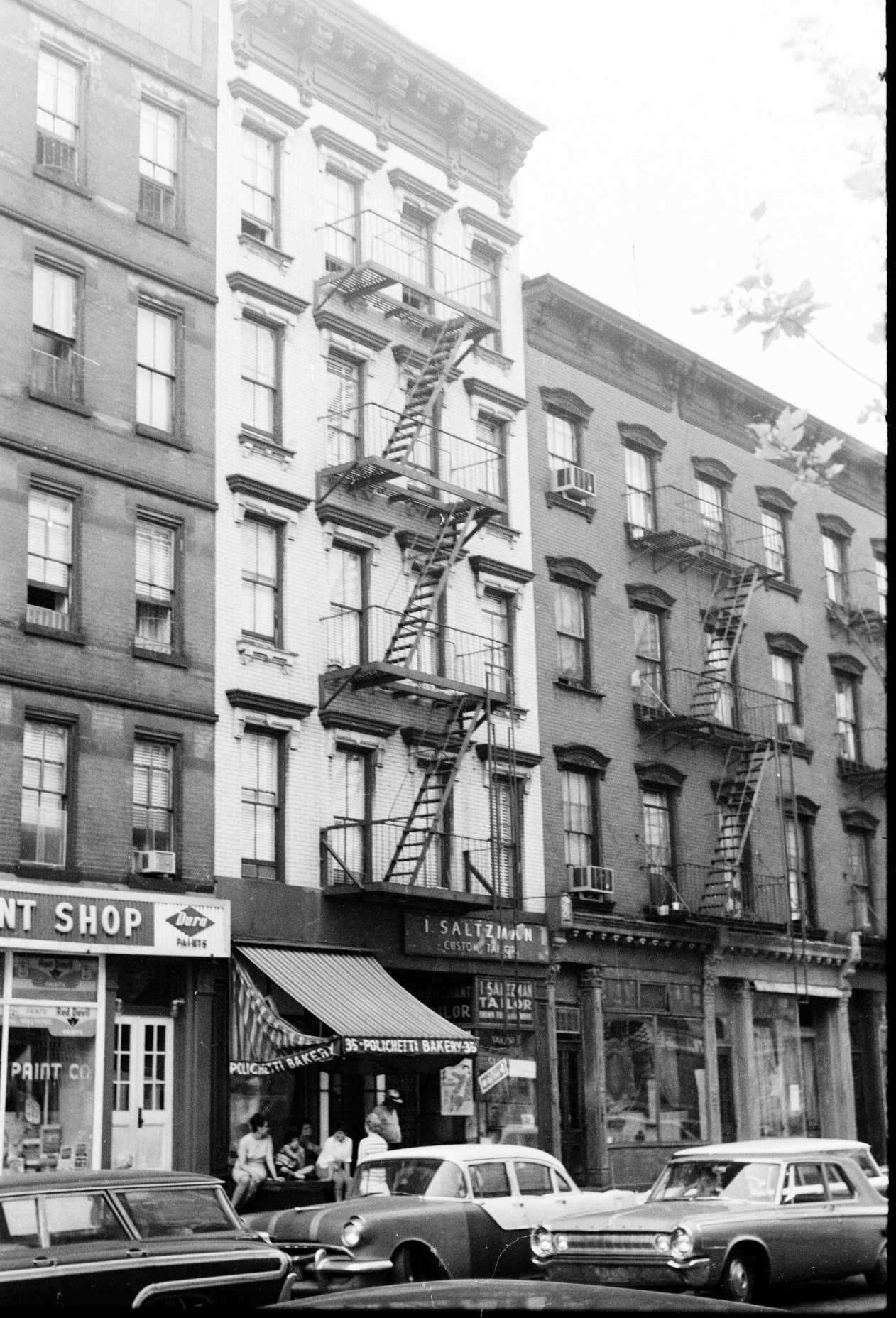
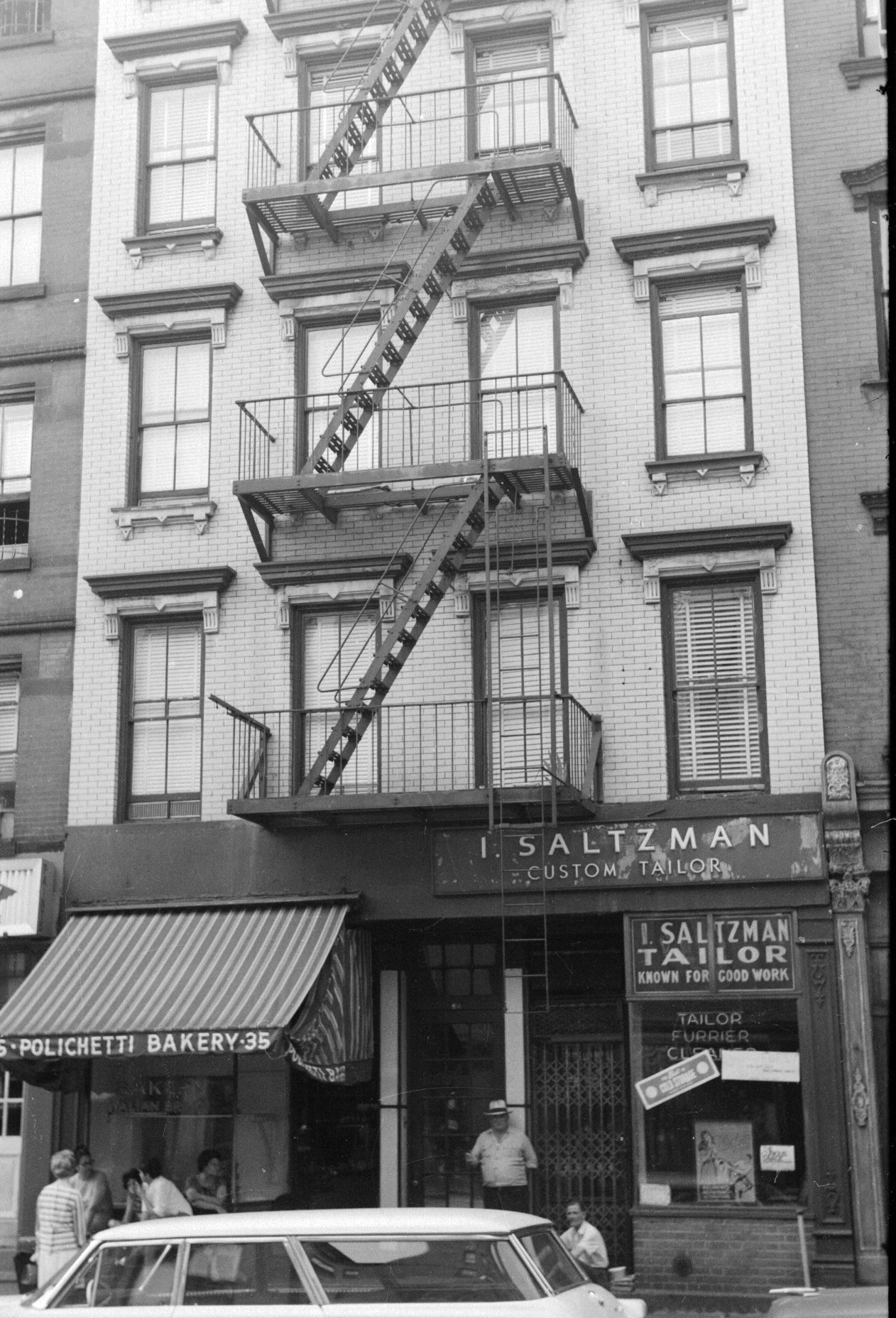
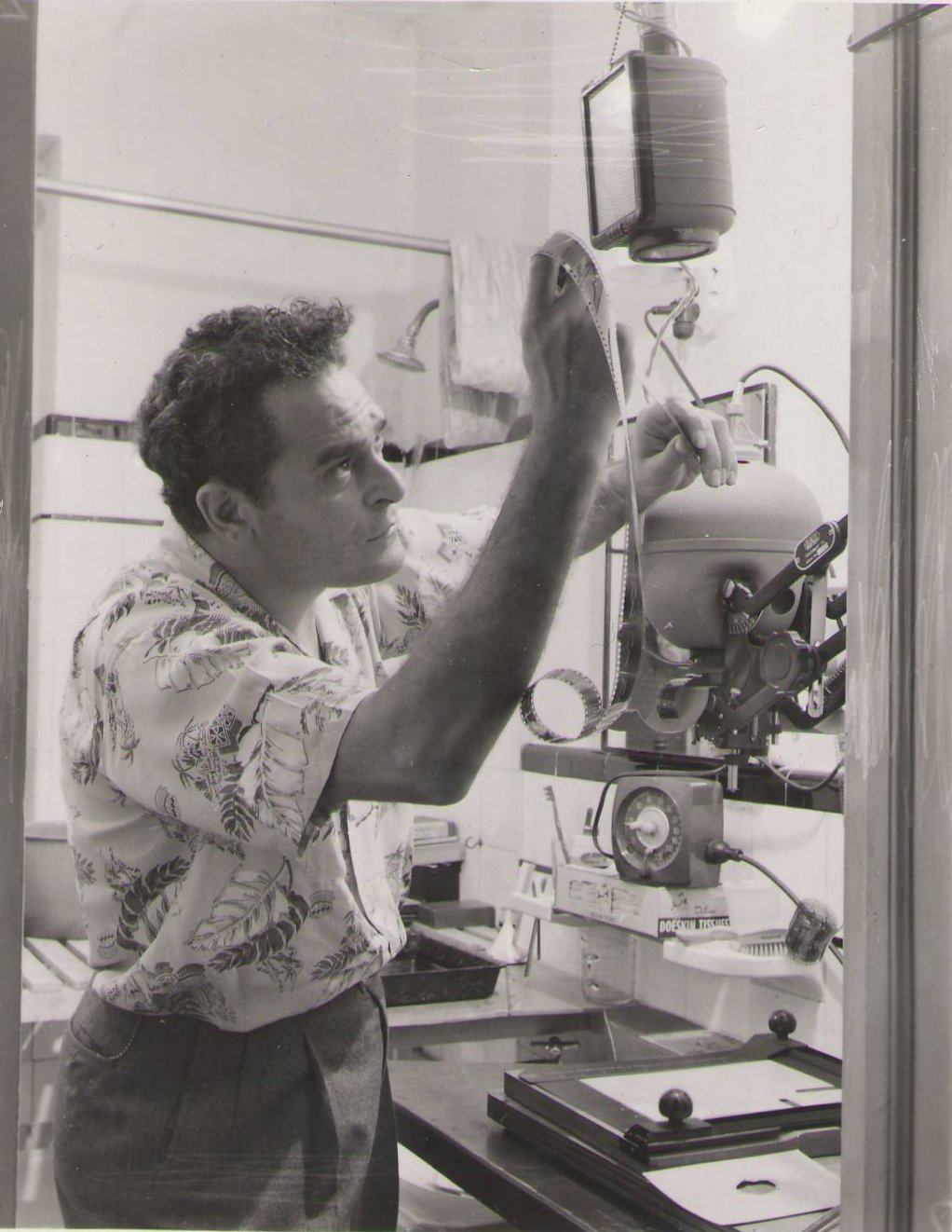
Some photos of New York City taken by my father, found while scanning his collection of negatives. This is the city I knew as a child. Dad was not a great photographer, but was very enthusiastic, and did his own developing and printing. These pictures were taken between 1950 and around 1959, based on what the cars look like. All black & white photography Copyright 1950-2014 Old Wolf Enterprises.

Below: two views of 35 Carmine Street.

New York - Polichetti's Bakery

New York - Saltzman Tailor

History: No. 35 Carmine Street was constructed in 1877 by Bavarian-born brickmason and prolific tenement builder Peter Schaeffler, at a time when many of Greenwich Village‘s Federal and Greek Revival-style row houses were being replaced by tenements constructed to house the growing working-class and immigrant population. Featuring elements of the popular neo-Grec style in the design of the lintels, sills, and cornice, the building housed stores on the ground story and four families on each floor above. Built just prior to the 1879 tenement house law, the building had only two small square airshafts. Census data for 1880 shows that sixteen families resided at no. 35 Carmine Street, including three native-born families; first-generation immigrant families from Ireland (four), England (three), and Germany (one); and second-generation immigrant families from Ireland (two), England (one), Germany (one), and Scotland, via Canada (one). Residents were employed as a hatter, lawyer, watch case maker, bill collector and laundry worker, among other occupations. 1930 census records indicate that all fifteen families residing there were first-generation immigrant families from Italy. Residents held a variety of occupations, including bakery proprietor, cabinet maker, longshoreman, operator (men‘s clothing), and hat trimmer. By 1935, the number of apartments per floor had been reduced to two. City directories list the following commercial tenants: Experienced Hand Laundry (1950), A. Polichetti, baker, and Irving Saltzman, clothier (1959). The storefront had been occupied by a bakery in the early 1910s as well. In 1938 the western airshaft was enlarged and in 1939 architect Sidney Daub oversaw replacement of the existing storefronts; except for these changes, the building remains largely unchanged since its construction.  (Greenwich Village Historic District Extension II, Designation Report, June 22, 1910)

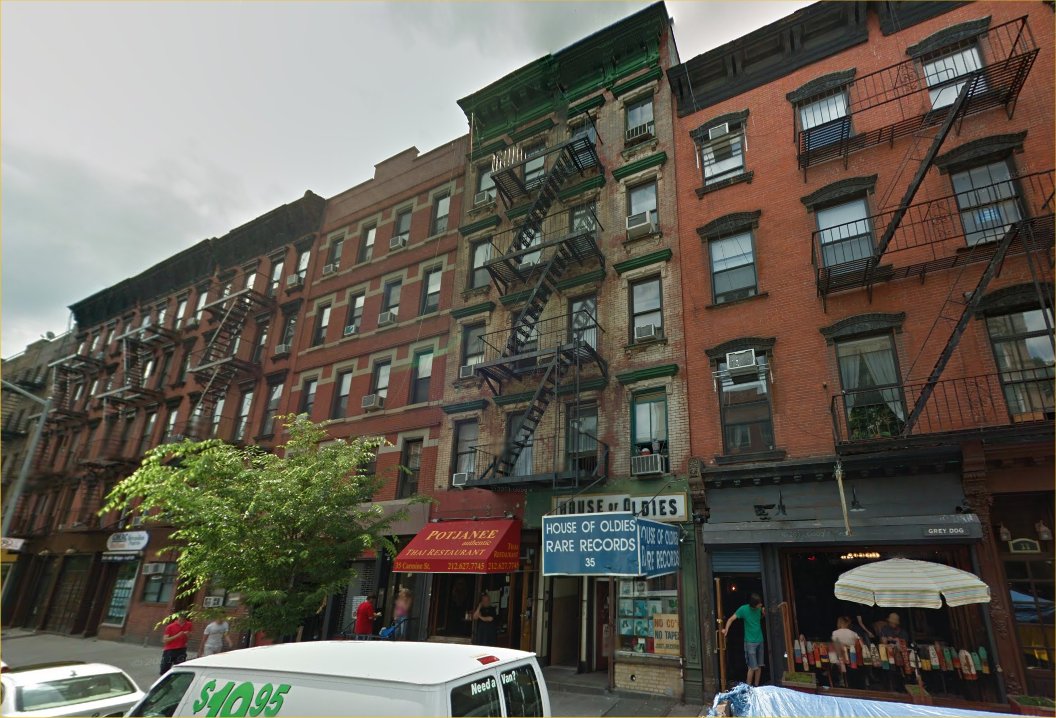
35 Carmine Street

35 Carmine Street as of June 2011, Google Street View

New York 1950 - Milkman

Milkman for Sheffield Farms Co. with typical New York brownstone in the background.

New York 1950 1

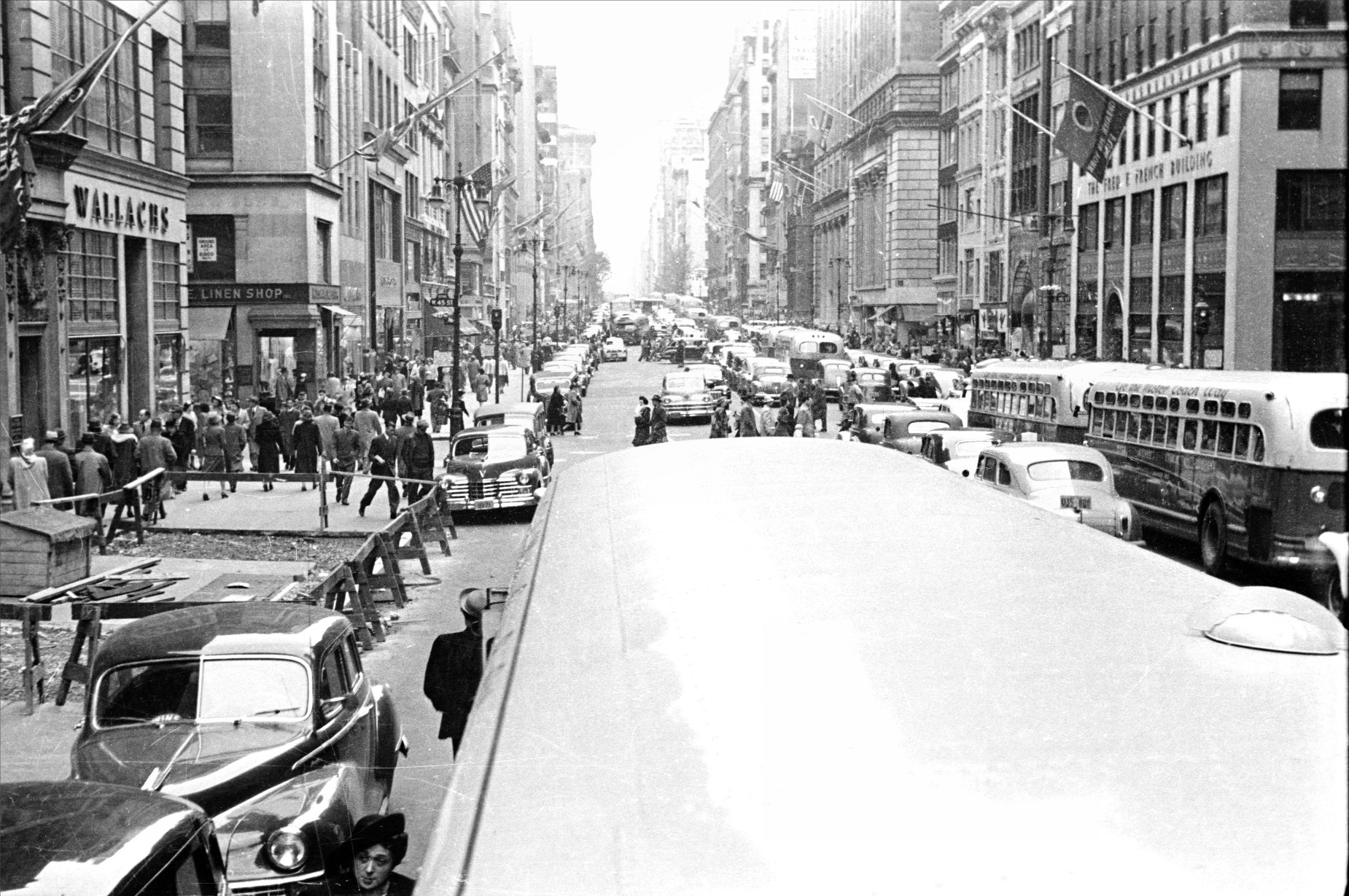
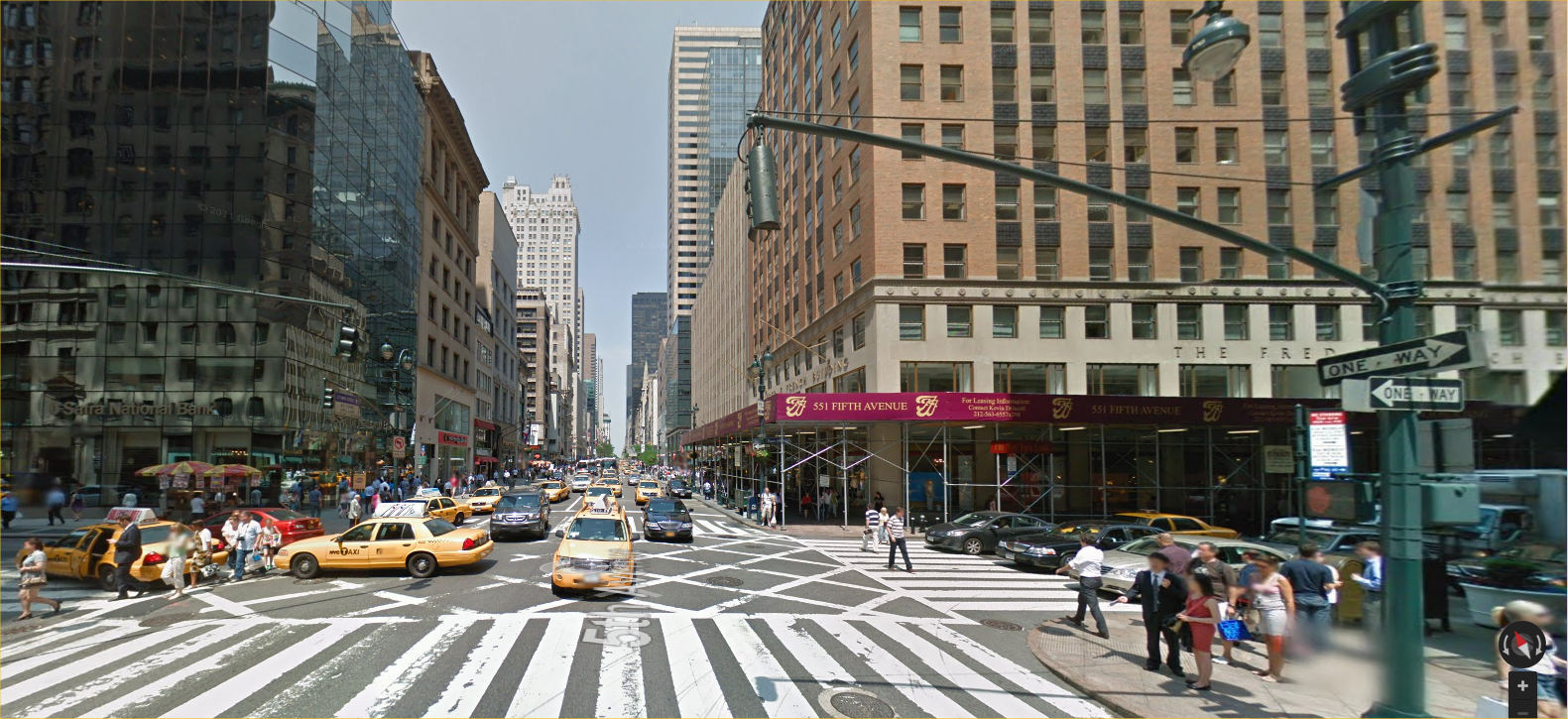
45th Street and 5th Avenue, looking north. The Fred F. French building on the northeast corner.

45th Street North

The same view as of June 2011, Google Street View

New York 1950 1a

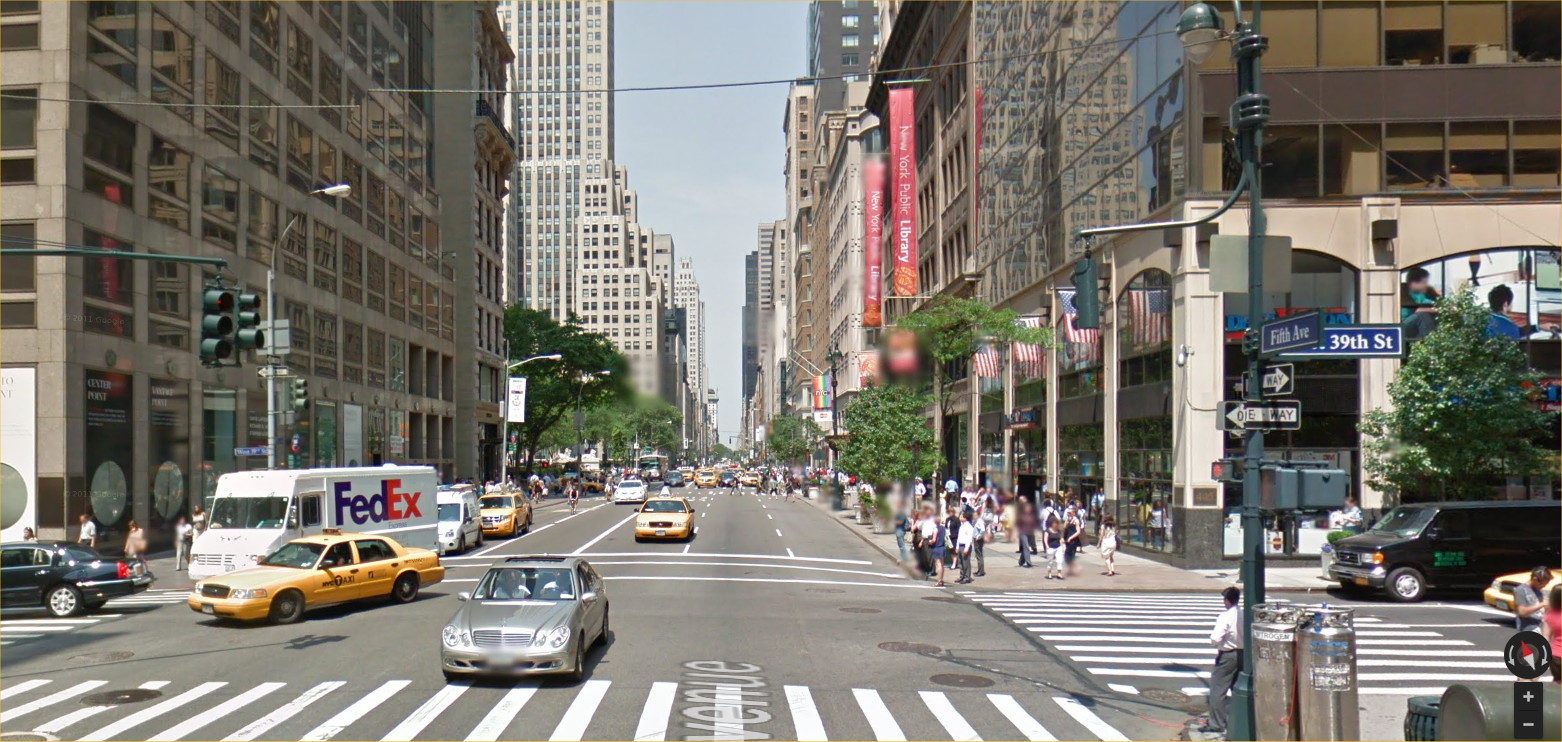
5th Avenue and 39th Street, looking north. A New York Public Library lion is visible on the left.

39th Street North

The same view as of June 2011, Google Street View

New York - Church

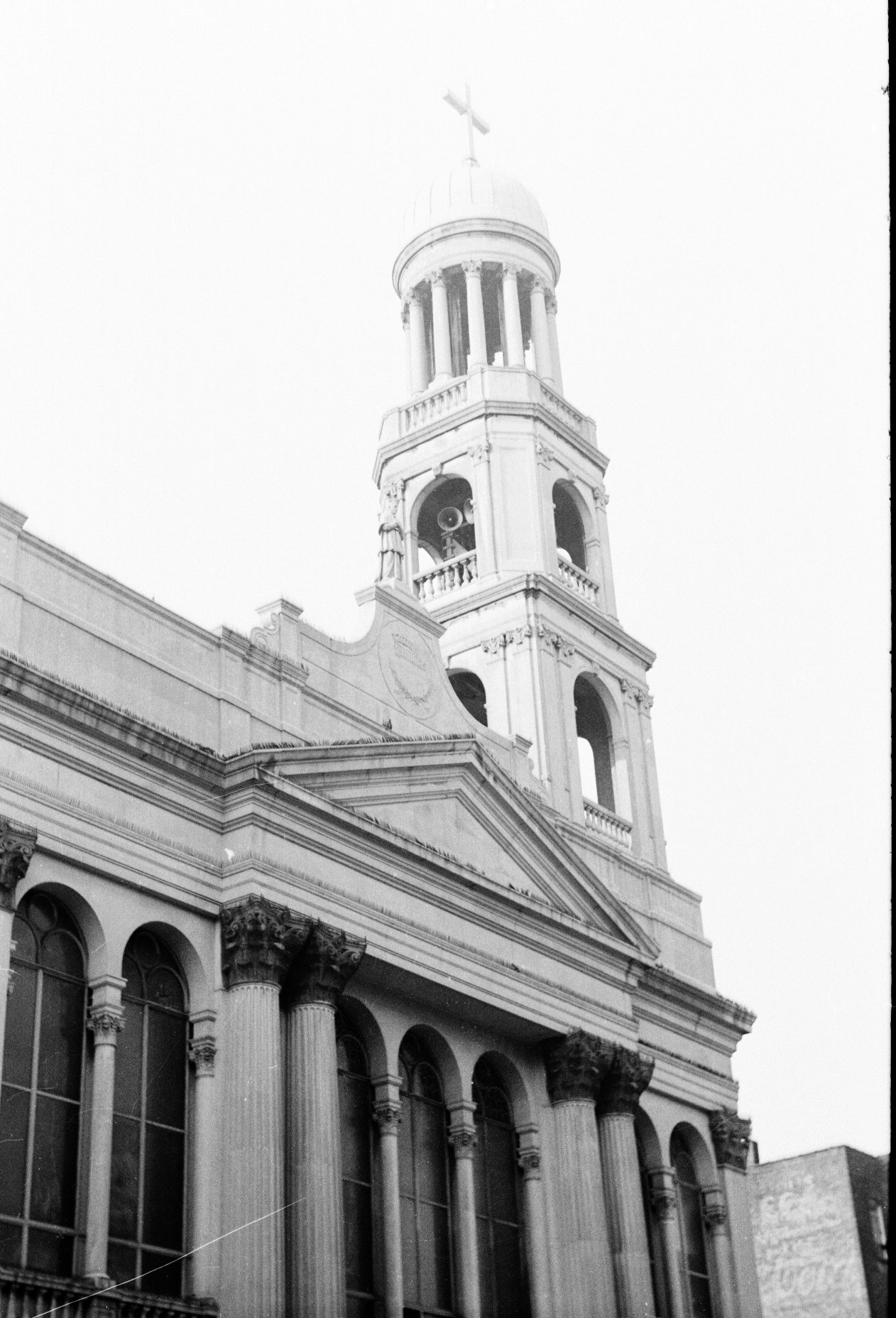
Our Lady of Pompeii, Carmine Street. This is my family’s parish; many blessed events have taken place here.

New York - Corner Scene\

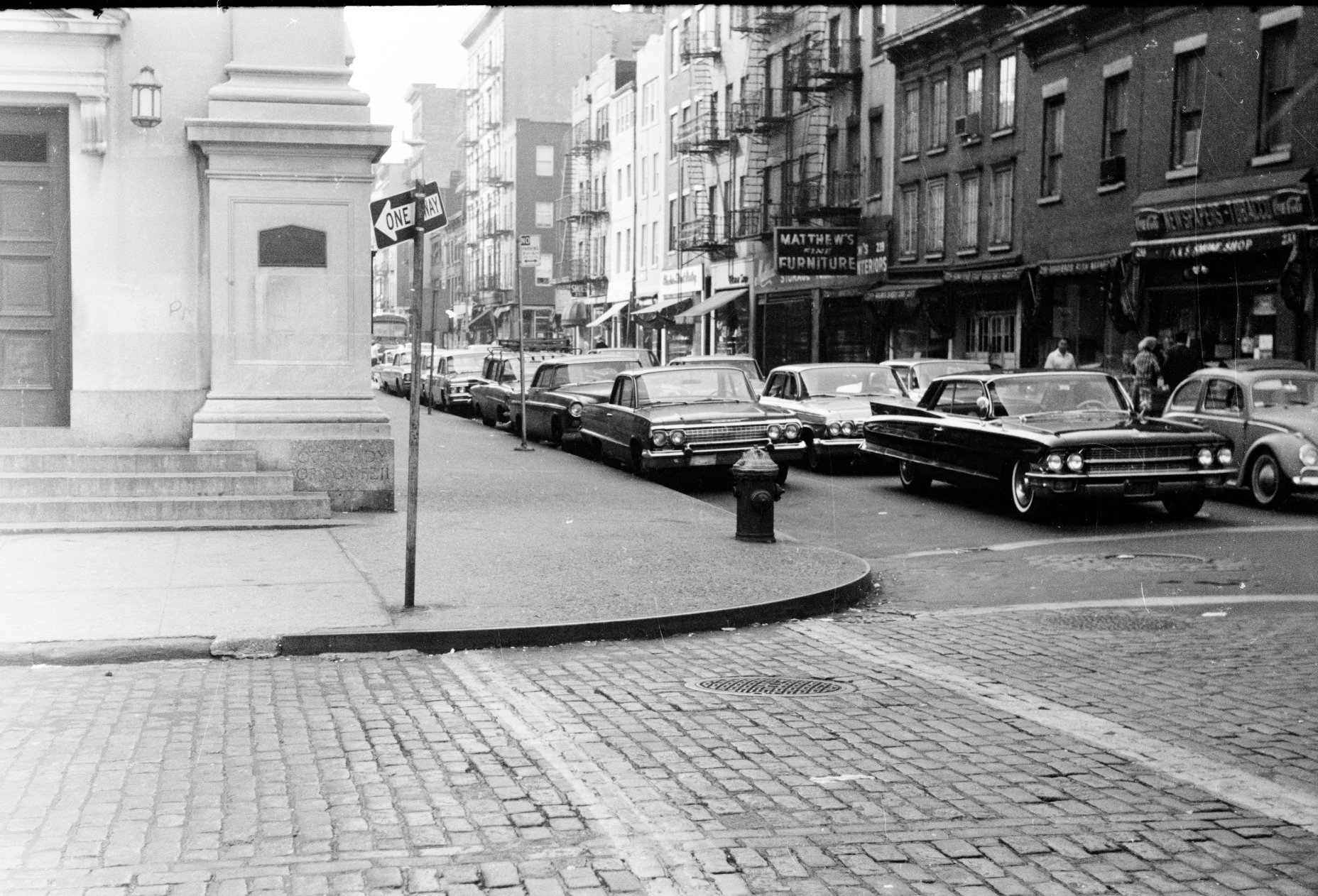
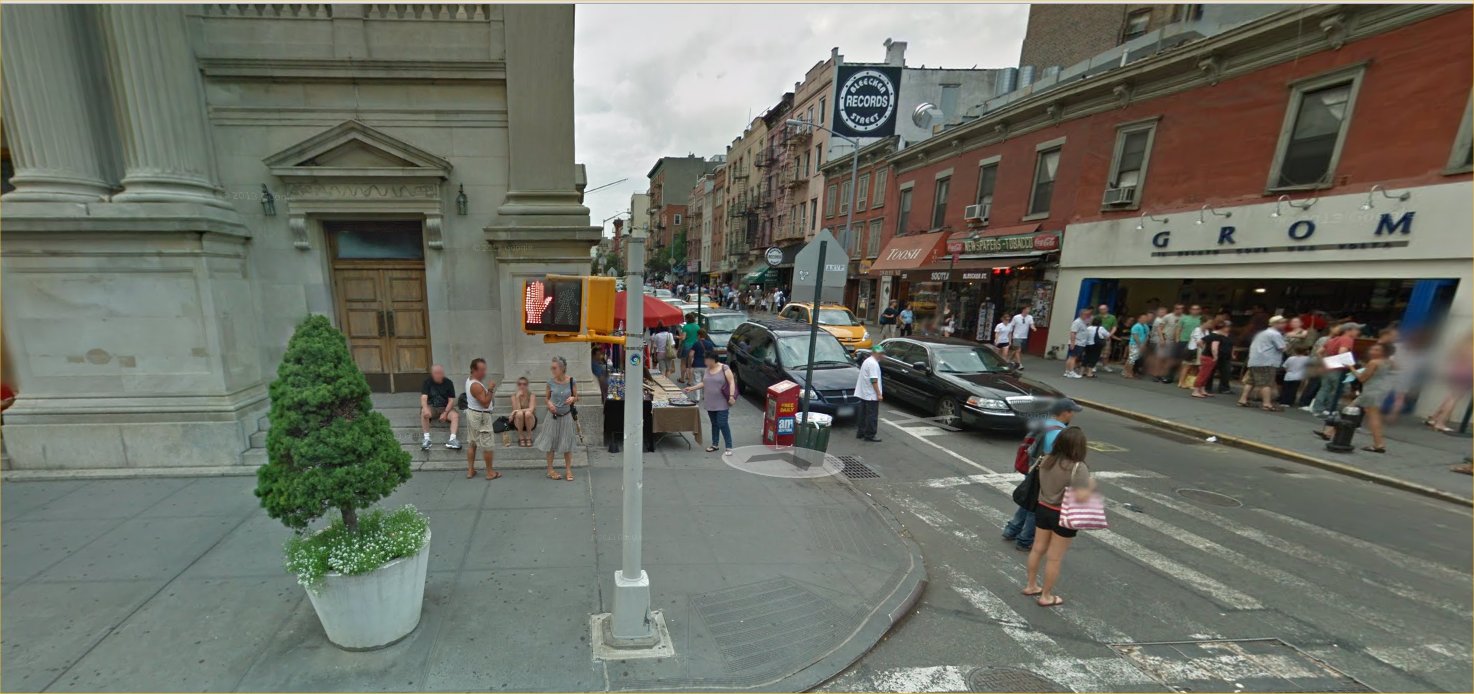
Our Lady of Pompeii church on the corner of Carmine and Bleecker Street, looking northwest.

241 Bleecker Street

The same view as of 2014, Google Street View

New York - Bocce Court

Common street scene in Greenwich Village – the bocce court

New York - Brownstone

New York Brownstone

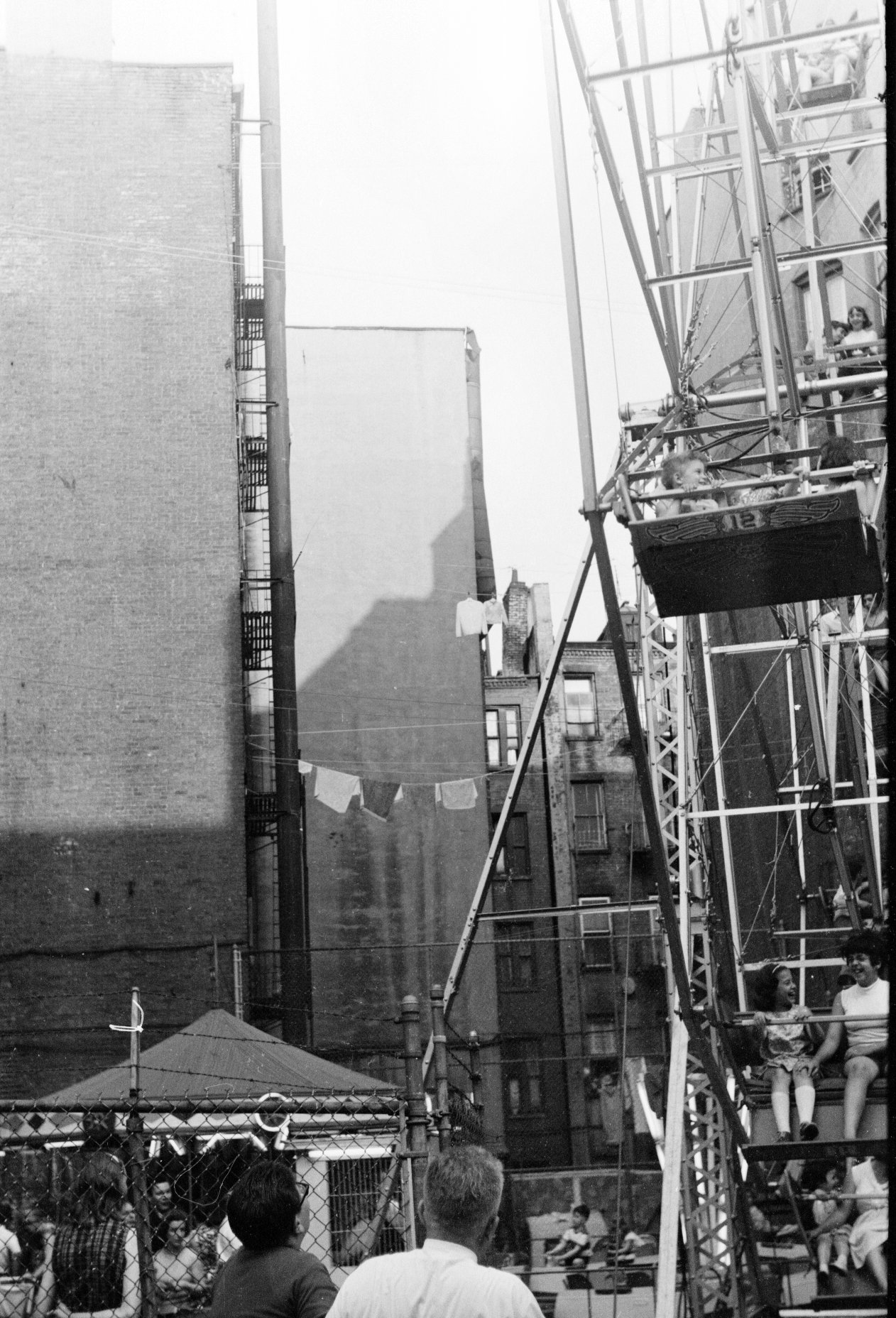
New York - Ferris Wheel


Local traveling carnival

New York Sweeper 5


Janitor caring for a small courtyard.

Joe Darkroom


Dad in his “darkroom.”

The Old Wolf has spoken.

Saint Michel d’Aiguilhe, France

dsc_3903-edit-edit

Click for a full-size version

I happen to be a dyed-in-the-wool francophile; how in the world did I ever miss knowing about this stunning accomplishment?

From Wikipedia:

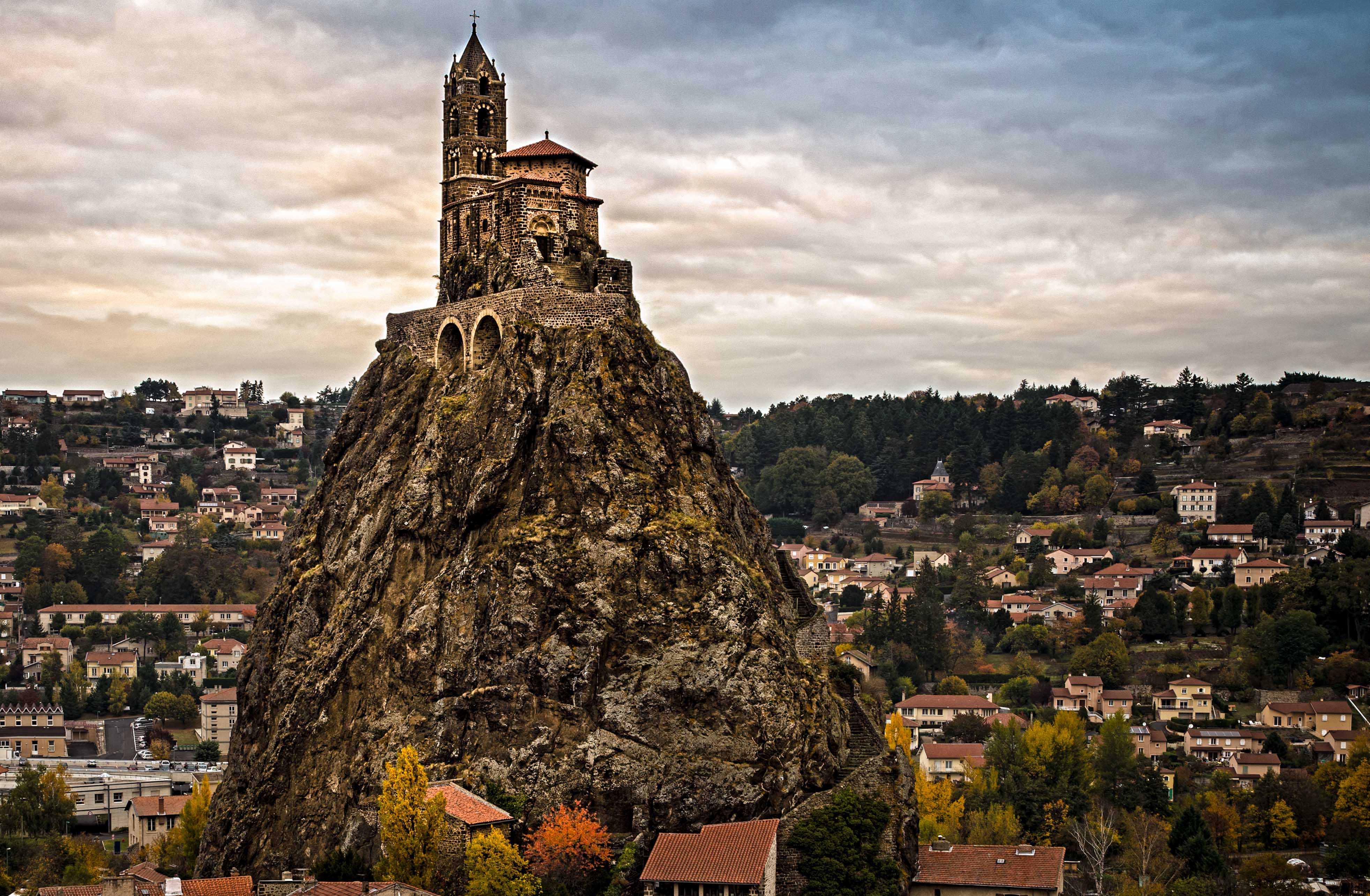
Saint-Michel d’Aiguilhe is a chapel in Aiguilhe, near Le Puy-en-Velay, France, built in 962 on a volcanic formation 85 metres (279 ft) high. The chapel is reached by 268 steps carved into the rock. It was built to celebrate the return from the pilgrimage of Saint James. In 1429, the mother of Joan of Arc, Isabelle Romée, was said to have come to the site to pray.

I would love to visit this chapel some day.

And you thought the theremin was weird.

Well, it is, sorta. But 50’s science fiction movies would never have been the same without it.

Here’s a video of Leon Theremin playing his own instrument:

The Japanese, of course, know how to take anything weird and push it over the top: Here’s an orchestra of young ladies playing Beethoven’s 9th on theremins built into Russian Matrochka dolls:

But thanks to modern technology (and some retro technology), people have figured out all sorts of new ways to make music.

Some geek figured out how to program old 5.25″ floppy drives to make music. This is not good for the drives, but it’s pretty cool:

But a good idea can always be made better:

Not to be outdone, Steve Ward and Jeff Larson realized that Tesla coils could be made to become musical:

The physics behind this feat is explained at Physics Buzz.

While Mario Brothers sounded good, I think Inspector Gadget sounded better:

And one last one, the most complex effort I’ve seen in this medium:

There are far more odd ways to make music than I could list here, but these were some which tickled my fancy.

Edit: Thanks to Inshadowz who pointed out this one using a dot-matrix printer to play “Eye of the Tiger”

Edit 2: Here’s a captivating demonstration of how using the same principle can create speech using nothing but a piano (The narration is in German, but the captions are adequate):

The Old Wolf has spoken.

The Internet: A repository for all things arcane.

Edit 8/25/2015: This post was based on a link to Grooveshark, the most awesome music streaming service since Napster. Unfortunately, a number of circumstances led to their demise. I have added a new link to the song in question.

In a recent post I saw on Facebook, a friend of mine was sharing some thoughts about dealing with ADHD in children. I mentioned that I’ve had the problem since childhood, and that ultimately it never goes away – one simply has to deal with it. Another friend remarked that it was interesting how I have been able to channel mine into insatiable curiosity. This struck me, because I had never really made the connection in a conscious way, although I have long been aware that I have a burning need to know things.

The capsule summary of my senior year at Camp Wildwood in Bridgton, Maine, describes me as an energetic tripper despite my 85-lb bulk (I was tiny until I hit 11th grade), and mentioned that however unorganized my body of knowledge, I seemed to be an inexhaustible source of interesting bits of information. So you see, it had begun early, and never ended. I used to read the encyclopedia for fun.

Then came the Internet. By the holy skull of Mogg’s virgin aunt, it’s a miracle I get anything accomplished at all – but it’s both a blessing and a curse. I’ll have something rattling around in my mind, and before the days of  Google, I had no way of locating, categorizing, elaborating on, or filing it away as “done” unless it could be found in a printed resource. But with the Internet, and billions of people contributing content on a daily basis, many of the things that I would never have been able to locate have actually shown up. I mentioned a few of them over here at “The Lost Cartoons” and “Vintage Toys I have Loved” (among many others) but there is always something which tasks me.

Today I got to put another one to rest.

Back in the 80s there was a wonderful radio station in Salt Lake called KKDS (or K-Kids). It played a constant stream of amazing and delightful music and features for children – the Chicago Tribune mentioned it, saying:

WPRD-AM, now broadcasting news from the CNN Headline News service, was the first affiliate for the Imagination Stations Network, which was based in Orlando and had hoped to broadcast nationally to at least 100 affiliates by the end of its first year. When it ceased broadcasting 11 months after it began, the network had only one other affiliate, KKDS in Salt Lake City.

I was sad to see it go, and our children loved it.

Remember the Sinclairs, stars of the TV show “Dinosaurs?”

sinclairs

One of the songs from that show that was played frequently on KKDS was  “I Can Do Whatever I Want”. It has been available on a CD, but up until now, nowhere else. Believe me, I’ve looked. And I didn’t want to shell out $30.00 or more for just the one song that I liked. My wife will confirm that I liked the song, because I periodically sing the refrain when I’m feeling a bit contrary.

But when Grooveshark, one of the better online music services out there. was in its prime, my song – my cherished, silly song – finally showed up. So now I can file that little bit of ephemera away, I know it’s out there, I can listen to it whenever I want (’cause I’m a dinosaur!) and move on to the next 50 billion items.

Its a curse, but I’ve learned to live with it.

The Old Wolf has spoken.

What if it were the other way around?

Sexism and rape culture continues to be immovably enthroned in American culture. Awareness, happily, is rising, but only in certain sections of the population.  I think progress wherever it is made is a good thing, but we have so very far to go, and other countries are struggling with the same issue as well.

The short-lived 1985 TV series Otherworld addressed the issue of sexism with over-the-top camp in the episode entitled “I am Woman, Hear me Roar,” but sadly many people at that time viewed it as a jab towards the women’s liberation movement. Now comes a similar turnabout video called “Oppressed Majority,” a French film (with English subtitles) by Eleonore Pourriat.

How would men feel if they were really subject to the kinds of things women have to deal with every day? If you have the guts, watch this video – it’s not pretty – and think about it.

The Old Wolf has spoken.

Tape Storage, 1977

tumblr_n05atvv0SE1qbu2iso1_1280

Found in Texas Monthly, 1977 Vol. 5, No. 11

This advertisement for Maxell media displays four very common tape formats from the 70s:  clockwise from top, studio tape [1], 8-track tape, reel-to-reel tape, and cassette. Digital storage has, for all intents and purposes, obsoleted all of these. That said, some companies still offer tape backup solutions for companies which are looking for certain advantages.

For the most part, however, this is a forgotten technology among the young people of today, an entire generation of whom have never lived in a time when the Internet didn’t exist.

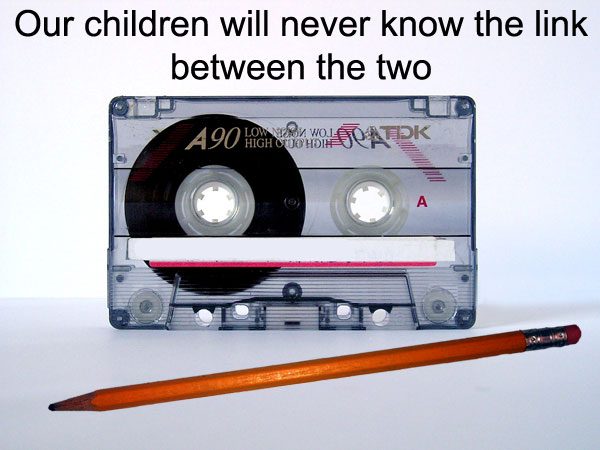
cassette-tape-and-pencil-li

If you’re one of those youngsters and wonder, that pencil would come in really handy if you ever encountered a cassete that looked like this:

11-tangled-tape-460-85

… which would happen with more frequency than you might wish, if your player was on the fritz.

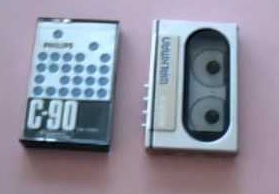
Having grown up in the 50’s and 60’s, reel-to-reel was all I knew as a child; when the Tinico tape recorder [2] was introduced, I coveted one of these with a white-hot passion. It was one of the few things I begged for as a kid that I never got.

Tinico

You can see this one in action, playing a speech by John F. Kennedy, at YouTube.

What I did get much later, as an adult, was the smallest Sony Walkman ever produced. It was designed to be exactly the size of a tape cassette in its case when closed  – the lid would slide down about half an inch to accomodate a cassette:

download

Walkman, closed

Picture-11

Walkman, open.

size

Size comparison

I still have mine  in a drawer – time has taken its toll and it no longer works, but I got a lot of use out of it and it’s still fun to hold. It was manufactured, I think, as more of a novelty than a truly useful device, because the ultra-miniaturization of all the components meant elevated fragility as well.

It’s interesting to have some historical perspective on audio and computer media. As usual, it makes me wonder with insatiable curiosity what my granddaughters will have seen by the time they are my age.

The Old Wolf has spoken.


[1] I had originally called this computer tape; thanks to Salvador Virgen for pointing out that it was indeed something else, which I verified with an image search.

[2] The referenced article compares the Tinico recorder with a Soviet copy. I remember a joke my mother telling me back in the 60’s, which she in turn heard from a Russian emigrée friend of hers; it concerned a Soviet diplomat being given a tour of a technology display, and at every stop the Russian would say, “Oh, da – Russians invented that.” Finally he was handed an audio cassette, and he said, “Oh, da! Russians invented that! What is it?”

Selfie, 1920 Version.

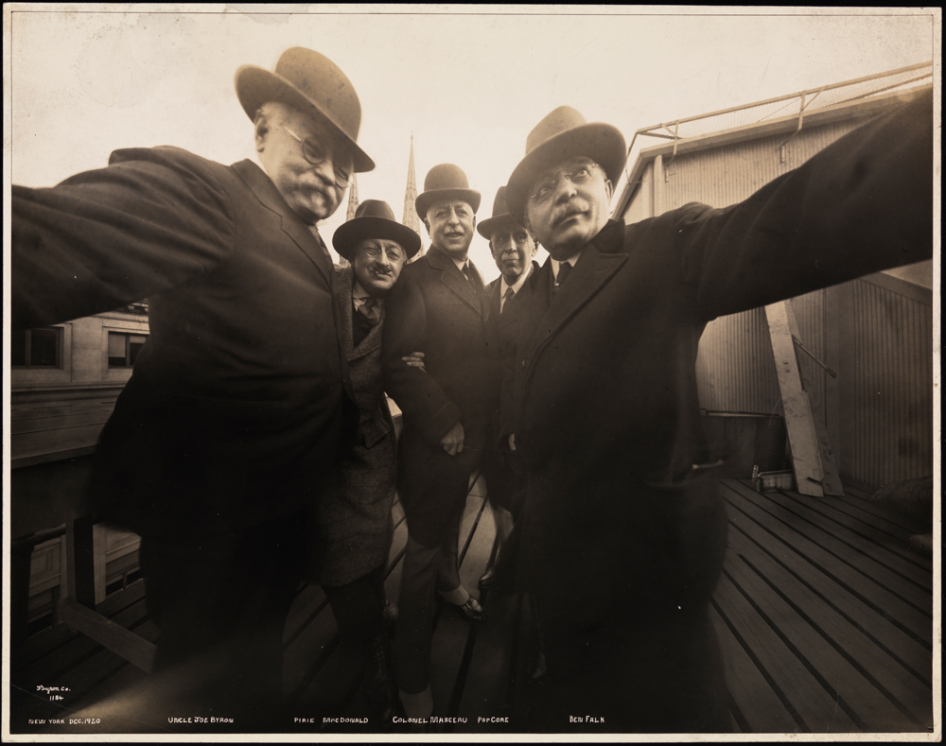
One of the earliest selfies, taken by principals of the Byron Company, in 1920.

mny65379

Byron Company:  Uncle Joe Byron, Pirie MacDonald, Colonel Marceau, Pop Core, Ben Falk-New York, 1920. Museum of the City of New York.

How the photo was taken:

mny65382

Byron Company, Side view of Byron Co. photographers posing together for a photograph on the roof of Marceau’s Studio, 1920. Museum of the City of New York

More information can be found at the Museum of the City of New York.

The Old Wolf has spoken.