A lot of questions; a lot of answers

Yesterday’s XKCD provided readers with a plethora of questions scavenged from Google auto-complete suggestions. Some of them are really good questions, others are pretty mind-boggling in their obtuseness or obscurity. Click the image for a full-size rendition:

questions_large

Not content to leave things at that, redditor /u/GeeJo took it upon him/herself to answer every one of these, which was a massive undertaking and made for an enjoyable read. Starred answers indicate researched questions, non-starred answers are GeeJo-isms. My hat is off to this individual.

Block One

Why do whales jump*? No-one knows exactly, though it’s theorised that socialising is part of it, as its a far more common behaviour in pods than with lone whales.

Why are witches green? There are theories floating around tht it’s to link them with death/putrefaction or plants/herbs. Personally, I think it’s mostly because of the popularity of the film version of The Wizard of Oz, where the green skin was chosen partly to indicate she’s a bad guy in a kid’s fantasy world, and partly because it helped demonstrate their new Technicolour technology.

Why are there mirrors above beds? Ask your parents when you’re older. Or don’t, since you’ll probably work it out by yourself by then. If you mean on the wall behind beds, I’ve never really seen this as common, but mirrors help to give the impression that the room is larger than it actually is.

Lots, lots more after the jump.

Continue reading

New York Public Market, 1948

5a14821u_0

Found via /r/historyporn, original found at Shorpy.

March 22, 1948. The New York City Public Market at First Avenue and East 73rd Street (?), an example of the food market in transition. A typical 19th-century market would have many separate vendors in an open-air space like a town square. By the early 1900s the open-air space had given way to separate vendors under a large shed roof with no walls, often near the train station. Here in 1948 the space is enclosed, but still with separate vendors (greengrocer, butcher, dry goods, fishmonger etc.). After the introduction of centralized distribution and self-service for the various product categories, the individual vendors fade from the scene and the market has a new name: “super-market,” now spelled without the hyphen. 5×7 safety negative by Gottscho-Schleisner. 

My mom and dad might have shopped here right before they were married.

The Old Wolf has spoken.
Supporting the Troops – Two Alternative Voices

I recommend two articles for your consideration.

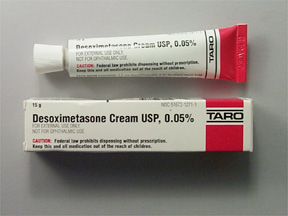
support-our-troops-ribbon

This magnetic sticker available for only $3.95 at your local 7-11, not a dime of which goes to support the military

The first, by Michael Moore.

“I don’t support the troops, America, and neither do you. I am tired of the ruse we are playing on these brave citizens in our armed forces. And guess what — a lot of these soldiers and sailors and airmen and Marines see right through the bull**** of those words, “I support the troops!,” spoken by Americans with such false sincerity — false because our actions don’t match our words.”

Disclaimer: I don’t agree with everything Mr. Moore says, or how he happens to say it. In this instance, however, he’s speaking truth.

The second, by Steven Salaita.

“If we recognize that the troops are in fact human beings, then we simultaneously accept that they are too complex to be reduced to patriotic ephemera. Such recognition is unusual, though. People speak frequently of “our troops,” highlighting the pronoun as if it is imperative to their sense of national belonging. It is an act of possession that projects fantasies of virtue onto an idealized demographic in the absence of substantive virtuous practices that might otherwise foster national pride.”

would like to support our troops by bringing them all home, but in today’s world, we know that’s not going to happen – at least not while I’m alive. In the meantime, I’ll do all I can to support them with more than just platitudes, by working towards a world where veterans are treated much better than they are now, and one where their honorable services won’t ever be needed again.

The Old Wolf has spoken.

So who’s the biggest jerk? (Feminism Department)

First, the picture found on reddit that spawned this post (click for a larger, more readable version)

t7wxOoe

First and foremost, I want to echo Point #5 in the brilliant response above; posting the original image was less than sensitive. But if you step back and look at the larger picture, as satire goes, it’s pretty funny. The woman in question probably did not expect to be turned into an internet icon, but as was mentioned, anything that anyone posts on the Internet is fodder for being used, abused, and misused. It comes with the territory.

Second: I have long believed – and as a child of the 50’s I experienced the entire bra-burning, man-hating feminist frenzy of the subsequent two decades – that feminism from its earliest inception was hijacked by strident voices who understood very little of what equality is truly about. Their kind, along with other radical groups whose agenda was crystallized around putting the enemy down and making them pay for their oppression, have lost most of their cachet in the 21st century, and that’s a good thing. If racial and gender-based equality is to be obtained, it’s not going to happen by setting fire to the patriarchy or the white, Anglo-Saxon Protestant establishment – it will only be obtained by decent people everywhere speaking out against injustice and shining the harsh light of reason on ignorance and brutality. That’s what Reverend King was about. That’s what Gandhi was about – don’t set fires, don’t riot, don’t beat, don’t attack – but never accept injustice.

The war for equality in our society has not been won – in historical terms, the first shots have barely been fired. But the battle continues; people historically oppressed in all sectors of society, including minorities, the disabled, women, the GLBT community, and perhaps some I haven’t even thought of, continue to fight for one thing, and one thing only: the right to be treated the same as everyone else.

In an interview with Mike Wallace, Morgan Freeman summed up the ultimate end-state of equality in a very simple statement:

WALLACE: How are we going to get rid of racism until …?
FREEMAN: Stop talking about it. I’m going to stop calling you a white man. And I’m going to ask you to stop calling me a black man. I know you as Mike Wallace. You know me as Morgan Freeman. You’re not going to say, “I know this white guy named Mike Wallace.” Hear what I’m saying?

As long as we continue to use any adjectives to describe one another in purely social terms, in a way that erects that intrinsically-desired barrier between “us” and “them” – adjectives like female, male, gay, Christian, Muslim, obese, disabled, black, white, and a dictionary full of others, we as occupants of this island earth are guilty of racism, sexism, and every “-ism” you care to name. We have missed the boat, and have not reached the finish line. It is my hope that someday, humanity will get there. We are, in the end, all members of the same race and species: the human race.

Lastly, as was beautifully pointed out in the response to Cosmo’s snark above, that particular magazine is among the last on earth to make any judgments about feminism. In my opinion, it is one of the most sexist, demeaning, exclusionary, debasing, and offensive publications on the newsstands… and somehow it’s popularity continues to fly high.

Which only reinforces my thesis – we may be making progress, but we have a long, long way to go.  But as daunting as the struggle may seem, we can never, ever, ever give up.

The Old Wolf has spoken.

Zorba! The Lyrics

ZorbaLP1

One of my all-time favorite albums – I deeply regret I was never able to see the original Broadway production. I could have, I was living in New York at the time, but it just didn’t happen.

I’ve long loved the songs in this wonderful and bittersweet story, but for some reason the lyrics to most of the songs never showed up on the Internet.

Here they are – my very best transcription. There are just a few blanks that I haven’t been able to figure out yet.

Music and lyrics Copyright Kander and Ebb

Life Is

Life is a glass of rum!
No!
Life is a sip of sage!
No!
Life is the taste of raki flowing warmly from the cup!

Shut up!

Life is a walnut leaf!
No!
Life is an olive tree!
No!
Life is a scented melon-breasted woman when her lips are red and full…
No!
Life is a barbered, planted orchard and two lovers passing by it!

Life is my fist in your face if you don’t keep quiet!
What did you say?
I said, “Life is my fist in your face if you don’t keep quiet!”
Oh? Oh? Oh! Oh!

Wait. Listen to me. I will tell you.

Life is what you do while you’re waiting to die,
Life is how the time goes by!
Life is where you wait while you’re waiting to leave,
Life is where where you grin and grieve!

Having if lucky, wanting if not,
Looking for the ruby underneath the rot,
Hungry for the pilaf in someone else’s pot,
But that’s the only choice you’ve got!

Life is where you stand just before you are flat!
Life is only that, mister,
Life is simply that, mister,
That and nothing more than that!

Life is what you feel,
‘Til you can’t feel at all,
Life is where you fly and fall!

Running for shelter, naked in the snow
Learning that the tear drops any where you go
Finding its the mud that makes the roses grow
That’s the only choice you know!

Wait! Once again…

Life is what you do while you’re waiting to die…
This is how the time goes by!

The First Time

I hear a bouzouki…
You can’t imagine how often I’ve heard a bouzouki,
But each time is the first time.

I sniff at a woman…
You can’t imagine how often I’ve sniffed at a woman,
But each time is the first time.

I pound on a table, I leap on a chair,
I crawl up a mountain, to breathe in the air,
By now I’ve stopped counting
How often I’ve been there,
But each time is the first time.

I look at a flower,
I stick my nose in, or stare at, or sleep on a flower,
But each time is the first time.

I soar like a seagull, I stamp like a bull,
I comb out my whiskers, so ladies can pull,
I chew on the mutton until my belly’s full,
But each time…

A hat, a dumbeg, a person, each time is new.
For instance, I came up and I talked to you.
Look how interesting I am!

(That’s true!)

Even if it’s not a long talk, even if you don’t talk the same language…
Do you want to hear a story?

(Well, I…)

Then I’ll tell you!

There was a night in Beirut
I never will forget
When I ran across the nicest man
I think I ever met

We were sitting drinking vodka
In this waterfront cafe;
I could tell he was a Turk,
But I liked him anyway!

Well, we had so much to drink
That we decided we should speak;
I’m not so good in Turkish,
He was even worse in Greek.

But we wanted to communicate,
And suddenly, by chance,
We hit upon a system,
And we both began to dance.

We couldn’t talk the language,
So we danced it all instead,
And the two of us could understand
What one another said.

So we had our conversation,
Which was crazy, I recall,
But it seemed it was the first time
I had ever talked at all!

Wait! You!

(Me?)

Show!

♬ Bouzouki music ♬

He says he’s from Ankara.

♬ Bouzouki music ♬

He says he has a wife and two small children.

♬ Bouzouki music ♬

He says he misses them very much!

♬ Bouzouki music ♬

So you see, he’s been away now for 18 months.

(No! 17!)

Say that again…

♬ Bouzouki music ♬

Seventeen…

(song continues…)

I walk with the Devil, he gives me a poke,
And all 10 commandments, go right up in smoke,
But each one I’ve broken, I feel that I broke for the first time!

The first time!

I talk to a stranger,
You can’t imagine how often I talk to a stranger,
But this time,
This time,
Is the first time!

House at the top of the hill

Zorba! Zorba!

There’s a house at the top of the hill
Where someone’s waiting for you.

There’s a room in the house at the top of the hill
Where someone’s waiting for you.
Waiting for you!

There’s a door to the room of the house at the top of the hill,
Where someone’s waiting for you.
Waiting for you!

There’s a woman at the door…
In a room in a house at the top of the hill,
Waiting for you!

Zorba!

And the roof is red!
And the woman is French!
And the walls are white!
And the woman is French!
And the steps run down!
And the woman is French!
And the well is cool!
And the woman is French!

At the house at the top of the hill!

Zorba!

And the ouzo’s weak!
And the veal is tough!
And the bed is hard!
And the sheet is rough!
And the bread is old!
And the wine is hot!
And the night is cold!
But the woman is not!

At the house at the top of the hill!

There’s a house at the top of the hill
Where someone’s waiting for you.
Waiting for you!

There’s a room in the house at the top of the hill
Where someone’s waiting for you.
Waiting for you!

There’s a door to the room of the house at the top of the hill,
Where someone’s waiting for you.
Waiting for you!

There’s a woman at the door…

(Mme Hortense! Mme Hortense! People are here! Two men, coming up the hill!)

Zorba! Zorba!

There’s a house at the top of the hill
Where someone’s waiting for you.
Waiting for you…
Waiting for you!

No Boom Boom

Crete was in a state of revolution!
The fleets of four great powers anchored here…
Hmm… So, I also anchored here.
Four great powers!
Four admirals… ahh… you should have seen them!
There they were, my admirals, the image of romance,
From England, Russia, Italy, and France.
There they were, my brave quartet,
Dressed in their navy blues,
With wide, plumed hats, and golden braid,
And patent-leather shoes.

They were just about to fire… on Crete!
When on my knees, in my pink chemise,
I destructed them toute de suite!

By saying…

Please sir, little admiral, no Boom-boom!
Please sir, pretty admiral, no Boom-boom!

This evening when it’s dark, I’ll let you come to my room,
But first you have to promise, No Boom-boom!

Please sir, little admiral, no Boom-boom!
La la la la…
Please sir, little admiral, no Boom-boom!
La la la la…

This evening when it’s dark, I’d like to come to your room,
But first you have to promise, No Boom-boom!

And they listened to me!
Ah, we could see the Cretans through our binoculars…
They looked so tiny…

I seized the beard of the Italian admiral (I was more familiar with him)
I seized his beard and I said,
“My Canavaro, please don’t shoot the little people!”
Mmm… how nice he smelled…
How nice they all smelled…

My Frenchman smells of lemon, my Italian violet,
My English smell of something, I forget…
My Russian wore a musk they make from oily Georgian bark,
I learned each smell so I could tell tell between them in the dark!

They’d fill a bath with pink champagne, and throw me in the tub…
While two would drink, the other two would scrub!
We played that way until the day they set this island free,
And so my dear, if Crete’s still here, it’s all because of me!

It was I who kept the navy in tow!
But did your king ever say a thing? Or decorate me? No!

Please sir, little admiral, no Boom-boom!
That’s what I always used to say.

Please sir, pretty admiral, no Boom-boom!
I had a most convincing way.

This evening when it’s dark, I’ll let you come to my room,
But first you have to promise, No Boom-boom!

No boom-boom, hey boss! No boom-boom!

(Singing and laughing)

Please sir, little admiral, no Boom-boom!
Please sir, pretty admiral, no Boom-boom!
This evening when it’s dark, I’ll let you come to my room,
But first you have to promise,
Promise, promise, promise,
No Boom-boom!
No Boom-boom!
No boom, boom, boom!

The Butterfly

Not too fast, not too fast,
Let it grow, let it last,
Nature knows when and why…
The butterfly:

I remember one morning when I saw a cocoon in the bark of a tree,
I remember I marveled that imprisoned inside was a butterfly waiting to be free.
Not too fast, not too fast,
Let it grow, let it last,
Nature knows when and why…
Continue…

I was very impatient so I warmed the cocoon with the breath of my sighs,
And the butterfly trembled and began to emerge like a miracle right before my eyes.
Not too fast, not too fast,
Let it grow, let it last,
Nature knows when and why…
Sorry…

All at once I discovered that his delicate wings were all crumpled and torn,
When he still wasn’t ready I had made him be born.
I was stronger than nature and I had made him be born.
But the wonder of life had a definite plan,
So he died in my hand by the will, not of God, but of man.
Not too fast, not too fast…

Every man has a moment and I’m waiting for mine, when I’m finally free.
But I mustn’t be hurried.
Give me light…give me time.
Like the butterfly…
Like the butterfly…
Like the butterfly…
Like the butterfly…
Not too fast, not too fast,
Let it grow, let it last,
Nature knows when and why…

Think about the story of the butterfly,

The butterfly…

Not too fast…

Goodbye, Canavaro

Goodbye, Canavaro!
Goodbye, Bouboulina!
Don’t forget me!
I won’t forget you!

Yes you will.
No I won’t.
Yes you will.
No I won’t!

Well, goodbye!

Wait, Canavaro!
What, Bouboulina?
A kiss! Of course! *smack*
Don’t forget me.
I won’t forget you!
How long will you be gone?
I’ll only be gone three days.
That’s time enough…
For what?
To forget me.
I won’t forget you.

Are you sure?
Yes I’m sure.
Very sure?
Very sure!
Well, we’ll see.

Wait, Canavaro!
What now, Bouboulina?
Will you bring me a present?
Yes, I’ll bring you a present.
You know, I’d like a ring.
I know you would… I’ll see.
No you won’t.
Yes I will.
No you won’t.
Yes I will!
Well… goodbye.

Adieu, Canavaro!
Adieu Bouboulina!
Don’t forget me!
I won’t forget you, I promise I won’t forget you,
I solemnly swear on my mother’s grave
I never, never, ever will forget you!

He’ll forget me.
No he won’t.
Yes he will.
No he won’t.
Yes he will. I know it’s true.

Why would he forget you?

Oh, I don’t know…
They always do.

But until they do… it’s very nice.

Grandpapa

A young man with no money is better than an old man with no money.
Goodbye, Grandpapa!

Grandpapa? Grandpapa? I’ll show you who’s Grandpapa!
Zorba! Zorba!

Listen! There are two Zorbas. The inner Zorba is as slender as a reed!
Look at that, look at that, poor old man is weak and fat!

He has thirty-two teeth!
Look at that, there’s no doubt, every tooth is falling out!

He wears a red carnation behind his ear!
Look at that, over there, golden beard but long white hair.
Asses hair!

This is the outside Zorba!
Look at that, Poor Zorba, old and feeble Grandpapa,
Weak and feeble Grandpapa.
Weak and feeble Grandpapa
Grandpapa, Grandpapa, Grandpapa, Grandpapa, Grandpapa,
Grandpapa, Grandpapa, Grandpapa, Grandpapa, Grandpapa!

(Zorba dances)

Only Love

To be loved again
To be not alone,
Oh, Mr. Niko,
Do you know what that means,
To have someone love you,
To open your heart, freely?
Love…
Give me love,
Only love…
What else is there?
Two eyes not seeing,
And two arms not sharing,
And two lips not feeling,
What good are they?
Doesn’t the night seem endless?
Doesn’t the day go slow?
Doesn’t the dark look friendless, and Oh!
What good is that?

So…
Give me love,
Only love…

That’s everything!

Two eyes start seeing,
And two arms start sharing,
And two lips start knowing how good it is!

To feel, to touch, to care!
For after all, after love, what else is there?

Niko! Niko!

There’s a girl at the bend of the road,
And she is waiting for you!
Waiting for you!

There’s a girl in a house at the bend of the road,
And she is waiting for you!
Waiting for you!

Niko!

There’s a girl in a room in a house at the bend of the road,
And she is waiting for you!
Waiting for you!

There’s a girl on a bed
In a room in a house at the bend of the road,
Waiting for you!

Niko!

But the night is warm and she needs no sheets,
So she kicks that sheet to the bottom of the bed,
To the bottom of the bed in the lonely room,
Of the house at the bend of the road.

Niko!

She will call your name, but when you won’t come,
She will sit and cry like a little girl,
Like a little girl on the empty bed
In the lonely room of the big old house,
The house at the bend of the road!

There’s a girl at the bend of the road,
And she is waiting for you!
Waiting for you!

There’s a girl in a house at the bend of the road,
And she is waiting for you!
Waiting for you!

There’s a girl in a room in a house at the bend of the road,
And she is waiting for you!
Waiting for you!

There’s a girl on the bed,
There’s a girl on the bed!

Who is it? Who is there?
It’s me, Niko!
Come in…

For after all, after love, what else is there?

Yassou!

For the servant of God, Alexis, and the servant of God, Hortense, now affianced together, we beg salvation, O Lord!

Dance Isaia
Dance Isaia
Isaia

Yassou! Yassou! Yassou! Yassou! Yassou!

A lily and a veil, to represent her purity,
A lily and a veil to be sure,
Ah! Ah!
Did you hear that? Did you hear that? I’m pure!

Yassou! Yassou! Yassou! Yassou! Yassou!

Some water from the well, to summon back his innocence,
The chalice and the water just for you!
Ah! Ah!
Canavaro! What? You’re my virgin too!

Yassou! Yassou! Yassou!

Wreaths of roses and cherries from the tree,
To show that she is married, she’s absolutely married,
She’s positively married,
She certainly is as married as she’ll ever be!

Yassou! Yassou! Yassou! Yassou! Yassou!

Confetti we can throw to represent our happiness,
Exchange the rings and drink the wine and then…

Dance Isaia
Dance Isaia
Isaia

Promise you will never part again!

Dance Isaia
Dance Isaia
Isaia

Canavaro? I promise!
Bouboulina? I promise!
Amen!

Yassou! Yassou! Yassou! Amen!

Come my sweet!
Let me give you the first respectable kiss you’ve ever had!

Amen!

Why Can’t I Speak?

Why can’t I Speak?
Why won’t the words come
Why do I stand here, trembling and silent?

Why can’t I speak?
Why am I frightened?
Why can’t I answer what he is asking?

Why can’t I Speak?
Why am I waiting?
Why don’t I say it?
Let out this feeling.

When we’re together, why won’t the words come?
Why can’t I Speak?

Excuse me for saying it, but it is wrong to keep your feelings locked up inside yourself.
Try to share your feelings freely. Share them with me!

Niko, I want you!
Niko I’ll say it: Niko, I feel like I’m living at last!
Niko I’ll be good to you,
Niko I’ll take care of you,
Niko [????]

Why can’t I speak?
Why won’t the words come
Why do I stand here, trembling and silent?

Why can’t I speak?
Why am I frightened?
Why can’t I answer what he is asking?

Why can’t I Speak?
Why am I waiting?
Why don’t I say it?
Let out this feeling.

Why can’t I speak?

Some day I know that we will be able to talk together!

Why?

I will be late for the Church.

The Crow

Soon we’ll here the crow whistle a low, beckoning note.
Then someone will turn, face to the wall, clutching her throat.

I want her watch!
I want her shoes!
I want her gown!
I want the ribbon!

Soon we’ll see the crow perch on the sill, stare at the door.
Then make up his wings, shadows that spill over the floor.
Crow, come from the clouds, black as the shroud she’s never worn,
Crow cackle and cry, what does it ????
Never was born!

Soon we’ll see the crow, circle and dive, flutter and climb,
Then, someone in bed, barely alive, knows it’s the time.

Look! Look!

Oh, Canavaro – how young I was, how beautiful, like a dove!
And you are beautiful still, my dove – and young!

So young!

My mother dressed me in a white organdy gown, and she said, “Ladies and Gentlemen, my beautiful daughter! It’s her birhtday, she’s 16 years old.”
And my mother said, “You will dance through life. You will dance all through life!”

My mother says that little girls are made of sugar.
Happy birthday! (Happy birthday!)
My mother says my life will be a wide, white ribbon.
Happy birthday! (Happy birthday!)
And all my tomorrows are waiting in a line
Shimmering, glimmering, soon to be mine.

My mother says, she looks at me and she remembers.
Happy birthday! (Happy birthday!)
She envies me the love I’m just about to see.
But she was yesterday (she was yesterday)
And I’m tomorrow (I’m tomorrow)
Happy birthday (Happy birthday)
To me!

La, la, la, la, la, la, la, la, la, la
Happy birthday! (Happy birthday!)
La, la, la, la, la, la, la, la, la, la
Happy birthday! (Happy birthday!)

And all my tomorrows are waiting in a line
Shimmering, glimmering, soon to be mine.

My mother says, she looks at me and she remembers.
Happy birthday! (Happy birthday!)
She envies me the love I’m just about to see.
But she was yesterday (she was yesterday)
And I’m tomorrow (I’m tomorrow)
Happy birthday (Happy birthday)

Goodbye, Canavaro!
Goodbye, Bouboulina!
Don’t forget me…

I Am Free

I have nothing. I want nothing.
I am free!
I need nothing. I owe nothing!
I am free!

If my feet say, “Come this way!” I probably would,
But if they say, “Go that way!” that way is just as good.

I ask nothing.
I judge nothing.
I am free!

There is one Zorba, and that Zorba
I must be!

Heaven waits for other men, but not for me!
I fear nothing! I hope for nothing!
I am free!

Hey Boss, you wanna hear a story?
Yes.
You do? Then I’ll tell you.

One morning in Salonika, I never will forget,
I was passing by the oldest man I think I ever met.
He was kneeling in an orchard,
When he turned and looked at me,
And he said, “Come watch me, Sonny, as I plant this almond tree!”
I tell you, Boss, that fellow, he was over 95,
And I think he had a week, or maybe two to stay alive,
But he had to plant that almond tree, and when I asked him why,
He said, “I live every minute as if I would never die.”

Think of that, Boss! He lived as if he would never die.
I live as if I would die any minute!
For that reason… just that reason,

I am free!
I see somewhere, I go somewhere!
I am free!

Think of that whenever you remember me!
I fear nothing!
I hope for nothing!
I am free!

Dialog:

My boat doesn’t leave for an hour… I’ll walk a ways with you.
No, no, let’s do it quick, here and now,
Like men cut short smoking, wine, or a love affair.
Come! Embrace Zorba!

Life is what you do while you’re waiting to die,
Life is how the time goes by!

Having if lucky, wanting if not,
Looking for the ruby underneath the rot,
Hungry for the pilaf in someone else’s pot,
But that’s the only choice you’ve got!

Life is what you do while you’re waiting to die,
Life is how the time goes by!

This is how the time goes by!

Could you direct me to Poo-yallup?

Puyallup

“Then said they unto him, Say now Shibboleth: and he said Sibboleth: for he could not frame to pronounce it right. Then they took him, and slew him at the passages of Jordan: and there fell at that time of the Ephraimites forty and two thousand.” (Judges 12:6)

That particular biblical verse gave rise to the general concept of a shibboleth, a word, sound, or custom that a person unfamiliar with its significance may not pronounce or perform correctly relative to those who are familiar with it. (Wikipedia)

Ever since ancient times, pronunciation has been a pretty accurate way of determining whether a person is a local or not. During World War II, the Dutch used Scheveningen to weed out German infiltrators, and Americans in the Pacific used lollapalooza to challenge unknown persons, knowing that the Japanese have a difficult time with the sounds of L and R.

Quincy_Market_and_Faneuil_Hall,_Boston,_Mass._U.S.A,_by_Keystone_View_Company

Quincy Market and Fanueil Hall, Boston

A Bostonian doesn’t need to be a Henry Higgins to know that someone who speaks of “fan-you-ale” Hall isn’t a local. Bostonians pronounce it “fan’l” or “fany’l” (/ˈfænəl/ or /ˈfænjəl/, if you are familiar with IPA). Of course, Bostonians have a strange way of speaking altogether, but we won’t hold that against them.

When we moved to the Pacific Northwest back in 1980, we encountered a whole ‘notha set of odd pronunciations than the ones we had learned as Utahns (more about that in a bit.) See, the name of that town up there is “pyoo-ALLUP” (/pjuːˈæləp/). “Pend Oreille” County kept the French pronunciation – it’s closer to “ponderAY” than “pen-DOR-ial,” which I have heard more than once. But strange pronunciations of local names are found all over – Natchitoches, Louisiana is pronounced “NAK-i-tesh” (/ˈnækɨtəʃ/) instead of “natchi-TOE-chez”.

Since I’m basically a Utah boy at this point (although my heart is still rooted firmly in Manhattan Island), we’ve gotten used to our own share of odd place names:

  • Tooele – Not “TOOL-y”, but “too-ILL-a” (/tuːˈɪlə/)
  • Hurricane – This is pronounced “HER-kin” by the locals, to rhyme with “Laverkin.”
  • Mantua – Unlike the city in Italy, this is pronounced “MAN-away” (/ˈmænəweɪ/)

A delightful tribute to some of the odd names found in Utah is below – a buddy of mine in Australia, although he has never set foot in America, can recite this almost by heart.

Thanks to Phantomdiver, a list of Virginia place names, prompted by the pronunciation of McGaheysville (mi-GACK’-eez-vill), and here’s an article about place names in Maine.

roadsign

Apparently “Calais,” not on the list above, is pronounced like those hard spots that develop on your hands and feet (“callus”).

Click through for a much larger list of place names in the USA that have counter-intuitive pronunciations; there is also a list which covers other countries as well.

The Old Wolf has spoken.

Dr Pepper, resurrected.

7th and Cross Streets, Little Rock, Arkansas.

Little Rock

When the building to the right was torn down, a “ghost sign” appeared:

5FVcado

Here’s another one on the Maypearl Feed Store in Maypearl, TX:

poHGZKZ


And one in Trinidad, CO:

drpepper


“Ghost signs” are a very popular subject with photographers; some places like San Francisco even have databases of such signs.

The Old Wolf has spoken.

So let it be written!

Writing has been around for a long, long time. The earliest proto-writing systems are estimated at around 7,000 BC, and today there are over 30 writing systems in common use, and a number of others that are used in specialty situations.

The map below, found at Wikimedia, shows the world’s main writing systems and their geographical distribution.

WritingSystemsOfTheWorld

Only current writing systems are mentioned on the map above – there have been many, many more throughout history, each a subject of much study and fascination to those who enjoy such things.

rosetta-stone  Rosetta_Stone

No story is better known than the decipherment of the Rosetta Stone. While  Jean-François Champollion made the most significant breakthrough regarding the transliteration of Egyptian hieroglyphics, the stone had been studied by numerous other scholars since its discovery in 1799.

hieroglyphs01

Heiroglyphics from Luxor, Egypt

As the second image of the stone above shows, the thing is massive – I saw it on display at the British Museum in the 90’s at which time it was just sitting out there for all the world to see behind some velvet ropes. I’m sure the curators would have been dismayed to see me reach out and touch it, but it’s not often one gets a chance to surreptitiously connect on a physical level with such a famous artifact; now it’s much better protected. [1]

A few thoughts on some of the writing systems in use today, and some others gone by:

Ideographic Script

My previous post about the hazards of translation makes reference to ideographic writing; despite the challenges, character scripts are intriguing and rich in both history and cultural significance. Let’s look at an example of how this writing system works, taking Mandarin Chinese as  an example:

The word for “sun” in Mandarin, is written 日. In fact, it used to be written Sun, which looks pretty much like the sun.

Early Chinese people wrote the word for “moon” as  Moon – looks pretty logical, doesn’t it? That changed over time to月. Put those two together and you have the word for “bright”: 明. The Chinese word for “man” looks just like a man walking: 人. The word “big” (大) is just like a fisherman saying, “You should have seen the one that got away – it was this big!” The word for “heaven” (天) can be remembered easily if you think “man, no matter how big, is still under heaven.” A Chinese tree is written木, and if you put a picture of the sun rising behind a tree, you have the word for East: 東 , which was later simplified to become东. As you can see, it’s not that scary. Naturally, many characters are more complicated than these, but every character has a story. [2]

The Japanese borrowed many characters from the Chinese, but changed their pronunciation and meaning based on their own language. As a result, most Japanese characters have at least two pronunciations – one based on the original Chinese, and one more specific to the Japanese language; for example, the character for “east” (東) is pronounced “higashi”, but in compounds it is pronounced “tō”, as in 東京 (tōkyō, or “eastern capital”). Notice that second character – it looks a lot like the standard stone lanterns one sees all over Japan, and which came to symbolize the main city of a region as these lanterns often stood outside the gates.

stone lantern-11

I have previously mentioned the story of the Hitachi logo which gives a bit of a feel for how these characters can be used in a creative manner. The possibilities are endless.

Arabic

The Arabic alphabet has 28 letters. Each letter, however, has four forms, depending on where it is found in a word—At the beginning, in the middle, at the end, or all by itself. These are called initial, medial, final, and standalone/isolate. Arabic is written from right to left, and is written without most of the vowels, although the vowels are added with diacritics (accent marks) for learners and in sacred texts.

arabic

Beginning language learners often ask, “how in the world can you read a language without vowels?” Well, the bottom line is that you get used to it. Even English has had experience with such things – have a look at “f u cn rd ths.” As people learn to read, at some point in their development they stop “decoding” (reading and sounding out each letter/sign individually and take in words as discrete units. Even a word like “antidisestablishmentarianism” will be read by an educated English speaker as a single word rather than a collection of letters, which shows how orientals can look at a character like “biáng” ( Biáng.svg) and instantly know what it means, despite the fact that it has 58 strokes. [3]

Arabic writing plays a critical rôle in Islamic society, as Islam forbids the use of “graven images” – hence mosques are decorated not with pictures, but rather with words… words represented beautiful calligraphy.

sultan-ahmed-mosque-in-istanbul-turkey-calligraphy

Some less-used but still current scripts include:

STAROSTA

Old Church Slavonic

65873-004-5FA32723

Syriac

langfams_coptic

Coptic

takri4

Takri (Tankri)

Ancient Scripts no longer used

Cuneiform_Gold_Plate_Perspolis

One of four Cuneiform Gold Plate in Perspolis that were buried under foundation columns.

In addition to Egyptian heiroglyphics, there were many scripts used by ancient peoples, including cuneiform, Linear A, Linear B, and a host of others. A wonderful reference can be fount at ancientscripts.com.

In addition, there is an entire raft of scripts that have yet to be deciphered – a good summation is found at Omniglot.

As you can imagine, The History of Writing is a broad enough subject to keep countless professors and graduate students published until the end of time.

The Old Wolf has spoken.


[1] I’m reminded of the scene in Star Trek: First Contact where Picard caresses Cochrane’s original warp vessel; as he explained to Data, “For humans, touch can connect you to an object in a very personal way. It makes it seem more real.” I agree completely.

[2] The love of people for things Asian has caused more than a bit of embarrassment in modern society – for some examples, have a look at my previous post “How Not to Get a Tattoo.”

[3]  The Chinese character for “biáng” is one of the most complex Chinese characters in contemporary usage, although the character is not found in modern dictionaries or even in the Kangxi dictionary. The character is composed of 言 (speak; 7 strokes) in the middle flanked by 幺 (tiny; 2×3 strokes) on both sides. Below it, 馬 (horse; 10 strokes) is similarly flanked by 長 (grow; 2×8 strokes). This central block itself is surrounded by 月 (moon; 4 strokes) to the left, 心 (heart; 4 strokes) below, 刂 (knife; 2 strokes) on the right, and 八 (eight; 2 strokes) above. These in turn are surrounded by a second layer of characters, namely 宀 (roof; 3 strokes) on the top and 辶 (walk; 4 strokes) curving around the left and bottom.

500px-Biáng.svg

Bite the Wax Tadpole: The Risky Business of Translation

Cross-posted from LiveJournal.

Before you jump down my throat with both feet, let me assure you that I’m fully aware Coca-Cola™ never used the title of this essay as the name of their product in China. That little legend arose as eager shopkeepers devised phonetic representations for a new product without regard to meaning, and before Coke™ had settled on an official translation. “Bite the Wax Tadpole” was only one of many such renderings that arose.

Having disposed of that matter, translators and interpreters walk a fine line.

A success can mean acclaim and bringing pleasure to thousands of people, in the case of a well-received literary translation, such as Howard Scott’s translation of The Euguelion.

A mis-step can result in anything from simple pwnage to an international incident.

For no reason other than feeling contrary today, I thought I’d pull together some of the more notable failures in the world of translation – some traditional, others inspired by the ease of access to quick (and very often, dirty, in the classical sense) translation via the web.

First, the urban legend category.

  • The Chevrolet Nova sold quite well in its target markets, Mexico and Venezuela, despite being able to wring the meaning “doesn’t run” (no va) out of the name.
  • American Airlines never had a “Fly in Leather” campaign, which reputedly was translated to “vuela en cuero”, which is only one letter away from “fly naked” (en cueros).
  • I suspect that most of the lists of supposed translation bloopers from hotels and shops around the world have some basis in fact, but the large body of them are unverifiable, and these are forwarded with so many reputed sources that they have long since passed into the realm of probable fiction. A couple of classics: “The flattening of underwear with pleasure is the job of the chambermaid. To get it done, turn her on.” “The lift is being fixed for the next day. During that time we regret that you will be unbearable.”

Some real examples

55312_600

I love this one.

The Chinese characters say “Restaurant”, but what they really wanted to call it is unknown. Whoever was assigned to do the translation turned to an online translator which failed, and served up what you see here. Not knowing English, the translator blithely copied what he or she assumed meant “Garden of Delights” or whatever, and the world was given something else to laugh at.

The Chinese, however, are not the only ones to suffer from this syndrome

55597_600

The picture is self-explanatory. Once again, some bureaucrat assumed that what showed up in his or her inbox was the requested translation, and having no knowledge whatever of Welsh, this was the result. This sign, however, was quickly removed.

Alas, the sword has two edges. Have a look at a cartoon published a year ago by a dear friend of mine – with no disrespect intended!:

CarryOn20080820[1]

Instead of an anatomical impossibility, what the irate Kuchiku is screaming at her monitor is “Information Not Found!”; as the artist couldn’t read Chinese, she assumed that her Google Translate search was returning an actual value rather than an error message. A more detailed writeup of this particular incident is here.

Here’s an unsettling one, found recently at Failblog.org

lightswitch-fail[1]

By the sacred skull of Mogg’s grandmother, turn it off!

Before even perusing the comments at that entry, I began following the logic that led to this strange error. Surprisingly, it’s not as counter-intuitive as you might suppose, given the complexities of the Chinese language.

“Nightlight” is correctly translated as 夜灯:

夜 ye4 “night”
灯 deng1 “light”

Some translations add 小 xiao3 “small”.

I figured the other switch, beginning as it did with 天 tian1 “heavenly”, was supposed to be the overhead light, and it turns out I was correct. The Chinese word for “ceiling” is 天花板, or “overhead flower plank”.

Ceiling
天 tian1 Heavenly (by extension, overhead)
花 hua1 Flower
板 ban3 Plank

Now, the word for “lantern” is a delightful 花灯 “flower light”, which makes perfect sense.

Lantern
花 hua1 flower
灯 deng1 light

Thus by extension, a ceiling light, or overhead light, becomes 天花灯 “overhead lantern”

Ceiling (overhead) light
天 tian1 heavenly, above, overhead
花 hua1 flower
灯 deng1 light

The problem arose because for some unknown reason, “Smallpox” was designated as 天花 or “heavenly flower”

Smallpox
天 tian1 heavenly
花 hua1 flower

From here it’s easy to see how someone using either an online translator or even a regular dictionary, and without a good knowledge of english, could parse the word incorrectly and come up with “Smallpox light”

The net is full of such delights:

Endless other examples can be seen at Engrish.com.

Translation and interpretation are true art forms. While the modern tools available to us have their use, there is no danger that the language professionals who dedicate a great deal of time to receiving the necessary education and experience for their craft will be out of a job any time soon – at least not as long as there are those who care about getting it right.

As for me, I don’t think I’ll be staying at the smallpox hotel anytime soon.

The Old Wolf has spoken.

Not only Mind 4 Sale, but also some fine artwork

I love promoting things that my friends – virtual and real – are doing. One of my online buddies, whose acquaintance I made through his music almost – Cushlamochree, can it be getting close to 30 years ago? – has launched a fine-art storefront, and I thought I’d put it out there for a bit more exposure.

Neon

Neon Doors Collage #13

Check out the artwork of Jan Edward Vogels: Jan is a musician, composer and videographer who has recently begun working in graphics. I enjoy his work a lot, and I think you might also. His music and other things can also be explored at http://mind4sale.com

The Old Wolf has spoken.