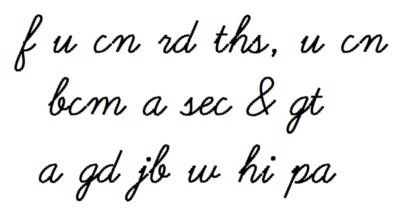
f u cn rd ths (If you can read this…)

So intoned the billboards on the NYC subways for years. The School of Speedwriting wanted to make sure people knew that Gregg shorthand was not the only way to go, and while I never had the opportunity to learn either, it seems to make perfect sense to me. My ex was a whiz at shorthand, and she could take dictation like a court reporter – but all those squiggles! Worse than Arabic, if you ask me.
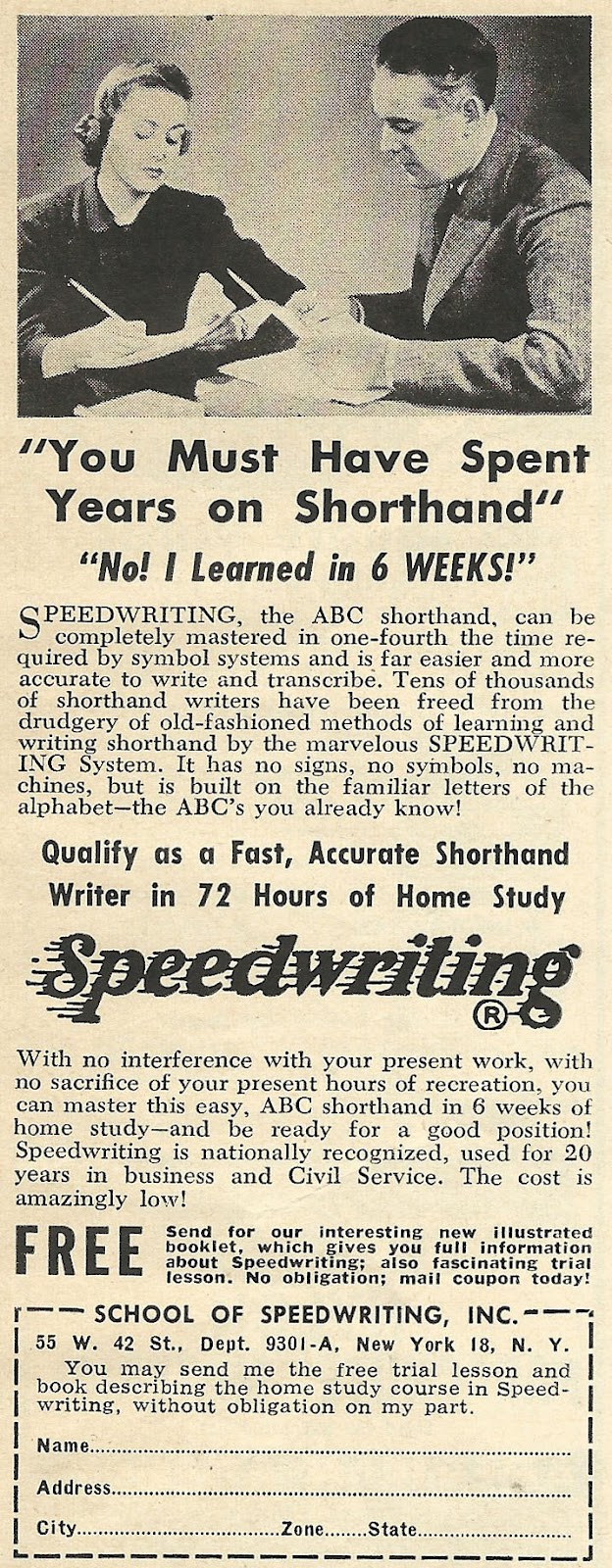
Of course, it’s based on being able to recognize words without the vowels. Since 2003,  this has been going around the internet in various forms, the latest one with the header “Only Smart People Can Read This”:

It is doubtful that any real research has been done on this phenomenon at Cambridge, but the underlying principle makes sense – experienced readers don’t decode, but rather they read words as entire units. This is useful to understand as I teach Japanese students the mysteries of English spelling. They get so wrapped up in “i before e” that they forget to learn new words in the same way that they learn their own kanji – as units.

To the untrained eye, each of these Japanese characters looks very much the same, 人, 大, 木, 本, 天, 火, 米, 犬, 水, 氷, 入, yet a Japanese person recognizes each without even thinking of it – a single jot can make the difference between big and dog, or between person and enter.

We do the same thing ourselves – and when presented with a block of text with mixed up letters (or missing vowels), our minds do what they do best – they look for things that look close to something recognizable, and usually come up with an accurate match almost instantly, unless of course you booted up a Unix system running “Fortune” and got “f u cn rd ths, itn tyg h myxbl cd…” – the Semitic peoples (Jews and Arabs) have been doing this for thousands of years – like anything, you just get used to it.

Nowadays, young people use this to their advantage when sending txt msgs (text messages): R u there? K. ttyl. (Are you there? OK. Talk to you later.) If things keep going the way they are, we may all be doing speedwriting whether we like it or not.

Th Ld Wlf hs Spkn.
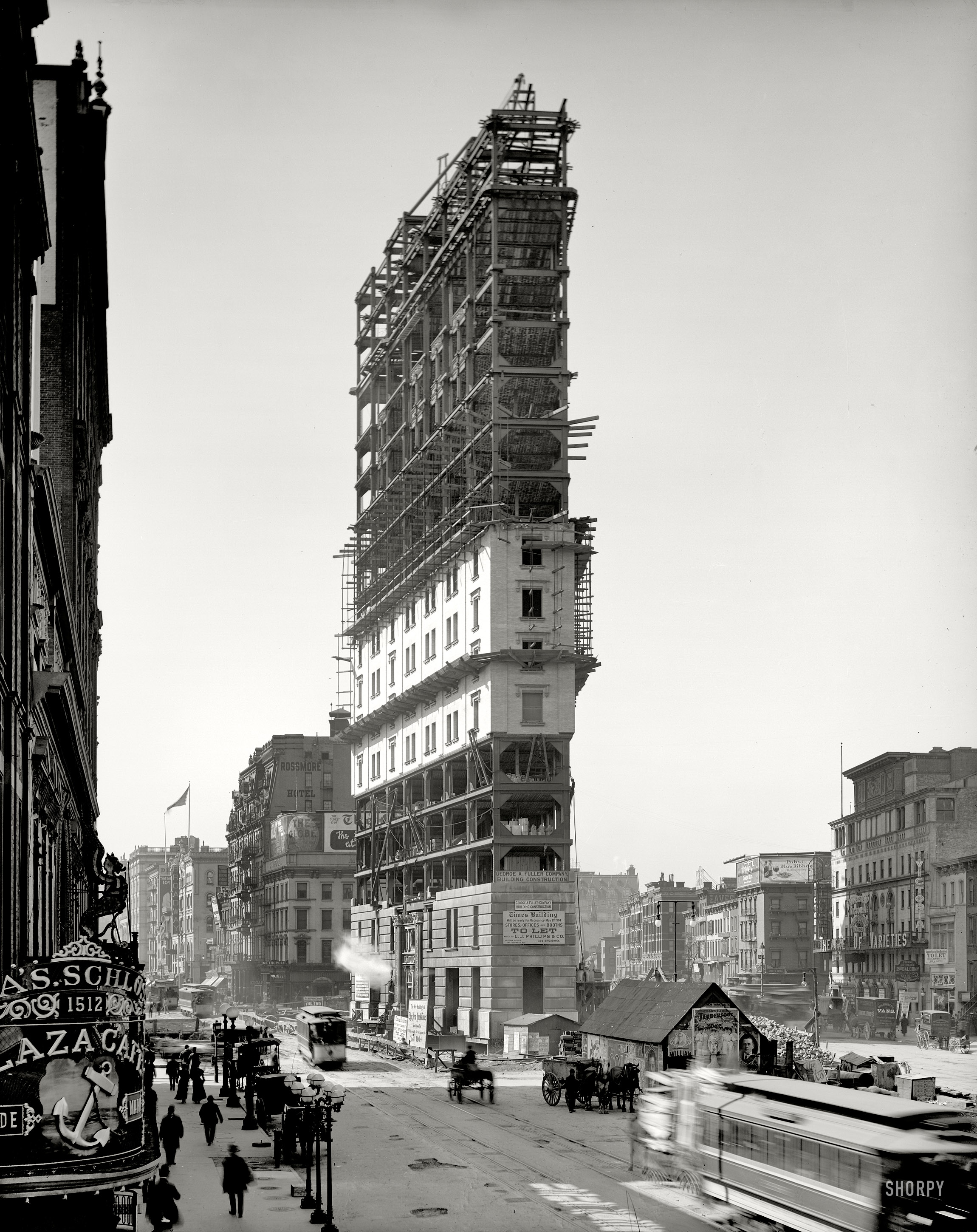
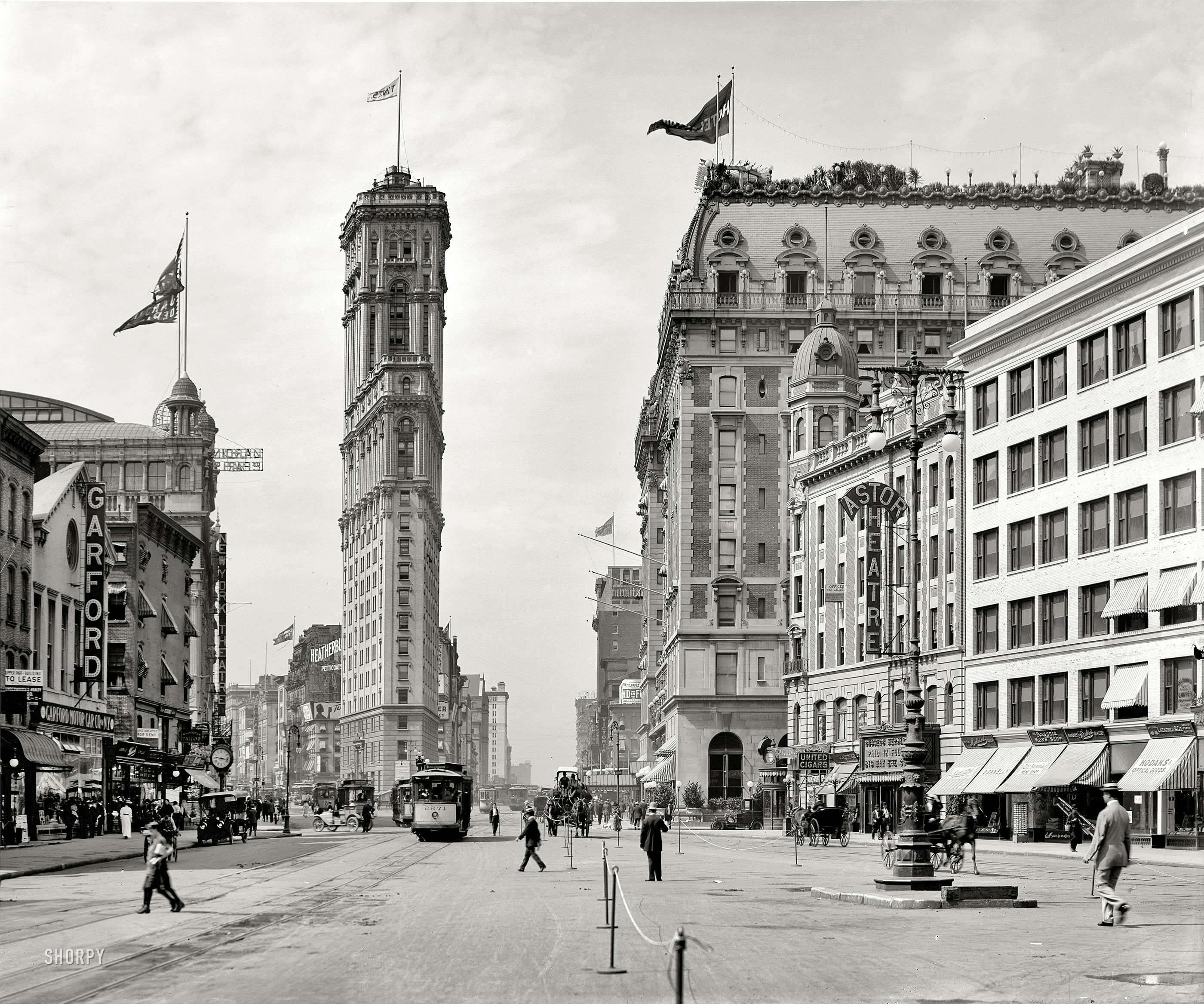
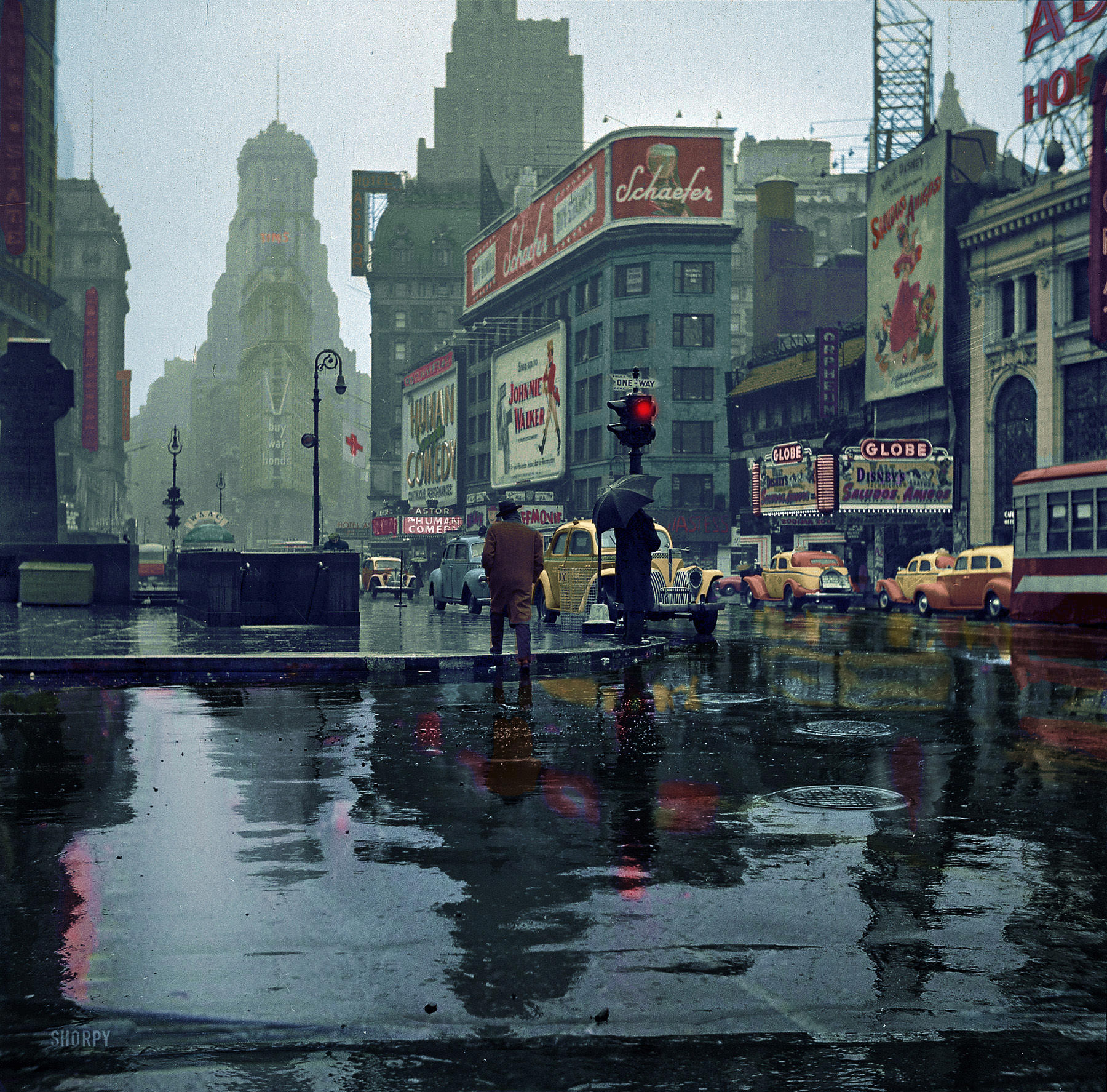
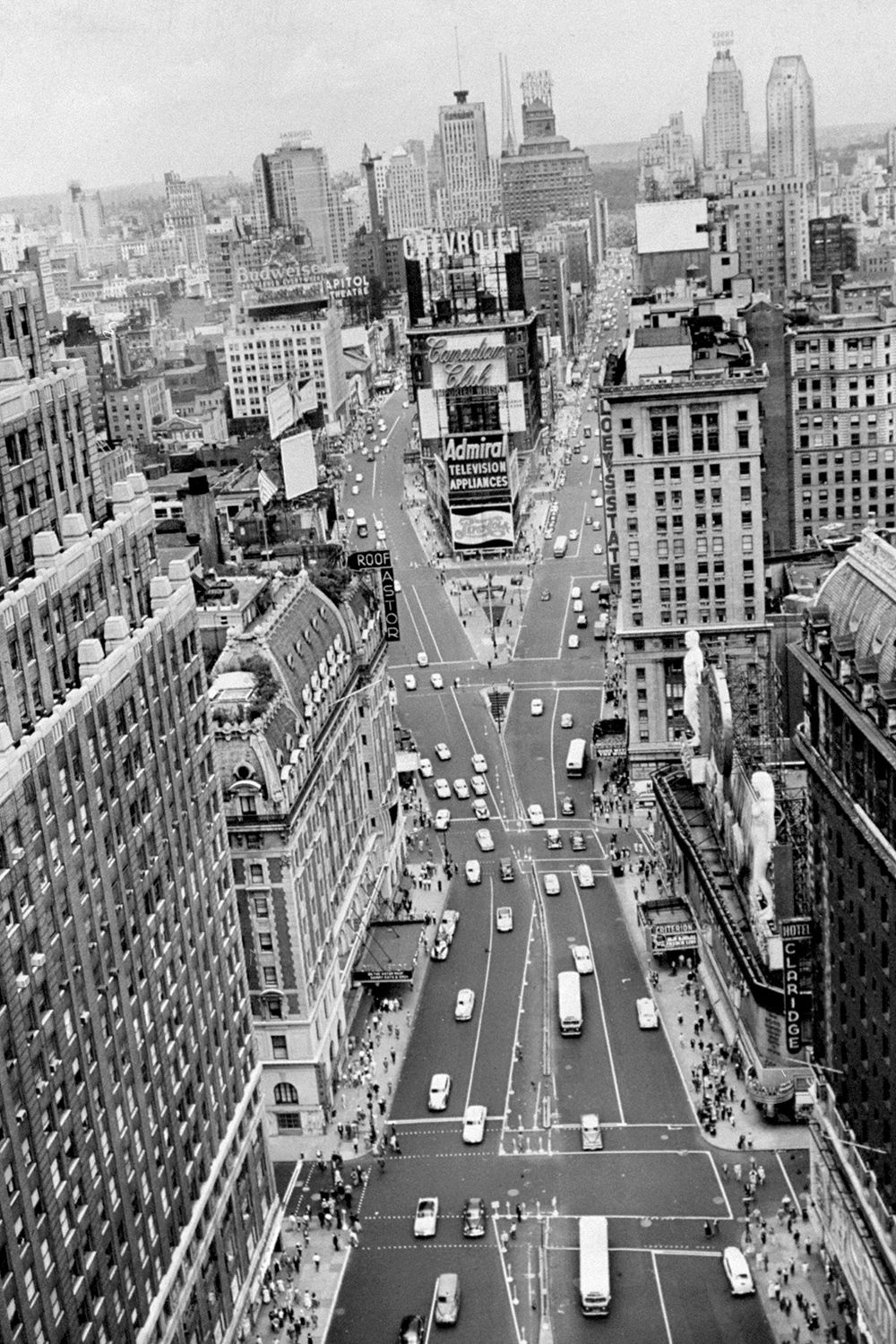
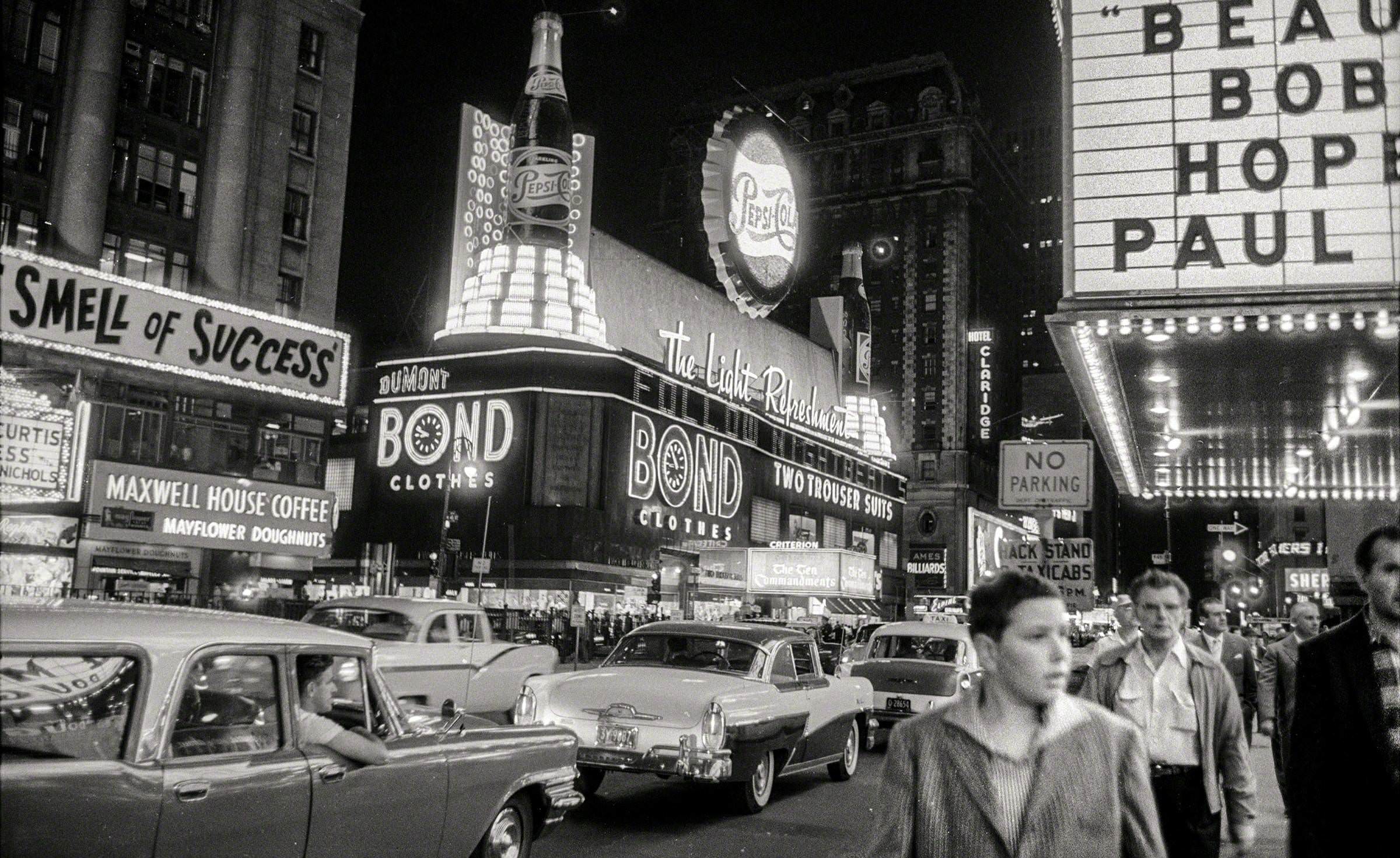
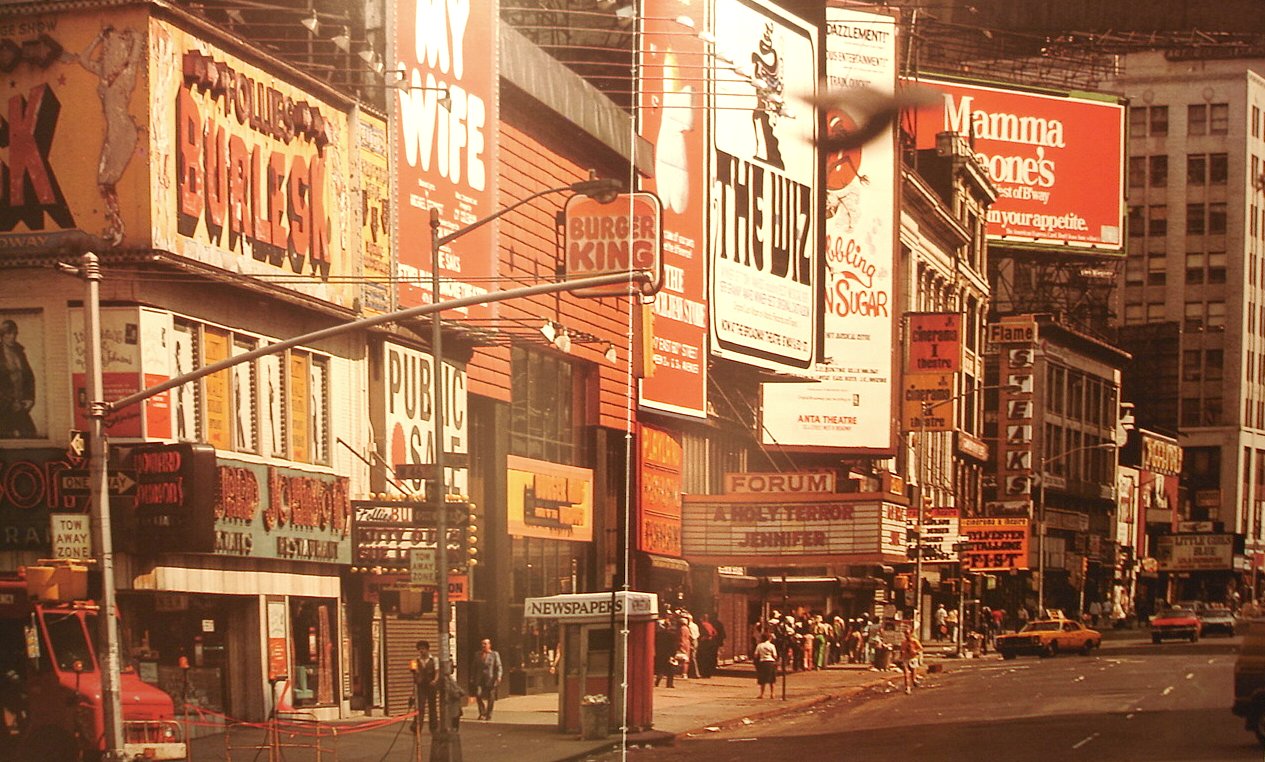
Times Square, Then and Now

One Times Square under construction, 1903 – Found at Shorpy

Early shot of Times Square  around 1904.

Times Square, 1908 – Found at Shorpy

Times Square, 1911 – found at Ephemeral New York

Longacre Square was renamed Times Square in 1904 when the New York Times constructed their headquarters there.

TIMESSQUARE1922A

Times Square, 1922 – Found at gothamist.com

Times Square at Dusk, 1932 – found at Pu(re)blog

060

Times Square, 1935

s_n21_wpa00552

Times Square theaters by day, in New York City. The Times Building, Loew’s Theatre, Hotel Astor, Gaiety Theatre and other landmarks are featured in this January, 1938 photo. (Bofinger, E.M./Courtesy NYC Municipal Archives) via Urbanobservatory

Times Square, 1943

Times Square, 1943, found at Shorpy


i06CcYz

Times Square, between November 1944 and January 1945 based on the “Tomorrow the World” and “3 is a family” marquees.


Times Square 1947 Blizzard

Times Square in a blizzard, 1947


Times Square 1949

Times Square, 1949

hBRP1Xl

Times Square at night, circa 1950

Times Square, circa 1951

Times Square 1953

Times Square, 1953


Times Square 1954

Times Square, 1954

Times Square, 1955

Times Square, 1955

donhgvk1cidy

Times Square, 1955 – wide view.

Times Square 1957 (2)

Times Square at night, raining – 1957

Times Square 1957

Times Square at night – 1957

Times Square in 1961

Times Square, 1961. Note the Horn and Hardart Automat.

Times Square, 1964. Found at Frog Blog (Now inactive)

Times Square, 1966

1966

Times Square, 1966, by night

Times Square 1967

Times Square, 1967

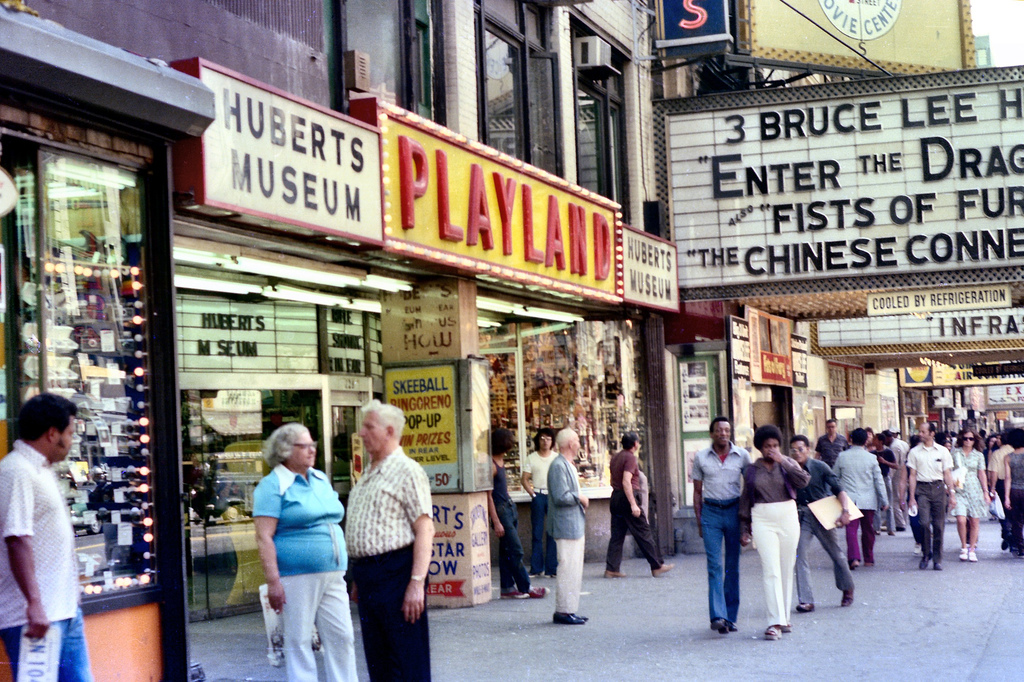
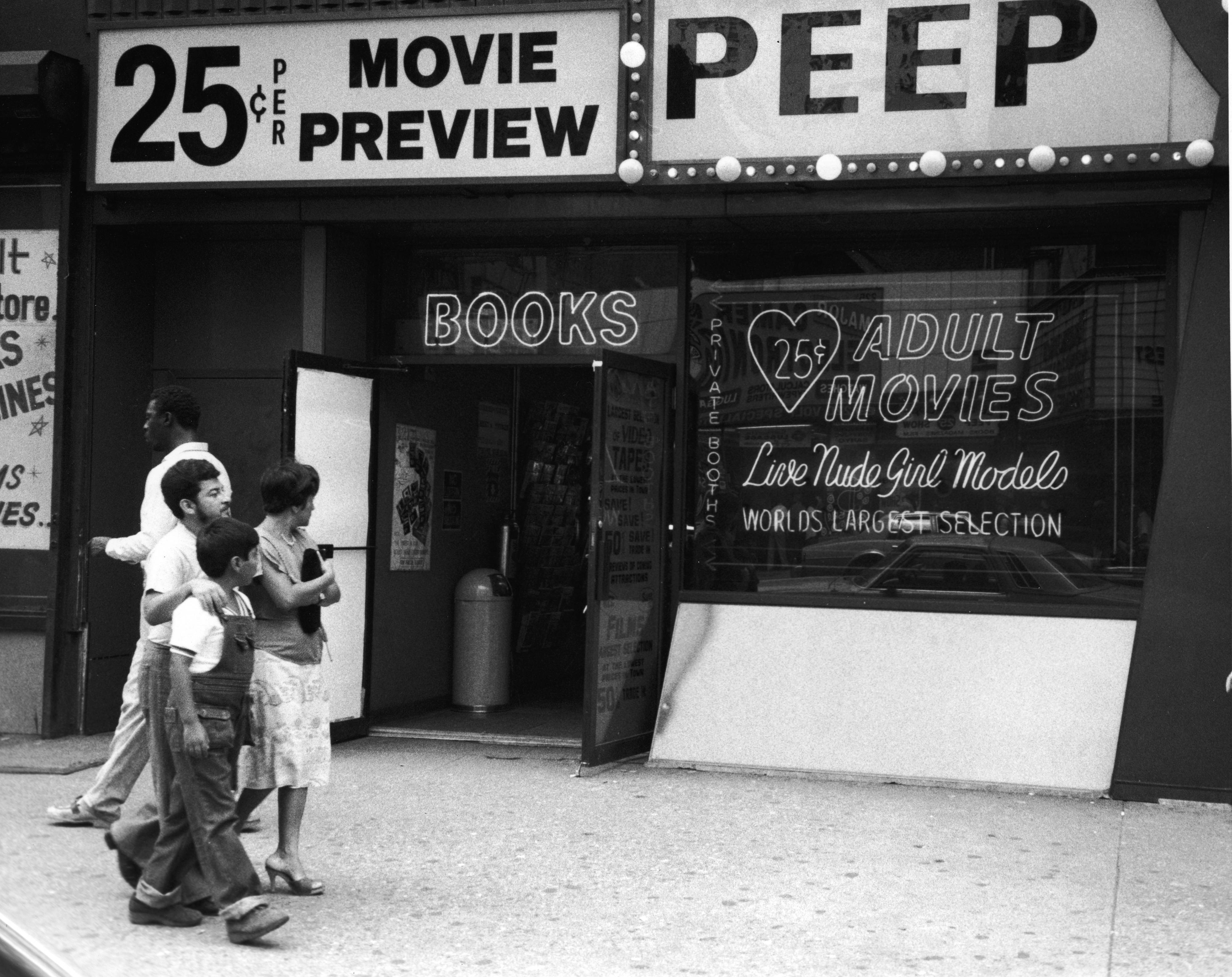
By the 1970’s, Times Square had become a cesspool of smut, as shown in the following images:

Times Square, 1973

I remember this Playland well – You could play Fascination there if you were over 18. There was one transient dude who would park himself right by the entrance and give passers-by the razzberry.

Time Square at night

Filthiest!

I remember one theatre on a side street that advertised “3 Hours of Solid Beavers!”

In the mid 1990’s, Mayor Rudy Giuliani led a campaign to close the smut houses and restore the Times Square area to something more tourist-friendly. Supporters claim it’s an improvement, detractors point to the “Disneyfication” of the area. Having grown up there, I’m in the first camp. The 1970’s were depressing, and I’m glad that era is gone.

Except Moondog. He was cool.

Times Square, March 1996 –  Photo ©Nightrider, Berlin – Found at http://nycj.blogspot.com

Times Square 1999

Times Square, 1999

Times Square, 21st Century – Found at DeviantArt

I won’t be around to see what Times Square looks like when my grandchildren take their grandchildren there, but I’ll bet it will still be something amazing to look at.

The Old Wolf has spoken.

No thanks, I just bought it online.

Sunday’s Retail by Norm Feuti – a strip I read with great relish – brings up an interesting point, and the commentary, written by what seems to be a preponderance of retail employees, got me thinking.

(Click the thumbnail for the full-size strip)

The question revolves around the practice of using brick-and-mortar stores as a showroom, leading to an ultimate purchase online or from a competitor.

This is an intriguing discussion and can see both sides of the equation. Reading “Not Always Right” on a regular basis, I am astonished beyond measure at the rudeness, arrogance, stupidity, and sense of entitlement people bring into a store, and always do my best to brighten the day of any retail worker I happen to encounter. And to keep the communication honest and open,  some days I do better than others. As a customer, however, my main difficulty with retail help is a sense of overinvestment – far too many retail workers (admittedly, perhaps, because they have to work with so many asshats on a daily basis and have reached the end of their rope) begin acting as though a return or a complaint were going to affect their bottom line, and they go out of their way to be like Mordac the Preventer. The knife can cut both ways.

The whole concept of using a brick-and-mortar store as a showroom is an unavoidable part of the e-commerce landscape. Customers *will* do it – I confess that I’ve done it myself. But when one is living on a fixed and limited income, pennies count. Unlike the use of smartphones in a movie theater, there has been not been time for society to develop any sort of “retail etiquette” by which it is generally accepted that this practice is “not done in polite society,” but in this economy I can forgive the practice because I know what it’s like to go without those eyeglasses or that dentist appointment in favor of food on the table.

We need things. We shop for them. The nature of retail, combined with the advertising industry, is ultimately to convince the consumer that he or she has a burning need for something which they had never thought of before. As a result, if we’re out shopping for Widget A, and we happen to see Widget B on a shelf which really calls to me, I see no reason to feel obligated to buy either one from the store I’m in if I can get it for less online (including shipping) or at another store (factoring in the cost of gas, and my time to get there).

This is not new. Watch “A Miracle on 34th Street” (the old version) and you’ll see that the concept of store loyalty is tenuous at best. As annoying as this is for store owners, and by metonymy, for store employees, it will only continue to get worse as bandwidth increases and smartphones get smarter. If brick and mortar outlets are to survive, they will need to adapt, and I’d be willing to bet that in 10 years we will have seen some very innovative solutions that have not been thought of at present.

Ultimately, it comes down to choosing our battles. I’d much rather deal head-on with the day-to-day issue of customer rudeness by creating (were I to own and operate a public business) an atmosphere where I could feel comfortable hanging this sign on my door:

This might cost me some business, but it’s the kind of business I don’t want anyway. I suspect (as long as I was running a business that was built on a sound model to begin with) that I’d attract more clientele that appreciated the opportunity to shop where they wouldn’t have to bump into the asshats themselves. I think I’d end up with more business that way, even accounting for the folks that were just window shopping or store hopping.

My two penn’orth, anyway.

The Old Wolf has spoken.

An Open Letter to the World’s Muslims

On September 10th, I posted An Open Letter to Jihadistan. This was addressed to the violent Islamic extremists of the world, rather than to the approximately 1.7 billion Muslims in the world today. Today I share my thoughts with the rest of you.

America is not waging a war against Islam. If you believe that, you are being lied to by people who are perverting your religion for their political purposes.

America is not responsible for, nor does it support the maker of  “The Innocence of Muslims.” This repugnant movie was made by a bigoted sub-human who does not represent the feelings of the vast majority of Americans.

Sheik Hassan Nasrallah of Lebanon today urged the Lebanse to increase their protests, saying “The ones who should be held accountable and boycotted are those who support and protect the producers, namely the US administration.” The US administration does not support the producers of this film, nor does it agree with its message. Nasrallah and other sheikhs and imams around the world calling for protests and violence against the US and the west, are speaking out of ignorance, and in so doing they are twisting the religion of peace into something that is not found anywhere in the Qur’an.

Despite the memories of the terrible events of 9/11 being still fresh in the minds of Americans, our land continues to be a haven for people of the Muslim faith, with over 2,000 mosques and countless masjids. Like you, we have our bigots and our sociopaths – but these do not now, nor have they ever represented us.

We believe that freedom trumps tyranny. If you wish to live in an Islamic republic, then live in an Islamic republic. If you wish to abide by shari’a, abide by shari’a. But let these be a republic and a law where the people are allowed to determine what that means, rather than living in fear that a different opinion or a different lifestyle will bring injury or death to them and their families.

I exhort you to stand down from these protests, this outrage, this violence which has nothing to do with America but rather the political aspirations of a few deluded men. Put your energy into building up your societies and improving the lives of your fellow citizens, and I pledge to you that I will do the same. The vast majority of my countrymen desire only the same things you do – the freedom to establish your lives and provide for your families in safety, and without fear. Things will not be perfect, and mistakes will be made, but none of us should allow the frailties of men to stand in the way of peace and progress.

I leave you with a quote that has been attributed to Marcus Aurelius, but whose origin is unsure. Nevertheless it speaks to me, and speaks the words of my heart.

“Live a good life. If there are gods and they are just, then they will not care how devout you have been, but will welcome you based on the virtues you have lived by. If there are gods, but unjust, then you should not want to worship them. If there are no gods, then you will be gone, but will have lived a noble life that will live on in the memories of your loved ones.”

May we desire peace, and pursue it; may we sow kindness, and reap prosperity.

The Old Wolf has spoken.

New York Eateries: Gone But Not Forgotten

Nedick’s was the Starbucks of the 50’s. Orange drink, doughnuts and hot dogs with a signature mustard relish. They were everywhere, even in little hole-in-the-wall joints down in the subways. I confess I like the fresh-squeezed places better down there, with the machines that would cut and squeeze oranges automatically, but Nedick’s is a treasured memory also.

nedicks

Nedick’s in Newark

Nedick’s at Macy’s (Found at The Paper Collector)

Then there was Prexy’s. A local concern with just a few outlets in and around New York, they made hamburgers that were to die for. Little is known about the recipe that made them so good, but I remember eating there a number of times. Oh, those prices.

Prexy’s Matchbook

Prexy’s Logo from a China Plate

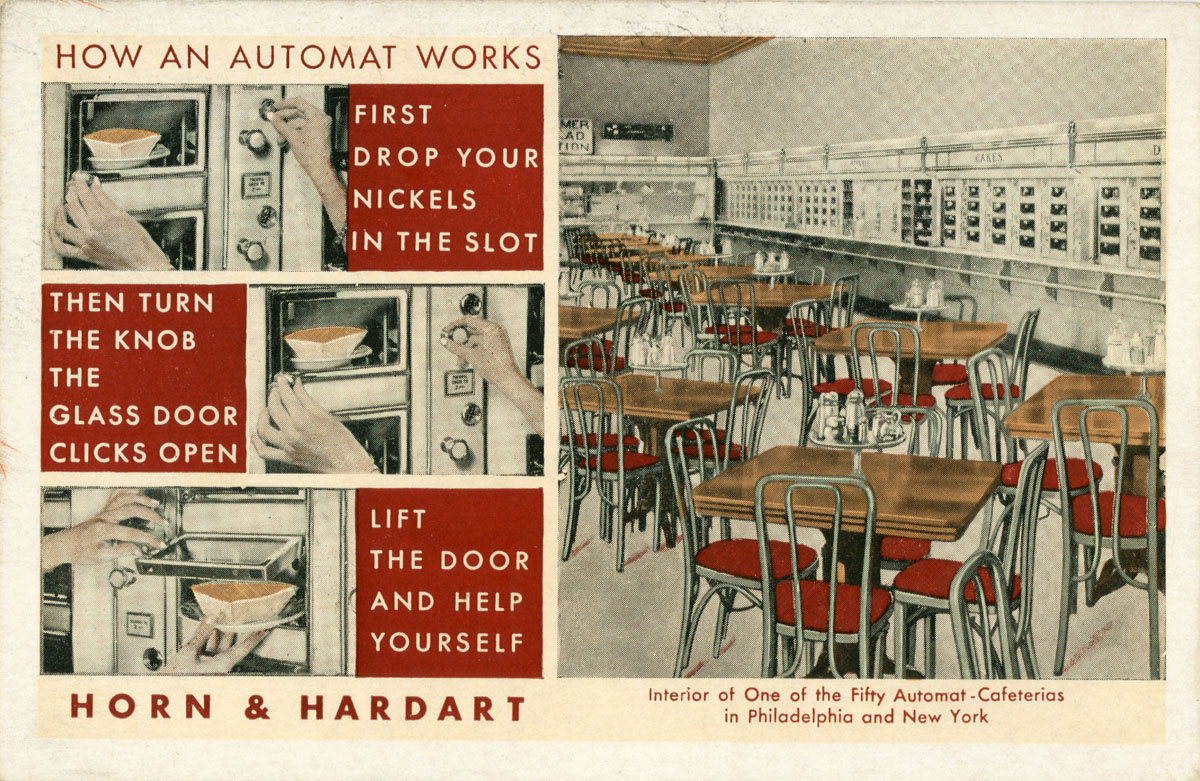
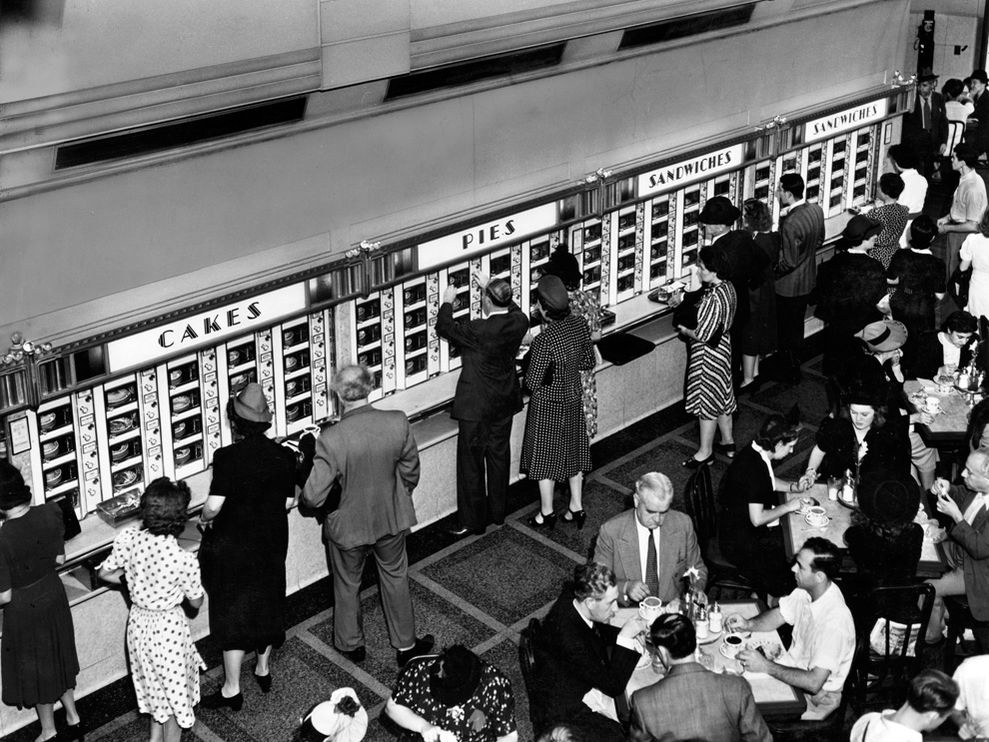
Last but not least, there was the Horn and Hardart Automat


gwKkl


The Automat, 1942, by J. Baylor Roberts

For a kid in the 50’s, nothing was more fun than getting pie or drinks or that incredible macaroni and cheese at the Automat; you’d get your nickels at the booth from a nickel-thrower, ladies with rubber tips on their fingers who could fling out a dollar’s worth of nickels without blinking. I could stand there for hours watching the lazy susans rotate around when they were empty, only to reappear magically refilled with new offerings.

I scored a copy of this book which gives a fascinating history of the chain, including lots of recipes.

Now I’m hungry.

The Old Wolf has spoken.

Home Repair in China

Newser reports that Home Depot is giving up in China; they have discovered that the Chinese prefer “do it for me” rather than “do it yourself.” Most Chinese live in apartments in urban areas, and have access to cheap labor.

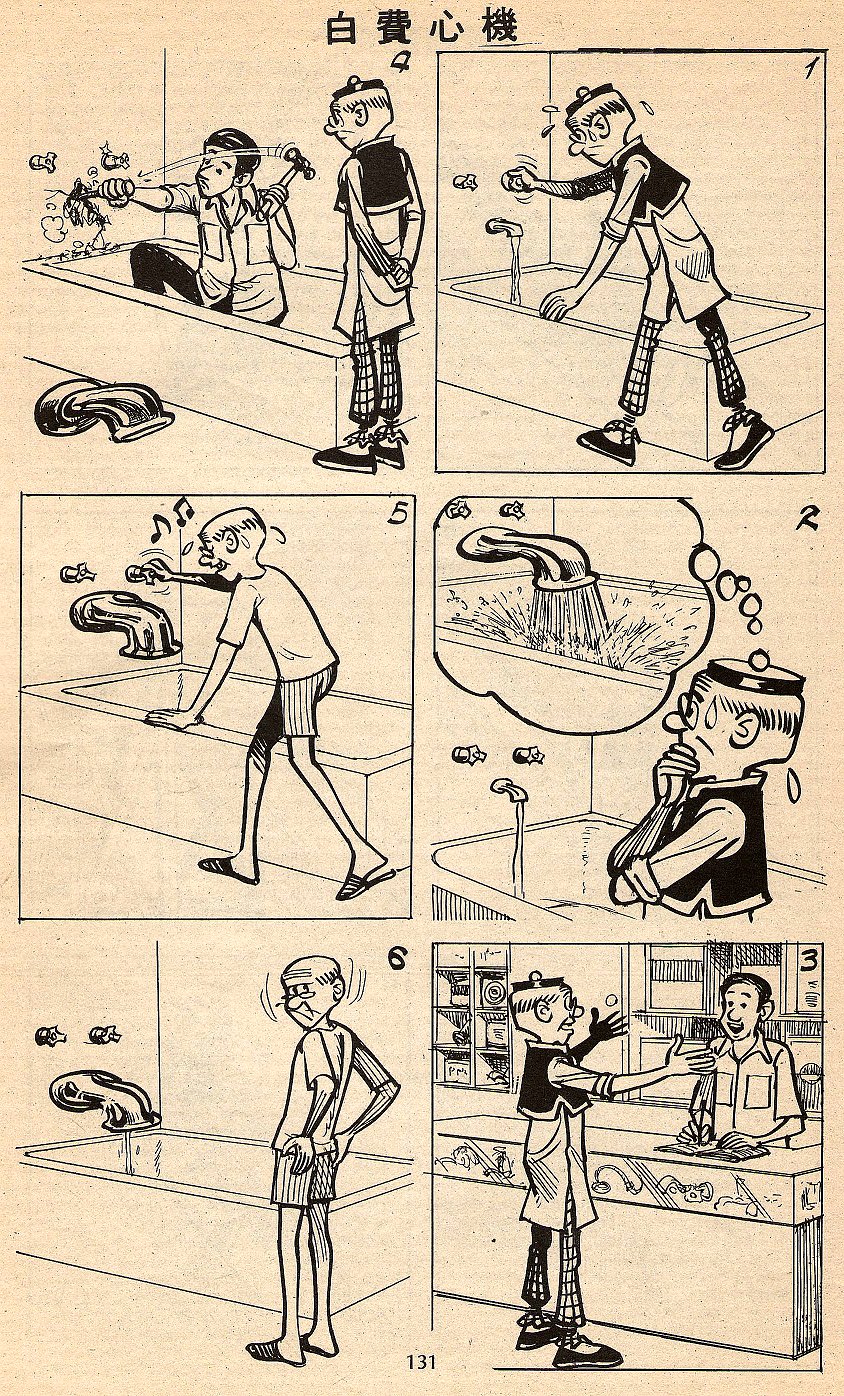
However, I have often wondered if the quality of the work one gets done is not of the best, as illustrated in the following Lao Fu Zi strips (remember to read these from top to bottom, and from right to left):

If you’re not familiar with Lao Fu Zi (known as Old Master Q in English), you can become better acquainted here. Most of these are constructed to be funny even if you don’t read Chinese – the website provides translations as an added touch.

The Old Wolf has spoken.

The Gospel According to St. Sabrett

  1. Only beneath the blue and yellow umbrella shall you eat.
  2. A hot dog shall be eaten on the street, no matter what your Nonna said.
  3. You shall garnish your hot dog with mustard, or with relish, or with onions, or with kraut, or All the Way.
  4. Ketchup shall be an abomination unto you, ye shall not eat of it.
  5. You shall not complain about the price: it is New York.
  6. The water is not dirty, it is hot dog juice.
  7. The skin of a hot dog has a pleasing snap, but ask not what lies beneath.
  8. You shall never visit a hot dog factory, lest you lift up your heel against hot dogs forevermore. You do not want to know how they are made.
  9. Remember St. Papalexis, for he is holy.
  10. A hot dog tastes best at Yankee Stadium, even if it is Nathan’s Famous and not Sabrett. But then, anything tastes good after 10 beers.

Stolen shamelessly from the Huffington Post:

Sabrett-style Onion Sauce Recipe

Makes. 4 hot dogs
Preparation time. 1 hour

Onion Sauce Ingredients
1/2 cup water
1 teaspoon cornstarch or arrowroot
1 tablespoon tomato paste
1 tablespoon inexpensive balsamic vinegar
1 teaspoon Dijon-style mustard
1 teaspoon brown sugar
1/4 teaspoon hot pepper sauce
1 pinch of cinnamon

1 tablespoon olive oil
2 large red onions, peeled thoroughly and sliced thin
1/4 teapoon table salt
2 cloves of pressed or minced garlic

About the onions. Red onions often have an extra layer of tough paper under the outer layer. Make sure you remove it.

About the tomato paste. If you want, you can substitute a 2 tablespoons of ketchup or a sweet tomato based Kansas City style barbecue sauce for the tomato paste.

The hot dog
4 all-beef frankfurters, preferably Sabretts
4 buns
Sauerkraut from the refrigerator section, not the can
Spicy brown Dijon-style mustard

Do this

  1. Combine the water and cornstarch in a bowl and whisk it until there are no more lumps. whisk in the tomato paste, balsamic, mustard, brown sugar, hot sauce, and cinnamon.
  2. Warm the oil in a large skillet, not a non-stick, over medium high heat. Add the onions and sprinkle with the salt. This helps pull the moisture out. Move them around occasionally with a wooden spoon so they don’t burn. Cook until the edges start to brown. Whatever you do, do not let them burn. Add the garlic and cook for another minute.
  3. Add the liquid, stir, and rub the pan with the wooden spoon to scrape up all the flavorful fond, the brown bits on the bottom. Turn the stove to low and simmer with the lid on for 1 hour. Check frequently to make sure it is not burning and the water has not evaporated. Add water if needed. The final result should be thick, not runny, but not pasty. After an hour, taste and adjust salt and other flavors as you wish.
  4. While the onions are simmering, warm the kraut in a pan or for 15 seconds in the microwave, cook the franks, and prepare the buns. The franks can be cooked on a griddle, on a grill, but most pushcarts make “dirty water dogs” by simmering them in water that has become a rich flavorful soup after holding scores of franks over the course of a day. And don’t worry, the franks are precooked so they are pasteurized, and the dirty water is hot enough that nothing can survive. As for the buns, some are toasted on a griddle, but most pushcarts store them in a bin where the steam from the dirty water keeps them warm and moist.
  5. Lovingly place the frank on the bun, squirt on the mustard, add the onions, and then the kraut. Hum quietly, I’ll take Manhattan…

The Old Wolf has spoken.

Classics Illustrated

These were comics.

Yeah, I loved Superman and all the others. Don’t let me think too hard about what my comic collection looked like – Since I started reading them in the 50’s, I could have sent all of my kids through Harvard if I had kept them all.

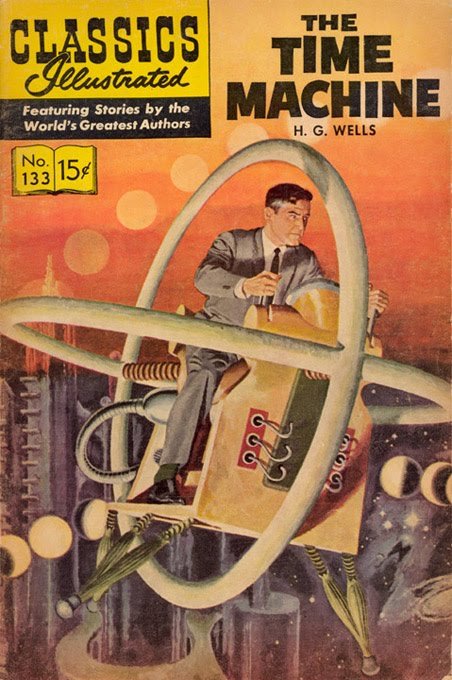
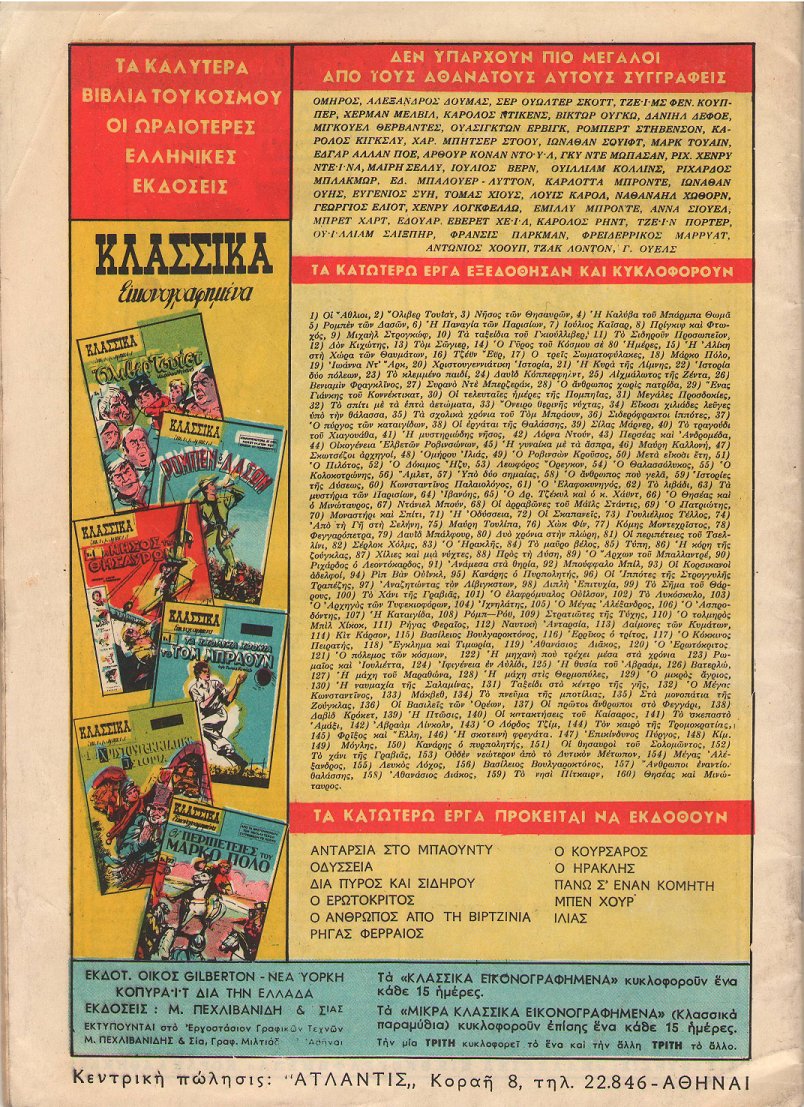
But I loved the Classics. It may be part of the reason that I enjoyed reading the real things later… I think I read every book whose Classics Illustrated version I had encountered. These things were great – almost like Cliff’s Notes in graphic novel format. Over time I’ve been able to reassemble a fair percentage of the ones I had as a kid – fortunately for me, they’re not highly sought-after and so I can usually find bargains in used bookstores (but not at ComicCon, where the dealers charge ten prices.)

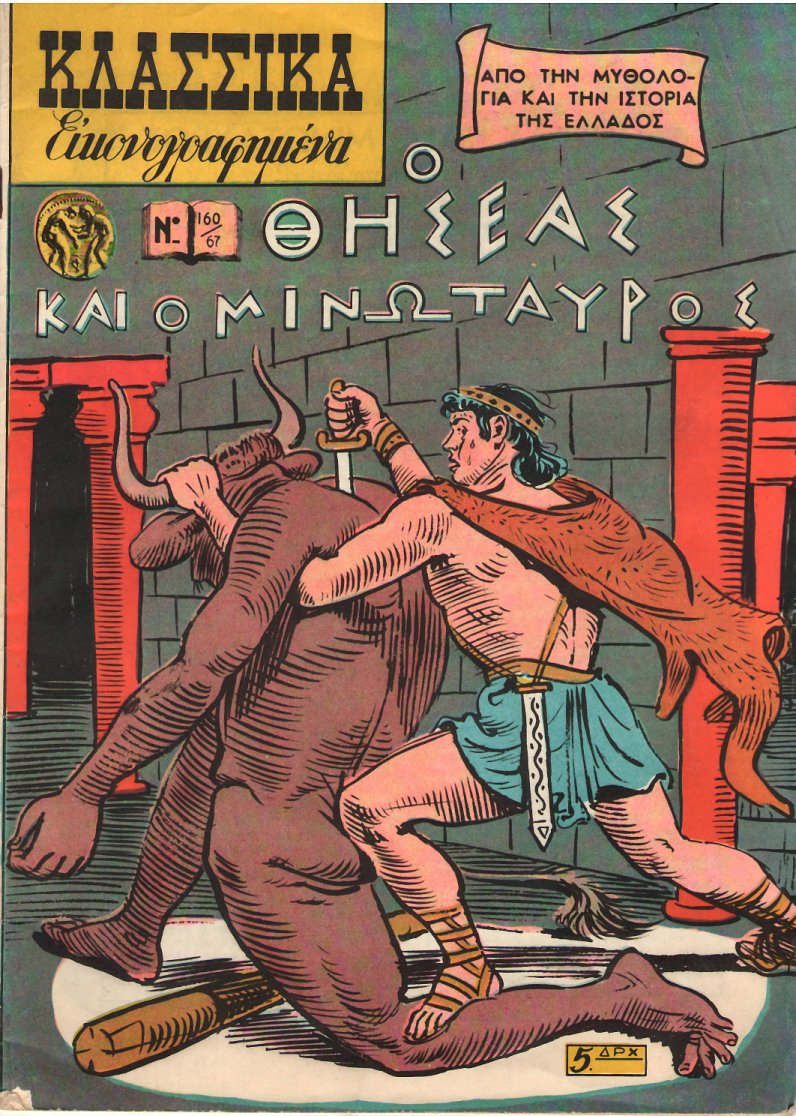
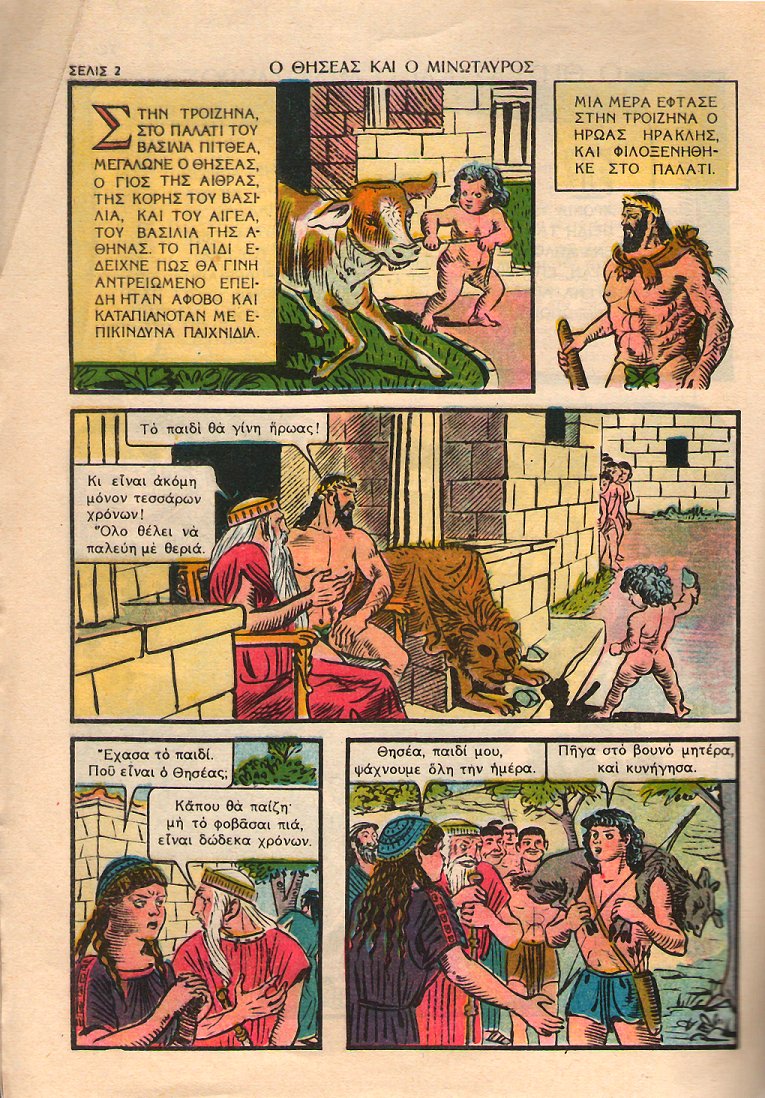
They were even popular in other languages – here a sample of Theseus and the Minotaur in Greek (I noticed with interest that this one was printed in katharevousa, with polytonic instead of monotonic accents, so that’s a good clue that it was published earlier than 1976 when dimotiki became the official Greek standard.)

There appears to be no date information anywhere in the comic, so I can’t tell you when this was printed, but the Greek series began publication in 1951.

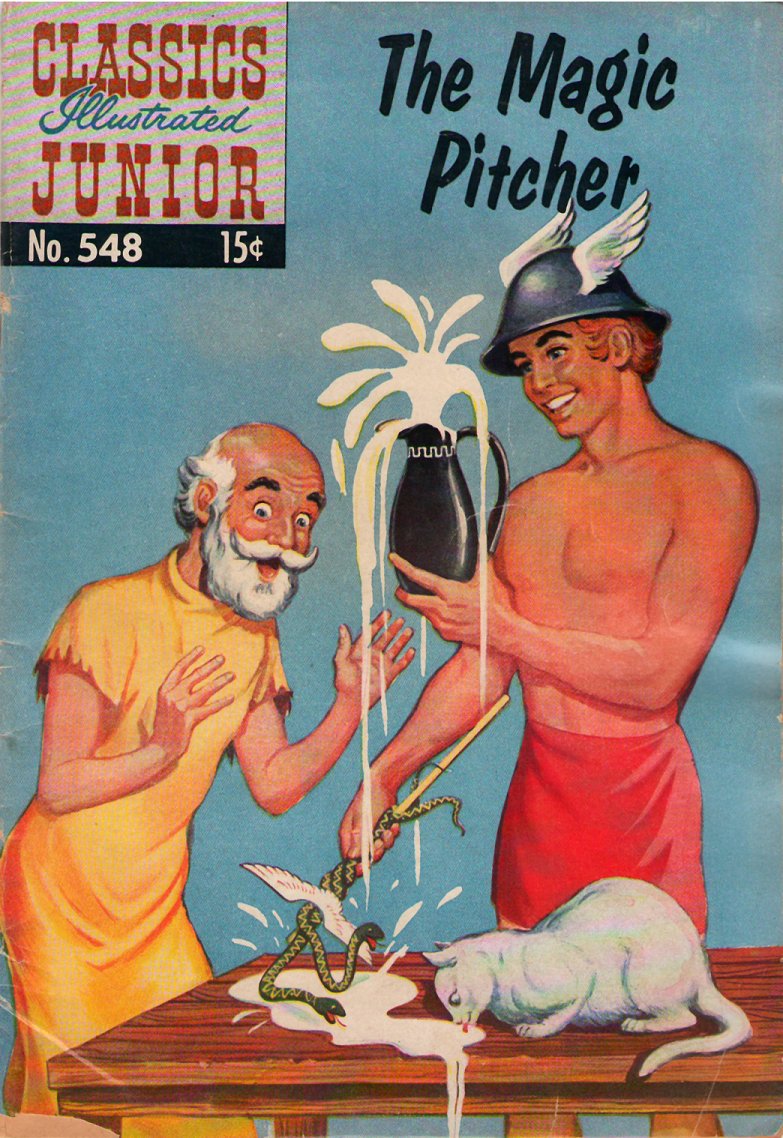
Classics Illustrated Junior

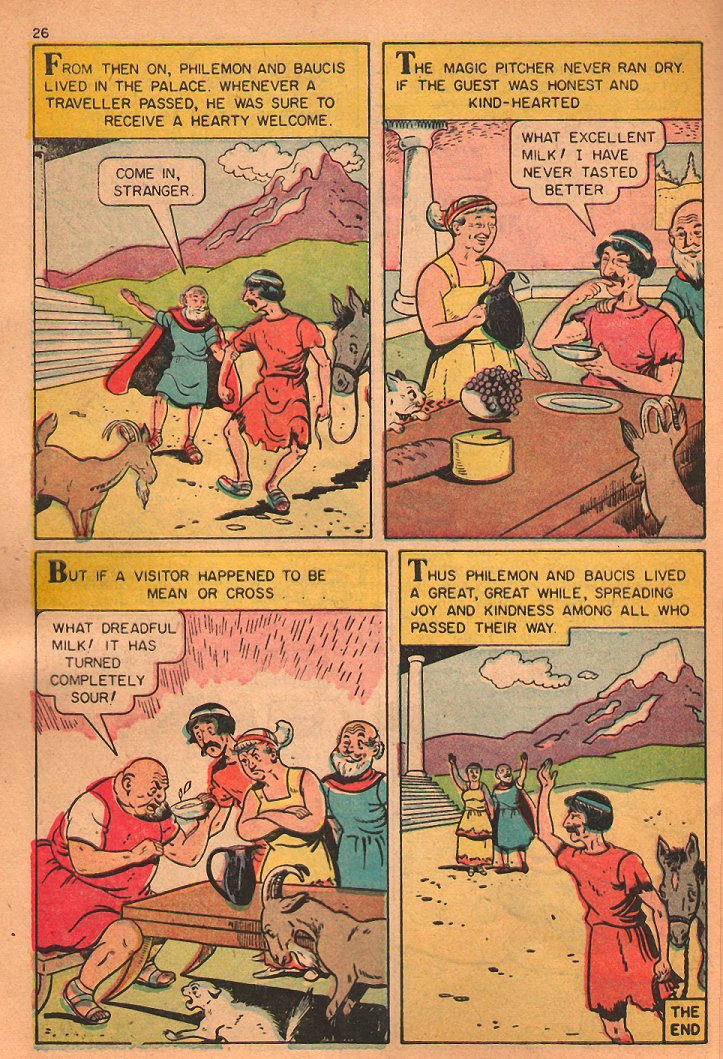
These were funny, often silly, but educational nonetheless. I learned a lot from these when I was very young.

I remember being on a camping trip with my youngest son once – we were trying to get a fire started, or a Coleman stove, or something, and the matches were damp. At one point he came out with “What a dreadful match! It has gone completely out!” and I just about needed a change of trousers from laughing so hard. It was good to know that some of my early culture had rubbed off on the next generation.

The Old Wolf has spoken.

WÖK – Wiener Öffentliche Kuchenbetriebsgesellschafft

The “Vienna Public Feeding GMBH” was established in 1919, with the goal of providing for the nutrition of children and the more vulnerable sections of society. It was renamed the “Viennese public kitchen company” in 1920, and retained that name until the company merged with Wigast. From 1999 to 2001, Wigast was gradually absorbed into the Austrian Tourist Office; at that time it was the largest restaurant umbrella company in Austria and included restaurants such as Rathauskeller, Donauturm and Schloss Wilhelminenberg, as well as the Wienerwald chain. In 2008, the Tourist Office sold off its restaurant holdings to better focus on tourist promotion.

The WÖK above was photographed in the summer of 1976 in the 18th Bezirk of Vienna.

What you got there was cheap and edible, but not much else. It reminded me of the ÖBB Betriebsküche in Villach, where I became acquainted with Beuschel; indeed, when I read Melville’s description of Turkey in “Bartleby the Scrivener” – (his clothes were apt to look oily and smell of eating-houses), WÖK is always what I think of. That said, the memories are indelible, and the WÖKs now belong to history.

The Old Wolf has spoken.

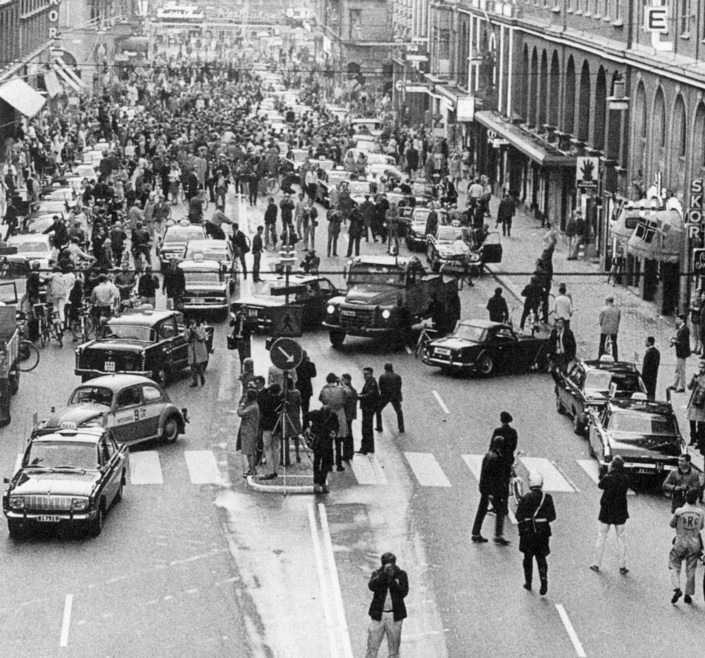
The Day Sverige Stood Still

On 7 September, 1967, at exactly 4:50 AM, Sweden’s traffic came to a standstill. It was “H Day” – Högertrafikomläggningen, or “Switching to Driving on the Right.”

All traffic in the nation stopped, carefully changed from the left to the right side of the road, and at 5:00 AM, continued on their way. Not a single accident took place, and in the aftermath, the accident rate actually decreased.

The Old Wolf has spoken.