Another Lost Product: Stella d’Oro egg biscuits

Edit: Since writing this, and based on a comment below, I have tried the Cianciullo taralli. The texture is almost identical to what I remember, the closest to anything else I have encountered. The flavor seems a bit different, but 65 years later that memory could have faded.

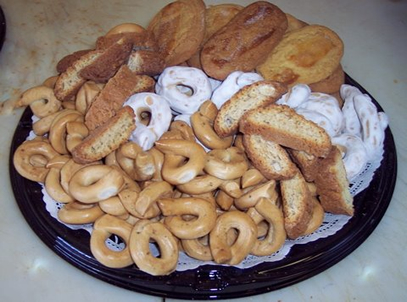
I’ve written before and copiously about Sara Lee Frozen All-Butter Brownies. But for a long time I’ve been craving these lost little treats from Stella d’Oro, flower-shaped biscuits that I used to get at my nonna’s house in New York when I was young.
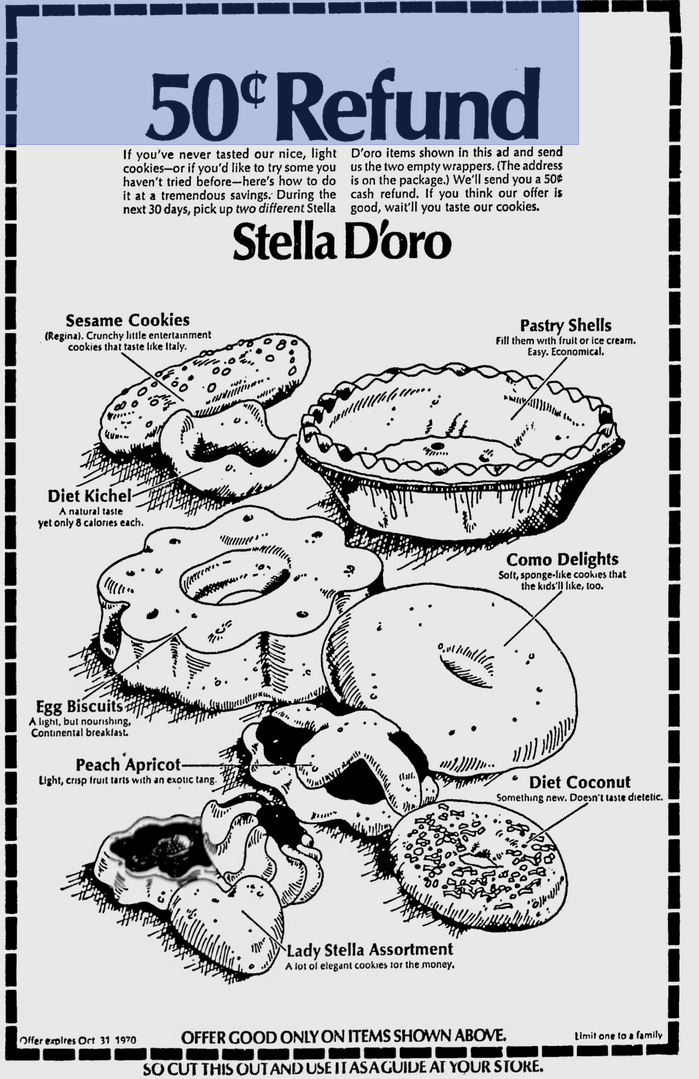
Stella D'Oro Egg Biscuits

Not soft, not crunchy, but with a unique texture all thier own. And they appear to have vanished forever. I have written to Stella d’Oro and begged for a resurrection of this product, as I know many others have done, but thus far our pleas have fallen on deaf ears.

Someone suggested that Clementi’s original taralli are as close as you can get:

orig tar label

101_1760

Taralli (foreground) and other yummy things from Clementi

And I’d try some in a heartbeat but you have to order them by the case. Other websites sell them by the pack, but at double the price plus shipping, so I’ll have to wait until I can get down to Hackensack to pick up a bag and see for myself, which thing I will not fail to do.

Speaking of taralli, let me introduce you to Graziella. The photo and text below are from The Italians, Face of a Nation by John Phillips, published in 1965 by McGraw-Hill.

Graziella

“When Graziella was born in 1864, Lincoln was President of the United States of America, Napoleon III was Emperor of France, Bismarck was Chancellor of Prussia, Victoria was Queen of England, and Victor Emmanuel II was the first ruler of the new kingdom of Italy. Thirty-nine months before, an ancient civilization had finally become a young nation. though France maintained the sovereignty of the Papacy over Rome, while Austria retained the Italian-speaking provinces of Mantua, Venice and Trento. Graziella was two when Victor Emmanuel took advantage of the Austro-Prussian war to annex Mantua and Venice. On her seventh birthday, after Napoleon fell, her monarch got a special present: Rome.
Graziella never did learn to read. Her sovereign was more interested in colonial annexation than in the literacy rate of his people. At eighteen, the cheerful illiterate married a Neapolitan diver. That was the year Italy took her first dip into colonialism and came up with Assab, on the Red Sea. During Graziella’s first pregnancy, Italy signed her first international agreement and joined the Triple Alliance. This pact favored Austria, the hereditary enemy, and benefited Germany, but it did gratify the Italian national pride.
The first of Graziella’s nine children was born the same year that a blacksmith’s wife had a son whose name was Benito Mussolini. The birth of Graziella’s second child coincided with the conquest of Eritrea. Then came Teresa in 1892, the year the Italian socialists held their first congress. By the time Assunta was born, two years later, the socialist party had been dissolved. In 1895 Graziella had her fifth child in the midst of national rejoicing – Ethiopia had been conquered, Graziella mourned the death of her sixth child in the midst of national grief over being driven out of Ethiopia. Rosa’s birth preceded the tumultuous riots of 1898, which led to reprisals against the workers who had participated in them. Peppino was born the year Umberto l was assassinated in reprisal for the 1898 reprisals. Graziella’s last child celebrated her tenth birthday the year Italy conquered Libya and Cyrenaica.
A year later, in 1913, Graziella went to work to supplement her husband’s earnings. She had been selling fried peppers and eggplant for a year when the socialist firebrand Benito Mussolini tried to start a revolution at the outbreak of World War 1. Mussolini was against nationalism and war. The spring of 1915, Graziella moved her stand next to Zi Teresa, a restaurant on Naples’ waterfront, as Italy switched partners and declared war on her former allies of the Triple Alliance – in the name of “Holy Egoism.” In return, Italy received Trento, Alto Adige, Venezia Giulia, Trieste, and the Istrian Peninsula. Graziella was 58 when Mussolini became a nationalist, and 71 at the time he attacked Ethiopia. She was 75 the year the Duce blustered into World War II, and 80 when he could be seen dangling head down at a gas station in Milan.
Graziella became a widow the year the monarchy was abolished in 1946. Since then, too old to fry peppers and eggplant, she sells taralli. You can find her along Santa Lucia any day the weather is fair.”

What an incredible life; it reflects a century of Italian history. I lived in Naples in 1969, and I swear I saw Graziella there; I suspect, however, that I’m just combining my own memories with the images and words from this lovely book, because by that time Graziella would have been 105. At any rate, thinking of taralli always makes me think of her; you can see the massive ones she sold in the picture above.

If you want to try some of your own, I found a likely recipe at Lidia’s Italy.

Please, Stella d’Oro, bring back your egg biscuits.

The Old Wolf has spoken.

Ersatzkaffee

I can’t drink coffee any longer, and haven’t since 1969. I used to consume it by the gallon, or by the thimbleful when I lived in Naples, Italy – lots and lots of thimbles. Back when “uno normale” cost 50 Lire, the equivalent of 8¢.

Tazzina_di_caffè_a_Ventimiglia

Nowadays my caffeine addiction is fed in other ways.

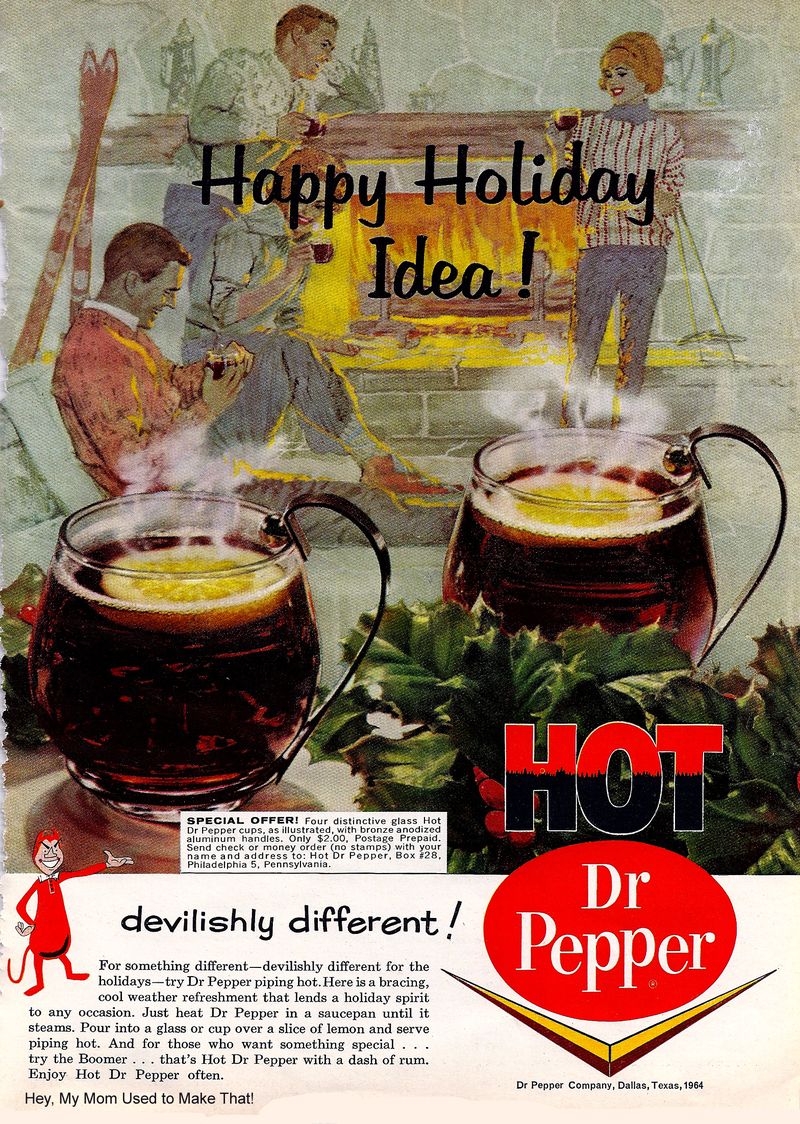
DrPepperIV

But there are times when a hot cup of something hits the spot, and this idea has never really appealed to me:

6a00d83451ccbc69e20147e067287e970b-800wi

Enter Erzatzkaffee, a German word meaning “coffee substitute.” I remember hearing my mom talk about this when I was a kid back in the 50s, and the impression I got was that it was made from anything they could find, sorta like this:

Rag Man from Project Luser

Apparently it wasn’t quite as bad as all that. Mit herzlichem Dank an Benutzer Helmut0815 over at the Axis History Forum, I found this:

In wartime Germany as well as in early postwar era there was of course a massive shortage of coffee as Germany was cut off from it’s resources. Real coffee was only available on the black market.
So the people drank Ersatzkaffee widely known as “Muckefuck” (from french “Mocca faux” = false coffee) which was made from roasted chicory roots, malt, barley, rye, acorn and many other things which were available. Of course this Ersatzkaffee did not contain any caffeine.

Some popular brands were Linde’s Kaffee-Ersatz-Mischung, Kathreiner Malzkaffee, Koff and Effka.

d4b226d08c

After I gave up coffee, I took to drinking Postum™, once a ubiquitous feature of Greyound Bus waystations all over the country, to be found in little packets right next to the Sanka™ instant coffee, but over time its popularity faded and it was discontinued in 2007. Fortunately for me, Eliza’s Quest foods acquired the trademark and Postum™ is now once again in stores and can be had online.

poucher_postum_american22oct

The product was responsible for multiple foilings of “Mr. Coffee Nerves:”

6a00d8341c556453ef0105367ce7d8970b-800wi

After a two-year stay in Austria, I came home converted to Caro™, which tastes a lot closer to coffee:

Caro Landkaffee

Fortunately for me, Caro™ is marketed in the USA as Pero™.

715NdSQadFL._SL1500_

These products are based on malted barley, chicory, and rye, and although an inveterate coffee drinker would probably think they taste like panther piss, after a while they grow on you if you can’t have the real thing.

A lot better than pencil shavings, at any road.

The Old Wolf has spoken.

Eating the Cowboy’s Best Friend

bW6RPb3

Original Caption: Women line up outside a butcher shop to buy meat in North Cheam, Surrey, England, on April 17, 1942 during World War II. (AP Photo)

World War II brought rationing and deprivations on both sides of the conflict, but horse meat was not rationed. An extract from the BBC website WW2 People’s War:

Strange things on the dinner table

Over-riding all these trifling discomforts was the non-stop foraging by the housewife to provide some variety in her family’s meals. I cannot recall ever being literally hungry, but the country had been reliant upon imports, which were now impossible because of the sea blockade. Everything was scrupulously rationed and we ate some strange things to supplement our diet.

Tea tablets were used to make the tea look stronger; babies’ dried milk or ‘National’ milk was added if it could be obtained; and saccharine was used as a sweetener. Some even resorted to using honey or jam. What a concoction – but we drank it. Bread was heavy and a dull grey colour, but it, too, was rationed – so we ate it.

Sweets were devised from a mixture of dried milk and peppermint essence with a little sugar or icing sugar if available. Grated carrots replaced fruit in a Christmas or birthday cake, while a substitute almond paste was made from ground rice or semolina mixed with a little icing sugar and almond essence. Dried egg powder was used as a raising agent, and this same dried egg could be reconstituted and fried, yielding a dull, yellow, rubbery-like apology for the light and fluffy real thing – but there was nothing else, so we ate it.

Bean pies and lentil rissoles provided protein to eke out our meagre meat ration, and the horse-meat shop, which previously had sold its products only for dogs, now bore a notice on some of its joints occasionally, ‘Fit for Human Consumption’. This horse-meat was not rationed, but it did have to be queued for and sure enough eventually it appeared on our table. It had to be cooked for a long time and even then it was still tough. Nevertheless, it did not get thrown out.

In complete contrast, one highlight for me was the coming of spam from America. It was an oasis in our desert of mediocrity; an elixir in our sea of austerity. It seems to me that it was meatier, juicier, and much tastier than it is now. (Tricks of memory again, no doubt.) We ate it in sandwiches; we ate it fried with chips; cold with salad; chopped in spam-and-egg pies, until, of course, it ceased to provide the variety we longed for, but I never tired of it.

Whale meat – completely inedible

The benefits of eating fish were widely proclaimed, but again it was very scarce. Fishing was a dangerous occupation in mine-laden waters and the pier was a prohibited area, so fresh fish was a novelty and a luxury.

The ultimate came, however, when the government hit on the bright idea of combining fish and meat and urged us to eat whale meat. Where, or how, the whales were caught and brought to England I do not know. There must be a limit to how much whale one ship can carry, and one whale alone would provide a lot of whale steaks, but newspapers and the wireless told us how to prepare and cook the stuff, and sure enough, in due course, it appeared in the shops. From there, inevitably, it found its way onto our table.

It had been soaked overnight, steam-cooked, and soaked again, then blanketed with a sauce, but still it tasted exactly what it sounds like – tough meat with a distinctly fishy flavour, ugh. Just this once the next-door’s cat ate it!

Yes, we laugh about it all now, yet after all these years I still cannot bear to see good food wasted or thrown away – but I think I could make an exception with whale meat.

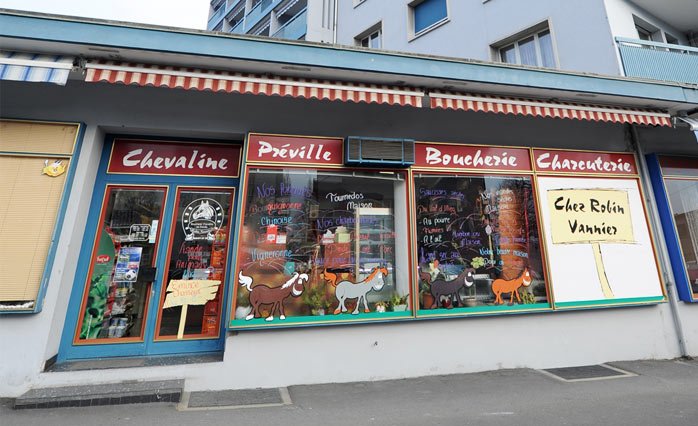
We lived in Switzerland for about 6 months back in the 80s. In Boudry, a small suburb of Neuchâtel, there was a boucherie chevaline (horse butcher) just down the street. I wish I had gotten a picture of it, but you can see some lovely ones at the website of Boucherie chevaline de Préville in France.

boucherie

My kids had some when we visited friends, and they enjoyed it, if I recall correctly what they said. I’ve had horsemeat, and find it sweeter and more savory than beef, but not as gamy as venison.

Here in the USA, horses were so much a part of our history – especially with regards to the colonization of the West – that eating them was virtually taboo, and in the eyes of many remains so today. From an article at Slate:

Why don’t Americans eat horse?

Because we love our beasts of burden. As with many food taboos, there’s no settled explanation for why most Americans are perfectly willing to eat cows, pigs, and chickens but turn their noses up at horse. Horse-eating, or hippophagy, became popular in Europe in the 19th century, when famines caused several governments to license horse butcheries. Today, horse meat is most widely available in France, Belgium, and Sweden, where it outsells mutton and lamb combined. While Americans have occasionally consumed their equine friends during times of scarcity, the practice just didn’t catch on. It may be that so many Americans forged intimate relationships with horses during our founding and expansion that eating the creature seemed morally wrong by the time of the nation’s major food shortages of the 20th century.

I noted with interest that many articles like this one that conjure up images of horror regarding the last hours of your daughter’s beloved Blossom are written by folks who would think nothing of trotting down to their local Piggly-Wiggly for a nice T-bone steak.

That said, there are articles that take the other side of the debate, such as this one at Philly Mag, or one at Business Insider which points out there’s really no good reason not to eat Blossom.

If horse meat ever shows up at my grocery store, I’ll probably buy it on occasion in the same way we stock up on lamb when it goes on sale. For me, meat is meat. Although the description in the extract above about whale meat is enough to put me off trying it, even absent the ecological considerations.

The Old Wolf has spoken.
To lose weight, take these drops (oh, and eat a 1200 calorie diet…)

homeopathy-debunked-because-its-just-water

It’s not good medicine for a representative of one nutritional product to bash those who rep for another. In my world of ethics, it’s just not done. As a result, I won’t mention any product names in this post, but I want to make a general comment about the way many weight-loss products are advertised and hyped.

Below you’ll find an example, using a homeopathic product as the teacher in the moment, which claims to flush fat and toxins out of your body.

The product concerned contains a panoply of things like Nux Vomica, Ignatia Amara, and about 8 others at 6x and 12x dilutions; the instructions call for placing 10-15 drops under the tongue three times a day.

Oh, yes… and also to eat a 125o-calorie diet while using the products (which cost $150.00 for a bottle of each).

The science behind homeopathic dilutions guarantees that at dilutions of 6X and 12X, there is virtually *no* active ingredient whatsoever in this product – no molecules are left. The physics of Avogadro’s number is incontrovertible.

If you consider the instructions for use of this product, and completely eliminate any reference to the product being referenced, any patient who faithfully complies with these guidelines will have success with weight loss.

Given the average caloric intake of 2,000 KCal for a female, a 1250 calorie diet will result in consistent weight loss, especially when combined with water intake and regular exercise. This weight loss will occur whether or not the patient

* takes homeopathic drops
* sings an aria from “Aida”
* stands on her head and spits nickels, or
* eats a spoonful of portland cement with each meal.

If you are a person of science and reason, you owe it to yourself to take a hard look at the scientific reality of what is going on with homeopathic or other similar weight-loss products, instead of being dazzled by all the marketing weasel words.

The Old Wolf has spoken.
 

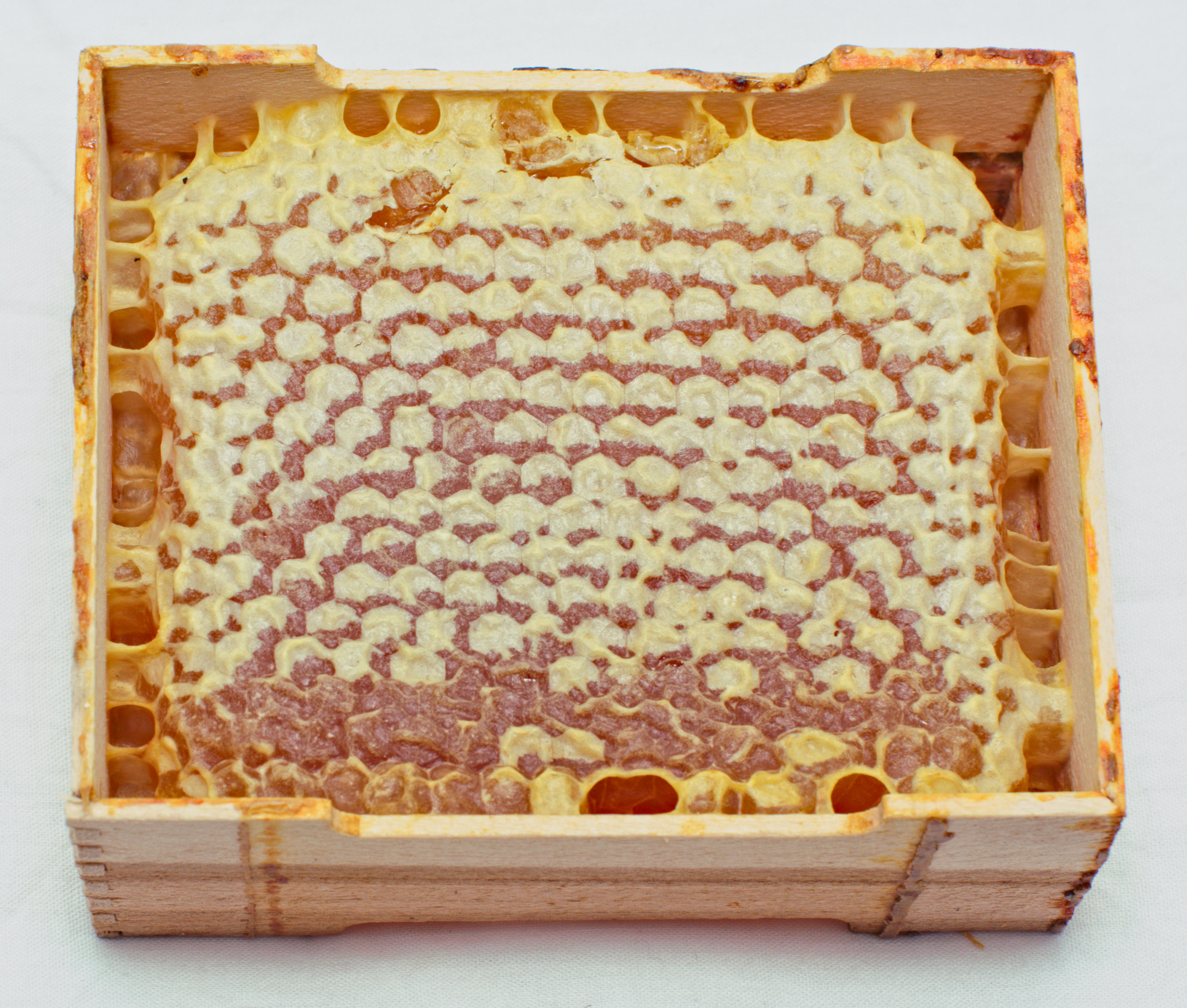
“Honey from the bee-bee.”

When I was a kid in New York, living in the Germantown area of upper Lexington Avenue, we had a lot of wonderful stores in the neighborhood. There was a German deli across the street, Jewish delicatessens, and many others. On occasion my mother would bring home a little wooden box filled with comb honey:

Сотовый_мёд

… and that’s what we called it, because I was around six or so, and it seemed an apt description. Not from the store, not in a bottle, but right from the beehive. And what a treat it was.

I haven’t had it for decades, and recently I started looking. Places like Whole Foods and Sprouts claim to carry it at certain times of the year, but I’ve never seen it there. So I started looking online. You can find it, but by the time you add shipping prices, it becomes too extravagant an indulgence.

Enter the local farmer’s market:

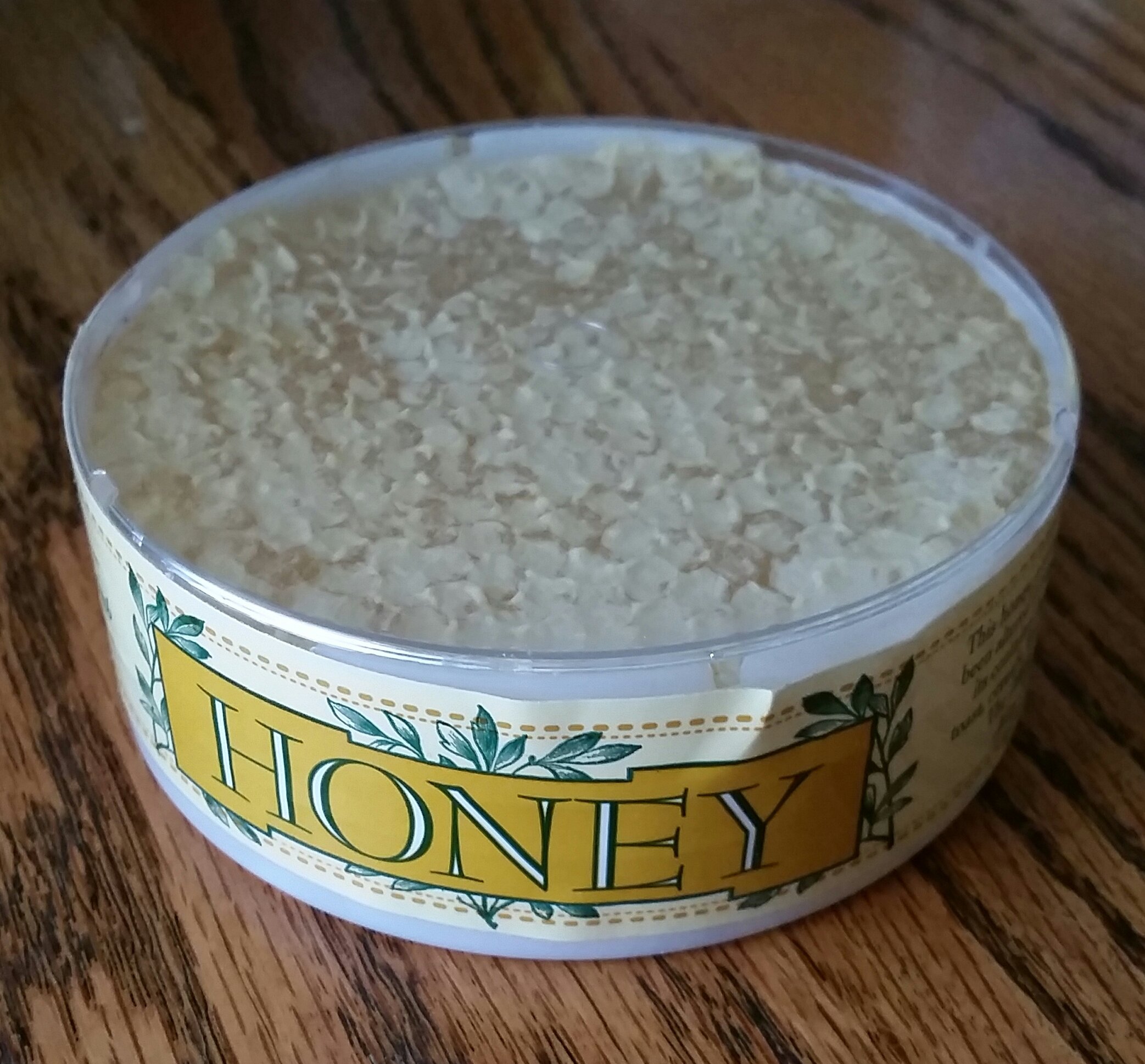
Honey

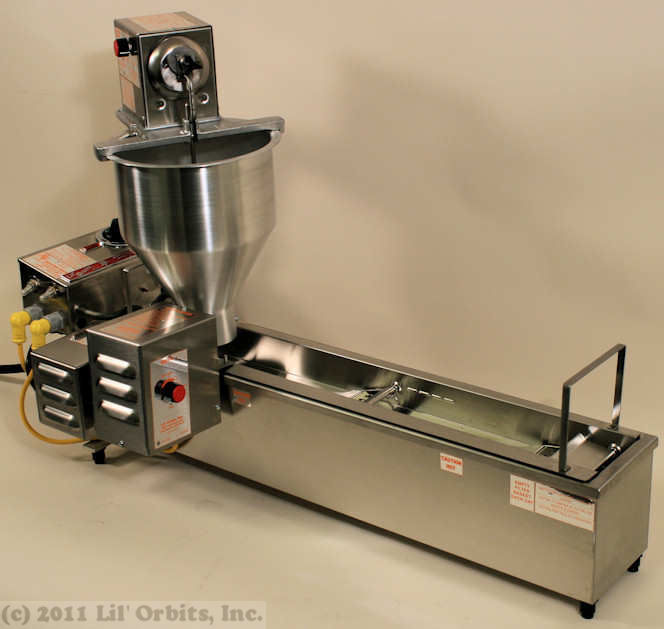
Got some today, along with some other yummy breads and berries and vegetables and a tamale for lunch and mini-doughnuts fried right in front of us in the most wonderful automatic doughnut maker that made me think of Homer Price and his grand adventures, courtesy of Robert McCluskey:

lil-orbits-ss1200-automatic-mini-donut-machine

4790320193_65758c8e4a_z


The honey was just as good as I always remembered it, and the wax still got stuck in my teeth. Hooray for farmer’s markets!

The Old Wolf has spoken.
Drool

Drool

Gluten Sensitivity? Only if you *really* have Celiac disease.

IMG_1625a

I have reblogged this article from Business Insider for the benefit of those who can’t see the article with NoScript. Apparently this page embeds 16 tons worth of trackers and scripts. Note: There are more links in the original article which are worth following; I have included only two.

16Tons

Researchers Who Provided Key Evidence For Gluten Sensitivity Have Now Thoroughly Shown That It Doesn’t Exist

by Jennifer Welsh

In one of the best examples of science working, a researcher who provided key evidence of (non-celiac disease) gluten sensitivity recently published follow-up papers that show the opposite.

The first follow-up paper came out last year in the journal Gastroenterology. Here’s the backstory that makes us cheer:

The study was a follow up on a 2011 experiment in the lab of Peter Gibson at Monash University. The scientifically sound — but small — study found that gluten-containing diets can cause gastrointestinal distress in people without celiac disease, a well-known autoimmune disorder triggered by gluten.

They called this non-celiac gluten sensitivity.

Gluten is a protein composite found in wheat, barley, and other grains. It gives bread its chewiness and is often used as a meat substitute. If you’ve ever had “wheat meat,” seitan, or mock duck at a Thai restaurant, that’s gluten.

Gluten is a big industry: 30% of people want to eat less gluten. Sales of gluten-free products are estimated to hit $15 billion by 2016.

Although experts estimate that only 1% of Americans — about 3 million people — suffer from celiac disease, 18% of adults now buy gluten-free foods.

Since gluten is a protein found in any normal diet, Gibson was unsatisfied with his finding. He wanted to find out why the gluten seemed to be causing this reaction and if there could be something else going on. He therefore went to a scientifically rigorous extreme for his next experiment, a level not usually expected in nutrition studies.

For a follow-up paper, 37 self-identified gluten-sensitive patients were tested. According toReal Clear Science’s Newton Blog, here’s how the experiment went:

Subjects would be provided with every single meal for the duration of the trial. Any and all potential dietary triggers for gastrointestinal symptoms would be removed, including lactose (from milk products), certain preservatives like benzoates, propionate, sulfites, and nitrites, and fermentable, poorly absorbed short-chain carbohydrates, also known asFODMAPs. And last, but not least, nine days worth of urine and fecal matter would be collected. With this new study, Gibson wasn’t messing around.

The subjects cycled through high-gluten, low-gluten, and no-gluten (placebo) diets, without knowing which diet plan they were on at any given time. In the end, all of the treatment diets — even the placebo diet — caused pain, bloating, nausea, and gas to a similar degree. It didn’t matter if the diet contained gluten. (Read more about the study.)

“In contrast to our first study … we could find absolutely no specific response to gluten,” Gibson wrote in the paper. A third, larger study published this month has confirmed the findings.

It seems to be a “nocebo” effect — the self-diagnosed gluten sensitive patients expected to feel worse on the study diets, so they did. They were also likely more attentive to their intestinal distress, since they had to monitor it for the study.

On top of that, these other potential dietary triggers — specifically the FODMAPS – could be causing what people have wrongly interpreted as gluten sensitivity. FODMAPS are frequently found in the same foods as gluten. That still doesn’t explain why people in the study negatively reacted to diets that were free of all dietary triggers.

You can go ahead and smell your bread and eat it too. Science. It works.

Bitches. [1]
Note: While Celiac disease is a real and well-known condition, “gluten sensitivity” and eating gluten-free seems to be the latest fad, along with green coffee beans and garcinia cambogia


[1] With thanks to Richard Dawkins

Something Smells Rotten in Denmark… Oh Wait, it’s Danish Pastry

(Cross-posted from Livejournal entry of Oct. 12th, 2010)

♬ The sense of sight
Is what guides us right
When we go out on walks.
The sense of smell’s
The way you tell
That you need to change your socks. ♬
-Animaniacs, “The Senses”

Smell and taste are funny things. As anyone familiar with my Banquet from Hell could tell you, one man’s sweet savour is another woman’s “Jayzus Bejayzus Keep It Away!”

A lot of it’s chemical. How this molecule fits into that olfactory receptor or that taste bud. And how it all works is beyond me, given that some living creatures have noses jillionty-three times more sensitive than ours.

But it’s not all chemical. A lot of it goes on in our minds.

A case in point. One day in several years ago I walked into our bedroom, which we were keeping closed as we try to maintain it cooler than the rest of the house; at that time my mother, go ndéanai Día trocaire uirthi, was living with us, and at 94 she liked a warmer environment. I said to myself, “It smells like cat’s piss in here.” Impossible – while we now have three cats, at the time we had none, and we had been in the home for a month and a half. I racked my brain trying to figure out what was smelling so bad – it was making me ill.

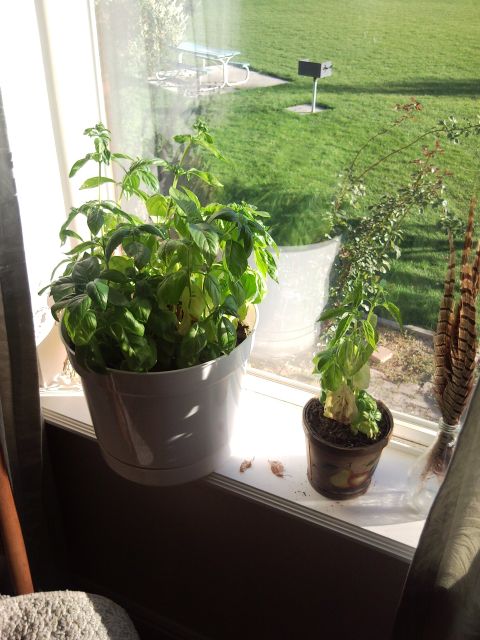
And then it struck me. We had two large basil plants in the windowsill, and they were getting the benefit of full Southern exposure. The room was filled with the odor of basil. And I love basil. And as soon as my mind had identified the odor, it no longer smelled like cat pee, or repulsive in any way. Same molecules. Same smell. Just a different frame of reference, and my room smelled like an herb garden.

158442_1000
Pesto waiting to happen

Would it be possible to re-frame one’s mindset so that evil humours are less offensive? Butyric acid is found in puke, but it’s also found in many cheeses. Nobody appreciates a technicolor yawn in public, but if you happen to be an honest to goodness turophile, the smell of a good, authentic European cheese shop is like unto ambrosia, and the smells are astonishingly familiar.

Mind you, some things are not worth the experiment. One of the last times I drove across the country in the spring, I passed through miles and miles of the most fragrant apple orchards in bloom that I have ever seen, followed by the most pungent – and literally lung-searing – stockyards I have ever had the misfortune to encounter. I don’t think I’d like to hang around and see if I could learn to appreciate that evil miasma.

Still, it was an interesting subject to think about. And now I’m craving a portion of gamalost.

The Old Wolf has spoken.
I wonder which one would be worse?

I have long been an aficionado of odd foods (not too odd, mind you – thus far things like casu marzu and balut have been off my menu), but there are others that I really enjoy, such as haggis, nattōkimchiand others.

I’ve mentioned Hákarl over at my Banquet from Hell – it’s one that I’ve long wanted to try, if only to see if I have a stronger stomach than Gordon Ramsay.

Pronounced “haukatł” – with that peculiar Navajo “L” sound – this Icelandic treat is one that I approach with some trepidation. From the Wikipedia article:

Chef Anthony Bourdain, who has travelled extensively throughout the world sampling local cuisine for his Travel Channel show No Reservations, has described shark þorramatur as “the single worst, most disgusting and terrible tasting thing” he has ever eaten.

Chef Gordon Ramsay, after challenging journalist James May to sample three “delicacies” (Laotian snake whiskey, bull penis, and hákarl), finally vomited after eating hákarl, although May kept his down. May’s only reaction was “You disappoint me, Ramsay.”

On season 2’s Iceland episode of Travel Channel’s Bizarre Foods with Andrew Zimmern, Andrew Zimmern described the smell as reminding him of “some of the most horrific things I’ve ever breathed in my life,” but said the taste was not nearly as bad as the smell. Nonetheless, he did note that hákarl was hardcore food and not for beginners.

There is no shortage of pages on the internet that describe how totally Satanic this preparation of fermented shark actually is.  Yet the Icelanders continue to make it, and eat it.  It may be a plot by the brennivin industry to bolster the need for consumption, but I won’t be satisfied until I can try it for myself. If I ever get the chance to visit Iceland, I’ll return and report. Provided I survive…

Wikipedia article on Hákarl

Now, it appears that there may be a new contender in the “Ogudjegmåkasteopp” category – Korean fermented skate, lovingly titled 홍어 (hong-uh), supposedly from the sound that patrons make when they first smell it.

img_1791

Something about fermenting fish (read: letting it rot) creates a powerful ammonia smell. Last time I really smelled NH₃ was when someone dropped a bottle of it – the pure stuff – in a tiny, enclosed hallway outside a chem lab at my high school. Remember that the household stuff you use to eliminate streaking on windows is strong enough, and it comes in at between 5% and 10% dilution. So yeah, it was like eye-melting-lung-searing. It appears that hong-uh comes really close.

You can read more about this “delicacy” (a plate of it with steamed pork cost the writer about 80 bucks) over at the Korean Food Blog, whence I extracted the above image. Koreans keep shelling out large money to enjoy it, so I’m not sure if it’s something that really grows on you or whether it’s one of those things which, in a drunken stupor, illustrate how big your cojones are and how small your brain is.

At any rate, I’d be willing to try it.

Thus far, though, insects are still off the menu. A buddy of mine in Japan sent me a small bottle of hachi-no-ko (yellowjacket larva) to try, and it’s still sitting on my file cabinet. If I ever work up the guts to try them, I’ll let you know.

The Old Wolf has spoken.


James Gurney: The Soy Bean

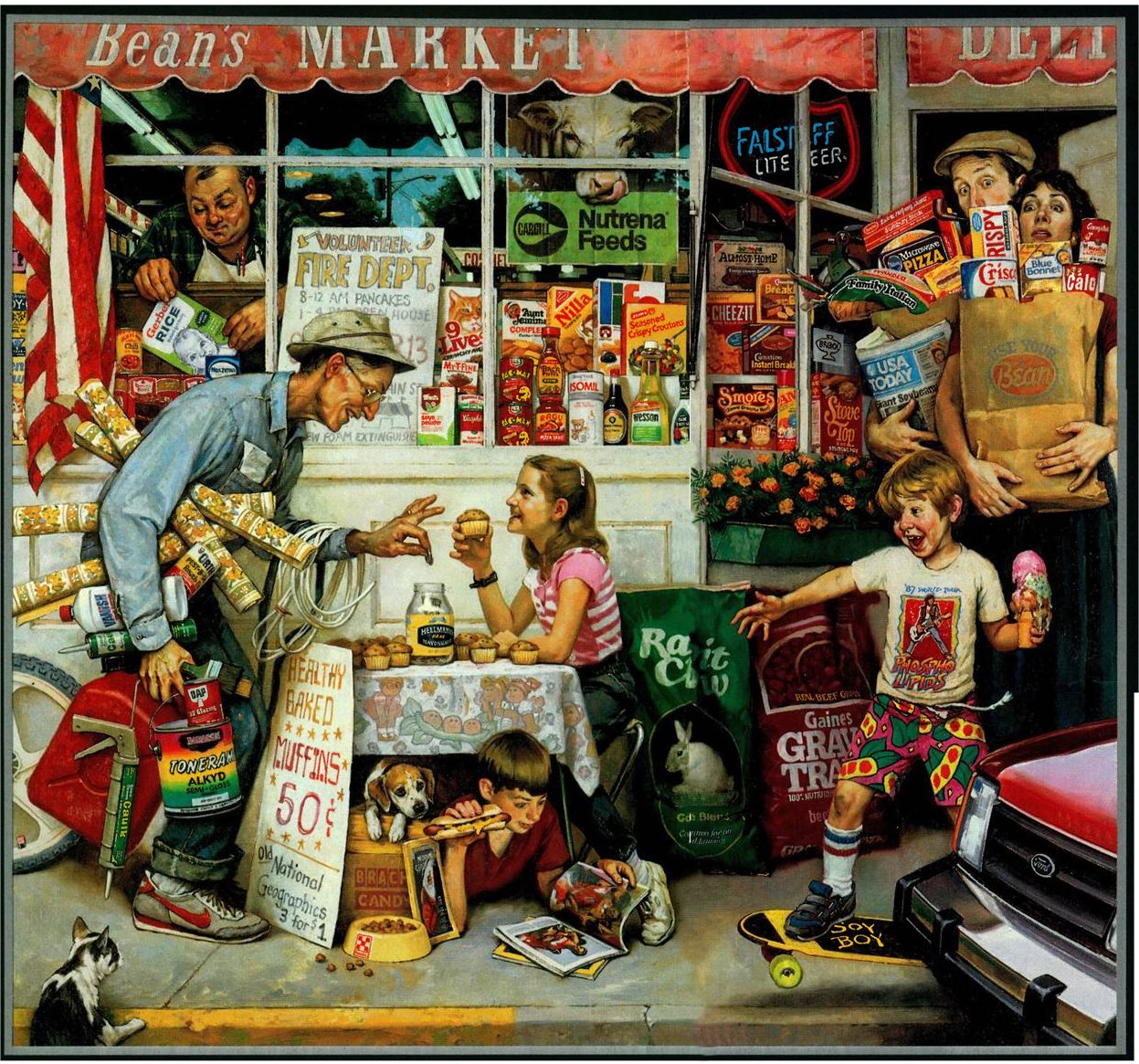
Soy Painting

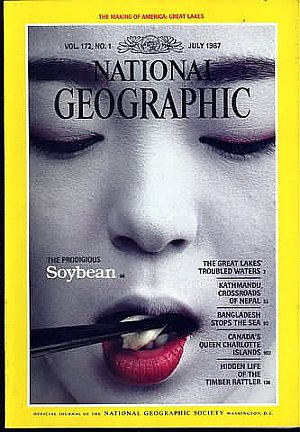
This lovely painting by James Gurney appeared in the July, 1987 edition of the National Geographic, long one of my favorite magazines since early childhood. I’ve had multiple collections of hard copy editions, gathered over the years and then given away when moving (they’re heavy!) and then gathered again. I recently scored a complete set on DVD that included everything up through the 90’s – it still runs on my XP virtual machine – so I was able to get rid of all but the few special editions I wanted to keep.

backissues

Gurney managed to get dozens of things based on soy into his painting; about the only thing I haven’t spotted is nattōThe photo of the painting came with the following caption:

Invisible ingredient in countless products, the soybean plays an amazingly pervasive role in everyday life. Artist James Gurney included more than 60 soybean-related products in this painting, done in the style of Norman Rockwell. He not only called on neighbors and friends for models, but also portrayed himself and his wife emerging from the store, startled by a skateboarding boy carrying a cone of tofu “ice cream”; the boy’s shorts-like the tablecloth-bear a bean-pod motif.

The bags the couple carry, the store-window and sidewalk displays are replete with items that have a soybean connection

Cardboard, glues, and animal and human foods are commonplace soybean products. The sidewalk customer’s caulking, paint, wallpaper, gasoline, and the muffin he buys all owe a debt to soy-as does the bicycle tire.

The beer sign reflects the use of soy meal in the brewing process. The fire extinguisher uses soy protein in its foam. And pre-1981 National Geographics were printed on soy-lecithin-lubricated presses. The car symbolizes an experimental one built with soybean plastic by Henry Ford. The artist’s final tribute: He used soy-based paint.

There’s a lot of conflicting information out there regarding the health benefits or detriments of soy; it’s hard to know who’s right at this point in time, but I’ll keep enjoying my tofu and other fermented soy products.

In the meantime, I thought I’d share this delightful and intriguing work of art.

The Old Wolf has spoken.