An inspiring work from a daughter of a calligrapher for the United States Treasury Department. Louise E. Jefferson is a fascinating figure that was a key part of the Harlem Artist Guild, author and mapmaker. Here her map for the many peoples that made the nation in the 1940’s
Our nation was built on the back of so many people, I find it surprising that a very small group of people are claiming this country as “theirs” and doing all they can to keep others out. This map is intriguing and historically revealing.
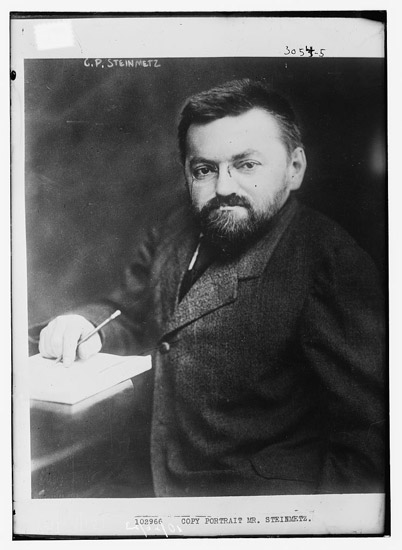
You’ve probably heard the story in various incarnations. An old Navy chief, an engineer, an auto mechanic – you name it – he’s called in to diagnose a problem with some sort of engine or device. He puts a chalk mark on the machine showing where to make the repair, and sends a bill for $10,000, most of which was for knowing where to put the mark.
I always thought this was an urban legend, it appears that there may be some truth in it, if an article at the Smithsonian is to be believed; obviously no source is above scrutiny, but I know that the Smithsonian does its best to be accurate, factual, and scientific in its reporting, hence I thought it was worth sharing.
Charles Proteus Steinmetz circa 1915 – Wikipedia
From the Smithsonian Article:
Before long, the greatest scientific minds of the time were traveling to Schenectady to meet with the prolific “little giant”; anecdotal tales of these meetings are still told in engineering classes today. One appeared on the letters page of Life magazine in 1965, after the magazine had printed a story on Steinmetz. Jack B. Scott wrote in to tell of his father’s encounter with the Wizard of Schenectady at Henry Ford’s River Rouge plant in Dearborn, Michigan.
Ford, whose electrical engineers couldn’t solve some problems they were having with a gigantic generator, called Steinmetz in to the plant. Upon arriving, Steinmetz rejected all assistance and asked only for a notebook, pencil and cot. According to Scott, Steinmetz listened to the generator and scribbled computations on the notepad for two straight days and nights. On the second night, he asked for a ladder, climbed up the generator and made a chalk mark on its side. Then he told Ford’s skeptical engineers to remove a plate at the mark and replace sixteen windings from the field coil. They did, and the generator performed to perfection.
Henry Ford was thrilled until he got an invoice from General Electric in the amount of $10,000. Ford acknowledged Steinmetz’s success but balked at the figure. He asked for an itemized bill.
Steinmetz, Scott wrote, responded personally to Ford’s request with the following:
Making chalk mark on generator $1.
Knowing where to make mark $9,999.
Ford paid the bill.
The story fits well with what is known about Steinmetz, a mercurial genius of engineering. Unless we can get the plans for Professor Waxman’s time machine, there’s no way of verifying the story, but this iteration of it has a ring of truth.
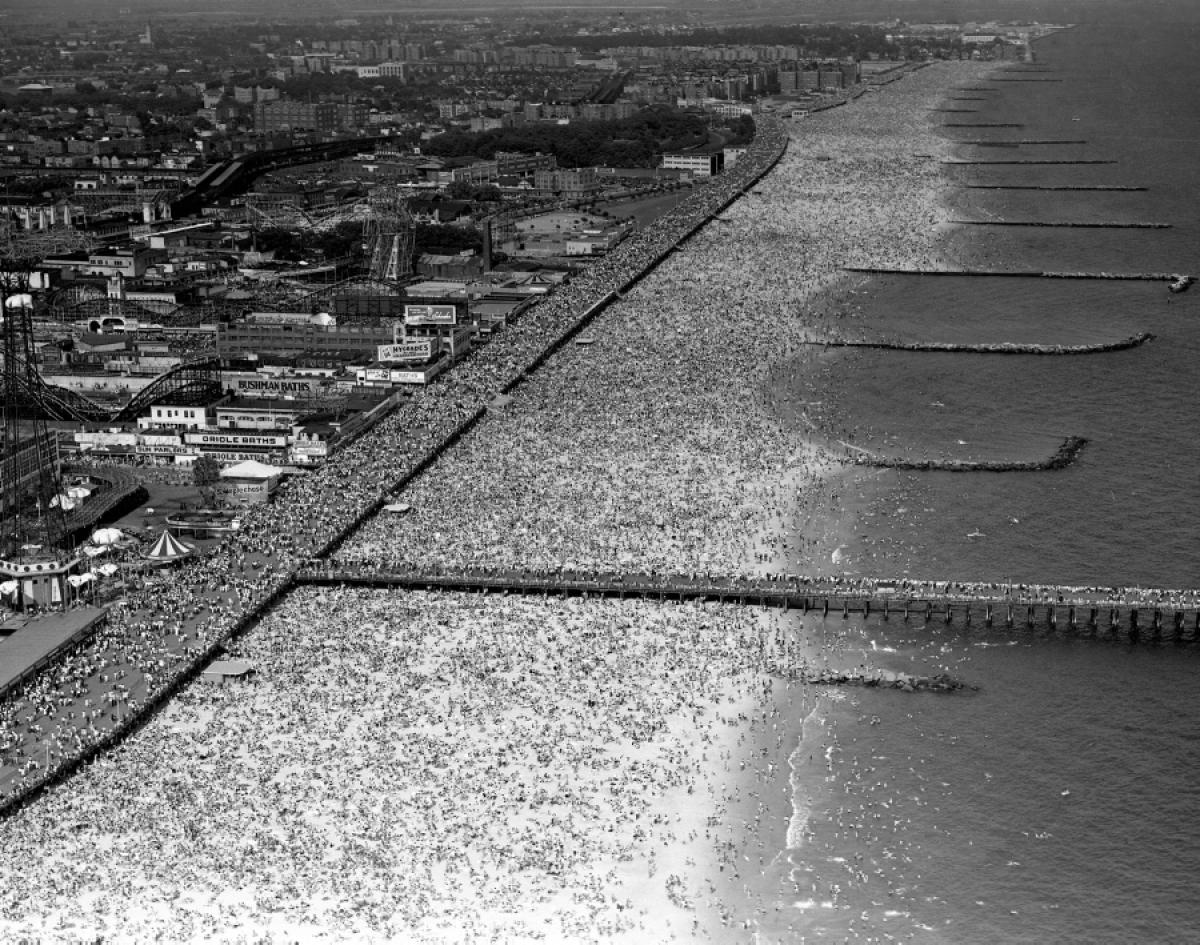
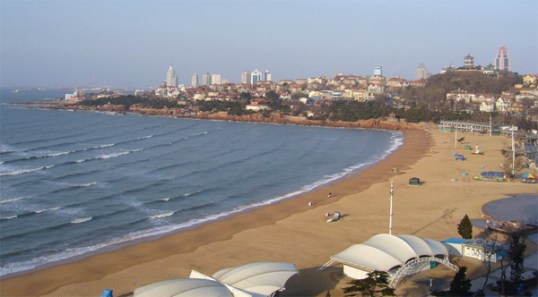
That’s a lot of people. Made me think of similar pictures of crowded beaches in China – the linked ones are of China’s Qingdao Huiquan Beach. The brochure photo probably looks a lot different:
But when it’s hot in the City and you want to get away, that’s the price you have to pay. I grew up in New York in the 50s and I don’t ever remember visiting Coney Island when it was that massively crowded, but this was, after all, a holiday shot.
♬ When the sun is shining brightly And there ain’t no ice cream cones, It ain’t no sin to take off your skin And dance around in your bones. ♬
Seen at /r/HistoryPorn, additional information from Retronaut.
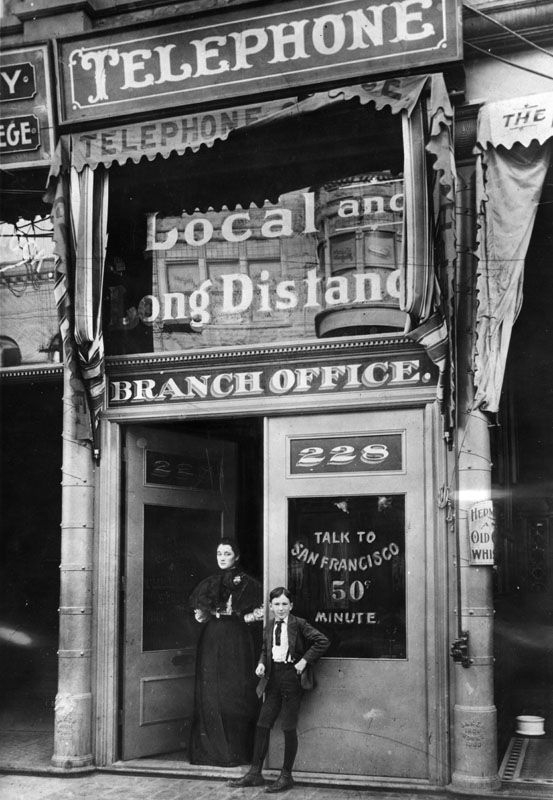
“228 So. Spring St.. The first telephone line between San Francisco and Los Angeles had just been opened, and long distance calls to the Bay City were being stimulated. The young man, Roy E. Jillson, was messenger boy then and was still an employee of the telephone company in 1934.”
Depending on which inflation calculator you use, 50¢ turns out to be hideously expensive for 1899. $13.78 per minute… that would basically mean you didn’t want to call San Francisco unless it were a matter of life or death.
For the curious, here’s what the area looks like right now:
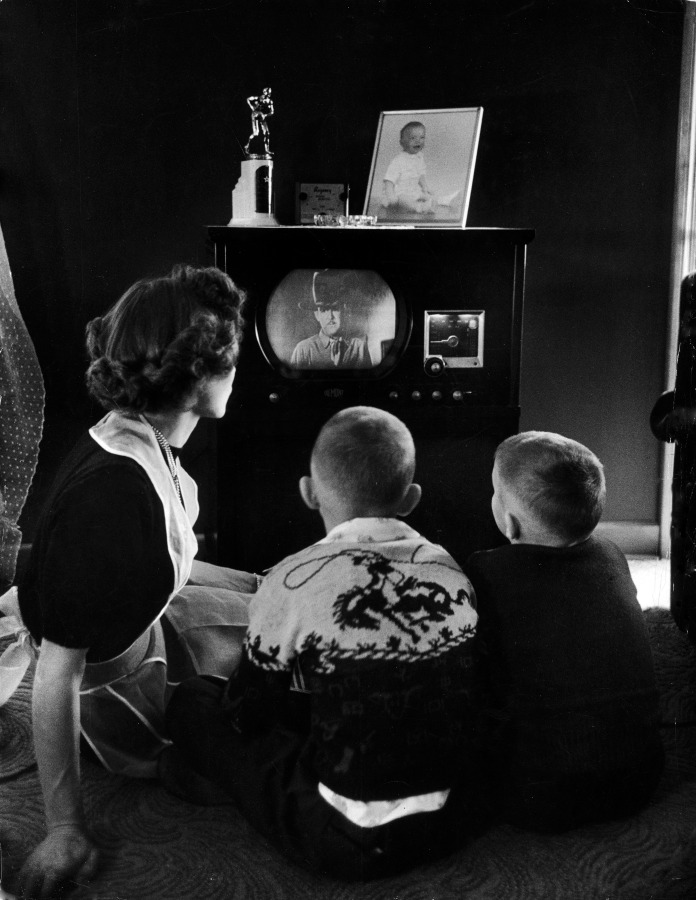
In a previous post, one of the things I reminisced about was television, and that’s what my mother always told me. I guess she didn’t happen to see this picture
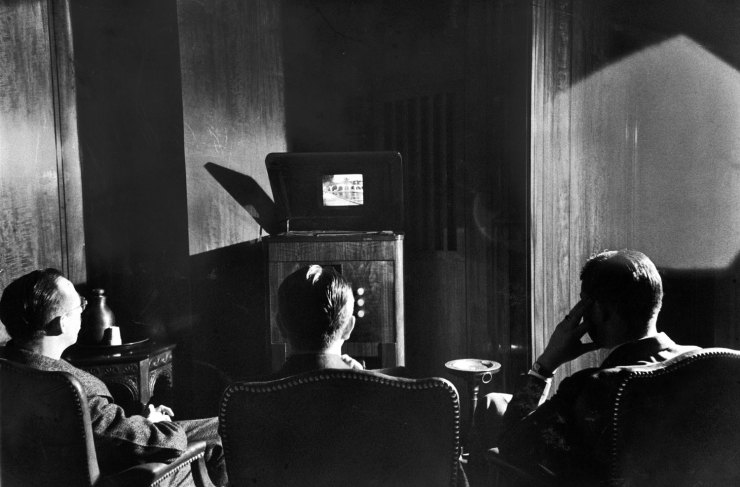
That said, the image is from a wonderful LIFE magazine photo essay entitled “World Television Day: LIFE watches TV.” The entire essay is intriguing; the very first image shows RCA executives watching a prototype television in 1938:
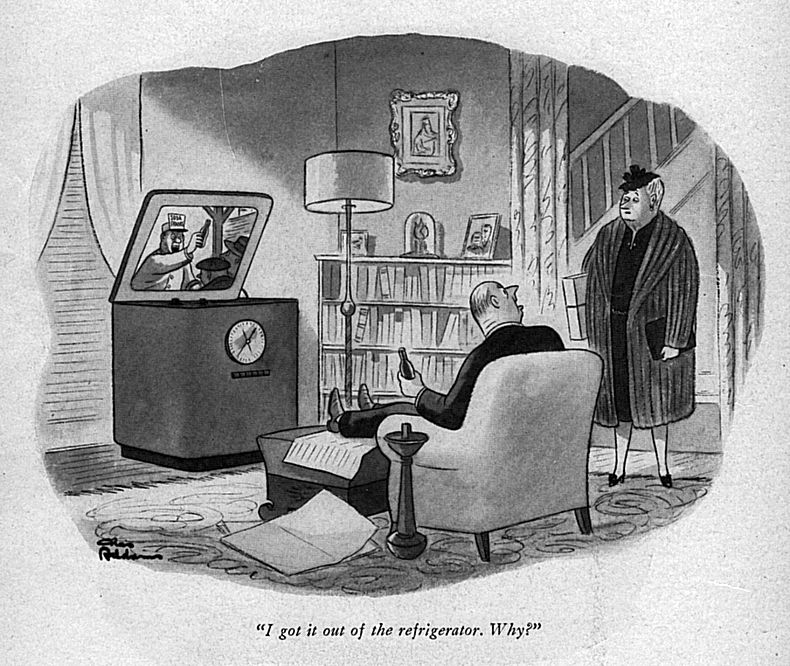
Notice that the image is being reflected in a mirror, the screen being on the top of the set instead of in the front. Charles Addams drew a set like this once, and I always thought it was very strange, never having seen a television like this.
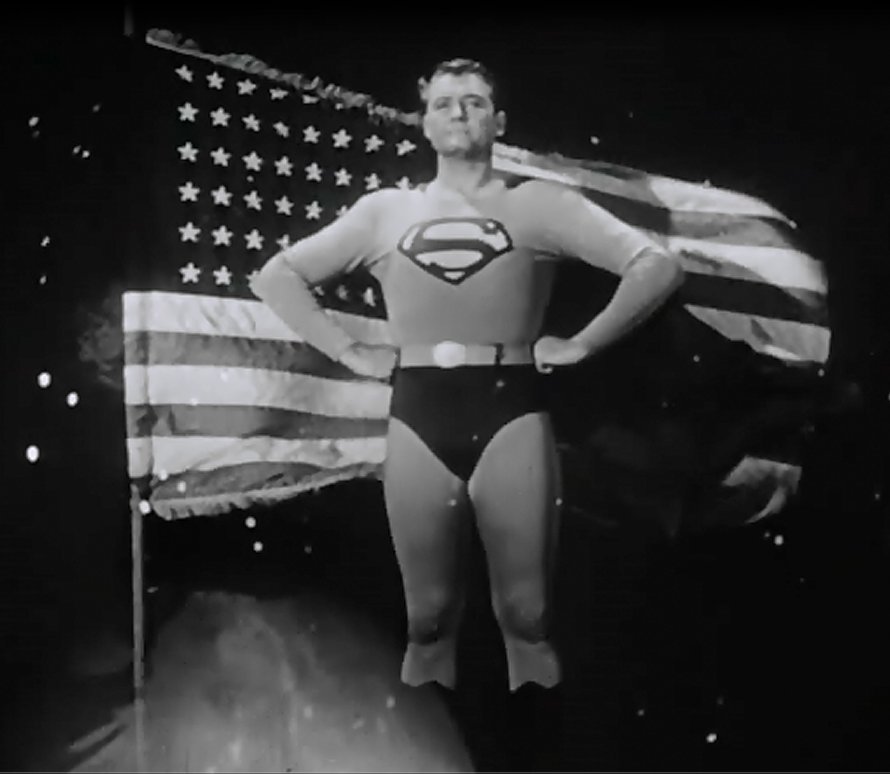
But however it looked, TV was a big part of my life for as long as I can remember. When I was around 4 or 5, I’d watch Superman religiously:
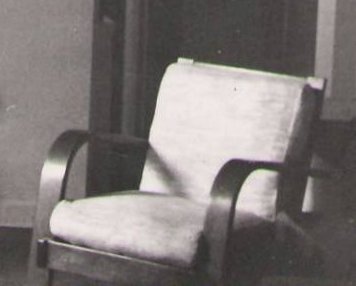
That theme music would come on, and I’d stand on my chair:
With my legs on the arms, in the same position as George Reeves (my mother had even made me a wonderful Superman costume that I would put on for the event) and along with Superman, fight for truth, justice, and the American Way.
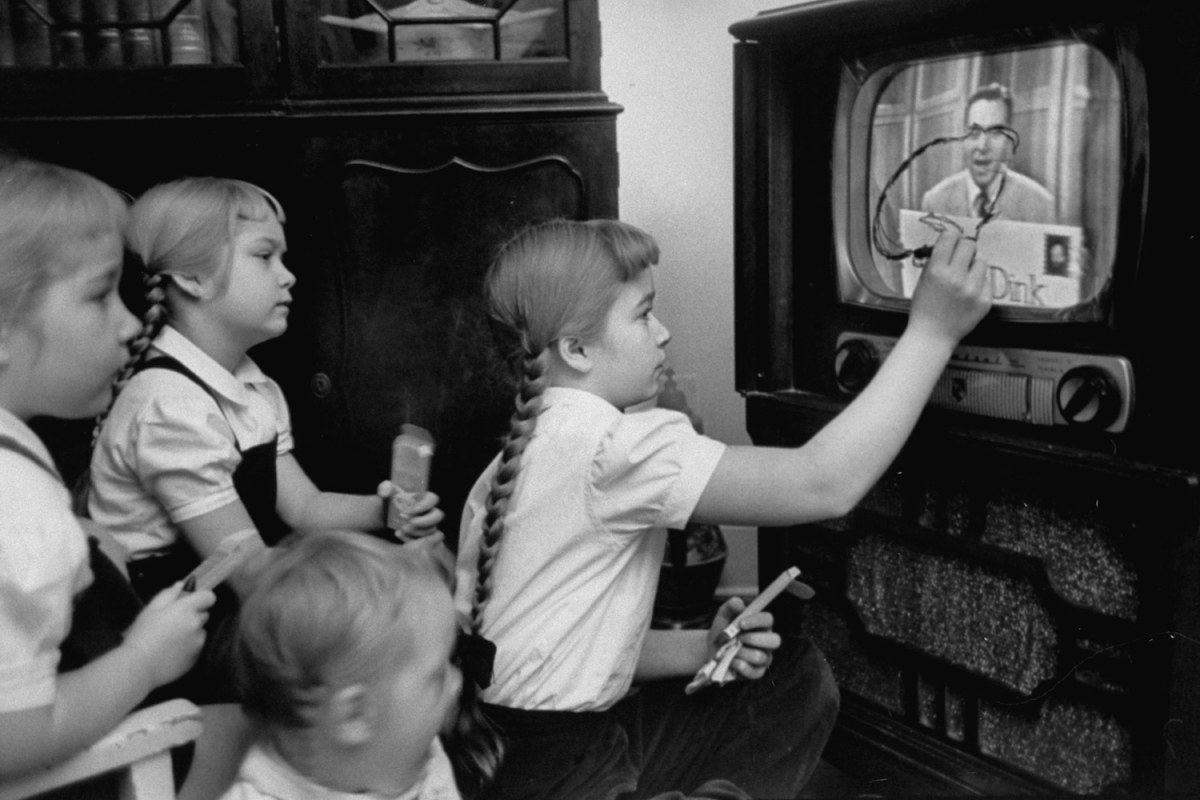
When I wasn’t watching Superman, there were other shows: Popeye cartoons by Max Fleischer, Mighty Mouse, Gerald McBoingBoing, Tom Terrific, just to name a few. And there was Winky Dink, which featured in the LIFE essay:
Six-year-old girls use a “Winky Dink” drawing kit on their home TV screen as they watch the kids’ program, 1953. The show, which aired for four years in the 1950s, has been cited as “the first interactive TV show,” especially in light of its “magic drawing screen” — a piece of plastic that stuck to the TV screen, and on which kids (and, no doubt, some adults) would trace the action on the screen.
I had one of those. I remember using that kit to help Winky Dink save the world on more than one occasion.
As I grew older, mom was gone a lot and I recall fondly watching The Late Show (there were also the Late Late show and the Late Late Late show, which I would sometimes make myself stay up for), as well as the Million Dollar Movie, which often featured monsters and horror, as you can see in this lovely tribute:
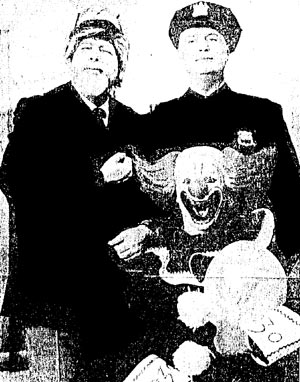
New York television had its own home-grown kids’ shows:
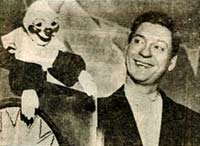
Here we see Captain Allen Swift from the Popeye show (I cried when he was replaced by Captain Jack McCarthy), Officer Joe Bolton from the Three Stooges, and of course, Bozo the Clown.
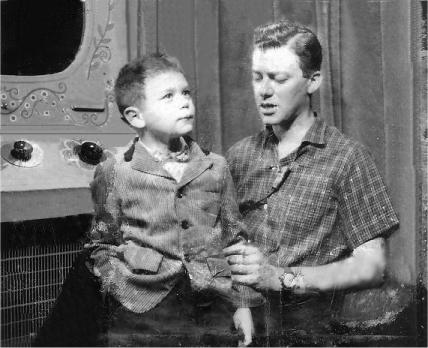
Then there was Sandy Becker – the photo above also appears on the Wikipedia article, and happens to feature yours truly as a guest on the Sandy Becker Show, thanks to some judicious string-pulling by my theatrical mother. Sandy’s show was introduced with Bert Kaempfert’s “That Happy Feeling” – if it sounds strangely similar to “Swingin’ Safari,” that’s no coincidence, since Kaempfert wrote that one too.
Not to be forgotten was Claude Kirschner’s Three Ring Circus, proudly sponsored by Junket Rennet Custard (which I don’t think I ever tried), Cocoa Marsh, a competitor to Bosco (that’s Kirschner doing the voice-over), and Bonomo’s Turkish Taffy, the latter of which has made a miraculous and most welcome comeback. Like many of the TV shows of the era, a lot of it was live and impromptu, and when cartoon time came around, Claude would often not know what was being shown; I recall he’d make something up on the fly like “Clowny’s Friends.”
But one of my very favorites was, of course, Captain Kangaroo – my generation’s “Mr. Rogers.”
“Puffin’ Billy” will forever conjure up images of dear Bob Keeshan in my mind.
This is a rabbit hole I could follow forever, the memories just keep coming back in waves. Rabbit hole? Why, that makes me think of Crusader Rabbit… but I’ve got places to go and a dairy assignment to fulfill, so I’d better wrap this up or I’ll be here all day.
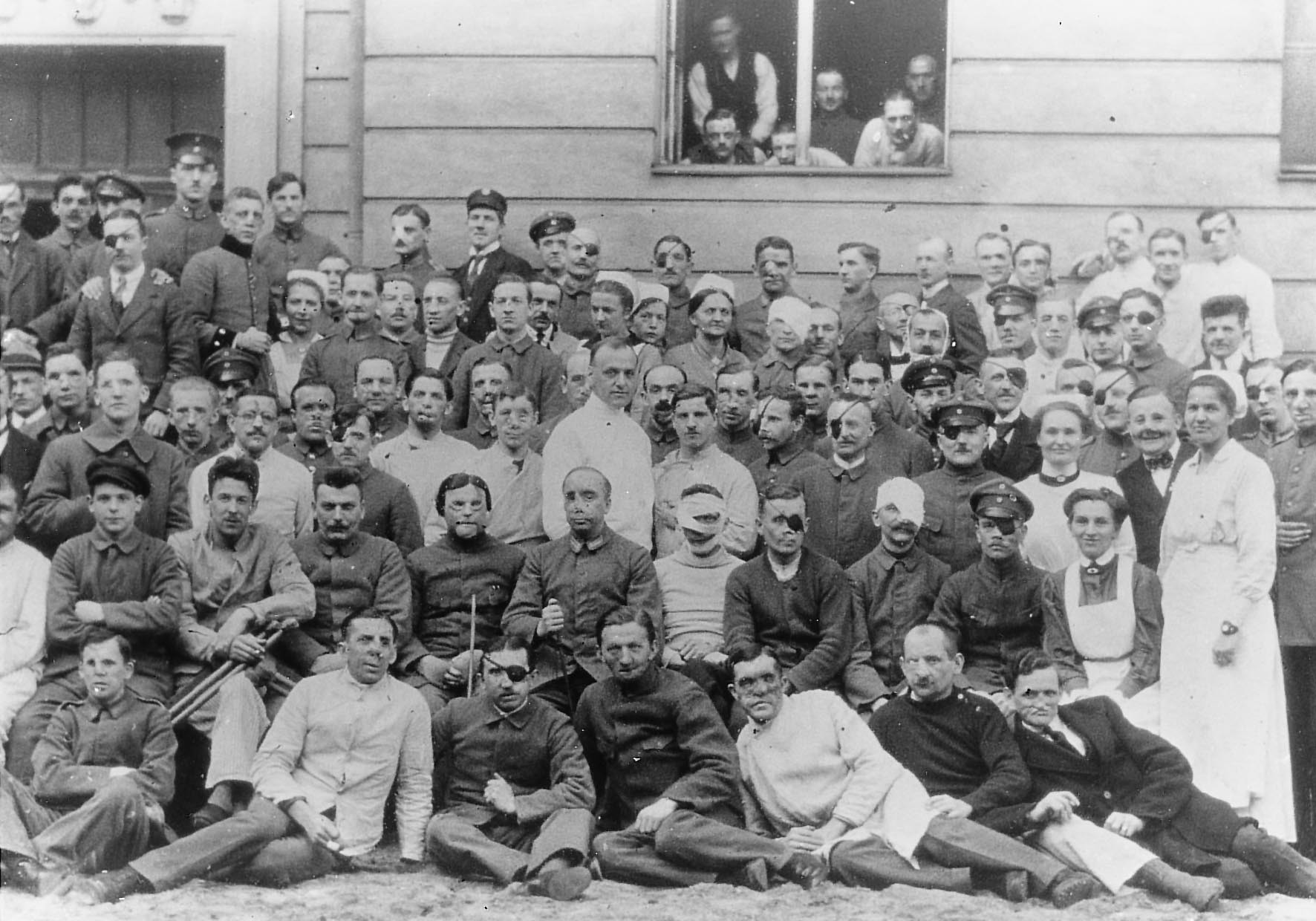
J.F.S. Esser, the renowned Dutch plastic surgeon (with the white coat) surrounded by his patients, all in different stages of reconstruction. Berlin – 1920
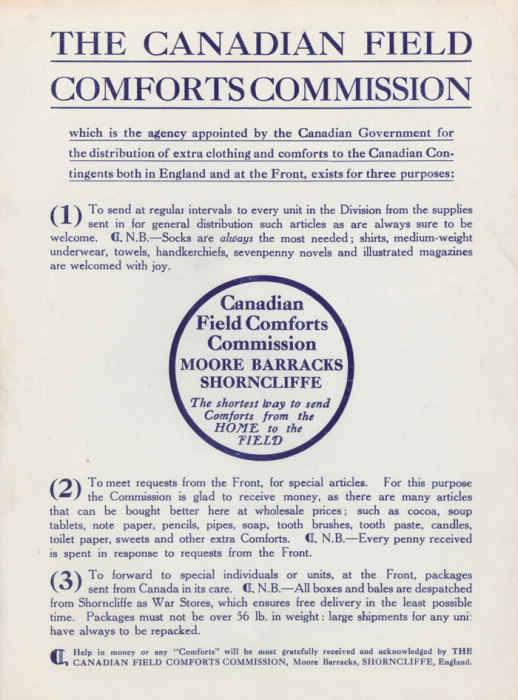
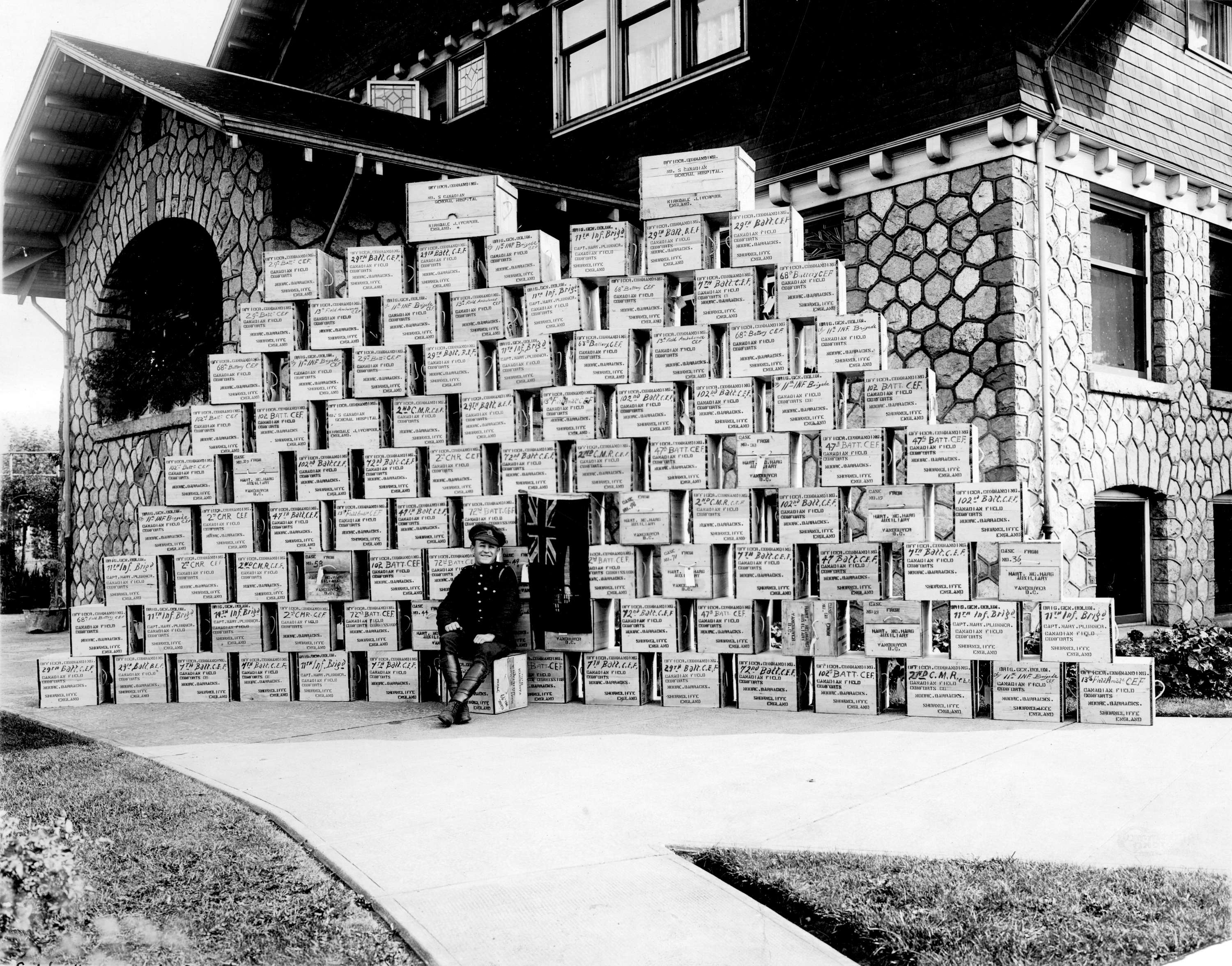
Above: brochure from the Canadian Field Comforts Commission, 1915. These packages were sent to Canadian soldiers on the Western front. Below: A soldier sits in front of crates ready to be sent to soldiers on the front in 1918.
Pompeii was an interesting movie. I can see why the critics trashed it; the acting was not spectacular and there was way too much overblown drama and not much more than a sappy, derivative plot. That said: I lived in Naples for around 18 months, right under the shadow of Vesuvio. I spent many hours wandering the byways of both Pompeii and Herculaneum, trying to imagine what life was like there, and what the catastrophe must have been like. Seeing those ash-cast sculptures that used to be real, live people in the museum is terribly haunting; the CG representation of the eruption and its (possible) effects on the city was chilling in the extreme, because however it looked, it would have been terrifying.
Ash cast of a victim.
Pompeii – Temple plaza
Herculaneum and Vesuvius in the background. Herculaneum was buried more deeply and by hotter ash than Pompeii, hence has a different feel about it. Much has been learned since I was there in the 70s – at the time, it was thought that Herculaneum was buried by hot mud flows rather than ashfall, but this appears not to be the case.
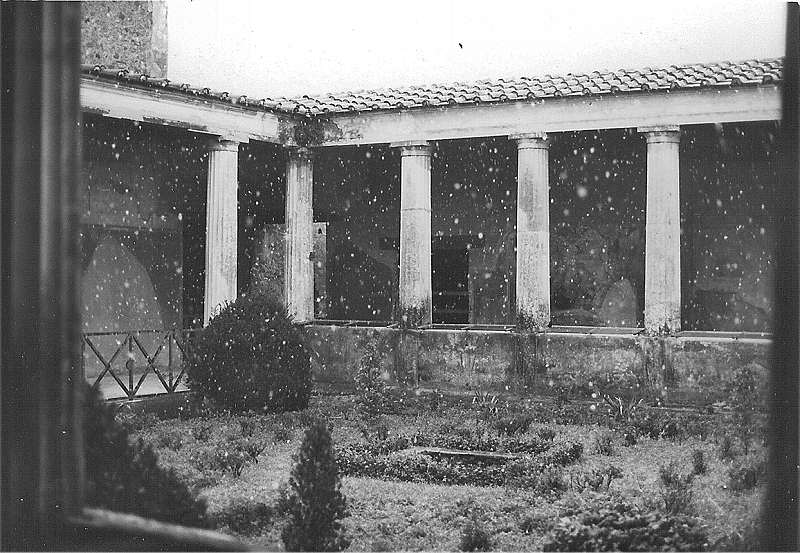
A very rare day of snow in a Pompeiian courtyard. 1970
The ruins of Pompeii with suburbs of modern-day Naples between it and Vesuvius. It is to be noted that if the mountain ever decides to get its rocks off again, the result could be more catastrophic than the eruption of 79 AD.
In the plus column: Jared Harris, with whom I fell in love as David Robert Jones and Moriarty; he’s always a pleasure to watch. I thought the development of the relationship between Milo and Atticus was one of the more satisfying parts of the film; I’d give it 4 stars out of 10 overall.




 Playing in the World Game
