Japanese memorial to an allied casualty

DJnCtHp


Grave marker found by Allied troops on Kiska Island. Erected by members of the occupying Japanese army, who buried an American pilot who had crashed there. The text of the sign reads:

“Sleeping here, a brave air hero who lost youth and happiness for his mother land, July 25 – Nippon Army”

Chester E. Macduffee and his Diving Suit

Picture3


What looks like the packing crate for Robby the Robot is actually a diving suit invented by Chester E. Macduffee, seen here in 1911. The suit weighed 250 kilograms (550 lbs) and was successfully used at a depth of 213 feet in 1915 – because it was not watertight, it was equipped with a water pump that removed water from the leg sections. Very little is known about Macduffee himself; this website provides some additional information and more photos.

The Old Wolf has spoken.

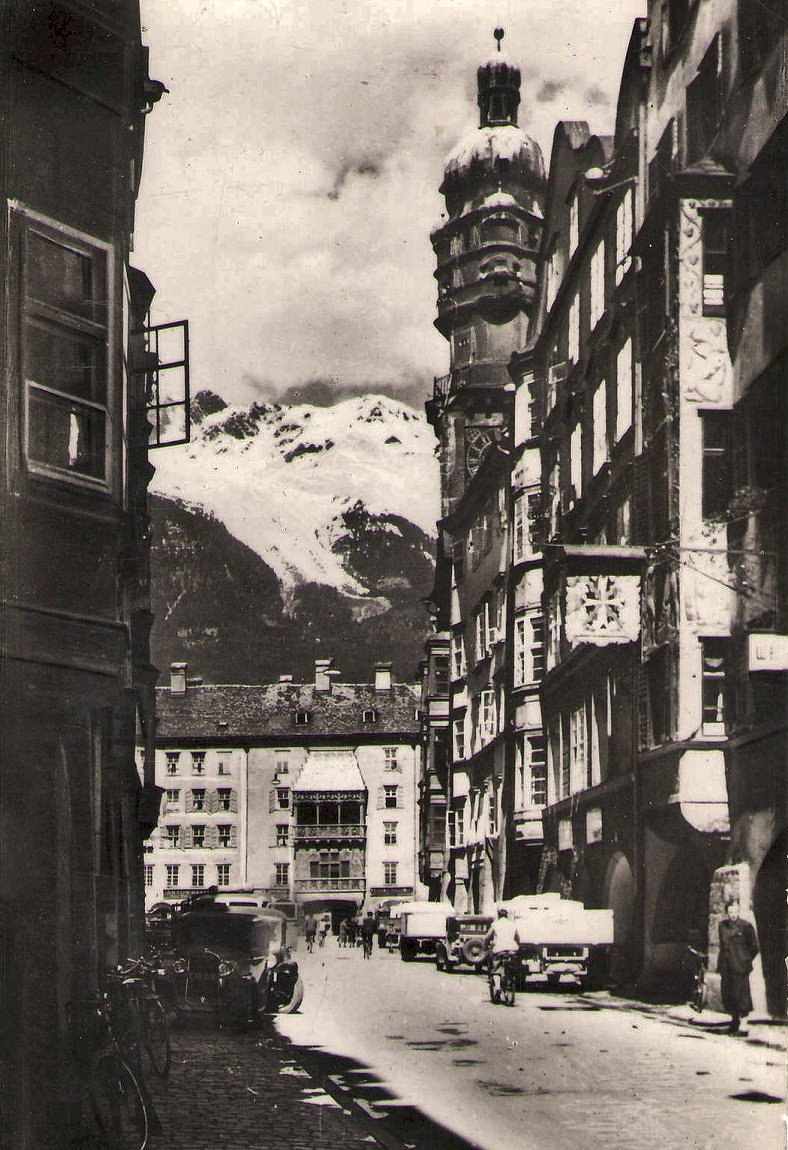
Innsbruck, ca. 1920

Innsbruck


Herzog-Freidrichstraße and the Goldenes Dachl in Innsbruck. Stadtturm visible on the right. I’m dating the photo based on the look of the autos; I could be off by a few years.

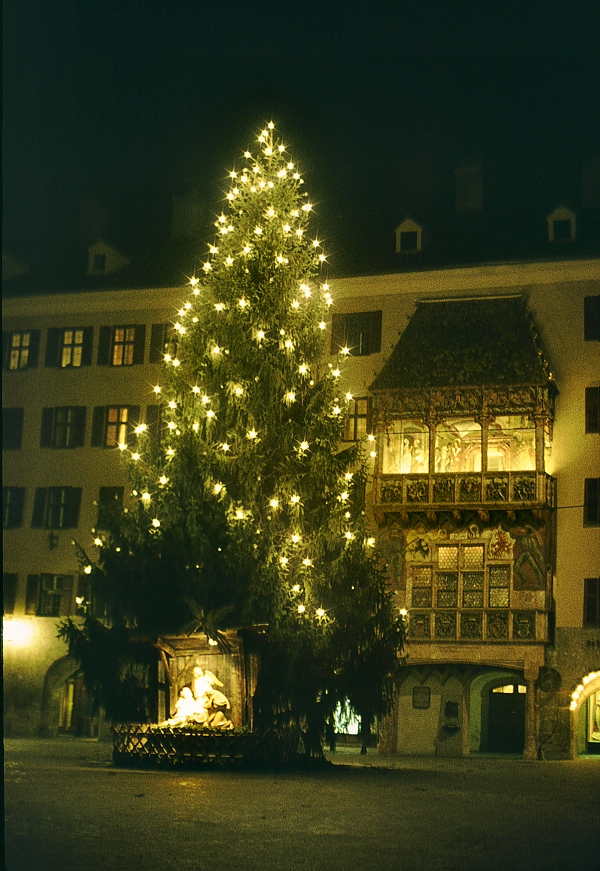
Innsbruck - Goldenes Dachl at Christmas


Goldenes Dachl, Christmas 1976

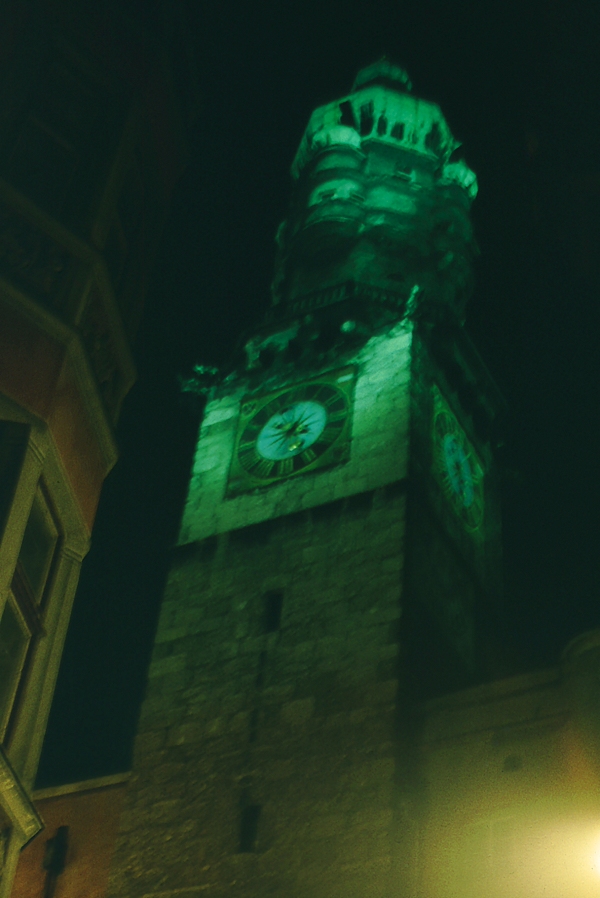
Innsbruck - Altstadt - Clock Tower at Christmas

Illuminated Stadtturm (city tower) at Christmastime in 1976.

The Old Wolf has spoken.


New York, New York! Historic Photos From the NYC Municipal Archives

The New York City Municipal Archives just released a database of over 870,000 photos from its collection of more than 2.2 million images of New York throughout the 20th century. Their subjects include daily life, construction, crime, city business, aerial photographs, and more. Visit the selection below, or see 53 photos. Found at The Atlantic.

s_n01_wpa00834

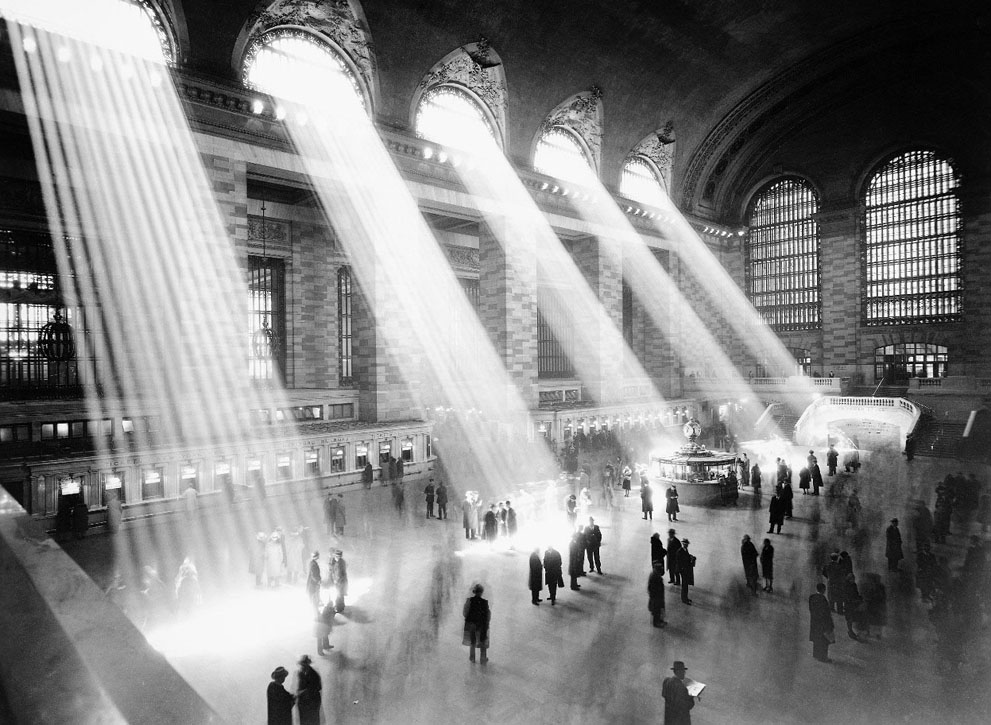
Sunlight floods in through windows in the vaulted main room of New York City’s Grand Central Terminal, illuminating the main concourse, ticket windows and information kiosk. Photo taken ca. 1935-1941. (Courtesy NYC Municipal Archives)
s_n02_dma01739
Aerial view of New York City, looking north, on December 16, 1951. (Courtesy NYC Municipal Archives)
s_n03_bpm05546
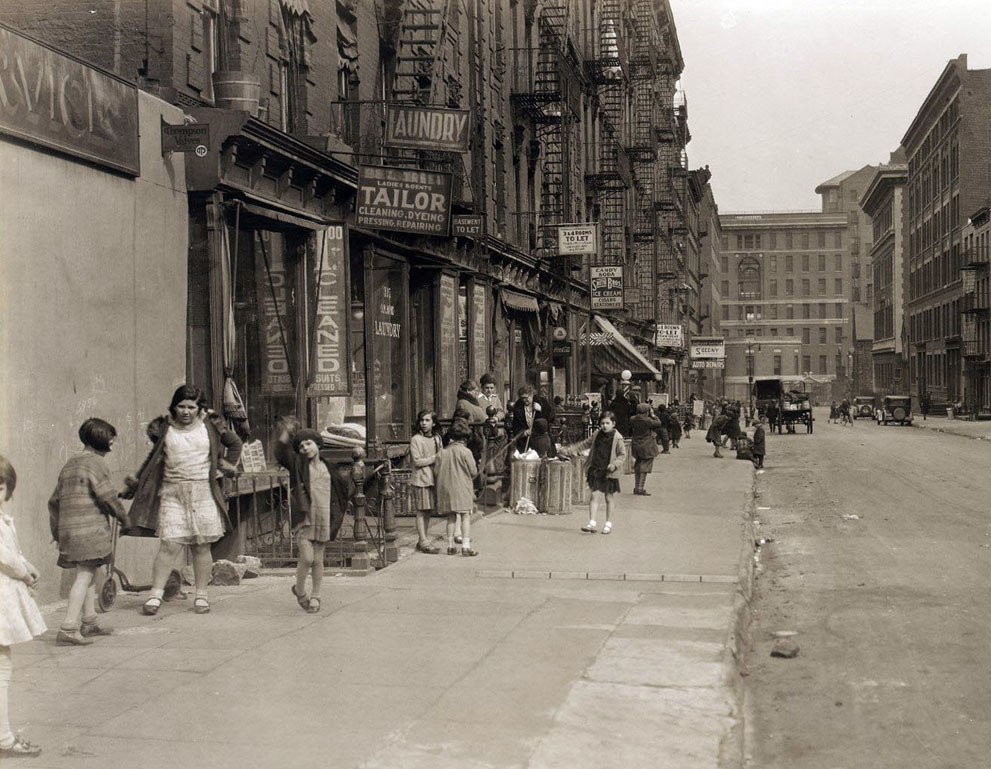
28th Street Looking east from Second Avenue, on April 4, 1931. Google map streetview today here. (Courtesy NYC Municipal Archives)
s_n04_dpw00709
Meeker Avenue Bridge under construction, looking south, showing Brooklyn approach, on June 29, 1939(Joseph Shelderfer/Courtesy NYC Municipal Archives)
s_n05_bps05149
Shadows are cast beneath the Brooklyn Bridge, seen from a stable roof, on May 6, 1918.(Eugene de Salignac/Courtesy NYC Municipal Archives)
s_n06_bps12071
A worker on the Brooklyn Bridge, on November 19, 1928. (Eugene de Salignac/Courtesy NYC Municipal Archives)
s_n07_bpq03110
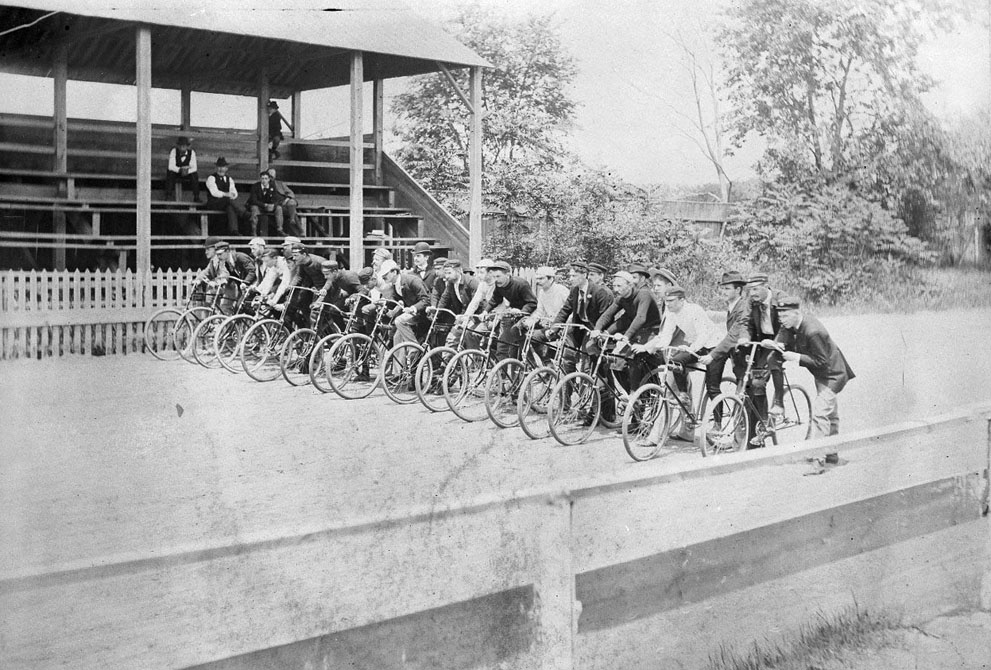
Markus Mercury Wheel Club, Flushing Race Track, bicyclists ready to race in June of 1894. (Courtesy NYC Municipal Archives)
s_n08_ac02526b
Original City Hall subway station, IRT Lexington Avenue Line, in 1904. (Courtesy NYC Municipal Archives)
s_n09_bpb02297
Coney Island looking east from Steeplechase Pier showing Sunday bathers, crowd on beach, on July 30, 1922.(Rutter, Edward E./Courtesy NYC Municipal Archives)
s_n10_dscls019
A two-horse team street cleaner, with sprayer, squeegee, and roller at rear. (Courtesy NYC Municipal Archives)
s_n11_bpsi1002
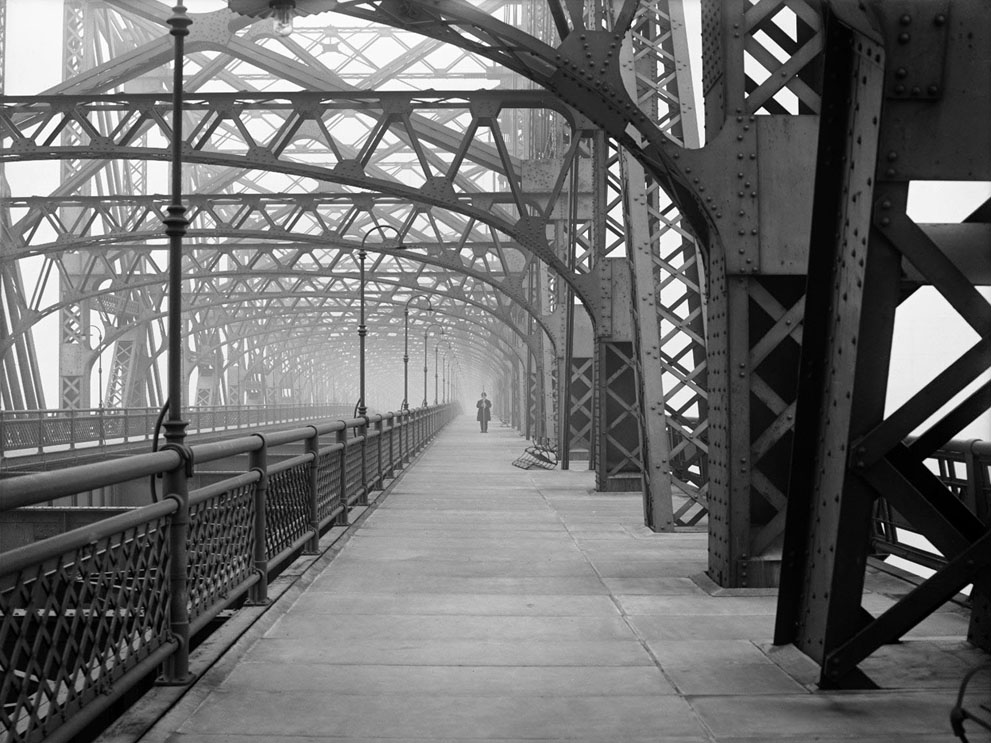
An experimental exposure made on the Queensboro Bridge, on February 9, 1910.(Eugene de Salignac/Courtesy NYC Municipal Archives)
s_n12_wpa00501
Italian vegetable sidewalk stand, on Bleeker Street, near Church of Our Lady of Pompeii, in August of 1937.(Bofinger, E.M./Courtesy NYC Municipal Archives)
s_n13_wpa00647
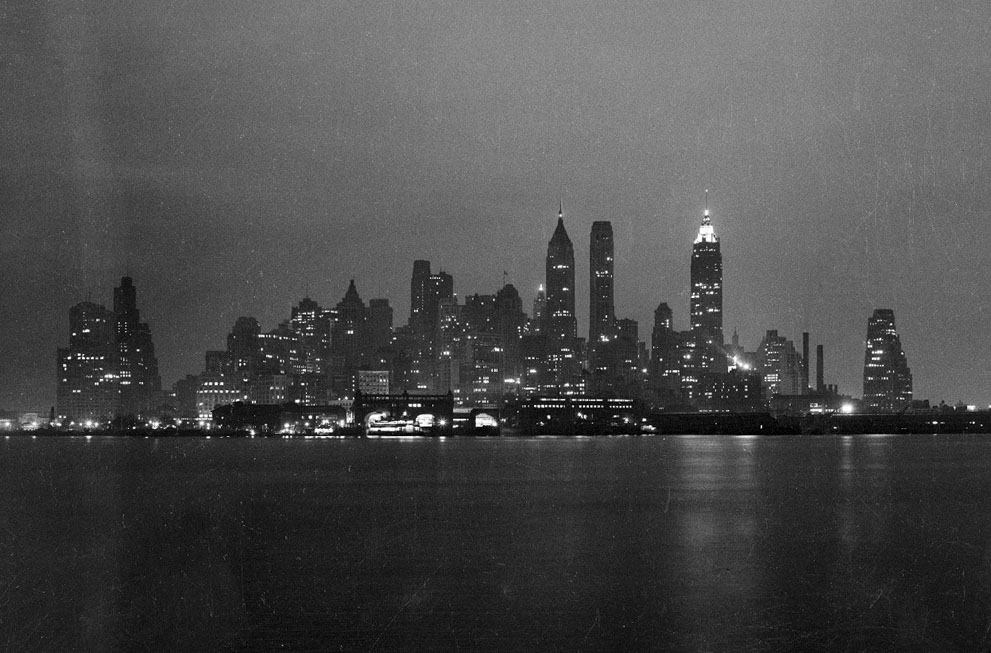
Lower Manhattan skyline at night, seen from either the Staten Island Ferry or Governor’s Island, in February of 1938.(Bofinger, E. M./Courtesy NYC Municipal Archives)
s_n14_mac00269
Hayden Planetarium, American Museum of Natural History, West 81st St, between Columbus Avenue and Central Park West.(Courtesy NYC Municipal Archives)
s_n15_mac01538
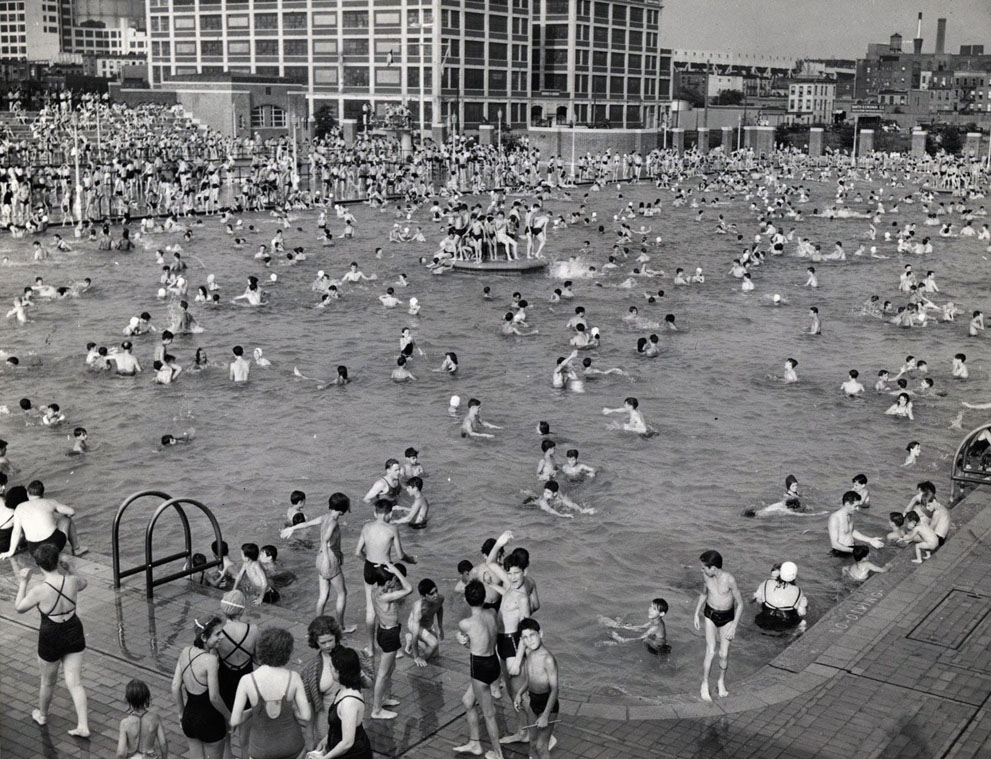
Red Hook Swimming Pool, Clinton, Bay & Henry Streets, Brooklyn. Bathers as far as the eye can see.(Courtesy NYC Municipal Archives)
s_n16_bpsi0444
Queensboro Bridge under construction, on August 8, 1907. (Eugene de Salignac/Courtesy NYC Municipal Archives)
s_n17_bpsi2117
The Queensboro Bridge, showing reconstruction of tracks looking east, on November 22, 1929.(Eugene de Salignac/Courtesy NYC Municipal Archives)
s_n18_bps00997
A one-legged newspaper boy and other “newsies”, on Delancey Street, on December 26, 1906.(Eugene de Salignac/Courtesy NYC Municipal Archives)
s_n19_pde00887
New York Police Department evidence photo, homicide scene. Jos Kellner, 404 East 54th Street, murdered in hallway, on January 7, 1916. (Courtesy NYC Municipal Archives)
s_n20_bpq07376
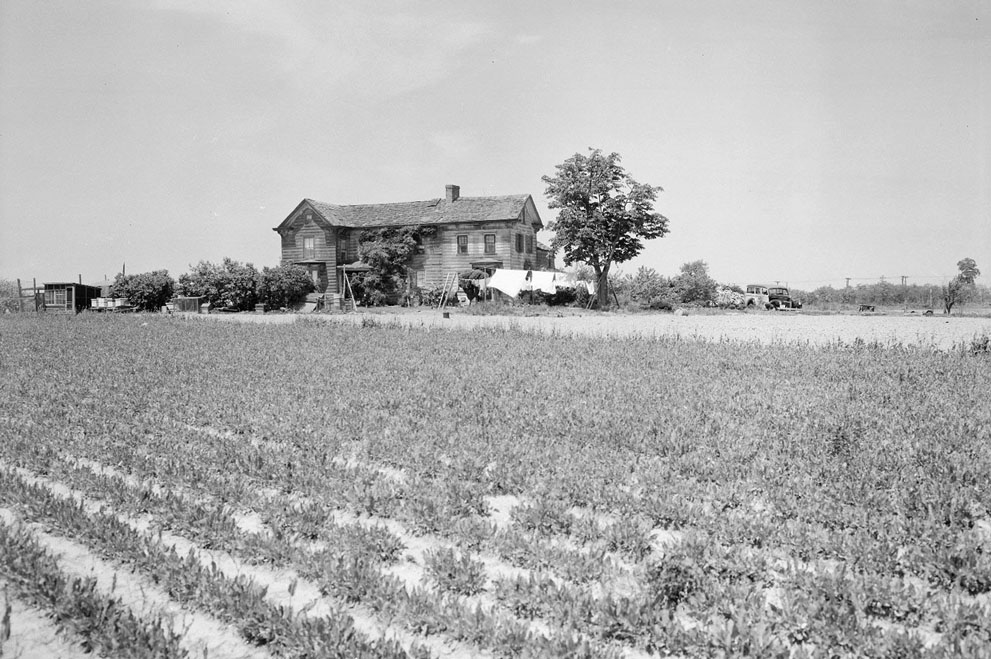
Powell House at 195th Street and 58th Avenue North, Queens, on May 20, 1941 (Courtesy NYC Municipal Archives)
s_n21_wpa00552
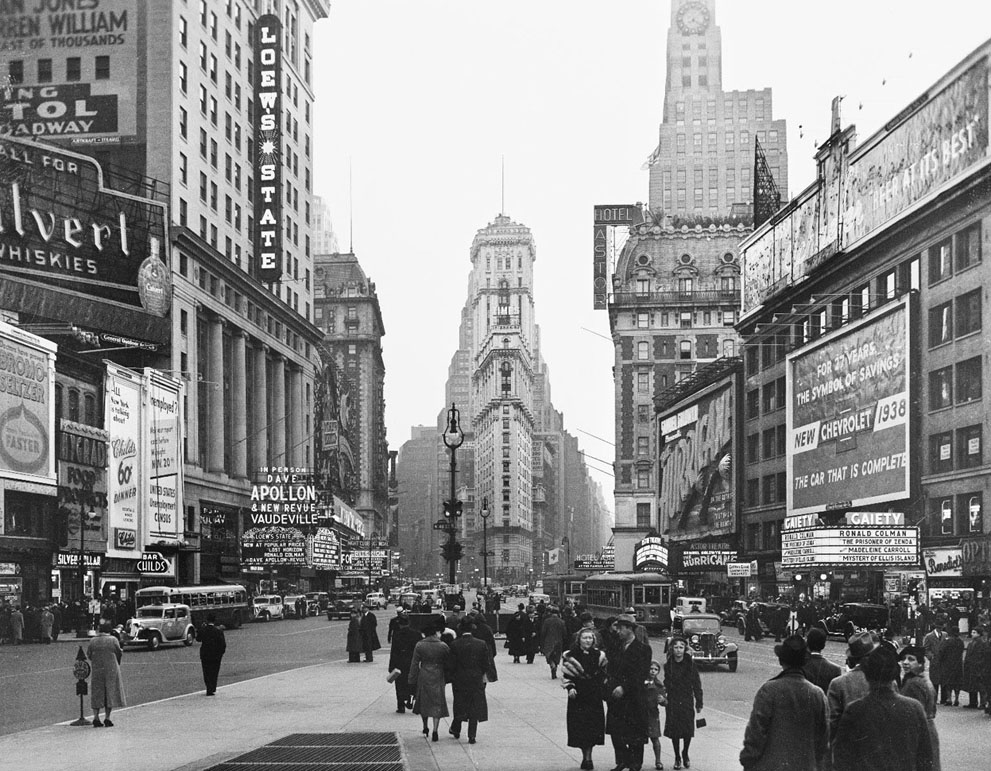
Times Square theaters by day, in New York City. The Times Building, Loew’s Theatre, Hotel Astor, Gaiety Theatre and other landmarks are featured in this January, 1938 photo. (Bofinger, E.M./Courtesy NYC Municipal Archives
The Old Wolf has spoken

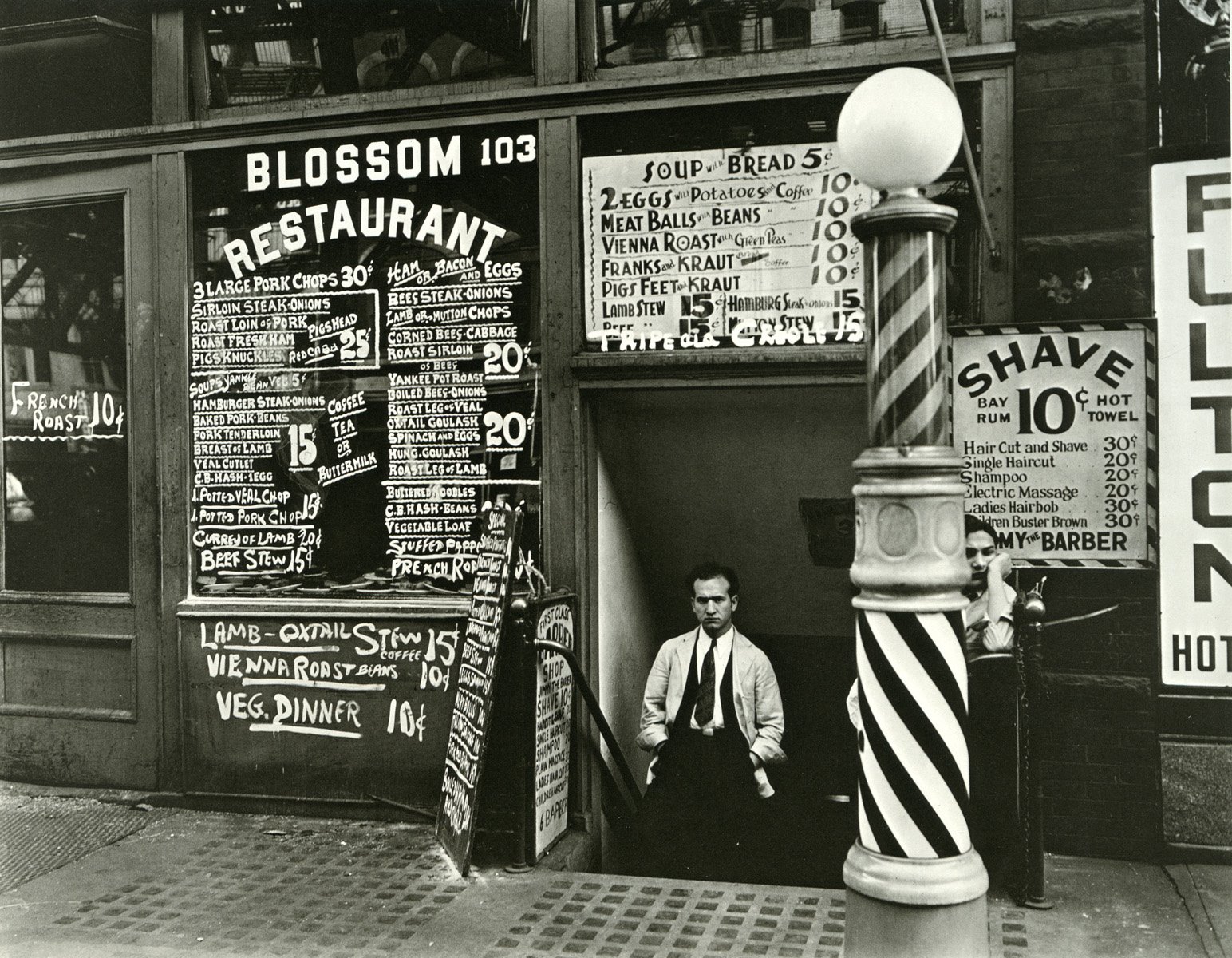
Blossom Restaurant, 1935. The Bowery, New York City

Blossom_Restaurant;_103_Bowery_by_Berenice_Abbott_in_1935


New York City, the Bowery. Photo by Berenice Abbott

Just spend a while looking at those prices. Now, according to the Bureau of Labor Statistics calculator, 30¢ in 1935 would be worth $5.09 today. Where could you get three large pork chops for that price? Certainly not even in my sleepy little town in southern Utah. No, I suspect the BLS has either not factored in the brutality of the depression, or its numbers are somewhat skewed in general.

♫ The Bow’ry, the Bow’ry!
They say such things,
And they do strange things
On the Bow’ry! The Bow’ry!
I’ll never go there anymore! ♫

by Charles H. Hoyt and Percy Gaunt
From the Broadway play A Trip to Chinatown (1891)

The Old Wolf has spoken.

Impractical idea No. 103

456061627_30a64f016c_o

In one of the more iconic images of the early 20th century, a faked photograph shows a blimp mooring at the top of the Empire State Building. The tower was originally designed with such moorings in mind, but the entire idea was a bust from the get-go.
Empire_State_Building_Mooring_Mast_412_426

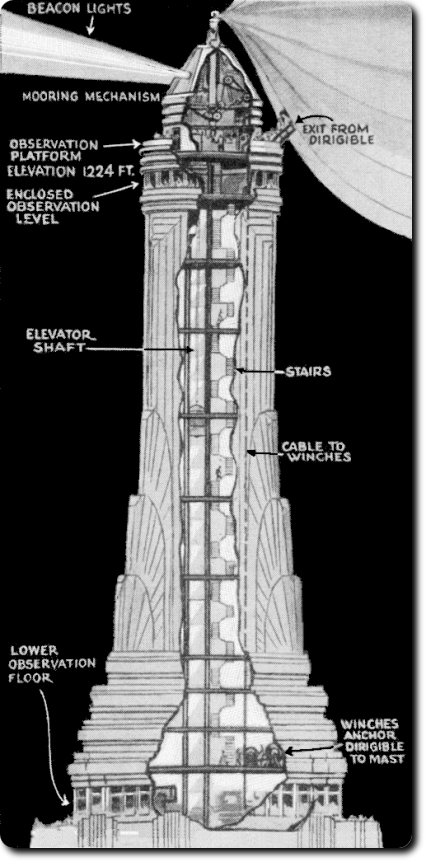
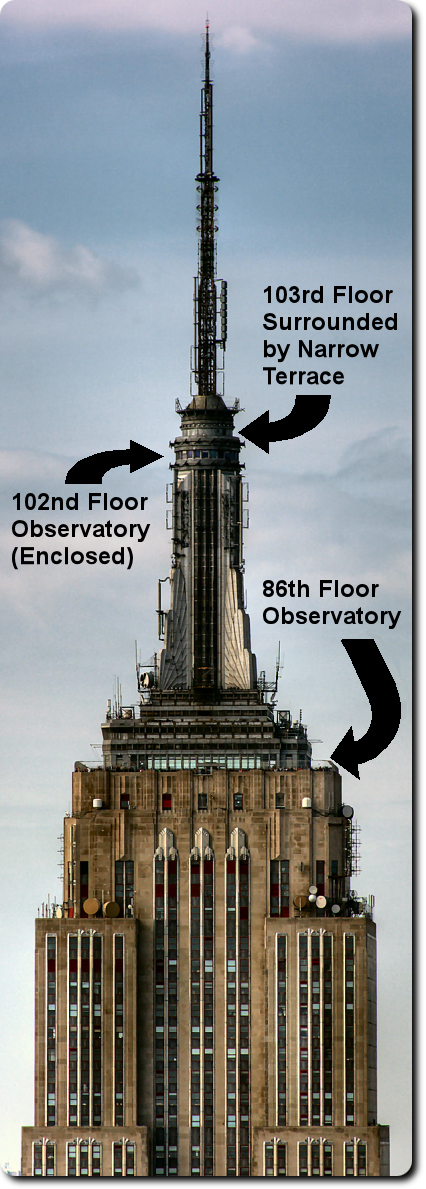
Here’s the schematic showing how passengers would disembark from a transatlantic dirigible, take stairs down from the 103rd floor platform to the 102nd, and then the elevator to a processing station on the 86th floor. never mind that dirigibles had their passenger compartment in the center, and passengers would be required to navigate narrow passages to get to any potential nose exit.
Empire_State_Building_closeup_of_top_412_426

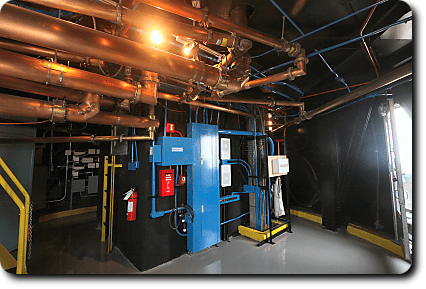
The 103rd floor is largely a mechanical room, but it has a narrow door leading to the outside balcony:
Empire_State_Bldg_103rd_Floor_Interior_02_412_426

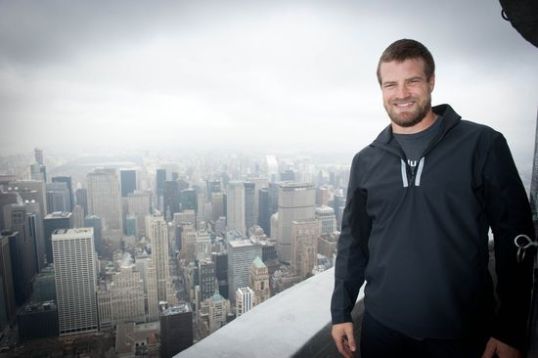
If you’re a dignitary, there’s a chance you can get up there for a photo op – here former Buffalo Bills QB Ryan Fitzpatrick. Notice how low the balcony wall is, which is why the general public is not permitted.
6a00d83451b85a69e2017ee9438ab4970d-550wi

As for why they never went ahead with the dirigible plan?
zr3__losangeles_lakehurst_nosestand

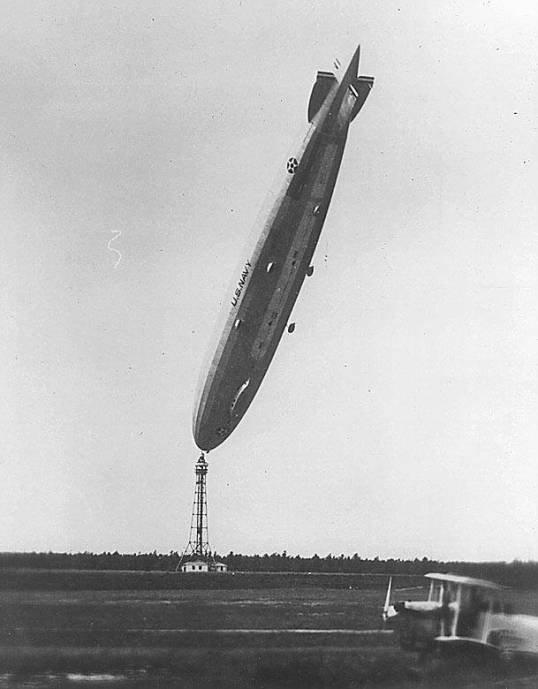
The US Navy, testing its airship the USS Los Angeles (ZR-3), saw it rise to a near-vertical position, after her tail rose out-of-control while she was moored at the high mast at Naval Air Station Lakehurst, New Jersey in 1927.

Airships can only be moored by the nose at such masts, and severe updrafts from the Empire State Building would have whipped any dirigible around like a child’s balloon.

Well, at least they managed it somehow in “Fringe.”
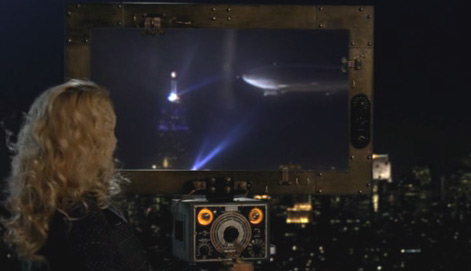
fringe-zeppelins

Showing the alternate universe to the military

The Old Wolf has spoken.

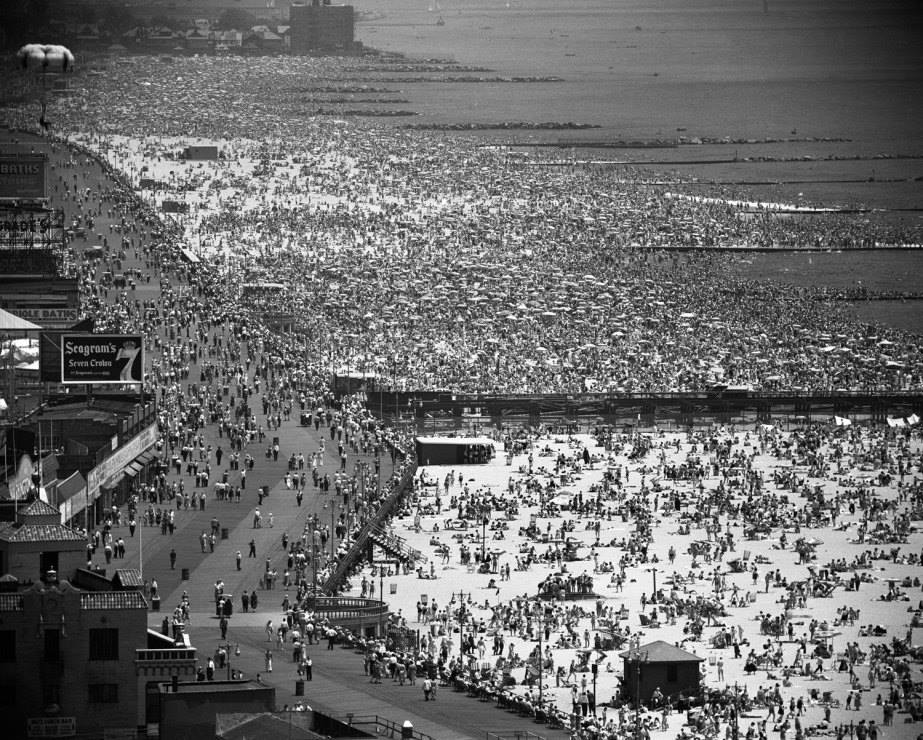
Coney Island, 1949

602366_612277405451774_1519350734_n

A view of the famous boardwalk and beaches shortly before I was born.

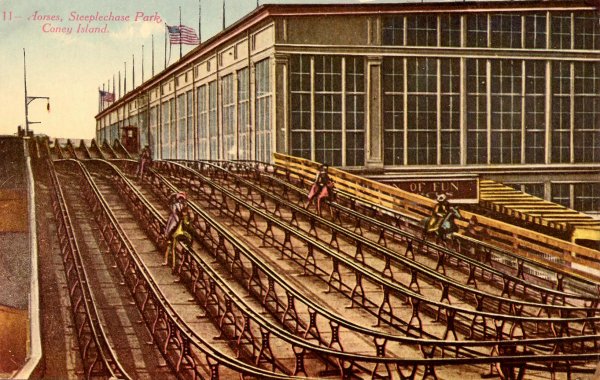
A few years later, I was able to ride this attraction:

stphorses

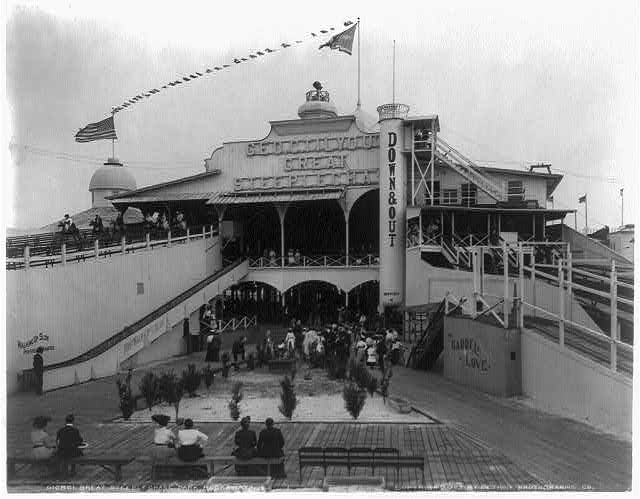
This was the Steeplechase, the main attraction of Steeplechase Park, which ceased operations in 1964. The entrance looked like this:

Steeplechase_Park_entry_LC-USZ62-80370

I remember it well. You sat on these metal horses, held on by only a bulky leather strap. Try building this today and you’d have 10,000 hungry lawyers looking for billable hours suing you for even thinking about it.

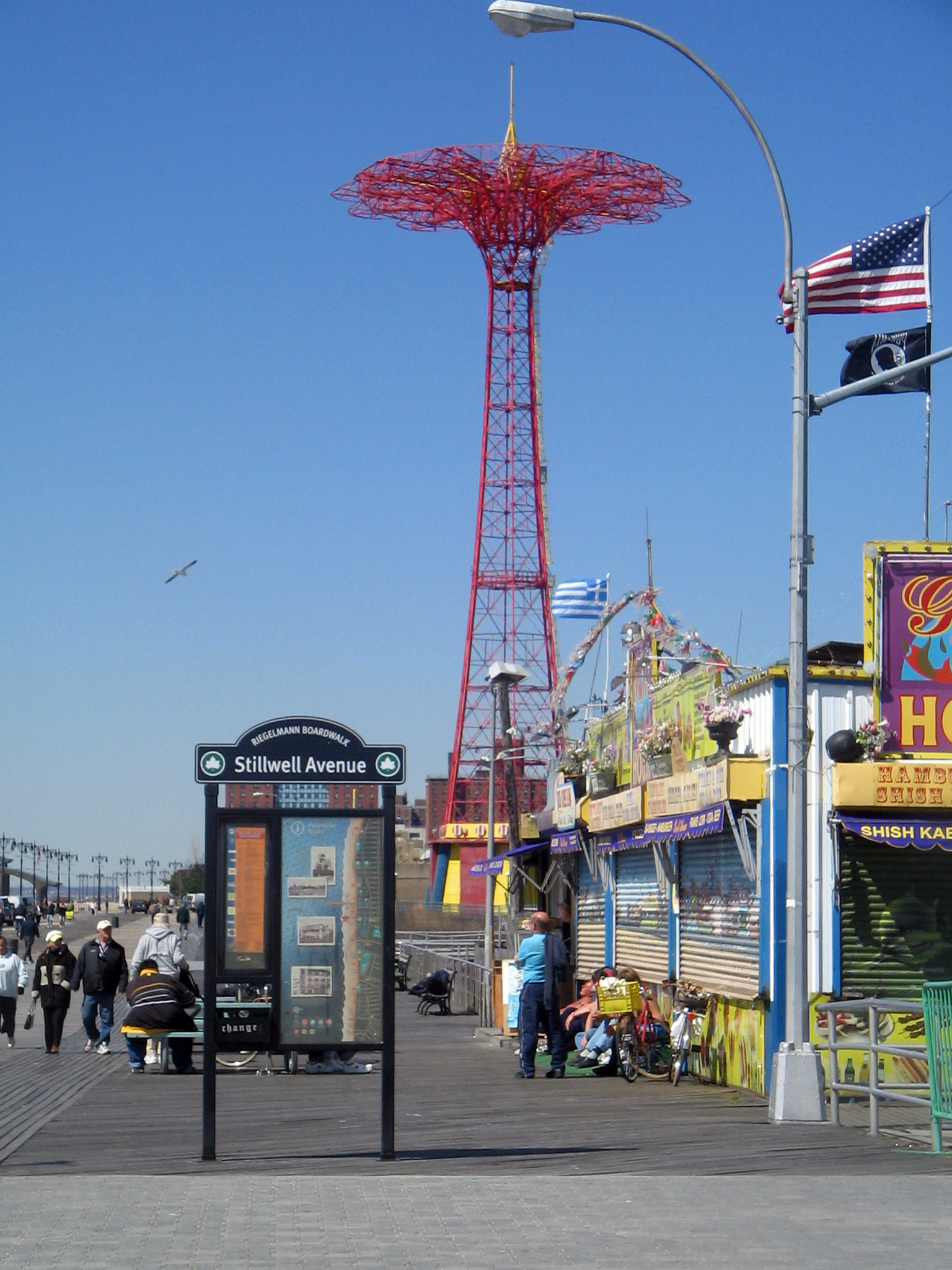
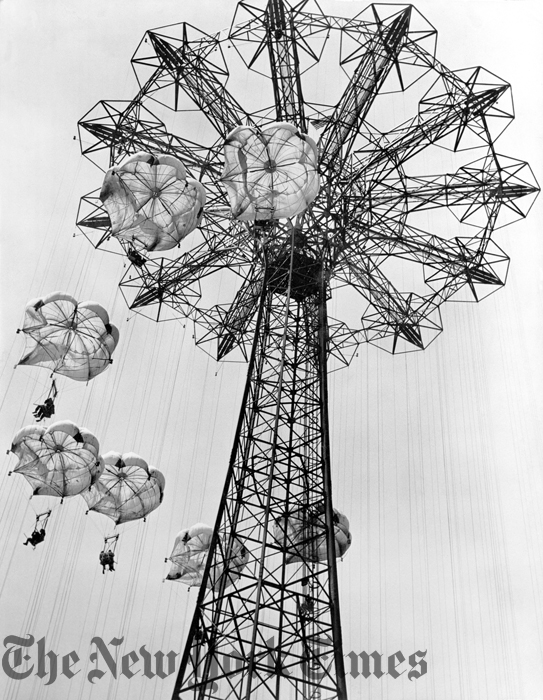
Steeplechase park was also the home of the famous Parachute Jump, originally built for the 1939 World’s Fair and later purchased and moved to the Coney Island area. I also remember riding this one. Despite some controversy over its actual decomission date, it appears that it closed in 1964 with the rest of Steeplechase Park.

NSAPBPL6_EXTR


The towers remains standing to this day.

Coney_Island_Parachute_Jump


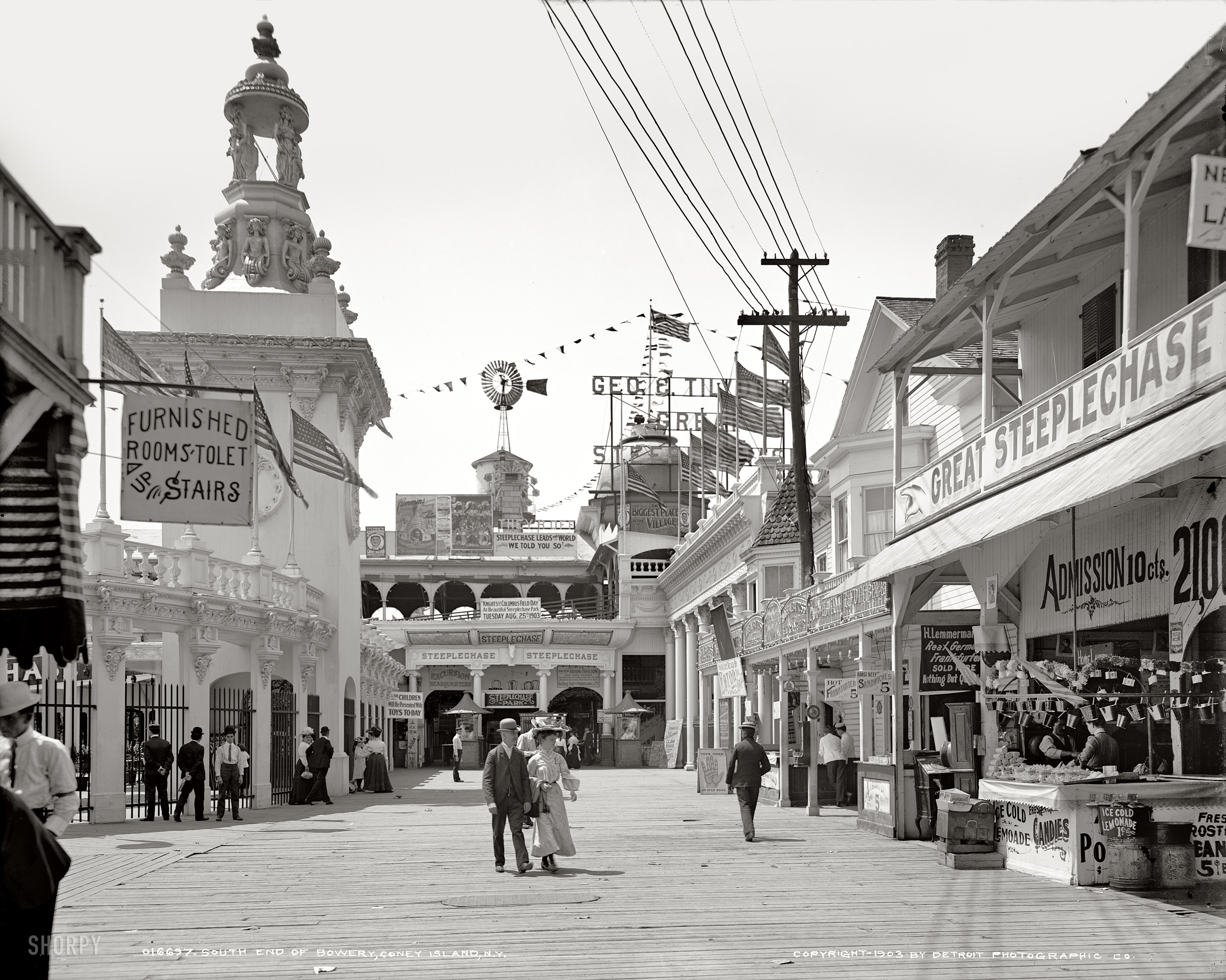
Steeplechase Park was an amazing experience. It looked even more attractive in 1903:

4a11109a


Found at Shorpy

The Old Wolf has spoken.

The Brick Story

No, not the one about the lady on the airplane and the guy with a cigar. That’s from about 1960. This one is about 600 years older than that.
151515159c7d2231-6

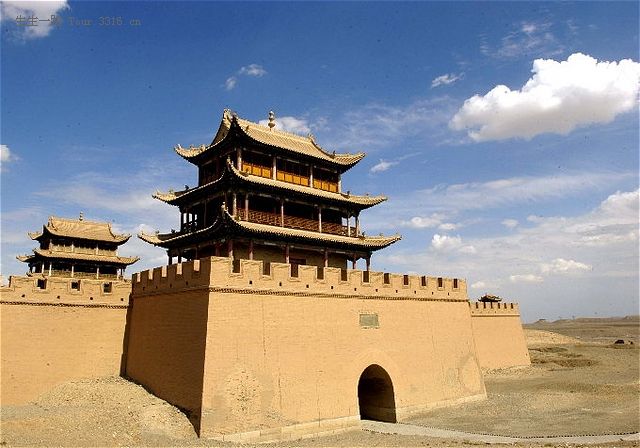
Jiayuguan or Jiayu Pass is the first pass at the west end of the Great Wall of China, near the city of Jiayuguan in Gansu province. It has also been called “Jiayuguan Pass”; however, this form is tautological since “guan” means “pass” in Chinese. Along with Juyongguan and Shanhaiguan, it is one of the main passes of the Great Wall. Construction began sometime around 1372.

Among the passes on the Great Wall, Jiayuguan is the most intact surviving ancient military building. The pass is also known by the name the “First and Greatest Pass Under Heaven” (天下第一雄关), which is not to be confused with the “First Pass under Heaven” (天下第一关), a name for Shanhaiguan at the east end of the Great Wall near Qinhuangdao, Hebei.

There is a famous legend regarding the building of this amazing monument. I have heard two versions, so I present them both here:

  1. A fabulous legend recounts the meticulous planning involved in the construction of the pass. According to legend, when Jiayuguan was being planned, the official in charge asked the designer to estimate the exact number of bricks required and the designer gave him a number (99999). The official questioned his judgment, asking him if that would be enough, so the designer added one brick. When Jiayuguan was finished, there was one brick left over, which was placed loose on one of the gates where it remains today.
  2. During the Ming dynasty, a talented architect named Yi Kaizhan was tasked to build this important outpost and finishing point for the Ming dynasty’s monumental construction effort. After finishing his plans, Yi announced that it would take exactly 99, 999 bricks to build the Jiayuguan structure, no more and no less. Yi’s supervisor thought that Yi was too arrogant and worried that any miscalculation on Yi’s part could reach the ears of the emporer with serious consequences, so he threatened that if Yi’s calculations were off, Yi and all of the workers would be punished. When construction was completed, there was one brick left over and the supervisor delightedly prepared to punish Yi for his arrogance. However, quick-witted Yi immediately told him that this extra brick had been placed by some supernatural being during the night to guard Jiayuguan and prevent its collapse, and that even the tiniest movement would cause the collapse of the entire outpost. The surpervisor, unwilling to take the risk, let the brick stay and was unable to punish Yi , and so the brick remains to this day.

Regardless of which legend has merit, the brick is there for all to see:

jiayuguan-pass-trip-34

“The world is so full of a number of things, I’m sure we should all be as happy as kings.”
-Robert Louis Stevenson

The Old Wolf has spoken.