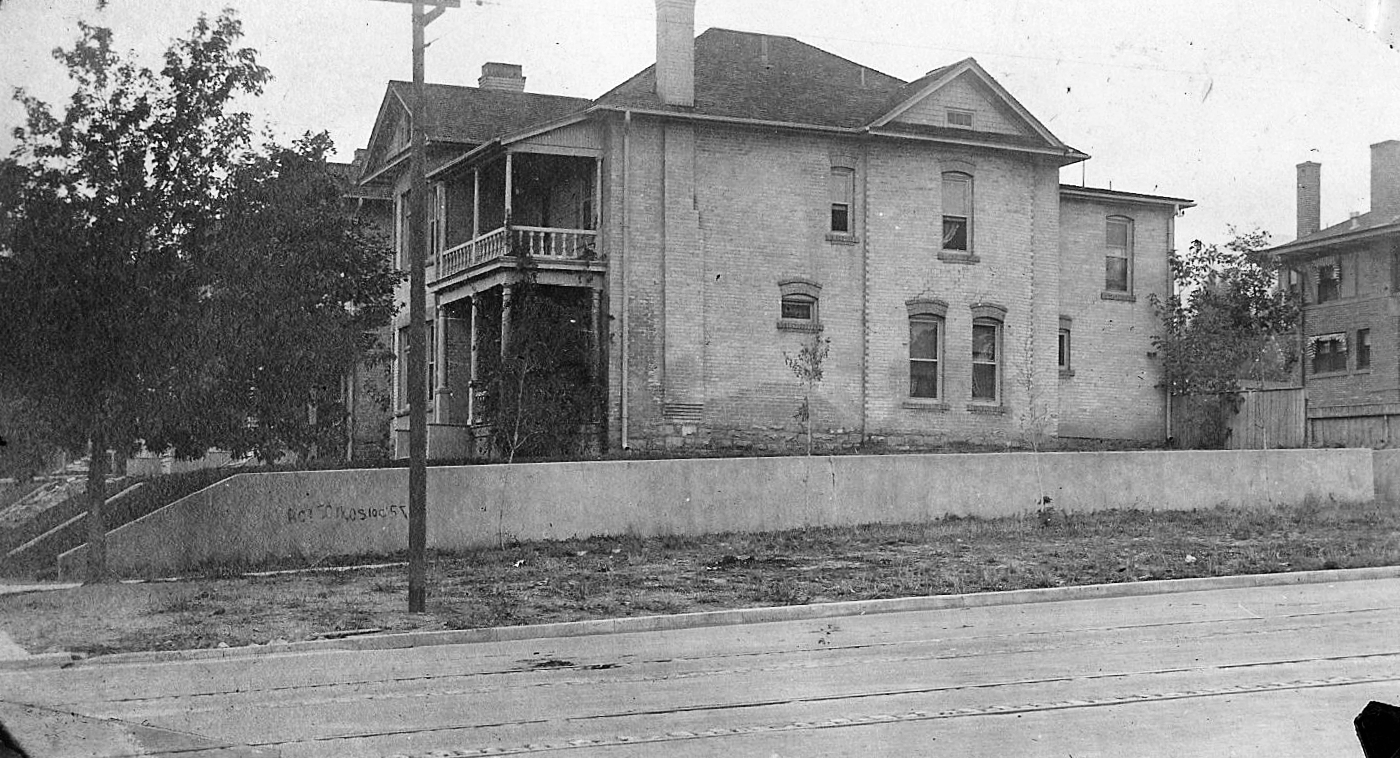
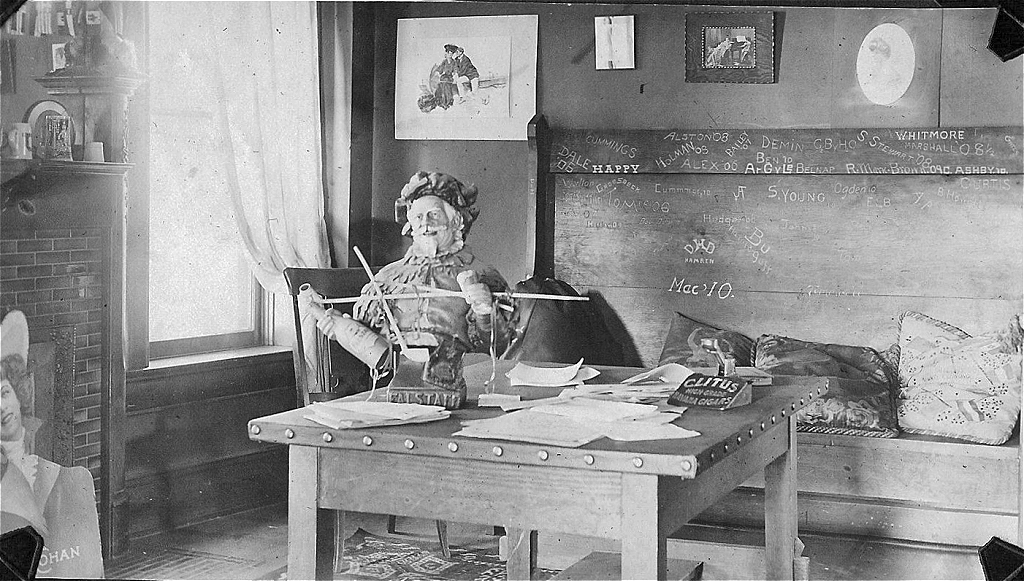
The Amici Fidissimi Fraternity – University of Utah, 1911

Some images from a century ago.

Edited for additional information found here:

It was on this day 106 years ago, December 31, 1914, that Phi Delta Theta’s 32nd Biennial General Convention, meeting in Birmingham, Alabama from December 28, 1914 – January 1, 1915 approved, on a unanimous vote, the petition from the Amici Fidissimi Society at the University of Utah, and approved a charter for the A.F. Society creating the Utah Alpha Chapter of Phi Delta Theta. The General Convention was the only body authorized to grant charters at that time in the Fraternity’s history. The Amici Fidissimi Society was originally formed at the University of Utah in 1903 in the days when Utah had no fraternities. (Follow the above link for more history).

Amici Fidissimi is Latin for “most faithful friends.”

Frat House 1

The A.F. Fraternity House

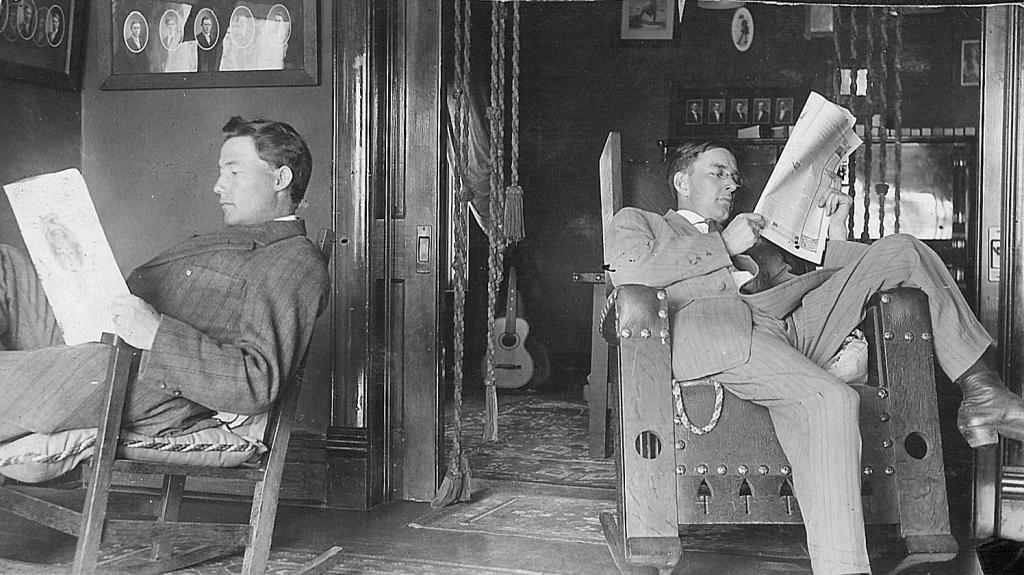
Fraternity House Scene

Two fraternity members take their ease. [1]

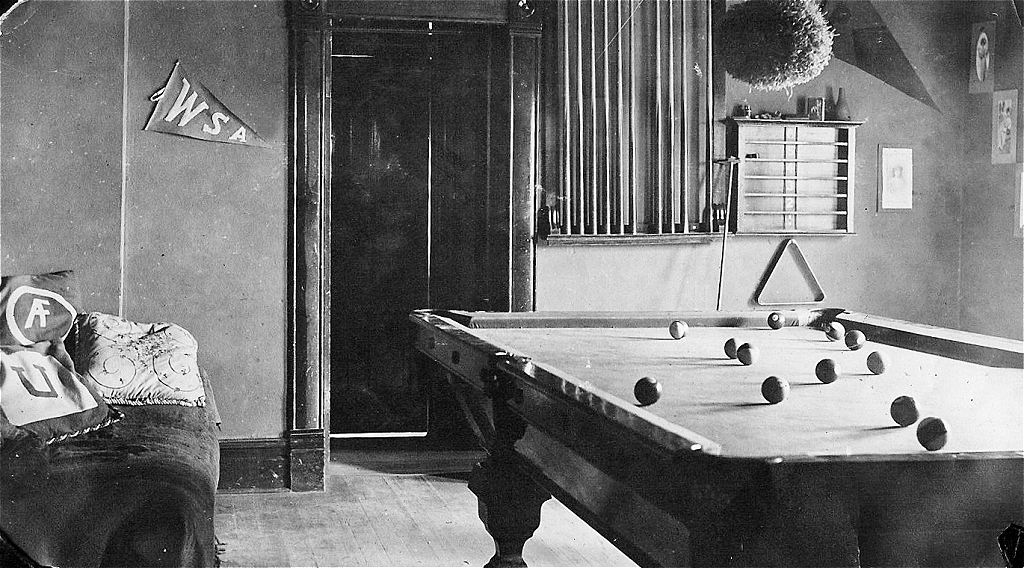
Frat House 2

Fraternity House Billiard Table

Frat House 3

Fraternity House Common Room

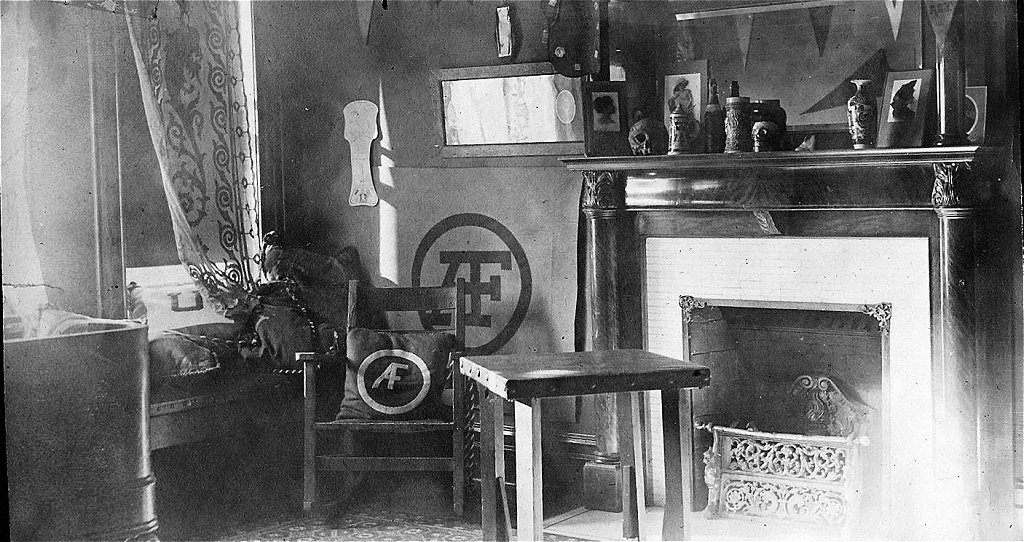
Frat House 4

Bench and Table; notice the signatures of past members.

The Old Wolf has spoken.


[1] The gentleman on the left coincidentally happens to be my grandfather, Delbert M. Draper, Senior.

London: Milk Bar, 1936

SSPL-National-Media-Museum-1

Milk bar, Bear Street, around 1936 ©The Image Works

I found this image at Frog Blog, but as is my wont I will hunt around for the original source if it can be found. That led me to a couple of interesting sites – it appears this image was included in a book by Reuel Golden entitled London, Portrait of a City which looks absolutely beautiful. I must needs find myself a copy of this volume.

Additionally, I found the same image at People and Places, which has some stunning shots of London, both early and modern. Definitely worth a look-see.

The Blue Dog at night, 1934

The Old Wolf has Spoken.

Dublin’s Misery Hill

Misery Hill

(Photo from An t-Oileán)

The street running along the side of Dublin’s Grand Canal Square is Misery Hill, which has a rich history.

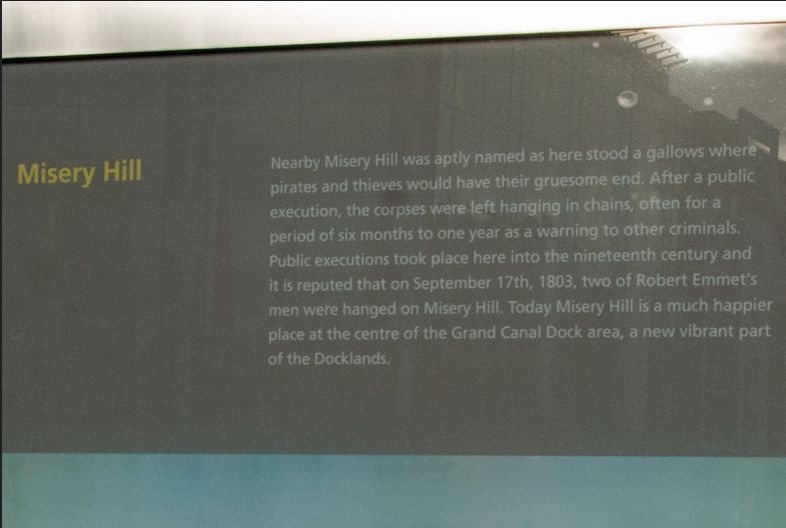
“Back in the 1700s, the place was aptly named, as it was the site of a gallows where pirates and thieves came to a gruesome end. Public executions took place here into the nineteenth century and it is reputed that, on September 17th 1803, two of Robert Emmet’s men were hanged on Misery Hill. Before that in Medieval times, people with leprosy and other skin conditions, who could not afford to stay in the hospice on Lazar’s Hill ( now known as Townsend Street), would move on to Misery Hill, as a bell tolled to warn the citizens that the ‘unclean’ were on their way out of the city.”[1]

Other sources indicate that as the leper was walking along the roads, one guardian would toll a bell, and the other would carry a 40-foot pole to warn others of a safe distance to approach, hence the origin of the phrase “I wouldn’t touch him with a 40-foot pole.” (Here in the USA, we shortened our pole to 10 feet, it would seem.)

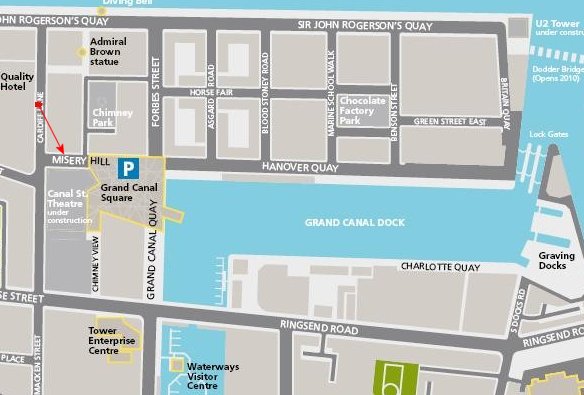
Interestingly enough, before locating Mr. Buck’s blog entry, I had a challenge finding the precise location of Misery Hill – it doesn’t show up on Google Maps or Google Earth. A map published by ESRI was the only one that actually showed Cé Hanover turning into Misery Hill:

Misery2

Location of Misery Hill in Dublin

Misery Hill

Marker of Local Interest during construction.

Aerial-rendering-of-site-c-Lafferty-Design-Studio-plusMOOD

Architect’s rendering of Grand Canal Square, showing Misery Hill incorporated into the square’s design.

Certainly a much more pleasant place now than it was then.

Edit: Although, being in Ireland, it can surely be properly wet and miserable.

The Old Wolf has spoken.


[1] An Irish Town Planner’s Blog

Old Color Photos of Ireland, 1913

These images, which represent the first ever colour photographs taken in Ireland, were taken in 1913 by two French women, Marguerite Mespoulet and Madeleine Mignon-Alba, who used newly available autochrome colour plates.

See the full collection at An t-Oileán.

Haunting and stark, these photos made me think of An Béal Bocht by Myles na gCopaleen (Brian Ó Nualláin). While that book poked mighty fun at the Gaelic mentality and condition, there is no hiding the fact that life for the native Irish was hard, wet, and penurious, and these photographs illustrate the reality of a “terrible beauty.”

wze9Z

This could well be “an Seanduine Liath” with Michelangelo and little Bonaparte O’Coonasa

Their likes will never be there again.

The Old Wolf has spoken.


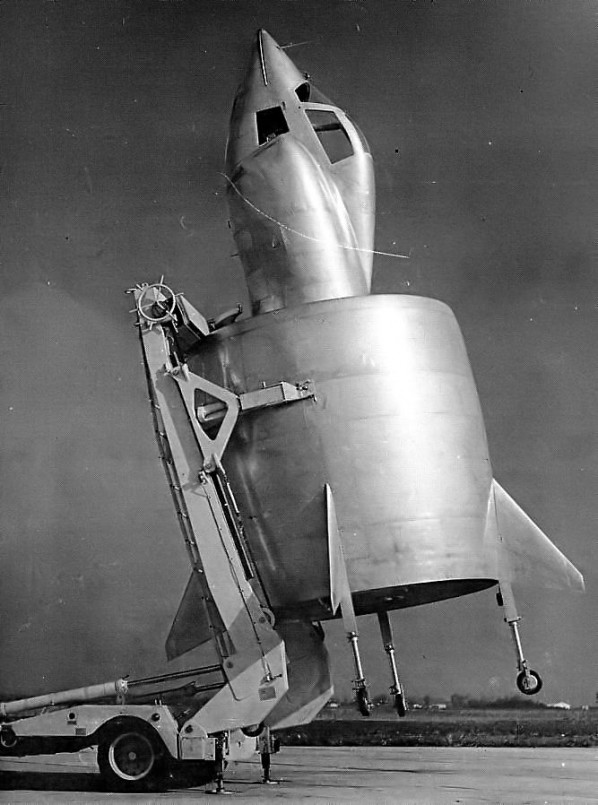
The SNECMA Coléoptère

1-1461

This looks like something from the set of a Buck Rogers movie, but it’s a real aircraft.

The SNECMA Coléoptère (meaning “beetle” in French, descended from Greek for “sheathed wing”) was a VTOL aircraft developed by the French company SNECMA in the 1950s. It was a single-person aircraft with an annular wing designed to land vertically, therefore requiring no runway and very little space to take-off. There were several prototypes developed and tested, however the design proved to be very unstable and flying it was dangerous. (From Wikipedia)


Der Rise und Fall of German Publications in the USA (und some odder schtuff too).

According to the Bill Lane Center for the American West at Stanford University, the first German-language publication appeared in the USA in 1732. This number fluctuated at levels under 10 until 1797, when the Pennsylvania Dutch population began to increase, peaking at 626 German-language newspapers available in 1894. Other than Pennsylvania, the largest German populations were centered around New York, Chicago and Milwaukee.

German1

I was born and raised in New York, and spent 9 years living in the heart of Yorkville, Manhattan’s German enclave in the 50’s.

l
136790

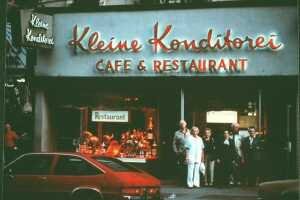
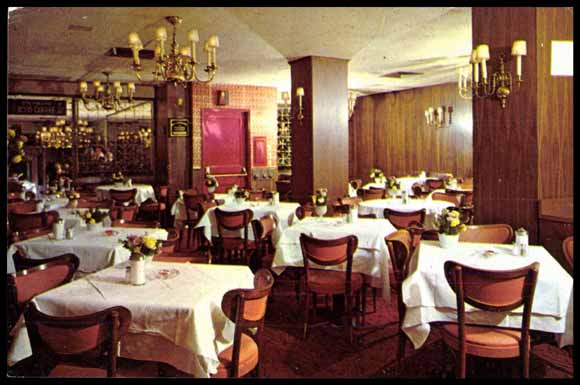
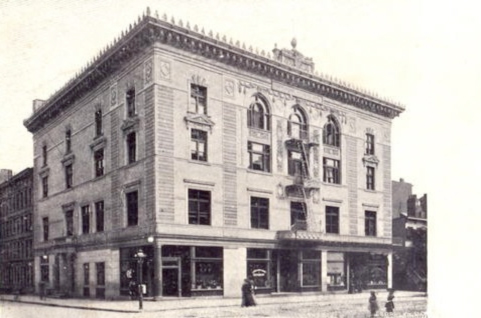
I often remember my mother speaking of Kleine Konditorei, although I have no memory of  ever going there, but there was a Turnverein (gym club) right across the street from our apartment where I went for some gymnastics classes.

turn

The Manhatten Turn Verein building on the corner of 85th and Lexington.

Turn2

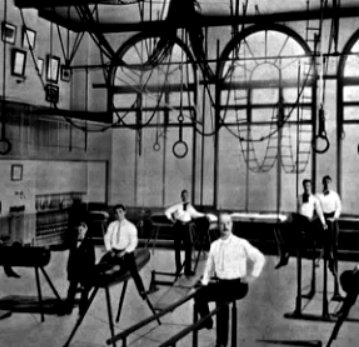
I’m not certain if this is the New York location, but the interior looked a lot like this – I remember the rings hanging from the ceiling everywhere.

street

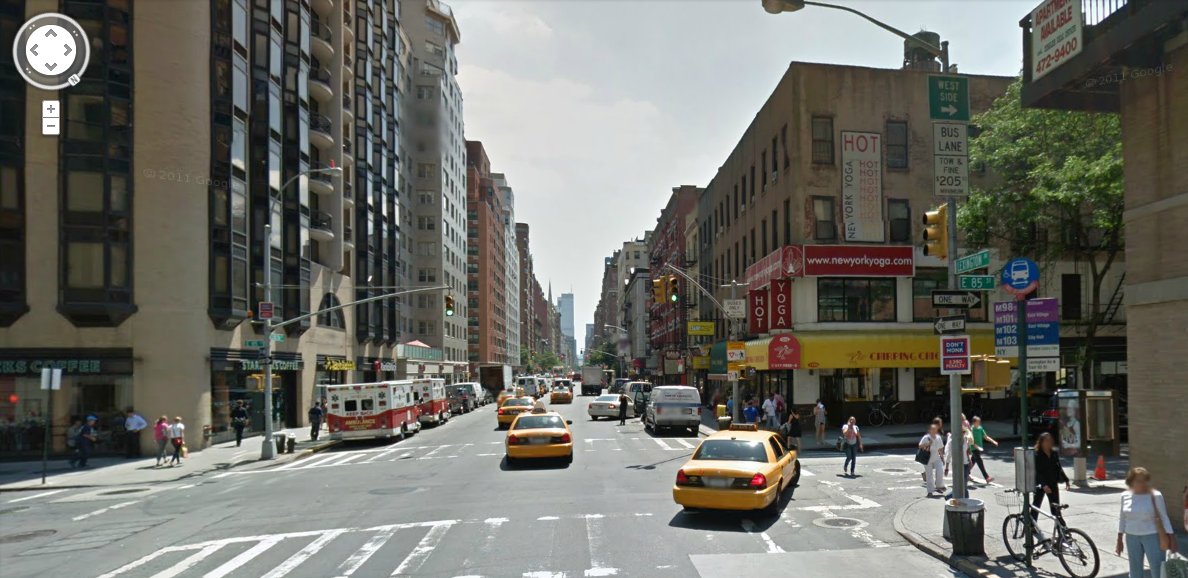
Street view showing my apartment building on the right (my bedroom window is just to the left of the word “Hot”) and the former location of the Turn Verein on the left.

A video recounting the history of the Turn Verein in the United States

There were also several German shops that I recall, including a deliciously stinky cheese shop. Sadly, rising rents and changing immigration laws tolled the death knell for Germantown, and little is left besides the Schaller and Weber grocery and the Heidelberg restaurant.

Aside from a small, anomalous tick upward in 1945 (not surprising, given world events), the number of German publications declined steadily; in 2011, only 42 publications remained, and surprisingly do not even show up on the 2011 map in the Pennsylvania region.

German2

An animated version of the data created by Dan Chang, Krissy Clark, Yuankai Ge, Geoff McGhee, Yinfeng Qin and Jason Wang shows the rise and fall over time.

http://youtu.be/R-HsTm5ELz0

Edit: As a result of a discussion at a historical New York Facebook page, I gathered up some links that are relevant to the history of the German community in NYC:

https://youtu.be/RJgZCmW2mOghttps://www.6sqft.com/germantown-uncovering-the-german…/

https://www.6sqft.com/kleindeutschland-the-history-of…/

(I still have a book of matches from the Kleine Konditorei).

This website is gone, but it was captured by the Wayback machine – it’s a lovely addition to the history of the area:

https://web.archive.org/…//www.uppereast.com/germantown

A video of memories of 86th street, some modern and some vintage. (Some of the pictures are kind of fuzzy, but it’s a nice look back.)

Der alte Wolf hat gesprochen.

Mnemonics: The Kings and Queens of England

As I wrote about previously, Mnemonics are great. They can help scientists, engineers, mathematicians, physicians, physicists, biologists, astronomers, and just folks like you and me remember long lists of things that would be otherwise difficult to keep straight.

Munroe is brilliant and irreverent – you can see a complete selection of his updated versions here.

In 1969, someone – I never found out who – gifted me with a subscription to a short-lived publication called “Intellectual Digest.” It went out of print in the early 70’s, and in 2010 Tracy Shier attempted a relaunch, which – most sadly – did not seem to take off. But within its pages I remember reading the a poem outlining the kings and queens of England, and for decades I could only recall the first few verses. Now, thanks to the magic of the Internet, I present it here (with a few variations, notably after Queen Victoria.)

First William the Norman, Then William his son,
Henry, Stephen, and Henry, Then Richard and John,
Next Henry the Third, Edwards, one, two, and three,
And again after Richard, Three Henries we see,

Two Edwards, third Richard, If rightly I guess,
Two Henries, sixth Edward, Queen Mary, Queen Bess,
Then Jamie the Scotchman, Then Charles whom they slew,
Yet received after Cromwell Another Charles too. (or, “another Charles, Two” in some versions)

Next James the second Ascended the throne,
Then [good] William and Mary together came on.
Till Anne, Georges four, And fourth William all past, (…)
God sent Queen Victoria, may she long be the last!

(obviously an appendix)

But 60 years later, she too want to Heaven
And next on the throne was her son Edward Seven;
George the Fifth, Edward Eighth (abdication not reckoned);
And at last George the Sixth and Elizabeth Second.

Alternate endings:

(1)

Came the reign of Victoria, Which longest did last,

Then Edward the peacemaker, He was her son,
And the fifth of the Georges, Was next in the run,
Edward the eighth, Gave the crown to his brother,
Now God’s sent Elizabeth, All of us love her.

(2)

God gave us Queen Vic, may her fame ever last.

And after Victoria’s long reign was done
We see Edward 7th and George fifth his son,
and Edward the 8th who gave up his crown
to his brother King George, and this brings us down
to Elizabeth Second, our sovereign today,
Many more years on the throne may she stay.

(3)

God gave us Queen Vic, may her fame ever last.

And after Victoria’s long reign was done
We see Edward 7th and George fifth his son,
and Edward the 8th who gave up his crown
To his brother, George Sixth, who reigned with renown.
Elizabeth Second then takes up the reign
And “God Save the Queen” is echoed again.

It is certain that locked away within the memories of countless souls in the UK there will be other versions as well. Two others which I was able to locate are below:

Willy, Willy, Harry, Stee,
Harry, Dick, John, Harry Three,
One, Two, Three Neds, Richard Two
Harry Four, Five, Six, then who?
Edward Four, Five, Dick the Bad,
Harrys Twain and Ned the Lad,
Mary, Bessie, James the Vain,
Charlie, Charlie, James again,
William and Mary, Anna Gloria,
Four Georges, William and Victoria.
Edward Seven, then George Five,
But Edward Eight preferred his wife.
George the Sixth did then arrive
And Lizzie Two is still alive.

This version begins before Guillaume le Bâtard and ends with Victoria, but contains some additional historical tidbits.

Old Britain was under the Romans
From fifty-five years before Christ,
To four hundred fifty-five A.D.
When her eight states on home-rule insist.

For may a year now they wrangle,
Ah! Yes, for quite three seventy-two,
Being ruled by this king, now that one,
As each might the former o’er throw.

But ever since eight-twenty-seven,
Britains rulers have reigned by descent,
From Egbert, first “Monarch of England,”
To Victoria, daughter of Kent.

A score reigned and fell. – Second Harold
In ten-sixty-six, proud, usurps,
But soon in fierce battle is conquered
By William of Normandy’s troops.

Then came William the Conqueror, a Norman,
Then William the Second, his son;
Then Henry and Stephen and Henry,
Then Richard (Coeur de Lion), and John.

Next Henry the Third, and First Edward,
Edward Second and Third, Richard two,
Henrys Fourth, Fifth and Sixth, and Fourth Edward,
Fifth Edward – Third Richard they rue.

Henry Seventh and Eighth, and Sixth Edward,
Then Mary, Bess, James and Charles First, –
|Eleven years then with no monarch;
Second Charles, Second James, not the worst.

Then William and Mary, then Anne,
Four Georges, Fourth William until
Came Victoria, long live her queenship,
For she wields her proud scepter with skill.

Þe Old Wolf hath goodly spoke.