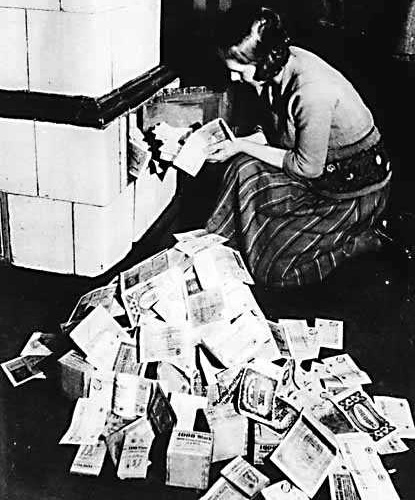
When I was little, my mother (who served as a Red Cross worker during World War II) used to tell me stories of people in Weimar Germany taking wheelbarrows full of money to the store to buy a loaf of bread. “Haha,” I thought, “that’s a good one,” being too young to really get the concept.
German woman burning banknotes, which burned longer than the wood that they would buy.
Then I grew up and traveled to Serbia, where I discovered that hyperinflation is not relegated to the furnaces of history.
This is the 500 billion Dinar note that was printed at the end of Serbia’s period of hyperinflation (I also have a 50,000,000,000 Dinar note as well) and I thought these were quite unique. [1] Until I heard about what happened in Zimbabwe.
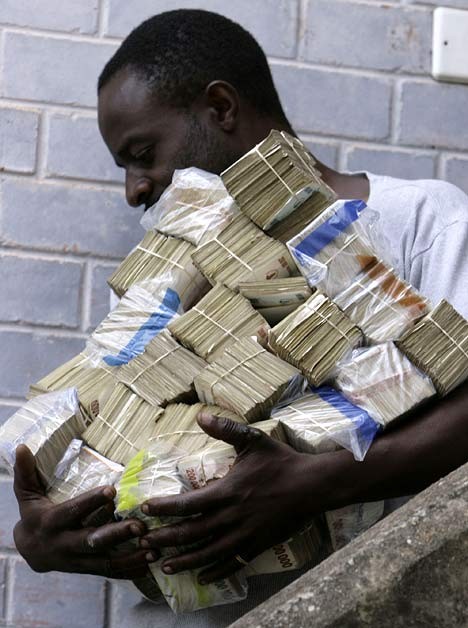
Off to buy a pack of gum
Even this didn’t help the situation; From Wikipedia, “The Zimbabwean dollar is no longer in active use after it was officially suspended by the government due to hyperinflation. The United States dollar ($), South African rand (R), Botswana pula (P), Pound sterling (£) and Euro (€) are now used instead. The United States dollar has been adopted as the official currency for all government transactions.”
But none of these monsters can touch what happened in Hungary in 1946:
This is the 100 quintillion pengő note, the largest banknote ever issued for public circulation. That’s 100,000,000,000,000,000,000, or 1020 pengő, which is a lot of pengő no matter how you slice them.
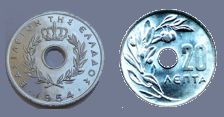
One rather interesting side-effect of inflation in Greece (before they gave up the Drachma in favor of the Euro) was that 5, 10 and 20 lepta coins became so worthless that it was cheaper to use them as washers than to go to the store and buy them.
Prices keep going up here in the USA in the early years of the 21st century, but I’m grateful we’ve never experienced this sort of madness here. Well, almost never.
Just enough for 3 gallons of gas. [2]
The Old Wolf has spoken.
[1] This one is still unique to me, because I have one.
[2] The $100,000 dollar note was never circulated – it was used only for transactions between Federal Reserve banks.
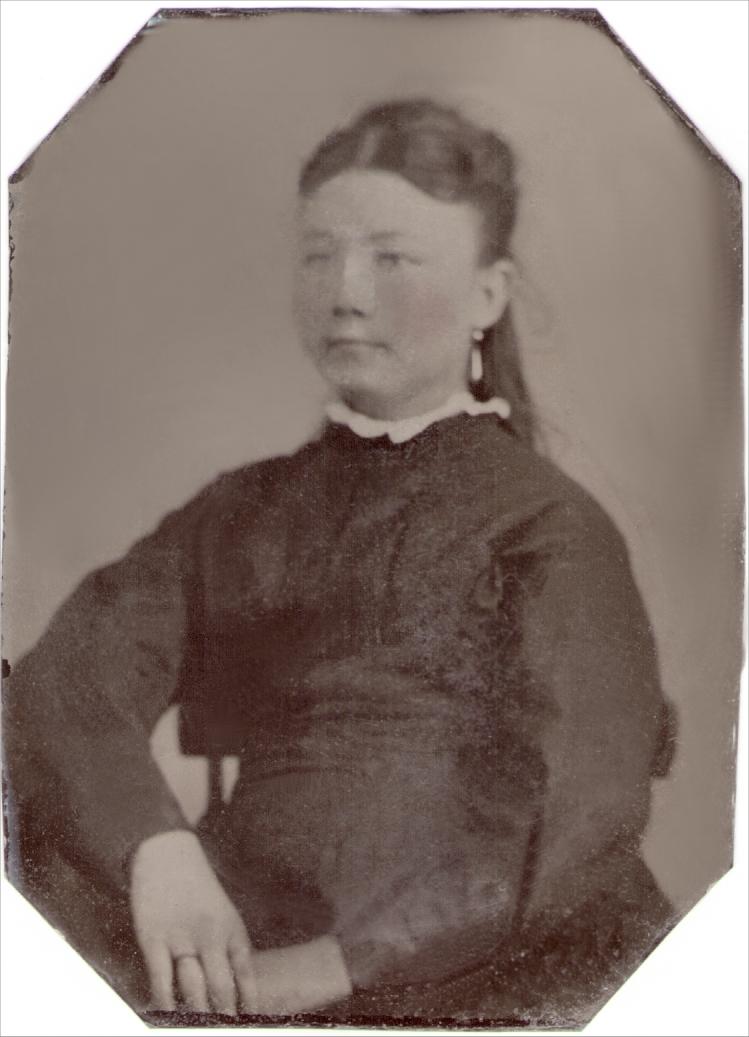
Lena Margretta Morley, my grandfather’s mother. Tintype made around 1881. The actual image is about two inches high, and the slight blush around her cheeks is a not-uncommon post-development retouch.
Hall of nationalized aeronautic industries with spiral bridge and Rhodoïd[1] orb at the Exposition Internationale des Arts et Techniques dans la Vie Moderne (International Exposition dedicated to Art and Technology in Modern Life), Paris, 1937. Audoul, Hartwig and Gérodais, architects – Aublet and Delaunay, designers.
Postcard of the Hall of Aeronautics – Exterior
Photo – Hall of Aeronautics – Exterior
Other pictures from the 1937 Expo:
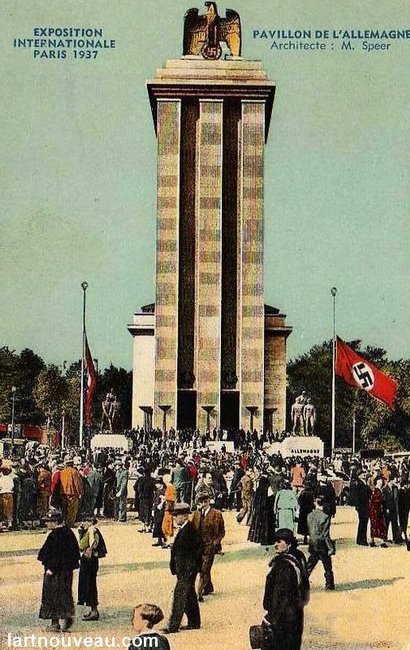
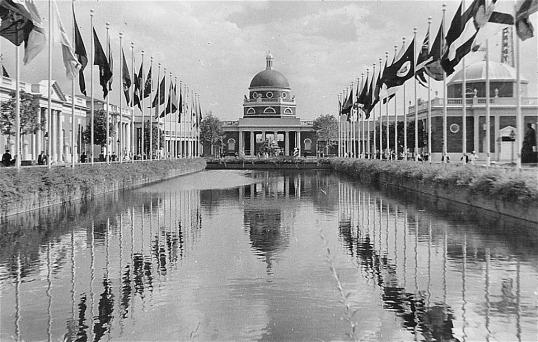
Postcard of the 1937 Paris Expo. On the left, the National Socialist German pavilion (see below)
The German pavilion, 1937. Rather ominous in light of events shortly to come to pass.
A view of the Paris Expo by night.
The Old Wolf has spoken.
[1] Rhodoid is a brand name for a cellulose acetate product developed by French pharmaceutical/chemical group Rhône-Poulenc around 1917. The name comes from a combination of Rhône-Poulenc and celluloid. In 1937 this would still have been considered an innovation
Japanese internees celebrate New Year’s Eve. Topaz, Utah, 1944. Photo by Charles Mace.
May this New Year bring us all an abundance of peace and security. May we count the blessings we have been given, and look upon the follies of the past with abhorrence. May we all seek reason, equity, balance, humanity and common sense.
See, that’s the way the Internet is. But even knowing that, it will often surprise you.
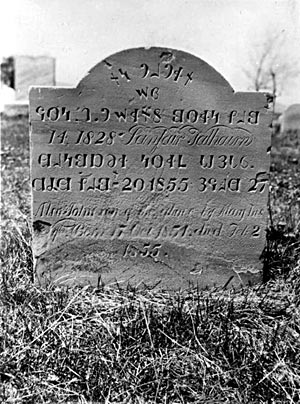
In the mid 19th century, Brigham Young came up with a new alphabet designed to help foreign-speaking immigrants to the State of Deseret (otherwise known as the Utah territory) learn to read English. Developed by the board of regents of the University of Deseret (later the University of Utah,) it was known as the Deseret Alphabet. Four volumes were published in the alphabet in 1868 – two primers (the Deseret First Book and the Deseret Second Book), extracts from the Book of Mormon and a complete volume of the latter. The Deseret News published a column printed in the new alphabet, and there are still diaries, letters, meeting minutes, coinage and one headstone in Cedar City, Utah, to attest to its brief existence.
Mormon five-dollar gold piece, inscribed with “Holiness to the Lord” in Deseret Alphabet.
The gravestone in Cedar City. The inscription reads,
“In memory of John T. Morris Born Feb
14 1828 Lanfair Tahaira
Danbyshire North Wales.
Died Feb 20, 1855 Aged 27”
The Deseret Second Book.
Sample from the Deseret Second Book. Lesson 3 is entitled “The Spring,” Lesson 4 is “The Hare.”
As with other spelling reforms initiated during the same period of history, it never caught on. Immigrants preferred to learn English with all its horrid spelling [1] in a script that most of them already knew than try to struggle with an entirely new alphabet, and the Deseret Alphabet quietly died.
Or so it seemed.
Searching this morning, just out of curiosity as to what the printed volumes are selling for these days (I own copies, you see,) I happened across this:
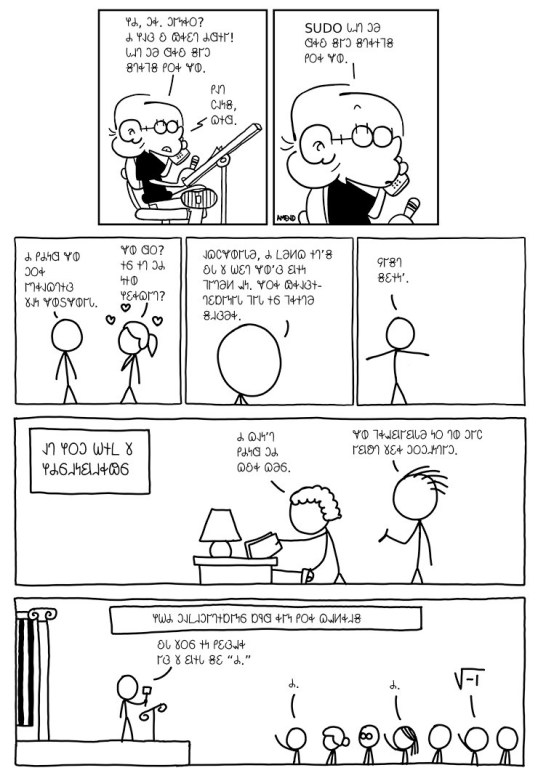
It seems that an afficionado of the Deseret Alphabet (as intimated above, there are afficionadi for everything, no matter how obscure) has taken the trouble to transliterate every XKCD into Deseret Alphabet. I, too, am an afficionado of the Deseret Alphabet; this dude is the linguistic equivalent of Techno Bill. The irony here is delicious – I couldn’t think of a more appropriate, edgy strip to retrogress back into a failed religious experiment. For the curious, the original page where this strip is found includes links to the English version of the comic so you can see what it says. It is of note that the Unicode Consortium took note of the Deseret Alphabet, so regardless of whether or not interest in the artifact continues, it will always have a place in history.
As obscure as it is, this delights me no end, as I made a study of the Deseret Alphabet during my days as a master’s candidate in applied linguistics. And, just in case you think that you’ve reached the bottom of strangeness with this little bit of whimsy, you may want to have a peep here, if you dare. Rule 101 has no bottom. [2]
𐐜 𐐄𐐢𐐔 𐐚𐐃𐐢𐐙 𐐐𐐈𐐞 𐐝𐐑𐐄𐐗𐐤.
[1] You’re not certain English spelling is all that bad? Try reading “The Chaos”, found at this page. I triple-dog dare you to read it through without any mistakes. Any non-native speakers who can do so win the Internet. I’m looking at you, Bjornar.
[2] I’m not even talking about the dark underbelly of the internet. Trust me, you don’t want to go there. That way lies madness.
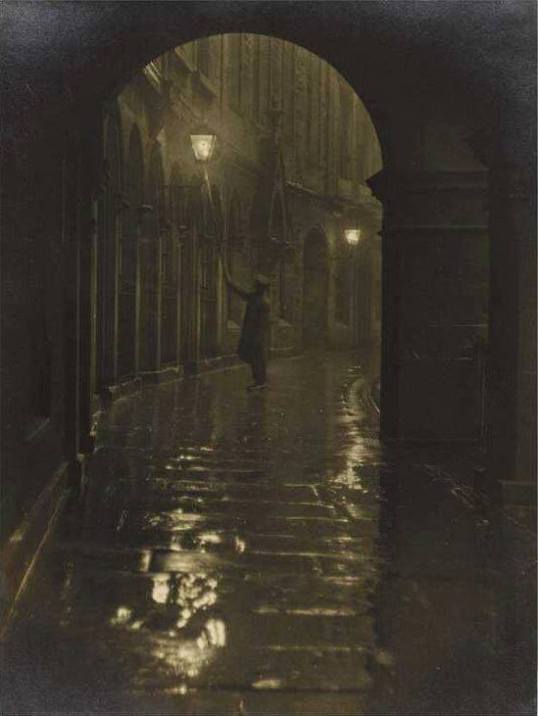
Lamplighter, Victoria Terrace, Edinburgh, 1928. Photographer Unknown
The Lamplighter
My tea is nearly ready and the sun has left the sky;
It’s time to take the window to see Leerie going by;
For every night at teatime and before you take your seat,
With lantern and with ladder he comes posting up the street
Now Tom would be a driver and Maria go to sea,
And my papa’s a banker and as rich as he can be;
But I, when I am stronger and can choose what I’m to do,
O Leerie, I’ll go round at night and light the lamps with you
For we are very lucky, with a lamp before the door,
And Leerie stops to light it as he lights so many more;
And O! before you hurry by with ladder and with light,
O Leerie, see a little child and nod to him tonight! -Robert Louis Stevenson
This poem, one of my favorites in A Child’s Garden of Verses, refers to the days when lamplighters would come around the streets of Edinburgh, lighting the gas lamps. As a child, Stevenson was an invalid (hence the reference to “when I am stronger”), and looking out of the window to see the lamplighter would be a bright spot in the lonely child’s day; to be noticed and nodded to would be exceptional.)
A Child’s Garden of Verses, Platt and Munk, 1929, illustrations by Eulalie
In a book that I wish everyone in the world could read, because it is filled with goodness and sadness and love and despair, and the kind of language that Eudora Welty and O. Henry and Walter Van Tilburg Clark knew how to use, language which not only conveys a message but which also fills the mouth – language which, like a finely aged beef or a vintage wine, deserves to be rolled around on the tongue and savored – William Saroyan wrote:
THE LITTLE BOY named Ulysses Macauley one day stood over the new gopher hole in the backyard of his house on Santa Clara Avenue in Ithaca, California. The gopher of this hole pushed up fresh moist dirt and peeked out at the boy, who was certainly a stranger but perhaps not an enemy. Before this miracle had been fully enjoyed by the boy, one of the birds of Ithaca flew into the old walnut tree in the backyard and after settling itself on a branch broke into rapture, moving the boy’s fascination from the earth to the tree. Next, best of all, a freight train puffed and roared far away. The boy listened, and felt the earth beneath him tremble with the moving of the train. Then he broke into running, moving (it seemed to him) swifter than any life in the world.
When he reached the crossing he was just in time to see the passing of the whole train, from locomotive to caboose. He waved to the engineer, but the engineer did not wave back to him. He waved to five others who were with the train, but not one of them waved back. They might have done so, but they didn’t. At last a Negro appeared leaning over the side of a gondola. Above the clatter of the train, Ulysses heard the man singing:
“Weep no more my lady, 0 weep no more today We will sing one song for the old Kentucky home For the old Kentucky home far away”
Ulysses waved to the Negro too, and then a wondrous and unexpected thing happened. This man, black and different from all the others, waved back to Ulysses, shouting: “Going home, boy-going back where I belong!” The small boy and the Negro waved to one another until the train was almost out of sight
Then Ulysses looked around. There it was, all around him, funny and lonely-the world of his life. The strange, weed-infested, junky, wonderful, senseless yet beautiful world. Walking down the track came an old man with a rolled bundle on his back. Ulysses waved to this man too, but the man was too old and too tired to be pleased with a small boy’s friendliness. The old man glanced at Ulysses as if both he and the boy were already dead.
The little boy turned slowly and started for home. As he moved, he still listened to the passing of the train, the singing of the Negro, and the joyous words: “Going home, boy-going back where I belong!” He stopped to think of all this, loitering beside a china-ball tree and kicking at the yellow, smelly, fallen fruit of it. After a moment he smiled the smile of the Macauley people-the gentle, wise, secret smile which said Hello to all things.
-William Saroyan, The Human Comedy
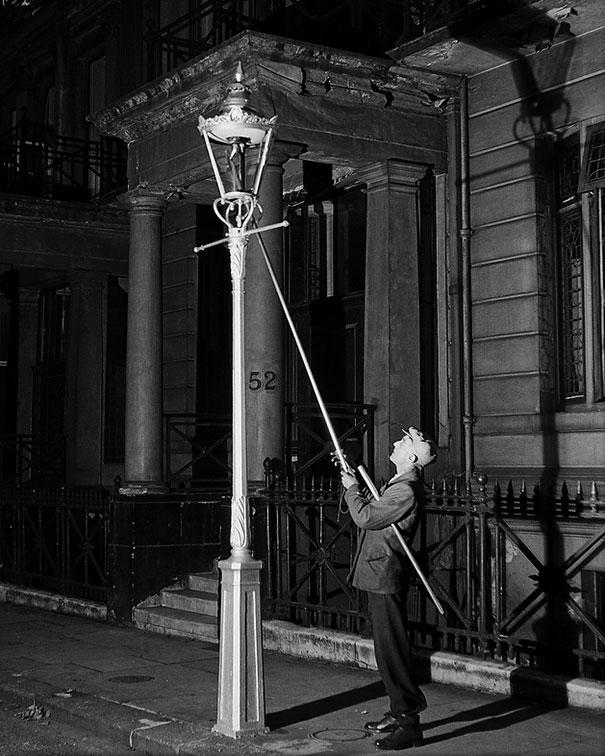
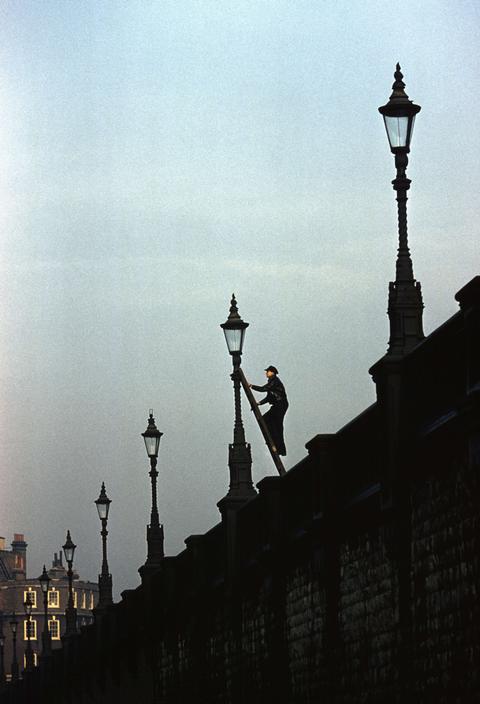
Apparently the profession lasted a lot longer than I had realized; the picture in London below is purported to have been taken in 1962, found at /r/historyporn.
Today as in the past, little children with their hearts full of innocence and wonder wave to the big people passing by; the delight that illuminates their faces on the rare occasion when someone takes the time to notice them, and wave back, or nod, or smile, or say hello, is large return on a small investment. Here’s a perfect modern example:
Despite the pervasive misconception that the now-defunct Sunshine Hydrox cookies were a cheap Oreo knock-off, they were the original sandwich cookie which came out in 1908, four years before Oreos did in 1912. Apparently they just didn’t do well against the Nabisco juggernaut, and also a lot of people were put off by the name, which sounded more like a bleach than a cookie.



















 Playing in the World Game