Sushi Yasuda in NYC does away with tipping

I’ve blogged about tipping before. Now, a few bold restaurants are beginning to buck the trend.

(Reblogged from The Consumerist)

Note: Sushi Yasuda is the restaurant’s correct name – it appeared in the original article as “Yasada”.

 NYC Restaurant Tells Customers That Tipping Is Not Allowed
By  June 7, 2013

 (From ThePriceHike.com)

(From ThePriceHike.com)

As we’ve discussed here many, many times, restaurant wait staff often rely on tips because their base pay is generally far below the minimum wage level. Since tipping is an anomaly overseas, waiters in most other countries are paid a living wage. Thus, one sushi restaurant in Manhattan, which claims it has always paid its employees well, has recently started telling customers that tips will not be accepted.

On his Price Hike blog, Bloomberg food critic Ryan Sutton writes about the note that was recently added to the bottom of all receipts at Sushi Yasuda in NYC. It reads:

Following the custom in Japan, Sushi Yasuda’s service staff are fully compensated by their salary. Therefore gratuities are not accepted. Thank you.”

Sutton talked to the restaurant’s owner who says he decided to not go the route of some restaurants who simply add 18-20% service charges on to bills rather than have customer tip. That’s really just the same as the old system; it just saves the diner the hassle of doing basic math.

Instead, Yasuda’s owner raised the menu prices a bit and simply tells customers: Do Not Tip Your Waiter.

“We just take tipping out of the equation,” he explains to Sutton.

The reason more restaurants don’t follow this model is that they are afraid higher menu prices will drive away customers, but this owner maintains that “if you have faith in what you’re serving, and how you’re serving it, you know that when your customers have a good meal and look at their final tally it’s going to be around the same.”

He claims that paying your staff a solid wage that doesn’t fluctuate from day-to-day based on tips is a good way to build stability among your workers.

In spite of this being the standard for most of the world, there are only a very small number of restaurants in the U.S. that don’t accept tips and also don’t tack on service fees.


According to the poll at the bottom of the Consumerist’s page, the question “Should more restaurants do away with tipping?” provided (to me) unsurprising results:

results

Whereas in my previous posts I’ve stressed that tipping is not optional and that servers depend upon tips for their daily wage, I would be entirely in favor of eliminating tipping at restaurants and paying servers a dependable, living wage. Naturally, if restaurateurs try to take advantage of this trend to their own benefit and to the detriment of their employees, that doesn’t work… but I’d be willing to bet a lot of servers would line up for a regular job where busting their ass for a party of cheapskate douchebags never enters the equation.

Hats off to Sushi Yasuda! 

The Old Wolf has spoken.

Lies, Spies, and Videotape.

8501189

Edward Snowden. Hero? Traitor? Irrelevant?

It’s a big deal, and the calls for lionization, incarceration, exculpation, evaporation, and a lot of other “-ations” are beginning to ring from coast to coast and across the world.

I have no doubt the NSA, CIA, FBI, and Mogg knows what other hush-hush agencies would like to see this man suffer in the fiery heat of Satan’s hottest furnace for eternity. On the other hand, civil libertarians are calling for an immediate pardon for a man they see as a brave and fearless national hero.

It appears that Snowden certainly broke the law in releasing the information that he did, but in so doing it also appears that he brought to light an even greater violation of principles than he himself is guilty of. So where do we draw the line?

mission-impossible-season-5

“As usual, if you or any member of your IM force is caught or killed, the Secretary will disavow any knowledge of your actions.”

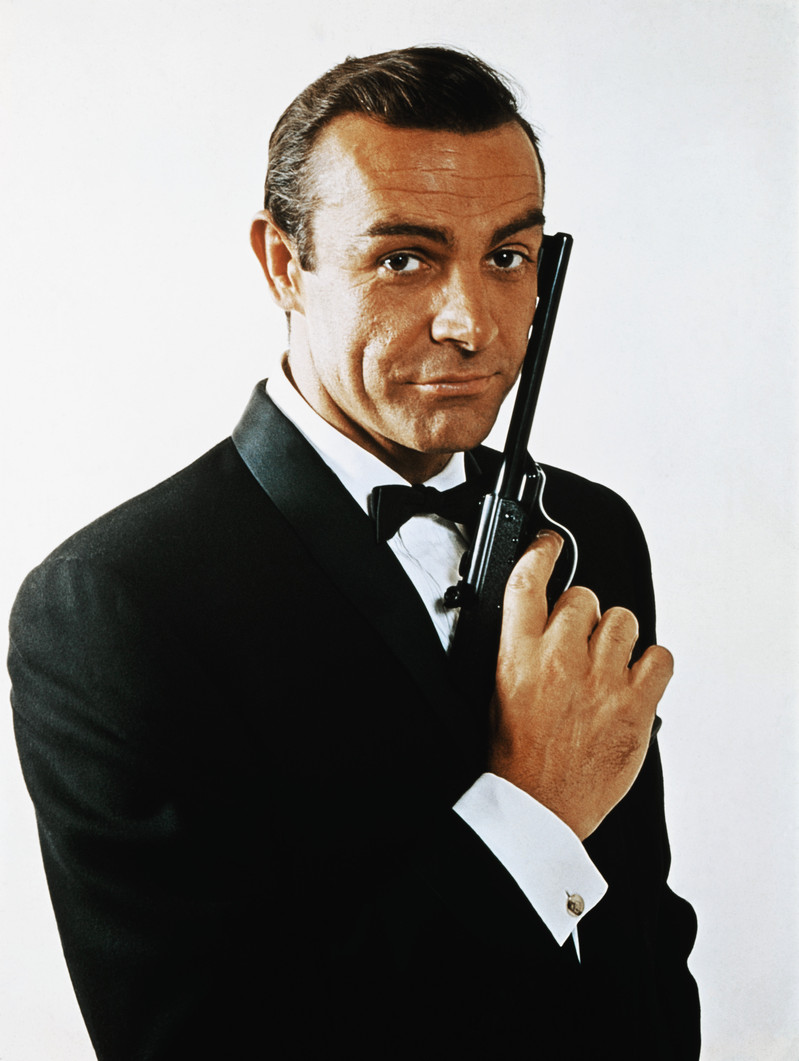
Sean Connery as James Bond

License to Kill

Spies are paid to lie. Governments who employ them lie on a regular basis. The popularity of the action/spy thrillers on TV and in movies proves that we expect, nay, demand it. In real life it may not be right, but it becomes a matter of national security in some cases; nations simply don’t operate along the same moral lines as we would like them to. Can you imagine what would happen if governments were  completely open, honest, and transparent with one another? [1] The “good guys” are pretty much obliged to resort to deception and subterfuge to combat the “bad guys,” and keep their nations safe. That’s what the NSA and the CIA are there to do. For what it’s worth, we even spy on our friends. Don’t ask me how I know… I’d have to lie to protect certain other people.

Unfortunately, the CIA and NSA and other alphabet-soup agencies have also been tasked with things that have much less to do with keeping our nation safe than with keeping it rich, at the expense of other governments and peoples. If you’d like a glimpse into that shadowy world, read “Confessions of an Economic Hit Man,” by John Perkins; it will most likely raise both your eyebrows and your conscience. An extract of Amazon’s review:

“John Perkins started and stopped writing Confessions of an Economic Hit Man four times over 20 years. He says he was threatened and bribed in an effort to kill the project, but after 9/11 he finally decided to go through with this expose of his former professional life. Perkins, a former chief economist at Boston strategic-consulting firm Chas. T. Main, says he was an “economic hit man” for 10 years, helping U.S. intelligence agencies and multinationals cajole and blackmail foreign leaders into serving U.S. foreign policy and awarding lucrative contracts to American business. “Economic hit men (EHMs) are highly paid professionals who cheat countries around the globe out of trillions of dollars,” Perkins writes. Confessions of an Economic Hit Man is an extraordinary and gripping tale of intrigue and dark machinations. Think John Le Carré, except it’s a true story.”

What has been revealed by Snowdon goes far, far beyond keeping our nation safe from external evils; it has much more to do with controlling a domestic population, and despite groans and sobs of denial from those in the know, I can’t believe – I refuse to believe – that this massive accumulation of data can and will not be used for financial and potentiary gain by those in a position to access and use it.

And the fact that this mind-boggling misuse power was authorized years ago by the “patriot act” does not make it any more right. I’m glad it came to light, and I’m glad there’s a dialog going on, and I hope that some people are going to get their feet held to the fire, and I hope that what comes out of it is more transparency, and better for the citizenry of our country than for the power brokers.

I don’t condone illegal behavior. But I do believe in the principle of the “greater good.” I think Mr. Snowdon has recognized that his actions would carry a heavy price, and it was a price he is willing to pay to act according to the dictates of his conscience. I have no idea how all this is going to play out, but for me, at this moment, I’m keeping him in the plus column.

The Old Wolf has spoken.


[1] Somewhere out there is a science fiction story (or perhaps creative fantasy) about a special blend of coffee that mutates somewhere, and has the stunning effect of making people reasonable. After drinking some of it, the French delegate to the UN stands up and shouts, “It’s all balls!” In the end, the entire world has partaken, and governments actually start acting with decency and common sense, for the good of all the people of the world. I have never been able to relocate this story. If it sounds similar to Mark Clifton’s 1952 story “The Conqueror,” that’s not surprising – instead of coffee it was a mutant pychotropic dahlia root that changed the world:

“So it came about that one by one the members of the Politbureau tasted of the dahlia, even to the leader himself.

All of this took much time, and meanwhile heads of other nations who were not so suspicious of every shadow, and not so inaccessible, were eating regularly of the dahlia.

When finally the sincere word of peace and goodwill came ringing from Moscow to all the world, it was echoed back with all sincerity.”

A lovely story. Read it, if you’d like a smile.

The Brick Story

No, not the one about the lady on the airplane and the guy with a cigar. That’s from about 1960. This one is about 600 years older than that.

151515159c7d2231-6

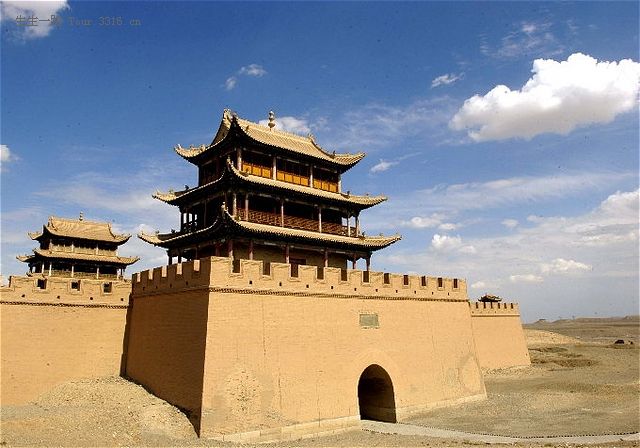
Jiayuguan or Jiayu Pass is the first pass at the west end of the Great Wall of China, near the city of Jiayuguan in Gansu province. It has also been called “Jiayuguan Pass”; however, this form is tautological since “guan” means “pass” in Chinese. Along with Juyongguan and Shanhaiguan, it is one of the main passes of the Great Wall. Construction began sometime around 1372.

Among the passes on the Great Wall, Jiayuguan is the most intact surviving ancient military building. The pass is also known by the name the “First and Greatest Pass Under Heaven” (天下第一雄关), which is not to be confused with the “First Pass under Heaven” (天下第一关), a name for Shanhaiguan at the east end of the Great Wall near Qinhuangdao, Hebei.

There is a famous legend regarding the building of this amazing monument. I have heard two versions, so I present them both here:

  1. A fabulous legend recounts the meticulous planning involved in the construction of the pass. According to legend, when Jiayuguan was being planned, the official in charge asked the designer to estimate the exact number of bricks required and the designer gave him a number (99999). The official questioned his judgment, asking him if that would be enough, so the designer added one brick. When Jiayuguan was finished, there was one brick left over, which was placed loose on one of the gates where it remains today.
  2. During the Ming dynasty, a talented architect named Yi Kaizhan was tasked to build this important outpost and finishing point for the Ming dynasty’s monumental construction effort. After finishing his plans, Yi announced that it would take exactly 99, 999 bricks to build the Jiayuguan structure, no more and no less. Yi’s supervisor thought that Yi was too arrogant and worried that any miscalculation on Yi’s part could reach the ears of the emporer with serious consequences, so he threatened that if Yi’s calculations were off, Yi and all of the workers would be punished. When construction was completed, there was one brick left over and the supervisor delightedly prepared to punish Yi for his arrogance. However, quick-witted Yi immediately told him that this extra brick had been placed by some supernatural being during the night to guard Jiayuguan and prevent its collapse, and that even the tiniest movement would cause the collapse of the entire outpost. The surpervisor, unwilling to take the risk, let the brick stay and was unable to punish Yi , and so the brick remains to this day.

Regardless of which legend has merit, the brick is there for all to see:

jiayuguan-pass-trip-34

“The world is so full of a number of things, I’m sure we should all be as happy as kings.”
-Robert Louis Stevenson

The Old Wolf has spoken.

Lunch Atop a Skyscraper… and afterwards.

lunch-atop-skyscraper-new-york-construction-workers-crossbeam

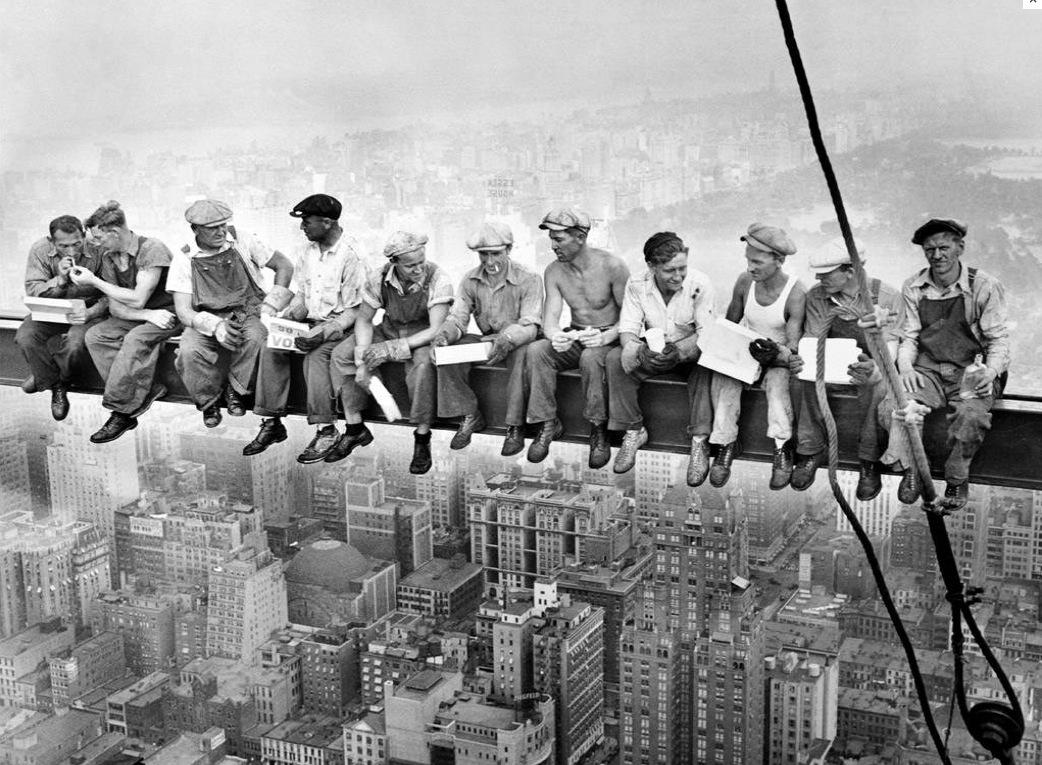
This iconic photo taken in 1932 showed a group of construction workers nonchalantly enjoying lunch on a girder [1] high above New York. A bit of backstory on the photo can be found at The Reel Photo.

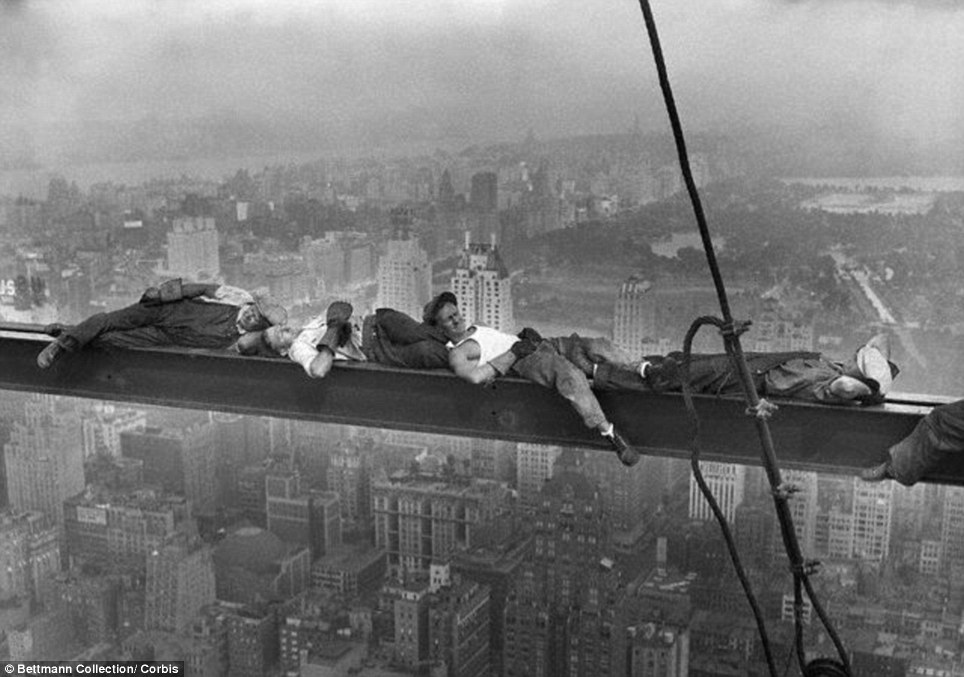
What is not often seen is what happened after that particular photo was taken, which is just what you might expect.

qyE1HvL

Nothing better than a good nap after lunch.

The Old Wolf has spoken.


[1] On that note:

An Irish labourer turns up at a building site and asks for employment. “Thick paddy,” thinks the foreman.

“Right ven, Paddy, fink we can hire you? Wot’s the difference between a joist and a girder ven, Paddy?”

“Sure and that’s easy,” replied the Irishman. “Joist wrote Ulysses, and Girder wrote Faust.”

100 top foreign films

This list appeared on a recent poll over at Reddit. Just one sampling, naturally, but I liked the results and thought I’d share them over here.

  1. El laberinto del fauno – Pan’s Labyrinth  2006
  2. Oldeuboi – Oldboy  2003
  3. Cidade de Deus – City of God  2002
  4. Shichinin no samurai – Seven Samurai  1954
  5. Le fabuleux destin d’Amélie Poulain – Amélie  2001
  6. Låt den rätte komma in – Let The Right One In  2008
  7. Das Leben der Anderen – The Lives of Others  2006
  8. Det sjunde inseglet – The Seventh Seal  1957
  9. Rashômon – Rashomon  1950
  10. M  1931
  11. Batoru Rowaiaru – Battle Royale 2000
  12. 8½ 1963
  13. Das Boot – The Boat 1981
  14. Lola Rennt – Run Lola Run
  15. Der Untergang – Downfall 2004
  16. Ladri di biciclette – Bicycle Thieves 1948
  17. La Haine 1995
  18. Yôjinbô – Yojimbo 1961
  19. Stalker 1979
  20. La vita è bella – Life is Beautiful 1997
  21. Ran (1985)
  22. Fa yeung nin wa – In the Mood for Love 2000
  23. Kung fu – Kung Fu Hustle 2004
  24. Persona 1966
  25. Wo hu cang long – Crouching Tiger, Hidden Dragon 2000
  26. Solyaris – Solaris 1972
  27. À bout de souffle – Breathless 1960
  28. Yip Man – Ip Man 2008
  29. La battaglia di Algeri – The Battle of Algiers 1966
  30. Smultronstället – Wild Strawberries 1957
  31. Y Tu Mamá También 2001
  32. Fanny och Alexander – Fanny and Alexander 1982
  33. Les quatre cents coups – The 400 Blows 1959
  34. Aguirre, der Zorn Gottes – Aguirre: The Wrath of God 1972
  35. La Dolce Vita 1960
  36. Ikiru 1952
  37. Bronenosets Potyomkin – Battleship Potemkin 1925
  38. Serbuan maut – The Raid: Redemption 2011
  39. Jodaeiye Nader az Simin – A Separation 2011
  40. Chungking Express 1994
  41. Vals Im Bashir – Waltz with Bashir 2008
  42. Mou gaan dou – Infernal Affairs 2002
  43. Amores Perros 2000
  44. Trois couleurs: Rouge – Three Colors: Red 1994
  45. [Rec] 2007
  46. Män som hatar kvinnor – The Girl With The Dragon Tattoo 2009
  47. Delicatessen 1991
  48. The Intouchables 2011
  49. Nuovo Cinema Paradiso (1988)
  50. Tôkyô Monogatari – Tokyo Story 1953
  51. Amour 2012
  52. Yīngxióng – Hero 2002
  53. Un prophète – A Prophet 2009
  54. Trois couleurs: Bleu – Three Colors: Blue 1993
  55. Andrey Rublyov – Andrei Rublev 1966
  56. Good Bye Lenin! 2003
  57. La Règle du Jeu – The Rules of the Game 1939
  58. Persépolis – 2007
  59. Ong-bak 2003
  60. Akmareul boatda – I Saw The Devil 2010
  61. Pierrot le Fou 1965
  62. El Orfanato – The Orphanage 2007
  63. Lat sau san taam – Hard Boiled 1992
  64. Trois couleurs: Blanc – Three Colors: White 1994
  65. Das weiße Band – The White Ribbon 2009
  66. Le Samouraï – The Samurai (1967)
  67. Der Himmel über Berlin – Wings of Desire 1987
  68. Irréversible – Irreversible 2002
  69. Caché – Hidden 2005
  70. Salinui Chueok – Memories of Murder 2003
  71. La cité des enfants perdus – City of Lost Children 1995
  72. La Strada 1954
  73. Le scaphandre et le papillon – The Diving Bell and the Butterfly (2007)
  74. Idi i smotri – Come and See 1985
  75. Los cronocrímenes – Timecrimes 2007
  76. El secreto de sus ojos – The Secret In Their Eyes 2010
  77. Hiroshima mon amour 1959
  78. Les Diaboliques – Diabolique 1955
  79. Tengoku to jigoku – High and Low 1963
  80. Le Salaire de la peur – The Wages of Fear 1953
  81. Goemul – The Host 2006
  82. harakiri – 1962
  83. Festen – The Celebration 1998
  84. Kumonosu-jô – Throne of Blood 1957
  85. La Grande Illusion – Grand Illusion 1937
  86. Jungfrukällan – The Virgin Spring 1960
  87. L’Armees des ombres – Army of Shadows 1969
  88. Jo-eun nom nappeun nom isanghan nom – The Good, The Bad, The Weird 2008
  89. Kakushi-toride no san-akunin – The Hidden Fortress 1958
  90. Tropa de Elite 2 – O Inimigo Agora É Outro – Elite Squad 2 -The Enemy Within 2010
  91. Fitzcarraldo (1982)
  92. Jui kuen II – Legend of Drunken Master 1994
  93. Diarios de motocicleta – The Motorcycle Diaries 2004
  94. 2046 (2004)
  95. Belle de Jour 1967
  96. Tsubaki Sanjûrô – Sanjuro 1962
  97. Roma, città aperta – Rome, Open City 1945
  98. Boksuneun Naui Geot – Sympathy for Mr. Vengeance 2002
  99. Zerkalo – The Mirror 1975
  100. Dekalog – The Decalogue 1989

I’ve seen a number of these, but most of them look fascinating. I’ll be keeping my eye out.

The Old Wolf has spoken.

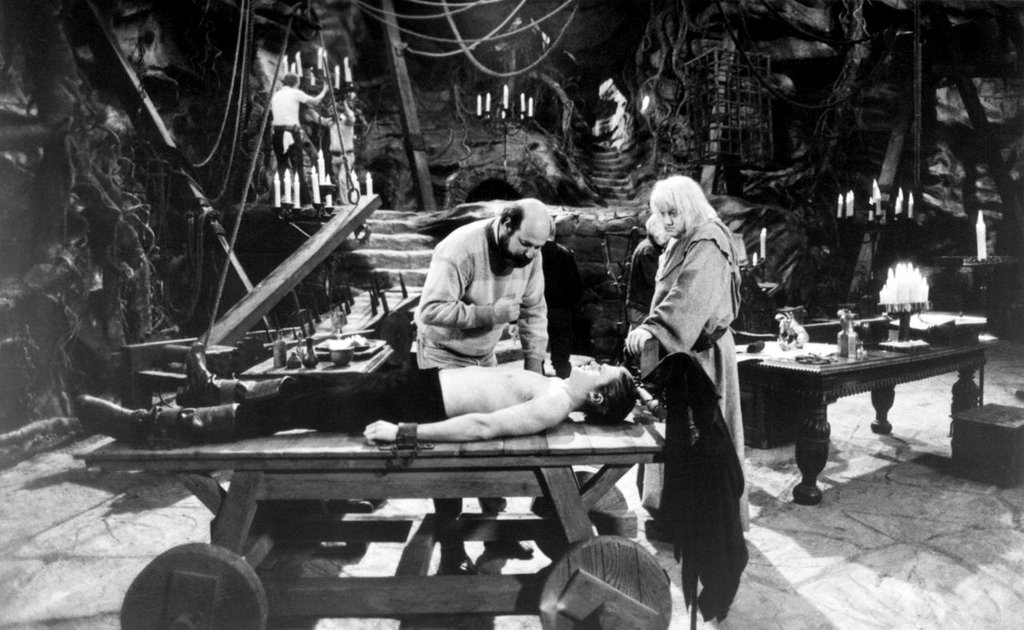
Delightful behind-the-scenes shots.

Frankenstein (1931)

vv4go8xh

Boris Karloff takes tea.

The Princess Bride (1987)

WL7n5jnh

Now remember, this is for posterity…

The Phantom Menace (1999)

D3lZtmwh

Darth Maul practices his macho moves.

The Matrix Revolutions (2003)

1oJf4u8

Hugo Weaving is beside himself. (Sorry, wrong movie)

The Revenge of the Sith (2005)

UJfv2e2h

Hayden Christensen as a crispy critter. Notice the blue-screen mask for his stump.

Kingdom of the Crystal Skull (2008)

p0TQsuA

Harrison Ford, prior to getting nuked in the fridge.

Harry Potter and the Deathly Hallows, Part 2 (2011)

qJrJTlHh

Ralph Fiennes with CG markings for his snake-nose and other features.

Like these? Click through for 93 more!

Oh, and one bonus:

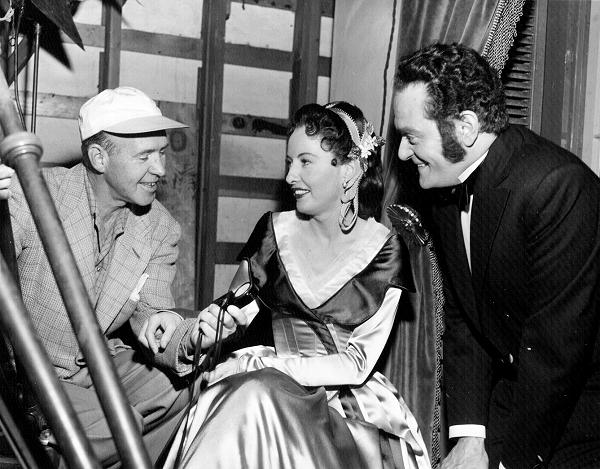
Man with a Cloak (1951)

Light Test


A lighting technician checks exposure on Barbara Stanwyck and Joe DeSantis.

The Old Wolf has spoken.

Unexplained mysteries: Ball Lightning

Unlike UFO’s and Nessie, for which there is only scratchy, hazy, unfocused imagery available, ball lightning appears to have been captured on video many times, and even recreated in the laboratory. There are as many hypotheses as there are scientists studying it.

The video below is fascinating and haunting – especially with the background music. I have to say the Romanian one looks a bit hokey, and reminded me of one of these:

lumindiskbatteryoperatedwhite-379x376

These were everywhere in Trek TNG, and I have one in my office.

The other clips, however, appear genuine.

Strange things exist in our world.

The Old Wolf has spoken.

The Berlin Clock of Lives, 1935

“A CLOCK of Lives operated by the Statistical Office in Berlin, Germany, informs spectators that the German population is constantly increasing. To insure being seen by many people, the clock was placed in Dönhoffplatz, a busy Berlin thoroughfare. The clock tolls the number of births and deaths occurring every quarter of an hour. The tone of the bells indicates whether a birth or a death has occurred.”

die-berliner-lebensuhr-1936

Another view of the Clock of Lives:

uhr

The clock, more properly called the Wilhelm-Lach Tower, was built in 1935. The small bell tower had the following inscription:

Every five minutes, nine children are born in the German Reich – every five minutes, seven men die. This tower is dedicated to the memory of the first National Socialist Mayor in the Central District, P[arty] M[ember] Wilh[elm] Lach, Born 9 June 1801- Died 6 July 1935″

According to the German Wikipedia site, the buildings around the square were heavily damaged during the war, and were largely razed and rebuilt. It is assumed that the clock tower met its demise around the same period.

uhr2


A photo of the clock memorial taken in 1935.

Berlin no longer has a population clock, but it has a pretty sick world time clock in Alexanderplatz:

tumblr_lykq7l8NVj1r8zlldo1_500


Der Alte Wolf hat gesprochen.