A visit to the new planetarium, and so much more.

Earlier I posted some memories of the old Hayden Planetarium in New York City. As a child it was one of my favorite places to go.

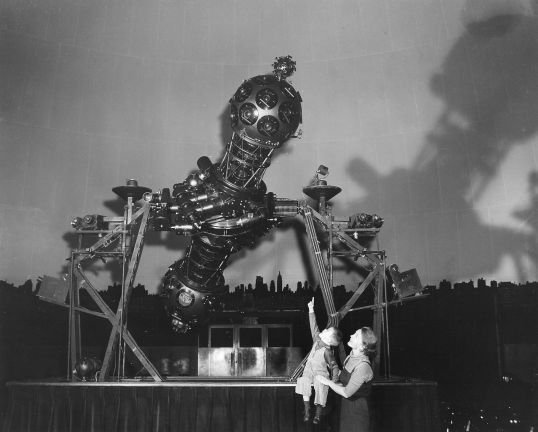
1956, Planetarium 1

Finding myself in New York City once again, I decided to take the opportunity to visit the American Museum of Natural History along with its new Science Center. With one small exception, I was not disappointed.

I started out with a wonderful presentation narrated by the Planetarium director, the illustrious Neil deGrasse Tyson, called “Dark Universe.” It was visually stunning and extremely enlightening. I mentioned to my Facebook group that if Carl Sagan were still alive, and had he been able to see this presentation, it probably would have brought tears to his eyes – such was the respect paid to the wonder of the universe in this beautiful show.

Next on the docket was a visit to a very brief presentation about the Big Bang, narrated by Liam Neeson. Only 4 minutes long, it was light on science but a good introduction to the subject for the many people who come to visit the planetarium.

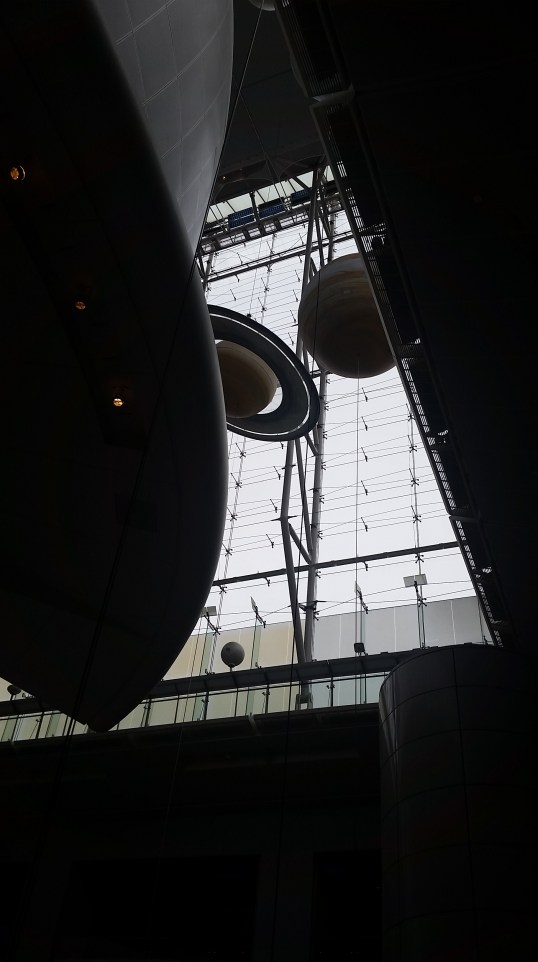
Leaving the Big Bang theater, one exits the dome and proceeds down a spiral ramp with many exhibits along the way relating to the formation of the universe from the Big Bang to the present day.

20160204_122149

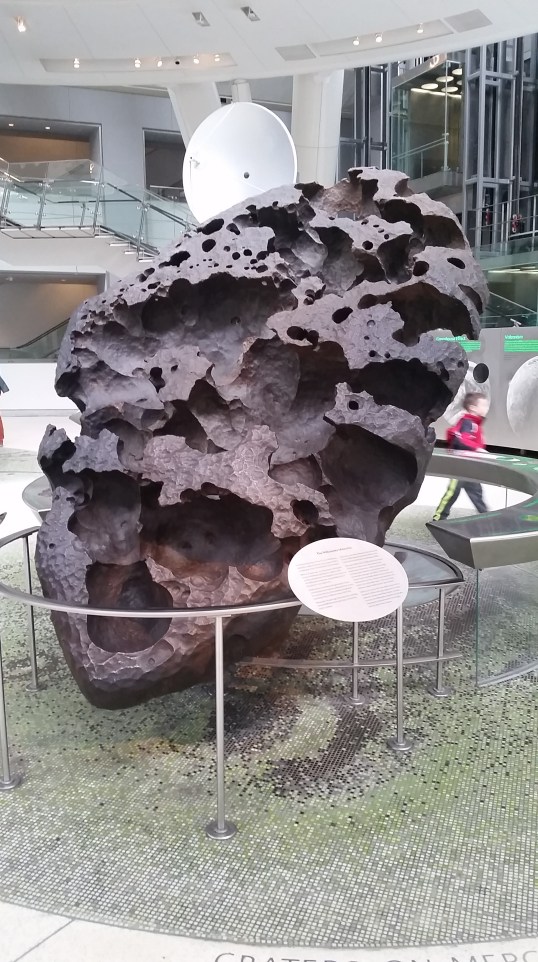
Other exhibits artfully and powerfully illustrate the scale of the universe from the subatomic to the farthest reaches of our observation. On the bottom floor one finds some familiar things: the Willamette meteorite which was salvaged from the old planetarium,

20160204_120914

and many scales embedded in the floor showing your weight at various locations in the universe, such as the moon, a red giant star, the Sun, and a neutron star.

One never stops learning. I was surprised to see that my weight on the “surface” of a red giant star was almost negligible. Had I stopped to think about it, I would have realized that these expanded giants are so large that their photosphere is far, far, from their center of mass, meaning that the effect of gravity is almost nil.

I was crestfallen to find out that the Copernicus room with its amazing clockwork orrery which I so dearly loved as a child no longer exists; the entire building that housed the old planetarium was torn down to make way for the new Science Center, and apparently the mechanisms had stopped functioning as early as 1980. Modern day knowledge and technology has far surpassed the needfulness of the old mechanical device… but it was cool. The planets actually moved in real time, and the glowing orange Sun at the center was captivating. At least I have the memories.

Orrery

Leaving the planetarium, I wandered around the Natural History Museum and reacquainted myself with many of its amazing exhibits. Like the movie in Paris, this is not a building that one can experience in a single day so I had to be selective. I was not, however, disappointed.

The old dioramas in the African mammal room and elsewhere have been lovingly preserved and maintained; they look exactly the way I remember them and are still stunning to consider. These are true works of art.

My first girlfriend, to whom my mother introduced me when I was about four or five, was still there, along with many other wonderful fossils. In the hall of dinosaurs, I learned something new again: the old conventional wisdom that a Stegosaurus had a brain in its ass to control its back end the same way a hook and ladder truck has a second driver is simply not the case. Live and learn: farewell, Brontosaurus. Farewell, butt brain. (But Pluto is still a planet, dammit.)

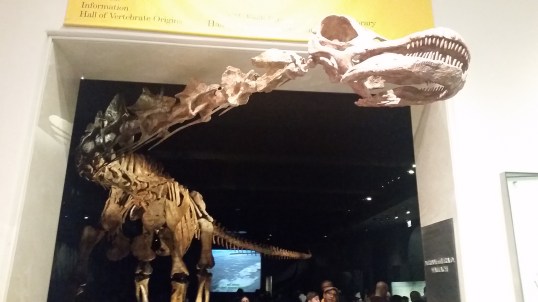
The museum is now home to one of the largest dinosaur fossils that can be seen by the general public. It’s so long that they had to have its head stick out of one of the exhibit rooms.

“The new, much larger occupant grazes the gallery’s approximately 19-foot-high ceilings, and, at 122-foot, is just a bit too long for its new home. Instead, its neck and head extend out towards the elevator banks, welcoming visitors to the “dinosaur” floor.”20160204_123143


The so-called “titanosaur” is so new that it has not yet been officially named, but it certainly makes for quite the sight.

There were so many other things to see. If I were to ever live in New York City again, which given real estate prices is far beyond the realm of possibility, I would certainly become a member and support the museum with regular visits.

The Old Wolf has spoken.


The Internet Doesn’t Have Everything Yet

I have written before about things I’ve lost over time, seen in a magazine or a book or elsewhere, and my efforts to re-locate them. As time goes on, more and more material gets uploaded to the Internet, but despite some successes, there are many lacunes.

I remember a great advertisement that appeared at the end of the 90s or thereabouts – it was, if I’m not mistaken, for the Sony Nightshot video camera, and showed – taken in infrared light – a cat and a dog surprised in a compromising position on the couch. The caption was something like “You’ll be surprised at what you can discover when you come home unexpectedly.”

I know that ad existed, because I can see it in my mind’s eye as plainly as could be desired, but thus far I have found no hint of it in the course of as many searches as I know how to do. It appears to have vanished without a trace. Now that may be the result of an unfortunate urban legend which sprung up around the time of the Nightshot’s introduction, specifically that you could see through clothing with it – but I’m surprised I can’t locate this particular ad copy, because it was funny.

I guess some things are either lost forever, or I’ll just have to keep waiting until someone finds it.

The Old Wolf has spoken.

It’s Yesterday Once More: Cocoa Marsh

I first mentioned this product of the 60s as I was reminiscing about television.

First came Bosco, begun in 1928. Think Hershey’s Syrup, but nowhere near as nasty tasting. It made a lovely chocolate milk. And, interestingly enough, still available.

bosco

Of course that commercial, insidious as all the best commercials are, comes rushing back from the depths of my memory every time I hear a Bossa Nova beat:

But Bosco was soon aced out of our household by Cocoa Marsh, as I faithfully watched Claude Kirschner’s Three Ring Circus.

Claude Kirschner and Clowny
Marsh

An older bottle of Cocoa Marsh.

il_570xN.344625609

A later bottle of Cocoa Marsh, the kind I was most familiar with.

cocoamarsh (Small)
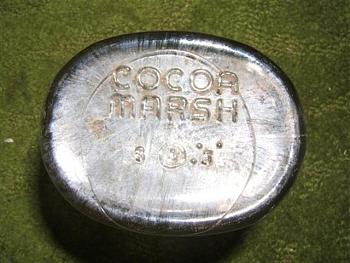
Embossed on the bottom.

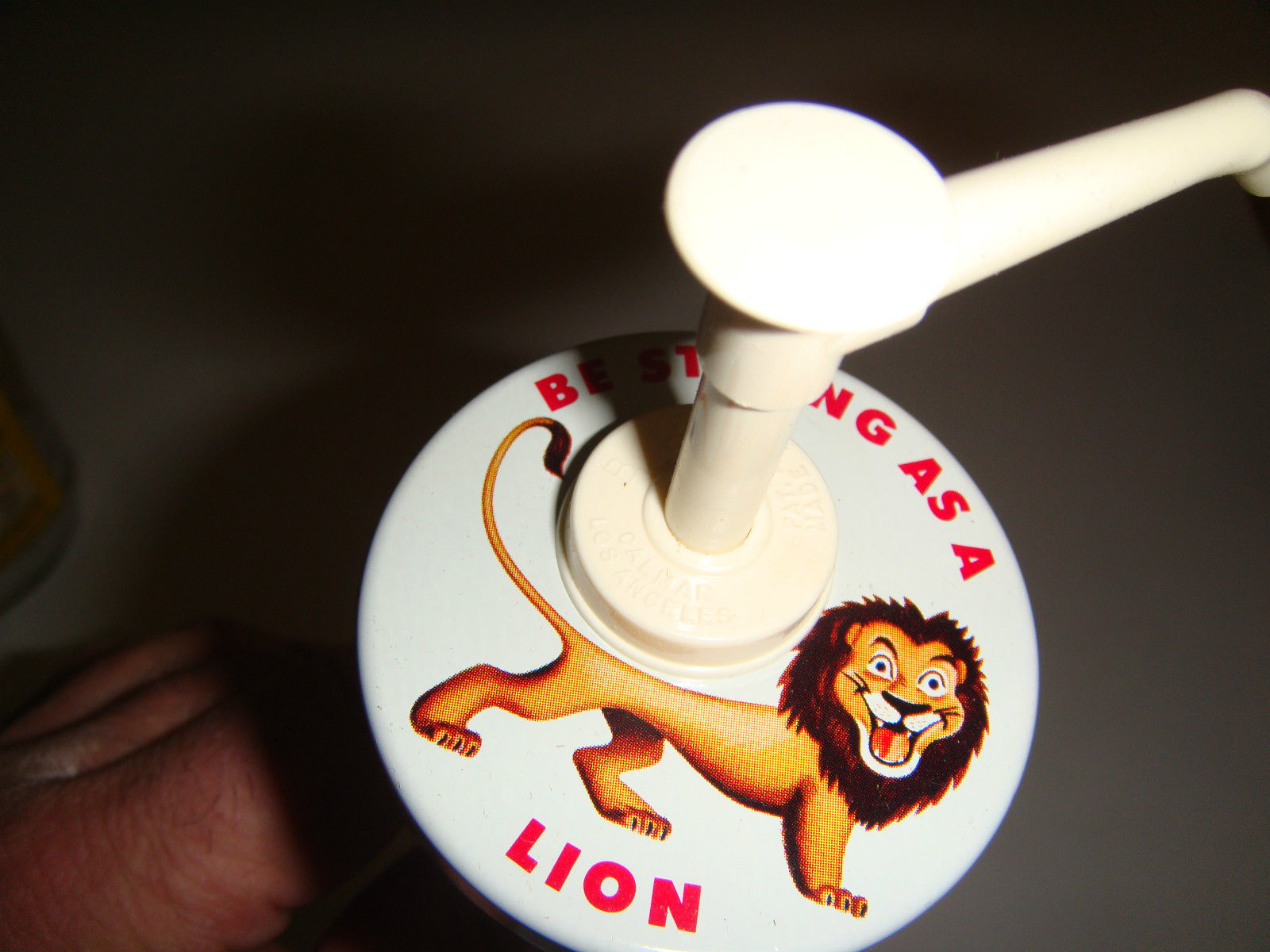
But what was cool about Cocoa Marsh (some have suggested that it contained marshmallow as a smoothing ingredient, hence the name, but I have not yet been able to verify this) was that you could get a pump. Dang, i gotta get me some of that, and as I recall, we did.

download
$_57 (1)
$_57
pump

Notice above two images also carried the name of Yum-Berry, a berry-flavored variety of Cocoa Marsh, which I recall very fondly as well. It was short lived, and lasted only around a year if I remember correctly.

Cocoa Marsh marketed heavily through a variety of channels. The Soda Fountain below took the pump concept to the next level, and it looks familiar enough to me that I’d swear on a stack of Saturday Evening Posts that I owned one.

$_57 (3)

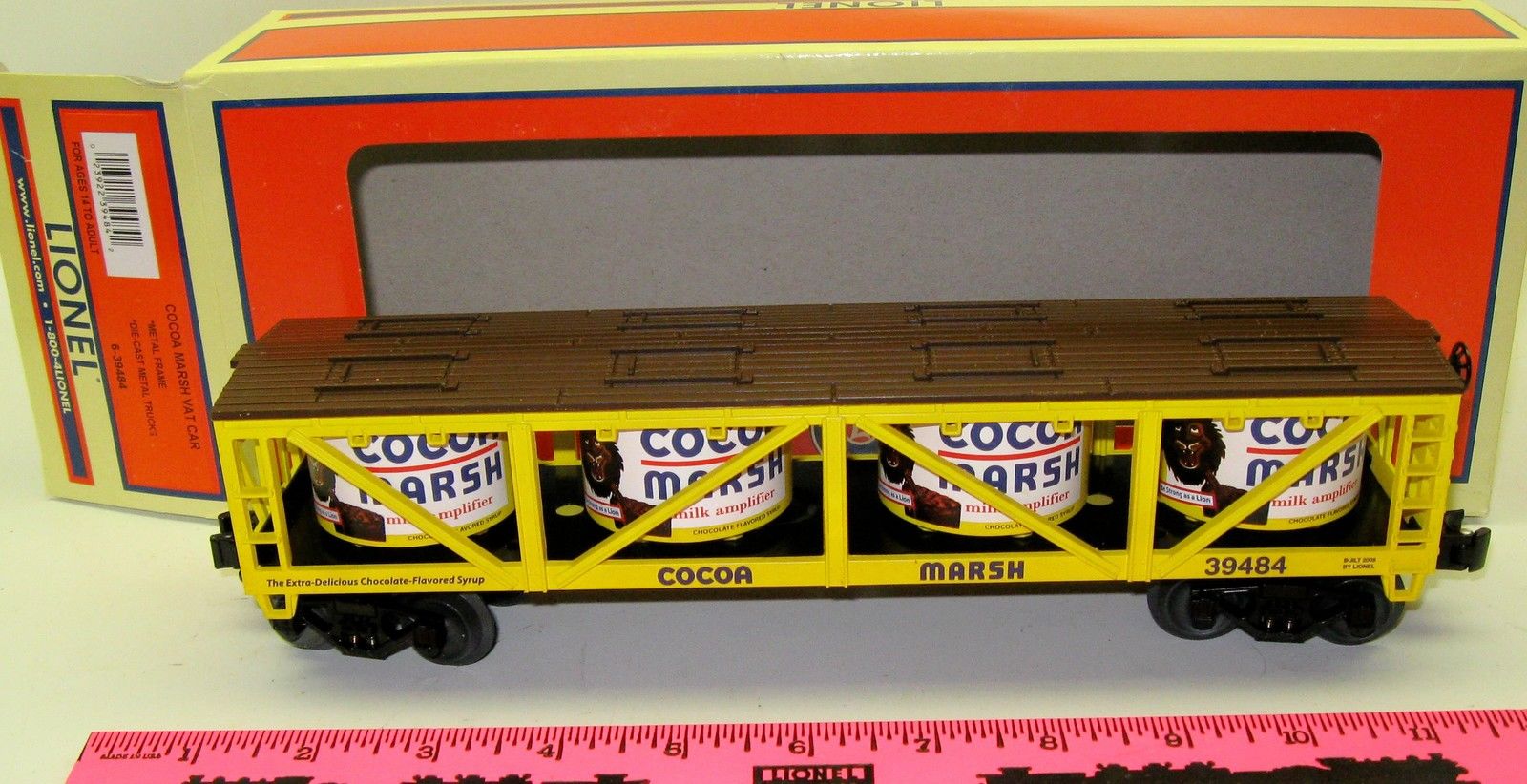
Marketing to older folks was not forgotten as well; here a Lionel O-gauge rail car with Cocoa Marsh vats.

$(KGrHqYOKjoE6VEbSsbFBOnH4lHGn!--60_57

Sadly, despite a massive advertising machine through children’s shows in New York, the product was unable to compete with Nestlé’s Quik™ and Ovaltine™ (which as a kid, I thought tasted like bat guano – sort of like comparing chocolate to carob, and just as disappointing.)

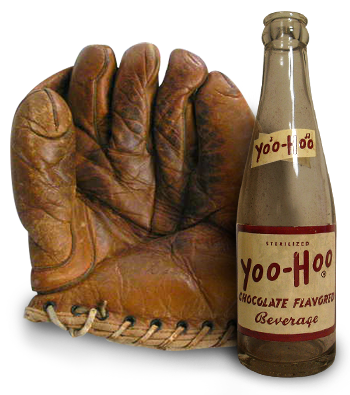
In passing, there were a couple of other products around at the time that popped up on my radar. One was Yoo-Hoo, an odd-tasting concoction that was pitched incessantly by Yogi Berra, and which is still available.

img-yoohoo-breakout-box-2-baseball_151929377098

It was very strange tasting indeed, but somehow one got used to it.

The other was Flav-R-Straws, which first showed up in 1956, and which I remember well. They were wildly popular, and I was thoroughly in favor of them.

flav-r-straws_1957

If only I had a TARDIS.

Edit: As an afterthought, I’m hardly the only one who remembers these things. A line from Diana Rubino’s recent novel, The End of Camelot:

The entire day had her eating Sugar Pops out of the box, washed down with Cocoa Marsh or Yum Berry.

The Old Wolf has spoken.

Music lost, music found

In the early 1970s I spent a year or so in Naples, Italy. While there I acquired a lot of lovely Italian LPs, but I had also brought some music with me from home to play on my portable cassette player. I would listen to these albums endlessly, and they became inextricably associated with my time there.

But time moved on, I moved back to the states, and over the years the two cassettes either wore out or were lost, and ultimately they faded from memory, leaving only an echo. Every now and then I would hear one of the pieces on the radio, but never had enough musical skill to identify them; it took me decades to locate all the pieces I had become so fond of, but finally the list came together and I could find the old track listings and identify the albums, with the additional bit of help that I recalled the albums were released by RCA.

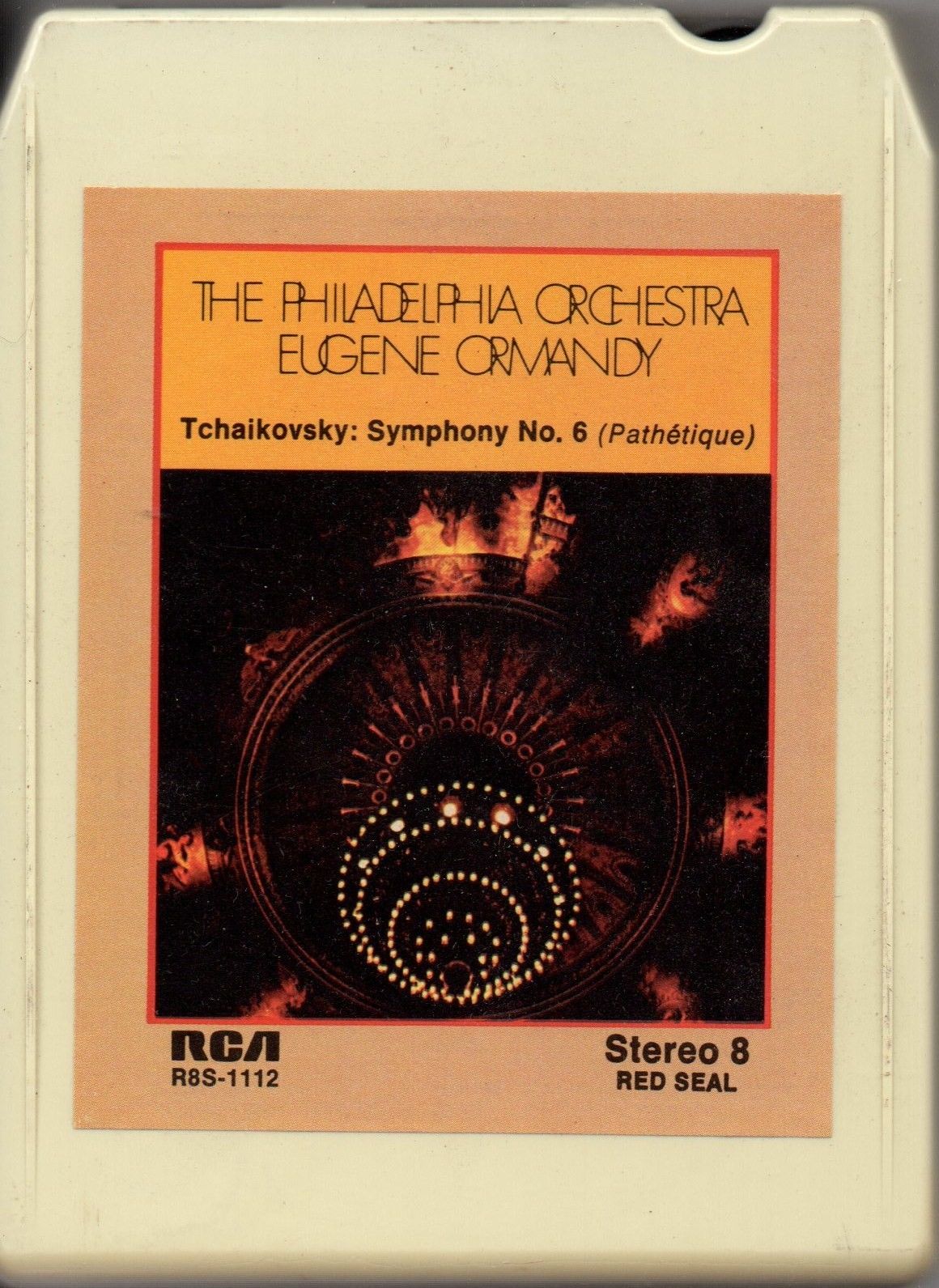
I can no longer find images of the cassettes themselves, but the same albums were released either on LP or 8-track:

liszt

Tchaikovsky

Thanks to the miracle of music streaming websites like Pandora and Grooveshark, I was finally able to re-assemble the albums in virtual format, and once again listen to these compilations; music being a powerful memory elicitor, these glorious pieces transport me back to the Naples of the early 70s.

The playlist:

Smetana – The Bartered Bride

  1. Overture
  2. Polka
  3. Furiant

Liszt – Hungarian Rhapsody No. 1
Liszt – Hungarian Rhapsody No. 2
Dvorak – Scherzo Capriccioso, Op. 66

Tchaikovsky: Symphony No. 6, “Pathétique”

The more time goes on, the more the Internet manages to capture and archive. While Google Books and Newspapers have been more or less given up on as projects, private enterprises are stepping in to pick up the slack; it is to be hoped that a compromise can be worked out between the exigencies of copyright and the importance of digital archival.

The Old Wolf has spoken.

Free software, and some memories.

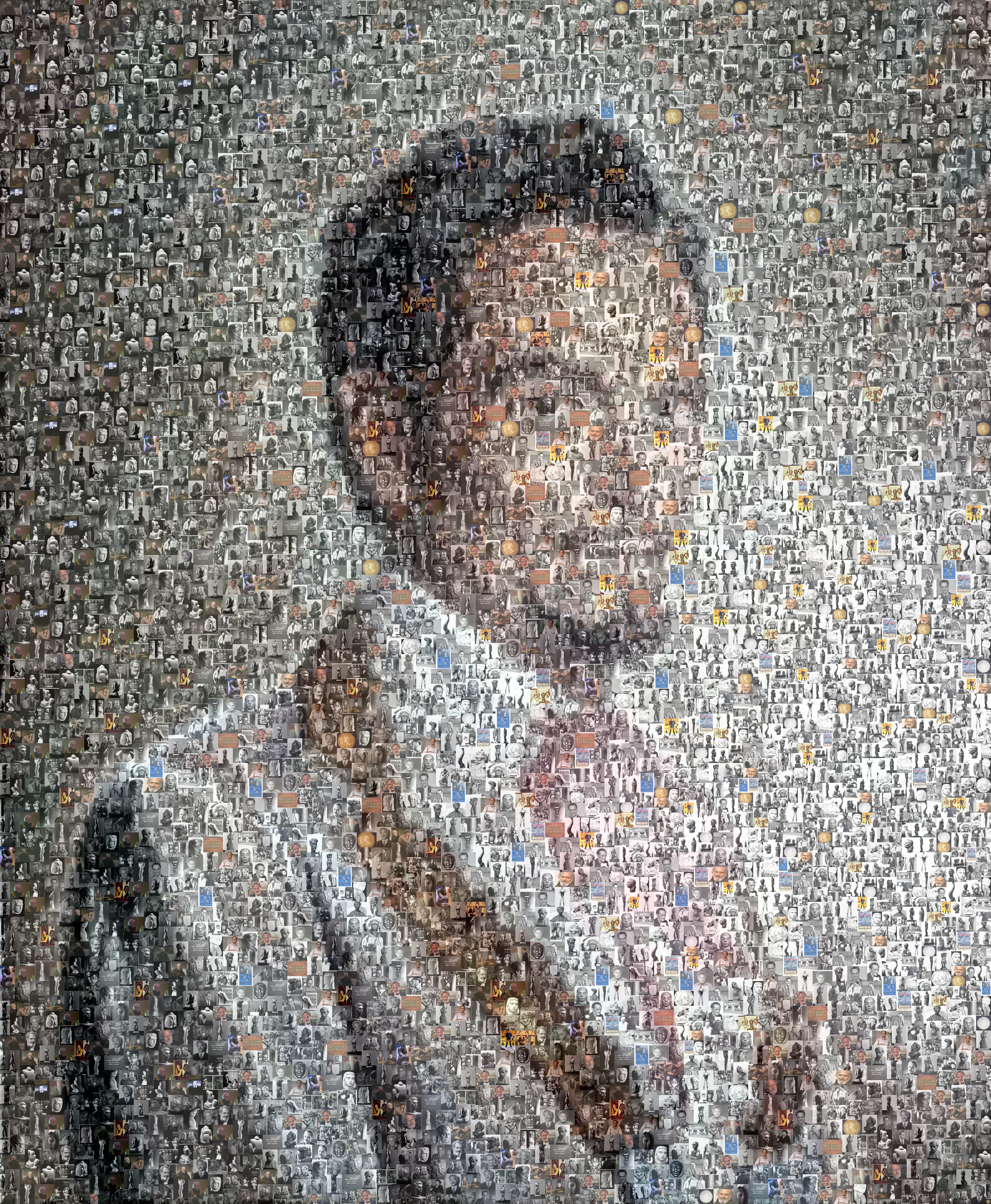
Joe Portrait Prop Mosaic02

The above image (click it to enlarge) was created by AndreaMosaic, a free software program that allows one to create  the kind of photomosaics invented by Robert Silvers. I’m not sure what the legal ramifications of all this is, but I love the result.

This was the original picture I used to create the mosaic:

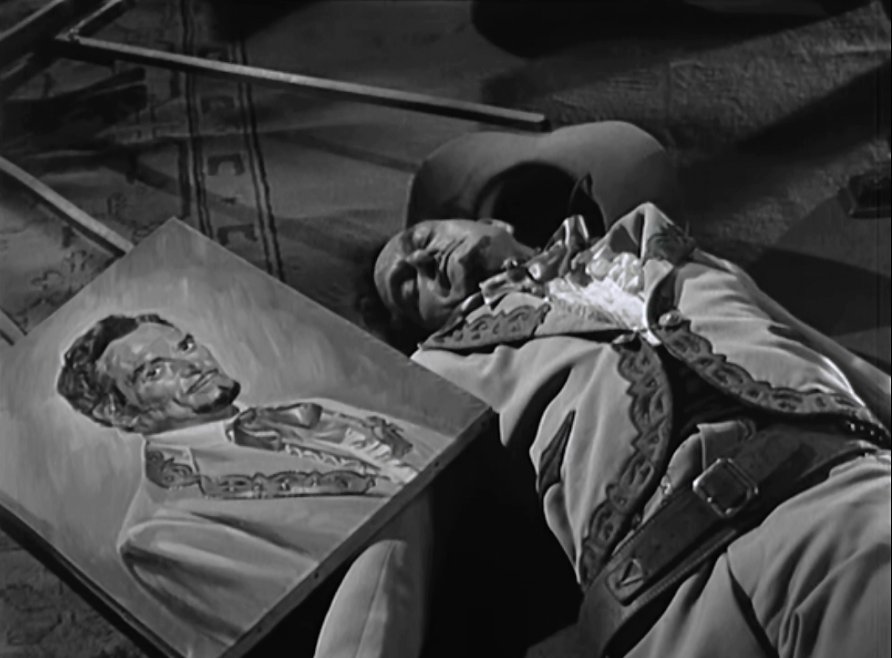
Joe Portrait Prop

This painting is one of two created for the Warner Brothers show “Cheyenne;” the episode was “Road to Three Graves.”

Dad died well. He had lots of practice during his career.

Both painted on rice paper and in a balsa wood frame, one was crashed into during the filming; the other survived in his possession and it came to me when he passed on. Joe was a long-time visitor of the Eldred Center in Provo, Utah, where he had many friends; after his death, I donated the picture to the center where it hung by the office. I once took my wife there and showed it to her, because I was quite pleased they remembered him with such fondness.

In a sweet and romantic gesture, she later arranged to go back to the center and re-purchase it for me as a gift, a deed which brought tears to my eyes; it now hangs over our mantel during the month of June, representative of both Father’s Day and our shared birthday. A couple of years ago the old Eldred Center was demolished and moved to a new recreation center; heaven only knows what would have happened to the portrait had my beloved not rescued it. Perhaps it would have gone to the new location, perhaps not. In 2013, close to 25 years would have passed since Joe’s death, and few seniors of today would remember him; whatever the case,  I am most grateful to have this treasured painting back in my possession,

The mosaic, by the way, is composed of multiple images from my father’s career, as well as his sculptures.

The Old Wolf has spoken.

“I’d rather get a root canal than do [X].”

I remember hearing this phrase many times when I was growing up, and always wondered why it was held up as an example of something to be feared.

Ql27HPr

This recently-found cartoon backs me up.

Then I had one.

The procedure was not really that horrid from the “sitting in the chair” standpoint, because I couldn’t see what was going on, but I remember that it just took a long time. I think if I had seen this animation (the Internet didn’t exist back then), I might have had even more reservations about going. Ow ow ow…

KVbGBHi

Now, I already had a crown on the affected tooth, so the last bit wasn’t necessary, but I had no idea this process was so involved.

The biggest challenge was the fact that I ached for three months after I had it done. It was insane. I wondered if I was going to have to have the thing done again, but eventually the pain subsided.

And thinking about this whole thing brought up a whole raft of memories about dental work… and I had a lot of it done as a kid.

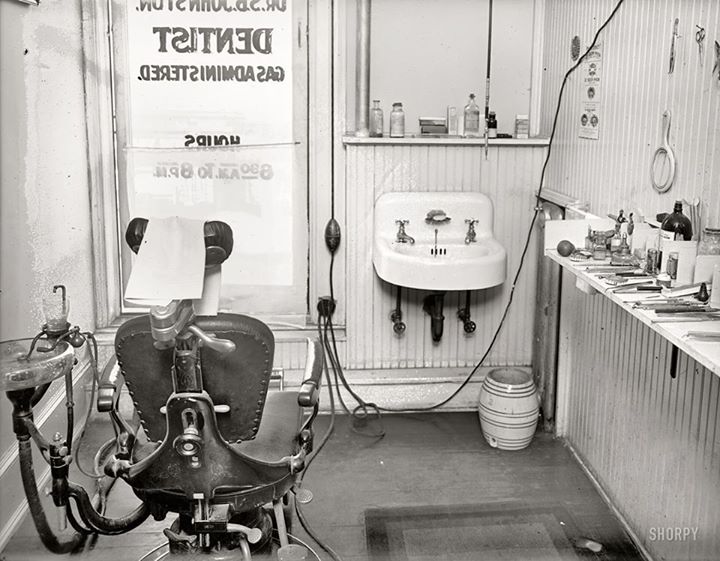
See, the thing of it was, I was terrified of needles. I started getting cavities in my teeth before I was 8, and had a lot of my baby teeth filled, and I refused to let the dentist give me anæsthetic… so I endured countless sessions in a setup that looked a lot like this:

1393014_10151952137530196_1463228318_n

Image found at aacd.com

This may be a bit older than the 50s, but the basic setup looked the same as the one Dr. Glick used on me. No high-speed drills here, just that belt-powered grinder, and despite the agony I still refused the Novocaine.

I found out how foolish I had been when I broke a tooth or lost a filling or something when I was at summer camp in Maine, sometime around 1963. They ferried me to a dentist in town, and I told him that I didn’t want anæsthesia. “Mhm,” the dentist responded. “Open.” And then the son of a bitch stuck me.

The blessed son of a bitch.  Sheesh. If only I had known. Dental work still isn’t fun, but a little pain up front is certainly worth a lot less torment for a couple of hours.

A few weeks ago I went to a local dentist for the repair of a broken tooth. I thought for sure I’d have to get a crown on it, because the entire inside surface of the tooth snapped off – but I was pleasantly surprised. A tiny bit of drilling, two applications of bonding, and I was as good as new – at least for this time. The whole thing took about 10 minutes. I mentioned to the dentist that the advances in dental technology were astonishing, and he said that not much had really changed in the tools, but the materials were where the miracles were taking place. I can’t help but agree, with the exception of the digital x-rays that they do these days.

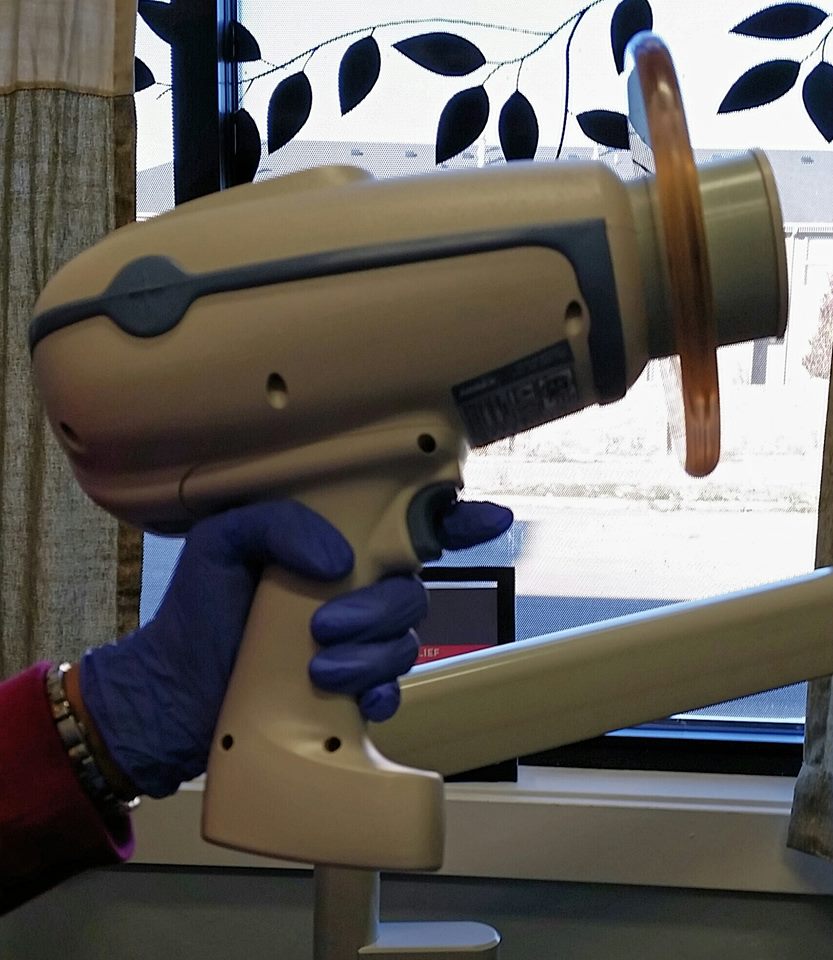
First they put me in this contraption that whirred all around my head and did a complete 360° scan, and then the technician put me in the chair and zapped me a couple of times with this baby:

zap

Handheld, she didn’t even have to leave the room. No developing time to speak of – all digital. I couldn’t help but be reminded of this:

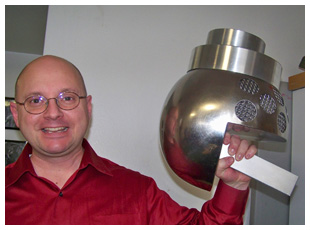
plasgun1 basic1-schlock_7798

Howard Tayler, author of Schlock Mercenary, holding a replica of Sergeant Schlock’s plasma gun manufactured by Doc Nickel, who in his own right not only manufactures some really awesome paintball stuff but also draws The Whiteboard, a webcomic vaguely about paintball.

It’s funny, but with all the advances, I still miss the old rinse-and-spit routine so common in the old days; you can see the cup and spit bowl in the office picture above. It may not have been as hygienic, but I could get a lot cleaner than the spray/suction routine they use today. And, I got sprayed with Lavoris™, a cinnamon-flavored mouthwash that seems to have vanished from store shelves, only to be replaced by foul-tasting chemical ersatz copies which taste like camel piss.

Imagine my delight when I found out that this wonderful stuff is still available online:

41xt1bAtQoL

I scored some at Drugstore.com, it was a bit cheaper than Amazon’s offerings, and it was every bit as pleasant as I had remembered it. Now that’s cinnamon.

I’ve had a lot of dental work done in my life. Almost all my teeth are filled, and a number have been capped. I have all my wisdom teeth, and even they have been filled. I just have soft teeth, I guess. But I have all 32, and I’m grateful for the technology that has helped me preserve them. I still don’t like that accursed needle, but as I learned long, long ago, there are prices and benefits to that choice, and the benefits far outweigh the price.

And, I still hope I don’t ever have to have another root canal.

The Old Wolf has spoken.

Memories of the Hayden Planetarium

I grew up in New York City in the 50s. My mother was a Utah girl who had dreams of going to the Big City to become an actress, and by dint of sheer determination she did just that; but while her roots were in the West, she did her best to make sure her offspring (me) was given as much cosmopolitan exposure as possible. This included regular visits to the Museum of Natural History and the Hayden Planetarium.

I have posted a couple of the images below before, but I thought I’d get a few thoughts about this wonderful place of education down in one place. Other images have been gathered from various places around the internet; I have tried to give appropriate attribution where available.

The centerpiece of the Planetarium was the Zeiss projector.

1956, Planetarium 1

Publicity shot for “Pepper Young’s Wife”, TV-Radio Mirror, March 1957, showing the Zeiss Mark II projector in use at the planetarium from 1935 to 1960.

Sitting in the auditorium, watching that behemoth rise up out of the floor, and seeing the stars and planets and nebulæ and galaxies swirling around the ceiling long before Heinlein had written Have Space Suit, Will Travel fired my imagination and gave me a longing to know about what was out there. I remember one show where they gave the audience a little controller and asked them to try aligning two objects in freefall, much the same as a space docking maneuver… it was a great lesson in the nature of inertia.

155034_183077295042955_8272470_n

The control booth of the Star Theatre. I loved that flashlight the operator had which would project a little arrow on the dome – a precursor to today’s laser pointers.

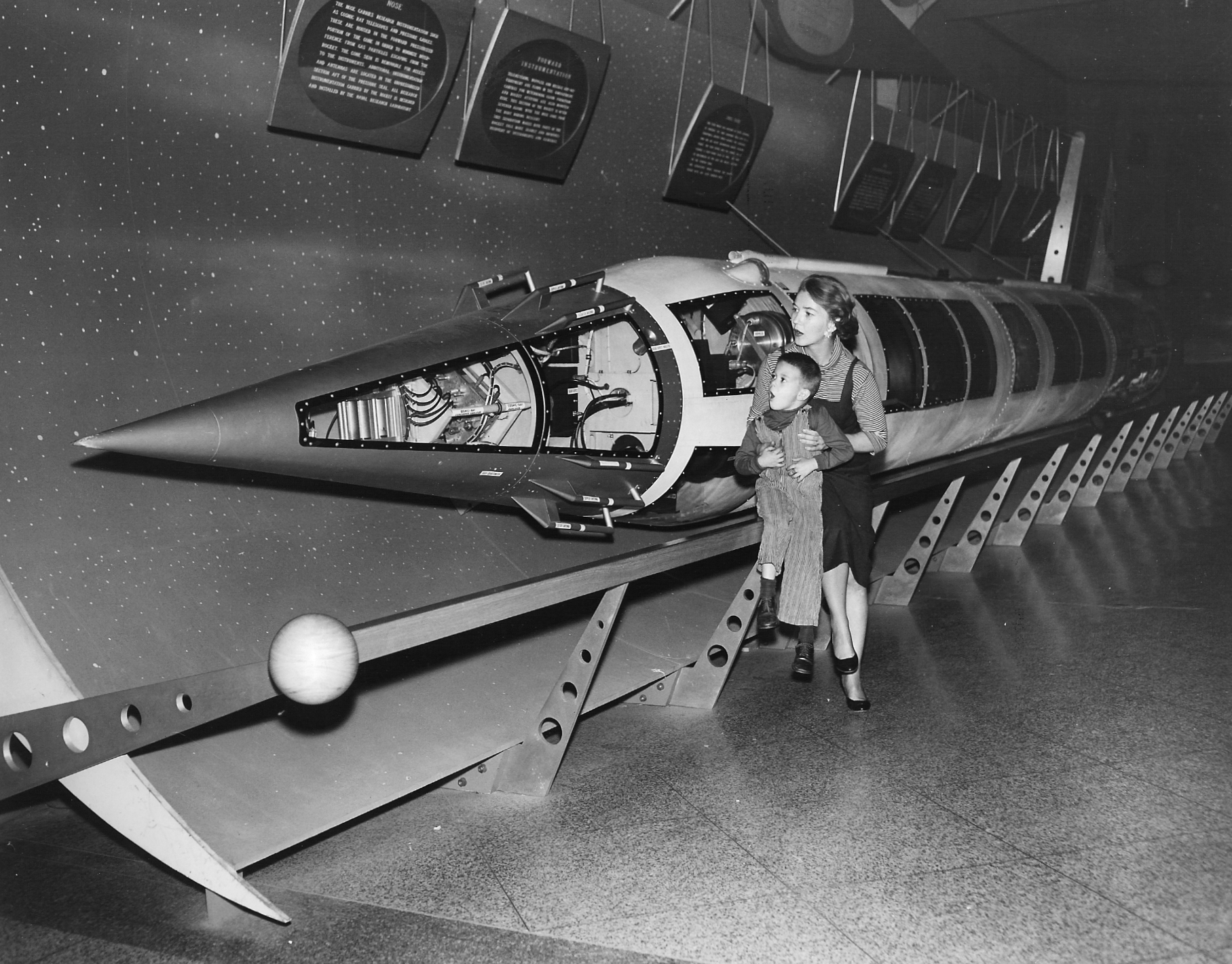
Around the planetarium, as with the modern version and others like it around the country, were scattered various exhibits that I would stare at for hours.
1956, Planetarium 2

Here I am mugging for the photographer (“Look excited! Look excited!”), but it wasn’t much of an acting job. I loved looking at that rocket. A color postcard of the same scene is below:
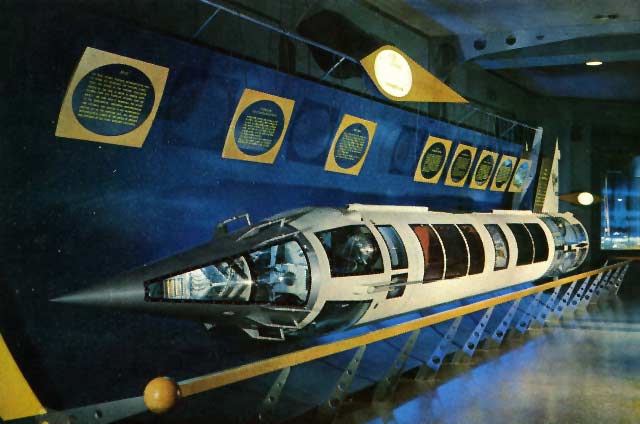
HaydenPlan006

Photo of a planetarium postcard by Andy Porter. Caption reads, “THE VIKING ROCKET. This authentic 45 foot precision instrument is an actual rocket composed in part of sections recovered from the wreckage of Vikings built by the Martin Company of Baltimore and used by the Navy to probe the upper atmosphere. A rocket like this reached an altitude of 158 miles in May 1954.”

984.tif

Photo above and text from the archives of the Museum of Natural History: In 1955, the “most notable event of the year” at the Hayden Planetarium was the opening of the Viking Rocket exhibition. “One of the pioneer exploratory vehicles of the Space Age,” according to a 1961 Museum publication, the rocket was one of 12 that launched from 1945 to 1955, allowing new research on Earth’s upper atmosphere to be conducted.

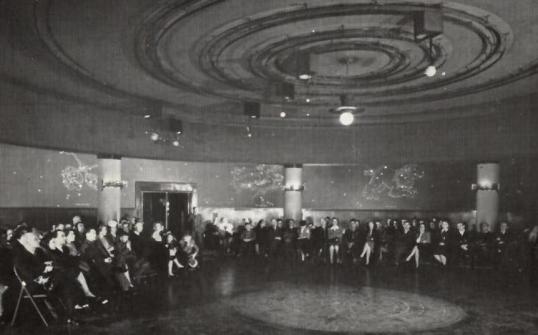
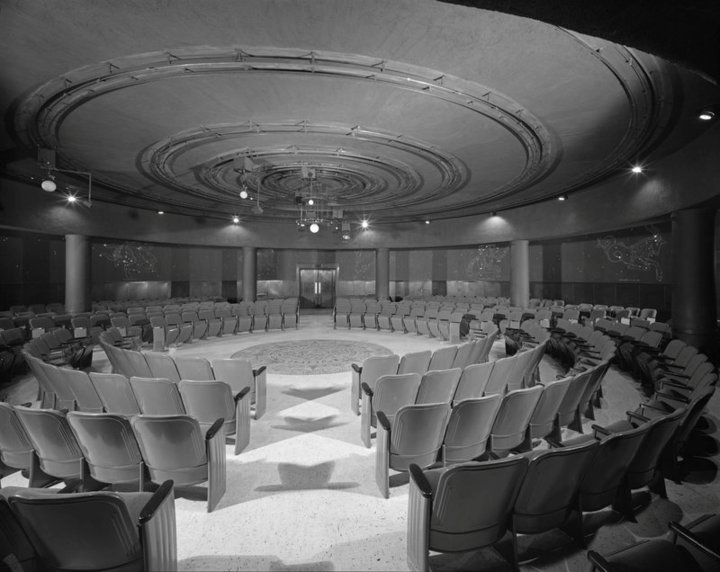
The next exhibit that comes to mind was the orrery in the Copernican room; the original theatre was outfitted with folding chairs.
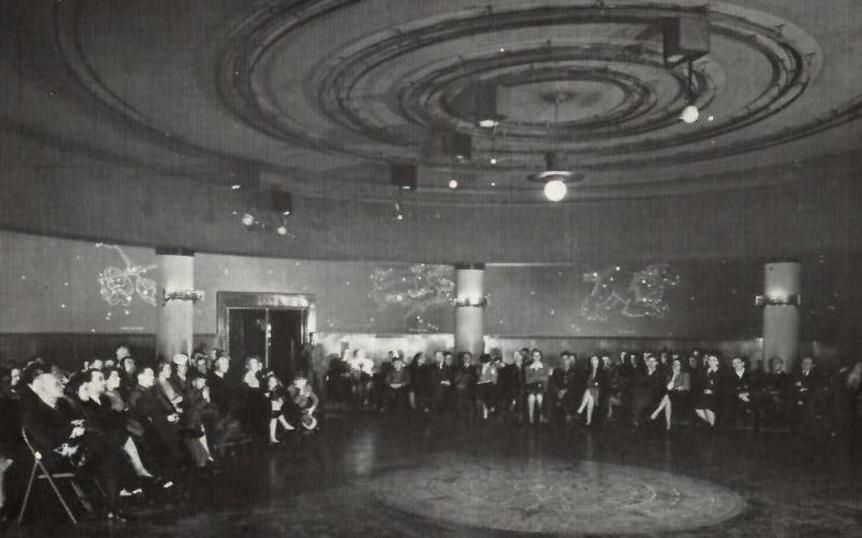
Orrery

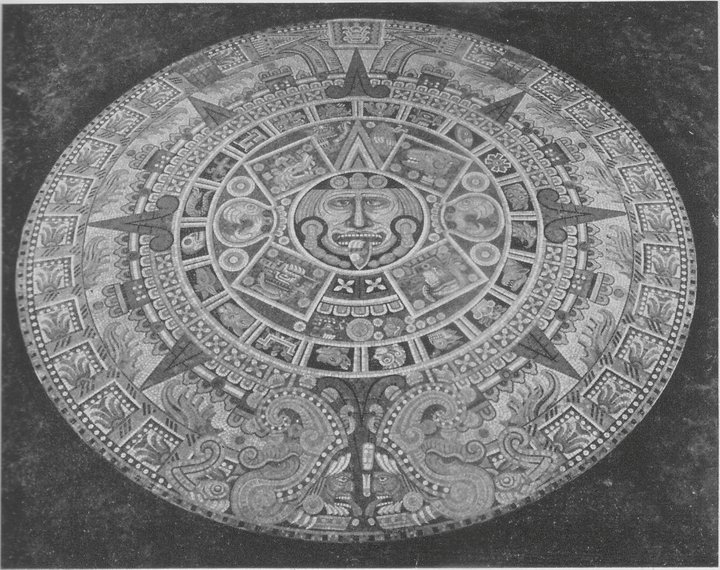
From a postcard. The description on the back reads: “Copernican Room showing solar system. Animated model of the solar system showing the sun in the center, and six of the nine known planets revolving around it. The planets also rotate on their axes as the real planets rotate, moving always at the correct relative speeds. Circling the Earth is a smaller globe, the moon, while Mars has two moons. Jupiter is shown with four of its eleven moons, and Saturn with five of its nine. Around the walls are shown the twelve zodiacal constellations and in the center of the floor a reproduction of the Aztec Calendar Stone.”

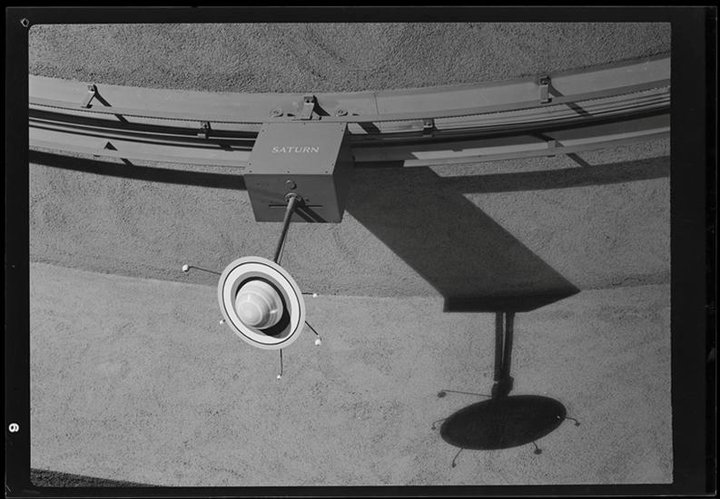
This model, while not to scale and not terribly dynamic, was intriguing in that it represented the orbits of the planets in real time. That meant slowly.  The planets would change imperceptibly, with the inner rocky planets changing somewhat between visits, and the outer planets moving hardly at all. The sun glowed a deep orange.
167054_189460954404589_6798595_n

Closeup of Saturn with five of its then-known nine moons, 10/10/1935. From the Collections of the Museum of the City of New York.

It is of interest to note that we have since identified 79 moons of Jupiter, and 62 around Saturn. [As of July 17, 2018]
167079_194043760612975_6406948_n\

American Museum of Natural History Library http://images.library.amnh.org/, image #327132 March 1960. Later, the room was transformed into a more formal auditorium.
164514_186091644741520_3335509_n

The Aztec Calendar Stone

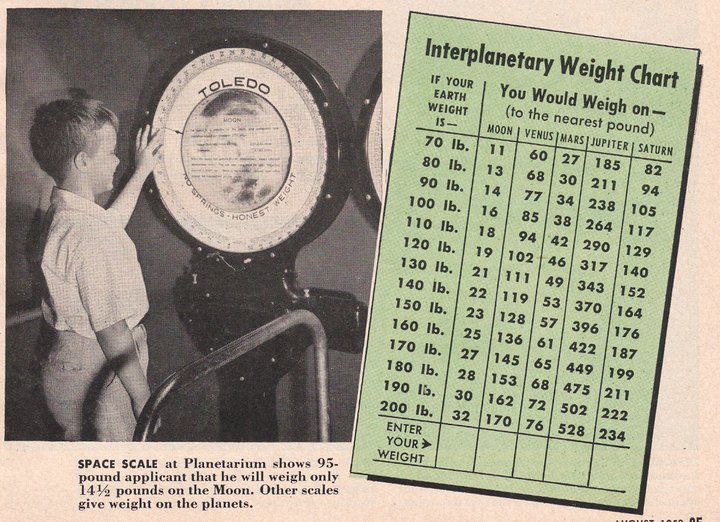
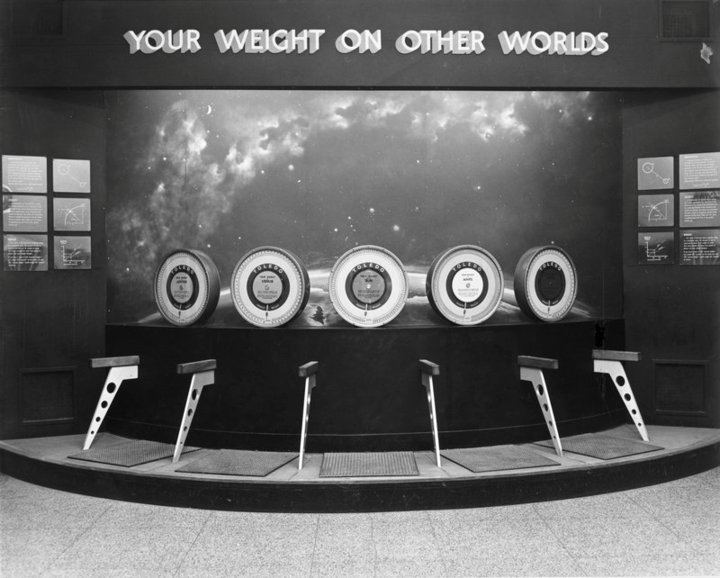
In another room was a place where you could weigh yourself on a series of scales which would show your weight on the Moon, Venus, Mars, Jupiter, and Saturn. Each scale glowed a different color, and to the eyes of a five-year-old, these were some of the most wondrous things in existence. Cards were provided with which to record your individual results.
165690_194038407280177_8232508_n

Image from Popular Science, August 1952. Explanation from the Hayden Planetarium at their Facebook page:

“Another innovation, which has proved of great popular interest, was an exhibit illustrating the principles of the force of gravity by means of six specially calibrated scales showing the actual weight of the visitor on different planets. In this undertaking the Planetarium enjoyed the cooperation of the Toledo Scales Company.”
– American Museum of Natural History Annual Report July 1950-June 1951

John Pazmino of NYSkies Astronomy pointed out that the effect of different weights was done just at the level of the display, not internally. In other words, the needle went to the same angle on each scale, and only the numbers in the background varied.

The exhibit was later updated and modernized:
163143_194038340613517_7743556_n

American Museum of Natural History Library http://images.library.amnh.org/ image #334305 September 1969

Like any good museum, there were souvenirs to be had.

164870_187385094612175_668584_n

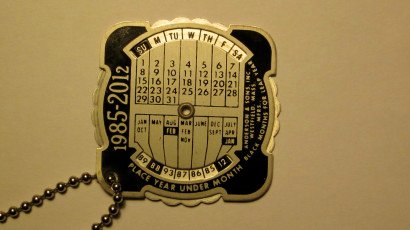
From the collection of Tom Lesser.  I would swear on a stack of waffles that I had one of these; Heaven only knows what happened to it. I was too young at the time to appreciate much astronomy, but nowadays there are some wonderful planetarium and space-exploration programs available online and offline both.

know I had one of these keychain perpetual calendars, and loved it:
165750_186608861356465_146155_n

Again, sadly, lost in the mists of time.

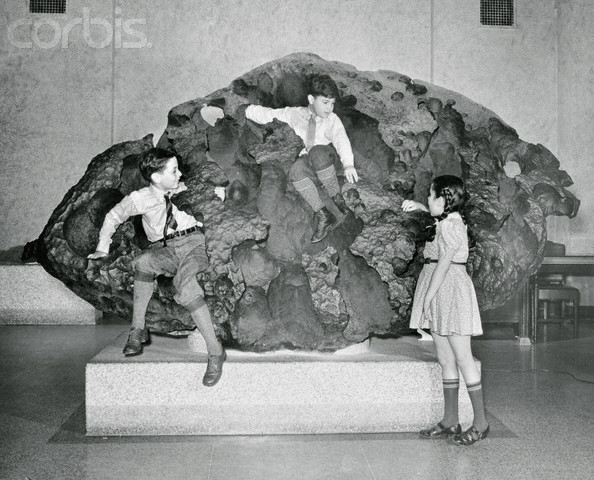
The Willamette Meteorite was on display as well:
Willamette Meteorite

That is one huge hunk of extraterrestrial iron.

Many, many more photos can be seen at the Original Hayden Planetarium’s Facebook page. The ones I have gathered here represent my clearest memories, but the original planetarium had much more to offer. It was a place of wonder and delight. On my next trip to New York, I must be sure to visit the modern incarnation and see what has happened in the last 60 years or so.

Edit: The visit was accomplished, and the report is here.

The Old Wolf has spoken.

Found: The Swan Song of a Modern Hiawatha

Hiawatha

For decades, I’ve had a snippet of a poem running around in my head:

“Simple math and shrubbery pruning, checkers, lunch and water polo.”

This comes to mind often when I consider the un-challenging slate of classes for which I see many college freshmen sign up.

Today someone posted something on Facebook – which, thanks to the lack of a search function I can no longer find – that made me think of it again, and despite earlier searches on Google coming up poor, this time I got a hit.

The link took me to a page in the Gainesville Sun from August 10, 1985, in a column by Bill Henderson. He credited the source thusly:

“To honor the coming season I would have you read an ode to the football player himself. An ode I stole some years back from some fellow hack that I would acknowledge if I could remember his name.”

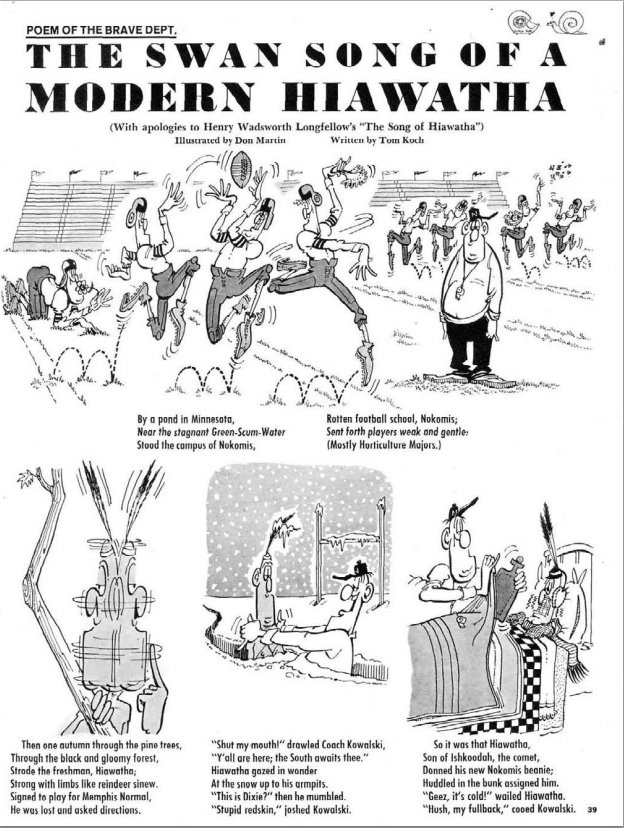
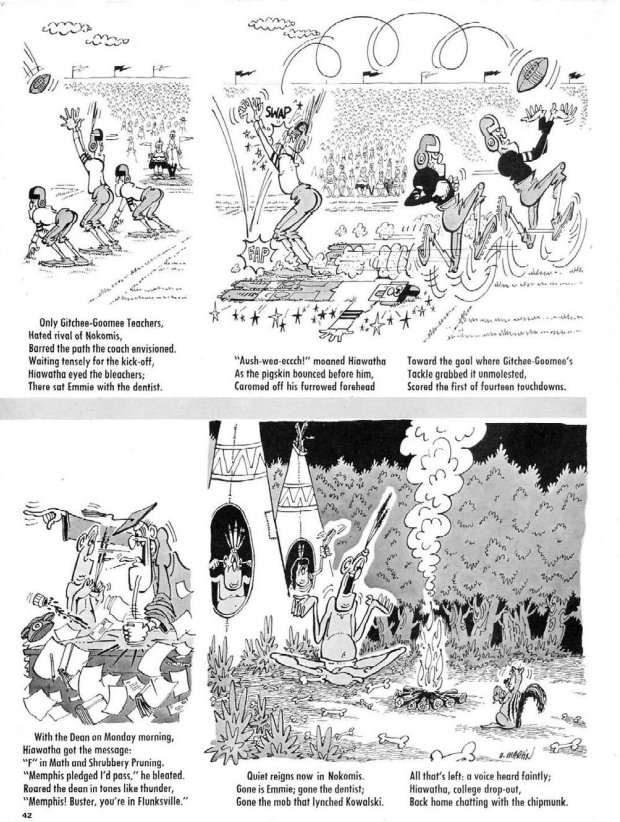
Having seen the full text of the poem again, I was pretty sure the original appearance of the poem was in Mad Magazine, of which I was a faithful and voracious reader through the 60s and 70s. A bit more Googling, and I had located the source: Mad #100, January 1966: “The Swan Song of a Modern Hiawatha” – with apologies to Henry Wadsworth Longfellow’s “The Song of Hiawatha.”

So here, for your gratuitous enjoyment, is the full text of the poem as it appeared in Mad. Be warned – this is politically incorrect for our day and age, and needs to be framed in the mindset of the 60s.

Edit: With thanks to commenter Dave Meek who pointed out that a line was missing in the first stanza. A search for verification led to a discovery of the entire issue of Mad #100 online in PDF format, enabling me to add the image above, as well as an entire stanza that was also missing.

The Swan Song of a Modern Hiawatha
Text: Tom Koch / Art: Don Martin.

By a pond in Minnesota
Near the stagnant Green-Scum-Water
Stood the campus of Nokomis,
Rotten football school, Nokomis;
Sent forth players weak and gentle:
(Mostly horticulture majors.)

Then one autumn thru the pine trees
Through the black and gloomy forest,
Strode the freshman, Hiawatha;
Strong with limbs like reindeer sinew,
Signed to play for Memphis Normal,
He was lost and asked directions.

“Shut my mouth,” drawled Coach Kowalksi,
‘Ya’ll are here; the South awaits thee,”
Hiawatha gazed in wonder
At the snow up to his armpits.
“This is Dixie?” thus he mumbled,
“Stupid Redskin,” joshed Kowalski.

So it was that Hiawatha,
Son of Ishkoodah, the comet,
Donned his new Nokomis beanie;
Huddled in the bunk assigned him.
“Geez, it’s cold!” wailed Hiawatha.
“Hush, my fullback,” cooed Kowalski.

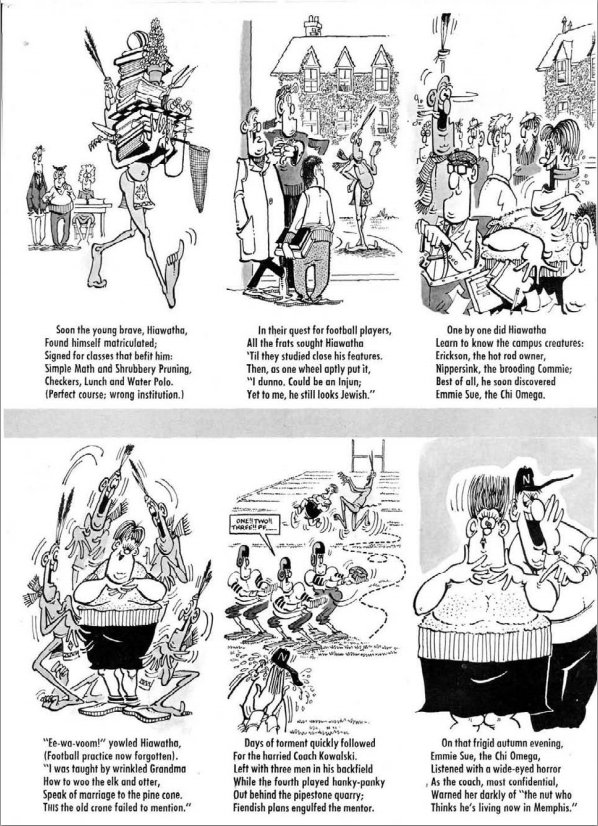
Soon the young brave, Hiawatha,
Found himself matriculated;
Signed for classes that befit him;
Simple math and Shrubbery Pruning,
Checkers, Lunch and Water Polo,
(Perfect course; wrong institution.)

In their quest for football players,
All the frats sought Hiawatha
‘Til they studied close his features,
Then, as one wheel aptly put it,
“I dunno, Could be an Injun’
Yet to me, he still looks Jewish.”

One by one did Hiawatha
Learn to know the campus creatures;
Erickson, the hot rod owner,
Nippersink, the brooding Commie;
Best of all, he soon discovered
Emmie Sue, the Chi Omega.

“Ee-wa-voom!” yowled Hiawatha,
(Football practice now forgotten),
I was taught by wrinkled Grandma
How to woo the elk and otter,
Speak of marriage to the pine cone.
THIS the old crone failed to mention.”

Days of torment quickly followed
For the harried Coach Kowalski,
Left with three men in his backfield
While the fourth played hanky-panky
Out behind the pipestone quarry;
Fiendish plans engulfed the mentor.

On that frigid autumn evening,
Emmie Sue, the Chi Omega,
Listened with a wide-eyed horror
As the coach, most confidential
Warned her darkly of “the nut who
Thinks he’s living now in Memphis.”

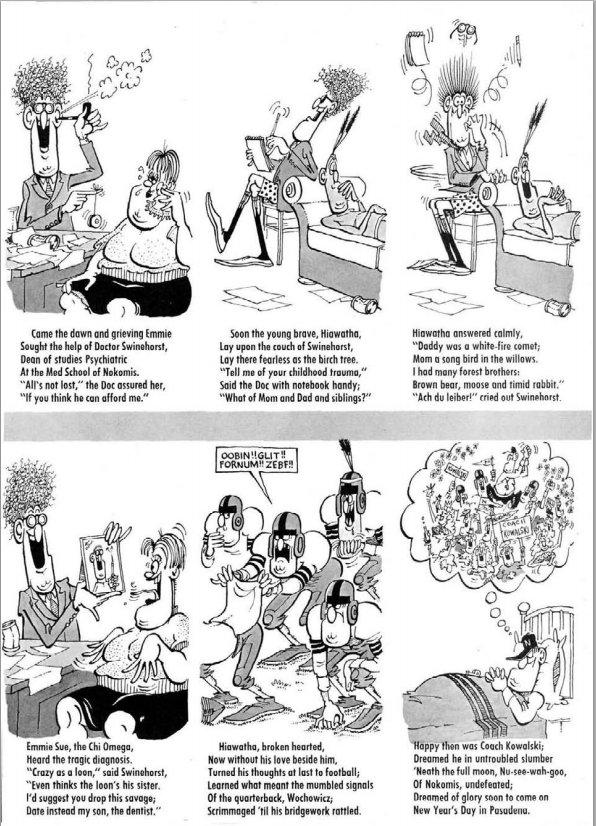
Came the dawn and grieving Emmie
Sought the help of Doctor Swinehorst,
Dean of studies Psychiatric
At the Med School of Nokomis.
“All’s not lost,” the Doc assured her,
“If you think you can afford me.”

Soon the young brave, Hiawatha,
Lay upon the couch of Swinehorst,
Lay there fearless as the birch tree,
“Tell me of your childhood trauma,”
Said that Doc with notebook handy;
“What of Mom and Dad and siblings?”

Hiawatha answered calmly,
“Daddy was a white-fire comet;
Mom a songbird in the willows,
I had many forest brothers:
Brown bear, moose and timid rabbit.”
“Ach du Lieber!” cried out Swinehorst.

Emmie Sue, the Chi Omega,
Heard the tragic diagnosis.
“Crazy as a loon,” said Swinehorst,
“Even thinks the loon’s his sister,
I’d suggest you drop this savage;
Date instead my son, the dentist.”

Hiawatha, brokenhearted,
Now without his love beside him
Turned his thoughts at last to football;
Learn what meant the mumbled signals
Of the quarterback, Wochowicz;
Scrimmaged ’til his bridgework rattled.

Happy then was Coach Kowalski,
Dreamed he in untroubled slumber
Neath the full moon, Nu-see-wah-goo,
Of Nokomis, undefeated;
Dreamed of glory soon to come on
New Year’s Day in Pasadena.

Only Gitchee-Goomee Teachers
Hated rival of Nokomis,
Barred the path the coach envisioned,
Waiting tensely for the kickoff,
Hiawatha eyed the bleachers;
There sat Emmie with the dentist.

“Aush-wea-ecch,” moaned Hiawatha
As the pigskin bounced before him,
Caromed off his furrowed forehead
Toward the goal where Gitchee-Goomee’s
Tackle grabbed it unmolested,
Scored the first of 14 touchdowns.

With the Dean on Monday morning,
Hiawatha got the message:
“F” in Math and Shrubbery Pruning.
“Memphis pledged I’d pass,” he bleated.
Roared the Dean in tones like thunder,
“Memphis! Buster, you’re in Flunksville.”

Quiet reigns now in Nokomis.
Gone is Emmie; gone the dentist;
Gone the mob lynched Kowalski.
All that’s left; a voice heard faintly;
Hiawatha, college dropout,
Back home chatting with the chipmunk.

I can now present you with the original in all its glory, accompanied by Don Martin’s hilarious illustrations (click each image to enlarge):

Hia1  Hia2  Hia3  Hia4

You’re welcome.

The Old Wolf has spoken.

There! Are! NINE! Planets!

Nine Planets Thumb

Maybe.

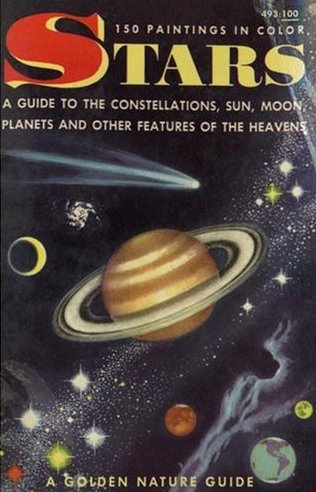
See, for the longest time, I’ve been fascinated by space, and the stars, and astronomy. When I was a kid in the 1950s I’d go from New York City where I lived to visit one of my uncles in the country, and he had an interesting and eclectic library, which things like CS Lewis’ Out of the Silent Planet or The World of Å by A.E. van Vogt. He also had this book:

zim stars

which I would spend hours and hours perusing, right around the same time Alfred Bester was publishing the exploits of Gully Foyle. In my own mind, the stars were my destination.

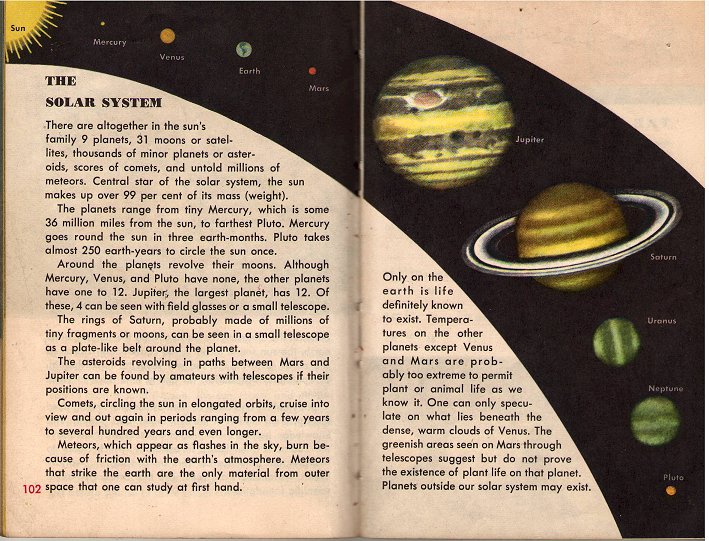
And of course, there were Nine Planets. Nine.

Solar System

This was cemented into my mind when, during the same epoch, I read Heinlein’s Have Space Suit, Will Travel. Beyond being a delightful space opera, it was full of hard science, too. Kip Russell was a genius who thought higher math was as addictive as peanuts, and had all sorts of astronomical data tucked away in his mind which helped him figure out where his evil worm-faced kidnappers were taking him and his little companion, Peewee.

“Mother very thoughtfully made a jelly sandwich under no protest.” Could you forget that after saying it a few times? Okay, lay it out so:

Mother Mercury $.39
Very Venus $.72
Thoughtfully Terra $1.00
Made Mars $1.50
A Asteroids Assorted prices,
unimportant
Jelly Jupiter $5.20
Sandwich Saturn $9.50
Under Uranus $19.00
No Neptune $30.00
Protest Pluto $39.50

The “prices” are distances from the sun in astronomical units. An A.U. is the mean distance of Earth from Sun, 93,000,000 miles. It is easier to remember one figure that everyone knows and a lot of little figures than it is to remember figures in millions or billions. I use dollar signs because a figure has more flavor if I think of it as money – which Dad considers deplorable. Some way you must remember them, or you don’t know your own neighborhood. (Heinlein, Robert A., Have Space Suit, Will Travel).

And no, I could never forget it either. There were nine planets. Nine. And the mnemonic was seared into my consciousness forever. When Pluto was demoted from planetary status to “dwarf planet,” I was devastated. I refused to give in. No. Still a planet, always a planet. Apparently, others felt the same way I did, and for similar reasons:

I really wasn’t too concerned about Pluto’s demotion from being a planet. It was a non scientific discussion about a silly serious definition.

Well, at least that was until they decided to TAKE AWAY PLUTO’S NAME. WTF? So, please Mr It’s-Not-A-Planet-Just-A-No-Name-Dwarf Astronomer, what am I supposed to use for my mnemonic now? Huh?

I learned “Mother very thoughtfully made a jelly sandwich under no protest” as a teenager reading Robert Heinlein. And now? “Mother very thoughtfully made a jelly sandwich under no 134340” just doesn’t have the same ring to it.

[Update: Thanks Dan]
Pluto may have lost it’s planetary status, but it GOT A NEW NUMBER! It went from merely 9 to a rocking 134340! Wow, what a raise. I am however bummed that my favorite memonic, “Mother very thoughtfully made a jelly sandwich under no protest” learned as a teenager reading Robert Heinlein, no longer works.

Perhaps “Mother very thoughtfully made a cherry jelly sandwich under no protest. Excellent!”  (Hmmm, still doesn’t ring well.) Anyway I still stand to-

Sure tell me Pluto it isn’t a planet, but stop MESSING AROUND WITH MY CHILDHOOD! (From Eclectics Anonymous)

And that’s the crux of my objection: don’t screw around with what I learned as a child. If nothing else, Pluto should have been grandfathered in, because despite its true status as a captured Kuiper Belt object (as clearly shown by its off-kilter orbit and the identification of countless other trans-Neptunian objects), it was treated as a planet since it was discovered by Clyde Tombaugh.

Sadly, science moves on. As Neil de Grasse Tyson has said, the universe is under no obligation to make sense to us – it’s just out there, waiting to be discovered. In much the same way as they took away my beloved Brontosaurus, we learn new things every day. Now, as New Horizons approaches Pluto for a scheduled 2015 rendezvous, my excitement to see our last little solar system outlier (at least, that’s the way it was in the 50s) knows no bounds.

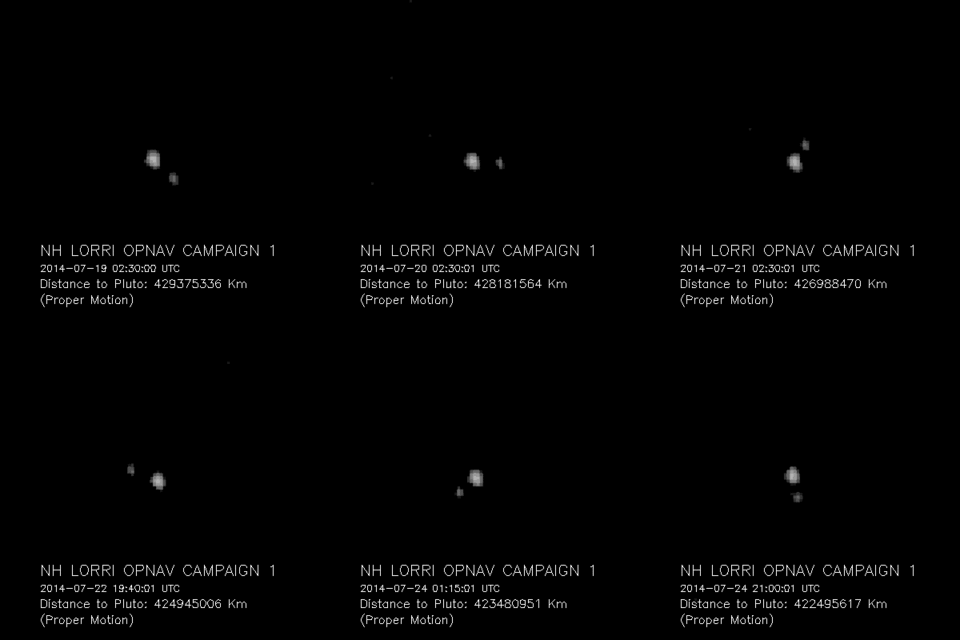
xaqbwrmxwyqtn68mqecd

“The [above] animation of Pluto and its largest moon, Charon, was created using a series of images captured by the New Horizons spacecraft as it continues its long journey to the distant planetoid. Taken from a distance of 422-429 million km, the images are not for scientific study, but for optical navigation between worlds. (From i09)

Those pictures are going to get a lot clearer and more wonderful as New Horizons approaches, if the results from Cassini and other planetary probes are any indiation. But based on what I’m seeing there, it may turn out that Pluto and Charon are not really planets at all, but nothing more than space junk, garbage that looks more like comet 67P/Churyumov-Gerasimenko. And if that ends up being the case, I’ll have to throw my visceral but irrational defense of Pluto’s planetary status onto the trash heap of disproven theories, as sad as it may be.

Our Solar System is a lot bigger now than it used to be. No one ever made mention of the Kuiper Belt or the Oort cloud. It was just us, although some scientists even back then were looking for the mysterious “Planet X” [1] which would help to explain certain orbital anomalies.

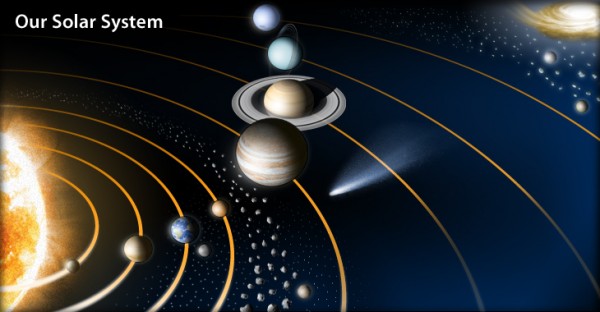
splash-planets-600x312

Image: NASA’s Solar System Exploration. Click through for the full interactive graphic, along with a lot of other wonderful information.

Some other really good stuff about space and stars and especially planets is found at Starts with a Bang!

In the end, better minds than mine have come to terms with advancing knowledge. A quote at Wikipedia’s article about Clyde Tombaugh is particularly comforting:

Tombaugh’s widow Patricia stated after the IAU’s decision that while Clyde may have been disappointed with the change since he had resisted attempts to remove Pluto’s planetary status in his lifetime, he would have accepted the decision now if he were alive. She noted that he “was a scientist. He would understand they had a real problem when they start finding several of these things flying around the place.”Hal Levison offered this perspective on Tombaugh’s place in history: “Clyde Tombaugh discovered the Kuiper Belt. That’s a helluva lot more interesting than the ninth planet.”

The Old Wolf has spoken.
Old_Wolf_Cry


[1] They’re still looking.

Give me solid cedar, or give me death.

Just a random musing: When I was around 8 or so, my beloved centenarian aunt gifted me with a cedar box full of hard raspberry candies for Christmas. The candies evaporated quickly, but the cedar box continued to delight for years. There is nothing like the smell of solid cedarwood. Coming back from her last trip to Maine, my beloved brought me back a little kiss of cedarwood from Bailey Island (points for the reference). It smells heavenly.

thimble

Nowadays you go to a furniture store and they trumpet “Cedarwood Drawers!” or similar things. What they mean is that human technology has managed to slice cedar into a veneer about three molecules thick, whose smell will have evaporated before they even get it off the truck

image1~500

Case in point: Espresso Cedar Chest, for sale at RC Willey in  Orem, Utah for $229.00.

Crafted for functionality as well as elegance, this cedar chest makes a charming and sensible addition to your home. Solid wood construction and a plush seat cushion provide sturdy usability. Classic styling ensures it will be a family heirloom for years to come.

Solid wood… but what they don’t say is that at that price it’s going to be solid pine, with one of those vanishingly-thin cedar veneers inside. The odor will be like lipstick: one kiss and its’ gone.

It’s an abomination. Give me solid cedar, or give me death.
The Old Wolf has spoken.