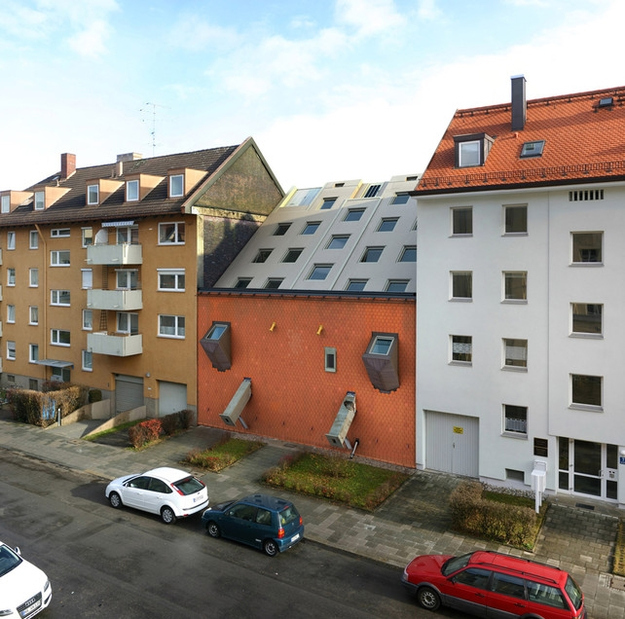
Digitally-altered and throught-provoking architectural photos. Visit Victor Enrich’s gallery for more. An article about Enrich’s photography appears in Dezeen.
The Old Wolf has spoken.
A post over on Facebook by a friend of mine in New South Wales reminded me that I wanted to spotlight this experience. I mentioned it in a Livejournal entry a few years back, but it deserves some exposure of its own. All photos are mine and ©2010-2012 Old Wolf Enterprises unless otherwise noted.
High in the Warrumbungle Mountains near Coonabarabran, NSW, sits the Siding Spring Observatory (SSO), Australia’s premier optical and infrared observatory.
Home of the Anglo-Australian Telescope, among others, this observatory is a delight to visit in and of itself.

Anglo-Australian Telescope
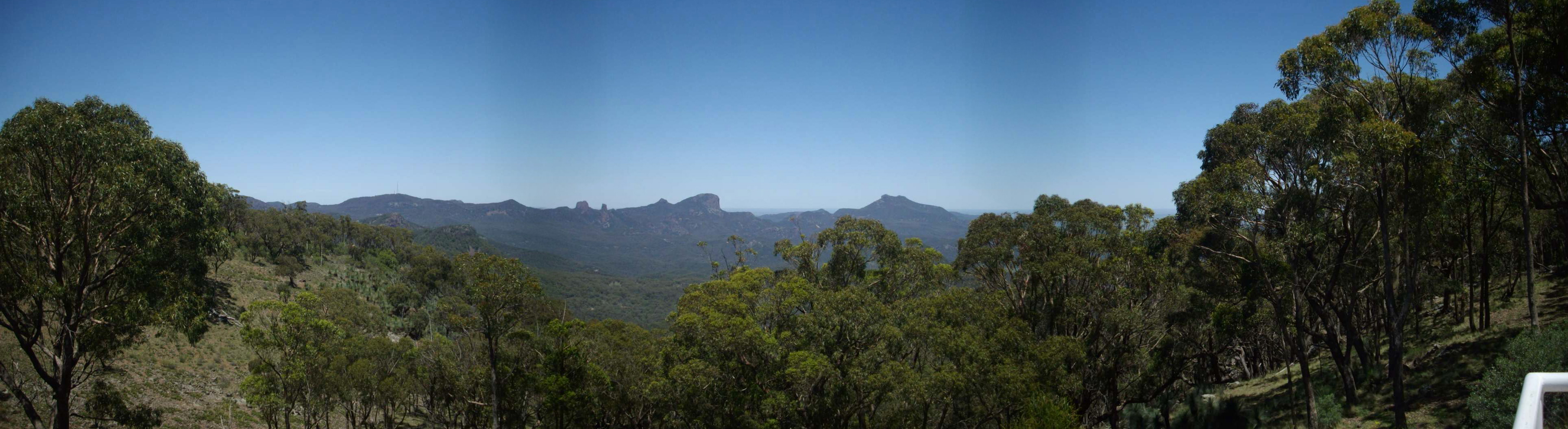
Panorama of the Warrumbungle Mountains from the Observatory

Central core cut from the telescope’s primary mirror before polishing and reflective coating was applied
In addition, in an effort to boost tourism, the observatory created the world’s largest solar system drive. There are five beginning points,
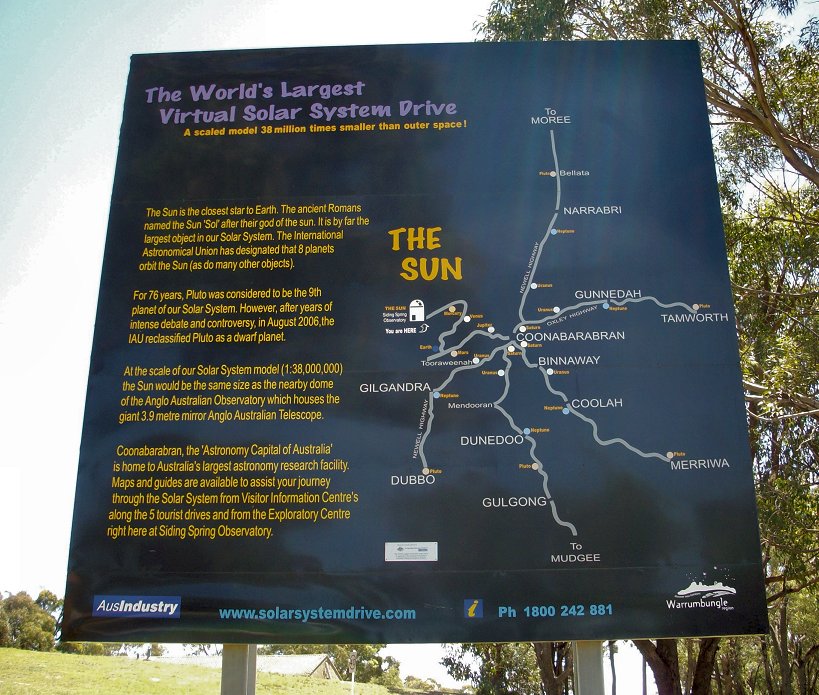
Route overview
All the drives end at the Siding Spring observatory; since I was at the observatory already and I have a friend in Dubbo whom I wanted to visit, I began here and did the drive backwards.
Here is the itinerary:
| Object | Location | Distance (km) | Time |
| The Sun | Siding Spring Observatory | 0 | 0 |
| Mercury | Observatory Road, west of Coonabarabran | 1.2 | 1 min |
| Venus | Observatory Road, west of Coonabarabran | 1.9 | 2 mins |
| Earth | Observatory Road, west of Coonabarabran | 4.1 | 3 mins |
| Mars | Timor Road, west of Coonabarabran | 5.5 | 5 mins |
| Jupiter | Timor Road, west of Coonabarabran | 21.5 | 20 mins |
| Saturn | Camkeena Rest Area, Newell Hwy | 40 | 40 mins |
| Uranus | Tooraweenah Rest Area, Newell Hwy | 79 | 70 mins |
| Neptune | Gilgandra Cooee Heritage Centre, Newell Hwy | 119 | 1.5 hours |
| Pluto | Dubbo Visitor Centre, Newell Hwy | 190 | 2.25 hours |
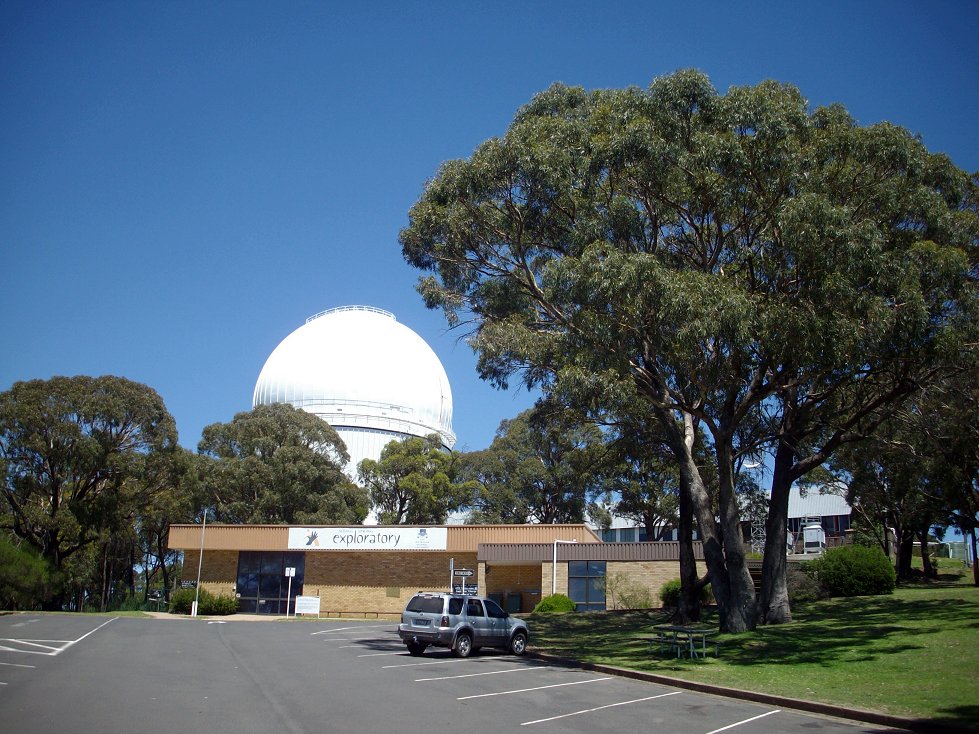
The observatory dome, representing the sun at 1:38,000,000 scale. All other placards on the drive are accurate (in relative terms) with regard to distance and size. For reference, traveling in your car at 100km/hr along the Solar System Drive, you’d be “virtually” hurtling through space at a million kilometers per second – more than three times faster than the speed of light.


I missed Mars, this was taken by another traveler.
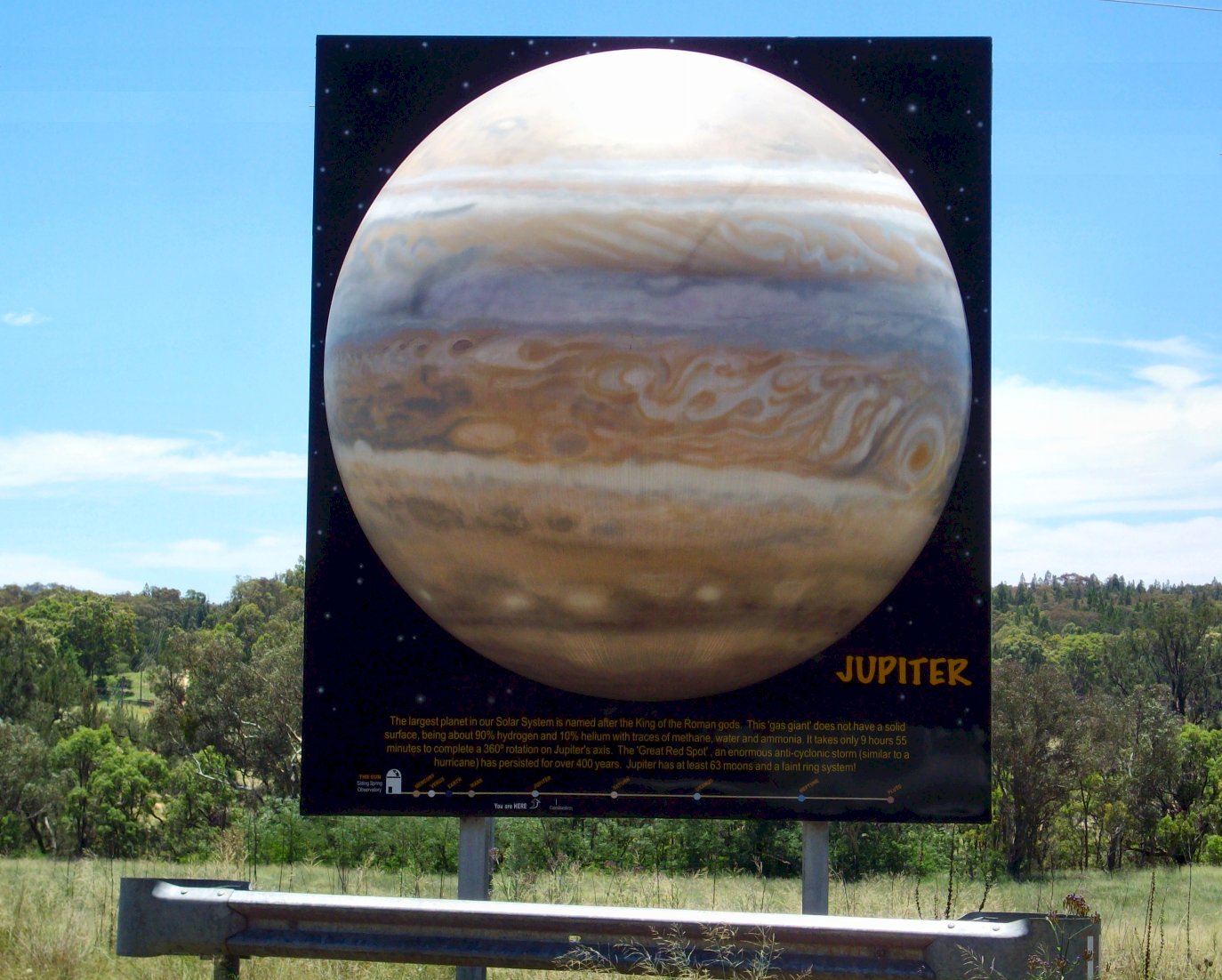
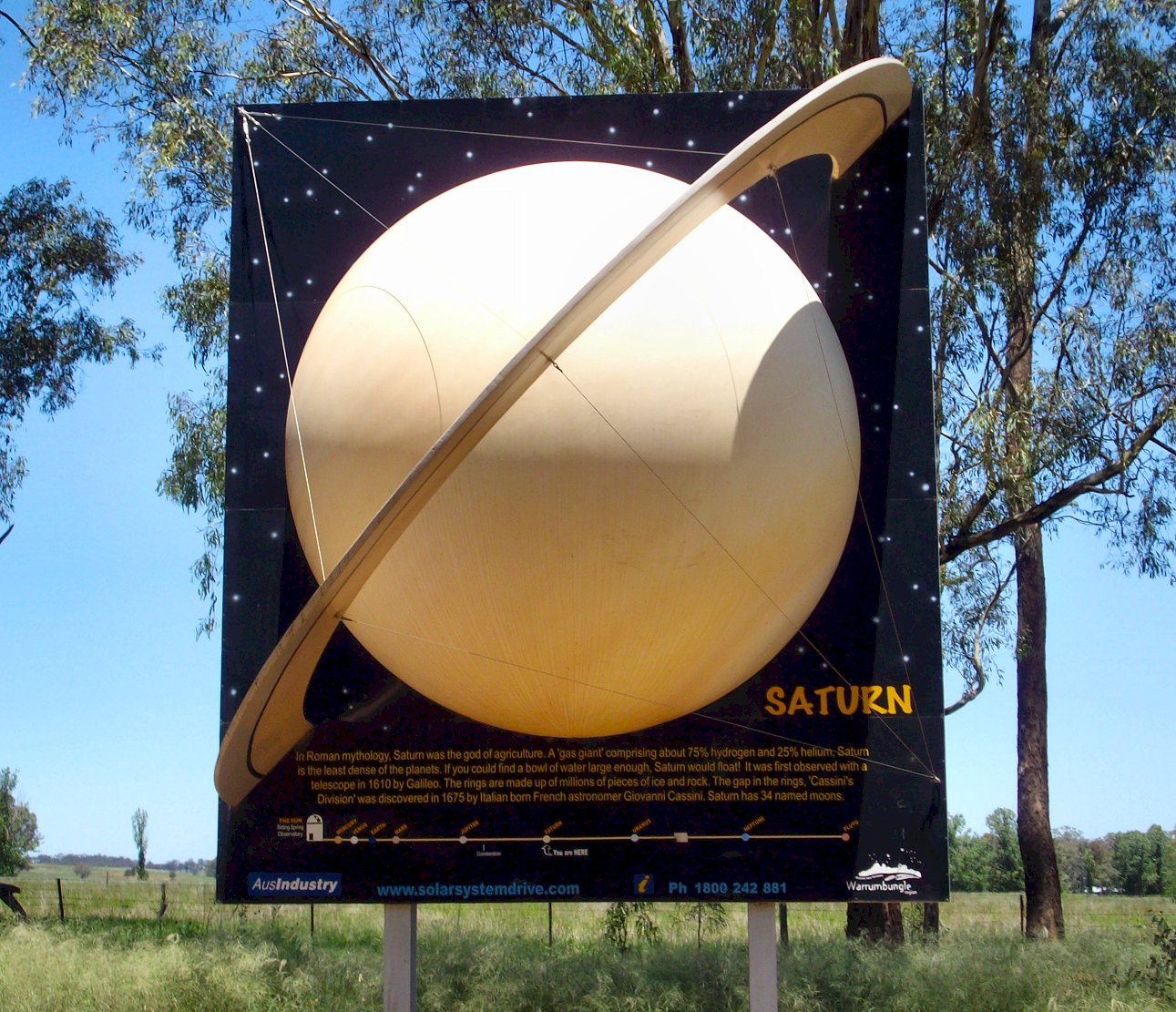
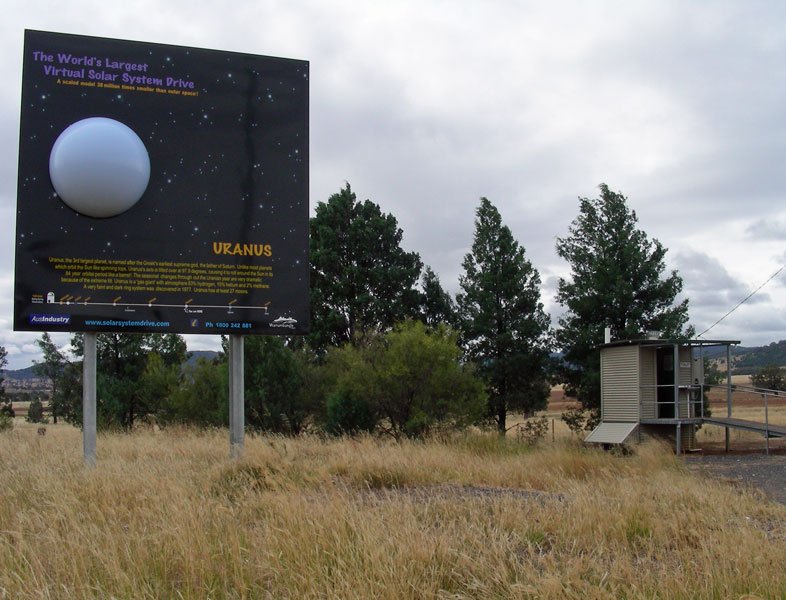
Missed Uranus and Neptune; this image, along with the one below, was found at A Snail’s Eye View.

The drive ended at the Dubbo Visitor’s Center, at which a representation of Pluto is located. Please notice: Pluto.

It is a scientific fact that Pluto and its moon Charon were most likely Kuiper Belt objects captured by the sun, and probably did not coalesce out of the original accretion disk. But as far as I’m concerned,

This drive was one of the most enjoyable experiences I’ve had. I’d love to go back and do the other routes, just to see the scenery.
Australia for the win! 
The Old Wolf has Spoken.

This picture appears in numerous places around the net with the caption “Danish children trick-or-treating.” While the thought of children dressing up in scary costumes and going door to door begging for treats sounds every bit like Hallowe’en, the Danish tradition of Fastelavn (carnival), celebrated in February, has more in common with Mardi Gras. The Danish word means “the evening before the fast,” and represents the night before the beginning of of the Lenten season. The word ‘carnival’ stems from a Latin expression meaning “farewell to meat,” and originally was a period of celebration and feasting which preceded the six weeks of fasting and penance which marks the lead-up to Easter.
The children in the picture above are holding “raslebøsse”, or “rattle boxes” – small cans with a slotted top used to collect money. They go from house to house, calling “Fastelavn er mit navn” (my name is Fastelavn) and expect coins or candy; they also gorge themselves on “Fastelavn boller” or Lenten buns, which are cream filled sweet rolls covered with icing.

Danish children will also play “Slå katten af tønden” (beat the cat out of the barrel). A Pinata-like barrel decorated with black cats and stuffed with candy is hung, and costumed children are given a chance at breaking it. The child who first breaks the barrel and releases the candy is given the honorary title of “kattedronning” (queen of cats), while the child who knocks out the last piece of the barrel is dubbed “kattekongen” (king of cats).
While the barrel is now simply decorated, at one time it actually contained a black cat. Since these creatures were believed to harbor evil spirits, breaking the cat out of the barrel (whereupon the terrified creature would run off like a bat out of Hell), was said to banish evil to make way for spring.

Beating the cat out of the barrel, around 1866

Modern Fastelavn
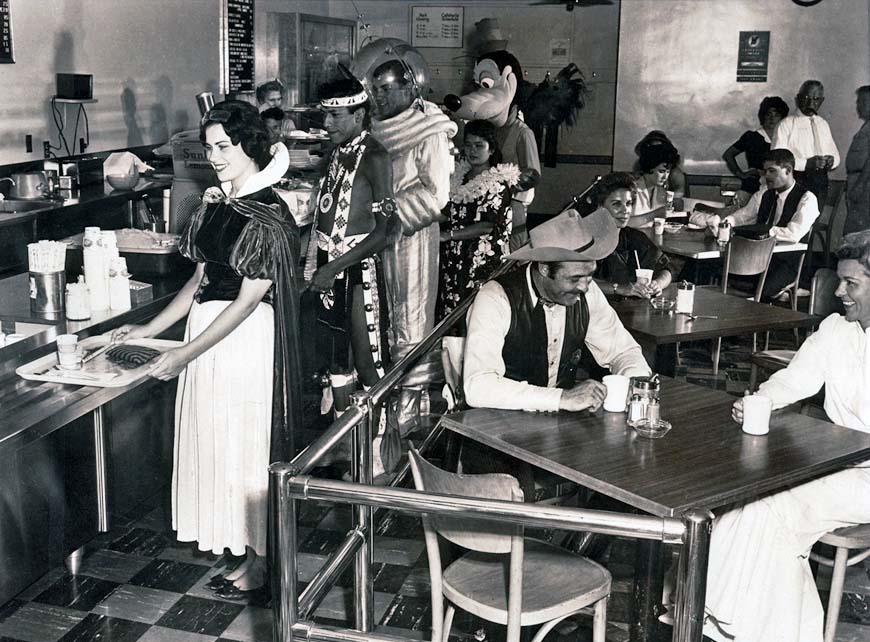
Found at Retronaut
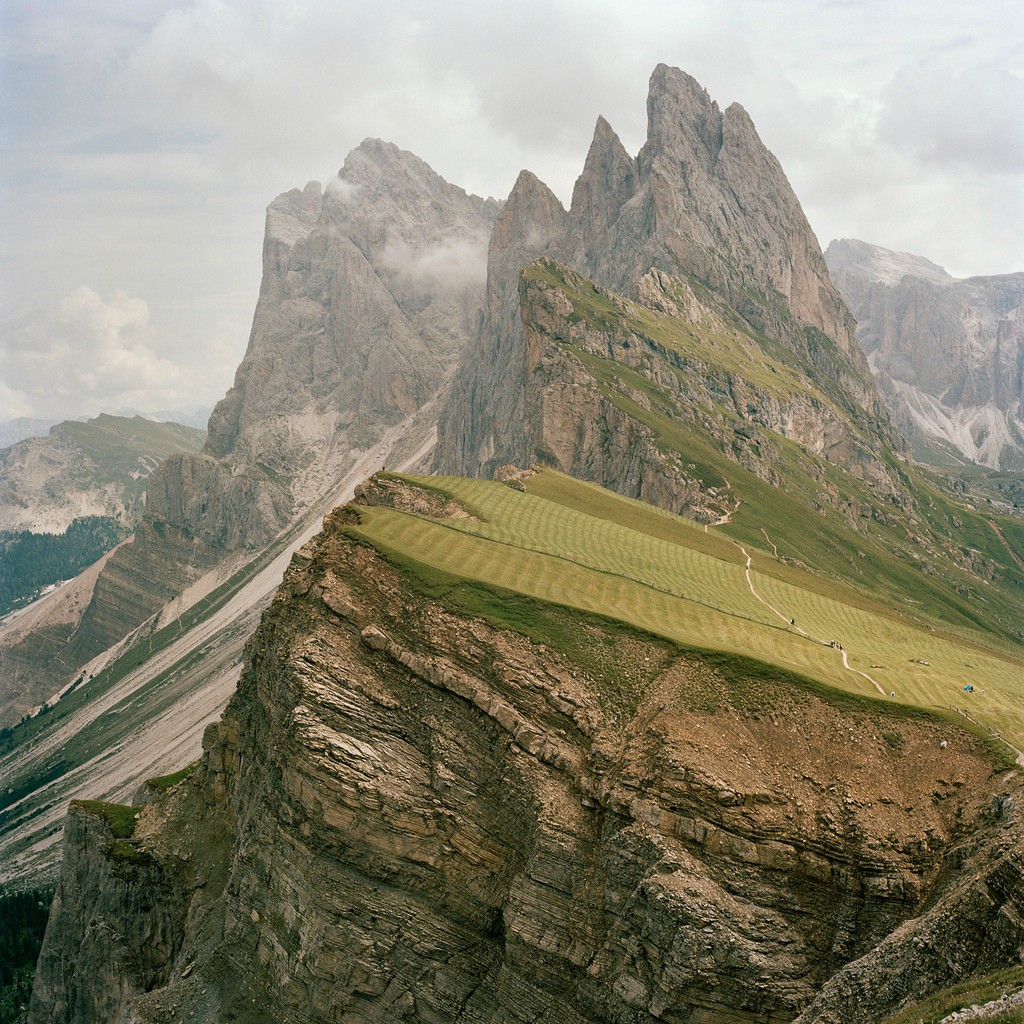
“I took these photographs in August 2010 in the Dolomites — a section of the Alps located in northeastern Italy. The Dolomites are named for a type of carbonate rock that has a distinct pale rosy-orange hue. I have tried to capture the specific grandeur of this range, as well as present a document of the myriad ways in which people interact with and experience it for themselves.”
Visit Kevin Kunstadt’s home page.
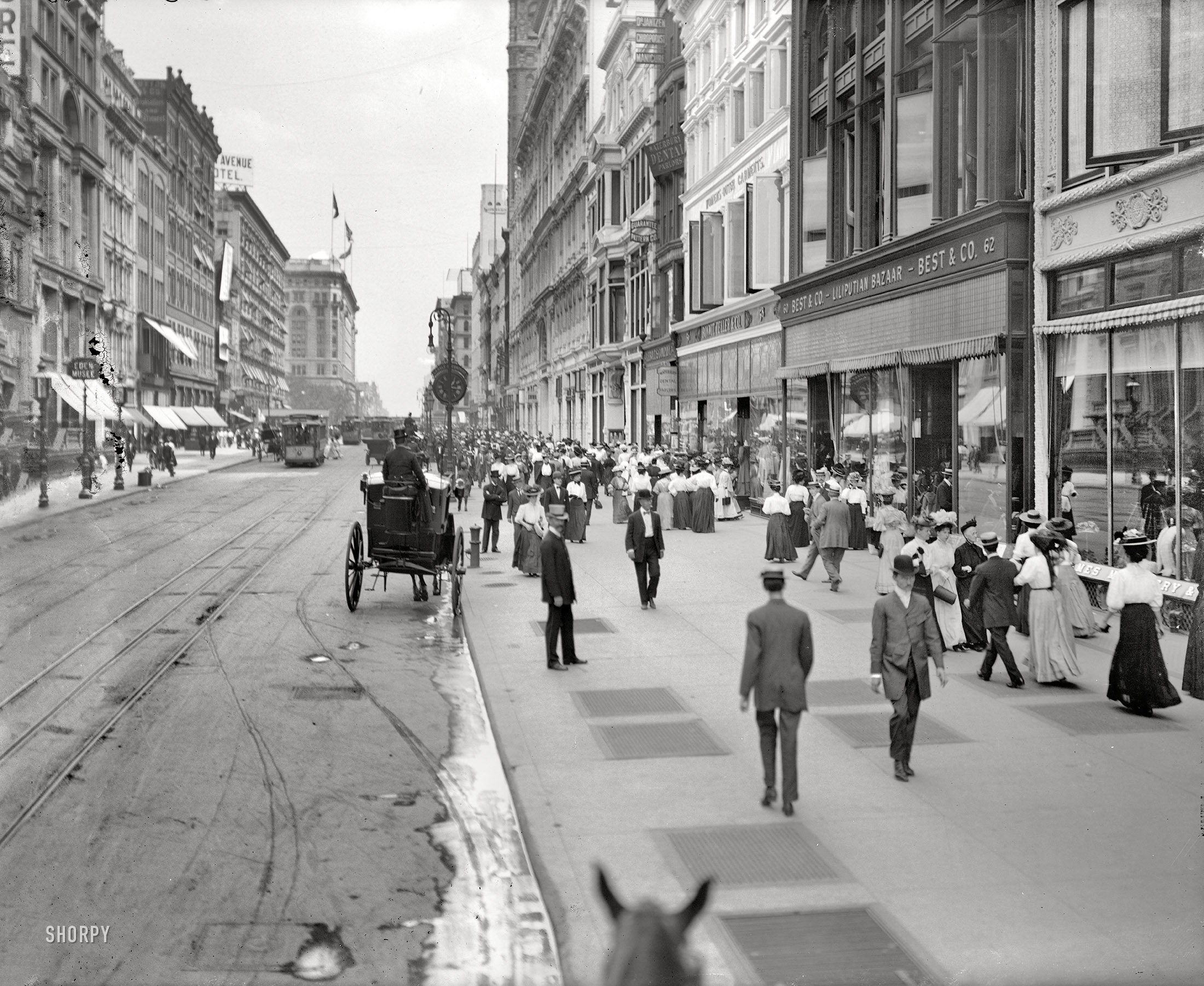
“West 23rd Street.” Home to Best & Co’s “Lilliputian Bazaar,” Bonwit Teller (“Women’s Outer Garments”), Waterbury Dental Parlors and Eden Musee. 8×10 glass negative, Detroit Publishing Co.
Found at Shorpy.
While walking in the streets of New York, something I did daily for years while growing up there, I passed a brass placard on the right side of a doorway that said “Bonwit Teller.”

That’s a name I was familiar with, and gave it no thought. On the left side of the door, however, in the same very distinctive font, was another brass plaque that said “Gunther-Jaeckel.”
What was that all about, I wondered. Were they seldom used first names? I had never heard them before in conjunction with Bonwit. Long before the days of digital photography and smartphones, and without my trusty Brownie in my hand, I was unable to capture an image, but it remains seared in my memory because it was peculiar. I never passed that particular spot again, at least not knowingly. And, given the absence of the internet, there was no way of ferreting out the story; as time went on, I began to wonder if I had imagined it. Had I been wealthy enough to be purchasing furs, I might have found out – but thanks to the infinite capacity of the intertubez, I at last have my answer.
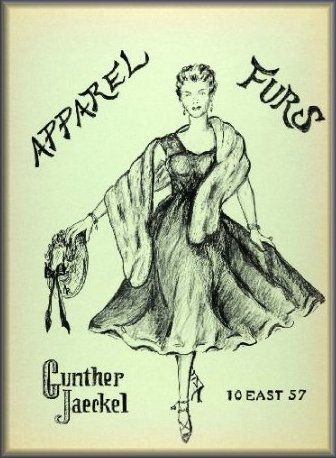
1954 ad for Gunther-Jaeckel furs, 5 years before its acquisition by Bonwit Teller.
“In a gilded age when sables were a princess’ best friend, the nation’s best place to buy sables was Manhattan’s C. G. Gunther’s Sons. Founded in 1820 by a German immigrant associated with Fur Trader John Jacob Astor, Gunther’s not only combed Siberia for the finest sables, but bid in the London market for the finest ermine, sent its agents across Canada on the lookout for mink. Even men coveted the Gunther’s label. Gunther’s long operated the only men’s fur department in Manhattan, offering coats made of every kind of fur, from buffalo, favored by post-Civil War tycoons, to collegiate raccoon. But sables for the ladies inspired the legends. On Black Friday of the 1929 crash, Gunther’s delivered a $70,000 sable coat to a customer, needlessly worried about payment (the customer settled in 60 days). Later it sold a shopper two sable coats, one for herself and one for her sister. As a token of esteem, the shopper bought her maid a mink. The bill: $107,000. In 1949 Gunther’s merged with an other old-line furrier, Jaeckel, Inc., founded in 1863.
Last week Manhattan’s oldest fur store had a new owner. Walter Hoving’s Hoving Corp., which already operates 60-year-old Bonwit Teller next door and nearby 121-year-old Tiffany & Co., added Gunther-Jaeckel, Inc. to its string. In taking control of Gunther-Jaeckel, Hoving got more of the kind of elegant tradition he likes, also a challenge to his merchandising skill (Gunther-Jaeckel last paid a dividend in 1945). But fellow merchants figured he would soon figure out a way to fit Gunther-Jaeckel into his spreading operation. Pursuing a policy of aggressive expansion, his Bonwit Teller already has two suburban branches operating in Manhasset, L.I. and White Plains, N.Y., a third projected (in Millburn, N.J.), plus stores in Chicago, Cleveland and Boston. For the present, Hoving will double up on some advertising and promotional costs, knock out a wall or two to throw the main Bonwit store and Gunther-Jaeckel together.” (Description found at Bis Repetita Placet.)
Interestingly enough, Gunther-Jaeckel still shows up in random Yellow Pages business searches with an address of 10 East 57th Street, as listed on the advert above. That matches precisely with my memory – the fact that it’s right next to Tiffany’s, another Hoving Corp. property cements the image in my head. Sadly, the building where the plaques appeared is now gone, replaced by another new skyscraper.
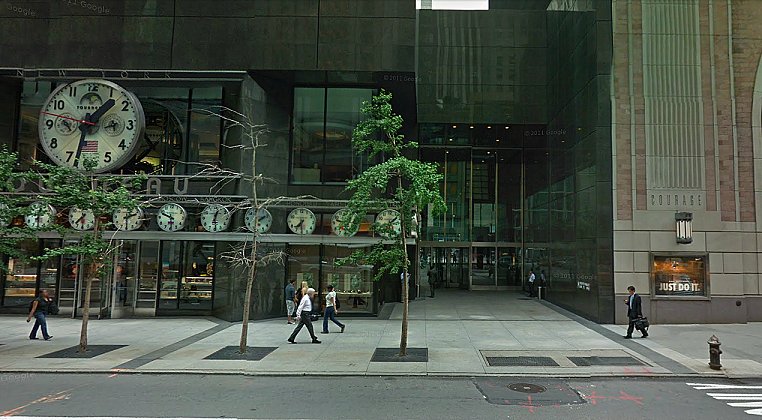
This is where 10 East would have sat.
But in retrospect, it’s nice to know I wasn’t crazy, all those years when I wondered if I had just seen something that wasn’t there.
The Old Wolf has spoken.
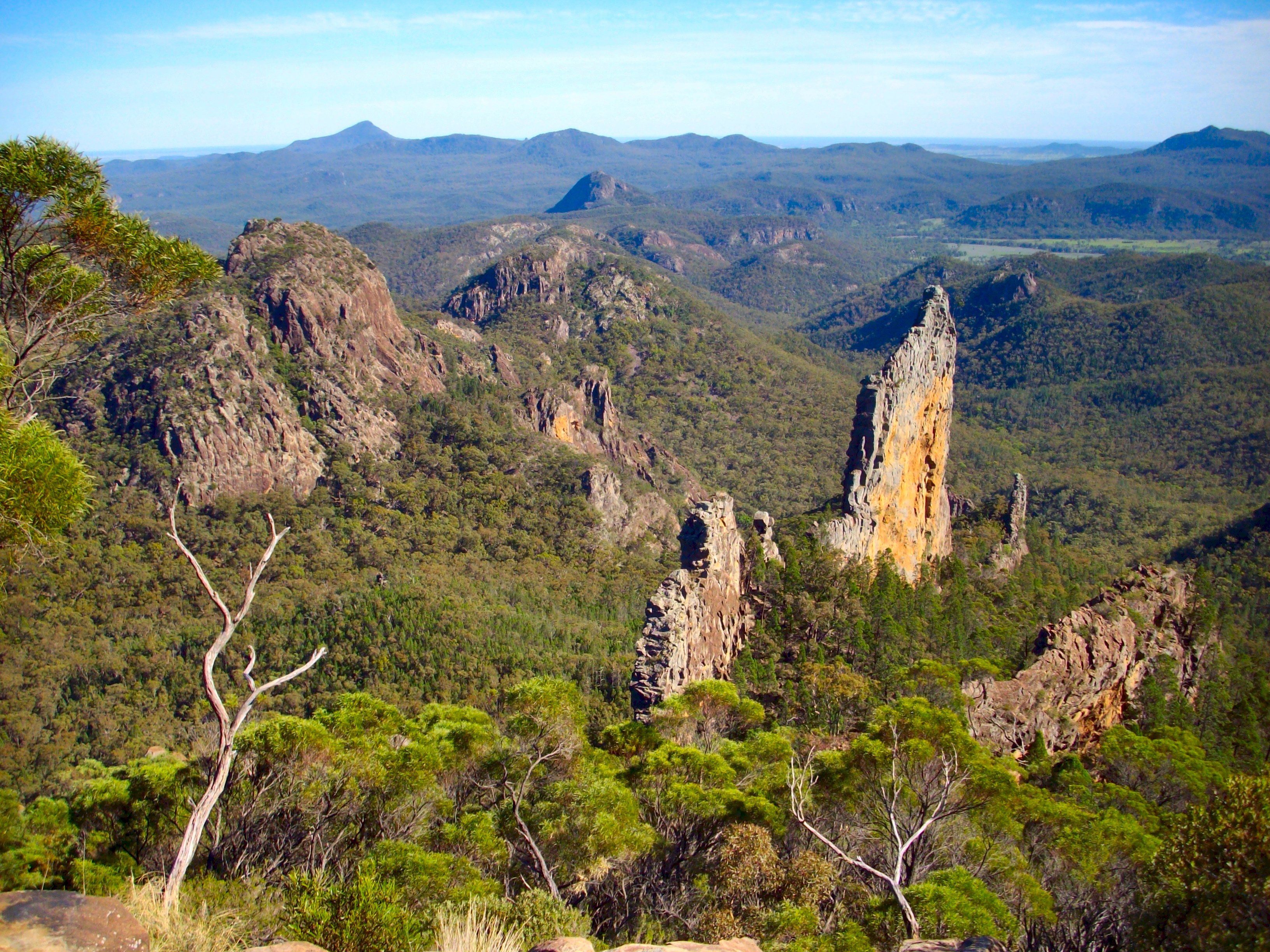
Hike to Grand High Tops in the Warrumbungle National Park (New South Wales, Australia) and you will be treated to countless breathtaking views, not the least of which is this shot of the Bread Knife, a thin slice of rock jutting out of the volcanic soil. It was a rigorous hike, but the sights were spectacular, and I started early enough in the morning that the flies were only horribly annoying instead of hellishly demonic. Now I understand what those hats are for.

I had spent the previous night parked in the middle of the reserve, lying on my back and observing the stars overhead. The mountains around the crater are home, for good reason, home to the Siding Spring Observatory and the Anglo-Australian telescope; lack of surrounding light pollution made this one of the most stunning stargazing experiences I have ever had. Even my cheap little camera was able to detect the various colors of the stars in the Southern Cross – Gamma and Epsilon Crucis are red and orange giants, respectively, while Alpha, Beta and Delta are blue or blue-white. I also had spectacular views of the Magellanic clouds, too faint to be captured, alas, but plainly visible to the naked eye. What a rush!

Enhanced time-exposure of the Southern Cross, with Beta Crucis in the lower-left corner.
As the sky lightened, I drove down to the park entrance, and was treated to some spectacular sunrise shots along the way:

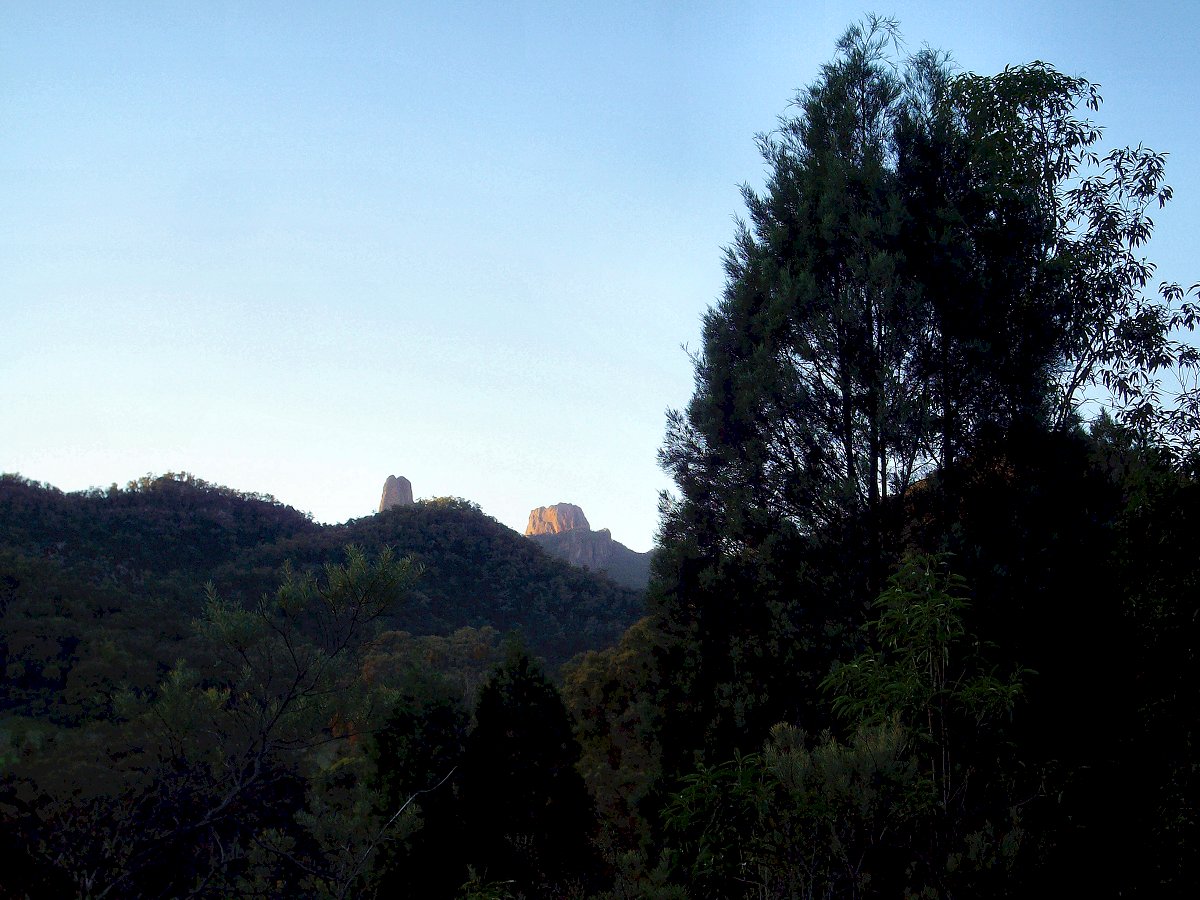
The views along the way were just as impressive as those from the top:

The Bread Knife from below
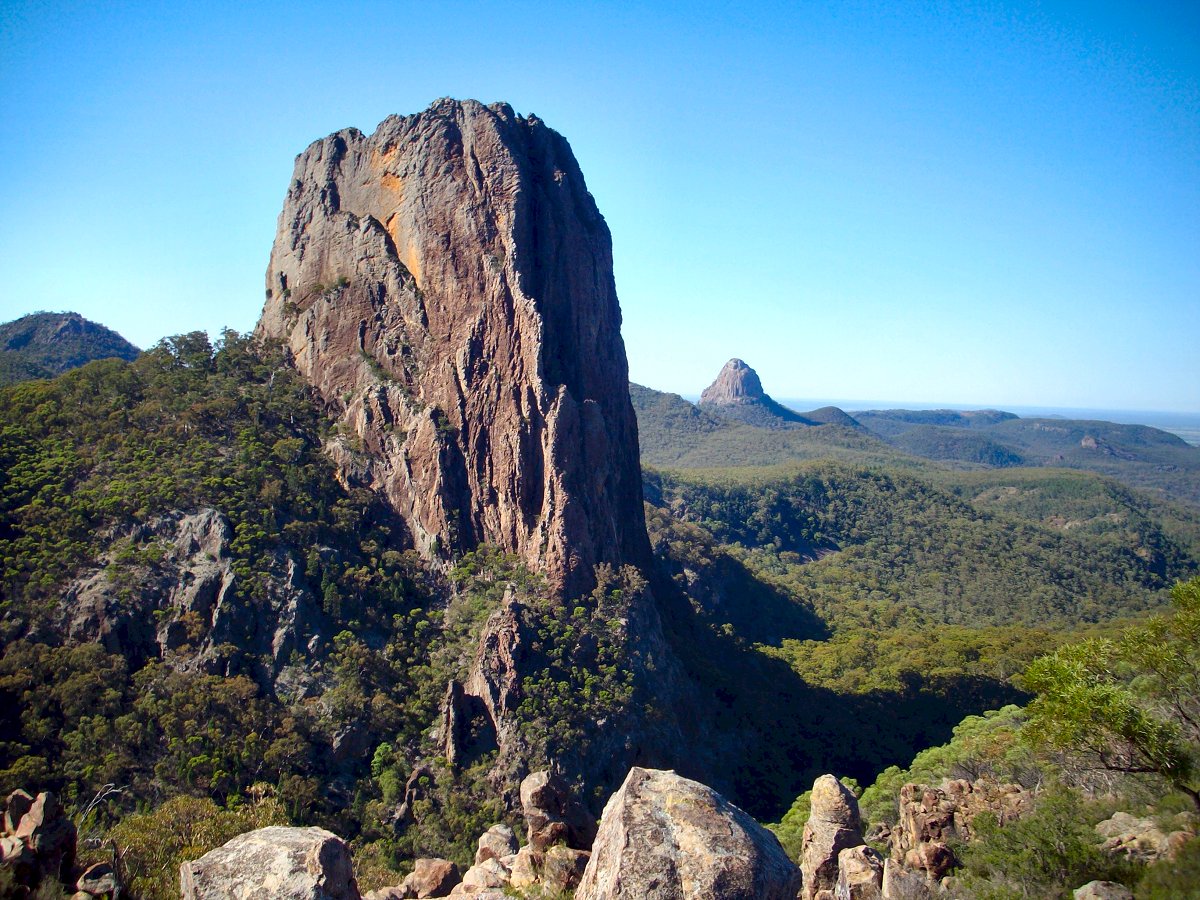
Warrumbungle – back rim from Grand High Tops
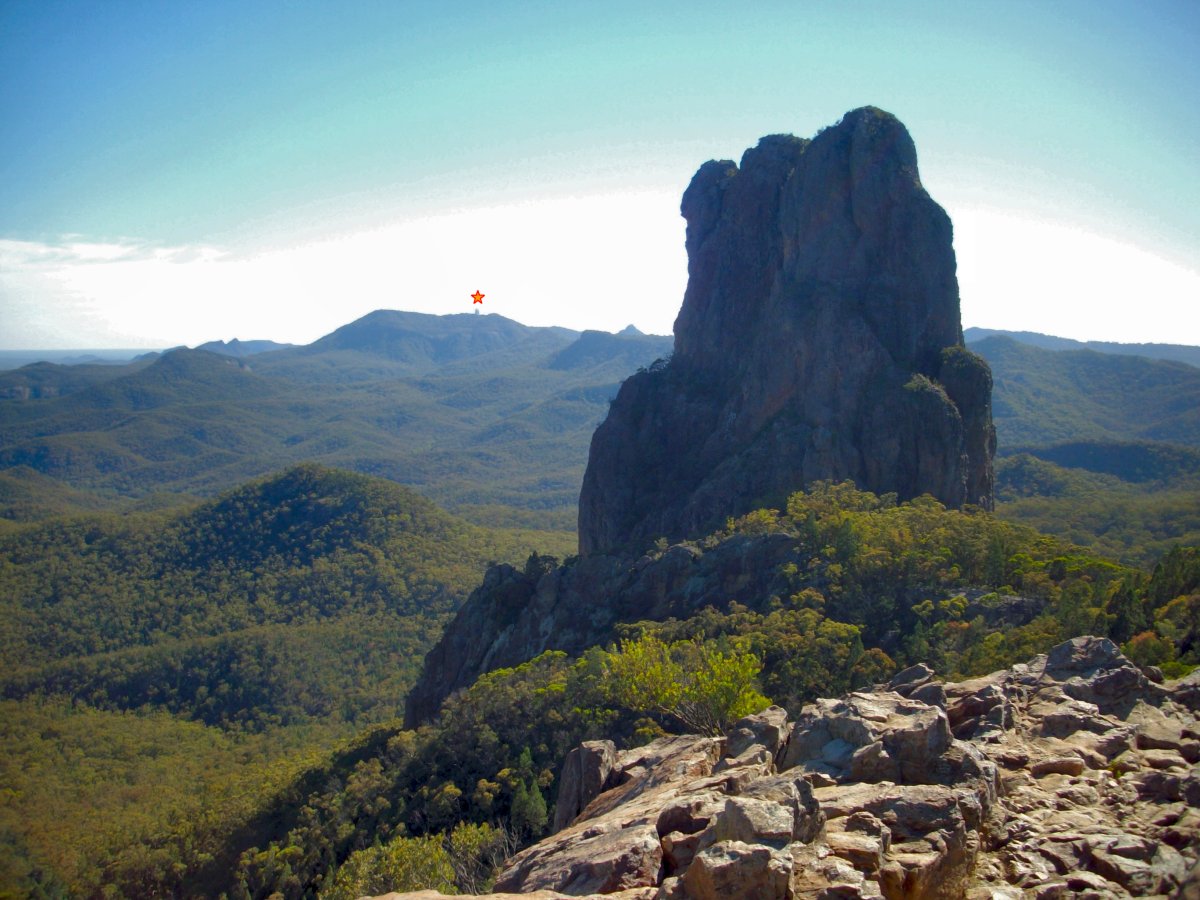
Siding Spring Observatory (star) from Grand High Tops
Would love to come back here and spend more time exploring, but I’m so grateful for the chance to have seen this wonder with my own eyes.
The Old Wolf has spoken.
The 1966 Flood of the Arno River in Florence killed many people and damaged or destroyed millions of masterpieces of art and rare books. It is considered the worst flood in the city’s history since 1557. With the combined effort of Italian citizens and foreign donors and committees, or angeli del fango (“Mud Angels”), many of these fine works have been restored. New methods in conservation were devised and restoration laboratories established. However, even decades later, much work remains to be done. (Wikipedia)
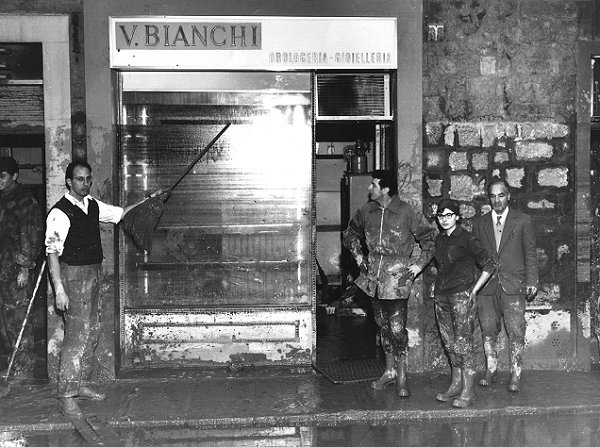
A photo sent to my father by either a relative or a family friend (I never knew which) shows a shopkeeper indicating the water level. What a terrible thing. In some areas of Florence, the water level was over 6 meters high.
The Reichsbrücke in Vienna, spanning the Danube between Mexicoplatz and Donaustadt, is one of Vienna’s most important bridges. On any given day it carries thousands of commuters back and forth, and links the city center with Kagran to the northeast.
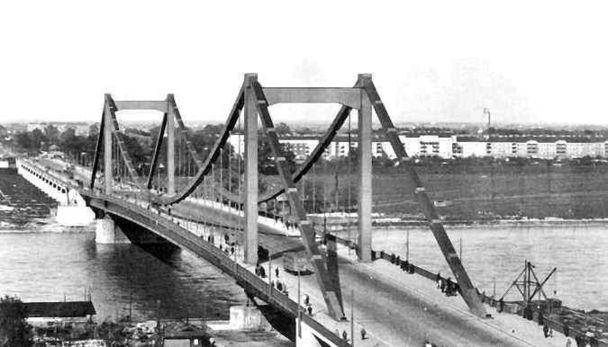
Sunday, August 1, 1976 was different. At about 5:00 AM, according to an eyewitness, the entire bridge lifted up about half a meter, and simply collapsed along its entire length into the Danube. It didn’t take long for word to get around, and it was considered a miracle that it happened both on a Sunday and so early in the morning. Had the bridge failed during a rush hour, hundreds might have been killed – as it is, only five people in four vehicles were on the bridge, and of these, only one lost his life.
I was living in Vienna at the time, and after Church services, we wandered down to see the site for ourselves.

A lone bus sits in the middle of the span. The driver was rescued after a few hours, and the bus now sits in Vienna’s Tramway Museum.
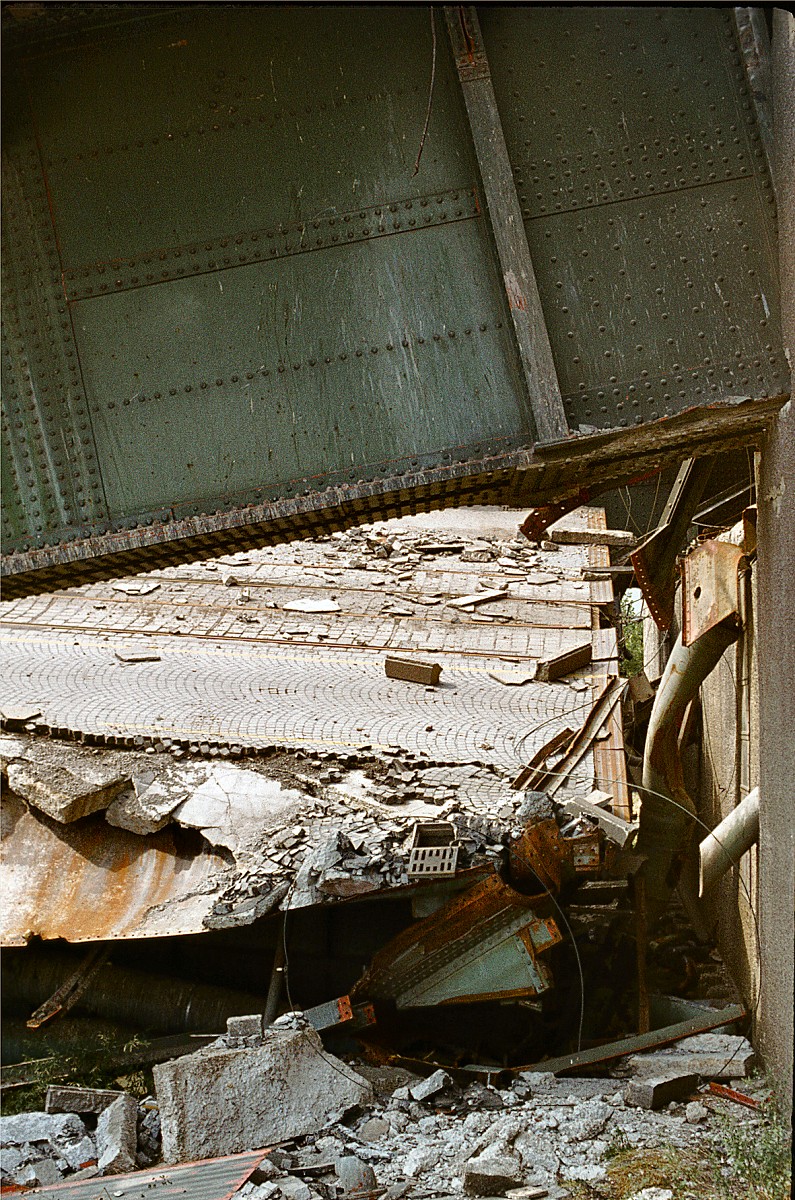
A portion of the bridge’s bed at the juncture with the pylon sits collaped on the ground, with tram tracks and cobblestones visible.

The other side of the collapsed bridge/pylon junction.

Looking across the Danube to the opposite pylon, with the stranded bus visible in the middle.
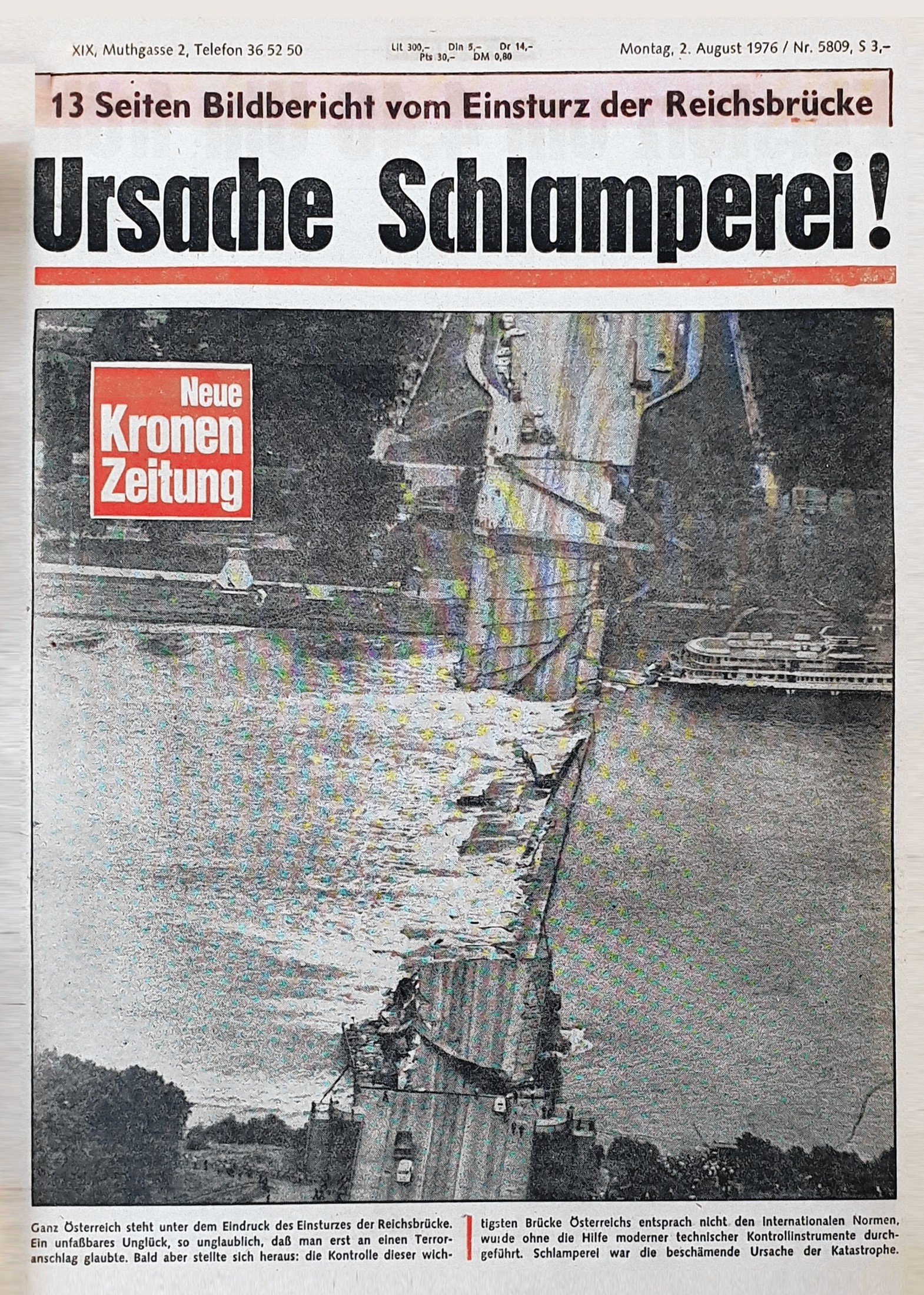
The next day’s headline of the Neue Kronen Zeitung, one of Vienna’s two tabloid papers, screamed “Ursache Schlamperei!” (Cause: Sloppiness!) and proceeded to point the finger at poorly conducted or skipped-over inspections.
All of Austria is feeling the impact of the collapse of the Imperial Bridge. An unfathomable accident, so unbelieveable that it was first thought to be a terrorist attack. Soon, however, it was discovered that the oversight of this, the most important bridge in Austria, was not conducted according to international standards, and without the help of modern technical inspection instruments. Sloppiness was the shameful cause of the catastrophe.
Neue Kronen Zeitung, 2 August 1976, page 1
After the various commissions had finished their studies, however, it was determined that the causes were more mundane. Structural failure of the bearings had begun early because of poor-quality concrete casings, which – while not load bearing – had allowed water to penetrate down to the bearings themselves and begin the process of deterioration. The bearings were surrounded by massive granite boulders, and hence could not have been inspected in any event.
A replacement bridge was begun in 1978 and dedicated in 1980. In the interim, Vienna hastily constructed two temporary bridges to carry traffic across the Danube, which were in use for four years.
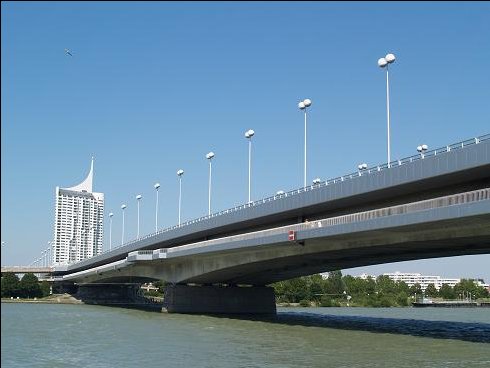
The new Reichsbrücke.
It was pretty wild to be so close to a disaster of this magnitude. We expect our big bridges and things to be pretty solid, and when they are not, it’s always a bit disconcerting. Fortunate it was that so few people were directly impacted.
The Old Wolf has spoken.
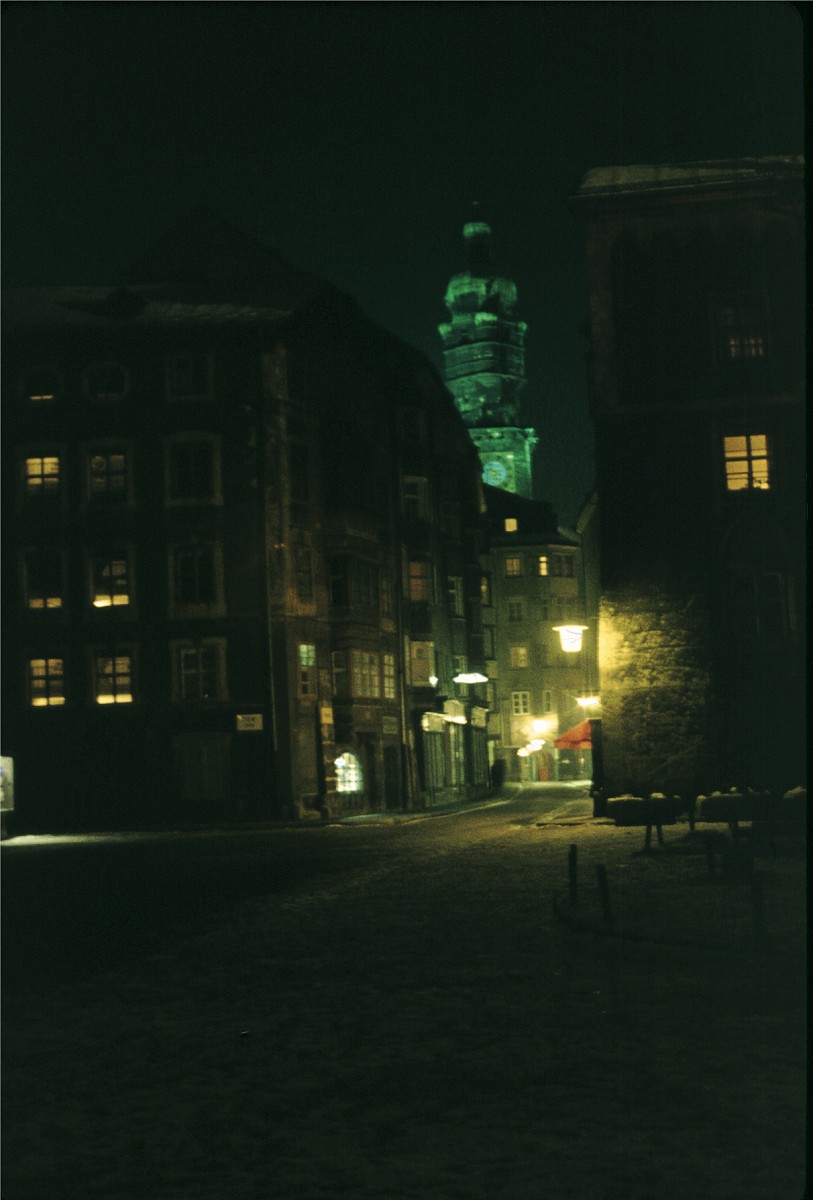
Innsbrücker Altstadt – December, 1975
One of the most beautiful cities I’ve ever known.

 Playing in the World Game