Slum Life in New York City

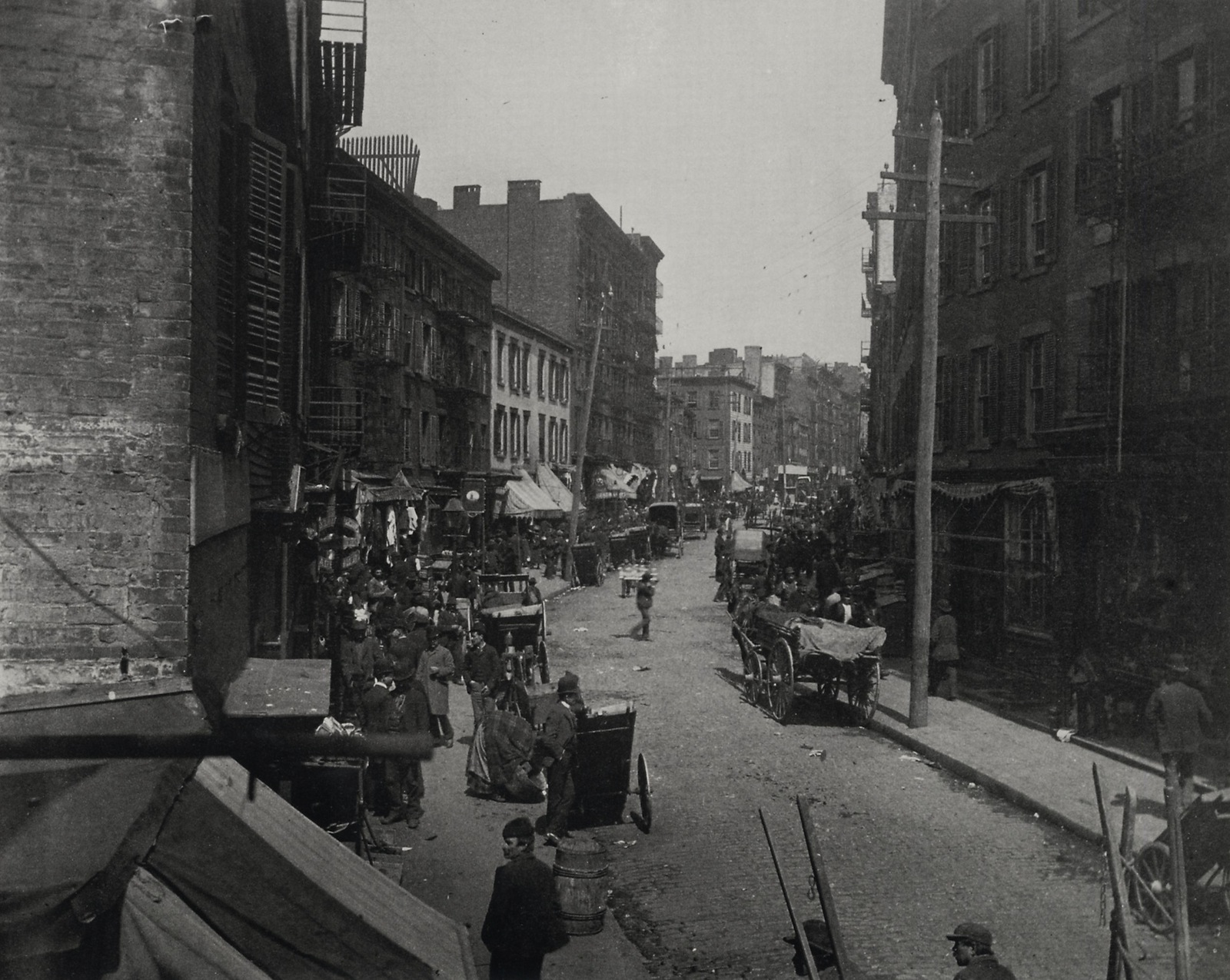
The collection of pictures found at io9 is extracted from the website I mentioned in this post, How the Other Half Lives – from a work by Jacob Riis.

py2dstujbxpvnxk0cnft

Mulberry Bend

ufznti2eh3k84uetgkxb

Lodgers in a crowded flat on Bayard Street. Rent: 5¢ per day.

It gives you a look at some of Riis’ work without having to dig through the online text, but I still recommend perusing the entire, impressive effort.

We have come far. We still have far to go.

The Old Wolf has spoken.


Eiffel Tower Construction

Nq1Lev4


I found this intriguing series of images over at /r/historyporn, and boy did it bring back some memories. No, not because I was there – I may be old, but I’m not that old – but because I remember when I was about 10 or 12 or so, my mother brought home a model kit of the tower for us to build together. I was into models, especially the great old monster models (like this one), but this looked like a great project.

It was a nightmare.

And thanks to the miracle of the Internet, here it is, exactly as I remember it.

tower 2

tower

Eiffel Tower, Pyro, 3 feet tall, No. 336-5.98

I seem to recall that the plastic it was made of, or the paint used to coat the plastic, wouldn’t hold your standard Testor’s glue. Mom was an actress, not an enginer, and I was too young to have either understanding or real patience, so I recall the project was an exercise in self-mortification. It did get done, and the thing stood in my room for a while, I remember it looked a bit skewed once we finally got the whole thing together. I’d love to find one and have another go at it, but I doubt I could find an unbuilt one at a reasonable price.

Memories…

The Old Wolf has spoken.

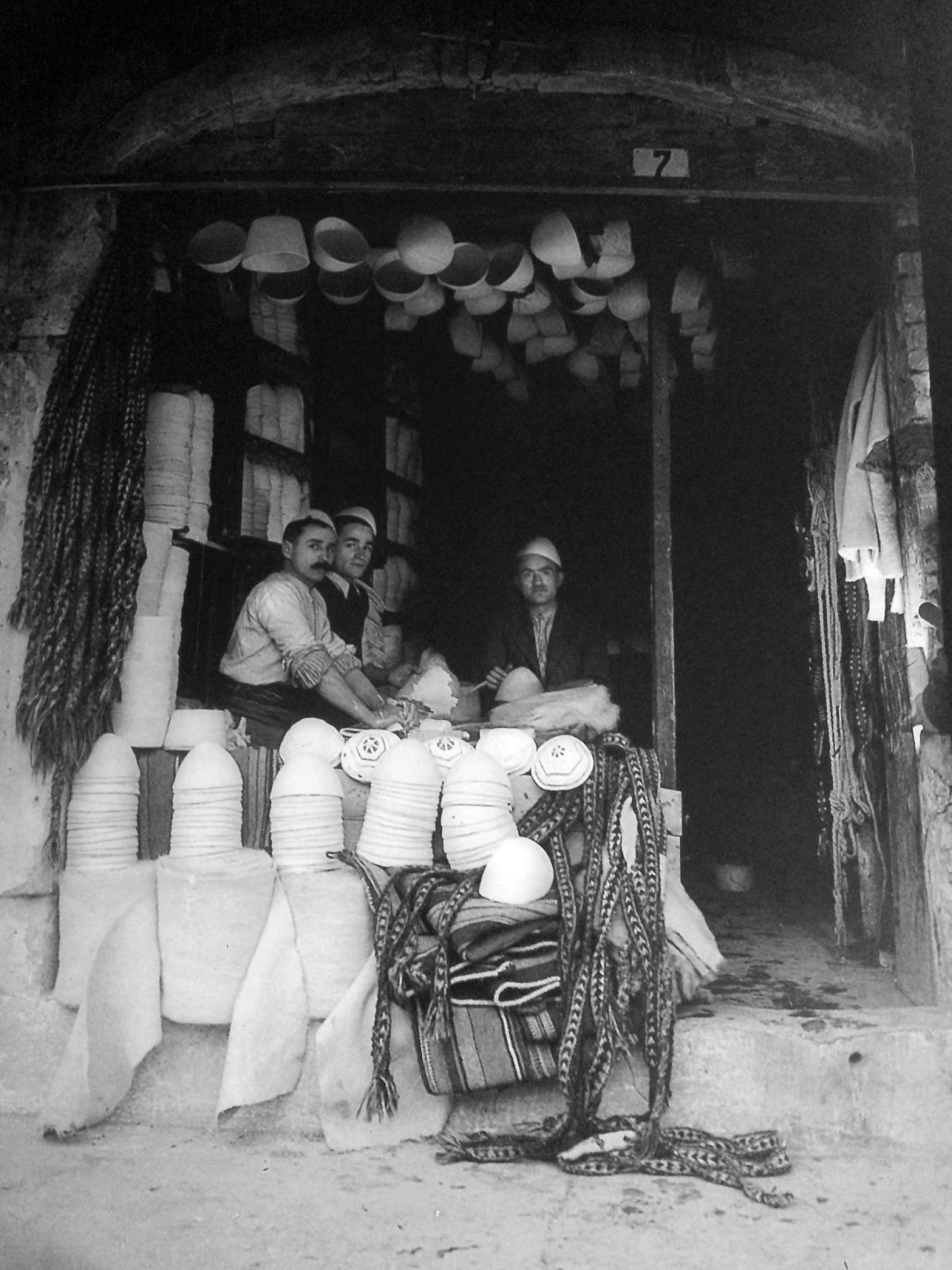
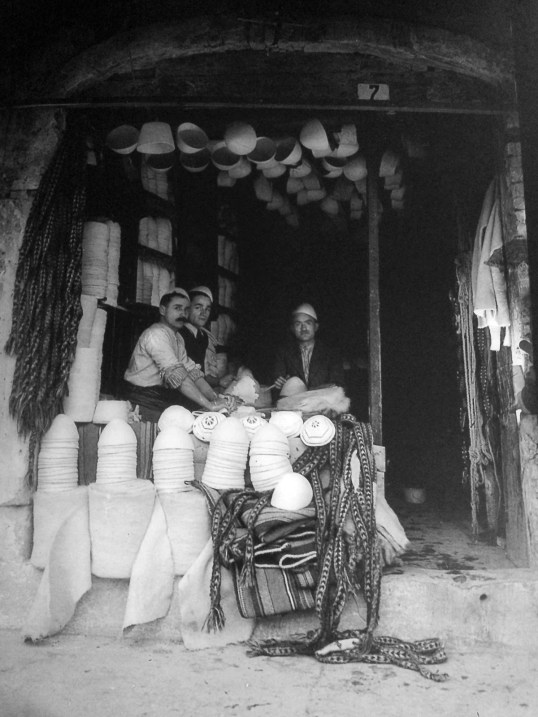
Albanian hatmakers in Shkodër, 1900-1920

Albanian Hatmakers

Hatmakers in Skhodër, Albania, 1900-1920. Photo by Kel or Pietro Marubi. Posted by /u/RMSEP at /r/historyporn.

Albania has a long, interesting and tortured history. I have a particular interest in the country, having visited there a number of times over the course of my career, and having gotten to know more than a few Albanians.

My interest in this small but intriguing Adriatic country was first piqued when I read “Albania, Alone Against the World,” an article in the October, 1980 issue of National Geographic. This was before the fall of the Iron Curtain (which, sadly, shows some signs of being raised again, given recent developments in Ukraine, but that’s another story) but Albania’s story seemed to stand out among that of other Communist countries – and at that time, North Korea was not as much in the news as it is today.

The article was written by Mehmet Biber, a Turkish photographer who was based in Istanbul, and is the product of his own visit and notes from that of a visit by Sami Kohen, another Istanbul resident. It contains some captivating photos of what life was like under the iron-fisted rule of Enver-Hoxha, the fiercely independent, brutal, and Stalinist leader of Albania from it’s liberation from the Nazis in 1944 until his death in 1985. From Wikipedia:

The 40-year period of Hoxha’s rule was politically characterized by the elimination of the opposition, prolific use of the death penalty or long prison terms of his political opponents and evictions from homes where their families lived and their internment in remote villages that were strictly controlled by police and the secret police (Sigurimi). His rule was also characterized by Stalinist methods to destroy his associates who threatened his own power.
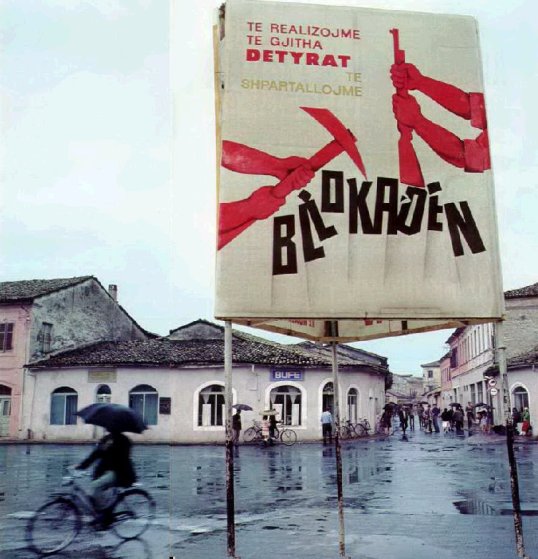
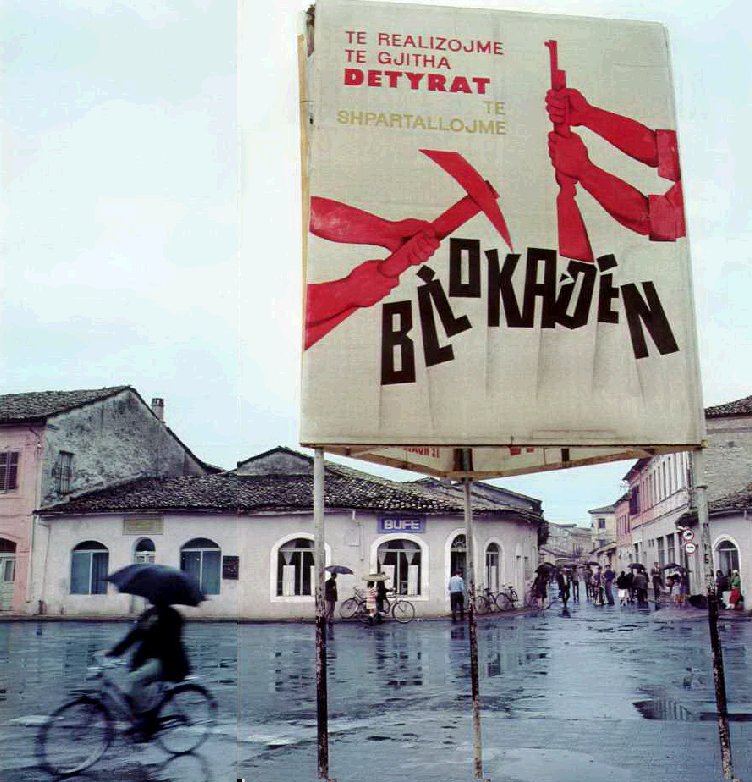
Shkoder

This photo from Biber’s article shows the town of Shkodër in 1980. The banner says, “Let us fulfill all our obligations and smash the blockade.” Of course, there was no blockade, and no interest in punishing or otherwise invading Albania, but Hoxha’s paranoia knew no bounds. He wasted his country’s resources on numberless bunkers, supposedly to protect the fantastic wealth and ideology of his impoverished nation from the evil hordes, both Communist and Capitalist, who would overrun Albania like wolves.
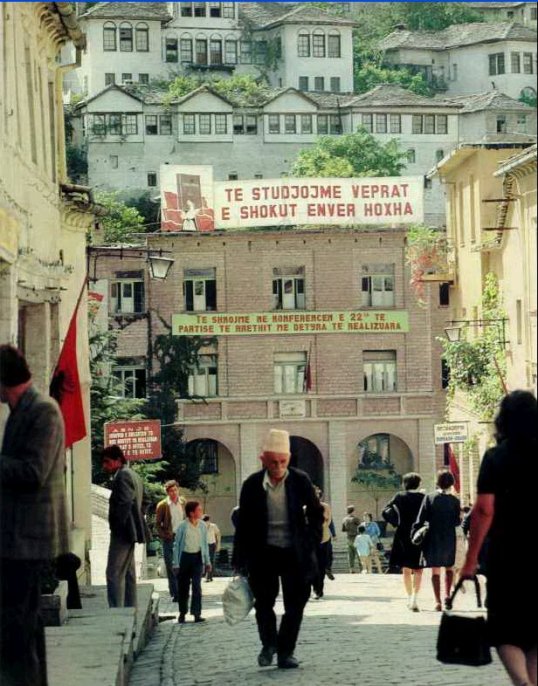
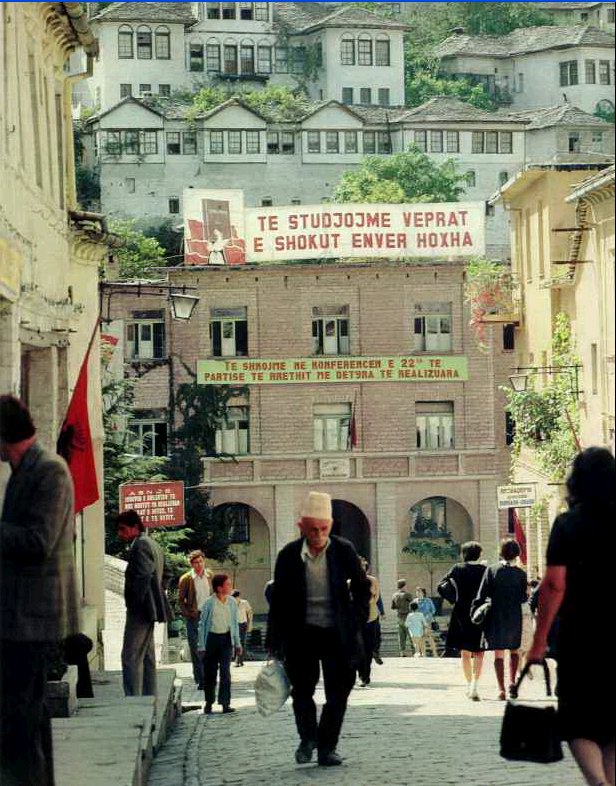
Hoxha

Gjirokastër, the hometown of Hoxha. The banner encourages residents to “Study the Works of Comrade Enver Hoxha.” Photo: Mehmet Biber

Then came the fall of communism, and Albania was subject to changes that shook the nation to the core. A country that had almost nothing in the way of free enterprise and commerce (centrally-planned economy) was instantaneously and disastrously changed into a market economy. On the upside, goods and services that had never been available were suddenly popping up like mushrooms; on the downside, corruption and crime exploded.

Private car ownership was reinstated and businesses re-established. However poor city lighting and road quality became major problems as mud, potholes, street floods, and dust became permanent features on the streets. However, all buildings and apartments were denationalized, second-hand buses introduced, and modern water, telephone, and electrical systems built during 1992–1996 which form the backbone of modern Tirana. Enver Hoxha’s Museum (Pyramid) was dismantled in 1991 and renamed in honor of persecuted activist Pjeter Arbnori. (Wikipedia:Albania)
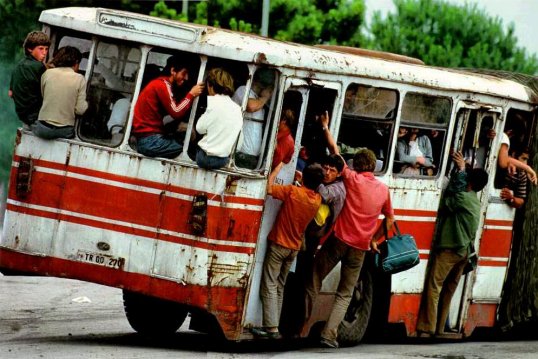
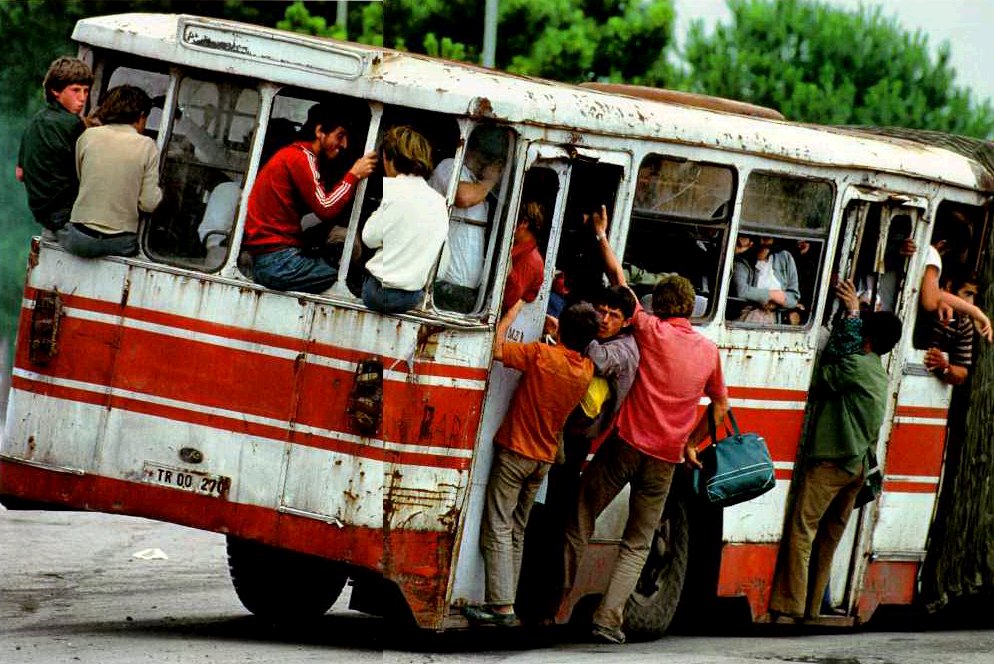
Bus

A bus in Tiranë, loaded almost past the breaking point, in 1992. Photo: Nicole Bengiveno, published in National Geographic, “Albania Opens the Door” by Dusko Doder, July 1992. This article gives a good overview of the change that hit Albania like a 16-ton weight.

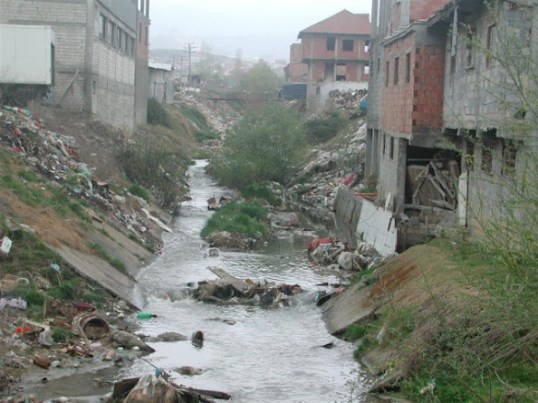
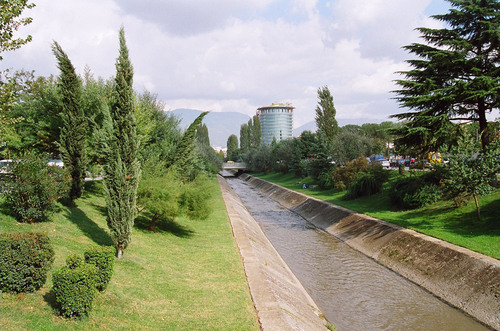
As I visited Albania over the course of several years from 1993 to 2000, I watched Tirana’s central park area and the banks of the Lena river (among others) become choked with illegal and dangerously-constructed buildings. People simply squatted on public land, built what they want in whatever way seemed good, and regulation was nowhere to be seen. Grease the palms of officials and police to look the other way, and presto, a new business was born. In 2000, efforts were made by Edi Rama, a former Tirana mayor, to demolish illegal buildings to return the area to its pre-1990 state, but public land continues to be under pressure from illegal construction, and there is no clear outlook or direction for Tirana’s future at the current time.
lana-river-before-restoration-12-04

Illegal construction on the Lana River in 2003
15172059

A similar scene, post-reconstruction

Devastatingly for much of the Albanian population, the financial shakeup of 1996-1997 included many Ponzi schemes, invested in by around 2/3 of the population; most of their investment was totally lost, and the resulting social upheaval was catastrophic. While things continue to improve slowly, it will take Albania generations to overcome residual problems in government and society.
Pyramid

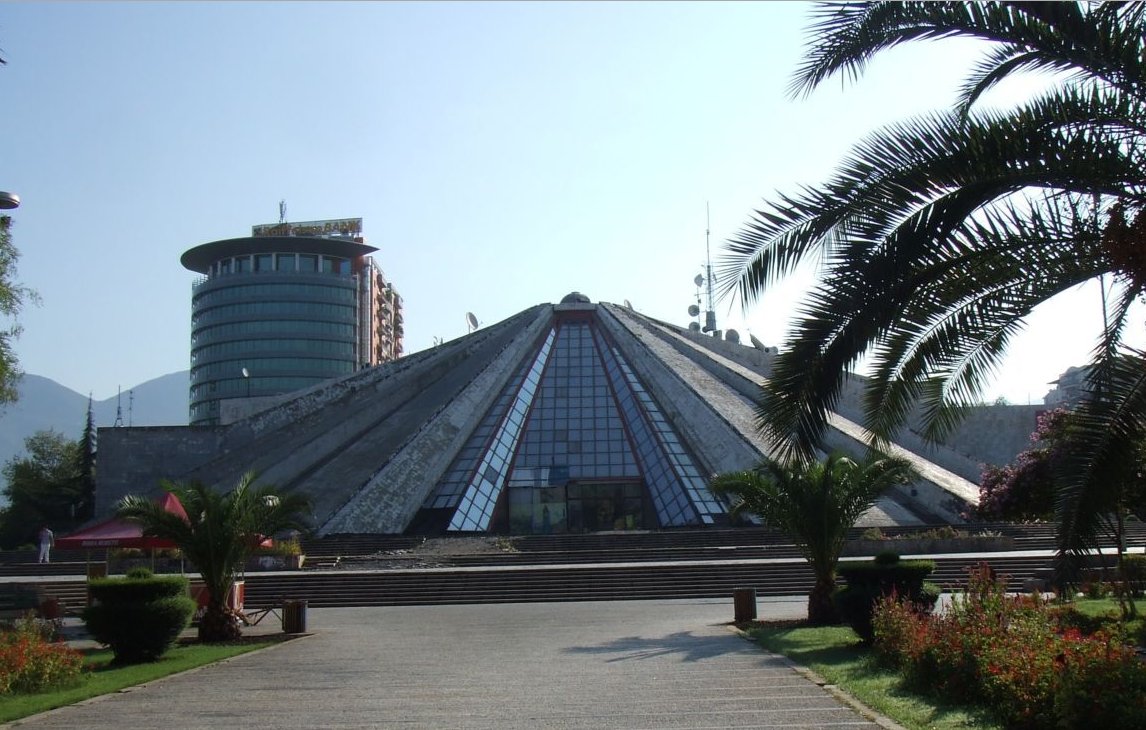
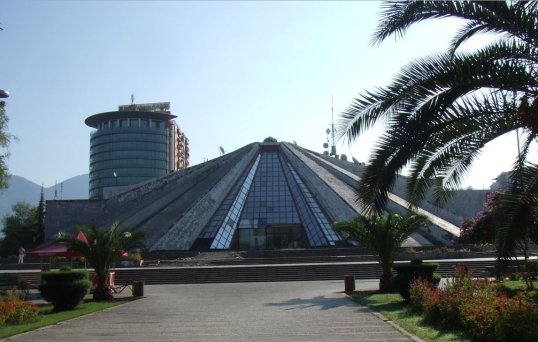
The Pyramid of Tiranë, slated to be Hoxha’s mausoleum, then a museum, then a convention center, now a crumbling, defaced eyesore and the subject of debate – preserve or demolish?

I would love to be able to get back to Albania, which is now wide-open to tourism, although there are parts of the country where even the authorities don’t like to go, run by clans that would make the Hatfields and the McCoys look like the Sesame Street crowd. That said, the country has much to offer in the way of natural beauty and culture, and I wish them nothing but good as they shoulder their way into the future.
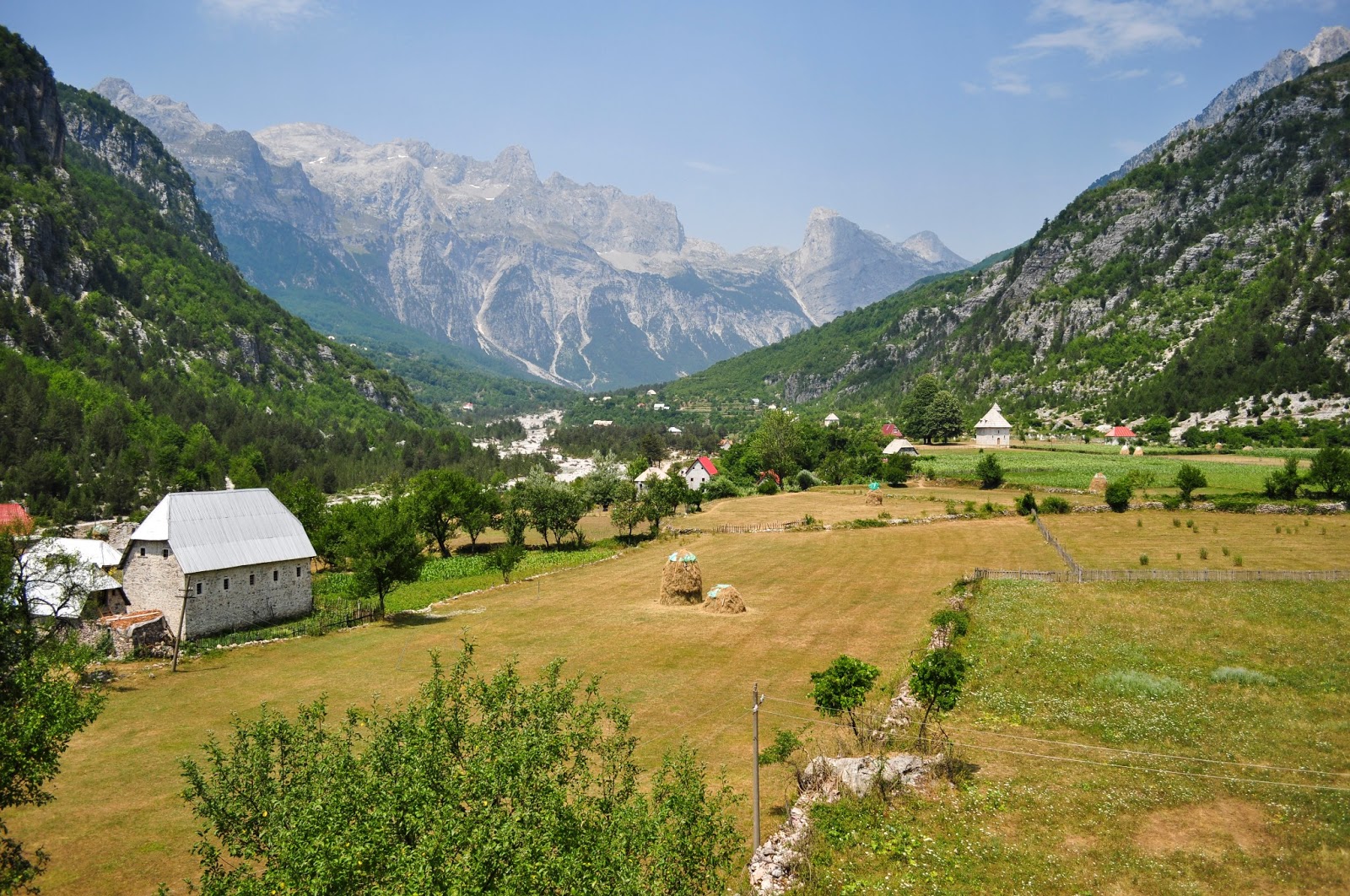
theth

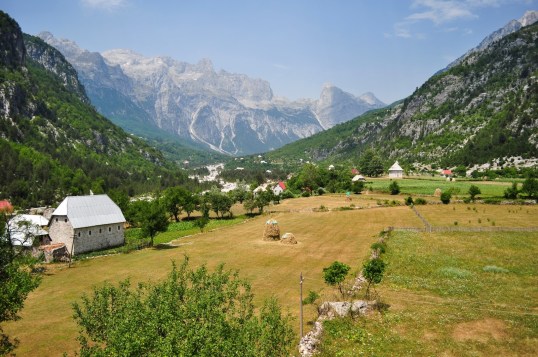
The beautiful town of Theth in Northern Albania – found at The Rom Rom.

The Old Wolf has spoken.


How the Other Half Lives

I was just made aware of a marvelous website, authentichistory.com. It’s not completely up-to-date, some of the image links are broken, but it’s got some amazing stuff to peruse.

Veggies

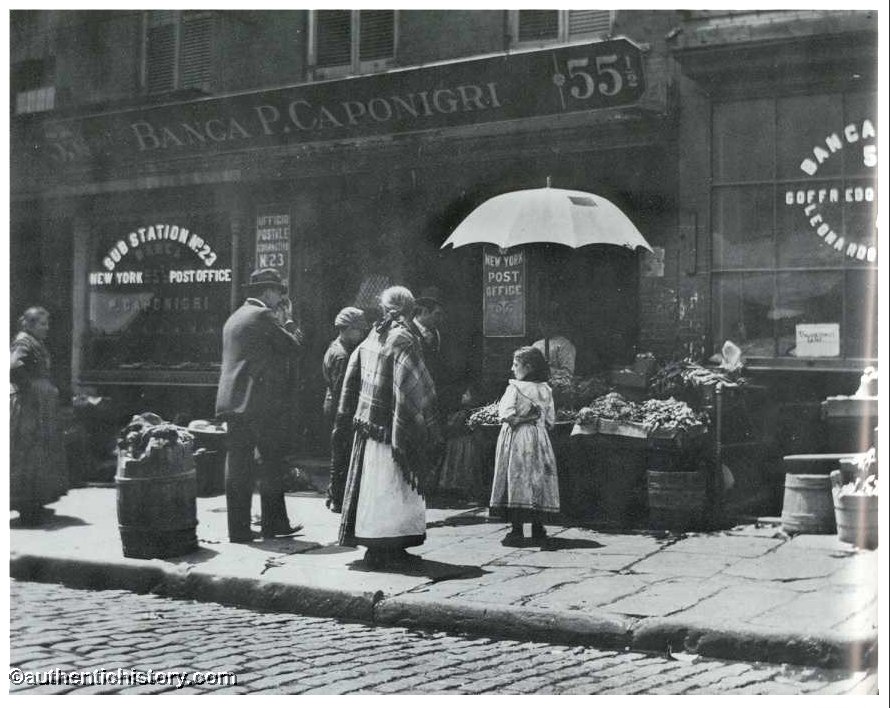
This picture, entitled, “Vegetable Stand in The Bend” comes from a seminal work by Jacob Riis, How the Other Half Lives: Studies among the Tenements of New York published in 1890. Complete text and images are available here. I’m certain my New York colleagues will appreciate this; it describes conditions among the tenements of New York ten years before my grandparents arrived here from Italy, and conditions must have been largely the same when they came. It helps me make the history of my own family come just a little closer. The entire web site is a sinkhole for time, but I’m not sorry.

Note the bank behind the vegetable stand; in an article found in The New York Supplement in 1908, one can assume that the bank was at this point in time not long for the world. From Gateway to the Promised Land: Ethnic Cultures on New York’s Lower East Side By Mario Maffi, published in 1994. (Click through for the full text with references and much more intriguing New York history)

Italian banks (the Banca Termini, The Banca Caponigri, the Banca Barsotti, and many others on Mulberry Street) were a focal point for the community. In metropolitan New York alone, there were some 400 of them by 1900, all chartered, and perhaps many without charter. The rule for opening a bank was, ‘the more crowded the street on which the bank is, the better for the banker; better yet, the more crowded is the block where the bank has its habitat; best of all, the more crowded with paesani [townsmen] the tenement in which operates the banker.’ Often ‘attached to a saloon, grocery store, or cigar store – sometimes to a cobbler shop,’ or simply a corner in ‘the general merchandise store, where spaghetti and Italian cheese were on display,’ the bank provided important services to the neighborhood. It kept deposits, sent money home, functioned as an informal post office and travel agency, was a meeting place for friends and unemployed. The business transaction was a friendly affair between fellow countrymen and receipts were rarely used. But unscrupulous “bankers” were many, and not infrequently such “friendly affairs” ended tragically for the immigrant.

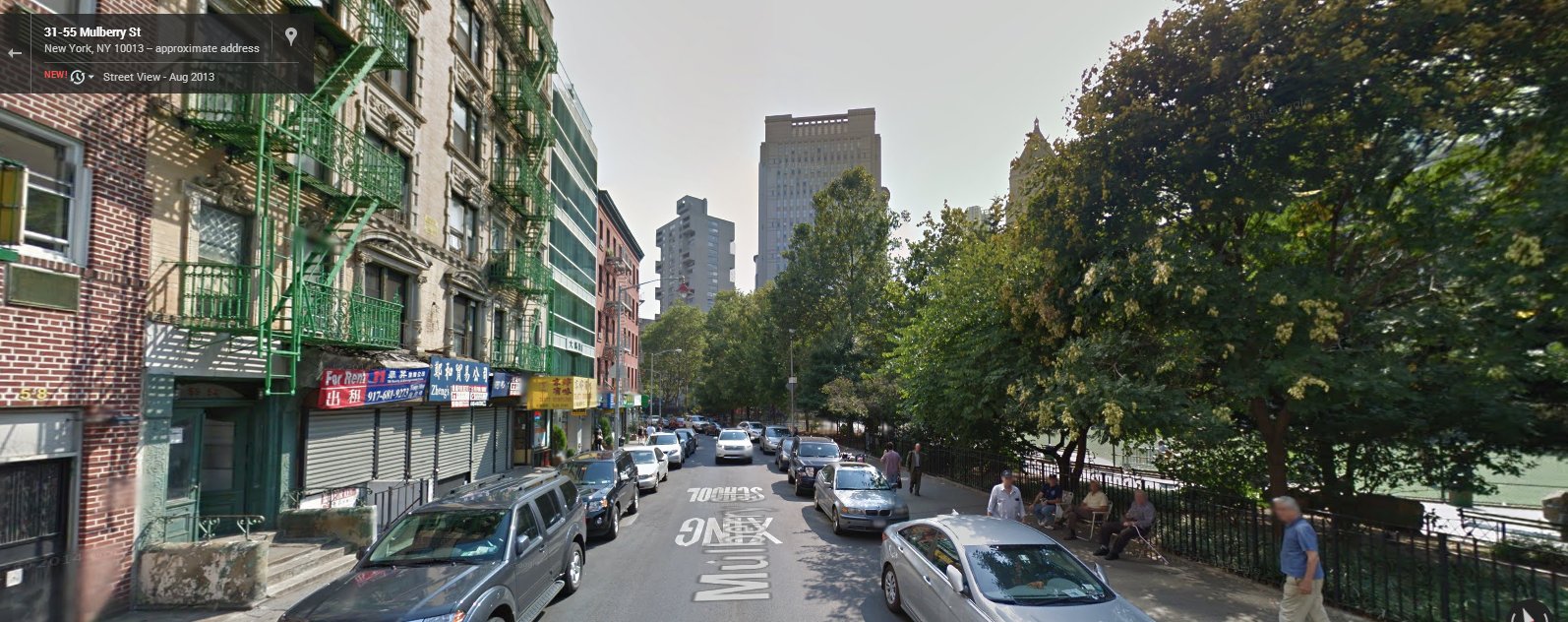
It is to be assumed from the address that Banca P. Caponigri was at 55½ Mulberry Street – that side of the block has now been replaced by a park.

Mulberry Street

The images in this treatise are haunting and unsettling. Despite all the things that are still wrong with our nation, it’s obvious that progress in raising the condition of our urban dwellers has made progress,with the obvious understanding that we still have far to go.

The Old Wolf has spoken.
Then, peach pits. Today, cookies.

I look forward with anticipation each year for the knock at the door (one of very, very few I will respond to if it’s a solicitor) from cute little girl scouts selling cookies. I could make myself ill on Samoas.

But the cookies are a fairly modern innovation. In earlier days, the young ladies did their part in other ways.

c6erbfr

Here we see three young girl scouts collecting peach pits for the war effort (World War I, so the photo would have been dated around 1917-1918.)

I first saw this image posted at reddit (/r/historyporn) posted by /u/texanwill. The Corbis Images shot can be found here.

CaptionGirl Scouts collecting peach seeds during WWI. The oil from the seed was used for war industries. Undated Photo, Ca 1917-1918

Redditor /u/davidhaslhof posted this interesting quote which explains why peach pits were of value:

The three WWI gas masks in our collection tell the tale of the first widespread use of chemical warfare in modern day history. Tear gas (xylyl bromide) was previously seen in other confrontations but it was the quick escalation to deadly gases like chlorine, phosgene, and mustard gas that caused panic among troops on all sides. Though the gas masks of different armies varied slightly, the concept was the same, charcoal and anti-gas chemicals were combined in the filter found in the mouthpiece. In the US, peach pits were collected as they could be harvested for charcoal. The Girl Scouts pictured here are doing their part by appealing to the nation, “You save peach seeds – they will save soldiers lives.

Everyone pitched in during the two World Wars, including girl scouts and boy scouts.

scouts-old-jan2011

During World War I, Scouts sold more than $355 million worth of Liberty Loan bonds and war savings stamps. Photo:  Boy Scouts of America.

The Old Wolf has spoken.
Gordonton, NC – July, 1939

PKXzu2A


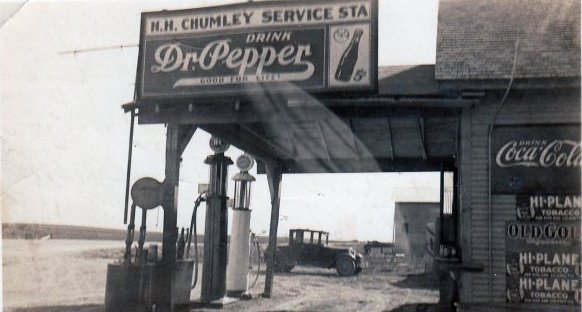
Country store on dirt road. Sunday afternoon. July 1939. Gordonton, North Carolina. Kerosene pump on the right and gasoline pump on the left. Rough, unfinished timber posts have been used as supports for porch roof. Brother of store owner stands in doorway. Photo by Dorothea Lange. Found at /r/historyporn, posted by /u/texanwill.

One family took photos of what this area looks like now, you can see them at Panoramio; photos by coleimage. Below: Country Store No. 2.

33215818


The Old Wolf has spoken.
Colored School at Anthoston

CYryLEM

Seen at Library of Congress

Colored School at Anthoston.
Census 27, enrollment 12, attendance 7. Teacher expects 19 to be enrolled after work is over. “Tobacco keeps them out and they are short of hands.” Ages of those present: 13 years = 1, 10 years = 2, 8 years = 2, 7 years = 1, 5 years = 1. Location: Henderson County, Kentucky

There appears to be no information regarding photographer or date, but it’s an intriguing photo.

The Old Wolf has spoken.