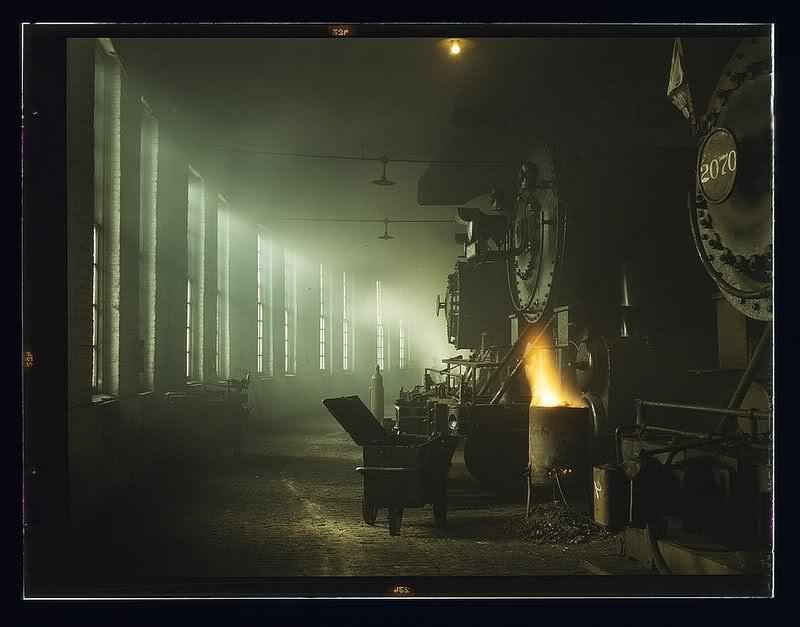
Steam locomotives of the Chicago & Northwestern Railway in the roundhouse at the Chicago, Illinois rail yards. Photo taken December, 1942
The roundhouse was an integral part of the American (and worldwide) railroad scene, typically used for locomotive storage and repair. I learned what a roundhouse was in the 50’s, from one of my favorite children’s books, Tootle:
It made perfect sense.
Roundhouses memorialized on a 2012 Forever stamp
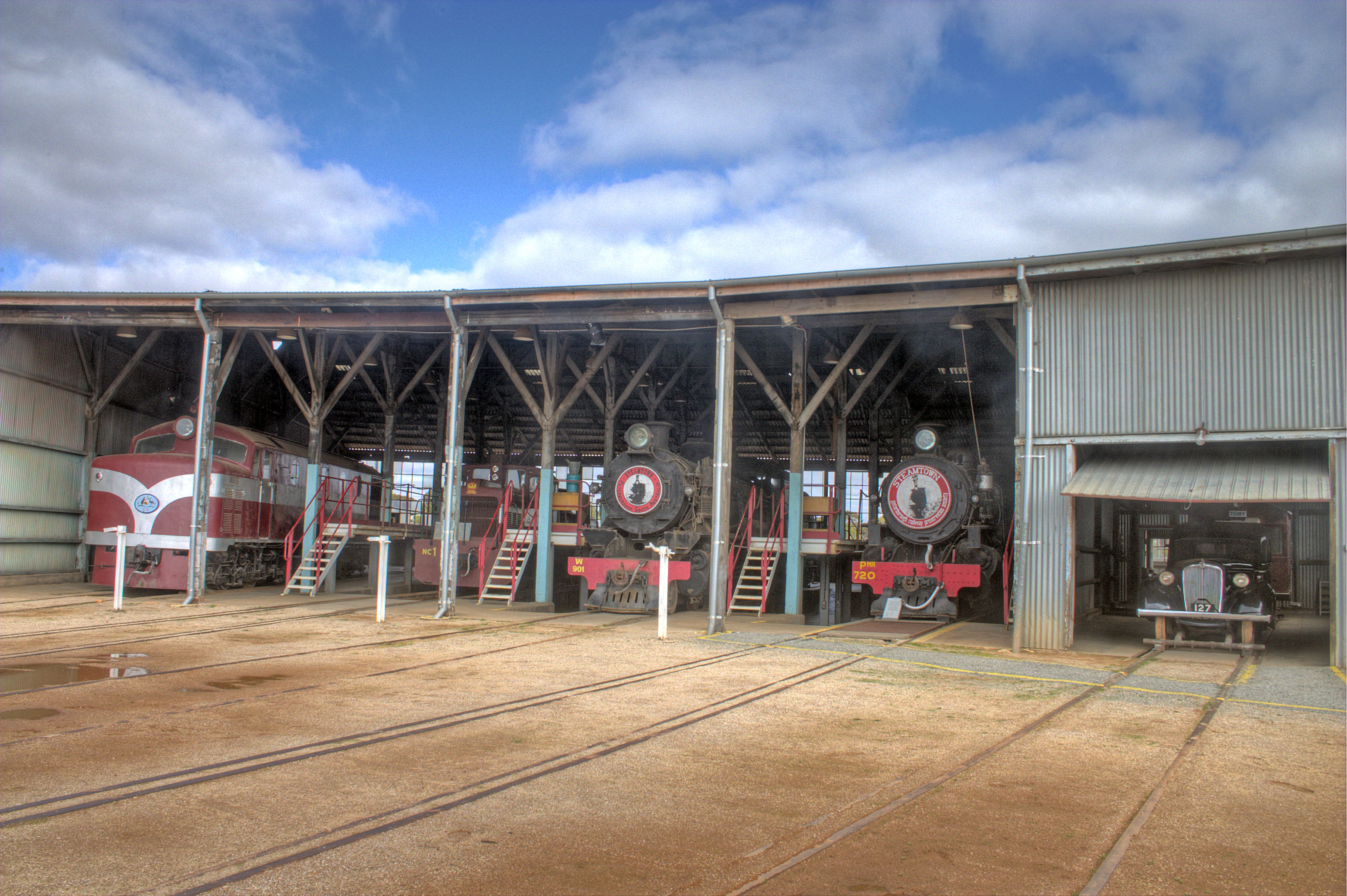
Five locomotives lined up at Steamtown National Historic Site in Pennsylvania. “Steamtown hosted visiting steam locomotives during the Grand Opening in 1995. Five steam locomotives were posed in the Roundhouse for this photo. Historically, steam locomotives faced the other way in the Roundhouse to allow more room between the locomotives at the end where the work was done.”
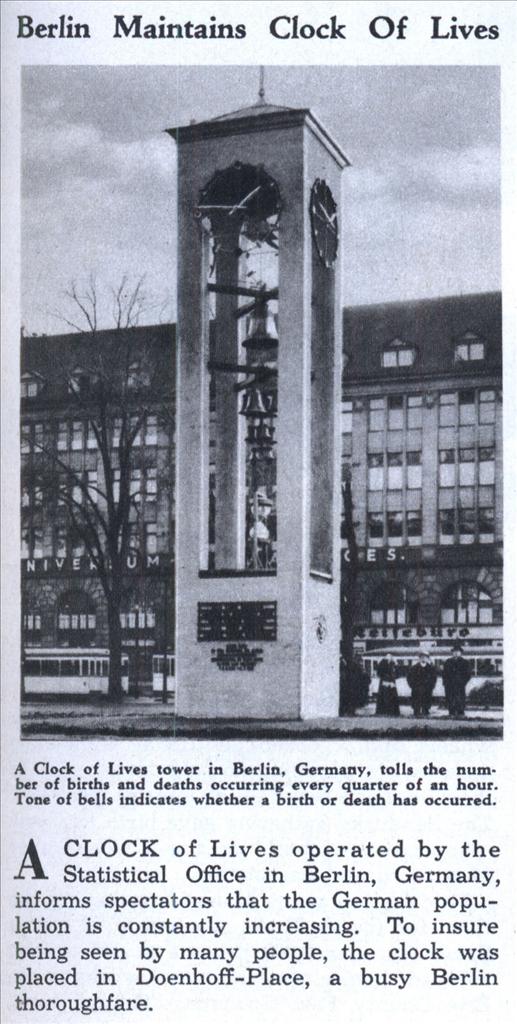
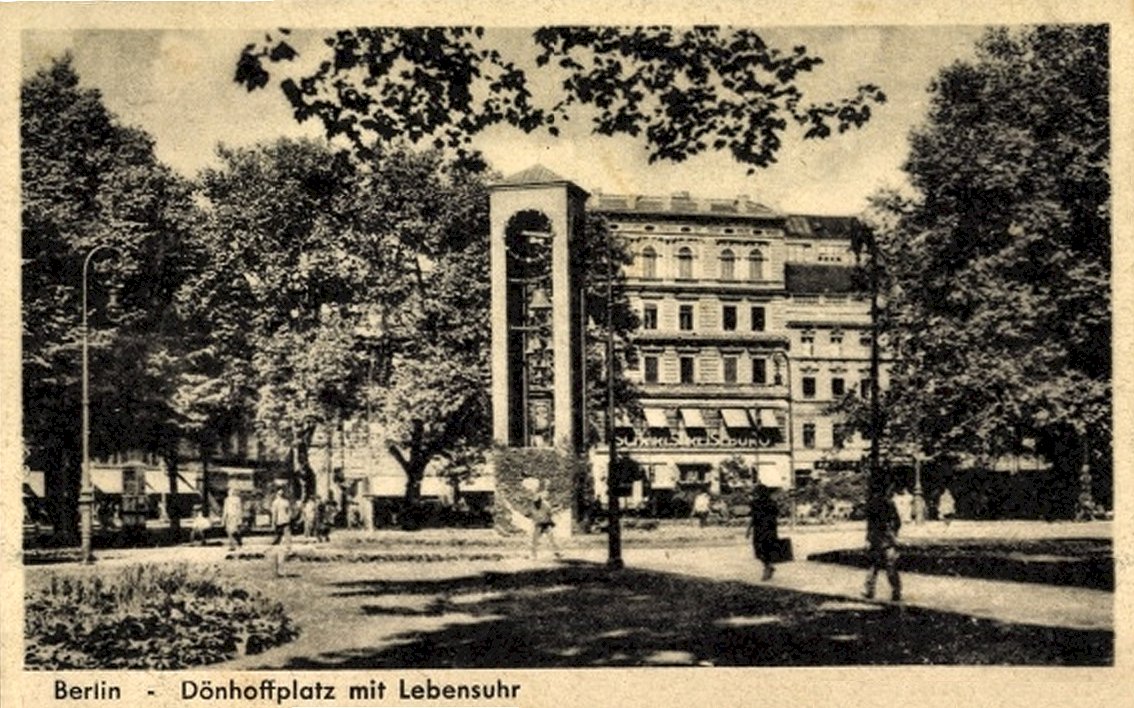
“A CLOCK of Lives operated by the Statistical Office in Berlin, Germany, informs spectators that the German population is constantly increasing. To insure being seen by many people, the clock was placed in Dönhoffplatz, a busy Berlin thoroughfare. The clock tolls the number of births and deaths occurring every quarter of an hour. The tone of the bells indicates whether a birth or a death has occurred.”
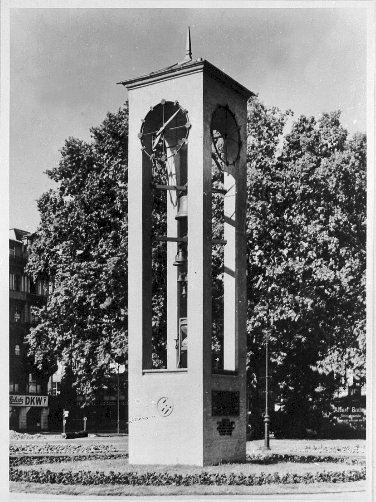
Another view of the Clock of Lives:
The clock, more properly called the Wilhelm-Lach Tower, was built in 1935. The small bell tower had the following inscription:
Every five minutes, nine children are born in the German Reich – every five minutes, seven men die. This tower is dedicated to the memory of the first National Socialist Mayor in the Central District, P[arty] M[ember] Wilh[elm] Lach, Born 9 June 1801- Died 6 July 1935″
According to the German Wikipedia site, the buildings around the square were heavily damaged during the war, and were largely razed and rebuilt. It is assumed that the clock tower met its demise around the same period.
A photo of the clock memorial taken in 1935.
Berlin no longer has a population clock, but it has a pretty sick world time clock in Alexanderplatz:
Educated Clock Sings, Talks, and Plays the Pipe Organ
A CRIPPLED inventor of Akron, Ohio, has recently completed what he believes is the world’s most wonderful clock. The remarkable instrument gives the comparative time in 27 different cities. In addition, it sings, talks and plays a reedless pipe organ every hour.
Every day the clock commemorates the death of America’s martyrs. At the hour of Lincoln’s funeral it recites the Gettysburg address. The time of President McKinley’s burial is marked by a playing of the old hymn, “Lead, Kindly Light.” At the hour of President Garfield’s interment, the remarkable timepiece plays “Gates Ajar.”
Valued at $50,000, the educated clock was built by 70-year-old Marvin Shearer after ten years of painstaking work. The clock contains 5000 pieces of wood, a mass of electrical control wires several miles in length, and is twice the height of an ordinary man.
The inventor’s granddaughter made two comments on the original page; I have reproduced them here in slightly edited form.
There were actually TWO clocks.
Marvin Shearer was my grandfather. I have searched everywhere for one of his clocks. I did trace the “Electric Wonder” to the Hotel Lobby of the Ritz in New York City but when it was remodeled, they got rid of the clock. No one there has been there long enough to know what happened to it. If anyone ever locates one of them PLEASE e-mail me at donnaleecotter16 [at] gmail [dot] com.
Here is what I know of his works:
Marvin carved a clock that was eight feet wide and thirteen feet high. It was called the ELECTRIC WONDER. He started this clock in 1927, and completed it in 1931. He also carved a second smaller clock, and perhaps a third.
There is an article in “The New York Times” dated April 7, 1909, about a “Wonderful Clock Made by Cripple”.
Another article I found was in The “Omaha World Herald” dated November 15, 1903, titled, “Queer Clock That Tells Many Things an Ohio Man Works on for Three and a Half Years”.
The Electric Wonder
This exhibit took 15 months to design. It contains 7172 pieces of wood from 32 different countries, from all parts of the world.
It has nearly 1½ miles of electric wire, 17 clock dials, and gives time in all parts of the world.
It shows important events of United States History from 1492 to 1934.
Our Navy of 47 ships pass by according to their classification.
It tells the weather conditions 24 hours in advance. It plays a reedless pipe organ, the only one of its kind in the world.
It shows and gives the Funeral Marches of our assassinated Presidents.
It shows the goddess of Liberty or eternal light in memory of American soldiers who lost their lives while in service for their country. It has chimes, harps, electrical cascade, electrical railway, an airship and a dirigible. Also, Indian history and arrowheads of the lone Indians from the battlefield of Custer’s Last Fight.
The Electric Wonder is 13 feet high, weighs 3800 lbs. has 168 electric lights and took 19,000 hours or nearly 7 years to build.
It has been endorsed by leading electricians and engineers of today. It is a merit to its maker as well as mankind.
I repeat the plea of the inventor’s granddaughter – if anyone has any clue as to the ultimate fate of this or other of Shearer’s works, please contact her. This is an astonishing achievement.
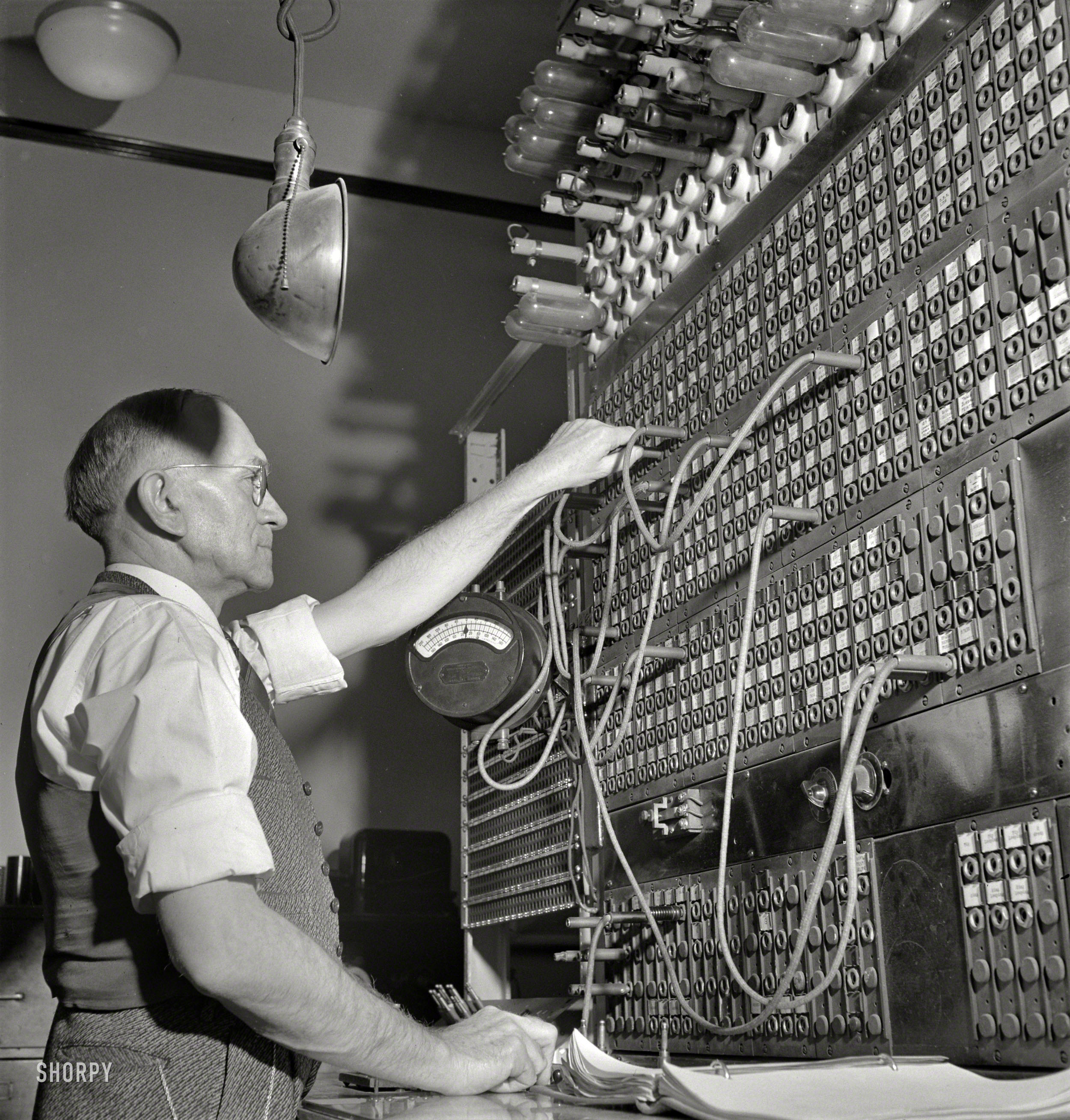
January 1943. Chicago, Illinois. “Mrs. Marie Griffith, manager of the information room, at one of the boards listing rates to points all over the country at the Union Station.”
As I was growing up, even as a child, I was aware that the rapid advance of technology had begun within sight of my birth year, in relative terms.
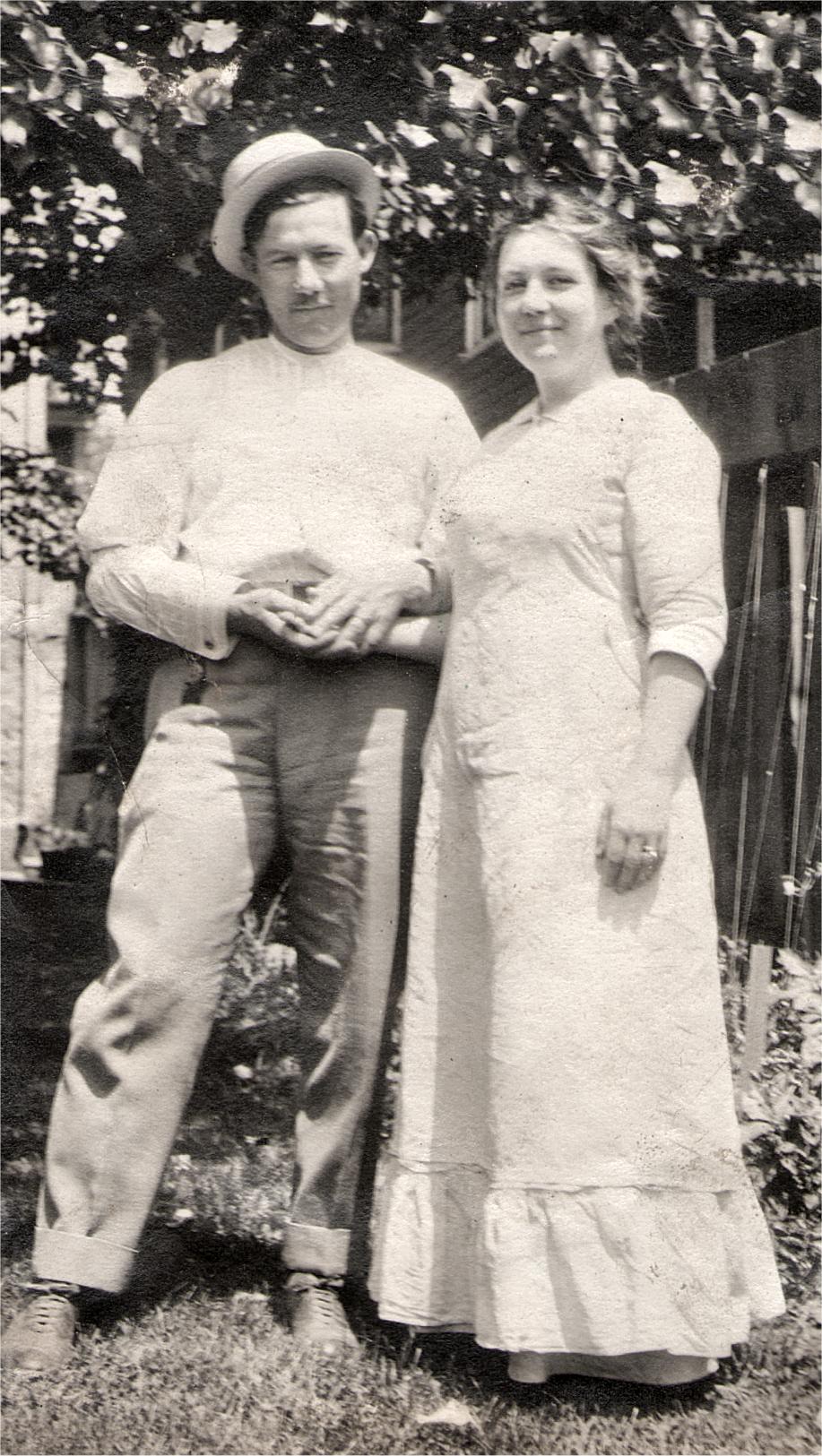
I knew, for example, that my mom’s parents were married in 1912, the year of the Titanic disaster.
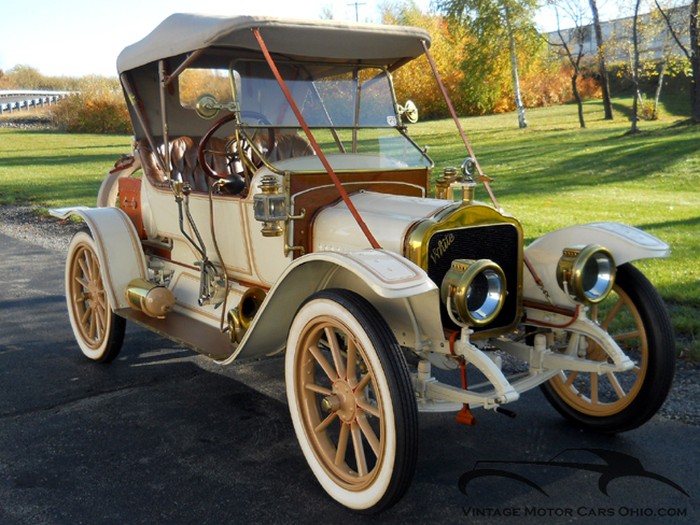
Electricity was still a novelty in many places. Automobiles were still replacing horses.
1912 White Motors vehicle
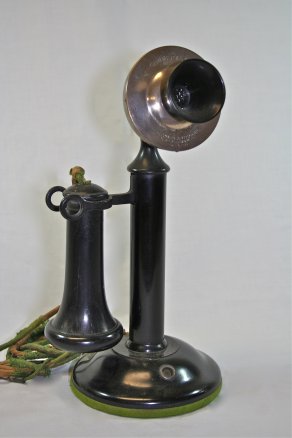
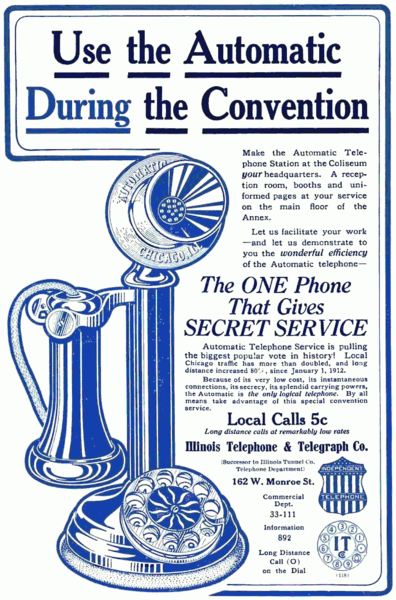
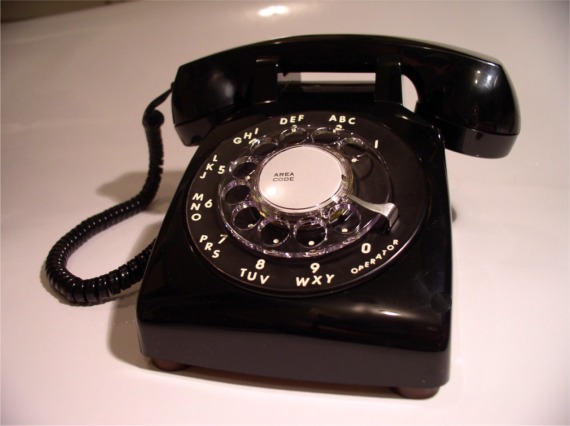
Telephones were still basic in many areas, although dial phones were becoming popular.
1912 – Connecticut Telephone and Electric Company
The dial telephone was touted for it’s “secret service” convenience, meaning no operator was required to connect the call. This advertisement targeted delegates to the 1912 Republican National Convention.
Radio had yet to become popular, and was still being used in things like ship-to-shore communications.
Television was not even a glint in Philo T. Farnsworth’s eye, and was strictly the stuff of laboratory experimentation.
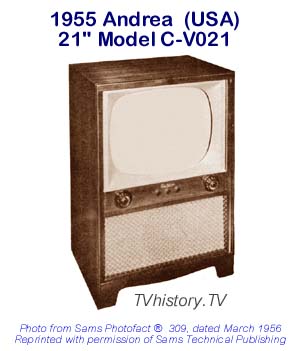
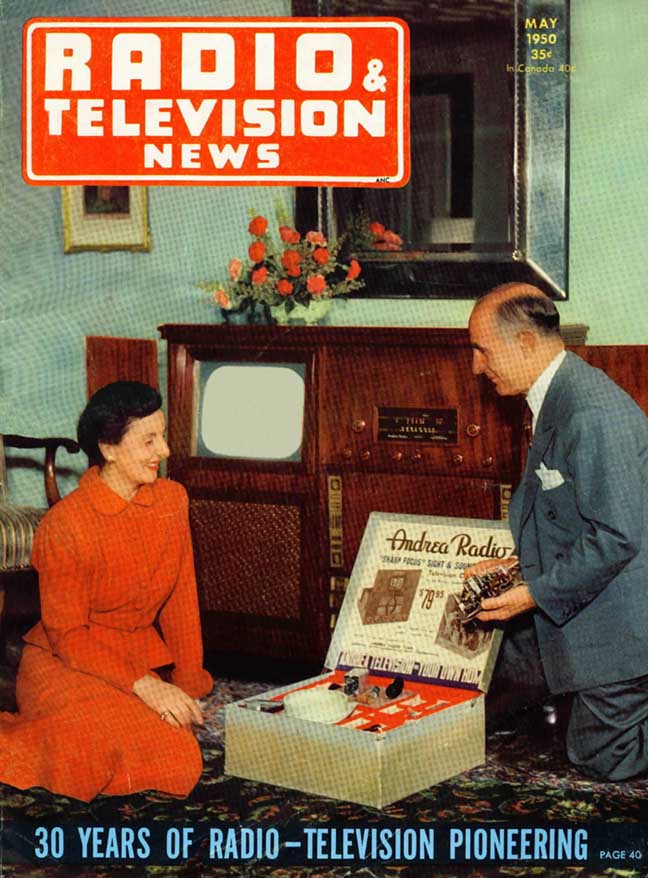
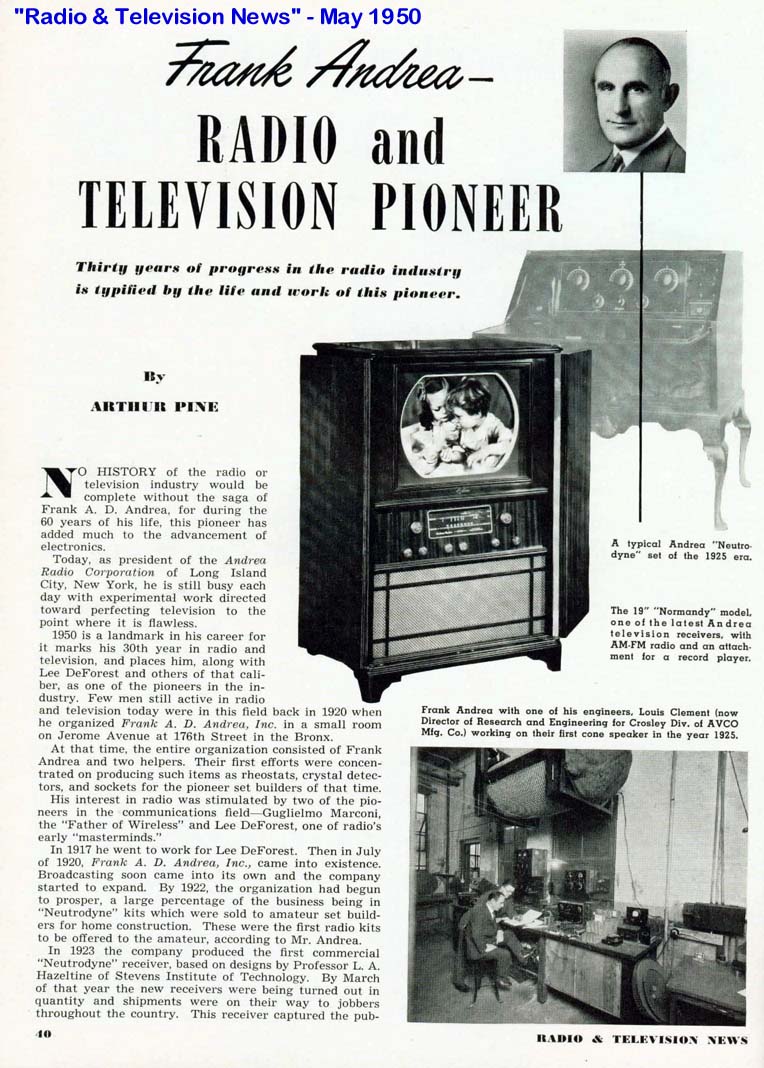
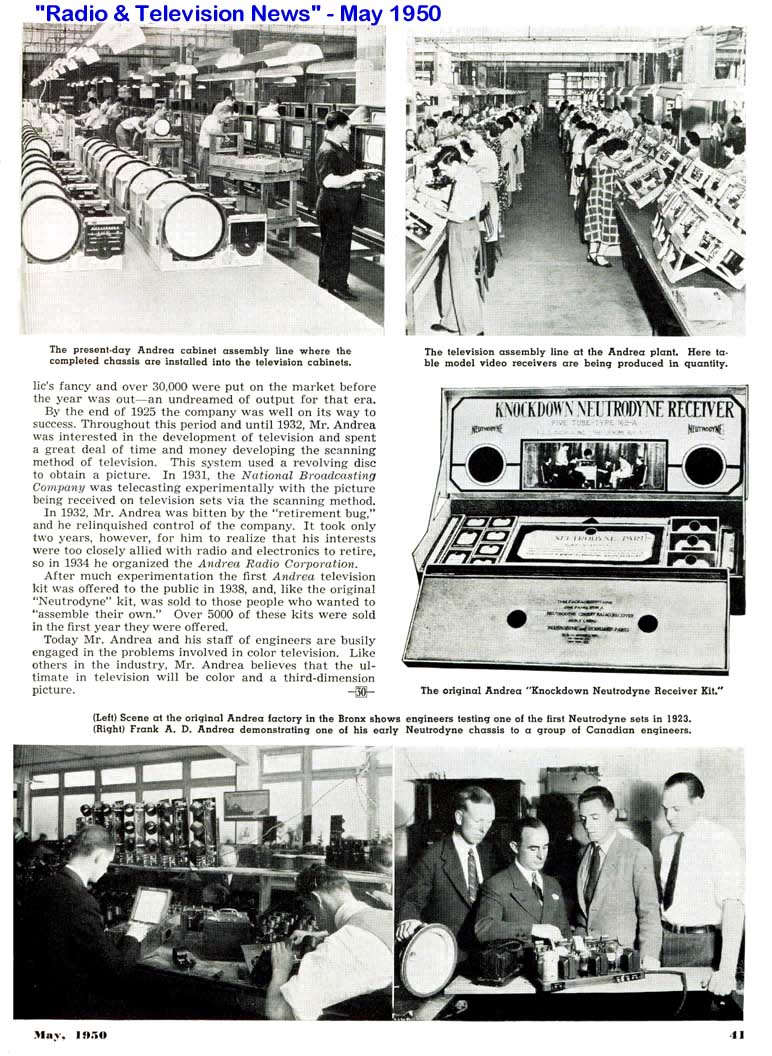
Our television was the “Cadillac” of TV’s at the time – a hand-made Andrea. Mom always had good taste.
For some history about the Andrea enterprise, see the article from Radio & Television News from May of 1950.
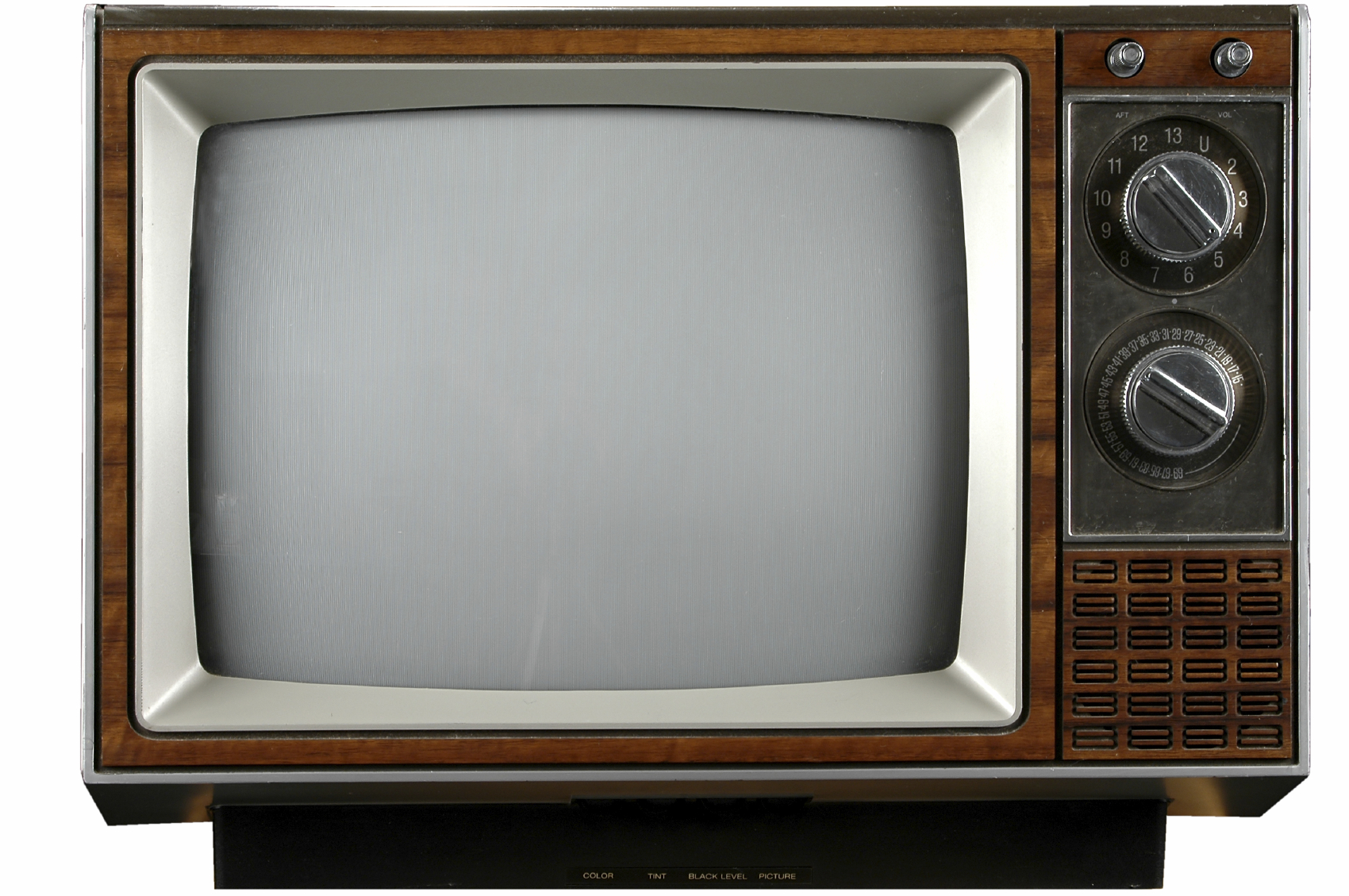
TV’s had a 13-channel dial. UHF was provided for, but no one was broadcasting on those channels yet. Remotes were unheard of – you actually had to haul your ass off the couch and change the channel or adjust the volume by hand. This made channel surfing difficult – unless, like me, you sat 5 inches away from the screen and spun the dial like crazy. My mother always told me I’d hurt my eyes by sitting so close…
New York City had 7 channels – 2, 4, 5, 7, 9, 11, and 13. Everything was black and white – it wasn’t until the 60’s that we began seeing this:
Channels were pretty much off the air during the night time. Broadcasting would begin at around 5:30 AM. One of the first things to come on (even before the cartoons) was The Modern Farmer. I learned a lot watching that show, waiting for the cartoons to come on. If I was up earlier, all I’d see was something like this:
My mother married for the second time in 1959, and she and her new hubby (that relationship lasted about a year) flew on one of the first commercial jets, to Puerto Rico.
Flying, which I did often during the 50’s and 60’s to visit my mom’s family in Utah or my father in Los Angeles, really did look a lot like this:
They took good care of you back then. Those meal trays would come with little promotional packs of cigarettes, too – usually Marlboro, with four cigarettes in a tiny flip-top box. Kids would get games, or playing cards, and always a set of wings:
Don’t know what happened to my wings from United, but I still have a set from American kicking around somewhere.
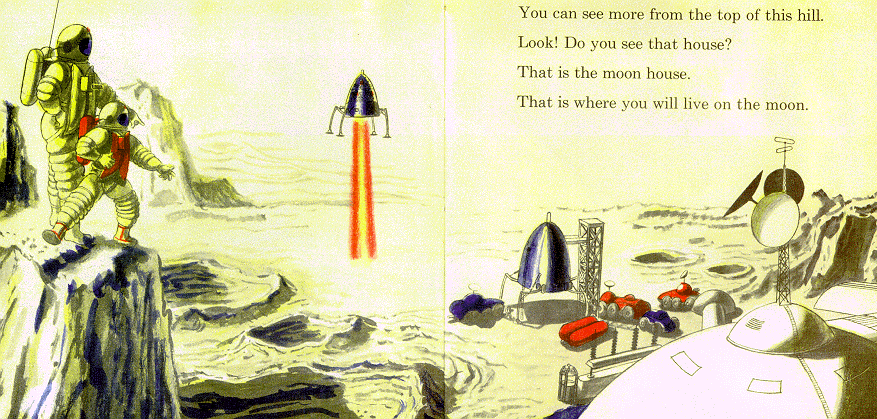
One of my favorite books in 1959 was You Will Go To The Moon, by Mae and Ira Freeman.
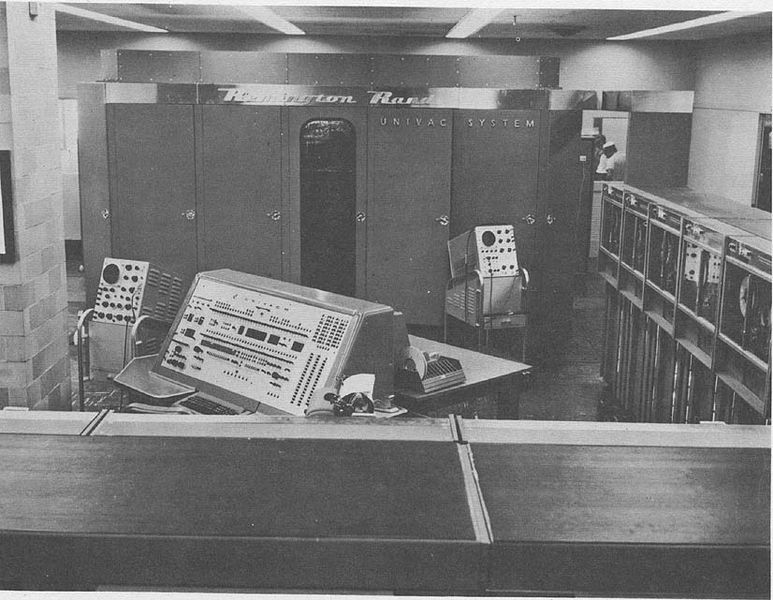
The Univac 1 was delivered in 1951, its successor, the Univac II, was delivered in 1958.
Univac II. My smartphone has more power than this did.
So today, in 2013, technology is advancing at a pace so rapid as to be breathtaking. I write this post on a core i7 machine, still relatively new – and already surpassed by new models. There are kids alive today who have never known what a world without the Internet is like (although they don’t remember NCSA Mosaic, or trying to surf the web over a 300-baud modem.)
In 1959, I could not have possibly imagined what I am seeing today (although I’m still ripped off about my flying car and that trip to the moon). Even with today’s technological and scientific miracles, I cannot imagine what kind of world my grandchildren will see. I can only hope that the world they grow up to see will have advanced in terms of humanity as well as technology.
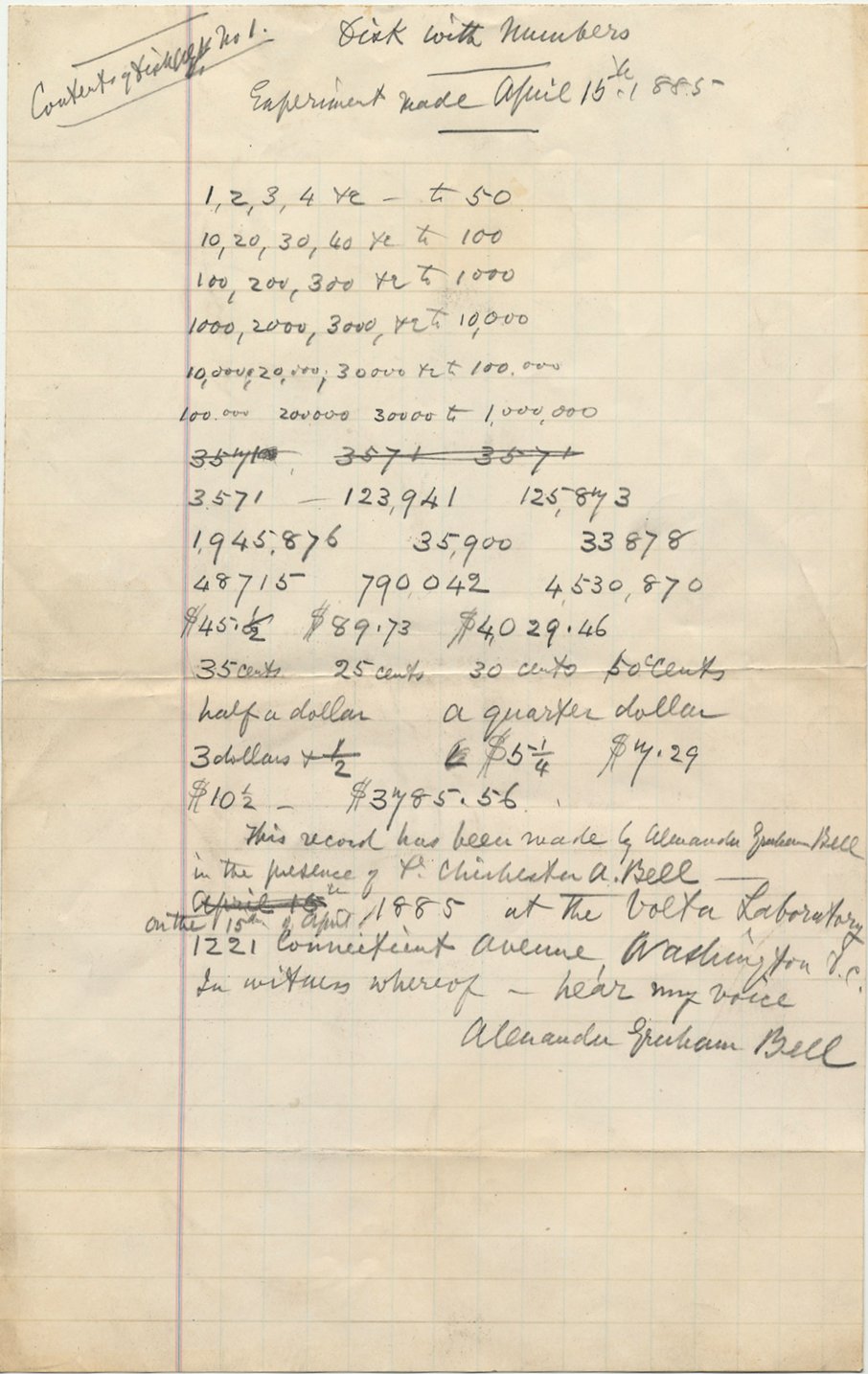
According to The Verge, new data-retrieval techniques have enabled researchers to play a wax disc recorded by Alexander Graham Bell on 15 April 1885, and previously deemed “uplayable”. Not only was the wax disc, which had been donated to the Smithsonian by Bell himself, heavily damaged, there was also no indication of what kind of device could play it back. However, by dint of taking high-resolution images of the disc and then using computer analysis to rebuild damaged areas, Bell’s voice can be heard clearly. He spends most of his time reciting numbers, but provides an audio “signature” at the end of the recording.
Bell’s transcript of the recording
The recording itself, with captions.
An intriguing bit of history.
The Old Wolf has spoken (but not as well as Alexander Graham Bell.)










 Playing in the World Game