Zen Pencils:Make the most of this life

I was recently introduced to a most wonderful blog, Zen Pencils: Beautifully illustrated quotes from great minds. The author/artist is Gavin Aung Than, a freelance artist living in Melbourne, Australia. A huge shout-out to Gavin for creating something of such lasting positive energy. In many ways, Gavin’s artwork and world view reminds me of the work of Winston Rowntree (a pseudonym! I wish I knew who he really is) who does Subnormality! Rowntree’s work is decidedly more offbeat, but also encourages readers to examine and explore and question the world we live in, and make the most of themselves in spite of the challenges life can offer.

I can’t honestly say how I found Zen Pencils – it could have been a Stumble, or a recommendation from a friend on Facebook, or via email. However it happened, I’m grateful. The post I found first is “Books are Awesome,” a quote by Carl Sagan. Reading the notes led me to another Sagan quote, reflected in the title of this post.

Click the thumbnail to be taken to the original page, which contains the full quote.

Now, I happen to really, really, really love Carl Sagan, in much the same way as I really, really, really love Isaac Asimov. Both were staunch and lifelong humanists, each striving for and encouraging others to grow, to develop, to improve, and to raise the human condition. (For what it’s worth, I have long suspected that the good Dr. Asimov was a closet believer in something greater than man – or at the very least, in the hope that Man could evolve into something far greater than he now is; all you have to do is read his short story, “The Last Question” for a glimpse of that longing.) Whether I’m right or wrong about that, he remained dedicated to humanist principles all his life.

Here’s another bit of Sagan-lore that I love to revisit on occasion, because it just makes me feel so good (along with all the other Symphony of Science videos):

Sagan is undeniably one of the greatest ambassadors of pure science that humanity has ever seen.

Which puts me in a quandary.

Because I’m “a believer.”

Humanists and the religious have been heaving word bombs and vitriol at each other for as far back as human written records go, and I’m here to say publicly, in words that will end up in the cloud forever until the heat death of the universe, that it’s a crying shame, and unworthy of the principles that both espouse. There is room in this great big, vast, endless, amazing, astonishing, wondrous, and (dare I say it) miraculous universe, for science and belief – and have very little left over (the Germans say “nichts übrig”) for people whose sole purpose in life seems to be depriving others of their basic human dignity.

Whether it’s a Nobel prize-winning scientist, ensconced in his well-papered office in the genetics department of a major Ivy League university who bitterly mocks and de-humanizes people of faith, or a Bible-thumping head of a $300-billion-dollar megachurch who foams from the pulpit to televisions worldwide that the Second Coming is nigh because of the wicked unbelievers of the world, or just you and me, neighbors, being dicks to one another, there’s no room in my world for this kind of negative energy.

I’m not about to attempt apologetics for all religion everywhere; the history books and modern news reports are full of horrors perpetrated by one group of  humans on another because of a difference of belief, be it big or small –  a syndrome superbly enough mocked by Jonathan Swift in his analogy of the “big-endians” vs. “little endians” that a simple reference to Gulliver’s Travels will suffice. It is enough for me to say that any person of faith who seeks to make another human being less, for any reason, both misunderstands and defiles the tenets and commandments of whatever god they claim to worship.

Sagan once wrote, “How is it that hardly any major religion has looked at science and concluded, ‘This is better than we thought! The Universe is much bigger than our prophets said, grander, more subtle, more elegant?’ Instead they say, ‘No, no, no! My god is a little god, and I want him to stay that way.’ A religion, old or new, that stressed the magnificence of the Universe as revealed by modern science might be able to draw forth reserves of reverence and awe hardly tapped by the conventional faiths.” Sagan was so close to his own epiphany when he said that, but it seems that he lacked whatever spark was required to take that last step and posit the existence of a God great enough to create the wondrous universe that he described, simply because there was no empirical, measurable evidence of such a creator. What he was left with was wonder and admiration for the unfathomable complexity of the space we live in, and admirable philosophies such as the one found in the Zen Pencils episode that entitles this post.

For me, there is evidence enough. To paraphrase a scripture that I value, all things denote there is a God; the earth, and everything on it, its motion, and also all the planets which move in their regular form, demonstrate that there is a Supreme Creator. Even positing, for the sake of argument, hydrogen atoms evolved to consciousness, there is no compelling evidence to explain the awesome regularity and mathematical perfection we see in nature or in music; no scientific reason to explain why I can remember the amazing Yorkshire puddings my wife made for me last week, or that the slope of a line is defined by the relationship y = mx + b, or that I have a class to teach this morning at 1:40 AM. In my mind, if creation were an accident, our world would be as random and unpredictable as one of Bill Watterson’s offbeat Sunday Calvin and Hobbes strips.

But see, that’s just me. I resonate with the idea that I’m more than a collection of vibrating strings that came together to be me for 80 years or so; I take comfort in looking at the wonders of the universe that we’re just beginning to understand, and having someone to thank for it; and I especially take joy in knowing that I should hang on to my fork, because there’s something better yet to come.

If belief and humanism are to coexist, each must observe certain boundaries. I support the free exercise of religious faith, but not the imposition of one group’s beliefs on others; I support a secular government and public education system which teaches only empirical truths, but one which does not go out of its way to teach that people who do believe in something more than pure science are gibbering idiots. Private schools can teach what they want – that’s their privilege, and that’s why they are private – but I would encourage them to adhere to the same principles of universal human dignity.

Years and years ago, scientists began dreaming of a mind-boggling system that would deliver Curiosity to the surface of Mars. If they had not had the dream, that amazing little beast would not now be puttering around the surface of our solar neighbor, zapping rocks with its lasers and finding evidence of surface water.

It is our dreams that drive our reality. I dream of a world that works for everyone, no exceptions, and that’s what I am working for. The thoughts of Sagan and others like him go into the pot and become part of the energy that is driving me forward.

The Old Wolf has spoken.

Gallium-induced structural failure of an aluminum can

Gallium – the dream of every high-school chemistry prankster. Of course, 45 years after my last high-school chem class, someone has monetized that space:

As a kid, I often coated silver coins with mercury (if you have any questions about why my brain works the way it does, you can point the finger of blame right there.) They became shiny like proof coins, and felt slick to the touch. Unfortunately, the shininess didn’t last, and as the coins oxidized, they took on a dull matte finish. Even more interesting, however, is some real chemistry with gallium, and watching it infiltrate the crystal structure of an aluminum can is intriguing.

To paraphrase Will Hunting, a lot of people are dropping a hundred grand on an education you can get for the price of a decent internet connection.

The Old Wolf has spoken.


William Kogut and Robert Ripley

(Cross-posted from my Livejournal)

Robert Ripley was one of my favorite reads when I was young. It was sort of like StumbleUpon today, if you select “bizarre/oddities” as a subject. I couldn’t get enough of it. In those days, there was no Snopes, no Google, no Wikipedia – nothing really to check the veracity of Ripley’s discoveries – many of which were true, others… well, let’s say he was an entertainer more than a scientist. But I always remember this:

THE STRANGEST SUICIDE

A CONDEMNED man, locked in a death cell in San Quentin prison, fashioned a deadly bomb from a deck of ordinary play­ing cards and blew himself into eternity. It was the most ingenious gallows-cheating device ever conceived in the brain of a doomed man.

William Kogut, an ignorant lumberjack of Polish descent, was sentenced to death for killing a woman with a pocket knife. Hope gone, he sat silently in his cell, thinking. The shadow of the’ noose dangled before him; he could hear the slow, dull tread of the thirteen footsteps ascending the stairs to the scaffold.Suddenly a light came into his lustreless eyes. Deliberately and methodically, William Kogut set to work. From the prison cot he wrenched a short piece of hollow tubing. I t was just the thing. Digging into his few possessions, he pulled forth a deck of ordinary playing cards. From the cards he tore out all of the red diamonds and hearts, and, reduced them to small bits. Everything was deathly quiet and the night was long. The eight other condemned men in adjacent cells knew nothing of what was taking place.

Kogut then took the small bits of colored cardboard to the wash bowl and soaked them in water. Then he took the soggy mass and tamped it into the piece of metal tubing as if he were loading a blunderbuss. A broom handle was next utilized in the construction of this strange bomb. The handle was pounded tightly into the end of the tube making the interior air-tight.

This diabolically cunning man knew that playing cards were made of cellulose – a fiber from which trinitrocellulose, a powerful ex­plosive, is made.

The bomb was now ready. Cautiously he took down a small combination oil heater and lamp and lighted it. Over the tiny flame he held the explosive mess, while steam and gas generated within the tubing. After a time the pipe grew hot. Everything seemed ready so he leaned over with his head close to his deadly toy.

How long he waited, no one knows.

Just as dawn tinted the grey prison walls, a terrific explosion occurred. It rocked the countryside for miles around, roused prison guards from their nearby homes, and tumbled prisoners from their cots.

Prison alarms were sounded, guards ran madly to their posts, thinking perhaps the blast might be a signal for a general prison break. Rushing to the condemned row, the excited guards stopped, utterly horrified, before the shattered cell of Number 1651.

The walls were dripping crimson.

William Kogut had cheated the hangman!


I got to wondering… true or false? Snopes records it as true, but describes the explosion as simple pressure of steam in a closed-up pipe sufficient to drive bits of playing card into Kogut’s skull, not the earth-shaking bang that splashed Kogut all over the walls and destroyed the cell to boot.

Barb Mikkelson wrote, “Kogut removed a hollow steel leg from his cot, tore several packs of playing cards into tiny pieces, and stuffed these bits into the pipe… He plugged one end tightly with a broom handle, and poured water into the other end to soak the torn cards. Then he placed his device on top of the kerosene heater… the heater turned the water to steam, adn when the pressure built up to a high enough level, the resulting explosion shot the bits of playing card out of the pipe with enough force to penetrate Kogut’s skull.”

Sciencepunk.com quoted an article in Gargles.net giving a bit more science behind the nitrocellulose angle. While I respect Snopes and the research that Ms. Mikkelson and her hubby do, usually in-depth and convincing, in this instance I tend to go with the science. If an open pipe is plugged on one end by a broom handle, and on the other end by soggy playing cards, I suspect any steam building up in an open pipe would pop the sodden mass out with some force, but not enough to penetrate a skull. The other scenario implies that the pipe was closed on one end, and tightly sealed with the broom handle on the other. In this case, chemical reaction or no, it’s conceivable that the explosion could have had enough energy to kill Kogut… but from what I can tell, the blast was more powerful even than that, and the nitrocellulose story is highly likely.

Only Kogut knows what went down, and the story has passed into the realm of barely verifiable lore… but it’s interesting to know that whatever the case, Ripley got this one right.

Verdict: Believe it!

The Old Wolf has spoken.

Chemical Warfare

I am deeply indebted to the twisted mind of Dru White, a former colleague of mine, for this bit of whimsy. If you enjoy it as much as I did, you have only yourself to blame.


Chemical Warfare

By Dru White

Of course you passed high school chemistry. Maybe you even made a through a college course or two. But a little knowledge is a dangerous thing–especially when it comes to chemical  equations. See if you can keep yourself and others alive for the next ten days. All it takes is a little knowledge of chemistry. Mark your choices, then check the answers to see if you know enough to survive.

DAY ONE:

You are at home cooking and suddenly a fire starts on the top of your stove. You are frightened and look for a quick way to douse the flames. There are three jars containing different chemical compounds on your cupboard. Which do you. toss onto the fire?

❑ A) NaHCO3                      ❑ B) CS2                             ❑ C) C7H3.

DAY TWO:

Some of your food keeps getting a bit of mold on it. You search for a compound that will help prevent the mold, but won’t hurt you when you eat the food. What is best to put on the food?

❑ A) As2O3                           ❑ B) C17H23NO3                 ❑ C) C3HsO2Na.

DAY THREE:

You have developed a bit of an infection. You really should take something for it before it gets any worse. What would you like to have?

❑ A) C9H11N2O4SR              ❑ B) C6H6Cl6                      ❑ C) C17H21NO4

DAY FOUR:

Your allergies have been acting up again, and you have a bad insect bite on your arm. You need some medication with a good compound to help that allergy, and an ointment with something to make that insect bite feel better. You want plenty of which compound in your medication?

❑ A) H2SO4                          ❑ B) C18H21ClN2                 ❑ C) C20H12

DAY FIVE:

When you ride the ferry across the bay you sometimes experience a little nausea. A drug with something to help you feel better would be nice. After all, nobody likes to feed the fish. Which will you take?

❑ A) CH2FCOONa              ❑ B) C17H19N2SCl               ❑ C) C19H26ON2

DAY SIX:

After examining one of your more careless patients, you conclude that this person has a case of gonorrhea. You go to your locked cupboard and find three possible forms of medication. Which do you choose to administer to the anxious sufferer?

❑ A) C6H8N2O2S                  ❑ B) C21H22N2O2                ❑ C) C10H14N2

DAY SEVEN:

You stop by the local fast food restaurant and pick up some french fries. They seem somewhat bland today, so you grab something from your laboratory shelf to sprinkle on them. Which did you grab?

❑ A) NaCN                          ❑ B) KCN                           ❑ C) NaCl

DAY EIGHT:

So you’re going to the beach for a little sun. To which kind of compound do you choose to expose your sensitive body so that you won’t get sunburned?

❑ A) HCl                              ❑ B) CH3COSH                  ❑ C) C6H4NH2COOC2H5

DAY NINE:

You are very concerned. The vet told you over the phone that it sounds as if Fido has parasites. There must be something fast and effective to make him more comfortable. What will it be?

❑ A) HCN                            ❑ B) C10H8O                       ❑ C) CCl3NO2

DAY TEN:

Well, doctor. Here it is your last day. A patient has a bleeding problem during an operation. What kind of compound do you wish to administer to make the blood coagulate better?

❑ A) Cl5H16N3SClAnCl2      ❑ B) C15H15N2CON(C2H5)2                    ❑ C) C6H5COONa

 END OF TEST


CHEMICAL WARFARE ANSWERS

Give yourself a point for each correct answer.

 DAY ONE:

(A)     Good choice. You got the fire out by smothering the flames with ordinary baking soda. It looks like you will make it to day two.

(B)     Sorry, but carbon disulfide is a highly flammable, poisonous solvent. I’m afraid you haven’t made it through the first day.

(C)     Whoops. Toluene is a flammable, poisonous hydrocarbon, originally from the balsam of Tolu. It is used as a solvent, and to make dyes and–ah, yes–even explosives.

 DAY TWO:

(A)     Arsenic trioxide will simply not fill the bill. However, this arsenic compound is great for exterminating insects and rodents.

(B)     Oh, my. If you picked this one you are in big trouble at mealtime. Hyoscyamine is a very poisonous alkaloid. No time to call the doctor.

(C)     Correct. Sodium propionate is one of your standard mold preventives.

 DAY THREE:

(A)     Congratulations. Penicillin has been the choice of many doctors for years now.

(B)     I don’t think you will see much improvement. This powerful and poisonous insecticide, benzene hexachloride, just doesn’t seem to do the trick.

(C)     Why not? Who knows, maybe a little cocaine will help your infection. (But I have my doubts.)

 DAY FOUR:

(A)     Ouch! And double ouch! I don’t think sulfuric acid will have the desired effect. Though it is good for making dyes, paint, and explosives, I’m afraid its corrorsive nature may not promote healing.

(B)     Good choice. Chlorcyclizine is an antihistamine for allergies and is also used in medication to sooth insect bites.

(C)     Benzopyrene, which comes from coal tar and cigarette smoke, has been found to cause cancer in laboratory animals. You struck out on this one.

 DAY FIVE:

(A)     Sorry, you’ll never squeak again. Sodium fluoroacetate is a powder used as a highly effective rodent poison.

(B)     Chlorpromazine is the correct choice. In addition to its use to control nausea, this compound is also used in medication to help treat certain mental disorders.

(C)     Wrong. Curarine is a toxic alkaloid made from a South American plant. Natives use the poison on the tips of their arrows.

 DAY SIX:

(A)     Good choice, doctor. Sulfanilamide is used to treat streptococcal infections.

(B)     Sorry, it looks like malpractice time. The strychnine you administered. seems to have cured your patient’s problem permanently.

(C)     Nice try, but nicotine is not commonly used to treat this type of disorder. In fact in this pure form it’s rather fatal.

 DAY SEVEN:

(A)     Negative. Though sodium cyanide is also a salt, it is highly poisonous one. I hope you have a valid will.

(B)     You couldn’t have done much worse. Potassium cyanide is an extremely poisonous compound. It is used for extracting gold, electroplating, and as an insecticide. But it just doesn’t go well with fries.

(C)     That’s correct. Common table salt is the best and safest choice.

 DAY EIGHT:

(A)     This will be the worst sunburn you’ve ever had. Hydrochloric acid can even be worse than the sun’s harmful rays.

(B)     Sorry. If you try putting this allover you, you won’t feel so comfortable, but you will probably have plenty of elbowroom on the sand. After all, tear gas (thioacetic acid) usually keeps crowds back quite well.

(C)     That’s right. Benzocaine is also used as a local anesthetic.

 DAY NINE:

(A)     Well, Fido is gone to that big pound in the sky. Hydrocyanide acid is used as a fumigant. This poisonous gas just doesn’t go well with pets.

(B)     Good choice. Betanaphthol is used in medicines as a parasiticide. Fido will thank you.

(C)     Goofed again. Call the pet cemetery. Chloropicrin is a poisonous gas used in chemical warfare. (And we though Fido was your best friend!)

 DAY TEN:

(A)     That’s right. Toluidine blue is used as a coagulant in medicine. Maybe you’ll even be able to collect your bill this time.

(B)     I don’t think lysergic acid diethylamide will stop the bleeding. All LSD does is cause psychedelic hallucinations.

(C)     Nope. Sodium benzoate is great for preserving food, but not so good for preserving patients.

 YOUR RATING:

8-10 Correct:   Excellent. You are a true expert in this field.

6-7 Correct:     Very good. You either know a lot or are very lucky.

4-5 Correct:     Good. You must be a high school chemistry teacher.

2-3 Correct:     Fair. The law of averages was on your side.

0-1 Correct:     Need help. Eat only all-natural foods.
The Old Wolf has spoken (and needs help).

Coonabarabran: The world’s largest solar system drive

A post over on Facebook by a friend of mine in New South Wales reminded me that I wanted to spotlight this experience. I mentioned it in a Livejournal entry a few years back, but it deserves some exposure of its own. All photos are mine and ©2010-2012 Old Wolf Enterprises unless otherwise noted.

High in the Warrumbungle Mountains near Coonabarabran, NSW, sits the Siding Spring Observatory (SSO), Australia’s premier optical and infrared observatory.

Home of the Anglo-Australian Telescope, among others, this observatory is a delight to visit in and of itself.

Anglo-Australian Telescope

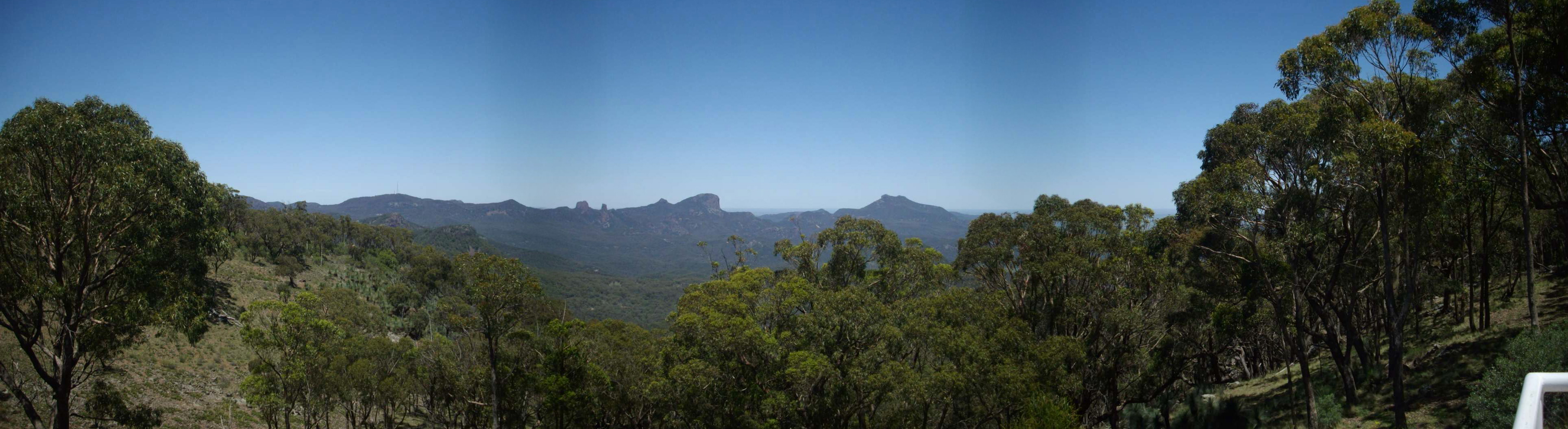
Panorama of the Warrumbungle Mountains from the Observatory

Central core cut from the telescope’s primary mirror before polishing and reflective coating was applied

In addition, in an effort to boost tourism, the observatory created the world’s largest solar system drive. There are five beginning points,

  1. Dubbo
  2. 6km south of Birriwa (north of Gulgong)
  3. Merriwa
  4. Tamworth
  5. Bellata (south of Moree)

Route overview

All the drives end at the Siding Spring observatory; since I was at the observatory already and I have a friend in Dubbo whom I wanted to visit, I began here and did the drive backwards.

Here is the itinerary:

Object Location Distance (km) Time
The Sun Siding Spring Observatory 0 0
Mercury Observatory Road, west of Coonabarabran 1.2 1 min
Venus Observatory Road, west of Coonabarabran 1.9 2 mins
Earth Observatory Road, west of Coonabarabran 4.1 3 mins
Mars Timor Road, west of Coonabarabran 5.5 5 mins
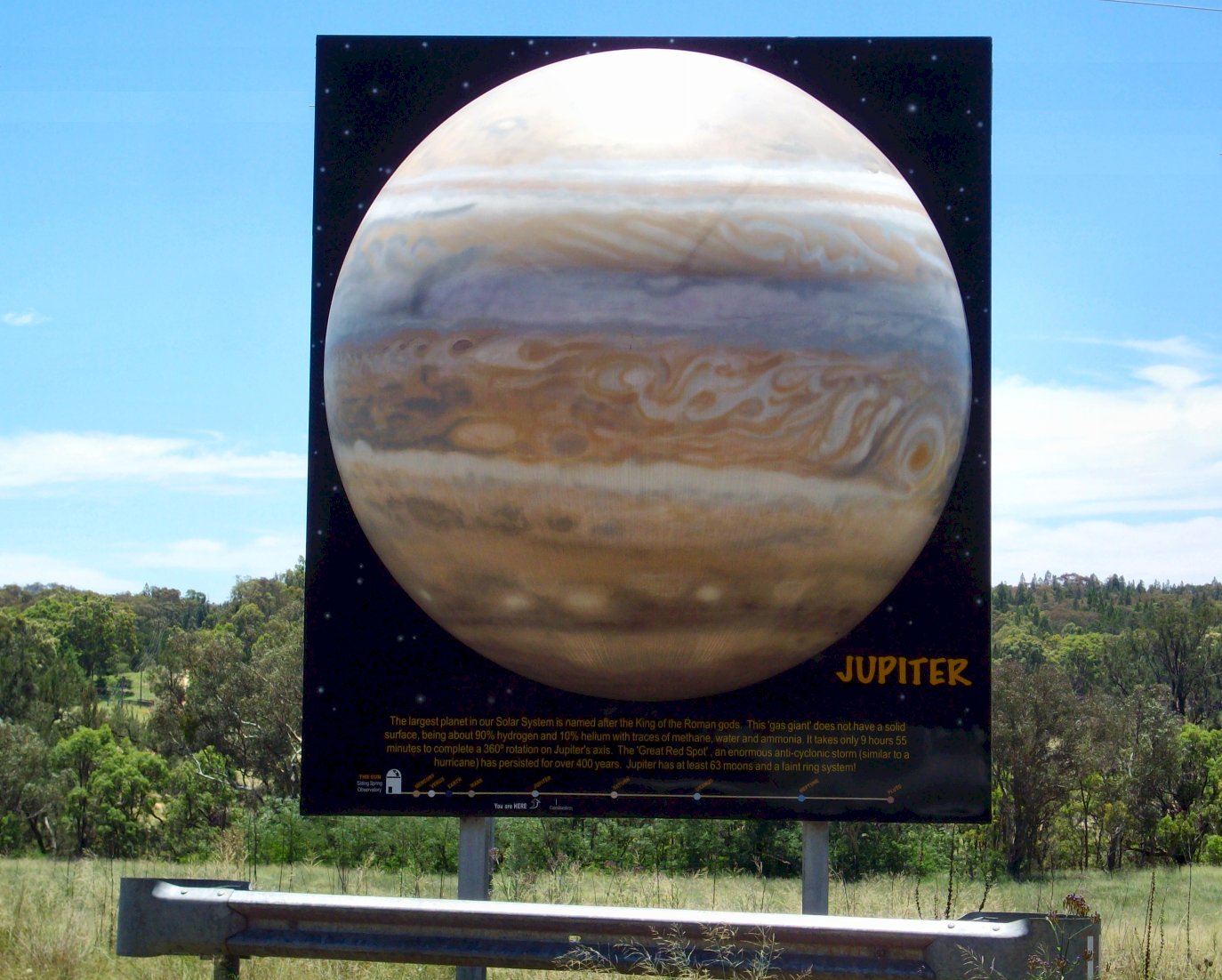
Jupiter Timor Road, west of Coonabarabran 21.5 20 mins
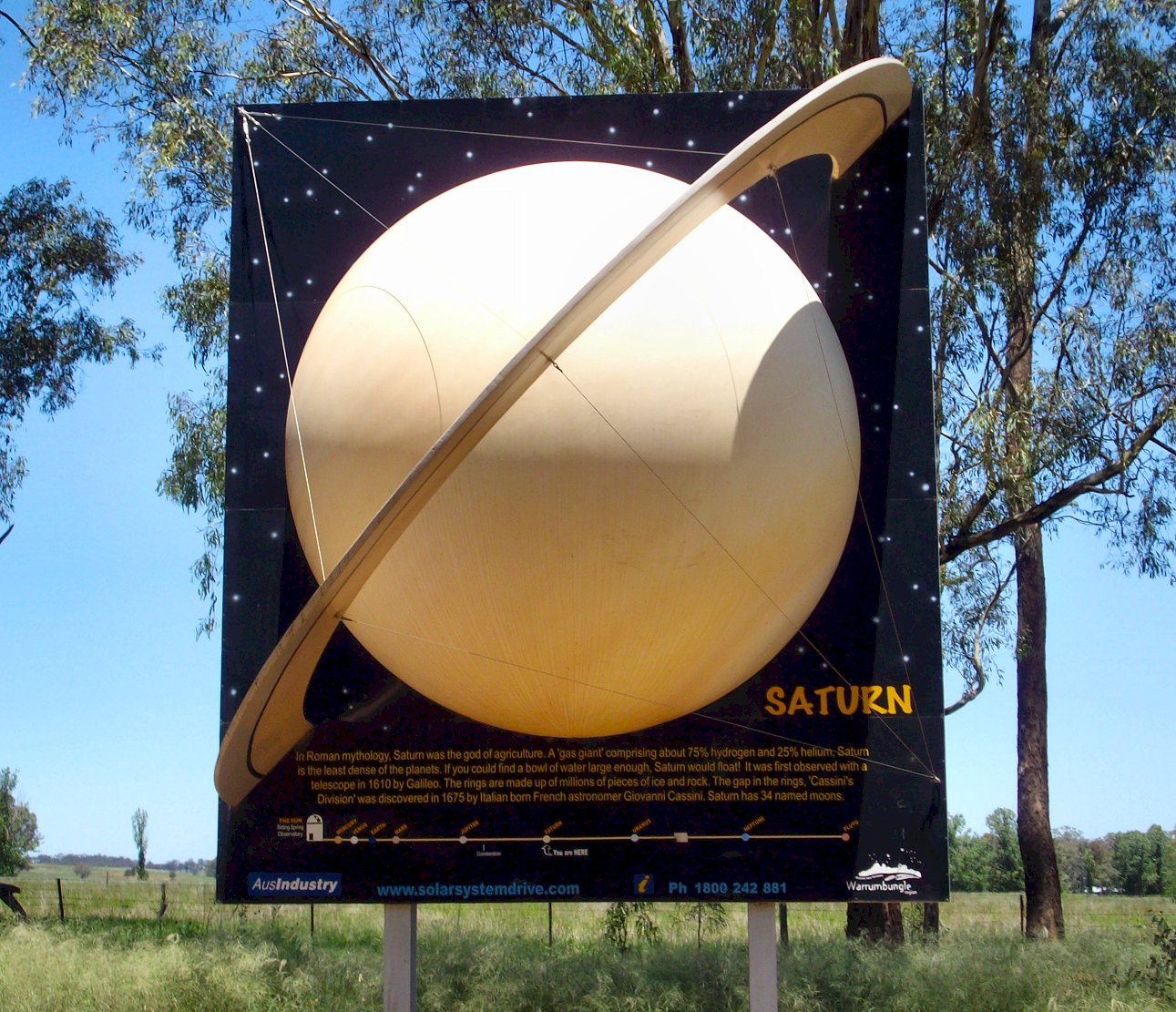
Saturn Camkeena Rest Area, Newell Hwy 40 40 mins
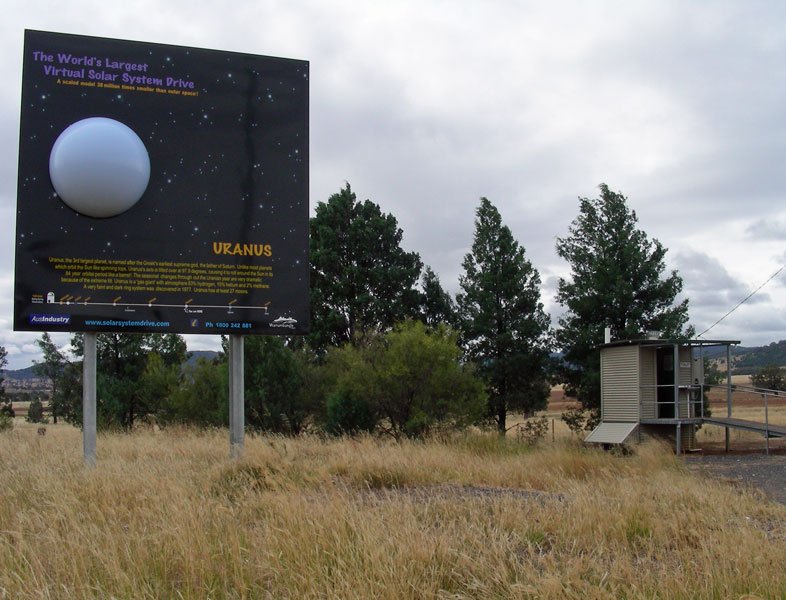
Uranus Tooraweenah Rest Area, Newell Hwy 79 70 mins
Neptune Gilgandra Cooee Heritage Centre, Newell Hwy 119 1.5 hours
Pluto Dubbo Visitor Centre, Newell Hwy 190 2.25 hours

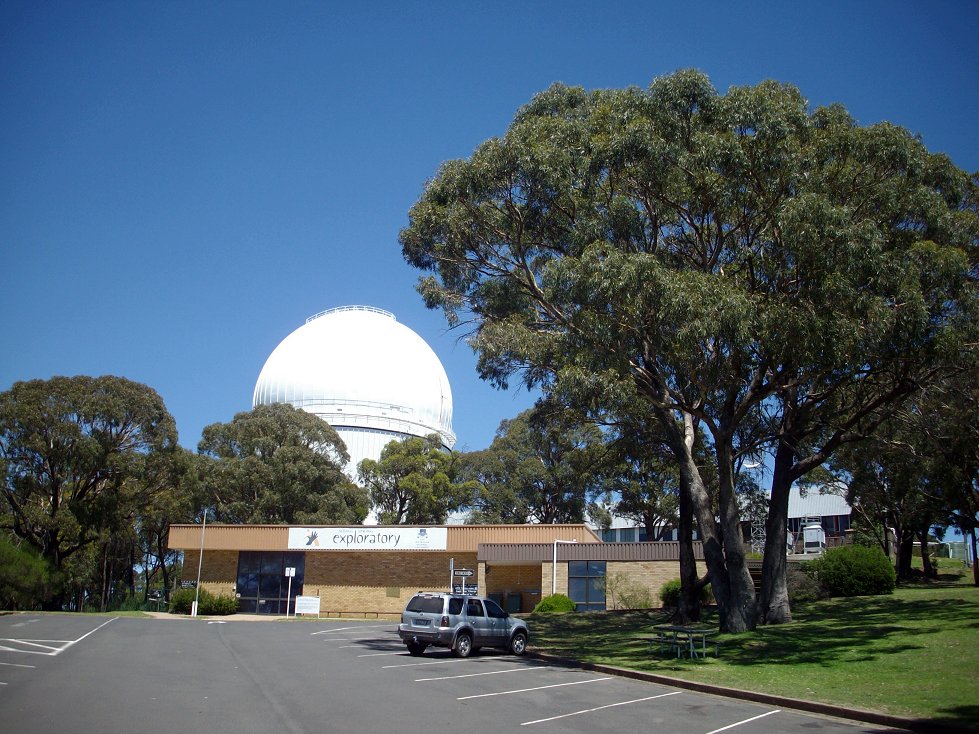
The observatory dome, representing the sun at 1:38,000,000 scale. All other placards on the drive are accurate (in relative terms) with regard to distance and size. For reference, traveling in your car at 100km/hr along the Solar System Drive, you’d be “virtually” hurtling through space at a million kilometers per second – more than three times faster than the speed of light.

I missed Mars, this was taken by another traveler.

Missed Uranus and Neptune;  this image, along with the one below, was found at A Snail’s Eye View.

The drive ended at the Dubbo Visitor’s Center, at which a representation of Pluto is located. Please notice: Pluto.

It is a scientific fact that Pluto and its moon Charon were most likely Kuiper Belt objects captured by the sun, and probably did not coalesce out of the original accretion disk. But as far as I’m concerned,

This drive was one of the most enjoyable experiences I’ve had. I’d love to go back and do the other routes, just to see the scenery.

Australia for the win!

The Old Wolf has Spoken.

Prop 37: For and Against

I’ve written about Prop 37 and GMO foods before. It’s a complex issue. But as California goes to the polls on Tuesday, the vote on Proposition 37 looms larger than many other issues.

As of October 27, 2012, the total donations to each side were $7,300,000 in support, and $41,300,000 in opposition. A breakdown of the top 12 for and against donors (from Wikipedia) follows:

For
Organic Consumers Fund $1,334,865
Mercola Health Resources $1,115,000
Kent Whealy $1,000,000
Nature’s Path Foods $610,709
Mark Squire $448,000
The Stillonger Trust $440,000
Dr. Bronner’s Magic Soaps $370,883
Wehah Farm $251,000
Ali Partovi $102,893
Great Foods of America $102,000
Alex Bogusky $100,000
Amy’s Kitchen $100,000

Against

MONSANTO COMPANY $7,115,237
E.I. Dupont De Nemours & Co. $4,900,000
PepsiCo, Inc. $2,145,400
Dow AgroSciences $2,000,000
Bayer Cropscience $2,000,000
BASF Plant Science $2,000,000
Syngenta Corporation $2,000,000
Kraft Foods $1,950,500
Coca-Cola North America $1,465,500
Nestle USA $1,315,600
ConAgra Foods $1,176,700
General Mills $1,135,300

It’s interesting to see who’s supporting and who’s fighting.  Obviously, opponents are the ones who will have to shell out money to adhere to new labeling standards. There will be societal costs, including government oversight (and California’s been broke pretty much since forever), increased court fees as challenges arise, and others. Still, the incredible outpouring of opposition money, outspending supporters 8 to 1 at this point, seems a bit questionable to me: “methinks they do protest too much,” leading me to believe that there’s more at stake here than just trying to avoid administrative overhead.

As I’ve mentioned before, the long-term effects of GMO foods on human health have not yet been determined, because they haven’t been around for the long term. But I support a consumer’s right to know and choose, and so I fall squarely in the “for” camp, even though I’m not in California. The vote there will set precedent and have repercussions for all states, so it behooves us all to be informed and take a stand.

The Old Wolf has spoken.
The Dish

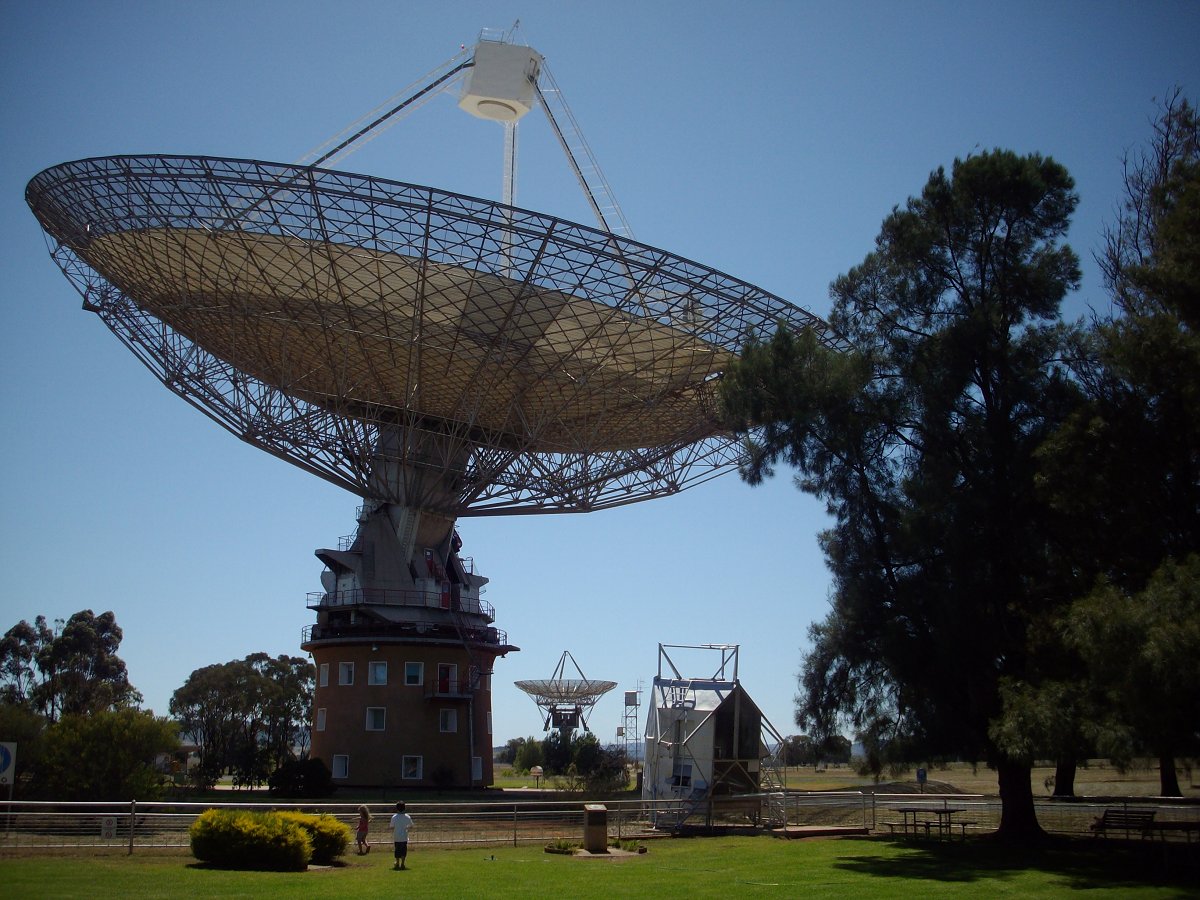
In 2009, during a 3-week sojourn to New South Wales, one of my “must-see” stops was the radio telescope in Parkes. The movie is an odd bit of cinematography which took certain liberties with its rôle in the Apollo 11 moon mission, but participate it did, and in a very significant manner. More at Wikipedia.

The Void has always fascinated me. I can remember being 11 or 12 years old, lying on my back with a friend on Fire Island, holding flashlights we had acquired at Ringling Brothers’ Barnum and Bailey Circus at Madison Square Garden, and shining our beams up into the sky, wondering if the light would go on forever and ever. Assuming nothing got in the way, anyone with sensors strong enough on a planet circling 31 Aquilae (49.5 light years away) might detect a few of our photons right about now.

Stars within 50 light years of Earth. Found at Atlas of the Universe.

As a result, being within driving distance of Parkes made this an absolute necessity.

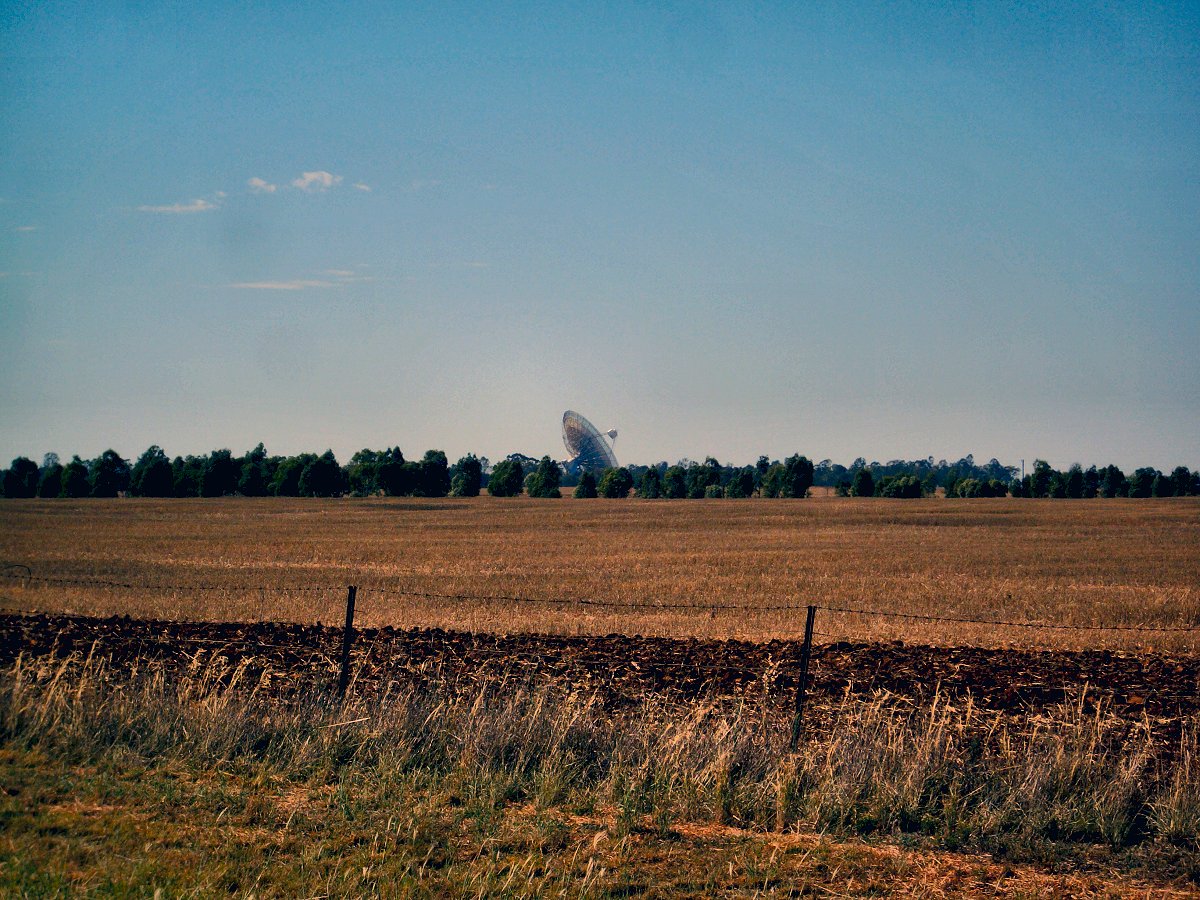
The thing is big, and dominates the landscape as you approach it.

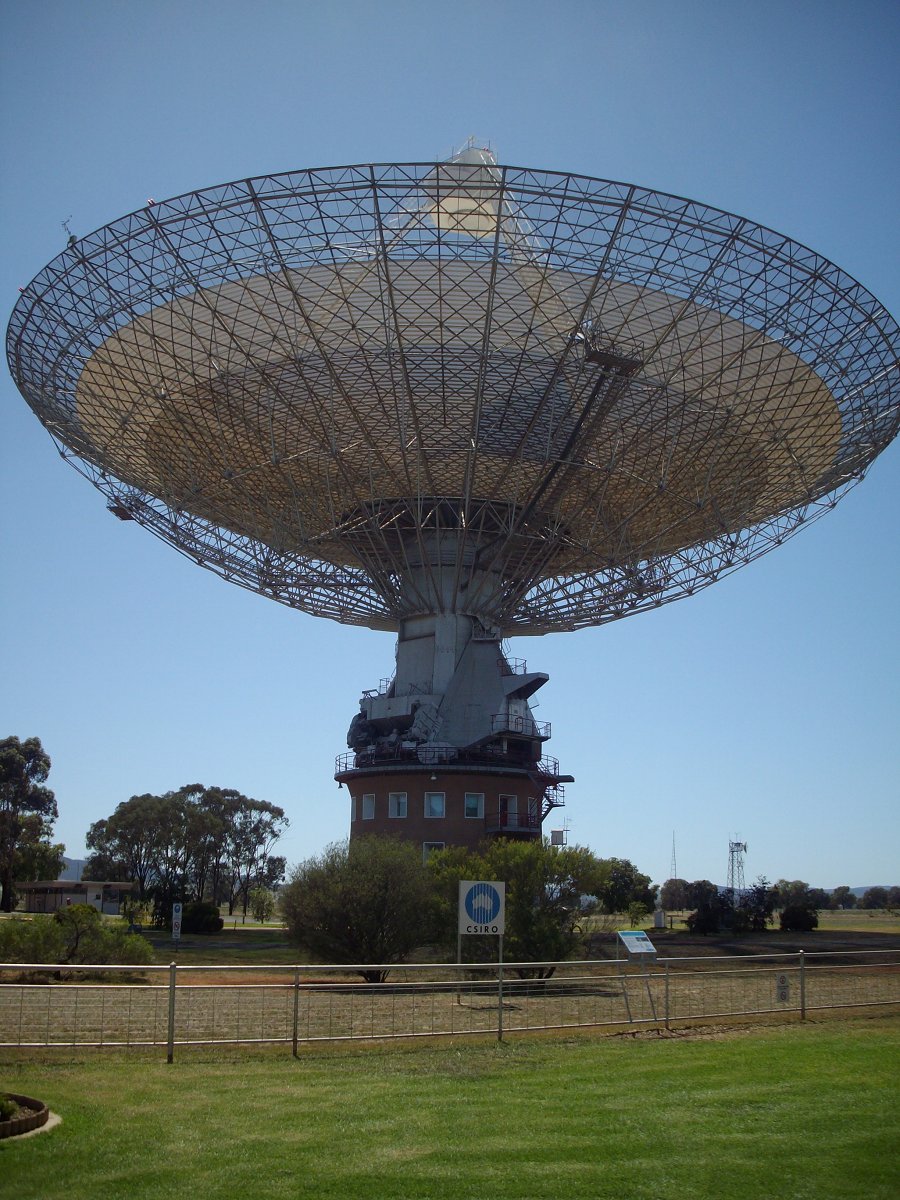
It’s even bigger up close, and in some ways more impressive than the large telescope at the NRAO in Virginia, because you can get closer to it.

Being a working telescope, it moved quite a bit during my visit.

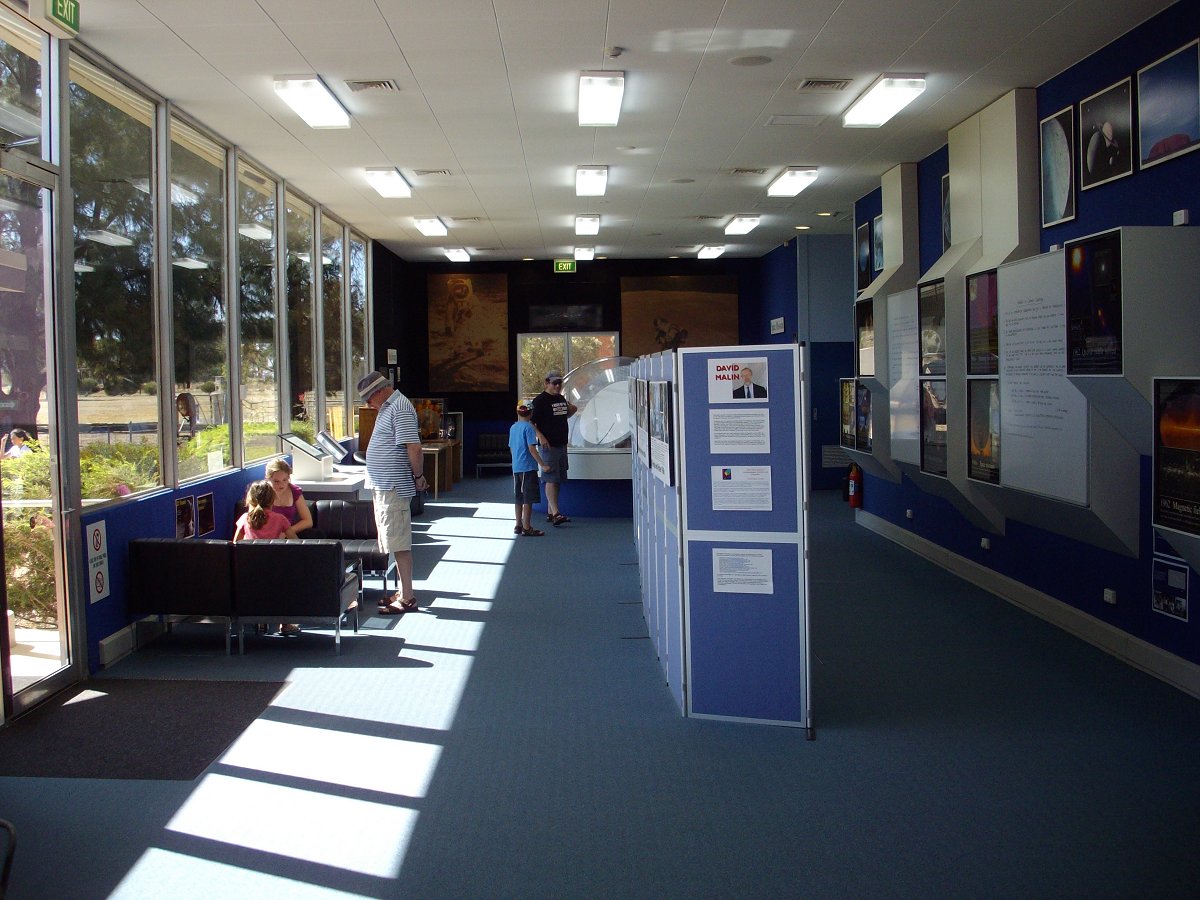
They have a very nice visitors center with lots of things to learn about, some hands-on displays, and an AV presentation.

But this was my favorite part of the visit:

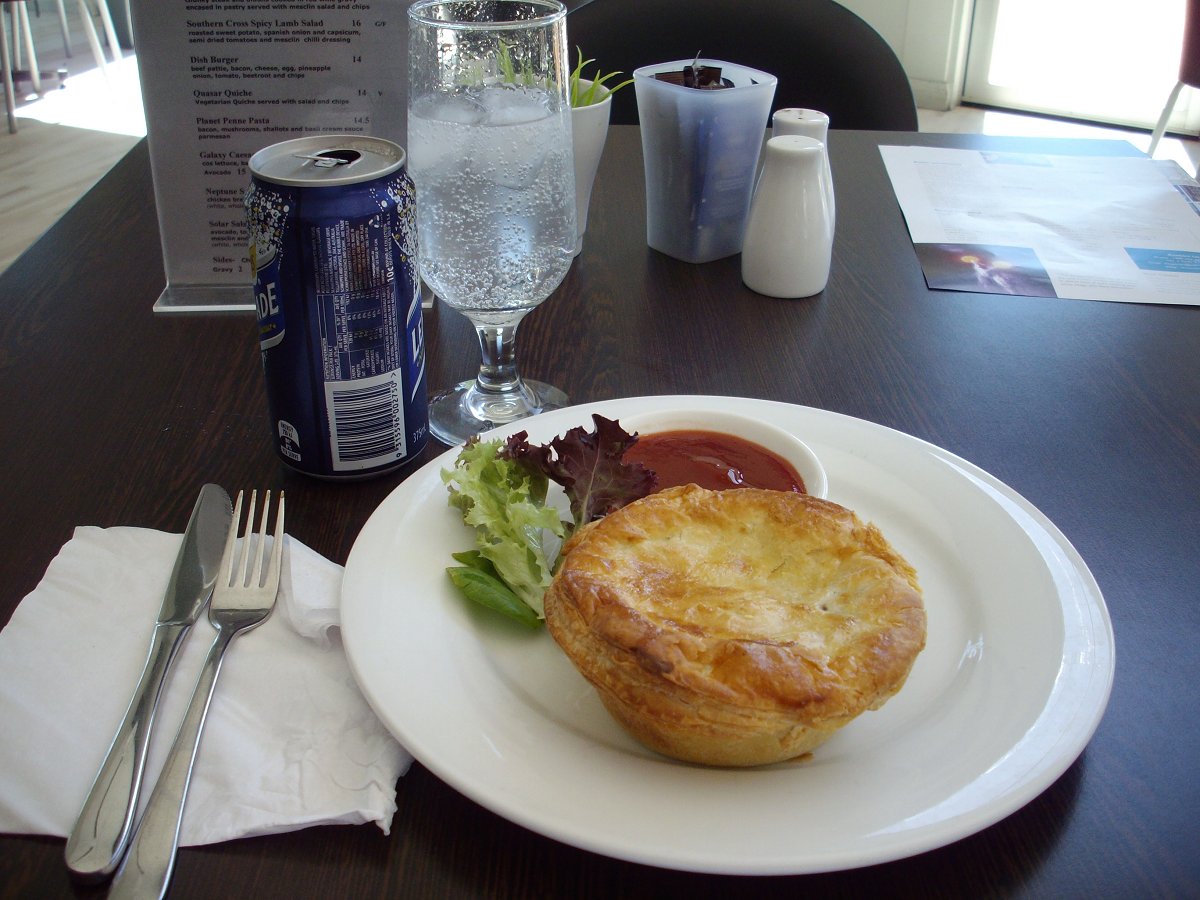
Beef and burgundy pie, at the Dish café: exquisite – I have never tasted better, although a friend of mine in Dubbo tells me there’s a pie shop I missed that does them one up. Next trip for sure.

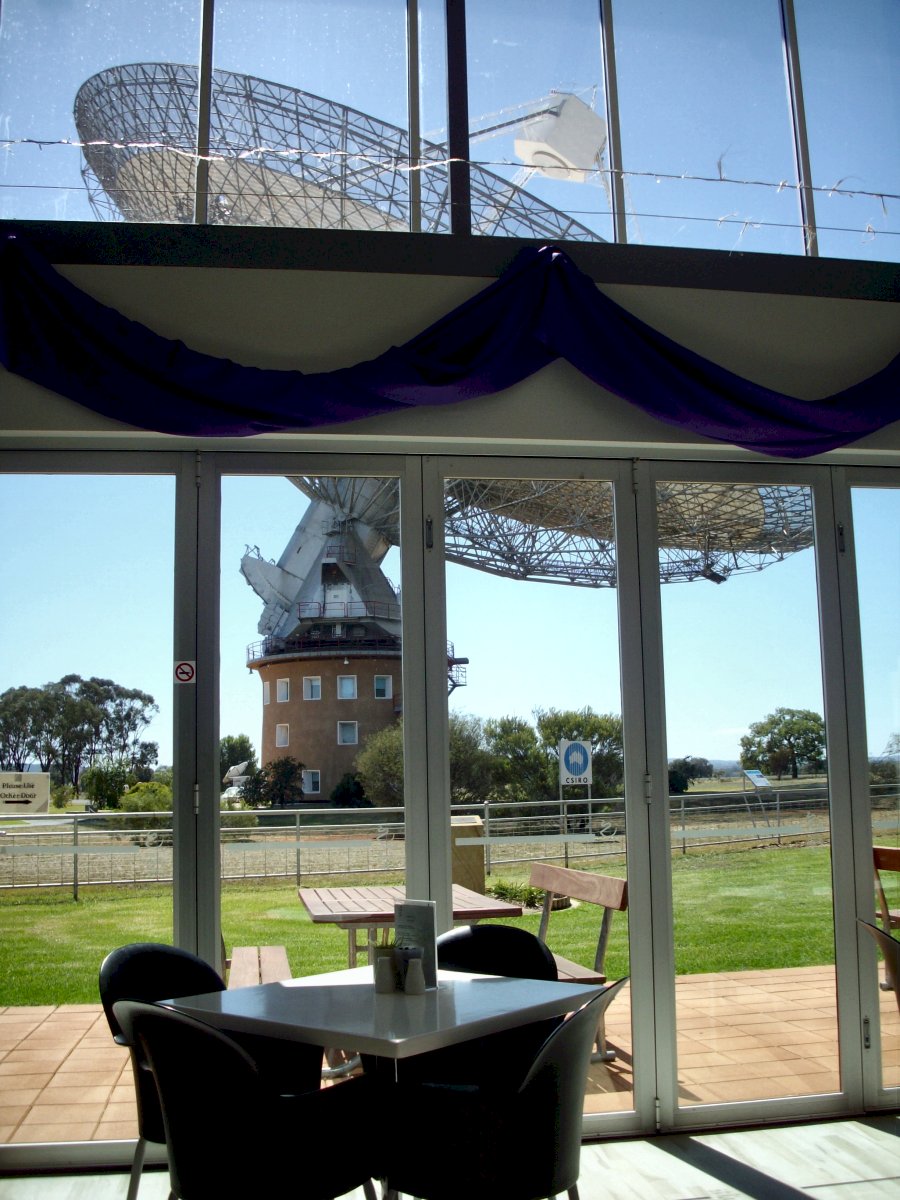
And the scenery while dining was overpowering.

Still working hard, in 2012 the Observatory received special signals from the Mars rover Opportunity, to simulate the Curiosity rover UHF radio. This helped prepare for the then upcoming Curiosity landing on August 6, 2012.

If I had another lifetime and a brain that was not math challenged, working with a device like this would be a wonderful way to spend a career.

The Old Wolf has spoken.

The Iron Pillar of Delhi

Long one of the unexplained wonders of the world, this peculiar item in Delhi has now been analyzed by scientists, who are still amazed that metalworkers in the 4th or 5th century would have had the kind of knowledge required to create it.

Currently theory holds that the pillar was forged during the reign of Chandragupta II, who reigned from 380 to 413 or thereabouts.

And although it is composed of 98% wrought iron, it has sat exposed to the elements for about 1600 years… and it refuses to rust.

Wikipedia explains that “In a report published in the journal Current Science, R. Balasubramaniam of the IIT Kanpur explains how the pillar’s resistance to corrosion is due to a passive protective film at the iron-rust interface. The presence of second-phase particles (slag and unreduced iron oxides) in the microstructure of the iron, that of high amounts of phosphorus in the metal, and the alternate wetting and drying existing under atmospheric conditions are the three main factors in the three-stage formation of that protective passive film.”

Now that’s too many for this Wolf of Very Little Brain, but apparently the early blacksmiths knew how to do something marvelous. Whether it was by design or by happenstance, no one is quite sure. But there it sits, and if history is any indication, it will be there long after my great-great-grandchildren’s great-great-grandchildren have turned to dust.

The Old Wolf has spoken.