Bad Business Decisions: True or Urban Legend?

A number of lists of these great “quotes” have been circulating ever since the days of fax machines, even before “forwards from Grandma.” They’re funny and great to read, but is there any truth to any of them? Let’s explore.

The most famous one that I know of has been thoroughly debunked:

“640K ought to be enough for anybody.” – Bill Gates
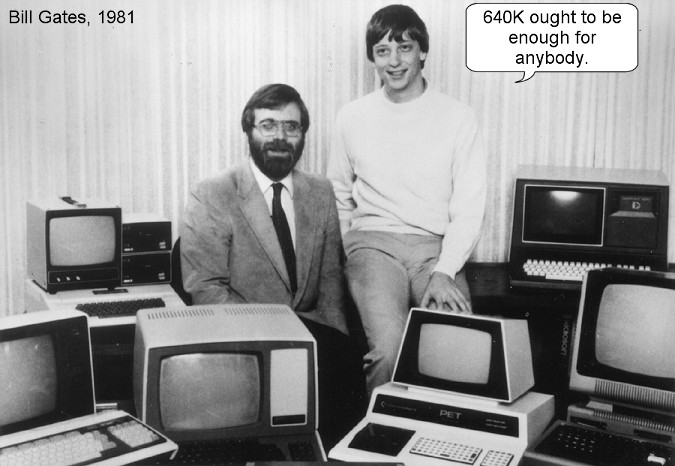
An analysis at Quote Investigator ended with “Since Gates has denied the quotation and the evidence is not compelling I would not attribute it to him at this time. Thanks for this difficult interesting question.“

During the early days of computing, programs were often written in Assembly Language, producing very tight code that could run in minimal spaces. The original Wang v.2 word processor was designed to run on workstations with 32K of memory, even though later workstations had a standard 64K.
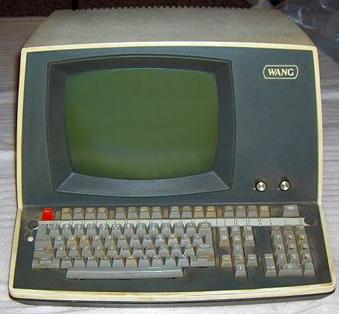
Wang OIS 64K Workstation

If you want apocrypha, here’s a good one. This story was told to me by a Wang Laboratories internal employee, and I can’t verify its authenticity, but having worked with Wang software and hardware for around 10 years back in the ’80s and ’90s, I would be willing to bet a steak dinner that it is true.

The Wang Word Processor, version 2, was – as mentioned above – written in Assembly language. The source code was kept on these 300MB swappable disk packs which at the time were very convenient for changing storage media.


300 MB Disk Pack
Disk Drive for use with removable packs

As the tale goes, somehow an entire rack of those disk packs got knocked over, destroying both the source code (in Assembly Language) and the backups for that impressively small and fast piece of software. It was for this reason that WP+, the next generation word processor from Wang, was entirely re-written in a slower, larger, higher level language. It emulated many features of the original and added others, but it was cumbersome and inelegant by comparison. Again, I can’t verify this 100%, but it came to me from what I consider a reliable source.

Western Union’s opinion of the telephone
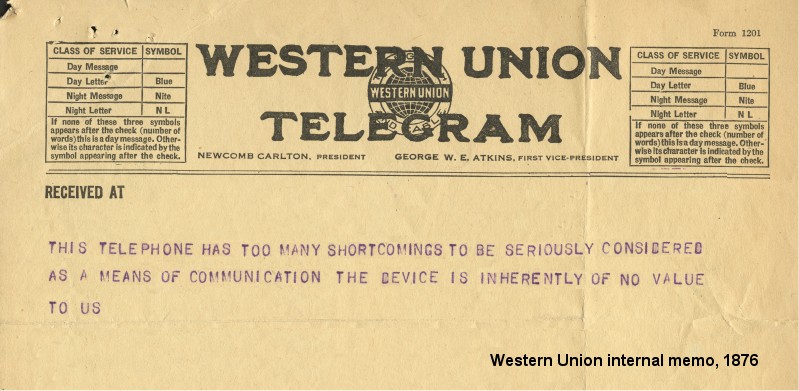
Facsimile Telegram

This ‘telephone’ has too many shortcomings to be seriously considered as a means of communication. The device is inherently of no value to us.” — Purported Western Union internal memo, 1876.

Telegrams were pretty much the way to get a message from one place to another rapidly. Prior to the development of the electric telegraph system designed by Samuel Morse, optical telegraphy which used visual signals seen at a distance was one of the earliest methods of long-distance communication.

Wikipedia reports that “The smoke signal is one of the oldest forms of long-distance communication. It is a form of visual communication used over a long distance. In general smoke signals are used to transmit news, signal danger, or to gather people to a common area.” The use of smoke signals by the indigenous peoples of North America are probably the most familiar to Americans thanks to the popularization of western history in published and broadcast media.

Frederic S. Remington (1861-1909); The Smoke Signal; 1905; Oil on canvas; Amon Carter Museum of American Art, Fort Worth, Texas; 1961.250

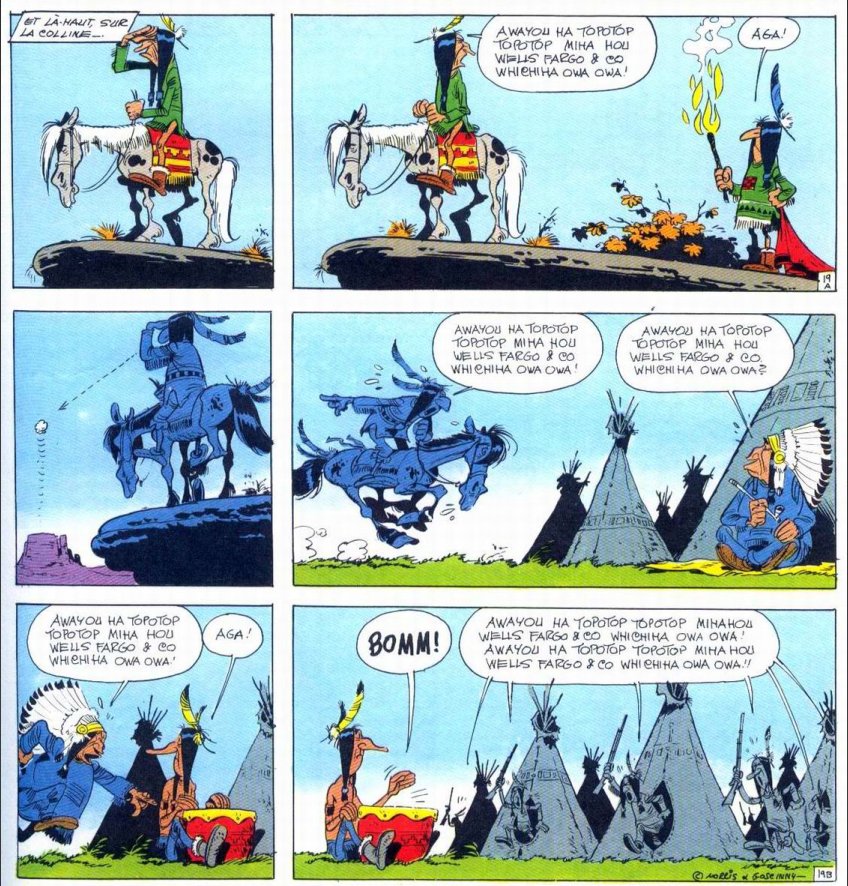
This method of communication has been the basis for much humor as well:
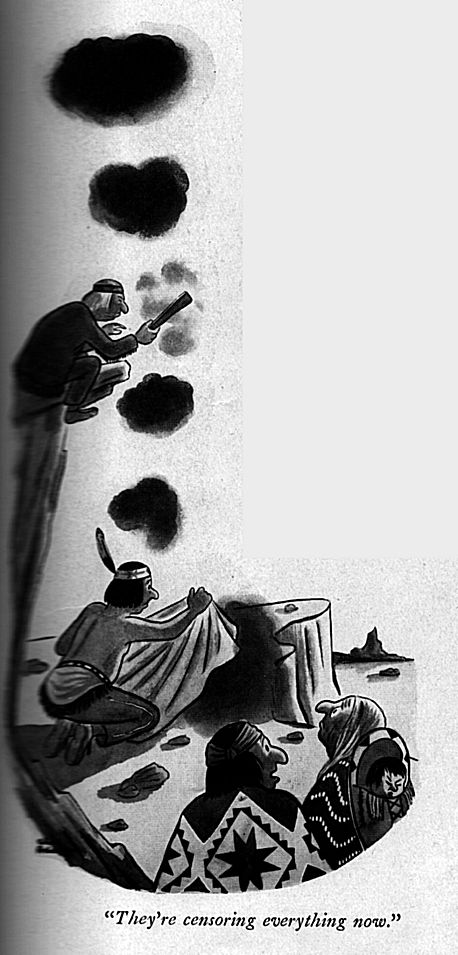
Charles Addams, The New Yorker
Lucky Luke – “La Diligence” (Dargaud, 1968 series) #32 by Morris and Goscinny

The joke here is that a single puff of smoke or one beat of a drum can communicate large quantities of information, which of course is not the case.

One of the most stirring cinematographic representations of optical telegraphy can be found in Peter Jackson’s version of J.R.R. Tolkien’s “The Two Towers,” where the beacons of Gondor – signal fires strategically placed on mountaintops – played a crucial role in summoning Rohan’s forces to help Gondor. 
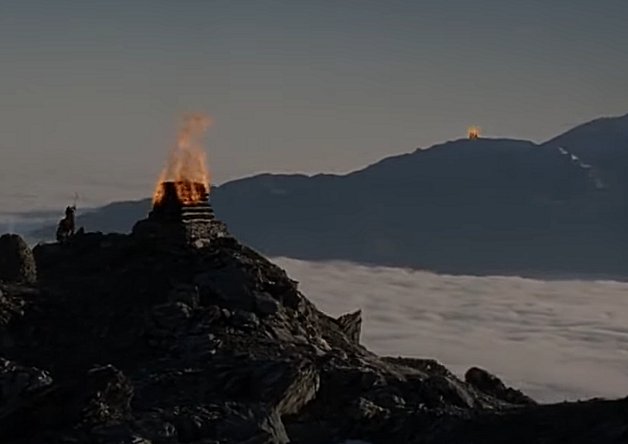
The Beacons of Gondor

Once electricity came on the scene, the electrical telegraph, augmented by Morse Code, became the dominant method of rapid long-distance communication, and was the underpinning of the telegram system for which Western Union became so famous.

Telegrams – about which I have written elsewhere – were used for everything where information had to be transmitted rapidly, from business meetings, to military applications, to notifications of death, to congratulations on Broadway, and countless other uses.
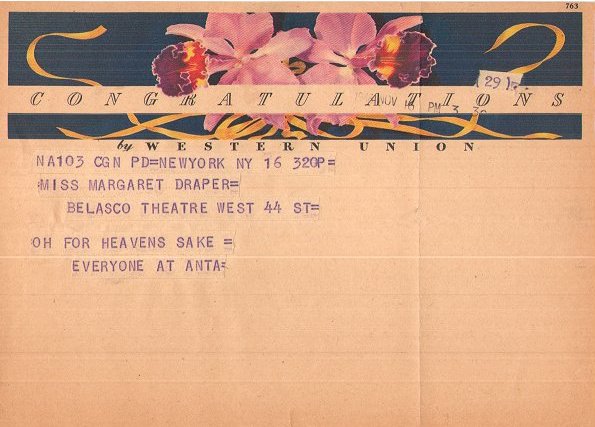
Telegram sent to my mother from ANTA (American National Theater and Academy) wishing her good luck in “For Heaven’s Sake, Mother” on November 16, 1948. Sadly, the play only ran for four days.

So when the telephone made its debut on the world stage, Western Union supposedly turned up its nose and sniffed loftily that it was not anything worthy of consideration. While the invention of the telephone, followed by the modern Internet and the proliferation of smartphones, ultimately doomed the telegram to the vaults of history, at the time concern about the new technology was real. The supposed internal memo at Western Union, however, was not. A lovely article at Wondermark discusses the origins of this urban legend in great detail and is worth the read if such things interest you.

Be aware, however, that even the telegraph itself was met with skepticism by shortsighted individuals:

“I watched his face (Samuel F.B. Morse) closely to see if he was not deranged, and was assured by other Senators as we left the room that they had no confidence in it either.”

-Senator Oliver Smith of indiana, 1842, after witnessing a first demonstration of the telegraph

The Radio
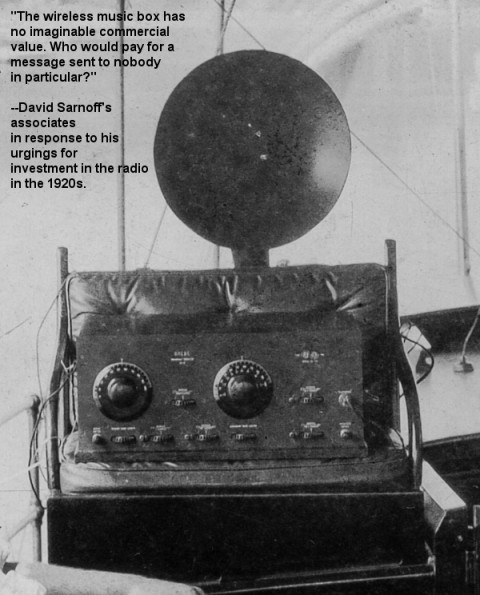
“The wireless music box has no imaginable commercial value. Who would pay for a message sent to nobody in particular?” — David Sarnoff’s associates in response to his urgings for investment in the radio in the 1920s.

David Sarnoff was an early pioneer in the promotion of wireless radio as a new technology. I asked Perplexity about the supposed response from investors, and it had this to say:

In summary, although the quote closely reflects real skepticism Sarnoff faced, there is no documented evidence that an investor sent this precise message to him—the wording appears to be apocryphal or retrospective, encapsulating broader contemporary attitudes

Obviously, “fear of the new, from those with a vested interest in the old” (from the Wondermark article linked above) didn’t keep the radio from becoming immensely popular.
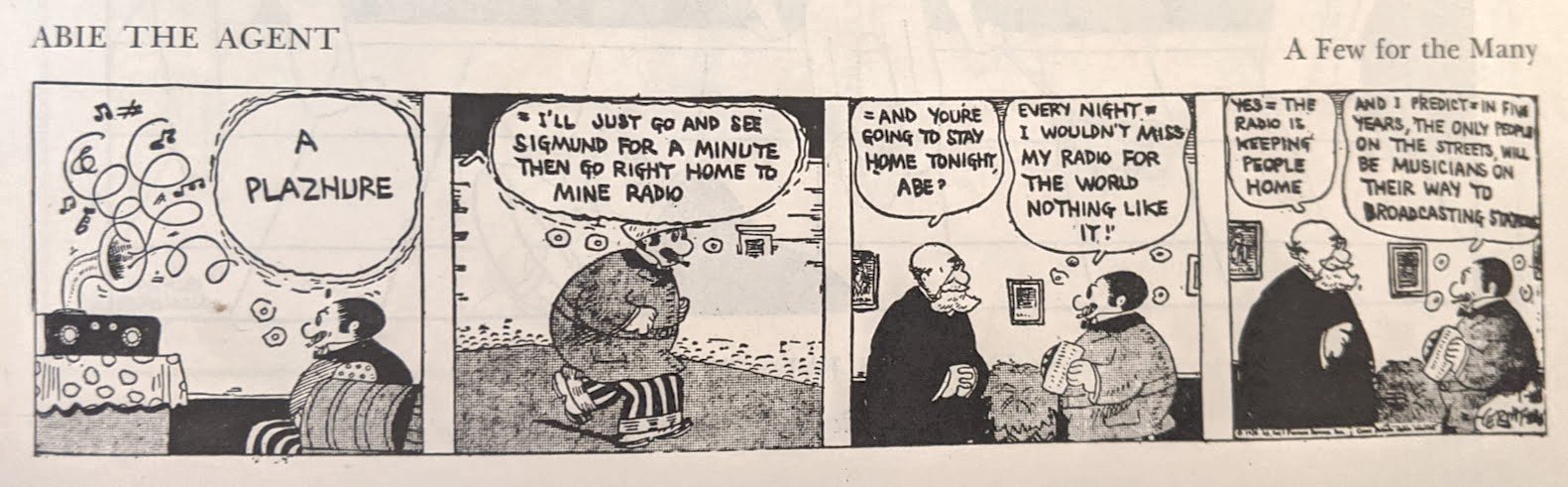
The March of Technology
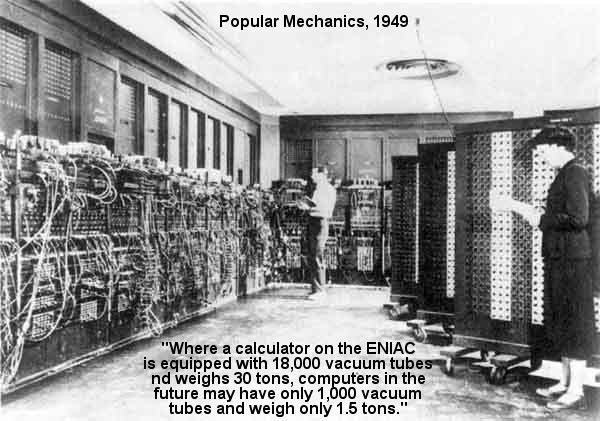
“Computers in the future may weigh no more than 1.5 tons.” attributed to Popular Mechanics from 1949

This is a true quote, but is often quoted out of context, unlike the quote in the image above. Popular Mechanics was making a forecast based on the technology of that time, suggesting computers could shrink significantly but still be very large by modern standards. This reflected an era when computers were massive and used vacuum tubes. The prediction was reasonable then but didn’t foresee transistor and integrated circuit breakthroughs that led to much smaller, lighter computers. You don’t know what you don’t know.

More about Computers
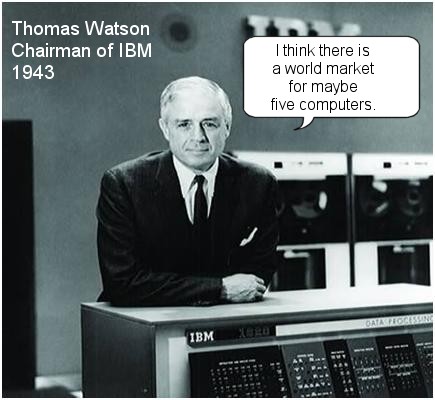
Once more, this quote is a misinterpretation; a very good background is found here. The short explanation is:

From a question on the history of IBM on their website, “Did Thomas Watson say in the 1950s that he foresaw a market potential for only five electronic computers?” IBM offers the following explanation:

We believe the statement that you attribute to Thomas Watson is a misunderstanding of remarks made at IBM’s annual stockholders meeting on April 28, 1953. In referring specifically and only to the IBM 701 Electronic Data Processing Machine — which had been introduced the year before as the company’s first production computer designed for scientific calculations — Thomas Watson, Jr., told stockholders that “IBM had developed a paper plan for such a machine and took this paper plan across the country to some 20 concerns that we thought could use such a machine. I would like to tell you that the machine rents for between $12,000 and $18,000 a month, so it was not the type of thing that could be sold from place to place. But, as a result of our trip, on which we expected to get orders for five machines, we came home with orders for 18.”

You don’t know what you don’t know

“I have traveled the length and breadth of this country and talked with the best people, and I can assure you that data processing is a fad that won’t last out the year.”

 -The Editor in Charge of Business Books for Prentice Hall, 1957

“But what … is it good for?“

 -Engineer at the Advanced Computing Systems Division of IBM, 1968, commenting on the microchip.

“There is no reason anyone would want a computer in their home.” 

-Ken Olson, president, chairman and founder of Digital Equipment Corp., 1977

The three quotes above are not examples of obtuseness or stupidity, but rather the inability to predict the incredible rush of innovation that the computer industry would experience. I have written about the incredible shrinking data storage elsewhere, and even that article is now outdated; SanDisk has introduced a 4TB MicroSD card, whether or not something of this nature is even needed.

There’s nothing new under the sun

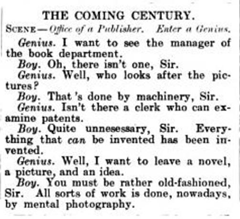
“Everything that can be invented has been invented.”

–Charles H. Duell, Commissioner, U.S. Office of Patents, 1899.

This archived article written by Dennis Crouch explores the legend, and decides that the quote was based on a joke published in Punch in 1899:
Silence Please
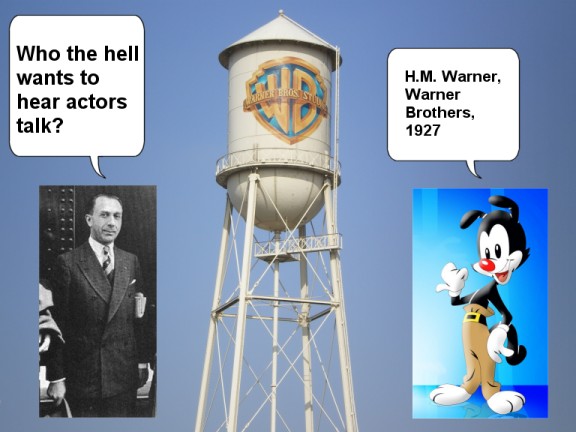
According to Quote Investigator, Warner probably said this but more confirmation would be useful. The linked article provides some interesting background about resistence to the inclusion of sound and voice in films, which up until that time were entirely silent.

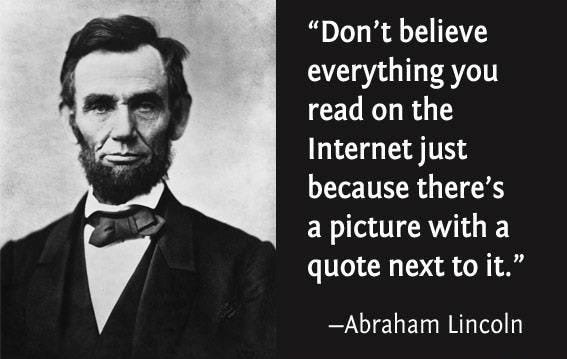
There are many more “boneheaded quotes” out there, but the above dive into some of the most famous is an indication that each one deserves to be investigated for accuracy before spreading them around as 100% accurate.

As Abraham Lincoln famously said:
The Old Wolf has spoken.
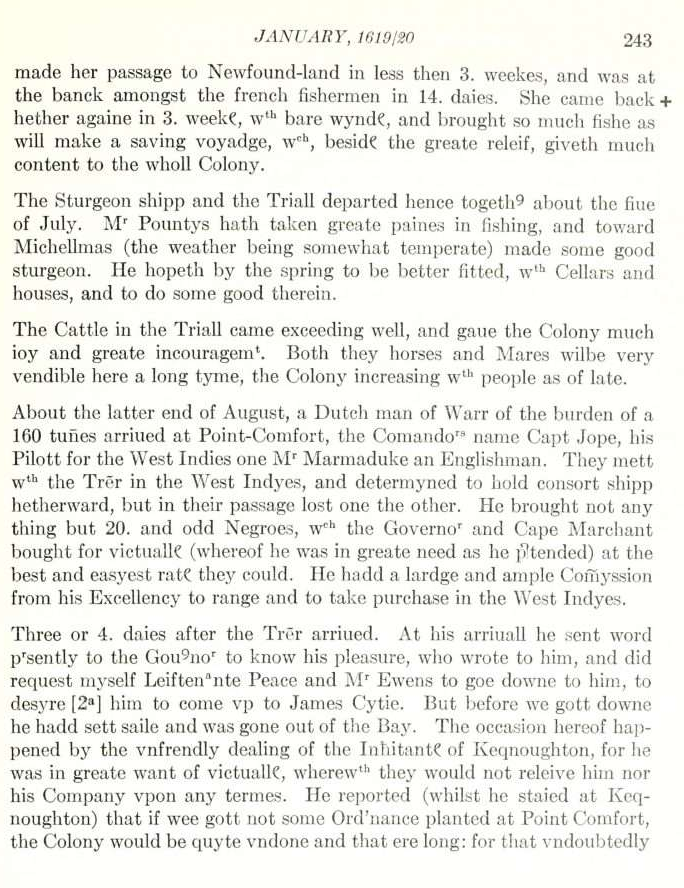
“20 and odd Negroes,” or, The beginning of Enslavement in America

This post was spawned by one of Heather Cox Richardson’s “Letters from an American” which was also posted on Facebook.

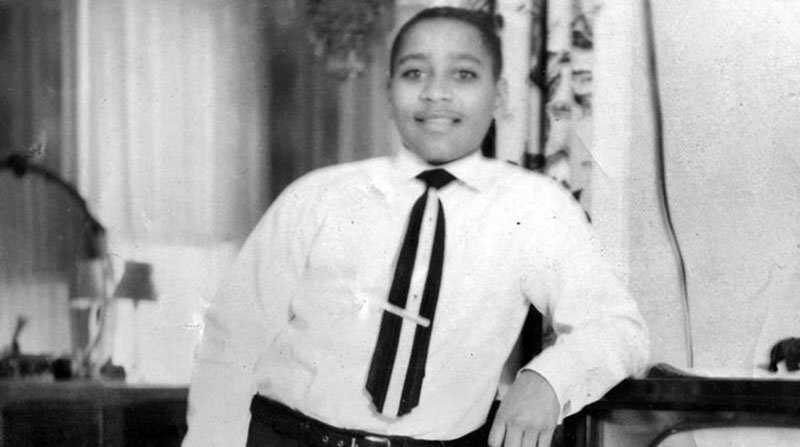
She wrote about the tragic 1955 murder of Emmett Till, an innocent 14-year-old boy, and about the hateful and unrepentant attitude of J. W. Milam, one of Till’s two killers.

Emmett Till

“What else could we do?” Milam said. “He was hopeless. I’m no bully. I never hurt a n* in my life. I like n*s, in their place (emphasis mine). I know how to work ’em. But I just decided it was time a few people got put on notice. As long as I live and can do anything about it, n*s are gonna stay in their place.”

Milam’s attitude had it roots in 1620 when a Dutch man-of-war traded “20 and odd Negroes” for “victualle,” according to a letter from Virginia Colony secretary John Rolfe to Sir Edwin Sandys. From there, it evolved into a system of utter oppression and cruelty by whites, who used the principle of human bondage to treat their unfree laborers as less than cattle for their own petty satisfaction. These attitudes and the economy which arose as a result – largely the growing of cotton in the South – were officially and legally repudiated by the Civil War and subsequent amendments to the Constitution which guaranteed “life, liberty, and the pursuit of happiness” to all citizens, and not just wealthy white landowners – but the attitudes in the hearts of many in the South clearly did not die, as witnessed by the conditions that Blacks dealt with prior to the Civil Rights area, predominantly in the South.

While thinking about John Rolfe’s letter, I kept having flashbacks to elementary school, and of vague memories of learning about the arrival of the Dutch ship in Jamestown. I could have sworn that the text was recorded as “20. and odd negars,” (at that time the word was simply a corruption of the Portuguese word for “black,” and had not yet become the hateful slur of later times). So I started doing some digging, and was intrigued to find that I was not the only one who remembered things erroneously.

The following websites commemorating the 400th anniversary of the beginning of human bondage in America quote that passage from Rolfe’s letter in that manner:

https://cbc.house.gov/news/documentsingle.aspx?DocumentID=2097
News from The Congressional Black Caucus, 9/11/2019: “Congressional Ceremony Marks 400 Years Of Slavery In America”

https://www.wm.edu/as/history/news/news-archive/2019-20-archive/1619-2019-from-trauma-to-triumph.php
William and Mary news archive 23 August 2019, “1619-2019: From Trauma to Triumph”

https://wydaily.com/latest/local/2019/02/08/researchers-seek-fuller-picture-of-first-africans-in-america/
Williamsburg Yorktown Daily, February 8, 2019, “Researchers seek fuller picture of first Africans in America”

https://asalh.org/commemorating-400-years-of-black-history-in-hampton-virginia/
The Association for the Study of African American Life and History (ASALH) – Commemorating 400 years Of Black History In Hampton, Virginia, August 27, 2019

https://www.voanews.com/a/researchers-seek-fuller-picture-of-first-africans-in-america/4777243.html
Voice of America, “Researchers Seek Fuller Picture of First Africans in America,” 7 February 2019

https://web.archive.org/web/20190920233856/www.bet.com/news/features/1619/400-years-since-beginning-of-american-slavery.html
1619-2019: From Trauma to Triumph (www.bet.com, retrieved from the Internet Archive)

These are all respected institutions, and it made me even more curious as to how the discrepancy in nomenclature arose.

In The Encyclopedia Virginia, a partial transcript of John Rolfe’s letter is presented, along with transcription, in “Records of the Virginia Company, Volume 3, Page 241“.

Here is plainly transcribed “20. and odd Negroes.” If you were not sure about the accuracy of the transcription, below we can see a scan of the original letter:

Having been unsuccessful in finding any explanations on the Internet for the discrepancy, I turned to Perplexity, an AI search engine which provides references with everything it is able to find. What I asked:

“The first arrival of African slaves in America is recorded in a letter by Virginia colony secretary John Rolfe, in which he recounted – according to some – that a Dutch Man o’ War traded “20 and odd Negars” for “victuals.” But a scan of the letter itself shows that the word Rolfe used was “negroes,” and the Encyclopedia of Virginia provides an accurate transcript of the letter from Rolfe to Sir Edwin Sandys. Even a report from the Congressional Black Congress in 2019 uses the phrase “20 and odd Negars.” I want to know how Rolfe’s “negroes” was changed to “negars” in some reports.”

I was not unhappy with the result [emphasis added to the salient parts]:

John Rolfe’s 1619 letter documenting the first arrival of Africans in Virginia describes the sale of “20. and odd Negroes.” This exact phrase—using “Negroes”—is confirmed by direct transcripts from reputable sources such as the Encyclopedia of Virginia and republished excerpts of the letter, all of which indicate Rolfe wrote “Negroes” and not “Negars”.

The origin of the spelling “Negars” or its substitution for “Negroes” in some later reports seems to trace to evolving English usage and to historical misreadings or reinterpretations over time. Several factors contribute to this confusion:

  • The early 17th-century English language was not standardized, and words referring to people of African descent included a range of spellings—such as “negroes,” “negers,” “negars,” and, later, “[n-word]” — all derived from the Spanish and Portuguese “negro” (meaning black), and ultimately from the Latin “niger”.
  • The spelling “negars” appears in several 18th and 19th-century works, and was sometimes used interchangeably with “negroes” or as an early variant in American English, especially in regions influenced by Dutch or non-standard English dialects.
  • Some secondary sources and later historical writings incorrectly retrojected¹ these variant spellings into the context of 1619, perhaps due to faulty transcription practices, unfamiliarity with the original manuscript, or confusion regarding the shifting terminology used to describe African-descended people in colonial records.

In summary, John Rolfe’s original letter used the word “Negroes,” but through later historical reinterpretations, variances in early English spelling, and repeated citation errors, the term “Negars” emerged in certain secondary sources and reports. But direct examination of Rolfe’s correspondence confirms that “Negroes” was his actual word choice in the context of the 1619 arrival.

Sources:

https://encyclopediavirginia.org/entries/africans-virginias-first/

https://www.vfpress.news/articles/top-stories/in-1619 20-and-odd-negroes-arrived-in-jamestown-and-were-just-now-realizing-the-full-breadth-of-their-impact/

https://library.schlagergroup.com/chapter/9781961844087-book-part-002

https://www.pbs.org/wgbh/cultureshock/teachers/huck/section1_2.html

https://scholarworks.smith.edu/cgi/viewcontent.cgi?article=1003&context=hst_facpubs

At least, at this point, I know that my original memory from my grade-school days was not imagined up, and have a good idea of what happened between John Rolfe’s penning his letter and subsequent reporting.

The Old Wolf has spoken.
Footnotes

¹ I love the word “retrojected,” to project into the past.

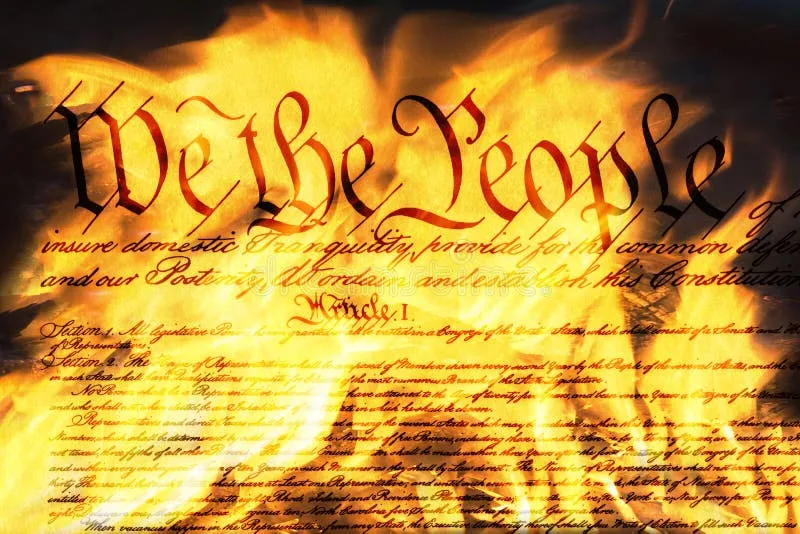
The Declaration of Resistance

Found at Closer to the Edge on Substack. Worth reading, worth remembering, worth sharing.

SECTION I: THE PREAMBLE

When in the course of human events, a government abandons its duty and weaponizes its power against the people it was meant to serve, it becomes the right, and the obligation, of the people to resist.

We are not radicals. We are not extremists. We are not ungrateful.

We are citizens who have watched our leaders celebrate the suffering of others, legislate away human dignity, and laugh as they strip healthcare from the sick and food from the hungry. We have waited. We have hoped. We have pleaded for decency.

But the government of the United States, as it now stands under President Donald J. Trump, no longer serves the public good.

It does not preserve life—it endangers it.

It does not secure liberty—it undermines it.

It does not promote happiness—it enshrines cruelty.

This is not the product of incompetence. It is intentional.
He governs with malice. He legislates with vengeance. He drapes himself in flags and lies and calls it patriotism, while millions bleed beneath the weight of his policies.

We do not rise today to tear this country down.

We rise to tear it back from those who have hijacked it.

We rise not in rebellion against America, but in defense of its soul.

Read the remainder at Closer to the Edge, and do all you can to resist the fascism of this illegitimate administration.

The Old Wolf has spoken.
The Psychology of Trump Voters

Keen and on-point video discussion about the psychology of Trump voters by “jayneconverse3,” self-described “Political junkie, history teacher, disgusted American.” The original video is here, in case you’d like to listen to her.


I’ve been dying to dig into this. I’ve been asking myself why Trump’s followers can’t see reality. So I did my research, and I’m going to share it with you.

Let’s talk about the psychology behind the Trump Cult, because that’s what it is. It’s not a normal political movement anymore, it’s a cult of peronality and if we want to fight it, we have to understand it. So, let’s break it down.

First, Trump doesn’t offer policies, he offers identity. He’s not popular because of what he does, but because of what he represents. To many of his followers, he’s a walking, talking middle finger to a system they believe has failed them.¹

They see him as “their guy,” not because he’s honest, not because he helps them, but because he talks like them, rages like them, and punches the people they’ve been told to blame for everything.²

In psychology, there’s a term for this: “Identity fusion.” It’s when your personal identity becomes fused with your group or leader. That’s why criticism of Trump feels like a personal attack to his supporters. It’s not just “he’s being criticized,” it’s “I’m being criticized.”

Second, he offers revenge, not solutions. He doesn’t promise to fix healthcare, or raise wages, or protect your rights; he promises to go after “them.” Whether it’s immigrants, the press, Black activists, LGBTQ people, liberals, college students, elites, anyone outside the tribe… that’s classic authoritarianism.

Give people a sense of loss, tell them who stole it, then promise to make them pay. And to some people, that rage, that promise of vengeance is more emotionally satisfying than actual policy. It doesn’t fix their problems, but it feels like power.

Third: People crave order, and Trump promises strength. When institutions fail, when you don’t trust the media, the courts, elections, schools³, you start to look for a savior: Someone who says, “Only I can fix it.” That’s why Trump acts like a strong man. He creates the crisis, then sells himself as the only one tough enough to stop it. He’s done that over and over and over again. He’s not leading a movement, he’s leading a dependency.

Fourth: His follwers are trapped in an information bubble. They don’t just believe lies, they live inside them. Fox News, MAGA influencers, far-right churches, Trump’s own app Truth Social is a closed-loop ecosystem that tells them every day, “The elites hate you, the media lies, only Trump tells the truth.” ⁴ This is called “epistemic closure.” It’s cult logic. If Trump says it, it’s true. If the world says otherwise, the world is lying.

And then fifth: Shame is too powerful, so they double down, just like Trump does. Some Trump supporters know deep down that they’ve been conned. They’ve seen the cruelty, the corruption, the chaos, but they’ve already invested years of their identity into defending him.⁵ To walk away now would mean confronting shame, losing their community, admitting they were wrong, and that’s terrifying to them, so instead they dig in deeper.

And finally, and this one matters, Trump makes them feel seen. He tells them, “They’re not after me, they’re after you. I’m just in the way.” That line is emotional manipulation, but it works… because for millions of people who feel ignored, dismissed, mocked by elites, Trump says, “You matter. You’re not crazy, they are.” He gives them belonging, and in a country where loneliness is rising and inequality is everywhere, belonging is everything.

So when people ask, “Why do people love him? Why would they follow him off a cliff?” it’s not just politics, it’s psychology, it’s identity, and it’s fear. This is deliberate. Trump didn’t create the cult, he just saw the cracks in our society and weaponized them.

But here’s the thing: not everyone in that cult is unreachable. Some are too far gone, but others are on the edge, quiet, doubting, hurting. We don’t get them back with facts, we get them back by offering something Trump never will: real community, real care, and real solutions. Because people don’t join cults when they are happy and secure. They join when they are scared, isolated, and desperate for meaning.

So here’s your call to action: Keep speaking truth, keep exposing the con, and when you can, offer people a way out that doesn’t begin with shame, but with dignity. This fight isn’t just about defeating Trump, it’s about breaking the spell and building something better in it’s place. That’s how we get them in, that’s how we get them to abandon him.

Let’s do it.


There is one other thing I would like to add to this salient analysis, and that’s a mini-essay by someone who goes by the handle “xenophonsXyphos.” It dovetails nicely with what Ms. Jayne has said above, and really should be considered if we want to understand the mentality of the MAGA cult. Their statement has been mildly censored for a family-friendly audience:

You all don’t get it. I live in Trump country, in the Ozarks in southern Missouri, one of the last places where the KKK still has a relatively strong established presence. They don’t care what he does. He’s just something to rally around and hate liberals, that’s it, period. He absolutely realizes that and plays it up, they love it, he knows they love it, and the fact that people act like it’s anything other than that just proves that liberals are idiots, all the more reason for high fives all around.

If you keep getting caught up in why do they not realize blah blah blah and how can they still back him after blah blah blah, you are not understanding what is the underlying motivating factor of his support. It’s much it. 🤬 liberals, that’s pretty much it.

Have you noticed he can do pretty much anything imaginable and they’ll explain some way that rationalizes it that makes zero logical sense? Because they’re not even keeping track of any logical narrative, it’s irrelevant, 🤬 liberals is the only relevant thing, trust me, I know first hand what I’m talking about. That’s why they just laugh at it all, because you all don’t even realize they really truly don’t give a 🤬 about whatever the conversation is about, it’s just a side-mission story that doesn’t really matter anyways. That’s all just trivial details the economy, health care, whatever. 🤬 liberals.

Look at the thing with not wearing the masks. I can tell you what that’s about. It’s about exposing fear. They’re playing chicken with nature and whoever flinches just moved down their internal pecking order, one step closer to being a liberal.

You gotta understand the one core value that they hold above all others is hatred for what they consider weakness, because that’s what they believe strength is, hatred for weakness. And I mean passionate, sadistic hatred. And I’m not exaggerating. Believe me. Sadistic, passionate hatred, and that’s what proves they’re strong, their passionate hatred for weakness. Sometimes they lump in vulnerability, a compromised circumstance, or an overwhelming circumstance in their with weakness, too, because people tend to start humbling themselves when they’re in those circumstances and that’s an obvious sign of weakness.

Kindness = weakness. Honesty = weakness. Compromise = weakness. They consider their very existence to be superior every way to anyone who doesn’t hate weakness as much as they do. They consider liberals to be weak people that are inferior, almost a different species, and the fact that liberals are so weak is why they have to unite in large numbers, which they find disgusting, but it’s that disgust that is a true expression of their natural superiority.

Go ahead and try to have a logical, rational conversation with them though. Just keep in mind what I said here and think about it.


The Old Wolf has spoken.
Footnotes

¹ Much of that belief stems from 60 years of GOP disinformation and jingoism from people like Nixon, Reagan, Newt Gingrich, Rush Limbaugh, and others.

² From a New York Times article on Jackson County Florida: “A few miles away, another prison employee, Crystal Minton, accompanied her fiancé to a friend’s house to help clear the remnants of a metal roof mangled by the hurricane. Ms. Minton, a 38-year-old secretary, said she had obtained permission from the warden to put off her Mississippi duty until early February because she is a single mother caring for disabled parents. Her fiancé plans to take vacation days to look after Ms. Minton’s 7-year-old twins once she has to go to work.The shutdown on top of the hurricane has caused Ms. Minton to rethink a lot of things.”I voted for him, and he’s the one who’s doing this,” she said of Mr. Trump. “I thought he was going to do good things. He’s not hurting the people he needs to be hurting.”

This is representative of the mindset of many Trump voters: He needs to hurt Democrats and Liberals.

³ See Footnote 1

⁴ This meme has been circulating for some time, but it says basically the same thing.

⁵ In Economics, this is called the “sunk cost fallacy.”

The Political Correction of Sesame Street

Fortunata

Cross-posted from LiveJournal, originally posted 11/4/2009. Still valid today.

I read today an interesting and disturbing article about the evolution of Sesame Street over the last 4 decades, written to coincide with the show’s 40th anniversary. According to Katie McLaughlin of CNN, “In the early days of “Sesame Street” — that is, B.E. (Before Elmo) — Sesame Street was a pretty grimy place.” It was designed that way, in order to reach inner-city kids and bring both facts and a thirst for learning into a milieu that they could relate to.

The Cookie Monster smoked a pipe, which he ate on occasion, along with anything else that he hallucinated looked like a cookie; Oscar was a mean S.O.B., kids rode bicycles without helmets, and kindly neighbors invited little girls into their apartments for milk and cookies.

The only way to re-live the Sesame Street of the 60’s is on DVD, where the episodes are preceded by some mealy-mouthed attorney’s caveat: “These early ‘Sesame Street’ episodes are intended for grown-ups, and may not suit the needs of today’s preschool child.” By Mogg’s adamantium claws, that is so disingenuous it makes me want to puke myself.

Miss Katie goes on to say, “For better or worse, today’s preschooler is very different from the 1969 version. And children’s television programming simply has to reflect that.”

Horsehockey.

Today’s preschooler is exactly the same as those of 40 years ago, or those in the 1890’s, or those in 1492. What has changed is the hypersensitivity of the liberal media to anything that might offend anyone, and the capitulation of society in general to the whims of attorneys hungry for billable hours.

In my day, kids fell off of jungle gyms and out of tree houses regularly, suffered black eyes and broken arms, and nobody got sued. Watch E.T. again, and see how many of the wicked boys in that movie wore helmets as they ripped and tore around the hills on their BMX bikes. S̶e̶x̶ ̶e̶d̶u̶c̶a̶t̶i̶o̶n̶ ̶w̶a̶s̶ ̶n̶o̶t̶ ̶a̶ ̶p̶a̶r̶t̶ ̶o̶f̶ ̶t̶h̶e̶ ̶g̶r̶a̶m̶m̶a̶r̶ ̶s̶c̶h̶o̶o̶l̶ ̶c̶u̶r̶r̶i̶c̶u̶l̶u̶m̶,̶ ̶a̶n̶d̶ ̶t̶e̶e̶n̶ ̶p̶r̶e̶g̶n̶a̶n̶c̶y̶ ̶r̶a̶t̶e̶s̶ ̶w̶e̶r̶e̶ ̶a̶ ̶f̶r̶a̶c̶t̶i̶o̶n̶ ̶o̶f̶ ̶w̶h̶a̶t̶ ̶t̶h̶e̶y̶ ̶a̶r̶e̶ ̶t̶o̶d̶a̶y̶. [I have been corrected regarding this claim] Kids who used bad language or were disrespectful to their elders developed a severe drug problem: they were ‘drug’ to the woodshed, or ‘drug’ to the bathroom to have their mouths washed out with soap.

No, it’s not the preschoolers who have changed, but the society around them. And if you ask me, having a show as freshly original as Sesame Street (designed for those who needed it most and had access to the very least) “power washed” to conform to the sensibilities of the toffee-nosed elite is a sin, a shame, and a crime.

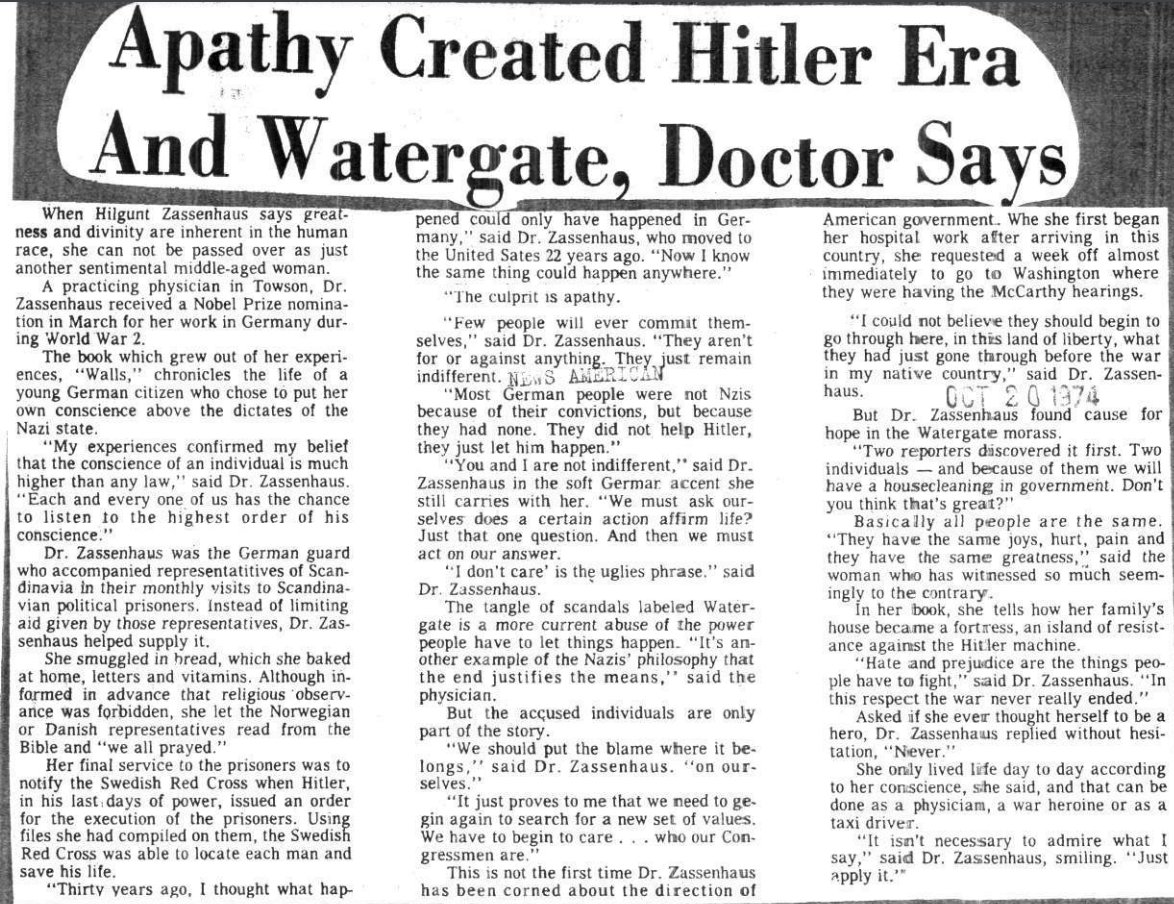
The culprit is apathy.

I just saw today a Facebook post by a valued colleague encouraging people to take the high road with political commentary and memes, implying that such things are beneath people of good will. While the sentiment is worthy and I respect his desire to have charity, the danger is also real – much more real than most people are willing to admit.

Germany happened just as much because of apathy as it did because of active malice. When I have returned to the dust, I want my posterity to know what I stood for and what I did to resist evil. If America devolves into a fascist autocracy, it will not be because I did nothing and said nothing.

This article from 20 October 1974, saved by the Maryland State Archives during the height of the Watergate era, is powerfully revelatory; today’s political situation makes Watergate look like a Romper Room picnic.

“The culprit is apathy. Few people will ever commit themselves. They aren’t for or against anything. They just remain indifferent. Most German people were not Nazis because of their convictions, but because they had none. They did not help Hitler, they just let him happen.” – Dr. Hilgunt Zazzenhaus

The memes may be, on some level, mean-spirited. But the target of those memes – Donald J. Trump and the MAGA cult who either worships the ground he walks on or who view him as a useful idiot for the furthering of their own ends, specifically power and influence, are more mean-spirited and cruel and destructive than the political statements.

If you care about America’s future, vote all Republicans out, everywhere, at all ballot levels, from now until the heat death of the universe.

The Old Wolf has spoken, and is not ashamed.

If you’ve ever worked retail

Barking, unreasonable, terrible managers. Mind-clenching Corporate stupidity. Unpredictable schedules. Lazy or arrogant or brown-nosing co-workers. And, of course, the ubiquitous customers: arrogant, entitled, insouciant, demeaning, demanding, illogical customers… with the occasional gem of a human being hidden in the regular flow. All these are things that the average retail worker has to put up with on a daily basis.

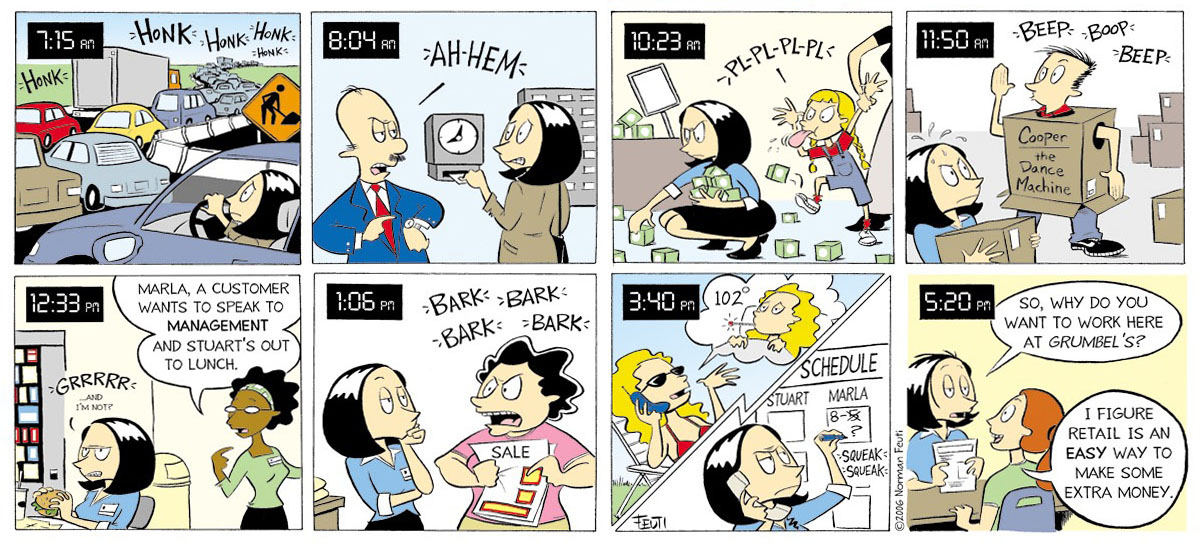
The worst and most outrage-generating stories can be found at Not Always Right, but there’s one place a retail worker should go – if you haven’t already – to smile, cringe, laugh, and find kindred spirits: Retail, by Norm Feuti.

Retail, Strip One, by Norm Feuti, January 1, 2006.

Anyone who has ever worked in retail or still does owes it to themselves to be familiar with this lovely, long-running comic strip. It sadly came to an end after 14 years when the artist wanted to move on to a different career in illustrating children’s books, but the entire thing is available online as an archive. I greedily devoured every one, because it so perfectly captures every aspect of the retail experience, from managers, to co-workers, to the most horrible customers… all of which have to be dealt with in a day’s work if you’re interested in keeping your job.

But it’s not just about the horrors; along the way you will get to know and fall in love with a delightful cast of characters who grow, and learn, and survive the journey. Of course there are the ones you love to hate, but that only adds Tabasco sauce to the chimichanga, as it were.

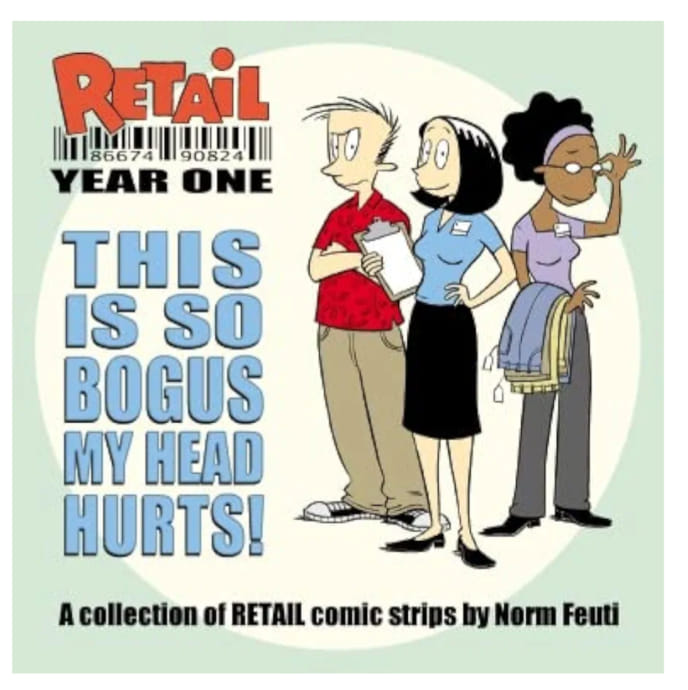
Only the first year was captured in hard copy, but if Norm were ever to think about publishing the other 13 years in dead-tree edition, I would be first in line to buy them.

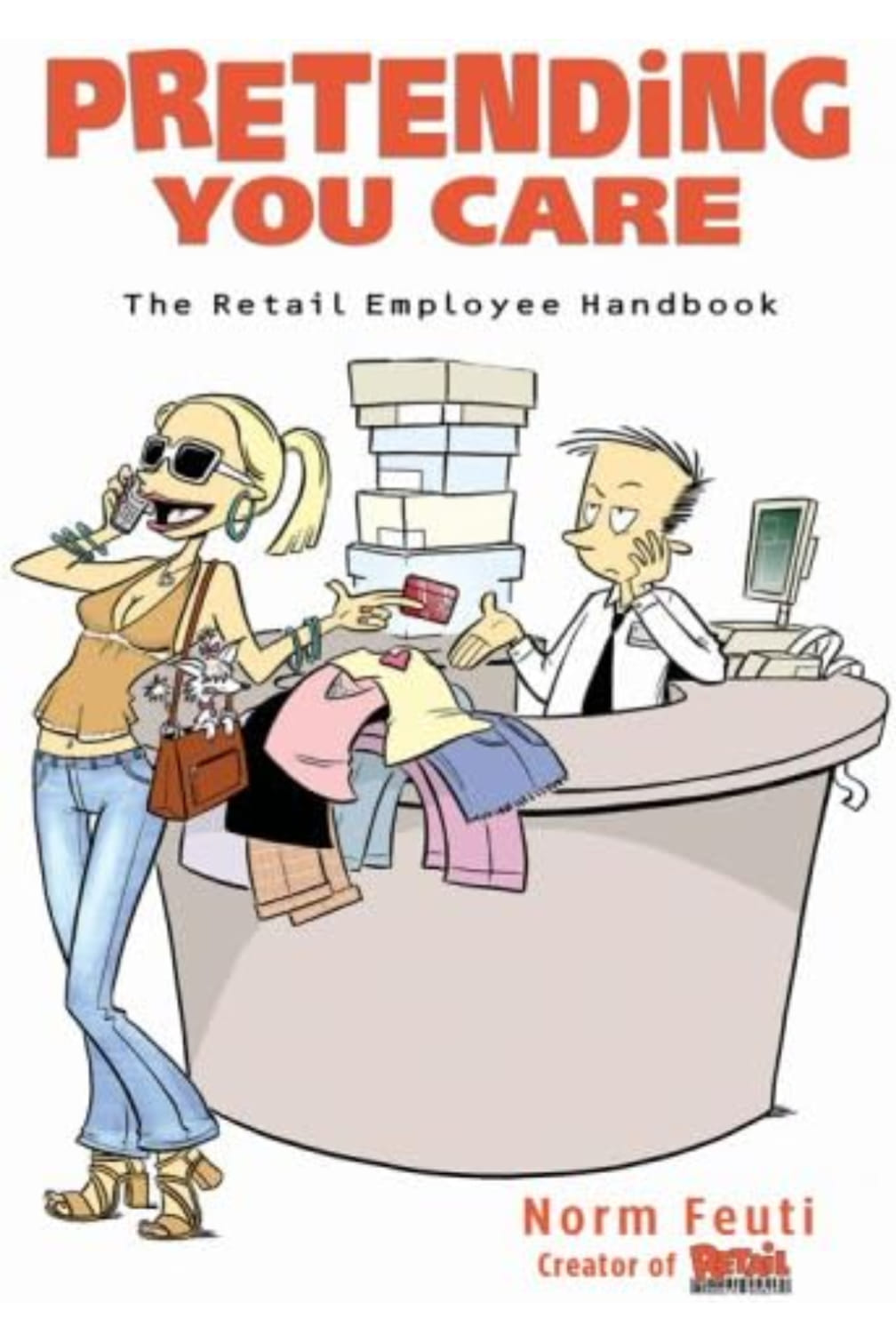
There was also a companion volume, “Pretending you Care,” which included many strips from year one along with wonderful expositions about what it’s like to work in the retail world.

Both are available on Amazon, but neither one is cheap, sadly – I was fortunate to score a copy of each through AbeBooks, my go-to source for difficult-to-find books, at much more affordable prices. They occupy honored places on my bookshelf.

While I never actually worked a retail floor, I did work in pizza shops for 3 years, and spent 6 months in a customer-service chair for a software company – essentially the same as retail work without the face-to-face interactions with customers. It was, to be very honest, the most soul-sucking job I ever did in my entire career, and would never again repeat the experience even if I had to. Thank Ṣiva H. Viṣṇu for retirement.

That said, I undertand. And I have always done my best to be a bit extra kind and appreciative to those people on the floor or behind the register who serve my needs, who endure the daily horror, and who long for nothing more than the end of their shift.

To all retail or customer-service workers out there, thank you.

The Old Wolf has spoken.

The challenges of selling stuff online

I have written before about dealing with scammers on Craigslist, but this vehicle – as well as Facebook Marketplace or local swap/sell groups – is still an effective way to generate some cash for items that one no longer needs.

But above and beyond scams, which seem to surface with just about every ad placed thanks to bots run by the bad guys, there are always challenges to deal with. The series below by Kevin McShane at kevincomics.com is illustrative of some of the things one has to deal with on a regular basis.

The first one (being ghosted) is by far the most common. Hey, if you’re not really interested, why did you ask in the first place? How much energy does it take to just send a courteous message to the seller saying “Thanks for the info, but I’ve changed my mind” or something like that? I cannot tell you how much I appreciate the people who have the decency to do this.

The second one is infuriating. Sometimes it’s all I can do to refrain from sending back (in all caps) “JUST READ THE @#$% POST, YOU BLISTERING SIMPLETON!”

Despite putting in all my posts something like “No holds, no deliveries” I will invariably have someone express interest and then say “Can you deliver to Augusta?” Lazy wanker. Instead of unloading a semi-full of obscene imprecations at them, the Goodwoman of the House suggested replying, “Sure, for an extra $100.00.” That might just get the message across as well.

Then there are the folks who will say, “I want this but I won’t get paid until Friday, can you hold it for me?” I’ve been stung far too often by this, because Friday comes and either they ghost me (#1 above) or come back with “Hey I changed my mind.” In the meantime, I could have sold it three times over and by now the other buyers have moved on. So I don’t do that any longer. If you want me to hold something, you can pay me with PayPal or one of the other cash apps, and then I’ll hold it until Friday.

The kind of person who is too lazy to bargain is always a burr under my saddle. Just sending a message saying “bottom dollar price” or “what’s the lowest you’ll take” or “will you take less” is a dick move. No, I’m not going to put in your work for you, dipweeds. Make me an offer and I’ll either accept it or counter. And if I counter and you don’t move at all, I’m not likely to sell it to you. This is how dickering works. If you don’t do this, you’re more interested in “winning” than in getting an item for a good price.

[When we sold our first home in 1980, my first wife and I listed it for a very fair price given the work we had put in to improve it. We had a guy come in and say outright, “I’m the kind of guy who is used to getting what I want” and offering us $500 less on a $49,000 home. (I know, I know, prices today are insane, but at that time it was a good deal on an 800 ft² home.) Clearly it wasn’t about the money, it was about winning, and if he hadn’t said that I might have been just fine with a bit of wiggle room. We took the offer because we were in a difficult situation, but I wish I had been able to tell him to shove his offer where the sun doesn’t shine; pay our asking price or buy something else. The smug grin on his face still raises my blood pressure when I think of it 40 years later. Up yours, Monty.]

As for the last one, I’m not your therapist, buddy. Leave the story out and just cut to the chase. Can you pick it up today or not?

Like I said, online selling can be very productive, but dealing with idiots definitely raises the blood pressure. It makes me have even more respect for retail workers, who doubtless have to put up with similar nonsense many times every day.

The Old Wolf has spoken.

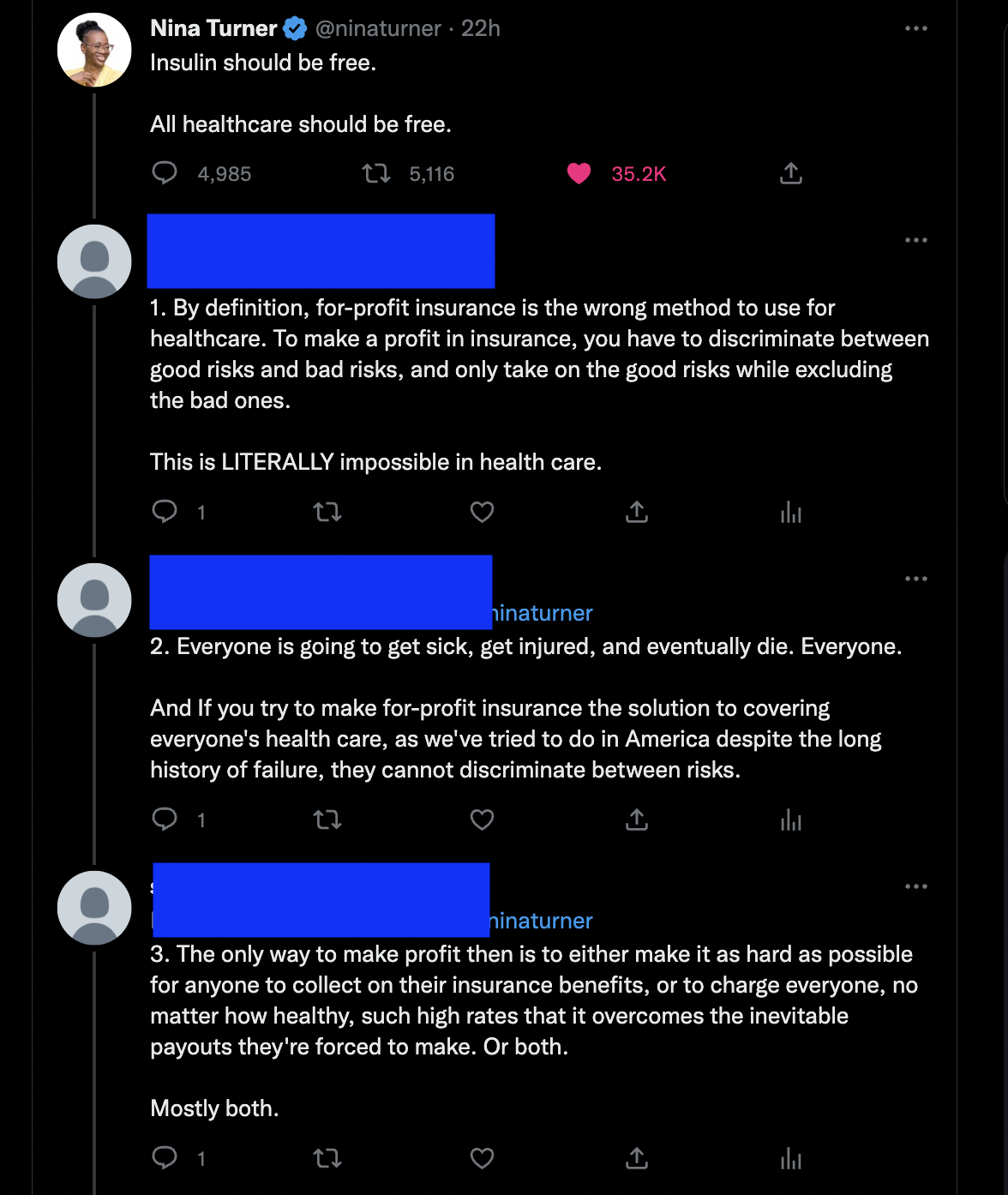
The criminal scam of American health insurance

Read this horror story. Read it, and think about it. The parts in bold are emphasized by me, things that should absolutely be illegal and criminal. Health insurance is the biggest scam being perpetrated by corporations on the American people, right up there with wage theft.

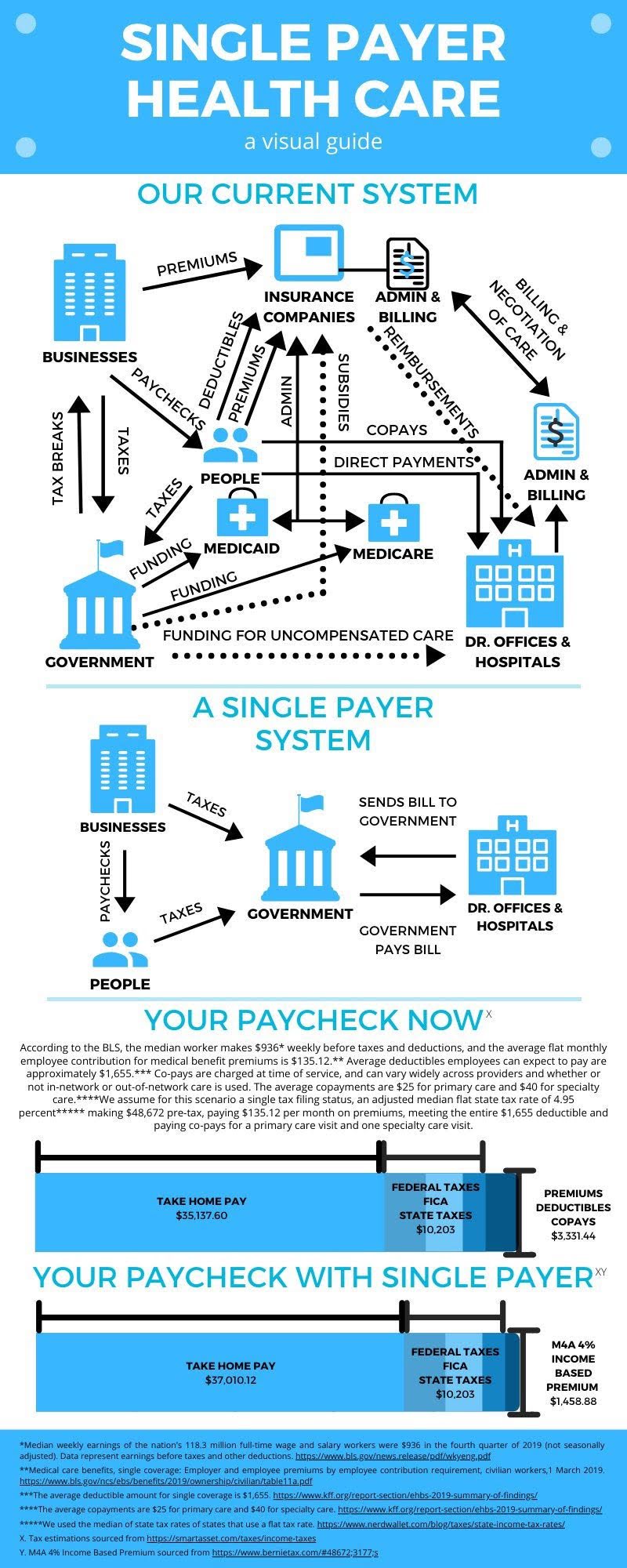
Write your representatives in Congress. Better, call them. Demand #MedicareForAll. It’s the only morally-justifiable system. It would save citizens and businesses and doctors and hospitals immense amounts of money, result in better healthcare and greater productivity for all of us, and would free employees from staying in a crappy, abusive job out of fear of losing their insurance. People would no longer go bankrupt because of a single medical emergency, which happens to nearly 650,000 people each year, accounting for more than 60 percent of all personal bankruptcies. Our current system is a crime, and insurance companies are the criminals.

———–

Michelle DuBarry
@DuBarryPie

A Thread

In 2010, I had good union health insurance. Obamacare was the law of the land. In November that yr my 1yo son was struck by a careless driver in a crosswalk. After two surgeries and a night in intensive care, he died.

Before we knew the outcome, I sat at his bedside, his tiny stitched- together body hooked to a million incessantly beeping machines, straining to recall what our deductibles were. I worried I wouldn’t be able to keep working during what could be a long hospital stay.

I googled FMLA and learned I wouldn’t qualify b/c I hadn’t been at my job for a year. If I lost my job we would both be without insurance. Without my income, there was no way we could afford $1K/month COBRA.

𝗪𝗶𝘁𝗵𝗶𝗻 𝗮 𝘄𝗲𝗲𝗸 𝗼𝗳 𝗵𝗶𝘀 𝗱𝗲𝗮𝘁𝗵, 𝗯𝗲𝗳𝗼𝗿𝗲 𝘄𝗲 𝗵𝗮𝗱 𝗲𝘃𝗲𝗻 𝗿𝗲𝗰𝗲𝗶𝘃𝗲𝗱 𝗮 𝗯𝗶𝗹𝗹, 𝘁𝗵𝗲 𝗵𝗼𝘀𝗽𝗶𝘁𝗮𝗹 𝗽𝘂𝘁 𝗮 𝗹𝗶𝗲𝗻 𝗼𝗻 𝗼𝘂𝗿 𝗵𝗼𝘂𝘀𝗲 𝘁𝗼 𝗺𝗮𝗸𝗲 𝘀𝘂𝗿𝗲 𝘄𝗲 𝘄𝗼𝘂𝗹𝗱𝗻’𝘁 𝘀𝗸𝗶𝗽 𝗼𝘂𝘁 𝗼𝗻 𝘁𝗵𝗲 𝗣𝗜𝗖𝗨 𝗯𝗶𝗹𝗹.

My husband who was also injured in the crash, was refused treatment by his primary care doc b/c she didn’t accept payment from auto insurance and his health insurer wouldn’t pay til we exhausted our auto insurance.

Have you ever had to call around to find a doctor that can handle your specific insurance situation? Have you done it in the days after your toddler has died, when you haven’t even figured out a way to talk about it, when your husband is injured and urgently needs a Rx refill?

We ended up with around $5K in out-of-pocket expenses and our health insurer paid $175K. Eventually, we’d receive a settlement from the at-fault driver. For a minute, we thought we might be OK financially.

𝗧𝗵𝗲𝗻 𝗼𝘂𝗿 𝗵𝗲𝗮𝗹𝘁𝗵 𝗶𝗻𝘀. 𝗰𝗼. 𝗰𝗮𝗺𝗲 𝗮𝗳𝘁𝗲𝗿 𝗼𝘂𝗿 𝗽𝗮𝗶𝗻 𝗮𝗻𝗱 𝘀𝘂𝗳𝗳𝗲𝗿𝗶𝗻𝗴 𝘀𝗲𝘁𝘁𝗹𝗲𝗺𝗲𝗻𝘁. 𝗧𝗵𝗲𝘆 𝗱𝗲𝗺𝗮𝗻𝗱𝗲𝗱 𝗿𝗲𝗶𝗺𝗯𝘂𝗿𝘀𝗲𝗺𝗲𝗻𝘁 𝗳𝗼𝗿 𝘁𝗵𝗲 $𝟭𝟳𝟱𝗞 𝘁𝗵𝗲𝘆 𝘄𝗲𝗿𝗲 𝗼𝘂𝘁. 𝗧𝘂𝗿𝗻𝘀 𝗼𝘂𝘁 𝘁𝗵𝗲𝘆 𝘄𝗲𝗿𝗲 𝗹𝗲𝗴𝗮𝗹𝗹𝘆 𝗲𝗻𝘁𝗶𝘁𝗹𝗲𝗱 𝘁𝗼 𝗱𝗼 𝘁𝗵𝗮𝘁. 𝗜𝗻 𝗮𝗻 𝗶𝗻𝘀𝘁𝗮𝗻𝘁, 𝗼𝘂𝗿 𝗺𝗼𝗱𝗲𝘀𝘁 𝘀𝗲𝘁𝘁𝗹𝗲𝗺𝗲𝗻𝘁 – 𝗺𝗲𝗮𝗻𝘁 𝘁𝗼 𝗰𝗼𝗺𝗽𝗲𝗻𝘀𝗮𝘁𝗲 𝗳𝗼𝗿 𝘁𝗵𝗲 𝗹𝗼𝘀𝘀 𝗼𝗳 𝗼𝘂𝗿 𝘀𝗼𝗻 𝘄𝗮𝘀 𝗿𝗲𝗱𝘂𝗰𝗲𝗱 𝘁𝗼 $𝟬.

(Side Note: It took me 8 yrs but in 2019 I initiated and passed a bill making this practice illegal in OR. It remains legal in many states.)

Through all this, my husband and I both were suffering from PTSD. We had jobs, a mortgage. All of it hung in the balance. In a humane system, we could grieve without having to navigate an insurance juggernaut, without worrying about being thrust into debt and poverty.

Despite Obamacare and “good” union insurance, we were nearly bankrupted by a 27-hour hospital stay.

Every one of us lives in a body that is going to fail. Sometimes it happens suddenly, catastrophically. Do you want to fight with insurers when this happens? Do you want to sort through a mountain of bills when you lose someone you love, when your grief is raw?

There is no compromise on healthcare that doesn’t leave millions of people unacceptably vulnerable to corporations trying to profit from sick and injured people.

End of Thread

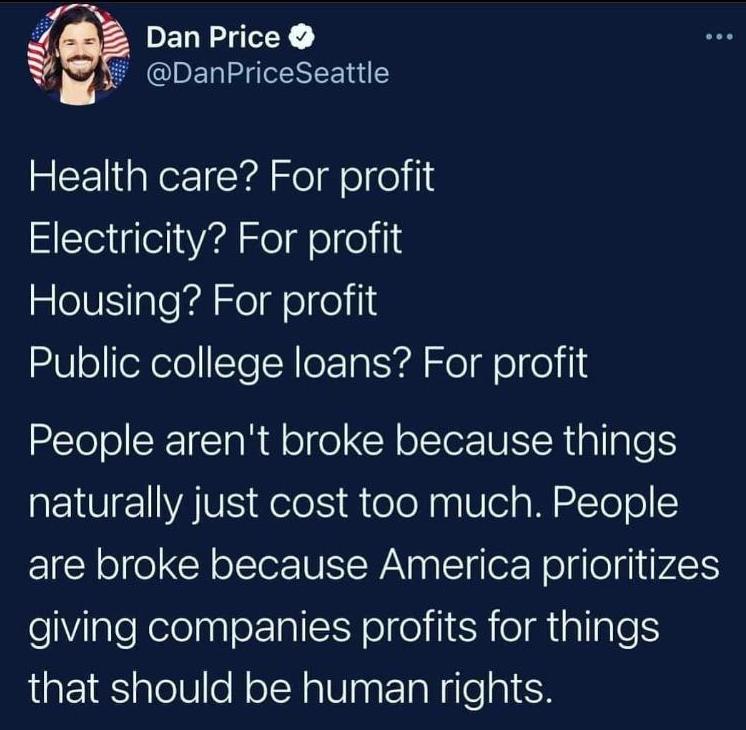
America’s economy is broken, designed to keep people in perpetual poverty to the benefit of the ultra-wealthy. Things must absolutely change. The only way that’s going to happen is if progressives are voted into office in numbers too great to swindle.

For the sake of your posterity’s future, vote Blue in every election at every level, from now until the heat death of the universe. Vote for progressive candidates who will work to build a world for everyone, with no one left out.

The Old Wolf has spoken.

A Twitter thread from a year ago, more relevant than ever

With Dildo Braggins now facing over 91 criminal counts, this thread from @OfficeBob helps to understand the “classified documents” issue. I thought it deserved wider exposure.


A Twitter Thread by @OfficeBob from Aug. 15, 2022

A friend with classified document experience has given me permission to post her comments here, and so…a thread:

“This week in Trumpland has been wild. So I thought I’d put my FSO hat back on and talk about document classification. This is a long one. A sitting president cannot wave his magic wand and declare something declassified.”

“He has the authority to read someone into classified programs whenever he wishes, but the documents themselves must go through a review process before being officially declassified.”

“Certain topics, like nuclear programs (including some communication programs that support nuclear deployment), cannot be declassified by anyone. The president included.”

“There was a lot of brouhaha when Trump included blatantly untrustworthy individuals in his planning. It was stupid of him, but also his prerogative as president.”

“When a president leaves office, they leave their security classification at the door of the White House. Some presidents may continue to receive national security briefs but that is at the discretion of their successor.”

“Those that receive briefs are read in under the authority of the sitting president. They do not have a security clearance of their own that entitles them to classified information.”

“A former president cannot declassify anything. Once they leave office, they are civilians in the eyes of the law. It doesn’t matter if the documents were generated when they were president or if they know the contents. NARA will not give them access.”

“No former president can just go to the archives an open a classified file generated during his presidency.”

“He certainly cannot talk about sensitive information that he is aware of once out of office. This goes for any government employee. There are topics that I am not allowed to discuss with anyone.”

“Most of them are mundane, but they are still classified. Others could put me away for a few decades if I talk about them. Therefore, zipped lip.”

“Top Secret/SCI documents cannot be secured by a simple padlock. The National Industrial Security Program Operating Manual, or NISPOM, has strict guidelines on securing classified documents that must be followed.”

“Including the construction of the room that TS/SCI documents are stored in. From the door frame to the thickness of the walls to the lighting fixtures.”

“Inside, the documents must be contained within an accredited safe/file cabinet that declares the classification of its contents. Each cabinet must be secured with a unique combination or reinforced lock.”

“TS/SCI cannot be stored with Secret, which cannot be stored with Confidential. Each classification must be stored only with similarly classified documents. Some SCI documents are so sensitive that they must be stored separately from all others.”

“Storing documents in a room locked with a padlock in cardboard boxes isn’t even sufficient for Confidential. Removing any document from storage requires that it be checked out and then back in by the FSO.”

“Entering certain parts of a building that stores classified documents requires an FSO escort.”

“Every facility that stores classified documents or works on classified projects falls under the aegis of a civilian Facility Security Officer. By law the FSO “owns” the documents. They are solely responsible for their safekeeping.”

” Go into a government office and look for a picture somewhere near the entrance. It will be a photo of the FSO along with their contact information.”

“DoD/DoE security audits are anal retentive to the extreme. You better believe the auditor will measure the width of your door frame and remove screws to make sure they meet minimum standards.”

“They’ll test the drywall. Run fiber optics through the HVAC ducts to make sure no one could overhear something through them. God help you if a measurement is off by less than a quarter of an inch.”

“If you facility ONLY meets minimum standards, chances are good it’s not going to be your facility anymore.”

“I have had people jailed for far, far less than what the FBI recovered at Mar-a-Lago. I’ve fired employees for taking a single Confidential document out of my facility by accident. Because at the end of the day, it’s MY document and MY ass on the line in an audit.”

“Put Trump in prison.”


Yes, for the health of our nation and our democracy, the crimes of this evil, sick person need substantial consequences, along with everyone who supported his lunacy. May the RICO indictment spread far and wide.

The Old Wolf has spoken.