And you thought the theremin was weird.

Well, it is, sorta. But 50’s science fiction movies would never have been the same without it.

Here’s a video of Leon Theremin playing his own instrument:

The Japanese, of course, know how to take anything weird and push it over the top: Here’s an orchestra of young ladies playing Beethoven’s 9th on theremins built into Russian Matrochka dolls:

But thanks to modern technology (and some retro technology), people have figured out all sorts of new ways to make music.

Some geek figured out how to program old 5.25″ floppy drives to make music. This is not good for the drives, but it’s pretty cool:

But a good idea can always be made better:

Not to be outdone, Steve Ward and Jeff Larson realized that Tesla coils could be made to become musical:

The physics behind this feat is explained at Physics Buzz.

While Mario Brothers sounded good, I think Inspector Gadget sounded better:

And one last one, the most complex effort I’ve seen in this medium:

There are far more odd ways to make music than I could list here, but these were some which tickled my fancy.

Edit: Thanks to Inshadowz who pointed out this one using a dot-matrix printer to play “Eye of the Tiger”

Edit 2: Here’s a captivating demonstration of how using the same principle can create speech using nothing but a piano (The narration is in German, but the captions are adequate):

The Old Wolf has spoken.

The weight-loss bra: is this breepy or crilliant?

131204110654-microsoft-smart-bra-story-topIn the “Stranger than Amazon’s Drones” department comes news of a new idea from Microsoft – a bra which monitors a woman’s vital signs and detects the kind of stress levels that signal overeating, then sending a message to the wearer’s phone telling her to stop chowing down.

Click through to the CNN article for more information if you are curious, but I have to say that this idea creeps me out on a number of different levels, all the while being intriguing.

People who want to release weight usually want all the help they can get, if they’re really motivated, so the idea of a biometric warning system is not bad in and of itself. It might actually give some people the extra incentive they need to watch portions.

But in a bra? Somehow, this seems to send a message that only women need to watch their food intake, or that only women have problems with excess weight.

Couldn’t one come up with a unisex band worn around the chest (below the bustline) that would accomplish the same thing, similar to the sporty heart monitors, or is Microsoft thinking about the weight loss jockstrap for guys, just to keep the playing field level? This device, of course, instead of sending a message to the wearer’s phone would deliver a good strong shock to the “boys,” because guys need extra incentive and they’re all tough as nails, right?

Whatever the case, they didn’t ask me. And while I love all things geeky, this one seems to cross the line from smart into disturbing.

The Old Wolf has spoken.

Mathematical Fiction Re-discovered on the Internet

I learned to love Science Fiction as a child; the first story I read was “Have Spacesuit, Will Travel,” by Robert Heinlein. I was hooked at once. Over the years I have read thousands of novels and stories, many of them remembered only in bits and snatches from decades ago.

Thanks to the Internet, many of my favorite stories have re-surfaced, indexed by the all-powerful Google – which makes this post somewhat meta in nature.

One such story was the delightful “MS Fnd in a Lbry“, written in 1961 by Hal Draper. My mother’s name was Draper, but this was a name adopted by the family to avoid anti-semitism, so there is unfortunately no relation.

Draper took a break from his life’s work of promoting Marxism, and wrote one science fiction story. The information explosion, and associated storage and retrieval problems, is humorously examined in this short story. (This story is also of historical interest, containing one of the earliest predictions of the Web.) The story originally appeared in the December 1961 issue of the magazine Fantasy and Science Fiction. Reprinted in Isaac Asimov and Janet Jeppson (eds) Laughing Space and Groff Conklin (ed) 17 Times Infinity.

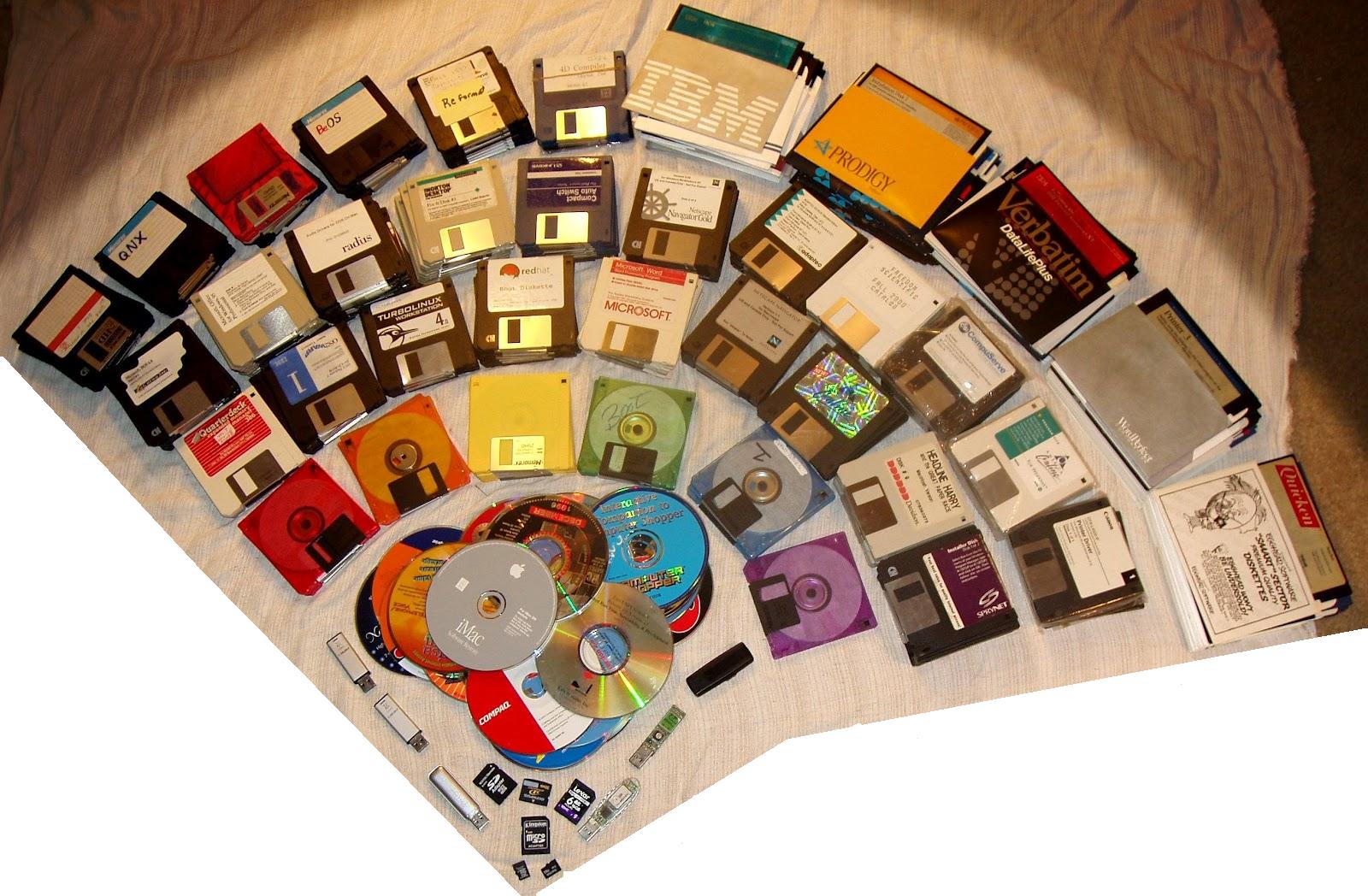
All I did was search for “nudged quanta,” and there it was. And I thought to do it because of a photo I happened across at reddit, courtesy of /u/o0OIDaveIO0o, and then posted to Facebook:

euUzNT1

In just 25 years. One of the microcards at the bottom stores more than all the others combined. While not directly associated with Moore’s Law, the rapid progression of storage miniaturization has been mind-boggling, especially for those of us who lived through the early days of computers. Nowadays kids take massive storage like this for granted, but to see 16 gigabytes of data stored in a piece of plastic smaller than my fingernail simply boggles my mind, even though I used the technology daily.

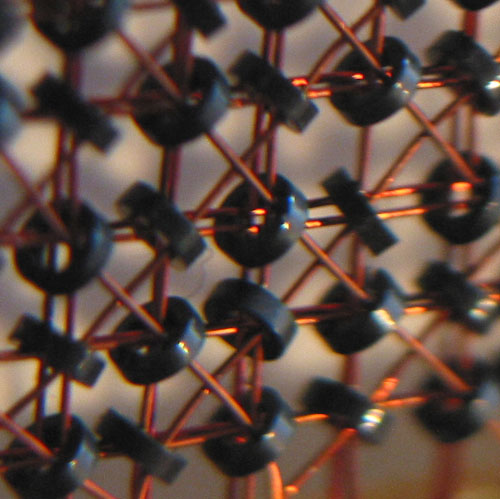
CoreMemory03


We’ve come a long way from An Wang’s 1955 patent for core memory – 1 bit per doughnut.

The Old Wolf has spoken.

Space Heaters: on the horns of a dilemma

I am in a real quandary, and searching the internet has been no help. I’m looking for the best space heater for our basement, (about 1500 ft2) which tends to be a bit chilly in the winter. There are a lot of options out there, and I’m unable to find a comprehensive and unbiased review site for different heaters and types out there – there are too many sock puppets and shill sites to be able to get an accurate picture.

The three models below are representative of the types of heaters I’m looking at – not these specific brands or models, necessarily, but rather by  style. Note that each of these heaters is rated at 1500 watts, which means 5120 BTUs – according to the math, each one should provide exactly the same amount of heat.

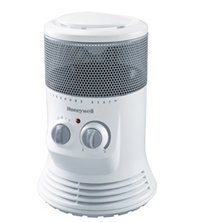
Honeywell

Honeywell HZ-03604U Mini Tower Heater – $40.00 (this is an older model, but it’s the one I have)

• 360-degree space heater
• SafetyTip tip-over switch shuts heater down if it’s knocked over
• 2 heat settings
• Adjustable thermostat
• Includes overheat protection
• Model: HZ-0364u-WMT
• 1500 Watts
• 5,120 BTU

Feel warm and cozy with the Honeywell HZ-03604U Mini Tower Heater. Designed to provide all-around warmth, this 360 Degree Space Heater is perfect for small to mid-sized rooms. Since, heat is distributed evenly in a 360 degree range, every nook and corner of the area warms up in a matter of minutes. With two different heat setting modes and an adjustable thermostat, you have complete control over the heating process. Made of flame-resistant plastic, this overheat protection heater is absolutely safe for any room in your home. An additional protective tip-over switch safeguards your family from accidental topples. A portable room heater, it is perfect for the coldest of winters and comes with a convenient handle that helps you carry it around from one place to other with ease.

Note: I have one of these – it does a really good job keeping my office toasty in the winter.

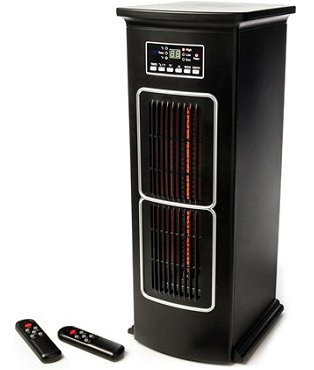
Unknown

Lifesmart LS1003HH13 1,800 SQ FT – $171.99

• Heats a Room Up to 1800 Square Feet
• 1500 Watt
• Injection Molded Plastic Cabinet; User-Friendly Controls with Large LED Display
• Built-in Fan Circulates Air through the Heater and Into the Area Being Heated
• Infrared Technology Effectively Uses Less Energy to Produce Even Heat from Floor to Ceiling
• Programmable Temperature and Timer Feature


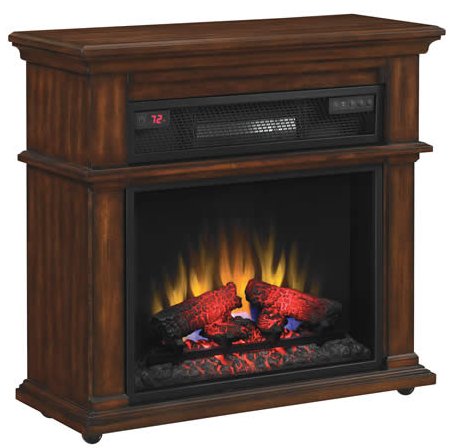
DuraFlame

DuraFlame (Twin-Star) Electric Fireplace – $269.00

• Uses 3 InfraRed Quartz Heating Elements
• 5,200 BTUs. 1500 Watts, 12.5 Amps
• InfraRed Heating Elements Lifetime is Over 20K Hours
• Infrared Heating Technology
• Quickly and evenly distributes heat throughout the room

Healthy heat – Produces a moist heat that does not dry out the air and lower oxygen levels in the body and the room
Safe for kids and pets – Stays cool to the touch
Excellent zone heating source – Can help save on energy costs

I’ve seen one of these work – they’re very pretty, and the one I experienced did a good job heating the main living area of an 800 ft2 cabin.

Still, this last one is quite confusing; the manufacturer, Twin-Star (these are OEM’d by DuraFlame) claims that this unit will heat 1,000  ft2. However, I asked Home Depot, who carries the same model, what it was rated for, and this was the answer from their customer service department:

Upon reviewing the fireplace I was able to find the model number 23if1714-c247 which is the product on Amazon.com we do carry the exact one on Homedepot.com. I have researched this product and the square feet it will heat at a consistent temperature is 144 sq. ft. This fire place will heat a supplemental area of 1000 square feet meaning it will be warm but not at the consistent heat of the 144 square feet area.

Duraflame Spec Sheet
Intertek Test Report


According to this calculator, each one of these heaters would cost about .1692¢ per hour, or $25.00 per month if they were run for 5 hours per day, but the specs on each one differ significantly, and websites don’t help because they’re busy trying to sell them.

My challenge is that each one has the same heat rating – heat output is a factor of resistance, and if each one is 1500 watts, then the BTU rating is 3.4 times that. So is one better than another?  (I’m ignoring the visual fireplace part of the DuraFlame – that’s just there for pretty. I’m just comparing the heating ability and technology. The prices are obviously way different, and if a small one will do just as well as a large one, I can’t see shelling out for a larger unit.

I cannot comprehend it; to me it is a mass of confusion.  I need to do more research, but for now my head hurts.

If anyone who happens to read this has any insights for me, I’d be grateful for your input.

Happy fishbowl to you, me, and everyone.

Thus ends one of my favorite stories by the Good Doctor Asimov, “The Dead Past.” I won’t tell you much more about it, because it would spoil the read, and it’s one of his best pieces.  However, it addresses the issue of privace in a way that few people could; Asimov has a way of being able to take concepts to their logical, illogical, or eternal conclusions.
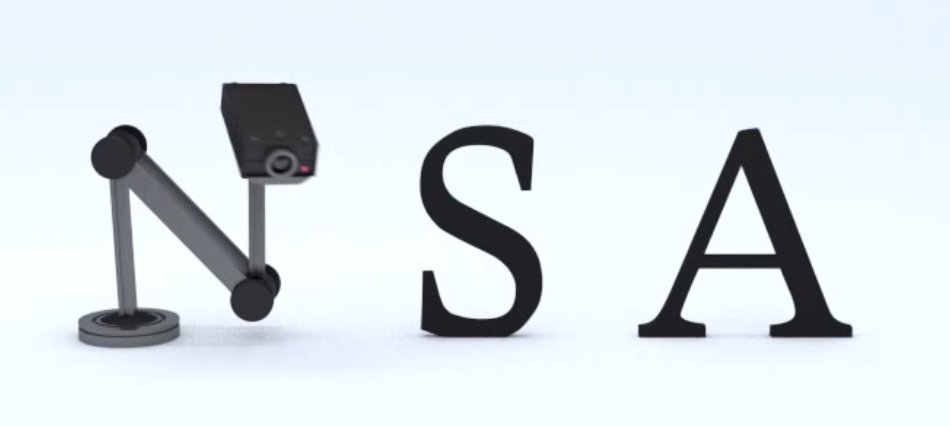
NSA

Image courtesy of redditors SexualWeasel, joystick354, and Sqorck (more about that at a previous post.)

In today’s world, its very difficult to maintain the illusion of privacy. Just how much information about each and every one of us is available out on the Internet would curdle your plasma if you really knew, and scrubbing the ether of our presence is, while not impossible, a challenging task.

So the question is raised: how much privacy are we entitled to, and what constitutes a violation?

An interesting article over at the Huffington Post addresses both the issues of bullying/abuse and privacy in a story of a father who sent his autistic son to school with a wire, and uncovered some very unsavory behavior on the part of a teacher and a classroom aide.

Certainly we are entitled to an assumption of privacy about our vital statistics, financial data, and medical records (much stricter now since the introduction of HIPAA); whether or not that privacy actually exists is another issue, but that’s a subject for another discussion. What we do in our own homes or on our own property should be inviolate, although government has long been pushing for inroads, and whereas they were formerly chipping at the cornices of this right with small hand tools, they are now drilling at the foundations with jackhammers. Again, a topic for another day.

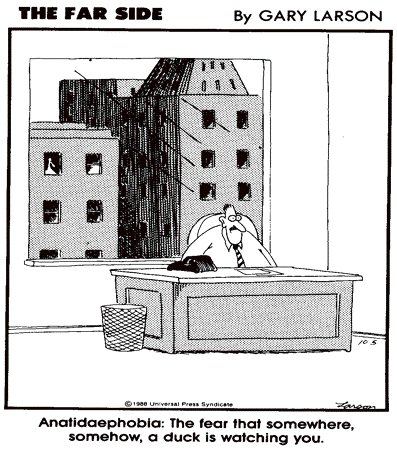
But when we are out in public – on the streets, in stores, in view of other people, it should be fairly assumed that we are being watched by someone, somewhere – even if it’s only by a duck.

Anatidaephobia

Gary Larson, “The Far Side,” Image ©1988 Universal Press Syndicate

Bullies don’t like light. Like cockroaches, they prefer to hide in dark corners, exercising their unrighteous dominion over others in places where they think they won’t be seen or caught. Unfortunately, schools have long been shielded from public scrutiny, but this HuffPost article suggests that this immunity may not be long for the world.

I remember when I was in elementary school, in another geological era, our school installed closed-circuit cameras as part of there experimental educational regime. I had forgotten about those until one of my classmates – even 50 years on, many of us have stayed in touch – reminded me about them during a reunion in June of 2012. We had to be on our best behavior when those cameras were rolling – it was an odd sensation. Today, recording devices on school buses have become more common, installed to protect students, aides, teachers, and drivers in the event of mishap or misbehavior. They’re not always used to best advantage, but they are there. This implies that intrinsically, there should be nothing wrong with having a video camera in every classroom, because it is in essence a public place, and teachers and students alike should be operating under the assumption that they are being watched. I don’t feel very George Orwell about this at all; when you’re sitting in a classroom with 40 or 50 other students, this is hardly a private environment. And, every parent of every child in that classroom has the right to know that their children are learning in an environment of safety.

Where every piece of technology can be used for good, there must also be the assumption that it can be used for ill. As a result, I can hear 1,000 legal hands waving in the background[1], each attached to an attorney who will a) have an opinion as to why this is a bad idea, and b) offer their services at a very reasonable hourly rate. But the point here is not about practicality, it’s about the rights of our children to learn without fear. The only thing that is certain is that things in the world of education will change, and it will probably move in the direction of greater scrutiny and less privacy. That may be a good thing, or it may not – but going forward, I will support any reasonable proposal that makes this world a safer place for our children and all of us.

The Old Wolf has spoken.


[1] I’m sure a whole raft of educators will have their hands up as well, and that’s not a bad thing. These are the people in the trenches, and their ideas need to be heard, but for myself, I do not look favorably on ideas that sacrifice safety for convenience.

Dear web developers: Don’t do this

I often grab bits of text from news websites and other places of interest to quote at this blog. I always give credit to the source if it’s known, so this fairly recent development gets under my skin. Many websites now append a bit of text to anything that’s copied, like this:


“Frozen in time: The occupants of this abandoned farm house are long gone, but their belongings remain; from the paintings hanging on the walls to the neatly made bed”

Read more: [Some URL here]
Follow us: @MailOnline on Twitter | DailyMail on Facebook


See that blue stuff up there? I didn’t request it. I’m just going to delete it. It’s annoying, something along the lines of blinking text, forced social logins, popup ads, and back-button disable.

Weeaboos

The Old Wolf has spoken.

Do as I say, not as I do

I’ve mentioned this before,[1] but today I happened across a great example of what not to do on a website, right after telling your readers that it’s nasty.

Irony


MarketingProfs apparently don’t take their own advice. If you’re a web developer, don’t do this. I’ll leave your website in about 0.67 seconds.

The Old Wolf has spoken.


[1] Be sure to read the followup to this article as well.

Homage to the Shuttle Program

This awesome film is taken from the upcoming Special Edition Ascent: Commemorating Space Shuttle DVD/BluRay by NASA/Glenn a movie from the point of view of the Solid Rocket Booster with sound mixing and enhancement done by the folks at Skywalker Sound. The sound is all from the camera microphones and not fake or replaced with foley artist sound. The Skywalker sound folks just helped bring it out and make it more audible.

The movie both intrigues and saddens me. I honor every individual who ever worked on this project, from the brave astronauts (and their families) who went and returned, or who went and did not, to those who swept the stairs and emptied the trash. I honor the accomplishments in science and knowledge that these herculean efforts produced.

I express a deep sense of sadness and anger at our legislators over time who were not forward-looking enough to continue funding for the space program, so that a viable replacement might have been ready when our shuttle fleet had aged beyond its usefulness. There is no excuse for such obtuseness; these individuals chose again and again to throw trillions of dollars into unwinnable and futile and fruitless wars, not to mention some of the finest blood of our nation, while beneficial and inspiring projects like this program – and others which might have been – went begging.

Remembering

The Old Wolf has spoken.