
General Electric 5000 HP power transformer display at Pan American Exhibition.
Found at /r/historyporn via /u/rockets_redglare.
Now why does Dr. Who come so strongly to mind? “Generate! Generate!”
General Electric 5000 HP power transformer display at Pan American Exhibition.
Found at /r/historyporn via /u/rockets_redglare.
Now why does Dr. Who come so strongly to mind? “Generate! Generate!”
A small tribute to the Waterford Crystal Factory in Kilbarry, Ireland, which I filmed during a family visit in August of 1998. The factory closed under unfavorable circumstances on 30 January 2009; workers staged a two-month sit-in to protest the closing, which only ended in March of that year when they accepted a payout of €10m, but many had worked there all their lives. A PBS Documentary chronicled their last fight.
The cinematography here is not the best, but I’m pleased with the video; the music seems to say just the right thing.
Tá an Sean-fhaolchú labhairthe.
Found at /r/ historyporn via /u/cholmes.
If you ever wondered where your salary comes from… Well, at least the Romans did; the Latin word salarium, whence we get our word “salary,” shows that there was a solid link in place between employment, salt, and soldiers, although the link is no longer as clear as it seemed earlier.
Be that as it may, salt has been a critical commodity since the beginning of human history, whenever that was. Æons ago, I read a lovely story to my children, which was since republished by Nina Jaffe and Louise August as “The Way Meat Loves Salt: A Cinderella Tale from the Jewish Tradition“.

Many years ago in Poland, there lived a rabbi who had a wife and three daughters. One day, the rabbi asks his children a powerful question: “How much do you love me?” His older daughters profess their love in gold and diamonds, but his youngest daughter, Mireleh, declares she loves her father the way meat loves salt. For this remark, she is banished from her father’s home.
As the Rabbi comes to learn, Mireleh’s declaration was the most powerful of all.
Salt is essential for life. We can’t live without it; salt is composed of sodium and chlorine, and absent sodium in the diet, hyponatremia can cause coma or even death. Notice that doctors put blood pressure patients on low sodium diets, but not no sodium diets; some is always required to keep the body’s functions balanced. Add to that the valuable nature of salt as a preservative, and you can see why it’s been sought after since the dawn of time. In fact, if you want to read a charming science fiction short story about the discovery of salt as a cooking spice, read “First” by Anthony Boucher.
Have you ever wondered where our nation’s salt supplies come from? Thanks to the Salt Institute, here a map of North America’s major salt deposits and production facilities (click for expanded view):

Salt production has been central to the area around the Great Salt Lake since the arrival of Mormon pioneers in 1847, and continues today, although Morton now has a near monopoly on salt production in the area.
Salt was so essential to human life that many proverbs sprang up around its use; the following list was located at Seventh Wave:
The Salty Old Wolf has spoken.
… and which doesn’t exist any more.
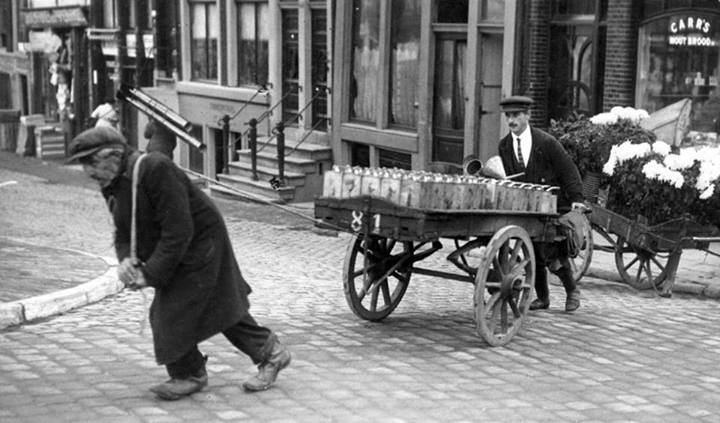
The “Kargadoor” (lit. “Cart-Move-Onward”) would help pushcarts over Amsterdam’s many humpback bridges (photo 1922).
I spotted this photo over at Reddit, posted by /u/lordsleepyhead, and found it intriguing.
Thanks to a friend, I found some further information over at De Jordaan (translation is mine)
High bridges were a source of income for the Kargadoor; these were men who pulled heavy hand carts over a bridge with a rope and hook. Their tool was a long rope with a hook on it. These cart pullers generally had a leather patch on their shoulder to keep from getting hurt by abrasion.
What’s more, this Kargadoor was in turn a source of income for the landlord of the slijterij de Grote Slok (Big Gulp Liquor Store) on the corner.
One of the bridges over the Prinsengracht was the domain of Kiki the Kargadoor. He would leave his permanent home when he had gathered six or seven cents; Kiki would disappear to spend his money on drink, all the while keeping the bridge in sight.
He was a bandy-legged little man who could swear like a champion; children always considered him to be a good language teacher.
Kiki was born in 1865 and had a home in the Boomstraat. He passed away at the Municipal Nursing Facility at the Roerstraat in 1940.
Hoist a glass to Kiki, the Kargadoor!
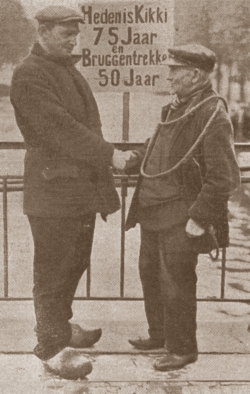
The caption on the sign reads, “Today Kiki is 75. He’s been a Kargadoor for 50 years.”
The Old Wolf has spoken.
(This is a re-enactment; no one was harmed in this film)
Every 10 days a child dies from vehicular heatstroke. If you want more grim details, read this 2010 Pulitzer Prize-winning article by Gene Weingarten.
“What kind of person forgets a baby? The wealthy do, it turns out. And the poor, and the middle class. Parents of all ages and ethnicities do it. Mothers are just as likely to do it as fathers. It happens to the chronically absent-minded and to the fanatically organized, to the college-educated and to the marginally literate. In the last 10 years, it has happened to a dentist. A postal clerk. A social worker. A police officer. An accountant. A soldier. A paralegal. An electrician. A Protestant clergyman. A rabbinical student. A nurse. A construction worker. An assistant principal. It happened to a mental health counselor, a college professor and a pizza chef. It happened to a pediatrician. It happened to a rocket scientist. Last year it happened three times in one day, the worst day so far in the worst year so far in a phenomenon that gives no sign of abating. The facts in each case differ a little, but always there is the terrible moment when the parent realizes what he or she has done, often through a phone call from a spouse or caregiver. This is followed by a frantic sprint to the car. What awaits there is the worst thing in the world.”
If you see a child locked in a hot car, phone 911, break a window and save the child. Let the consequences fall where they may.
The Old Wolf has spoken.
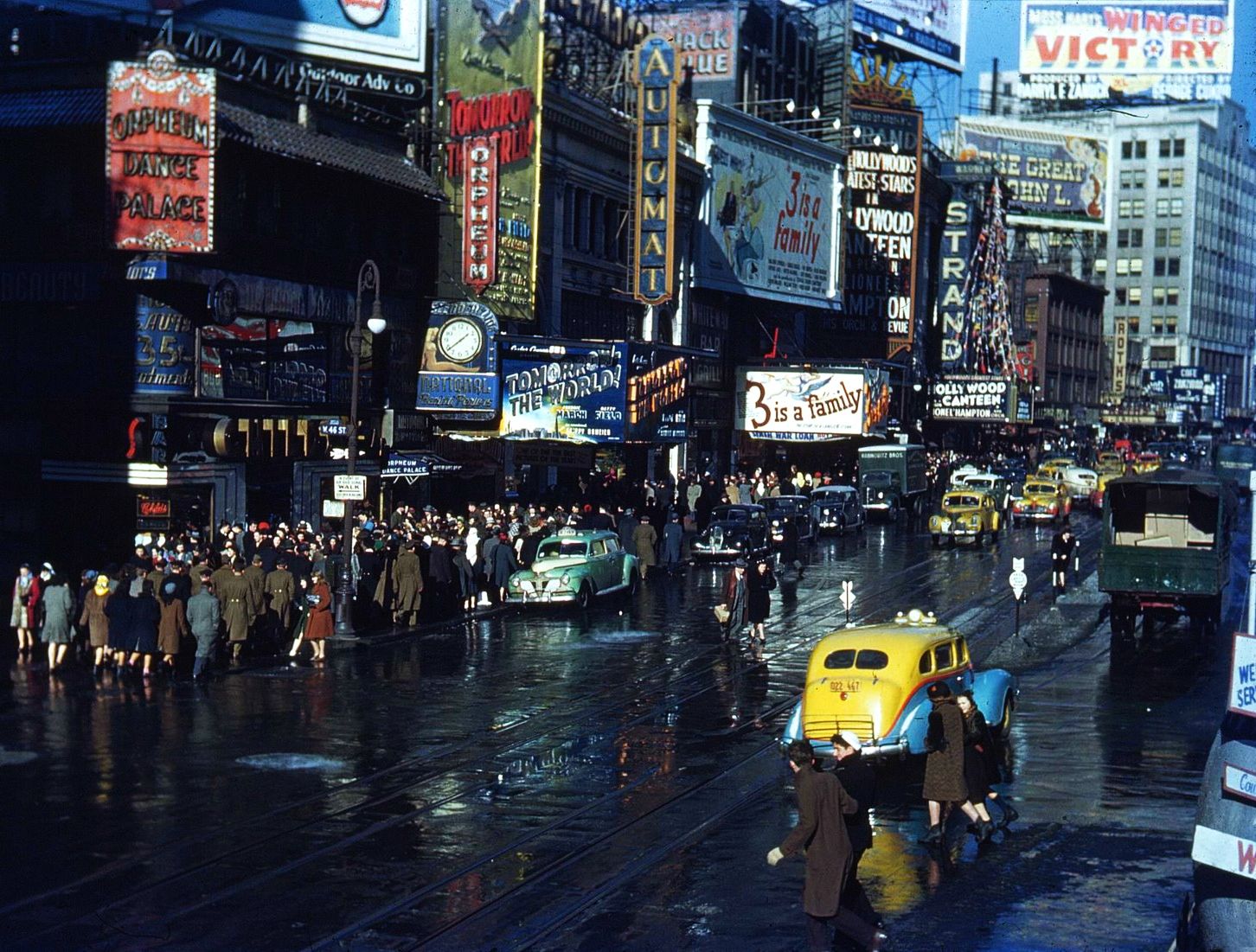
New York, New York. Notice the uniformed sailor crossing the street in the foreground.
Police Officer speaks with girl on Market Street, San Francisco, 1905.

Four years before my father was born, and a year before the great earthquake.
The Old Wolf has spoken.
A typical week’s food ration for a postwar Austrian housewife c. 1945-47
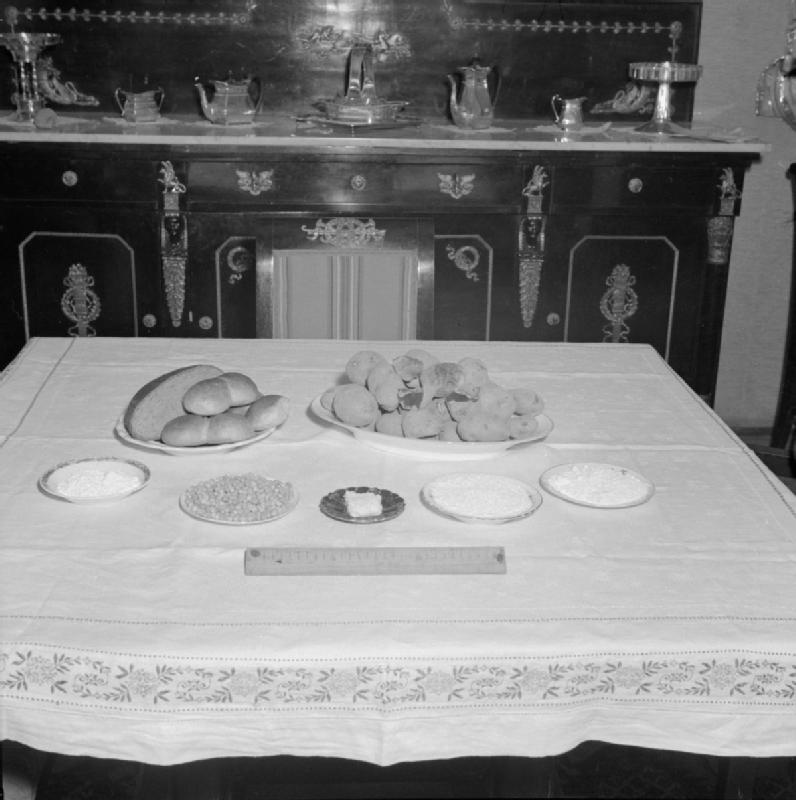
Nit allzuviel. No wonder that Austrian cooking went heavy on the oil later, when it became available again; there’s nothing quite like a Wiener Schnitzel fried in lard.

The Old Wolf has spoken.

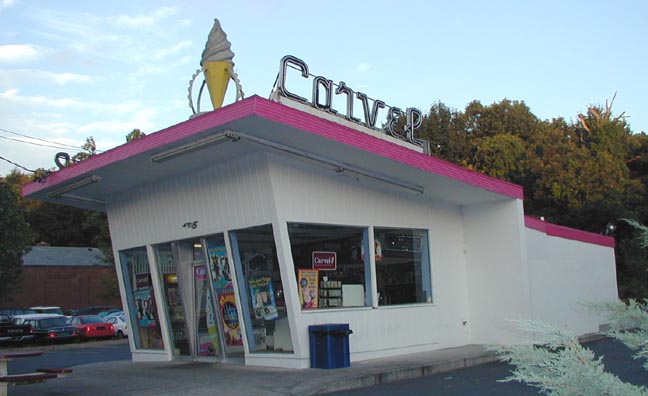
Is it possible that the proprietors read Mad Magazine from the 50’s?

Probably not, but it sure felt that way.
Notice that even though Dave Berg didn’t fully draw it out, probably for legal reasons, that’s the unmistakable Carvel logo up there on the Ice Cream store (and they’re still in business.)
The Old Wolf wants custard!
 Playing in the World Game