
In this little-known photo, Fidel Castro sleds during a visit to Moscow in 1963.
In this little-known photo, Fidel Castro sleds during a visit to Moscow in 1963.

This iconic photo taken in 1932 showed a group of construction workers nonchalantly enjoying lunch on a girder [1] high above New York. A bit of backstory on the photo can be found at The Reel Photo.
What is not often seen is what happened after that particular photo was taken, which is just what you might expect.

Nothing better than a good nap after lunch.
The Old Wolf has spoken.
[1] On that note:
An Irish labourer turns up at a building site and asks for employment. “Thick paddy,” thinks the foreman.
“Right ven, Paddy, fink we can hire you? Wot’s the difference between a joist and a girder ven, Paddy?”
“Sure and that’s easy,” replied the Irishman. “Joist wrote Ulysses, and Girder wrote Faust.”
If you’ve ever read Mark Twain’s A Tramp Abroad, you have probably encountered Appendix D: The Awful German Language. Therein, Twain waxes eloquent about the vagaries of the Teutonic tongue and mentions the habit of the German language to smash nouns together into long, unreadable strings. He mentions “Generalstaatsverordnetenversammlungen” (legislator meetings) and “Waffenstillstandsunterhandlungen” (cease-fire negotiations.) He does not mention “Donaudampfschifffahrtsgesellschaftskapitaenswitwe” (the widow of a captain of the Danube Steamship Voyage Company), and I have seen longer versions having to do with the cleaning lady of the captain’s cabin, but this one is somewhat sniffed at by German purists.

“Hardwood floor sander rental”
Now it appears that the longest official word in the German dictionary has been stricken, because it’s no longer needed.
the Rindfleischetikettierungsüberwachungsaufgabenübertragungsgesetz, or “law delegating beef label monitoring,” was introduced by Germany in 1999 as part of measures against mad cow disease. But the DPA news agency reported today the law was removed from the books last week because European Union regulations have changed. Just to show you how these monsters are cobbled together:
The additional letters between the nouns are there to make things flow smoothly, in the same way as we take “girls” and “baseball” and “team” and come up with “girls’ baseball team.” And that’s really all they are doing – they just happen to cram everything together into one word.
German has other peculiarities, among which are the maddening tendency to throw all their verbs to the end of a very long clause or sentence. I’m currently reading The Lord of the Rings (Der Herr der Ringe) in German; I can’t wait to get to Volume 3 to find out what happens, because that’s where all the verbs are. [1]
But with the “Längsthauptwortsabschaffung” (longest noun elimination, and I just made that up) having been performed, what’s left as the longest official word? That honor falls to Kraftfahrzeughaftpflichtversicherung (automobile liability insurance)
For what it’s worth, “The Awful German Language” was not Twain’s only foray into German philology. In A Connecticut Yankee in King Arthur’s Court, he came up with Constantinopolitanischerdudelsackpfeifenmachersgesellschafft (İstanbul bagpipe maker company, and remember it’s İstanbul, not Constantinople), which my Teutonically-enabled friends will be quick to point out is improperly formed, but it makes a heck of a magic word. But this segues into the fact that when it comes to smashing words together, the Germans are rank amateurs when compared to Turkish.

Avrupalılaştırılamayabilenlerdenmısınız? is a complete sentence, a question which means “Are you one of those who is not easily able to be Europeanized?”
Here’s how it’s formed:
To be fair, this is a rather contrived sentence, but it’s legal and grammatical and shows how Turkish agglutination works. Pope John XXIII is reported to have said, at one point during his ten years in İstanbul as Papal Nuncio, “I am fond of the Turks… It is my special intention, as an exercise in mortification, to learn the Turkish language.” Mortification is right.
I spent about 10 years associating with Turks, the Turkish language, and Turkey, and I would like to go on record as saying that John had the right idea. They’re lovely people, with a beautiful country and a hellish but intriguing language. I keep chipping away at Turkish, and perhaps in one or two more lifetimes I’ll be able to say more than “Günaydın, nasılsınız?”. As Robert Sheckley’s character said in “Shall we have a little talk?“, “Stop agglutinating, dammit!”
Given the events taking place in Turkey at this very moment, I pause to wish the good people of this land every good thing, and the right to freedom and self-determination.
The Old Wolf has spoken.
[1] Just kidding. All the verbs are in the appendices.

“New Shoes” by Gerald Waller, Austria 1946
Six year-old Werfel, living in an orphanage in Austria, hugs a new pair of shoes given to him by the American Red Cross. Published in “Life” magazine.
Makes you think, doesn’t it?
The Old Wolf has spoken.

Cointe Observatory, built by the University of Liège in 1881-82. In the course of renovation with the intention that it should house the Service Régional des Fouilles Archéologiques. (Wikipedia)
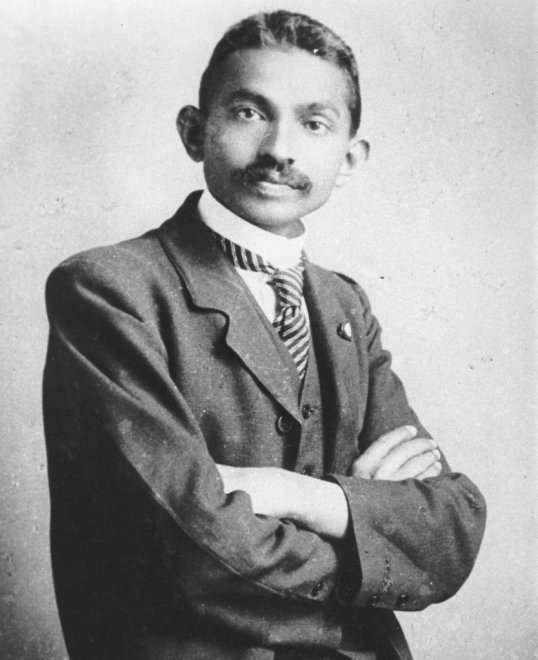
Mohandas Gandhi as a young attorney, 1893

Ben Kingsley as Gandhi, 1982 – Best Actor.
Thought patterns and philosophies have changed over time – many of us are familiar with sexist advertisements that ran in magazines in newspapers in decades and centuries past:
![vintage-sexist-ads (13)[3][2]](https://playingintheworldgame.com/wp-content/uploads/2013/06/vintage-sexist-ads-1332.jpg)
Yikes. And this isn’t even the worst of them.
I was recently pointed to a collection of ads that were not only stupid but downright dangerous:









Some of these simply contravene common sense, like the “vitamin doughnuts” ad above, but some of them are downright toxic, for example the DDT advertisement. You can see a full exposition on each of these over at Collector’s Weekly.
And of course, don’t forget the “Guinness is Good For You” campaign:
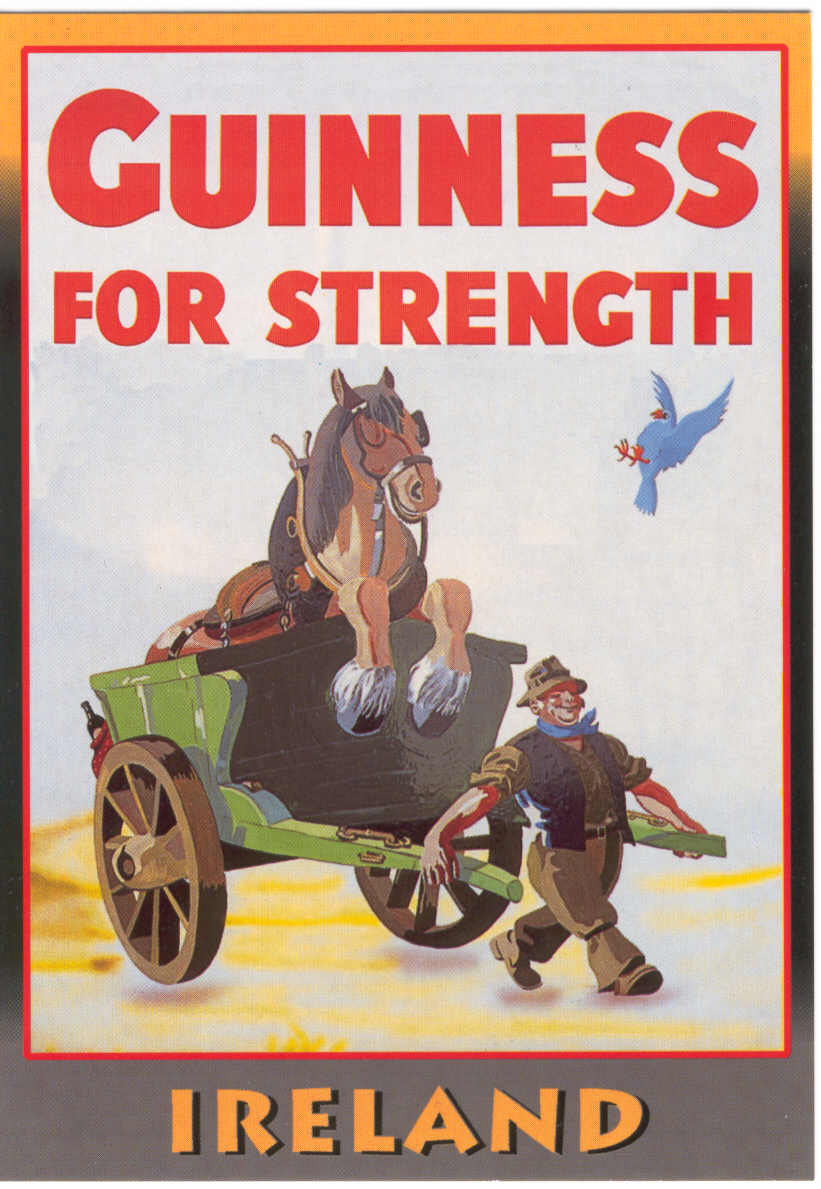
Have we changed all that much, though? I rant regularly about quack remedies and sleazy advertisements that seem so prevalent on the web (if you don’t want to see these, consider using AdBlocker Plus for Firefox or Chrome – you’ll see almost no ads.)
As I said at the post I referenced above, regarding the “Açaí Berry / Colon Cleanse” scam,
Colon cleansing is unnecessary and potentially harmful. Your colon is an amazing apparatus. With the exception of abnormal medical conditions such as fecal impaction due to longstanding constipation, or intestinal torsion, your colon cleanses itself efficiently and regularly. If you do a colon cleanse, you’re likely to lose a few pounds as the result of clearing out two days worth of food in your system, but as soon as you start eating again, it will come right back. Colon cleansing on a regular basis can disrupt the natural intestinal flora, and impair the colon’s natural ability to regenerate its lining. A diet rich in soluble and insoluble fibers is all your body needs to keep your colon happy, and doing what it does best – absorbing nutrients and expelling wastes.
As for the berry itself,
Antioxidants are good. Virtually thousands of randomized, double-blind, placebo-based studies published in JAMA, Lancet and other mainstream medical journals show that free-radical scavengers help improve overall health. Fruits are full of antioxidants. The açaí berry is a fruit. Just like strawberries, kiwis, oranges, grapefruits, pomegranates, mangosteens, ningxia wolfberries, and you name it. When consumed as part of a balanced diet, they’re all good for you. But there is nothing “miraculous” about this or any other fruit.
The sad bottom line is that most advertising is borderline unethical by nature. It’s either
It’s a conundrum, because advertising is what drives commerce, and commerce is what drives society. If nobody bought anything, practically nobody would have a job and our economy would collapse.
I don’t have all the answers, but if the human race is ever going to crawl out of the mud, ethical business is a must. We need to teach our upcoming generations that the end does not justify the means.
The Old Wolf has spoken.
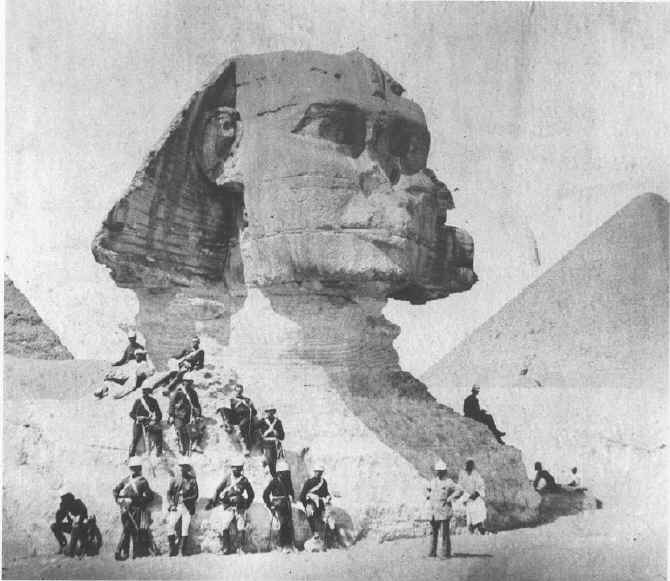
One of the oldest photos of the Great Sphinx, from 1880. Notice that much of the Sphinx is still under the sand.
Egyptians call him “أبو الهول” (abu al-hol, the father of terror or the terrifying one.)

The sphinx – profile in 1976 © Old Wolf Enterprises
Built in around 2500 BC, that makes him close to 4,500 years old – an astonishing lifespan. The loss of his nose was attributed to Muhammad Sa’im al-Dahr in 1378, when he became angered that local peasants were making sacrifices to the sphinx for favorable crops. Today, however, we know better [1]. Despite weathering over time, for something so ancient, he has survived remarkably well.
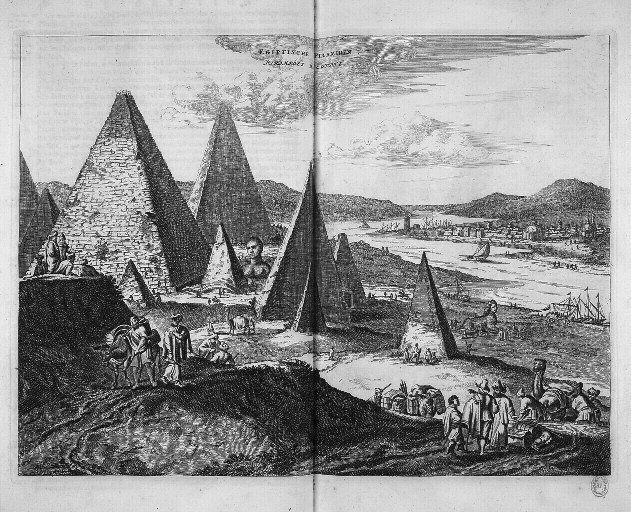
The Great Sphinx of Giza in Olfert Dapper, ”Description de l’Afrique” (1665) Notice that there are two sphinges [2]
From Wikipedia
From the Bronze Age, the Hellenes had trade and cultural contacts with Egypt. Before the time that Alexander the Great occupied Egypt, the Greek name, sphinx, was already applied to these statues. The historians and geographers of Greece wrote extensively about Egyptian culture. Heredotus called the ram-headed sphinxes criosphinges, and the hawk-headed ones hieracosphinges.
The word sphinx comes from the Greek Σφίγξ, apparently from the verb σφίγγω (sphíngō), meaning “to squeeze”, “to tighten up”. This name may be derived from the fact that the hunters for a pride of lions are the lionesses, and kill their prey by strangulation, biting the throat of prey and holding them down until they die. However, the historian Susan Wise Bauer suggests that the word “sphinx” was instead a Greek corruption of the Egyptian name “shesepankh,” which meant “living image,” and referred rather to the statue of the sphinx, which was carved out of “living rock” (rock that was present at the construction site, not harvested and brought from another location), than to the beast itself.
There was a single sphinx in Greek mythology, a unique demon of destruction and bad luck. According to Hesiod, she was a daughter of Orthus[8] and either Echidna or the Chimera, or perhaps even Ceto;[9] according to others, she was a daughter of Echidna and Typhon. All of these are chthonic figures from the earliest of Greek myths, before the Olympians ruled the Greek pantheon. The Sphinx is called Phix (Φίξ) [3] by Hesiod in line 326 of the Theogony, the proper name for the Sphinx noted by Pierre Grimal’s The Penguin Dictionary of Classical Mythology.
The Great Sphinx at Giza is not the only one around – there are countless sphinges throughout Egypt and elsewhere:

Sphinx at Memphis, Egypt
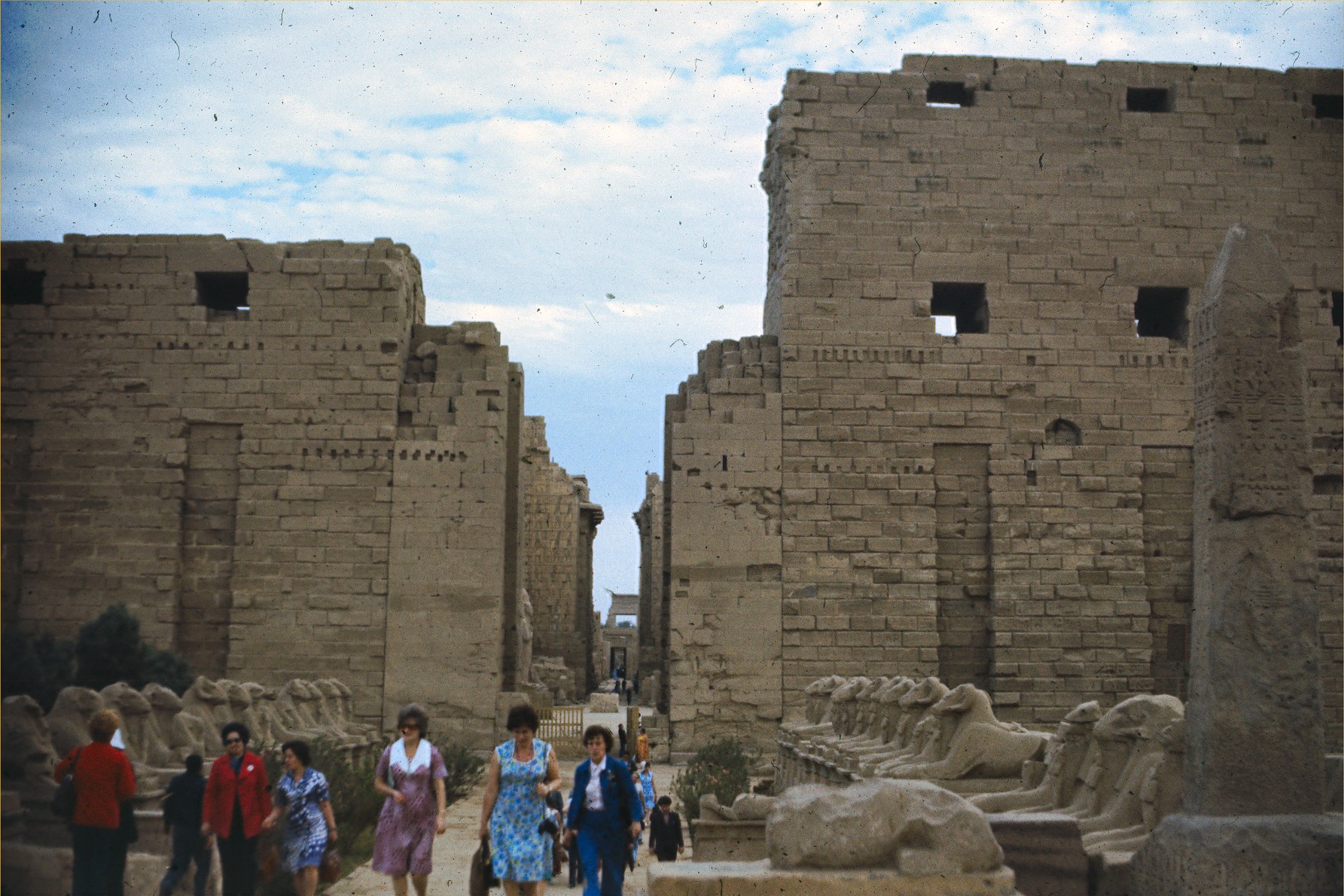
Rows of ram-headed sphinges at Luxor.
Regardless of the number, however, the Great Sphinx at Giza remains one of the wonders of the world from any century.
The Old Wolf has spoken.
[1]

From Goscinny et Uderzo, Astérix et Cléopatre, Dargaud Editeur, 1965
[2] Sphinges is the classical plural for sphinx.
[3]
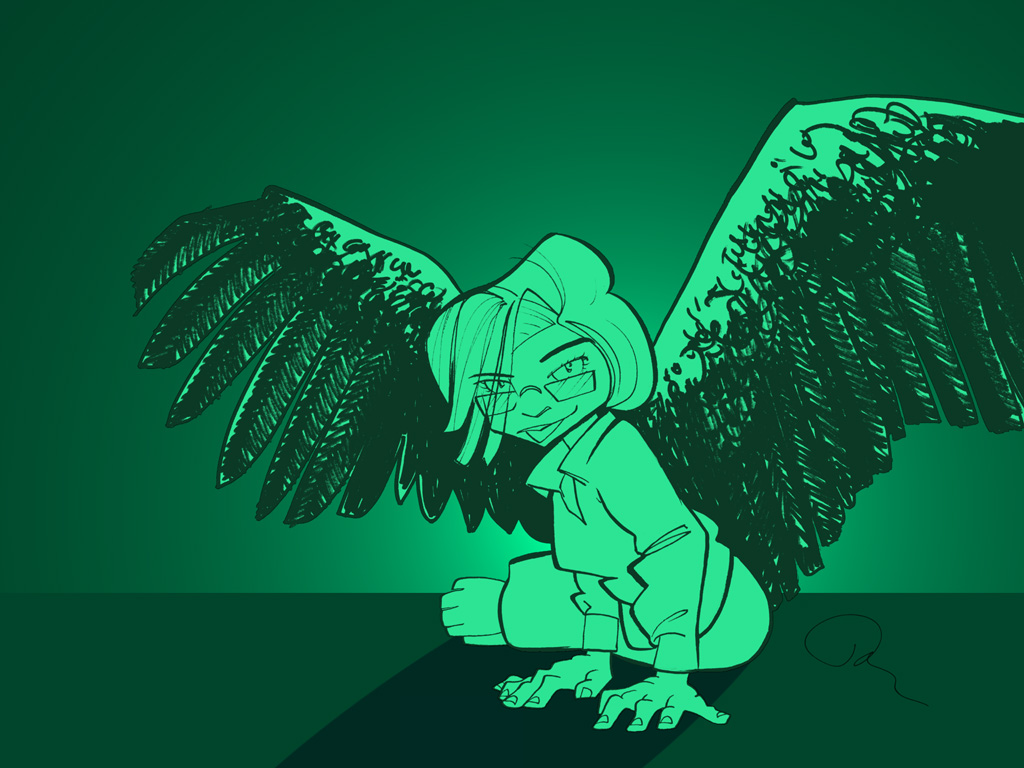
Phix, leading character in Paul Taylor’s Wapsi Square. Read it.
“Wapsi Square is named for the fictitious neighborhood in Minneapolis where the characters live. Its protagonist is Monica Villarreal, a feisty, busty, 4’10” tall latina who has recently moved from a safe world of normalcy where all she had to question was her own inner demons, to a world of supernatural lunacy, drunken college girls who have the power to obliterate the universe, an Aztec golem named Tepoz who can make the best damned martini in the world, a psychologist demon barista, and a host of other characters, some of whom may just live downstairs from you.” (Wiki)
We’ve seen it a million times from the front; here’s what an early version looked like from behind the camera.

The beginning of the Hollywood era: the filming of the MGM screen credits, 1928

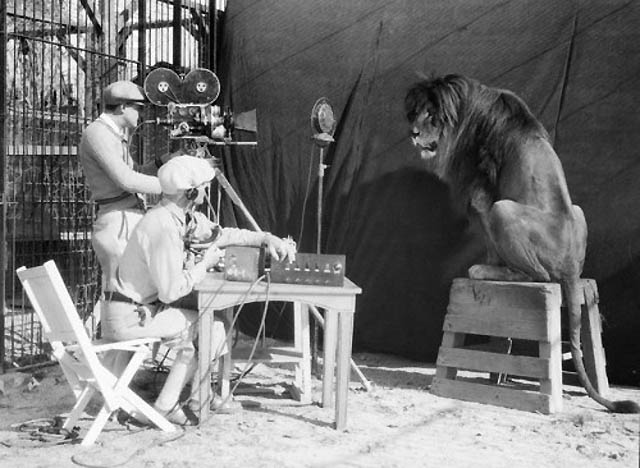
Hope there’s a trainer somewhere off camera…
The Old Wolf has spoken.

The Statue of Liberty surrounded by scaffolding as workers complete the final stages in Paris. Circa 1885
I wonder how many people really feel a sense of immense gratitude to France for this incredible gift, which became the icon of our country. I know I do – I feel it every time I see her. Both countries cherish Liberty, despite the pains we continue to suffer as we travel into a new century.
Au peuple de la France, un grand merci.
The Old Wolf has spoken.
 Playing in the World Game