Fun with Linguistic Symposia

Academic symposia are great fun if you don’t have a reputation to defend. Listening to a presentation can be informative, but the true entertainment value arises when you watch numerous ivory-tower types begin to shred one another’s theories.

This bit of doggerel has been floating around in my humor files since the 70s (first pulled off a chain printer), and deserves to be appreciated by a new generation of linguists.

With no further ado, I present to you a collection of (allegedly) real interactions documented at early gatherings of linguists. First up:

A Taxonomy of Argument Schemata in Metatheoretic Discussions of Syntax
or
Name That Tune

I. Logical Argumentation

  1. If A = ¬A, then my position is true.
    Therefore, since A = ¬A, …
  2. A: ¬p.
    B: Since you agree that p, …
  3. P is absurd, therefore q.

II. Now you see it, now...

  1. Your argument supports my position.
  2. I’m aware of these putative counter-arguments, but…
  3. Let me rephrase that so that it agrees with my position…
  4. I think that is true, but I’m not sure it means anything.

III. The Reasoned Response

  1. I don’t see the argument.
  2. I don’t like your example.
  3. That’s not a problem in my theory.
  4. It’s my opinion, and it’s very true.
  5. I still say that…

IV. Papa Knows Best

  1. You say that, but you don’t believe it.
  2. You believe this, but you won’t say it.
  3. What you really believe is ____, and I agree with you.
  4. Our disagreement is merely semantic.
  5. Don’t be misled by the similarity between A and A. It’s merely a superficial identity.

V. Audience Participation: Let’s take a vote!

VI. The Pre-emption

  1. You’re right, but I said it first!
  2. What you say is wrong, and I said it first!

VII. The Putdown

  1. You can’t do it either
  2. That’s true, but uninteresting in the ____ sense!

VIII. Advancing to the rear

  1. I knew that analysis was wrong before I proposed it.
  2. Of course my analysis is wrong in detail – *all* analyses are wrong in detail.

IX. The Principled Argument

A: Shut up!
B: No, *you* shut up!
A: No, *YOU* shut up!


But wait, there’s more!

An Ancillary Guide To Understanding a Syntax Conference

 What the Speaker Says  What the Speaker Means
These examples are from Dyirbal, a widely discussed language, so I will assume familiarity. I don’t know the language well enough to answer questions, so don’t ask any.
When you stop to think about what you said, it doesn’t say anything.  I don’t understand it.
Some examples are vague; the others are simply wrong. I can’t quite put an argument together, but I still want to attack yours.
No one has ever studied “X”. I haven’t studied it, and neither have my friends.
I may have to retreat (there is a possibility), which is a wise thing to do when you are wrong. I assure you that you are a good guy if you say that you are wrong.
Nobody is going to be converted to another side at this conference. This is not a tournament in which someone will win the main prize. This is my excuse for not accepting anyone else’s argument, regardless of how valid it may be.
It is significant in an “interesting” way. I could possible squeeze an article or two out of it.

It’s been a long time since I’ve attended one of these conclaves, but I have no doubt that such things are still heard if you listen closely.

The Old Wolf has spoken.

“Indian Counting” – Een, teen, tether, fether, fip!

OK, caveat here: it’s may not be Native American counting, but that’s how it was presented to me by my math teacher (Mr. Sommerville, go ndéanai Dia trócaire air) in high school, around 1967. On the other hand, maybe it is.

The entire schema as he presented it was:

Een, teen, tether, fether, fip,
Satra, latra, co, tethery, dick,
Eendick, teendick, tetherdick, fetherdick, bump,
Eenbump, teenbump, tetherbump, fetherbump, didick!

Being testosterone-soaked boys, everyone laughed at hearing the word “dick” used as a number, and then life went on. I had heard it once, and remembered fragments of it forever.

Then came the Internet, where almost everything arcane has a tendency to show up if you wait long enough. I would search occasionally, and over time, bits and pieces appeared; now there is a full-blown Wikipedia article entitled “Yan tan tethera,” and the real story becomes quite complicated.

Over at Wovember Words, the matter is treated thusly (the whole page is worth a read):

The only reference we could find anywhere confirming connections between the counting words of Native Americans with those used in the North of England is in a musical written in 1957, called The Music Man. There is a scene in this play where the wife of the Mayor exclaims “I will now count to twenty in the Indian tongue! Een teen tuther featherfip!” Is this line in the play responsible for the idea that Native American peoples were using these old counting words with their Gaelic origins, or does it reflect that through the dark mechanisms of Imperialism the counting words were imposed onto Native American culture by the time the play was written?

Lincolnshire Shepherds counted:
Yan, tan, tethera, pethera, pinp,
Sethera, lethera, hovera, covera, di,
Yen-a-dik, tan-a-dick, tethera-dik, pethera-dik, bumfit,
Yan-a-bumfit, tan-a-bumfit, tuthera-bumfit, pethera-bumfit, figgit.

At the same time, around 1890, Native Americans were also using:
Een, teen, thuther, futher, fipps,
Suther, luther, uther, duther, dix,
Een-dix, teen-dix, tuther-dix, futher-dix, bumpit,
Anny-bumpit, tanny-bumpit, tuther-bumpit, futher-bumpit, giggit, Anny-gigit.

If you listen to the soundtrack of the movie version of “The Music Man” carefully, there’s a bit more:

Eulalie begins: Een teen tuther feather fip!
The chorus chants: Sakey, Lakey, Corey Ippy Gip (This may not be 100% accurate as these words do not appear in the screenplay)
Eulalie continues: Eendik Teendik Tetherdik Fethertik … (she is interrupted by a firecracker)

So we can see that it’s entirely possible that these counters, very similar to the Brythonic counting systems – too close to be coincidental – may have been transmitted very early by some oral channel to Native Americans, and that by folklore tradition a knowledge of these counters worked their way down cultural pathways to be included in the play and movie.

Language and its history are curious things, with enough puzzles and questions for lifetimes of study – even the whimsical bits.

The Old Wolf has spoken.

Scientific American, Don’t Do This

Recently saw this article on SA’s website about the Dragonfly Galaxy, a mysterious, diffuse star cluster that appears to be made predominantly of dark matter.

scientific

The problem is that the picture on the article is not the Dragonfly galaxy, but rather the Sombrero galaxy. Yes, the caption says this – but clearly Sombrero cuts a much more impressive figure than Dragonfly (seen below.)

dragonfly44-1200x840

There’s nowhere on SA’s website to give feedback, so I’m obliged to post it here, in the hopes that someone who cares might just possibly see it.

This is called “clickbait,” and even if it’s a very small example, it should be above the standards of this publication. So please, editors and webmasters – have a bit more integrity than this.

The Old Wolf has spoken.

419 is just a game

I just received an interesting comment over at my post on trolling a Craigslist scammer. Here it is, in full, thanks to commenter “James Dawson”:

You people got the gut to complain when your devilish forefathers stole Africans from their lands brought them over to your country and used them to develop your nation leaving their fatherland underdeveloped with abject poverty,sufferings and confusion. This is Karma and it’s will keep catching up with you guys

This is a common attitude expressed by the 419 scammers – to them, it’s just a game, as expressed in this video, a shorter version of which I had referenced in a previous post (and this one includes footage from the scammer’s arrest)

In a delicious bit of irony, Nkem Owoh, the actor who starred in the above music video, was arrested in 2007 as part of an international takedown of scammers who were running the 419 fraud. Full details at The Register.

Somehow these drones feel that two wrongs make a right, and that they are somehow entitled to the money of any rich white man stupid enough to “fall mugu.” They don’t understand the concept of personal responsibility, that no one owes their sorry asses anything, and that they should stop blaming people who have been dead for 200 years for their troubles.

U no chop my dollar, onioburu. U no fit comot face, just skip along.

The Old Wolf has spoken.

Coin Prices: Part II

In a recent article, I mentioned a set of coins offered by PCS Stamps and Coins, and showed how much of a markup these people were getting.

Since their ads keep popping up on my mobile phone, I thought I’d add just one more example of how putting lipstick on a pig can bamboozle the ill-informed.

Today’s offering: A complete date set of the Peace Dollar, in protective plastic capsules and a handsome cabinet. Price: $848.00

7a4268ce-4729-4f16-8008-2860380995d8_400_0

Complete 10-coin set, with cabinet

23f2fbbd-b0d2-400b-975d-e89c3af5b7b5_400_0

United States Peace Dollar

No question, the set is very pretty. But:

Per the advertisement, these coins are offered in “gently circulated condition.” This is essentially a meaningless statement for collectors; let’s look at the average dealer asking price for a similar set as presented by the Professional Coin Grading Service:

grading

Note that these are average dealer asking prices for PCGS-graded coins; buyers of this set have no guarantee that these coins have been graded by anyone.

The price for a set of coins in 40-grade (Extra Fine) is $442, and the odds that you’ll get a set of coins in this condition are vanishingly small. So you’re paying at least twice the price of these items for the bonus of a cheap cabinet from China and a few plastic capsules.

If you’re thinking this is a good investment, it’s not. You could assemble the same set for much, much less by visiting different coin stores online or in person, armed with the PCGS grading and pricing information.

Be careful out there, and don’t be taken in by the bells and whistles of slick advertising promotions.

The Old Wolf has spoken.

Carpenter’s Sandwiches, 1932

West Sunset Boulevard & Vine Street, Los Angeles, California.

(Click image for full-size version. Just look at those prices…)
Carpenter's Drive In

A wonderful memory of early Los Angeles – before my time, certainly, but along the same lines as some other unusual LA restaurants that I do remember.

Hoot-Hoot-Ice-Cream

I’ve mentioned Hoot Hoot I Scream before; another great collection of ephemera from Los Angeles can be found at Shelter From the Storm, including the coffee pot restaurant seen below.

Coffee Pot Restaurant

Most of these unusual eateries are gone, replaced by restaurants whose gimmick is found inside rather than outside. As for me, I miss places like this. I still grin when I drive along the freeway on a road trip and see a huge Sapp Bros. water tank decked out to look like a coffee pot.

Sapp

The Old Wolf has spoken.

Coin collecting – nobody makes money but the dealers.

I learned this lesson the hard way as a kid, as I sank endless amounts of allowance and paychecks and tips into a coin collection and various and sundry offerings from the Franklin Mint, touted as “brilliant investments” and “guaranteed to be coveted”. Yes, some of the things I gathered were very pretty, but 50 years later when it came time to divest myself of the items for this reason and that, I found out that most of the stuff was worth: melt value. That’s just the sad reality of the collecting world.

The same holds true for stamps: the mint sheets of things like the Mercury mission

301748

Face value: $4.00. Dealer price today: $18.40. Hardly a brilliant investment over time, and that’s for a mint sheet. Certainly not what my father envisioned as he gathered sheets like this which I ended up inheriting. Individual cancelled stamps collected from envelopes will fetch you… well, kindling, really. With the exception of a few very rare beauties, stamp collecting is a hobby for amateurs (in the original sense, meaning “those who love”) rather than investors.

Not that dealers out there are not still trying to flummox the unwise and the uninformed. Look at this beautiful collection of Liberty Seated coins from PCS stamps and coins, offered for only two payments of $295.00:

5cd6ba31-248f-4733-ad48-84a5cd678138_400_0

Yes, it’s very attractive. Here’s the potential breakdown of value, taken from the PCGS website – you can be sure that the coins you get will be the commonest (hence cheapest) varieties out there, and all in “Very Good” condition, or between grade 8 and 10.

1877 CC Liberty Seated Half Dollar – grade 8 – $59.00
1876 CC Liberty Seated Quarter – Grade 8 – $60.00
1876 CC Liberty Seated Dime – Grade 8 – $29.00

Total $148.00

That pretty little case probably costs about 30.00 or less from a dealer in China – so for a premium of $400.00 you can have someone put together a set of coins that you could own for 1/3 the price. Even 50 years down the road, don’t expect your investment to appreciate anywhere near that much.

Old US coinage can be beautiful, and top specimens command insane prices from the wealthy bidders who buy them at auction – but if you want to make money from collecting coins… become a dealer.

The Old Wolf has spoken.

End the Madness

Reuters recently reported that an Egyptian Judoka refused to shake hands with his Israeli opponent after a match at the Olympics in Rio.

It’s all the more sad because there were so many supporters on El Shehaby who encouraged him not to participate, because it would “shame Islam;” this is the pinnacle of resistance, resentment, and revenge, the zenith (or nadir, looked at another way) of stupidity. The Olympics is about building bridges, not about being a pettish douche. And this goes for anyone who does such things – El Shahaby is only the teacher in the moment.

In 1969, Bobby Darin wrote:

Now no doubt some folks enjoy doin’ battle
Like presidents and ministers and kings
But let us build them shelves where they can fight among themselves
and leave the people be who like to sing! (Simple Song of Freedom)

I invite all who would perpetuate this psychopathic, internecine conflict of the ages to toddle off into the desert somewhere, far, far away, and blow each other up until there is no one left – a sort of Middle East Hunger Games, if you will – and leave decent people, Arab and Jew alike, to dwell together in the land in harmony as  they have at many points in history. Knock down the borders. Don’t call the land Israel. Don’t call it Falastina. Call it “Rainë,” the Quenya word for Peace.

I don’t care who your God is. I don’t care if it’s יְהֹוָה or الله. I’m neither Jewish nor Muslim, but I can tell you this – whoever God may be, he’s probably mighty pissed with both sides of this millennia-long conflict. Stop it. If you don’t, this will be the inevitable result:

This is my opinion, and my opinion only. If you think otherwise, I volunteer you as tribute.

TICKET

Comments are disabled for this post. If you have other thoughts, post them at your own blog.

Foistware (or: Unwanted Software While Installing)

I wrote a few years ago about stealth installs, but the practice continues; I thought I’d give another example of what to watch out for.

Today I updated a couple of modules of Free Studio from DVD Video Soft; notice I link to them because they provide a really useful suite of products that work well, for free. I get that they don’t do this as a labor of love – they need to monetize this somehow, and I suspect the foistware issue continues because it helps the bottom line. So be it – but the consumer should be aware of the rules of the game, because what you get is often not what you want or need.

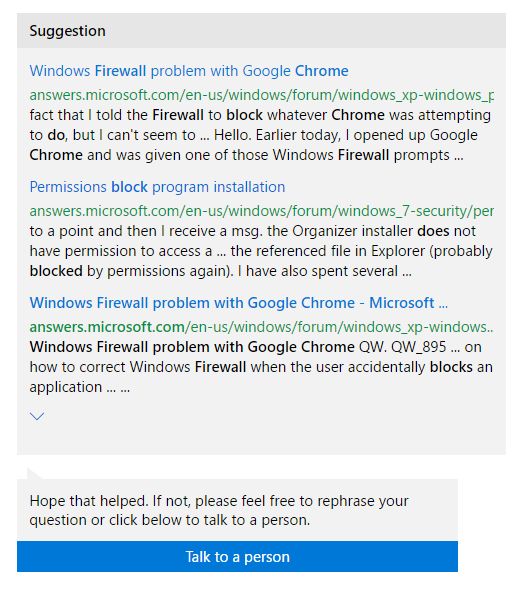
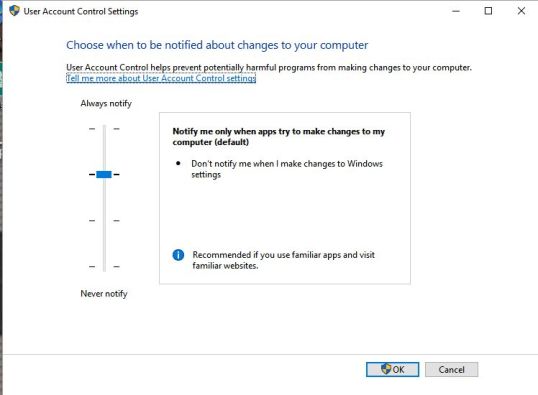
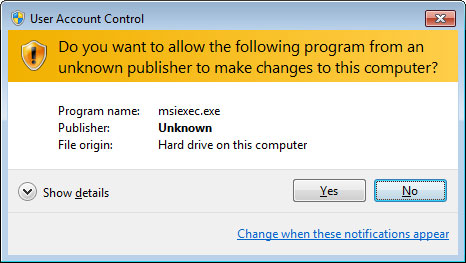
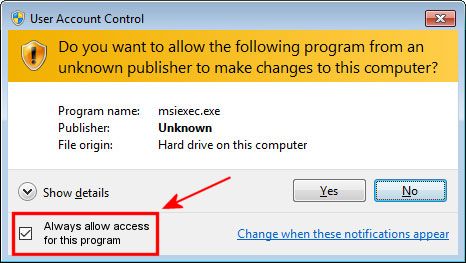
During the install, you get this dialog box. It tells you exactly what you’re going to do to your computer, so nothing is really hidden there.

Foistware 2

If you just go ahead and click the “next” button, you’ll be installing bytefence, Chromium (an open-source version of Chrome that doesn’t really work that well in the Windows environment), and YahooEverywhere, which will be difficult to remove if you don’t know what you’re doing.  It’s not until you click the “Click here to customize the installation” link that you see exactly what’s going to happen, and get to uncheck the boxes.

Far too many people, when installing software, just go NextNextNextNext, without reading what the boxes say. After all, who really reads the EULAs or is telling the truth when they click the “I have read and agree” button? We’d spend half our lives plowing through byzantine legalese if we did, and I’m still not convinced any of these agreements would hold up in court.

Foistware

“Set Yahoo as my default search, homepage and new tab on all my compatible browsers.” Uh, no.

From where I sit this is just not an ethical business model, because it takes advantage of consumer unawareness. In my previous article I mentioned Oracle, who for the longest time tried to cram the “Ask” toolbar and search engine down people’s throats when they installed or updated Java. I don’t know if they are still doing that or not, but I always thought it was supremely douchey because Ask is a supremely intrusive and essentially worthless software package.

Just be careful. When you install software, read each menu and see what’s being installed/offered. Deselect things you don’t want, and you’ll avoid a host of problems down the road. Unless you want your browser to look like this:

toolbarhell

The Old Wolf has spoken.


Flower Sack Dresses From the Flour Mills (Historical Kindness)

Beautifully crafted article demonstrating compassion and ingenuity in difficult times.

Kindness Blog's avatarKindness Blog

In times gone by, amidst widespread poverty, the Flour Mills realized that some women were using sacks to make clothes for their children. In response, the Flour Mills started using flowered fabric…

With the introduction of this new cloth into the home, thrifty women everywhere began to reuse the cloth for a variety of home uses – dish towels, diapers, and more. The bags began to become very popular for clothing items.

Flower Sack Dresses From the Flour MillsAs the recycling trend looked like it was going to stay, the manufacturers began to print their cloth bags – or feedsacks – in an ever wider variety of patterns and colors.

Some of the patterns they started using are shown below

Flower Sack Dresses From the Flour Mills Flower Sack Dresses From the Flour Mills Flower Sack Dresses From the Flour Mills Over time, the popularity of the feedsack as clothing fabric increased beyond anyone’s wildest expectations, fueled by both ingenuity and scarcity.

By the time WWII dominated the lives of Americans, and cloth for fabric was in…

View original post 261 more words